My Best Backlist Reads of 2020
Like many book bloggers, I’m irresistibly drawn to the shiny new books released each year. However, I consistently find that many of my most memorable reads were published years or even decades ago. These 29 selections, in alphabetical order by author name, account for the rest of my 4.5- and 5-star ratings of the year. Five rereads made it onto my list.
Fiction
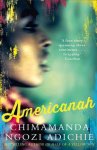 Americanah by Chimamanda Ngozi Adichie: Through Ifemelu’s years of studying, working, and blogging her way around the Eastern seaboard of the United States, Adichie explores the ways in which the experience of an African abroad differs from that of African Americans. On a sentence level as well as at a macro plot level, this was utterly rewarding.
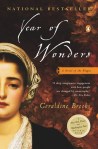 Year of Wonders by Geraldine Brooks: In 1665, with the Derbyshire village of Eyam in the grip of the Plague, the drastic decision is made to quarantine it. Frustration with the pastor’s ineffectuality attracts people to religious extremism. Anna’s intimate first-person narration and the historical recreation are faultless, and there are so many passages that feel apt.
 Shotgun Lovesongs by Nickolas Butler: Four childhood friends from Little Wing, Wisconsin. Which bonds will last, and which will be strained to the breaking point? This is a book full of nostalgia and small-town atmosphere. All the characters wonder whether they’ve made the right decisions or gotten stuck. A lot of bittersweet moments, but also comic ones.
 Kindred by Octavia E. Butler: A perfect time-travel novel for readers who quail at science fiction. Dana, an African American writer in Los Angeles, is dropped into early-nineteenth-century Maryland. This was such an absorbing read, with first-person narration that makes you feel you’re right there alongside Dana on her perilous travels.
 Dominicana by Angie Cruz: Ana Canción is just 15 when she arrives in New York from the Dominican Republic on the first day of 1965 to start her new life as the wife of Juan Ruiz. An arranged marriage and arriving in a country not knowing a word of the language: this is a valuable immigration story that stands out for its plucky and confiding narrator.
 Ella Minnow Pea by Mark Dunn: A book of letters in multiple sense. Laugh-out-loud silliness plus a sly message about science and reason over superstition = a rare combination that made this an enduring favorite. On my reread I was more struck by the political satire: freedom of speech is endangered in a repressive society slavishly devoted to a sacred text.
 Love Medicine by Louise Erdrich: Interlocking stories that span half a century in the lives of a couple of Chippewa families that sprawl out from a North Dakota reservation. Looking for love, looking for work. Getting lucky, getting even. Their problems are the stuff of human nature and contemporary life. I adored the descriptions of characters and of nature.
 Notes from an Exhibition by Patrick Gale: Nonlinear chapters give snapshots of the life of a bipolar artist and her interactions with her husband and children. Their Quakerism sets up a calm and compassionate atmosphere, but also allows family secrets to proliferate. The novel questions patterns of inheritance and the possibility of happiness.
 Confession with Blue Horses by Sophie Hardach: When Ella’s parents, East German art historians who came under Stasi surveillance, were caught trying to defect, their children were taken away from them. Decades later, Ella is determined to find her missing brother and learn what really happened to her mother. Eye-opening and emotionally involving.
 The Go-Between by L.P. Hartley: Twelve-year-old Leo Colston is invited to spend July at his school friend’s home, Brandham Hall. You know from the famous first line on that this juxtaposes past and present. It’s masterfully done: the class divide, the picture of childhood tipping over into the teenage years, the oppressive atmosphere, the comical touches.
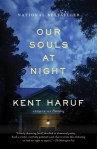 Our Souls at Night by Kent Haruf: Addie is a widow; Louis is a widower. They’re both lonely and prone to fretting about what they could have done better. Would he like to come over to her house at night to talk and sleep? Matter-of-fact prose, delivered without speech marks, belies a deep undercurrent of emotion. Understated, bittersweet, realistic. Perfect.
 The Emperor’s Children by Claire Messud: A 9/11 novel. The trio of protagonists, all would-be journalists aged 30, have never really had to grow up; now it’s time to get out from under the shadow of a previous generation and reassess what is admirable and who is expendable. This was thoroughly engrossing. Great American Novel territory, for sure.
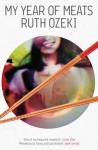 My Year of Meats by Ruth Ozeki: A Japanese-American filmmaker is tasked with finding all-American families and capturing their daily lives – and best meat recipes. There is a clear message here about cheapness and commodification, but Ozeki filters it through the wrenching stories of two women with fertility problems. Bold if at times discomforting.
 Small Ceremonies by Carol Shields: An impeccable novella, it brings its many elements to a satisfying conclusion and previews the author’s enduring themes. Something of a sly academic comedy à la David Lodge, it’s laced with Shields’s quiet wisdom on marriage, parenting, the writer’s vocation, and the difficulty of ever fully understanding another life.
 Larry’s Party by Carol Shields: The sweep of Larry’s life, from youth to middle age, is presented chronologically through chapters that are more like linked short stories: they focus on themes (family, friends, career, sex, clothing, health) and loop back to events to add more detail and new insight. I found so much to relate to in Larry’s story; Larry is really all of us.
 Abide with Me by Elizabeth Strout: Tyler Caskey is a widowed pastor whose five-year-old daughter has gone mute and started acting up. As usual, Strout’s characters are painfully real, flawed people, often struggling with damaging obsessions. She tenderly probes the dark places of the community and its minister’s doubts, but finds the light shining through.
 The Wife by Meg Wolitzer: On the way to Finland, where her genius writer husband will accept the prestigious Helsinki Prize, Joan finally decides to leave him. Alternating between the trip and earlier in their marriage, this is deceptively thoughtful with a juicy twist. Joan’s narration is witty and the point about the greater value attributed to men’s work is still valid.
Nonfiction
 Winter Journal by Paul Auster: Approaching age 64, the winter of his life, Auster decided to assemble his most visceral memories: scars, accidents and near-misses, what his hands felt and his eyes observed. The use of the second person draws readers in. I particularly enjoyed the tour through the 21 places he’s lived. One of the most remarkable memoirs I’ve ever read.
 Heat by Bill Buford: Buford was an unpaid intern at Mario Batali’s famous New York City restaurant, Babbo. In between behind-the-scenes looks at frantic sessions of food prep, Buford traces Batali’s culinary pedigree through Italy and London. Exactly what I want from food writing: interesting trivia, quick pace, humor, and mouthwatering descriptions.
 Sixpence House: Lost in a Town of Books by Paul Collins: Collins moved to Hay-on-Wye with his wife and toddler son, hoping to make a life there. As he edited the manuscript of his first book, he started working for Richard Booth, the eccentric bookseller who crowned himself King of Hay. Warm, funny, and nostalgic. An enduring favorite of mine.
 A Year on the Wing by Tim Dee: From a life spent watching birds, Dee weaves a mesh of memories and recent experiences, meditations and allusions. He moves from one June to the next and from Shetland to Zambia. The most powerful chapter is about watching peregrines at Bristol’s famous bridge – where he also, as a teen, saw a man commit suicide.
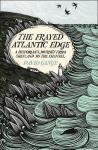 The Frayed Atlantic Edge by David Gange: While kayaking down the western coast of the British Isles and Ireland, Gange delves into the folklore, geology, history, local language and wildlife of each region and island group – from the extreme north of Scotland at Muckle Flugga to the southwest tip of Cornwall. An intricate interdisciplinary approach.
 Traveling Mercies: Some Thoughts on Faith by Anne Lamott: There is a lot of bereavement and other dark stuff here, yet an overall lightness of spirit prevails. A college dropout and addict, Lamott didn’t walk into a church and get clean until her early thirties. Each essay is perfectly constructed, countering everyday angst with a fumbling faith.
 In the Dream House by Carmen Maria Machado: This has my deepest admiration for how it prioritizes voice, theme and scene, gleefully does away with chronology and (not directly relevant) backstory, and engages with history, critical theory and the tropes of folk tales to interrogate her experience of same-sex domestic violence. (Second-person narration again!)
 Period Piece by Gwen Raverat: Raverat was a granddaughter of Charles Darwin. This is a portrait of what it was like to grow up in a particular time and place (Cambridge from the 1880s to about 1909). Not just an invaluable record of domestic history, it is a funny and impressively thorough memoir that serves as a model for how to capture childhood.
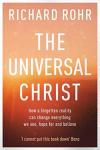 The Universal Christ by Richard Rohr: I’d read two of the Franciscan priest’s previous books but was really blown away by the wisdom in this one. The argument in a nutshell is that Western individualism has perverted the good news of Jesus, which is renewal for everything and everyone. A real gamechanger. My copy is littered with Post-it flags.
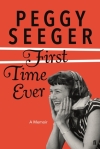 First Time Ever: A Memoir by Peggy Seeger: The octogenarian folk singer and activist has packed in enough adventure and experience for multiple lifetimes, and in some respects has literally lived two: one in America and one in England; one with Ewan MacColl and one with a female partner. Her writing is punchy and impressionistic. She’s my new hero.
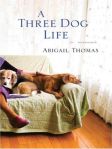 A Three Dog Life by Abigail Thomas: A memoir in essays about her husband’s TBI and what kept her going. Unassuming and heart on sleeve, Thomas wrote one of the most beautiful books out there about loss and memory. It is one of the first memoirs I remember reading; it made a big impression the first time, but I loved it even more on a reread.
 On Silbury Hill by Adam Thorpe: Explores the fragmentary history of the manmade Neolithic mound and various attempts to excavate it, but ultimately concludes we will never understand how and why it was made. A flawless integration of personal and wider history, as well as a profound engagement with questions of human striving and hubris.

(Books not pictured were read digitally, or have already gone back to the library.)
And if I really had to limit myself to just two favorites – my very best fiction and nonfiction reads of the year – they would be Our Souls at Night by Kent Haruf and Winter Journal by Paul Auster.
What were your best backlist reads this year?
My Year in Nonfiction (Thus Far)
If your household is anything like mine, stressful days and nights of lost sleep are ceding to relief after the U.S. election result was finally announced. We celebrated with whoopie pies (a Pennsylvania specialty) and Prosecco.


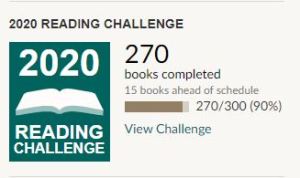
And look: I happened to pass 270 yesterday as well!
I’d taken part in the Six Degrees of Separation meme every month since February, but this time I had no inspiration. I was going to start with these two apple covers…
…but that’s as far as I got. Never mind! I’ll be back next month, when we all start with the YA classic Are You There God? It’s Me, Margaret by Judy Blume.
Instead, I’m catching up with this past week’s Nonfiction November prompt: Your Year in Nonfiction. It was hosted by Leann of Shelf Aware.

 What topics have been prominent in your year’s nonfiction reading?
I’ve read a lot of nature and popular science, probably more than in an average year. Greenery by Tim Dee has been an overall highlight. I managed to read 12 books from the Wainwright Prize longlists, and I’m currently reading four books of nature-themed essays or journals. Thoughtful as well as consoling.

The popular science material has focused on environmentalism and current events, which has inevitably involved politics and long-term planning (Annabel called this category “The State We’re In”): e.g. Losing Eden, Footprints, The Good Ancestor, and Notes from an Apocalypse.


Thanks to the food and drink theme I set for my 20 Books of Summer, I read a number of foodie memoirs. The best one was Heat by Bill Buford, but I also really enjoyed Kitchen Confidential by Anthony Bourdain and My Berlin Kitchen by Luisa Weiss.
 Since the Wellcome Book Prize didn’t run this year, I’ve read fewer health-related books, although I did specially read Not the Wellcome Prize shortlistee The Remarkable Life of the Skin by Monty Lyman, and Dear Life by Rachel Clarke, a palliative care doctor, has been one of my overall best nonfiction reads of the year.
Not very well represented in my nonfiction reading this year were biographies and travel books. I can struggle with the depth and dryness of some books from these genres, but I’d like to find some readable options to get stuck into next year.
What are your favorite nonfiction books you’ve read so far?
I’m a huge memoir junkie. Some of the most memorable ones this year have been Winter Journal by Paul Auster, Traveling Mercies by Anne Lamott (a reread), and A Three Dog Life by Abigail Thomas (another reread).


An incidental theme in the life writing I’ve read in 2020 is childhood (Childhood by Tove Ditlevsen, Cider with Rosie by Laurie Lee, Oleander, Jacaranda by Penelope Lively, Period Piece by Gwen Raverat); I hope to continue reading around this topic next year.
What books have you recommended the most to others?
I’ve mentioned the Clarke (above) in any discussions of books about illness and death.
I recommended the memoir Are You Somebody? by Nuala O’Faolain more than once following Reading Ireland Month.
Entangled Life, Merlin Sheldrake’s enthusiastic book about fungi, is one I can imagine suggesting to readers who don’t often pick up nonfiction.
And Signs of Life by Dr. Stephen Fabes has generated a fair bit of interest among my Goodreads friends.


Besides Annabel, Kate and Liz also wrote about their 2020 nonfiction reading habits.
How has your nonfiction reading been going this year?
Three Out-of-the-Ordinary Memoirs: Kalb, Machado, McGuinness
Recently I have found myself drawn to memoirs that experiment with form. I’ve read so many autobiographical narratives at this point that, if it’s to stand out for me, a book has to offer something different, such as a second-person point-of-view or a structure of linked essays. Here are a few such that I’ve read this year but not written about yet. All have strong themes of memory and the creation of the self or the family.
Nobody Will Tell You This But Me: A True (As Told to Me) Story by Bess Kalb (2020)
 You know from the jokes: Jewish (grand)mothers are renowned for their fiercely protective, unconditional love, but also for their tendency to nag. Both sides of a stereotypical matriarch are on display in this funny and heartfelt family memoir, narrated in the second person – as if straight to Kalb from beyond the grave – by her late grandmother, Barbara “Bobby” Bell.
Bobby gives her beloved Bessie a tour through four generations of strong women, starting with her own mother, Rose, and her lucky escape from a Belarus shtetl. The formidable émigré ended up in a tiny Brooklyn apartment, where she gave birth to five children on the dining room table. Bobby and her husband, a real estate entrepreneur and professor, had one daughter, Robin, who in turn had one daughter, Bess. Bobby and Robin had a fraught relationship, but Bess’s birth seemed to reset the clock. Grandmother and granddaughter had a special bond: Bobby was the one to take her to preschool and wait outside the door until she was sure she’d be okay, and always the one to pick her up from sleepovers gone wrong.
Kalb is a Los Angeles-based writer for Jimmy Kimmel Live! With her vivid scene-setting and comic timing, you can see why she’s earned a Writers Guild Award and an Emmy nomination. But she also had great material to work with: Bobby’s e-mails and verbatim voicemail messages are hilarious. Kalb dots in family photographs and recreates in-person and phone conversations, with her grandmother forthrightly questioning her fashion choices and non-Jewish boyfriend. As the title phrase shows, Bobby felt she was the only one who would come forward with all this (unwanted but) necessary advice. Kalb keeps things snappy, alternating between narrative chapters and the conversations and covering a huge amount of family history in just 200 pages. It gets a little sentimental towards the end, but with her grandmother’s death still fresh you can forgive her that. This was a real delight.
My rating: 
My thanks to Zoe Hood and Kimberley Nyamhondera of Little, Brown (Virago) for the free PDF copy for review.
In the Dream House: A Memoir by Carmen Maria Machado (2019)
I’m stingy with 5-star ratings because, for me, giving a book top marks means a) it’s a masterpiece, b) it’s a game/mind/life changer, and/or c) it expands the possibilities of its particular genre. In the Dream House fits all three criteria. (Somewhat to my surprise, given that I couldn’t get through more than half of Machado’s acclaimed story collection, Her Body and Other Parties, and only enjoyed it in parts.)
Much has been written about this memoir of an abusive same-sex relationship since its U.S. release in November. I feel I have little to add to the conversation beyond my deepest admiration for how it prioritizes voice, theme and scenes; gleefully does away with the chronology and (not directly relevant) backstory – in other words, the boring bits – that most writers would so slavishly detail; and engages with history, critical theory and the tropes of folk tales to constantly interrogate her experiences and perceptions.
 Most of the book is, like the Kalb, in the second person, but in this case the narration is not addressing a specific other person; instead, it’s looking back at the self that was caught in this situation (“If, one day, a milky portal had opened up in your bedroom and an older version of yourself had stepped out and told you what you know now, would you have listened?”), as well as – what the second person does best – putting the reader right into the narrative.
The “Dream House” is the Victorian house where Machado lived with her ex-girlfriend in Bloomington, Indiana for two years while she started an MFA course. It was a paradise until it wasn’t; it was a perfect relationship until it wasn’t. No one, least of all her, would have believed the perky little blonde writer she fell for would turn sadistic. A lot of it was emotional manipulation and verbal and psychological abuse, but there was definitely a physical element as well. Fear and self-doubt kept her trapped in a fairy tale that had long since turned into a nightmare. Writing it all out seven years later, the trauma was still there. Yet there was no tangible evidence (a police report, a restraining order, photos of bruises) to site her abuse anywhere outside of her memory. How fleeting, yet indelible, it had all been.
The book is in relatively short sections headed “Dream House as _________” (fill in the blank with everything from “Time Travel” to “Confession”), and the way that she pecks at her memories from different angles is perfect for recreating the spiral of confusion and despair. She also examines the history of our understanding of queer domestic violence: lesbian domestic violence, specifically, wasn’t known about until 30-some years ago.
The story has a happy ending in that Machado is now happily married. The bizarre twist, though, is that her wife, YA author Val Howlett, was the girlfriend of the woman in the Dream House when they first met. To start with, it was an “open relationship” (or at least the blonde told her so) that Machado reluctantly got in the middle of, before Val drifted away. That the two of them managed to reconnect, and got past their mutual ex, is truly astonishing. (See some super-cute photos from their wedding here.)
Some favorite lines:
“Clarity is an intoxicating drug, and you spent almost two years without it, believing you were losing your mind”
“That there’s a real ending to anything is, I’m pretty sure, the lie of all autobiographical writing. You have to choose to stop somewhere. You have to let the reader go.”
My rating: 
I read an e-copy via NetGalley.
Other People’s Countries: A Journey into Memory by Patrick McGuinness (2014)
This is a wonderfully atmospheric tribute to Bouillon, Belgium, a Wallonian border town with its own patois. However, it’s chiefly a memoir about the maternal side of the author’s family, which had lived there for generations. McGuinness grew up spending summers in Bouillon with his grandparents and aunt. Returning to the place as an adult, he finds it half-derelict but still storing memories around every corner.
 It is as much a tour through memory as through a town, reflecting on how our memories are bound up with particular sites and objects – to the extent that I don’t think I would find McGuinness’s Bouillon even if I went back to Belgium. “When I’m asked about events in my childhood, about my childhood at all, I think mostly of rooms. I think of times as places, with walls and windows and doors,” he writes. The book is also about the nature of time: Bouillon seems like a place where time stands still or moves more slowly, allowing its residents (including his grandfather, and Paprika, “Bouillon’s laziest man, who held a party to celebrate sixty years on the dole”) a position of smug idleness.
The book is in short vignettes, some as short as a paragraph; each is a separate piece with a title that remembers a particular place, event or local character. Some are poems, and there are also recipes and an inventory. The whole is illustrated with frequent period or contemporary black-and-white photographs. It’s an altogether lovely book that overcomes its narrow local interest to say something about how the past remains alive for us.
Some favorite lines:
“that hybrid long-finished but real-time-unfolding present tense … reflects the inside of our lives far better than those three stooges, the past, present and future”
a fantastic last line: “What I want to say is: I misremember all this so vividly it’s as if it only happened yesterday.”
My rating:
I read a public library copy.
Other unusual memoirs I’ve loved and reviewed here:
 Notes Made while Falling by Jenn Ashworth (essays, experimental structures)
Winter Journal by Paul Auster (second person)
This Really Isn’t about You by Jean Hannah Edelstein (nonchronological)
Traveling with Ghosts by Shannon Leone Fowler (short sections and time shifts)
The Lost Properties of Love by Sophie Ratcliffe (nonchronological essays)
Any offbeat memoirs you can recommend?
Polio and the Plague: Epidemics in Fiction
Back in January I had the idea to catch up as much as I can on previous Wellcome Book Prize long- and shortlists while the Prize is on hiatus. I decided to start with a pair of novels about polio from my public library system: The Golden Age by Joan London and Nemesis by Philip Roth. The latter, especially, has taken on new significance due to its evocation of a time of panic over a public health crisis (see this article, but beware spoilers). On a fellow book reviewer’s recommendation, I also took Year of Wonders by Geraldine Brooks off the shelf and read it at the same time as the Roth.
The Golden Age by Joan London (2014)
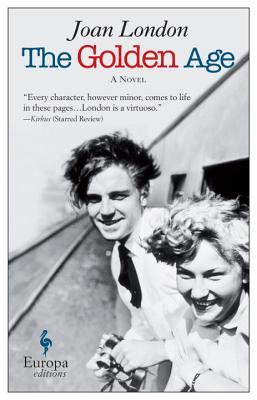 [First published in the UK in 2016; on the Wellcome Book Prize 2017 longlist]
The Golden Age was a real children’s polio hospital in Western Australia, but London has peopled it with her own fictional cast. In 1953–4, Frank Gold and Elsa Briggs, polio patients aged 12 going on 13, fall in love in the most improbable of circumstances: “The backs of their hands brushed as they walked side by side on their crutches. Their bloodstreams recharged by exercise and fresh air, they experienced a fiery burst of pleasure.”
Frank is much the more vibrant character thanks to his family’s wartime past in Hungary and his budding vocation as a poet, which was spurred on by his friendship with Sullivan, a fellow inmate at his previous rehabilitation center. The narrative spends time with the nurses, parents and other patients but keeps coming back to Frank and Elsa. However, Chapter 7, with Frank and his mother Ida still back in Budapest, was my favorite.
I was reminded of Tracy Farr’s work (The Life and Loves of Lena Gaunt), especially the look back from decades later. This has a strong premise and some great lines, but for me there was something slightly lacking in the execution.
Favorite lines:
There was beauty everywhere, strange beauty, even—especially?—in a children’s polio hospital.
Polio is like love, Frank says … Years later, when you think you have recovered, it comes back.
My rating: 
Nemesis by Philip Roth (2010)
[On the Wellcome Book Prize 2011 shortlist]
 In the summer of 1944 Newark, New Jersey is hit hard by polio. As a local playground director, 23-year-old Bucky Cantor is distressed when several of his charges become ill; a couple of them even die within a matter of days.
At first Bucky, whose poor eyesight kept him out of the War, sees his job as his own field of duty, but gradually fear and helplessness drive him away. He escapes to the Pocono Mountains to join his fiancée, Marcia, as a summer camp counselor, but soon realizes the futility of trying to outrun a virus. Unable to accept the randomness of bad luck, he blames God – and himself – for the epidemic’s spread.
Despite our better general understanding of epidemiology today, there were still many passages in this novel that rang true for me as they picture life proceeding as normal until paranoia starts to take hold:
Despite polio’s striking in the neighborhood, the store-lined main street was full of people out doing their Saturday grocery shopping…
(Bucky) Look, you mustn’t be eaten up with worry … What’s important is not to infect the children with the germ of fear. We’ll come through this, believe me. We’ll all do our bit and stay calm and do everything we can to protect the children, and we’ll all come through this together.
The important thing, he said, was always to wash your hands after you handled paper money or coins. What about the mail, someone else said … What are you going to do, somebody retorted, suspend delivering the mail? The whole city would come to a halt. Six or seven weeks ago they would have been talking about the war news.
Roth really captures the atmosphere of alarm and confusion, but doesn’t always convey historical and medical information naturally, sometimes resorting to paragraphs of context and representative conversations like in the last quote above. I also wasn’t sure about the use of a minor character (revealed on page 108 to be one of Bucky’s playground kids and a polio patient) as the narrator. This seemed to me to make Bucky more of a symbolic hero than a genuine character. Still, this was a timely and riveting read.
My rating:

A period warning about polio reprinted at the back of Paul Auster’s Report from the Interior.
Year of Wonders by Geraldine Brooks (2001)
 In 1665, with the Derbyshire village of Eyam in the grip of the Plague, the drastic decision was made to quarantine it. A benevolent landowner arranged for regular deliveries of food and other supplies to just outside the parish boundaries. The villagers made an oath that no one would leave until the pestilence was eradicated. One year later, two-thirds of its residents were dead. Brooks imagines that the “plague seeds” came to the village in a bolt of cloth that was delivered from London to the tailor George Viccars, who lodged with widow Anna Frith. Viccars is the first victim and the disease quickly spreads outward from Anna’s home.
Anna barely has time to grieve her own losses before she’s called into service: along with the minister’s wife, Elinor Mompellion, she steps in as a midwife, herbal healer and even a miner. The village succumbs to several sobering trajectories. Suspicion of women’s traditional wisdom leads some to take vigilante action against presumed witches. Unscrupulous characters like Anna’s father, who sets up as a gravedigger, try to make a profit out of others’ suffering. Frustration with the minister’s apparent ineffectuality attracts others to forms of religious extremism. Like Bucky, people cannot help but see the hand of God here.
Perhaps what I was most missing in the London and Roth novels (and in Hamnet, which bears such striking thematic similarities to Year of Wonders) was intimate first-person narration, which is just what you get here from Anna. The voice and the historical recreation are flawless, and again there were so many passages that felt apt:
Stay here, in the place that you know, and in the place where you are known. … Stay here, and here we will be for one another.
the current times did seem to ask us all for every kind of sacrifice
(once they start meeting for church in a meadow) We placed ourselves so that some three yards separated each family group, believing this to be sufficient distance to avoid the passing of infection.
Yet it is a good day, for the simple fact that no one died upon it. We are brought to a sorry state, that we measure what is good by such a shortened yardstick.
I’ve docked a half-star only because of a far-fetched ending that reminded me of that to The Wonder by Emma Donoghue. Apart from that, this is just what I want from my historical fiction.
My rating: 
Are you doing any reading about epidemics?
Farewell to Winter with Some Snowy and Icy Reads
Although we got plenty of cold, damp weather and gray skies, it feels like we were cheated out of winter in my part of England this year. We had just one snow flurry on the 27th of February; that will have to suffice as my only taste of proper winter for the year. Not to worry, though: I’ve been getting my fix of snow and ice through my reading, starting with two animal tales and moving on to a few travel and adventure books.
Fiction:
The Snow Goose by Paul Gallico (1941)
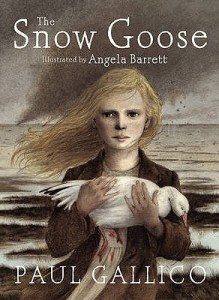 Philip Rhayader is a lonely bird artist on the Essex marshes by an abandoned lighthouse. “His body was warped, but his heart was filled with love for wild and hunted things. He was ugly to look upon, but he created great beauty.” One day a little girl, Fritha, brings him an injured snow goose and he puts a splint on its wing. The recovered bird becomes a friend to them both, coming back each year to spend time at Philip’s makeshift bird sanctuary. As Fritha grows into a young woman, she and Philip fall in love (slightly creepy), only for him to leave to help with the evacuation of Dunkirk. This is a melancholy and in some ways predictable little story. It was originally published in the Saturday Evening Post in 1940 and became a book the following year. I read a lovely version illustrated by Angela Barrett. It’s the second of Gallico’s animal fables I’ve read; I slightly preferred The Small Miracle.
The Snow Cat by Holly Webb (2016)

Most twee cover ever?
My second from Holly Webb, and while I enjoyed it a lot, if not quite as much as Frost, I probably don’t need to read any more by her now because these two were so similar as to reveal a clear formula: a young girl of about nine years old who plays alone (because she’s an only child or left out of her siblings’ games) goes for an outdoor adventure and meets a cute animal who leads her back into the past. For a time it’s unclear whether she’s dreaming or really experiencing the history, but at the end there’s some physical token that proves she has been time travelling.
In this case, Bel goes to play in the snowy garden of her grandmother’s retirement complex and meets a white cat named Snow who belongs to Charlotte, the daughter of the family who owned this manor house 150 years ago. Bel has to protect Snow from a threatening dog so the cat can be brought in to visit Charlotte’s sister Lucy, who lies ill with influenza. For me the Victorian setting wasn’t quite as authentic or interesting as the seventeenth-century frost fair was in Frost, but I can see how it’s a good way of introducing kids to what was different in the past: everything from clothing and speech to the severity of illness.
Nonfiction:
The Snow Tourist by Charlie English (2008)
 “A Search for the World’s Purest, Deepest Snowfall” reads the subtitle on the cover. English set out from his home in London for two years of off-and-on travel in snowy places, everywhere from Greenland to Washington State. In Jericho, Vermont, he learns about Wilson Bentley, an amateur scientist who was the first to document snowflake shapes through microscope photographs. In upstate New York, he’s nearly stranded during the Blizzard of 2006. He goes skiing in France and learns about the deadliest avalanches – Britain’s worst was in Lewes in 1836. In Scotland’s Cairngorms, he learns how those who work in the ski industry are preparing for the 60–80% reduction of snow predicted for this century. An appendix dubbed “A Snow Handbook” gives some technical information on how snow forms, what the different crystal shapes are called, and how to build an igloo, along with whimsical lists of 10 snow stories (I’ve read six), 10 snowy films, etc.
I found all of the science and history interesting, but especially liked a chapter on depictions of snow in art, such as Pieter Bruegel the Elder’s The Hunters in the Snow. The author also subtly threads in his own story, noting that this quest probably began with the 1960s photograph of himself on skis at a snowy Austrian resort that his father gave him a few weeks before he committed suicide. Twelve years later, it feels like this book doesn’t go far enough in cautioning about all that will be lost with climate change. I was left with the sense that nature is majestic and unpredictable, and we pay the price for not respecting it. 

Hunters in the Snow. Pieter Bruegel the Elder / Public domain.
[Breaking from alphabetical order to include this one as a footnote to the previous book.]
The Library of Ice by Nancy Campbell (2018)
 This has a very similar format and scope to The Snow Tourist, with Campbell ranging from Greenland and continental Europe to the USA in her search for the science and stories of ice. For English’s chapter on skiing, substitute a section on ice skating. I only skimmed this one because – in what I’m going to put down to a case of reader–writer mismatch – I started it three times between November 2018 and now and could never get further than page 60. See these reviews from Laura and Liz for more enthusiasm.
My thanks to Scribner UK for the free copy for review.
Winterdance: The Fine Madness of Running the Iditarod by Gary Paulsen (1994)
Paulsen’s name was familiar to me from his children’s books – a tomboy, I spent my childhood fascinated by Native American culture, survival skills and animals, and Hatchet was one of my favorite novels. I had no idea he had written books for adults, including this travelogue of competing in the Iditarod sled dog race across the frozen Alaska wilderness. Nearly half the book is devoted to his preparations, before he ever gets to Alaska. He lived in Minnesota and took time assembling what he thought of as a perfect team of dogs, from reliable Cookie, his lead dog, to Devil, whose name says it all. He even starts sleeping in the kennel with the dogs to be fully in tune with them.
 The travails of his long trial runs with the dogs – the sled flipping over, having to walk miles after losing control of the dogs, being sprayed in the face by multiple skunks – sound bad enough, but once the Iditarod begins the misery ramps up. The course is nearly 1200 miles, over 17 days. It’s impossible to stay warm or get enough food, and a lack of sleep leads to hallucinations. At one point he nearly goes through thin ice. At another he’s run down by a moose. He also watches in horror as a fellow contestant kicks a dog to death.
Paulsen concludes that you would have to be insane to run the Iditarod, and there’s an appropriately feverish intensity running through the book. The way he describes the bleak beauty of the landscape, you can see how attractive and forbidding it was all at the same time. This is just the kind of adventurous armchair traveling I love (see also This Cold Heaven) – someone else did this, so now I don’t have to!
(Note: The author completed two races and was training for his third when a diagnosis of coronary heart disease ended his Iditarod career in his mid-forties. More than the obsession, more than the competition, he knows that he’ll miss the constant company of dogs. In fact, his last line is “How can it be to live without the dogs?”)
See also these recent releases:
- Snow, Dog, Foot by Claudio Morandini, an avalanche novel set in the Italian Alps
 Two nonfiction books entitled Wintering: Katherine May’s is about depression and Stephen Rutt’s is about geese
And a snowy passage from Winter Journal by Paul Auster:
Snow, so much snow these past days and weeks that fifty-six inches have fallen on New York in less than a month. Eight storms, nine storms, you have lost track by now, and all through January the song heard most often in Brooklyn has been the street music made by shovels scraping against sidewalks and thick patches of ice. Intemperate cold (three degrees one morning), drizzles and mizzles, mist and slush, ever-aggressive winds, but most of all the snow, which will not melt, and as one storm falls on top of another, the bushes and trees in your back garden are all wearing ever-longer and heavier beards of snow. Yes, it seems to have turned into one of those winters, but in spite of the cold and discomfort and your useless longing for spring, you can’t help admiring the vigor of these meteorological dramas, and you continue to look at the falling snow with the same awe you felt when you were a boy.
Did you read any particularly wintry books this season?
Paul Auster Reading Week: Oracle Night and Report from the Interior
Paul Auster Reading Week continues! Be sure to check out Annabel’s excellent post on why you should try Auster. On Monday I reviewed Winter Journal and the New York Trilogy. Adding in last year’s review of Timbuktu, I’ve now read six of Auster’s books and skimmed another one (the sequel to Winter Journal). It’s been great to have this project as an excuse to get more familiar with his work and start to recognize some of the recurring tropes.
Oracle Night (2003)
This reminded me most of The Locked Room, the final volume of the New York Trilogy. There’s even a literal locked room in a book within the book by the narrator, a writer named Sidney Orr. It’s 1982 and Orr is convalescing from a sudden, life-threatening illness. At a stationer’s shop, he buys a fine blue notebook from Portugal, hoping its beauty will inspire him to resume his long-neglected work. When he and his wife Grace go to visit John Trause, Grace’s lifelong family friend and a fellow novelist, Orr learns that Trause uses the same notebooks. Only the blue ones, mind you. No other color fosters the same almost magical creativity.
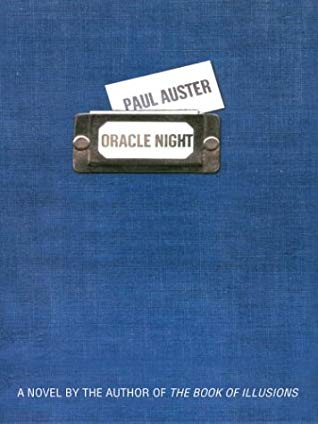 For long stretches of the novel, Orr is lost in his notebook (“I was there, fully engaged in what was happening, and at the same time I wasn’t there—for the there wasn’t an authentic there anymore”), writing in short, obsessive bursts. In one project, a mystery inspired by an incident from The Maltese Falcon, Nick Bowen, a New York City editor, has a manuscript called Oracle Night land on his desk. Spooked by a near-death experience, he flees to Kansas City, where he gets a job working on a cabdriver’s phone book archive, “The Bureau of Historical Preservation,” which includes a collection from the Warsaw ghetto. But then he gets trapped in the man’s underground bunker … and Orr has writer’s block, so leaves him there. Even though it’s fiction (within fiction), I still found that unspeakably creepy.
In the real world, Orr’s life accumulates all sorts of complications over just nine September days. Some of them are to do with Grace and her relationship with Trause’s family; some of them concern his work. There’s a sense in which what he writes is prescient. “Maybe that’s what writing is all about, Sid,” Trause suggests. “Not recording events from the past, but making things happen in the future.” The novel has the noir air I’ve come to expect from Auster, while the layering of stories and the hints of the unexplained reminded me of Italo Calvino and Haruki Murakami. I even caught a whiff of What I Loved, the novel Auster’s wife Siri Hustvedt published the same year. (It wouldn’t be the first time I’ve spotted similar themes in husband‒wife duos’ work – cf. Jonathan Safran Foer and Nicole Krauss; Zadie Smith and Nick Laird.)
This is a carefully constructed and satisfying novel, and the works within the work are so absorbing that you as the reader get almost as lost in them as Orr himself does. I’d rank this at the top of the Auster fiction I’ve read so far, followed closely by City of Glass.
Report from the Interior (2013)
This sequel to Winter Journal came out a year later. Again, the autobiographical rendering features second-person narration and a fragmentary style. I had a ‘been there, done that’ feeling about the book and only gave it a quick skim. It might be one to try another time.
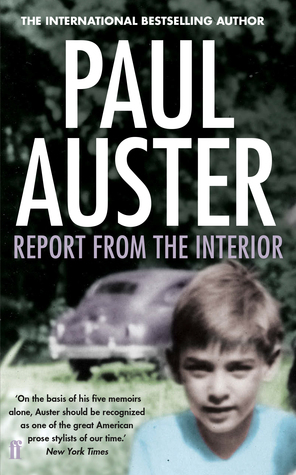 In the first 100-page section Auster highlights key moments from the inner life of a child. For instance, he remembers that the epiphany that a writer can inhabit another mind came while reading Robert Louis Stevenson’s poetry, and he emulated RLS in his own first poetic attempts. The history and pop culture of the 1950s, understanding that he was Jewish, and reaping the creative rewards of boredom are other themes. I especially liked a final anecdote about smashing his seventh-grade teacher’s reading challenge and being driven to tears when the man disbelieved that he’d read so many books and accused him of cheating.
Other sections give long commentary on two films (something he also does in Winter Journal with 10 pages on the 1950 film D.O.A.), select from letters he wrote to his first wife in the late 1960s while living in Paris, and collect an album of black-and-white period images such as ads, film stills and newspaper photographs. There’s a strong nostalgia element, such that the memoir would appeal to Auster’s contemporaries and those interested in learning about growing up in the 1950s.
Ultimately, though, this feels unnecessary after Winter Journal. Auster repeats a circular aphorism he wrote at age 20: “The world is in my head. My body is in the world. You will stand by that paradox, which was an attempt to capture the strange doubleness of being alive, the inexorable union of inner and outer”. But I’m not sure that body and mind can be so tidily separated as these two works posit. I got more of an overall sense of Auster’s character from the previous book, even though it was ostensibly focused on his physical existence. 
The library at the university where my husband works holds another four Auster novels, but I’ll wait until next year to dive back into his work. After reading other people’s reviews, I’m now most keen to try The Brooklyn Follies, Invisible and In the Country of Last Things.
Have you tried anything by Paul Auster this week?
Paul Auster Reading Week: Winter Journal & The New York Trilogy
Before this year, I’d read only one book by Paul Auster: Timbuktu, which fit into last year’s all-animal 20 Books of Summer for its canine main character. This year I’ve enjoyed having Annabel’s Paul Auster Reading Week as an excuse to binge on more Auster, including one of his memoirs, Winter Journal, and his most famous set of novels, the New York Trilogy. I’m reading another two Auster books, one fiction and nonfiction, and will see if I can finish and write them up before the week ends.

Winter Journal (2012)
This is one of the most remarkable memoirs I’ve ever read. Approaching age 64 and the winter of his life, Auster decided to assemble his most visceral memories. Here he parades them past in a seemingly random order yet manages to give a sense of the sweep of his life. The use of the second person draws readers in to (re-)experience things along with the author, while also creating an artistic distance between the subject and his reminiscences. Auster describes his aim thus:
Time is running out, after all. Perhaps it is just as well to put aside your stories for now and try to examine what it has felt like to live inside this body from the first day you can remember being alive until this one. A catalogue of sensory data. What one might call a phenomenology of breathing.
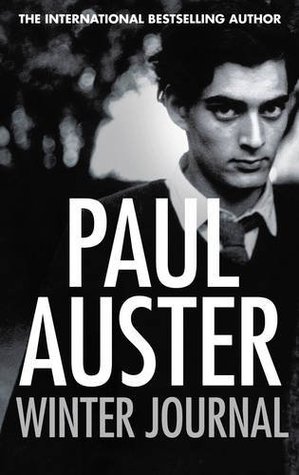 His life reappears through scars, through accidents and near-misses, through what his hands felt and his eyes observed. A three-year-old rips his cheek open on a protruding nail in a department store. A teenager slowly builds up a portfolio of sexual experiences. A young man lives and works in Paris and the South of France. A marriage to one fellow author (Lydia Davis) ends and a relationship with another (Siri Hustvedt) begins. A fiftysomething rushing to get home to the toilet makes an ill-advised turn against traffic and totals his car – luckily, he and his family escape unhurt. Numbness after his mother’s death cedes to a panic attack.
I particularly enjoyed the 53-page section in which Auster gives tours through the 21 places he’s lived since infancy, recounting the details he remembers of the dwellings and what happened during his time there. It’s impressive how much he can condense, but also how much he can convey in just a few pages on each home. This is the sort of format I could imagine borrowing for a short autobiographical piece – it would be a way of redeeming that involuntarily nomadic period when my husband and I moved every six to 18 months.
Reading this alongside the New York Trilogy allowed me to spot the ways, big and small, in which those novels draw on Auster’s life story. I’m now keen to read more of his nonfiction, especially The Invention of Solitude, which offended his relatives by revealing the shameful family story of how his grandmother shot and killed his grandfather in their kitchen.
Annabel says: “The book is written in the second person – addressing himself; it gives a real sense of intimacy to his story. … Auster is an unconventional, analytical and eloquent writer, and this unconventional memoir was a delight to read, he can look with humour at himself as well as being serious.”
Laura F. says: “You know how people say they’d read anything by their favourite author, even a grocery list? Winter Journal gets pretty close to that territory. … I’ve never read a memoir like this, and though focused on the physical, it’s a fully emotional experience.”
Some favorite lines:
“as long as you continue to travel, the nowhere that lies between the here of home and the there of somewhere else will continue to be one of the places where you live.”
“We are all aliens to ourselves, and if we have any sense of who we are, it is only because we live inside the eyes of others.”
“you can only conclude that every life is marked by a number of close calls, that everyone who manages to reach the age you have come to now has already wriggled out of a number of potentially absurd, nonsensical deaths. All in the course of what you would call ordinary life.”
Readalikes: I Am, I Am, I Am by Maggie O’Farrell & The Lost Properties of Love by Sophie Ratcliffe
The New York Trilogy
(also my Doorstopper of the Month at 580 pages)
City of Glass (1985)
 A metafictional mystery about a crime writer named Daniel Quinn who turns private investigator when he gets a phone call asking for the Paul Auster Detective Agency. This is one of those books where what actually happens is a lot less important than the atmosphere it creates. So what feels essential to me here is the sense of a labyrinthine New York City and a confusion of languages and relationships. Quinn, who is helpfully untethered after the death of his wife and son, is hired to tail Peter Stillman’s father, who has recently been released from a mental hospital, where he was sentenced after being judged insane for keeping his son in isolation in a dark apartment for nine years.
Feral children, maps, eggs, the Tower of Babel and Don Quixote are some of the recurring sources of metaphors in a deliberately disorienting and intertextually rich short novel that kept me turning the pages even when I didn’t know precisely what was going on. We get a glimpse of Auster himself, and are invited to muse on such tiny subjects as destiny, the limitations of language, the purpose of books, and the nature of truth. I’m curious to see whether the other two novels follow on from the story at all or just resemble it thematically.
Ghosts (1986)
I jumped straight into this from City of Glass, and it suffered by comparison. It is not a sequel per se, because it has different characters and is set in the late 1940s instead of the early 1980s, but it shares some of the same concerns (with literature, identity, doubling, the essential otherness of the writer, and so on) and again is a sort of metafictional mystery.
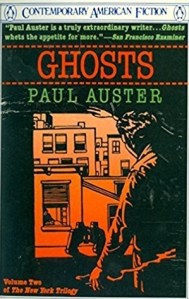 Part of why I couldn’t take this novella entirely seriously is the silly naming: White hires Blue to trail Black (really; all of the secondary characters are named after colors, too). It turns out Black is a writer who does little besides sit in his apartment, writing. Only when Blue disguises himself as a tramp and then as a salesman and meets Black in various other contexts does he realize that Black, too, is an investigator … writing up a case of following a writer who hardly leaves his desk.
While I appreciated the circularity and the uncertainty over whether these accidental twins would destroy each other, as well as the literary references to Whitman, Thoreau and Hawthorne, the whole felt slightly inconsequential (“Blue watches Black, and little of anything happens.”). Plotlessness is part of the point, but makes for only a moderately interesting read.
[There is one coded reference to Auster here: the fact that the book opens on February 3, 1947, the day he was born.]
The Locked Room (1986)
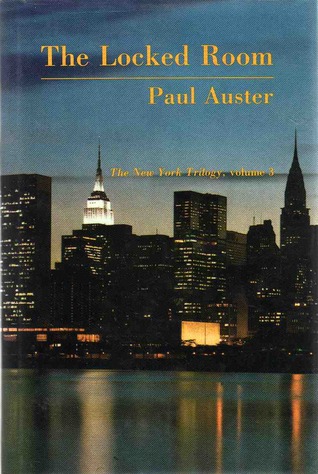 While most of the New York Trilogy is told in the third person, this is a first-person narrative that seems to pick up where City of Glass left off. It begins in 1977, when the unnamed narrator gets a letter from Sophie Fanshawe, the wife of his childhood best friend, telling him that Fanshawe disappeared six months ago, and despite the best efforts of a detective, Quinn (in another link to CoG, the narrator encounters Peter Stillman on a later trip to Paris), no trace can be found. The narrator has been named Fanshawe’s literary executor and takes it upon himself to get the man’s unpublished work out into the world: plays are produced, novels are published. He also starts writing a biography of the friend he always envied.
Except it’s more like he’s becoming Fanshawe, especially when he marries Sophie. Doubling has been a major theme of the trilogy, and here the metaphorical kill-or-be-killed situation seems to turn literal at the conclusion, which I didn’t particularly understand (e.g. he acquires and destroys a red notebook – is this in some way meant to be the same red notebook Quinn left behind at the end of CoG?). The narrator presents himself as the author of all three books, and asserts, “These three stories are finally the same story, but each one represents a different stage in my awareness of what it is about. I don’t claim to have solved any problems.”
The metafictional aspect of this novel is that Fanshawe’s early life is a lot like Auster’s as revealed in Winter Journal, while Sophie’s resembles his wife Siri Hustvedt’s (and the pair would later name their daughter Sophie).
 Themes of the trilogy:
- Identity complications, including disguises, doubles and substitutes
- Writers and writing; the creator versus characters
- The limits of language (e.g. Stillman’s monologue in CoG is astonishing)
- Freedom/randomness versus fate
One representative passage from each volume:
- “New York was an inexhaustible space, a labyrinth of endless steps, and no matter how far he walked, no matter how well he came to know its neighbourhoods and streets, it always left him with the feeling of being lost. Lost, not only in the city, but within himself as well. … New York was the nowhere he had built around himself” (City of Glass)
- “Writing is a solitary business. It takes over your life. In some sense, a writer has no life of his own. Even when he’s there, he’s not really there. / Another ghost. / Exactly.” (Ghosts)
- “In the end, each life is no more than the sum of contingent facts, a chronicle of chance intersections, of flukes, of random events that divulge nothing but their own lack of purpose.” (The Locked Room)
My rating for the trilogy as a whole:
Have you tried anything by Paul Auster? Grab one of his books and join us for this week’s readalong!
Book Serendipity, 2019 Second Half
I call it serendipitous when two or more books that I’m reading at the same time or in quick succession have something pretty bizarre in common. Because I have so many books on the go at once – usually between 10 and 20 – I guess I’m more prone to such incidents. I post these occasional reading coincidences on Twitter. What’s the weirdest one you’ve had lately? (The following are in rough chronological order.)
[Previous 2019 Book Serendipity posts from April and July.]
- Two novels in which a character attempts to glimpse famous mountains out of a train window but it’s so rainy they can barely be seen: The Unchangeable Spots of Leopards by Kristopher Jansma and The Pine Islands by Marion Poschmann.


- Ex-husbands move from England to California and remarry younger women in The Stillness The Dancing by Wendy Perriam and Heat Wave by Penelope Lively.
 References to Edgar Allan Poe in both Timbuktu by Paul Auster and The Unchangeable Spots of Leopards by Kristopher Jansma.
- An account of Percy Shelley’s funeral pyre in both The Unchangeable Spots of Leopards by Kristopher Jansma and Frankissstein by Jeanette Winterson.
- Mentions of barn owls being killed by eating poisoned rats in Owl Sense by Miriam Darlington and Homesick by Catrina Davies.


- Miriam Rothschild is mentioned in Irreplaceable by Julian Hoffman and An Obsession with Butterflies by Sharman Apt Russell.
- Gorse is thrown on bonfires in Homesick by Catrina Davies and The Stillness The Dancing by Wendy Perriam.
 A character has a nice cup of Ovaltine in Some Tame Gazelle by Barbara Pym and The Stillness The Dancing by Wendy Perriam.
- I started two books with “Bloom” in the title on the same day.

 Two books I finished about the same time conclude by quoting or referring to the T. S. Eliot lines about coming back to the place where you started and knowing it for the first time (Owl Sense by Miriam Darlington and This Is Not a Drill, the Extinction Rebellion handbook).
- Three books in which the narrator wonders whether to tell the truth slant (quoting Emily Dickinson, consciously or not): The Unchangeable Spots of Leopards by Kristopher Jansma, The Poisonwood Bible by Barbara Kingsolver and The Hiding Game by Naomi Wood.
- On the same day, I saw mentions of crullers in both On Chapel Sands by Laura Cumming and The Dutch House by Ann Patchett.


- There are descriptions of starling murmurations over Brighton Pier in both Irreplaceable by Julian Hoffman and Expectation by Anna Hope. (Always brings this wonderful Bell X1 song to mind!)
- I was reading The Outermost House by Henry Beston and soon after found an excerpt from it in Irreplaceable by Julian Hoffman; later I started The Easternmost House by Juliet Blaxland, whose title is a deliberate tip of the hat to Beston.
 At a fertility clinic, the author describes a pair of transferred embryos as “two sequins of light” (in On Chapel Sands by Laura Cumming) and “two points of light” (in Expectation by Anna Hope).
- Mentions of azolla ferns in Time Song by Julia Blackburn and Bloom (aka Slime) by Ruth Kassinger.
 Incorporation of a mother’s brief memoir in the author’s own memoir in On Chapel Sands by Laura Cumming and All Things Consoled by Elizabeth Hay.
- Artist mothers in On Chapel Sands by Laura Cumming, All Things Consoled by Elizabeth Hay, and Expectation by Anna Hope.
- Missionary fathers in The Poisonwood Bible by Barbara Kingsolver and The Wind that Lays Waste by Selva Almada.


- Twins, one who’s disabled from a birth defect and doesn’t speak much, in Golden Child by Claire Adam and The Poisonwood Bible by Barbara Kingsolver.
 An Irish-American family in a major East Coast city where the teenage boy does construction work during the summers in Ask Again, Yes by Mary Beth Keane and The Dutch House by Ann Patchett.
- SPOILERS: A woman with terminal cancer refuses treatment so she can die on her own terms and is carried out into her garden in Expectation by Anna Hope and A Reckoning by May Sarton.
- A 27-year-old professor has a student tearfully confide in her in Crow Lake by Mary Lawson and The Small Room by May Sarton.


- Reading The Yellow House by Sarah M. Broom at the same time as The Dutch House by Ann Patchett.
 “I was nineteen years old and an idiot” (City of Girls, Elizabeth Gilbert); “I was fifteen and generally an idiot” (The Dutch House, Ann Patchett).
- Mentions of a conjuring tricks book in Time Song by Julia Blackburn and Fifth Business by Robertson Davies.
- A teen fleeces their place of employment in Sweet Sorrow by David Nicholls and Who Will Run the Frog Hospital? by Lorrie Moore.


- A talking parrot with a religious owner in The Poisonwood Bible by Barbara Kingsolver and Olive Kitteridge by Elizabeth Strout.
- Pictorial book serendipity: three books I was reading, and another waiting in the wings, had a red, black and white color scheme.

 Kripalu (a Massachusetts retreat center) is mentioned in Fleishman Is in Trouble by Taffy Brodesser-Akner and Once More We Saw Stars by Jayson Greene.
- The character of Netty Quelch in Robertson Davies’s The Manticore reminds me of Fluffy in Ann Patchett’s The Dutch House.
- The artist Chardin is mentioned in How Proust Can Change Your Life by Alain de Botton and Varying Degrees of Hopelessness by Lucy Ellmann.
- A Czech grand/father who works in a plant nursery in the opening story of Andrea Barrett’s Ship Fever and Patricia Hampl’s The Florist’s Daughter.


- The author was in Eva Le Gallienne’s NYC theatre company (Madeleine L’Engle’s Two-Part Invention and various works by May Sarton, also including a biography of her).
 Gillian Rose’s book Love’s Work is mentioned in both Notes Made while Falling by Jenn Ashworth and My Year Off by Robert McCrum. (I will clearly have to read the Rose!)
- Sarah Baartman (displayed in Europe as the “Hottentot Venus”) is mentioned in Shame on Me by Tessa McWatt and Hull by Xandria Phillips.
20 Books of Summer, #7–10: Auster, Darlington, Durrell, Jansma
Owls and leopards and dogs – oh my! My animal-themed reading project continues. I’m more than halfway through in that I’m in the middle of quite a few more books, but finishing and reviewing them all before the 3rd of September may still prove to be a challenge.
Timbuktu by Paul Auster (1999)
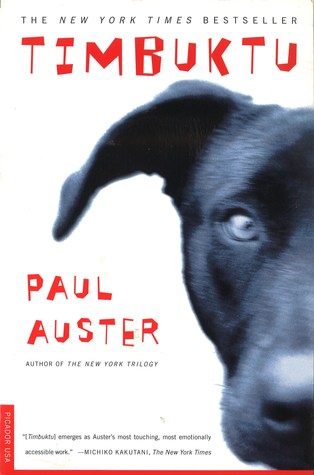 My first from Auster – and not, I take it, representative of his work in general. Never mind, though; I enjoyed it, and it was a good follow-up to Fifteen Dogs. Like the Alexis novel, this gives an intimately imagined dog’s perspective, taking seriously the creature’s whole life story. The canine protagonist is Mr. Bones, who’s accompanied his mentally unstable writer owner, Willy G. Christmas, from New York City down to Baltimore, where, one August Sunday, Willy wants to find his old high school English teacher before he dies.
What took me by surprise is that Auster doesn’t stick with Willy, but has Mr. Bones move on to two more living situations: first he’s the secret friend of 10-year-old Henry Chow, whose parents run a Chinese restaurant, then he’s a family pet in suburban Virginia. Although his English comprehension is advanced, he isn’t able to reproduce its sounds like some of the dogs in Fifteen Dogs can, so he can’t tell these new owners his real name and has to accept being called first “Cal” and then “Sparky.” In dreams he still hears Willy’s voice. He assumes Willy is now in the afterlife (“Timbuktu”), and longs to rejoin him.
The novel is tender as well as playful and funny – I loved the passage where Mr. Bones wakes up to pain but doesn’t realize he’s been castrated:
How was he to know that those missing parts had been responsible for turning him into a father many times over? Except for his ten-day affair with Greta, the malamute from Iowa City, his romances had always been brief—impetuous couplings, impromptu flings, frantic rolls in the hay—and he had never seen any of the pups he had sired. And even if he had, how would he have been able to make the connection? Dick Jones had turned him into a eunuch, but in his own eyes he was still the prince of love, the lord of the canine Romeos, and he would go on courting the ladies until his last, dying breath. For once, the tragic dimension of his own life eluded him.
Owl Sense by Miriam Darlington (2018)
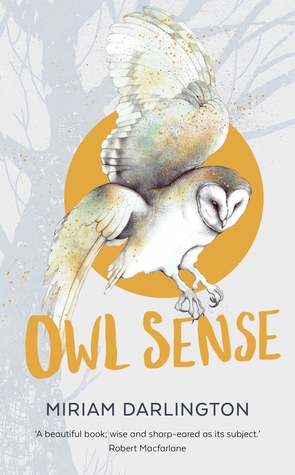 Initially the idea was to see all of Britain’s resident owls, but as often happens, the project expanded until Darlington was also taking trips to Serbia to find a Long-Eared Owl, Finland for a Eurasian Eagle Owl, and France for a Pygmy Owl; and going on a fruitless twitch to see a vagrant Snowy Owl in Cornwall. Each chapter considers a different species and includes information on its anatomy, geographical distribution, conservation status, and any associated myths and anecdotes (The Secret Life of the Owl by John Lewis-Stempel does much the same thing, but with less richness). She has closer encounters with some than with others: when volunteering with the Barn Owl Trust, she gets to ring chicks and collects pellets for dissection. But even the most fleeting sightings can be magical.
The book also subtly weaves in what was happening in Darlington’s life at the time, especially her son Benji’s struggles. On the autistic spectrum, he suddenly started having physical problems that were eventually explained by non-epileptic seizures. I would have welcomed more personal material, but that just speaks to my love of memoir. This feels slightly hurried and not quite as editorially polished as her master work, Otter Country, but it’s still well worth reading if you have any interest in birds or nature conservation. (I’ve only seen two owls in the wild: Barn and Tawny.)
Fillets of Plaice by Gerald Durrell (1971)
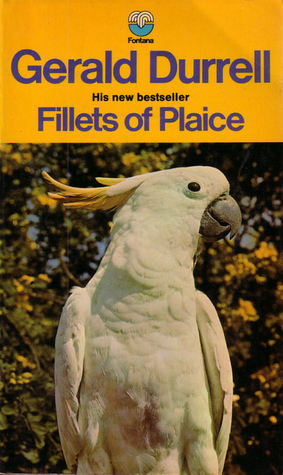 This is a pleasant miscellany of leftover essays that didn’t make it into any of Durrell’s other books. The best is “The Birthday Party,” about an incident from the Corfu years: Larry insisted on taking the fridge along on Mother’s birthday outing to an island, and their boat ran out of petrol. In “A Transport of Terrapins,” teenage Gerry works as a lowly pet shop assistant in London even though he knows twice as much as his boss; and meets other eccentric fellows, such as a bird collector and a retired colonel who has a house full of model figures for war gaming.
“A Question of Promotion” is set on one of the animal-collecting expeditions to Cameroon and turned me off a little with its colonial attitude: Durrell talks to the natives in condescending pidgin as he helps prepare a feast for the District Commissioner’s visit. In “A Question of Degrees” he visits two hospitals for a cataclysmic nosebleed, while “Ursula” is about a girlfriend who couldn’t open her mouth without uttering a malapropism. Entertaining scraps for diehard fans; if you’re new to Durrell, though, start with My Family and Other Animals and Menagerie Manor.
The Unchangeable Spots of Leopards by Kristopher Jansma (2013)
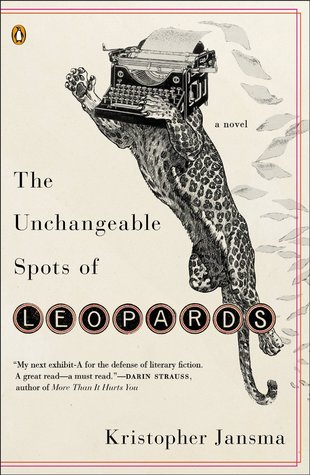 I’d meant to read Jansma’s debut ever since Why We Came to the City, his terrific novel about five university friends negotiating life in New York City during the recession, came out in 2016. I assumed the leopards of the title would be purely metaphorical – a reference to people not being able to change their inborn nature – and they are, but they’re also surprisingly literal in the one chapter set in Africa.
Jansma’s deliciously unreliable narrator, never named but taking on various aliases in these linked short stories, is a trickster, constantly reworking his life into fiction. He longs to be a successful novelist, but keeps losing his works in progress. We think we know the basics of his identity – he’s the son of a single mother who worked as a flight attendant; he grew up in North Carolina emulating the country club and debutante class; at Berkshire College he met his best friend and rival Julian McGann in creative writing class and fell for Julian’s friend Evelyn, the great unrequited love of his life – but Part II introduces doubt by calling the characters different names. Are these the ‘real’ people, or the narrator’s fictionalized versions?
The characters go on a bizarre odyssey that moves the setting from New York City to Nevada to Dubai to Sri Lanka to Ghana to Iceland to Luxembourg, finally ending up back in the very airport terminal where it started. As I remembered from Why We Came to the City, Jansma interleaves Greek mythology and allusions to other writers, especially F. Scott Fitzgerald. The coy way in which he layers fiction on fiction reminded me of work by John Boyne and Tom Rachman; other recommended readalikes are The Goldfinch and Orchid & the Wasp.
Four Recent Review Books: Flanery, James, Tota and Yuknavitch
Memoirs of adoption and a life steeped in trauma and sex; a metafictional mystery about an inscrutable artist and his would-be biographer; and a European graphic novel about a thief. You can’t say I don’t read a wide variety of books! See if one or more of these can tempt you.
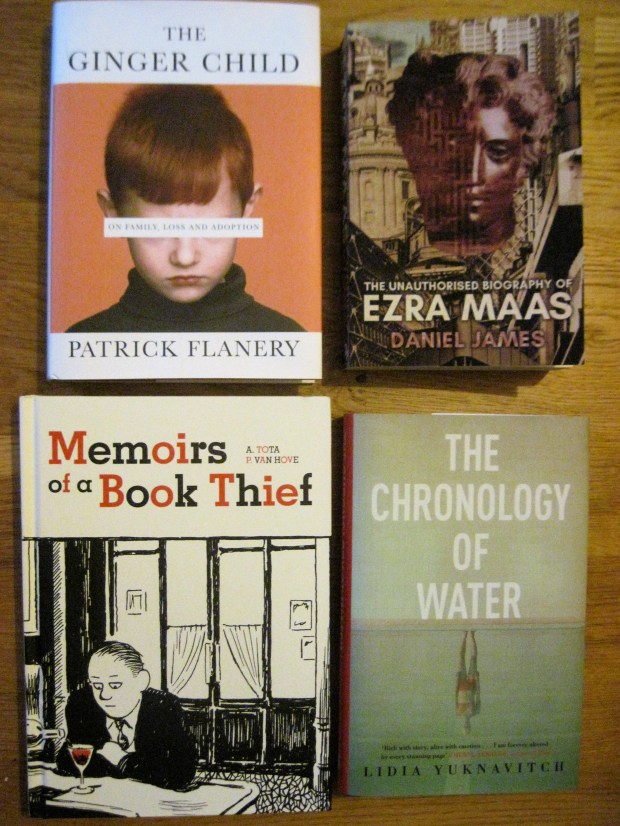
The Ginger Child: On Family, Loss and Adoption by Patrick Flanery
Patrick Flanery is a professor of creative writing at Queen Mary University of London and the author of four novels. In his first nonfiction book, he chronicles the arduous four-year journey he and his husband took to try and become parents. For a short time they considered surrogacy, but it’s so difficult in the UK that they switched tracks to domestic adoption.
 The resulting memoir is a somber, meditative book that doesn’t gloss over the difficulties of queer family-making, but also sees some potential advantages: to an extent, one has the privilege of choice – he and Andrew specified that they couldn’t raise a child with severe disabilities or trauma, but were fine with one of any race – whereas biological parents don’t really have any idea of what they’re going to get. However, same-sex couples are plagued by bureaucracy and, yes, prejudice still. Nothing comes easy. They have to fill out a 50-page questionnaire about their concerns and what they have to offer a child. A social worker humiliates them by forcing them to do a dance-off video game to prove that a pair of introverted, cultured academics can have fun, too.
Eventually there’s a successful match and they have tentative meetings with four-year-old O—, his parents’ fifth child, now in foster care. But this is not a blithe story of everything going right. I enjoyed the glimpses of Flanery’s growing-up years in Nebraska and the occasional second-person address to O—, but there is a lot more theory and cultural criticism than I expected, and much of the film talk, at least, feels like irrelevant asides.
With thanks to Atlantic Books for the free copy for review.
The Unauthorised Biography of Ezra Maas by Daniel James
This is a twisty, clever meta novel about “Daniel James” desperately trying to write a biography of Ezra Maas, an enigmatic artist who grew up a child prodigy in Oxford and attracted a cult following in 1960s New York City, where he was a friend of Warhol et al. But, with rumors abounding that The Maas Foundation is preparing to announce Ezra’s death in 2011, James finds that his subject’s story keeps shifting shape and even disappearing around him – as one interviewee tells him, “Maas is a black hole. His presence draws everything in, warps, destroys, changes, and rewrites it.”
 The book’s epistolary style deftly combines fragments of various document types: James’s biography-in-progress and an oral history he’s assembled from conversations with those who knew Maas, his narrative of his quest, transcripts of interviews and phone conversations, e-mails and more. All of this has been brought together into manuscript form by an anonymous editor whose presence is indicated through coy but increasingly tiresome long footnotes.
Look at the sort of authors who get frequent mentions in the footnotes, though, and you’ll get an idea of whether this might appeal to you: Paul Auster, Samuel Beckett, George Orwell and Thomas Pynchon. I enjoyed the noir atmosphere – complete with dream sequences and psychiatric evaluations – and the way that James the “writer-detective” has to careen around Europe and America looking for answers; it all feels rather like a superior Jason Bourne film.
My thanks to the author for sending a free signed copy for review.
Memoirs of a Book Thief by Alessandro Tota (illustrated by Pierre Van Hove)
[translated from the French by Edward Gauvin]
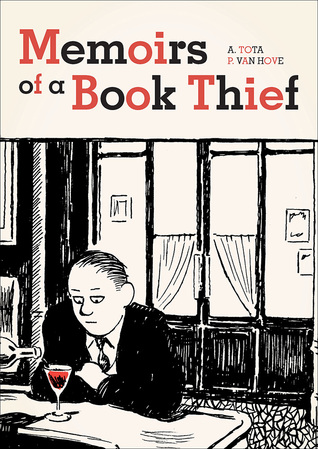 In April 1953, Daniel Brodin translates an obscure Italian poem in his head to recite at a poetry reading but, improbably, someone recognizes it. Soon afterwards, he’s also caught stealing a book from a shop. Just a little plagiarism and shoplifting? It might have stayed that way until he met Gilles and Linda, fellow thieves, and their bodyguard, Jean-Michel, a big blond goon with Gérard Dépardieu’s nose and haircut. Now he’s known as “Klepto” and is part of a circle that drinks at the Café Sully and mixes with avant-garde and Existentialist figures. He’s content with being a nobody and writing his memoirs (the book within the book) – until Jean-Michel makes him a proposition.
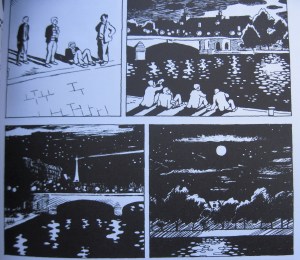
The book is entirely in black and white, which makes it seem unfinished, and the style is a little grotesque. For instance, Brodin is almost always depicted with beads of sweat rolling off his head. The intricate outdoor scenes were much more to my taste than the faces. The plot is also slightly thin and the ending abrupt. So, compared with many other graphic novels, this is not one I’m likely to recommend. 
With thanks to SelfMadeHero for the free copy for review.
The Chronology of Water by Lidia Yuknavitch
This really blew me away. “Out of the sad sack of sad shit that was my life, I made a wordhouse,” Yuknavitch writes. Her nonlinear memoir ranges from her upbringing with an alcoholic, manic-depressive mother and an abusive father via the stillbirth of her daughter and her years of alcohol and drug use through to the third marriage where she finally got things right and allowed herself to feel love again after so much numbness. Reading this, you’re amazed that the author is still alive, let alone thriving as a writer.
 Ken Kesey, who led a collaborative novel-writing workshop in which she participated in the late 1980s, once asked her what the best thing was that ever happened to her. Swimming, she answered, because it felt like the only thing she was good at. In the water she was at home and empowered. Kesey reassured her that swimming wasn’t her only talent: there is some truly dazzling writing here, veering between lyrical stream-of-consciousness and in-your-face informality.
There are so many vivid sequences, but two that stood out for me were cutting down a tree the Christmas she was four and the way her mother turned her teeth-chattering crisis into a survival game, and the drunken collision she had after her second ex-husband told her he was seeing a 23-year-old. With the caveat that this is extremely explicit stuff (the author is bisexual; there’s an all-female threesome and S&M parties), I would still highly recommend it to readers of Joan Didion, Anne Lamott and Maggie Nelson. The watery metaphor flowing through, as one woman learns to float free of what once threatened to drown her, is only part of what makes it unforgettable. You’ll marvel at what a memoir can do.
A couple of favorite passages:
“It is possible to carry life and death in the same sentence. In the same body. It is possible to carry love and pain. In the water, this body I have come to slides through the wet with a history. What if there is hope in that?”
“Make up stories until you find one you can live with. Make up stories as if life depended on it.”
With thanks to Canongate for the free copy for review.
 Bookish Beck = Rebecca Foster. American transplant to England. Freelance proofreader and book reviewer.
 Bookish Beck