Poetry Month Reviews & Interview: Amy Gerstler, Richard Scott, Etc.
April is National Poetry Month in the USA, and I was delighted to have several of my reviews plus an interview featured in a special poetry issue of Shelf Awareness on Friday. I’ve also recently read Richard Scott’s second collection.
Wrong Winds by Ahmad Almallah
Palestinian poet Ahmad Almallah’s razor-sharp third collection bears witness to the devastation of Gaza.
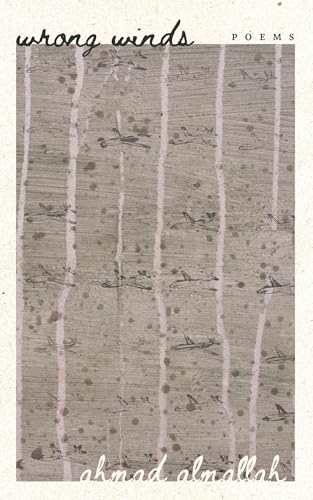 Through allusions, Almallah participates in an ancient lineage of poets, opening the collection with an homage to Al-Shanfarā and ending with “A Lament” for Zbigniew Herbert. Federico García Lorca is also a major influence. Occasional snippets of Arabic, French, and German, and accounts of travels in Berlin and Granada, reveal a cosmopolitan background. The speaker in “Loose Strings” considers exile, engaged in the potentially futile search for a homeland that is being destroyed: “What does it mean to be a poet, another ‘Homer’/ going home? Trying to find one?”
Tonally, anger and grief alternate, while alliteration and slant rhymes (sweat/sweet) create entrancing rhythms. In “Before Gaza, a Fall” and “My Tongue Is Tied Up Today,” staccato phrasing and spaced-out stanzas leave room for the unspeakable. The pièce de résistance is “A Holy Land, Wasted” (co-written with Huda Fakhreddine), which situates T.S. Eliot’s existential ruin in Palestine. Almallah contrasts Gaza then and now via childhood memories and adult experiences at checkpoints. His pastiche of “The Waste Land” starts off funny (“April is not that bad actually”) but quickly darkens, scorning those who turn away from tragedy: “It’s not good/ for your nerves to watch/ all that news, the sights/ of dead children.” The wordplay dazzles again here: “to motes the world crumbles, shattered/ like these useless mots.”
For Almallah, who now lives in Philadelphia, Gaza is elusive, enduringly potent—and mourned. Sometimes earnest, sometimes jaded, Wrong Winds is a remarkable memorial. 
Is This My Final Form? by Amy Gerstler
 Amy Gerstler’s exceptional book of poetry leaps from surrealism to elegy as it ponders life’s unpredictability.
The language of transformation is integrated throughout. Aging and the seasons are examples of everyday changes. “As Winter Sets In” delivers “every day/ a new face you can’t renounce or forsake.” “When I was a bird,” with its interspecies metamorphoses, introduces a more fantastical concept: “I once observed a scurry of squirrels,/ concealed in a hollow tree, wearing seventeenth/ century clothes. Alas, no one believes me.” Elsewhere, speakers fall in love with the bride of Frankenstein or turn to dinosaur urine for a wellness regimen.
The collection contains five thematic slices. Part I spotlights women behaving badly (such as “Marigold,” about a wild friend; and “Mae West Sonnet,” in an hourglass shape); Part II focuses on music and sound. The third section veers from the inherited grief of “Schmaltz Alert” to the miniplay “Siren Island,” a tragicomic Shakespearean pastiche. Part IV spins elegies for lives and works cut short. The final subset includes a tongue-in-cheek account of pandemic lockdown activities (“The Cure”) and wry advice for coping (“Wound Care Instructions”).
Monologues and sonnets recur—the title’s “form” refers to poetic structures as much as to personal identity. Alliteration plus internal and end rhymes create satisfying resonance. In the closing poem, “Night Herons,” nature puts life into perspective: “the whir of wings/ real or imagined/ blurs trivial things.”
This delightfully odd collection amazes with its range of voices and techniques.
I also had the chance to interview Amy Gerstler, whose work was new to me. (I’ll certainly be reading more!) We chatted about animals, poetic forms and tone, Covid, the Los Angeles fires, and women behaving ‘badly’. 
Little Mercy by Robin Walter
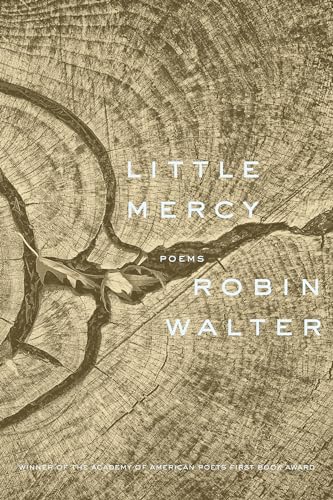 In Robin Walter’s refined debut collection, nature and language are saving graces.
Many of Walter’s poems are as economical as haiku. “Lilies” entrances with its brief lines, alliteration, and sibilance: “Come/ dark, white/ petals// pull/close// —small fists// of night—.” A poem’s title often leads directly into the text: “Here” continues “the body, yes,/ sometimes// a river—little/ mercy.” Vocabulary and imagery reverberate, as the blessings of morning sunshine and a snow-covered meadow salve an unquiet soul (“how often, really, I want/ to end my life”).
Frequent dashes suggest affinity with Emily Dickinson, whose trademark themes of loss, nature, and loneliness are ubiquitous here, too. Vistas of the American West are a backdrop for pronghorn antelope, timothy grass, and especially the wrens nesting in Walter’s porch. Animals are also seen in peril sometimes: the family dog her father kicked in anger or a roadkilled fox she encounters. Despite the occasional fragility of the natural world, the speaker is “held by” it and granted “kinship” with its creatures. (How appropriate, she writes, that her mother named her for a bird.)
The collection skillfully illustrates how language arises from nature (“while picking raspberries/ yesterday I wanted to hold in my head// the delicious names of the things I saw/ so as to fold them into a poem later”—a lovely internal rhyme) and becomes a memorial: “Here, on earth,/ we honor our dead// by holding their names/ gentle in our hollow mouths—.”
This poised, place-saturated collection illuminates life’s little mercies. 
The three reviews above are posted with permission from Shelf Awareness.
That Broke into Shining Crystals by Richard Scott
 I’ve never forgotten how powerful it was to hear Richard Scott read aloud from his forthcoming collection, Soho, at the Faber Spring Party in February 2018. Back then I called his work “amazingly intimate,” and that is true of this second collection as well.
It also mirrors his debut in that the book is in several discrete sections – like movements of a musical composition – and there are extended allusions to particular poets (there, Paul Verlaine and Walt Whitman; here, Andrew Marvell and Arthur Rimbaud). But there is one overall theme, and it’s a tough one: Scott’s boyhood grooming and molestation by a male adult, and how the trauma continues to affect him.
Part I contains 21 “Still Life” poems based on particular paintings, mostly by Dutch or French artists (see the Notes at the end for details). I preferred to read the poems blind so that I didn’t have the visual inspiration in my head. The imagery is startlingly erotic: the collection opens with “Like a foreskin being pulled back, the damask / reveals – pelvic bowl of pink-fringed shadow” (“Still Life with Rose”) and “Still Life with Bananas” starts “curved like dicks they sit – cosy in wicker – an orgy / of total yellowness – all plenty and arching – beyond / erect – a basketful of morning sex and sugar and sunlight”.
“O I should have been the / snail,” the poet laments; “Living phallus that can hide when threatened. But / I’m the oyster. … Cold jelly mess of a / boy shucked wide open.” The still life format allows him to freeze himself at particular moments of abuse or personal growth; “still” can refer to his passivity then as well as to his ongoing struggle with PTSD.
Part II, “Coy,” is what Scott calls a found poem or “vocabularyclept,” rearranging the words from Marvell’s 1681 “To His Coy Mistress” into 21 stanzas. The constraint means the phrases are not always grammatical, and the section as a whole is quite repetitive.
The title of the book (and of its final section) comes from Rimbaud and, according to the Notes, the 22 poems “all speak back to Arthur Rimbaud’s Illuminations but through the prism of various crystals and semi-precious stones – and their geological and healing properties.” My lack of familiarity with Rimbaud and his circle made me wonder if I was missing something, yet I thrilled to how visual the poems in this section were.
As with the Still Lifes, there’s an elevated vocabulary, forming a rich panoply of plants, creatures, stones, and colours. Alliteration features prominently throughout, as in “Citrine”: “O citrine – patron saint of the molested, sunny eliminator – crown us with your polychromatic glittering and awe-flecks. Offer abundance to those of us quarried. A boy is igneous.”
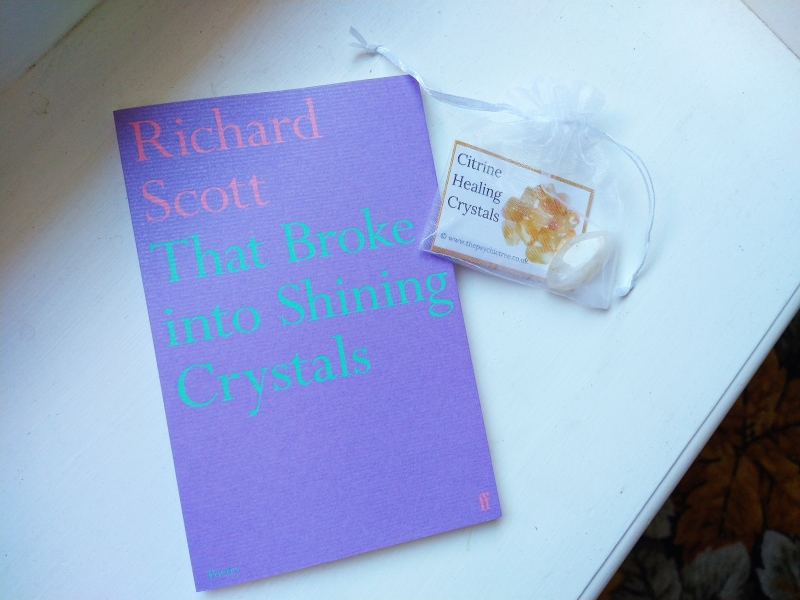
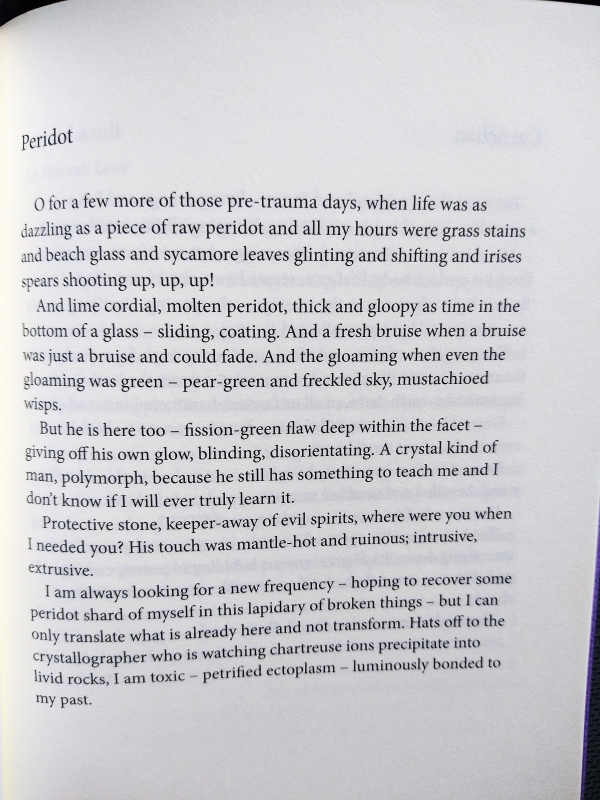
I’ve photographed “Peridot” (which was my mother’s birthstone) as an example of the before-and-after setup, the gorgeous language including alliteration, the rhetorical questioning, and the longing for lost innocence.
It was surprising to me that Scott refers to molestation and trauma so often by name, rather than being more elliptical – as poetry would allow. Though I admire this collection, my warmth towards it ebbed and flowed: I loved the first section; felt alienated by the second; and then found the third rather too much of a good thing. Perhaps encountering Part I or III as a chapbook would have been more effective. As it is, I didn’t feel the sections fully meshed, and the theme loses energy the more obsessively it’s repeated. Nonetheless, I’d recommend it to readers of Mark Doty, Andrew McMillan and Brandon Taylor.
Published today. With thanks to Faber for the free copy for review. An abridged version of this review first appeared in my Instagram post of 11 April.
Read any good poetry recently?
April 3rd Releases by Emily Jungmin Yoon & Jean Hannah Edelstein
It’s not often that I manage to review books for their publication date rather than at the end of the month, but these two were so short and readable that I polished them off over the first few days of April. So, out today in the UK: a poetry collection about Asian American identity and environmental threat, and a memoir in miniature about how body parts once sexualized and then functionalized are missed once they’re gone.
Find Me as the Creature I Am by Emily Jungmin Yoon (2024)
 The Korean American poet’s second full-length work is broadly about loss experienced or expected – but also about the love that keeps us going in dire times. The free verse links personal bereavement with larger-scale tragedies, including climate grief. “All my friends who loved trees are dead” tells of Yoon’s grandmother’s death, while “I leave Asia and become Asian” remembers the murders of eight Asian spa workers in Atlanta in 2021. Violence against women, and the way the Covid-19 pandemic spurred further anti-Asian racism, are additional topics in the early part of the book. For me, Part III’s environmental poems resonated the most. Yoon reflects on the ways in which we are, sometimes unwittingly, affecting the natural world, especially marine ecosystems: “there is no ‘eco-friendly’ way to swim with dolphins. / We do not have to touch everything we love,” she writes. “I look at the ocean like it’s goodbye. … I look at your face / like it’s goodbye.” This is a tricky one to assess; while I appreciated the themes, I did not find the style or language distinctive. The collection reminded me of a cross between Rupi Kaur and Jenny Xie.
Published in the USA by Knopf on October 22, 2024. With thanks to Atlantic Books for the free copy for review.
Breasts: A Relatively Brief Relationship by Jean Hannah Edelstein
From my Most Anticipated list. I loved Edelstein’s 2018 memoir This Really Isn’t About You, and I regularly read her Substack. This micro-memoir in three essays explores the different roles breasts have played in her life: “Sex” runs from the day she went shopping for her first bra as a teenager with her mother through to her early thirties living in London. Edelstein developed early and eventually wore size DD, which attracted much unwanted attention in social situations and workplaces alike. (And not just a slightly sleazy bar she worked in, but an office, too. Twice she was groped by colleagues; the second time she reported it. But: drunk, Christmas party, no witnesses; no consequences.) “It felt like a punishment, a consequence of my own behavior (being a woman, having a fun night out, doing these things while having large breasts),” she writes.
 “Food” recounts how her perspective on her breasts changed when she had her two children via IVF – so they wouldn’t inherit Lynch syndrome from her – and initially struggled to breastfeed. “I wanted to experience the full utility of my breasts,” she explains, so, living in Brooklyn now, she consulted a lactation consultant known as “the breast whisperer.” Part 3 is “Cancer”: when Edelstein was 41, mammograms discovered Stage 0 cancer in one breast. “For so long I’d been subject to unwelcome opinions about the kind of person that I was because of the size of my breasts.” But now it was up to her. She chose a double mastectomy for balance, with simultaneous reconstruction by a plastic surgeon.
Although this is a likable book, the retelling is quite flat; better that than mawkish, certainly, but none of the experiences feel particularly unique. It’s more a generic rundown of what it’s like to be female – which, yes, varies to an extent but not that much if we’re talking about the male gaze. There wasn’t the same spark or wit that I found in Edelstein’s first book. Perhaps in the context of a longer memoir, I would have appreciated these essays more.
With thanks to Phoenix for the free copy for review.
Reading Wales Month: Tishani Doshi & Ruth Janette Ruck (#ReadingWales25)
It’s my first time participating in Reading Wales Month, hosted this year by Karen of BookerTalk. I happened to be reading a collection by a Welsh-Gujarati poet, and added a Welsh hill farming memoir to my stack so I could review two books towards this challenge.

A God at the Door by Tishani Doshi (2021)
 I discovered Doshi through the phenomenal Girls Are Coming out of the Woods, which I reviewed for Wasafiri literary magazine. This fourth collection is just as rich in long, forthright feminist and political poems. Violence against women is a theme that crops up again and again in her work, as in “Every Unbearable Thing”: “this is not / a poem against longing / but against the kind of one-way / desire that herds you into a / dead-end alley”. The arresting title of the sestina “We Will Not Kill You. We’ll Just Shoot You in the Vagina” is something the former Philippines president Rodrigo Duterte said in 2018 in reference to female communist rebels. Doshi links femicide and ecocide with “A Possible Explanation as to Why We Mutilate Women & Trees, which Tries to End on a Note of Hope”. Her poem titles are often striking and tell stories in and of themselves. Several made me laugh, such as “Advice for Pliny the Elder, Big Daddy of Mansplainers,” which is shaped like a menstrual cup.
In defiance of those who would destroy it, Doshi affirms the primacy of the body. The joyfully absurd “In a Dream I Give Birth to a Sumo Wrestler” ends with the lines “How easy to forget / that all we have are these bodies. That all of this, all of this is holy.” Poems are inspired by Emily Dickinson and Frida Kahlo as well as by real events that provoke outrage. The clever folktale-like pair “Microeconomics” and “Macroeconomics” contrasts a woman dutifully growing peas and trying to get ahead with exploitative situations: “One man sits on another if he can. … One man goes / into the mines for another man to sparkle.” I also found many wise words on grief. Doshi is a treasure. (Secondhand – Green Ink Booksellers, Hay-on-Wye) 
Place of Stones by Ruth Janette Ruck (1961)
“Farming is rather like the theatre—whatever happens the show must go on.”
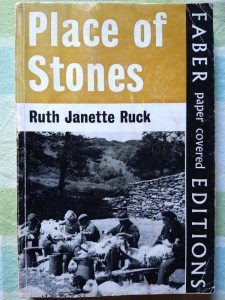 I reviewed Ruck’s Along Came a Llama several years ago when it was re-released by Faber. This was the first of her three memoirs about life at Carneddi (which means “place of stones”), the hill farm in North Wales that she and her family took over in the 1950s. After college, Ruck trained at a farm on the Isle of Wight and later completed an apprenticeship at Oathill Farm, Oxfordshire under George Henderson, who seems to have been something of a celebrity farmer back then (he contributes a brief but complimentary foreword). By age 20 she was in full charge of Carneddi, where they kept sheep, cattle and fowl. Many of their neighbours had Welsh as a first or only language. At that time, farmers were eligible for government grants. Ruck put in an intensive hen-rearing barn and started growing strawberries and rearing turkeys for Christmas.
Even when things were going well, it was a hand-to-mouth existence and storms or illness could set everything back. The Rucks renovated a nearby cottage to serve as a holiday let. Another windfall came in the bizarre form of a nearby film shoot by Twentieth Century Fox (The Inn of the Sixth Happiness, starring Ingrid Bergman). Mountainous North Wales stood in for China, and the film crew hired Ruck as a driver and, like many locals, as an occasional extra. This book was light and mildly entertaining, though probably more detailed about everyday farm work and projects than I needed. I was reminded again of Doreen Tovey, especially in the passage about Topsy the pet black sheep, but also this time of Betty Macdonald (The Egg and I) and Janet White (The Sheep Stell). (Secondhand – Lions bookshop, Alnwick)
Reading Ireland Month, I: Donoghue, Longley, Tóibín
St. Patrick’s Day is a good occasion to compile my first set of contributions to Cathy’s Reading Ireland Month. Today I have an early novel by a favourite author, a poetry collection inspired by nature and mythology, and a sequel that I read for book club.
Stir-Fry by Emma Donoghue (1994)
After enjoying Slammerkin so much last year, I decided to catch up on more of Donoghue’s way-back catalogue. She tends to alternate between contemporary and historical settings. I have a slight preference for the former, but she can excel at both; it really depends on the book. I reckon this was edgy for its time. Maria (whose name rhymes with “pariah”) arrives in Dublin for university at age 17, green in every way after a religious upbringing in the countryside. In response to a flat-share advert stipulating “NO BIGOTS,” she ends up living with Ruth and Jael (pronounced “Yale”), two mature students. Ruth is the mother hen, doing all the cooking and fretting over the others’ wellbeing; Jael is a wild, henna-haired 30-year-old prone to drinking whisky by the mug-full. Maria attends lectures, takes a job cleaning office buildings, and finds a friend circle through her backstage student theatre volunteering. She’s mildly interested in American exchange student Galway and then leather-clad Damien (until she realizes he has a boyfriend), but nothing ever goes further than a kiss.
 It’s obvious to readers that Ruth and Jael are a couple, but Maria doesn’t work it out until a third of the way into the book. At first she’s mortified, but soon the realization is just one more aspect of her coming of age. Maria’s friend Yvonne can’t understand why she doesn’t leave – “how can you put up with being a gooseberry?” – but Maria insists, “They really don’t make me feel left out … I think they need me to absorb some of the static. They say they’d be fighting like cats if I wasn’t around to distract them.” Scenes alternate between the flat and the campus, which Donoghue depicts as a place where radicalism and repression jostle for position. Ruth drags Maria to a Tuesday evening Women’s Group meeting that ends abruptly: “A porter put his greying head in the door to comment that they’d have to be out in five minutes, girls, this room was booked for the archaeologists’ cheese ’n’ wine.” Later, Ruth’s is the Against voice in a debate on “That homosexuality is a blot on Irish society.”
Mostly, this short novel is a dance between the three central characters. The Irish-accented banter between them is a joy. Jael’s devil-may-care attitude contrasts with Ruth and Maria’s anxiety about how they are perceived by others. Ruth and Jael are figures in the Hebrew Bible and their devotion/boldness dichotomy is applicable to the characters here, too. The stereotypical markers of lesbian identity haven’t really changed, but had Donoghue written this now I think she would at least have made Maria a year older and avoided negativity about Damien and Jael’s bisexuality. At heart this is a sweet romance and an engaging picture of early 1990s feminism, but it doesn’t completely steer clear of predictability and I would have happily taken another 50–70 pages if it meant she could have fleshed out the characters and their interactions a little more. [Guess what was for my lunch this afternoon? Stir fry!] (Secondhand – Awesomebooks.com) 
The Ghost Orchid by Michael Longley (1995)
 Longley’s sixth collection draws much of its imagery from nature and Greek and Roman classics. Seven poems incorporate quotations and free translations of the Iliad and Odyssey; elsewhere, he retells the story of Baucis and Philemon and other characters from Ovid. The Orient and the erotic are also major influences; references to Hokusai bookend poems about Chinese artefacts. Poppies link vignettes of the First and Second World Wars. Longley’s poetry is earthy in its emphasis on material objects and sex. Alliteration and slant rhymes are common techniques and the vocabulary is always precise. This was the third collection I’ve read by the late Belfast poet, and with its disparate topics it didn’t all cohere for me. My two favourite poems are naughty indeed:
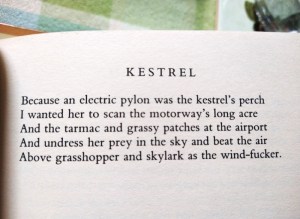
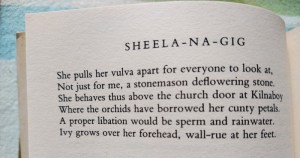
(Secondhand – Green Ink Booksellers, Hay-on-Wye)
Long Island by Colm Tóibín (2024)
{SPOILERS in this one}
 I read Brooklyn when it first came out and didn’t revisit it (via book or film) before reading this. While recent knowledge of the first book isn’t necessary, it probably would make you better able to relate to Eilis, who is something of an emotional blank here. She’s been married for 20 years to Tony, a plumber, and is a mother to two teenagers. His tight-knit Italian American family might be considered nurturing, but for her it is more imprisoning: their four houses form an enclave and she’s secretly relieved when her mother-in-law tells her she needn’t feel obliged to join in the Sunday lunch tradition anymore.
When news comes that Tony has impregnated a married woman and the cuckolded husband plans to leave the baby on the Fiorellos’ doorstep when the time arrives, Eilis checks out of the marriage. She uses her mother’s upcoming 80th birthday as an excuse to go back to Ireland for the summer. Here Eilis gets caught up in a love triangle with publican Jim Farrell, who was infatuated with her 20 years ago and still hasn’t forgotten her, and Nancy Sheridan, a widow who runs a fish and chip shop and has been Jim’s secret lover for a couple of years. Nancy has a vision of her future and won’t let Eilis stand in her way.
I felt for all three in their predicaments but most admired Nancy’s pluck. Ironically given the title, the novel spends more of its time in Ireland and only really comes alive there. There’s also a reference to Nora Webster – cute that Tóibín is trying out the Elizabeth Strout trick of bringing multiple characters together in the same fictional community. But, all told, this was just a so-so book. I’ve read 10 or so works by Tóibín now, in all sorts of genres, and with its plain writing this didn’t stand out at all. It got an average score from my book club, with one person loving it, a couple hating it, and most fairly indifferent. (Public library)
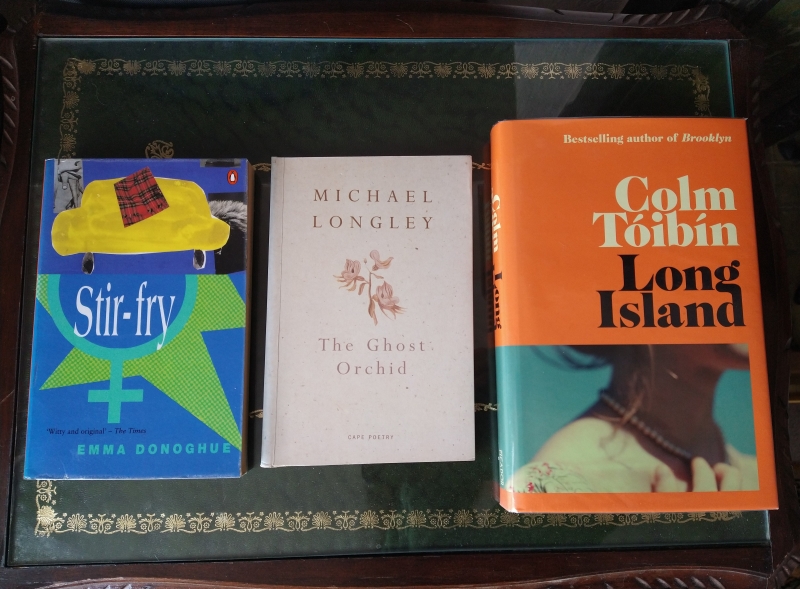
Another batch will be coming up before the end of the month!
#ReadIndies Wrap-Up: February Releases (Jukes, Spence) & Review Catch-Up (Buttery, Foust)
Good riddance to February, which added insult to injury on its final day when my in-laws’ neighbour reversed into the car we were borrowing from a book club friend and smashed the driver’s-side window. The blue skies and crocuses of recent days have been most welcome. The best I can say for the month just departed is that I managed to review 15 books for Kaggsy and Lizzy Siddal’s Reading Independent Publishers Month challenge. These came from 10 splendid publishers: Atlantic Books, Backbone Press, Carcanet Press, Counterpoint, Elliott & Thompson, The Emma Press, Faber, Icon Books, Saraband and Sort Of Books.
Mother Animal by Helen Jukes
When she found out she was pregnant, Jukes (author of A Honeybee Heart Has Five Openings) lost herself in research, looking for parallels in the natural world. A friend had told her that “childbirth puts you more in touch with your animal side.” Her daughter was born at the start of the pandemic and so early motherhood was perhaps more than usually isolated and emotionally challenging for her. She had an unexpected C-section after the placenta failed to nourish her daughter sufficiently, and then struggled to breastfeed. “I was, I realised, a little afraid of the baby. I’d expected to feel a sense of recognition – to see in her face some sign of familiarity,” but that wasn’t the case. “She was so … other.”
The long thematic chapters present Jukes’s experiences in parallel to those of other mothering creatures with pregnancy, birth, lactation, making a home (nesting) and enlisting the help of the community. Peppered throughout are trivia she shares with boyfriend, baby and readers. Such as that burying beetles lay eggs on a carcass so their babies feed on carrion from day one. That bonobo females attend births, acting as midwives for each other. That Madrid’s storks have started eating and lining their nests with what they find in landfill instead of migrating to Africa. The “Did you know?” litany quickly becomes precious. The details are not that interesting in themselves, and not sufficiently synthesized to be meaningful. The same factoid about leopard tree iguanas is repeated seven pages apart. A significant amount of information comes from Bitch by Lucy Cooke, which I would recommend instead.
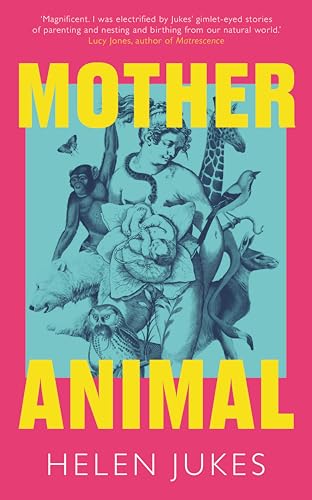
As hybrid scientific memoirs of motherhood go, Lucy Jones’s Matrescence can’t be beat. For its social and political engagement, Jennifer Case’s We Are Animals is a valuable companion. Jukes’s offering pales by comparison because her story – not having the delivery she wanted, struggling to connect with her baby, her relationship with the father falling apart – is all too common, and she doesn’t have the scientific bona fides for readers to accept her as a valid source of zoological facts.
I would make an exception, though, for the central chapter, “Forever Milk,” which might be condensed and published in a big-name newspaper as a Rachel Carson-like exposé about endocrine disruptors and forever chemicals. Like any mother, Jukes wants nothing more than to protect her daughter, but how can she when household products (waterproof clothing, non-stick pans, cleaning sprays) contain toxic chemicals and her breastmilk is sure to be contaminated? Add in microplastics and the situation is bleak. We don’t know singly, let alone collectively, what these pollutants are doing to species in the long term, but most likely they interfere with reproduction and alter behaviour. The central message of this chapter, and the book as a whole, is that animals are amazing but vulnerable. “What is this world if nowhere is separate – nowhere safe?” If you think about this stuff much, you can’t bear it. Yet it’s a truth we all have to live with. It’s a brave author who dares sit with the unthinkable.
With thanks to Elliott & Thompson for the free copy for review.
Daughter of the Sun by Rachel Spence
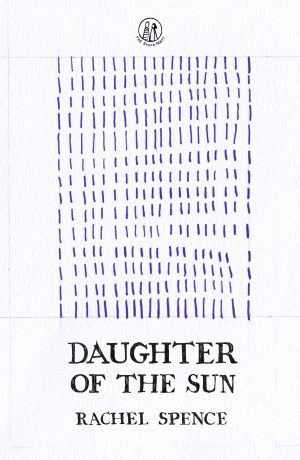 The Emma Press has published poetry pamphlets before, but this is their inaugural full-length work. Rachel Spence’s second collection is in two parts: first is “Call & Response,” a sonnet sequence structured as a play and considering her relationship with her mother. Act 1 starts in 1976 and zooms forward to key moments when they fell out and then reversed their estrangement. The next section finds them in the new roles of patient and carer. “Your final check-up. August. Nimbus clouds / prised open by Delft blue. Waiting is hard.” In Act 3, death is near; “in that quantum hinge, we made / an alphabet from love’s ungrammared stutter.” The poems of the last act are dated precisely, not just to a month and year as earlier but down to the very day, hour and minute. Whether in Ludlow or Venice, Spence crystallizes moments from the ongoingness of grief, drawing images from the natural world.
The second part of the book, “Medea’s Song,” is looser in style and more dispersed across the page. It’s a feminist reinterpretation that refuses to make of Medea a simple murderess, instead redeeming her as a wise woman. “Do not call them seers or sisters // They are the owls of history // nightfliers outliers”. I’m not drawn to Greek myth updates but I expect this would be rewarding for fans of similar projects by Fiona Benson and Anne Carson. Some of the specific vocabulary from the first section recurs, linking the two in a satisfying way.
With thanks to The Emma Press for the free copy for review.
I’m also catching up on two 2024 releases from indie publishers that I was sent for review:
Knead to Know: A History of Baking by Neil Buttery
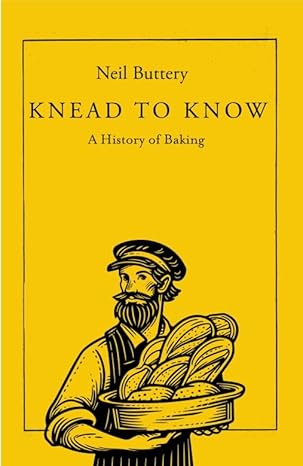 Not only the pun-tastic title, but also the excellent nominative determinism of chef and food historian Dr Neil Buttery’s name, earned this a place in my 2024 Superlatives post. In not quite 240 pages, it achieves the improbable, producing an exhaustive history of baked goods through miniature essays about every conceivable subcategory. Although the focus is on British baking, the story begins in ancient times with the first grains and the earliest cooking technique of making griddlecakes on a hearthstone. (Speaking of which, make sure you’re prepared for Pancake Day, aka Shrove Tuesday, this week!) Across multi-part chapters about bread, biscuits and cakes, pies and puddings, and patisserie, Buttery spotlights regional specialties, many of them familiar (Cornish pasties and Eccles cakes); a few have fallen into obscurity (Gloucester pancakes and Yorkshire Christmas pyes). Some dishes’ origin stories are apocryphal, while others can be traced back to historical cookbooks.
I was fascinated by the evolution of traditional holiday bakes. “The long tapering shape of the stollen is supposed to represent the infant Christ wrapped in His swaddling.” In general, there is just the right amount of chemistry, and while in places the writing is shaky or at least poorly edited (“populous” instead of populace!), there are good quips, too: “dried fruit haters do have a miserable time at Christmas to be fair.” I read the book in bites across a number of months, which felt appropriate because it’s more a reference text for the kitchen shelf than a narrative to read straight through. Good for picking up now and then over a cup of tea.
With thanks to Icon Books for the free copy for review.
You Are Leaving the American Sector: Love Poems by Rebecca Foust
 Foust’s fifth collection – at 41 pages, the length of a long chapbook – is in conversation with the language and storyline of 1984. George Orwell’s classic took on new prescience for her during Donald Trump’s first presidential term, a period marked by a pandemic as well as by corruption, doublespeak and violence. “Rally Insurrection” is a clever erasure poem illustrating how a propagandist might rebrand the storming of the Capitol on 6 January 2021: instead of “a mob came to Washington to / disrupt the peaceful transfer of power,” the Ministry of Truth bulletin would read “a crowd came to Washington to fight / for their country”. “Language Matters” insists that “language / is the most dangerous weapon in any totalitarian arsenal” and warns “A dictator / might do these things, but surely not // a president.” How much more strongly does this resonate in 2025.
The second and third sections engage directly with the story of Julia and Winston – the collection takes its seemingly inapt subtitle from Foust’s appreciation of 1984’s “idea of love as a subversive act affirming free will, expression, and personal privacy”. Her bold verse also confronts the repeal of abortion rights (“Breaking News”) and toxic masculinity (“Consent: A Primer”). There are some internal rhymes and slant rhymes, as well as a few end rhymes all the more striking for their rarity. I only wish this had been published a few years sooner, when its message might have seemed timelier – though, unfortunately, it is still apropos.
Some favorite lines:
“How can a future exist if we can erase or revise the past?”
“2016, dark year / of the ascension / of our Lord the Mad Clown”
“It’s happening now, / somewhere. Not here, // not yet. But so long as Big Brother is out there— / & he will always be out there—it could, // & one day, maybe it will.”
Published by Backbone Press in the USA. With thanks to the author for the e-copy for review.
Which of these appeal to you? What indie publishers have you read from recently?
The Moomins and the Great Flood (#Moomins80) & Poetry (#ReadIndies)
To mark the 80th anniversary of Tove Jansson’s Moomins books, Kaggsy, Liz et al. are doing a readalong of the whole series, starting with The Moomins and the Great Flood. I received a copy of Sort Of Books’ 2024 reissue edition for Christmas, so I was unknowingly all set to take part. I also give quick responses to a couple of collections I read recently from two favourite indie poetry publishers in the UK, The Emma Press and Carcanet Press. These are reads 9–11 for Kaggsy and Lizzy Siddal’s Reading Independent Publishers Month challenge.
The Moomins and the Great Flood by Tove Jansson (1945; 1991)
[Translated from the Swedish by David McDuff]
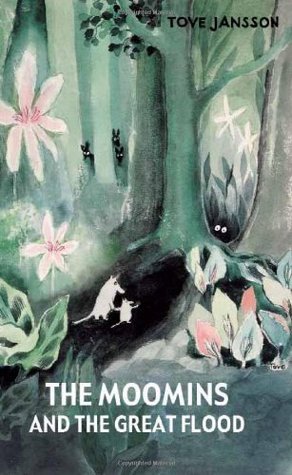 Moomintroll and Moominmamma are the only two Moomins who appear here. They’re nomads, looking for a place to call home and searching for Moominpappa, who has disappeared. With them are “the creature” (later known as Sniff) and Tulippa, a beautiful flower-girl. They encounter a Serpent and a sea-troll and make a stormy journey in a boat piloted by the Hattifatteners. My favourite scene has Moominmamma rescuing a cat and her kittens from rising floodwaters. The book ends with the central pair making their way to the idyllic valley that will be the base for all their future adventures. Sort Of and Frank Cottrell Boyce, who wrote an introduction, emphasize how (climate) refugees link Jansson’s writing in 1939 to today, but it’s a subtle theme. Still, one always worth drawing attention to.
I read my first Moomins tale in 2011 and have been reading them out of order and at random ever since; only one remains unread. Unfortunately, I did not find it rewarding to go right back to the beginning. At barely 50 pages (padded out by the Cottrell-Boyce introduction and an appendix of Jansson’s who’s-who notes), this story feels scant, offering little more than a hint of the delightful recurring characters and themes to come. Jansson had not yet given the Moomins their trademark rounded hippo-like snouts; they’re more alien and less cute here. It’s like seeing early Jim Henson drawings of Garfield before he was a fat cat. That just ain’t right. I don’t know why I’d assumed the Moomins are human-size. When you see one next to a marabou stork you realize how tiny they are; Jansson’s notes specify 20 cm tall. (Gift)
The Emma Press Anthology of Homesickness and Exile, ed. by Rachel Piercey and Emma Wright (2014)
 This early anthology chimes with the review above, as well as more generally with the Moomins series’ frequent tone of melancholy and nostalgia. A couple of excerpts from Stephen Sexton’s “Skype” reveal a typical viewpoint: “That it’s strange to miss home / and be in it” and “How strange home / does not stay as it’s left.” (Such wonderfully off-kilter enjambment in the latter!) People are always changing, just as much as places – ‘You can’t go home again’; ‘You never set foot in the same river twice’ and so on. Zeina Hashem Beck captures these ideas in the first stanza of “Ten Years Later in a Different Bar”: “The city has changed like cities do; / the bar where we sang has closed. / We have changed like cities do.”
Departures, arrivals; longing, regret: these are classic themes from Ovid (the inspiration for this volume) onward. Holly Hopkins and Rachel Long were additional familiar names for me to see in the table of contents. My two favourite poems were “The Restaurant at One Thousand Feet” (about the CN Tower in Toronto) by John McCullough, whose collections I’ve enjoyed before; and “The Town” by Alex Bell, which personifies a closed-minded Dorset community – “The town wraps me tight as swaddling … When I came to the town I brought things with me / from outside, and the town took them / for my own good.” Home is complicated – something one might spend an entire life searching for, or trying to escape. (New purchase from publisher)
Gold by Elaine Feinstein (2000)
 I’d enjoyed Feinstein’s poetry before. The long title poem, which opens the collection, is a monologue by Lorenzo da Ponte, a collaborator of Mozart. Though I was not particularly enraptured with his story, there were some great lines here:
I wanted to live with a bit of flash and brio,
rather than huddle behind ghetto gates.
The last two stanzas are especially memorable:
Poor Mozart was so much less fortunate.
My only sadness is to think of him, a pauper,
lying in his grave, while I became
Professor of Italian literature.
Nobody living can predict their fate.
I moved across the cusp of a new age,
to reach this present hour of privilege.
On this earth, luck is worth more than gold.
Politics, manners, morals all evolve
uncertainly. Best then to be bold.
Best then to be bold!
Of the discrete “Lyrics” that follow, I most liked “Options,” about a former fiancé (“who can tell how long we would have / burned together, before turning to ash?”) and “Snowdonia,” in which she’s surprised when a memory of her father resurfaces through a photograph. Talking to the Dead was more consistently engaging. (Secondhand purchase – Bridport Old Books, 2023)
January Releases: Greathead, Kauffman, Mills & Watts (#ReadIndies)
I feel out of practice writing reviews after the endless period of sluggish and slightly lackluster reading that was January. Here we are at the start of Kaggsy and Lizzy Siddal’s Reading Independent Publishers Month challenge and I’m happy to make this my first tie-in post as these four books all happen to be from independent publishers. The first two are American novels (that could arguably be called linked short story collections) very much in my wheelhouse for their focus on dysfunctional families and disappointing characters. I also have a group biography aiming to illuminate bisexuality, and a poetry collection about girlhood/womanhood and nature.
The Book of George by Kate Greathead
The marketing for this novel courts relatability: you probably know a George – you might have dated one (women read the most litfic). Each chapter dates to a different period in George’s life, adolescence to late thirties. From the fact that 9/11 happened when he was a college freshman, I know he’s my exact contemporary, and I could indeed see bits of myself in this Everyman schmuck: indecisive, lazy, underachieving, privileged but never living up to his own or others’ expectations. Life keeps happening around him, but you wonder if he’ll ever make something happen for himself. Two gags are revealing: In college he is known for his impression of a clinically depressed penis going through airport security, and later he has 15 minutes of fame for appearing in a hidden-camera Super Bowl commercial. He’s been writing fiction for years – first a Stoner rip-off, then a Kerouac homage – but by the time he gets a short story collection together, it’s the height of #MeToo and he’s missed his moment to publish. Meanwhile, his cohort is doing great things, winning awards for documentaries (his pal Jeremiah) or becoming pro bono lawyers (his longsuffering girlfriend Jenny).
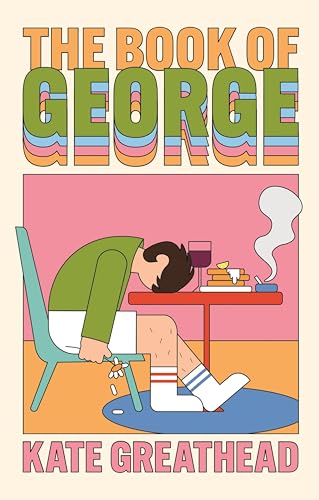 If you need to like a protagonist, expect frustration. Some of George’s behaviour is downright maddening, as when he obsessively plays his old Gameboy while his mother and Jenny pack up his childhood room. Tracing his relationships with his mother, his sister Cressida, and Jenny is rewarding. Sometimes they confront him over his shortcomings; other times they enable him. The novel is very funny, but it’s a biting, ironic humour, and there’s plenty of pathos as well. There are a few particular gut-punches, one relating to George’s father and others surrounding nice things he tries to do that backfire horribly. I thought of George as a rejoinder to all those ‘So-and-So Is Not Okay at All’ type of books featuring a face-planting woman on the cover. Greathead’s portrait is incisive but also loving. And yes, there is that hint of George, c’est moi recognition. His failings are all too common: the mildest of first-world tragedies but still enough to knock your confidence and make you question your purpose. For me this had something of the old-school charm of Jennifer Egan and Jonathan Safran Foer novels I read in the Naughties. I’ll seek out the author’s debut, Laura & Emma.
With thanks to Atlantic Books for the free copy for review. (Published in the USA by Henry Holt and Co. in 2024.)
I’ll Come to You by Rebecca Kauffman
Is 30 years long enough ago to count as historical fiction? In any case, this takes us through the whole of 1995, proceeding month by month and rotating through the close third-person perspectives of the members of one extended family as they navigate illnesses, break-ups and fraught parenting journeys. Corinne and Paul are trying to get pregnant; Paul’s mother, Ellen (again!), is still smarting from her husband leaving with no explanation; Corinne’s father, Bruce, has dementia but his wife, Janet, is doing her best to keep his cognitive deficiencies from the rest of the family. Son Rob is bitter about his ex-wife moving on so quickly, but both he and Ellen will have new romantic prospects before the end.
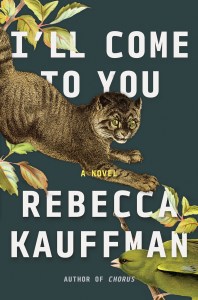 The family’s lies and secrets – also involving a Christmas run-in with Bruce’s shell-shocked brother decades ago – lead to everything coming to a head in a snowstorm. (As best I can tell, the 1995 setting was important mostly so there wouldn’t be cell phones during this crisis.) As with The Book of George, the episodic nature of the narrative means that particular moments are memorable but the whole maybe less so, and the interactions between characters stand out more than the people themselves. I’ll Come to You, named after a throwaway line in the text, is poorly served by both its cover and title, which give no sense of the contents. However, it’s a sweet, offbeat portrait of genuine, if generic, Americans; I was most reminded of J. Ryan Stradal’s work. Although I DNFed Kauffman’s The Gunners some years back, I’d be interested in trying her again with Chorus, which sounds like another linked story collection.
With thanks to Counterpoint (USA) for the advanced e-copy for review.
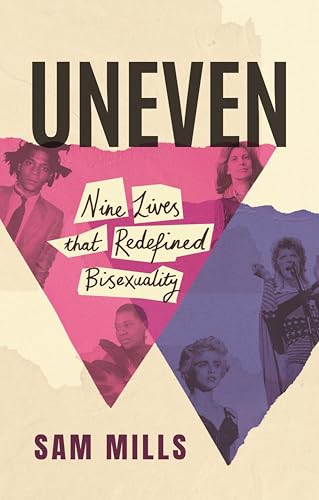
Uneven: Nine Lives that Redefined Bisexuality by Sam Mills
Back in 2022 I reviewed Julia Shaw’s Bi: The hidden culture, history and science of bisexuality, which took a social sciences approach. By contrast, this is a group biography of nine bisexuals – make that 10, as there are plenty of short memoir-ish passages from Mills, too. Oscar Wilde, Colette, Marlene Dietrich, Anaïs Nin, Susan Sontag: more or less familiar names, though not all of them are necessarily known for their sexuality. The chapters deliver standard potted biographies of the individuals’ work and relationships, probably containing little that couldn’t be found elsewhere in recent scholarship and not really living up to the revolutionary promise of the subtitle. However, it was worthwhile for Mills to recover Wilde as a bisexual rather than a closeted homosexual. A final trilogy of chapters comes more up to date with David Bowie, Jean-Michel Basquiat and Madonna. The closer to the present day, the more satisfying connections there are between figures. For instance, Madonna looked to both Dietrich and Bowie as role models and fashion icons, and she and Basquiat were lovers.
 Mills and Shaw consider the same fundamental issues: bi erasure, with bisexuality the least understood and most easily overlooked element of LGBT and many passing as straight if in heterosexual marriages; and the stereotype of bis as hypersexual or promiscuous. Mills is keen to stress that bisexuals have very different trajectories and phases. Like Wilde, they might have a heterosexual era of happy marriage and parenthood followed by a homosexual spree. Or they might have simultaneous lovers of multiple genders. Some might never even act on strong same-sex desires. (Late last year I encountered a similar unity-in-diversity approach in Daniel Tamet’s Nine Minds, a group biography about autistic people.)
The 1890s to 1980s window allows for a record of changing mores yet means that the book seems rather dated. Were it written by an author of a later generation (Mills, who I knew for The Fragments of My Father, is around 50), the point of view and terminology would likely be quite different. Also, including a section on Bessie Smith within a chapter mostly on Colette felt tokenistic. (Though later considering Basquiat separately does add a BIPOC view.) Ultimately, though, my problem with Uneven was that I don’t want to know about behaviour – which is all that a biography can usually document – so much as the internal, soul stuff. Even from Mills, whose accounts of her long-term relationships and flings (including, yes, a threesome) can be titillating but not very enlightening, I didn’t get a sense of what it feels like. So neither the Shaw nor the Mills gave me precisely what I was looking for, which means that the perfect book on bisexuality either doesn’t exist or is out there but I haven’t found it yet. Any suggestions?
With thanks to Atlantic Books for the free copy for review.
The Face in the Well by Rebecca Watts
 I’ve also read Watts’ The Met Office Advises Caution and Red Gloves; this is her third collection. The Suffolk and Cambridgeshire scenery of her early and adult lives weaves all through, sometimes as an idyll that blurs the lines between humans and nature (“Private No Access”) but other times provoking anxiety about common or gendered dangers, as in the title poem or “The Old Mill” (“What happened there, / down by the old mill, / they never tell. // Something about / a man and a girl / is the most you’ll hear.”). “Woman Seeks” is a tongue-in-cheek advert for the perfect man. Animals – a dolphin, a shark, rodents, a wandering albatross, a robin – recur, as do women poets, especially Emily Brontë, and Victorian death culture (“Victoriana” and “Baroque”). Adulthood brings routine whereas childhood stands out for minor miracles, such as a free soda from a vending machine.
The format and tone vary a lot, so the book is more of a grab bag than a cohesive statement. I noted slant rhymes and alliteration, always a favourite technique of mine. I especially liked “Entropy,” about finding a slice of cake in the freezer labeled by someone who is now dead (“Nothing ever // really dies: all the pieces of you / persist, riven and reconfigured / in infinite unknowable ways”) and “Personal Effects,” about the artefacts from her childhood that her mother guards under the bed (“twists of my hair, my teeth, / my bracelet from the hospital.”).
With thanks to Carcanet Press for the advanced e-copy for review.
Which of these appeal to you? What indie publishers have you been reading from recently?
Reading Snapshot for Mid-January
As I said in my last post, I’m in the middle of a bunch of books but hardly finishing anything, so consider this another placeholder until my Love Your Library and January releases posts next week. People often ask how I read so much. One of the answers is that I generally read 20–30 books at once, bouncing between them as the mood takes me and making steady progress in most. A frequent follow-up question is how I keep so many books straight in my head. I maintain a variety of genres and topics in the stack and alternate between fiction, nonfiction and poetry in any reading session. If I’m going to be reviewing something, particularly for pay, I tend to make notes. Here’s a peek at my current stacks, with a line or two on each book and why I’m reading it.

- Myself & Other Animals by Gerald Durrell [public library] – This is a posthumous collection of excerpts from his published work, including newspaper articles, plus mini essays that he wrote towards an autobiography. We own/have read most of his animal-collecting and zoo-keeping memoirs and this is just as delightful, even in unconnected pieces. His conservationist zeal was ahead of his time.
- The God of the Woods by Liz Moore [public library] – It’s rare for me to borrow something from the Crime section, but this came highly lauded by Laila. Set in upstate New York in 1975, it’s a page-turning missing-girl mystery with a literary focus on character backstory, and it’s reminding me of Bright Young Women by Jessica Knoll and When the Stars Go Dark by Paula McLain.
- Gold by Elaine Feinstein [secondhand purchase] – I’ve enjoyed Feinstein’s poetry before so snapped this up on our second trip to Bridport. The first long poem was a monologue from the perspective of a collaborator of Mozart; I think I’ll engage more with the discrete poems to follow.
- Understorey by Anna Chapman Parker [review copy] – Catching up on one I was sent last year. It’s a one-year diary through ‘weeds’ (wild plants!) she observes and sketches near her home of Berwick upon Tweed, where we vacationed in September. I am enjoying reading a few peaceful entries per sitting.
- A God at the Door by Tishani Doshi [secondhand purchase] – Her Girls Are Coming out of the Woods was a favourite of mine a few years ago when I reviewed it for Wasafiri literary magazine. I found this on my last trip to Hay-on-Wye, and it is just as rich in long, forthright, feminist and political poems.
- The Secret Life of Snow by Giles Whittell [secondhand purchase] – I picked up a few snowy titles when we got a dusting the other week, in case it was the only snow of the year. This is so much like The Snow Tourist by Charlie English it’s uncanny; to my memory it’s more meteorological, though still accessible. The science is interspersed with travels and fun trivia about Norway’s Olympic skiers and so on.
- Moon of the Crusted Snow by Waubgeshig Rice [gift] – Probably my first book by an Indigenous Canadian, which was reason enough to read it. I’m about 50 pages in and so far it’s a plodding story of mysterious power outages which could just be part of the onset of winter but I suspect will turn out to be sinister and dystopian instead.
- Knead to Know by Neil Buttery [review copy] – Another 2024 book to catch up on. It’s a history of baking via mini-essays on loads of different breads, cakes, pies and pastries, many of them traditional English ones that you will never have heard of but will now want to cram. Lots of intriguing titbits.
- Invisible by Paul Auster [secondhand purchase] – Getting ready for Annabel’s second Paul Auster Reading Week in early February. A young (and Auster-like) would-be poet gets entangled with a thirtysomething professor who wants to fund a start-up literary magazine – and his French girlfriend. Highly readable and sure to get weirder.
- While the Earth Holds Its Breath by Helen Moat [review copy] – Yet another 2024 book to catch up on. Authors are still jumping on the Wintering bandwagon. This is composed of short autobiographical pieces about winter walks near home or further afield, many of them samey; the trip to Lapland has been a highlight so far.
- The Blindfold by Siri Hustvedt [review copy] – Also part of my preparation for Paul Auster Reading Week, and boy can you see his influence on her first novel! Iris Vegan is employed by Mr. Morning to record audio descriptions of relics left behind by a possibly murdered woman. Odd and enticing.
- Uneven by Sam Mills [review copy] – A group biography of nine bisexuals – make that 10, as there’s plenty of memoir fragments from Mills, too. I’ve read the chapters on Oscar Wilde, Colette & Bessie Smith, and Marlene Dietrich so far. It is particularly enlightening to think of Wilde as bi rather than a closeted homosexual.
- Unexpected Lessons in Love by Bernardine Bishop [secondhand purchase] – Every year I pick up at least a few “love” or “heart” titles in advance of Valentine’s Day. Bishop was one of my top discoveries last year (via The Street) and this Costa Award-nominated posthumous novel is equally engaging, even after just 50 pages.
- My Judy Garland Life by Susie Boyt [secondhand purchase] – After Loved and Missed, I was keen to try more from Boyt and this Ackerley Prize-shortlisted memoir sounded fascinating. I love The Wizard of Oz as much as the next person. Boyt, however, is a Garland mega-fan and blends biography and memoir as she writes about addiction, mental health, celebrity and the search for love.
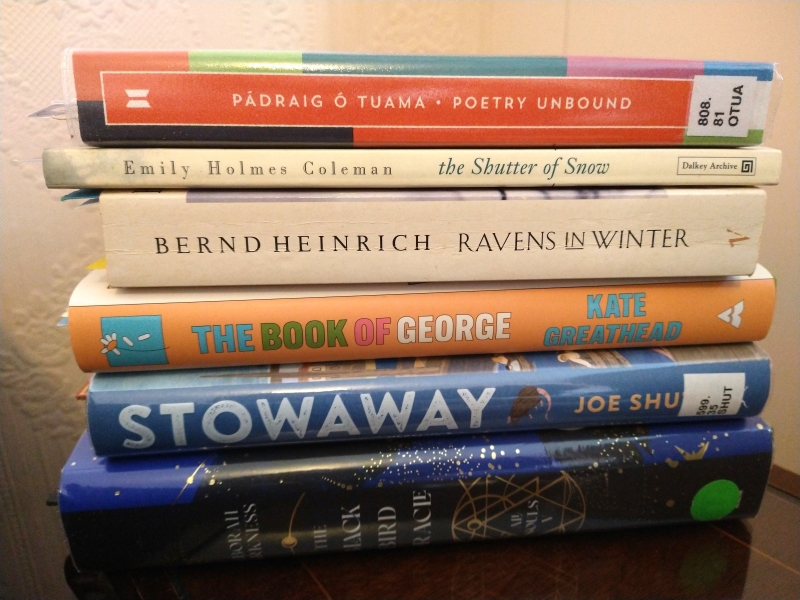
- Poetry Unbound by Pádraig Ó Tuama [public library] – I’m gradually making my way through this set of 50 poems and his critical/personal responses to them. Most of the poets have been unfamiliar to me. Marie Howe has been my top discovery.
- The Shutter of Snow by Emily Holmes Coleman [secondhand purchase] – Another incidental ‘snow’ title; this is autofiction about postpartum psychosis, written in a stream-of-consciousness style with no speech marks or apostrophes. It’s hard to believe it was written in the 1930s because it feels like it could have been yesterday.
- Ravens in Winter by Bernd Heinrich [secondhand purchase] – I’ve long meant to read more by Heinrich, who’s better known in the USA, after Winter World. This was a lucky find at Regent Books in Wantage. It’s a granular scientific study of bird behaviour, so I will likely read it very slowly, maybe even over two winters.
- The Book of George by Kate Greathead [review copy] – Linked short stories about an Everyman schmuck (and my exact contemporary) from adolescence up to today. He’s indecisive, lazy, an underachiever. Life keeps happening around him; will he make something happen? (George, c’est moi?) The deadpan tone is great.
- Stowaway by Joe Shute [public library] – I’ve been reading this off and on since, er, June, which is not to say that it’s not interesting but that it’s never been a priority. Like his book on ravens, it’s intended to rehabilitate the reputation of a species often considered to be a pest. He gets pet rats, too!
- The Black Bird Oracle by Deborah Harkness [public library] – It’s even rarer for me to borrow from the Science Fiction & Fantasy section of the library, but I’ve been following the series since A Discovery of Witches came out in 2011. I’m halfway through and enjoying Diana’s embrace of her witch heritage in the Salem area.
That’s not all, folks! There’s also the e-books.

- Dirty Kitchen by Jill Damatac [Edelweiss] – I’ll be reviewing this May release early for Shelf Awareness. The author’s Filipino family were undocumented immigrants in the USA and as a child she was occasionally abandoned and frequently physically abused. Recipes and legends offer a break from the tough subject matter (reminiscent of Educated or What My Bones Know).
- My Marriage Sabbatical by Leah Fisher [from publicist] – She Writes Press is a reliable source of women’s life writing. I’ve only just started this but will try to review it this month. Fisher, a psychotherapist, was sick of her psychiatrist husband’s workaholism and wanted to try living differently, starting with a house share.
- I’ll Come to You by Rebecca Kauffman [from publicist] – Another American linked short story collection, moving month by month through 1995 (does that count as historical fiction?!), cycling through the members of an extended family as they navigate illnesses and fraught parenting journeys. I’m getting J. Ryan Stradal vibes.
- Constructing a Witch by Helen Ivory [Edelweiss] – This feminist take on the historical persecution and stereotypes of witches is a good match for the Harkness! I just keep forgetting to open it up on my Kindle.
According to Goodreads, I’m reading 28 books at the moment, so I haven’t even covered all of them. (The rest include library books that would more honestly be classified as “set aside.”)
Whew. It somehow seems like even more when I write them all up like this…
Back to the reading!
Best Books of 2024: My Top 20
I’m keeping it simple again this year with one post covering all genres: these are the 20 current-year releases that stood out the most for me. (No rankings.) Those that aren’t repeated from my Best Books from the First Half of 2024 post didn’t quite make the cut but should be considered as runners-up well worth your time. Unsurprisingly, health is a common theme across many of my selections, especially as it touches women’s lives. Pictured below are the books I read in print; the others were all electronic copies. Links are to my full reviews where available.
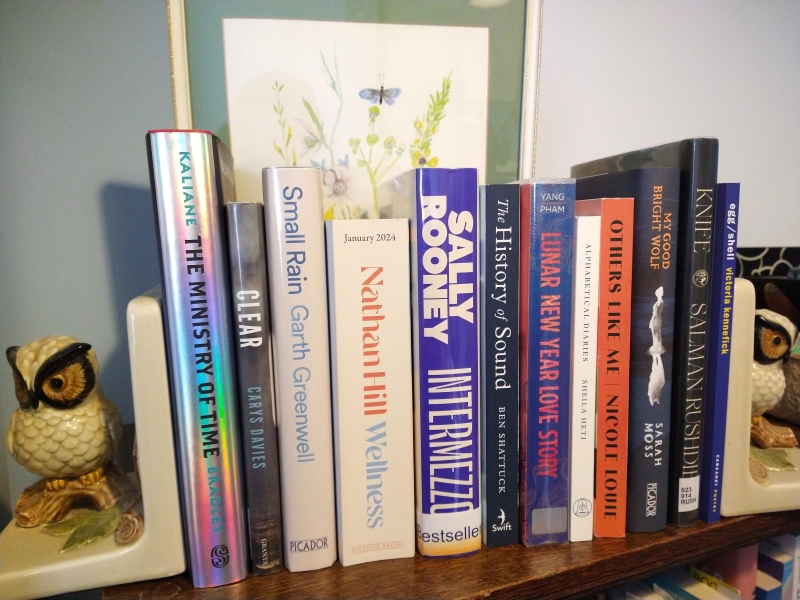
Fiction
 The Worst Journey in the World, Volume 1: Making Our Easting Down: The Graphic Novel by Sarah Airriess: The thrilling opening to a cinematically vivid adaptation of Apsley Cherry-Garrard’s 1922 memoir. He was an assistant zoologist on Robert Falcon Scott’s perilous 1910-13 Terra Nova expedition to the South Pole. The book resembles a full-color storyboard for a Disney-style maritime adventure film. There is jolly camaraderie as the men sing sea shanties to boost morale. The next volume can’t arrive soon enough.
 The Ministry of Time by Kaliane Bradley: This nuanced debut alternately goes along with and flouts the tropes of spy fiction and time travel sci-fi, making clever observations about how we frame stories of empire and progress. The narrator is a “bridge” helping to resettle a Victorian polar explorer in near-future London. You just have to suspend disbelief and go with it. Bradley’s descriptive prose is memorable but never quirky for the sake of it. I haven’t had so much fun with a book since Romantic Comedy. A witty, sexy, off-kilter gem.
 Behind You Is the Sea by Susan Muaddi Darraj: Darraj’s novel-in-stories is a shimmering composite portrait of a Palestinian American community in Baltimore. Across nine stellar linked stories, she explores the complex relationships between characters divided by—or connected despite—class, language, and traditional values. Each of the stories (four in the first person, five in the third person) spotlights a particular character. The book depicts the variety of immigrant and second-generation experience, especially women’s.
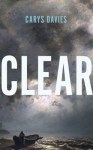 Clear by Carys Davies: Depicts the Highland Clearances in microcosm though Ivar, last resident of a remote Scottish island between Shetland and Norway. John is a minister sent by the landowner to remove Ivar. Mary, John’s wife, journeys from the mainland to rescue him. Davies writes striking scenes that bring the island scenery to life. Her deceptively simple prose captures the slow building of emotion and moments that change everything. For a trio that seemed on course for tragedy, there is the grace of a happier ending.
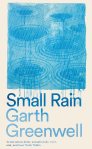 Small Rain by Garth Greenwell: A poet and academic (who both is and is not Greenwell) endures a Covid-era medical crisis that takes him to the brink of mortality and the boundary of survivable pain. Over two weeks, we become intimately acquainted with his every test, intervention, setback and fear. Experience is clarified precisely into fluent language that also flies far above a hospital bed, into a vibrant past, a poetic sensibility, a hoped-for normality. I’ve never read so remarkable an account of what it is to be a mind in a fragile body.
 Wellness by Nathan Hill: A state-of-the-nation story filtered through one Chicago family experiencing midlife and marital crises: underperforming academic Jack; his wife Elizabeth, a placebo researcher at Wellness; and their YouTube-obsessed son Toby. They’ve recently invested their life savings in a new condo. The addictive and spot-on novel asks questions about authenticity, purpose, and nurture. Is love itself a placebo? Hill is clearly fascinated with psychological experimentation but also questions it to humorous effect.
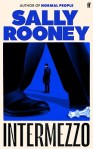 Intermezzo by Sally Rooney: Twenty- and thirtysomethings having lots of sex, yes, but now a solemn tone: Characters’ suffering and failures have deepened their thinking, sense of self, and ability to feel for others. Peter and Ivan lost their father to cancer; Sylvia is in chronic pain after an accident; Naomi is evicted and aimless; Margaret is ashamed of having an estranged alcoholic husband. Chess is a clever metaphor for their interactions; the depiction of grief rings true. A stylistic leap forward, too. Her best, most mature work by a mile.
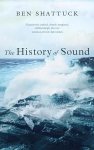 The History of Sound by Ben Shattuck: A dozen stories form a “hook-and-chain” formation of five couplets, bookended by a first and last story related to each other. Links are satisfyingly overt: A pair takes place in the same New England house in different centuries; a companion piece fills in the history of the characters from the previous. All are historically convincing, and the very human themes of lust, parenthood, sorrow and frustrated ambition resonate across centuries and state lines. Really beautiful (and better than North Woods).
 Lunar New Year Love Story by Gene Luen Yang (illus. LeUyen Pham): A super-cute teen graphic novel with gorgeous illustrations prioritizing pink and red to suit the theme. We follow Vietnamese American Valentina through high school as she plays host to an internal debate between cynicism and romanticism. Ever since her mother left, she’s longed to believe in romance but feared that love is a doomed prospect for her family. The Asian community of Oakland, California and a new hobby of lion dancing provide engrossing cultural detail.
Nonfiction
 Grief Is for People by Sloane Crosley: A bereavement memoir like no other. Heart-wrenching yet witty, it bears a unique structure and offers fascinating glimpses into the New York City publishing world. Crosley’s Manhattan apartment was burgled exactly a month before the suicide of her best friend and former boss, Russell. Throughout, the whereabouts of her family jewelry is as much of a mystery as the reason for Russell’s death, and investigating the stolen goods in parallel serves as a displacement activity for her.
 Alphabetical Diaries by Sheila Heti: Heti put 10 years of diary contents into a spreadsheet, alphabetizing each sentence, and then ruthlessly culled the results. The recurring topics are familiar from the rest of her oeuvre: obsessive cogitating about relationships, art and identity, but also the practicalities of trying to make a living as a woman in a creative profession. Heti transcends the quotidian by exploding chronology. Amazingly, the collage approach produces a genuine, crystalline vision of the self. A sui generis work of life writing.
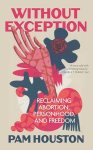 Without Exception: Reclaiming Abortion, Personhood, and Freedom by Pam Houston: If you’re going to read a polemic, make sure it’s as elegantly written and expertly argued as this one. Houston responds to the overturning of Roe v. Wade with 60 micro-essays – one for each full year of her life – about what it means to be in a female body in a country that seeks to control and systematically devalue women. The cycling of topics makes for an exquisite structure. Houston is among my recommendations for top-notch authors you might not know.
 The Body Alone: A Lyrical Articulation of Chronic Pain by Nina Lohman: Chronic Daily Headaches: Having a clinical term for extreme pain did nothing to solve it; no treatment Lohman has tried over a decade has helped much either. Medical professionals and friends alike downplay her experience because she is able to pass as well and raise two children. The fragmentary pieces read like poems. Bodily realities defy language, yet she employs words exquisitely. The tone flows from enraged to resigned to cynical and back.
 Others Like Me: The Lives of Women without Children by Nicole Louie: This impassioned auto/biographical collage combines the strengths of oral history, group biography and a fragmented memoir. “Motherhood as the epicentre of women’s lives was all I’d ever witnessed” via her mother and grandmother, Louie writes, so finding examples of women living differently was key. As readers, we watch her life, her thinking and the book all take shape. It’s warm and empathetic, with layers of stories that reflect diversity of experience.
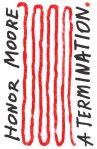 A Termination by Honor Moore: A fascinatingly discursive memoir that circles a 1969 abortion and contrasts societal mores across her lifetime. Moore was a 23-year-old drama student; the termination was “my first autonomous decision,” she insists, a way of saying, “I want this life, not that life.” Family and social factors put her life into perspective. The concise text is composed of crystalline fragments, incorporating occasional second- and third-person narration. The kaleidoscopic yet fluid approach is stunning.
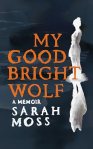 My Good Bright Wolf by Sarah Moss: Moss effectively contrasts the would-be happily ever after of generally getting better after eight years of disordered eating with her anorexia returning with a vengeance at age 46. The mood shifts so that what threatens to be slightly cloying in the childhood section turns academically curious and then, somehow, despite distancing pronouns (mostly second- but also some third-person narration), intimate. Shape-shifting, devastating, staunchly pragmatic; a unique model for converting life into art.
 Knife: Meditations after an Attempted Murder by Salman Rushdie: I’ve not had much success with Rushdie’s fiction, but this is excellent, with intriguing side tendrils and many quotable lines. It traces lead-up and aftermath; unexpected echoes, symbolism and ironies. Although Rushdie goes into some medical detail about his recovery, you get the sense of him more as an unchanging mind and a resolute will. The most noteworthy section imagines dialogues he might have with the imprisoned assailant, probing his beliefs and motivations.
Poetry
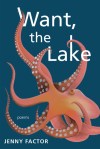 Want, the Lake by Jenny Factor: Factor’s long, intricate poetry collection showcases the tension between past and present and envisions womanhood as a tug of war between desire and constraint. “Elegy for a Younger Self” poems string together vivid reminiscences. In “Sapphics on Nursing” and elsewhere, romantic friendships edge toward homoeroticism; heterosexual marriage and motherhood represent either delightful intimacy or a snare. Allusion and experience, slant rhymes and wordplay craft a lavish tapestry.
 Inconsolable Objects by Nancy Miller Gomez: This debut collection recalls a Midwest girlhood of fairground rides and lake swimming, tornadoes and cicadas. But her Kansas isn’t all rose-tinted nostalgia; there’s an edge of sadness and danger. “Missing History” notes how women’s stories, such as her grandmother’s, are lost to time. In “Tilt-A-Whirl,” her older sister’s harmless flirtation with a ride operator becomes sinister. She also takes inspiration from headlines. The alliteration and slant rhymes are to die for.
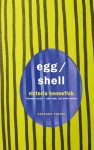 Egg/Shell by Victoria Kennefick: Motherhood and the body are overarching themes. The speaker has multiple miscarriages and names her lost children after plants. Becoming a mother is a metamorphosis all its own, while another long section is about her husband’s transition. Bird metaphors are inescapable. The structure varies throughout: columns, stanzas; a list, a recipe. Amid the sadness, there is dark humour and one-line rejoinders. If you’re wondering how life can be captured in achingly beautiful poetry, look no further.
If I had to choose just one of each? This trio trying out complementary strategies for transmuting life into literature: Small Rain, Alphabetical Diaries and Egg/Shell.


Have you read any of these? Or might you now, based on my recommendation?
Review Catch-Up: Medical Nonfiction & Nature Poetry
Catching up on four review copies I was sent earlier in the year and have finally got around to finishing and writing about. I have two works of health-themed nonfiction, one a narrative about organ transplantation and the other a psychiatrist’s memoir; and two books of nature poetry, a centuries-spanning anthology and a recent single-author collection.
The Story of a Heart by Rachel Clarke
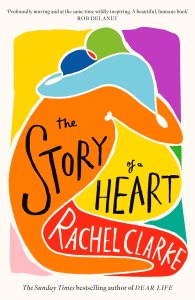 Rachel Clarke is a palliative care doctor and voice of wisdom on end-of-life issues. I was a huge fan of her Dear Life and admire her public critique of government policies that harm the NHS. (I’ve also reviewed Breathtaking, her account of hospital working during Covid-19.) While her three previous books all incorporate a degree of memoir, this is something different: narrative nonfiction based on a true story from 2017 and filled in with background research and interviews with the figures involved. Clarke has no personal connection to the case but, like many, discovered it via national newspaper coverage. Nine-year-old Max Johnson spent nearly a year in hospital with heart failure after a mysterious infection. Keira Ball, also nine, was left brain-dead when her family was in a car accident on a dangerous North Devon road. Keira’s heart gave Max a second chance at life.
Clarke zooms in on pivotal moments: the accident, the logistics of getting an organ from one end of the country to another, and the separate recovery and transplant surgeries. She does a reasonable job of recreating gripping scenes despite a foregone conclusion. Because I’ve read a lot around transplantation and heart surgery (such as When Death Becomes Life by Joshua D. Mezrich and Heart by Sandeep Jauhar), I grew impatient with the contextual asides. I also found that the family members and medical professionals interviewed didn’t speak well enough to warrant long quotation. All in all, this felt like the stuff of a long-read magazine article rather than a full book. The focus on children also results in mawkishness. However, the Baillie Gifford Prize judges who shortlisted this clearly disagreed. I laud Clarke for drawing attention to organ donation, a cause dear to my family. This case was instrumental in changing UK law: one must now opt out of donating organs instead of registering to do so.
With thanks to Abacus Books (Little, Brown) for the proof copy for review.
You Don’t Have to Be Mad to Work Here: A Psychiatrist’s Life by Dr Benji Waterhouse
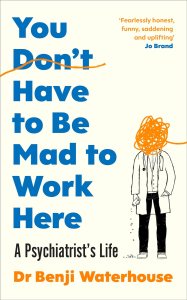 Waterhouse is also a stand-up comedian and is definitely channelling Adam Kay in his funny and touching debut memoir. Most chapters are pen portraits of patients and colleagues he has worked with. He also puts his own family under the microscope as he undergoes therapy to work through the sources of his anxiety and depression and tackles his reluctance to date seriously. In the first few years, he worked in a hospital and in community psychiatry, which involved house visits. Even though identifying details have been changed to make the case studies anonymous, Waterhouse manages to create memorable characters, such as Tariq, an unhoused man who travels with a dog (a pity Waterhouse is mortally afraid of dogs), and Sebastian, an outwardly successful City worker who had been minutes away from hanging himself before Waterhouse and his colleague rang on the door.
Along with such close shaves, there are tragic mistakes and tentative successes. But progress is difficult to measure. “Predicting human behaviour isn’t an exact science. We’re just relying on clinical assessment, a gut feeling and sometimes a prayer,” Waterhouse tells his medical student. The book gives a keen sense of the challenges of working for the NHS in an underfunded field, especially under Covid strictures. He is honest and open about his own failings but ends on the positive note of making advances in his relationship with his parents. This was a great read that I’d recommend beyond medical-memoir junkies like myself. Waterhouse has storytelling chops and the frequent one-liners lighten even difficult topics:
The sum total of my wisdom from time spent in the community: lots of people have complicated, shit lives.
Ambiguous statements … need clarification. Like when a depressed patient telephones to say they’re ‘in a bad place’. I need to check if they’re suicidal or just visiting Peterborough.
What is it about losing your mind that means you so often mislay your footwear too?
With thanks to Jonathan Cape (Penguin) for the proof copy for review.
Green Verse: An Anthology of Poems for Our Planet, ed. Rosie Storey Hilton
 Part of the “In the Moment” series, this anthology of nature poetry has been arranged seasonally – spring through to winter – and, within season, roughly thematically. No context or biographical information is given on the poets apart from birth and death years for those not living. Selections from Emily Dickinson, William Shakespeare and W.B. Yeats thus share space with the work of contemporary and lesser-known poets. This is a similar strategy to the Wildlife Trusts’ Seasons anthologies, the ranging across time meant to suggest continuity in human engagement with the natural world. However, with a few exceptions (the above plus Thomas Hardy’s “The Darkling Thrush” and Gerard Manley Hopkins’s “Inversnaid” are absolute classics, of course), the historical verse tends to be obscure, rhyming and sentimental; unfair to deem it all purple or doggerel, but sometimes bodies of work are forgotten for a reason. By contrast, I found many more standouts among the contemporary poets. Some favourites: “Cyanotype, by St Paul’s Cathedral” by Tamiko Dooley, “Eight Blue Notes” by Gillian Dawson (about eight species of butterfly), the gorgeously erotic “the bluebells are coming out & so am I” by Maya Blackwell, and “The Trees Don’t Know I’m Trans” by Eddy Quekett. It was also worthwhile to discover poems from other ancient traditions, such as haiku by Issa (“O Snail”) and wise aphoristic verse by Lao Tzu (“All things pass”). So, a bit of a mixed bag, but a nice introductory text for those newer to poetry.
With thanks to Saraband for the free copy for review.
Dangerous Enough by Becky Varley-Winter (2023)
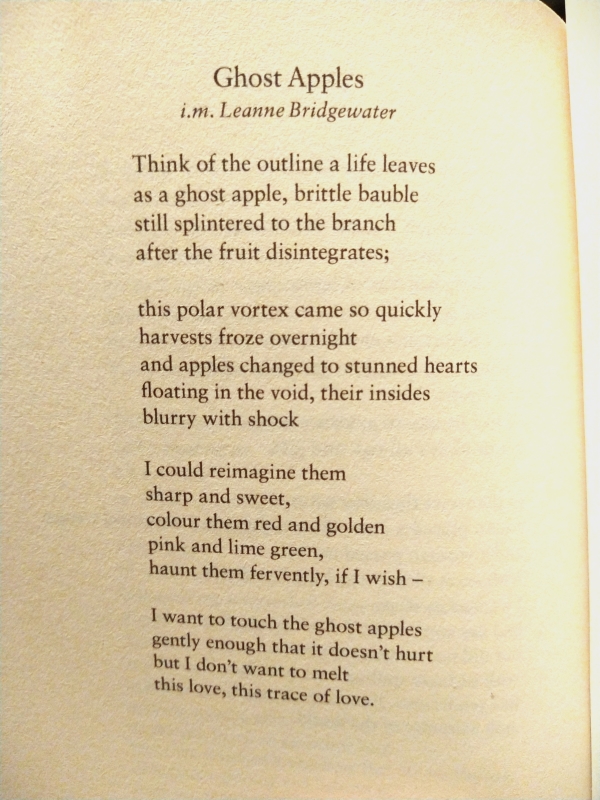
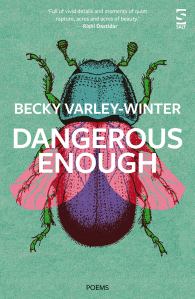 I requested this debut collection after hearing that it had been longlisted for the Laurel Prize for environmental poetry (funded by Simon Armitage, Poet Laureate). Varley-Winter crafts lovely natural metaphors for formative life experiences. Crows and wrens, foxes and fireflies, memories of a calf being born on a farm in Wales; gardens, greenhouses and long-lived orchids. These are the sorts of images that thread through poems about loss, parenting and the turmoil of lockdown. The last line or two of a poem is often especially memorable. It’s been months since I read this and I foolishly didn’t take any notes, so I haven’t retained more detail than that. But here is one shining example:
With thanks to Salt Publishing for the free copy for review.
 Bookish Beck = Rebecca Foster. American transplant to England. Freelance proofreader and book reviewer.
 Bookish Beck