May Releases, Part II (Fiction): Le Blevennec, Lynch, Puchner, Stanley, Ullmann, and Wald
A cornucopia of May novels, ranging from novella to doorstopper and from Montana to Tunisia; less of a spread in time: only the 1980s to now. Just a paragraph on each to keep things simple. I’ll catch up soon with May nonfiction and poetry releases I read.
Friends and Lovers by Nolwenn Le Blevennec (2023; 2025)
[Translated from French by Madeleine Rogers]
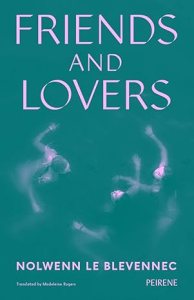 Armelle, Rim, and Anna are best friends – the first two since childhood. They formed a trio a decade or so ago when they worked on the same magazine. Now in their mid-thirties, partnered and with children, they’re all gripped by a sexual “great awakening” and long to escape Paris and their domestic commitments – “we went through it, this mutiny, like three sisters,” poised to blow up the “perfectly executed choreography of work, relationships, children”. The friends travel to Tunisia together in December 2014, then several years later take a completely different holiday: a disaster-prone stay in a lighthouse-keeper’s cottage on an island off the coast of Brittany. They used to tolerate each other’s foibles and infidelities, but now resentment has sprouted up, especially as Armelle (the narrator) is writing a screenplay about female friendship that’s clearly inspired by Rim and Anna. Armelle is relatably neurotic (a hilarious French blurb for the author’s previous novel is not wrong: “Woody Allen meets Annie Ernaux”) and this is wise about intimacy and duplicity, yet I never felt invested in any of the three women or sufficiently knowledgeable about their lives.
With thanks to Peirene Press for the free copy for review.
A Family Matter by Claire Lynch
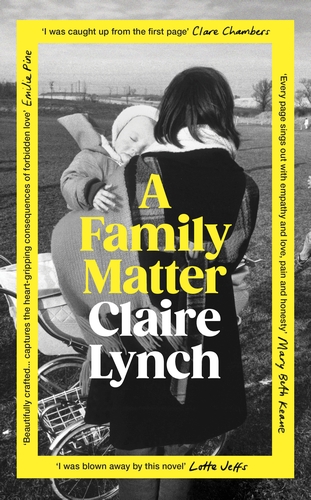 “The fluke of being born at a slightly different time, or in a slightly different place, all that might gift you or cost you.” At events for Small, Lynch’s terrific memoir about how she and her wife had children, women would speak up about how different their experience had been. Lesbians born just 10 or 20 years earlier didn’t have the same options. Often, they were in heterosexual marriages because that’s all they knew to do; certainly the only way they thought they could become mothers. In her research into divorce cases in the UK in the 1980s, Lynch learned that 90% of lesbian mothers lost custody of their children. Her aim with this earnest, delicate debut novel, which bounces between 2022 and 1982, is to imagine such a situation through close portraits of Heron, an ageing man with terminal cancer; his daughter, Maggie, who in her early forties bears responsibility for him and her own children; and Dawn, who loved Maggie desperately but felt when she met Hazel that she was “alive at last, at twenty-three.” How heartbreaking that Maggie knew only that her mother abandoned her when she was little; not until she comes across legal documents and newspaper clippings does she understand the circumstances. Lynch made the wise decision to invite sympathy for Heron from the start, so he doesn’t become the easy villain of the piece. Her compassion, and thus ours, is equal for all three characters. This confident, tender story of changing mores and steadfast love is the new Carol for our times. (Such a lovely but low-key novel was liable to make few ripples, so I’m delighted for Lynch that the U.S. release got a Read with Jenna endorsement.)
With thanks to Chatto & Windus (Penguin) for the proof copy for review.
Dream State by Eric Puchner
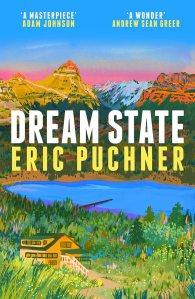 If it starts and ends with a wedding, it must be a comedy. If much of the in between is marked by heartbreak, betrayal, failure, and loss, it must be a tragedy. If it stretches towards 2050 and imagines a Western USA smothered in smoke from near-constant forest fires, it must be an environmental dystopian. Somehow, this novel is all three. The first 163 pages are pure delight: a glistening romantic comedy about the chaos surrounding Charlie and Cece’s wedding at his family’s Montana lake house in the summer of 2004. First half the wedding party falls ill with norovirus, then Charlie’s best friend, Garrett (who’s also the officiant), falls in love with the bride. Do I sound shallow if I admit this was the section I enjoyed the most? The rest of this Oprah’s Book Club doorstopper examines the fallout of this uneasy love triangle. Charlie is an anaesthesiologist, Cece a bookstore owner, and Garrett a wolverine researcher in Glacier National Park, which is steadily losing its wolverines and its glaciers. The next generation comes of age in a diminished world, turning to acting or addiction. There are still plenty of lighter moments: funny set-pieces, warm family interactions, private jokes and quirky descriptions. But this feels like an appropriately grown-up vision of idealism ceding to a reality we all must face. I struggled with a lack of engagement with the children, but loved Puchner’s writing so much on the sentence level that I will certainly seek out more of his work. Imagine this as a cross between Jonathan Franzen and Maggie Shipstead.
With thanks to Sceptre (Hodder) for the proof copy for review.
Consider Yourself Kissed by Jessica Stanley
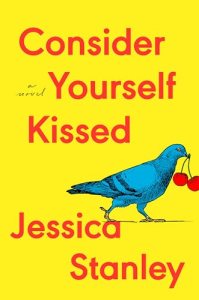 Coralie is nearing 30 when her ad agency job transfers her from Australia to London in 2013. Within a few pages, she meets Adam when she rescues his four-year-old, Zora, from a lake. That Adam and Coralie will be together is never really in question. But over the next decade of personal and political events, we wonder whether they have staying power – and whether Coralie, a would-be writer, will lose herself in soul-destroying work and motherhood. Adam’s job as a political journalist and biographer means close coverage of each UK election and referendum. As I’ve thought about some recent Jonathan Coe novels: These events were so depressing to live through, who would want to relive them through fiction? I also found this overlong and drowning in exclamation points. Still, it’s so likable, what with Coralie’s love of literature (the title is from The Group) and adjustment to expat life without her mother; and secondary characters such as Coralie’s brother Daniel and his husband, Adam’s prickly mother and her wife, and the mums Coralie meets through NCT classes. Best of all, though, is her relationship with Zora. This falls solidly between literary fiction and popular/women’s fiction. Given that I was expecting a lighter romance-led read, it surprised me with its depth. It may well be for you if you’re a fan of Meg Mason and David Nicholls.
With thanks to Hutchinson Heinemann for the proof copy for review.
Girl, 1983 by Linn Ullmann (2021; 2025)
[Translated from Norwegian by Martin Aitken]
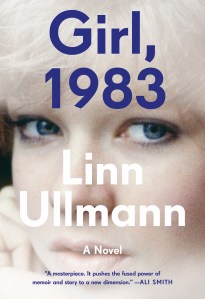 Ullmann is the daughter of actress Liv Ullmann and film director Ingmar Bergman. That pedigree perhaps accounts for why she got the opportunity to travel to Paris in the winter of 1983 to model for a renowned photographer. She was 16 at the time and spent the whole trip disoriented: cold, hungry, lost. Unable to retrace the way to her hotel and wearing a blue coat and red hat, she went to the only address she knew – that of the photographer, K, who was in his mid-forties. Their sexual relationship is short-lived and unsurprising, at least in these days of #MeToo revelations. Its specifics would barely fill a page, yet the novel loops around and through the affair for more than 250. Ullmann mostly pulls this off thanks to the language of retrospection. She splits herself both psychically and chronologically. There’s a “you” she keeps addressing, a childhood imaginary friend who morphs into a critical voice of conscience and then the self dissociated from trauma. And there’s the 55-year-old writer looking back with empathy yet still suffering the effects. The repetition made this something of a sombre slog, though. It slots into a feminist autofiction tradition but is not among my favourite examples.
With thanks to Hamish Hamilton (Penguin) for the proof copy for review.
The Bayrose Files by Diane Wald
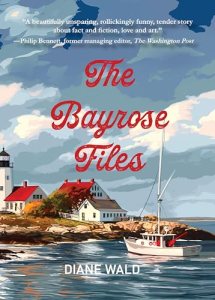 In the 1980s, Boston journalist Violet Maris infiltrates the Provincetown Home for Artists and Writers, intending to write a juicy insider’s exposé of what goes on at this artists’ colony. But to get there she has to commit a deception. Her gay friend Spencer Bayrose has a whole sheaf of unpublished short stories drawing on his Louisiana upbringing, and he offers to let her submit them as her own work to get a place at PHAW. Here Violet finds eccentrics aplenty, and even romance, but when news comes that Spence has AIDS, she has to decide how far she’ll go for a story and what she owes her friend. At barely over 100 pages, this feels more like a long short story, one with a promising setting and a sound plot arc, but not enough time to get to know or particularly care about the characters. I was reminded of books I’ve read by Julia Glass and Sara Maitland. It’s offbeat and good-natured but not top tier.
Published by Regal House Publishing. With thanks to publicist Jackie Karneth of Books Forward for the advanced e-copy for review.
A Family Matter was the best of the bunch for me, followed closely by Dream State.
Which of these do you fancy reading?
Basket of Deplorables by Tom Rachman (2017)
“Basket of deplorables” is a term that Hillary Clinton applied to the xenophobic wing of Donald Trump’s supporters in a September 2016 campaign speech. Basket of Deplorables is Tom Rachman’s third of five books and I somehow had never heard of it until a good few years after its release. That surprised me because I’ve followed his career with interest and read his other works right at their publication.
Like Rachman’s The Imperfectionists and The Imposters, it’s a linked short story collection. The five stories are on the longish side but read quickly. In the opening title piece, a woman who went blind after an accident co-hosts a 2016 presidential election watch party with her husband in their Manhattan apartment. Their friends are uniformly left-wing and choke with disbelief as results start to filter through. In “Truth Is for Losers,” Glen agrees to stage a funeral for his billionaire brother Fleming, who has faked his own death. The memorial service is an opportunity for high farce, but I also warmed to Glen for his simple enthusiasm for his job as a Starbucks barista in Kalamazoo. This was my favourite of the stories; its depiction of the spread of fake news feels like a worthwhile analogy rather than a rehashing of headlines.
“Leakzilla” imagines the complications of Internet dating in an alternate world where would-be partners can scour each other’s e-mail history at will – and find out that someone masquerading as clued-in voted for Trump in 2016. “Sad! Wrong! Not Nice!” follows Fleming, a Trump-esque blowhard, into his new life in Italy. The backstory of a minor character explains a mysterious moment from the first piece, and the sister of the woman from “Leakzilla” is then the protagonist of “How the End Begins.” Here, Kelly discovers with quiet horror a website where you can input any person’s name and view their future cause of death. There is a grim dystopian edge to this final story.

Rachman gave the book the tagline (not quite a subtitle) of “Almost-true stories.” I suspect it was written quickly in response to Trump’s election and it is rather thin, aiming at obvious targets and exhibiting wholly reasonable yet unsubtle liberal outrage. I found it so depressing to see how history threatens to repeat itself less than a decade later:
“David’s worry is that Trump won’t accept his defeat, throwing the whole democratic process into chaos”
“More a boomerang of history, where we keep throwing out the bad bits, and they keep flying back, hitting us in the mouth.”
I can hardly bear to think about tomorrow’s election. The USA could elect the first woman president (of color, no less), or hand power back to a cretin – a convicted felon and probably the worst holder of the office in its nearly 250 years. It’s a choice between progress and regression. Between sanity and sleepwalking into destruction. And whatever happens at the polls, it seems inevitable that Trump will foment further violence and hatred.
 Did I do all I could? I sent in my postal vote several weeks ago, and donated to the Harris/Walz campaign (which means I now get seven e-mails a day from them, but that’s fine). The local Democrats Abroad branch didn’t reply to me over the summer, so I missed out on the chance to volunteer with them, whereas in 2020 I colored in postcards to send to Democrat-registered North Carolina voters in the UK to remind them to get their ballots.
My leanings are clear, then, and I’m sure pretty much all my readers will concur. That I didn’t enjoy this obscure Rachman work more is due to my low tolerance for satire in general and to the fact that these stories of division and deception are not almost true, but all too true. (Secondhand – gift from my wish list, Christmas 2023) 
#ReadingtheMeow2024 and 20 Books of Summer, 2: Sleeping with Cats by Marge Piercy
Reviews of books about cats have been a standard element on my blog over the years, and the second annual Reading the Meow challenge, hosted by Mallika of Literary Potpourri, was a good excuse to pick up some more. Tomorrow I’ll review two cat-themed novels; today I have a 2002 memoir that I have been meaning to read for ages.
I discovered Piercy through her poetry, then read Woman on the Edge of Time, a feminist classic that contrasts utopian and dystopian views of the future. Like May Sarton (whom Piercy knew), she devotes equal energy to both fiction and poetry and is an inveterate cat lady. Piercy is still publishing and blogging at 88; I have much to catch up on from her back catalogue. A précis of her life is almost stranger than fiction: she grew up in poverty in Detroit, joining a teen gang and discovering her sexuality first with other girls (“The first time I had an orgasm—I was eleven—I was astonished and also I had a feeling of recognition. Of course, that’s it. As if that was what I had been expecting or looking for”) then with men; had a couple abortions, including one self-administered, then got sterilized; honed her writing craft at college; married three times – briefly to a Frenchman, an unhappy open arrangement, and now for 40+ years to fellow writer Ira Wood; and wrote like a dervish yet has remained on the periphery of the literary establishment and thus struggled financially.
Political activism has been a constant for Piercy, whether protesting the Vietnam War or supporting women’s reproductive rights. She and Wood also nurtured a progressive Jewish community around their Cape Cod home. Again like Sarton, she has always embraced the term feminist but been more resistant to queerness. A generational thing, perhaps; nowadays we would surely call Piercy bisexual or at least sexually fluid, but she’s more apt to dismiss her teen girlfriends and her later affairs with women as a phase. The personal life and career mesh here, though there is more of a focus on the former, such that I haven’t really gotten a clear idea of which of her novels I might want to try. Each chapter ends with one of her poems (wordy, autobiographical free verse), giving a flavour of her work in other genres. She portrays herself as a nomad who wandered various cities before settling into an unexpectedly homely and seasonal existence: “I am a stray cat who has finally found a good home.”

I admired Piercy’s self-knowledge here: her determination to write (including to keep her late mother alive in her) and to preserve the solitude necessary to her work –
I know I am an intense, rather angular passionate woman, not easy to like, not easy to live with, even for myself. Convictions, causes jostle in me. My appetites are large. I have learned to protect my work time and my privacy fiercely. I have been a better writer than a person, and again and again I made that choice. Writing is my core. I do not regret the security I have sacrificed to serve it.
and her conviction that motherhood was not for her –
I did not want children. I never felt I would be less of a woman, but I feared I would be less of a writer if I reproduced. I didn’t feel anything special about my genetic composition warranted replicating it. … I liked many of my friends’ children as they grew older: I was a good aunt. But I never desired to possess them or have one of my own. … I have never regretted staying childless. My privacy, my time for work … are precious. I feel my life is full enough.
“There were no role models for a woman like me,” she felt at the end of college, but she can in her turn be a role model of the female artist’s life, socially engaged and willing to take risks.
As to the title: There is, of course, special delight here for cat lovers. Piercy has had cats since she was a child, and in the Cape Cod era has usually kept a band of five or so. In the interludes we meet some true characters: Arofa the Siamese, Cho-Cho who lived to 21, mother and son Dinah and Oboe, alpha male Jim Beam, and many more. Of course, they age and fall ill and there are some goodbye scenes. She mostly describes these unsentimentally – if you’ve read Doris Lessing on cats, I’d say the attitude is similar. There are extremes of both love and despair: she licks a kitten to bond with her; she euthanizes one beloved cat herself. She wrote this memoir at 65 and felt that her cats were teaching her how to age.
There is a sadness to living with old cats; also a comfort and pleasure, for you know each other thoroughly and the trust is almost absolute. … The knowledge of how much I will miss them is always with me, but so is the sense of my own time flowing out, my life passing and the necessity to value it as I value them. Old cats are precious.
Even those unfamiliar with Piercy’s work might enjoy reading a perspective on the radical movements of the 1960s and 70s. This was right up my street because of her love of cats, her defence of the childfree life, and her interest in identity and memory. Because she doesn’t talk in depth about her oeuvre, you needn’t have read anything else of hers to appreciate reading this. I hope you have a cat who will nap on your lap as you do so. (Secondhand, a gift from my wish list) 

A Bookshop of One’s Own by Jane Cholmeley (Blog Tour)
Silver Moon, one of the Charing Cross Road bookshops, was a London institution from 1984 until its closure in 2001. “Feminism and business are strange bedfellows,” Jane Cholmeley soon realised, and this book is her record of the challenges of combining the two. On the spectrum of personal to political, this is much more manifesto than memoir. She dispenses with her own story (vicar’s tomboy daughter, boarding school, observing racism on a year abroad in Virginia, secretarial and publishing jobs, meeting her partner) via a 10-page “Who Am I?” opening chapter. However, snippets of autobiography do enter into the book later on; in one of my favourite short chapters, “Coming Out,” Cholmeley recalls finally telling her mother that she was a lesbian after she and Sue had been together nearly a decade.
The mid-1980s context plays a major role: Thatcherite policies (Section 28 outlawing the “promotion of homosexuality”), negotiations with the Greater London Council, and trying to share the landscape with other feminist bookshops like Sisterwrite and Virago. Although there were some low-key rivalries and mean-spirited vandalism, a spirit of camaraderie generally prevailed. Cholmeley estimates that about 30% of the shop’s customers were men, but the focus here was always on women. The events programme featured talks by an amazing who’s-who of women authors, Cholmeley was part of the initial roundtable discussions in 1992 that launched the Orange Prize for Fiction (now the Women’s Prize), and the café was designated a members’ club so that it could legally be a women-only space.

I’ve always loved reading about what goes on behind the scenes in bookshops (The Diary of a Bookseller, Diary of a Tuscan Bookshop, The Sentence, The Education of Harriet Hatfield, The Little Bookstore of Big Stone Gap, and so on), and Cholmeley ably conveys the buzzing girl-power atmosphere of hers. There is a fun sense of humour, too: “Dyke and Doughnut” was a potential shop name, and a letter to one potential business partner read, “you already eat lentils, and ride a bicycle, so your standard of living hasn’t got much further to fall, we happen to like you an awful lot, and think we could all work together in relative harmony”.
However, the book does not have a narrative per se; the “A Day in the Life of… (1996)” chapter comes closest to what those hoping for a bookseller memoir might be expecting, in that it actually recreates scenes and dialogue. The rest is a thematic chronicle, complete with lists, sales figures, profitability charts, and excerpted documents, and I often got lost in the detail. The fact that this gives the comprehensive history of one establishment makes it a nostalgic yearbook that will appeal most to readers who have a head for business, were dedicated Silver Moon customers, and/or hold a particular personal or academic interest in the politics of the time and the development of the feminist and LGBT movements.
With thanks to Random Things Tours and Mudlark for the free copy for review.
Buy A Bookshop of One’s Own from Bookshop.org [affiliate link]
I was happy to be part of the blog tour for the release of this book. See below for details of where other reviews have appeared or will be appearing soon.

Long Live the NHS! Free for All by Gavin Francis
Dr Gavin Francis’s Intensive Care is the definitive Covid-19 read for me, and I admired his follow-up, Recovery, a personal and general history of convalescence. Free for All is most similar to the latter: a short book, impassioned and practical, that demands a social safety net.
The UK’s National Health Service was established 75 years ago this summer, with the aim of making healthcare free at the point of use for everyone, funded not by charity but by taxation. Today, the NHS is limping along from crisis to crisis (every winter, basically) because it has been chronically underfunded. Any UK-based reader could tell their own story of ridiculous wait times*, I suspect.
Francis makes it clear that the governing party of the last 13 years bears the responsibility for this. The UK’s healthcare spending is lower than that of key European benchmark nations that have better health outcomes. The Conservatives’ goal seems to be to privatize health and focus on market demand. Francis argues powerfully that allowing healthcare to be driven by profit, as it is in the USA, is immoral and uncivilized.
His valuable perspective is that of a GP who has to pick up the slack in his clinics and is begged not to send any but the most desperate cases to overcrowded hospitals. Services are strained to the breaking point; private medicine, far from lessening the burden, increases it when patients revert to the NHS for follow-up care or repair of botched procedures. Meanwhile, the introduction of performance standards can divert doctors’ attention to ticking boxes and ensuring value for money rather than providing the best possible care. Overtreatment (mostly of the elderly) is another potential pitfall.
Francis elaborates his case through his work with anonymized patients, conversations with fellow medical professionals, and a frank look at the statistics on spending and achievements. The book is slightly dry compared to some of his earlier work, simply because of the subject matter, and I noticed a bit of repetition. However, it is still a concise and cogent manifesto. The author believes that people can show they value the NHS by electing politicians who will properly fund it. The NHS is, after all, “an expression of what’s best in our society” and “worth saving,” he concludes. Hear hear!
With thanks to Profile Books/Wellcome Collection for the free copy for review.
Buy Free for All from Bookshop UK. [affiliate link]
*Mine? I waited 12 months for a PHONE consultation with an ear, nose and throat specialist regarding tinnitus. By that point, of course, my problem had largely subsided.
#ReadIndies and Review Catch-up: Hazrat, Nettel, Peacock, Seldon
Another four selections for Read Indies month. I’m particularly pleased that two from this latest batch are “just because” books that I picked up off my shelves; another two are catch-up review copies. A few more indie titles will appear in my February roundup on Tuesday. For today, I have a fun variety: a history of the exclamation point, a Mexican novel about choosing motherhood versus being childfree, a memoir of a decades-long friendship between two poets, and a posthumous poetry collection with themes of history, illness and nature.

An Admirable Point: A brief history of the exclamation mark by Florence Hazrat (2022)
I’m definitely a punctuation geek. (My favourite punctuation mark is the semicolon, and there’s a book about it, too: Semicolon: The Past, Present, and Future of a Misunderstood Mark by Cecelia Watson, which I have on my Kindle.) One might think that strings of exclamation points are a pretty new thing – rounding off phrases in (ex-)presidential tweets, for instance – but, in fact, Hazrat opens with a Boston Gazette headline from 1788 that decried “CORRUPTION AND BRIBERY!!!” in relation to the adoption of the new Constitution.
 The exclamation mark as we know it has been around since 1399, and by the 16th century its use for expression and emphasis had been codified. I was reminded of Gretchen McCulloch’s discussion of emoji in Because Internet, which also considers how written speech signifies tone, especially in the digital age. There have been various proposals for other “intonation points” over the centuries, but the question mark and exclamation mark are the two that have stuck. (Though I’m currently listening to an album called interrobang – ‽, that is. Invented by Martin Speckter in 1962; recorded by Switchfoot in 2021.)
I most enjoyed Chapter 3, on punctuation in literature. Jane Austen’s original manuscripts, replete with dashes, ampersands and exclamation points, were tidied up considerably before they made it into book form. She’s literature’s third most liberal user of exclamation marks, in terms of the number per 100,000 words, according to a chart Ben Blatt drew up in 2017, topped only by Tom Wolfe and James Joyce.
There are also sections on the use of exclamation points in propaganda and political campaigns – in conjunction with fonts, which brought to mind Simon Garfield’s Just My Type and the graphic novel ABC of Typography. It might seem to have a niche subject, but at just over 150 pages this is a cheery and diverting read for word nerds.
With thanks to Profile Books for the proof copy for review.
Still Born by Guadalupe Nettel (2020; 2022)
[Translated from the Spanish by Rosalind Harvey]
This was the Mexican author’s fourth novel; she’s also a magazine director and has published several short story collections. I’d liken it to a cross between Motherhood by Sheila Heti and (the second half of) No One Is Talking About This by Patricia Lockwood. Thirtysomething friends Laura and Alina veer off in different directions, yet end up finding themselves in similar ethical dilemmas. Laura, who narrates, is adamant that she doesn’t want children, and follows through with sterilization. However, when she becomes enmeshed in a situation with her neighbours – Doris, who’s been left by her abusive husband, and her troubled son Nicolás – she understands some of the emotional burden of motherhood. Even the pigeon nest she watches on her balcony presents a sort of morality play about parenthood.
 Meanwhile, Alina and her partner Aurelio embark on infertility treatment. Laura fears losing her friend: “Alina was about to disappear and join the sect of mothers, those creatures with no life of their own who, zombie-like, with huge bags under their eyes, lugged prams around the streets of the city.” They eventually have a daughter, Inés, but learn before her birth that brain defects may cause her to die in infancy or be severely disabled. Right from the start, Alina is conflicted. Will she cling to Inés no matter her condition, or let her go? And with various unhealthy coping mechanisms to hand, will her relationship with Aurelio stay the course?
Laura alternates between her life and her friends’ circumstances, taking on an omniscient voice on Nettel’s behalf – she recounts details she couldn’t possibly be privy to, at least not at the time (there’s a similar strategy in The Group by Lara Feigel). The question of what is fated versus what is chosen, also represented by Laura’s interest in tarot and palm-reading, always appeals to me. This was a wry and sharp commentary on women’s options. (Giveaway win from Bookish Chat on Twitter)
Still Born was published by Fitzcarraldo Editions in the UK and is forthcoming from Bloomsbury in the USA on August 8th.
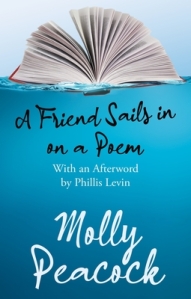
A Friend Sails in on a Poem by Molly Peacock (2022)
I’ve read one of Peacock’s poetry collections, The Analyst, as well as her biography of Mary Delany, The Paper Garden. I was delighted when she got in touch to offer a review copy of her latest memoir, which reflects on her nearly half a century of friendship with fellow poet Phillis Levin. They met in a Johns Hopkins University writing seminar in 1976, and ever since have shared their work in progress over meals. They are seven years apart in age and their careers took different routes – Peacock headed up the Poetry Society of America’s subway poetry project and then moved to Toronto, while Levin taught at the University of Maryland – but over the years they developed “a sense of trust that really does feel familial … There is a weird way, in our conversations about poetry, that we share a single soul.” For a time they were both based in New York City and had the same therapist; more recently, they arranged annual summer poetry retreats in Cazenovia (recalled via diary entries), with just the two attendees. Jobs and lovers came and went, but their bond has endured.
 The book traces their lives but also their development as poets, through examples of their verse. Her friend is “Phillis” in real life, but “Levin” when it’s her work is being discussed – and her own poems are as written by “Peacock.” Both women became devoted to the sonnet, an unusual choice because at the time that they were graduate students free verse reigned and form was something one had to learn on one’s own time. Stanza means “room,” Peacock reminds readers, and she believes there is something about form that opens up space, almost literally but certainly metaphorically, to re-examine experience. She repeatedly tracks how traumatic childhood events, as much as everyday observations, were transmuted into her poetry. Levin did so, too, but with an opposite approach: intellectual and universal where Peacock was carnal and personal. That paradox of difference yet likeness is the essence of the friendships we sail on. What a lovely read, especially if you’re curious about ‘where poems come from’; I’d particularly recommend it to fans of Ann Patchett’s Truth and Beauty.
With thanks to Molly Peacock and Palimpsest Press for the free e-copy for review.
The Bright White Tree by Joanna Seldon (Worple Press, 2017)
This appeared the year after Seldon died of cancer; were it not for her untimely end and her famous husband Anthony (a historian and political biographer), I’m not sure it would have been published, as the poetry is fairly mediocre, with some obvious rhymes and twee sentiments. I wouldn’t want to speak ill of the dead, though, so think of this more like a self-published work collected in tribute, and then no problem. Some of the poems were written from the Royal Marsden Hospital, with “Advice” a useful rundown of how to be there for a friend undergoing cancer treatment (text to let them know you’re thinking of them; check before calling, or visiting briefly; bring sanctioned snacks; don’t be afraid to ask after their health).
 Seldon takes inspiration from history (the story of Kitty Pakenham, the bombing of the Bamiyan Buddhas), travels in England and abroad (“Robin in York” vs. “Tuscan Garden”), and family history. Her Jewish heritage is clear from poems about Israel, National Holocaust Memorial Day and Rosh Hashanah. Her own suffering is put into perspective in “A Cancer Patient Visits Auschwitz.” There are also ekphrastic responses to art and literature (a Gaugin, A Winter’s Tale, Jane Eyre, and so on). I particularly liked “Conker,” a reminder of a departed loved one “So is a good life packed full of doing / That may grow warm with others, even when / The many years have turned, and darkness filled / Places where memory shone bright and strong. / I feel the conker and feel he is here.” (New bargain book from Waterstones online sale with Christmas book token)
There are haikus dotted through the collection; here’s one perfect for the season:
“Snowdrops Haiku”
Maids demure, white tips to
Mob caps… Look now! They’ve
Splattered the lawn with snow
Have you discovered any new-to-you independent publishers recently?
Margaret Atwood Reading Month: The Door (#MARM)
It’s my fifth year participating in the annual Margaret Atwood Reading Month (#MARM), hosted by indomitable Canadian blogger Marcie of Buried in Print. In previous years for this challenge, I’ve read Surfacing and The Edible Woman, The Robber Bride and Moral Disorder, and Wilderness Tips; and reread The Blind Assassin. Today is Atwood’s 83rd birthday, so what better time to show her some love?
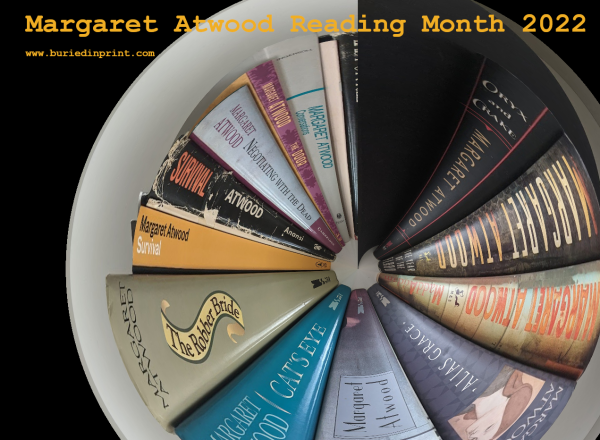
Like the Beatles, she’s worked in so many different genres and styles that I don’t see how anyone could say they don’t like her – you just haven’t explored her oeuvre deeply enough. Although she’s best known for her fiction, she started off as a poet, with a whole five collections published in the 1960s before her first novel appeared. I’d previously read her Eating Fire: Selected Poetry 1965–1995 and Dearly, my top poetry read of 2020.
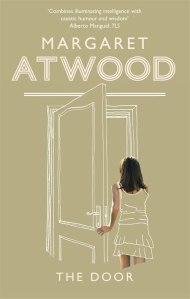 The Door (2007) was at that point her first poetry release in 12 years and features a number of the same themes that permeate her novels and nonfiction: memory, writing, ageing, travel and politics. I particularly like the early poems where she reinhabits memories of childhood and early adulthood, often through objects. Such artifacts are “pocketed as pure mementoes / of some once indelible day,” she writes in “Year of the Hen.”
These are followed by a trilogy about the death of the family’s pet cat, Blackie. “We get too sentimental / over dead animals. / We turn maudlin,” she acknowledges in “Mourning for Cats,” yet “Blackie in Antarctica” injects some humour as she remembers how her sister kept the cat’s corpse in the freezer until she could come home to bury it. Also on the lighter side is a long “where are they now?” update for the Owl and the Pussycat.
There are also meta reflections on poetry, slightly menacing observations on the weather (an implacable, fate-like force) and the seasons (autumn = hunting), virtual visits to the Arctic, mild complaints about the elderly not being taken seriously, and thoughts on duty.
Four in a row muse about war – the Vietnam War in particular, I think? “The Last Rational Man” is a sinister standout, depicting a figure who is doomed under Caligula’s reign. Whoever she may have had in mind when she wrote this, it’s just as relevant 15 years later.
In the final, title poem, which appears to be modelled on the Seven Ages of Man, a door is a metaphor for life’s transitions and, ultimately, for death.
The door swings open:
O god of hinges,
god of long voyages,
you have kept faith.
It’s dark in there.
You confide yourself to the darkness.
You step in.
The door swings closed.
Apart from a few end rhymes, Atwood relies more on theme than on sonic technique or form. That, I think, makes her poetry accessible to those who are new to or suspicious of verse. Happy birthday, M.A., and thank you for your literary wisdom and innovation! (Little Free Library) 
Being There by Jerzy Kosiński (#NovNov22 Short Classics Week)
I knew pretty much nothing about this when I went into it and that was for the best. Only after I’d finished reading it (in one sitting) did I remember that there’s a Peter Sellers film; I’m glad I wasn’t imagining him in my head the whole time.
If you keep in mind that this is a satire on certain American qualities – gullibility, the obsession with money and appearance – you can probably, like I did, excuse the thinness of the plot, the clichéd behaviour of the characters, and the sometimes dated feel (this is from 1970).
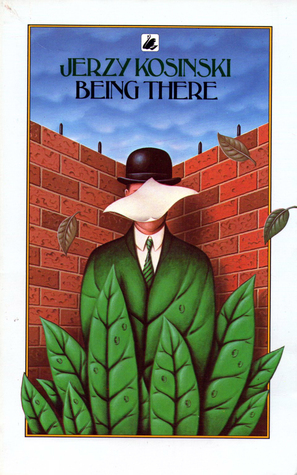 Chance is an utter innocent, an illiterate orphan; his whole history is a blank. Most of what he knows comes from television, which he watches devotedly. He lives in one half of a house; the Old Man in the other. Apart from one maid or another, he sees no one else and has never left the complex for any reason. Aside from TV, his only hobby is gardening. The house’s walled garden is his haven and his joy. When the Old Man dies, the lawyers can find no record of a hired gardener or other retainer so Chance, like Adam, is cast out of his Eden and into … suburban New York City. Where he’s promptly hit by a limo, then taken to recuperate at the home of the rich businessman’s wife who was riding in it, Elizabeth Eve (or EE) Rand.
With his gardening stories that everyone takes to be metaphorical, Chase soon wins over Wall Street and White House alike, and fields propositions from men and women just the same. He takes his cues for how to act in social situations from his extensive mental archive of TV programs. It all gets a bit silly, but the naïf at the heart of it is so sweet that I didn’t mind. He’s like Forrest Gump or any number of other simple characters who get drawn into current events (it seems like quite the Hollywood trope, in fact); just by going along with what people assume about him, he comes across as intelligent and wise. His name can’t be coincidental, with its connotations of risk, fate, or just seizing opportunities. Luckily, the satire doesn’t outstay its welcome. However, I felt that the book just stops, with no proper ending.
(Kosiński’s life story is its own stranger-than-fiction tale; the biographical essay in the back of my paperback is only about five pages long but there were many points where I wondered if it was a tongue-in-cheek appendix! The novella is autobiographical, it seems, in that the author was married to a rich American widow and moved in the kind of wealthy circles the Rands do.)
[105 pages] (Secondhand purchase) 

20 Books of Summer, #10–11: Dabiri and McDonald on Whiteness
I didn’t jump on the antiracist books bandwagon last year. Instead, my way into the topic was a work I became aware of through the online Church Times Festival of Faith and Literature. I was on the Church House website to buy books by several of the weekend’s contributors and a forthcoming release being advertised jumped out at me for its provocative title and fabulous cover: God Is Not a White Man. I promptly pre-ordered. It never fails to put this Gungor song in my head, and seemed an ideal way to engage with the issues from a perspective that makes sense to me. So for this latest batch of colour-themed summer reads I’m thinking about whiteness from the point of view of women of colour based in England and Ireland.
God Is Not a White Man (And Other Revelations) by Chine McDonald (2021)
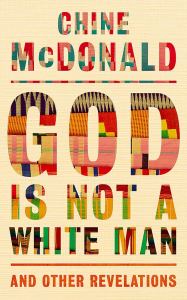 Here’s where McDonald is coming from: she moved to England from Nigeria with her family as a small child, grew up on the Evangelical end of Anglicanism, works for Christian Aid, and is married to a white man. She’s used to being the only Black person in the room when she steps into a church or other Christian setting in the UK. “It is a sad fact that the Church often lags behind on racial justice, remaining intransigent on issues that the world has long since labelled oppressive and unjust [such as opposing interracial marriage].” Always in the background for her is the way Black people are being treated in other parts of the world: although she wrote the bulk of this book before George Floyd’s murder, she has updated it with details about Donald Trump’s late outrages and the Black Lives Matter movement. Her chief concern is for her young son, growing up as a male with brown skin.
The book is shaped around moments of revelation large and small. For instance, McDonald opens with the first time she saw a God who looked like her. It was through The Shack, a bestselling novel by William P. Young in which God the Father is portrayed as a big Black woman (played by Octavia Spencer in the film version). She notes how important such symbolism is: “When a Black woman only sees God reflected as a white man, then somewhere in her subconscious she believes that white men are better representations of God than she is, that she is made less in the image of God than they are.” Other topics are the importance of equal access and education (she went to Cambridge), and standards of beauty. Beyoncé helped her to love her body, curves and all, and feel a sense of Black sisterhood. I liked getting glimpses into her life, such as her big Nigerian wedding to Mark. (New purchase)
Links between the two books: The authors’ Nigerian heritage, plus McDonald mentions that she interviewed Dabiri at Greenbelt Festival in 2019 and has been trying to get up the courage to return to her natural hair, as Dabiri encouraged her (the Natural Hair Movement is the topic of Dabiri’s first book, Don’t Touch My Hair).
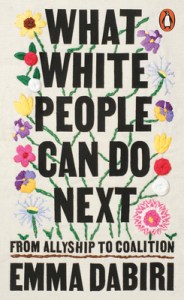
What White People Can Do Next: From Allyship to Coalition by Emma Dabiri (2021)
Another terrific cover with a bold sans serif font. This is clearly in the mould of 2020’s antiracist books, but Dabiri wouldn’t thank you for considering her under the same umbrella. She doesn’t like the concept of allyship because it reinforces unhelpful roles: people of colour as victims and white people as the ones with power who can come and save the day.
 Dabiri is Irish and Nigerian and grew up in the USA and Ireland. Her experience of racism was much more overt than McDonald’s, including verbal and physical abuse. She challenges white people to stop the denial: ‘whiteness’ and ‘blackness’, though artificial constructs, have been with us since at least the 1660s, so racism is a system we have all been born into. “We’ve been conditioned to see the world through that lens for centuries. … over that you have no control. What you do have control over is what you do next.”
Like McDonald, Dabiri emphasizes that monolithic categories like white and Black flatten a huge diversity of people and experiences (McDonald has a chapter entitled “Africa Is Not a Country”). But Dabiri has a more political (as well as, of course, a completely secular) approach: She wants readers to interrogate capitalism and think about how resources can be redistributed more fairly. Her notion of coalition is about identifying common ground and shared goals. “On the most basic level, we have to see our struggles as interconnected because they are, and because we are.”
Reading this was like encountering an extended TED talk. I wasn’t taken enough with Dabiri’s writing style to seek out her previous book, but if you have an interest in the subject matter you may as well pick up this 150-pager. It was small enough for me to pack in the back of our booze bag and read a bit of during a neighbour’s outdoor birthday party last weekend. I got a couple of “huh” looks, but that may have been just for reading during a party at all rather than for the specific content. (Public library)
Would I say that I enjoyed reading these two books? That’s a tough question. They were worthwhile, but also tedious in places, such that I did plenty of skimming. History, politics, sociology: these fields are not my reading comfort zone. The theological bent to McDonald’s work made it more to my taste than Dabiri’s contribution. Still, my whole reason for avoiding antiracist books was that I questioned my motivation. I didn’t want to read them because I felt I should; a sense of obligation is a recipe for resentment when it comes to books. I’m not sure to what extent readers should read things they feel they must. I look to books for learning opportunities, yes, but also for escape and pleasure. But maybe it’s valuable simply to show willing, to get outside your reading comfort zone and be open to hearing new ideas.
How about you? Would you pick up one of these for the educational value?
I have ALL of the rest of my 20 Books of Summer in progress at the moment. The only question is when I will next finish some!
Recent BookBrowse & Shiny New Books Reviews, and Book Club Ado
Excerpts from and links to some of my recent online writing for other places:
BookBrowse
Three O’Clock in the Morning by Gianrico Carofiglio
 The quotation that gives Carofiglio’s tender novel its title is from F. Scott Fitzgerald’s The Crack-Up: “In a real dark night of the soul it is always three o’clock in the morning.” It lends an appropriate sense of time suspended, of earnest seeking and extreme circumstances: The main action of the book takes place over just a few days in June of 1983, when Italian teenager Antonio and his father are stranded in Marseilles while there for Antonio to be seen by an epilepsy specialist. The gift of this time outside of time allows them to get to know each other better, such that the memory of the trip will be precious to Antonio even decades later. I appreciated how the limited setting heightened this short novel’s emotions. Carofiglio invites readers to peer between the leisurely progression of events to see the bond that is being formed. (See my full review at BookBrowse. See also my related article on HarperVia, a new publishing imprint for international literature.)
The Dictionary of Lost Words by Pip Williams
 Inspired by the composition of the Oxford English Dictionary, this Australian debut novel explores the lives of the women on its fringes through the words that were omitted. The suffrage movement and World War I loom large as the storyline enters the 1910s. I most appreciated the relationships Esme has with the various women in her life. The main action spans the 40 years of the original composition of the OED. That scope means there is a lot of skipping forward in time. Especially in the first half, I longed for the narrative to slow down so I could spend more time with this character. Despite the first-person narration, I never felt I knew Esme very well. Women’s bonds and women’s words are strong themes in this forthrightly feminist novel that, despite its flaws, would make a great book club selection. (See my full review at BookBrowse. See also my reading list of books about dictionaries and lost words.)
Shiny New Books
Notes from Deep Time: The Hidden Stories of the Earth Beneath Our Feet by Helen Gordon
 To assess the place of humanity, we can look back to prehistory, but also forward to envision the “deep future.” (It was only in a late chapter on nuclear waste disposal sites and warning messages to the future that I found too much direct overlap with Footprints by David Farrier.) This engagingly blends both tactics, surveying the fields of geology and palaeontology and pondering the future traces of the Anthropocene. I most enjoyed the middle chapters, in which science meets wildlife and cultural studies. For instance, a chapter on ammonites leads into a profile of Mary Anning and the history of both fossil hunting and women in STEM careers. The prose is well pitched to the layman’s level. Interviews, travels, and snapshots from her own life generally keep the material from becoming too dry. An invigorating interdisciplinary tour. (See my full review at Shiny New Books.)
My book club has been meeting via Zoom since April 2020. This is a common state of affairs for book clubs around the world. Especially since we have 12 members (if everyone attends, which is rare), we haven’t been able to contemplate meeting in person as of yet. However, a subset of us meet midway between the monthly reads to discuss women’s classics like Marge Piercy’s Woman on the Edge of Time. For next week’s meeting on Mrs. Dalloway, we are going to attempt a six-person get-together in one member’s house.
 Anyway, a neat thing we did last month was a Zoom chat with the author: a BBC correspondent who happens to be the brother of one of our members. If you’re a news junkie in the UK, you may know the name Jon Sopel, though since I don’t have a telly or ever listen to radio, I hadn’t encountered him until this “in-person” meet-up. He has been the BBC’s North America Editor since 2014.
UnPresidented is the third book he wrote over the course of the Trump presidency. It started off as a diary of the 2020 election campaign, beginning in July 2019, but of course soon morphed into something slightly different: a chronicle of life in D.C. and London during Covid-19 and a record of the Trump mishandling of the pandemic. But as well as a farcical election process and a public health crisis, 2020’s perfect storm also included economic collapse and social upheaval – thanks to the murder of George Floyd and the subsequent Black Lives Matter protests worldwide plus isolated rioting.
UnPresidented served as a good reminder for me of the timeline of events and the full catalogue of outrages committed by Trump and his cronies. You just have to shake your head over the litany of ridiculous things he said and did, and got away with – any one of which might have sunk another president or candidate. The style is breezy and off-the-cuff, so the book reads quickly. There’s a good balance between world events and personal ones, with his family split across the UK and Australia. I appreciated the insight into differences from the British system. I thought it would be depressing reading back through the events of 2020, but for the most part the knowledge that everything turned out “right” allowed me to see the humour in it. Still, I found it excruciating reading about the four days following the election.

Sopel kindly gave us an hour of his time one Wednesday evening before he had to go on air and answered our questions about Biden, Harris, journalistic ethics, and more. He was charming and eloquent, as befits his profession.
 Bookish Beck = Rebecca Foster. American transplant to England. Freelance proofreader and book reviewer.
 Bookish Beck