Thanks for Joining in with Novellas in November! #NovNov24 Statistics
Co-host Cathy and I are delighted that so many of you participated in Novellas in November again this year and helped us to celebrate the art of the short book. We had 46 participants and 173 posts covering more than 150 books.

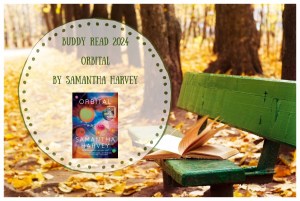
In total, 16 friends of #NovNov reviewed our buddy read, Orbital by Samantha Harvey, which won the Booker Prize partway through the month.

Other books with multiple reviews included John Boyne’s recent novella series, The Party by Tessa Hadley, various by Claire Keegan, Astraea by Kate Kruimink, and Baron Bagge by Alexander Lernet-Holenia.
The link-up will remain open through Saturday 7 December if you would like to add in any belated reviews (I will certainly be doing so).
See you next November – but keep reading novellas and sharing the love all through the year!
Interview with Neil Griffiths of Weatherglass Books (#NovNov24)
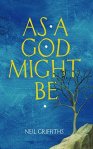
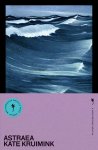 Back in September, I attended a great “The Future of the Novella” event in London, hosted by Weatherglass. I wrote about it here, and earlier this month I reviewed the first of the two winners of the inaugural Weatherglass Novella Prize, Astraea by Kate Kruimink*. Weatherglass Books co-founder and novelist Neil Griffiths kindly sent review copies of both winning books, and agreed to answer some questions over e-mail.
Samantha Harvey’s 136-page Orbital won the Booker Prize, the film adaptation of Claire Keegan’s Small Things Like These is in cinemas: Is the novella having a moment? If so, how do you account for its fresh prominence? Or has it always been a powerful form and we’re realizing it anew?
 I do wonder whether Orbital is a novella, by which I mean, number of pages can be deceptive – there are a lot of words per page! I think it probably sneaks in under our Novella Prize max word count: under 40K. Also, I wonder whether Small Things like These would make it over our minimum 20K. I don’t think so. But what I think we can say is that there is something happening around length.
My co-founder of Weatherglass, Damian Lanigan, says this: “the novella is the form for our times: befitting our short attention spans, but also with its tight focus, with its singular atmosphere – it’s the ideal form for glimpsing something essential about the world and ourselves in an increasingly chaotic world.”
But then if we look over the history of the prose fiction over the last 200 hundred years, there are so many novellas that have defined an era: Turgenev’s Love, Conrad’s Heart of Darkness, Carr’s A Month in the Country, Orwell’s Animal Farm, Solzhenitsyn’s One Day in the Life of Ivan Denisovich.
Why did Weatherglass choose to focus on short books? Do economic and environmental factors come into it (short books = less paper = lower printing costs as well as fewer trees cut down)?
 Economic and environmental factors play a role, but there is also craft. Writers need to ask themselves the question: does this story need to be this length, and the answer is, more often than not: no. I think constraints bring the best out of writers. If a novel comes in at 70K words, our first thought is to cut 10K. (I should say, my last novel, very kindly reviewed by yourself, was a whooping 190K words. It should have been 150K! Since then I’ve written two pieces of fiction, both under 35K.)
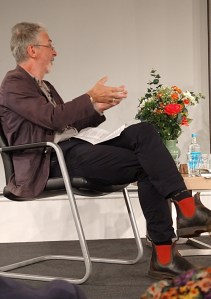
Neil Griffiths
We’ve heard about the bloating of films, that they’re something like 20% longer on average than they were 40 years ago; will books take the opposite trajectory? Can a one-sitting read compete with a film?
I don’t think I’ve ever read even the shortest novella in one sitting. I need time to reflect. I don’t think comparing the two forms is helpful because they require different things of us. Take music: Morton Feldman’s 2nd String Quartet is 5 hours long, without a break. I’d commit to that in the concert hall, but I couldn’t read for 5 hours without a break or sit through a film.
How did you bring Ali Smith on board as the judge for the first two years of the Weatherglass Novella Prize? There was a blind judging process and you ended up with an all-female shortlist in the inaugural year. Do you have a theory as to why?
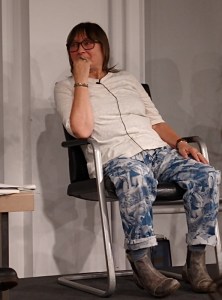
Ali Smith
Damian kept saying Ali Smith would be the best judge and I kept saying “but how do we get to her?” Then someone told me they had her email address. I didn’t expect to get an answer. A ‘Yes’ came an hour later. She’s been wonderful to work with. And she’s enjoyed it so much she’s agreed to do it ongoingly.
I do think the shortlist question is an important one. Certainly we don’t have to ask ourselves any questions when it’s an all-female short list, but we would if it was all-male. What does that say? I don’t know why the strongest were by women.
Do you have any personal favourite novellas?
 A Month in the Country might be the exemplar of the form for me. But there is a little-read novella by Tolstoy, Hadji Murat, which is also close to perfect. More contemporaneously, Gerald Murnane’s Border Districts. And I’m pleased to say: all three novellas we’re publishing from our inaugural prize are up there: Astraea, Aerth and We Hexed the Moon.
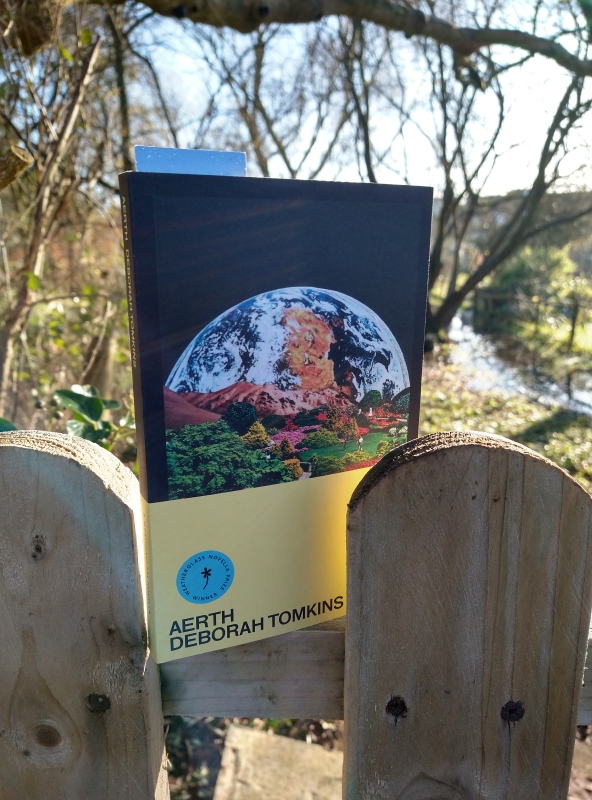
*Though it won’t be published until 25 January, I have a finished copy of the other winner, Aerth by Deborah Tomkins, a novella-in-flash set on alternative earths and incorporating second- and third-person narration and various formats. I’ve been enjoying it so far and hope to review it soon as my first recommendation for 2025.
#NovNov24 Halfway Check-In & Small Things Like These Film Review
Somehow half of November has flown by. We hope you’ve been enjoying reading and reviewing short books this month. So far we have had 40 participants and 84 posts! Remember to add your posts to the link-up, or alert us via a comment here or on Bluesky (@cathybrown746.bsky.social / @bookishbeck.bsky.social), Instagram (@cathy_746books / @bookishbeck), or X (@cathy746books / @bookishbeck).
If you haven’t already, there’s no better time to pick up our buddy read, Orbital by Samantha Harvey, which won the Booker Prize on Tuesday evening. Chair of judges Edmund de Waal said it is “about a wounded world” and that the panel’s “unanimity about Orbital recognises its beauty and ambition.” I was surprised to learn that it is only the second-shortest Booker winner; Offshore by Penelope Fitzgerald is even shorter.
Another popular novella many of us have read is Small Things Like These by Claire Keegan (my latest review is here). I went to see the excellent film adaptation, with a few friends from book club, at our tiny local arthouse cinema on Wednesday afternoon. I’ve read the book twice now – I might just read it a third time before Christmas – and from memory the film is remarkably faithful to its storyline and scope. (The only significant change I think of is that Bill doesn’t visit Ned in the hospital, but there are still flashbacks to the role that Ned played in Bill’s early life.)
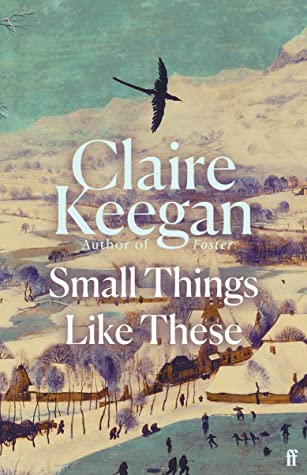 The casting and cinematography are exceptional. Cillian Murphy portrays Bill with just the right blend of stoicism, meekness, and angst. Emily Watson is chilling as Sister Mary, the Mother Superior of the convent, which is suitably creepy with dim brick hallways and clinical laundry rooms. The grimy cobbles and dull streetlamps of the town contrast with the warm light in the scenes of Bill’s remembered childhood at Mrs Wilson’s. Repeated shots – of Bill’s truck setting off across the bridge in the early morning, of him scrubbing coal dust from his hands with carbolic soap, of his eyes wide open in the middle of the night – are not recursive but a way of establishing the gruelling nature of his tasks and the unease that plagues him. A life of physical labour has aged him beyond 39 (cf. Murphy is 48) and he’s in pain from shouldering sacks of coal day in and day out.
Both book and film are set in 1985 but apart from the fashions and the kitschy Christmas decorations and window dressings you’d be excused for thinking it was the 1950s. Bill’s business deals in coal, peat and tinder; rural Ireland really was that economically depressed and technologically constrained. (Another Ireland-set film I saw last year, The Miracle Club, is visually very similar – it even features two of the same actors – although it takes place in 1967. It’s as if nothing changed for decades.)
 By its nature, the film has to be a little more overt about what Bill is feeling (and generally not saying, as he is such a quiet man): there are tears at Murphy’s eyes and anxious breathing to make Bill’s state of mind obvious. Yet the film retains much of the subtlety of Keegan’s novella. You have to listen carefully during the conversation between Bill and Sister Mary to understand she is attempting to blackmail him into silence about what goes on at the convent.
At the end of the film showing, you could have heard a pin drop. Everyone was stunned at the simple beauty of the final scene, and the statistics its story is based on. It’s truly astonishing that Magdalene Laundries were in operation until the late 1990s, with Church support. Rage and sorrow build in you at the very thought, but Bill’s quietly heroic act of resistance is an inspiration. What might we, ordinary people all, be called on to do for women, the poor, and the oppressed in the years to come? We have no excuse not to advocate for them.
(Arti of Ripple Effects has also reviewed the film here.)
So far this month I’ve read nine novellas and reviewed eight. One of these was a one-sitting read, and I have another pile of ones that I could potentially read of a morning or evening next week. I’m currently reading another 16 … it remains to be seen whether I will average one a day for the month!
Orbital by Samantha Harvey (#NovNov24 Buddy Read)
Orbital is a circadian narrative, but its one day contains multitudes. Every 90 minutes, a spacecraft completes an orbit of the Earth; the 24 hours the astronauts experience equate to 16 days. And in the same way, this Booker Prize-shortlisted novella contains much more than seems possible for its page length. It plays with scale, zooming from the cosmic down to the human, then back. The situation is simultaneously extraordinary and routine:
Six of them in a great H of metal hanging above the earth. They turn head on heel, four astronauts (American, Japanese, British, Italian) and two cosmonauts (Russian, Russian); two women, four men, one space station made up of seventeen connecting modules, seventeen and a half thousand miles an hour. They are the latest six of many, nothing unusual about this any more[.]
We see these characters – Anton, Roman, Nell, Chie, Shaun, and Pietro – going about daily life as they approach the moon: taking readings, recording data on their health and lab mice’s, exercising, conversing over packaged foods, watching a film, then getting back into the sleeping bags where they started the day. Apart from occasional messages from family, theirs is a completely separate, closed-off existence. Is it magical or claustrophobic? Godlike, they cast benevolent eyes over a whole planet, yet their thoughts are always with the two or three individual humans who mean most to them. A wife, a daughter, a mother who has just died.
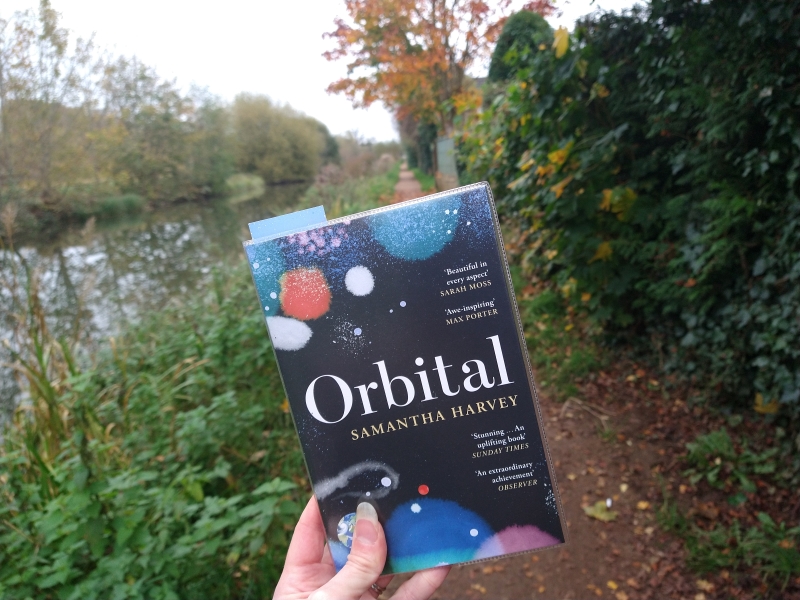
Apart from the bereaved astronaut – the one I sympathized with most – I didn’t get a strong sense of the characters as individuals. This may have been deliberate on Harvey’s part, to emphasize how reliant the six are on each other for survival: “we are one. Everything we have up here is only what we reuse and share. … We drink each other’s recycled urine. We breathe each other’s recycled air.” That collectivity and the overt messaging give the book the air of a parable.
Maybe it’s hard to shift from thinking your planet is safe at the centre of it all to knowing in fact it’s a planet of normalish size and normalish mass rotating about an average star in a solar system of average everything in a galaxy of innumerably many, and that the whole thing is going to explode or collapse.
Our lives here are inexpressibly trivial and momentous at once … Both repetitive and unprecedented. We matter greatly and not at all.
Gaining perspective on humankind is always valuable. There is also a strong environmental warning here. “The planet is shaped by the sheer amazing force of human want, which has changed everything, the forests, the poles, the reservoirs, the glaciers, the rivers, the seas, the mountains, the coastlines, the skies”. The astronauts observe climate breakdown firsthand through the inexorable development of a super-typhoon over the Philippines.
There are some stunning lyrical passages (“We exist now in a fleeting bloom of life and knowing, one finger-snap of frantic being … This summery burst of life is more bomb than bud. These fecund times are moving fast”), but Harvey sometimes gets carried away with the sound of words or the sweep of imagery, such that the style threatens to overwhelm the import. This was especially true of the last line. At times, I felt I was watching a BBC nature documentary full of soaring panoramas and time-lapse shots, all choreographed to an ethereal Sigur Rós soundtrack. Am I a cynic for saying so? I confess I don’t think this will win the Booker. But for the most part, I was entranced; grateful for the peek at the immensity of space, the wonder of Earth, and the fragility of human beings. (Public library)
[136 pages]
Mini playlist:
- “Space Walk” by Lemon Jelly
- “Spacewalk” by Bell X1
- “Magic” & “Wonder” by Gungor
- “Hoppípolla” by Sigur Rós
- “Little Astronaut” by Jim Molyneux and Spell Songs
Never fear, others have been more enthusiastic!
Reviewed for this challenge so far by:
A Bag Full of Stories (Susana)
Book Chatter (Tina)
Books Are My Favourite and Best (Kate)
Buried in Print (Marcie)
Calmgrove (Chris)
The Intrepid Angeleno (Jinjer)
My Head Is Full of Books (Anne)
Words and Peace (Emma)
Reviewed earlier by other participants and friends:
Get Ready for Novellas in November!
Novellas: “all killer, no filler,” as Joe Hill said. Hard to believe, but it’s now the FIFTH year that Cathy of 746 Books and I have been co-hosting Novellas in November as a month-long blogger/social media challenge celebrating the art of the short book. A novella is a book of 20,000 to 40,000 words, but because that’s hard for a reader to gauge, we tend to say anything under 200 pages (even nonfiction). I’m going to make it a personal challenge to limit myself to books of ~150 pages or less.
We’re keeping it simple this year with just the one buddy read, Orbital by Samantha Harvey. (Though we chose it weeks ago, its shortlisting for the Booker Prize is all the more reason to read it!) The UK hardback has 144 pages. Here’s part of the blurb to entice you:
“Six astronauts rotate in their spacecraft above the earth. … Together they watch their silent blue planet, circling it sixteen times, spinning past continents and cycling through seasons, taking in glaciers and deserts, the peaks of mountains and the swells of oceans. Endless shows of spectacular beauty witnessed in a single day. Yet although separated from the world they cannot escape its constant pull. News reaches them of the death of a mother, and with it comes thoughts of returning home. … They begin to ask, what is life without earth? What is earth without humanity?”
Please join us in reading it at any time between now and the end of November!
We won’t have any official themes or prompts, but you might want to start off the month with a My Year in Novellas retrospective looking at any novellas you have read since last NovNov, and finish it with a New to My TBR list based on what novellas others have tempted you to try in the future.
It’s always a busy month in the blogging world, what with Nonfiction November, German Literature Month, Margaret Atwood Reading Month and SciFi Month. Why not search your shelves and/or local library for novellas that could count towards multiple challenges?
From 1 November there will be a pinned post on my site from which you can join the link-up. Keep in touch via Twitter (@bookishbeck / @cathy746books) and Instagram (@bookishbeck / @cathy_746books), and feel free to use the terrific feature images Cathy has made plus our new hashtag, #NovNov24.
“The Future of the Novella”
On the 11th, at Foyles in London, I attended a perfect event to get me geared up for Novellas in November. Indie publisher Weatherglass Books and judge Ali Smith introduced us to the two winners she chose for the inaugural Weatherglass Novella Prize: Kate Kruimink’s Astraea (set on a 19th-century Australian convict ship), out now, and Deborah Tomkins’ Aerth (a sci-fi novella in flash set on alternative earths), coming out in January.

Ali Smith
We heard readings from both novellas, and Neil Griffiths and Damian Lanigan of Weatherglass told us some more about what they publish and the process of reading the prize submissions (blind!). Lanigan called the novella “a form for our times” and put this down not just to modern attention spans but to focus – the glimpse of something essential. He and Smith mentioned F. Scott Fitzgerald, Claire Keegan, Françoise Sagan and Muriel Spark as some of the masters of the novella form.
The effortlessly cool Smith spoke about the delight of spending weekend mornings – she writes during the week but gives herself the weekends off to read – in bed with a pot of coffee and a Weatherglass novella. She particularly enjoyed going into each book from the shortlist without any context and lamented that blurbs mean the story has to be, to some extent, given away to the reader. She said the ending of a novella has to land “like a cat, on its feet” (Griffiths then appended that it must also be ambiguous).
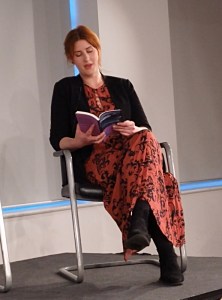
Kate Kruimink
Kruimink, who edits short stories for a magazine, explained that she thinks of Astraea as a long short story. She wrote it especially for this prize, within two months and for Ali Smith, as it were (she mentioned how formative How to Be Both was for her as a writer). Due to time and word limit constraints, she deliberately crafted a small character arc and didn’t do loads of research, though she had been looking into ships’ surgeons’ journals at the time. She has Irish convict ancestry but noted that this is not uncommon in Tasmania. Astraea is a “sneaky prequel” to her first novel, which has been published in Australia.
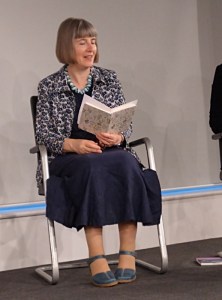
Deborah Tomkins
Aerth was originally titled First, Do No Harm, which had the potential to confuse those looking for a medical read. Aerth and Urth are different planets with parallels to our own. The novella tells the story of Magnus, an Everyman on a deeply forested planet heading into an Ice Age. Tomkins first wrote it for the Bath Prize in 2018 and was longlisted, then added to it. She initially sent the book to sci-fi publishers but was told it was not ‘sci-fi enough’.
Griffiths remarked that the shortlist was all-female and that the two winners show how a novella can do many different things: Astraea is at the low end of the word count at 22,000 words and takes place over just 36 hours; Aerth is towards the upper limit at 36,000 words and spans about 40 years.
Neil Griffiths
All the panellists dismissed the idea of a hierarchy with the full-length novel at the top. Griffiths said that the constraints of the novella, to need to discard and discard, make it stand out.
A further title from the 2024 shortlist, We Hexed the Moon by Mollyhall Seeley, will also be published by Weatherglass next year, and submissions are now open for the Weatherglass Novella Prize 2025.
Many thanks for my free ticket to a great event. Weatherglass has also kindly offered to send Cathy and me copies of the two novellas to review over the course of #NovNov. I’m looking forward to reading both winners!
The Best Books of 2019: Some Runners-Up
I sometimes like to call this post “The Best Books You’ve Probably Never Heard Of (Unless You Heard about Them from Me)”. However, these picks vary quite a bit in terms of how hyped or obscure they are; the ones marked with an asterisk are the ones I consider my hidden gems of the year. Between this post and my Fiction/Poetry and Nonfiction best-of lists, I’ve now highlighted about the top 13% of my year’s reading.
Fiction:
 Salt Slow by Julia Armfield: Nine short stories steeped in myth and magic. The body is a site of transformation, or a source of grotesque relics. Armfield’s prose is punchy, with invented verbs and condensed descriptions that just plain work. She was the Young Writer of the Year Award shadow panel winner. I’ll be following her career with interest.
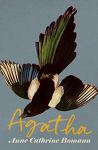 *Agatha by Anne Cathrine Bomann: In late-1940s Paris, a psychiatrist counts down the days and appointments until his retirement. A few experiences awaken him from his apathy, including meeting Agatha, a new German patient with a history of self-harm. This debut novel is a touching, subtle and gently funny story of rediscovering one’s purpose late in life.
 A Single Thread by Tracy Chevalier: Chevalier is an American expat like me, but she’s lived in England long enough to make this very English novel convincing and full of charm. Violet Speedwell, 38, is an appealing heroine who has to fight for a life of her own in the 1930s. Who knew the hobbies of embroidering kneelers and ringing church bells could be so fascinating?
 Akin by Emma Donoghue: An 80-year-old ends up taking his sullen pre-teen great-nephew with him on a long-awaited trip back to his birthplace of Nice, France. The odd-couple dynamic works perfectly and makes for many amusing culture/generation clashes. Donoghue nails it: sharp, true-to-life and never sappy, with spot-on dialogue and vivid scenes.
 Things in Jars by Jess Kidd: In 1863 Bridie Devine, female detective extraordinaire, is tasked with finding the six-year-old daughter of a baronet. Kidd paints a convincingly stark picture of Dickensian London, focusing on an underworld of criminals and circus freaks. The prose is spry and amusing, particularly in her compact descriptions of people.
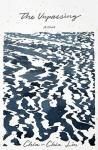 *The Unpassing by Chia-Chia Lin: Bleak yet beautiful in the vein of David Vann’s work: the story of a Taiwanese immigrant family in Alaska and the bad luck and poor choices that nearly destroy them. This debut novel is full of atmosphere and the lowering forces of weather and fate.
 The Doll Factory by Elizabeth Macneal: Set in the early 1850s and focusing on the Great Exhibition and Pre-Raphaelite Brotherhood, this reveals the everyday world of poor Londoners. It’s a sumptuous and believable fictional world, with touches of gritty realism. A terrific debut full of panache and promise.
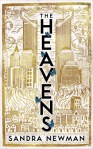 *The Heavens by Sandra Newman: Not a genre I would normally be drawn to (time travel), yet I found it entrancing. In her dreams Kate becomes Shakespeare’s “Dark Lady” and sees visions of a future burned city. The more she exclaims over changes in her modern-day life, the more people question her mental health. Impressive for how much it packs into 250 pages; something like a cross between Jonathan Franzen and Samantha Harvey.
 *In Love with George Eliot by Kathy O’Shaughnessy: Many characters, fictional and historical, are in love with George Eliot over the course of this debut novel. We get intriguing vignettes from Eliot’s life with her two great loves, and insight into her scandalous position in Victorian society. O’Shaughnessy mimics Victorian prose ably.
 Daisy Jones and The Six by Taylor Jenkins Reid: This story of the rise and fall of a Fleetwood Mac-esque band is full of verve and heart. It’s so clever how Reid delivers it all as an oral history of pieced-together interview fragments. Pure California sex, drugs, and rock ’n roll, yet there’s nothing clichéd about it.
Graphic Novels:
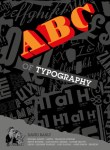 *ABC of Typography by David Rault: From cuneiform to Comic Sans, this history of typography is delightful. Graphic designer David Rault wrote the whole thing, but each chapter has a different illustrator, so the book is like a taster course in comics styles. It is fascinating to explore the technical characteristics and aesthetic associations of various fonts.
 *The Lady Doctor by Ian Williams: Dr. Lois Pritchard works at a medical practice in small-town Wales and treats embarrassing ailments at a local genitourinary medicine clinic. The tone is wonderfully balanced: there are plenty of hilarious, somewhat raunchy scenes, but also a lot of heartfelt moments. The drawing style recalls Alison Bechdel’s.
Poetry:
 *Thousandfold by Nina Bogin: This is a lovely collection whose poems devote equal time to interactions with nature and encounters with friends and family. Birds are a frequent presence. Elsewhere Bogin greets a new granddaughter and gives thanks for the comforting presence of her cat. Gentle rhymes and half-rhymes lend a playful or incantatory nature.
Nonfiction:
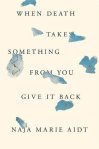 *When Death Takes Something from You Give It Back by Naja Marie Aidt: Aidt’s son Carl Emil died in 2015, having jumped out of his fifth-floor Copenhagen window during a mushroom-induced psychosis. The text is a collage of fragments. A playful disregard for chronology and a variety of fonts, typefaces and sizes are ways of circumventing the feeling that grief has made words lose their meaning forever.
 *Homesick: Why I Live in a Shed by Catrina Davies: Penniless during an ongoing housing crisis, Davies moved into the shed near Land’s End that had served as her father’s architecture office until he went bankrupt. Like Raynor Winn’s The Salt Path, this intimate, engaging memoir serves as a sobering reminder that homelessness is not so remote.
 *Hard Pushed: A Midwife’s Story by Leah Hazard: An empathetic picture of patients’ plights and medical professionals’ burnout. Visceral details of sights, smells and feelings put you right there in the delivery room. This is a heartfelt read as well as a vivid and pacey one, and it’s alternately funny and sobering.
 *Deep Creek: Finding Hope in the High Country by Pam Houston: Autobiographical essays full of the love of place, chiefly her Colorado ranch – a haven in a nomadic career, and a stand-in for the loving family home she never had. It’s about making your own way, and loving the world even – or especially – when it’s threatened with destruction. Highly recommended to readers of The Chronology of Water by Lidia Yuknavitch.
 *Dancing with Bees: A Journey back to Nature by Brigit Strawbridge Howard: Bees were the author’s gateway into a general appreciation of nature, something she lost for a time in midlife because of the rat race and family complications. She clearly delights in discovery and is devoted to lifelong learning. It’s a book characterized by curiosity and warmth. I ordered signed copies of this and the Simmons (below) directly from the authors via Twitter.
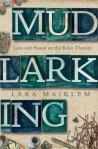 *Mudlarking: Lost and Found on the River Thames by Lara Maiklem: Maiklem is a London mudlark, scavenging for what washes up on the shores of the Thames, including clay pipes, coins, armaments, pottery, and much more. A fascinating way of bringing history to life and imagining what everyday existence was like for Londoners across the centuries.
 Unfollow: A Journey from Hatred to Hope, Leaving the Westboro Baptist Church by Megan Phelps-Roper: Phelps-Roper grew up in a church founded by her grandfather and made up mostly of her extended family. Its anti-homosexuality message and picketing of military funerals became trademarks. This is an absorbing account of doubt and making a new life outside the only framework you’ve ever known.
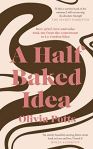 *A Half Baked Idea: How Grief, Love and Cake Took Me from the Courtroom to Le Cordon Bleu by Olivia Potts: Bereavement memoir + foodie memoir = a perfect book for me. Potts left one very interesting career for another. Losing her mother when she was 25 and meeting her future husband, Sam, who put time and care into cooking, were the immediate spurs to trade in her wig and gown for a chef’s apron.
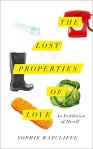 *The Lost Properties of Love by Sophie Ratcliffe: Not your average memoir. It’s based around train journeys – real and fictional, remembered and imagined; appropriate symbols for many of the book’s dichotomies: scheduling versus unpredictability, having or lacking a direction in life, monotony versus momentous events, and fleeting versus lasting connections.
 Inheritance: A Memoir of Genealogy, Paternity, and Love by Dani Shapiro: On a whim, in her fifties, Shapiro sent off a DNA test kit and learned she was only half Jewish. Within 36 hours she found her biological father, who’d donated sperm as a medical student. It’s a moving account of her emotional state as she pondered her identity and what her sense of family would be in the future.
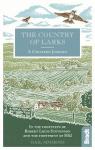 *The Country of Larks: A Chiltern Journey by Gail Simmons: Reprising a trek Robert Louis Stevenson took nearly 150 years before, revisiting sites from a childhood in the Chilterns, and seeing the countryside that will be blighted by a planned high-speed railway line. Although the book has an elegiac air, Simmons avoids dwelling in melancholy, and her writing is a beautiful tribute to farmland that was once saturated with the song of larks.

(Books not pictured were read from the library or on Kindle.)
Coming tomorrow: Other superlatives and some statistics.
Doorstopper(s) of the Month: Julia Glass (& Umberto Eco)
The Whole World Over by Julia Glass (2006)
When I plucked this from the sidewalk clearance area of my favorite U.S. bookstore, all I knew about it was that it featured a chef and was set in New York City and New Mexico. Those facts were enough to get me interested, and my first taste of Julia Glass’s fiction did not disappoint. I started reading it in the States at the very end of December and finished it in the middle of this month, gobbling up the last 250 pages or so all in one weekend.
 Charlotte “Greenie” Duquette is happy enough with her life: a successful bakery in Greenwich Village, her psychiatrist husband Alan, and their young son George. But one February 29th – that anomalous day when anything might happen – she gets a call from the office of the governor of New Mexico, who tasted her famous coconut cake (sandwiched with lemon curd and glazed in brown sugar) at her friend Walter’s tavern and wants her to audition for a job as his personal chef at the governor’s mansion in Santa Fe. It’s just the right offer to shake up her stagnating career and marriage.
One thing you can count on from a doorstopper, from Dickens onward, is that most of the many characters will be connected (“a collection of invisibly layered lives” is how Glass puts it). So: Walter’s lover is one of Alan’s patients; Fenno, the owner of a local bookstore, befriends both Alan and Saga, a possibly homeless young woman with brain damage who volunteers in animal rescue – along with Walter’s dog-walker, who’s dating his nephew; and so on. The title refers to how migrating birds circumnavigate the globe but always find their way home, and the same is true of these characters: no matter how far they stray – even as Greenie and Alan separately reopen past romances – the City always pulls them back.
My only real complaint about the novel is that it’s almost overstuffed: with great characters and their backstories, enticing subplots, and elements that seemed custom-made to appeal to me – baking, a restaurant, brain injury, the relatively recent history of the AIDS crisis, a secondhand bookstore, rescue dogs and cats, and much more. I especially loved the descriptions of multi-course meals and baking projects. Glass spins warm, effortless prose reminiscent of what I’ve read by Louise Miller and Carolyn Parkhurst. I will certainly read her first, best-known book, Three Junes, which won the National Book Award. I was also delighted to recall that I have her latest on my Kindle: A House Among the Trees, based on the life of Maurice Sendak.
All told, this was quite the bargain entertainment at 95 cents! Two small warnings: 1) if you haven’t read Three Junes, try not to learn too much about it – Glass likes to use recurring characters, and even a brief blurb (like what’s on the final page of my paperback; luckily, I didn’t come across it until the end) includes a spoiler about one character. 2) Glass is deliberately coy about when her book is set, and it’s important to not know for as long as possible. So don’t glance at the Library of Congress catalog record, which gives it away.
Page count: 560
My rating: 
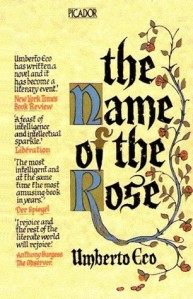 I started Umberto Eco’s The Name of the Rose (1983) with the best intentions of keeping up with Annabel’s buddy read. The first 50–100 pages really flew by and drew me into the mystery of a medieval abbey where monks keep getting murdered in hideous ways. I loved the Sherlockian shrewdness and tenacity of Brother William; the dutiful recording of his sidekick, narrator Adso of Melk; and the intertextual references to Borges’s idea of a library as a labyrinth. But at some point the historical and theological asides and the untranslated snippets of other languages (mostly Latin) began to defeat me, and I ended up just skimming most of the book. I’d recommend this if you liked Samantha Harvey’s The Western Wind, or if you fancy an astronomically more intelligent version of The Da Vinci Code.
A favorite passage: “Books are not made to be believed, but to be subjected to inquiry. When we consider a book, we mustn’t ask ourselves what it says but what it means”
My rating: 
Other 2018 Superlatives and Some Early 2019 Recommendations
My Best Discoveries of the Year: Neil Ansell, James Baldwin, Janet Frame, Rohinton Mistry, Blake Morrison, Dani Shapiro, Sarah Vowell; Roald Dahl’s work for adults
The Author I Read the Most By: Anne Tyler (four novels)
 My Proudest Reading Achievement: Getting through a whole Rachel Cusk book (it was my third attempt to read her).
The 2018 Books Everybody Else Loved but I Didn’t: Melmoth by Sarah Perry and Normal People by Sally Rooney
The Year’s Biggest Disappointments: The Travelling Cat Chronicles by Hiro Arikawa and Sabrina by Nick Drnaso
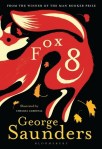 The Funniest Books I Read This Year: Fox 8 by George Saunders and Calypso by David Sedaris
Books that Made Me Cry: Leaving Before the Rains Come by Alexandra Fuller and The Long Goodbye by Meghan O’Rourke
 The Downright Strangest Books I Read This Year: The Bus on Thursday by Sheila Barrett, The Pisces by Melissa Broder and I Love Dick by Chris Kraus
The Debut Authors Whose Next Work I’m Most Looking Forward To: Julie Buntin, Lisa Ko and R.O. Kwon
The Best First Line of the Year: “Dust and ashes though I am, I sleep the sleep of angels.” (from The Western Wind by Samantha Harvey)
Some Early 2019 Recommendations
(in release date order)
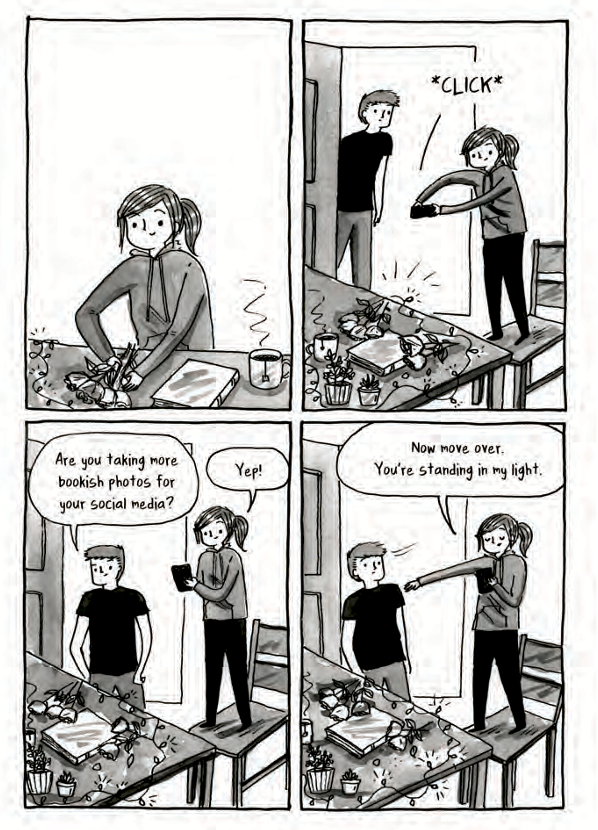
 Book Love by Debbie Tung: Bookworms will get a real kick out of these cartoons, which capture everyday moments in the life of a book-obsessed young woman (perpetually in hoodie and ponytail). She reads anything, anytime, anywhere. Even though she has piles of books staring her in the face everywhere she looks, she can never resist a trip to the bookstore or library. The very idea of culling her books or finding herself short of reading material makes her panic, and she makes a friend sign a written agreement before he can borrow one of her books. Her partner and friends think she’s batty, but she doesn’t care. I found the content a little bit repetitive and the drawing style not particularly distinguished, but Tung gets the bibliophile’s psyche just right. (Out January 1.)
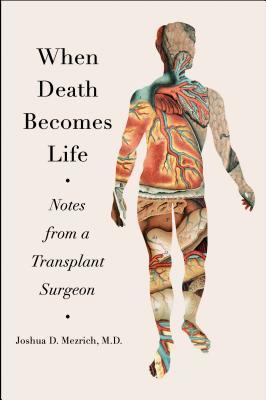 When Death Becomes Life: Notes from a Transplant Surgeon by Joshua D. Mezrich: In this debut memoir a surgeon surveys the history of organ transplantation, recalling his own medical education and the special patients he’s met along the way. In the 1940s and 1950s patient after patient was lost to rejection of the transplanted organ, post-surgery infection, or hemorrhaging. Mezrich marvels at how few decades passed between transplantation seeming like something out of a science-fiction future and becoming a commonplace procedure. His aim is to never lose his sense of wonder at the life-saving possibilities of organ donation, and he conveys that awe to readers through his descriptions of a typical procedure. One day I will likely need a donated kidney to save my life. How grateful I am to live at a time when this is a possibility. (Out January 15.)
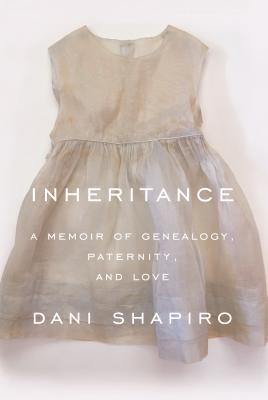 Inheritance: A Memoir of Genealogy, Paternity, and Love by Dani Shapiro: Shapiro was used to strangers’ comments about her blond hair and blue eyes. How could it be that she was an Orthodox Jew? people wondered. It never occurred to her that there was any truth to these hurtful jokes. On a whim, in her fifties, she joined her husband in sending off a DNA test kit. It came back with alarming results. Within 36 hours of starting research into her origins, Shapiro had found her biological father, a sperm donor whom she calls Dr. Ben Walden, and in the year that followed, their families carefully built up a relationship. The whole experience was memoirist’s gold, for sure. This is a moving account of her emotional state as she pondered her identity and what her sense of family would be in the future. (Out January 15.)

 Constellations: Reflections from Life by Sinéad Gleeson: Perfect for fans of I Am, I Am, I Am by Maggie O’Farrell, this is a set of trenchant autobiographical essays about being in a female body, especially one wracked by pain. As a child Gleeson had arthritis that weakened her hip bones, and eventually she had to have a total hip replacement. She ranges from the seemingly trivial to life-and-death matters as she writes about hairstyles, blood types, pregnancy, the abortion debate in Ireland and having a rare type of leukemia. In the tradition of Virginia Woolf, Frida Kahlo and Susan Sontag, Gleeson turns pain into art, particularly in a set of 20 poems based on the McGill Pain Index. The book feels timely and is inventive in how it brings together disparate topics to explore the possibilities and limitations of women’s bodies. (Out April 4.)
 The Hot Young Widows Club: Lessons on Survival from the Front Lines of Grief by Nora McInerny: In June 2016 I read It’s Okay to Laugh (Crying Is Cool Too), McInerny’s memoir about losing her father and her husband to cancer and her second child to a miscarriage – all within a few weeks – when she was 31. In this short book, an expansion of her TED talk, she argues that we are all incompetent when it comes to grief. There’s no rule book for how to do it well or how to help other people who are experiencing a bereavement, and comparing one loss to another doesn’t help anyone. I especially appreciated her rundown of the difference between pity and true empathy. “Pity keeps our hearts closed up, locked away. Empathy opens our heart up to the possibility that the pain of others could one day be our own pain.” (Out April 30.)
Coming tomorrow: Library Checkout & Final statistics for the year
Have you read any 2019 releases you can recommend?
Vocabulary Words I Learned from Books This Year
These are in chronological order by my reading.
- borborygmi = stomach rumblings caused by the movement of fluid and gas in the intestines
- crapula = sickness caused by excessive eating and drinking
- olm = a cave-dwelling aquatic salamander
~The Year of the Hare, Arto Paasilinna
- befurbelowed = ornamented with frills (the use seems to be peculiar to this book, as it is the example in every online dictionary!)
~The Awakening, Kate Chopin
 roding = the sound produced during the mating display of snipe and woodcock, also known as drumming
- peat hag = eroded ground from which peat has been cut
~Deep Country, Neil Ansell
- rallentando = a gradual decrease in speed
~Sight, Jessie Greengrass
- piceous = resembling pitch
~March, Geraldine Brooks
- soffit = the underside of eaves or an arch, balcony, etc.
~The Only Story, Julian Barnes
 lemniscate = the infinity symbol, here used as a metaphor for the pattern of pipe smoke
~The Invisible Bridge, Julie Orringer
- purfling = a decorative border
- lamingtons = sponge cake squares coated in chocolate and desiccated coconut (sounds yummy!)
~The Life and Loves of Lena Gaunt, Tracy Farr
- ocellated = having eye-shaped markings
~Red Clocks, Leni Zumas
- balloonatic (WWI slang) = a ballooning enthusiast
- skinkling = sparkling
- preludial = introductory
- claustral = confining
- baccalà = salted cod
~The Incendiaries, R. O. Kwon
(There were so many words I didn’t immediately recognize in this novel that I thought Kwon must have made them up; preludial and claustral, especially, are words I didn’t know existed but that one might have extrapolated from their noun forms.)
 bronies = middle-aged male fans of My Little Pony (wow, who knew this was a thing?! I feel like I’ve gone down a rabbit hole just by Googling it.)
- callipygian = having well-shaped buttocks
~Gross Anatomy, Mara Altman
- syce = someone who looks after horses; a groom (especially in India; though here it was Kenya)
- riem = a strip of rawhide or leather
- pastern = a horse’s ankle equivalent
~West with the Night, Beryl Markham
- blintering = flickering, glimmering (Scottish)
- sillion = shiny soil turned over by a plow
~The Light in the Dark: A Winter Journal, Horatio Clare
- whiffet = a small, young or unimportant person
~Ladder of Years, Anne Tyler
- trilliant = a triangular gemstone cut
- cabochon = a gemstone that’s polished but not faceted
- blirt = a gust of wind and rain (but here used as a verb: “Coldness blirted over her”)
- contumacious = stubbornly disobedient
~Four Bare Legs in a Bed, Helen Simpson
 xeric = very dry (usually describes a habitat, but used here for a person’s manner)
~Unsheltered, Barbara Kingsolver
- twitten = a narrow passage between two walls or hedges (Sussex dialect – Marshall is based near Brighton)
~The Power of Dog, Andrew Marshall
- swither (Scottish) = to be uncertain as to which course of action to take
- strathspey = a dance tune, a slow reel
~Stargazing, Peter Hill
- citole = a medieval fiddle
- naker = a kettledrum
- amice = a liturgical vestment that resembles a cape
~The Western Wind, Samantha Harvey
 pareidolia = seeing faces in things, an evolutionary adaptation (check out @FacesPics on Twitter!)
~The Overstory, Richard Powers
 Bookish Beck = Rebecca Foster. American transplant to England. Freelance proofreader and book reviewer.
 Bookish Beck