Summer 2021 Reading, Part II & Transitioning into Autumn
In the past couple of weeks, we’ve taken advantage of the last gasp of summer with some rare chances at socializing, outdoors and in. Our closest friends came to visit us last weekend and accompanied us to a beer festival held in a local field, and this weekend we’ve celebrated birthdays with a formal-wear party at a local arts venue and a low-key family meal.


After my first installment of summer reads, I’ve also finished Klara and the Sun (a bust with me, alas) and the three below: a wildlife photographer’s memoir of lockdown summer spent filming in the New Forest, a record of searching for the summer’s remnants of snow in the Highlands, and an obscure 1950s novel about the psychological connections between four characters in one Irish summer. I close with a summer-into-autumn children’s book.
Goshawk Summer: A New Forest Season Unlike Any Other by James Aldred (2021)
My second nature book about the New Forest this year (after The Circling Sky by Neil Ansell) has only sharpened my hankering to get back there and have a good wander after many years away. In March 2020, Aldred had recently returned from filming cheetahs in Kenya when the UK went into its first national lockdown. He had the good fortune to obtain authorization from Forestry England that allowed him to travel regularly from his home in Somerset to the New Forest to gather footage for a documentary for the Smithsonian channel.
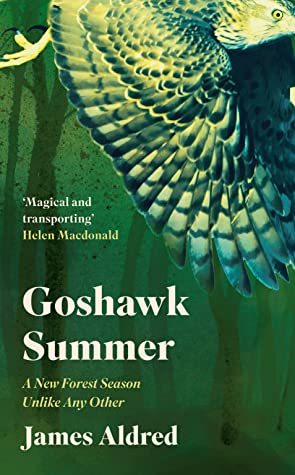 Zooming up on empty roads and staying in local cottages so he can start at 4 each morning, he marvels at the peace of a place when humans are taken out of the equation. His diary chronicles a few months of extraordinary wildlife encounters – not only with the goshawks across from whose nest he built a special treetop platform, but also with dragonflies, fox cubs, and rare birds like cuckoo and Dartford warbler. The descriptions of animal behaviour are superb, and the tone is well balanced: alongside the delight of nature watching is anger at human exploitation of the area after the reopening and despair at seemingly intractable declines – of 46 curlew pairs in the Forest, only three chicks survived that summer.
Despite the woe at nest failures and needless roadkill, Aldred is optimistic – in a similar way to Ansell – that sites like the New Forest can be a model of how light-handed management might allow animals to flourish. “I believe that a little space goes a long way and sometimes all we really need to do is take a step back to let nature do its thing. … It is nature’s ability to help itself, to survive in spite of us in fact, that gives me tentative hope”. (Unsolicited review copy) 
With thanks to Elliott & Thompson for the free copy.
Among the Summer Snows by Christopher Nicholson (2017)
 After the death from cancer of his wife Kitty, a botanical illustrator, Nicholson set off for Scotland’s Cairngorms and Ben Nevis in search of patches of snow that persist into summer. “Summer snow is a miracle, a piece of out-of-season magic: to see it is one thing, to make physical contact with it is another.” His account of his travels washed over me, leaving little impression. I appreciated the accompanying colour photographs, as the landscape is otherwise somewhat difficult to picture, but even in these it is often hard to get a sense of scale. I think I expected more philosophical reflection in the vein of The Snow Leopard, and, while Nicholson does express anxiety over what happens if one day the summer snows are no more, I found the books on snow by Charlie English and Marcus Sedgwick more varied and profound. (Secondhand, gifted)
A Shower of Summer Days by May Sarton (1952)
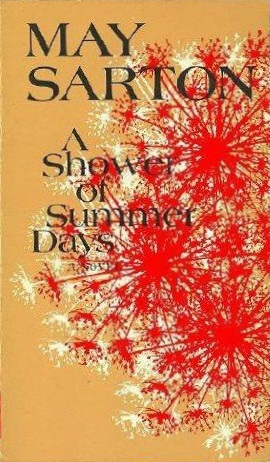 Although I’m more a fan of Sarton’s autobiographical material, especially her journals, I’ve also enjoyed exploring her fiction. This was my seventh of her novels. It’s set in Ireland at Dene’s Court, the grand house Violet inherited. She and her husband Charles have lived in Burma for two decades, but with the Empire on the wane they decide to settle in Violet’s childhood home. Gardening and dressing for dinner fill their languid days until word comes that Violet’s 20-year-old niece, Sally, is coming to stay.
The summer is meant to cure Sally of her infatuation with an actor named Ian. Violet reluctantly goes along with the plan because she feels so badly about the lasting rivalry with her sister, Barbara. Sally is a “bolt of life” shaking up Violet and Charles’s marriage, and when Ian, too, flies out from America, a curious love triangle is refashioned as a quadrilateral. The house remains the one constant as the characters wrestle with their emotional bonds (“the kaleidoscope of feelings was being rather violently shaken up”) and reflect on the transitory splendour of the season (“a kind of timelessness, the warm sun in the enclosed garden in the morning, the hum of bees, and the long slow twilights”). This isn’t one of my favourites from Sarton, but it has low-key charm. I saw it as being on a continuum from Virginia Woolf to Tessa Hadley (e.g. The Past) via Elizabeth Bowen. (Secondhand purchase from Awesomebooks.com) 
And finally, one for the seasons’ transition:
Goodbye Summer, Hello Autumn by Kenard Pak (2016)
 A child and dog pair set out from home, through the woods, by a river, and into town, greeting other creatures and marking the signs of the season. “Hello!” the beavers reply. “We have no time to play because we’re making cozy nests and dens. It will be cold soon, and we want to get ready.” The quaint Americana setting and papercut-style illustrations reminded me of Vermont college towns and Jon Klassen’s work. I liked the focus on nature. (Free from a neighbour)
What books are accompanying you from summer into autumn this year?
Reading with the Seasons: Summer 2021, Part I
I’m more likely to choose lighter reads and dip into genre fiction in the summer than at other times of year. The past few weeks have felt more like autumn here in southern England, but summer doesn’t officially end until September 22nd. So, if I get a chance (there’s always a vague danger to labelling something “Part I”!), before then I’ll follow up with another batch of summery reads I have on the go: Goshawk Summer, Klara and the Sun, Among the Summer Snows, A Shower of Summer Days, and a few summer-into-autumn children’s books.
For this installment I have a quaint picture book, a mystery, a travel book featured for its title, and a very English classic. I’ve chosen a representative quote from each.
Summer Story by Jill Barklem (1980)
 One of a quartet of seasonal “Brambly Hedge” stories in small hardbacks. It wouldn’t be summer without weddings, and here one takes place between two mice, Poppy Eyebright and Dusty Dogwood (who work in the dairy and the flour mill, respectively), on Midsummer’s Day. I loved the little details about the mice preparing their outfits and the wedding feast: “Cool summer foods were being made. There was cold watercress soup, fresh dandelion salad, honey creams, syllabubs and meringues.” We’re given cutaway views of various tree stumps, like dollhouses, and the industrious activity going on within them. Like any wedding, this one has its mishaps, but all is ultimately well, like in a classical comedy. This reminded me of the Church Mice books or Beatrix Potter’s works: very sweet, quaint and English.
Source: Public library
My rating: 
These next two give a real sense of how heat affects people, physically and emotionally.
Heatstroke by Hazel Barkworth (2020)
“In the heat, just having a human body was a chore. Just keeping it suitable for public approval was a job”
 From the first word (“Languid”) on, this novel drips with hot summer atmosphere, with its opposing connotations of discomfort and sweaty sexuality. Rachel is a teacher of adolescents as well as the mother of a 15-year-old, Mia. When Lily, a pupil who also happens to be one of Mia’s best friends, goes missing, Rachel is put in a tough spot. I mostly noted how Barkworth chose to construct the plot, especially when to reveal what. By the one-quarter point, Rachel works out what’s happened to Lily; by halfway, we know why Rachel isn’t telling the police everything.
The dynamic between Rachel and Mia as they decide whether to divulge what they know is interesting. This is not the missing person mystery it at first appears to be, and I didn’t sense enough literary quality to keep me wanting to know what would happen next. I ended up skimming the last third. It would be suitable for readers of Rosamund Lupton, but novels about teenage consent are a dime a dozen these days and this paled in comparison to My Dark Vanessa. For a better sun-drenched novel, I recommend A Crime in the Neighborhood.
Source: Public library
My rating:
The Shadow of the Sun: My African Life by Ryszard Kapuściński (1998; 2001)
[Translated from the Polish by Klara Glowczewska]
“Dawn and dusk—these are the most pleasant hours in Africa. The sun is either not yet scorching, or it is no longer so—it lets you be, lets you live.”
 The Polish Kapuściński was a foreign correspondent in Africa for 40 years and lent his name to an international prize for literary reportage. This collection of essays spans decades and lots of countries, yet feels like a cohesive narrative. The author sees many places right on the cusp of independence or in the midst of coup d’états. Living among Africans rather than removed in a white enclave, he develops a voice that is surprisingly undated and non-colonialist. While his presence as the observer is undeniable – especially when he falls ill with malaria and then tuberculosis – he lets the situation on the ground take precedence over the memoir aspect. I read the first half last year and then picked the book back up again to finish this year. The last piece, “In the Shade of a Tree, in Africa” especially stood out. In murderously hot conditions, shade and water are two essentials. A large mango tree serves as an epicenter of activities: schooling, conversation, resting the herds, and so on. I appreciated how Kapuściński never resorts to stereotypes or flattens differences: “Africa is a thousand situations, varied, distinct, even contradictory … everything depends on where and when.”
Along with Patrick Leigh Fermor’s A Time of Gifts and the Jan Morris anthology A Writer’s World, this is one of the best few travel books I’ve ever read.
Source: Free bookshop
My rating: 
August Folly by Angela Thirkell (1936)
“The sun was benignantly hot, the newly mown grass smelt sweet, bees were humming in a stupefying way, Gunnar was purring beside him, and Richard could hardly keep awake.”
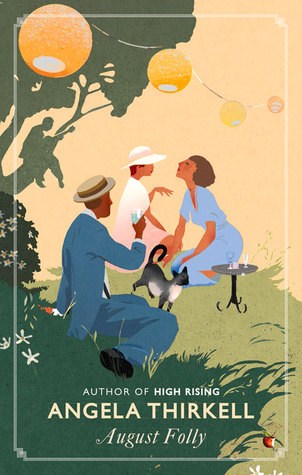 I’d been curious to try Thirkell, and this fourth Barsetshire novel seemed as good a place to start as any. Richard Tebben, not the best and brightest that Oxford has to offer, is back in his parents’ village of Worsted for the summer and dreading the boredom to come. That is, until he meets beautiful Rachel Dean and is smitten – even though she’s mother to a brood of nine, most of them here with her for the holidays. He sets out to impress her by offering their donkey, Modestine, for rides for the children, and rather accidentally saving her daughter from a raging bull. Meanwhile, Richard’s sister Margaret can’t decide if she likes being wooed, and the villagers are trying to avoid being roped into Mrs Palmer’s performance of a Greek play. The dialogue can be laughably absurd. There are also a few bizarre passages that seem to come out nowhere: when no humans are around, the cat and the donkey converse.
This was enjoyable enough, in the same vein as books I’ve read by Barbara Pym, Miss Read, and P.G. Wodehouse, though I don’t expect I’ll pick up more by Thirkell. (No judgment intended on anyone who enjoys these authors. I got so much flak and fansplaining when I gave Pym and Wodehouse 3 stars and dared to call them fluffy or forgettable, respectively! There are times when a lighter read is just what you want, and these would also serve as quintessential English books revealing a particular era and class.)
Source: Public library
My rating:
As a bonus, I have a book about how climate change is altering familiar signs of the seasons.
Forecast: A Diary of the Lost Seasons by Joe Shute (2021)
“So many records are these days being broken that perhaps it is time to rewrite the record books, and accept the aberration has become the norm.”
 Shute writes a weather column for the Telegraph, and in recent years has reported on alarming fires and flooding. He probes how the seasons are bound up with memories, conceding the danger of giving in to nostalgia for a gloried past that may never have existed. However, he provides hard evidence in the form of long-term observations (phenology) such as temperature data and photo archives that reveal that natural events like leaf fall and bud break are now occurring weeks later/earlier than they used to. He also meets farmers, hunts for cuckoos and wildflowers, and recalls journalistic assignments.
The book deftly recreates its many scenes and conversations, and inserts statistics naturally. It also delicately weaves in a storyline about infertility: he and his wife long for a child and have tried for years to conceive, but just as the seasons are out of kilter, there seems to be something off with their bodies such that something that comes so easily for others will not for them. A male perspective on infertility is rare – I can only remember encountering it before in Native by Patrick Laurie – and these passages are really touching. The tone is of a piece with the rest of the book: thoughtful and gently melancholy, but never hopeless (alas, I found The Eternal Season by Stephen Rutt, on a rather similar topic, depressing).
Forecast is wide-ranging and so relevant – the topics it covers kept coming up and I would say to my husband, “oh yes, that’s in Joe Shute’s book.” (For example, he writes about the Ladybird What to Look For series and then we happened on an exhibit of the artwork at Mottisfont Abbey.) I can see how some might say it crams in too much or veers too much between threads, but I thought Shute handled his material admirably.
Source: Public library
My rating: 
Have you been reading anything particularly fitting for summer this year?
20 Books of Summer 2021 (Colour Theme) & Other Reading Plans
It’s my fourth year participating in Cathy’s 20 Books of Summer challenge. Three years ago, I read only books by women; two years ago, I did an animal theme; last year, all my choices were related to food and drink. This year it’s all about colour: the word colour, or one mentioned in a title or in an author’s name, or – if I get really stuck – a particularly vibrant one on a book cover. My options range from short stories to biography, with a couple of novels in translation and a couple of children’s classics to reread on the piles.
As usual, I will prioritize books from my own shelves, but this time I will also allow myself to include library and/or Kindle reads. For instance, I have a hold placed on Nothing but Blue Sky by Kathleen MacMahon, which was on the Women’s Prize longlist.
Here are the initial stacks I’m choosing from:

 One that’s not pictured but that I definitely plan to read and review over the summer is God Is Not a White Man by Chine McDonald, which came out earlier this month.
Tomorrow I’m flying out to the USA as my mother is getting remarried in mid-June. I’m not completely at ease about travelling, especially as on this occasion it has involved expensive private Covid testing and quarantine periods at either end, but I am looking forward to the fun aspects of travel, like downtime in an airport with nothing to do but read. For this purpose, the first two books for my challenge that I’ve packed are the novel Purple Hibiscus by Chimamanda Ngozi Adichie and the short story collection Emerald City by Jennifer Egan.


This week and next, the Hay Festival is taking place. I went nuts and booked myself onto eight different literary talks, three of which have already aired, with two more coming up this evening. Then there will be a few to keep me occupied during my first few days of quarantine next week. It’s a fantastic program and all the online events are free (though you can donate), so do take a look if you haven’t already. I’ll try to write up at least some of these events.

Liz’s Anne Tyler readalong is continuing throughout this year, and I happen to own one novel that’s scheduled for each of the next three months: Saint Maybe for June, A Patchwork Planet for July, and An Amateur Marriage for August. The last two I’ll be rescuing from boxes in my sister’s basement.
I always like reading with the seasons, so this is my summery stack:

I’ll start with Three Junes. Others I will contemplate getting out from the library include Heatstroke by Hazel Barkworth, The Summer before the Dark by Doris Lessing, and August by Callan Wink.
 In mid-June I’m on the blog tour for Mary Jane by Jessica Anya Blau, a novel that’s perfect for the season’s reading – nostalgic for a teen girl’s music-drenched 1970s summer, and reminiscent of Curtis Sittenfeld’s work.
I have also managed to amass a bunch of books about fathers and fatherhood, so I’ll do at least one “Three on a Theme” post to tie in with Father’s Day.
Are you joining in the summer reading challenge? What’s the first book on the docket?
Do you spy any favourites on my piles? Which ones should I be sure to read?
Spring Reading 2021: Birdsong, Cherry Blossom & More
It’s been a gorgeously sunny spring here – how about where you are? Although there have still been some frosty nights troubling the gardeners among us, it’s been warm in the daytime and the flowers and blossom are coming on apace.
Recently I’ve read a couple of books reflecting on the spring of 2020, specifically the opportunities it offered to reconnect with local nature at a time when we were isolated and couldn’t travel.
I’ve also been feeling nostalgic for Washington, D.C. and the Maryland suburbs, where I grew up. It’s been two years since my last trip back, but I’m holding out hope that I can make it over in June for a family wedding.
Rounding out my selection of “Spring” titles is an offbeat Japanese novella.
Looking back to the coronavirus spring:
On Thursday evening I watched “The Act of Nature Watching,” a special Earth Day Zoom talk for West Berkshire Libraries by local nature writer Nicola Chester, whose memoir is coming out in the autumn. The UK is one of the most nature-depleted countries, she lamented. We are hardwired to watch and love nature, she noted, yet have never been more alienated from it. Reading from her columns and anthology contributions (as well as the Lovatt, below) and giving tips on recognizing birdsong and mammal signs, she spoke of nature-watching as a form of mindfulness – an approach that chimed with the first three books I feature here.
Birdsong in a Time of Silence: An Awakening by Steven Lovatt (2021)
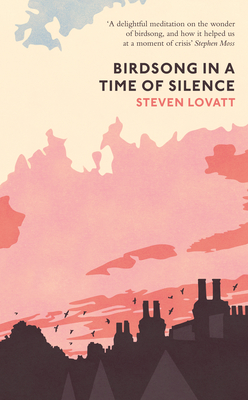 During the UK’s first lockdown, with planes grounded and cars stationary, many remarked on the quiet. All the better to hear birds going about their usual spring activities. For Lovatt, from Birmingham and now based in South Wales, it was the excuse he needed to return to his childhood birdwatching hobby. In between accounts of his spring walks, he tells lively stories of common birds’ anatomy, diet, lifecycle, migration routes, and vocalizations. (He even gives step-by-step instructions for sounding like a magpie.) Birdsong takes him back to childhood, but feels deeper than that: a cultural memory that enters into our poetry and will be lost forever if we allow our declining bird species to continue on the same trajectory.
Mentions of current events are sparse and subtle, so the spring feels timeless, as it should. I worried there might be too much overlap with A Sweet, Wild Note by Richard Smyth, but there’s room for both on your shelf. Lovatt’s writing is introspective and poetic, delighting in metaphors for sounds: “The song of a turtle dove is like the aural equivalent of a heat-haze, the gentlest corrugation of air, always just on the edge of your hearing.”
Skylarks with Rosie: A Somerset Spring by Stephen Moss (2021)
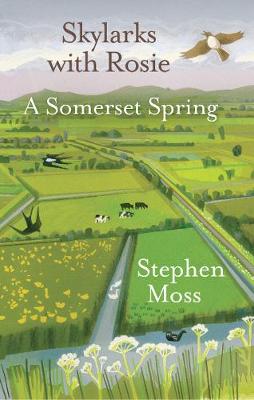 Lovatt must have been a pupil of Moss’s on the Bath Spa University MA degree in Travel and Nature Writing. The prolific Moss’s latest also reflects on the spring of 2020, but in a more overt diary format. Devoting one chapter to each of the 13 weeks of the first lockdown, he traces the season’s development alongside his family’s experiences and the national news. With four of his children at home, along with one of their partners and a convalescing friend, it’s a pleasingly full house. There are daily cycles or walks around “the loop,” a three-mile circuit from their front door, often with Rosie the Labrador; there are also jaunts to corners of the nearby Avalon Marshes. Nature also comes to him, with songbirds in the garden hedges and various birds of prey flying over during their 11:00 coffee breaks.
His speaking engagements and trips cancelled, Moss turns to online events instead. Twitter serves as a place for sharing outrage over UK politics and world events like George Floyd’s murder, but also as a welcoming community for sharing nature sightings. As the lockdown come to a close, he realizes that this time has had unexpected benefits: “Having to press the pause button … has made me rethink my life, in a good way.” He feels that, for once, he has truly appreciated the spring, “rediscovering the joys of wildlife-watching close to home”. This made for perfect reading in Somerset last week.
Also recommended: The Consolation of Nature by Marren, McCarthy and Mynott
Remembering springs back home:
Spring in Washington by Louis J. Halle (1947)
“The discovery of spring each year, after the winter’s hibernation, is like a rediscovery of the universe … knowledge of spring gives me the freedom of the world.”
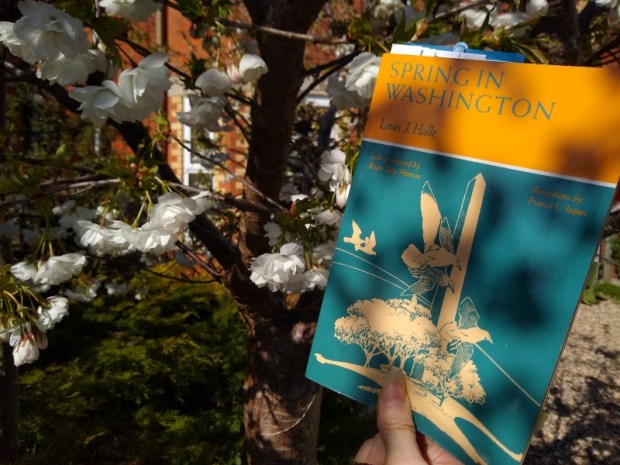 For Halle, who worked in the State Department, nature was an antidote to hours spent shuffling papers behind a desk. In this spring of 1945, there was plenty of wildfowl to see in central D.C. itself, but he also took long early morning bike rides along the Potomac or the C&O Canal, or in Rock Creek Park. From first migrant in February to last in June, he traces the spring mostly through the birds that he sees. More so than the specific observations of familiar places, though, I valued the philosophical outlook that makes Halle a forerunner of writers like Barry Lopez and Peter Matthiessen. He notes that those caught up in the rat race adapt the world to their comfort and convenience, prizing technology and manmade tidiness over natural wonders. By contrast, he feels he sees more clearly – literally as well as metaphorically – when he takes the long view of a landscape.
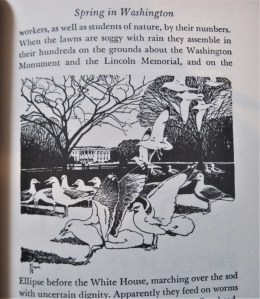 I marked so many passages of beautiful description. Halle had mastered the art of noticing. But he also sounds a premonitory note, one that was ahead of its time in the 1940s and needs heeding now more than ever: “When I see men able to pass by such a shining and miraculous thing as this Cape May warbler, the very distillate of life, and then marvel at the internal-combustion engine, I think we had all better make ourselves ready for another Flood.”
This was a lucky find at Hay Cinema Bookshop back in September. For me it was the ideal combination of thoughtful prose and vicarious travel, though I imagine it might not mean as much to those without a local connection. The black-and-white in-text illustrations by Francis L. Jaques are a particularly nice addition.
Pussy cat, pussy cat, where have you been? I’ve been to Washington, and guess what I’ve seen… by Russell Punter and Dan Taylor (2019)
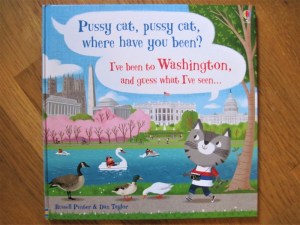 More cherry blossoms over tourist landmarks! This is part of a children’s series inspired by the 1805 English rhyme about London; other volumes visit New York City, Paris, and Rome. In rhyming couplets, he takes us from the White House to the Lincoln Memorial via all the other key sights of the Mall and further afield: museums and monuments, the Library of Congress, the National Cathedral, Arlington Cemetery, even somewhere I’ve never been – Theodore Roosevelt Island. Realism and whimsy (a kid-sized cat) together; lots of diversity in the crowd scenes. What’s not to like? (Titled Kitty cat, kitty cat… in the USA.)
And, as a bonus, some fiction in translation:
Spring Garden by Tomoka Shibasaki (2014; 2017)
[Translated from the Japanese by Polly Barton]
 Like a Murakami protagonist, Taro is a divorced man in his thirties, mildly interested in the sometimes peculiar goings-on in his vicinity. Rumor has it that his Tokyo apartment complex will be torn down soon, but for now the PR manager is happy enough here. “Avoiding bother was Taro’s governing principle.” But bother comes to find him in the form of a neighbor, Nishi, who is obsessed with a nearby house that was the backdrop for the art book Spring Garden, a collection of photographs of a married couple’s life. Her enthusiasm gradually draws Taro into the depicted existence of the TV commercial director and actress who lived there 25 years ago, as well as the young family who live there now. This Akutagawa Prize winner failed to hold my interest – like The Guest Cat, it’s oddly preoccupied with architectural detail, a Japanese fascination that doesn’t translate so well.
Have you been reading anything particularly appropriate for spring this year?
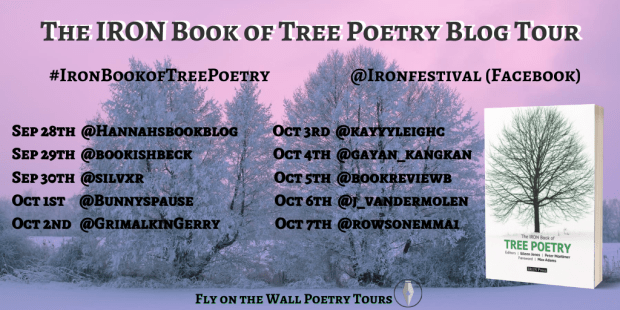
The IRON Book of Tree Poetry (Blog Tour)
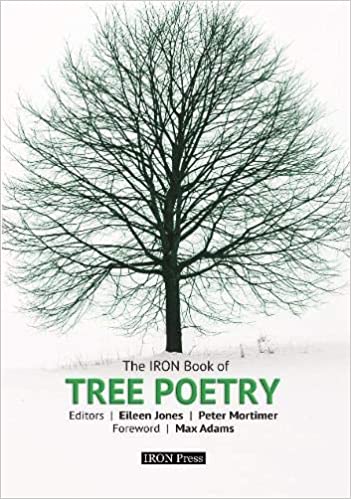 Though I’d only heard of two of the contributors, my love for nature and environmentalist themes made this anthology irresistible. The authors of the 50 poems write about individual and generic trees; forests real and imagined; environmental crisis and personal reckonings. In Sarah Mnatzaganian’s “Father Tree,” a sprawling horse-chestnut symbolizes her dying father and his motherland. Dominic Weston’s “Ancestry.com” literalizes the language of the family tree. In Celia McCulloch’s “Rhododendrons at Stapleford Wood,” an invasive species is a politically charged token of prejudice: “Is it just our xenophobia, this hatred for the Greek-named / tree, the immigrant, the Windrush plantation?”
I enjoyed the playful use of myth in Pauline Plummer’s “The Baobab”: “When God made the baobab He gave / it to the hyena, who laughed and laughed / throwing it into the scrub / where it landed upside down, dancing.” In “Abele,” Di Slaney envisions her post-mortem body feeding a woodland’s worth of creatures and being reincorporated into the flesh of trees.
Again and again, trees serve as a reminder of time passing, of seasons changing, of the vanity of human concerns compared to their centuries-old solidity – as in the final stanza of Mary Anne Perkins’s “To an Unpopular Poplar”:
This summer’s end, if I could translate
just one full hour of the whisperings
between your shimmered leaves,
how much the wiser I might be.
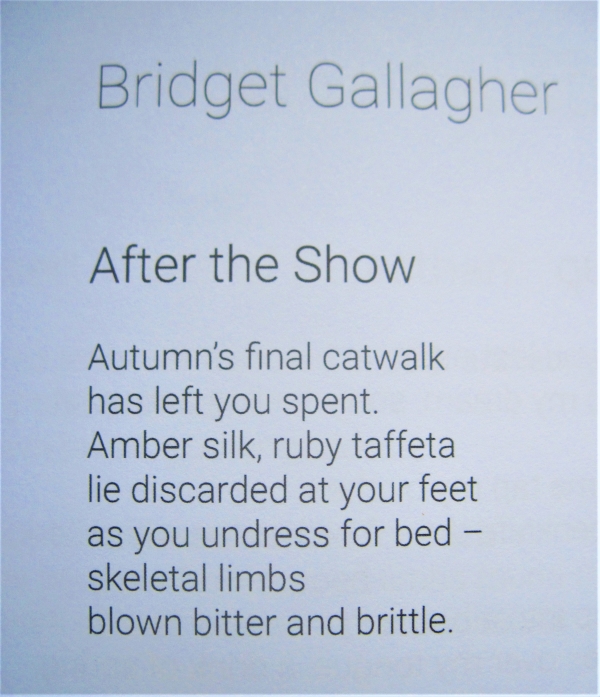
Thematic organization, rather than alphabetical, would have made more sense for this volume, but I appreciated the introduction to many new-to-me poets. Two favorite seasonal poems are pictured below.

My thanks to IRON Press for the free copy for review.
I was delighted to be invited to take part in the blog tour for The IRON Book of Tree Poetry. See below for where more reviews have appeared or will be appearing.
Summery Reads of 2020, Part I
Reading with the seasons, I’ve picked up a few books with “summer” or sunshine in their titles. I’ll have more to write up later in August, including novels set during the summer months.
A Summer Bird-Cage by Margaret Drabble (1963)
 Sarah Bennett, who went straight from university in Oxford to Paris for want of a better idea of what to do with her life, is called home to Warwickshire to be a bridesmaid in the wedding of her older sister, Louise, to Stephen Halifax, a wealthy novelist. Afterwards, Sarah decides to move to London and share a flat with a friend whose marriage has recently ended. As the months pass, she figures out life as a single girl in a big city and attends parties hosted by Louise – back from an extended European honeymoon – and others. Sarah eventually works out, from gossip and from confronting Louise herself, that her sister’s marriage isn’t as idyllic as it appeared. Both sisters find themselves at a loss as for what to do next.
Although Drabble’s debut novel is low on action, its characters are sharply drawn and she delights in placing them in situations and conversations where their true values will emerge. I could relate to Sarah for her bookishness, her observant nature, and her feeling that her best days of being a student are behind her. Drabble was only 24 when this was published; though she was already married and a mother, her distinguished university career (a double first from Cambridge) wasn’t long behind her. Given that Drabble’s sister is novelist A.S. Byatt, it’s impossible not to speculate about the autobiographical inspiration for this picture of sisters who are subconscious rivals and don’t even seem to enjoy spending casual time together.
What with the sisters sharing the maiden name Bennett, you also can’t help but think of one of the classic sister novels, Pride and Prejudice. Drabble makes her debt obvious when Sarah goes over to Louise’s for dinner and comments on the “charming convention of the scene – sisters idling away an odd evening in happy companionship. It was like something out of Middlemarch or even Jane Austen.” I was also reminded of the sister pair in Deerbrook: one got all the beauty, but the other seems much more interesting.
The title comes from a John Webster quotation: “’Tis just like a summer bird-cage in a garden: / the birds that are without are desperate to get / in, and the birds that are within despair and / are in a consumption for fear that they will never / get out.” In other words, it’s easy to miss, and idealize, what you don’t have. Sarah still thinks she can have it all; Louise has realized the choices life forces on you. In modern parlance, this is about adulting and FOMO. It still feels relevant, in a way that seems to anticipate the work of Sally Rooney.
My rating: 
Rise and Shine by Anna Quindlen (2006)
 Another sisters novel, and the first book in my Journey through the Day with Books challenge. Meghan Fitzmaurice is a household name as the host of America’s most popular morning talk show, Rise and Shine, but her star fades rapidly when, her microphone still on after she thinks they’ve gone to a commercial break, she murmurs “f***ing a**hole” about a guest who is, admittedly, a creep. It turns out her outburst didn’t come out of nowhere: the night before, her husband, Evan, had announced he was leaving her. Meghan goes to Jamaica to regroup, leaving her younger sister, Bridget, a social worker in the Bronx, to figure out what happened and create a semblance of normalcy for her beloved nephew, Meghan’s college-age son Leo, who’s just back from an exchange program at a farm outside Barcelona.
I liked the New York City setting and the central sister relationship – “Sisters tend to get stuck in their roles and they don’t always know how to get out of them. The pretty one. The practical one,” their aunt Maureen, who raised them after their parents’ deaths, says – but the plot hereafter veers between thin and melodramatic. I didn’t warm to Bridget’s boyfriend Irving, a hardboiled older cop, and I get a little nervous about white ladies creating stereotypical African American characters and giving them names like Tequila (Bridget’s receptionist at the women’s shelter) and Princess Margaret (Tequila’s daughter).

In a nice bit of symmetry, though, the book’s end finds a subdued Meghan hosting a late-night show called Day’s End. I didn’t like this nearly as much as her nonfiction (I loved Lots of Candles, Plenty of Cake), but I would read more by Quindlen: I also have a copy of One True Thing, and I have heard that her recent fiction is good.
My rating:
And a skim from the library that ties in nicely with the cover image above:
The Butterfly Isles: A Summer in Search of Our Emperors and Admirals by Patrick Barkham (2010)
 In 2009, Barkham set out to revive the childhood butterfly-watching hobby he’d shared with his father. The UK is home to 59 species, a manageable number to attempt to see in a season, although it does require a fair bit of travel and insider knowledge. I’ve read too much general history about the human relationship with butterflies (via Rainbow Dust by Peter Marren, which came out a few years later, and An Obsession with Butterflies by Sharman Apt Russell, which Barkham mentions in a Recommended Reading section at the end of the book) to engage with all the context he includes; I focused on the nitty-gritty of the quest running from mid-March to August. I’ll leave it to readers to discover whether he succeeds or not. Nice additions here are the color plates of all the species in question, and the line drawings by Helen Macdonald, yet to come to prominence in her own right – with H Is for Hawk in 2014.
A favorite passage: “Butterflies are symbols of freedom and happiness, sunshine and summer days. They are tokens of romance”
My rating:
Have you been reading anything particularly fitting for summer this year?
Spring Reading 2020, Part I
What a beautiful spring we’ve been having here. And, as usual, I’ve been reading with the seasons: some nature books about birdsong, flowers, etc., as well as a few books with “Spring” in the title. I have several more on the go that I’ll write up next month.
A Cold Spring by Elizabeth Bishop (1955)
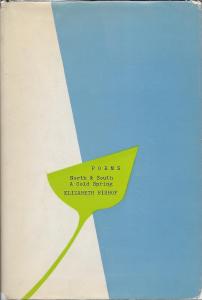 The second of Bishop’s four published collections, this mostly dwells on contrasts between city (e.g. “View of the Capitol from the Library of Congress,” “Varick Street” and “Letter to N.Y.”) and coastal locations (e.g. “The Bight,” “At the Fishhouses” and “Cape Breton”). The three most memorable poems for me were the title one, which opens the book; “The Prodigal,” a retelling of the Prodigal Son parable; and “Invitation to Miss Marianne Moore” (“From Brooklyn, over the Brooklyn Bridge, on this fine morning, please come flying,” with those last three words recurring at the end of each successive stanza; also note the sandpipers – one of her most famous poems was “Sandpiper,” from 1965’s Questions of Travel). I find that I love particular lines or images from Bishop’s poetry but not her overall style.
Favorite lines:
A cold spring:
the violet was flawed on the lawn.
For two weeks or more the trees hesitated;
the little leaves waited
(from “A Cold Spring”)
Spring: A Folio Anthology, edited by Sue Bradbury (2017)
 As a seasonal anthology, this falls short by comparison to the Wildlife Trust’s Spring. There are too many letters or journal entries that only happen to be set in March to May and don’t in any way evoke the season. The selection of poems and passages is fairly predictable, and closing with an ominous extract from Rachel Carson’s Silent Spring (see below) makes for rather a downbeat conclusion. Highlights: the preface by Paul Evans, Parson Woodforde’s pigs getting drunk on the dregs of some beer (1778), Elizabeth David rhapsodizing about a wild asparagus risotto she had in Italy, and Angus Buchanan coming upon an idyllic setting in Wildlife in Canada. The gorgeous cover, the slightly ornate font that liaises s or c with t, and the three two-page green-dominated illustrations somewhat make up for the lackluster contents.
Silent Spring by Rachel Carson (1962)
 When I saw Lucy Jones speak at an event in Hungerford in support of her new book, Losing Eden, early last month, I was intrigued to hear her say that her work was consciously patterned on Silent Spring – right down to the same number of chapters. This prompted me to finally pick up the copy of Carson’s classic that I got free during a cull at the library where I used to work and have a skim through.
Both books are forthright explications of the environmental problems we face, backed up by volumes of irrefutable evidence, and suggest some potential solutions. Both open, though, with a dystopian scene: Carson’s first chapter imagines an American town where things die because nature stops working as it should. Her main target was insecticides that were known to kill birds and had presumed negative effects on human health through the food chain and environmental exposure. Although the details may feel dated, the literary style and the general cautions against submitting nature to a “chemical barrage” remain potent.
A Country Year: Living the Questions by Sue Hubbell (1986)
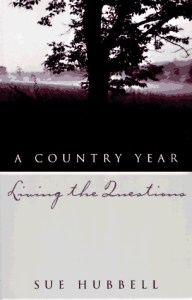 A seasonal diary that runs from one spring to the next, this is a peaceful book about living alone yet finding community with wildlife and fellow country folk. I took nine months over reading it, keeping it as a bedside book.
At her farm in southern Missouri’s Ozark Mountains, Hubbell had a small beekeeping and honey production business, “a shaky, marginal sort of affair that never quite leaves me free of money worries but which allows me to live in these hills that I love.” After her 30-year marriage ended, she found herself alone in “the afternoon of my life,” facing “the work of building a new kind of order, a structure on which a fifty-year-old woman can live”. In few-page essays she reflects on the weather, her interactions with wildlife (from bats and black rat snakes to a fawn caught in a fence), and country events like a hog roast.
I love introspective books like this one that balance solitude with nature and company and that showcase older women’s wisdom (Joan Anderson, May Sarton and Barbara J. Scot also write/wrote in this vein). Hubbell, who died at age 83 in late 2018, wrote broader scientific narratives about evolution and genetic engineering, as well as detailed books about bees and other insects. I’ll look out for more of her work.
A Sweet, Wild Note: What We Hear when the Birds Sing by Richard Smyth (2017)
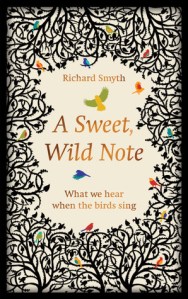 Despite being a birdwatcher since childhood, Smyth had always been ambivalent about birdsong. He certainly wasn’t one of those whizzes who can identify any bird by its call; in fact, he needed convincing that bird vocalizations are inherently beautiful. So he set off to answer a few questions: Why do birds sing? How can we recognize them by their songs? And how have these songs played into the human‒bird relationship throughout history? Ranging from bird anatomy to poetry, his historical survey is lighthearted reading that was perfect for the early days of spring. There are also chapters on captive birds, the use of birdsong in classical music, and the contribution birds make to the British soundscape. A final section, more subdued and premonitory in the vein of Silent Spring, imagines a world without birdsong and “the diminution that we all suffer. … Our lives become less rich.” (The title phrase is how Gilbert White described the blackcap’s song, Smyth’s favorite.)
Favorite lines:
when everything around you seems to be moving at a gallop, a bird’s song reminds you that some things stay the same … that you really can go home again.
in many ways the whole point of birdsong is that it’s beyond our grasp. It’s fleeting, evanescent; you might as well try to take a fistful of morning mist. But that hasn’t stopped us trying.
Have you been reading anything particularly appropriate for spring this year?
Farewell to Winter with Some Snowy and Icy Reads
Although we got plenty of cold, damp weather and gray skies, it feels like we were cheated out of winter in my part of England this year. We had just one snow flurry on the 27th of February; that will have to suffice as my only taste of proper winter for the year. Not to worry, though: I’ve been getting my fix of snow and ice through my reading, starting with two animal tales and moving on to a few travel and adventure books.
Fiction:
The Snow Goose by Paul Gallico (1941)
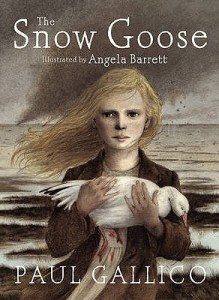 Philip Rhayader is a lonely bird artist on the Essex marshes by an abandoned lighthouse. “His body was warped, but his heart was filled with love for wild and hunted things. He was ugly to look upon, but he created great beauty.” One day a little girl, Fritha, brings him an injured snow goose and he puts a splint on its wing. The recovered bird becomes a friend to them both, coming back each year to spend time at Philip’s makeshift bird sanctuary. As Fritha grows into a young woman, she and Philip fall in love (slightly creepy), only for him to leave to help with the evacuation of Dunkirk. This is a melancholy and in some ways predictable little story. It was originally published in the Saturday Evening Post in 1940 and became a book the following year. I read a lovely version illustrated by Angela Barrett. It’s the second of Gallico’s animal fables I’ve read; I slightly preferred The Small Miracle.
The Snow Cat by Holly Webb (2016)

Most twee cover ever?
My second from Holly Webb, and while I enjoyed it a lot, if not quite as much as Frost, I probably don’t need to read any more by her now because these two were so similar as to reveal a clear formula: a young girl of about nine years old who plays alone (because she’s an only child or left out of her siblings’ games) goes for an outdoor adventure and meets a cute animal who leads her back into the past. For a time it’s unclear whether she’s dreaming or really experiencing the history, but at the end there’s some physical token that proves she has been time travelling.
In this case, Bel goes to play in the snowy garden of her grandmother’s retirement complex and meets a white cat named Snow who belongs to Charlotte, the daughter of the family who owned this manor house 150 years ago. Bel has to protect Snow from a threatening dog so the cat can be brought in to visit Charlotte’s sister Lucy, who lies ill with influenza. For me the Victorian setting wasn’t quite as authentic or interesting as the seventeenth-century frost fair was in Frost, but I can see how it’s a good way of introducing kids to what was different in the past: everything from clothing and speech to the severity of illness. 
Nonfiction:
The Snow Tourist by Charlie English (2008)
 “A Search for the World’s Purest, Deepest Snowfall” reads the subtitle on the cover. English set out from his home in London for two years of off-and-on travel in snowy places, everywhere from Greenland to Washington State. In Jericho, Vermont, he learns about Wilson Bentley, an amateur scientist who was the first to document snowflake shapes through microscope photographs. In upstate New York, he’s nearly stranded during the Blizzard of 2006. He goes skiing in France and learns about the deadliest avalanches – Britain’s worst was in Lewes in 1836. In Scotland’s Cairngorms, he learns how those who work in the ski industry are preparing for the 60–80% reduction of snow predicted for this century. An appendix dubbed “A Snow Handbook” gives some technical information on how snow forms, what the different crystal shapes are called, and how to build an igloo, along with whimsical lists of 10 snow stories (I’ve read six), 10 snowy films, etc.
I found all of the science and history interesting, but especially liked a chapter on depictions of snow in art, such as Pieter Bruegel the Elder’s The Hunters in the Snow. The author also subtly threads in his own story, noting that this quest probably began with the 1960s photograph of himself on skis at a snowy Austrian resort that his father gave him a few weeks before he committed suicide. Twelve years later, it feels like this book doesn’t go far enough in cautioning about all that will be lost with climate change. I was left with the sense that nature is majestic and unpredictable, and we pay the price for not respecting it.

Hunters in the Snow. Pieter Bruegel the Elder / Public domain.
[Breaking from alphabetical order to include this one as a footnote to the previous book.]
The Library of Ice by Nancy Campbell (2018)
 This has a very similar format and scope to The Snow Tourist, with Campbell ranging from Greenland and continental Europe to the USA in her search for the science and stories of ice. For English’s chapter on skiing, substitute a section on ice skating. I only skimmed this one because – in what I’m going to put down to a case of reader–writer mismatch – I started it three times between November 2018 and now and could never get further than page 60. See these reviews from Laura and Liz for more enthusiasm.
My thanks to Scribner UK for the free copy for review.
Winterdance: The Fine Madness of Running the Iditarod by Gary Paulsen (1994)
Paulsen’s name was familiar to me from his children’s books – a tomboy, I spent my childhood fascinated by Native American culture, survival skills and animals, and Hatchet was one of my favorite novels. I had no idea he had written books for adults, including this travelogue of competing in the Iditarod sled dog race across the frozen Alaska wilderness. Nearly half the book is devoted to his preparations, before he ever gets to Alaska. He lived in Minnesota and took time assembling what he thought of as a perfect team of dogs, from reliable Cookie, his lead dog, to Devil, whose name says it all. He even starts sleeping in the kennel with the dogs to be fully in tune with them.
 The travails of his long trial runs with the dogs – the sled flipping over, having to walk miles after losing control of the dogs, being sprayed in the face by multiple skunks – sound bad enough, but once the Iditarod begins the misery ramps up. The course is nearly 1200 miles, over 17 days. It’s impossible to stay warm or get enough food, and a lack of sleep leads to hallucinations. At one point he nearly goes through thin ice. At another he’s run down by a moose. He also watches in horror as a fellow contestant kicks a dog to death.
Paulsen concludes that you would have to be insane to run the Iditarod, and there’s an appropriately feverish intensity running through the book. The way he describes the bleak beauty of the landscape, you can see how attractive and forbidding it was all at the same time. This is just the kind of adventurous armchair traveling I love (see also This Cold Heaven) – someone else did this, so now I don’t have to!
(Note: The author completed two races and was training for his third when a diagnosis of coronary heart disease ended his Iditarod career in his mid-forties. More than the obsession, more than the competition, he knows that he’ll miss the constant company of dogs. In fact, his last line is “How can it be to live without the dogs?”)
See also these recent releases:
- Snow, Dog, Foot by Claudio Morandini, an avalanche novel set in the Italian Alps
 Two nonfiction books entitled Wintering: Katherine May’s is about depression and Stephen Rutt’s is about geese
And a snowy passage from Winter Journal by Paul Auster:
Snow, so much snow these past days and weeks that fifty-six inches have fallen on New York in less than a month. Eight storms, nine storms, you have lost track by now, and all through January the song heard most often in Brooklyn has been the street music made by shovels scraping against sidewalks and thick patches of ice. Intemperate cold (three degrees one morning), drizzles and mizzles, mist and slush, ever-aggressive winds, but most of all the snow, which will not melt, and as one storm falls on top of another, the bushes and trees in your back garden are all wearing ever-longer and heavier beards of snow. Yes, it seems to have turned into one of those winters, but in spite of the cold and discomfort and your useless longing for spring, you can’t help admiring the vigor of these meteorological dramas, and you continue to look at the falling snow with the same awe you felt when you were a boy.
Did you read any particularly wintry books this season?
Exploring Darkness and Light: Nonfiction by Gaw, Geddes and May
I’ve recently read a number of books that engage with topics of sunlight, darkness and the winter, exploring all the practical implications of the season and the night sky as well as their metaphorical associations. (See also: my review of An Ode to Darkness by Sigri Sandberg.)
Two of these are brand new as of this month; the other came out in paperback late last year and was one of my Christmas gifts.
Under the Stars: A Journey into Light by Matt Gaw (2020)
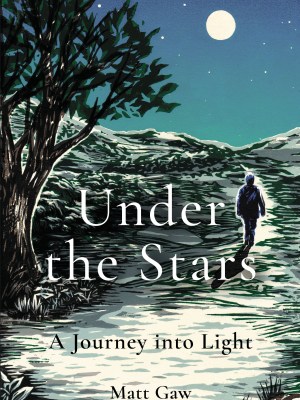 I very much enjoyed Matt Gaw’s The Pull of the River (2018), a jolly yet reflective travelogue of canoe trips down Britain’s rivers. His follow-up nature book is broader in focus but again rooted in on-the-ground knowledge, chiefly gained through a series of night walks. He travels everywhere from London to Isle of Coll, a Dark Sky Community in Scotland’s Inner Hebrides, to compare the quality of darkness and to ponder the emotions these places elicit at night. Fear of darkness feels innate, while for him the stars are almost overwhelming.
In London and in Bury St Edmunds, where he lives, Gaw observes that cities seem removed from nature and that artificial illumination is causing light pollution that negatively affects flora and fauna. At the beach or in Dartmoor or Scotland, though, being outside at night allowed him to feel “part of the natural world in a way that I rarely have during the day. … To be open to the night, to welcome it, embrace it, rather than shut it out, does bring with it an extra richness. To walk at night has been a night twice lived.”
Whether making a jaunt to a 24-hour supermarket after hearing a tawny owl or awaking to a cow nibbling at his sleeping bag on Coll, Gaw is an entertaining and knowledgeable tour guide through the nature of night. I admire his writing and hope that with this second book he will continue to find the wider audience he deserves. Under the Stars covers a lot of ground in under 200 pages and would be a perfect primer for someone looking forward to the supermoon on March 9th.
A favorite passage:
“Over the horizon of the North Sea comes the moon. First a glow. Then a pale, pinkish cuticle that swells into a weakling light. It continues to rise, an ever-expanding, ever-brightening island, until after only a couple of minutes she tears away from the membrane of water, dripping light onto the earth, shining back at the sunken sun. The birth of the full moon.”
Under the Stars is published by Elliott & Thompson today, February 20th. My thanks to the publisher for the free copy for review.
Chasing the Sun: The new science of sunlight and how it shapes our bodies and minds by Linda Geddes (2019)
 Circadian rhythms govern just about every bodily process, from blood pressure to digestion, so even minor changes in our sleep and sunlight exposure can have drastic effects. Like Matthew Walker’s Why We Sleep, this is a book chock-full of facts that should be common sense, yet are more like a body of knowledge we have lost as we have become disconnected from natural human behavioral patterns. We weren’t meant to work nights, or to stay awake for many hours in the glow of artificial light after the sun has gone down on a winter’s day.
Geddes experiments with making do with only candlelight after sunset for several weeks. She also investigates seasonal affective disorder and “circadian lighting,” surveys the history of sunlight as a medical treatment, gives practical advice for minimizing jet lag, and weighs the case for abolishing daylight savings time. Whether you’re a regular reader of popular science or not, you should pick up this concise and highly readable book by a science journalist; it delves into topics that affect us all. It’s one to keep on the shelf and refer to the next time you cross time zones or change your work schedule.
Wintering: How I learned to flourish when life became frozen by Katherine May (2020)
 May’s sympathetic memoir considers winter not only as a literal season, but also as an emotional state. Although “depression” could be substituted for “wintering” in most instances, the book gets much metaphorical mileage out of the seasonal reference as she recounts how she attempted to embrace rather than resist the gloom and chill through rituals such as a candlelit St. Lucia service and an early morning solstice gathering at Stonehenge. Wintering alternates travel and research, and mind and body. Cold-water swimming becomes the author’s primary strategy for invigorating a winter-fogged brain and frozen limbs. (My full review will appear in a forthcoming issue of the Times Literary Supplement.)
Wintering was published by Rider Books on February 6th. My thanks to the publisher for the free copy for review.
A Bouquet of Spring Reading
In March through May I often try to read a few gardening-themed books and/or ones with “spring” in the title. Here are some of the ones that I have on the go as occasional reading:
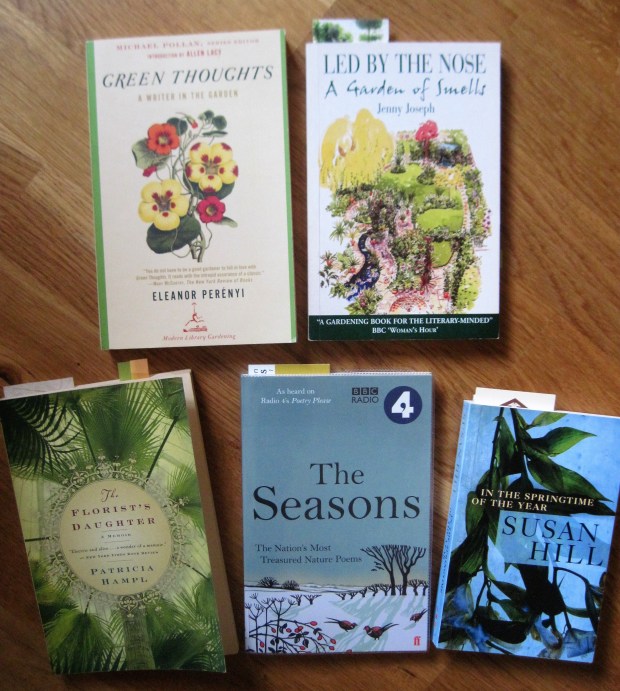
Flowers and gardens
The Florist’s Daughter by Patricia Hampl: Her mother’s final illness led Hampl to reflect on her upbringing in St. Paul, Minnesota as the daughter of an Irish Catholic library clerk and a Czech florist. I love how she writes about small-town life and helping out in her father’s flower shop:
“These apparently ordinary people in our ordinary town, living faultlessly ordinary lives … why do I persist in thinking—knowing—they weren’t ordinary at all? … Nostalgia is really a kind of loyalty”
“it was my father’s domain, but it was also marvelously other, this place heavy with the drowsy scent of velvet-petaled roses and Provençal freesias in the middle of winter, the damp-earth spring fragrance of just-watered azaleas and cyclamen”
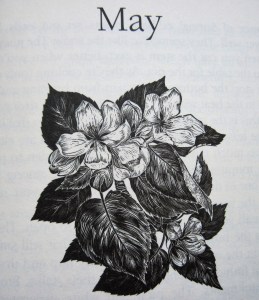 Led by the Nose: A Garden of Smells by Jenny Joseph: Joseph’s name might not sound familiar, but she was the author of the famous poem “Warning: When I Am an Old Woman I Shall Wear Purple” and died early last year. This is a pleasant set of short pieces about what you might see and sense in your garden month by month. “Gardeners do indeed look before and after, at the same time living, as no one else, in the now of the nose,” she maintains. I’m particularly fascinated by the sense of smell and how a writer can describe odors, so I was delighted to find this in a charity shop in Edinburgh last year and have been reading it a few pages at a time as a bedside book. I especially like the wood engravings by Yvonne Skargon that head each chapter.
Green Thoughts: A Writer in the Garden by Eleanor Perényi: A somewhat dense collection of few-page essays, arranged in alphabetical order, on particular plants, tools and techniques. I tried reading it straight through last year and only made it as far as “Beans.” My new strategy is to keep it on my bedside shelves and dip into whichever pieces catch my attention. I don’t have particularly green fingers, so it’s not a surprise that my eye recently alighted on the essay “Failure,” which opens, “Sooner or later every gardener must face the fact that certain things are going to die on him. It is a temptation to be anthropomorphic about plants, to suspect that they do it to annoy.”
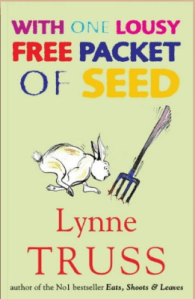 With One Lousy Free Packet of Seed by Lynne Truss (DNF at page 131 out of 210): A faltering gardening magazine is about to be closed down, but Osborne only finds out when he’s already down in Devon doing the research for his regular “Me and My Shed” column with a TV actress. Hijinks were promised as the rest of the put-out staff descend on Honiton, but by nearly the two-thirds point it all still felt like preamble, laying out the characters and their backstories, connections and motivations. My favorite minor character was Makepeace, a pugnacious book reviewer: “he used his great capacities as a professional know-all as a perfectly acceptable substitute for either insight or style.”
Spring
The Seasons, a Faber & Faber / BBC Radio 4 poetry anthology: From Chaucer and other Old English poets to Seamus Heaney (“Death of a Naturalist”) and Philip Larkin (“The Trees”), the spring section offers a good mixture of recent and traditional, familiar and new. A favorite passage was “May come up with fiddle-bows, / May come up with blossom, / May come up the same again, / The same again but different” (from “Nuts in May” by Louis MacNeice). Once we’re back from America I’ll pick up with the summer selections.
In the Springtime of the Year by Susan Hill: Early one spring, Ruth Bryce’s husband, Ben, dies in a forestry accident. They had only been married a year and here she is, aged twenty-one and a widow. Ben’s little brother, 14-year-old Jo, is a faithful visitor, but after the funeral many simply leave Ruth alone. I’m 100 pages in and still waiting for there to be a plot as such; so far it’s a lovely, quiet meditation on grief and solitude amid the rhythms of country life. Ben’s death is described as a “stone cast into still water,” and here at nearly the halfway point we’re seeing how some of the ripples spread out beyond his immediate family. I’m enjoying the writing more than in the three other Hill books I’ve read.
 Absent in the Spring by Mary Westmacott: (The title doesn’t actually have anything to do with the season; it’s a quotation from Shakespeare’s Sonnet 98: “From you have I been absent in the spring.”) From 1944, this is the third of six novels Agatha Christie published under the alias Mary Westmacott. Joan Scudamore, traveling back to London from Baghdad after a visit to her adult daughter, encounters bad weather and misses her train, which leaves her stranded in the desert for days that feel more like weeks. We’re led back through scenes from Joan’s earlier life and realize that she’s utterly clueless about what those closest to her want and think. Rather like Olive Kitteridge, Joan is difficult in ways she doesn’t fully acknowledge. Like a desert mirage, the truth of who she’s been and what she’s done is hazy, and her realization feels a little drawn out and obvious. Once she gets back to London, will she act on what she’s discovered about herself and reform her life, or just slip back into her old habits? This is a short and immersive book, and a cautionary tale to boot. It examines the interplay between duty and happiness, and the temptation of living vicariously through one’s children.
 Bookish Beck = Rebecca Foster. American transplant to England. Freelance proofreader and book reviewer.
 Bookish Beck