Women’s Prize 2023: Longlist Predictions vs. Wishes
I’ve been working on a list of novels eligible for this year’s Women’s Prize since … this time last year. Unusual for me to be so prepared! It shows how invested I’ve become in this prize over the years. For instance, last year my book club was part of an official shadowing scheme, which was great fun.
We’re now less than a month out from the longlist, which will be announced on 7 March. Like last year, I’ve separated my predictions from a wish list; two titles overlap. Here’s a reminder of the parameters, taken from the website:
“Any woman writing in English – whatever her nationality, country of residence, age or subject matter – is eligible. Novels must be published in the United Kingdom between 1 April in the year the Prize calls for entries, and 31 March the following year, when the Prize is announced. … The Prize only accepts novels entered by publishers, who may each submit a maximum of two titles per imprint, depending on size, and one title for imprints with a list of ten fiction titles or fewer published in a year. Previously shortlisted and winning authors are given a ‘free pass’.”
This year I dutifully kept tabs on publisher quotas as I compiled my lists. I also attempted to bear in mind the interests of this year’s judges (also from the website): “Chair of Judges, author and journalist Louise Minchin, is joined by award-winning novelist Rachel Joyce; author, journalist and podcaster Irenosen Okojie; bestselling author and journalist Bella Mackie and MP for Hampstead and Kilburn Tulip Siddiq.”
Predictions
A Spell of Good Things, Ayọ̀bámi Adébáyọ̀
Birnam Wood, Eleanor Catton
Joan, Katherine J. Chen
Maame, Jessica George


Really Good, Actually, Monica Heisey
Trespasses, Louise Kennedy
The Night Ship, Jess Kidd (my review)
Demon Copperhead, Barbara Kingsolver (my review)


Our Missing Hearts, Celeste Ng (my review)
The Marriage Portrait, Maggie O’Farrell
I’m a Fan, Sheena Patel
Elektra, Jennifer Saint


Best of Friends, Kamila Shamsie
River Sing Me Home, Eleanor Shearer
Lucy by the Sea, Elizabeth Strout – currently reading
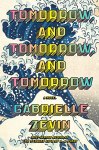
Tomorrow, and Tomorrow, and Tomorrow, Gabrielle Zevin (my review)


Wish List
How Not to Drown in a Glass of Water, Angie Cruz
The Weather Woman, Sally Gardner (my review)
Maame, Jessica George
The Great Reclamation, Rachel Heng


Bad Cree, Jessica Johns
I Have Some Questions for You, Rebecca Makkai – currently reading
Sea of Tranquillity, Emily St. John Mandel (my review)
The Hero of This Book, Elizabeth McCracken (my review)


Nightcrawling, Leila Mottley (my review)
We All Want Impossible Things, Catherine Newman – currently reading
Everything the Light Touches, Janice Pariat (my review)
Camp Zero, Michelle Min Sterling – review pending for Shelf Awareness


Briefly, A Delicious Life, Nell Stevens (my review)
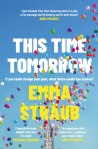
This Time Tomorrow, Emma Straub (my review)
Fight Night, Miriam Toews – currently reading
Tomorrow, and Tomorrow, and Tomorrow, Gabrielle Zevin (my review)


Of course, even if I’m lucky, I’ll still only get a few right across these two lists, and I’ll be kicking myself over the ones I considered but didn’t include, and marvelling at all the ones I’ve never heard of…
What would you like to see on the longlist?
~BREAKING NEWS: There are plans afoot to start a Women’s Prize for Non-Fiction. Now seeking funding to start in 2024. More details here.~
Appendix
(A further 99 eligible novels that were on my radar but didn’t make the cut:)
Hester, Laurie Lico Albanese
Rose and the Burma Sky, Rosanna Amaka
Milk Teeth, Jessica Andrews
Clara & Olivia, Lucy Ashe
Wet Paint, Chloë Ashby
Shrines of Gaiety, Kate Atkinson
Honey & Spice, Bolu Babalola
Hell Bent, Leigh Bardugo
Either/Or, Elif Batuman
Girls They Write Songs About, Carlene Bauer
seven steeples, Sara Baume
The Witches of Vardo, Anya Bergman
Shadow Girls, Carol Birch
Permission, Jo Bloom
Horse, Geraldine Brooks
Glory, NoViolet Bulawayo
Mother’s Day, Abigail Burdess
Instructions for the Working Day, Joanna Campbell
People Person, Candice Carty-Williams
Disorientation, Elaine Hsieh Chou
The Book of Eve, Meg Clothier
Cult Classic, Sloane Crosley
The Things We Do to Our Friends, Heather Darwent
The Bewitching, Jill Dawson
Common Decency, Susannah Dickey
Theatre of Marvels, L.M. Dillsworth
Haven, Emma Donoghue
History Keeps Me Awake at Night, Christy Edwall
The Candy House, Jennifer Egan
Dazzling, Chikodili Emelumadu
You Made a Fool of Death with Your Beauty, Akwaeke Emezi
there are more things, Yara Rodrigues Fowler
Factory Girls, Michelle Gallen
Lessons in Chemistry, Bonnie Garmus
The Illuminated, Anindita Ghose
Your Driver Is Waiting, Priya Guns
The Rabbit Hutch, Tess Gunty
The Dance Tree, Kiran Millwood Hargrave
Weyward, Emilia Hart
Other People Manage, Ellen Hawley
Stone Blind, Natalie Haynes
The Cloisters, Katy Hays
Motherthing, Ainslie Hogarth
The Unfolding, A.M. Homes
The White Rock, Anna Hope
They’re Going to Love You, Meg Howrey
Housebreaking, Colleen Hubbard
Vladimir, Julia May Jonas
This Is Gonna End in Tears, Liza Klaussmann
The Applicant, Nazli Koca
Babel, R.F. Kuang
Yerba Buena, Nina Lacour
The Swimmers, Chloe Lane
The Book of Goose, Yiyun Li
Amazing Grace Adams, Fran Littlewood
All the Little Bird Hearts, Viktoria Lloyd-Barlow
Now She Is Witch, Kirsty Logan
The Chosen, Elizabeth Lowry
The Home Scar, Kathleen MacMahon
Very Cold People, Sarah Manguso
All This Could Be Different, Sarah Thankam Mathews
Becky, Sarah May
The Dog of the North, Elizabeth McKenzie
Dinosaurs, Lydia Millet
Young Women, Jessica Moor
The Garnett Girls, Georgina Moore
Black Butterflies, Priscilla Morris
Lapvona, Ottessa Moshfegh
Someone Else’s Shoes, Jojo Moyes
The Men, Sandra Newman
True Biz, Sara Nović
Babysitter, Joyce Carol Oates
Tomorrow I Become a Woman, Aiwanose Odafen
Things They Lost, Okwiri Oduor
The Human Origins of Beatrice Porter and Other Essential Ghosts, Soraya Palmer
The Things that We Lost, Jyoti Patel
Still Water, Rebecca Pert
Stargazer, Laurie Petrou
Ruth & Pen, Emilie Pine
Delphi, Clare Pollard
The Whalebone Theatre, Joanna Quinn
The Poet, Louisa Reid
Carrie Soto Is Back, Taylor Jenkins Reid
Kick the Latch, Kathryn Scanlan
Blue Hour, Sarah Schmidt
After Sappho, Selby Wynn Schwartz
Signal Fires, Dani Shapiro
A Dangerous Business, Jane Smiley
Companion Piece, Ali Smith
Memphis, Tara M. Stringfellow
Flight, Lynn Steger Strong
Brutes, Dizz Tate
Madwoman, Louisa Treger
I Laugh Me Broken, Bridget van der Zijpp
I’m Sorry You Feel That Way, Rebecca Wait
The Schoolhouse, Sophie Ward
Sweet, Soft, Plenty Rhythm, Laura Warrell
The Odyssey, Lara Williams
A Complicated Matter, Anne Youngson
Avalon, Nell Zink
The 2023 Releases I’ve Read So Far
Some reviewers and book bloggers are constantly reading three to six months ahead of what’s out on the shelves, but I tend to get behind on proof copies and read from the library instead. (Who am I kidding? I’m no influencer.)
In any case, I happen to have read a number of pre-release books, generally for paid review for Foreword, Shelf Awareness, etc. Most of my reviews haven’t been published yet; I’ll give very brief excerpts and ratings here to pique the interest.
Early in January I’ll follow up with my 20 Most Anticipated titles of the coming year.
My top recommendations so far:
(In alphabetical order)
 Shoot the Horses First by Leah Angstman [Feb. 28, Kernpunkt Press]: Sixteen sumptuous historical stories ranging from flash to novella length depict outsiders and pioneers who face disability and prejudice with poise.
 The House Is on Fire by Rachel Beanland [April 4, Simon & Schuster]: Four characters – two men and two women; two white people and two Black slaves – are caught up in the Richmond Theater Fire of 1811. Painstakingly researched and a propulsive read.
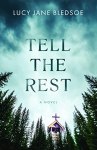 Tell the Rest by Lucy Jane Bledsoe [March 7, Akashic Books]: A high school girl’s basketball coach and a Black poet, both survivors of a conversion therapy camp in Oregon, return to the site of their spiritual abuse, looking for redemption.
 All of Us Together in the End by Matthew Vollmer [April 4, Hub City Press]: A pensive memoir investigates the blinking lights that appeared in his family’s woods soon after his mother’s death from complications of Alzheimer’s and Parkinson’s in 2019.
Other 2023 releases I’ve read:
(In publication date order; links to the few reviews that are already available online)
 Pusheen the Cat’s Guide to Everything by Claire Belton [Jan. 10, Gallery Books]: Good-natured and whimsical comic scenes delight in the endearing quirks of Pusheen, everyone’s favorite cartoon cat since Garfield. Belton creates a family and pals for her, too.
 Everything’s Changing by Chelsea Stickle [Jan. 13, Thirty West]: The 20 weird flash fiction stories in this chapbook are like prizes from a claw machine: you never know whether you’ll pluck a drunk raccoon or a red onion the perfect size to replace a broken heart.
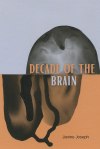 Decade of the Brain by Janine Joseph [Jan. 17, Alice James Books]: With formal variety and thematic intensity, this second collection by the Philippines-born poet ruminates on her protracted recovery from a traumatic car accident and her journey to U.S. citizenship.
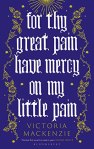 For Thy Great Pain Have Mercy on My Little Pain by Victoria Mackenzie [Jan. 19, Bloomsbury]: Two female medieval mystics, Julian of Norwich and Margery Kempe, are the twin protagonists of Mackenzie’s debut. She allows each to tell her life story through alternating first-person strands that only braid together very late on.
 The Faraway World by Patricia Engel [Jan. 24, Simon & Schuster]: These 10 short stories contrast dreams and reality. Money and religion are opposing pulls for Latinx characters as they ponder whether life will be better at home or elsewhere.
 Your Hearts, Your Scars by Adina Talve-Goodman [Jan. 24, Bellevue Literary Press]: The author grew up a daughter of rabbis in St. Louis and had a heart transplant at age 19. This posthumous collection gathers seven poignant autobiographical essays about living joyfully and looking for love in spite of chronic illness.
 God’s Ex-Girlfriend: A Memoir About Loving and Leaving the Evangelical Jesus by Gloria Beth Amodeo [Feb. 21, Ig Publishing]: In a candid memoir, Amodeo traces how she was drawn into Evangelical Christianity in college before coming to see it as a “common American cult” involving unhealthy relationship dynamics and repressed sexuality.
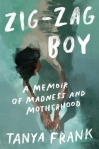 Zig-Zag Boy: A Memoir of Madness and Motherhood by Tanya Frank [Feb. 28, W. W. Norton]: A wrenching debut memoir ranges between California and England and draws in metaphors of the natural world as it recounts a decade-long search to help her mentally ill son.
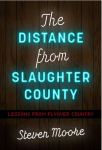 The Distance from Slaughter County by Steven Moore [March 7, The University of North Carolina Press]: An Iowan now based in Oregon, Moore balances nostalgia and critique to craft nuanced, hypnotic autobiographical essays about growing up in the Midwest. The piece on Shania Twain is a highlight.
Currently reading:
(In release date order)
 My What If Year: A Memoir by Alisha Fernandez Miranda [Feb. 7, Zibby Books]: “On the cusp of turning forty, Alisha Fernandez Miranda … decides to give herself a break, temporarily pausing her stressful career as the CEO of her own consulting firm … she leaves her home in London to spend one year exploring the dream jobs of her youth.”
 Sea Change by Gina Chung [April 11, Vintage]: “With her best friend pulling away to focus on her upcoming wedding, Ro’s only companion is Dolores, a giant Pacific octopus who also happens to be Ro’s last remaining link to her father, a marine biologist who disappeared while on an expedition when Ro was a teenager.”
Additional pre-release books on my shelf:
(In release date order)
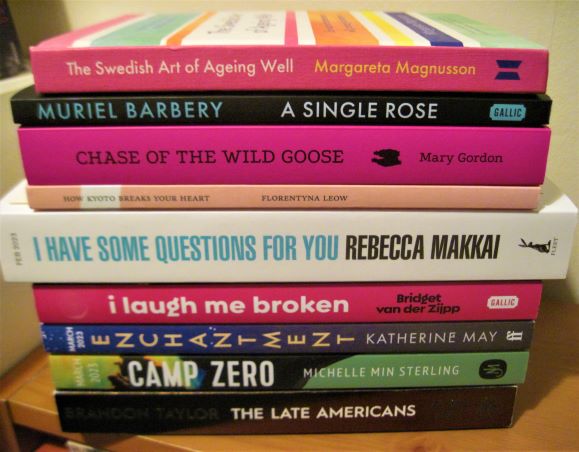
Will you look out for one or more of these?
Any 2023 reads you can recommend already?
November Releases: Dickens and Prince, Bratwurst Haven, Routes
Here are a few November books I read early for review, or that didn’t quite fit into the month’s other challenges – although, come to think of it, all are technically of novella length! (Come back tomorrow for a roundup of all the random novellas I’ve finished late in the month, and on Thursday for a retrospective of this year’s Novellas in November.)
Dickens and Prince: A Particular Kind of Genius by Nick Hornby
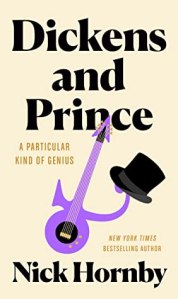 This exuberant essay, a paean to energy and imagination, draws unexpected connections between two of Hornby’s heroes. Both came from poverty, skyrocketed to fame in their twenties, were astoundingly prolific/workaholic artists, valued performance perhaps more highly than finished products, felt the industry was cheating them, had a weakness for women and died at a similar age. Biographical research shares the page with shrewd cultural commentary and glimpses of Hornby’s writing life. Whether a fan of both subjects, either or none, you’ll surely admire these geniuses’ vitality, too. (Full review forthcoming in the December 30th issue of Shelf Awareness.)
Bratwurst Haven: Stories by Rachel King
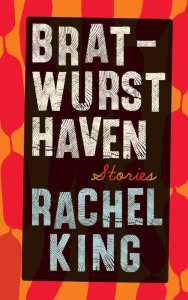 In a dozen gritty linked short stories, lovable, flawed characters navigate aging, parenthood, and relationships. Set in Colorado in the recent past, the book depicts a gentrifying area where blue-collar workers struggle to afford childcare and health insurance. As Gus, their boss at St. Anthony Sausage, withdraws their benefits and breaks in response to a recession, it’s unclear whether the business will survive. Each story covers the perspective of a different employee. The connections between tales are subtle. Overall, an endearing composite portrait of a working-class community in transition. (See my full review for Foreword.)
Routes by Rhiya Pau
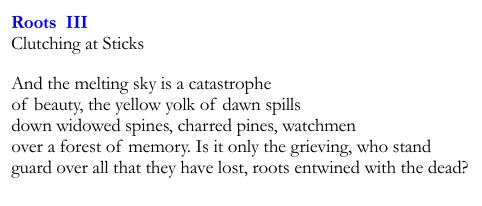
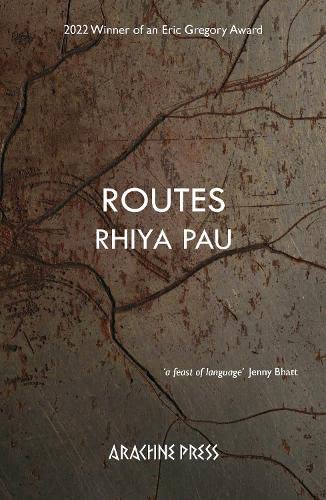 Pau’s ancestors were part of the South Asian diaspora in East Africa, and later settled in the UK. Her debut, which won one of this year’s Eric Gregory Awards (from the Society of Authors, for a collection by a British poet under the age of 30), reflects on that stew of cultures and languages. Colours and food make up the lush metaphorical palette.
When I was small, I spoke two languages.
At school: proper English, pruned and prim,
tip of the tongue taps roof of the mouth,
delicate lips, like lace frilling rims of my white
cotton socks. At home, a heady brew:
Gujarati Hindi Swahili
swim in my mouth, tie-dye my tongue
with words like bandhani.
Alongside loads of alliteration (my most adored poetic technique)—
My goddess is a mother in marigold garland
—there are delightfully unexpected turns of phrase, almost synaesthetic in their blending of the senses:
right as I worry I have forgotten the scent
of grief, I catch the first blossom of the season
and we are back circling the Spring.
~
I am a chandelier of possibility.
Besides family history and Hindu theology, current events and politics are sources of inspiration. For instance, “We Gotta Talk About S/kincare” explores the ironies and nuances of attitudes towards Black and Brown public figures, e.g., lauding Barack Obama and Kamala Harris, but former UK Home Secretary Priti Patel? “our forever – guest of honour / would deport her own mother – if she could.” I also loved the playfulness with structure: “Ode to Corelle” employs a typically solemn form for a celebration of crockery, while the yoga-themed “Salutation” snakes across two pages like a curving spine. This reminded me of poetry I’ve enjoyed by other young Asian women: Romalyn Ante, Cynthia Miller, Nina Mingya Powles and Jenny Xie. A fantastic first book.
With thanks to Arachne Press for the proof copy for review.
Any more November releases you can recommend?
Fair Play by Tove Jansson (#NovNov22 Translated Week)
Apart from A Winter Book and The Summer Book, I’m still new to Tove Jansson’s writing for adults, having become most familiar with her Moomins series over the last 11 years. This is a late work, first published in 1989 but not available in English translation (by Thomas Teal; published by Sort Of Books, with an introduction by Ali Smith) until 2007.
 Rather like a linked short story collection, it presents vignettes from the lives of two female artists – Mari, a writer and illustrator; and Jonna, a visual artist and filmmaker – who are long-term, devoted partners. Of course, this cannot be read as other than autobiographical of Jansson and her partner of 45 years, Tuulikki Pietilä. There are other specific details drawn from life, too.
What the book does beautifully is recreate the rhythm of life lived alongside another person. The two women have studio space at either end of a large apartment building and meet to watch films (the subject of “Videomania”) and go on trips. Each other’s work is a background hum if no longer a daily keeping-to-task.
Not a lot happens, so not too much stood out; a couple of other favourite stories were “Wladyslaw,” about welcoming a Polish refugee friend, and “In the Great City of Phoenix,” about a stop at an Arizona hotel. The final piece, “The Letter,” however, does present an imminent change: one of the partners is invited on a foreign fellowship and love means a temporary letting go. (Public library)
[127 pages]
I also recently read a forthcoming artistic/biographical study of Tove Jansson for Shelf Awareness, to be released by Thames & Hudson on December 6th. As it is also novella-length, it’s a good link between our literature in translation week and next week’s nonfiction focus. Here’s an excerpt from my review:
Tove Jansson: The Illustrators by Paul Gravett
 This potted biography of the author best known for the Moomins showcases the development of her artistic style and literary themes. Born at the start of World War I into a family of artists (her father a sculptor, her mother a graphic designer, her brother Lars a collaborator on her comics), Jansson wanted to paint but had limited opportunities as a woman. The book contains a wealth of illustrations – over 100, so nearly one per page – including photographs and high-quality reproductions, many in color and some in black and white, of Jansson’s comics, paintings and book covers. Gravett also probes the autobiographical influences on Jansson’s work, which are particularly clear in her 15 books for adults. A sensitive portrayal of Finland’s most widely translated author, this is itself a work of art.
[112 pages]

October Poetry Releases: Bergin, Draycott, Lopez, Rizwan, Skoulding
It was a prolific month for poetry. There is so much variety here in form and topic, from the tongue-in-cheek aphorisms of Tara Bergin’s Savage Tales to the maritime and ornithological portrait of Anglesey in Zoë Skoulding’s A Marginal Sea. Something for everyone, I’d like to think, and I hope these capsule reviews and sample poems give you a taste.
Savage Tales by Tara Bergin
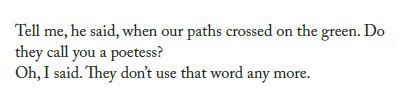
 This is the third collection by the Irish poet; I’d previously read her The Tragic Death of Eleanor Marx. Grouped into nine thematic sections, these very short poems take the form of few-sentence aphorisms or riddles, with the titles, printed in the bottom corner, often acting as something of a punchline – especially because I had them on my e-reader and they only appeared after I’d turned the digital ‘page’. Some appear to be autobiographical, about life for a female academic. Others are political (I loved “Tenants and Landlords”), or about wolves or blackbirds. The verse in “Constructions” takes different shapes on the page. Here are “The Subject Field” and “The Actor”:

With thanks to Carcanet Press for the free e-copy for review.
The Kingdom by Jane Draycott
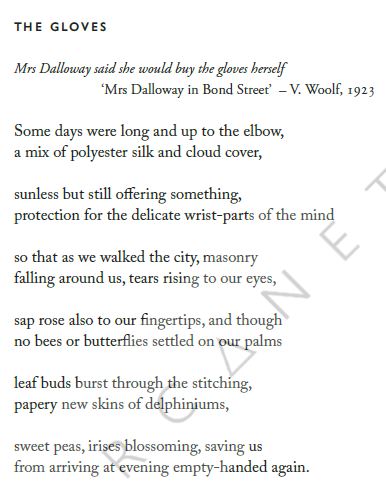
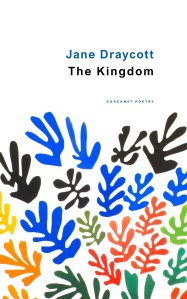 I love the Matisse cut-outs on the cover of Draycott’s fifth collection. The title poem’s archaic spelling (“hyther,” “releyf”) contrast with its picture of a modern woman seeking respite from “the men coming on to you / the taxi drivers saying here jump in no / no you don’t need no money.” Country vs. city, public vs. private, pastoral past and technological future are some of the dichotomies the verse plays with. I enjoyed the alliteration and references to an old English herbarium, Derek Jarman and polar regions. However, it was hard to find overall linking themes to latch onto.
With thanks to Carcanet Press for the free e-copy for review.
We Borrowed Gentleness by J. Estanislao Lopez
 Brimming with striking metaphors and theological echoes, the first poetry collection by the Houston-based writer is an elegant record of family life on both sides of the Mexican border. “Laredo Duplex” (below) explains how violence prompted the family’s migration. “The Contract” recalls acting as a go-between for a father who didn’t speak English; in “Diáspora” the speaker is dubious about assimilation: “I am losing my brother to whiteness.” The tone is elevated and philosophical (“You take the knife of epistemology and the elegiac fork”), with ample alliteration. Flora and fauna and the Bible are common sources of unexpected metaphors. Lopez tackles big issues of identity, loss and memory in delicate verse suited to readers of Kaveh Akbar. (My full review is on Shelf Awareness.)
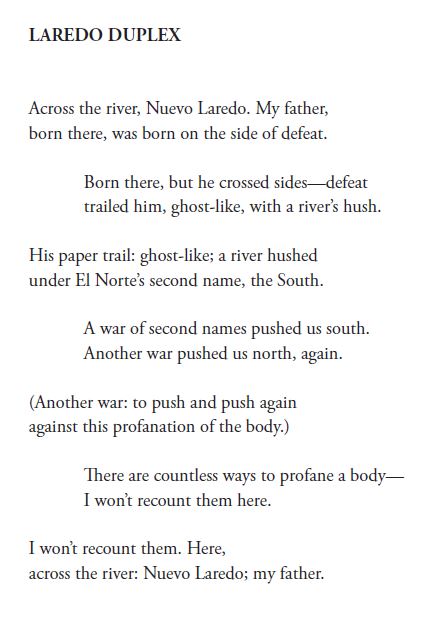
With thanks to Alyson Sinclair PR for the free e-copy for review.
Europe, Love Me Back by Rakhshan Rizwan
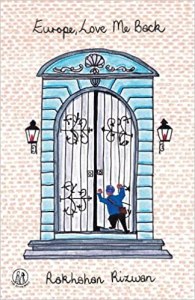 This debut collection has Rizwan juxtaposing East and West, calling out European countries for the prejudice she has experienced as a Muslim Pakistani in academia. She has also lived in the UK and USA, but mostly reflects on time spent in Germany and the Netherlands, where her imperfect grasp of the language was an additional way of standing out. “Adjunct” is the source of the cover image: she knocks and knocks for admittance, but finds herself shut out still. Rizwan takes extended metaphors from marriage, motherhood and women’s health: in “My house is becoming like my country,” she imagines her husband instituting draconian laws; in “I have found in my breast,” a visit to a doctor about a lump only exposes her own exoticism (“Basically, the Muslims are metastasizing”). In “Paris Proper,” she experiences the city differently from a friend because of the colonial history of the art. (See also Liz’s review.)
Some favourite lines:
“my breasts harden / with milk, that peculiar ache of women’s bodies / which do only half the sin / but carry all the history” (from “Half the Sin”)
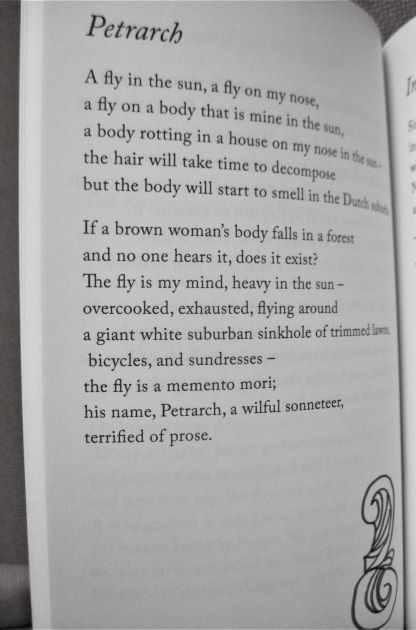
With thanks to The Emma Press for the proof copy for review.
A Marginal Sea by Zoë Skoulding
 Skoulding’s collection is said to be all about Anglesey in Wales, but from that jumping-off point the poems disperse to consider maps, maritime vocabulary, seabirds, islands, tides and much more. There are also translations from the French, various commissions and collaborations, and pieces about the natural vs. the manmade. Some are in paragraph form and there’s a real variety to how lines and stanzas are laid out on the page. I especially liked “Red Squirrels in Coed Cyrnol.” I’ll read more by Skoulding.
 With thanks to Carcanet Press for the free e-copy for review.
Read any good poetry recently?
Recent Writing for Bookmarks, Foreword and Shelf Awareness
I’ve been writing for U.S. print magazine Bookmarks for an astonishing 9.5 years now, and have the title of associate editor. The upcoming November/December issue is their first to be released in digital format as well, and as a promo it’s available to read for free here. My contributions to the issue are an article on fiction and nonfiction about women in STEM (starts on p. 23), and various of the anonymous synopses/critical summaries in the New Books Guide. Each issue has one or more author profiles, one or more thematic features, reader recommendations, a book group bio, and news on prizes and upcoming releases.
Here are excerpts from a few recent or upcoming reviews of October releases that I’ve contributed elsewhere. I link to the full text where available.
Foreword Reviews
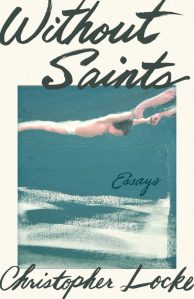 Without Saints: Essays by Christopher Locke: Fifteen flash essays present shards of a life story. Growing up in New Hampshire, Locke encountered abusive schoolteachers and Pentecostal church elders who attributed his stuttering to demon possession and performed an exorcism. By age 16, small acts of rebellion had ceded to self-harm, and his addictions persisted into adulthood. Later, teaching poetry to prisoners, he realized that he might have been in their situation had he been caught with drugs. The complexity of the essays advances alongside the chronology. Weakness of body and will is a recurrent element.
Shelf Awareness
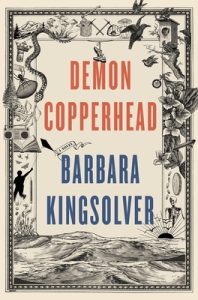 Demon Copperhead by Barbara Kingsolver: Her bighearted ninth novel follows the contours of Charles Dickens’s David Copperfield, transplanting the plot to 1990s southwest Virginia to uncover the perils of opiate addiction. Ten-year-old Damon Fields lives in a trailer home with his addict mother, who is employed at Walmart, and his new stepfather, Stoner, a mean trucker. Tragedy strikes and Damon moves between several foster homes before running away. “A kid is a terrible thing to be, in charge of nothing,” he remarks, looking back. His irrepressible, sassy voice is reminiscent of Holden Caulfield’s in this Appalachian cousin to Shuggie Bain.
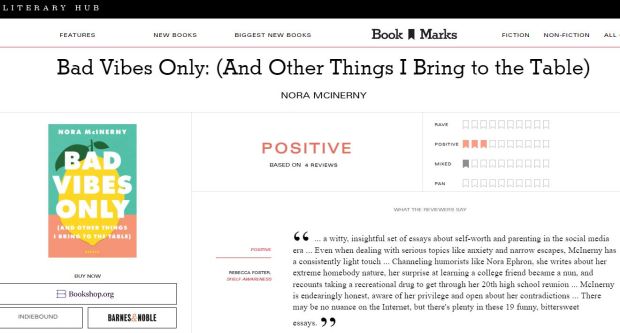
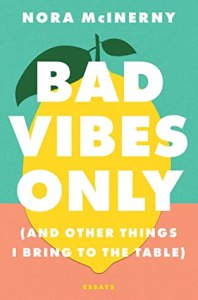 Bad Vibes Only by Nora McInerny: McInerny’s fifth book is a witty, insightful set of essays about self-worth and parenting in the social media era. Those familiar with the author’s previous autobiographical works will remember that within a few weeks in 2014, her father and first husband, Aaron, both died of cancer. After several years as a single mother, she married Matthew and they blended their families. Even when dealing with serious topics like anxiety and narrow escapes, McInerny has a light touch. She is endearingly honest, aware of her privilege and open about her contradictions. The then-and-now focus compares pre-Internet childhood with the challenges of raising kids with a constant online presence.
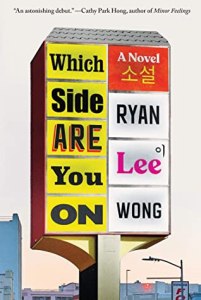 Which Side Are You On by Ryan Lee Wong: In Wong’s dynamite debut novel – set in Los Angeles, with its history of race riots – an Asian American college student committed to social justice rethinks how best to live out his ideals in the real world. Wong probes the generational gap between Reed and his parents through snappy dialogue and enjoyable scenes that constitute an incidental tour of multi-ethnic L.A. Full of vibrant characters, this punchy story offers no simple answers to ongoing racial conflicts. The portrait of a sanctimonious young man who wakes up to the reality of generational trauma and well-meaning failure is spot-on. Truly, a book for the contemporary moment.
It’s always a thrill to see my words quoted as authoritative: excerpts from my Bad Vibes Only review appear on Bookshop.org and on Lit Hub’s Bookmarks page (see below), and there’s an unattributed quote from my Which Side Are You On review on the book’s Amazon page.
Do any of these books interest you?
Birthday Outing and Book Haul
I’m not quite sure why, but I’ve made it a habit of posting something about each birthday I’ve celebrated since I started blogging. Maybe because, otherwise, the years pass so quickly that I can’t remember from one to another what I did, ate, or received as presents! So, to follow on from my 2015, 2016, 2017, 2018, 2019, 2020, and 2021 posts, here’s this year’s rundown. (Oh dear, I realize I’ve read just one of the books I received last year!)
On Thursday, I treated myself to a charity shop crawl around Newbury (it’s a great place for thrift shopping, as is nearby Thatcham) and got two jumpers plus this small stack of secondhand books.

Then yesterday, my actual birthday, we took time off and went to Kelmscott Manor in West Oxfordshire/the Cotswolds (right on the border with Gloucestershire), where Victorian designer William Morris lived. We’re a fan of Morris’s floral-based wallpaper and textile designs and he was a progressive thinker, too, embracing socialism and environmentalism – I’ll get his utopian novel, News from Nowhere, out from the university library to read soon. Despite a drizzly start to the day, the place was packed with visitors. The tea shop’s cakes incorporate fruit from the manor’s own trees. Naturally, I had to sample two of their offerings, and still had room for a chocolate beetroot cupcake (with the requisite candle) once we got home.


On the way back, we stopped in Wantage for some secondhand book shopping. I’d found out about Regent market from Simon’s blog and he’s right – it’s huge, with an excellent stock and good prices (£2 or £2.50 for nearly everything I looked at, vs. when we were in Inverness I didn’t buy a thing at Leakey’s because even poor-condition paperbacks started at £4). I would happily have spent much longer there and acquired twice as much, but one must be restrained when there are further book hauls to come. I was pleased to find several books I’ve been interested in reading for a while, as well as a couple by authors I’ve enjoyed before.

 I requested a vegan Chinese feast, inspired by a recent cookbook I’ve reviewed for Shelf Awareness’s upcoming gift books feature, The Vegan Chinese Kitchen by Hannah Che. My husband made a special trip to an Asian grocery superstore in Reading and the recipes were fairly involved, but the results – cabbage rolls, wontons and bao buns, most featuring tofu and mushrooms – were worth waiting for. We have leftovers for the weekend, along with a banoffee cheesecake from Nigella Lawson’s Kitchen still to come. (When are complicated dishes for if not for birthdays?)


Here are the books I received as birthday gifts, with more to come, I expect, plus a significant amount of birthday money that I may well spend on books. Some good options for #NovNov22 in here!

Remainders of the Day by Shaun Bythell & What Remains? by Rupert Callender
I raced to finish all the September releases on my stack by the 30th, thinking I’d review them in one go, but that ended up being far too unwieldy. There was way too much to say about each of these excellent books (the first two pairs are here and here; Blurb Your Enthusiasm by Louise Willder is still to come, probably on Wednesday). I’ve mentioned before that the month’s crop of nonfiction was about either books or death. Here’s one of each, linked by their ‘remain’ titles. Both:
Remainders of the Day: More Diaries from The Bookshop, Wigtown by Shaun Bythell
 It’s just over five years since many of us were introduced to Wigtown and the ups and downs of running a bookshop there through Shaun Bythell’s The Diary of a Bookseller. (I’ve also reviewed the follow-up, Confessions of a Bookseller, which was an enjoyable read for me during a 2019 trip to Milan, and 2020’s Seven Kinds of People You Find in Bookshops.)
This third volume opens in February 2016. As in its predecessors, each monthly section is prefaced by an epigraph from a historical work on bookselling – this time R. M. Williamson’s 1904 Bits from an Old Bookshop. It’s the same winning formula as ever: the nearly daily entries start with the number of online orders received and filled, and end with the number of customers and the till takings for the day. (The average spend seems to be £10 per customer, which is fine in high tourist season but not so great in November and December when hardly anyone walks through the door.) In between, Bythell details notable customer encounters, interactions with shop helpers or local friends, trips out to buy book collections or go fishing, Wigtown events including the book festival, and the occasional snafu like the boiler breaking during a frigid November or his mum being hospitalized with a burst ulcer.
Reading May Sarton’s Encore recently, I came across a passage where she is reading a fellow writer’s journal (Doris Grumbach’s Coming into the End Zone):
I find hers extremely good reading, so I cannot bear to stop. I am reading it much too fast and I think I shall have to read it again. I know that I must not swallow it whole. There is something about a journal, I think, that does this to readers. So many readers tell me that they cannot put my journals down.
I’ve heard Zadie Smith say the same about Karl Ove Knausgaard’s My Struggle: it’s just the stuff of prosaic, everyday life and yet she refers to his memoirs/autofiction as literary crack.
I often read a whole month’s worth of entries at a sitting. I can think of a few specific reasons why Bythell’s journals are such addictive reading:
- “Sometimes you want to go where everybody knows your name.” Small-town settings are irresistible for many readers, and by now the fairly small cast of characters in Bythell’s books feel like old friends. Especially having been to Wigtown myself, I can picture many of the locations he writes about, and you get the rhythm of the seasons and the natural world as well as the town’s ebb and flow of visitors.
- (A related point) You know what to expect, and that’s a comforting thing. Bythell makes effective use of running gags. You know that when Granny, an occasional shop helper from Italy, appears, she will complain about her aches and pains, curse at Bythell and give him the finger. Petra’s belly-dancing class (held above the shop) will inevitably be poorly attended. If Eliot is visiting, he is sure to leave his shoes right where everyone will trip over them. Captain the cat will be portly and infuriating.
- What I most love about the series is the picture of the life cycle of books, from when they first enter the shop, or get picked up in his van, to when rejects are dropped at a Glasgow recycling plant. What happens in the meantime varies, with once-popular authors falling out of fashion while certain topics remain perennial bestsellers in the shop (railways, ornithology). There’s many a serendipitous moment when he comes across a book and it’s just what a customer wants, or buys a book as part of a lot and then sells it online the very next day. New, unpriced stock is always quick to go.
Also of note in this volume are his break-up with Amazon, after his account falls victim to algorithms and is suspended, the meta moment where he signs his first book contract with Profile, and the increasing presence of the Bookshop Band, who moved to Wigtown later in 2017. Bythell doesn’t seem to get much time to read – it’s a misconception of the bookselling life that you do nothing but read all day; you’d be better off as a book reviewer if that’s what you want – but when he does, it’s generally an intense experience: E.M. Forster’s sci-fi novella The Machine Stops (who knew it existed?!), Barbara Comyns’s A Touch of Mistletoe, Jonathan Safran Foer’s Everything Is Illuminated, and Oscar Wilde’s De Profundis.
I’m torn as to whether I hope there will be more year by year volumes filling in to the present day. As Annabel noted, the ‘where they are now’ approach in the Epilogue rather suggests that he and his publisher will leave it here at a trilogy. This might be for the best, as a few more pre-Covid years of the same routines could get old, though nosey parkers like myself will want to know how a confirmed bachelor turned into a family man…
Some favourite lines:
“Quiet day in the shop; even the cat looked bored.” (31 October)
“The life of the secondhand bookseller mainly involves moving boxes from one place to another, and trying to make them fit into a small space, like some sort of awful game of Tetris.”
(10 February and 15 March are great stand-alone entries that give a sense of what the whole is like. There are a lot of black-and-white photos printed amid the text in the first month; it’s a shame these don’t carry on through.)
With thanks to Profile Books for the free copy for review.
What Remains?: Life, Death and the Human Art of Undertaking by Rupert Callender
Call me morbid or call me realistic; in the last decade and a half I have read a lot of books about death, including terminal illness and bereavements. I’ve even read several nonfiction works by American mortician Caitlin Doughty. But I’ve not read anything quite like punk undertaker Rupert Callender’s manifesto about modern death and how much we get wrong in our conceptualization and conversations. It was poignant to be reading this in the weeks surrounding Queen Elizabeth II’s death – a time when death got more discussion than usual, yes, but when there was also some ridiculous pomp that obscured the basic human facts of it.
Callender is not okay with death, and never has been. When he was seven, his father died of a heart attack at age 63. His 1970s Edinburgh upbringing was shattered and his mother, who he has no doubt was doing her best, made a few terrible mistakes. First, a year before, she’d reassured him that his father wasn’t going to die. Second, she didn’t make him attend the funeral. (I still wish my mother had made me go back to tour my late grandmother’s house one final time when I was seven; instead, I stayed behind and played on a Ouija board with my cousins.) Third, she soon sent Callender away to boarding school, which left him feeling alone and betrayed. And lastly, when she died of cancer when he was 25, she had planned every detail of her funeral – whereas he believes that is a task for the survivors.
An orphan in his late twenties, Callender came across The Natural Death Handbook and it sealed his future. He’d been expelled from school and blown his inheritance; acid house culture had given him a sense of community. Now he had a vocation. The first funeral he coordinated was for a postman named Barry. The fourth was a suicide. Their first child burial was one of his partner’s daughter’s classmates.

Over the next two decades, he and his (now ex-)wife Claire based Totnes’ The Green Funeral Company on old-fashioned values and homespun ceremonies. They oppose the overmedicalization of death and the clinical detachment of places like crematoria. Callender is vehemently anti-embalming – an intrusive process that involves toxic substances. They encourage the bereaved to keep the body at home for the week before a funeral, if they feel able (ice packs like you’d use in a picnic cool bag will work a treat), and to be their own pallbearers to make the memory of the funeral day a physical one. He performs the eulogies himself, and they use cardboard coffins.
This is a slippery work for how it intersperses personal stories with polemic and poetic writing. Despite a roughly chronological throughline, it feels more like a thematic set of essays than a sequential narrative. Callender has turned death rituals into both performance art (including at festivals and in collaboration with The KLF) and political protests (e.g., a public funeral he conducted for a homeless man who died of exposure, the third such death in his town that year). While he doesn’t shy away from the gruesome realities of dealing with corpses, he always brings it back to fundamentals: matter is what we are, but who we were lives on in others’ loving memories. Death rituals plug us into a human lineage and proclaim meaning in the face of nothingness. Whether you’ve seen/read it all or never considered picking up a book about death, I recommend Callender’s sui generis approach.
Some favourite lines:
“[The practice of having official pallbearers] is all part of the emotional infantilising encouraged by the funeral industry, all part of being turned into an audience at one of the most significant moments in your family history, instead of being empowered as a family and a community.”
“each death we experience contains every death we have ever lived through, Russian dolls of bereavement waiting to be unpacked.”
“Only once you are dead can the full arc of your life be clearly seen, and telling that story out loud and truthfully to the people who shared it is a powerful social act that both binds us together and place us within our culture.”
With thanks to Chelsea Green for the proof copy for review.
And as a bonus, given that today is Indigenous Peoples’ Day in the USA, here’s an excerpt from my Shelf Awareness review of another book that came out last month:
No Country for Eight-Spot Butterflies: A Lyric Essay by Julian Aguon
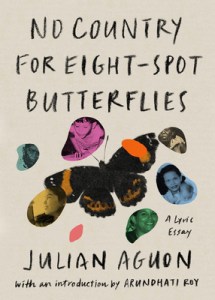 An indigenous human rights lawyer, Aguon is passionate about protecting his homeland of Guam, which is threatened by climate change and military expansion. His tender collage of autobiographical vignettes and public addresses inspires activism and celebrates beauty worth preserving. The U.S. Department of Defense’s plan to site more Marines and firing ranges on Guam will destroy more than 1,000 acres of limestone forest—home to endemic and endangered species, including the Mariana eight-spot butterfly. Aguon has been a lead litigator in appeals rising all the way to the U.S. Supreme Court. Rejecting fatalism, he endorses peaceful resistance. Two commencement speeches, poems, a eulogy and an interview round out the varied and heartfelt collection.
Booker Prize Longlist Reading & Shortlist Predictions
I’ve polished off another four from the Booker Prize longlist (my initial reactions and excerpts from existing reviews are here), with one more coming up for me next month.
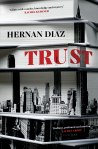
Trust by Hernan Diaz
“History itself is just a fiction—a fiction with an army. And reality? Reality is a fiction with an unlimited budget.”
My synopsis for Bookmarks magazine:
Set in the 1920s and 1930s, this expansive novel is about the early days of New York City high finance. It is told through four interlocking narratives. The first is Bonds, a novel by Harold Vanner, whose main character is clearly based on tycoon Andrew Bevel. Bevel, outraged at his portrayal as well as the allegation that his late wife, Mildred, was a madwoman, responds by writing a memoir—the book’s second part. Part 3 is an account by Ida Partenza, Bevel’s secretary, who helps him plot revenge on Vanner. In the final section, Mildred finally gets her say. Her journal caps off a sumptuous, kaleidoscopic look at American capitalism.
 Ghostwriter Ida’s section was much my favourite, for her voice as well as for how it leads you to go back to the previous part – some of it still in shorthand (“Father. Describe early memories of him. … MATH in great detail. Precocious talent. Anecdotes.”) and reassess its picture of Bevel. His short selling in advance of the Great Depression made him a fortune, but he defends himself: “My actions safeguarded American industry and business.” Mildred’s journal entries, clearly written through a fog of pain as she was dying from cancer, then force another rethink about the role she played in her husband’s decision making. With her genius-level memory, philanthropy and love of literature and music, she’s a much more interesting character than Bevel – that being the point, of course, that he steals the limelight. This is clever, clever stuff. However, as admirable as the pastiche sections might be (though they’re not as convincing as the first section of To Paradise), they’re ever so dull to read.
With thanks to Picador for the free copy for review.
Case Study by Graeme Macrae Burnet
 That GMB is quite the trickster. From the biographical sections, I definitely assumed that A. Collins Braithwaite was a real psychiatrist in the 1960s. A quick Google when I got to the end revealed that he only exists in this fictional universe. I enjoyed the notebooks recounting an unnamed young woman’s visits to Braithwaite’s office; holding the man responsible for her sister’s suicide, she books her appointments under a false name, Rebecca Smyth, and tries acting just mad (and sensual) enough to warrant her coming back. Her family stories, whether true or embellished, are ripe for psychoanalysis, and the more she inhabits this character she’s created the more she takes on her persona. (“And, perhaps on account of Mrs du Maurier’s novel, Rebecca had always struck me as the most dazzling of names. I liked the way its three short syllables felt in my mouth, ending in that breathy, open-lipped exhalation.” I had to laugh at this passage! I’ve always thought mine a staid name.) But the different documents don’t come together as satisfyingly as I expected, especially compared to His Bloody Project. (Public library)
Those two are both literary show-off stuff (the epistolary found documents strategy, metafiction): the kind of book I would have liked more in my twenties. I’m less impressed with games these days; I prefer the raw heart of this next one.
Nightcrawling by Leila Mottley
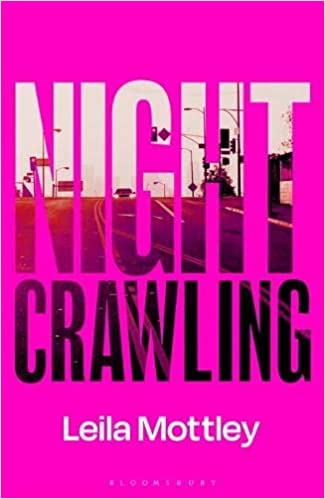 She may be only 20 years old, but Leila Mottley is the real deal. Her debut novel, laden with praise from her mentor Ruth Ozeki and many others, reminded me of Bryan Washington’s work. The first-person voice is convincing and mature as Mottley spins the (inspired by a true) story of an underage prostitute who testifies against the cops who have kept her in what is virtually sex slavery. At 17, Kiara is the de facto head of her household, with her father dead, her mother in a halfway house, and her older brother pursuing his dream of recording a rap album. When news comes of a rise in the rent and Kia stumbles into being paid for sex, she knows it’s her only way of staying in their Oakland apartment and looking after her neglected nine-year-old neighbour, Trevor.
I loved her relationships with Trevor, her best friend Alé (they crash funerals for the free food), and trans prostitute Camila, and the glimpses into prison life and police corruption. This doesn’t feel like misery for the sake of it, just realistic and compassionate documentation. There were a few places where I felt the joins showed, like a teacher had told her she needed to fill in some emotional backstory, and I noticed an irksome habit of turning adjectives into verbs or nouns (e.g., “full of all her loud,” “the sky is just starting to pastel”); perhaps this is an instinct from her start in poetry, but it struck me as precious. However, this is easily one of the more memorable 2022 releases I’ve read, and I’d love to see it on the shortlist and on other prize lists later this year and next. (Public library)
Oh William! by Elizabeth Strout
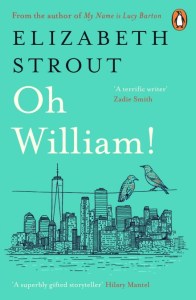 This was a DNF for me last year, but I tried again. The setup is simple: Lucy Barton’s ex-husband, William, discovers he has a half-sister he never knew about. William and Lucy travel from New York City to Maine in hopes of meeting her. For both of them, the quest sparks a lot of questions about how our origins determine who we are, and what William’s late mother, Catherine, was running from and to in leaving her husband and small child behind to forge a different life. Like Lucy, Catherine came from nothing; to an extent, everything that unfolded afterwards for them was a reaction against poverty and neglect.
The difficulty of ever really knowing another person, or even understanding oneself, is one of Strout’s recurring messages. There are a lot of strong lines and relatable feelings here. What I found maddening, though, is Lucy’s tentative phrasing, e.g. “And I cannot explain it except to say—oh, I don’t know what to say! Truly, it is as if I do not exist, I guess is the closest thing I can say.” She employs hedging statements like that all the time; it struck me as false that someone who makes a living by words would be so lacking in confidence about how to say what she means. So I appreciated the psychological insight but found Lucy’s voice annoying, even in such a short book. (Public library)
A Recap
I’ve read 6 of the 13 at this point, have imminent plans to read After Sappho for a Shelf Awareness review, and would still like to read the Mortimer if my library system acquires it. The others? Meh. I might consider catching up if they’re shortlisted.
My book group wasn’t chosen to shadow the Booker Prize this year, which is fair enough since we already officially shadowed the Women’s Prize earlier in the year (here are the six successful book clubs, if you’re interested). However, we have been offered the chance to send in up to five interview questions for the shortlisted authors. The Q&As will then be part of a website feature. And I was pleasantly surprised to see that my non-holiday snap of a Booker Prize nominee turned up in this round-up!
Here’s my (not particularly scientific) reasoning for what might make the shortlist:
A literary puzzle novel
Trust by Hernan Diaz or Case Study by Graeme Macrae Burnet
- Trust feels more impressive, and timely; GMB already had his chance.
A contemporary novel
Nightcrawling by Leila Mottley or Oh William! by Elizabeth Strout
- Oh William! is the weakest Strout novel I’ve read. Mottley’s is a fresh voice that deserves to be broadcast.

A satire
The Trees by Percival Everett or Seven Moons of Maali Almeida by Shehan Karunatilaka
- Without having read either, I’m going to hazard a guess that the Everett is too Ameri-centric/similar to The Sellout. The Booker tends to reward colourful Commonwealth books. [EDITED to add that I forgot to take into my considerations Glory by NoViolet Bulawayo; while it doesn’t perfectly fit this category, as a political allegory it’s close enough that I’ll include it here. I would not be at all surprised if it made the shortlist, along with the Karunatilaka.]

A couple of historical novels
Booth by Karen Joy Fowler or After Sappho by Selby Wynn Schwartz
and/or
A couple of Irish novels
Small Things Like These by Claire Keegan or The Colony by Audrey Magee
- I’m hearing such buzz about the Magee, and there’s such love out there for the Keegan, that I reckon both of these will make it through.


The odd one out?
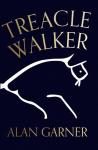
Treacle Walker by Alan Garner or Maps of Our Spectacular Bodies by Maddie Mortimer
- Maybe nostalgia will spur the judges to give Garner a chance in his 80s.

My predicted shortlist:


On Tuesday evening we’ll find out if I got any of these right!
What have you read from the longlist? What do you most want to read, or see on the shortlist?
September’s Focus: Short Stories
This is the seventh year in a row in which I’m making a special effort to read short stories in September; otherwise, story collections tend to languish on my shelves (and Kindle) unread. In September 2020 I read 8 collections, and in September 2021 it was 12. How many can I get through this time?! Here are my options, including, at far right, some I’m partway through, a thematic trio (“Birds” titles) I fancy reviewing together, and a few from the library.


To my surprise, if I count linked short stories, I’ve already read 13 collections this year. Highlights: Dance Move by Wendy Erskine, The Summer Book by Tove Jansson, Antipodes by Holly Goddard Jones, and How High We Go in the Dark by Sequoia Nagamatsu.
 The best of the lot, though, has been Stories from the Tenants Downstairs by Sidik Fofana, which I’ll be reviewing for BookBrowse over the weekend. It’s a character- and voice-driven set of eight stories about the residents of a Harlem apartment complex, many of them lovable rogues who have to hustle to try to make rent in this gentrifying area.
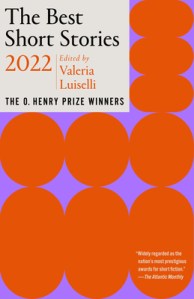 A September release I’ll quickly plug: The Best Short Stories 2022: The O. Henry Prize Winners, selected by Valeria Luiselli. I read this for Shelf Awareness and my review will be appearing in a couple of weeks. Half of the 20 stories are in translation – Luiselli insists this was coincidental – so it’s a nice taster of international short fiction. Contributing authors you will have heard of: Chimamanda Ngozi Adichie, Lorrie Moore, Samanta Schweblin and Olga Tokarczuk. The style runs the gamut from metafiction to sci-fi/horror. Covid-19, loss and parenting are frequent elements. My two favourites: Joseph O’Neill’s “Rainbows,” about sexual misconduct allegations, then and now; and the absolutely bonkers novella-length “Horse Soup” by Vladimir Sorokin, about a woman and a released prisoner who meet on a train and bond over food. (13 September, Anchor Books)
 Here’s a short story collection I received for review but, alas, couldn’t finish: Milk Blood Heat by Dantiel W. Moniz. This was longlisted for the Dylan Thomas Prize and won the NB Magazine Blogger’s Book Prize. The link, I have gathered, is adolescent girls in Florida. I enjoyed the title story, which opens the collection and takes peer pressure and imitation to an extreme, but couldn’t get through more than another 1.5 after that; they left zero impression.
Currently reading: The Boat by Nam Le (it won the Dylan Thomas Prize; I’ve read the first story so far and it was knockout!), Birds of a Lesser Paradise by Megan Mayhew Bergman.
 Resuming soon: The Predatory Animal Ball by Jennifer Fliss (e-book), Hearts & Bones by Niamh Mulvey, The Secret Lives of Church Ladies by Deesha Philyaw – all were review copies.
Are you a short story fan? Read any good ones recently?
Join me in this low-key challenge if you wish!
 Bookish Beck = Rebecca Foster. American transplant to England. Freelance proofreader and book reviewer.
 Bookish Beck