Recent Writing for Bookmarks, Foreword and Shelf Awareness
I’ve been writing for U.S. print magazine Bookmarks for an astonishing 9.5 years now, and have the title of associate editor. The upcoming November/December issue is their first to be released in digital format as well, and as a promo it’s available to read for free here. My contributions to the issue are an article on fiction and nonfiction about women in STEM (starts on p. 23), and various of the anonymous synopses/critical summaries in the New Books Guide. Each issue has one or more author profiles, one or more thematic features, reader recommendations, a book group bio, and news on prizes and upcoming releases.
Here are excerpts from a few recent or upcoming reviews of October releases that I’ve contributed elsewhere. I link to the full text where available.
Foreword Reviews
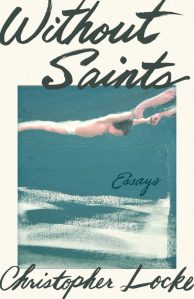 Without Saints: Essays by Christopher Locke: Fifteen flash essays present shards of a life story. Growing up in New Hampshire, Locke encountered abusive schoolteachers and Pentecostal church elders who attributed his stuttering to demon possession and performed an exorcism. By age 16, small acts of rebellion had ceded to self-harm, and his addictions persisted into adulthood. Later, teaching poetry to prisoners, he realized that he might have been in their situation had he been caught with drugs. The complexity of the essays advances alongside the chronology. Weakness of body and will is a recurrent element.
Shelf Awareness
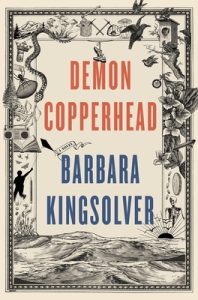 Demon Copperhead by Barbara Kingsolver: Her bighearted ninth novel follows the contours of Charles Dickens’s David Copperfield, transplanting the plot to 1990s southwest Virginia to uncover the perils of opiate addiction. Ten-year-old Damon Fields lives in a trailer home with his addict mother, who is employed at Walmart, and his new stepfather, Stoner, a mean trucker. Tragedy strikes and Damon moves between several foster homes before running away. “A kid is a terrible thing to be, in charge of nothing,” he remarks, looking back. His irrepressible, sassy voice is reminiscent of Holden Caulfield’s in this Appalachian cousin to Shuggie Bain.
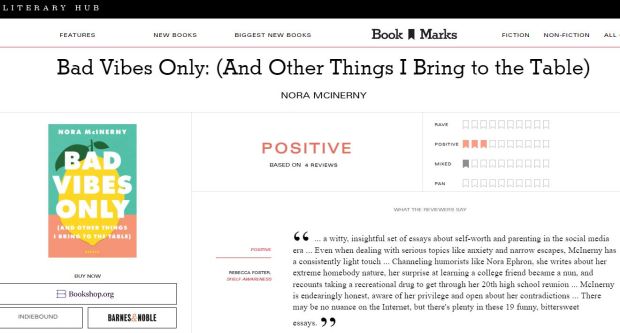
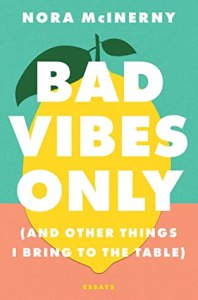 Bad Vibes Only by Nora McInerny: McInerny’s fifth book is a witty, insightful set of essays about self-worth and parenting in the social media era. Those familiar with the author’s previous autobiographical works will remember that within a few weeks in 2014, her father and first husband, Aaron, both died of cancer. After several years as a single mother, she married Matthew and they blended their families. Even when dealing with serious topics like anxiety and narrow escapes, McInerny has a light touch. She is endearingly honest, aware of her privilege and open about her contradictions. The then-and-now focus compares pre-Internet childhood with the challenges of raising kids with a constant online presence.
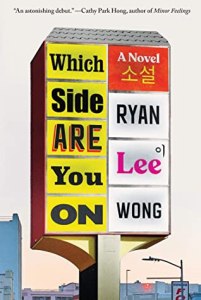 Which Side Are You On by Ryan Lee Wong: In Wong’s dynamite debut novel – set in Los Angeles, with its history of race riots – an Asian American college student committed to social justice rethinks how best to live out his ideals in the real world. Wong probes the generational gap between Reed and his parents through snappy dialogue and enjoyable scenes that constitute an incidental tour of multi-ethnic L.A. Full of vibrant characters, this punchy story offers no simple answers to ongoing racial conflicts. The portrait of a sanctimonious young man who wakes up to the reality of generational trauma and well-meaning failure is spot-on. Truly, a book for the contemporary moment.
It’s always a thrill to see my words quoted as authoritative: excerpts from my Bad Vibes Only review appear on Bookshop.org and on Lit Hub’s Bookmarks page (see below), and there’s an unattributed quote from my Which Side Are You On review on the book’s Amazon page.
Do any of these books interest you?
Birthday Outing and Book Haul
I’m not quite sure why, but I’ve made it a habit of posting something about each birthday I’ve celebrated since I started blogging. Maybe because, otherwise, the years pass so quickly that I can’t remember from one to another what I did, ate, or received as presents! So, to follow on from my 2015, 2016, 2017, 2018, 2019, 2020, and 2021 posts, here’s this year’s rundown. (Oh dear, I realize I’ve read just one of the books I received last year!)
On Thursday, I treated myself to a charity shop crawl around Newbury (it’s a great place for thrift shopping, as is nearby Thatcham) and got two jumpers plus this small stack of secondhand books.

Then yesterday, my actual birthday, we took time off and went to Kelmscott Manor in West Oxfordshire/the Cotswolds (right on the border with Gloucestershire), where Victorian designer William Morris lived. We’re a fan of Morris’s floral-based wallpaper and textile designs and he was a progressive thinker, too, embracing socialism and environmentalism – I’ll get his utopian novel, News from Nowhere, out from the university library to read soon. Despite a drizzly start to the day, the place was packed with visitors. The tea shop’s cakes incorporate fruit from the manor’s own trees. Naturally, I had to sample two of their offerings, and still had room for a chocolate beetroot cupcake (with the requisite candle) once we got home.


On the way back, we stopped in Wantage for some secondhand book shopping. I’d found out about Regent market from Simon’s blog and he’s right – it’s huge, with an excellent stock and good prices (£2 or £2.50 for nearly everything I looked at, vs. when we were in Inverness I didn’t buy a thing at Leakey’s because even poor-condition paperbacks started at £4). I would happily have spent much longer there and acquired twice as much, but one must be restrained when there are further book hauls to come. I was pleased to find several books I’ve been interested in reading for a while, as well as a couple by authors I’ve enjoyed before.

 I requested a vegan Chinese feast, inspired by a recent cookbook I’ve reviewed for Shelf Awareness’s upcoming gift books feature, The Vegan Chinese Kitchen by Hannah Che. My husband made a special trip to an Asian grocery superstore in Reading and the recipes were fairly involved, but the results – cabbage rolls, wontons and bao buns, most featuring tofu and mushrooms – were worth waiting for. We have leftovers for the weekend, along with a banoffee cheesecake from Nigella Lawson’s Kitchen still to come. (When are complicated dishes for if not for birthdays?)


Here are the books I received as birthday gifts, with more to come, I expect, plus a significant amount of birthday money that I may well spend on books. Some good options for #NovNov22 in here!

Remainders of the Day by Shaun Bythell & What Remains? by Rupert Callender
I raced to finish all the September releases on my stack by the 30th, thinking I’d review them in one go, but that ended up being far too unwieldy. There was way too much to say about each of these excellent books (the first two pairs are here and here; Blurb Your Enthusiasm by Louise Willder is still to come, probably on Wednesday). I’ve mentioned before that the month’s crop of nonfiction was about either books or death. Here’s one of each, linked by their ‘remain’ titles. Both:
Remainders of the Day: More Diaries from The Bookshop, Wigtown by Shaun Bythell
 It’s just over five years since many of us were introduced to Wigtown and the ups and downs of running a bookshop there through Shaun Bythell’s The Diary of a Bookseller. (I’ve also reviewed the follow-up, Confessions of a Bookseller, which was an enjoyable read for me during a 2019 trip to Milan, and 2020’s Seven Kinds of People You Find in Bookshops.)
This third volume opens in February 2016. As in its predecessors, each monthly section is prefaced by an epigraph from a historical work on bookselling – this time R. M. Williamson’s 1904 Bits from an Old Bookshop. It’s the same winning formula as ever: the nearly daily entries start with the number of online orders received and filled, and end with the number of customers and the till takings for the day. (The average spend seems to be £10 per customer, which is fine in high tourist season but not so great in November and December when hardly anyone walks through the door.) In between, Bythell details notable customer encounters, interactions with shop helpers or local friends, trips out to buy book collections or go fishing, Wigtown events including the book festival, and the occasional snafu like the boiler breaking during a frigid November or his mum being hospitalized with a burst ulcer.
Reading May Sarton’s Encore recently, I came across a passage where she is reading a fellow writer’s journal (Doris Grumbach’s Coming into the End Zone):
I find hers extremely good reading, so I cannot bear to stop. I am reading it much too fast and I think I shall have to read it again. I know that I must not swallow it whole. There is something about a journal, I think, that does this to readers. So many readers tell me that they cannot put my journals down.
I’ve heard Zadie Smith say the same about Karl Ove Knausgaard’s My Struggle: it’s just the stuff of prosaic, everyday life and yet she refers to his memoirs/autofiction as literary crack.
I often read a whole month’s worth of entries at a sitting. I can think of a few specific reasons why Bythell’s journals are such addictive reading:
- “Sometimes you want to go where everybody knows your name.” Small-town settings are irresistible for many readers, and by now the fairly small cast of characters in Bythell’s books feel like old friends. Especially having been to Wigtown myself, I can picture many of the locations he writes about, and you get the rhythm of the seasons and the natural world as well as the town’s ebb and flow of visitors.
- (A related point) You know what to expect, and that’s a comforting thing. Bythell makes effective use of running gags. You know that when Granny, an occasional shop helper from Italy, appears, she will complain about her aches and pains, curse at Bythell and give him the finger. Petra’s belly-dancing class (held above the shop) will inevitably be poorly attended. If Eliot is visiting, he is sure to leave his shoes right where everyone will trip over them. Captain the cat will be portly and infuriating.
- What I most love about the series is the picture of the life cycle of books, from when they first enter the shop, or get picked up in his van, to when rejects are dropped at a Glasgow recycling plant. What happens in the meantime varies, with once-popular authors falling out of fashion while certain topics remain perennial bestsellers in the shop (railways, ornithology). There’s many a serendipitous moment when he comes across a book and it’s just what a customer wants, or buys a book as part of a lot and then sells it online the very next day. New, unpriced stock is always quick to go.
Also of note in this volume are his break-up with Amazon, after his account falls victim to algorithms and is suspended, the meta moment where he signs his first book contract with Profile, and the increasing presence of the Bookshop Band, who moved to Wigtown later in 2017. Bythell doesn’t seem to get much time to read – it’s a misconception of the bookselling life that you do nothing but read all day; you’d be better off as a book reviewer if that’s what you want – but when he does, it’s generally an intense experience: E.M. Forster’s sci-fi novella The Machine Stops (who knew it existed?!), Barbara Comyns’s A Touch of Mistletoe, Jonathan Safran Foer’s Everything Is Illuminated, and Oscar Wilde’s De Profundis.
I’m torn as to whether I hope there will be more year by year volumes filling in to the present day. As Annabel noted, the ‘where they are now’ approach in the Epilogue rather suggests that he and his publisher will leave it here at a trilogy. This might be for the best, as a few more pre-Covid years of the same routines could get old, though nosey parkers like myself will want to know how a confirmed bachelor turned into a family man…
Some favourite lines:
“Quiet day in the shop; even the cat looked bored.” (31 October)
“The life of the secondhand bookseller mainly involves moving boxes from one place to another, and trying to make them fit into a small space, like some sort of awful game of Tetris.”
(10 February and 15 March are great stand-alone entries that give a sense of what the whole is like. There are a lot of black-and-white photos printed amid the text in the first month; it’s a shame these don’t carry on through.)
With thanks to Profile Books for the free copy for review.
What Remains?: Life, Death and the Human Art of Undertaking by Rupert Callender
Call me morbid or call me realistic; in the last decade and a half I have read a lot of books about death, including terminal illness and bereavements. I’ve even read several nonfiction works by American mortician Caitlin Doughty. But I’ve not read anything quite like punk undertaker Rupert Callender’s manifesto about modern death and how much we get wrong in our conceptualization and conversations. It was poignant to be reading this in the weeks surrounding Queen Elizabeth II’s death – a time when death got more discussion than usual, yes, but when there was also some ridiculous pomp that obscured the basic human facts of it.
Callender is not okay with death, and never has been. When he was seven, his father died of a heart attack at age 63. His 1970s Edinburgh upbringing was shattered and his mother, who he has no doubt was doing her best, made a few terrible mistakes. First, a year before, she’d reassured him that his father wasn’t going to die. Second, she didn’t make him attend the funeral. (I still wish my mother had made me go back to tour my late grandmother’s house one final time when I was seven; instead, I stayed behind and played on a Ouija board with my cousins.) Third, she soon sent Callender away to boarding school, which left him feeling alone and betrayed. And lastly, when she died of cancer when he was 25, she had planned every detail of her funeral – whereas he believes that is a task for the survivors.
An orphan in his late twenties, Callender came across The Natural Death Handbook and it sealed his future. He’d been expelled from school and blown his inheritance; acid house culture had given him a sense of community. Now he had a vocation. The first funeral he coordinated was for a postman named Barry. The fourth was a suicide. Their first child burial was one of his partner’s daughter’s classmates.

Over the next two decades, he and his (now ex-)wife Claire based Totnes’ The Green Funeral Company on old-fashioned values and homespun ceremonies. They oppose the overmedicalization of death and the clinical detachment of places like crematoria. Callender is vehemently anti-embalming – an intrusive process that involves toxic substances. They encourage the bereaved to keep the body at home for the week before a funeral, if they feel able (ice packs like you’d use in a picnic cool bag will work a treat), and to be their own pallbearers to make the memory of the funeral day a physical one. He performs the eulogies himself, and they use cardboard coffins.
This is a slippery work for how it intersperses personal stories with polemic and poetic writing. Despite a roughly chronological throughline, it feels more like a thematic set of essays than a sequential narrative. Callender has turned death rituals into both performance art (including at festivals and in collaboration with The KLF) and political protests (e.g., a public funeral he conducted for a homeless man who died of exposure, the third such death in his town that year). While he doesn’t shy away from the gruesome realities of dealing with corpses, he always brings it back to fundamentals: matter is what we are, but who we were lives on in others’ loving memories. Death rituals plug us into a human lineage and proclaim meaning in the face of nothingness. Whether you’ve seen/read it all or never considered picking up a book about death, I recommend Callender’s sui generis approach.
Some favourite lines:
“[The practice of having official pallbearers] is all part of the emotional infantilising encouraged by the funeral industry, all part of being turned into an audience at one of the most significant moments in your family history, instead of being empowered as a family and a community.”
“each death we experience contains every death we have ever lived through, Russian dolls of bereavement waiting to be unpacked.”
“Only once you are dead can the full arc of your life be clearly seen, and telling that story out loud and truthfully to the people who shared it is a powerful social act that both binds us together and place us within our culture.”
With thanks to Chelsea Green for the proof copy for review.
And as a bonus, given that today is Indigenous Peoples’ Day in the USA, here’s an excerpt from my Shelf Awareness review of another book that came out last month:
No Country for Eight-Spot Butterflies: A Lyric Essay by Julian Aguon
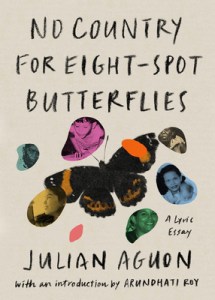 An indigenous human rights lawyer, Aguon is passionate about protecting his homeland of Guam, which is threatened by climate change and military expansion. His tender collage of autobiographical vignettes and public addresses inspires activism and celebrates beauty worth preserving. The U.S. Department of Defense’s plan to site more Marines and firing ranges on Guam will destroy more than 1,000 acres of limestone forest—home to endemic and endangered species, including the Mariana eight-spot butterfly. Aguon has been a lead litigator in appeals rising all the way to the U.S. Supreme Court. Rejecting fatalism, he endorses peaceful resistance. Two commencement speeches, poems, a eulogy and an interview round out the varied and heartfelt collection.
Booker Prize Longlist Reading & Shortlist Predictions
I’ve polished off another four from the Booker Prize longlist (my initial reactions and excerpts from existing reviews are here), with one more coming up for me next month.
Trust by Hernan Diaz
“History itself is just a fiction—a fiction with an army. And reality? Reality is a fiction with an unlimited budget.”
My synopsis for Bookmarks magazine:
Set in the 1920s and 1930s, this expansive novel is about the early days of New York City high finance. It is told through four interlocking narratives. The first is Bonds, a novel by Harold Vanner, whose main character is clearly based on tycoon Andrew Bevel. Bevel, outraged at his portrayal as well as the allegation that his late wife, Mildred, was a madwoman, responds by writing a memoir—the book’s second part. Part 3 is an account by Ida Partenza, Bevel’s secretary, who helps him plot revenge on Vanner. In the final section, Mildred finally gets her say. Her journal caps off a sumptuous, kaleidoscopic look at American capitalism.
 Ghostwriter Ida’s section was much my favourite, for her voice as well as for how it leads you to go back to the previous part – some of it still in shorthand (“Father. Describe early memories of him. … MATH in great detail. Precocious talent. Anecdotes.”) and reassess its picture of Bevel. His short selling in advance of the Great Depression made him a fortune, but he defends himself: “My actions safeguarded American industry and business.” Mildred’s journal entries, clearly written through a fog of pain as she was dying from cancer, then force another rethink about the role she played in her husband’s decision making. With her genius-level memory, philanthropy and love of literature and music, she’s a much more interesting character than Bevel – that being the point, of course, that he steals the limelight. This is clever, clever stuff. However, as admirable as the pastiche sections might be (though they’re not as convincing as the first section of To Paradise), they’re ever so dull to read.
With thanks to Picador for the free copy for review.
Case Study by Graeme Macrae Burnet
 That GMB is quite the trickster. From the biographical sections, I definitely assumed that A. Collins Braithwaite was a real psychiatrist in the 1960s. A quick Google when I got to the end revealed that he only exists in this fictional universe. I enjoyed the notebooks recounting an unnamed young woman’s visits to Braithwaite’s office; holding the man responsible for her sister’s suicide, she books her appointments under a false name, Rebecca Smyth, and tries acting just mad (and sensual) enough to warrant her coming back. Her family stories, whether true or embellished, are ripe for psychoanalysis, and the more she inhabits this character she’s created the more she takes on her persona. (“And, perhaps on account of Mrs du Maurier’s novel, Rebecca had always struck me as the most dazzling of names. I liked the way its three short syllables felt in my mouth, ending in that breathy, open-lipped exhalation.” I had to laugh at this passage! I’ve always thought mine a staid name.) But the different documents don’t come together as satisfyingly as I expected, especially compared to His Bloody Project. (Public library)
Those two are both literary show-off stuff (the epistolary found documents strategy, metafiction): the kind of book I would have liked more in my twenties. I’m less impressed with games these days; I prefer the raw heart of this next one.
Nightcrawling by Leila Mottley
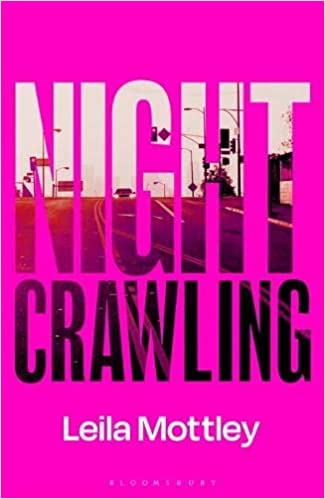 She may be only 20 years old, but Leila Mottley is the real deal. Her debut novel, laden with praise from her mentor Ruth Ozeki and many others, reminded me of Bryan Washington’s work. The first-person voice is convincing and mature as Mottley spins the (inspired by a true) story of an underage prostitute who testifies against the cops who have kept her in what is virtually sex slavery. At 17, Kiara is the de facto head of her household, with her father dead, her mother in a halfway house, and her older brother pursuing his dream of recording a rap album. When news comes of a rise in the rent and Kia stumbles into being paid for sex, she knows it’s her only way of staying in their Oakland apartment and looking after her neglected nine-year-old neighbour, Trevor.
I loved her relationships with Trevor, her best friend Alé (they crash funerals for the free food), and trans prostitute Camila, and the glimpses into prison life and police corruption. This doesn’t feel like misery for the sake of it, just realistic and compassionate documentation. There were a few places where I felt the joins showed, like a teacher had told her she needed to fill in some emotional backstory, and I noticed an irksome habit of turning adjectives into verbs or nouns (e.g., “full of all her loud,” “the sky is just starting to pastel”); perhaps this is an instinct from her start in poetry, but it struck me as precious. However, this is easily one of the more memorable 2022 releases I’ve read, and I’d love to see it on the shortlist and on other prize lists later this year and next. (Public library)
Oh William! by Elizabeth Strout
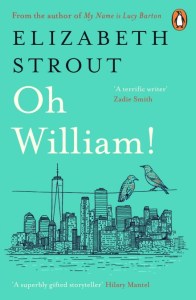 This was a DNF for me last year, but I tried again. The setup is simple: Lucy Barton’s ex-husband, William, discovers he has a half-sister he never knew about. William and Lucy travel from New York City to Maine in hopes of meeting her. For both of them, the quest sparks a lot of questions about how our origins determine who we are, and what William’s late mother, Catherine, was running from and to in leaving her husband and small child behind to forge a different life. Like Lucy, Catherine came from nothing; to an extent, everything that unfolded afterwards for them was a reaction against poverty and neglect.
The difficulty of ever really knowing another person, or even understanding oneself, is one of Strout’s recurring messages. There are a lot of strong lines and relatable feelings here. What I found maddening, though, is Lucy’s tentative phrasing, e.g. “And I cannot explain it except to say—oh, I don’t know what to say! Truly, it is as if I do not exist, I guess is the closest thing I can say.” She employs hedging statements like that all the time; it struck me as false that someone who makes a living by words would be so lacking in confidence about how to say what she means. So I appreciated the psychological insight but found Lucy’s voice annoying, even in such a short book. (Public library)
A Recap
I’ve read 6 of the 13 at this point, have imminent plans to read After Sappho for a Shelf Awareness review, and would still like to read the Mortimer if my library system acquires it. The others? Meh. I might consider catching up if they’re shortlisted.
My book group wasn’t chosen to shadow the Booker Prize this year, which is fair enough since we already officially shadowed the Women’s Prize earlier in the year (here are the six successful book clubs, if you’re interested). However, we have been offered the chance to send in up to five interview questions for the shortlisted authors. The Q&As will then be part of a website feature. And I was pleasantly surprised to see that my non-holiday snap of a Booker Prize nominee turned up in this round-up!
Here’s my (not particularly scientific) reasoning for what might make the shortlist:
A literary puzzle novel
Trust by Hernan Diaz or Case Study by Graeme Macrae Burnet
- Trust feels more impressive, and timely; GMB already had his chance.
A contemporary novel
Nightcrawling by Leila Mottley or Oh William! by Elizabeth Strout
- Oh William! is the weakest Strout novel I’ve read. Mottley’s is a fresh voice that deserves to be broadcast.

A satire
The Trees by Percival Everett or Seven Moons of Maali Almeida by Shehan Karunatilaka
- Without having read either, I’m going to hazard a guess that the Everett is too Ameri-centric/similar to The Sellout. The Booker tends to reward colourful Commonwealth books. [EDITED to add that I forgot to take into my considerations Glory by NoViolet Bulawayo; while it doesn’t perfectly fit this category, as a political allegory it’s close enough that I’ll include it here. I would not be at all surprised if it made the shortlist, along with the Karunatilaka.]

A couple of historical novels
Booth by Karen Joy Fowler or After Sappho by Selby Wynn Schwartz
and/or
A couple of Irish novels
Small Things Like These by Claire Keegan or The Colony by Audrey Magee
- I’m hearing such buzz about the Magee, and there’s such love out there for the Keegan, that I reckon both of these will make it through.


The odd one out?
Treacle Walker by Alan Garner or Maps of Our Spectacular Bodies by Maddie Mortimer
- Maybe nostalgia will spur the judges to give Garner a chance in his 80s.

My predicted shortlist:



On Tuesday evening we’ll find out if I got any of these right!
What have you read from the longlist? What do you most want to read, or see on the shortlist?
September’s Focus: Short Stories
This is the seventh year in a row in which I’m making a special effort to read short stories in September; otherwise, story collections tend to languish on my shelves (and Kindle) unread. In September 2020 I read 8 collections, and in September 2021 it was 12. How many can I get through this time?! Here are my options, including, at far right, some I’m partway through, a thematic trio (“Birds” titles) I fancy reviewing together, and a few from the library.


To my surprise, if I count linked short stories, I’ve already read 13 collections this year. Highlights: Dance Move by Wendy Erskine, The Summer Book by Tove Jansson, Antipodes by Holly Goddard Jones, and How High We Go in the Dark by Sequoia Nagamatsu.
 The best of the lot, though, has been Stories from the Tenants Downstairs by Sidik Fofana, which I’ll be reviewing for BookBrowse over the weekend. It’s a character- and voice-driven set of eight stories about the residents of a Harlem apartment complex, many of them lovable rogues who have to hustle to try to make rent in this gentrifying area.
 A September release I’ll quickly plug: The Best Short Stories 2022: The O. Henry Prize Winners, selected by Valeria Luiselli. I read this for Shelf Awareness and my review will be appearing in a couple of weeks. Half of the 20 stories are in translation – Luiselli insists this was coincidental – so it’s a nice taster of international short fiction. Contributing authors you will have heard of: Chimamanda Ngozi Adichie, Lorrie Moore, Samanta Schweblin and Olga Tokarczuk. The style runs the gamut from metafiction to sci-fi/horror. Covid-19, loss and parenting are frequent elements. My two favourites: Joseph O’Neill’s “Rainbows,” about sexual misconduct allegations, then and now; and the absolutely bonkers novella-length “Horse Soup” by Vladimir Sorokin, about a woman and a released prisoner who meet on a train and bond over food. (13 September, Anchor Books)
 Here’s a short story collection I received for review but, alas, couldn’t finish: Milk Blood Heat by Dantiel W. Moniz. This was longlisted for the Dylan Thomas Prize and won the NB Magazine Blogger’s Book Prize. The link, I have gathered, is adolescent girls in Florida. I enjoyed the title story, which opens the collection and takes peer pressure and imitation to an extreme, but couldn’t get through more than another 1.5 after that; they left zero impression.
Currently reading: The Boat by Nam Le (it won the Dylan Thomas Prize; I’ve read the first story so far and it was knockout!), Birds of a Lesser Paradise by Megan Mayhew Bergman.
 Resuming soon: The Predatory Animal Ball by Jennifer Fliss (e-book), Hearts & Bones by Niamh Mulvey, The Secret Lives of Church Ladies by Deesha Philyaw – all were review copies.
Are you a short story fan? Read any good ones recently?
Join me in this low-key challenge if you wish!
20 Books of Summer, 14–16: Barba, Bersweden and Solnit
I’m all about flowers today: American wildflowers in poetry and prose, a year of hunting down the flora of the British Isles, and a discursive account of a famous English author’s life and times through the prism of his rose garden.
American Wildflowers: A Literary Field Guide, ed. Susan Barba; illus. Leanne Shapton (2022)
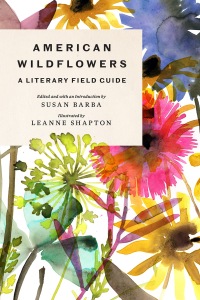 This comes out from Abrams Press in the USA on 8 November and I’ll be reviewing it for Shelf Awareness, so I’ll just give a few brief thoughts for now. Barba is a poet and senior editor for New York Review Books. She has collected pieces from a wide range of American literature, including essays, letters and early travel writings as well as poetry, which dominates.
Apart from a closing section on various/anonymous wildflowers, where particular species are named they are grouped into families, which are arranged alphabetically. The Asteraceae section is particularly strong, with poems on dandelions and sunflowers, a typically prophetic Aldo Leopold fragment about the decline of native flora, and “Asters and Goldenrod,” an extract from Robin Wall Kimmerer’s Braiding Sweetgrass (itself one of my 20 Books of Summer – review to come in the week) that I think was also excerpted in This Book Is a Plant.
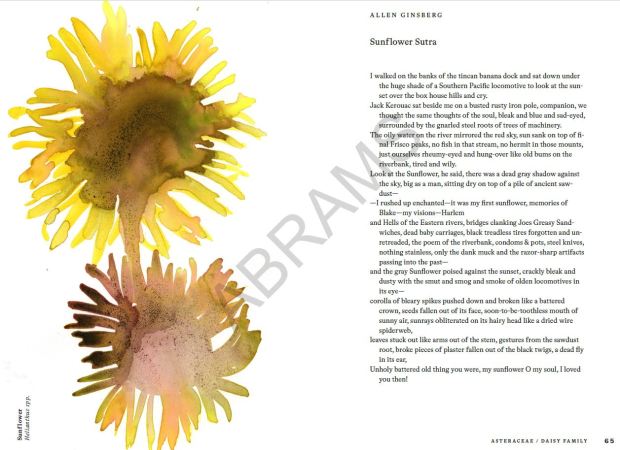
Sample two-page spread with a Leanne Shapton watercolor and part of an Allen Ginsberg poem.
In general, I engaged more with the poetry than with the prose. Barba has ensured a real variety of styles, with good representation for BIPOC. What draws it all together into a beautiful whole I wish I could see as a physical object is Leanne Shapton’s watercolor illustrations, painted from pressed flowers. “What a gift to stare at flowers—these ephemeral miracles of color and synthesis and botany,” she writes in an opening note. This would be a perfect coffee table book for any gardener or nature lover. (E-review copy)
Where the Wildflowers Grow: My Botanical Journey through Britain and Ireland by Leif Bersweden (2022)
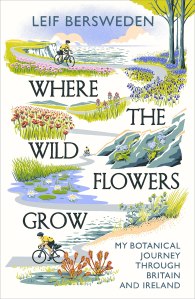 A good case of nominative determinism – the author’s name is pronounced “leaf” – and fun connections abound: during the course of his year-long odyssey, he spends time plant-hunting with Jon Dunn and Sophie Pavelle, whose books featured earlier in my flora-themed summer reading: Orchid Summer and Forget Me Not. With Dunn on Unst, Shetland, he sees not only rare flowers but close-up orcas. Like Pavelle, who he meets up with in Cornwall, he has an eye to how species will be affected by climate change and commits to doing his hunting by train and bike; there’s only so much you can see when zooming by in a car. Bersweden makes a case for spending time with plants – after all, they don’t move, so once you’ve found them you can commune in a way you can’t during, say, a fleeting mammal encounter.
He starts 2021 with a New Year Plant Hunt in central London with his mother – more is in bloom in January than ever before, at least in part due to climate warming. Even when the weather is foul on his travels, there is plenty to be seen. Everywhere he goes, he meets up with fellow experts and plant enthusiasts to marvel at bluebell woodlands or ancient pine forests, alpine or bog species. The floral circuit (documented in full on the book’s website through chapter-by-chapter photographs; there are two small sections of colour plates in the hardback) is also a chance to tour the British Isles, from Kent to Cork, coast to mountaintop.
Bersweden has been in love with plants ever since childhood; he believes they have nostalgia value for many people, and can be an easy way into appreciation of nature. “A wildflower growing from a crack in the wall is an everyday miracle.” His casual writing style and clear zeal for his subject – his author photo is of him hugging a tree, and another has such a cute caption: “Being given the opportunity to hold a Greater Bladderwort (Utricularia vulgaris) was one of the best things that’s ever happened to me!” – make this a pleasure even though it’s a bit overlong at points. (Public library)
Orwell’s Roses by Rebecca Solnit (2021)
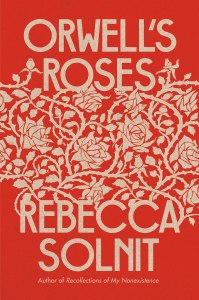 I was fascinated by the concept behind this one. “In the spring of 1936 a writer planted roses” is Solnit’s refrain; from there sprawls a book that’s somehow about everything: botany, geology, history, politics and war – as well as, of course, George Orwell’s life and works (with significant overlap with the graphic novel biography of him that I read last year). On a trip to England with a friend who is a documentary filmmaker, Solnit had the impulse to go find what might be left of Orwell’s garden. When she arrived in the Hertfordshire village of Wallington, the current owners of his home kindly showed her round. His fruit trees had long since been cut down, but the rosebushes were still going strong some 80 years later.
This goes down as a skim for me: though I read the first 30%, after that I just browsed to the end. Some side tracks lost me, e.g. Tina Modotti’s presentation of roses in her photographs; Orwell’s interest in mining, which leads Solnit to investigate how coal is formed; much history; and a week spent observing the rose-growing industry in Colombia. I most enjoyed the book when it stayed close to Orwell’s biography and writings, positing gardening as his way of grounding his ideas in the domestic and practical. “Pursuits like that can bring you back to earth from the ether and the abstractions.” I also liked – briefly, at least – thinking about the metaphorical associations of roses, and flowers in general.
If you’ve read Solnit before, you’ll know that her prose is exquisite, but I think this was the stuff of a long article rather than a full book. As it is, it’s a pretty indulgent project. (Kaggsy reviewed this recently and came to somewhat similar conclusions.) (NetGalley)
The Best Books from the First Half of 2022
Yes, it’s that time of year already! At first I thought I wouldn’t have enough 2022-released standouts to fill a post, but the more I looked through my list the more I realized that, actually, it has been a pretty good reading year. It remains to be seen, of course, how many of these will make it onto my overall best-of year list, but for now, these are my highlights. I made it up to an even 20 by including one that doesn’t release until July. Fiction is winning thus far! I give review excerpts below and link to the full text here or elsewhere.
Fiction
 Our Wives under the Sea by Julia Armfield: Miri is relieved to have her wife back when Leah returns from an extended deep-sea expedition. Something went wrong with the craft when it was too late to evacuate, though. Chapters alternate between Miri describing their new abnormal and Leah recalling the voyage. As Miri tries to tackle life admin for both of them, she feels increasingly alone. This is a sensitive study of love, grief and dependency. Armfield gives an increasingly eerie story line a solid emotional foundation.
 These Days by Lucy Caldwell: A beautiful novel set in Belfast in April 1941. We see the Second World War mostly through the eyes of the Bell family – especially daughters Audrey, engaged to be married to a young doctor, and Emma, in love with a fellow female first aider. The evocation of a time of crisis is excellent. The lack of speech marks, fluid shifting between perspectives, and alternation between past and present tense keep the story from seeming too familiar or generic. All of the female characters have hidden depths.
 Groundskeeping by Lee Cole: In Cole’s debut novel, two aspiring writers meet on a Kentucky college campus and form a romantic connection despite very different backgrounds. There are stereotypes to be overcome as Owen introduces Alma to Kentucky culture and slang. Trump’s election divides families and colleagues. The gentle satire on the pretensions of writing programs is another enjoyable element. Three-dimensional characters, vivid scenes ripe for the Netflix treatment, timely themes and touching relationships: alright!
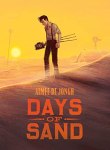 Days of Sand by Aimée de Jongh: This Great Depression-era story was inspired by the work of photographers such as Dorothea Lange. John Clark is following in his father’s footsteps as a photographer, leaving NYC for the Oklahoma panhandle. Locals are suspicious of John as an outsider, especially when they learn he is working to a checklist. Whether a cityscape or the midst of a dust storm, de Jongh’s scenes are stark and evocative. It’s rare for me to find the story and images equally powerful in a graphic novel, but that’s definitely the case here.
 Dance Move by Wendy Erskine: The 11 stories in Erskine’s second collection do just what short fiction needs to: dramatize an encounter, or a moment, that changes life forever. Her characters are ordinary, moving through the dead-end work and family friction that constitute daily existence, until something happens, or rises up in the memory, that disrupts the tedium. Erskine being from Belfast, evidence of the Troubles is never far away. Her writing is blunt and edgy, with no speech marks plus flat dialogue and slang.
 Antipodes by Holly Goddard Jones: Riveting stories of contemporary life in the American South and Midwest. Some have pandemic settings; others are gently magical. All are true to the anxieties of modern careers, marriage and parenthood. Endings elicit a gasp, particularly the audacious inconclusiveness of “Exhaust,” a tense tale of a quarreling couple driving through a blizzard. Worry over environmental crises fuels “Ark,” about a pyramid scheme for doomsday preppers. Nickolas Butler and Lorrie Moore fans will find much to admire.
 Sea of Tranquility by Emily St. John Mandel: This dazzlingly intricate novel blends historical fiction, up-to-the-minute commentary and science-fiction predictions. In 2401, the Time Institute hires Gaspery-Jacques Roberts to investigate a recurring blip in time. Fans of The Glass Hotel will recognize some characters, and those familiar with Station Eleven will find similarities in a pandemic plot that resonates with the Covid-19 experience. How does Mandel do it? One compulsively readable hit after another.
 Very Cold People by Sarah Manguso: The aphoristic style of some of Manguso’s previous books continues here as discrete paragraphs and brief vignettes build to a gloomy portrait of Ruthie’s archetypical affection-starved childhood in the fictional Massachusetts town of Waitsfield in the 1980s and 90s. The depiction of Ruthie’s narcissistic mother is especially acute. So much resonated with me. This is the stuff of girlhood – if not universally, then certainly for the (largely pre-tech) American 1990s as I experienced them.
 How High We Go in the Dark by Sequoia Nagamatsu: Just the right blend of literary fiction and science fiction. Opening in 2031 and stretching another 70 years into the future, this linked short story collection imagines how a pandemic reshapes the world and how communication and connection might continue after death. All but one story are in the first person, so they feel like personal testimonies. The whole is greater than the sum of the parts. The focus on illness and bereavement, but also on the love that survives, made this a winner.
 The Swimmers by Julie Otsuka: Otsuka’s third novel of the Japanese American experience again employs the first-person plural, as well as the second person – rarer perspectives that provide stylistic novelty. The first two chapters are set at a pool that, for the title swimmers, serves as a locus of escape and safety. On the first page we’re introduced to Alice, whose struggle with dementia becomes central. I admired Otsuka’s techniques for moving readers through the minds of the characters, alternating range with profundity and irony with sadness.
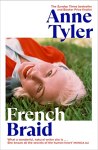 French Braid by Anne Tyler: My 17th from Tyler, and easily her best new work in 18 years. It joins my other favourites such as Dinner at the Homesick Restaurant which reveal a dysfunctional family’s quirks through a close look, in turn, at the various members. Mercy is a painter and essentially moves into her studio, but without announcing it, and her husband Robin spends the next 25+ years pretending they still share a home. Other surprises from Tyler this time: a mild sex scene and a gay character. A return to form. Brava!
Nonfiction
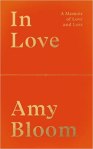 In Love by Amy Bloom: Bloom’s husband, Brian Ameche, was diagnosed with early-onset Alzheimer’s in his mid-60s, having exhibited mild cognitive impairment for several years. Brian quickly resolved to make a dignified exit while he still, mostly, had his faculties. This achieves the perfect tone, mixing black humour with teeth-gritted practicality as Bloom chronicles their relationship, the final preparations, his assisted suicide at Dignitas in Switzerland, and the aftermath. An essential, compelling read.
 Everything Is True by Roopa Farooki: Second-person, present-tense narration drops readers right into the life of a junior doctor. In February 2020, Farooki’s sister Kiron died of breast cancer. During the first 40 days of the initial UK lockdown, she continues to talk to Kiron. Grief opens the door for magic realism. There is also wry humour, wordplay, slang and cursing. A hybrid work that reads as fluidly as a novel while dramatizing real events, this is sure to appeal to people who wouldn’t normally pick up a bereavement or medical memoir.
 Body Work by Melissa Febos: A boldly feminist essay collection that explores how autobiographical writing can help one face regrets and trauma and extract meaning from the “pliable material” of memory. “In Praise of Navel Gazing” affirms the importance of women airing their stories of abuse and thereby challenging the power structures that aim to keep victims silent. “A Big Shitty Party” warns of the dangers of writing about real people. “The Return” employs religious language for the transformation writing can achieve.
 All Down Darkness Wide by Seán Hewitt: This poetic memoir about love and loss in the shadow of mental illness blends biography, queer history and raw personal experience. The book opens, unforgettably, in a Liverpool graveyard where Hewitt has assignations with anonymous men. His secret self, suppressed during teenage years in the closet, flies out to meet other ghosts: of his college boyfriend; of men lost to AIDS during his 1990s childhood; of English poet George Manley Hopkins; and of a former partner who was suicidal. (Coming out on July 12th from Penguin/Vintage (USA) and July 14th from Jonathan Cape (UK). My full review is forthcoming for Shelf Awareness.)
Poetry
 Thorpeness by Alison Brackenbury: This tenth collection features abundant imagery of animals and the seasons. Alliteration is prominent, but there is also a handful of rhymes. Family history and the perhaps-idyllic rural underpin the verse set in Lincolnshire and Gloucestershire as Brackenbury searches for ancestral graves and delivers elegies. I especially loved “Aunt Margaret’s Pudding,” a multipart poem about her grandmother’s life. There are also playful meetings between historical figures.
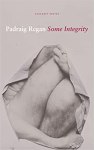 Some Integrity by Padraig Regan: The sensual poems in this debut collection are driven by curiosity, hunger and queer desire. Flora and foods are described as teasing mystery, with cheeky detail. An unusual devotion to ampersands; an erotic response to statuary; alternating between bold sexuality and masochism to the point of not even wanting to exist; a central essay on the Orlando nightclub shooting and videogames – the book kept surprising me. I loved the fertile imagery, and appreciated Regan’s exploration of a nonbinary identity.
 Love Poems in Quarantine by Sarah Ruhl: Having read Ruhl’s memoir Smile, I recognized the contours of her life and the members of her family. Cooking and laundry recur: everyday duties mark time as she tries to write and supervises virtual learning for three children. “Let this all be poetry,” she incants. Part 2 contains poems written after George Floyd’s murder, the structure mimicking the abrupt change in focus for a nation. Part 3’s haiku and tanka culminate in a series on the seasons. A welcome addition to the body of Covid-19 literature.
 Rise and Float by Brian Tierney: Although it tackles heavy subjects like grief and mental health, the collection’s candor and stunning images transform the melancholy into the sublime. Much of the verse is in the first person, building an intimate portrait of the poet and his relationships. A family history of mental illness and electroshock treatment occasions a visit to a derelict psychiatric hospital. Recurring metaphors of holes dramatize a struggle against the void. Tierney’s close attention lends beauty to bleak scenes.
 Vinegar Hill by Colm Tóibín: I didn’t realize when I started that this was Tóibín’s debut collection; so confident is his verse, I assumed he’d been publishing poetry for decades. There’s a wide range of tone, structures and topics. Bereavements and chemotherapy are part of a relatable current events background. Irish-Catholic nostalgia animates a witty sequence from “The Nun” to “Vatican II.” Come along on armchair travels. Poems are based around anecdotes or painterly observations. The line breaks are unfailingly fascinating.
What are some of the best books you’ve read so far this year?
What 2022 releases do I need to catch up on right away?
20 Books of Summer, 1–3: Hargrave, Powles & Stewart
Plants mirror minds,
Healing, harming powers
Growing green thoughts.
(First stanza of “Plants Mirror Minds” from The Facebook of the Dead by Valerie Laws)
Here are my first three selections for my flora-themed summer reading. I hope to get through more of my own books, as opposed to library books and review copies, as the months go on. Today I have one of each from fiction, nonfiction and poetry, with the settings ranging from 16th-century Alsace to late-20th-century Spain.
The Dance Tree by Kiran Millwood Hargrave (2022)
 Kiran Millwood Hargrave is one of my favourite new voices in historical fiction (she had written fiction for children and young adults before 2020’s The Mercies). Both novels hit the absolute sweet spot between the literary and women’s fiction camps, choosing a lesser-known time period and incident and filling in the background with sumptuous detail and language. Both also consider situations in which women, queer people and other cultural minorities were oppressed, and imagine characters pushing against those boundaries in affirming but authentic-feeling ways.
The setting is Strasbourg in the sweltering summer of 1518, when a dancing plague (choreomania) hit and hundreds of women engaged in frenzied public dancing, often until their feet bled or even, allegedly, until 15 per day dropped dead. Lisbet observes this all at close hand through her sister-in-law and best friend, who get caught up in the dancing. In the final trimester of pregnancy at last after the loss of many pregnancies and babies, Lisbet tends to the family beekeeping enterprise while her husband is away, but gets distracted when two musicians (brought in to accompany the dancers; an early strategy before the council cracked down), one a Turk, lodge with her and her mother-in-law. The dance tree, where she commemorates her lost children, is her refuge away from the chaos enveloping the city. She’s a naive point-of-view character who quickly has her eyes opened about different ways of living. “It takes courage, to love beyond what others deem the right boundaries.”
This is likely to attract readers of Hamnet; I was also reminded of The Sleeping Beauties, in that the author’s note discusses the possibility that the dancing plagues were an example of a mass hysteria that arose in response to religious restrictions. (Public library)
Magnolia by Nina Mingya Powles (2020)
 (Powles also kicked off my 2020 food-themed summer reading.) This came out from Nine Arches Press and a small New Zealand press two years ago but is being published in the USA by Tin House in August. I’ve reviewed it for Shelf Awareness in advance of that release. Those who are new to Powles’s work should enjoy her trademark blend of themes in this poetry collection. She’s mixed race and writes about crossing cultural and language boundaries – especially trying to express herself in Chinese and Hakka. Often, food is her way of embodying split loyalties and love for her heritage. I noted the alliteration in “Layers of silken tofu float in the shape of a lotus slowly opening under swirls of soy sauce.” Magnolia is the literal translation of “Mulan,” and that Disney movie and a few other films play a major role here, as do writers Eileen Chang and Robin Hyde. My issue with the book is that it doesn’t feel sufficiently different from her essay collections that I’ve read – the other is Small Bodies of Water – especially given that many of the poems are in prose paragraphs. [Update: I dug out my copy of Small Bodies of Water from a box and found that, indeed, one piece had felt awfully familiar for a reason: that book contains a revised version of “Falling City” (about Eileen Chang’s Shanghai apartment), which first appeared here.] (Read via Edelweiss)
A Parrot in the Pepper Tree by Chris Stewart (2002)
 It’s at least 10 years ago, probably nearer 15, that I read Driving over Lemons, the first in Stewart’s eventual trilogy about buying a remote farm in Andalusia. His books are in the Peter Mayle vein, low-key and humorous: an Englishman finds the good life abroad and tells amusing anecdotes about the locals and his own mishaps.
This sequel stood out for me a little more than the previous book, if only because I mostly read it in Spain. It’s in discrete essays, some of which look back on his earlier life. He was a founding member of Genesis and very briefly the band’s drummer; and to make some cash for the farm he used to rent himself out as a sheep shearer, including during winters in Sweden.
To start with, they were really very isolated, such that getting a telephone line put in revolutionized their lives. By this time, his first book had become something of a literary sensation, so he reflects on its composition and early reception, remembering when the Mail sent a clueless reporter out to find him. Spanish bureaucracy becomes a key element, especially when it looks like their land might be flooded by the building of a dam. Despite that vague sense of dread, this was good fun. (Public library)

May Releases: Barrera, Cornwell, Jones, Ruhl
Greetings from the English Channel! I’m putting this quick post together on an outdoor deck as we leave Plymouth harbour on the ferry to Spain. I’ve taken a seasickness pill and am wearing acupressure bracelets, and so far I’m feeling pretty well here taking in a sea breeze; fingers crossed that it will continue to be a smooth voyage.

Have a look at all the lovely May releases above. How I wish that I’d had a chance to read some of them this month! Alas, things have been so busy with our move that I have only cracked one open so far (the Shipstead), but I’m looking forward to reading the rest soon after we get back. For now, I’ll give snippets of early reviews I’ve published elsewhere: two memoirs of pregnancy and early motherhood (the one focusing on postnatal depression), a varied short story collection, and an accessible volume of poetry written during Covid lockdowns.
Linea Nigra: An Essay on Pregnancy and Earthquakes by Jazmina Barrera
(Translated from the Spanish by Christina MacSweeney)
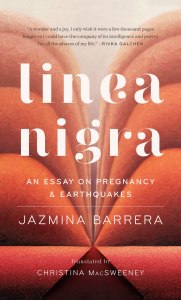 In a fragmentary work of autobiography and cultural commentary, the Mexican author investigates pregnancy as both physical reality and liminal state. The linea nigra is a stripe of dark hair down a pregnant woman’s belly. It’s a potent metaphor for the author’s matriarchal line: her grandmother was a doula; her mother is a painter. In short passages that dart between topics, Barrera muses on motherhood, monitors her health, and recounts her dreams. Her son, Silvestre, is born halfway through the book. She gives impressionistic memories of the delivery and chronicles her attempts to write while someone else watches the baby. This is both diary and philosophical appeal—for pregnancy and motherhood to become subjects for serious literature. (See my full review for Foreword.)
Birth Notes: A Memoir of Recovery by Jessica Cornwell
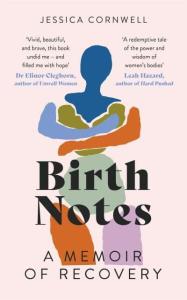 It so happens that May is Maternal Mental Health Awareness Month. Cornwell comes from a deeply literary family; the late John le Carré was her grandfather. Her memoir shimmers with visceral memories of delivering her twin sons in 2018 and the postnatal depression and infections that followed. The details, precise and haunting, twine around a historical collage of words from other writers on motherhood and mental illness, ranging from Margery Kempe to Natalia Ginzburg. Childbirth caused other traumatic experiences from her past to resurface. How to cope? For Cornwell, therapy and writing went hand in hand. This is vivid and resolute, and perfect for readers of Catherine Cho, Sinéad Gleeson and Maggie O’Farrell. (See my full review for Shiny New Books.)
With thanks to Virago for the proof copy for review.
Antipodes: Stories by Holly Goddard Jones
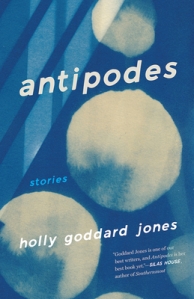 Jones’s fourth work of fiction contains 11 riveting stories of contemporary life in the American South and Midwest. Some have pandemic settings and others are gently magical; all are true to the anxieties of modern careers, marriage and parenthood. In the title story, the narrator, a harried mother and business school student in Kentucky, seeks to balance the opposing forces of her life and wonders what she might have to sacrifice. The ending elicits a gasp, as does the audacious inconclusiveness of “Exhaust,” a tense tale of a quarreling couple driving through a blizzard. Worry over environmental crises fuels “Ark,” about a pyramid scheme for doomsday preppers. Fans of Nickolas Butler and Lorrie Moore will find much to admire. (Read via Edelweiss. See my full review for Shelf Awareness.)
Love Poems in Quarantine by Sarah Ruhl
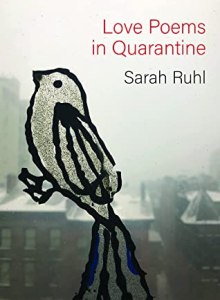 Having read Ruhl’s memoir Smile, I recognized the contours of her life and the members of her family. In early poems, cooking and laundry recur, everyday duties that mark time as she tries to write and supervises virtual learning for three children. “Let this all be poetry,” she incants. Part Two contains poems written after George Floyd’s murder, the structure mimicking how abrupt the change in focus was for a nation. Part Three moves into haiku and tanka, culminating in a series of poems reflecting on the seasons. Like Margaret Atwood’s Dearly, I would recommend this even to people who think they don’t like poetry. A welcome addition to the body of Covid-19 literature. (Read via Edelweiss. See my full review on Goodreads.)
Two favourite poems:
“Shelter”
To love a house
not because it’s perfect but because it shelters you
To love a body
not because it’s perfect but because it shelters you
“Quarantine in August, the overripe month”
I’m tired of summer. I crave fall. Luckily fall comes after summer.
And if I get tired of it all, winter will come, then spring.
Have you read anything from my tempting stack?
What other May releases can you recommend?
March Releases by Rebecca Brown, Luis Carrasco, A.J. Lees et al.
As busy as I am with house stuff, I’m endeavouring to keep up with the new releases publishers have been kind enough to send. Today I have a collection of essays on the seasons and mental health, a novella inhabiting a homeless girl’s situation, and a memoir about how skills of observation have been invaluable to a neurologist’s career. (I also mention a few other March releases that I have written about elsewhere or will be reviewing soon.)
You Tell the Stories You Need to Believe: On the four seasons, time and love, death and growing up by Rebecca Brown
 Brown has shown up twice now in my November novella reading (Excerpts from a Family Medical Dictionary in 2016 and the excellent The Gifts of the Body in 2018). I was delighted to learn from a recent Shelf Awareness newsletter that she had a new book, and its Didion-esque title intrigued me. These four essays, which were originally commissioned for The Stranger, Seattle’s alternative weekly, and appeared in print between 2014 and 2016, move methodically through the four seasons and through the weather of the heart, which doesn’t always follow nature’s cues. Depression can linger and mock by contrast the external signs of growth and happiness; it’s no wonder that spring is dubbed the “suicide season.”
The relaxed collages of experience and research blend stories from childhood and later life with references to etymology, literature, music, mythology and poetry. Spring brings to mind the Persephone legend and Vivaldi’s compositions. Summer makes her think of riding bikes on dusty roads and a pregnant dog that turned up just before a storm. Autumn has always been for falling in or out of love. Winter is hard to trudge through, but offers compensatory blessings: “You stand inside the house of your friends and feel and see and everyone is in love and alive and you get to be here, grateful, too, however long, this time, the winter lasts.”
A danger with seasonal books is that, with nostalgia tingeing everything, you end up with twee, obvious reflections. Here, the presence of grief and mental health struggles creates a balanced tone, and while the book as a whole feels a little evanescent, it’s a lovely read.
Another favorite passage:
Maybe like how in the winter it’s hard to imagine spring, I forgot there was anything else besides despair. I needed—I need—to remember the seasons change. I need to remember the dark abates, that light and life return. This is a story I need to believe.
With thanks to Chatwin Books for the e-copy for review.
Ghosts of Spring by Luis Carrasco
Carrasco’s second novella (after 2018’s El Hacho) takes an intimate journey with a young woman who sleeps rough on the streets of a city in the west of England (Cheltenham? Gloucester?). Elemental concerns guide her existence: where can she shelter for the night? Where can she store her meagre belongings during the day? Does she have enough coins to buy a cup of tea from a café, and how long can she stretch out one drink so she can stay in the warm? The creeping advance of the winter (and the holiday season) sets up an updated Christmas Carol type of scenario where the have-nots are mostly invisible to the haves but rely on their charity:
 Hidden in plain sight amongst them, in nooks and doorways and sitting with heads hanging against cold stone walls are huddled shapes, blanketed and inert, with faces of indifferent boredom. Too cold to fish for cash and pity[,] they sit with their faces wrapped in dirty scarves and stolen hats, working the empty corners of tobacco pouches and sucking cold coffee from yesterday’s cups. Ghosts of flesh, they are here and everywhere and nobody sees a thing.
With no speech marks, the narrative flows easily between dialogue and a third-person limited point of view. The protagonist, generally just called “the girl,” is friends with a group of prostitutes and tries out a night in a homeless hostel and sleeping in an allotment shed when she takes a bus to the suburbs. Carrasco is attentive to the everyday challenges she faces, such as while menstruating. We get hints of the family issues that drove her away, but also follow her into a new opportunity.
The book has an eye to her promising future but also bears in mind the worst that can happen to those who don’t escape poverty and abuse. At times underpowered, at others overwritten (as I found for my only other époque press read, What Willow Says), this succeeds as a compassionate portrait of extreme circumstances, something I always appreciate in fiction, and would make a good pairing with another story of homelessness, Kerstin Hensel’s Dance by the Canal from Peirene Press.
With thanks to époque press for the proof copy for review.
Brainspotting: Adventures in Neurology by A.J. Lees
 Dr Andrew Lees is a professor of neurology at the National Hospital in London and a world-renowned Parkinson’s disease researcher. The essays in this short autobiographical volume emphasize the importance of listening and noticing. The opening piece, in fact, is about birdwatching, a boyhood hobby that first helped him develop this observational ability. In further chapters he looks back to his medical education and early practice in London’s East End and in Paris in the 1960s and 1970s. He profiles the hospitals he has known over the last five decades, and the neurologists who paved the way for the modern science, such as Jean-Martin Charcot and François Lhermitte.
The professors whose lessons have most stuck with him are those who insisted on weaving patient histories and symptoms into a story. Lees likens the neurologist’s work to Sherlock Holmes’s deductions – even the smallest signs can mean so much. Indeed, Arthur Conan Doyle, himself a doctor, is known to have modelled Holmes on Joseph Bell, a Scottish surgeon. I particularly liked the essay “The Lost Soul of Neurology,” about science versus spirituality. As a whole, this didn’t particularly stand out for me compared to many of my other medical reads, but I’d still liken it to the works of Gavin Francis and Henry Marsh.
With thanks to Notting Hill Editions for the free copy for review.
Plus a few more March releases I’ve read recently:
Reviewed for BookBrowse:
Booth by Karen Joy Fowler
 In an epic fictional sweep from 1822 to nearly the close of the century, Fowler surveys the Booth family’s triumphs and tragedies. Short asides chronicle Lincoln’s rise in parallel. The foreshadowing is sometimes heavy-handed, and the extended timeline means there is also some skating over of long periods. Booth is low on scenes and dialogue, with Fowler conveying a lot of information through exposition. Luckily, the present-tense narration goes a long way toward making this less of a dull group biography and more of an unfolding story. I also appreciated that the Booth sisters are given major roles as point-of-view characters. The issues considered, like racial equality, political divisions and mistrust of the government, are just as important in our own day. Recommended to fans of March and Hamnet. (I also wrote a related article on the Booth family actors and Shakespeare in performance in the 19th-century USA.)
With thanks to Serpent’s Tail for the proof copy for review.
To review for BookBrowse soon: Groundskeeping by Lee Cole, one of my favourite 2022 releases so far; just the sort of incisive contemporary American novel I love. Big questions of class, family, fate and politics are bound up in a campus-set love story between a drifting manual labourer with literary ambitions and a visiting writer. (Faber)
And coming up tomorrow in my Reading Ireland Month roundup: Vinegar Hill, Colm Tóibín’s terrific debut collection of poems about current events, religion and travels. (Carcanet Press)
 Bookish Beck = Rebecca Foster. American transplant to England. Freelance proofreader and book reviewer.
