Three on a Theme for Mother’s Day: Baker, Diski and Sampson
It’s Mothering Sunday in the UK today, so, like last year, I’m featuring three very different books about mothers and motherhood: a memoir, a novel and a poetry anthology. There are complex emotions at play in the first two due to grief, abuse and disability. The poems are cheerier (thankfully) and reflect on the experience of motherhood but also of being mothered. On that last point, I’ve added my response to a relevant short story I happened to read today.
Reading My Mother Back: A memoir in childhood animal stories by Timothy C. Baker (2022)
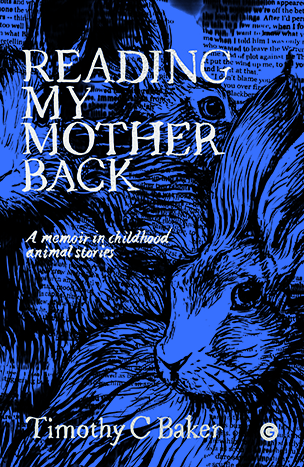 Baker is a lecturer in Scottish literature at the University of Aberdeen. His first non-academic publication is a curiously beguiling novella-length reappraisal of favourite children’s books. “To misquote Heraclitus, you cannot read the same book twice.” While he’s sheepish about including so many 19th- and early-20th-century white male authors, he can’t do otherwise as these are the texts that first taught him about death, loneliness and friendship: Charlotte’s Web, The Wind in the Willows, The Magician’s Nephew and Watership Down. (Also The Secret Garden.) Baker grew up in Maryland and Vermont, lonesome and closeted, with parents who briefly joined a cult. In his memory, his mother (who had been abused) always suffered with chronic illness and pain. In each chapter, he weaves together a discussion of a plot with stories from his early life and critical opinion on the value of rereading. It helped that I was familiar with six of the nine books Baker features (and others by Gallico, though not The Man Who Was Magic); I’d not even heard of Merle the High Flying Squirrel or The Book of the Dun Cow.
I spotted this in the Wigtown Festival Shop* on our 2023 visit to Scotland’s Book Town and could hardly believe it existed because it seemed so perfectly suited to me: I loved animal books, especially Watership Down, as a child; I’ll read any bereavement memoir going; I grew up 30 miles from Baltimore, where Baker spent his early life; he and I both had strict religious upbringings; and his mother experienced kidney failure (after eating a foxglove??), a link to my family’s history of kidney disease. There are plentiful differences, too, of course, but Baker emphasises connection. “If reading these books has taught me anything,” he concludes, “it is that all of my stories are individual, and all of them are universal. What we share is the unshareability of our grief … [but also] the joy of knowing that we have loved.” And for such a seemingly niche book (from Goldsmiths Press), I have actually found myself mentioning it to two blogger friends in recent days, so that’s proof he was right. 
[*As to how the book finally came into my possession: I added it to my wishlist and an acquaintance (a former mayor of Newbury, in fact) bought it for me for my 40th birthday. However, he forgot to bring the gift to our joint party and it took another 2+ years to extract it from him – through explicit reminders when we invited him to join us on a quiz team.]
Like Mother by Jenny Diski (1988)
I’ve enjoyed the late Jenny Diski’s travel memoirs (Skating to Antarctica and Stranger on a Train) and essays (On Trying to Keep Still). This novella was my first taste of her fiction and, while it’s dark as hell, I admired the psychological acuity and playfulness with narration. Occasional chapters introduce a dialogue between Nony and an imaginary interlocutor whose role is to listen to the story of her mother, Frances, a former dancer. That family history is the substance of the rest of the book, which is in an omniscient third person. The artificiality of the setup is blatant, though; Nony can neither think nor speak, having been born without a brain (hydranencephaly). Nony’s full name is thus Frances’s cruel joke.
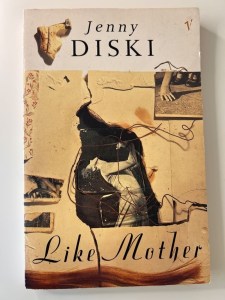
By necessity, the story stretches back to Frances’s parents, Ivy and Gerald, whose postwar optimism soon ceded to the reality of addiction, adultery and the attrition of love. A semiferal Frances escaped her unhappy home for the streets of London and engaged in sex play with Stuart on a bombsite. This went on for years. For Stuart, it blossomed into genuine love, but the numb Frances could never return his feelings and only used him. There are some really painful scenes here, such as Stuart stealing ether from the chemistry supply cupboard so she can huff herself into temporary oblivion, and a drunk Ivy molesting adolescent Frances. “Like mother, like daughter” is a bitter confirmation of inherited trauma. Nony might well be a symbolic manifestation of Frances’s desire to cultivate nothingness. To the extent that she is a literal baby – I’m really not sure – Frances does seem to love her and care for her physical needs, even as she’s grateful that the relationship will be short-lived.
Diski draws attention to the falsity of her narrative technique at the very end. It’s a disturbing yet intriguing novel that I think must be trying to make a wider point about postwar disillusionment. (Enough to make one question one’s growing antipathy towards Boomers?) I was reminded faintly of Nutshell by Ian McEwan, which is from the perspective of a fetus, and I Am Clarence by Elaine Kraf, a troubling story of a mentally ill mother and her disabled son. I have another novella plus a short story collection by Diski on the shelf, and I daresay after those I’ll have to seek out everything else she wrote. (University library) 
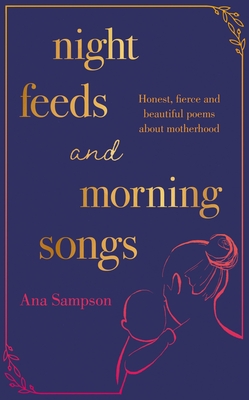
Night Feeds and Morning Songs, ed. Ana Sampson (2021)
“I crossed the border into the Republic of Motherhood
and found it a queendom, a wild queendom.”
~Liz Berry
It would have been easy to make such an anthology samey and sentimental, so kudos to Sampson for curating a solid mix of contemporary and period work. The poems are grouped into loose categories covering pregnancy, the sleepless nights of early motherhood, the power of womanly solidarity, the legacy (or absence) of one’s own mother, and the milestones of life as a child grows up and moves away. (Jackie Kay marvels that her baby boy is now a 6-foot-2 world traveller.) However, there are almost as many emotional approaches and poetic forms as there are contributors. Exhilaration meets exhaustion; guilt and grief threaten to overwhelm the good times. Sometimes the infant is addressed directly. The tone might be sombre, outraged or satirical. A few excerpts:
from “Labour Ward Prayer” by Vicky Thomas
Give us this day our daily miracle.
Exchange our offering of sweat and tears
and, most of all, of blood,
for new life, crumpled as a new leaf bud.
 from “The Visitor” by Idra Novey
…more dragon
than spaniel, more flammable
than fluid …
All wet mattress to my analysis,
he’s stayed the loudest and longest
of any houseguest
from “What My Kids Will Write about Me in Their Future Tell-All Book” by January Gill O’Neil
They will say that no was my favourite word,
More than stop, or eat, or love.
That some morning, I’d rather stay in bed,
laptop on lap, instead of making breakfast
…
They will say they have seen me naked.
Front side, back side – none of which
were my good side.
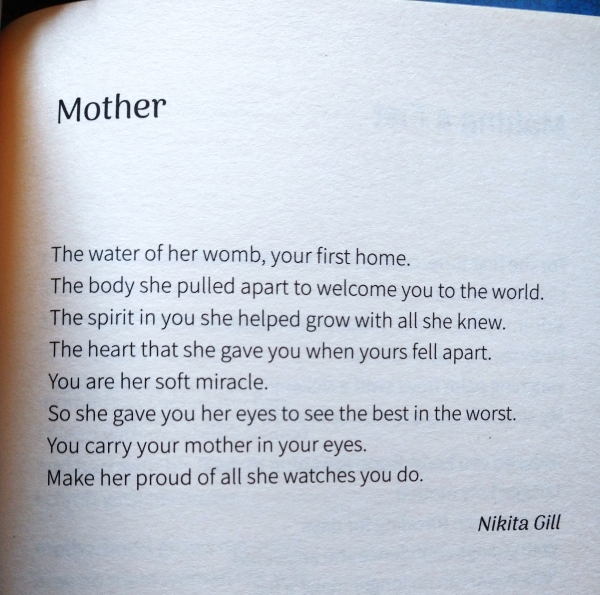
I enjoyed re-encountering work by some personal favourite poets such as Caroline Bird, though most entries were new to me. Sampson’s section introductions aren’t particularly illuminating and often reference poems that aren’t actually in the part in question. Some of the 19th-century and earlier material is quaintly twee, but I did love discovering Christina Rossetti’s “To My First Love, My Mother.” This is the poem that made me cry, though:
(Little Free Library)
And a bonus short story:
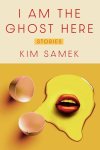 “Egg Mother” by Kim Samek (from I Am the Ghost Here): I’m two stories into Samek’s gently surreal collection. This second story combines the themes of parenting and grief prevalent above. Her openings are knockout: “At thirty-six I turn into a scrambled egg. It happens a few months after I give birth.” In therapy, the narrator discovers that she’s been repressing her grief over her mother, who died of cancer when the narrator was 13. The therapist suggests that she and her husband hold a joint ‘funeral’ for her mother and her younger self in a graveyard. But even after the ritual, she doesn’t return to herself. It’s a sobering but realistic message: some things one just doesn’t get over.
“Every story that I read becomes the story of my mother.”
~Timothy C. Baker
Last night, we saw Brooklyn expat singer-songwriter Annie Dressner (and Sean Duggan of Steady Habits) in concert at a church hall. I was mostly underwhelmed by her quirky confessional songs and little-girl voice, but a couple of songs stood out for me. One, “I Just Realized,” includes the line “And I hope that I can be just like my mother.”
Today was a more emotional day than I was expecting. I got a sweet posy from church, but having a whole service focussed on mothers and mothering was hard for me. I had to mostly switch off to get through it.
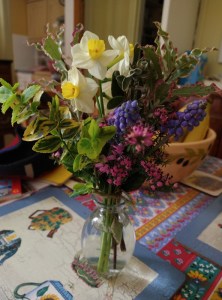
Just in my current stack, there are so many books about mothers or mothering…
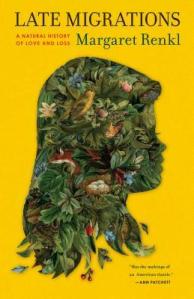 the loss of a mother (Eva Luna by Isabel Allende; The Memory of Borrowed Books by Meg Anderson; The Curious Incident of the Dog in the Night-Time by Mark Haddon; Late Migrations by Margaret Renkl; I Capture the Castle by Dodie Smith) – so common an element in novels that I have to think it’s shorthand for a character who has to pluckily rely on their own psychological resources
- mothers’ protective instinct (The Benefactors by Wendy Erskine)
- emotional distance from an unstable mother (Carrie by Stephen King; First Rain in Paradise by Gwyneth Lewis; Blonde by Joyce Carol Oates; The First Day of Spring by Nancy Tucker, which also includes the struggle to be a good mother in turn)
- mixed feelings about the inability to have a child (Mare by Emily Haworth-Booth)
- a mother’s grief at the loss of a child (Ordinary Saints by Niamh Ni Mhaoileoin)
I know it’s a subject I’ll be reading and thinking about for the rest of my life.
Eleventh Blog Anniversary (& International Women’s Day)
Bookish Beck launched 11 years ago today. I find that hard to believe as I still feel like a newbie in the blogging world compared to veterans like Annabel, Kim, Laura, Liz and Simon; imposter syndrome (Imposter Foster!) strikes again. And yet I can’t really remember what it was like before I had a blog, nor can I imagine life without one.

Pratyya Ghosh, CC BY-SA 4.0 <https://creativecommons.org/licenses/by-sa/4.0>, via Wikimedia Commons
This is my 1594th post, which means I’m maintaining an average of 2.8 posts per week. I feel like I’m posting less often these days, with most of my reviews clumping around the end of a month as I scramble to report back on library reads and finish everything I’ve started towards particular challenges.
It’s also International Women’s Day, a coincidence I would have been unaware of when I started the blog. The Women’s Prize longlist is always announced at around this time of year, with the Carol Shields Prize longlist to follow on Tuesday. I’ve read three of the Women’s Prize nominees (Castillo, Hutchinson and King) and skimmed another (Choi). I’m currently reading Wendy Erskine’s The Benefactors, which is also just right for Reading Ireland Month.
To mark the day, I’ll reproduce my review of one of the best books I’ve read by a woman recently. It’s one of my early favourites for the year.
Brawler by Lauren Groff
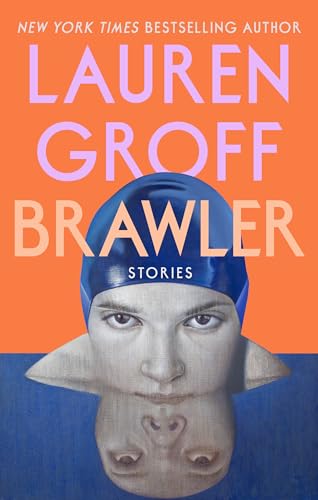 The nine short stories in Lauren Groff’s exceptional eighth book profile women in states of desperation and probe legacies of loss and violence.
Most of the stories employ third-person narration and originally appeared in the New Yorker. Often, inherited trauma binds mothers and daughters. The title character is high school swimmer Sara, who shoplifts and fights in frustration at her mother’s incurable illness. In “Under the Wave,” set after a natural disaster, a woman adopts an orphan as a replacement for her dead child—despite their racial differences. The title of “The Wind” symbolizes women’s fear and rage after an attempted escape from an abusive patriarch. Accidental harm and imagery of the Madonna and Child link the three mother–daughter pairs in “Annunciation.”
Themes of midlife reinvention and latent queerness (cf. Matrix) recur. Bisexuality is a secret between a dying woman and her friend in “Birdie.” In “Between the Shadow and the Soul,” a woman finds new hobbies following early retirement. Although she flirts with her female gardening teacher, she realizes her desire is not to leave her husband but to “brush up against the dazzling future again.”
“Such Small Islands” is a startling Jamesian fable; “To Sunland” a 1950s Southern gothic black comedy that would do Flannery O’Connor proud; and the masterful “What’s the Time, Mr. Wolf?” a suspenseful, novella-length examination of privilege and obsession.
The prose is stellar and the endings breathtaking. Groff is a first-rate novelist, but her short stories are truly peerless.
(Reposted with permission from Shelf Awareness.)
Thanks to all who support my blog by reading and commenting. You’re stars!
Miscellaneous for #ReadIndies: Grenville & Holman-Hunt, Trans History & Travel Poetry, Kathleen Jamie & Kristen Zory King
Squeaking in some more reviews on the last day of a challenge, as is my wont. Today I have mini-responses to a wide selection: a graphic novel companion to LGBTQ history, an exposé that will have you checking the ingredients lists on all your toiletries and other household cleaning products, a memoir of an eccentric Edwardian childhood, poems about modes of travel and the states of mind they produce, superb nature essays blending personal and environmental writing, and a mini collection of flash fiction about young women.
Trans History: From Ancient Times to the Present Day by Alex L. Combs and Andrew Eakett (2025)
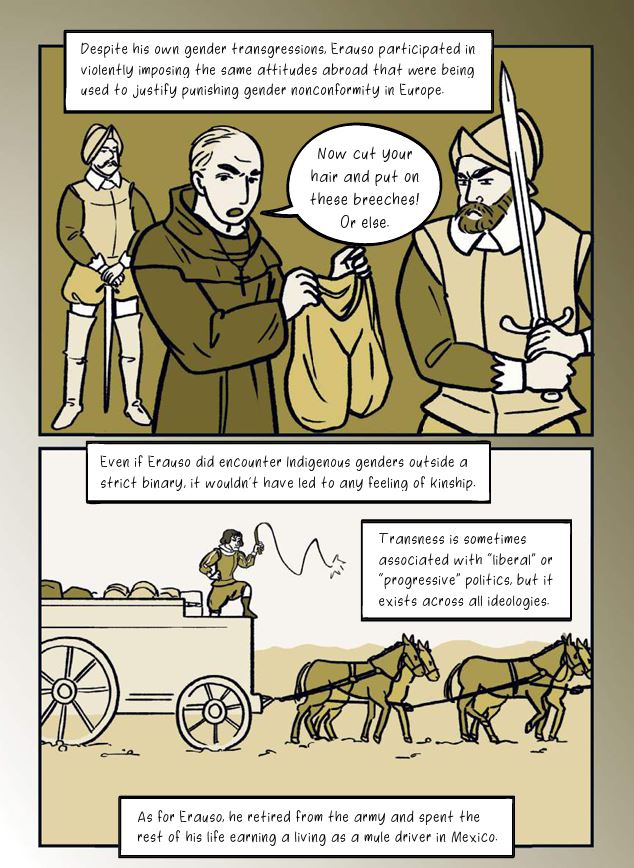
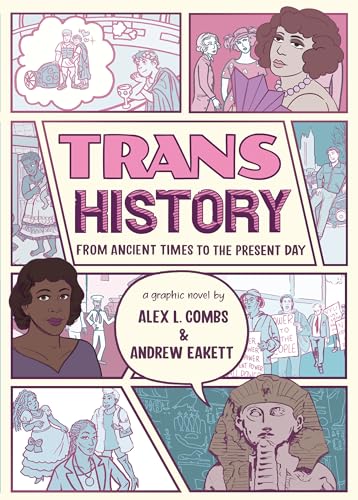 Queer people of all varieties have always been with us; they just might have understood their experience or talked about it in different terms. So while Combs and Eakett are careful not to apply labels retrospectively, they feature a plethora of people who lived as a different gender to that assigned at birth. Apart from a few familiar names like Lili Elbe and Marsha P. Johnson, most were new to me. For every heartening story of an emperor, monk or explorer who managed to live out their true identity in peace, there are three distressing ones of those forced to conform. Many Indigenous cultures held a special place for gender-nonconforming individuals; colonizers would have seen this as evidence of desperate need of civilizing. Even doctors who were willing to help with early medical transitions retained primitive ideas about gender and its connection to genitals. The structure is chronological, with a single colour per chapter. Panes reenact scenes and feature talking heads explaining historical developments and critical theory. A final section is devoted to modern-day heroes campaigning for trans rights and seeking to preserve an archive of queer history. This was a little didactic, but ideal for teens, I think, and certainly not just one for gender studies students.
Readalike: Meg-John Barker’s Sexuality: A Graphic Guide
 (Read via Edelweiss) [Candlewick Press]
The Case Against Fragrance by Kate Grenville (2017)
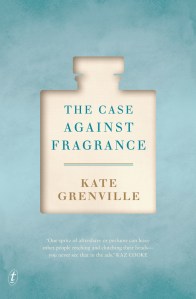 File this with other surprising nonfiction books by well-known novelists. In 2015, Grenville started struggling while on a book tour: everything from a taxi’s air freshener and a hotel’s cleaning products to a fellow passenger’s perfume was giving her headaches. She felt like a diva for stipulating she couldn’t be around fragrances, but as she started looking into it she realized she wasn’t alone. I thought this was just going to be about perfume, but it covers all fragranced products, which can list “parfum” on their ingredients without specifying what that is – trade secrets. The problem is, fragrances contain any of thousands of synthetic chemicals, most of which have never been tested and thus are unregulated. Even those found to be carcinogens or endocrine disruptors in rodent studies might be approved for humans because it’s not taken into account how these products are actually used. Prolonged or repeat contact has cumulative effects. The synthetic musks in toiletries and laundry detergents are particularly bad, acting as estrogen mimics and likely associated with prostate and breast cancer. I tend to buy whatever’s on offer in Boots, but as soon as my Herbal Essences bottle is empty I’m going back to Faith in Nature (look for plant extracts). The science at the core of the book is a little repetitive, but eased by the social chapters to either side, and you can tell from the footnotes that Grenville really did her research.
Readalike: Chris van Tulleken’s Ultra-Processed People
(Secondhand – gift from my wish list) [Text Publishing]
My Grandmothers and I by Diana Holman-Hunt (1960)
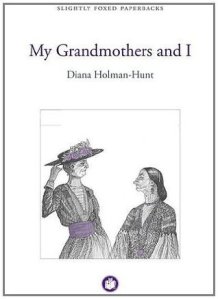 The author was the granddaughter of Pre-Raphaelite painter William Holman Hunt (The Light of the World et al.). While her father was away in India, she was shunted between two homes: Grandmother and Grandfather Freeman’s Sussex estate, and the mausoleum-cum-gallery her paternal grandmother, “Grand,” maintained in Kensington. The grandparents have very different ideas about the sorts of foodstuffs and activities that are suitable for little girls. Both households have servants, but Grand only has the one helper, Helen. Grand probably has a lot of money tied up in property and paintings but lives like a penniless widow. Grand encourages abstemious habits – “Don’t be ruled by Brother Ass, he’s only your body and a nuisance” – and believes in boiled milk and margarine. The single egg she has Helen serve Diana in the morning often smells off. “Food is only important as fuel; whether we like it or not is quite immaterial,” Grand insists. Diana might more naturally gravitate to the pleasures of the Freeman residence, but when it comes time to give a tour of the Holman Hunt oeuvre, she does so with pride. There are some funny moments, such as Diana asking where babies come from after one of the Freemans’ maids gives birth, but this felt so exaggerated and fictionalized – how could she possibly remember details and conversations at the distance of several decades? – that I lost interest by the midpoint.
Readalike: Gwen Raverat’s Period Piece
 (Secondhand – Community Furniture Project) [Slightly Foxed]
In Transit: Poems of Travel, ed. Sarah Jackson and Tim Youngs (2018)
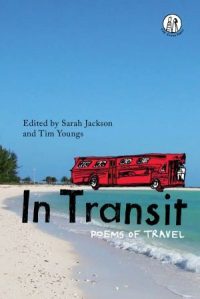 Some methods of transport are just more romantic than others. The editors’ introduction notes that “Trains were by far the most popular … followed by aeroplanes and then boats.” Walks and car journeys were surprisingly scarce, they observed, though there are a couple of poems about wandering in New York City. Often, the language is of maps, airports, passports and long flights; of trading one place for another as exile, expatriate or returnee. The collection circuits the globe: China, the Middle East, Greece, Scandinavia, the bayous of the American South. France and Berlin show up more than once. The Emma Press anthologies vary and this one had fewer standout entries than average. However, a few favourites were Nancy Campbell’s “Reading the Water,” about a boy launching out to sea in a kayak; Simon Williams’s “Aboard the Grey Ghost,” about watching for dolphins on a wartime voyage from England to the USA; and Vicky Sparrow’s “Dual Gauge,” which follows a train of thought – about humans as objects moving, perhaps towards death – during a train ride.
(New purchase from publisher) [The Emma Press]
Findings by Kathleen Jamie (2005)
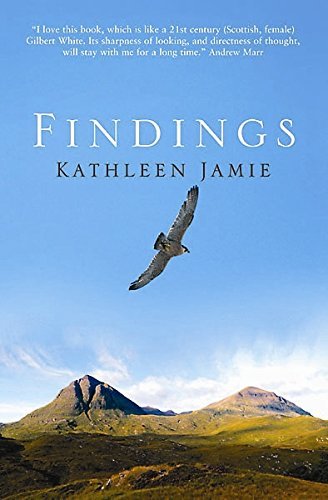 As I found when I reread Sightlines in 2022, Jamie’s topics couldn’t be better suited to my interests: Scottish islands, seabirds, medical history, and the meaning we derive from mortality. She visits the Orkney Islands just before the winter solstice, which draws a faithful few to the tomb of Maes Howe. From her attic room in Fife, she watches peregrine falcons on a cliff face. A gannet’s skull is her prized souvenir from a boat tour to an uninhabited Hebridean island. Vigilance pays off when she hears, then sees, corncrake on the Isle of Coll. Although she has a penchant for empty places, she also writes about cityscapes and hospitals. “Skylines” looks out over Edinburgh, also the setting for “Surgeons’ Hall,” about the pathology museum on the Royal College of Surgeons campus (my 2018 visit). In “Fever” her husband has a scary bout of pneumonia. Jamie is one of our wisest writers on nature and human culture. She asks whether any creatures are truly wild given the pervasiveness of human influence. Even as she seeks out the ancient, she knows we are all ephemeral. “Sabbath” is the best single essay, combining a visit to Lewis with her worry for her mother, who’s had a stroke, and her grandmother, who is to move into a care home. She explores the island “relishing the movement of my body, its own small continuing strength. It wouldn’t last forever – that was the truth of it – but today I could cycle along a road, to see where it led.”
(University library) [Sort Of Books]
My rating in 2012:
My rating now: 
Ladies, Ladies, Ladies by Kristen Zory King (2025)
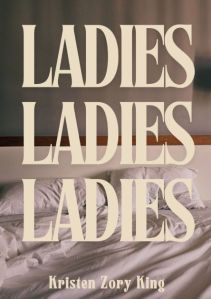 I’d never encountered “chapbook” being used for prose rather than poetry, but it’s an apt term for this 61-page paperback containing 18 stories. It’s remarkable how much King can pack into just a few pages: a voice, a character, a setting and situation, an incident, a salient backstory, and some kind of epiphany or resolution. Fifteen of the pieces focus on one named character, with another three featuring a set (“Ladies,” hence the title). Laura-Jean wonders whether it was a mistake to tell her ex’s mother what she really thinks about him in a Christmas card. A love of ice cream connects Margot’s past and present. A painting in a museum convinces Paige to reconnect with her estranged sister. Alice is sure she sees her double wandering around, and Mary contemplates stealing other people’s cats. The women are moved by rage or lust; stymied by loneliness or nostalgia. Is salvation to be found in scripture or poetry? Each story is distinctive, with no words wasted. I’ll look out for future work by King.
(Duplicate copy passed on by Marcie – thank you!) [Stanchion Books]
Which of these do you fancy reading?
Six more indie publishers spotlighted, for a total of 19 books and 18 publishers this month – job done!
Also covered:
Ansell, Farrier, Febos, Hoffman, Orlean, Stacey
Chevillard, Hopkins & Bateman, McGrath, Richardson
Victorian-Themed Novels by Annie Elliot and Livi Michael
There are plenty more indie books that I’m in the middle of, or picked out but didn’t get to in February. As much as possible, I’ll continue reading (indie) books from my shelves this year.
Three on a Theme (Valentine’s Day): “Love” Books by Amy Bloom, George Mackay Brown & Hilary Mantel
Every year I say it: I’m really not a Valentine’s Day person and yet it’s become a tradition to put together a themed post featuring one or more books with “Love” or “Heart” in the title. This is the tenth year in a row, in fact – after 2017, 2018, 2019, 2020, 2021, 2022, 2023, 2024 and 2025. As you might expect, none of the three below contains a straightforward love story. The relationships portrayed tend to be unequal, creepy or doomed, but the solid character work and use of setting and voice was enough to keep me engaged with all of the books.
Love Invents Us by Amy Bloom (1997)
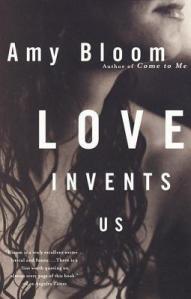 I’ve found Bloom’s short stories more successful than her novels. This is something of a halfway house: linked short stories (one of which was previously published in Come to Me; another that gives the title line to her 2000 collection A Blind Man Can See How Much I Love You) about Elizabeth Taube. When we first meet her on Long Island in the 1960s, she’s a rebellious and sexually precocious Jewish girl; by the time we’ve journeyed through several decades of vignettes, she’s a flighty and psychologically scarred single mother. Stories of her Lolita-esque attractiveness to grown salesmen and teachers, her shoplifting, her casual work for elderly African American Mrs. Hill, and her great love for Horace, nicknamed Huddie, a Black basketball player, are in the first person. The longer second part – about the aftermath of her physical affair with Huddie and her ongoing emotional entanglement with her English teacher, Max Stone – is in the third person yet feels more honest. Liz seems like bad news for everyone she meets. Bloom shows us some of the reasons for what she does, but I still couldn’t absolve her protagonist. I’d also reverse the title: We Invent Love. Liz is responsible for irrevocably altering two lives besides her own based on what she needs to feel secure. This is very much Lorrie Moore territory, but Moore leaves less of a bitter taste. (Secondhand – Community Furniture Project)
A Calendar of Love and Other Stories by George Mackay Brown (1967)
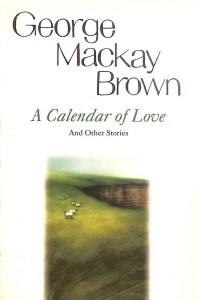 The title story opens a collection steeped in the landscape and history of Orkney. Each month we check in with three characters: Jean, who lives with her ailing father at the pub they run; and her two very different suitors, pious Peter and drunken Thorfinn. When she gives birth in December, you have to page back to see that she had encounters with both men in March. Some are playful in this vein or resemble folk tales: a boy playing hooky from school, a distant cousin so hapless as to father three bairns in the same household, and a rundown of the grades of whisky available on the islands. Others with medieval time markers are overwhelmingly bleak, especially “Witch,” about a woman’s trial and execution – and one of two stories set out like a play for voices. I quite liked the flash fiction “The Seller of Silk Shirts,” about a young Sikh man who arrives on the islands, and “The Story of Jorfel Hayforks,” in which a Norwegian man sails to find the man who impregnated his sister and keeps losing a crewman at each stop through improbable accidents. This is an atmospheric book I would have liked to read on location, but few of the individual stories stand out. (Secondhand – Community Furniture Project, Newbury)
An Experiment in Love by Hilary Mantel (1995)
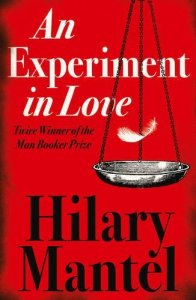 Mantel is best remembered for the Wolf Hall trilogy, but her early work includes a number of concise, sharp novels about growing up in the north of England. Carmel McBain attends a Catholic school in Manchester in the 1960s before leaving to study law at the University of London in 1970. In lockstep with her are a couple of friends, including Karina, who is of indeterminate Eastern European extraction and whose tragic Holocaust family history, added to her enduring poverty, always made her an object of pity for Carmel’s mother. But Karina as depicted by Carmel is haughty, even manipulative, and over the years their relationship swings between care and competition. As university students they live on the same corridor and have diverging experiences of schoolwork, romance, and food. “Now, I would not want you to think that this is a story about anorexia,” Carmel says early on, and indeed, she presents her condition as more like forgetting to eat. But then you recall tiny moments from her past when teachers and her mother shamed her for eating, and it’s clear a seed was sown. Carmel and her friends also deal with the results of the new-ish free love era. This is dark but funny, too, with Carmel likening roast parsnips to “ogres’ penises.” Further proof, along with Every Day Is Mother’s Day, that it’s well worth exploring authors’ back catalogue. (Public library)
Plus a DNF:
 Unexpected Lessons in Love by Bernardine Bishop (2013): I loved Bishop’s The Street, and this posthumous novel initially drew me in with its medical detail (two friends who both had stoma operations) and the exploration of different forms of love – romantic, parental, grandparental – before starting to feel obvious (two adoptions, one historical and one recent), maudlin and overlong. With some skimming, I made it to page 120. (Secondhand – Awesomebooks.com)
Other relevant reading on the go:
I would have tried spinning this one into another thematic trio, but ran out of time…
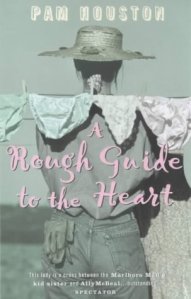 A Rough Guide to the Heart by Pam Houston (1999): A mix of personal essays and short travel pieces. The material about her dysfunctional early family life, her chaotic dating, and her thrill-seeking adventures in the wilderness is reminiscent of the highly autobiographical Waltzing the Cat. Amusingly, this has a previous price label from Richard Booth’s Bookshop in Hay-on-Wye, where it was incorrectly classed as Romance Fiction – one could be excused the mistake based on the title and cover! (Secondhand – Community Furniture Project)
And three books about marriage…
 The Honesty Box by Lucy Brazier – A pleasant year’s diary of rural living and adjusting to her husband’s new diagnosis of neurodivergence.
- Strangers by Belle Burden – A high-profile memoir about her husband’s strange and marriage-ending behaviour (his affair was only part of it) during the 2020 lockdown.
- Mrs. Bridge by Evan S. Connell – For Literary Wives Club in March. I’m in the early pages but it seems comparable to Richard Yates.
Most Anticipated Books of 2026
Later than intended, but here we are. I’ve narrowed it down to the 25 books I’m most looking forward to in January–September, though no doubt I’ll have heard of many more unmissable titles before that time is up. My list is dominated by fiction, which I tend to find out about earlier. Also on my radar are novels by Sharon Bala, Freya Bromley, Mary Costello, Louise Kennedy, Ben Lerner, Paula McLain, Liz Nugent and Tom Perrotta; short stories by Jess Gibson (Margaret Atwood’s daughter); and nonfiction from Margaret Drabble, Cal Flyn, Siri Hustvedt and Anne Lamott.
In release date order, with UK publication info given first if available. The blurbs are adapted from Goodreads. I’ve taken the liberty of using whichever cover I prefer.
Fiction
 Departure(s) by Julian Barnes [20 Jan., Vintage (Penguin) / Knopf]: (Currently reading) I get more out of rereading Barnes’s classics than reading his latest stuff, but I’ll still attempt anything he publishes. He’s 80 and calls this his last book. So far, it’s heavily about memory. “Julian played matchmaker to Stephen and Jean, friends he met at university in the 1960s; as the third wheel, he was deeply invested in the success of their love”. Sounds way too similar to 1991’s Talking It Over, and the early pages have been tedious. (Review copy from publisher)
 Half His Age by Jennette McCurdy [20 Jan., Fourth Estate / Ballantine]: McCurdy’s memoir, I’m Glad My Mom Died, was stranger than fiction. I was so impressed by her recreation of her childhood perspective on her dysfunctional Mormon/hoarding/child-actor/cancer survivor family that I have no doubt she’ll do justice to this reverse-Lolita scenario about a 17-year-old who’s in love with her schlubby creative writing teacher. (Library copy on order)
 Our Better Natures by Sophie Ward [5 Feb., Corsair]: I loved Ward’s Booker-longlisted Love and Other Thought Experiments (though the follow-up, The Schoolhouse, was a letdown). “Amid the chaos and political upheaval of 1970s America, three very different women must accept the world as it is, or act to change it. Phyllis Patterson is a housewife in White Plains, Illinois. … Andrea Dworkin is an activist in Amsterdam. … Muriel Rukeyser is a poet in New York.” (Library copy on order)
 Brawler: Stories by Lauren Groff [Riverhead, Feb. 24]: (Currently reading) Controversial opinion: Short stories are where Groff really shines. Three-quarters in, this collection is just as impressive as Delicate Edible Birds or Florida. “Ranging from the 1950s to the present day and moving across age, class, and region (New England to Florida to California) these nine stories reflect and expand upon a shared the ceaseless battle between humans’ dark and light angels.” (For Shelf Awareness review) (Edelweiss download)
 Kin by Tayari Jones [24 Feb., Oneworld / Knopf]: I’m a big fan of Leaving Atlanta and An American Marriage. This sounds like Brit Bennett meets Toni Morrison. “Vernice and Annie, two motherless daughters raised in Honeysuckle, Louisiana, have been best friends and neighbors since earliest childhood, but are fated to live starkly different lives. … A novel about mothers and daughters, about friendship and sisterhood, and the complexities of being a woman in the American South”. (Edelweiss download)
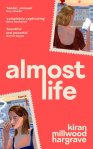 Almost Life by Kiran Millwood Hargrave [12 March, Picador / March 24, S&S/Summit Books]: There have often been queer undertones in Hargrave’s work, but this David Nicholls-esque plot sounds like her most overt. “Erica and Laure meet on the steps of the Sacré-Cœur in Paris, 1978. … The moment the two women meet the spark is undeniable. But their encounter turns into far more than a summer of love. It is the beginning of a relationship that will define their lives and every decision they have yet to make.” (Edelweiss download)
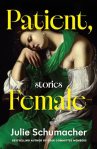 Patient, Female: Stories by Julie Schumacher [May 5, Milkweed Editions]: I found out about this via a webinar with Milkweed and a couple of other U.S. indie publishers. I loved Schumacher’s Dear Committee Members. “[T]his irreverent collection … balances sorrow against laughter. … Each protagonist—ranging from girlhood to senescence—receives her own indelible voice as she navigates social blunders, generational misunderstandings, and the absurdity of the human experience.” The publicist likened the tone to Meg Wolitzer.
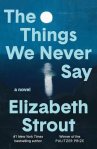 The Things We Never Say by Elizabeth Strout [7 May, Viking (Penguin) / May 5, Random House]: Hurrah for moving on from Lucy Barton at last! “Artie Dam is living a double life. He spends his days teaching history to eleventh graders … and, on weekends, takes his sailboat out on the beautiful Massachusetts Bay. … [O]ne day, Artie learns that life has been keeping a secret from him, one that threatens to upend his entire world. … [This] takes one man’s fears and loneliness and makes them universal.”
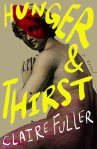 Hunger and Thirst by Claire Fuller [7 May, Penguin / June 2, Tin House]: I’ve read everything of Fuller’s and hope this will reverse the worsening trend of her novels, though true crime is overdone. “1987: After a childhood trauma and years in and out of the care system, sixteen-year-old Ursula … is invited to join a squat at The Underwood. … Thirty-six years later, Ursula is a renowned, reclusive sculptor living under a pseudonym in London when her identity is exposed by true-crime documentary-maker.” (Edelweiss download)
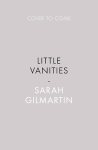 Little Vanities by Sarah Gilmartin [21 May, ONE (Pushkin)]: Gilmartin’s Service was great. “Dylan, Stevie and Ben have been inseparable since their days at Trinity, when everything seemed possible. … Two decades on, … Dylan, once a rugby star, is stranded on the sofa, cared for by his wife Rachel. Across town, Stevie and Ben’s relationship has settled into weary routine. Then, after countless auditions, Ben lands a role in Pinter’s Betrayal. As rehearsals unfold, the play’s shifting allegiances seep into reality, reviving old jealousies and awakening sudden longings.”
 Said the Dead by Doireann Ní Ghríofa [21 May, Faber / Sept. 22, Farrar, Straus and Giroux]: A Ghost in the Throat was brilliant and this sounds right up my street. “In the city of Cork, a derelict Victorian mental hospital is being converted into modern apartments. One passerby has always flinched as she passes the place. Had her birth occurred in another decade, she too might have lived within those walls. Now, … she finds herself drawn into an irresistible river of forgotten voices”.
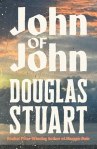 John of John by Douglas Stuart [21 May, Picador / May 5, Grove Press]: I DNFed Shuggie Bain and haven’t tried Stuart since, but the Outer Hebrides setting piqued my attention. “[W]ith little to show for his art school education, John-Calum Macleod takes the ferry back home to the island of Harris [and] begrudgingly resumes his old life, stuck between the two poles of his childhood: his father John, a sheep farmer, tweed weaver, and pillar of their local Presbyterian church, and his maternal grandmother Ella, a profanity-loving Glaswegian”. (For early Shelf Awareness review) (Edelweiss download)
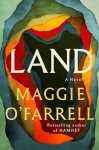 Land by Maggie O’Farrell [2 June, Tinder Press / Knopf]: I haven’t fully loved O’Farrell’s shift into historical fiction, but I’m still willing to give this a go. “On a windswept peninsula stretching out into the Atlantic, Tomás and his reluctant son, Liam [age 10], are working for the great Ordnance Survey project to map the whole of Ireland. The year is 1865, and in a country not long since ravaged and emptied by the Great Hunger, the task is not an easy one.” (Edelweiss download)
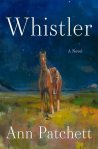 Whistler by Ann Patchett [2 June, Bloomsbury / Harper]: Patchett is hella reliable. “When Daphne Fuller and her husband Jonathan visit the Metropolitan Museum of Art, they notice an older, white-haired gentleman following them. The man turns out to be Eddie Triplett, her former stepfather, who had been married to her mother for a little more than year when Daphne was nine. … Meeting again, time falls away; … [in a story of] adults looking back over the choices they made, and the choices that were made for them.” (Edelweiss download)
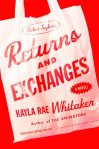 Returns and Exchanges by Kayla Rae Whitaker [2 June, Scribe / May 19, Random House]: Whitaker’s The Animators is one of my favourite novels that hardly anyone else has ever heard of. “A sweeping novel of one [discount department store-owning] Kentucky family’s rise and fall throughout the 1980s—a tragicomic tour de force about love and marriage, parents and [their four] children, and the perils of mixing family with business”. (Edelweiss download)
 The Great Wherever by Shannon Sanders [9 July, Viking (Penguin) / July 7, Henry Holt]: Sanders’s linked story collection Company left me keen to follow her career. Aubrey Lamb, 32, is “grieving the recent loss of her father and the end of a relationship.” She leaves Washington, DC for her Black family’s ancestral Tennessee farm. “But the land proves to be a burdensome inheritance … [and] the ghosts of her ancestors interject with their own exasperated, gossipy commentary on the flaws and foibles of relatives living and dead”. (Edelweiss download)
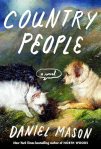 Country People by Daniel Mason [14 July, John Murray / July 7, Random House]: It doesn’t seem long enough since North Woods for there to be another Mason novel, but never mind. “Miles Krzelewski is … twelve years late with his PhD on Russian folktales … [W]hen his wife Kate accepts a visiting professorship at a prestigious college in the far away forests of Vermont, he decides that this will be his year to finally move forward with his life. … [A] luminous exploration of marriage and parenthood, the nature of belief and the power of stories, and the ways in which we find connection in an increasingly fragmented world.”
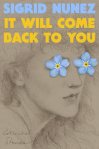 It Will Come Back to You: Collected Stories by Sigrid Nunez [14 July, Virago / Riverhead]: Nunez is one of my favourite authors but I never knew she’d written short stories. The blurb reveals very little about them! “Carefully selected from three decades of work … Moving from the momentous to the mundane, Nunez maintains her irrepressible humor, bite, and insight, her expert balance between intimacy and universality, gravity and levity, all while entertainingly probing the philosophical questions we have come to expect, such as: How can we withstand the passage of time? Is memory the greatest fiction?” (Edelweiss download)
 Exit Party by Emily St. John Mandel [17 Sept., Picador / Sept. 15, Knopf]: The synopsis sounds a bit meh, but in my eyes Mandel can do no wrong. “2031. America is at war with itself, but for the first time in weeks there is some good news: the Republic of California has been declared, the curfew in Los Angeles is lifted, and everyone in the city is going to a party. Ari, newly released from prison, arrives with her friend Gloria … Years later, living a different life in Paris, Ari remains haunted by that night.”
The Housekeeper by Rose Tremain [17 Sept., Vintage (Penguin); no cover image yet]: “Set in 1930s England and fictionalises the inspiration behind Daphne du Maurier’s famous novel, Rebecca.” Strangely, this started life as a short story (in The American Lover), then become a screenplay authored by Tremain (the film is in production and stars Uma Thurman and Anthony Hopkins), and is now being expanded into a novel. Tremain is 82 and a survivor of major cancer; I do wonder if this is the last book we can expect from her.
Nonfiction
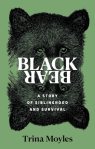 Black Bear: A Story of Siblinghood and Survival by Trina Moyles [Jan. 6, Pegasus Books]: Out now! “When Trina Moyles was five years old, her father … brought home an orphaned black bear cub for a night before sending it to the Calgary Zoo. … After years of working for human rights organizations, Trina returned to northern Alberta for a job as a fire tower lookout, while [her brother] Brendan worked in the oil sands … Over four summers, Trina begins to move beyond fear and observe the extraordinary essence of the maligned black bear”. (For BookBrowse review) (Review e-copy)
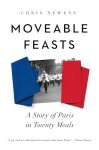 Moveable Feasts: A Story of Paris in Twenty Meals by Chris Newens [Feb. 3, Pegasus Books; came out in the UK in July 2025 but somehow I missed it!]: I’m a sucker for foodie books and Paris books. A “long-time resident of the historic slaughterhouse quartier Villette takes us on a delightful gastronomic journey around Paris … From Congolese catfish in the 18th to Middle Eastern falafels in the 4th, to the charcuterie served at the libertine nightclubs of Pigalle in the 9th, Newens lifts the lid on the city’s ever-changing, defining, and irresistible food culture.” (Edelweiss download)
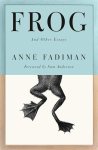 Frog: And Other Essays by Anne Fadiman [Feb. 10, Farrar, Straus and Giroux]: Fadiman publishes rarely, and it can be difficult to get hold of her books, but they are always worth it. “Ranging in subject matter from her deceased frog, to archaic printer technology, to the fraught relationship between Samuel Taylor Coleridge and his son Hartley, these essays unlock a whole world—one overflowing with mundanity and oddity—through sly observation and brilliant wit.”
 The Beginning Comes after the End: Notes on a World of Change by Rebecca Solnit [March 3, Haymarket Books]: A sequel to Hope in the Dark. Hope is a critically endangered species these days, but Solnit has her eyes open. “While the white nationalist and authoritarian backlash drives individualism and isolation, this new world embraces antiracism, feminism, a more expansive understanding of gender, environmental thinking, scientific breakthroughs, and Indigenous and non-Western ideas, pointing toward a more interconnected, relational world.” (Edelweiss download)
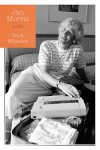 Jan Morris: A Life by Sara Wheeler [7 April, Faber / April 14, Harper]: I didn’t get on with the mammoth biography Paul Clements published in 2022 – it was dry and conventional; entirely unfitting for Morris – but hope for better things from a fellow female travel writer. “Wheeler uncovers the complexity of this twentieth-century icon … Drawing on unprecedented access to Morris’s papers as well as interviews with family, friends and colleagues, Wheeler assembles a captivating … story of longing, traveling and never reaching home.” (Edelweiss download)
Others’ lists whence a few of my ideas came!
What catches your eye here? What other 2026 titles do I need to know about?
Best Books of 2025
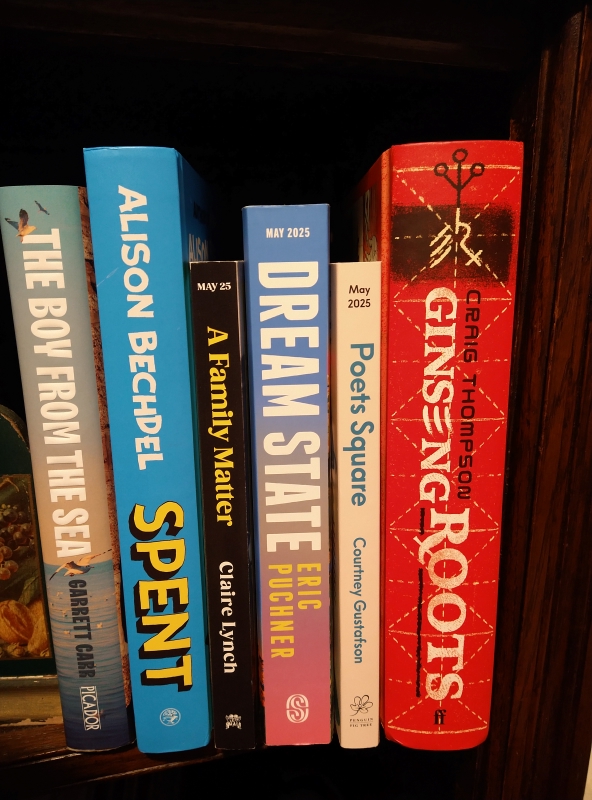
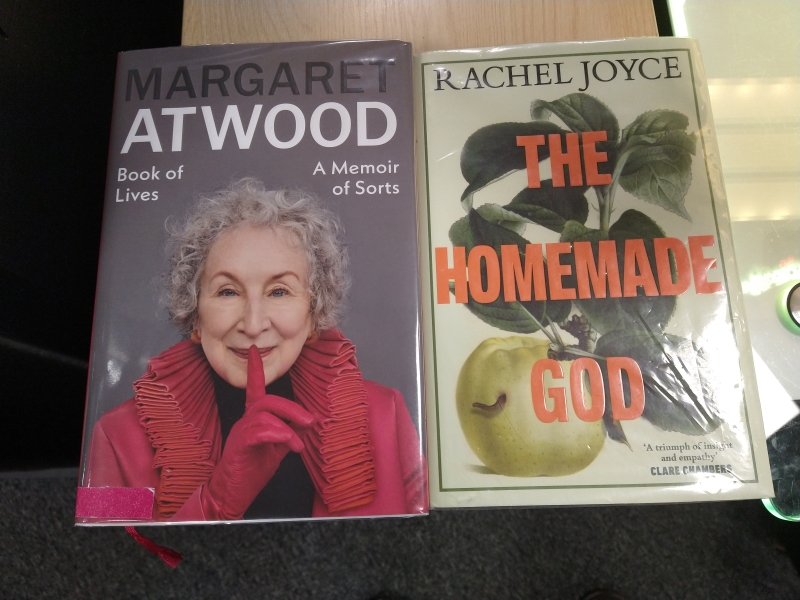
Without further ado, I present my 15 favourite releases from 2025. (With the 15 runners-up I chose yesterday, these represent about the top 9.5% of my current-year reading.) Pictured below are the ones I read in print; all the others were e-copies or library books I couldn’t get my hands on for a photo shoot. Links are to my full reviews where available.
Fiction
 Spent: A Comic Novel by Alison Bechdel: Alison has writer’s block and is consumed with anxiety about the state of the world. “Who can draw when the world is burning?” Then she has an idea for a book – or a reality TV series – called $UM to wean people off of capitalism. That creative journey is mirrored here. Through Alison’s ageing hippie friends and their kids, Bechdel showcases alternative ways of living. Even the throwaway phrases are hilarious. It’s a gleeful and zeitgeist-y satire, yet draws to a touching close. So great, I read it twice.
 The Boy from the Sea by Garrett Carr: I was entranced by this story of an Irish family in the 1970s–80s: Ambrose, a fisherman left behind by technology; his wife Christine, walked all over by her belligerent father and sister; their son Declan, a budding foodie; and the title character, Brendan, a foundling they adopt and raise. Narrated by a chorus of village voices, this debut has the heart of Claire Keegan and the humour of Paul Murray. It reimagines biblical narratives, too: Cain and Abel, Jacob and Esau (brotherly rivalry!); Job and more.
 The Homemade God by Rachel Joyce: The story of four siblings initially drawn together (in Italy) and then dramatically blown apart by their father’s remarriage and death. Despite weighty themes including alcoholism and depression, there is an overall lightness of tone and style that made this a pleasure to read. Joyce has really upped her game: it’s more expansive, elegant and empathetic than her previous seven books. You can tell she got her start in theatre, too: she’s so good at scenes, dialogue, and moving groups of people around.
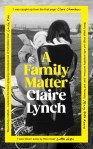 A Family Matter by Claire Lynch: In her research into UK divorce cases in the 1980s, Lynch learned that 90% of lesbian mothers lost custody of their children. Her earnest, delicate debut novel, which bounces between 2022 and 1982, imagines such a situation through close portraits of three family members. Maggie knew only that her mother, Dawn, abandoned her when she was little. Lynch’s compassion is equal for all three characters. This confident, tender story of changing mores and steadfast love is the new Carol for our times.
 Are You Happy? by Lori Ostlund: Nine short fictions form a stunning investigation into how violence and family dysfunction reverberate. “The Peeping Toms” and “The Stalker” are a knockout pair featuring Albuquerque lesbian couples under threat by male acquaintances. Characters are haunted by loss and grapple with moral dilemmas. Each story has the complexity and emotional depth of a novel. Freedom versus safety for queer people is a resonant theme in an engrossing collection ideal for Alice Munro and Edward St. Aubyn fans.
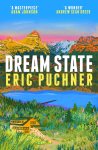 Dream State by Eric Puchner: It starts as a glistening romantic comedy about t Charlie and Cece’s chaotic wedding at a Montana lake house in summer 2004. First half the wedding party falls ill with norovirus, then the best man, Garrett, falls in love with the bride. The rest examines the fallout of this uneasy love triangle as it stretches towards 2050 and imagines a Western USA smothered in smoke from near-constant forest fires. Still, there are funny set-pieces and warm family interactions. Jonathan Franzen meets Maggie Shipstead.
 Palaver by Bryan Washington: Washington’s emotionally complex third novel explores the strained bond between a mother and her queer son – and their support systems of friends and lovers – when she visits him in Tokyo. The low-key plot builds through memories and interactions: the son’s with his students or hook-ups; the mother’s with restaurateurs as she gains confidence exploring Japan. Through words and black-and-white photographs, the author brings settings to life vibrantly. This is his best and most moving work yet.
Nonfiction
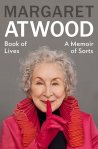 Book of Lives: A Memoir of Sorts by Margaret Atwood: For diehard fans, this companion to her oeuvre is a trove of stories and photographs. The context on each book is illuminating and made me want to reread lots of her work. I was reminded how often she’s been ahead of her time. The title feels literal in that Atwood has been wilderness kid, literary ingénue, family and career woman, philanthropist and elder stateswoman. She doesn’t try to pull all her incarnations into one, instead leaving the threads trailing into the beyond.
 Poets Square: A Memoir in 30 Cats by Courtney Gustafson: Working for a food bank, trapped in a cycle of dead-end jobs and rising rents: Gustafson saw first hand how broken systems and poverty wear people down. She’d recently started feeding and getting veterinary care for a feral cat colony in her Tucson, Arizona neighbourhood. With its radiant portraits of individual cats and its realistic perspective on personal and collective problems, this is a cathartic memoir and a probing study of building communities of care in times of hardship.
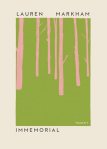 Immemorial by Lauren Markham: An outstanding book-length essay that compares language, memorials, and rituals as strategies for coping with climate anxiety and grief. The dichotomies of the physical versus the abstract and the permanent versus the ephemeral are explored. Forthright, wistful, and determined, the book treats grief as a positive, as “fuel” or a “portal.” Hope is not theoretical in this setup, but solidified in action. This is an elegant meditation on memory and impermanence in an age of climate crisis.
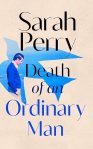 Death of an Ordinary Man by Sarah Perry: Perry recognises what a sacred privilege it was to witness her father-in-law’s death nine days after his diagnosis with oesophageal cancer. David’s end was as peaceful as could be hoped: in his late seventies, at home and looked after by his son and daughter-in-law, with mental capacity and minimal pain or distress. The beauty of this direct but tender memoir is its patient, clear-eyed unfolding of every stage of dying, a natural and inexorable process that in other centuries would have been familiar to all.
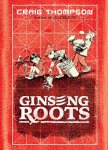 Ginseng Roots by Craig Thompson: A book about everything, by way of ginseng. It begins with Thompson’s childhood summers working on American ginseng farms with his siblings in Marathon, Wisconsin. As an adult, he travels first to Midwest ginseng farms and festivals and then through China and Korea to learn about the plant’s history, cultivation, lore, and medicinal uses. Roots are symbolic of a family story that unfolds in parallel. Both expansive and intimate, this is a surprising gem from one of the best long-form graphic storytellers.
Poetry
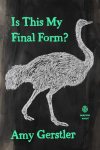 Is This My Final Form? by Amy Gerstler: This delightfully odd collection amazes with its range of voices and techniques. It leaps from surrealism to elegy as it ponders life’s randomness. The language of transformation is integrated throughout. Aging and the seasons are examples of everyday changes. Elsewhere, speakers fall in love with the bride of Frankenstein or turn to dinosaur urine for a wellness regimen. Monologues and sonnets recur. Alliteration plus internal and end rhymes create satisfying resonance.
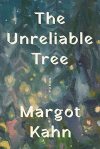 The Unreliable Tree by Margot Kahn: Kahn’s radiant first collection ponders how traumatic events interrupt everyday life. Poles of loss and abundance structure delicate poems infused with family history and food imagery. The title phrase describes literal harvests but is also a metaphor for the vicissitudes of long relationships. California’s wildfires, Covid-19, a mass shooting, and health crises – an emergency surgery and a friend’s cancer – serve as reminders of life’s unpredictability. Disaster is random and inescapable.
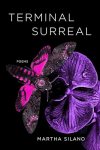 Terminal Surreal by Martha Silano: Silano’s posthumous collection (her eighth) focuses on nature and relationships as she commemorates the joys and ironies of her last years with ALS. The shock of a terminal diagnosis was eased by the quotidian pleasures of observing Pacific Northwest nature, especially birds. Fascination with science recurs, too. Most pieces are free form and alliteration and wordplay enliven the register. Her winsome philosophical work is a gift. “What doesn’t die? / The closest I’ve come to an answer / is poetry.”
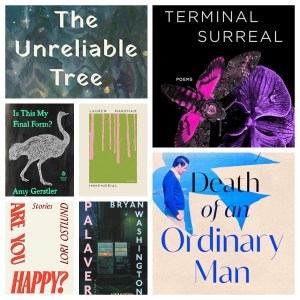
If I had to pick one from each genre? Well, like last year, I find that the books that have stuck with me most are the ones that play around with the telling of life stories. This time, all by women. So it’s Spent, Book of Lives and Is This My Final Form?


What 2025 releases should I catch up on?
#MARM2025, Part II: Bluebeard’s Egg and Book of Lives (In Progress)
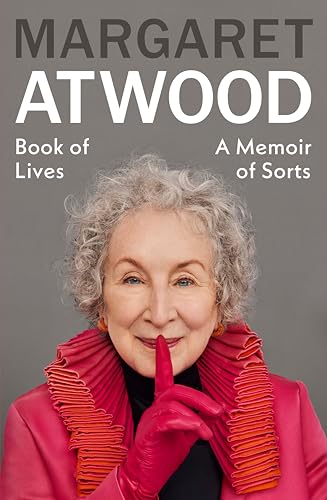 My hold on Margaret Atwood’s memoir, Book of Lives, arrived in late November. It’ll be my first read for Doorstoppers in December. I’d also been casually rereading her 1983 short story collection Bluebeard’s Egg and managed the first two stories; I’ll return to the rest next year. A recent Guardian interview stated that Atwood had written in “every genre … except autobiography” and quoted her as saying “I’m an old-fashioned novelist. Everything in my novels came from looking at the world around. I don’t think I have much of an inner psyche.” Is this her being coy or facetious? Because, particularly among the short stories, there are many incidents taken from her life. Indeed, in the 140 pages of Book of Lives that I’ve read so far, there are frequent mentions of how people or events made their way into her fiction and poetry. Perhaps most obviously in Cat’s Eye, a novel about childhood bullying by girlfriends.
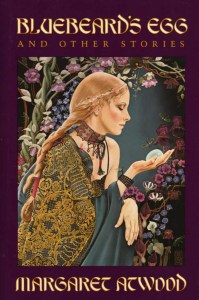 Bluebeard’s Egg opens with two Alice Munro-esque stories, “Significant Moments in the Life of My Mother” and “Hurricane Hazel,” both of which track with facts revealed in the memoir. The former draws on her mother Margaret’s Nova Scotia upbringing as the daughter of a country doctor (to avoid confusion, Atwood was nicknamed “Peggy”). Out of a welter of random stories comes the universal paradox: that she is in some ways exactly like her mother, and in others couldn’t be more different. It closes: “I had become a visitant from outer space, a time-traveller come back from the future, bearing news of a great disaster.” The latter story features a young teenage girl in a half-hearted relationship with an older, cooler boyfriend, mostly because she thinks it’s what’s expected of her. Atwood addresses it explicitly:
Let’s call this boyfriend “Buddy,” which is how he appears in a story of mine called “Hurricane Hazel.” Buddy and I broke up on the night of this famous hurricane, which flooded the Don Valley and killed eighty-one people in Toronto. Buddy wanted to go out that night, but my father, snapping out of his inattention—this was, after all, a matter of the weather, something he always kept his eye on—said it was out of the question. Didn’t Buddy know what a hurricane was? Far too dangerous!
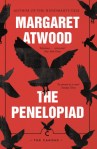 One can also trace The Penelopiad (see my first post for Margaret Atwood Reading Month 2025) back to Atwood’s high school experiences with the Greek classics.
Who knows when an “influence” may begin? My own 2005 book, The Penelopiad, had its origins fifty years before, when I’d been horrified by the brutal treatment dished out to Penelope’s twelve maids by Odysseus and Telemachus. After being made to clean up the blood from the suitors who’d raped them and were subsequently slaughtered by Odysseus, they were hanged in a line. “Their feet twitched, but not for very long.” A line I have always remembered.
As to Book of Lives in general, I’m finding it delightful but also dense with detail and historical context. Atwood grew up between the wilderness and the city because of her entomologist father’s seasonal fieldwork. She was called “Little Carl” due to how much she resembled her handy father, who built the cabins and houses they lived in as well as most of their furniture. With her beloved older brother, Harold, she was free to explore and later, as a camp counsellor, was known as “Peggy Nature” for her zoological expertise. She could easily have become a scientist but fell in love with crafts and the humanities, sewing her own clothes and writing an opera for Home Economics class. By the end of high school, she’d decided she was going to be a poet.
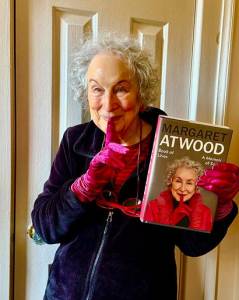
A cute pic of her from her Substack
I’m impressed by the clarity of Atwood’s memories; all I remember of my school days wouldn’t fill one chapter, let alone four. It could be argued that some of this is superfluous – a whole chapter on several summers as a counsellor at a Reform Jewish camp? But it’s her prerogative to choose the content and no doubt, always the novelist, she’s seeding important facts that will come to fruition later. As ever, her turns of phrase are amusing and her asides witty. There is a wonderful trove of photographs and artefacts for illustration. Although she effortlessly recreates her experience at any age, her perspective is salted with hindsight. I can already tell, making my way steadily through, 25 pages at a time, to return this by the deadline, that I’m going to need to read it again in the future to take it all in. Ideally, I’ll get my own copy so I can use the index to return to any scenes I want to revisit.
Bluebeard’s Egg – Little Free Library
Book of Lives – Public library
R.I.P. Reads, Part II: Feito, King, Link, Paver & Taylor
Soon it’ll be all novellas, all the time around here. But first I have a few more October reads to review.
A belated Happy Halloween! As a kid in the U.S. suburbs, I loved Halloween. It was such fun planning costumes – pumpkin, cowgirl and picnic table are a few memorable ones that I remember thanks to photographs – and my hoard of candy would last me for months. But these days, I tend to be pretty grumpy about the holiday. It never used to be a thing in the UK, but it has been creeping in year on year. I don’t mind a creatively carved jack o’ lantern, tasteful decoration or clever homemade costume. What does get my goat is plastic tat, gratuitous gore and the dozens of sodden sweets and wrappers littering the streets after last night’s rain and wind.
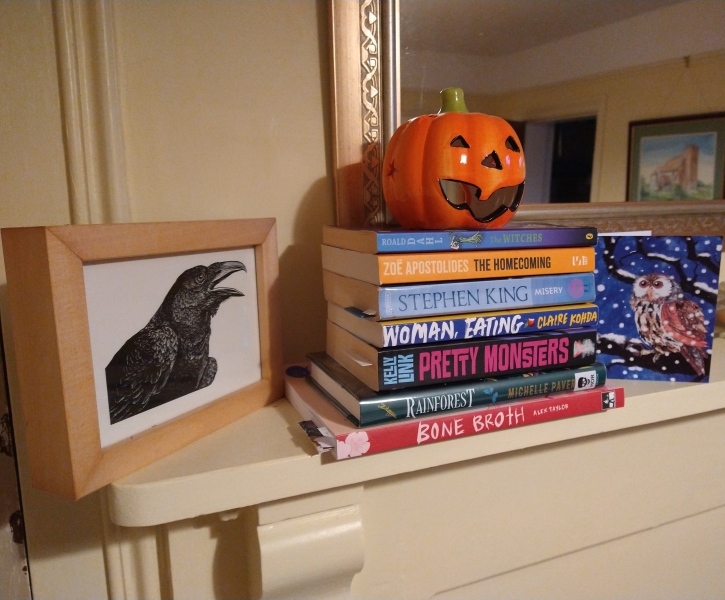
Anyway, we enjoyed the stormy evening because we spent it at friends’ having delicious autumnal lasagne and parkin, playing instruments and board games and eavesdropping on the trick-or-treaters. I had to laugh when J said “Take a couple” and one little girl replied, “That’s okay, I don’t really like sweeties.” These friends were keeping some ancient traditions alive: carving a turnip, wearing one’s clothes inside out and walking between two fires to ward off fairies. They also put potatoes in the treats bowl, which definitely confused the kids. (One did take a spud!)
I really leaned into the Readers Imbibing Peril reading this year. I had a somewhat lacklustre first batch, but these five were great!
Victorian Psycho by Virginia Feito (2025)
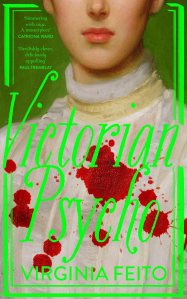 This was among my Most Anticipated titles of the year – for the bonkers blurb but also because of how much I’d enjoyed Feito’s debut, Mrs. March. Both novels go deep with mentally disturbed protagonists. The first channeled Patricia Highsmith with its stylish psychological suspense; here we have a full-on blend of slasher horror and sadistic humour, wrapped up in a Victorian pastiche. Winifred Notty (naughty girl indeed) is the new governess at Ensor House on the Yorkshire moors. She couldn’t care less about her charges, Andrew and Drusilla. No, she’s here to exact revenge on the master of the house, Mr. Pounds. But not before she’s dispatched many a random servant and baby. “Bodies pile up in the attic.” Her brutal fantasies are so realistic that at times it’s difficult to separate them from what she actually carries out. Miss Notty is also a highly sexual being whose fixations could certainly be interpreted in Freudian ways. Feito spins a traumatic backstory for her antiheroine but doesn’t make it any excuse for her gleeful reign of terror. It’s delicious fun, especially for a Victorianist, but don’t attempt if you’re squeamish. (Read via NetGalley)
Misery by Stephen King (1987)
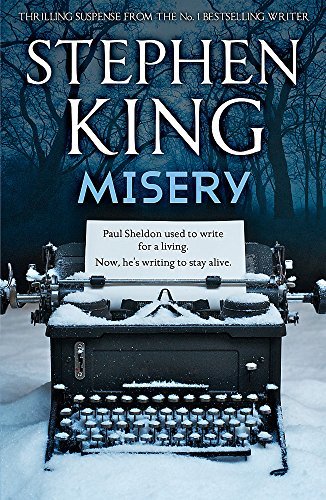 All these years I’d had two 1989–1990 films conflated: Misery and My Left Foot. I’ve not seen either but as an impressionable young’un I made a mental mash-up of the posters’ stills into a film featuring Daniel Day-Lewis as a paralyzed writer and Kathy Bates as a madwoman wielding an axe. (Turns out the left foot is relevant!)
Paul Sheldon wakes in a fog of pain, his legs shattered from a one-car accident on a snowy Colorado backroad. He’s famous for his historical potboilers about Misery Chastain but, like Arthur Conan Doyle with Sherlock Holmes, has killed off his most beloved character. Except now he’s in the home of Annie Wilkes, his rescuer and biggest fan, and she demands he resurrect Misery. Annie is a former nurse who left the profession after numerous suspicious deaths on her watch. She keeps Paul dependent on her – and on Novril, a fictional opiate. In a case of ‘Scheherazade complex’, he’ll be her prisoner until he’s completed a sequel that’s to her satisfaction. Compared to Pet Sematary, the only other King novel I’ve read, this was slow to draw me in because of the repetitive scenes in a claustrophobic setting, and I wearied of the excerpts from Paul’s manuscript. But eventually I was riveted, desperate to know how Paul was going to get out of this predicament and what the final showdown could be. Extremes of pain and obsession make this an intense study of the psychology of a wretched pair. (Public library)
Pretty Monsters by Kelly Link (2008)
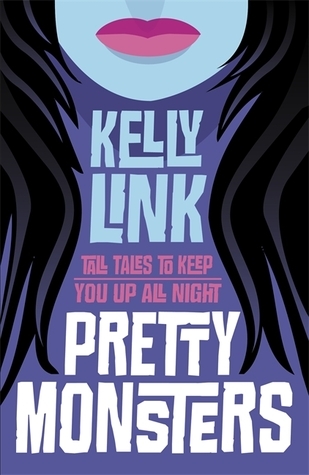 This is a reissue edition geared towards young adults. All but one of the 10 stories were originally published in literary magazines or anthologies. The stories are long, some approaching novella length, and took me quite a while to read. I got through the first three and will save the rest for next year. In “The Wrong Grave,” a teen decides to dig up his dead girlfriend’s casket to reclaim the poems he rashly buried with her last year – as did Dante Gabriel Rossetti, which Link makes a point of mentioning. A terrific blend of spookiness and comedy ensues.
“The Wizards of Perfil” and the title story are 50-some and 60-some pages, respectively, which allows a lot of space for intriguing weirdness and side plots. In the former, Onion’s cousin Halsa is purchased to be a servant to a wizard. The cousins both have the gift of foresight but can’t get the wizards to take them seriously when they beg that something to be done to prevent human disasters. It’s a brilliant allegory of the danger of waiting for an external force – God, the government, whatever – to solve everything versus getting on with it yourself. In the title story, a group of teens are obsessed with a mysterious Doctor Who-esque television show called The Library, which colours all their interactions. The main character Jeremy’s father is an eccentric sci-fi novelist named Gordon Strangle Mars who has written his son into his latest plot in a disturbing way. Jeremy recently inherited a gas station and phone box in Las Vegas and occasionally calls the phone box to air his grievances and solicit supernatural aid. My only other experience of Link was a standalone story I was once sent for review, “The Summer People,” which I didn’t get on with, so I was surprised to encounter such top-notch fantasy/horror tales. (Little Free Library)
Rainforest by Michelle Paver (2025)
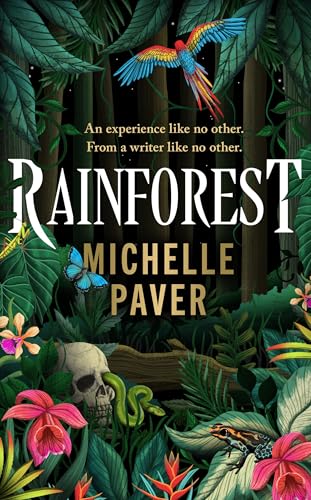 I’d read all three of Paver’s previous horror novels for adults (Thin Air, Dark Matter and Wakenhyrst) and found them easy, atmospheric reading but not nearly as scary as billed. This is her best yet. Set in 1973 on an expedition to Mexico, it has as its unreliable narrator Dr. Simon Corbett, an English entomologist. Adding to the findings of the archaeological dig he’s accompanying, he’ll be hunting for mantids (praying mantises, stick insects and the like) by fogging sacred trees with pesticides. He also experiments with taking a hallucinogenic plant extract used by the Indigenous shamans, hoping to be reunited with his lost love, Penelope.
We know that Corbett’s employment is tenuous and that he’s seeing a therapist. Paver authentically reproduces the casual racism and sexism of the time and seeds little hints that this protagonist may not be telling the whole truth about his relationship with Penelope. The long sequence where he’s lost in the jungle is fantastic. Corbett seems fated to repeat ancient masochistic rites, as if in penance for what he’s done wrong. My husband is an entomologist, so I was interested to read about period collecting practices. The novelty of the setting is a bonus to this high-quality psychological thriller and ghost story. (Public library)
Bone Broth by Alex Taylor (2025)
 Ash is a trans man who starts working at a hole-in-the-wall ramen restaurant underneath a London railway arch. All he wants is to “pay for hormones, pay rent, [and] make enough to take a cutie on a date.” Bug’s Bones is run by an irascible elderly proprietor but staffed by a young multicultural bunch: Sock, Blue, Honey and Creamy. They quickly show Ash the ropes and within a month he’s turning out perfect bowls. He’s creeped out by the restaurant’s trademark bone broth, though, with its reminders of creatures turning into food. At the end of a drunken staff party, they find Bug lying dead and have to figure out what to do about it.
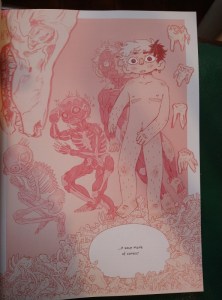 This storyline is in purple, whereas the alternating sequences of flashbacks are in a fleshy pinkish-red. As the two finally meet and meld, we see Ash trying to imitate the masculinity he sees on display while he waits for the surface to match what’s inside. I didn’t love the drawing style – though the full-page tableaux are a lot better than the high-school-sketchbook small panes – so that was an issue for me throughout, but this was an interesting, ghoulish take on the transmasc experience. Taylor won a First Graphic Novel Award.
With thanks to SelfMadeHero for the free copy for review.
And one DNF: Saltwash by Andrew Michael Hurley. (I was warned!) It had no menace or momentum at all…
Any stand-out creepy reading for you this year?
Short Story Catch-Up: Carver, Cunningham, Park, Polders, Racket, Schweblin, Williams (& Heti Stand-Alone)
I actually read 15 collections in total for Short Story September. I’m finally catching up on reviews, though I’m aware that I’ve missed out on Lisa’s link-up. (My other reviews: Heiny, Mackay, McEwan; the BBC National Short Story Award 2025 anthology; Donoghue, Grass, Isherwood, Mansfield as part of my Germany reading.) To keep it simple and get the basics across before I forget any more about these books, I’ll post some shorthand notes under headings.
Cathedral by Raymond Carver (1983)
Why I read it:
- I’d really enjoyed What We Talk about When We Talk about Love.
- This fits into my project to read books from my birth year.
 Stats: 12 stories (6 x 1st-person, 6 x 3rd-person)
Themes: alcoholism, adultery, fatherhood, crap jobs, crumbling families
Tone: melancholy, laconic
File under: grit-lit
For fans of: John Cheever, Ernest Hemingway, Denis Johnson
Caveat(s): It doesn’t match What We Talk about When We Talk about Love.
If you read just one story, make it: “A Small, Good Thing”
(University library)
A Wild Swan and Other Tales by Michael Cunningham (2015)
Why I read it:
- I have a vague plan to read through Cunningham’s whole oeuvre.
- This one is different to his others, and beautifully illustrated by Yuko Shimizu.
 Stats: 11 stories (3 x 2nd-person, 8 x 3rd-person)
Themes: coming of age, longing, loss, bargaining
Tone: witty, knowing
File under: fairy tale updates
For fans of: Margaret Atwood, Neil Gaiman
Caveat(s): For the most part, he doesn’t do anything interesting with the story lines.
If you read just one story, make it: “Little Man” (the Rumpelstiltskin remake)
(Secondhand – Awesomebooks.com)
An Oral History of Atlantis by Ed Park (2025)
Why I read it:
- I’d heard buzz, probably because Park was a Pulitzer Prize finalist for his novel.
 Stats: 16 stories (12 x 1st-person, 1 x 1st-person plural, 1 x 2nd-person, 2 x 3rd-person)
Themes: the Asian American and university experience, writing, translation, aphorisms
Tone: jokey, nostalgic
File under: dystopian fiction, metafiction
For fans of: George Saunders
Caveat(s): There’s more intellectual experimentation than emotional engagement.
If you read just one story, make it: “An Accurate Account”
(Read via NetGalley)
Woman of the Hour by Clare Polders (2025)
Why I read it:
- I always like to sneak at least one flash fiction collection in for this challenge.
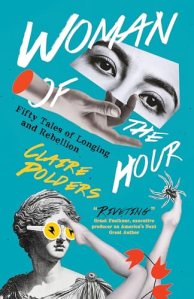 Stats: 50 stories, a mixture of 1st- and 3rd-person
Themes: childhood, sexuality, motherhood, choices vs. fate
Tone: sharp, matter-of-fact
File under: feminist, satire
For fans of: Claire Fuller, Terese Svoboda
Caveat(s): There’s too many stories to keep track of and not enough stand-outs.
If you read just one story, make it: “Woman of the Hour”
(BookSirens)
Racket: New Writing Made in Newfoundland, ed. Lisa Moore (2015)
Why I read it:
- Naomi’s blog always whets my appetite for Atlantic Canadian fiction, but I’m rarely able to find it over here.
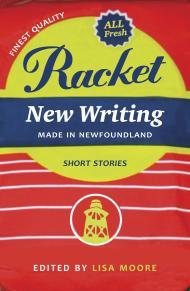 Stats: 11 stories, mostly by Memorial University creative writing graduates (7 x 1st-person, 1 x 2nd-person, 3 x 3rd-person)
Themes: mental health, bereavement, tragic accidents
Tone: jaunty, reflective
File under: voice-y early-2000s lit-fic
For fans of: Sharon Bala (her story is among the best here), Jonathan Safran Foer; hockey
Caveat(s): I wouldn’t say I’m now a fan of any of the writers I hadn’t heard of before.
If you read just one story, make it: “23 Things I Hate in No Particular Order” by Gary Newhook
(Little Free Library)
Good and Evil and Other Stories by Samanta Schweblin (2025)
[Translated from Spanish by Megan McDowell]
Why I read it:
- I thought it would be good to add in another title in translation.
- I’d read Schweblin before (but I wish I’d remembered that I rated Fever Dream 2*.)
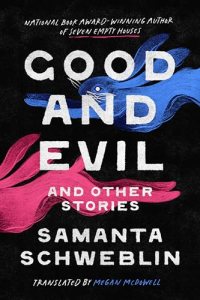 Stats: 6 stories (5 x 1st-person, 1 x 3rd-person)
Themes: near-misses, grief, memory, suicidal ideation
Tone: introspective, jaded
File under: Latin American weirdness (some mild magic realism)
For fans of: Guadalupe Nettel (The Accidentals is very similar but a bit better)
Caveat(s): A couple of the stories are overlong and none of them are particularly memorable.
If you read just one story, make it: “William in the Window”
(Read via NetGalley) 
The Doctor Stories by William Carlos Williams, compiled by Robert Coles (1939)
Why I read it:
- I’m not sure how I came across it; perhaps through another doctor–author such as Gavin Francis or Atul Gawande?
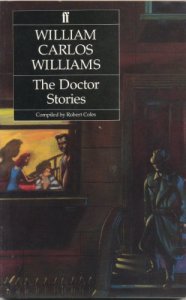 Stats: 14 stories (plus a handful of poems and an autobiographical fragment), all 1st-person
Themes: addiction, childbirth, immigrants, poverty, the randomness of suffering
Tone: hardboiled, dedicated
File under: autofiction, dirty realism
For fans of: Raymond Carver, Gabriel Weston
Caveat(s): The descriptions of immigrants’ appearance/behaviour/speech is not always kind.
If you read just one story, make it: “Old Doc Rivers”
(University library)
And a stand-alone story:
“The St. Alwynn Girls at Sea” by Sheila Heti (New Yorker, 2025)
To my knowledge, this is the only short fiction Heti has published. I’m generally a big fan of her bizarre autofiction – though Pure Colour was a step too far for me – and was fascinated to see on Eleanor’s blog that this is historical fiction, a genre Heti hasn’t attempted before. Or is it historical? The students of a girls’ boarding school have been sent out on a ship for their safety during a conflict. With news of a planned meet-up with a boys’ boat for a talent show and calls to knit socks for soldiers, it seems it must be the Second World War. But then there are references to headphones, Prince and Kurt Vonnegut. So it’s an alternative Cold War fantasy? Or a dystopian future scenario with retro elements? As in Motherhood, the characters appeal to an Oracle (here, a photograph of a departed girl called Audrey) when stymied by confusion. But the actual plot is just girls wanting men to love them – Dani obsesses about Sebastien, with whom she’s exchanging letters; Flora can’t stop thinking about her father’s infidelity – a common Heti theme, but the teenage perspective feels glib, indulgent; it’s YA without the heart or commitment. So I was somewhat aghast to learn this is from Heti’s novel in progress.
Nine Days in Germany and What I Read, II: Lübeck
(Part I covered Berlin.) Three works of short fiction embodied the rest of our journeying, from Berlin to Lübeck to home. We were sad to say goodbye to Lemmy and Roxanne, the affectionate, fluffy cats who came with our Berlin flat, but there were further adventures to be had. The hosts of our Lübeck Airbnb apartment also owned two cats we briefly met, but it wasn’t the same as having surrogate pets around.
Goodbye to Berlin by Christopher Isherwood (1939)
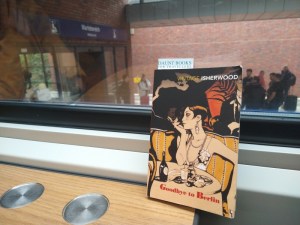 Isherwood intended for these six autofiction stories to contribute to a “huge episodic novel of pre-Hitler Berlin” titled The Lost. Two “Berlin Diary” segments from 1930 and 1933 bear witness to a change in tenor accompanying the rise of Nazism. Even in lighter pieces about a holiday at the Baltic coast and his friendship with a family who run a department store, menace creeps in through characters’ offhand remarks about “dirty Jews” ruining the country. The narrator, Christopher Isherwood, is a private English tutor staying in squalid boarding houses or spare rooms. His living conditions are mostly played for laughs – his landlady, Fraulein Schroeder, calls him “Herr Issyvoo” – but I was also reminded of George Orwell’s didactic realism. I had it in mind that Isherwood was homosexual; the only evidence of that here is his observation of the homoerotic tension between two young men, Otto and Peter, whom he meets on the Ruegen Island vacation, so he was still being coy in print. Famously, the longest story introduces Sally Bowles (played by Liza Minnelli in Cabaret), the lovable club singer who flits from man to man and feigns a carefree joy she doesn’t always feel. This is the second of two Berlin books; I will have to find the other and explore the rest of Isherwood’s work as I found this witty and humane, restrained but vigilant. (Little Free Library)
On balance, we planned the division well: busy city days first, followed by a more restful long weekend; reliable English-speaking opportunities while we built up our confidence, then a more provincial setting where we could try out a bit of German. Friends were curious why we chose Lübeck. Two charitably assumed that I went for the Thomas Mann connections, but that was an incidental side benefit. (I quailed at the prospect of reading the 700+-page debut novel based on his family history, Buddenbrooks; instead, I intended to reread Death in Venice, but my Project Gutenberg download didn’t work, so I’ve earmarked it for Novellas in November instead.)
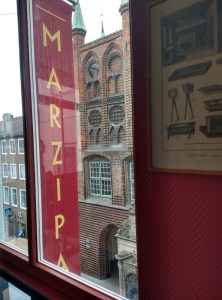
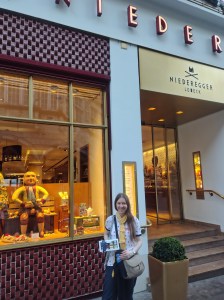
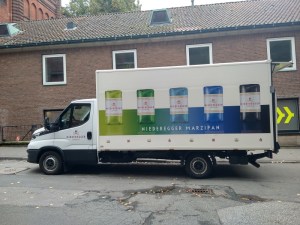
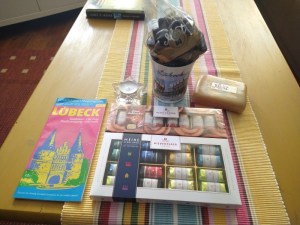
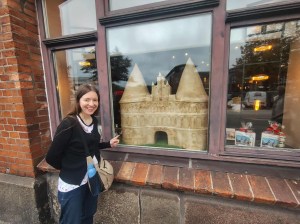
Nope, I was in it for the marzipan. Lübeck has been known for its marzipan since 1795. In 1926, there were 36 marzipan manufacturers in this northern city; three remain today and of course we visited both cafes and all three shops. Niederegger has a small museum above the Bettys-like café. You would not believe the scale or number of tableaux made entirely of almond paste! Nor the variety of flavours and packaging in the shop downstairs. We enjoyed marzipan hot chocolate, cappuccino and cakes, and came away with a modest supply of treats. We also dropped into a trendy restaurant where I had a “Lübecker martini” combining rum, marzipan liqueur and espresso.
-
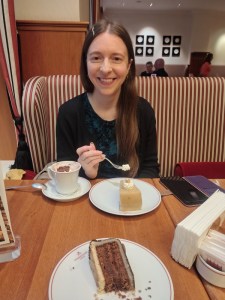
- Marzipan hot chocolate and traditional nusstorte at the Niederegger cafe.
-
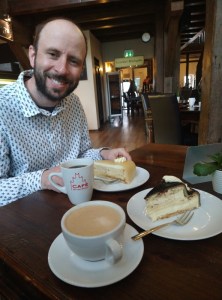
- Marzipanland was better! I had Othello Torte and a marzipan cappuccino.


In a German Pension by Katherine Mansfield (1911)
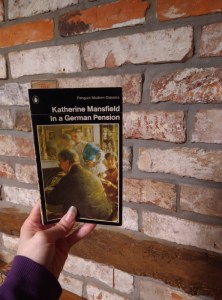 Mansfield was 19 when she composed this slim debut collection of arch sketches set in and around a Bavarian guesthouse. The narrator is a young Englishwoman traveling to take the waters for her health. A quiet but opinionated outsider (“I felt a little crushed … at the tone – placing me outside the pale – branding me as a foreigner”), she crafts pen portraits of a gluttonous baron, the fawning Herr Professor, and various meddling or air-headed fraus and frauleins. There are funny lines that rest on stereotypes (“you English … are always exposing your legs on cricket fields, and breeding dogs in your back gardens”; “a tired, pale youth … was recovering from a nervous breakdown due to much philosophy and little nourishment”) but also some alarming scenarios. One servant girl narrowly escapes being violated, while “The-Child-Who-Was-Tired” takes drastic action when another baby is added to her workload. Most of the stories are unmemorable, however. Mansfield renounced this early work as juvenile and inferior – her first publisher went bankrupt and when war broke out in Europe, sparking renewed interest in a book that pokes fun at Germans, she refused republishing rights. (Secondhand – Well-Read Books, Wigtown)
On our travels, I also read…
- portions of various e-books for paid Shelf Awareness reviews: Benbecula by Graeme Macrae Burnet, Beard by Kelly Foster Lundquist, Wreck by Catherine Newman;
- part of Bright Lights, Big City by Jay McInerney, which I’ll finish for Novellas in November;
- and portions of e-books for fun: Startlement by Ada Limón and An Oral History of Atlantis by Ed Park (more short story catch-up reviews to come).
Aside from marzipan, Lübeck has a lot going for it: lovely medieval Brick Gothic architecture – the iconic Holstentor gate once featured on the 50-mark note; proximity to the Baltic Sea; and connections with three Nobel Prize winners, two for literature – the other being Günter Grass. On the Saturday morning, we took a bus to Travemünde, a popular seaside resort town, for a walk along the cliffs. The path was busy with cyclists but the dog beach was nearly deserted. We watched a ferry setting off for Sweden. (Had we had a few more days to play with, we would have liked to tack on trips to Denmark from here and into Poland from Berlin.)


Buddenbrookhaus, the home of Mann’s grandparents, is undergoing a several-year renovation and expansion project. I wasn’t too upset about missing out on it, and there was a Mann exhibit in the tourist information centre. Instead, I went to the Günter Grass House museum, which opened in 2002. Grass spent his last 20 years living 15 miles south of Lübeck and kept an office in this building. For future reference, there’s a good-value day-ticket one can buy that covers all the museums in Lübeck. My husband went to the natural history museum while I learned about Grass, whom I’d never read before, and about Else Lasker-Schüler, whose works were on display in the rotating upstairs exhibit featuring figures who, like Grass, were writers and visual artists.


Grass grew up in what is now Danzig, Poland and was drafted into the Waffen-SS at age 17. He was lucky in that he soon received a minor injury that landed him in American custody. The Tin Drum, his well-known debut novel, drew on his military background, which he otherwise rarely discussed. Formally trained in art, he illustrated his works with the same motifs that appear in words. Flora and fauna run all through: fruit, onions; birds, snails, the flounder, cats and dogs. A multitalented writer, he also produced plays, poetry and political commentary. He won the Nobel Prize in 1999 and died in 2015. I found the material on his life and work unexpectedly diverting. I read the short volume below as soon as we got back.
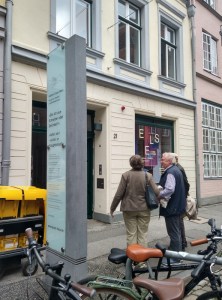
-
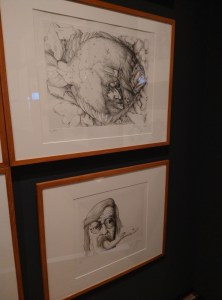
- Some of Grass’s grotesque hybrid animal drawings
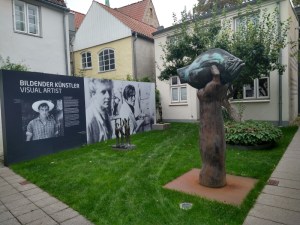
-
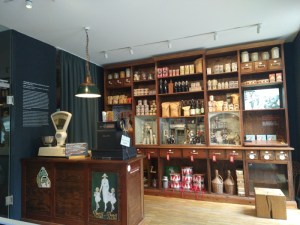
- Replica of the Grass family’s store in Danzig
-
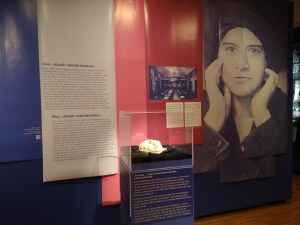
- Else Lasker-Schüler exhibit, including her death mask
Of All that Ends by Günter Grass (2015)
[Translated from German by Breon Mitchell]
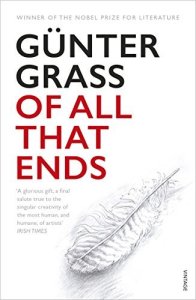 This posthumous prosimetric collection contains miniature essays, stories and poems, many of which seem autobiographical. By turns nostalgic and morbid, the pieces are very much concerned with senescence and last things. The black-and-white sketches, precise like Dürer’s but looser and more impressionistic, obsessively feature dead birds, fallen leaves, bent nails and shorn-off fingers. The speaker and his wife order wooden boxes in which their corpses will lie and store them in the cellar. One winter night they’re stolen, only to be returned the following summer. He has lost so many friends, so many teeth; there are few remaining pleasures of the flesh that can lift him out of his naturally melancholy state. Though, in Lübeck for the Christmas Fair, almonds might just help? The poetry happened to speak to me more than the prose in this volume. I’ll read longer works by Grass for future German Literature Months. My library has his first memoir, Peeling the Onion, as well as The Tin Drum, both doorstoppers. (Public library)


Of all that ends: books, holidays, seasons. It was a trip that, like so many we take these days, was sometimes irksome and exhausting, and could be overwhelming (Berlin) or boring (Lübeck) by turns – yet was still far preferable to the humdrum of home life. And – isn’t it always the way? – just as we’d gotten comfortable with greetings, farewells and other everyday phrases in a new language, it was time to leave. We were more comfortable with French when ordering a vegan supper at a café and drinks in a bustling Art Deco bar during our quick overnight stay in Brussels, then it was onto the Eurostar to come back home. Somewhere on those many train rides back, I caught this monster cold that will not die after 10 days and counting. And the very day we arrived back in the UK, we felt a sudden shift to late autumn weather.
November will be here before we know it.
 Bookish Beck = Rebecca Foster. American transplant to England. Freelance proofreader and book reviewer.
 Bookish Beck