My Books of 2018: Some Runners-Up
Across my four best-of posts (Nonfiction was on Wednesday and Fiction on Thursday; Backlist reads are coming up tomorrow), I will have spotlighted roughly the top 20% of my year’s reading. The 15 runners-up below – 5 fiction and 10 nonfiction – are in alphabetical order by author. The ones marked with an asterisk are my Best 2018 Books You Probably Never Heard Of (Unless You Heard about Them from Me!).

Some runners-up for best books of the year (the ones I own in print, anyway).
Fiction:
 *Frieda by Annabel Abbs: If you rely only on the words of D.H. Lawrence, you’d think Frieda was lucky to shed a dull family life and embark on an exciting set of bohemian travels with him as he built his name as a writer; Abbs adds nuance to that picture by revealing just how much Frieda was giving up, and the sorrow she left behind her. Frieda’s determination to live according to her own rules makes her a captivating character.
 A Ladder to the Sky by John Boyne: A delicious piece of literary suspense with a Tom Ripley-like hero you’ll love to hate: Maurice Swift, who wants nothing more than to be a writer but doesn’t have any ideas of his own, so steals them from other people. I loved how we see this character from several outside points of view before getting Maurice’s own perspective; by this point we know enough to understand just how unreliable a narrator he is.
 The Overstory by Richard Powers: A sprawling novel about regular people who through various unpredictable routes become so devoted to trees that they turn to acts, large and small, of civil disobedience to protest the clear-cutting of everything from suburban gardens to redwood forests. I admired pretty much every sentence, whether it’s expository or prophetic.
 You Think It, I’ll Say It by Curtis Sittenfeld: Sittenfeld describes families and romantic relationships expertly, in prose so deliciously smooth it slides right down. These 11 stories are about marriage, parenting, authenticity, celebrity and social media in Trump’s America. Overall, this is a whip-smart, current and relatable book, ideal for readers who don’t think they like short stories.
 *Meet Me at the Museum by Anne Youngson: A charming, bittersweet novel composed entirely of the letters that pass between Tina Hopgood, a 60-year-old farmer’s wife in East Anglia, and Anders Larsen, a curator at the Silkeborg Museum in Denmark. It’s a novel about second chances in the second half of life, and has an open but hopeful ending. I found it very touching and wish it hadn’t been given the women’s fiction treatment.
Nonfiction:
 Rough Beauty: Forty Seasons of Mountain Living by Karen Auvinen: An excellent memoir that will have broad appeal with its themes of domestic violence, illness, grief, travel, wilderness, solitude, pets, wildlife, and relationships. A great example of how unchronological autobiographical essays can together build a picture of a life.
 *Heal Me: In Search of a Cure by Julia Buckley: Buckley takes readers along on a rollercoaster ride of new treatment ideas and periodically dashed hopes during four years of chronic pain. I was morbidly fascinated with this story, which is so bizarre and eventful that it reads like a great novel.
 *This Really Isn’t About You by Jean Hannah Edelstein: A wry, bittersweet look at the unpredictability of life as an idealistic young woman in the world’s major cities. Another great example of life writing that’s not comprehensive or strictly chronological yet gives a clear sense of the self in the context of a family and in the face of an uncertain future.
 *The Pull of the River: Tales of Escape and Adventure on Britain’s Waterways by Matt Gaw: This jolly yet reflective book traces canoe trips down Britain’s rivers, a quest to (re)discover the country by sensing the currents of history and escaping to the edge of danger. Gaw’s expressive writing renders even rubbish- and sewage-strewn landscapes beautiful.
 The Feather Thief: Beauty, Obsession, and the Natural History Heist of the Century by Kirk Wallace Johnson: A delightful read that successfully combines many genres – biography, true crime, ornithology, history, travel and memoir – to tell the story of an audacious heist of rare bird skins from the Natural History Museum at Tring in 2009. This is the very best sort of nonfiction: wide-ranging, intelligent and gripping.
 *No One Tells You This by Glynnis MacNicol: There was a lot of appeal for me in how MacNicol sets out her 40th year as an adventure into the unknown. She is daring and candid in examining her preconceptions and asking what she really wants from her life. And she tells a darn good story: I read this much faster than I generally do with a memoir.
 The Library Book by Susan Orlean: This is really two books in one. The first is a record of the devastating fire at the Los Angeles Central Library on April 29, 1986 and how the city and library service recovered. The second is a paean to libraries in general: what they offer to society, and how they work, in a digital age. Sure to appeal to any book-lover.
 Help Me!: One Woman’s Quest to Find Out if Self-Help Really Can Change Her Life by Marianne Power: I have a particular weakness for year-challenge books, and Power’s is written in an easy, chatty style, as if Bridget Jones had given over her diary to testing self-help books for 16 months. Help Me! is self-deprecating and relatable, with some sweary Irish swagger thrown in. I can recommend it to self-help junkies and skeptics alike.
 Mrs Gaskell & Me: Two Women, Two Love Stories, Two Centuries Apart by Nell Stevens: Stevens has a light touch, and flits between Gaskell’s story and her own in alternating chapters. This is a whimsical, sentimental, wry book that will ring true for anyone who’s ever been fixated on an idea or put too much stock in a relationship that failed to thrive.
 The Language of Kindness: A Nurse’s Story by Christie Watson: Watson presents her book as a roughly chronological tour through the stages of nursing – from pediatrics through to elderly care and the tending to dead bodies – but also through her own career. With its message of empathy for suffering and vulnerable humanity, it’s a book that anyone and everyone should read.
Coming tomorrow: My best backlist reads of the year.
Best Fiction & Poetry of 2018
Below I’ve chosen my top 12 fiction releases from 2018 (eight of them happen to be by women!). Many of these books have already featured on my blog in some way over the course of the year. To keep things simple, as with my nonfiction selections, I’m limiting myself to two sentences per title: the first is a potted summary; the second tells you why you should read it. I’ve also highlighted my three favorites from the year’s poetry releases.
 Orchid & the Wasp by Caoilinn Hughes: From the Iraq War protests to the Occupy movement in New York City, we follow antiheroine Gael Foess as she tries to get her brother’s art recognized. This debut novel is a potent reminder that money and skills don’t get distributed fairly in this life.
 Bitter Orange by Claire Fuller: Fuller’s third novel tells the suspenseful story of the profligate summer of 1969 spent at a dilapidated English country house. The characters and atmosphere are top-notch; this is an absorbing, satisfying novel to swallow down in big gulps.
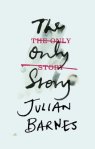 The Only Story by Julian Barnes: It may be a familiar story – a May–December romance that fizzles out – but, as Paul believes, we only really get one love story, the defining story of our lives. The picture of romantic youth shading into cynical but still hopeful middle age really resonates, as do the themes of unconventionality, memory, addiction and pity.
 The Immortalists by Chloe Benjamin: Summer 1969: four young siblings escape a sweltering New York City morning by visiting a fortune teller who can tell you the day you’ll die; in the decades that follow, they have to decide what to do with this advance knowledge: will it spur them to live courageous lives, or drive them to desperation? This compelling family story lives up to the hype.
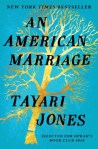 An American Marriage by Tayari Jones: Roy and Celestial only get a year of happy marriage before he’s falsely accused of rape and sentenced to 12 years in prison in Louisiana. This would make a great book club pick: I ached for all the main characters in their impossible situation; there’s a lot to probe about their personalities and motivations, and about how they reveal or disguise themselves through their narration and letters.
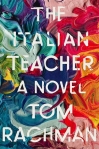 The Italian Teacher by Tom Rachman: Charles “Pinch” Bavinsky is an Italian teacher; as a boy in Rome in the 1950s–60s he believed he’d follow in the footsteps of his sculptor mother and his moderately famous father, Bear Bavinsky, who paints close-ups of body parts, but along the way something went wrong. This is a rewarding novel about the desperation to please, or perhaps exceed, one’s parents and the legacy of artists in a fickle market.
 The Incendiaries by R. O. Kwon: A sophisticated, unsettling debut novel about faith and its aftermath, fractured through the experience of three people coming to terms with painful circumstances. Kwon spent 10 years writing this book, and that time and diligence come through in how carefully honed the prose is: such precise images; not a single excess word.
 Unsheltered by Barbara Kingsolver: Kingsolver’s bold eighth novel has a dual timeline that compares the America of the 1870s and the recent past and finds that they are linked by distrust and displacement. There’s so much going on that it feels like it encompasses all of human life; it’s by no means a subtle book, but it’s an important one for our time, with many issues worth pondering and discussing.
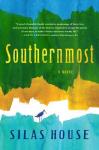 Southernmost by Silas House: In House’s sixth novel, a Tennessee preacher’s family life falls apart when he accepts a gay couple into his church. We go on a long journey with Asher Sharp: not just a literal road trip from Tennessee to Florida, but also a spiritual passage from judgment to grace in this beautiful, quietly moving novel of redemption and openness to what life might teach us.
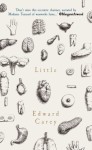 Little by Edward Carey: This is a deliciously macabre, Dickensian novel about Madame Tussaud, who started life as Anne Marie Grosholtz in Switzerland in 1761. From a former monkey house to the Versailles palace and back, Marie must tread carefully as the French Revolution advances and a desire for wax heads is replaced by that for decapitated ones.
 Motherhood by Sheila Heti: Chance, inheritance, and choice vie for pride of place in this relentless, audacious inquiry into the purpose of a woman’s life. The book encapsulates nearly every thought that has gone through my mind over the last decade as I’ve faced the intractable question of whether to have children.
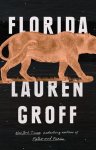 Florida by Lauren Groff: There’s an oppressive atmosphere throughout these 11 short stories, with violent storms reminding the characters of an uncaring universe, falling-apart relationships, and the threat of environmental catastrophe. Florida feels innovative and terrifyingly relevant; any one of its stories is a bracing read; together they form a masterpiece. (I never would have predicted that a short story collection would be my favorite fiction read of the year!)

My 2018 fiction books of the year (the ones I own in print, anyway).
Poetry selections:
-
 Three Poems by Hannah Sullivan: These poem-essays give fragmentary images of city life and question the notion of progress and what meaning a life leaves behind. “The Sandpit after Rain” stylishly but grimly juxtaposes her father’s death and her son’s birth.
-
 Comfort Measures Only: New and Selected Poems, 1994–2016 by Rafael Campo: Superb, poignant poetry about illness and the physician’s duty. A good bit of this was composed in response to the AIDS crisis; it’s remarkable how Campo wrings beauty out of clinical terminology and tragic situations.
-
 The Small Door of Your Death by Sheryl St. Germain: St. Germain’s seventh collection is in memory of her son Gray, who died of a drug overdose in 2014, aged 30. She turns her family history of alcohol and drug use into a touchpoint and affirms life’s sensual pleasures – everything from the smell of brand-new cowboy boots to luscious fruits.
What were some of your top fiction (or poetry) reads of the year?
Tomorrow I’ll be naming some runners-up (both fiction and nonfiction).
Season’s Readings: What I’ll Be Reading This Christmas
With part of my birthday book token I treated myself to the new paperback edition of Jeanette Winterson’s Christmas Days, which I’ll read off and on over the holidays this year and next, probably. I recently finished Rachel Joyce’s wintry short story collection and started Madeleine L’Engle’s third Crosswicks Journal, An Irrational Season. The first two chapters are set at Advent and Christmas and the rest later in the liturgical year; I’ve set the book aside to come back to in January. L’Engle is a great author to read if you’d like some liberal, non-threatening theology at this time of year. I particularly recommend her Christmas-themed book that I read last year. (Mini-reviews of the Joyce and L’Engle are below.)
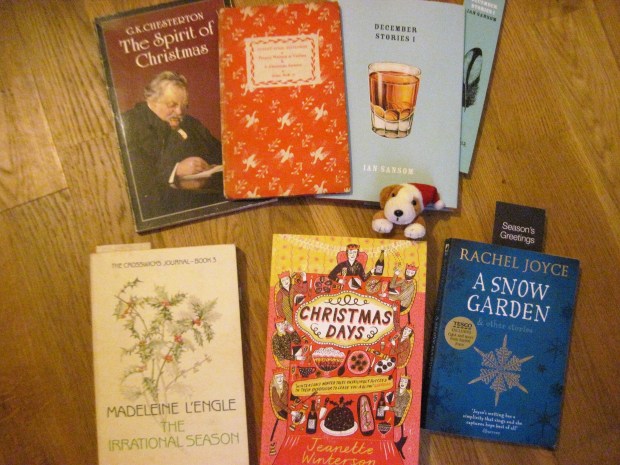
I also have a signed copy of Ian Sansom’s December Stories I that I won in a giveaway on Cathy’s blog, so I’ll be dipping into plenty of seasonally appropriate short stories this year. Earlier this year I picked up copies of the G.K. Chesterton collection (signed by the anthology editor) and the Robert Louis Stevenson volume (which contains prayers plus a sermon written during his time in Samoa) free at church from the theological library of a woman who’d died and donated her books to the church family.


A Snow Garden and Other Stories by Rachel Joyce
 Two stand-outs were “The Boxing Day Ball,” a prequel to The Unlikely Pilgrimage of Harold Fry, describing how Harold and Maureen met, and “A Faraway Smell of Lemon,” in which a woman mourning the end of her relationship wanders into a cleaning supplies store and learns the simple lesson that everybody hurts. (“Life is hard sometimes” – fair enough, but can we say it without a cliché?) “I’ll Be Home for Christmas” is about the boy formerly known as Tim, now the mega pop star X. All he wants is a quiet few days back home, but he can’t seem to escape his reputation. Characters and little elements from previous stories reappear in later ones. My favorite was probably the title story, about a father trying to make the holidays perfect for his sons after his breakdown and divorce.
Joyce chooses to write about ordinary and forgotten people, but sometimes her vision of chavvy types doesn’t quite ring true, and when she isn’t being melancholy she’s twee. “Christmas Day at the Airport” was so contrived it made me groan. While I don’t think any of her books are truly great, they’re pleasant, relatable and easy to read.
My rating: 
Favorite lines:
“There is much to do, much to prepare, much to mend, but it cannot be done in a day and sometimes it is better to do one small thing.” (from “A Faraway Smell of Lemon”)
“The truth was, there were no instructions when you got married. There was no manual in the birthing suite that explained how to bring up a happy child. No one said, you do this, and then you do this, and after that this will happen. You made it up as you went along.” (from “The Marriage Manual”)
Bright Evening Star: Mystery of the Incarnation by Madeleine L’Engle
 “The story of Jesus’ birth has been oversentimentalized until it no longer has the ring of truth, and once we’d sentimentalized it we could commercialize it and so forget what Christmas is really about.” L’Engle believes in the power of storytelling, and in this short volume of memoir she retells the life story of Jesus and recalls her own experiences with suffering and joy: losing her father young (his lungs damaged by poison gas in WWI) and the death of her husband of 40 years versus the sustaining nature of family love and late-life friendships. Chapters 4 and 5 are particular highlights.
L’Engle was not at all your average American Christian: raised in the Episcopal tradition, she didn’t even encounter Evangelicalism until her mid-forties, and she doesn’t understand the focus on creationism and sexual morality. She also writes about free will and the adoration of Mary and how A Wrinkle in Time (rejected by many a publisher) was her fable of light in the midst of darkness. The title comes from The New Zealand Prayer Book, which also gives helpful alternate names for the persons of the Trinity: Earth Maker, Pain Bearer, Life Giver. This isn’t a particularly Christmas-y book, but it still lends itself to being read a chapter at a time during Advent.
My rating: 
Some other favorite lines:
“Christ, in being born as Jesus, broke into time for us, so that time will never be the same again.”
“Family can be a movable feast. It can be a group of friends sitting around the dining table for an evening. It can be one or two people coming to stay with me for a few nights or a few weeks. It should be the church, and I am grateful that my church is a small church.”
Are you reading any particularly wintry or Christmasy books this year?
R.I.P. Reads, Part II: Cox, Gaiman, Paver
Happy Halloween! I enjoyed taking part in R.I.P. for the first time this year. My top two choices out of the six fantastical and/or spooky books I managed to read would be The Loney and The Graveyard Book (see below). For this second installment I’ve been reading eerie short stories that take place in the English countryside, a young adult fantasy novel set mostly in a graveyard, and a ghost story that unfolds in the Himalayas of the 1930s.

Help the Witch by Tom Cox (2018)
 I knew Tom Cox for his witty books about his many cats, including The Good, the Bad and the Furry. His first foray into fiction was published by Unbound earlier this month; I pre-ordered it on a Kindle deal for £1. The settings are dilapidated cottages, moorland and villages, mostly in the North of England. Even in the spookier stories, there’s always a welcome touch of humor. “Seance” raises the ghost of a cyclist who was killed on his bike and now is destined to cycle evermore. He doesn’t, at first, realize that he’s dead. “‘Morning!’ he called to a middle-aged couple with a labradoodle, cheerfully, as he cycled past Whiddon Scrubs. They ignored him. ‘Shitbags,’ he said under his breath.”
The three sets of flash fictions, “Listings,” “Nine Tiny Stories about Houses,” and “Folk Tales of the Twenty-third Century,” particularly made me laugh, though each perhaps overstays its welcome a bit. My two favorites were proper ghost stories: “Speed Awareness,” about a peculiar mix-up with the course teacher, and “Just Good Friends,” in which a woman’s Internet dating experiences turn strange when she meets someone with inside knowledge about her past. I could see the latter being anthologized. These are enjoyable enough stories to flip through around Halloween.
My rating:
The Graveyard Book by Neil Gaiman (2008)
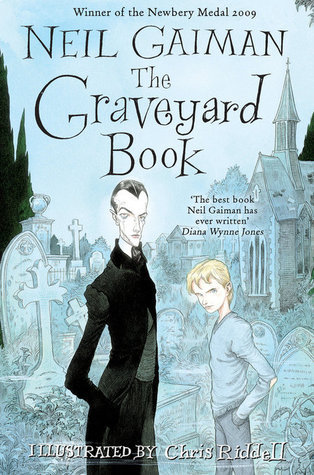 Nobody “Bod” Owens has lived in a graveyard ever since the night he climbed out of his cot and toddled there – the same night that a man named Jack murdered his parents and older sister. He was the only member of his family to survive the slaughter. Although he passes a happy childhood among the graveyard’s witches, ghouls and ghosts from many centuries, he knows he’s different. He’s alive; he has to eat and craves human friendship. As valuable as his lessons in Fading and Dreamwalking prove to be, he longs to attend school and discover more of the world outside – provided he can keep his head down and avoid notice; previous trips beyond the cemetery walls, such as to a pawnshop, have bordered on the disastrous.
Bod’s japes with his returning friend Scarlett turn more serious when he learns that Jack is still after him. This is quite a dark book for its young teen audience, but as I remember from the only other Gaiman book I’ve read, The Ocean at the End of the Lane, he’s a master at balancing sadness with humor and magic. The illustrations by Chris Riddell are terrific, too.
Favorite lines:
Silas, Bod’s guardian: “You’re alive, Bod. That means you have infinite potential. You can do anything, make anything, dream anything. If you change the world, the world will change.”
“Mother Slaughter’s headstone [was] so cracked and worn and weathered that all it said now was:
LAUGH
which had puzzled the local historians for over a hundred years.”
My rating: 
Thin Air: A Ghost Story by Michelle Paver (2016)
 In 1935 Dr. Stephen Pearce and his brother Kits are part of a five-man mission to climb the most dangerous mountain in the Himalayas, Kangchenjunga. Thirty years before, Sir Edmund Lyell led an ill-fated expedition up the same mountain: more than one man did not return, and the rest lost limbs to frostbite. “I don’t want to know what happened to them. It’s in the past. It has nothing to do with us,” Dr. Pearce tells himself, but from the start it feels like a bad omen that they, like Lyell’s party, are attempting the southwest approach; even the native porters are nervous. And as they climb, they fall prey to various medical and mental crises; hallucinations of ghostly figures on the crags are just as much of a danger as snow blindness.
This is pacey, readable historical fiction with a good sense of period and atmosphere. I enjoyed Pearce’s narration, and the one-upmanship type of relationship with his brother adds an interesting dimension to the expedition dynamics. However, I never submitted sufficiently to Paver’s spell to find anything particularly scary. I’ll try again with her other ghost story, Dark Matter, about an Arctic expedition from the same time period.
Favorite passage:
“The Sherpas are wrong. This mountain has no spirit, no sentience and no intent. It’s not trying to kill us. It simply is.” [famous last words…]
My rating:
Have you been reading anything fantastical or spooky this October?
R.I.P. Reads, Part I: Bender, Harkness, Hurley
I’ve been reading twisted fairy tales, a novel about witches and vampires with historical and contemporary timelines, and a subtle work of Gothic horror set on a remote stretch of the English coast.
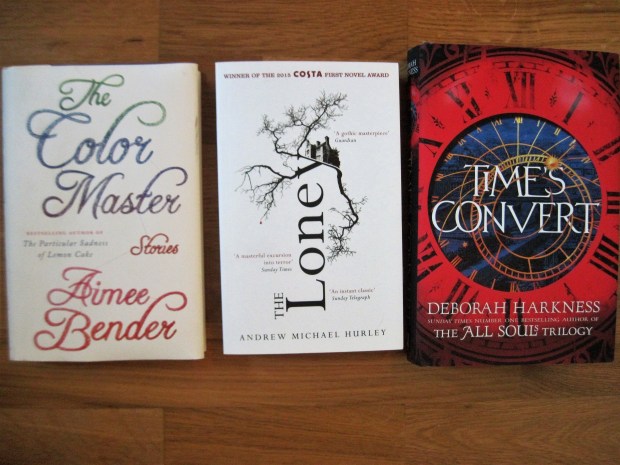
The Color Master by Aimee Bender (2013)
Aimee Bender is best known for The Particular Sadness of Lemon Cake. This is the second collection of her stories that I’ve read. Most have a touch of the bizarre to them – a tiny tweak to normal life – but some are set in completely alternate worlds. One character experiences extreme face blindness; another deludes himself that he was a famously vicious Nazi during the Second World War. Seamstresses take on odd tasks like repairing endangered animals or, in the title story, creating a dress that resembles the moon and embodies female anger. In “Appleless,” vigilantes punish a girl who won’t eat apples, while “The Devourings” is a dark riff on Shrek in which a woman comes to terms with her ogre husband’s innate violence.
 A few favorites were “A State of Variance,” in which a character can’t seem to avoid perfect facial symmetry no matter how he tries to mar his natural beauty, “The Doctor and the Rabbi,” a philosophical conversation between an ill rabbi and her atheist-leaning parishioner, and “The Red Ribbon” (which draws on the same source material as Carmen Maria Machado’s “The Husband Stitch”), about a bored housewife who starts acting out sexual fantasies to try to save her marriage.
Bender deploys a good mixture of voices and protagonists, though at least four of the 15 stories felt unnecessary to me. Her approach is similar to Kelly Link’s and Karen Russell’s, but I’ve failed to get on with their surreal stories before – Bender’s writing is that bit more accessible. I’d recommend her to fans of stories by Amy Bloom and Sarah Hall.
My rating: 
Time’s Convert by Deborah Harkness (2018)
This is a companion volume to Harkness’s All Souls Trilogy, which is like the thinking gal’s Twilight, as written by a historian of science. I read the first book, A Discovery of Witches, in 2011 and surprised myself by completely loving the story of the witch Diana Bishop, who researches alchemy at the Bodleian Library and falls hard for a centuries-old vampire, Matthew de Clermont. Although Time’s Convert is likely intended to stand alone, I felt it could do with a dramatis personae at the start as I’d forgotten who many of the minor characters were.
 Diana and Matthew are still major characters, though not at the heart of the book. One strand has Diana and her family staying in the French countryside. She and Matthew now have toddler twins, Philip and Becca, who are just starting to show magical powers: Philip summons a griffon named Apollo as his familiar. Another is set in Paris, where Phoebe Taylor is willingly being transformed into a vampire so she can marry Matthew’s son, Marcus. A final strand recreates Marcus’s experiences during the American and French Revolutions and onward: he was born in Massachusetts in 1757 and was a surgeon during the Revolutionary War before he met Matthew and received the offer of immortality.
I almost always feel that sequels fail to live up to the original. Time’s Convert is most like Shadow of Night, the second book of the series and my least favorite because it spends so much time in 1590s England. Here the three different story lines split my focus and I resented being taken away from Diana’s first-person narration, which is much more engaging than the third-person material. I would only recommend this volume to diehard fans of the series.
My rating:
With thanks to Headline for the free copy for review.
Note: A television adaptation of A Discovery of Witches recently aired on Sky One in the UK and is coming to North America in January.
The Loney by Andrew Michael Hurley (2014)
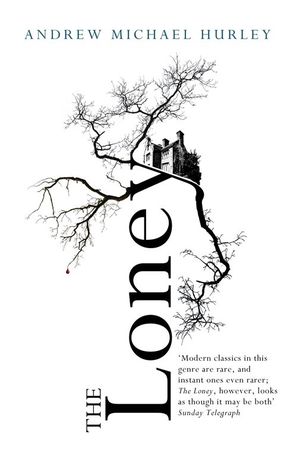 The Loney is not a monster, as I suppose I expected, but a place: an isolated coastline in the northwest of England that the narrator and his family visited on pilgrimage with their Roman Catholic congregation every Easter in the 1970s. The narrator, only identified by the nickname Tonto, explores their strange rental house – full of taxidermied animals and hidden rooms, it also has a rifle under the floorboards – and goes to the beach with his mute brother Andrew (“Hanny”). Mummer and Farther hold out hope that their son Hanny will be healed on a visit to the local shrine, and Mummer especially is frustrated that Father Bernard isn’t as strict and devout as their previous priest, Father Wilfred, who died under a cloud of suspicion not long before this trip.
Last year at around this time I read Hurley’s follow-up, Devil’s Day, which has a similarly bleak and eerie atmosphere. Both look at rural superstitions as experienced by outsiders. The Loney was more profound for me, though, in how it subverts religious rituals and posits a subtle evil influence without ever disappearing down doctrinal rabbitholes. It asks how far people will go to get what they want, what meaning there is to human life if there is no supernatural being looking out for us, and – through a framing story set 30 or more years later – how guilt and memory persist. I especially loved the Tenebrae service in a gloomy church featuring Bosch-like horrors in its artwork. This reminded me of a less abstract After Me Comes the Flood and a more contemporary The Short Day Dying; I highly recommend it.
Favorite lines:
“The Church of the Sacred Heart was an ancient place – dark and squat and glistening amphibiously in the rain.”
“The wind continued to rise and fall. Whining and shrilling. It was as insistent as the priest, louder sometimes, preaching an older sermon, about the sand and the sea.”
My rating:
Have you been reading anything fantastical or spooky this October?
Short Story Collections Read Recently
This is the third year in a row that I’ve made a concerted effort to read more short stories in the alliterative month of September; see also my 2016 and 2017 performances. (I actually finished Sarah Hall’s collection in late August, but I’m going to cheat and include it anyway.) That makes for four volumes in total read recently. Surprisingly, I had my best luck with two that were published back in the early 1990s.
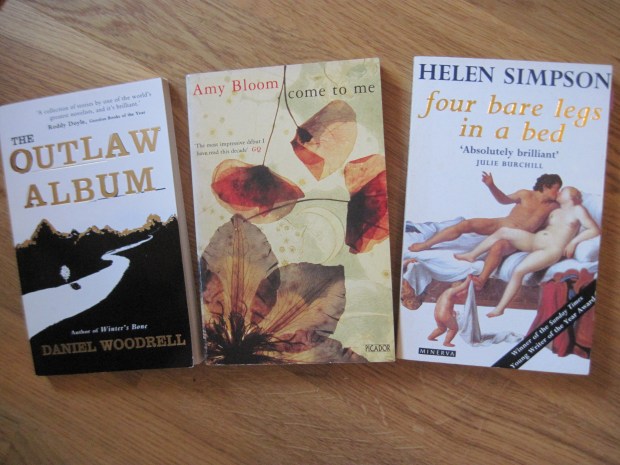
I read Sarah Hall’s book from the library; these three were bargains from my local charity warehouse, the Community Furniture Project.
Like many devoted novel readers, I struggle with short stories because they can feel fragmentary or open-ended, and it takes that much more effort to keep up with multiple settings and groups of characters. Yet I also get frustrated when the narrative voice and themes are too similar across a whole set of tales.
However, when done well short stories can be marvelous, of course. I enjoyed K.J. Orr’s article on short stories in the September 7th issue of the Times Literary Supplement. Among the virtues of the short story, she lists the following:
- “the capacity to stoke questions of definition and instability, resolution and irresolution … ; to deliver its conundrums to the reader in a state of compression”
- “The unpredictability involved means that picking up a new short story always feels to me a moment full of possibilities.”
- “The short story can combine complexity and uncertainty with ebullience and humour. It can take on subjects and situations that risk seeming clichéd and open them to wonder. It can put the familiar and the strange in conversation.”
And yet sometimes the quality of the writing, or at least the intensity of my engagement, can vary wildly within a story collection, which often makes the books difficult to rate and respond to as a whole. That’s what I found with these first two.
Madame Zero by Sarah Hall (2017)
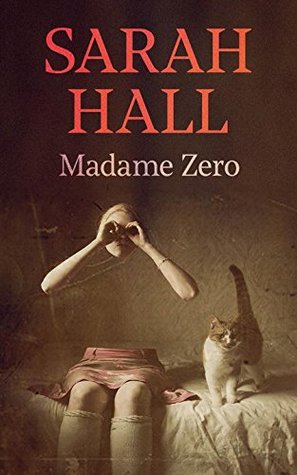 Three corkers; two pretty good; four been-there-read-that. My favorites were the first and last stories, “Mrs Fox” and “Evie” (winner of the BBC National Short Story Prize 2013 and shortlisted for the Sunday Times EFG Private Bank Short Story Award 2013, respectively). Both concern a fairly average marriage derailed when the wife undergoes a transformation. In the former Sophia literally turns into a fox and her husband scrambles for a way to make the relationship last. In “Evie,” Richard’s wife develops a voracious appetite for sweets and sex, and starts talking gibberish. This one is very explicit, but if you can get past that I found it both painful and powerful. I also especially liked “Case Study 2,” about a psychologist’s encounter with a boy who’s been brought up in a commune. It has faint echoes of T.C. Boyle’s “The Wild Child.”
“Wilderness” focuses on an intense episode of fear of heights during a trip to South Africa. In “Luxury Hour,” a new mother meets up with an old lover near the swimming pool they used to frequent and wonders where and why their lives diverged. This one reminded me of the first chapter of Rachel Cusk’s Transit.
As for the rest? “Goodnight Nobody” was completely forgettable, and the other three are in the vague speculative/post-apocalyptic vein that’s been done to death: “Theatre 6” = Red Clocks; “Later, His Ghost” = The Road et al.; “One in Four” = Station Eleven et al. I admire Hall’s writing in general, but The Wolf Border remains the best thing I’ve read by her.
My rating:
The Outlaw Album: Stories by Daniel Woodrell (2011)
 Based on the first six stories, I was planning a 5-star rating. (How can you resist this opening line? “Once Boshell finally killed his neighbor he couldn’t seem to quit killing him.”) But the second half of the book ended up being much less memorable; I wouldn’t say it wasn’t worth reading, but I got very little out of four of the stories, and the other two were okay but somewhat insubstantial. By contrast, the first two stories, “The Echo of Neighborly Bones” and “Uncle,” are gritty little masterpieces of violence and revenge.
I also particularly liked “Black Step” and “Night Stand,” about traumatized soldiers back from war (Woodrell himself was a Marine). Each has a creepy segment where the veteran gives sarcastic answers to the unspecified typical questions they always get; we have to infer that these are: How many people did you kill? What’s it like to kill someone? and What do you do with the bodies? There’s a nice balance between first- and third-person voices; lyrical and unlearned prose; and speech marks and none. I will definitely read more by Woodrell.
My rating:
I thoroughly loved these next two debut collections. In each case I’d read one or two previous books by the author and not been wild about the writing (White Houses; In-Flight Entertainment and Cockfosters), but these two have convinced me to try more of their work.
Come to Me by Amy Bloom (1993)
 Bloom was a practicing psychotherapist, so it’s no surprise she has deep insight into her characters’ motivations. This is a wonderful set of stories about people who love who they shouldn’t love. In “Song of Solomon,” a new mother falls for the obstetrician who delivered her baby; in “Sleepwalking,” a woman gives in to the advances of her late husband’s son from a previous marriage; in “Light Breaks Where No Sun Shines,” adolescent Susan develops crushes on any man who takes an interest in her. My favorite was probably “Love Is Not a Pie,” in which a young woman rethinks her impending marriage during her mother’s funeral, all the while remembering the unusual sleeping arrangement her parents had with another couple during their joint summer vacations. The title suggests that love is not a thing to be apportioned out equally until it’s used up, but a more mysterious and fluid entity.
Linked short stories can be a useful halfway-house for readers who prefer novels and are still unsure about reading stories. Happily, then, the heart of this collection is five pieces that orbit around the same characters. In “Hyacinths” we meet David as a boy in Manitoba and get a glimpse of him as an adult. In the next story we encounter his second wife, Galen, and her lover, Henry. “Silver Water” is about a mental health crisis with David and Galen’s daughter, and the next two stories are about Henry, his wife Marie, and the other bonds they form.
Although I read the book quickly while on holiday and so haven’t marked out any particular quotes, convincing dialogue and insightful observations are on almost every page. I was reminded most of short stories I’ve read by Elizabeth McCracken and Carol Shields.
My rating:
Four Bare Legs in a Bed and Other Stories by Helen Simpson (1990)
 Simpson won the inaugural Sunday Times Young Writer of the Year Award for this in 1991. Her protagonists are women disillusioned with the norms of marriage and motherhood. They ditch their safe relationships, or carry on brazen affairs; they fear pregnancy, or seek it out on their own terms. The feminist messages are never strident because they are couched in such brisk, tongue-in-cheek narratives. For instance, in “Christmas Jezebels” three sisters in 4th-century Lycia cleverly resist their father’s attempts to press them into prostitution and are saved by the bishop’s financial intervention; in “Escape Clauses” a middle-aged woman faces the death penalty for her supposed crimes of gardening naked and picnicking on private property, while her rapist gets just three months in prison because she was “asking for it.” (Nearly three decades on, it’s still so timely it hurts.)
I loved “The Bed,” a kind of fairy tale about a luxurious bed solving all a woman’s problems; “What Are Neighbours For,” in which each woman cattily plans what she can get out of the others; “Labour,” a brief five-act play set in a hospital delivery room; and “Zoë and the Pedagogues,” about a woman learning to drive who has two very different teachers (perhaps inevitably, this recalled Mirror, Shoulder, Signal by Dorthe Nors). “An Interesting Condition,” which takes place in an antenatal class, is like Curtis Sittenfeld’s “Bad Latch,” while multiple stories reminded me of Shena Mackay, especially “Send One Up for Me,” about a woman tiptoeing around her boarding house and trying not to anger the landlady.
My rating:
Are you a short story fan? Read any good ones recently?
Certain American States: Stories by Catherine Lacey
The loneliness of certain American states is enough to kill a person if you look too closely
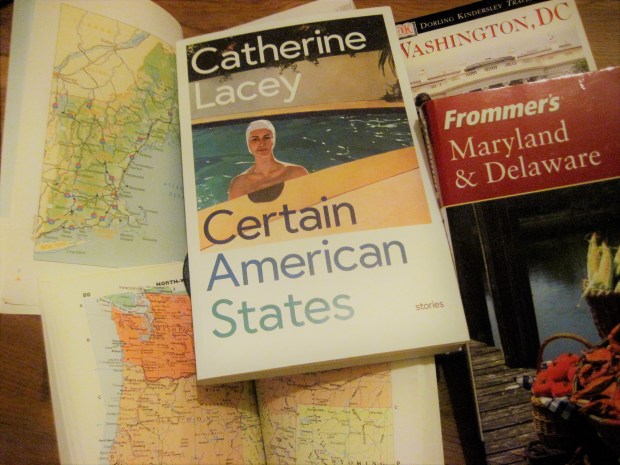
I come from a certain American state: Maryland. Before I first came to England 15 years ago, I’d never lived anywhere else. It’s the ninth-smallest state but has a little bit of everything – mountains, lakes and farmland; coast and bayfront; rough cities and pleasant towns; plus proximity to the nation’s capital – which is why it’s nicknamed “America in Miniature.” Brits say Merry-Land (it’s more like the name Marilyn, with a faint D on the end) and more than once when asked where I’m from I’ve heard in reply,“like the cookies?” No, not like the cookies!

Anyway, the characters in Catherine Lacey’s short story collection move through various states – Texas, North Dakota, Virginia, Montana – but the focus is more on their emotional states. Ten of the 12 stories are in the first person, giving readers a deep dive into the psyches of damaged or bereaved people. I particularly liked “ur heck box,” in which the narrator, troubled by the death of her brother and wary of her mother joining her in New York City, starts getting garbled messages from a deaf man. Whether a result of predictive text errors or mental illness, these notes on his phone echo her confusion at what’s become of her life.
 Two other favorites were “Touching People,” in which a sixty-something woman takes a honeymooning couple to see her ex-husband’s grave, and “Small Differences,” about a woman who’s cat-sitting for her on-and-off boyfriend and remembers the place faith used to have in her life. Both dramatize the divide between youth and age; in the latter the cat is named Echo, a reminder that the past still resonates. Another standout is “Learning,” about a painting teacher with a crumbling house and marriage whose deadbeat college friend has become a parenting guru. (This one reminded me of Curtis Sittenfeld’s “The Prairie Wife.”)
Many of the stories question the possibility of ‘getting over’ what’s happened and posit, instead of total healing, a stoic determination to just keep going. In the title story, the narrator goes to see her godfather, Leonard, on his deathbed. She still doesn’t like him much; the trip isn’t about achieving closure but doing the right thing when you can. The same is true in “Family Physics”: Bridget had an explosive falling-out with her family when they came to see her accept her college Physics Award. Now that she’s back in touch with them everything isn’t perfect, but she sees how family life is always a mixture of entropy and rebuilding.

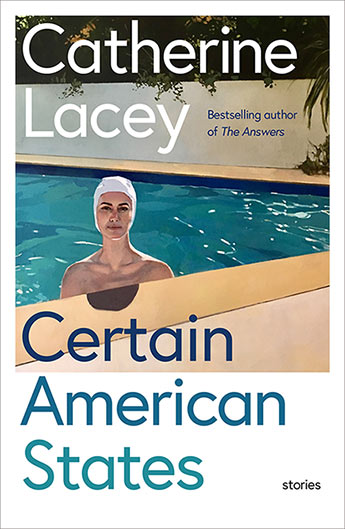
I prefer this U.S. cover. How about you?
There isn’t as much variety to the narration as I often like from a set of stories, but Lacey uses a range of storytelling techniques (or gimmicks, if one was being unkind) to keep things interesting. The first story, “Violations,” about a man whose ex-wife has published a story drawing on their life together, features run-on sentences that go over the page; “ur heck box” nests parentheses inside parentheses, up to three layers; “Because You Have To,” about a woman who’s counting her blessings even though she’s newly single and surrounded by feral pets, is in short sections separated by asterisks; and “The Four Immeasurables and Twenty New Immeasurables,” narrated by a woman who’s sleeping with a Buddhist monk, is in list form. Lacey also uses no speech marks, setting out dialogue in italics instead.
It can be tough to assess a story collection as a whole because the parts can range from hard-hitting to instantly forgettable. I didn’t always feel that each of the parts was necessary here; perhaps I would have been better off just sampling a few of the best stories? The problem, of course, is that you never know which those would be for you before you open up the book. There were quite a number of lines that rang true for me in Lacey’s work, but no more than a few stories that I can imagine myself recalling or ever going back to in the future. The book feels very much of the moment, though. If you’ve enjoyed recent work by Julie Buntin, R. O. Kwon, Sally Rooney or Sittenfeld, you might want to spend time in Certain American States.
Favorite lines:
“I don’t know what to do now, a state I am so familiar with it feels like my only true home.” (from “Because You Have To”)
“Anyone can visit a graveyard, no matter what they think, and every graveyard has been seen so many times there is nothing left in them for anyone to see and that is why we all must go and look, to see again what’s been seen again” (from “Touching People”)
“I no longer understand the state I was in back then (heartsick over the idea of Jesus the way that other girls were heartsick over the idea of River Phoenix)” (from “Small Differences”)
My rating: 
Certain American States was published in the UK by Granta on September 6th; it came out in the USA on August 7th from Farrar, Straus and Giroux. My thanks to the publisher for the free copy for review.
Roald Dahl Day Blog Tour: “Boy” & More
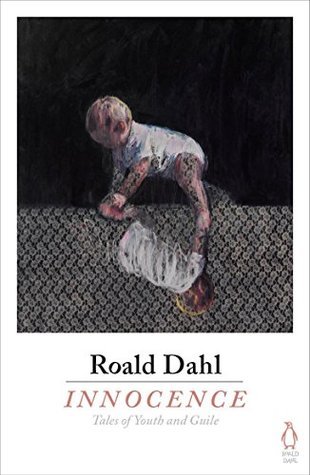 Like so many children on both sides of the Atlantic, I grew up with Roald Dahl’s classic tales: James and the Giant Peach, Charlie and the Chocolate Factory, and Matilda. I was aware that he had published work for adults, too, but hadn’t experienced any of it until I was asked to join this blog tour in advance of Roald Dahl Day on September 13th.
Last year Penguin brought out an eight-volume paperback set of Dahl’s short stories, grouped thematically. I focused on Innocence: Tales of Youth and Guile, which opens with a reprint of Boy (1984), the closest thing to an autobiography that Dahl wrote. That’s in spite of his prefatory disclaimer:
An autobiography is a book a person writes about his own life and it is usually full of all sorts of boring details. This is not an autobiography. … throughout my young days at school and just afterwards a number of things happened to me that I have never forgotten. … Some are funny. Some are painful. … All are true.
Dahl’s father was a one-armed shipbroker who’d moved from Norway to Wales for the coal. His mother, Harald’s second wife, was also from Norway, so Dahl was a full-blooded Norwegian. After his father’s early death he attended Llandaff Cathedral School and then boarding school and public school in England. Sofie Dahl, quietly tough, tended her brood of six children and stepchildren, giving them magical summers on a Norwegian island and keeping her cool during the car accident in which Dahl’s nose was almost severed.
Any time they were separated, Dahl wrote to his mother once a week, without fail. The book includes facsimile excerpts from some of these letters, along with black-and-white family photographs and drawings. This is more of a scrapbook than a straightforward chronological memoir, especially in the way that it moves between playful and disturbing vignettes from Dahl’s school days. It’s particularly delightful to spot incidents that inspired his children’s books, such as a plot to plant a dead mouse in the mean sweet shop lady’s gobstopper jar and the boxes of new-recipe Cadbury’s chocolates that would arrive at Repton School for testing by eager boys.
Pranks and larks and holidays: these are all here. But so is crushing homesickness and a bitter sense of injustice at being at the mercy of sadistic adults. Dahl had his adenoids removed without anesthesia, and at school he received and witnessed many a vicious caning. Aware that such scenes are accumulating uncomfortably, he addresses the topic directly:
By now I am sure you will be wondering why I lay so much emphasis upon school beatings in these pages. The answer is that I cannot help it. All through my school life I was appalled by the fact that masters and senior boys were allowed literally to wound other boys, and sometimes quite severely. I couldn’t get over it. I never have got over it.
When he graduated, instead of going to Oxford or Cambridge, he wanted to see the world and have adventures, so he spent the summer of 1934 exploring Newfoundland and joined the Shell Company at age 18. His first placement was to East Africa for three years; soon afterwards he would become a fighter pilot in the Second World War. In the short years he spent as a London commuter, he realized how easy a 9-to-5 office job is compared to making a living as a writer. (I could sympathize.)
The life of a writer is absolute hell compared with the life of a businessman. The writer has to force himself to work. He has to make his own hours and if he doesn’t go to his desk at all there is nobody to scold him. If he is a writer of fiction he lives in a world of fear. Each new day demands new ideas and he can never be sure whether he is going to come up with them or not. … A person is a fool to become a writer. His only compensation is absolute freedom. He has no master except his own soul.
I don’t often like reading books from a child’s perspective (particularly novels with a child narrator) because I find that the voice can ring false. Not so here. Nearly 60 years later, Dahl could use memory and imagination to fully inhabit his childhood self and give a charming survey of the notable events of his life up to age 20. I’d highly recommend Boy to fiction and nonfiction readers alike.
My rating: 
 I also dipped into Trickery: Tales of Deceit and Cunning and particularly liked “The Wish,” in which a boy imagines a carpet is a snakepit and then falls into it, and “Princess Mammalia,” a Princess Bride-style black comedy about a royal who decides to wrest power from her father but gets her mischief turned right back on her. I’ll also pick up Fear, Dahl’s curated set of ghost stories by other authors, during October for the R.I.P. challenge.
My thanks to the publisher for free copies of four volumes of the tales.
Three Reads for Women in Translation Month 2018
An offer of the latest Latin American import from Charco Press prompted me to scour my shelves and see what other books I might add for #WITMonth. I dug out two novella-length books I’d bought secondhand over the past year to make it a trio. My rating for all: 
The Lost Daughter by Elena Ferrante
[Translated from the Italian by Ann Goldstein]
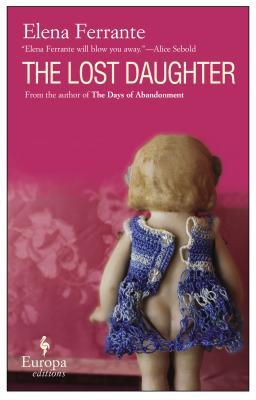 Leda is a 47-year-old teacher on holiday in southern Italy. She mostly sits on the beach, minding her own business, but still gets drawn into the minor daily dramas of a large Neapolitan family. One woman is pregnant; another has a small child named Elena who is devastated at losing her doll. Their mother–daughter dynamic takes Leda back to the time when she abandoned her own daughters and didn’t see them for three years. She temporarily found it impossible to reconcile motherhood with her career and her general sense of herself. Leda sees herself as part of a “chain of mute or angry women” – “I seemed to be falling backward toward my mother, my grandmother.”
I was definitely on board for the memories of motherly guilt. Where Ferrante lost me was when Leda steals the doll the child left behind and takes it up to her room to care for it – washing it, buying it new clothes, etc. Every time she sets out to give the doll back or at least leave it somewhere it will be found, she finds another excuse to put it off. Leda herself is unsure why she’s fixated on the doll; “The hardest things to talk about are the ones we ourselves can’t understand,” she says early on.
Most likely the doll could be interpreted as a symbol of Leda’s desire to be part of a functional family, to get a second chance at perfection with her daughters. But the book was a little too strange for me, and I never really engaged with the Neapolitan characters. After this and a skim of My Brilliant Friend a couple years back, I doubt I’ll pick up anything else by Ferrante. The themes and style of this one reminded me of Rachel Cusk’s Outline trilogy, A Separation by Katie Kitamura, and Hot Milk by Deborah Levy.
Favorite passage:
“Life can have an ironic geometry. Starting from the age of thirteen or fourteen I had aspired to a bourgeois decorum, proper Italian, a good life, cultured and reflective. Naples had seemed a wave that would drown me. I didn’t think the city could contain life forms different from those I had known as a child, violent or sensually lazy, tinged with sentimental vulgarity or obtusely fortified in defense of their own wretched degradation. I didn’t even look for them, those forms, in the past or in a possible future. I had run away like a burn victim who, screaming, tears off the burned skin, believing that she is tearing off the burning itself.”
Fish Soup by Margarita García Robayo
[Translated from the Spanish by Charlotte Coombe]
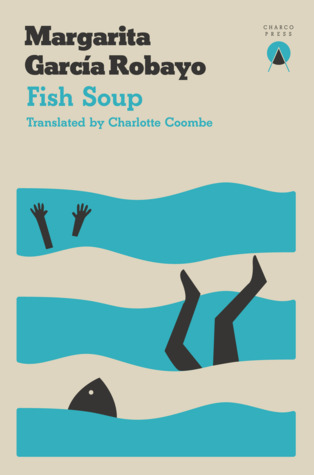 Fish Soup contains two novellas (one of them, Sexual Education, was previously unpublished) separated by a set of seven short stories, and marks the first time the Colombian author Margarita García Robayo’s work has appeared in English. I especially liked the title story, in which a widower starts to smell his dead wife Helena’s fish soup in the bar that he owns and goes to investigate, all the while mixing up his dreams and memories with what’s really happening.
My other favorite piece was the opening novella, Waiting for a Hurricane, in which the narrator longs for escape from her seaside home, wanting nothing more than to be a “foreigner.” She starts a law degree but gives it up to become an air hostess, making flights to and from Miami and elsewhere. From her childhood onward, Gustavo has been a major presence in her life, teaching her to prepare fish and telling her stories, but there’s an uncomfortable element to their relationship that’s never really addressed. The mixture of quirky happenings and darker material reminded me of Swallowing Mercury, while the cancer theme of the story “Like a Pariah” recalls Hair Everywhere.
One of my frequent issues with short fiction is a preponderance of inconclusive endings that make you wonder what the point could be. I experienced that a few times with this collection, especially at the close of Waiting for a Hurricane. Judging by the title, though, the main message I drew from the novella is that you can’t just go around waiting for momentous things to happen to you, for your ‘real’ life to start; you have to recognize that this is life, here and now: in storytelling, in spicy stews, in everyday moments with friends and family.
With thanks to Charco Press for the free copy for review.
Sky Burial: An Epic Love Story of Tibet by Xinran
[Translated from the Chinese by Julia Lovell and Esther Tyldesley]
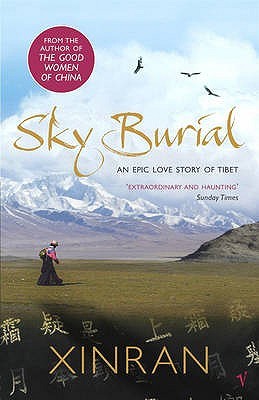 In 1994 Xinran, a Chinese journalist who later moved to London, met a woman whose story captured her imagination. Shu Wen received word that her husband, Kejun, had died just months into their marriage. A doctor in the People’s Liberation Army, he’d been sent into Tibet in the 1960s after its ‘liberation’. With no details or body to confirm his demise, though, Wen refused to believe Kejun was gone, and traveled to Tibet to find him. She stayed there for over 30 years – more than half her life – living with a Tibetan family and adjusting to their culture and rituals as she sought word of her husband. The gender roles surprised her: men did the sewing and women had multiple husbands. It was a land of lamas and temples; “the whole of Tibet was one great monastery,” she felt.
Wen does eventually learn the truth of what happened to her husband (whew!), and after decades of living as a superstitious Buddhist in primitive conditions has to readjust to life in a new China, having completely missed the Cultural Revolution. She clings to words of wisdom from a military official: “Whatever happens, remember one thing: just staying alive is a victory” and “Writing can be a source of strength.” He then gave her a diary that she filled with letters to Kejun over the years.
It’s a pleasant, short book made up of layers of tales: the legends and history lessons Wen hears from Tibetans; what she conveys to Xinran during their two intense days together; and the resulting narrative Xinran spent nearly a decade imagining herself into. Kejun’s fate is worth waiting around to hear about (but if you know what the title refers to you might consider it a spoiler), though this is something of a thin story overall. I’ve seen it referred to as a novel, though I consider it more of a stylized biography.
Did you do any special reading for Women in Translation month this year?
Rebecca Stott, Duke Special & More at Greenbelt 2018
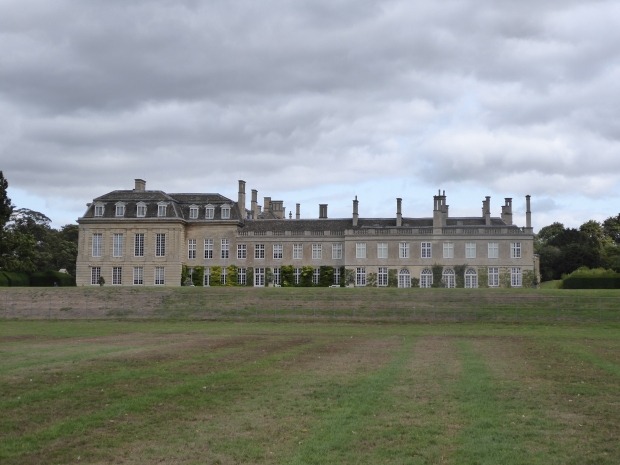
After five years away, we finally made it back to Greenbelt, a progressive Christian summer arts festival held on the grounds of Boughton House, on the Bank Holiday. The festival is a mixture of talks, music, performances and more, and given how much we’d paid and how far we’d traveled just for the one day, we tried to pack in as much as possible.
We started the day with “Beyond Forgiveness,” a presentation by Jo Berry and Pat Magee. Berry’s father, a Tory MP, was killed when the IRA bombed the Conservative Party conference in Brighton in 1984. Magee spent 14 years in prison for his role in the bombing. When he got out of jail, he met Berry at her request and they talked and listened to each other for several hours. For the first time, Magee said, he could see her father as a real person and realized that the IRA had been just as guilty of dehumanizing and misrepresenting people as the English were. Berry, too, felt that “I’d met my enemy and seen his humanity.” The two have now shared a stage more than 200 times, speaking about the value of empathy in healing broken relationships while also addressing imbalances of power that lead to violence.
To my surprise, cookery displays and musical comedy seemed to be the order of the day. A model kitchen is a new addition to the festival, giving celebrity chefs hour-long sessions to demonstrate a particular dish. Jack Monroe, promoting her new book Cooking on a Bootstrap, cooked a sausage lasagna. She made us all laugh with her idea of “the inverse sausage fallacy” – the cheaper a sausage is, the better it tastes because of all the salt, sugar and spices added to cheaper bits of meat. She started writing recipes when she was a single mother on the dole, and so she encouraged audience members to donate nice things you would like to eat, as well as everyday hygiene products, to food banks. For a “What Vegans Eat” session, Brett Cobley (aka EpiVegan) made a pea and asparagus risotto and answered questions about protein sources, egg replacements, plant milks and harder-to-find ingredients.
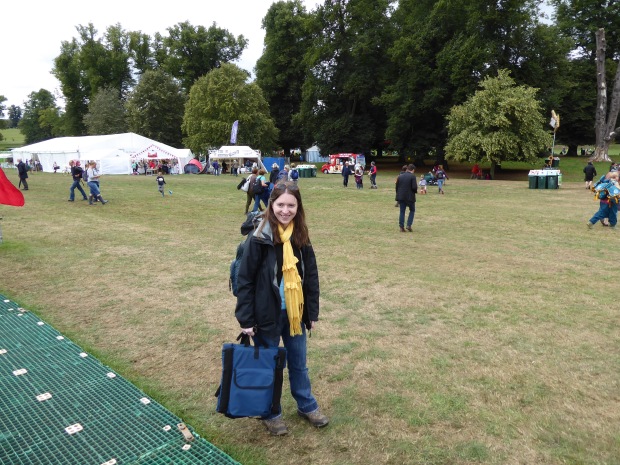
Uproarious musical comedy came in the form of Harry & Chris, who made up impromptu raps about New Year’s Day, the Teletubbies and phobias, and Flo & Joan, who sang about divorce statistics, unnecessary inventions for women, and sex robots (the show was fairly crude and came with an 18+ warning). The overall musical highlight of the day was Duke Special, a Greenbelt favorite we’ve seen play quite a number of times now. His pop combines his smooth Belfast tenor with music hall and Big Band stylings, and his songs are often drawn from poetry and 1920s–40s songbooks. His latest project, Hallow, is a beautiful set of Michael Longley poems set to music. He played “Another Wren” and “Emily Dickinson” from that album, various covers (including two bizarre ditties by Ivor Cutler), and crowd favorites “Last Night I Nearly Died,” “Freewheel” and “Our Love Goes Deeper than This.” We also sampled performances by Martyn Joseph, Wallis Bird and CC Smugglers.
Duke Special was a good bridge between music and literature. From the literature program I also saw Rabbi Jonathan Wittenberg speak on “Things My Dog Has Taught Me about Being a Better Human,” the title of his recent book. (His dog Mitzpah had a special dispensation to join him on stage; no animals are allowed on site otherwise!) The rabbi spoke about lessons in listening, attention, trust and seizing the moment. Mitzi and his previous dog Safi have also given him a connection with the rest of creation. Although he lives in the London suburbs and has an inner-city synagogue, they have accompanied him on long walks in Scotland and Germany. Wittenberg was a warm and witty speaker and I very much liked the sound of his book. It could make a good follow-up to The Power of Dog.
My other festival highlight was Rebecca Stott, in conversation with Radio 4 presenter Malcolm Doney. I read her Costa Prize-winning memoir In the Days of Rain: A daughter. A father. A cult in April and it’s been one of my stand-out reads of the year so far. The book conveys a huge amount of information about the Exclusive Brethren and Stott’s family history but never loses sight of what is most important: what it was like to be in a cult and have your life defined by its rules and its paranoia about the outside world. Stott remembers 6 a.m. Sunday communion services and her constant terror of being left behind in the Rapture.
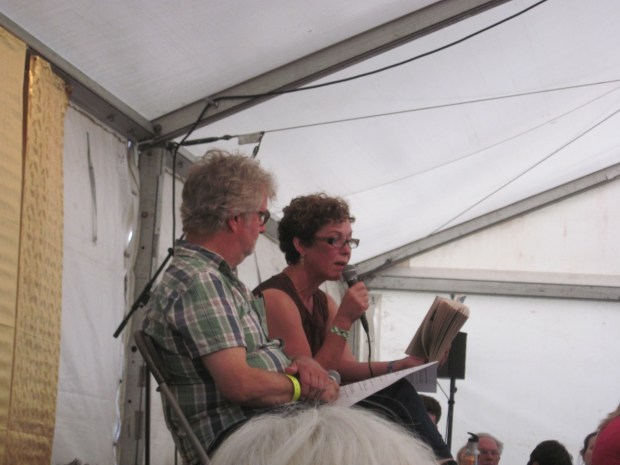
Rebecca Stott reading from In the Days of Rain.
Unfortunately, the talk didn’t add much to my experience of reading her book. The interviewer, catering to those who haven’t read the book yet, led her through her whole story bit by bit, and because I’d read it fairly recently it was all familiar. However, Stott spoke wonderfully and was full of wry compassion for her younger self. I was most interested to hear about the book’s aftermath: she’s received 300 letters from ex-Brethren that her daughter is transcribing to send to a Brethren Church archive in Manchester. When asked during a Q&A where she sees cult tendencies today, she mentioned Trump supporters!


Whereas I read In the Days of Rain from the library, I happen to own two Stott books I haven’t read yet, so I cheekily brought along my paperback of Ghostwalk for signing. She was intrigued to see the older cover design and told me she thinks the prose style in her debut novel is much richer than in Rain, and she hopes I’ll like it. I thanked her for the talk, told her how much I’d enjoyed her memoir, and recommended her two books vaguely about cults: Educated by Tara Westover, which she already knew well, having done some events with Westover, and The Incendiaries by R.O. Kwon, which was new to her (my blog tour review is coming up on Monday). I caught myself using the word “brilliant” three times in speaking about Stott’s work and these other books – nuance and vocabulary alike clearly go out the window when nervously speaking to admired authors!
Some readers of this blog would have been delighted by the event I rushed to straight after Stott’s talk: Jon McGregor giving readings from Reservoir 13, with Sigur Rós-esque backing and interlude music from Haiku Salut. I heard about the police reconstruction with actors from Manchester, and collecting bilberries on the heath in August. Unfortunately, I found it just as dull read aloud as I did when I tried the book last year, and I left early.
During bits of down time I pulled out a Katherine Mansfield story collection I found in a charity shop last week and read “Bank Holiday” and “The Garden Party.” The former is a very short piece whose carnival atmosphere rises to a note of indeterminate striving:
“And up, up the hill come the people, with ticklers and golliwogs, and roses and feathers. Up, up they thrust into the light and heat, shouting, laughing, squealing, as though they were being pushed by something, far below, and by the sun, far ahead of them – drawn up into the full, bright, dazzling radiance to…what?”
 It was my first time reading the famous “The Garden Party,” which likewise moves from a blithe holiday mood into something weightier. The Sheridans are making preparations for a lavish garden party dripping with flowers and food. Daughter Laura is dismayed when news comes that a man from the cottages has been thrown from his horse and killed, and thinks they should cancel the event. Everyone tells her not to be silly; of course it will go on as planned. The story ends when, after visiting his widow to hand over leftover party food, she unwittingly sees the man’s body and experiences an epiphany about the simultaneous beauty and terror of life. “Don’t cry,” her brother says. “Was it awful?” “No,” she replies. “It was simply marvellous.” Mansfield is especially good at first and last paragraphs. I’ll read more by her someday.
 Bookish Beck = Rebecca Foster. American transplant to England. Freelance proofreader and book reviewer.
 Bookish Beck