Most Anticipated Books of 2026
Later than intended, but here we are. I’ve narrowed it down to the 25 books I’m most looking forward to in January–September, though no doubt I’ll have heard of many more unmissable titles before that time is up. My list is dominated by fiction, which I tend to find out about earlier. Also on my radar are novels by Sharon Bala, Freya Bromley, Mary Costello, Louise Kennedy, Ben Lerner, Paula McLain, Liz Nugent and Tom Perrotta; short stories by Jess Gibson (Margaret Atwood’s daughter); and nonfiction from Margaret Drabble, Cal Flyn, Siri Hustvedt and Anne Lamott.
In release date order, with UK publication info given first if available. The blurbs are adapted from Goodreads. I’ve taken the liberty of using whichever cover I prefer.
Fiction
 Departure(s) by Julian Barnes [20 Jan., Vintage (Penguin) / Knopf]: (Currently reading) I get more out of rereading Barnes’s classics than reading his latest stuff, but I’ll still attempt anything he publishes. He’s 80 and calls this his last book. So far, it’s heavily about memory. “Julian played matchmaker to Stephen and Jean, friends he met at university in the 1960s; as the third wheel, he was deeply invested in the success of their love”. Sounds way too similar to 1991’s Talking It Over, and the early pages have been tedious. (Review copy from publisher)
 Half His Age by Jennette McCurdy [20 Jan., Fourth Estate / Ballantine]: McCurdy’s memoir, I’m Glad My Mom Died, was stranger than fiction. I was so impressed by her recreation of her childhood perspective on her dysfunctional Mormon/hoarding/child-actor/cancer survivor family that I have no doubt she’ll do justice to this reverse-Lolita scenario about a 17-year-old who’s in love with her schlubby creative writing teacher. (Library copy on order)
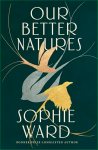 Our Better Natures by Sophie Ward [5 Feb., Corsair]: I loved Ward’s Booker-longlisted Love and Other Thought Experiments (though the follow-up, The Schoolhouse, was a letdown). “Amid the chaos and political upheaval of 1970s America, three very different women must accept the world as it is, or act to change it. Phyllis Patterson is a housewife in White Plains, Illinois. … Andrea Dworkin is an activist in Amsterdam. … Muriel Rukeyser is a poet in New York.” (Library copy on order)
 Brawler: Stories by Lauren Groff [Riverhead, Feb. 24]: (Currently reading) Controversial opinion: Short stories are where Groff really shines. Three-quarters in, this collection is just as impressive as Delicate Edible Birds or Florida. “Ranging from the 1950s to the present day and moving across age, class, and region (New England to Florida to California) these nine stories reflect and expand upon a shared the ceaseless battle between humans’ dark and light angels.” (For Shelf Awareness review) (Edelweiss download)
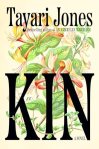 Kin by Tayari Jones [24 Feb., Oneworld / Knopf]: I’m a big fan of Leaving Atlanta and An American Marriage. This sounds like Brit Bennett meets Toni Morrison. “Vernice and Annie, two motherless daughters raised in Honeysuckle, Louisiana, have been best friends and neighbors since earliest childhood, but are fated to live starkly different lives. … A novel about mothers and daughters, about friendship and sisterhood, and the complexities of being a woman in the American South”. (Edelweiss download)
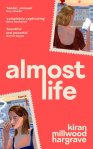 Almost Life by Kiran Millwood Hargrave [12 March, Picador / March 24, S&S/Summit Books]: There have often been queer undertones in Hargrave’s work, but this David Nicholls-esque plot sounds like her most overt. “Erica and Laure meet on the steps of the Sacré-Cœur in Paris, 1978. … The moment the two women meet the spark is undeniable. But their encounter turns into far more than a summer of love. It is the beginning of a relationship that will define their lives and every decision they have yet to make.” (Edelweiss download)
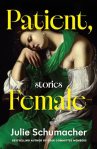 Patient, Female: Stories by Julie Schumacher [May 5, Milkweed Editions]: I found out about this via a webinar with Milkweed and a couple of other U.S. indie publishers. I loved Schumacher’s Dear Committee Members. “[T]his irreverent collection … balances sorrow against laughter. … Each protagonist—ranging from girlhood to senescence—receives her own indelible voice as she navigates social blunders, generational misunderstandings, and the absurdity of the human experience.” The publicist likened the tone to Meg Wolitzer.
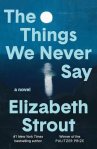 The Things We Never Say by Elizabeth Strout [7 May, Viking (Penguin) / May 5, Random House]: Hurrah for moving on from Lucy Barton at last! “Artie Dam is living a double life. He spends his days teaching history to eleventh graders … and, on weekends, takes his sailboat out on the beautiful Massachusetts Bay. … [O]ne day, Artie learns that life has been keeping a secret from him, one that threatens to upend his entire world. … [This] takes one man’s fears and loneliness and makes them universal.”
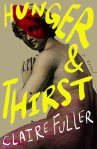 Hunger and Thirst by Claire Fuller [7 May, Penguin / June 2, Tin House]: I’ve read everything of Fuller’s and hope this will reverse the worsening trend of her novels, though true crime is overdone. “1987: After a childhood trauma and years in and out of the care system, sixteen-year-old Ursula … is invited to join a squat at The Underwood. … Thirty-six years later, Ursula is a renowned, reclusive sculptor living under a pseudonym in London when her identity is exposed by true-crime documentary-maker.” (Edelweiss download)
 Little Vanities by Sarah Gilmartin [21 May, ONE (Pushkin)]: Gilmartin’s Service was great. “Dylan, Stevie and Ben have been inseparable since their days at Trinity, when everything seemed possible. … Two decades on, … Dylan, once a rugby star, is stranded on the sofa, cared for by his wife Rachel. Across town, Stevie and Ben’s relationship has settled into weary routine. Then, after countless auditions, Ben lands a role in Pinter’s Betrayal. As rehearsals unfold, the play’s shifting allegiances seep into reality, reviving old jealousies and awakening sudden longings.”
 Said the Dead by Doireann Ní Ghríofa [21 May, Faber / Sept. 22, Farrar, Straus and Giroux]: A Ghost in the Throat was brilliant and this sounds right up my street. “In the city of Cork, a derelict Victorian mental hospital is being converted into modern apartments. One passerby has always flinched as she passes the place. Had her birth occurred in another decade, she too might have lived within those walls. Now, … she finds herself drawn into an irresistible river of forgotten voices”.
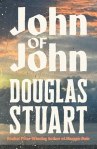 John of John by Douglas Stuart [21 May, Picador / May 5, Grove Press]: I DNFed Shuggie Bain and haven’t tried Stuart since, but the Outer Hebrides setting piqued my attention. “[W]ith little to show for his art school education, John-Calum Macleod takes the ferry back home to the island of Harris [and] begrudgingly resumes his old life, stuck between the two poles of his childhood: his father John, a sheep farmer, tweed weaver, and pillar of their local Presbyterian church, and his maternal grandmother Ella, a profanity-loving Glaswegian”. (For early Shelf Awareness review) (Edelweiss download)
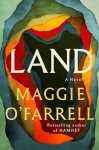 Land by Maggie O’Farrell [2 June, Tinder Press / Knopf]: I haven’t fully loved O’Farrell’s shift into historical fiction, but I’m still willing to give this a go. “On a windswept peninsula stretching out into the Atlantic, Tomás and his reluctant son, Liam [age 10], are working for the great Ordnance Survey project to map the whole of Ireland. The year is 1865, and in a country not long since ravaged and emptied by the Great Hunger, the task is not an easy one.” (Edelweiss download)
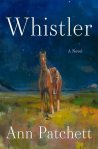 Whistler by Ann Patchett [2 June, Bloomsbury / Harper]: Patchett is hella reliable. “When Daphne Fuller and her husband Jonathan visit the Metropolitan Museum of Art, they notice an older, white-haired gentleman following them. The man turns out to be Eddie Triplett, her former stepfather, who had been married to her mother for a little more than year when Daphne was nine. … Meeting again, time falls away; … [in a story of] adults looking back over the choices they made, and the choices that were made for them.” (Edelweiss download)
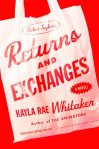 Returns and Exchanges by Kayla Rae Whitaker [2 June, Scribe / May 19, Random House]: Whitaker’s The Animators is one of my favourite novels that hardly anyone else has ever heard of. “A sweeping novel of one [discount department store-owning] Kentucky family’s rise and fall throughout the 1980s—a tragicomic tour de force about love and marriage, parents and [their four] children, and the perils of mixing family with business”. (Edelweiss download)
 The Great Wherever by Shannon Sanders [9 July, Viking (Penguin) / July 7, Henry Holt]: Sanders’s linked story collection Company left me keen to follow her career. Aubrey Lamb, 32, is “grieving the recent loss of her father and the end of a relationship.” She leaves Washington, DC for her Black family’s ancestral Tennessee farm. “But the land proves to be a burdensome inheritance … [and] the ghosts of her ancestors interject with their own exasperated, gossipy commentary on the flaws and foibles of relatives living and dead”. (Edelweiss download)
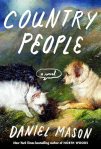 Country People by Daniel Mason [14 July, John Murray / July 7, Random House]: It doesn’t seem long enough since North Woods for there to be another Mason novel, but never mind. “Miles Krzelewski is … twelve years late with his PhD on Russian folktales … [W]hen his wife Kate accepts a visiting professorship at a prestigious college in the far away forests of Vermont, he decides that this will be his year to finally move forward with his life. … [A] luminous exploration of marriage and parenthood, the nature of belief and the power of stories, and the ways in which we find connection in an increasingly fragmented world.”
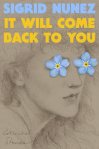 It Will Come Back to You: Collected Stories by Sigrid Nunez [14 July, Virago / Riverhead]: Nunez is one of my favourite authors but I never knew she’d written short stories. The blurb reveals very little about them! “Carefully selected from three decades of work … Moving from the momentous to the mundane, Nunez maintains her irrepressible humor, bite, and insight, her expert balance between intimacy and universality, gravity and levity, all while entertainingly probing the philosophical questions we have come to expect, such as: How can we withstand the passage of time? Is memory the greatest fiction?” (Edelweiss download)
 Exit Party by Emily St. John Mandel [17 Sept., Picador / Sept. 15, Knopf]: The synopsis sounds a bit meh, but in my eyes Mandel can do no wrong. “2031. America is at war with itself, but for the first time in weeks there is some good news: the Republic of California has been declared, the curfew in Los Angeles is lifted, and everyone in the city is going to a party. Ari, newly released from prison, arrives with her friend Gloria … Years later, living a different life in Paris, Ari remains haunted by that night.”
The Housekeeper by Rose Tremain [17 Sept., Vintage (Penguin); no cover image yet]: “Set in 1930s England and fictionalises the inspiration behind Daphne du Maurier’s famous novel, Rebecca.” Strangely, this started life as a short story (in The American Lover), then become a screenplay authored by Tremain (the film is in production and stars Uma Thurman and Anthony Hopkins), and is now being expanded into a novel. Tremain is 82 and a survivor of major cancer; I do wonder if this is the last book we can expect from her.
Nonfiction
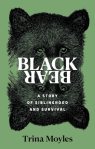 Black Bear: A Story of Siblinghood and Survival by Trina Moyles [Jan. 6, Pegasus Books]: Out now! “When Trina Moyles was five years old, her father … brought home an orphaned black bear cub for a night before sending it to the Calgary Zoo. … After years of working for human rights organizations, Trina returned to northern Alberta for a job as a fire tower lookout, while [her brother] Brendan worked in the oil sands … Over four summers, Trina begins to move beyond fear and observe the extraordinary essence of the maligned black bear”. (For BookBrowse review) (Review e-copy)
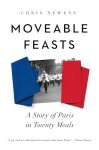 Moveable Feasts: A Story of Paris in Twenty Meals by Chris Newens [Feb. 3, Pegasus Books; came out in the UK in July 2025 but somehow I missed it!]: I’m a sucker for foodie books and Paris books. A “long-time resident of the historic slaughterhouse quartier Villette takes us on a delightful gastronomic journey around Paris … From Congolese catfish in the 18th to Middle Eastern falafels in the 4th, to the charcuterie served at the libertine nightclubs of Pigalle in the 9th, Newens lifts the lid on the city’s ever-changing, defining, and irresistible food culture.” (Edelweiss download)
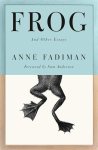 Frog: And Other Essays by Anne Fadiman [Feb. 10, Farrar, Straus and Giroux]: Fadiman publishes rarely, and it can be difficult to get hold of her books, but they are always worth it. “Ranging in subject matter from her deceased frog, to archaic printer technology, to the fraught relationship between Samuel Taylor Coleridge and his son Hartley, these essays unlock a whole world—one overflowing with mundanity and oddity—through sly observation and brilliant wit.”
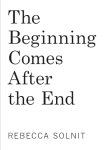 The Beginning Comes after the End: Notes on a World of Change by Rebecca Solnit [March 3, Haymarket Books]: A sequel to Hope in the Dark. Hope is a critically endangered species these days, but Solnit has her eyes open. “While the white nationalist and authoritarian backlash drives individualism and isolation, this new world embraces antiracism, feminism, a more expansive understanding of gender, environmental thinking, scientific breakthroughs, and Indigenous and non-Western ideas, pointing toward a more interconnected, relational world.” (Edelweiss download)
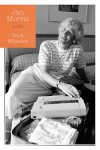 Jan Morris: A Life by Sara Wheeler [7 April, Faber / April 14, Harper]: I didn’t get on with the mammoth biography Paul Clements published in 2022 – it was dry and conventional; entirely unfitting for Morris – but hope for better things from a fellow female travel writer. “Wheeler uncovers the complexity of this twentieth-century icon … Drawing on unprecedented access to Morris’s papers as well as interviews with family, friends and colleagues, Wheeler assembles a captivating … story of longing, traveling and never reaching home.” (Edelweiss download)
Others’ lists whence a few of my ideas came!
What catches your eye here? What other 2026 titles do I need to know about?
#NovNov25 Catch-Up: Dodge, Garner, O’Collins, Sagan and A. White
As promised, I’m catching up on five novella-length works I finished in November. In fiction, I have an odd duck of a family story, a piece of autofiction about caring for a friend with cancer, a record of an affair, and a tale of settling two new cats into home life in the 1950s. And in nonfiction, a short book about the religious approach to midlife crisis.
Fup by Jim Dodge (1983)
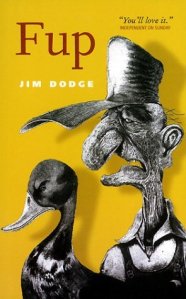 I’d never heard of this but picked it up because of my low-key project of reading books from my birth year. After his daughter died in a freak accident, Grandaddy Jake Santee adopted his grandson “Tiny.” With that touch of backstory dabbed in, we’re in the northern California hills in 1978 with grandfather and grandson – now 99 and 22, respectively. Tiny builds fences, while Grandaddy is famous for his incredibly strong, home-distilled whiskey, “Ol’ Death Whisper.” One day, Tiny rescues a filthy creature from a posthole where it’s been chased by their nemesis, Lockjaw the wild boar. It turns out to be a duckling that grows into a hen mallard named Fup Duck (it’s a spoonerism…) who eats so much she’s too heavy to fly. Grandaddy plans to continue drinking and gambling indefinitely, but the hunt for Lockjaw – who he thinks may be a reincarnation of his Native American friend, Seven Moons – breaks the household apart. This was very weird: it starts out a mixture of grit (those grotesque Harry Horse drawings!) and Homer Hickam schmaltz and then goes full Jonathan Livingston Seagull. (Secondhand – Community Furniture Project, Newbury) [89 pages]
The Spare Room by Helen Garner (2008)
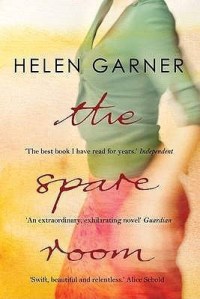 Who knew there was such a market for novels about helping a friend through cancer treatment? Or maybe it’s just that I love them so much I home right in on them. As a work of autofiction – the no-nonsense narrator, Helen, gives her old friend Nicola a place to stay in Melbourne for several weeks while she undergoes experimental procedures – this is most like What Are You Going Through by Sigrid Nunez (but I also had in mind Talk Before Sleep by Elizabeth Berg, We All Want Impossible Things by Catherine Newman, and Some Bright Nowhere by Ann Packer). Helen thinks The Theodore Institute peddles quack medicine, whereas Nicola is willing to shell out thousands of dollars for its coffee enemas and vitamin C infusions, even though they leave her terrifyingly fragile. Nicola is the only character who doesn’t acknowledge that her case is terminal. The pages turn effortlessly as Helen covers her frustration with Nicola, Nicola’s essential optimism, and the realities of living while dying. “Oh, I loved her for the way she made me laugh. She was the least self-important person I knew, the kindest, the least bitchy. I couldn’t imagine the world without her.” I’ll read more by Garner for sure. (Secondhand – Awesomebooks.com) [195 pages]
Second Journey: Spiritual Awareness and the Mid-Life Crisis by Gerald O’Collins SJ (1978; 1995)
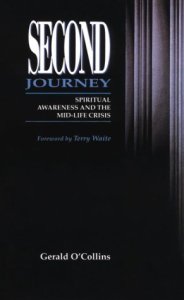 O’Collins, a Jesuit priest, sought a more constructive term than “midlife crisis” for the unease and difficult decisions that many face in their forties. He chooses instead the language of journeys, specifically one embarked upon because a previous way of life was no longer working. There are several types of triggers that O’Collins illustrates through brief case studies of famous individuals or anonymous acquaintances. The shift might be prompted by a sense of failure (John Wesley, Jimmy Carter), by literal exile (Dante), by falling in love (someone who left the priesthood to marry), by experiencing severe illness (John Henry Newman) or fighting in a war (Ignatius of Loyola), or simply by a longing for “something more” (Mother Teresa). But there are only two end points, O’Collins offers: a new place or situation; or a fresh appreciation of the old one – he quotes Eliot’s “to arrive where we started / And know the place for the first time.” This is practical and relatable, but light on actual advice. It also pales by comparison to Richard Rohr’s more recent work on spirituality in the different stages of life (especially in Falling Upward). (Free from a church member’s donations) [100 pages]
A Certain Smile by Françoise Sagan (1956)
[Translated from French by Irene Ash]
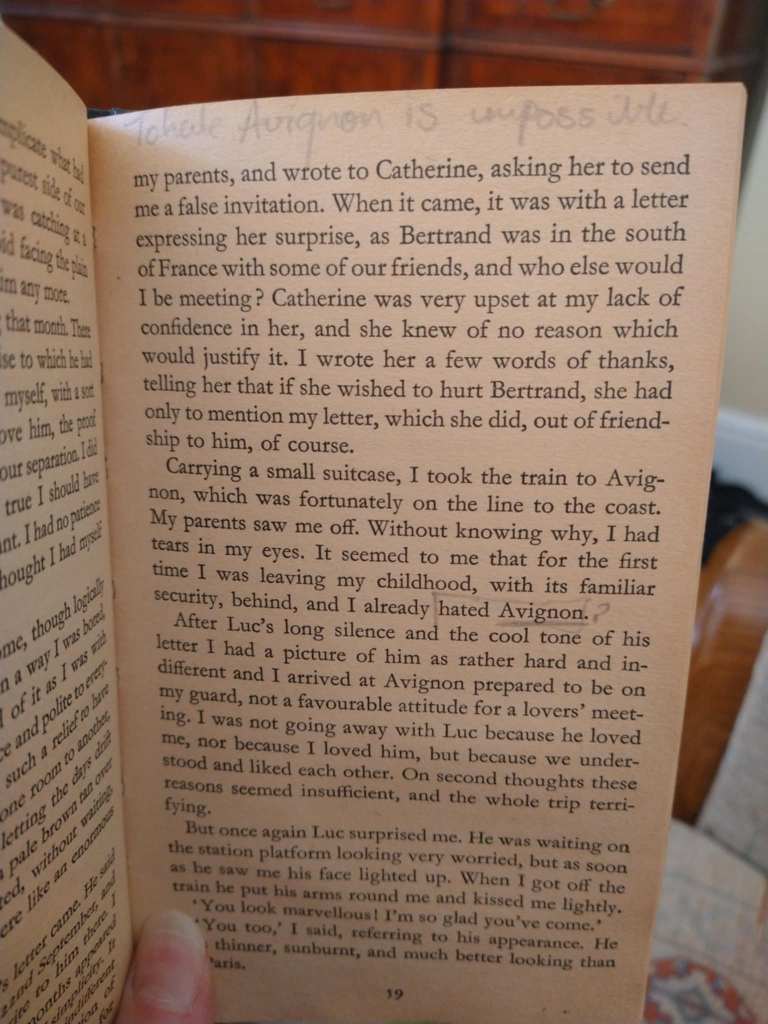
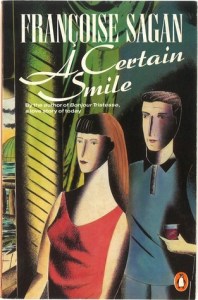 Law student Dominique is lukewarm on her boyfriend Bertrand and starts seeing his married uncle, Luc, instead. The high point is when they manage to go on a ‘honeymoon’ trip of several weeks to Avignon. Both Bertrand and Luc’s wife, Françoise, eventually find out, but everyone is very grown-up about it. The struggle is never external so much as within Dominique to accept that she doesn’t mean as much to Luc as he does to her, and that the relationship will only be a little blip in her early adulthood. I found this a disappointment compared to Bonjour Tristesse and Aimez-Vous Brahms – it really is just the story of an affair; nothing more – but Sagan is always highly readable. I read this in two days, a big section of it on a chilly beach in Devon. In its frank, cool assessment of relationship dynamics, this felt like a model for Sally Rooney. I had to laugh at the righteously angry and rather ungrammatical marginalia below (“To hate Avignon is unpossible”). (University library) [112 pages]
Minka and Curdy by Antonia White; illus. Janet and Anne Johnstone (1957)
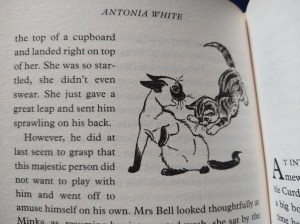
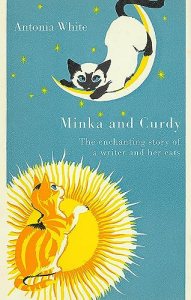 After Mrs Bell’s formidable cat Victoria dies, she hankers to get a new kitten to keep her company – she works at home as a writer. She finds herself greeting all the neighbourhood cats and, in her enthusiasm to help a ‘stray’, accidentally overfeeds someone else’s pet with fresh fish. Her heart is set on a marmalade kitten, so she reserves one from an impending litter in Kent. But then the opportunity to take on a beautiful young female Siamese cat, for free, comes her way, and though she feels guilty about the ginger tom she’s been promised, she adopts Minka anyway. When Coeur de Lion (“Curdy”) arrives a few weeks later, her challenge is to get the kitties to coexist peacefully in her London flat. This reminded me so much of myself back in February and March, when I was so glum over losing Alfie that we rushed into adopting a giant kitten who has been a bit much for us. But we’re already contemplating getting Benny a little sister or two, so I read with interest to see how she made it happen. Well, this is fiction, so it starts out fraught but then is somewhat magically fine. No matter – White writes about cats’ antics and personalities with all the warmth and delight of Derek Tangye, Doreen Tovey and the like, and this 2023 Virago reprint is adorable. (Secondhand – Awesomebooks.com) [113 pages]
I also had a few DNFs last month:
- The Book of Colour by Julia Blackburn (1995) seemed a good bet because I’ve enjoyed some of Blackburn’s nonfiction and it was on the Orange Prize shortlist. But after 60 pages I still had no idea what was going on amid the Mauritius-set welter of family history and magic realism. (Secondhand – Bas Books charity shop, 2022)
- A Single Man by Christopher Isherwood (1964) lured me because I’d so loved Goodbye to Berlin and I remember liking the Colin Firth film. But this story of an Englishman secretly mourning his dead partner while trying to carry on as normal as a professor in Los Angeles was so dreary I couldn’t persist. (Public library)
- Night Life: Walking Britain’s Wild Landscapes after Dark by John Lewis-Stempel (2025) – JLS could write one of these mini nature volumes in his sleep. (Maybe he did with this one, actually?) I’d rather one full-length book from him every few years than bitty, redundant ones annually. (Public library)
- Aunts Aren’t Gentlemen by P.G. Wodehouse (1974) – I’ve read one Jeeves & Wooster book before and enjoyed it well enough. This felt inconsequential, so as I already had way too many novellas on the go I sent it back whence it came. (Little Free Library)
Final statistics for #NovNov25 coming up tomorrow!
My Year in Novellas (#NovNov24)
Here at the start of the month, we’re inviting you to tell us about the novellas you’ve read since last November.
I have a special shelf of short books that I add to throughout the year. When at secondhand bookshops, charity shops, a Little Free Library, or the public library where I volunteer, I’m always thinking about my piles for November. But I do read novellas at other times of year, too. Forty-four of them between December 2023 and now, according to my Goodreads shelves (last year it was 46, so it seems like that’s par for the course). I often choose to review books of novella length for BookBrowse, Foreword and Shelf Awareness. I’ve read a real mixture, but predominantly literature in translation and autobiographical works.


My favourites of the ones I’ve already covered on the blog would probably be (nonfiction) Alphabetical Diaries by Sheila Heti and (fiction) Aimez-vous Brahms by Françoise Sagan. My proudest achievements are: reading the short graphic novel Broderies by Marjane Satrapi in the original French at our Parisian Airbnb in December; and managing two rereads: Heartburn by Nora Ephron and Of Mice and Men by John Steinbeck.


Of the short books I haven’t already reviewed here, I’ve chosen two gems, one fiction and one nonfiction, to spotlight in this post:
Fiction
Clear by Carys Davies
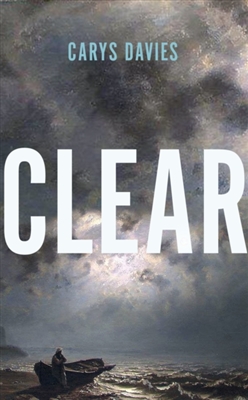 Clear depicts the Highland Clearances in microcosm though the experiences of one man, Ivar, the last resident of a remote Scottish island between Shetland and Norway. As in a play, there is a limited setting and cast. John is a minister sent by the landowner to remove Ivar, but an accident soon after his arrival leaves him beholden to Ivar for food and care. Mary, John’s wife, is concerned and sets off on the long journey from the mainland to rescue him. Davies writes vivid scenes and brings the island’s scenery to life. Flashbacks fill in the personal and cultural history, often via objects. The Norn language is another point of interest. The deceptively simple prose captures both the slow building of emotion and the moments that change everything. It seemed the trio were on course for tragedy, yet they are offered the grace of a happier ending.
In my book club, opinions differed slightly as to the central relationship and the conclusion, but we agreed that it was beautifully done, with so much conveyed in the concise length. This received our highest rating ever, in fact. I’d read Davies’ West and not appreciated it as much, although looking back I can see that it was very similar: one or a few character(s) embarked on unusual and intense journey(s); a plucky female character; a heavy sense of threat; and an improbably happy ending. It was the ending that seemed to come out of nowhere and wasn’t in keeping with the tone of the rest of the novella that made me mark West down. Here I found the writing cinematic and particularly enjoyed Mary as a strong character who escaped spinsterhood but even in marriage blazes her own trail and is clever and creative enough to imagine a new living situation. And although the ending is sudden and surprising, it nevertheless seems to arise naturally from what we know of the characters’ emotional development – but also sent me scurrying back to check whether there had been hints. One of my books of the year for sure. 
Nonfiction
A Termination by Honor Moore
Poet and memoirist Honor Moore’s A Termination is a fascinatingly discursive memoir that circles her 1969 abortion and contrasts societal mores across her lifetime.
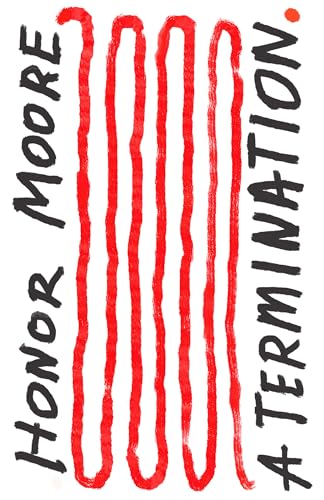 During the spring in question, Moore was a 23-year-old drama school student. Her lover, L, was her professor. But she also had unwanted sex with a photographer. She did not know which man had impregnated her, but she did know she didn’t feel prepared to become a mother. She convinced a psychiatrist that doing so would destroy her mental health, and he referred her to an obstetrician for a hospital procedure. The termination was “my first autonomous decision,” Moore insists, a way of saying, “I want this life, not that life.”
Family and social factors put Moore’s experiences into perspective. The first doctor she saw refused Moore’s contraception request because she was unmarried. Her mother, however, bore nine children and declined to abort a pregnancy when advised to do so for medical reasons. Moore observes that she made her own decision almost 10 years before “the word choice replaced pro abortion.”
This concise work is composed of crystalline fragments. The stream of consciousness moves back and forth in time, incorporating occasional second- and third-person narration as well as highbrow art and literature references. Moore writes one scene as if it’s in a play and imagines alternative scenarios in which she has a son; though she is curious, she is not remorseful. The granular attention to women’s lives recalls Annie Ernaux, while the kaleidoscopic yet fluid approach is reminiscent of Sigrid Nunez’s work. It’s a stunning rendering of steps on her childfree path.
Reprinted with permission from Shelf Awareness.
I currently have four novellas underway and plan to start some more this weekend. I have plenty to choose from!
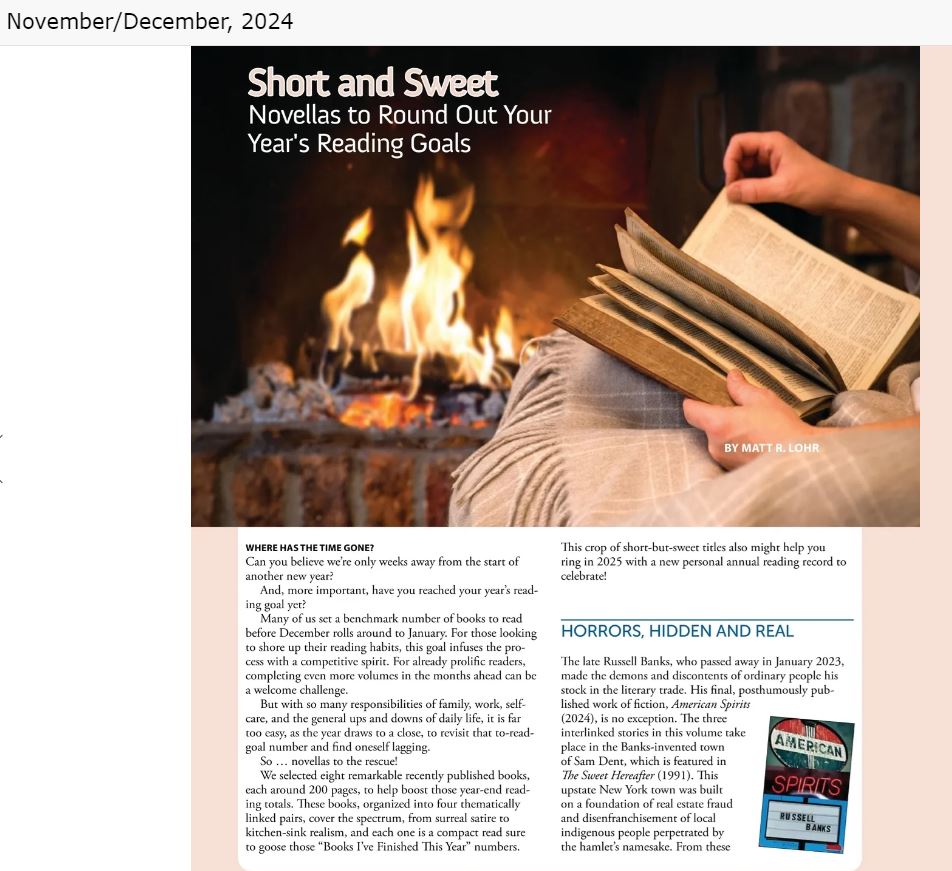
Everyone’s getting in on the act: there’s an article on ‘short and sweet books’ in the November/December issue of Bookmarks magazine, for which I’m an associate editor; Goodreads sent around their usual e-mail linking to a list of 100 books under 250 or 200 pages to help readers meet their 2024 goal. Or maybe you’d like to join in with Wafer Thin Books’ November buddy read, the Ugandan novella Waiting by Goretti Kyomuhendo (2007).

Why not share some recent favourite novellas with us in a post of your own?

Women’s Prize 2024: Longlist Predictions vs. Wishes
This is the fourth year in a row that I’ve made predictions for the Women’s Prize longlist (the real thing comes out on Tuesday, 6 p.m. GMT). It shows how invested I’ve become in this prize in recent years. Like I did last year, I’ll give predictions, then wishes (no overlap this time!). My wishes are based on what I have already read and want to read. Although I kept tabs on publishers and ‘free entries’ for previous winners and shortlistees, I didn’t let quotas determine my selections. And while I kept in mind that there are two novelists on the judging panel, I don’t know enough about any of these judges’ taste to be able to tailor my predictions. My only thought was that they will probably appreciate good old-fashioned storytelling … but also innovative storytelling.
(There are two books – The List of Suspicious Things by Jennie Godfrey (= Joanna Cannon?) and Jaded by Ela Lee (this year’s Queenie) – that I only heard about as I was preparing this post and seem pretty likely, but I felt that it would be cheating for me to include them.)
Predictions
The Three of Us, Ore Agbaje-Williams
The Future, Naomi Alderman
The Storm We Made, Vanessa Chan
Penance, Eliza Clark


The Wren, The Wren, Anne Enright
A House for Alice, Diana Evans
Piglet, Lottie Hazell
Pineapple Street, Jenny Jackson


Yellowface, R. F. Kuang
Biography of X, Catherine Lacey
Julia, Sandra Newman
The Vulnerables, Sigrid Nunez


Tom Lake, Ann Patchett
In Memory of Us, Jacqueline Roy
The Fraud, Zadie Smith
Land of Milk and Honey, C. Pam Zhang


Wish List
Family Lore, Elizabeth Acevedo
The Sleep Watcher, Rowan Hisayo Buchanan
The Unfortunates, J. K. Chukwu
The Three Graces, Amanda Craig


Learned by Heart, Emma Donoghue
Service, Sarah Gilmartin
The Vaster Wilds, Lauren Groff
Reproduction, Louisa Hall


Happiness Falls, Angie Kim
Bright Young Women, Jessica Knoll
A Sign of Her Own, Sarah Marsh
The Fetishist, Katherine Min


Hello Beautiful, Ann Napolitano
Mrs S, K Patrick
Romantic Comedy, Curtis Sittenfeld
Absolutely and Forever, Rose Tremain


If I’m lucky, I’ll get a few right from across these two lists; no doubt I’ll be kicking myself over the ones I considered but didn’t include, and marvelling at the ones I’ve never heard of…
What would you like to see on the longlist?
Appendix
(A further 50 novels that were on my radar but didn’t make the cut. Like last year, I made things easy for myself by keeping an ongoing list of eligible novels in a file on my desktop.)
Everything Is Not Enough, Lola Akinmade Akerstrom
The Wind Knows My Name, Isabel Allende
Swanna in Love, Jennifer Belle
The Sisterhood, Katherine Bradley
The Fox Wife, Yangsze Choo
The Guest, Emma Cline
Speak to Me, Paula Cocozza
Talking at Night, Claire Daverley
Clear, Carys Davies
Bellies, Nicola Dinan
The Happy Couple, Naoise Dolan
In Such Tremendous Heat, Kehinde Fadipe
The Memory of Animals, Claire Fuller
Anita de Monte Laughs Last, Xochitl Gonzalez
Normal Women, Ainslie Hogarth
Sunburn, Chloe Michelle Howarth
Loot, Tania James
The Half Moon, Mary Beth Keane
Morgan Is My Name, Sophie Keetch
Soldier Sailor, Claire Kilroy
8 Lives of a Century-Old Trickster, Mirinae Lee
August Blue, Deborah Levy
Winter Animals, Ashani Lewis
Rosewater, Liv Little
The Couples, Lauren Mackenzie
Tell Me What I Am, Una Mannion
She’s a Killer, Kirsten McDougall
The Misadventures of Margaret Finch, Claire McGlasson
Nightbloom, Peace Adzo Medie
I Am Homeless If This Is Not My Home, Lorrie Moore
The Lost Wife, Susanna Moore
Okay Days, Jenny Mustard
Parasol against the Axe, Helen Oyeyemi
The Human Origins of Beatrice Porter and Other Essential Ghosts, Soraya Palmer
The Lodgers, Holly Pester
Night Wherever We Go, Tracey Rose Peyton
The Mars House, Natasha Pulley
Playing Games, Huma Qureshi
Come and Get It, Kiley Reid
High Time, Hannah Rothschild
Commitment, Mona Simpson
Death of a Bookseller, Alice Slater
Bird Life, Anna Smail
Stealing, Margaret Verble
Help Wanted, Adelle Waldman
Temper, Phoebe Walker
Hang the Moon, Jeannette Walls
Moral Injuries, Christie Watson
Ghost Girl, Banana, Wiz Wharton
Speak of the Devil, Rose Wilding
Book Serendipity, January to February 2024
I call it “Book Serendipity” when two or more books that I read at the same time or in quick succession have something in common – the more bizarre, the better. This is a regular feature of mine every couple of months. Because I usually have 20–30 books on the go at once, I suppose I’m more prone to such incidents. The following are in roughly chronological order.
- I finished two poetry collections by a man with the surname Barnett within four days in January: Murmur by Cameron Barnett and Birds Knit My Ribs Together by Phil Barnett.

- I came across the person or place name Courtland in The Optimist’s Daughter by Eudora Welty, then Cortland in a story from The Orange Fish by Carol Shields, then Cotland (but where? I couldn’t locate it again! Was it in Elizabeth Is Missing by Emma Healey?).
- The Manet painting Olympia is mentioned in Christmas Holiday by W. Somerset Maugham and The Paris Novel by Ruth Reichl (both of which are set in Paris).


- There’s an “Interlude” section in Babel by R.F. Kuang and The Vulnerables by Sigrid Nunez.
- The Morris (Minor) car is mentioned in Elizabeth Is Missing by Emma Healey and Various Miracles by Carol Shields.
- The “flour/flower” homophone is mentioned in Babel by R.F. Kuang and Various Miracles by Carol Shields.
- A chimney swift flies into the house in Cat and Bird by Kyoko Mori and The Optimist’s Daughter by Eudora Welty.
- A character named Cornelius in The Fruit Cure by Jacqueline Alnes and Wellness by Nathan Hill.
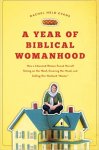
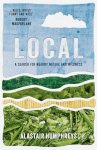
- Reading two year challenge books at the same time, A Year of Biblical Womanhood by Rachel Held Evans and Local by Alastair Humphreys, both of which are illustrated with frequent black-and-white photos by and of the author.
- A woman uses a bell to summon children in one story of Universally Adored and Other One Dollar Stories by Elizabeth Bruce and The Optimist’s Daughter by Eudora Welty.
- Apple turnovers get a mention in A Year of Biblical Womanhood by Rachel Held Evans and Wellness by Nathan Hill.
- A description of rolling out pie crust in A Year of Biblical Womanhood by Rachel Held Evans and Cat and Bird by Kyoko Mori.

- The idea of a house giving off good or bad vibrations in Wellness by Nathan Hill and a story from Various Miracles by Carol Shields.

- Emergency C-sections described or at least mentioned in Brother Do You Love Me by Manni Coe, The Unfamiliar by Kirsty Logan, Wellness by Nathan Hill, and lots more.
- Frustration with a toddler’s fussy eating habits, talk of “gentle parenting” methods, and mention of sea squirts in Wellness by Nathan Hill and Matrescence by Lucy Jones.
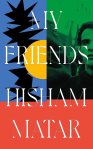
- The nickname “Poet” in The Tidal Year by Freya Bromley and My Friends by Hisham Matar.
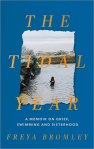
- A comment about seeing chicken bones on the streets of London in The Tidal Year by Freya Bromley and Went to London, Took the Dog by Nina Stibbe.
- Swans in poetry in The Tidal Year by Freya Bromley and Egg/Shell by Victoria Kennefick.
- A mention or image of Captcha technology in Egg/Shell by Victoria Kennefick and Went to London, Took the Dog by Nina Stibbe.
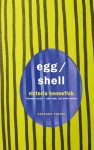

- An animal automaton in Loot by Tania James and Egg/Shell by Victoria Kennefick.
- A mention of Donna Tartt in The Tidal Year by Freya Bromley, Looking in the Distance by Richard Holloway, and Matrescence by Lucy Jones.
- Cathy Rentzenbrink appears in The Tidal Year by Freya Bromley and Went to London, Took the Dog by Nina Stibbe.
 Dialogue is given in italics in the memoirs The Tidal Year by Freya Bromley and The Unfamiliar by Kirsty Logan.
- An account of a man being forced to marry the sister of his beloved in A Year of Biblical Womanhood by Rachel Held Evans, Wellness by Nathan Hill, and The Tiger’s Wife by Téa Obreht.
- Saying that one doesn’t want to remember the loved one as ill (but really, not wanting to face death) so not saying goodbye (in Cat and Bird by Kyoko Mori) or having a closed coffin (Wellness by Nathan Hill).
- An unhappy, religious mother who becomes a hoarder in Wellness by Nathan Hill and I’m Glad My Mom Died by Jennette McCurdy.
- Characters called Lidija and Jin in Exhibit by R. O. Kwon and Lydia and Jing in the first story of This Is Salvaged by Vauhini Vara.
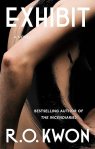
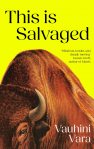
- Distress at developing breasts in Cactus Country by Zoë Bossiere and I’m Glad My Mom Died by Jennette McCurdy.
- I came across mentions of American sportscaster Howard Cosell in Heartburn by Nora Ephron and Stations of the Heart by Richard Lischer (two heart books I was planning on reviewing together) on the same evening. So random!
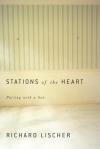
- Girls kissing and flirting with each other (but it’s clear one partner is serious about it whereas the other is only playing or considers it practice for being with boys) in Cactus Country by Zoë Bossiere and Winter’s Bone by Daniel Woodrell.
- A conversion to Catholicism in Places I’ve Taken My Body by Molly McCully Brown and Stations of the Heart by Richard Lischer.
- A zookeeper is attacked by a tiger when s/he goes into the enclosure (maybe not the greatest idea!!) in Tiger by Polly Clark and The Tiger’s Wife by Téa Obreht.

- The nickname Frodo appears in Tiger by Polly Clark and Brother Do You Love Me by Manni Coe.
- Opening scene of a parent in a coma, California setting, and striking pink and yellow cover to Death Valley by Melissa Broder and I’m Glad My Mom Died by Jennette McCurdy.

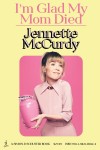
- An Englishman goes to Nigeria in Howards End by E.M. Forster and Immanuel by Matthew McNaught.
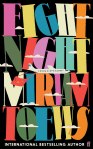 The Russian practice of whipping people with branches at a spa in Tiger by Polly Clark and Fight Night by Miriam Toews.
- A mother continues washing her daughter’s hair until she is a teenager old enough to leave home in Mrs. March by Virginia Feito and I’m Glad My Mom Died by Jennette McCurdy.
- Section 28 (a British law prohibiting the “promotion of homosexuality” in schools) is mentioned in A Bookshop of One’s Own by Jane Cholmeley, Some Kids I Taught and What They Taught Me by Kate Clanchy, and Brother Do You Love Me by Manni Coe.
- Characters named Gord (in one story from Various Miracles by Carol Shields, and in Fight Night by Miriam Toews), Gordy (in The Absolutely True Diary of a Part-Time Indian by Sherman Alexie), and Gordo (in Blood Red by Gabriela Ponce).
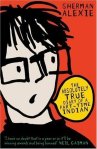

- Montessori and Waldorf schools are mentioned in Cactus Country by Zoë Bossiere and When Fragments Make a Whole by Lory Widmer Hess.
- A trailer burns down in The Absolutely True Diary of a Part-Time Indian by Sherman Alexie and Cactus Country by Zoë Bossiere.
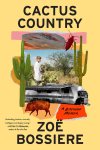
What’s the weirdest reading coincidence you’ve had lately?
Recent Releases by Nathan Hill, Hisham Matar, Sigrid Nunez and More
One key way in which 2024’s reading has already differed from previous years’ is that I no longer avoid doorstoppers. I now classify any book with over 400 pages as a doorstopper, and by that definition I have already gotten through three this year: The Tidal Year plus two of the below, with Wellness standing out as the true whopper at 597 small-print pages. January offered a set of releases full of variety: gritty yet funny flash fiction; a novel of big ideas and big empathy for its flawed characters; an exile’s elegant love letter to Libya from London; a coy pandemic-era reflection on connection and creation; and a tour of nature close to home.
Universally Adored and Other One Dollar Stories by Elizabeth Bruce
 This was a great collection of 33 stories, all of them beginning with the words “One Dollar” and most of flash fiction length. Bruce has a knack for quickly introducing a setup and protagonist. The voice and setting vary enough that no two stories sound the same. What is the worth of a dollar? In some cases, where there’s a more contemporary frame of reference, a dollar is a sign of desperation (for the man who’s lost house, job and wife in “Little Jimmy,” for the coupon-cutting penny-pincher whose unbroken monologue makes up the whole of “Grocery List”), or maybe just enough for a small treat for a child (as in “Mouse Socks” or “Boogie Board”). In the historical stories, a dollar can buy a lot more. It’s a tank of gas – and a lesson on the evils of segregation – in “Gas Station”; it’s a huckster’s exorbitant charge for a mocked-up relic in “The Grass Jesus Walked On.”
The tone ranges from black comedy (“Festus”) to high tragedy (“Votive Candle”), but the book mostly falls within the realm of dirty realism with the attention to working-class country folk, so I’d recommend the collection to fans of authors who perch on the lighter side of that subgenre, such as Barbara Kingsolver or Denis Johnson. A few of my favorite stories, in addition to the above, were “Ice-Cold Water,” which I appreciated for the Washington D.C. setting and the way that an assumption about who would be racist was overturned by a moment of simple compassion; “Dolores,” in which a slick humanitarian fundraiser meets a waitress who has his number; and “Boiling the Buggers,” a window onto Covid-exacerbated mental illness. (Read via BookSirens)
Wellness by Nathan Hill
Somehow nearly eight years have passed since Hill’s debut novel, The Nix, which I dubbed “a rich, multi-layered story about family curses and failure.” I admired it as much for its prose as for its ideas, and Wellness is just as effervescent and insightful. It’s a state-of-the-nation novel filtered through one Chicago family: experimental photographer and underperforming academic Jack; his wife Elizabeth, a placebo researcher at Wellness; and their YouTube-obsessed son Toby. They’ve recently invested their life savings in a new condo and are considering trendy features like open shelves and separate master bedrooms. It would be oversimplifying, but true, to say that this couple is experiencing midlife and marital crises. Their nineties college romance – and a time of life when everything felt open and possible – is so remote now. When Elizabeth suggests they join a friend at a swingers’ club and a patient of hers who’s also a parent at Toby’s school sees them outside, chaos ensues.
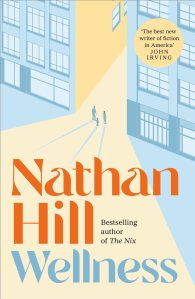
Some elements from The Nix carry over, such as campus politics, the American Midwest, and mother–son relationships, but also broader questions of authenticity, purpose and nurture. Is love itself a placebo? The novel spends time with Jack and Elizabeth at the dawn of their relationship and in the present day, but also looks back to their early careers and first years of parenthood. Hill is clearly fascinated with the sort of psychological experimentation Elizabeth engages in (there’s a whole bibliography of scientific papers consulted) but also turns it to humorous effect, as when Elizabeth subjects Toby to the marshmallow test. A lot of information is conveyed through dialogue, yet it never feels forced. A couple of long asides, on Elizabeth’s family history and the algorithms guiding Jack’s interactions with his conspiracy theorist father, tried my patience, but I loved a four-page chapter on a funeral supper where every sentence starts “There was.” Sooooo many quotable lines throughout.
The only fault in an addictive and spot-on novel (how did he know?! you’ll find yourself thinking about your own attitude to work/marriage/children) is that Hill is so committed to excavating these characters’ backstory of stunted emotion – Jack estranged from his religious Kansas farmer parents after a traumatic incident you feel right in the gut; Elizabeth glad to jettison her father’s wealth with his anger – that he hurries through the denouement. Still, this is sure to be a fiction highlight of my year. It’s one for readers of Jonathan Franzen, sure, but I also thought it reminiscent of Katherine Heiny’s Standard Deviation and Meg Wolitzer’s The Interestings.
With thanks to Picador for the proof copy for review.
My Friends by Hisham Matar
“Benghazi was the one place I longed for the most, it was also the place I most feared to return to.”
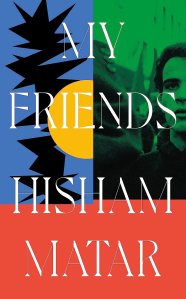 Taking a long walk through London one day, Khaled looks back from midlife on the choices he and his two best friends have made. He first came to the UK as an eighteen-year-old student at Edinburgh University. Everything that came after stemmed from one fateful day. Matar places Khaled and his university friend Mustafa at a real-life demonstration outside the Libyan embassy in London in 1984, which ended in a rain of bullets and the accidental death of a female police officer. Khaled’s physical wound is less crippling than the sense of being cut off from his homeland and his family. As he continues his literary studies and begins teaching, he decides to keep his injury a secret from them, as from nearly everyone else in his life. On a trip to Paris to support a female friend undergoing surgery, he happens to meet Hosam, a writer whose work enraptured him when he heard it on the radio back home long ago. Decades pass and the Arab Spring prompts his friends to take different paths.
I’d previously only read Matar’s short nonfiction work A Month in Siena. The slow, meditative style I enjoyed so much there didn’t translate well into doorstopper length; by the 300-page mark I found myself skimming to see if anything else might happen. Despite the title, we come to know Mustafa and Hosam much less well than we do Khaled. I would happily have had the book’s plot and sentiment concentrated into a taut 200 pages. However, I’m still interested in trying other books by Matar. In the Country of Men is significantly shorter and available from the backroom storage area of my library, and his Folio Prize-winning memoir The Return, too, is on shelf and I reckon will be right up my street.
With thanks to Viking (Penguin) for the proof copy for review.
The Vulnerables by Sigrid Nunez
I’m a huge Nunez fan after reading The Friend, What Are You Going Through, and especially A Feather on the Breath of God. Her last three books have been very much of a piece: autofiction voiced by an unnamed woman who has a duty of care towards a friend or a friend’s pet and ponders, in wry meta fashion, the nature of autobiographical writing and the meaning of life and death at a time of climate breakdown. Alas, The Vulnerables seems like no more than a rehashing of The Friend, with flanking main characters chosen at random from central casting: a parrot named Eureka and a mentally ill college drop-out called Vetch. This quirky trio is thrown together in a lavish New York City apartment during lockdown and nothing much happens but conversation brings them closer.
 A second problem: Covid-19 stories feel dated. For the first two years of the pandemic I read obsessively about it, mostly nonfiction accounts from healthcare workers or ordinary people looking for community or turning to nature in a time of collective crisis. But now when I come across it as a major element in a book, it feels like an out-of-place artefact; I’m almost embarrassed for the author: so sorry, but you missed your moment. My disappointment may primarily be because my expectations were so high. I’ve noted that two blogger friends new to Nunez were enthusiastic about this (but so was Susan, who’d enjoyed her before). That’s not to say this wasn’t a pleasantly fluid and incisive read, even if its message of essential human vulnerability is an obvious one. Anyway, I’ll take Nunez musing on familiar subjects over most other contemporary writers any day:
“Never write ‘I don’t remember,’ Editor says; it undermines your authority. But write as if you remember everything and Reader will smell a rat.”
“You can start with fiction or start with documentary, according to Jean-Luc Goddard. Either way, you will inevitably find the other.”
“I like this clarification by the narrator of a book by Stendhal: ‘It is not out of egotism that I say “I”; it is simply the quickest way to tell the story.’)”
(À propos of the doorstoppers above)
“Does that mean a long novel is easier to write than a short one? / Um, no. But, to borrow from a certain critic, in almost every long book I read I see a short one shirking its job.”
With thanks to Virago for the proof copy for review.
And a bonus work of nonfiction:
Local: A Search for Nearby Nature and Wildness by Alastair Humphreys
Lev Parikian alerted me to this amiable record of weekly discoveries of the nature on one’s home turf. Humphreys has been an international adventure traveller and written many books about his exploits. Here, by contrast, he zooms the lens in about as far as it will go, ordering a custom-made 20-km-square OS map that has his house at the centre and choosing one surrounding grid square per week (so 52 out of a total of 400) to cycle to and explore. He’s chosen to leave his town unnamed so this can function as an Everyman’s journey through edgelands. And his descriptions and black-and-white photographs really do present an accurate microcosm of modern England: fields, woods, waterways, suburban streets.
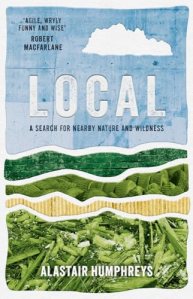 From one November to the next, he watches the seasons advance and finds many magical spaces with everyday wonders to appreciate. “This project was already beginning to challenge my assumptions of what was beautiful or natural in the landscape,” he writes in his second week. True, he also finds distressing amounts of litter, no-access signs and evidence of environmental degradation. But curiosity is his watchword: “The more I pay attention, the more I notice. The more I notice, the more I learn.”
Each week’s observations send him down a research rabbit hole, with topics including caves, land management, mudlarking, plant species, and much more. The nature of the short chapters means that there can only ever be a cursory look at huge issues like rewilding and veganism, but Humphreys is nimble in weaving in the brief, matter-of-fact discussions. His eagerness is irrepressible. “How you look, what you see, and the way all this makes you feel: a single map and the best of all possible worlds.” (See also: Paul’s review.)
With thanks to the author for the free copy for review.
My Most Anticipated Releases of 2024
I feel a sense of freedom and anticipation about the reading opportunities stretching out ahead of me and want to preserve that, so apart from participating in my usual challenges and trying to read more from my own shelves, I have no specific reading goals for the year. (My ever-growing set-aside shelf does make me feel guilty, though.)
Knowing myself, close to half of my reading will be current-year releases. I’ve already read 10 releases from 2024 (8 are written up here), and I’m also looking forward to new work from Julia Armfield, Tracy Chevalier, Matt Gaw, Garth Risk Hallberg, Sheila Heti, Ann Hood, Rachel Khong, Sarah Manguso, Tommy Orange, Francesca Segal, Joe Shute and J. Courtney Sullivan. If there’s a recurring theme here, it’s sophomore novels from authors whose debuts I loved. Only a few nonfiction releases are musts for me.
I’ve chosen the dozen below as my most anticipated titles that I know about so far. They are arranged in UK release date order, within sections by genre. (U.S. details given too/instead if USA-only.) Quotes are excerpts from the publisher blurbs, e.g., from Goodreads. I’ve noted if I have sourced a review copy already.
Fiction
Wellness by Nathan Hill [Jan. 25, Picador; has been out since September from Knopf] Hill’s debut novel, The Nix, was fantastic. I’ve developed an allergy to doorstoppers over the past year, but am determined to read this anyway. “Moving from the gritty 90s Chicago art scene to a suburbia of detox diets and home renovation hysteria, Wellness mines the absurdities of modern technology and modern love to reveal profound, startling truths about intimacy and connection.” Has been likened to Egan, Franzen and Strout. (Print proof copy)
 The Vulnerables by Sigrid Nunez [Jan. 25, Virago; has been out since November from Riverhead] I’ve read and loved three of Nunez’s novels. I’m a third of the way into this, “a meditation on our contemporary era, as a solitary female narrator asks what it means to be alive at this complex moment in history … Humor, to be sure, is a priceless refuge. Equally vital is connection with others, who here include an adrift member of Gen Z and a spirited parrot named Eureka.” (Print proof copy)
 Come and Get It by Kiley Reid [Jan. 30, Bloomsbury / Jan. 9, G.P. Putnam’s] Such a Fun Age was a surprise hit with me, so I’m keen to try her second novel, set on a college campus. “It’s 2017 at the University of Arkansas. Millie Cousins, a senior resident assistant, wants to graduate, get a job, and buy a house. So when Agatha Paul, a [lesbian] visiting professor and writer, offers Millie an easy yet unusual opportunity, she jumps at the chance. But Millie’s starry-eyed hustle becomes jeopardised by odd new friends, vengeful dorm pranks and illicit intrigue.” (NetGalley download / public library reservation)
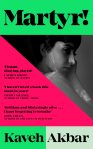 Martyr! by Kaveh Akbar [March 7, Picador /Jan. 23, Knopf] I’ve read Akbar’s two full-length poetry collections and particularly admired Pilgrim Bell. His debut novel sounds kind of unhinged, but I figure it’s worth a try. “When Cyrus’s obsession with the lives of the martyrs – Bobby Sands, Joan of Arc – leads him to a chance encounter with a dying artist, he finds himself drawn towards the mysteries of an uncle who rode through Iranian battlefields dressed as the Angel of Death; and toward his [late] mother, who may not have been who or what she seemed.” (NetGalley download)
 Memory Piece by Lisa Ko [March 7, Dialogue Books / March 19, Riverhead] Ko’s debut, The Leavers, was a favourite of mine from 2018, so it was great to hear that she is coming out with a new book. “Moving from the predigital 1980s to the art and tech subcultures of the 1990s to a strikingly imagined portrait of the 2040s, Memory Piece is an innovative and audacious story of three lifelong [female, Asian American] friends as they strive to build satisfying lives in a world that turns out to be radically different from the one they were promised.”
 The Paris Novel by Ruth Reichl [April 23, Random House] I’m reading this for an early Shelf Awareness review. It’s fairly breezy but enjoyable, with an expected foodie theme plus hints of magic but also trauma from the protagonist’s upbringing. “When her estranged mother dies, Stella is left with an unusual gift: a one-way plane ticket, and a note reading ‘Go to Paris’. But Stella is hardly cut out for adventure … When her boss encourages her to take time off, Stella resigns herself to honoring her mother’s last wishes.” (PDF review copy)
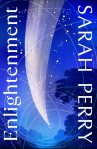 Enlightenment by Sarah Perry [May 2, Jonathan Cape / May 7, Mariner Books] “Thomas Hart and Grace Macauley are fellow worshippers at the Bethesda Baptist chapel in the small Essex town of Aldleigh. Though separated in age by three decades, the pair are kindred spirits – torn between their commitment to religion and their desire for more. But their friendship is threatened by the arrival of love.” Sounds a lot like The Essex Serpent (which is a very good thing) but with astronomy. (Print proof copy)
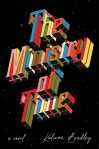 The Ministry of Time, Kaliane Bradley [May 7, Sceptre/Avid Reader Press] “A time travel romance, a speculative spy thriller, a workplace comedy, and an ingeniously constructed exploration of the nature of truth and power and the potential for love to change it. In the near future, a civil servant is offered the salary of her dreams and is, shortly afterward, told what project she’ll be working on. A recently established government ministry is gathering ‘expats’ from across history to establish whether time travel is feasible—for the body, but also for the fabric of space-time.” Promises to be zany and fun.
 Exhibit by R.O. Kwon [May 21, Virago/Riverhead] I loved The Incendiaries and look forward to reading this next month for an early Shelf Awareness review. “At a lavish party in the hills outside of San Francisco, Jin Han meets Lidija Jung and nothing will ever be the same for either woman. A brilliant, young photographer, Jin is at a crossroads in her work, in her marriage to college sweetheart Phillip, in who she is and who she wants to be. Lidija is a glamorous, injured world-class ballerina on hiatus from her ballet company under mysterious circumstances. Drawn to each other by their intense artistic drives, the two women talk all night.” Bisexual rep from Kwon. (PDF review copy)
Nonfiction
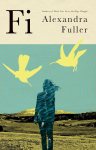 Fi: A Memoir of My Son by Alexandra Fuller [April 9, Grove Press] Fuller is one of the best memoirists out there (Don’t Let’s Go to the Dogs Tonight and Leaving Before the Rains Come), and I read pretty much every bereavement memoir I can get my hands on anyway. “It’s midsummer in Wyoming and Alexandra is barely hanging on. Grieving her father and pining for her home country of Zimbabwe, reeling from a midlife breakup, freshly sober and piecing her way uncertainly through a volatile new relationship with a younger woman, Alexandra vows to get herself back on even keel. And then – suddenly and incomprehensibly – her son Fi, at 21 years old, dies in his sleep.” (PDF review copy)
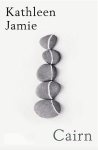 Cairn by Kathleen Jamie [June 13, Sort Of Books] Thanks to Paul (I link to his list below) for letting me know about this one. I’ll read anything Kathleen Jamie writes. “Cairn: A marker on open land, a memorial, a viewpoint shared by strangers. For the last five years … Kathleen Jamie has been turning her attention to a new form of writing: micro-essays, prose poems, notes and fragments. Placed together, like the stones of a wayside cairn, they mark a changing psychic and physical landscape.” Which leads nicely into…
Poetry
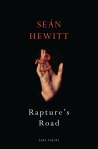 Rapture’s Road by Seán Hewitt [Jan. 11, Jonathan Cape] Hewitt’s debut collection, Tongues of Fire, was brilliant. This sounds like more of the same: “these poems forge their own unique path through the landscape. … Following the reciprocal relationship between queer sexuality and the natural world that he explored in [his previous book, the poet conjures us here into a trance: a deep delirium of hypnotic, hectic rapture where everything is called into question, until a union is finally achieved – a union in nature, with nature.”
Other lists for more ideas:
Electric Lit (all by women of color, as chosen by R.O. Kwon)
Kate – we overlap on a couple of our picks
Laura – we overlap on a few of our picks
Paul (mostly nonfiction)
What catches your eye here? What other 2024 titles do I need to know about?
Review Catch-Up: The Swimmers, Black Butterflies, Bi, and On the Scent
I have a preposterous backlog of review copies to finish and write about (I’m going to go ahead and blame buying a house, moving and DIY for my lack of focus and diminished time, as I have done most of this year), but I’ve decided to get on top of it by pulling a quartet off of my set-aside shelf each week for short responses. I always like to feature a variety, so here I have two fiction and two nonfiction selections: novels about assisted dying and the Bosnian War that are a lot funnier and more life-affirming than you might expect, and books about bisexuality and the sense of smell – and the effect of its loss.
The Swimmers by Chloe Lane (2020; 2022)
 Erin Moore has returned to her family’s rural home for Queen’s Birthday (now a dated reference, alas!), a long weekend in New Zealand’s winter. Not a time for carefree bank holiday feasting, this; Erin’s mother has advanced motor neurone disease and announces that she intends to die on Tuesday. Aunty Wynn has a plan for obtaining the necessary suicide drug; it’s up to Erin to choreograph the rest. “I was the designated party planner for this morbid final frolic, and the promise of new failures loomed. … The whole thing was looking more and more like the plot of a French farce, except it wasn’t funny.”
Lane renders a potentially maudlin situation merely bittersweet through black comedy. Erin isn’t the most endearing narrator because, Disaster Woman-like, she keeps undertaking weird acts of self-sabotage – at 26, she’s blown her first gallery curation opportunity by sleeping with her boss. Still, the picture of a different sort of dysfunctional family and the contrast between an illustrious past (Erin comes from a line of semi-pro swimmers: Aunty Wynn qualified to compete in the Commonwealth Games) and an iffy future make this fairly memorable, if not so much so as the other 2022 The Swimmers – Julie Otsuka’s.
Readalikes: Sorrow and Bliss by Meg Mason, What Are You Going Through by Sigrid Nunez, The Inland Sea by Madeleine Watts, The Weekend by Charlotte Wood
With thanks to Gallic Books for the proof copy for review.
Black Butterflies by Priscilla Morris (2022)
 Drawing on her own family history, Morris has crafted an absorbing story set in Sarajevo in 1992, the first year of the Bosnian War. Zora, a middle-aged painter, has sent her husband, Franjo, and elderly mother off to England to stay with her daughter, Dubravka, confident that she’ll see out the fighting in the safety of their flat and welcome them home in no time. But things rapidly get much worse than she is prepared for. Phone lines are cut off, then the water, then the electricity. “We’re all refugees now, Zora writes to Franjo. We spend our days waiting for water, for bread, for humanitarian handouts: beggars in our own city.”
When even the haven of her studio is taken away from her, she’s reduced to the bare bones of existence, with just a few beloved neighbours to keep her spirits up. Her painting, more an obsession than a hobby, keeps her human as she awaits space on a Red Cross convoy. The title has heartrending significance: ‘black butterflies’ are fragments of paper carried on the breeze after the burning of the National Library of Sarajevo, 30 years ago last month. It was especially poignant to be reading this during the war in Ukraine and think about the sorts of daily dangers and deprivation that people face in conflict zones. The pages turned quickly and I was reminded of Girl at War, one of my absolute favourites, as well as The Pianist.
With thanks to Duckworth for the proof copy for review.
Bi: The hidden culture, history, and science of bisexuality by Julia Shaw (2022)
I’m tying this in with today’s celebration of Bi Visibility Day. Shaw is a criminal psychologist; her third book is a departure for her thematically, but means a lot to her personally. Bisexuality is the largest minority sexuality group, yet bisexuals are less likely to be out because of misconceptions and stereotypes – there are fewer outward signals and less group identification – which can sometimes result in poor mental health. Shaw realized how tricky bi identity was when a German TV show wanted to base a character on her but didn’t know how to make her sexuality obvious to viewers (lingering glances/flirtations involving both men and women? a backstory about a previous relationship with a woman?), and when trying to figure out what to wear to gay bars.
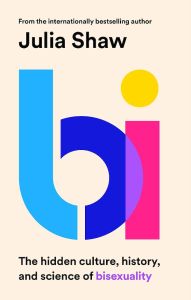 The book aims to situate bisexuality historically and scientifically. The term “bisexual” has been around since the 1890s, with the Kinsey Scale and the Klein Grid early attempts to add nuance to a binary view. Shaw delights in the fact that the mother of the Pride movement in the 1970s, Brenda Howard, was bisexual. She also learns that “being behaviourally bisexual is commonplace in the animal kingdom,” with many species engaging in “sociosexual” behaviour (i.e., for fun rather than out of reproductive instinct). It’s thought that 83% of bisexuals are closeted, mostly due to restrictive laws or norms in certain parts of the world – those seeking asylum may be forced to “prove” bisexuality, which, as we’ve already seen, is a tough ask. And bisexuals can face “double discrimination” from the queer community.
It felt odd to me that a final chapter on bisexual relationships ended up being mostly about threesomes, such that my main question (as she puts it: “what are the problems with the assumed link between bisexuality and non-monogamy?”) only merited four pages. A valuable book, certainly, but one to read for information rather than entertainment or thoughtful prose.
With thanks to Canongate for the free copy for review.
On the Scent: Unlocking the mysteries of smell – and how its loss can change your world by Paola Totaro and Robert Wainwright (2022)
Totaro (co-author Wainwright is her husband) contracted COVID-19 in March 2020 and temporarily lost the ability to smell, prompting her to embark on this investigation into a 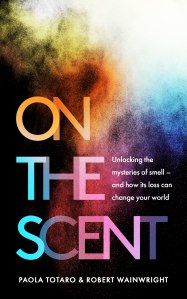 less-understood sense. One in 10,000 people have congenital anosmia, but many more than that experience it at some point in life (e.g., due to head trauma, or as an early sign of Parkinson’s disease), and awareness has shot up since it’s been acknowledged as a symptom of Covid. For some, it’s parosmia instead – smell distortions – which can almost be worse, with people reporting a constant odour of smoke or garbage, or that some of their favourite aromas, like coffee, were now smelling like faeces instead. Such was the case for Totaro.
She visits fascinating places like the Smell and Taste clinic in Dresden and the University of Reading Flavour Centre. “Sniffin’ sticks” are used to put people’s sense of smell to the test, but it’s notoriously difficult, even for those who haven’t had their senses compromised by illness, to name a smell out of context; people generally don’t score over 50%. That’s one of the major questions the book asks: why it is quite so difficult to identify smells, or describe them in words. Totaro also considers perfume-making, the associations of particular smells (bleach, pine or lemon, depending on your country) with cleanliness, and the potential for multisensory experiences, such as releasing odours during film showings. Lots of interesting topics and stories here, but not as compelling on the whole as The Smell of Fresh Rain.
With thanks to Elliott & Thompson for the proof copy for review.
Best of the 4: Black Butterflies
Would you be interested in reading one or more of these?
My Most Memorable Backlist Reads of 2021
Like many bloggers, I’m irresistibly drawn to the new books released each year. However, I consistently find that many of my most memorable reads were published years or decades ago. These 19 selections, in alphabetical order within genre, together with my Best of 2021 posts (fiction and nonfiction), make up the top 15% of my reading for the year. Three of the below were rereads.

(The three books not pictured were read electronically or from the library.)
Fiction
 America Is Not the Heart by Elaine Castillo: Set in the early 1990s in the Filipino immigrant neighbourhoods of the Bay Area in California, this is a complex, confident debut novel that throws you into an unfamiliar culture at the deep end. The characters shine and the dialogue feels utterly authentic in this fresh immigration story.
 Snow Falling on Cedars by David Guterson: The mystery element held me completely gripped – readers are just as in the dark as jurors until close to the end – but this is mostly a powerful picture of the lasting effects of racism. I was instantly immersed, whether in a warm courtroom with a snowstorm swirling outside or on a troop ship entering the Pacific Theater.
 Nothing but Blue Sky by Kathleen MacMahon: David is back on Spain’s Costa Brava, where he and his wife Mary Rose holidayed every summer for 20 years. This is a quiet novel about what goes unsaid in any marriage, and a deeply touching look at loss and what comes next. Grief, memory, fate: some of my favourite themes, elegantly treated.
 A Feather on the Breath of God by Sigrid Nunez: From the little I know of Nunez, this seems close to autofiction, especially in terms of her parents. Identifying the self by the key relationships and obsessions of a life makes sense, and this speaks to the universals of how we cope with a troublesome past. It cemented her as one of my favourite authors.
 Woman on the Edge of Time by Marge Piercy: An unusual and fascinating novel with hints of science fiction, but still grounded in the real world, this contrasts utopian and dystopian scenes experienced by a Latina woman who’s been confined to a mental hospital. It’s an intense cultural commentary from a writer ahead of her time on gender roles and the environment.
 My Dark Vanessa by Kate Elizabeth Russell: Obsessed with Lolita since she was a teenager, Russell decided to tell the teenage girl’s side of the story. She uses a dual timeline to great effect, creating an utterly immersive novel – as good a first-person narrative as anything Curtis Sittenfeld has ever written, and the ultimate #MeToo story.
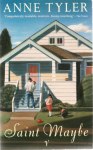 Saint Maybe by Anne Tyler: Ian Bedloe joins the puritanical Church of the Second Chance and drops out of college to help his parents raise his late brother’s three children. Anyone will be able to find themselves and their family in this story of the life chosen versus the life fallen into, and the difficult necessity of moving past regrets in the search for meaning.
 The Amateur Marriage by Anne Tyler: Unique in her oeuvre for how it bridges historical fiction and her more typical contemporary commentary. The Antons muddle their way through a volatile marriage for decades without figuring out how to change anything for the better. There is deep compassion for their foibles and how they affect the next generation.
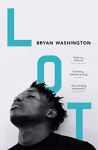 Lot by Bryan Washington: The musical equivalent might be a mixtape blasted from an open-top Corvette while touring the streets of Houston, Texas. Drug dealers, careworn immigrants, and prostitutes: Even the toughest guys have tender hearts in these 13 stories. Washington’s prose is earthy and slang-filled. The matter-of-fact phrasing made me laugh.
 Ethan Frome by Edith Wharton: I was so impressed by this condensed tragedy and the ambiance of a harsh New England winter. It struck me even more on a reread as a flawless parable of a man imprisoned by circumstance and punished for wanting more. A perfect example of how literature can encapsulate the human condition.
Poetry
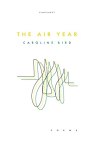 The Air Year by Caroline Bird: I read this with a big smile on my face, delighting in the clever and playful poems. The impermanence of relationships is a recurring theme. Dreams and miscommunication are also common elements, and lists grow increasingly absurd. I particularly liked where structure creates meaning, e.g. the mise en abyme of “Dive Bar.”
Nonfiction
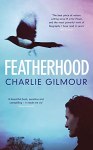 Featherhood by Charlie Gilmour: As an aimless twentysomething, Gilmour tried to rekindle a relationship with his unreliable poet father. Meanwhile, he was raising Benzene, a magpie that fell out of its nest. He makes elegant use of connections and metaphors; he’s so good at scenes, dialogue, and emotion – a truly natural writer.
 Spring in Washington by Louis J. Halle: From first migrant in February to last in June, the author traced the D.C. spring of 1945 mostly through the birds that he saw. More so than the specific observations of familiar places, though, I valued the philosophical outlook. For me this was an ideal combination of thoughtful prose and vicarious travel.
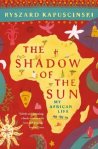 The Shadow of the Sun by Ryszard Kapuściński: This collection of essays spans decades and lots of African countries, yet feels like a cohesive narrative. Kapuściński saw many places right on the cusp of independence or in the midst of coup d’états. I appreciated how he never resorts to stereotypes or flattens differences. One of the few best travel books I’ve read.
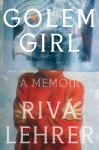 Golem Girl by Riva Lehrer: Lehrer has endured dozens of surgeries for spina bifida. Her touching family memoir is delivered in short, essay-like chapters, most named after books or films. It is also a primer in Disability theory and a miniature art gallery, filled with reproductions of her paintings. This inaugural Barbellion Prize winner is not to be missed.
 The Cost of Living by Deborah Levy: This sparse volume, the middle in an autobiographical trilogy, has Levy searching for the intellectual and physical freedom needed to reinvent her life after divorce. It is made up of conversations and memories; travels and quotations that have stuck with her. Each moment is perfectly chosen to reveal the self.
 Conundrum by Jan Morris: Morris was a trans pioneer; this transformed my understanding of gender when I first read it in 2006. Born James, Morris knew by age four that she was really a girl. A journalism career, marriage, five children, and two decades of hormone therapy preceded sex reassignment surgery. She paints hers as a spiritual quest toward her true identity.
 You’re Not Listening: What You’re Missing and Why It Matters by Kate Murphy: We all fail to listen properly sometimes, for various reasons. A New York Times journalist, Murphy does a lot of listening to her interview subjects. She also talks with representatives of so-called listening careers. This is a short, interesting, and genuinely helpful self-help book.
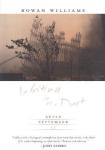 Writing in the Dust: After September 11 by Rowan Williams: Williams, then Archbishop of Wales, was in New York City on 9/11, just a few blocks from the World Trade Center. In the months that followed he pondered suffering, peacemaking, and the ways of God. He cautions against labelling the Other as Evil and responding with retribution. A superb book-length essay.
And if I really had to limit myself to just two favourites – my very best fiction and nonfiction reads of the year – they would be Snow Falling on Cedars and The Cost of Living.
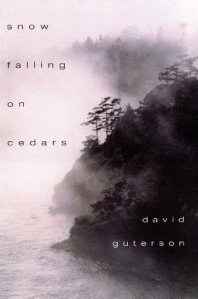

What were your best backlist reads this year?
Merry Christmas!
(I’ll be back on the 27th with Love Your Library, then I have various year-end superlatives and statistics posts going through the 31st.)
Six Degrees of Separation: What Are You Going Through to No Saints Around Here
I’ve become an occasional Six Degrees of Separation post-er, when the mood strikes me and/or I get a flash of inspiration. This month we began with What Are You Going Through, which I reviewed back in October 2020. (See Kate’s opening post.)
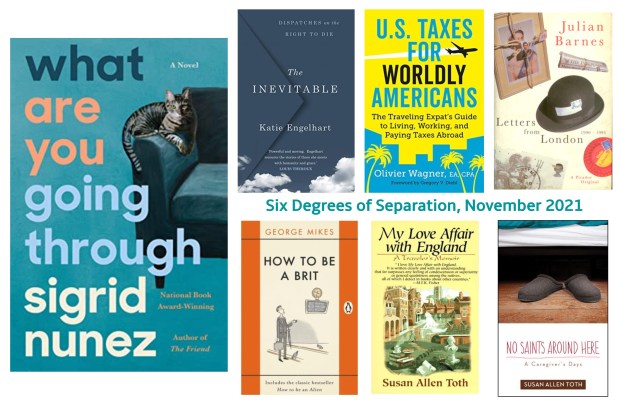
 Between that, The Friend and A Feather on the Breath of God, Sigrid Nunez has quickly become one of my favourite contemporary authors. I have two more of her novels on the shelf to read soon, one from my birthday haul.
In What Are You Going Through, the narrator is called upon to help a terminally ill friend commit suicide. However, I summed up the message as “Curiosity about other lives fuels empathy,” and noted “a sort of slapstick joy early in this morbid adventure.”
 #1 One of the stand-out books from my 2021 reading so far has been The Inevitable, which is about assisted dying. The case studies are wrenching but compassionately told. Katie Engelhart explores the nuances of situations, crafting expert portraits of suffering people and the medical professionals who seek to help them, and adding much in the way of valuable context.
 #2 As the saying goes, if there’s one thing inevitable besides death, it’s taxes. And if you’re a U.S. citizen, you will remain accountable to the IRS until the day you die, no matter where you live. (Eritrea is the only other country that requires expatriates to fill in tax returns.) I’ve now gotten my U.S. tax forms down to a science, keeping a list of pointers and previous years’ forms as scanned files so that I just have to plug in the year’s numbers, put zeroes in all the important boxes (since I’ve already paid income tax in the UK), and send it off. A matter of an hour or two’s work, rewarded by a G&T.
But I distinctly remember the Junes when I would spend days muddling through byzantine IRS forms, so I am very grateful that an offer for this e-book arrived in my inbox via my blog contact form in 2017: U.S. Taxes for Worldly Americans by Olivier Wagner. It goes through each form, often line by line. Three cheers for actually helpful self-help guides!
 #3 Another expat tip that I found extremely useful, small as it might seem, is that “quite” means something different in American vs. British English. To an American it’s a synonym for “very”; to the guarded Brits, it’s more like “rather.” I have the Julian Barnes essay collection Letters from London to thank for this vital scrap of etymological knowledge.
 #4 Unsurprisingly, I have built up a small library of books about understanding the English and their ways. In the How to Be a Brit omnibus, collecting three short volumes from the 1940s–70s, George Mikes (a Hungarian immigrant) makes humorous observations that have, in general, aged well. His mini-essays on tea, weather and queuing struck me as particularly apt. I would draw a straight line from this through Bill Bryson’s Notes from a Small Island to the Very British Problems phenomenon.
 #5 As I was preparing to fly to England for the first time for my study abroad year, one of the authors who most whetted my appetite for British travel was Susan Allen Toth, whose trilogy of UK-themed memoirs-with-recommendations began with My Love Affair with England – included in one of my Landmark Books in My Life posts. I’m rereading one of the other three now.
 #6 Toth is a very underrated author, I feel. I’ve read most of her memoirs and have a short nonfiction work of hers on my pile for #NovNov. Her most recent book is No Saints Around Here: A Caregiver’s Days (2014), in which she chronicled the last 18 months of her husband James’s life, as she and an army of caregivers coped with his decline from Parkinson’s disease. Toth gets the tone just right: although she is honest, she is never melodramatic; although she often feels sorry for herself, she also recognizes how lucky she has been, not just to have done a good job of looking after James, but to have had him in her life at all.
I’ve gone full circle from one story of caregiving to another, via death, taxes and Englishness. The starting and ending books are reminders that you never fully know what another person is going through; all we can do is our best while cutting others some slack.
Where will your chain take you? Join us for #6Degrees of Separation! (Hosted on the first Saturday of each month by Kate W. of Books Are My Favourite and Best.) Next month’s starting point is our buddy read for week 4 of #NovNov, Ethan Frome by Edith Wharton.
Have you read any of my selections? Are you tempted by any you didn’t know before?
 Bookish Beck = Rebecca Foster. American transplant to England. Freelance proofreader and book reviewer.
 Bookish Beck