Summer Reading 2025: Anthony, Espach, Han & Teir
In the UK, summer doesn’t officially end until the 22nd, so even though I’ve been doing plenty of baking with apples and plums and we’ve had squashes delivered in our vegetable box, I’ve taken advantage of that extra time to finish a couple more summery books. This year I’m featuring four novels ranging in location from Rhode Island to Finland. I’ve got all the trappings of summer: a swimming pool, a wedding, a beach retreat, and a summer house.
The Most by Jessica Anthony (2024)
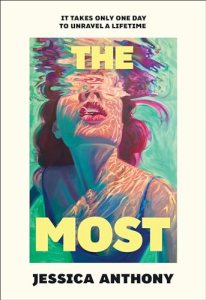 I can’t resist a circadian narrative. This novella takes place in Delaware on one day in early November 1957, but flashbacks and close third-person narration reveal everything we need to know about Virgil and Kathleen Beckett and their marriage. I’m including it in my summer reading because it’s set on an unseasonably warm Sunday and Kathleen decides to spend the entire day in their apartment complex’s pool. The mother of two drifts back in memory to her college tennis-playing days and her first great love, Billy Blasko, a Czech tennis coach who created a signature move called “The Most,” which means “bridge” in his language – the idea is to trap your opponent and then drop a bomb on them. Virgil, who after taking their two boys to church goes golfing with his insurance sales colleagues as is expected of him, loves jazz music and has just been sent the secret gift of a saxophone. Both spouses are harbouring secrets and, as Laika orbits the Earth overhead, they wonder if they can break free from the capsules they’ve built around their hearts and salvage their relationship. The storytelling is tight even as the book loops around the same events from the two perspectives. This was really well done, and a big step up from Enter the Aardvark. (Public library)
The Wedding People by Alison Espach (2024)
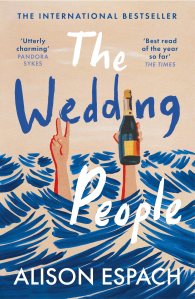 You’ve all heard about this one, right? It’s been a Read with Jenna selection and the holds are stacking up in my library system. No wonder it’s been hailed as a perfect summer read: it’s full of sparkling banter; heartwarming, very funny and quite sexy. And that despite a grim opening situation: Phoebe flies from St. Louis to Newport and checks into a luxury hotel, intending to kill herself. She’s an adjunct professor whose husband left her for their colleague after their IVF attempts failed, and she feels she’ll never finish writing her book, become a mother or find true love again. Little does she know that a Bridezilla type named Lila who’s spent $1 million of her inheritance on a week-long wedding extravaganza (culminating in a ceremony at The Breakers mansion) meant to book out the entire hotel. Phoebe somehow snagged the room with the best view. Lila isn’t about to let anyone ruin her wedding.
What follows is Cinderella-like yet takes into account the realities of bereavement, infidelity, infertility and blended families. Because of the one-week format, Phoebe’s depression is defused more quickly than is plausible, but I was relieved that Espach doesn’t plump for a full-blown happy ending. I did also find the novel unnecessarily crass in places, especially the gag about the car. Still, this has all the wit of Katherine Heiny and Curtis Sittenfeld. I’d recommend it if you enjoyed Dream State or Consider Yourself Kissed, and it’s especially reminiscent of Sorrow and Bliss for the mixture of humour and frank consideration of mental health. It’s as easy to relate to Phoebe’s feelings (“How much of her life had she spent in this moment, waiting for someone else to decide something conclusive about her?”; “It is so much easier to sit in things and wait for someone to save us”) as it is to laugh at the one-liners. “Garys are not wonderful. That’s just not what they are meant to be” particularly tickled me because I know a few Garys in real life. (Public library)
The Summer I Turned Pretty by Jenny Han (2008)
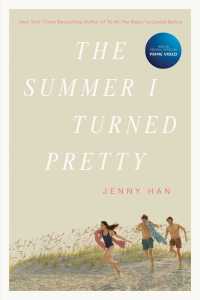 Every summer Belly and her mother and brother have joined her mother’s best friend Susannah and her sons Conrad and Jeremiah at their beach house. She’s had a crush on Conrad for what’s felt like forever, but she’s only ever been his surrogate little sister, fun for palling around with but never taken seriously. This summer is different, though: Belly is turning 16, it’s Conrad’s last summer before college, and his family seems to be falling apart. The novel kept being requested off me and I puzzled over how it could have eight reservations on it until I realized there’s an Amazon Prime Video adaptation now in its third and final season. I reckon the story will work better on screen because Belly’s narration was the main issue for me. She’s ever so shallow, so caught up in boys that she doesn’t realize Susannah is sick again. Her fixation on the brooding Conrad doesn’t make sense when she could have affable Jeremiah or sweet, geeky Cam, who met her through Latin club and liked her before she grew big boobs. He’s who she’s supposed to be with in this kind of story, right? I think this would appeal to younger, boy-crazy teens, but it just made me feel old and grumpy. (Public library)
The Summer House by Philip Teir (2017; 2018)
[Translated from Swedish by Tiina Nunnally]
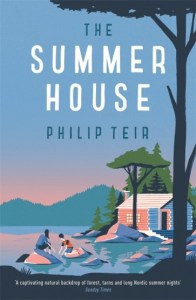 The characters are Finland-Swedish, like the author. Erik and Julia escape Helsinki with their children, Alice and Anton, to spend time at her father’s summer house. Erik has just lost his job in IT for a large department store, but hasn’t told Julia yet. Julia is working on a novel, but distracted by the fact that her childhood friend Marika, the not so secret inspiration for a character in her previous novel, is at another vacation home nearby with Chris, her Scottish partner. These two and their hangers-on have a sort of commune based around free love and extreme environmental realism: the climate crisis will not be solved (“accepting the grief instead of talking about hope all the time”) and the only thing to do is participate in de-civilisation. But like many a cult leader, Chris courts young female attention and isn’t the best role model. Both couples are strained to breaking point.
Meanwhile, Chris and Marika’s son, Leo, has been sneaking off with Alice; and Erik’s brother Anders shows up and starts seeing the widowed therapist neighbour. This was a reasonably likeable book about how we respond to crises personal and global, and how we react to our friends’ successes and problems – Erik is jealous of his college buddy’s superior performance in a tech company. But I thought it was a little aimless, especially in its subplots, and it suffered in comparison with Leave the World Behind, which has quite a similar setup but a more intriguing cosmic/dystopian direction. (Secondhand – Community Furniture Project, Newbury) 
Any final summer books for you this year?
20 Books of Summer, 19–20: Emily St. James and Abraham Verghese
Going out on a high! My last three books for the challenge (also including Beautiful Ruins) were particularly great, just the sort of absorbing and rewarding reading that I wish I could guarantee for all of my summer selections.
Woodworking by Emily St. James (2025)
Colloquially, “woodworking” is disappearing in plain sight; doing all you can to fade into the woodwork. Erica has only just admitted her identity to herself, and over the autumn of 2016 begins telling others she’s a woman – starting with her ex-wife Constance, who is now pregnant by her fiancé, John. To everyone else, Erica is still Mr. Skyberg, a 35-year-old English teacher at Mitchell High involved in local amateur dramatics. When Erica realizes that not only is there another trans woman in her small South Dakota town but that it’s one of her students, Abigail Hawkes, she lights up. Abigail may be half her age but is further along in her transition journey and has sassy confidence. But this foul-mouthed new mentor has problems of her own, starting with parents who refuse to refer to her by her chosen name. Abigail lives with her adult sister instead, and gains an unexpected surrogate family via her boyfriend Caleb, a Korean adoptee whose mother, Brooke Daniels, is directing Our Town. Brooke is surprisingly supportive given that she attends Isaiah Rose’s megachurch.
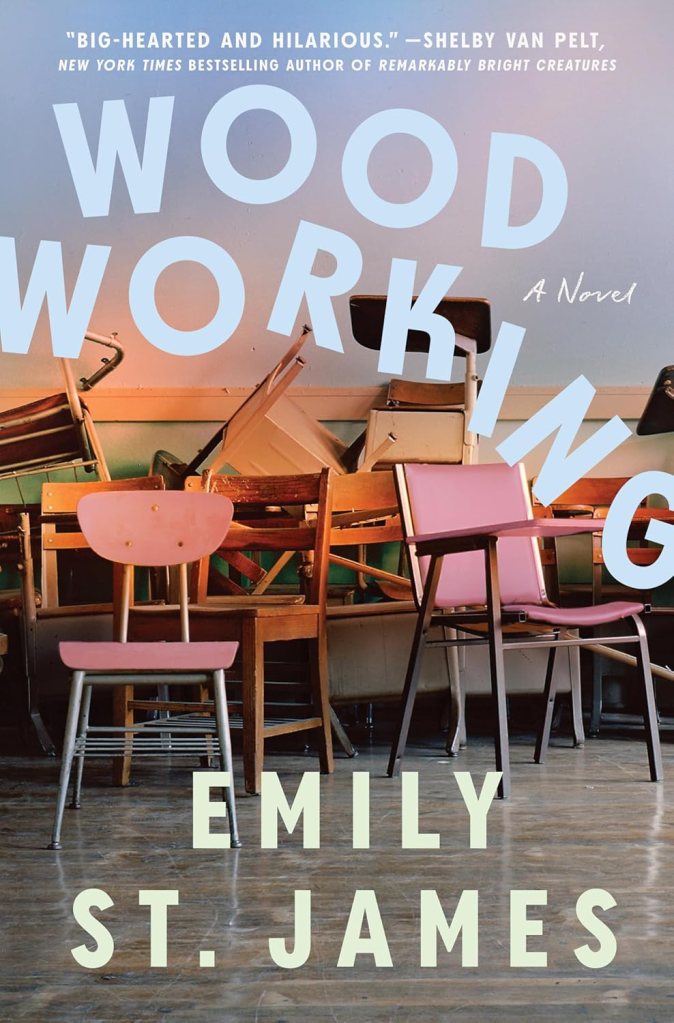
As Trump/Pence signs proliferate, a local election is heating up, too: Pastor Rose is running for State Congress on the Republican ticket, opposed by Helen Swee. Erica befriends Helen and becomes faculty advisor for the school’s Democrat club (which has all of two members: Abigail and her Leslie Knope-like friend Megan). The plot swings naturally between the personal and political, emphasizing how the personal business of 1% of the population has been made into a political football. Chapters alternate between Abigail in first person and Erica in third. The characters feel utterly real and the dialogue is as genuine as the narrative voices. The support group Erica and Abigail attend presents a range of trans experiences based on when one came of age. Some are still deep undercover. There’s a big reveal I couldn’t quite accept, though I can see its purpose. It’s particularly effective how St. James lets second- and third-person narration shade into first as characters accept their selves. Grey rectangles cover up deadnames all but once, making the point that even allies can get it wrong.
This was pure page-turning enjoyment with an important message to convey. It reminded me a lot of Under the Rainbow by Celia Laskey but also had the flavour of classic Tom Perrotta (Election). In the Author’s Note, St. James writes, “They say the single greatest determinant of whether someone will support and affirm trans people is if they know a trans person.” I feel lucky to count three trans people among my friends. It’s impossible to make detached pronouncements about bathrooms and slippery slopes if you care about people whose rights and very existence are being undermined. We should all be reading books by and about trans women. (New purchase from Bookshop.org)
The Covenant of Water by Abraham Verghese (2023)
All too often, I shy away from doorstoppers because they seem like too much of a time commitment. Why read 715 pages in one novel when I could read 3.5 of 200 pages each? Yet there’s something special about being lost in the middle of a great big book and trusting that wherever the story goes will be worthwhile. I let this review copy languish on the shelf for over TWO YEARS when I should have known that the author of the amazing Cutting for Stone couldn’t possibly let me down. Verghese’s second novel is very much in the same vein: a family saga that spans decades and in every generation focuses on medical issues. Verghese is a practicing doctor as well as a Stanford professor and you can tell he glories in the details of hand and brain surgeries, disability and rare diseases – and luckily, so do I.
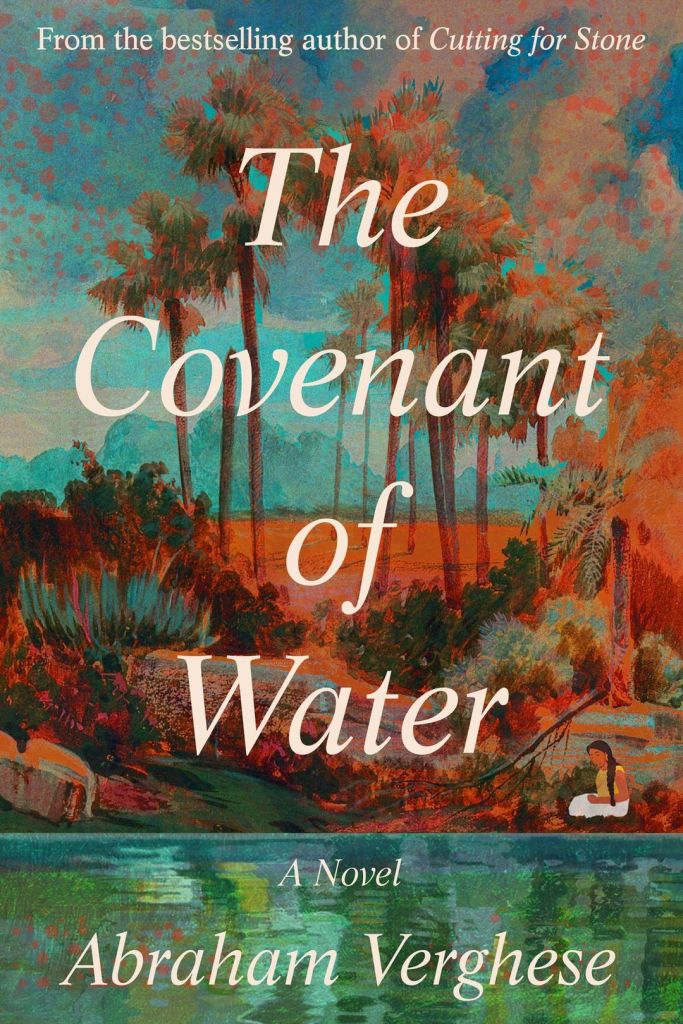
Wider events play out in the background (wars, partition, the fall of the caste system), but the focus is always on one family in Kerala, starting in 1900 when a 12-year-old girl is brought to the Parambil estate for her arranged marriage to a 40-year-old widower. One day she will be Big Ammachi, the matriarch of a family with a mysterious Condition: In every generation, someone drowns. As a result, they all avoid water, even if it requires going hours out of their way. Her son Philipose longs to be a scholar, but is so hard of hearing that his formal education is cut short. He becomes a columnist in a local newspaper and marries Elsie, a spirited artist. Their daughter, Mariamma, trains as a doctor. In parallel, we follow the story of Digby Kilgour, a Glaswegian surgeon whose career takes him to India. Through Digby and Mariamma’s interactions with colleagues, we watch colonial incompetence and sexism play out. Addiction and suicide recur across the years. Destiny and choice lock horns. I enjoyed the window onto the small community of St. Thomas Christians and felt fond of all the characters, including Damodaran the elephant. It’s also really clever how Verghese makes the Condition a cross between a mystical curse and a diagnosable ailment. An intellectual soap opera that makes you think about storytelling, purpose and inheritance, this is extraordinary. 
With thanks to Atlantic Books for the proof copy for review.

I read 10 of the books I selected in my initial planning post. I’m pleased that I picked off a couple of long-neglected review copies and several recent purchases. The rest were substituted at whim. There were two duds, but the overall quality was high, with 10 books I rated 4 stars or higher! Along with the above and Beautiful Ruins, Pet Sematary and Storm Pegs were overall highlights. I also managed to complete a row on the Bingo card, a fun add-on. And, bonus: I cleared 7 books from my shelves by reselling or giving them away after I read them.
Book Serendipity, Mid-December 2024 to Mid-February 2025
I call it “Book Serendipity” when two or more books that I read at the same time or in quick succession have something in common – the more bizarre, the better. This is a regular feature of mine every couple of months. Because I usually have 20–30 books on the go at once, I suppose I’m more prone to such incidents. People frequently ask how I remember all of these coincidences. The answer is: I jot them down on scraps of paper or input them immediately into a file on my PC desktop; otherwise, they would flit away!
The following are in roughly chronological order.
- The angel Ariel appears in Through a Glass Darkly by Jostein Gaarder and Constructing a Witch by Helen Ivory.
- The protagonist’s surname is English in Wild Houses by Colin Barrett and The Cannibal Owl by Aaron Gwyn.
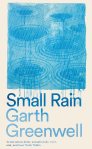
- I read scenes of grief over a tree being cut down / falling next to one’s house in Dispersals by Jessica J. Lee and Small Rain by Garth Greenwell, one right after the other.
- A mother who does kundalini yoga in All Fours by Miranda July and Unattached by Reannon Muth.
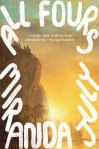
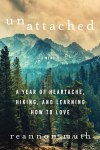
- The idea that happiness (unlike anxiety and sorrow) leaves no trace in writing or in life appeared for me on the same day in Memorial Days by Geraldine Brooks and Small Rain by Garth Greenwell.
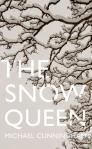
- Someone considers suicide by falling but realizes that at the current height they would injure themself but not die in Wild Houses by Colin Barrett, The Snow Queen by Michael Cunningham, and The Courage Consort by Michel Faber.
- The homosexual “bear” stereotype appears in The Snow Queen by Michael Cunningham and Small Rain by Garth Greenwell.
- A William Blake epigraph in Open, Heaven by Seán Hewitt and one of the poems included in Poetry Unbound by Pádraig Ó Tuama.
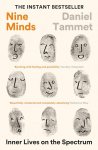
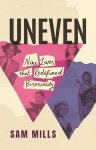
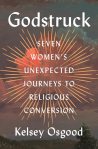
- A group biography including nine pen portraits (plus the author): Nine Minds by Daniel Tammet, followed in quick succession by Uneven by Sam Mills. (Similar, but with just seven subjects, is a book I’m currently reading about women’s religious conversions, Godstruck by Kelsey Osgood.)
- A book–life serendipity moment: in All Fours by Miranda July there is mention of an elderly cat named Alfie who needs to be given medication several times a day. Snap!
- By chance, I started reading Myself and Other Animals, a posthumous collection of short autobiographical pieces by Gerald Durrell, on his centenary (7 January 2025).
- Guilt over destroying a bird’s nest in The Book of George by Kate Greathead and I’ll Come to You by Rebecca Kauffman.
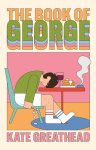
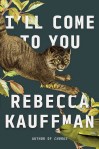
- The main female character has a birthmark in The Book of George by Kate Greathead and The Blindfold by Siri Hustvedt.
- Reading two novels at the same time that open with a new family having to be found for a little boy because his mentally ill mother is presumed to have died by suicide: Unexpected Lessons in Love by Bernardine Bishop and Going Home by Tom Lamont.
 The protagonist is mistaken for a two-year-old boy’s father in The Book of George by Kate Greathead and Going Home by Tom Lamont.
- The mother is named Ellen in The Book of George by Kate Greathead and I’ll Come to You by Rebecca Kauffman.
- An ailing elderly father named Vic in Going Home by Tom Lamont and The God of the Woods by Liz Moore.
- A mother is sent to a mental hospital after the loss of her young son in Invisible by Paul Auster and The God of the Woods by Liz Moore.
- A brother and sister share a New York City apartment in Invisible by Paul Auster and The Book of George by Kate Greathead.
- A mention of the Japanese artist Hokusai in While the Earth Holds Its Breath by Helen Moat and The Secret Life of Snow by Giles Whittell.
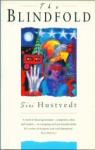 Adults dressing up for Halloween in The Blindfold by Siri Hustvedt and I’ll Come to You by Rebecca Kauffman.
- A second husband named Tim in Unexpected Lessons in Love by Bernardine Bishop and Because We Must by Tracy Youngblom.
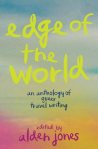
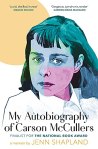
- The idea that ‘queers find each other’ in Edge of the World: An Anthology of Queer Travel Writing edited by Alden Jones and My Autobiography of Carson McCullers by Jenn Shapland.
- Experiencing 9/11 as a freshman in college (just like me!) in Dirty Kitchen by Jill Damatac and The Book of George by Kate Greathead. (There is also a 9/11 section in Confessions by Catherine Airey.)
- An intense poker game in I’ll Come to You by Rebecca Kauffman and Going Home by Tom Lamont.
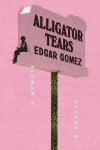 The main character is expelled on false drug possession charges in Invisible by Paul Auster and Alligator Tears by Edgar Gomez.
- Missing the chance to say goodbye before a father’s death, and a parent wondering aloud to their son whether they’ve been a good parent in The Book of George by Kate Greathead and The Remains of the Day by Kazuo Ishiguro.
- Someone departs suddenly, leaving her clothes and books behind, in Invisible by Paul Auster and My Autobiography of Carson McCullers by Jenn Shapland.
- Mentions of DACA (Deferred Action for Childhood Arrivals, an Obama-era U.S. immigration policy) and “Two-Buck Chuck” (a nickname for the Charles Shaw bargain wine sold at Trader Joe’s) in Dirty Kitchen by Jill Damatac and Alligator Tears by Edgar Gomez.
- A City Hall wedding in New York City in Baumgartner by Paul Auster and Dirty Kitchen by Jill Damatac.
- Polish Jewish heritage and a parent who died of pancreatic cancer in Baumgartner by Paul Auster and The History of Love by Nicole Krauss.
- In Because We Must by Tracy Youngblom, she reads The Tale of Despereaux by Kate DiCamillo aloud to her son while he is recovering in hospital. I was reading Despereaux at the same time! (Also, in real-life serendipity, Youngblom and I both have a sister named Trish.)
- A code of 1–3 knocks is used in Confessions by Catherine Airey and The History of Love by Nicole Krauss.
 A scene of a teacup breaking in Junction of Earth and Sky by Susan Buttenwieser and The Möbius Book by Catherine Lacey.
What’s the weirdest reading coincidence you’ve had lately?
Review Catch-Up: Medical Nonfiction & Nature Poetry
Catching up on four review copies I was sent earlier in the year and have finally got around to finishing and writing about. I have two works of health-themed nonfiction, one a narrative about organ transplantation and the other a psychiatrist’s memoir; and two books of nature poetry, a centuries-spanning anthology and a recent single-author collection.
The Story of a Heart by Rachel Clarke
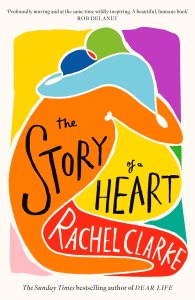 Rachel Clarke is a palliative care doctor and voice of wisdom on end-of-life issues. I was a huge fan of her Dear Life and admire her public critique of government policies that harm the NHS. (I’ve also reviewed Breathtaking, her account of hospital working during Covid-19.) While her three previous books all incorporate a degree of memoir, this is something different: narrative nonfiction based on a true story from 2017 and filled in with background research and interviews with the figures involved. Clarke has no personal connection to the case but, like many, discovered it via national newspaper coverage. Nine-year-old Max Johnson spent nearly a year in hospital with heart failure after a mysterious infection. Keira Ball, also nine, was left brain-dead when her family was in a car accident on a dangerous North Devon road. Keira’s heart gave Max a second chance at life.
Clarke zooms in on pivotal moments: the accident, the logistics of getting an organ from one end of the country to another, and the separate recovery and transplant surgeries. She does a reasonable job of recreating gripping scenes despite a foregone conclusion. Because I’ve read a lot around transplantation and heart surgery (such as When Death Becomes Life by Joshua D. Mezrich and Heart by Sandeep Jauhar), I grew impatient with the contextual asides. I also found that the family members and medical professionals interviewed didn’t speak well enough to warrant long quotation. All in all, this felt like the stuff of a long-read magazine article rather than a full book. The focus on children also results in mawkishness. However, the Baillie Gifford Prize judges who shortlisted this clearly disagreed. I laud Clarke for drawing attention to organ donation, a cause dear to my family. This case was instrumental in changing UK law: one must now opt out of donating organs instead of registering to do so.
With thanks to Abacus Books (Little, Brown) for the proof copy for review.
You Don’t Have to Be Mad to Work Here: A Psychiatrist’s Life by Dr Benji Waterhouse
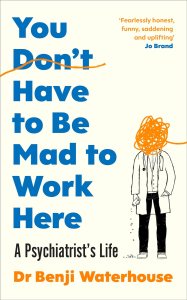 Waterhouse is also a stand-up comedian and is definitely channelling Adam Kay in his funny and touching debut memoir. Most chapters are pen portraits of patients and colleagues he has worked with. He also puts his own family under the microscope as he undergoes therapy to work through the sources of his anxiety and depression and tackles his reluctance to date seriously. In the first few years, he worked in a hospital and in community psychiatry, which involved house visits. Even though identifying details have been changed to make the case studies anonymous, Waterhouse manages to create memorable characters, such as Tariq, an unhoused man who travels with a dog (a pity Waterhouse is mortally afraid of dogs), and Sebastian, an outwardly successful City worker who had been minutes away from hanging himself before Waterhouse and his colleague rang on the door.
Along with such close shaves, there are tragic mistakes and tentative successes. But progress is difficult to measure. “Predicting human behaviour isn’t an exact science. We’re just relying on clinical assessment, a gut feeling and sometimes a prayer,” Waterhouse tells his medical student. The book gives a keen sense of the challenges of working for the NHS in an underfunded field, especially under Covid strictures. He is honest and open about his own failings but ends on the positive note of making advances in his relationship with his parents. This was a great read that I’d recommend beyond medical-memoir junkies like myself. Waterhouse has storytelling chops and the frequent one-liners lighten even difficult topics:
The sum total of my wisdom from time spent in the community: lots of people have complicated, shit lives.
Ambiguous statements … need clarification. Like when a depressed patient telephones to say they’re ‘in a bad place’. I need to check if they’re suicidal or just visiting Peterborough.
What is it about losing your mind that means you so often mislay your footwear too?
With thanks to Jonathan Cape (Penguin) for the proof copy for review.
Green Verse: An Anthology of Poems for Our Planet, ed. Rosie Storey Hilton
 Part of the “In the Moment” series, this anthology of nature poetry has been arranged seasonally – spring through to winter – and, within season, roughly thematically. No context or biographical information is given on the poets apart from birth and death years for those not living. Selections from Emily Dickinson, William Shakespeare and W.B. Yeats thus share space with the work of contemporary and lesser-known poets. This is a similar strategy to the Wildlife Trusts’ Seasons anthologies, the ranging across time meant to suggest continuity in human engagement with the natural world. However, with a few exceptions (the above plus Thomas Hardy’s “The Darkling Thrush” and Gerard Manley Hopkins’s “Inversnaid” are absolute classics, of course), the historical verse tends to be obscure, rhyming and sentimental; unfair to deem it all purple or doggerel, but sometimes bodies of work are forgotten for a reason. By contrast, I found many more standouts among the contemporary poets. Some favourites: “Cyanotype, by St Paul’s Cathedral” by Tamiko Dooley, “Eight Blue Notes” by Gillian Dawson (about eight species of butterfly), the gorgeously erotic “the bluebells are coming out & so am I” by Maya Blackwell, and “The Trees Don’t Know I’m Trans” by Eddy Quekett. It was also worthwhile to discover poems from other ancient traditions, such as haiku by Issa (“O Snail”) and wise aphoristic verse by Lao Tzu (“All things pass”). So, a bit of a mixed bag, but a nice introductory text for those newer to poetry.
With thanks to Saraband for the free copy for review.
Dangerous Enough by Becky Varley-Winter (2023)
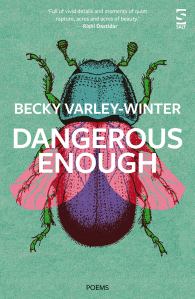 I requested this debut collection after hearing that it had been longlisted for the Laurel Prize for environmental poetry (funded by Simon Armitage, Poet Laureate). Varley-Winter crafts lovely natural metaphors for formative life experiences. Crows and wrens, foxes and fireflies, memories of a calf being born on a farm in Wales; gardens, greenhouses and long-lived orchids. These are the sorts of images that thread through poems about loss, parenting and the turmoil of lockdown. The last line or two of a poem is often especially memorable. It’s been months since I read this and I foolishly didn’t take any notes, so I haven’t retained more detail than that. But here is one shining example:
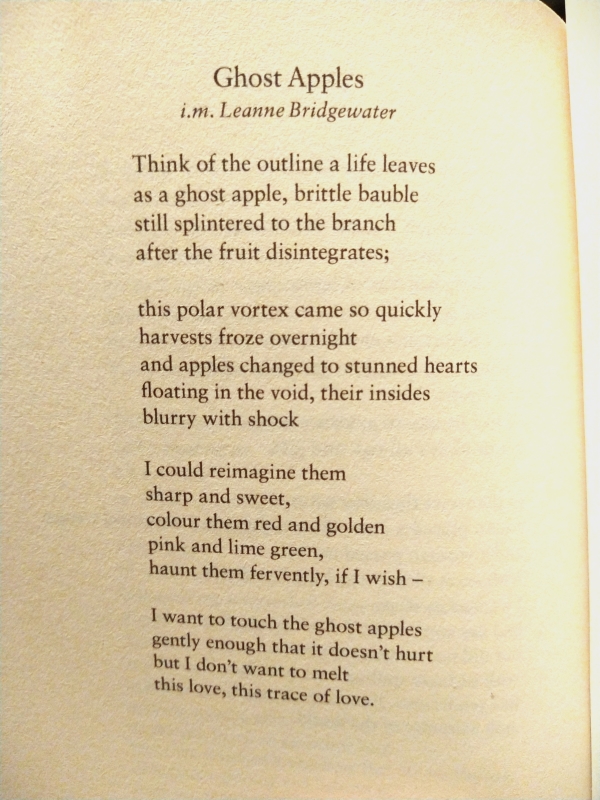
With thanks to Salt Publishing for the free copy for review.
Literary Wives Club: Euphoria by Elin Cullhed (2021)
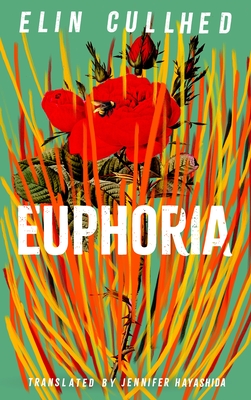
Swedish author Elin Cullhed won the August Prize and was a finalist for the Strega European Prize with this first novel for adults. Euphoria is a recreation of Sylvia Plath’s state of mind in the last year of her life. It opens on 7 December 1962 in Devon with a list headed “7 REASONS NOT TO DIE,” most of which centre on her children, Frieda and Nick. She enumerates the pleasures of being in a physical body and enjoying coastal scenery. But she also doesn’t want to give her husband, poet Ted Hughes, the satisfaction of having his prophecies about her mental illness come true.
 Flash back to the year before, when Plath is heavily pregnant with Nick during a cold winter and trying to steal moments to devote to writing. She feels gawky and out of place in encounters with the vicar and shopkeeper of their English village. “Who was I, who had let everything become a compromise between Ted’s Celtic chill and my grandiose American bluster?” She and Hughes have an intensely physical bond, but jealousy of each other’s talents and opportunities – as well as his serial adultery and mean and controlling nature – erodes their relationship. The book ends in possibility, with Plath just starting to glimpse success as The Bell Jar readies for publication and a collection of poems advances. Readers are left with that dramatic irony.
Cullhed seems to hew to biographical detail, though I’m not particularly familiar with the Hughes–Plath marriage. Scenes of their interactions with neighbours, Plath’s mother, and Ted’s lover Assia Wevill make their dynamic clear. The prose grows more nonstandard; run-on sentences and all-caps phrases indicate increasing mania. There are also lovely passages that seem apt for a poet: “Ted’s crystalline sly little mint lozenge eyes. Narrow foxish. Thin hard. His eyes, so embittered.” The use of language is effective at revealing Plath’s maternal ambivalence and shaky mental health. Somehow, though, I found this quite tedious by the end. Not among my favourite biographical novels, but surely a must-read for Plath fans.
Translated from the Swedish by Jennifer Hayashida in 2022 – our first read in translation, I think? And what a brilliant cover.
With thanks to Canongate for the free copy for review.
The main question we ask about the books we read for Literary Wives is:
What does this book say about wives or about the experience of being a wife?
Marriage is claustrophobic here, as in so many of the books we read. Much as she loves her children, Plath finds the whole wifehood–motherhood complex to be oppressive and in direct conflict with her ambitions as an author. Sharing a vocation with her husband, far from helping him understand her, only makes her more bitter that he gets the time and exposure she so longs for. More than 60 years later, Plath’s death still echoes, a tragic loss to literature.
See Kate’s, Kay’s and Naomi’s reviews, too!
Coming up next, in March: Lessons in Chemistry by Bonnie Garmus – I’ve read this before but will plan to skim back through a copy from the library.
#MARM2024: Life before Man and Interlunar by Margaret Atwood
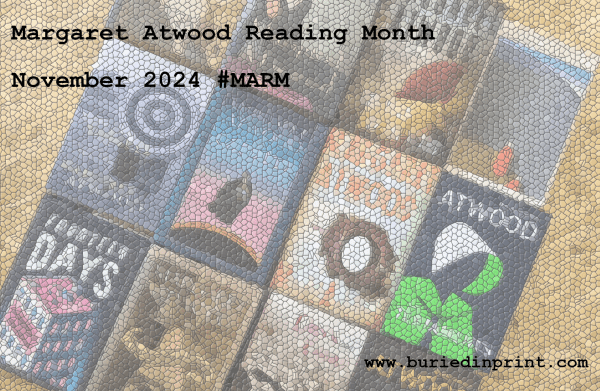
Hard to believe, but it’s my seventh year participating in the annual Margaret Atwood Reading Month (#MARM) hosted by indomitable Canadian blogger Marcie of Buried in Print. In previous years, I’ve read Surfacing and The Edible Woman, The Robber Bride and Moral Disorder, Wilderness Tips, The Door, and Bodily Harm and Stone Mattress; and reread The Blind Assassin. I’m wishing a happy belated birthday to Atwood, who turned 85 earlier this month. Novembers are my excuse to catch up on her extensive back catalogue. In recent years, I’ve scoured the university library holdings to find works by her that I often had never heard of, as was the case with this early novel and mid-career poetry collection.
Life before Man (1979)
 Atwood’s fourth novel is from three rotating third-person POVs: Toronto museum curator Elizabeth, her toy-making husband Nate, and Lesje (pronounced “Lashia,” according to a note at the front), Elizabeth’s paleontologist colleague. The dated chapters span nearly two years, October 1976 to August 1978; often we visit with two or three protagonists on the same day. Elizabeth and Nate, parents to two daughters, have each had a string of lovers. Elizabeth’s most recent, Chris, has died by suicide. Nate disposes of his latest mistress, Martha, and replaces her with Lesje, who is initially confused by his interest in her. She’s more attracted to rocks and dinosaurs than to people, in a way that could be interpreted as consistent with neurodivergence.
It was neat to follow along seasonally with Halloween and Remembrance Day and so on, and see the Quebec independence movement simmering away in the background. To start with, I was engrossed in the characters’ perspectives and taken with Atwood’s witty descriptions and dialogue: “[Nate]’s heard Unitarianism called a featherbed for falling Christians” and (Lesje:) “Elizabeth needs support like a nun needs tits.” My favourite passage encapsulates a previous relationship of Lesje’s perfectly, in just the sort of no-nonsense language she would use:
The geologist had been fine; they could compromise on rock strata. They went on hikes with their little picks and kits, and chipped samples off cliffs; then they ate jelly sandwiches and copulated in a friendly way behind clumps of goldenrod and thistles. She found this pleasurable but not extremely so. She still has a collection of rock chips left over from this relationship; looking at it does not fill her with bitterness. He was a nice boy but she wasn’t in love with him.
Elizabeth’s formidable Auntie Muriel is a terrific secondary presence. But this really is just a novel about (repeated) adultery and its aftermath. The first line has Elizabeth thinking “I don’t know how I should live,” and after some complications, all three characters are trapped in a similar stasis by the end. By the halfway point I’d mostly lost interest and started skimming. The grief motif and museum setting weren’t the draws I’d expected them to be. Lesje is a promising character but, disappointingly, gets snared in clichéd circumstances. No doubt that is part of the point; “life before man” would have been better for her. (University library)
This prophetic passage from Life before Man leads nicely into the themes of Interlunar:
The real question is: Does [Lesje] care whether the human race survives or not? She doesn’t know. The dinosaurs didn’t survive and it wasn’t the end of the world. In her bleaker moments, … she feels the human race has it coming. Nature will think up something else. Or not, as the case may be.
The posthuman prospect is echoed in Interlunar in the lines: “Which is the sound / the earth will make for itself / without us. A stone echoing a stone.”
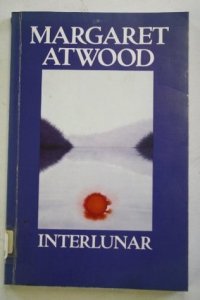
Interlunar (1984)
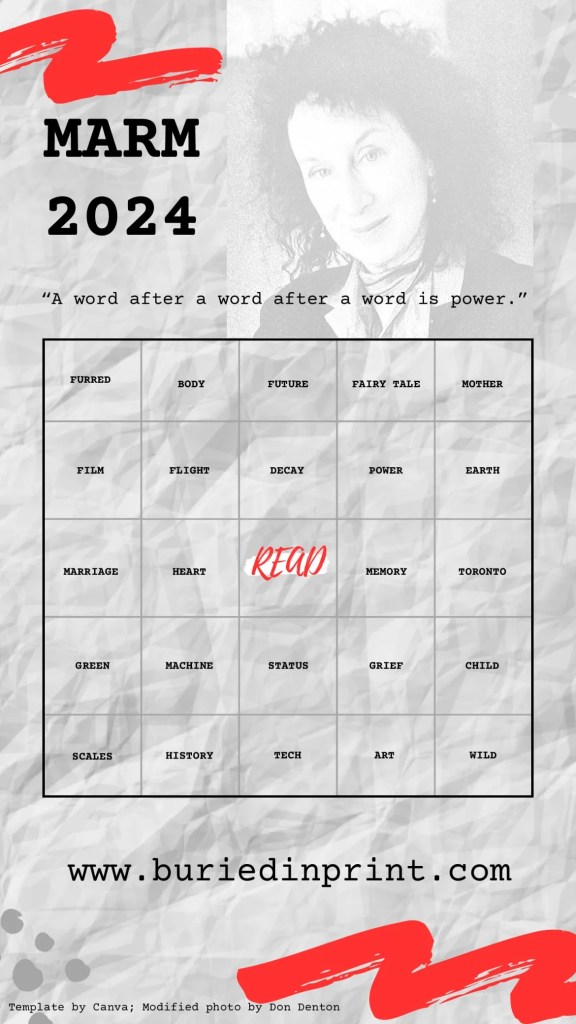
Some familiar Atwood elements in this volume, including death, mythology, nature, and stays at a lake house; you’ll even recognize a couple of her other works in poem titles “The Robber Bridegroom” and “The Burned House.” The opening set of “Snake Poems” got me the “green” and “scales” squares on Marcie’s Bingo card (in addition to various other scattered ones, I’m gonna say I’ve filled the whole right-hand column thanks to these two books).
This one brilliantly likens the creature to the sinuous ways of language:
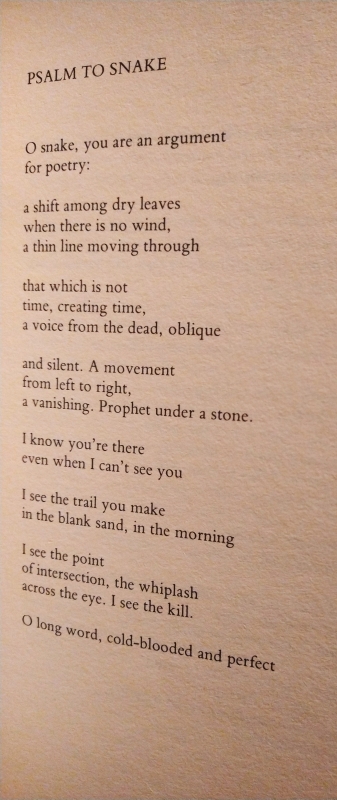
 “A Holiday” imagines a mother–daughter camping vacation presaging a postapocalyptic struggle for survival: “This could be where we / end up, learning the minimal / with maybe no tree, no rain, / no shelter, no roast carcasses / of animals to renew us … So far we do it / for fun.” As in her later collection The Door, portals and thresholds are of key importance. “Doorway” intones, “November is the month of entrance, / month of descent. Which has passed easily, / which has been lenient with me this year. / Nobody’s blood on the floor.” There are menace and melancholy here. But as “Orpheus (2)” suggests at its close, art can be an ongoing act of resistance: “To sing is either praise / or defiance. Praise is defiance.” I do recommend Atwood’s poetry if you haven’t tried it before, even if you’re not typically a poetry reader. Her poems are concrete and forceful, driven by imagery and voice; not as abstract as you might fear. Alas, I wasn’t sent a review copy of her collected poems, Paper Boat, as I’d hoped, but I will continue to enjoy encountering them piecemeal. (University library)
Eve Smith Event & Absurd Person Singular
Two literary events I attended recently…
On Friday afternoon I volunteered on stewarding and refreshments for an author chat held at my local public library. It was our first such event since before Covid! I’d not heard of Eve Smith, who is based outside Oxford and writes speculative – not exactly dystopian, despite the related display below – novels inspired by scientific and medical advancements encountered in the headlines. Genetics, in particular, has been a recurring topic in The Waiting Rooms (about antibiotic resistance), Off Target (gene editing of embryos), One (a one-child policy introduced in climate-ravaged future Britain) and The Cure (forthcoming in April 2025; transhumanism or extreme anti-ageing measures).


Smith used to work for an environmental organization and said that she likes to write about what scares her – which tends not to be outlandish horror but tweaked real-life situations. Margaret Atwood has been a big influence on her, and she often includes mother–daughter relationships. In the middle of the interview, she read from the opening of her latest novel, One. I reckon I’ll give her debut, The Waiting Rooms, a try. (I was interested to note that the library has classed it under Science Fiction but her other two novels with General Fiction.)
Then last night we went to see my husband’s oldest friend (since age four!) in his community theatre group’s production of Absurd Person Singular, a 1972 play by Alan Ayckbourn. I’ve seen and read The Norman Conquests trilogy plus another Ayckbourn play and was prepared for a suburban British farce, but perhaps not for how dated it would feel.
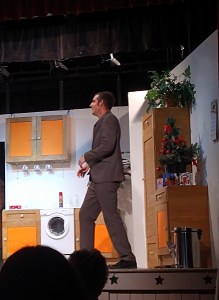 The small cast consists of three married couples. Ronald Brewster-Wright is a banker with an alcoholic wife, Marion. Sidney Hopcroft (wife: Jane) is a construction contractor and rising property tycoon and Geoffrey Jackson is a philandering architect with a mentally ill wife, Eva. Weaving all through is the prospect of a business connection between the three men: “you scratch my back, I’ll scratch yours,” as Sidney puts it to Ronald several times. After one of Geoffrey’s buildings suffers a disastrous collapse, he has to consider humbling himself enough to ask Sidney for work.
The three acts take place in each of their kitchens on subsequent Christmas Eves; the period kitchen fittings and festive decorations were a definite highlight. First, the Hopcrofts stress out over hosting the perfect cocktail party – which takes place off stage, with characters retreating in twos and threes to debrief in the kitchen. The next year, the jilted Eva makes multiple unsuccessful suicide attempts while her oblivious friends engage in cleaning and DIY. Finally, we’re at the Brewster-Wrights’ and the annoyingly cheerful Hopcrofts cajole the others, who aren’t in the Christmas spirit at all, into playing a silly musical chairs-like game.


With failure, adultery, alcoholism and suicidal ideation as strong themes, this was certainly a black comedy. Our friend Dave decided not to let his kids (10 and 7) come see it. He was brilliant as Sidney, not least because he genuinely is a DIY genius and has history of engaging people in dancing. But the mansplaining, criticism of his poor wife, and “Oh dear, oh dear” exclamations were pure Sidney. The other star of the show was Marion. Although the actress was probably several decades older than Ayckbourn’s intended thirtysomething characters, she brought Norma Desmond-style gravitas to the role. But it did mean that a pregnancy joke in relation to her and the reference to their young sons – the Brewster-Wrights are the only couple with children – felt off.
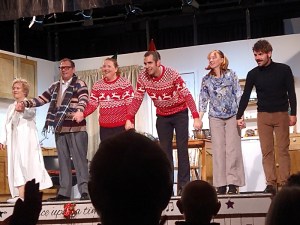 The director chose to give a mild content warning, printed in the program and spoken before the start: “Please be aware that this play was written in the 1970s and reflects the language and social attitudes of its time and includes themes of unsuccessful suicide attempts.” So the play was produced as is, complete with Marion’s quip about the cycles on Jane’s new washing machine: “Whites and Coloreds? It’s like apartheid!” The depiction of mental illness felt insensitive, although I like morbid comedy as much as the next person.
I can see why the small cast, silliness, and pre-Christmas domestic setting were tempting for amateur dramatics. There was good use of sound effects and the off-stage space, and a fun running gag about people getting soaked. I certainly grasped the message about not ignoring problems in hopes they’ll go away. But with so many plays out there, maybe this one could be retired?
R.I.P., Part II: Duy Đoàn, T. Kingfisher & Rachael Smith
A second installment for the Readers Imbibing Peril challenge (first was a creepy short story collection). Zombies link my first two selections, an experimental poetry collection and a historical novella that updates a classic, followed by a YA graphic novel about a medieval witch who appears in contemporary life to help a teen deal with her problems. I don’t really do proper horror; I’d characterize all three of these as more mischievous than scary.
Zombie Vomit Mad Libs by Duy Đoàn
 The Vietnamese American poet’s second collection strikes a balance between morbid – a pair of sonnets chants the names and years of poets who died by suicide – and playful. Multiple poems titled “Zombie” or “Zombies” are composed of just 1–3 cryptic lines. Other repeated features are blow-by-blow descriptions of horror movie scenes and the fill-in-the-blank Mad Libs format. There is an obsession with Leslie Cheung, a gay Hong Kong actor who also died by suicide, in 2003. Đoàn experiments linguistically as well as thematically, by adding tones (as used in Vietnamese) to English words. This was a startling collection I admired for its range and pluck, though I found little to personally latch on to. I was probably expecting something more like 36 Ways of Writing a Vietnamese Poem by Nam Le. But if you think poetry can’t get better than zombies + linguistics + suicides, boy have I got the collection for you! (Đoàn’s first book, We Play a Game, won the Yale Series of Younger Poets Prize and a Lambda Literary Award for bisexual poetry.)
To be published in the USA by Alice James Books on November 12. With thanks to the publisher for the advanced e-copy for review.
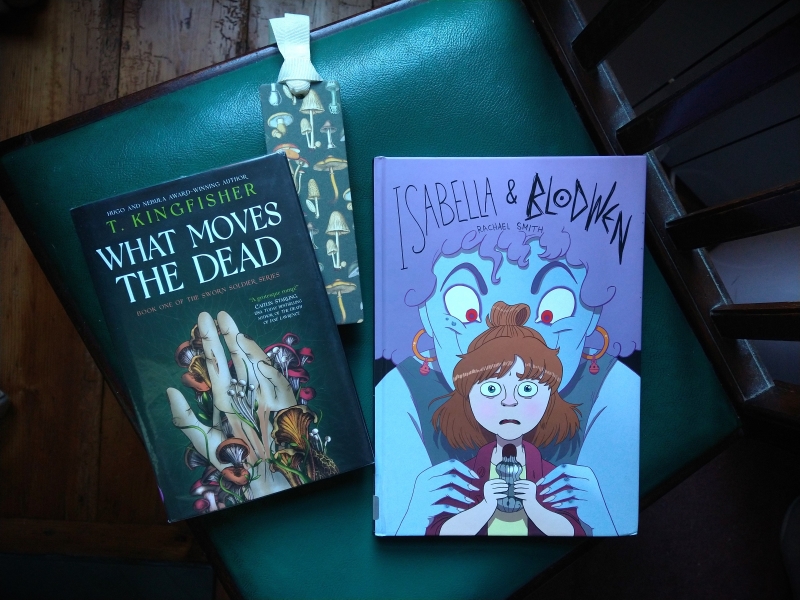
What Moves the Dead by T. Kingfisher (2022)
{MILD SPOILERS AHEAD}
 This first book in the “Sworn Soldier” duology is a retelling of Edgar Allan Poe’s “The Fall of the House of Usher.” Set in the 1890s, it’s narrated by Alex Easton, a former Gallacian soldier who learns that their childhood friend Madeline Usher is dying and goes to visit her at her and her brother Roderick’s home in Ruritania. Easton also meets the Ushers’ friend, the American doctor Denton, and Eugenia Potter, an amateur mycologist (and aunt of a certain Beatrix). Easton and Potter work out that what is making Madeline ill is the same thing that’s turning the local rabbits into zombies…
At first it seemed the author was awkwardly inserting a nonbinary character into history, but it’s more complicated than that. The sworn soldier tradition in countries such as Albania was a way for women, especially orphans or those who didn’t have brothers to advocate for them, to have autonomy in martial, patriarchal cultures. Kingfisher makes up European nations and their languages, as well as special sets of pronouns to refer to soldiers (ka/kan), children (va/van), etc. She doesn’t belabour the world-building, just sketches in the bits needed.
This was a quick and reasonably engaging read, though I wasn’t always amused by Kingfisher’s gleefully anachronistic tone (“Mozart? Beethoven? Why are you asking me? It was music, it went dun-dun-dun-DUN, what more do you want me to say?”). I wondered if the plot might have been inspired by a detail in Merlin Sheldrake’s Entangled Life, but it seems more likely it’s a half-conscious addition to a body of malevolent-mushroom stories (Mexican Gothic by Silvia Moreno-Garcia, various by Jeff VanderMeer, The Beauty by Aliya Whiteley). I was drawn in by Easton’s voice and backstory enough to borrow the sequel, about which more anon. (T. Kingfisher is the pen name of Ursula Vernon.) (Public library)
Isabella & Blodwen by Rachael Smith (2023)
 I’d reviewed Smith’s adult graphic memoirs Quarantine Comix (mental health during Covid) and Glass Half Empty (alcoholism and bereavement) for Foreword and Shelf Awareness, respectively. When I spotted this in the Young Adult section and saw it was about a witch, I mentally earmarked it for R.I.P. Isabella Maria Penwick-Wickam is a precocious 16-year-old student at Oxford. With her fixation on medieval history and folklore, she has the academic side of the university experience under control. But her social life is hopeless. She’s alienated flatmates and classmates alike with her rigid habits and judgemental comments. On a field trip to the Pitt Rivers Museum, where students are given a rare opportunity to handle artefacts, she accidentally drops a silver bottle into her handbag. Before she can return it, its occupant, a genie-like blowsy blue-and-purple witch named Blodwen, is released into the world. She wreaks much merry havoc, encouraging Issy to have some fun and make friends.
It’s a sweet enough story, but a few issues detracted from my enjoyment. Issy is often depicted more like a ten-year-old. I don’t love the blocky and exaggerated features Smith gives her characters, or the Technicolor hues. And I found myself rolling my eyes at how the book unnaturally inserts a sexual harassment theme – which Blodwen responds to in modern English, having spoken in archaic fashion up to that point, and with full understanding of the issue of consent. I can imagine younger teens enjoying this, though. (Public library)
The mini playlist I had going through my mind as I wrote this:
- “Running with Zombies” by The Bookshop Band (inspired by The Making of Zombie Wars by Aleksandar Hemon)
- “Flesh and Blood Dance” by Duke Special
- “Dead Alive” by The Shins
And to counterbalance the evil fungi of the Kingfisher novella, here’s Anne-Marie Sanderson employing the line “A mycelium network is listening to you” in a totally non-threatening way. It’s one of the multiple expressions of reassurance in her lovely song “All Your Atoms,” my current earworm from her terrific new album Old Light.
Summery Reading, Part I: Heatwave, Summer Fridays
Here we are between short, bearable heat waves. As the climate changes, I’m more grateful than ever to live somewhere with reasonably mild and predictable weather; I don’t miss the swampy humidity of the Maryland summers I grew up with one bit. Today I have some brief thoughts on a first pair of summer-themed reads I picked up last month: a queasy coming-of-age novella about French teenagers’ self-destructive actions on a camping holiday; and a fun, nostalgic romance novel set in New York City at the turn of the millennium.
Heatwave by Victor Jestin (2019; 2021)
[Translated from the French by Sam Taylor]
 Victor Jestin was in his early twenties when he wrote this debut novella, which won the Prix Femina des Lycéens and was longlisted for the CWA Crime Fiction in Translation Dagger. It opens, memorably, with Leonard’s confession: “Oscar is dead because I watched him die and did nothing. He was strangled by the ropes of a swing … Oscar was not a child. At seventeen, you don’t die like that by accident.” A suicide, then: fitting given the other dangerous behaviours – drinking and promiscuity – rife among the gang of teenagers at this campsite in the South of France. What turns it into a crime is that Leonard, addled by alcohol and the heat, doesn’t report the death but buries Oscar in the sand and pretends nothing happened.
The rest of the book takes place over about 24 hours, the final day of a two-week vacation. Leo stumbles about as if in a trance, outwardly relating to his family, a male friend who seems to have a crush on him, and girls he’d like to sleep with, but all the while inwardly wondering what to do next. “I hadn’t made many stupid mistakes in my seventeen years of life. This one was difficult to understand. It all happened too fast; I felt powerless.” This is interesting enough if you like unreliable teenage narrators or are drawn by the critics’ comparisons to Françoise Sagan – accurate for the sense of sleepwalking toward disaster. One could easily breeze through the 104 pages during one hot afternoon. It didn’t stand out to me particularly, though. (Little Free Library)
Summer Fridays by Suzanne Rindell (2024)
 I was a big fan of Rindell’s first two stylish historical novels, The Other Typist and Three-Martini Lunch. She seemed to go off the boil with the next two, which I skipped, and now she’s back with an unexpected foray into romance, a genre I almost never read. The cover’s whimsical (nonexistent) birds and Ryan Gosling-like male figure make the novel seem frothier than it actually is, though we’re definitely in classic romcom territory here. The comparisons to You’ve Got Mail are apt in that the main character, Sawyer, strikes up a flirtation over e-mail and instant messaging. She’s a New York City publishing assistant whose ambitions threaten her day job when she has several poems accepted by The Paris Review. Nick, her correspondent, teases and cheers her on in equal measure. The complicated thing is that Sawyer is engaged to Charles, her college sweetheart, and Nick is dating Kendra. Nick and Sawyer initially became digital pen pals because they suspected that their partners, who work together at a law firm, were having an affair; they never expected sparks to fly.
It’s overlong and reasonably predictable, but I enjoyed the languid unfolding of the romance over the weeks of summer 1999. It was truly a simpler time when you had to dial up and wait for an inbox to load instead of having it in your pocket 24/7. Every Friday afternoon, Sawyer and Nick do touristy things like taste-test hotdogs and slushees, ride the Staten Island ferry back and forth all day, and visit little-known bars and restaurants Nick knows through his amateur rock band. They try to convince themselves that these are not dates. It’s like time outside of time for them, and a chance to sightsee in one’s own town. Eventually, though, Sawyer has to face reality. The 2001 framing story reflects the fact that, after the events of 9/11, many asked themselves what they really wanted out of life. This was cute but doesn’t quite live up to, e.g., Romantic Comedy. (Read via Edelweiss) 
Any “heat” or “summer” books for you this year?
Literary Wives Club: Recipe for a Perfect Wife by Karma Brown (2019)
{SPOILERS IN THIS REVIEW!}
Canadian author Karma Brown’s fifth novel features two female protagonists who lived in the same house in different decades. The dual timeline, which plays out in alternating chapters, contrasts the mid-1950s and late 2010s to ask 1) whether the situation of women has really improved and 2) if marriage is always and inevitably an oppressive force.
Nellie Murdoch loves cooking and gardening – great skills for a mid-twentieth-century housewife – but can’t stay pregnant, which provokes the anger of her abusive husband, Richard. To start with, Alice Hale can’t cook or garden for toffee and isn’t sure she wants a baby at all, but as she reads through Nellie’s unsent letters and recipes, interspersed with Ladies’ Home Journal issues in the boxes in the basement, she starts to not just admire Nellie but emulate her. She’s keeping several things from her husband Nate: she was fired from her publicist job after a pre-#MeToo scandal involving a handsy male author, she’s had an IUD fitted, and she’s made zero progress on the novel she’s supposed to be writing. But Nellie’s correspondence reveals secrets that inspire Alice to compose Recipe for a Perfect Wife.
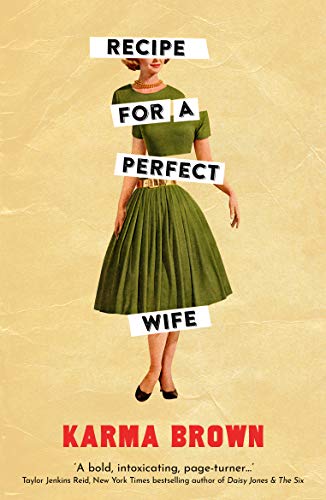
The chapter epigraphs, mostly from period etiquette and relationship guides for young wives, provide ironic commentary on this pair of not-so-perfect marriages. Brown has us wondering how closely Alice will mirror Nellie’s trajectory (aborting her pregnancy? poisoning her husband?). There were clichéd elements, such as Richard’s adultery, glitzy New York City publishing events, Alice’s quirky-funny friend, and each woman having a kindly elderly (maternal) neighbour who looks out for her and gives her valuable advice. I felt uncomfortable with how Nellie’s mother’s suicide makes it seem like Nellie’s radical acts are borne out of inherited mental illness rather than a determination to make her own path.
Often, I felt Brown was “phoning it in,” if that phrase means anything to you. In other words, playing it safe and taking an easy and previously well-trodden path. Parallel stories like this can be clever, or can seem too simple and coincidental. However, I can affirm that the novel is highly readable and has vintage charm. I always enjoy epistolary inclusions like letters and recipes, and it was intriguing to see how Nellie uses her garden herbs and flowers for pharmaceutical uses. Our first foxglove just came into flower – eek! (Kindle purchase)
The main question we ask about the books we read for Literary Wives is:
What does this book say about wives or about the experience of being a wife?
- Being a wife does not have to mean being a housewife. (It also doesn’t have to mean being a mother, if you don’t want to be one.)
- Secrets can be lethal to a marriage. Even if they aren’t literally so, they’re a really bad idea.
This was, overall, a very bleak picture of marriage. In the 1950s strand there is a scene of marital rape – one of two I’ve read recently, and I find these particularly difficult to take. Alice’s marriage might not have blown up as dramatically, but still doesn’t appear healthy. She forced Nate to choose between her and the baby, and his job promotion in California. The fallout from that ultimatum is not going to make for a happy relationship. I almost thought that Nellie wields more power. However, both women get ahead through deception and manipulation. I think we are meant to cheer for what they achieve, and I did for Nellie’s revenge at Richard’s vileness, but Alice I found brattish and calculating.
See Kate’s, Kay’s and Naomi’s reviews, too!
Coming up next, in September: Their Eyes Were Watching God by Zora Neale Hurston.
 Bookish Beck = Rebecca Foster. American transplant to England. Freelance proofreader and book reviewer.
