Most Anticipated Books of the Second Half of 2025
My “Most Anticipated” designation sometimes seems like a kiss of death, but other times the books I choose for these lists live up to my expectations, or surpass them!
(Looking back at the 25 books I selected in January, I see that so far I have read and enjoyed 8, read but been disappointed by 4, not yet read – though they’re on my Kindle or accessible from the library – 9, and not managed to get hold of 4.)
This time around, I’ve chosen 15 books I happen to have heard about that will be released between July and December: 7 fiction and 8 nonfiction. (In release date order within genre. UK release information generally given first, if available. Note given on source if I have managed to get hold of it already.)
Fiction
 The Girls Who Grew Big by Leila Mottley [10 July, Fig Tree (Penguin) / June 24, Knopf]: I was impressed with the confident voice in Mottley’s debut, Nightcrawling. She’s just 22 years old so will only keep getting better. This is “about the joys and entanglements of a fierce group of teenage mothers in a small town on the Florida panhandle. … When [16-year-old Adela] tells her parents she’s pregnant, they send her from … Indiana to her grandmother’s in Padua Beach, Florida.” I’ve read one-third so far. (Digital review copy)
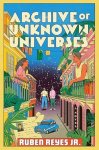 Archive of Unknown Universes by Ruben Reyes Jr. [21 Aug., Footnote Press (Bonnier) / July 1, Mariner Books]: There Is a Rio Grande in Heaven was a strong speculative short story collection and I’m looking forward to his debut novel, which involves alternative history elements. (Starred Kirkus review.) “Cambridge, 2018. Ana and Luis’s relationship is on the rocks, despite their many similarities, including … mothers who both fled El Salvador during the war. In her search for answers, and against her best judgement, Ana uses The Defractor, an experimental device that allows users to peek into alternate versions of their lives.”
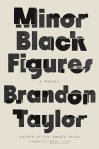 Minor Black Figures by Brandon Taylor [Oct. 7, Riverhead / 5 March 2026, Jonathan Cape (Penguin)]: I’ve read all of his works … but I’m so glad he’s moving past campus settings now. “A newcomer to New York, Wyeth is a Black painter who grew up in the South and is trying to find his place in the contemporary Manhattan art scene. … When he meets Keating, a white former seminarian who left the priesthood, Wyeth begins to reconsider how to observe the world, in the process facing questions about the conflicts between Black and white art, the white gaze on the Black body, and the compromises we make – in art and in life.” (Edelweiss download)
 Heart the Lover by Lily King [16 Oct., Canongate / Oct. 7, Grove Press]: I’ve read several of her books and after Writers & Lovers I’m a forever fan. “In the fall of her senior year of college, [Jordan] meets two star students from her 17th-Century Lit class, Sam and Yash. … she quickly discovers the pleasures of friendship, love and her own intellectual ambition. … when a surprise visit and unexpected news brings the past crashing into the present, Jordan returns to a world she left behind and is forced to confront the decisions and deceptions of her younger self.” (Edelweiss download)
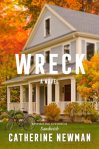 Wreck by Catherine Newman [28 Oct., Transworld / Harper]: This is a sequel to Sandwich, and in general sequels should not exist. However, I can make a rare exception. Set two years on, this finds “Rocky, still anxious, nostalgic, and funny, obsessed with a local accident that only tangentially affects them—and with a medical condition that, she hopes, won’t affect them at all.” In a recent Substack post, Newman compared it to Small Rain, my book of 2024, for the focus on a mystery medical condition. (Edelweiss download)
 Palaver by Bryan Washington [Nov. 4, Farrar, Straus, and Giroux / 1 Jan. 2026, Atlantic]: I’ve read all his work and I’m definitely a fan, though I wish that (like Taylor previously) he wouldn’t keep combining the same elements each time. I’ll be reviewing this early for Shelf Awareness; hooray that I don’t have to wait until 2026! “He’s entangled in a sexual relationship with a married man, and while he has built a chosen family in Japan, he is estranged from his family in Houston, particularly his mother … Then, in the weeks leading up to Christmas, ten years since they’ve last seen each other, the mother arrives uninvited on his doorstep. Separated only by the son’s cat, Taro, the two of them bristle against each other immediately.” (Edelweiss download)
 The Silver Book by Olivia Laing [6 Nov., Hamish Hamilton (Penguin) / 11 Nov., Farrar, Straus and Giroux]: I’ve read all but one of Laing’s books and consider her one of our most important contemporary thinkers. I was also pleasantly surprised by Crudo so will be reading this second novel, too. I’ll be reviewing it early for Shelf Awareness as well. “September 1974. Two men meet by chance in Venice. One is a young English artist, in panicked flight from London. The other is Danilo Donati, the magician of Italian cinema. … The Silver Book is at once a queer love story and a noirish thriller, set in the dream factory of cinema. (Edelweiss download)
Nonfiction
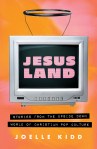 Jesusland: Stories from the Upside[-]Down World of Christian Pop Culture by Joelle Kidd [Aug. 12, ECW]: “Through nine incisive, honest, and emotional essays, Jesusland exposes the pop cultural machinations of evangelicalism, while giving voice to aughts-era Christian children and teens who are now adults looking back at their time measuring the length of their skirts … exploring the pop culture that both reflected and shaped an entire generation of young people.” Yep, that includes me! Looking forward to a mixture of Y2K and Jesus Freak. (NetGalley download)
 Somebody Is Walking on Your Grave: My Cemetery Journeys by Mariana Enríquez; translated from Spanish by Megan McDowell [25 Sept., Granta / Sept. 30, Hogarth]: I’ve enjoyed her creepy short stories, plus I love touring graveyards. “In 2013, when the body of a friend’s mother who was disappeared during Argentina’s military dictatorship was found in a common grave, she began to examine more deeply the complex meanings of cemeteries and where our bodies come to rest. In this vivid, cinematic book … Enriquez travels North and South America, Europe and Australia … [and] investigates each cemetery’s history, architecture, its dead (famous and not), its saints and ghosts, its caretakers and visitors.” (Edelweiss download, for Shelf Awareness review)
 Ghosts of the Farm: Two Women’s Journeys Through Time, Land and Community by Nicola Chester [30 Sept., Chelsea Green]: Nicola is our local nature writer and is so wise on class and countryside matters. On Gallows Down was her wonderful debut and, though I know very little about it, I’m looking forward to her second book. “This is the story of Miss White, a woman who lived in the author’s village 80 years ago, a pioneer who realised her ambition to become a farmer during the Second World War. … Moving between Nicola’s own attempts to work outdoors and Miss White’s desire to farm a generation earlier, Nicola explores the parallels between their lives – and the differences.”
 Death of an Ordinary Man by Sarah Perry [2 Oct., Vintage (Penguin)]: I’ve had a very mixed experience with Perry’s fiction, but a short bereavement memoir should be right up my street. “Sarah Perry’s father-in-law, David, died at home nine days after a cancer diagnosis and having previously been in the good health. The speed of his illness outstripped that of the NHS and social care, so the majority of nursing fell to Sarah and her husband. They witnessed what happens to the body and spirit, hour by hour, as it approaches death.”
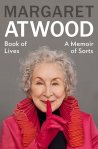 Book of Lives: A Memoir of Sorts by Margaret Atwood [4 Nov., Vintage (Penguin) / Doubleday]: It’s Atwood; ’nuff said, though I admit I’m daunted by the page count. “Raised by ruggedly independent, scientifically minded parents – entomologist father, dietician mother – Atwood spent most of each year in the wild forest of northern Quebec. … [She links] seminal moments to the books that have shaped our literary landscape. … In pages bursting with bohemian gatherings … and major political turning points, we meet poets, bears, Hollywood actors and larger-than-life characters straight from the pages of an Atwood novel.”
 Tigers Between Empires: The Improbable Return of Great Cats to the Forests of Russia and China by Jonathan C. Slaght [4 Nov., Allen Lane / Farrar, Straus and Giroux]: Slaght’s Owls of the Eastern Ice was one of the best books I read in 2022; he’s a top-notch nature and travel writer with an environmentalist’s conscience. After the fall of the Soviet Union, “scientists came together to found the Siberian Tiger Project[, which …] captured and released more than 114 tigers over three decades. … [C]haracters, both feline and human, come fully alive as we travel with them through the quiet and changing forests of Amur.” (NetGalley download)
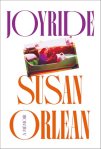 Joyride by Susan Orlean [6 Nov., Atlantic Books / Oct. 14, Avid Reader Press (Simon & Schuster)]: I’m a fan of Orlean’s genre-busting nonfiction, e.g. The Orchid Thief and The Library Book, and have always wanted to try more by her. “Joyride is her most personal book ever—a searching journey through finding her feet as a journalist, recovering from the excruciating collapse of her first marriage, falling head-over-heels in love again, becoming a mother while mourning the decline of her own mother, sojourning to Hollywood for films based on her work. … Joyride is also a time machine to a bygone era of journalism.”
 A Long Game: Notes on Writing Fiction by Elizabeth McCracken [Dec. 2, Ecco]: I’m not big on craft books, but will occasionally read one by an author I admire; McCracken won my heart with The Hero of This Book. “How does one face the blank page? Move a character around a room? Deal with time? Undertake revision? The good and bad news is that in fiction writing, there are no definitive answers. … McCracken … has been teaching for more than thirty-five years [… and] shares insights gleaned along the way, offering practical tips and incisive thoughts about her own work as an artist.” (Edelweiss download)
As a bonus, here are two advanced releases that I reviewed early:
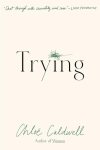 Trying: A Memoir by Chloe Caldwell [Aug. 5, Graywolf] (Reviewed for Foreword): Caldwell devoted much of her thirties to trying to get pregnant via intrauterine insemination. She developed rituals to ease the grueling routine: After every visit, she made a stop for luxury foodstuffs and beauty products. But then her marriage imploded. When she began dating women and her determination to become a mother persisted, a new conception strategy was needed. The book’s fragmentary style suits its aura of uncertainty about the future. Sparse pages host a few sentences or paragraphs, interspersed with wry lists.
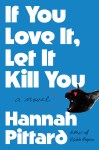 If You Love It, Let It Kill You by Hannah Pittard [July 15, Henry Holt] (Reviewed for Shelf Awareness): A quirky work of autofiction about an author/professor tested by her ex-husband’s success, her codependent family, and an encounter with a talking cat. Hana P. (or should that be Pittard?) relishes flouting the “rules” of creative writing. With her affectations and unreliability, she can be a frustrating narrator, but the metafictional angle renders her more wily than precious. The dialogue and scenes sparkle, and there are delightful characters This gleefully odd book is perfect for Miranda July and Patricia Lockwood fans.
I can also recommend:
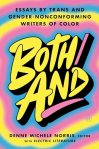
Both/And: Essays by Trans and Gender-Nonconforming Writers of Color, ed. Denne Michele Norris [Aug. 12, HarperOne / 25 Sept., HarperCollins] (Review to come for Shelf Awareness)
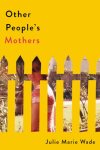
Other People’s Mothers by Julie Marie Wade [Sept. 2, Univ. of Florida Press] (Review pending for Foreword)
Which of these catch your eye? Any other books you’re looking forward to in this second half of the year?
#ReadIndies Wrap-Up: February Releases (Jukes, Spence) & Review Catch-Up (Buttery, Foust)
Good riddance to February, which added insult to injury on its final day when my in-laws’ neighbour reversed into the car we were borrowing from a book club friend and smashed the driver’s-side window. The blue skies and crocuses of recent days have been most welcome. The best I can say for the month just departed is that I managed to review 15 books for Kaggsy and Lizzy Siddal’s Reading Independent Publishers Month challenge. These came from 10 splendid publishers: Atlantic Books, Backbone Press, Carcanet Press, Counterpoint, Elliott & Thompson, The Emma Press, Faber, Icon Books, Saraband and Sort Of Books.
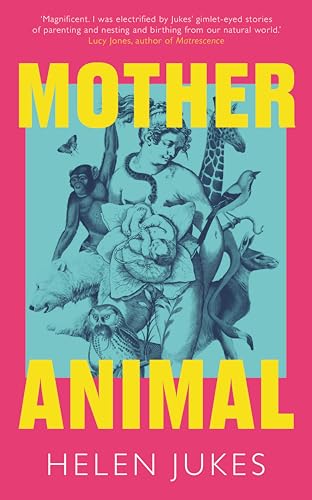
Mother Animal by Helen Jukes
When she found out she was pregnant, Jukes (author of A Honeybee Heart Has Five Openings) lost herself in research, looking for parallels in the natural world. A friend had told her that “childbirth puts you more in touch with your animal side.” Her daughter was born at the start of the pandemic and so early motherhood was perhaps more than usually isolated and emotionally challenging for her. She had an unexpected C-section after the placenta failed to nourish her daughter sufficiently, and then struggled to breastfeed. “I was, I realised, a little afraid of the baby. I’d expected to feel a sense of recognition – to see in her face some sign of familiarity,” but that wasn’t the case. “She was so … other.”
The long thematic chapters present Jukes’s experiences in parallel to those of other mothering creatures with pregnancy, birth, lactation, making a home (nesting) and enlisting the help of the community. Peppered throughout are trivia she shares with boyfriend, baby and readers. Such as that burying beetles lay eggs on a carcass so their babies feed on carrion from day one. That bonobo females attend births, acting as midwives for each other. That Madrid’s storks have started eating and lining their nests with what they find in landfill instead of migrating to Africa. The “Did you know?” litany quickly becomes precious. The details are not that interesting in themselves, and not sufficiently synthesized to be meaningful. The same factoid about leopard tree iguanas is repeated seven pages apart. A significant amount of information comes from Bitch by Lucy Cooke, which I would recommend instead.
As hybrid scientific memoirs of motherhood go, Lucy Jones’s Matrescence can’t be beat. For its social and political engagement, Jennifer Case’s We Are Animals is a valuable companion. Jukes’s offering pales by comparison because her story – not having the delivery she wanted, struggling to connect with her baby, her relationship with the father falling apart – is all too common, and she doesn’t have the scientific bona fides for readers to accept her as a valid source of zoological facts.
I would make an exception, though, for the central chapter, “Forever Milk,” which might be condensed and published in a big-name newspaper as a Rachel Carson-like exposé about endocrine disruptors and forever chemicals. Like any mother, Jukes wants nothing more than to protect her daughter, but how can she when household products (waterproof clothing, non-stick pans, cleaning sprays) contain toxic chemicals and her breastmilk is sure to be contaminated? Add in microplastics and the situation is bleak. We don’t know singly, let alone collectively, what these pollutants are doing to species in the long term, but most likely they interfere with reproduction and alter behaviour. The central message of this chapter, and the book as a whole, is that animals are amazing but vulnerable. “What is this world if nowhere is separate – nowhere safe?” If you think about this stuff much, you can’t bear it. Yet it’s a truth we all have to live with. It’s a brave author who dares sit with the unthinkable.
With thanks to Elliott & Thompson for the free copy for review.
Daughter of the Sun by Rachel Spence
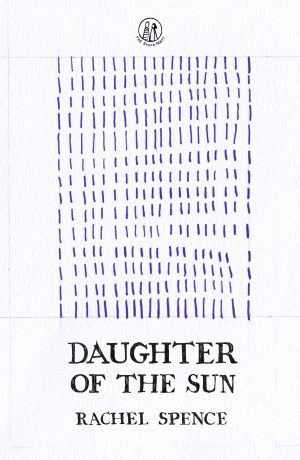 The Emma Press has published poetry pamphlets before, but this is their inaugural full-length work. Rachel Spence’s second collection is in two parts: first is “Call & Response,” a sonnet sequence structured as a play and considering her relationship with her mother. Act 1 starts in 1976 and zooms forward to key moments when they fell out and then reversed their estrangement. The next section finds them in the new roles of patient and carer. “Your final check-up. August. Nimbus clouds / prised open by Delft blue. Waiting is hard.” In Act 3, death is near; “in that quantum hinge, we made / an alphabet from love’s ungrammared stutter.” The poems of the last act are dated precisely, not just to a month and year as earlier but down to the very day, hour and minute. Whether in Ludlow or Venice, Spence crystallizes moments from the ongoingness of grief, drawing images from the natural world.
The second part of the book, “Medea’s Song,” is looser in style and more dispersed across the page. It’s a feminist reinterpretation that refuses to make of Medea a simple murderess, instead redeeming her as a wise woman. “Do not call them seers or sisters // They are the owls of history // nightfliers outliers”. I’m not drawn to Greek myth updates but I expect this would be rewarding for fans of similar projects by Fiona Benson and Anne Carson. Some of the specific vocabulary from the first section recurs, linking the two in a satisfying way.
With thanks to The Emma Press for the free copy for review.
I’m also catching up on two 2024 releases from indie publishers that I was sent for review:
Knead to Know: A History of Baking by Neil Buttery
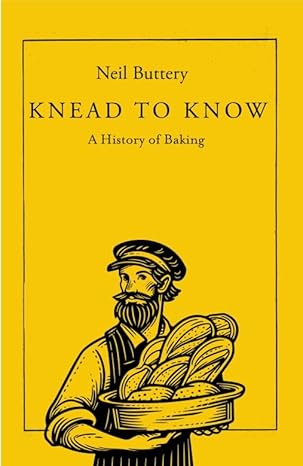 Not only the pun-tastic title, but also the excellent nominative determinism of chef and food historian Dr Neil Buttery’s name, earned this a place in my 2024 Superlatives post. In not quite 240 pages, it achieves the improbable, producing an exhaustive history of baked goods through miniature essays about every conceivable subcategory. Although the focus is on British baking, the story begins in ancient times with the first grains and the earliest cooking technique of making griddlecakes on a hearthstone. (Speaking of which, make sure you’re prepared for Pancake Day, aka Shrove Tuesday, this week!) Across multi-part chapters about bread, biscuits and cakes, pies and puddings, and patisserie, Buttery spotlights regional specialties, many of them familiar (Cornish pasties and Eccles cakes); a few have fallen into obscurity (Gloucester pancakes and Yorkshire Christmas pyes). Some dishes’ origin stories are apocryphal, while others can be traced back to historical cookbooks.
I was fascinated by the evolution of traditional holiday bakes. “The long tapering shape of the stollen is supposed to represent the infant Christ wrapped in His swaddling.” In general, there is just the right amount of chemistry, and while in places the writing is shaky or at least poorly edited (“populous” instead of populace!), there are good quips, too: “dried fruit haters do have a miserable time at Christmas to be fair.” I read the book in bites across a number of months, which felt appropriate because it’s more a reference text for the kitchen shelf than a narrative to read straight through. Good for picking up now and then over a cup of tea.
With thanks to Icon Books for the free copy for review.
You Are Leaving the American Sector: Love Poems by Rebecca Foust
 Foust’s fifth collection – at 41 pages, the length of a long chapbook – is in conversation with the language and storyline of 1984. George Orwell’s classic took on new prescience for her during Donald Trump’s first presidential term, a period marked by a pandemic as well as by corruption, doublespeak and violence. “Rally Insurrection” is a clever erasure poem illustrating how a propagandist might rebrand the storming of the Capitol on 6 January 2021: instead of “a mob came to Washington to / disrupt the peaceful transfer of power,” the Ministry of Truth bulletin would read “a crowd came to Washington to fight / for their country”. “Language Matters” insists that “language / is the most dangerous weapon in any totalitarian arsenal” and warns “A dictator / might do these things, but surely not // a president.” How much more strongly does this resonate in 2025.
The second and third sections engage directly with the story of Julia and Winston – the collection takes its seemingly inapt subtitle from Foust’s appreciation of 1984’s “idea of love as a subversive act affirming free will, expression, and personal privacy”. Her bold verse also confronts the repeal of abortion rights (“Breaking News”) and toxic masculinity (“Consent: A Primer”). There are some internal rhymes and slant rhymes, as well as a few end rhymes all the more striking for their rarity. I only wish this had been published a few years sooner, when its message might have seemed timelier – though, unfortunately, it is still apropos.
Some favorite lines:
“How can a future exist if we can erase or revise the past?”
“2016, dark year / of the ascension / of our Lord the Mad Clown”
“It’s happening now, / somewhere. Not here, // not yet. But so long as Big Brother is out there— / & he will always be out there—it could, // & one day, maybe it will.”
Published by Backbone Press in the USA. With thanks to the author for the e-copy for review.
Which of these appeal to you? What indie publishers have you read from recently?
Women’s Prize for Non-Fiction, Writers’ Prize & Young Writer of the Year Award Catch-Up
This time of year, it’s hard to keep up with all of the literary prize announcements: longlists, shortlists, winners. I’m mostly focussing on the Carol Shields Prize for Fiction this year, but I like to dip a toe into the others where I can. I ask: What do I have time to read? What can I find at the library? and Which books are on multiple lists so I can tick off several at a go??
Women’s Prize for Non-Fiction

(Shortlist to be announced on 27 March.)
Read so far: Intervals by Marianne Brooker, Matrescence by Lucy Jones
&
A Flat Place by Noreen Masud
Past: Sunday Times/Charlotte Aitken Young Writer of the Year Award shortlist
Currently: Jhalak Prize longlist
I also expect this to be a strong contender for the Wainwright Prize for nature writing, and hope it doesn’t end up being a multi-prize bridesmaid as it is an excellent book but an unusual one that is hard to pin down by genre. Most simply, it is a travel memoir taking in flat landscapes of the British Isles: the Cambridgeshire fens, Orford Ness in Suffolk, Morecambe Bay, Newcastle Moor, and the Orkney Islands.
 But flatness is a psychological motif as well as a physical reality here. Growing up in Pakistan with a violent Pakistani father and a passive Scottish mother, Masud chose the “freeze” option when in fight-or-flight situations. When she was 15, her father disowned her and she moved with her mother and sisters to Scotland. Though no particularly awful things happened, a childhood lack of safety, belonging and love left her with complex PTSD that still affects how she relates to her body and to other people, even after her father’s death.
Masud is clear-eyed about her self and gains a new understanding of what her mother went through during their trip to Orkney. The Newcastle chapter explores lockdown as a literal Covid-era circumstance but also as a state of mind – the enforced solitude and stillness suited her just fine. Her descriptions of landscapes and journeys are engaging and her metaphors are vibrant: “South Nuns Moor stretched wide, like mint in my throat”; “I couldn’t stop thinking about the Holm of Grimbister, floating like a communion wafer on the blue water.” Although she is an academic, her language is never off-puttingly scholarly. There is a political message here about the fundamental trauma of colonialism and its ongoing effects on people of colour. “I don’t want ever to be wholly relaxed, wholly at home, in a world of flowing fresh water built on the parched pain of others,” she writes.
What initially seems like a flat authorial affect softens through the book as Masud learns strategies for relating to her past. “All families are cults. All parents let their children down.” Geography, history and social justice are all a backdrop for a stirring personal story. Literally my only annoyance was the pseudonyms she gives to her sisters (Rabbit, Spot and Forget-Me-Not). (Read via Edelweiss) 
And a quick skim:
Doppelganger: A Trip into the Mirror World by Naomi Klein
Past: Writers’ Prize shortlist, nonfiction category
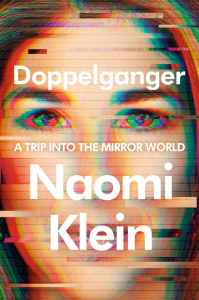 For years people have been confusing Naomi Klein (geography professor, climate commentator, author of No Logo, etc.) with Naomi Wolf (feminist author of The Beauty Myth, Vagina, etc.). This became problematic when “Other Naomi” espoused various right-wing conspiracy theories, culminating with allying herself with Steve Bannon in antivaxxer propaganda. Klein theorizes on Wolf’s ideological journey and motivations, weaving in information about the doppelganger in popular culture (e.g., Philip Roth’s novels) and her own concerns about personal branding. I’m not politically minded enough to stay engaged with this but what I did read I found interesting and shrewdly written. I do wonder how her publisher was confident this wouldn’t attract libel allegations? (Public library)
Predictions: Cumming (see below) and Klein are very likely to advance. I’m less drawn to the history or popular science/tech titles. I’d most like to read Some People Need Killing: A Memoir of Murder in the Philippines by Patricia Evangelista, Wifedom: Mrs Orwell’s Invisible Life by Anna Funder, and How to Say Babylon: A Jamaican Memoir by Safiya Sinclair. I’d be delighted for Brooker, Jones and Masud to be on the shortlist. Three or more by BIPOC would seem appropriate. I expect they’ll go for diversity of subject matter as well.
Writers’ Prize
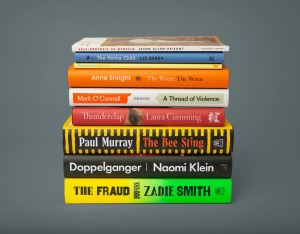
Last year I read most books from the shortlists and so was able to make informed (and, amazingly, thoroughly correct) predictions of the winners. I didn’t do as well this year. In particular, I failed with the nonfiction list in that I DNFed Mark O’Connell’s book and twice borrowed the Cumming from the library but never managed to make myself start it; I thought her On Chapel Sands overrated. (I did skim the Klein, as above.) But at least I read the poetry shortlist in full:
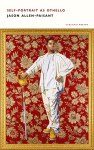 Self-Portrait as Othello by Jason Allen-Paisant: I found more to sink my teeth into here than I did with his debut collection, Thinking with Trees (2021). Part I’s childhood memories of Jamaica open out into a wider world as the poet travels to London, Paris and Venice, working in snippets of French and Italian and engaging with art and literature. “I’m haunted as much by the character Othello as by the silences in the story.” Part III returns home for the death of his grandmother and a coming to terms with identity. [Winner: Forward Prize for Best Collection; Past: T.S. Eliot Prize shortlist] (Public library)
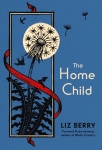 The Home Child by Liz Berry: A novel in verse “loosely inspired,” as Berry puts it, by her great-aunt Eliza Showell’s experience: she was a 12-year-old orphan when, in 1908, she was forcibly migrated from the English Midlands to Nova Scotia. The scenes follow her from her home to the Children’s Emigration Home in Birmingham, on the sea voyage, and in her new situation as a maid to an elderly invalid. Life is gruelling and lonely until a boy named Daniel also comes to the McPhail farm. This was a slow and not especially engaging read because of the use of dialect, which for me really got in the way of the story. (Public library)
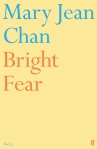 & Bright Fear by Mary Jean Chan (Current: Dylan Thomas Prize shortlist)
Three category winners:
- The Wren, The Wren by Anne Enright (Fiction)
- Thunderclap by Laura Cumming (Nonfiction) (Current: Women’s Prize for Non-Fiction longlist)
- The Home Child by Liz Berry (Poetry)
Overall winner: The Home Child by Liz Berry
Observations: The academy values books that cross genres. It appreciates when authors try something new, or use language in interesting ways (e.g. dialect – there’s also some in the Allen-Paisant, but not as much as in the Berry). But my taste rarely aligns with theirs, such that I am unlikely to agree with its judgements. Based on my reading, I would have given the category awards to Murray, Klein and Chan and the overall award perhaps to Murray. (He recently won the inaugural Nero Book Awards’ Gold Prize instead.)
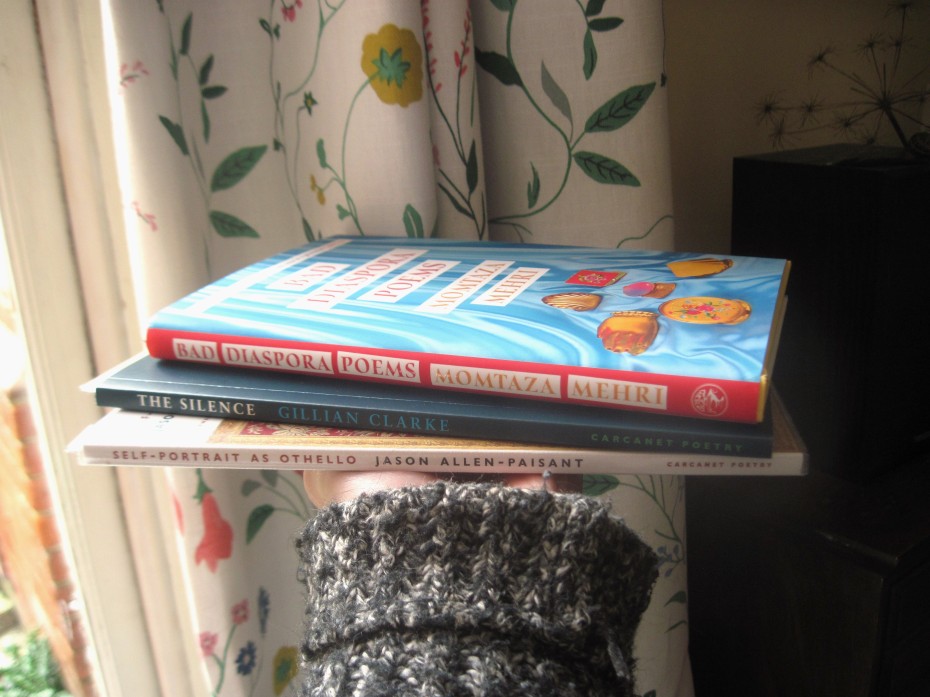
World Poetry Day stack last week
Young Writer of the Year Award
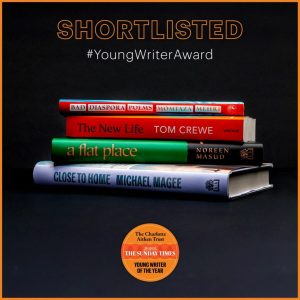
Shortlist:
- The New Life by Tom Crewe
 (Past: Nero Book Award shortlist, debut fiction)
 - Close to Home by Michael Magee (Winner: Nero Book Award, debut fiction category)
- A Flat Place by Noreen Masud (see above)
&
Bad Diaspora Poems by Momtaza Mehri
Winner: Forward Prize for Best First Collection
Nostalgia is bidirectional. Vantage point makes all the difference. Africa becomes a repository of unceasing fantasies, the sublimation of our curdled angst.
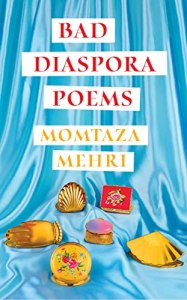 Crossing between Somalia, Italy and London and proceeding from the 1830s to the present day, this debut collection sets family history amid wider global movements. It’s peopled with nomads, colonisers, immigrants and refugees. In stanzas and prose paragraphs, wordplay and truth-telling, Mehri captures the welter of emotions for those whose identity is split between countries and complicated by conflict and migration. I particularly admired “Wink Wink,” which is presented in two columns and opens with the suspension of time before the speaker knew their father was safe after a terrorist attack. There’s super-clever enjambment in this one: “this time it happened / after evening prayer // cascade of iced tea / & sugared straws // then a line / break // hot spray of bullets & / reverb & // in less than thirty minutes we / they the land // lose twenty of our children”. Confident and sophisticated, this is a first-rate debut.
A few more favourite lines:
IX. Art is something we do when the war ends.
X. Even when no one dies on the journey, something always does.
(from “A Few Facts We Hesitantly Know to Be Somewhat True”)
You think of how casually our bodies are overruled by kin,
by blood, by heartaches disguised as homelands.
How you can count the years you have lived for yourself on one hand.
History is the hammer. You are the nail.
(from “Reciprocity is a Two-way Street”)
With thanks to Jonathan Cape (Penguin) for the free copy for review.
I hadn’t been following the Award on Instagram so totally missed the news of them bringing back a shadow panel for the first time since 2020. The four young female Bookstagrammers chose Mehri’s collection as their winner – well deserved.
Winner: The New Life by Tom Crewe
This was no surprise given that it was the Sunday Times book of the year last year (and my book of the year, to be fair). I’ve had no interest in reading the Magee. It’s a shame that a young woman of colour did not win as this year would have been a good opportunity for it. (What happened last year, seriously?!) But in that this award is supposed to be tied into the zeitgeist and honour an author on their way up in the world – as with Sally Rooney in my shadowing year – I do think the judges got it right.
Women’s Prize Longlist Reviews (Erdrich, Mendelson, Ozeki) & Predictions
Tomorrow the Women’s Prize shortlist will be revealed. I’ve become much more invested in this prize over the past few years and will be following the 2022 race especially closely – look out for a related announcement soon. In recent years the nominees have tended to cluster thematically, which can feel redundant. This longlist has a notably high ghost quotient. Two novels I review below feature unquiet spirits, an appearance by the author, and the magical powers of books. The third is a straightforward contemporary dysfunctional family story.
The Sentence by Louise Erdrich
My second from Erdrich (I gave Love Medicine, her first novel, 5 stars in 2020). I will be revisiting this in June because it is our first pick for my tenure in the Literary Wives online book club. For that post I’ll focus on the relationship between Tookie and Pollux, which I won’t mention in this more general response. I was worried that a take on very recent events – this is set in Minneapolis between 2019 and 2020 and covers the first six months of the pandemic plus local protests following George Floyd’s murder – would seem either rushed or dated. I’m still unsure how I feel about encountering Covid-19 in fiction (vs. I’ve read 20 or more nonfiction records now), but I think this novel functions as a sturdy time capsule.
 Tookie, the narrator, has a tough exterior but a tender heart. When she spent 10 years in prison for a misunderstanding-cum-body snatching, books helped her survive, starting with the dictionary. Once she got out, she translated her love of words into work as a bookseller at Birchbark Books, Louise Erdrich’s Minnesota independent bookshop (Louise herself is an occasional character). Bibliophiles are sure to enjoy the mentions of the books she presses into customers’ hands; there’s also a fun appendix of recommendations on particular topics.
However, the central mystery about Flora, a dead customer who haunts the store until Tookie figures out why she died and how to exorcise her, struck me as silly. I only appreciated this storyline to the extent that it explores authenticity (Flora may have fabricated her Native heritage) and the inescapability of history. I preferred real life: Tookie getting locked down with her stepdaughter and baby grandson and filling book orders from a closed shop.
Erdrich weaves in Indigenous customs naturally and the banter between the characters, including young shop employees, makes this hip and lighthearted, even as it deals with serious subjects. I smiled at the bookish lingo, like Tookie’s division of her reading into a Lazy Stack and a Hard Stack (“books I would avoid reading until some wellspring of mental energy was uncapped” – my occasional and set-aside titles could comprise the latter) and the “cowbirds,” self-published titles secreted on the shelves that aren’t found until inventory day. There’s also an excellent passage on novellas that I’ll be bringing out in November.
Like a vintage armchair, this is a little overstuffed, but so comfortable you’ll want to stay a while. (See also Laura’s review.) (Public library) 
The Exhibitionist by Charlotte Mendelson
~SPOILERS IN THIS ONE~
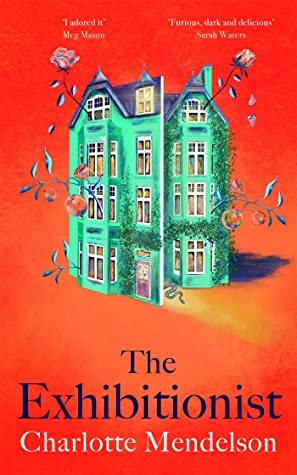 Artists, dysfunctional families, and limited settings (here, one crumbling London house and its environs; and about two days across one weekend) are irresistible elements for me, and I don’t mind a work being peopled with mostly unlikable characters. That’s just as well, because the narrative orbits Ray Hanrahan, a monstrous narcissist who insists that his family put his painting career above all else. His wife, Lucia, is a sculptor who has always sacrificed her own art to ensure Ray’s success. But now Lucia, having survived breast cancer, has the chance to focus on herself. She’s tolerated his extramarital dalliances all along; why not see where her crush on MP Priya Menon leads? What with fresh love and the offer of her own exhibition in Venice, maybe she truly can start over in her fifties.
Ray and Lucia’s three grown children, Leah, Patrick and Jess, are all home for Ray’s new exhibition. They’re mere sketches: Leah is Ray’s staunchest supporter and is infatuated with the no-show caterer; Patrick’s mental health is shaky, interfering with his job prospects; Jess, a teacher in Edinburgh, is pregnant but not sure she’s committed to her boyfriend long term. I wanted more depth from all the characters, but especially the offspring. I also expected a climactic late scene on Hampstead Heath to come to more.
Still, the build-up to the exhibit (followed by a laughably pitiful reveal) and Lucia’s inner life form an adequately strong foundation for Mendelson’s sardonic prose. The dialogue, full of interruptions, is true to life. This is her fifth novel and called to mind Jami Attenberg’s and Claire Fuller’s work. (Liz found shades of Iris Murdoch. Susan loved it, too.) I wouldn’t say I’m compelled to seek out more by Mendelson, but this was a solid read. (Public library)
The Book of Form and Emptiness by Ruth Ozeki
A Tale for the Time Being is one of my favourite novels of the century (and one of my most popular Goodreads reviews ever), My Year of Meats was a terrific backlist read a couple of summers ago, and I’m eager to catch up on All Over Creation. So I’d built up this fourth Ozeki novel in my head, thinking a library setting and magic realist elements presaged something deliciously Murakami-esque.
 What I actually found, having limped through it off and on for seven months, was something of a disappointment. A frank depiction of the mental health struggles of the Oh family? Great. A paean to how books and libraries can save us by showing us a way out of our own heads? A-OK. The problem is with the twee way that The Book narrates Benny’s story and engages him in a conversation about fate versus choice.
When Kenji Oh, a jazz musician, is run over by a chicken truck, Annabelle finds herself a single mother to Benny, a troubled teen who starts to hear everyday objects speaking to him. His voices and Annabelle’s hoarding habit jeopardize the viability of their household: Benny spends time on a psychiatric hospital ward for minors and Annabelle is threatened with eviction. For Benny, the library and the acquaintances he makes there – a fellow pedi-psych patient named Alice who calls herself The Aleph, an Eastern European philosopher who goes by The Bottleman (= Slavoj Žižek?), even the Ozeki figure tapping away on her laptop – may be his salvation; for Annabelle, it could be the book Tidy Magic (modelled on Marie Kondo’s work), written by a Buddhist nun. But until then, their stories get very dark indeed.
Concern for the principal pair and their relationship kept me reading even though this is too long and I wearied of Ozeki’s habit of literalizing metaphors (books speaking to people; being crushed by one’s belongings; crows playing a protective role). I’m still sympathetic to Ozeki’s aims, even if she doesn’t quite pull it all off here. If I pit the rather similar The Sentence and The Book of Form and Emptiness against each other, Erdrich comes out ahead. 
With thanks to Canongate for the proof copy for review.
I’ve gotten to six books from the longlist so far and have a few more on order at the library. The others I’ve read, with ratings and links to my reviews, are:
Build Your House around My Body by Violet Kupersmith
Sorrow and Bliss by Meg Mason 
I’m also partway through The Final Revival of Opal & Nev by Dawnie Walton, which is enjoyable enough but, alas, suffers in comparison to Daisy Jones and the Six, whose format (a composite oral history of a fictional 1960s/70s musical act) it repeats. The addition of the race issue doesn’t feel sufficient to call it original.
I’ve also DNFed a few from the longlist, two of them multiple times, so I have my fingers crossed that they don’t advance!
- The Paper Palace by Miranda Cowley Heller
- The Island of Missing Trees by Elif Shafak
- Great Circle by Maggie Shipstead
My attitude to the rest of the longlist is…
- The Bread the Devil Knead by Lisa Allen-Agostini – No plans to read.
- Salt Lick by Lulu Allison – I might read this from the library. I’m leery of dystopias, but I’m there for a chorus of cows.
- Careless by Kirsty Capes – No plans to read.
- Remote Sympathy by Catherine Chidgey – I would happily read it if it’s shortlisted, but at over 500 pages I fear it’ll be too dense.
- Flamingo by Rachel Elliott – Maybe. Sounds like pretty standard Sarah Winman-type stuff, but it could go down well with a book club.
- This One Sky Day by Leone Ross – No plans to read.
- Creatures of Passage by Morowa Yejidé – I was actually pretty keen to read this one, so I have it on reserve at the library. Egyptian mythology makes a change from the overdone Greeks, and the Washington, D.C. setting is a big draw. Laura’s review has tempered my expectations, but I might still give it a go.
My ideal shortlist (a wish list based on my reading and what I still want to read):
The Sentence by Louise Erdrich
Build Your House around My Body by Violet Kupersmith
Sorrow and Bliss by Meg Mason
The Exhibitionist by Charlotte Mendelson
The Final Revival of Opal & Nev by Dawnie Walton
Creatures of Passage by Morowa Yejidé
vs.
My predicted shortlist:
Remote Sympathy by Catherine Chidgey
The Sentence by Louise Erdrich
Sorrow and Bliss by Meg Mason
The Exhibitionist by Charlotte Mendelson
This One Sky Day by Leone Ross
The Island of Missing Trees by Elif Shafak
An overall winner? Gosh, it’s too early to tell. But maybe The Sentence, Sorrow and Bliss or The Island of Missing Trees.
See also Laura’s shortlist predictions.
What have you read from the longlist so far?
Which of these books are calling to you?
 Bookish Beck = Rebecca Foster. American transplant to England. Freelance proofreader and book reviewer.
 Bookish Beck