February Releases by Hess, Kim, Sides (#ReadIndies); Atwood and Shah
I’m pleased to have, between this post and yesterday’s review catch-up, featured 9 books from 8 independent publishers for Read Indies this month. (I have also done some indie reading from my shelves, which I’ll summarize early in March.) Three of the books in my February review stacks were indie releases. I’ve got a hybrid memoir that blends poetic exploration of scripture with personal psychological reflections; an out-of-the-ordinary mystery about a father’s disappearance that comments on disability, racism and much more; and a terrific set of fabulist short stories. My two bonus (non-indie) February books are an unconvincing collaborative novel and a counselling-focussed bibliotherapy guide.

When Fragments Make a Whole: A Personal Journey through Healing Stories in the Bible by Lory Widmer Hess
 Some of you may know Lory, who is training as a spiritual director, from her blog, Enter Enchanted. It was so kind of her to get in touch offering her first book for review. It’s a unique combination of poetry, scriptural exegesis, and fragments of memoir. Each chapter considers a different healing story from the Gospels. As in the lectio divina I learned from college Christian fellowships, the idea with the verse retellings from the Bible is to imagine oneself into a character’s position and consider the crises that led to seeking Jesus’ help. I especially liked the poem “Talitha, Koum,” which links the stories of the woman with the issue of blood and the resurrection of Jairus’ daughter. In both, faith reverses a seemingly hopeless situation.
The short sections of commentary draw in a lot of context as well as etymology from the Greek. The autobiographical essays chart a history of physical and mental challenges, including dissociation, low self-esteem and shame, and offer openness to healing as its own miracle when there are no easy answers. They are notable for their vulnerability, especially when discussing marital problems. The outlook is intellectual and psychological rather than the spiritualizing I’m used to from my evangelical background – Lory comes from the anthroposophy tradition, which I don’t claim to fully understand but (I think) eschews dogma like original sin and atonement and instead makes the spiritual journey a matter of human reconnection with God through free will and the intellect. This is nicely balanced, though, by her work with developmentally disabled adults in residential homes in New England and Switzerland, which reminds her “there is a truth beyond intellectual knowledge, a language beyond words”. It is a calm, honest, methodical book that will intrigue anyone interested in thinking through how the Bible is applicable to the challenges of daily life.
With thanks to the author and Floris Books (Edinburgh) for the free copy for review.
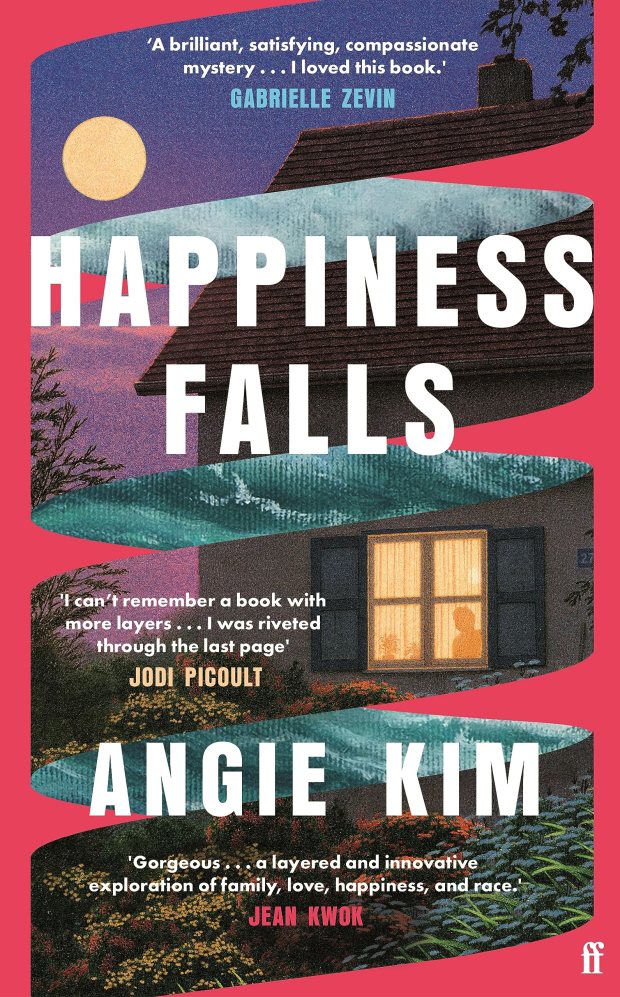
Happiness Falls by Angie Kim
Buzz from across the pond about Kim’s novels led me to request this even though I don’t typically read mysteries. The bulk is set over 2.5 days in June 2020 as the Korean American Parkson family investigates, on their own and with the help of police and various local tip-offs, what happened to the father, Adam, who’d been at River Falls Park with the severely disabled 14-year-old son, Eugene, who is autistic and has mosaic Angelman syndrome. Mother Hannah and 20-year-old twins Mia and John, home from college for the lockdown, quickly realise something is wrong when Eugene, who has blood on his shirt and under his nails, stumbles home on his own and Adam is unreachable by phone. There’s more to the setup than that, and many complicated side-tracks to the investigation, but the basic questions remain for 300+ pages: What happened to Adam? and What was Eugene’s part in it?
Mia narrates, and it’s a pleasure spending time with her quick, systematic brain as she runs through all the options and deals with each new theory and red herring. She clearly gets it from her father, whose recovered notebook is full of amateur experimentation on the “Happiness Quotient”. Her wit and garrulousness (sample aside: “I’m sorry, but I don’t care how much you love fun fonts—you cannot talk about prison rape in Comic Sans”) spills over into footnotes as if in effusive counterpoint to Eugene, who is nonspeaking.
The pandemic setting places interesting constraints on the official proceedings, and the prospect of a new communication method (involving painstaking spelling with a letter stencil) revolutionizes this family as they grasp that Eugene is far from nonverbal and has been ‘locked in’ all along. The account a therapist elicits from him seems to clinch the case, but uncertainty lingers.
This is like a blend of Celeste Ng’s Everything I Never Told You, Rebecca Makkai’s I Have Some Questions for You, and Naoki Higashida’s The Reason I Jump; if you’ve liked one or more of these, I would strongly recommend it. Mystery readers may lack patience for the digressions. The solution is eclipsed by the many issues – prejudice based on race and disability, how one’s circumstances affect contentment, nuances of communication, sibling relationships and twin ESP – explored along the way. Because I am not a crime reader, the pace was no problem for me. My annoyances were with the preponderance of hindsight (“I wish I’d said something,” “It didn’t occur to me until much later”) and the fact that Mia says “begs the question” for raising a question (misuse of a rhetorical term) several times. I found personal meaning in the book because of the Washington, DC-area locales and my severely disabled, nonverbal goddaughter. What if there really is something going on in her mind, and we could find out what it was… I mused. I’ll be keen to read Kim’s debut, Miracle Creek.
With thanks to Faber for the free copy for review.
Crocodile Tears Didn’t Cause the Flood by Bradley Sides
 These 17 flash fiction stories fully embrace the possibilities of magic and weirdness, particularly to help us reconnect with the dead. Brad and I are literary acquaintances from our time working on (the now defunct) Bookkaholic web magazine in 2014–15. I liked this even more than his first book, Those Fantastic Lives (2021), although the contours are very similar. Young people, animals and monsters abound – and sometimes the lines between those identities are unclear. There’s a lot of experimentation with form: a choose-your-own-adventure narrative, a police transcript, a two-truths-and-a-lie challenge, a story all in questions, an English exam, and a letter. A few of my favorite stories were “The Guide to King George,” about an amusement farm’s resident pond monster; “Claire & Hank,” in which a paleontologist’s unearthed Pteranodon becomes a sister to his motherless son; and “Dying at Allium Farm,” whose sassy undead owners think they’re fooling their Tennessee customers. And can you imagine a better title and cover combination?!
With thanks to Montag Press and publicist Lori Hettler for the e-copy for review.
And a couple of bonus February releases that are not from indie publishers:
Fourteen Days, ed. Margaret Atwood and Douglas Preston
This Authors Guild Foundation collaborative project is a Covid-era Decameron update in which the residents of an increasingly derelict New York City apartment complex meet on the rooftop every evening for two early lockdown weeks to clap for healthcare workers, indulge in adult beverages, and swap random stories. The tenants all go by nicknames like “Hello Kitty,” “Florida” and “Vinegar.” The frame narrative has the building superintendent (Yessie, a lesbian of Romanian heritage) worrying over her father’s wellbeing in a care home and surreptitiously recording the oral stories on her phone to later transcribe into the “bible” kept by the previous super. We’re told up front that the manuscript ends up in police custody.
 I had a misconception that each chapter would be written by a different author. I think that would actually have been the more interesting approach. Instead, each character is voiced by a different author, and sometimes by multiple authors across the 14 chapters (one per day) – a total of 36 authors took part. I soon wearied of the guess-who game. I most enjoyed the frame story, which was the work of Douglas Preston, a thriller author I don’t otherwise know.
There was a promising idea here, but problems with the execution. One is that, for the most part, the stories are pointless. The characters get hung up on whether they’re ‘true’ or not, but for readers it’s all made up and, while one or two individual tales might be amusing, they do nothing to build a plot and so I found myself mostly skipping over them to get back to the interactions on the roof and the super’s commentary. Another is that, to stand out from an ensemble cast, a voice needs to be really distinctive, and only “Eurovision” (flamboyantly gay) was that for me – based on my love for his rabbit story in particular, I should be reading Joseph Cassara. And finally, the book culminates with an annoying twist that made me cross.
With thanks to Chatto & Windus (Penguin) for the proof copy for review.
Bibliotherapy: The Healing Power of Reading by Bijal Shah
Bibliotherapy is one of my niche bookish interests (see my write-up of my bibliotherapy appointment with Ella Berthoud at the School of Life), so I was delighted to be offered a copy of another relevant book. Bijal Shah grew up in an East African Indian community before moving to the UK with her family as a teenager. When she was in training as a psychodynamic counsellor and attended therapy sessions herself, she realised how helpful literature was in helping her think through traumatic experiences from her past, such as sexism, colourism and a painful break-up. “I have lived half my life in the pages of books,” she observes, “relying on them to put my real life into perspective.” I feel the same way.

The emphasis is very much on therapy here, as Shah elaborates on practices such as literary journaling, recording audio notes, writing poetry, and focusing on gratitude. About half of the book is given over to anonymized sample case studies where she looks at the reasons why a client might come to her for bibliotherapy, the books and exercises she prescribed them, and the sorts of realizations people came to when reflecting on their own lives in relation to what they read. I suspect that the majority of readers, unless they have a vested interest in counselling, will, like me, most enjoy browsing the A–Z list of book prescriptions in the final 20% of the book (with more on Shah’s website). There is good variety to these in terms of author diversity, new vs. backlist reads, and both YA and adult fiction, though most of the recommendations are nonfiction, particularly psychology and self-help: these are much more literal (and, generally, obvious) prescriptions than Berthoud and Elderkin’s playful take.
With thanks to the author and Piatkus (Hachette) for the free copy for review.
#ReadIndies Catch-up: Ansell, Kinard, McNaught, Ponce, Toews and Vara
At last, my first dedicated selections for Read Indies month, two of which have been languishing on the shelf since 2022! A few more indie titles will appear in my February roundup tomorrow. I’ve got a huge variety here: an extended essay comparing life among the unhoused in London in the 1980s with the freedom of the open road and the island of Jura; gospel-saturated poems of queer African American life; an exposé of spiritual abuse in a Pentecostal church with branches in England and Nigeria; an Ecuadorian novella obsessed with bodies and sex; a funny yet heartbreaking novel about a zany family trying not to fall apart; and short stories about siblings, adolescence, memory, death and much more. I name the publishers and other books I have on the docket from each one.
Deer Island by Neil Ansell (2013)
 My last unread book by Ansell (whose Deep Country, The Last Wilderness, and The Circling Sky I’ve loved) and one that had been out of print for many years, so it was great to hear that Little Toller was reissuing it. Ansell has visited most countries; pressed for a favourite place, he names the Scottish isle of Jura. In memory he returns to a place he hadn’t been in over 20 years. In the early 1980s he lived in London and volunteered with The Simon Community, a homeless charity, for three years. Later that decade, he found himself in the same situation as those he served, squatting in chaotic multi-occupancy London properties. But in between he’d had a magical jaunt to Jura by hitchhiking and motorbike with a girlfriend. And later, when his only sentimental keepsake was stolen from his squat bedroom, he left that lifestyle behind and fled to Jura, haunt of golden eagles and otters; refuge for George Orwell, who experienced his fair share of squalor – Down and Out in Paris and London gets a mention, but Ansell doesn’t belabour a comparison he more than earns. It’s a shame this is so short, but it’s a carefully crafted slice of life, and illustrates a sobering truth: “Security is an illusion.”
With thanks to Little Toller Books for the free copy for review. Deer Island came out in paperback on 27 February.
Little Toller
Also read recently: brother. do. you. love. me. by Manni Coe
Currently reading: The Long Field by Pamela Petro
Orders of Service by Willie Lee Kinard III (2023)
 At a confluence of Southern, Black and gay identities, Kinard writes of matriarchal families, of congregations and choirs, of the descendants of enslavers and enslaved living side by side. The layout mattered more than I knew, reading an e-copy: often it is white text on a black page; words form rings or an infinity symbol; erasure poems gray out much of what has come before. “Boomerang” interludes imagine a chorus of fireflies offering commentary – just one of numerous insect metaphors. Mythology also plays a role. “A Tangle of Gorgons,” a sample poem I’d read before, wends its serpentine way across several pages. “Catalog of My Obsessions or Things I Answer to” presents an alphabetical list. For the most part, the poems were longer, wordier and more involved (four pages of notes on the style and allusions) than I tend to prefer, but I could appreciate the religious frame of reference and the alliteration.
Two favorite passages:
Ma taught me how to change a tire
the fall before it got real cold one October,
on the plot of dirt the pole beans we call Babel
spiral from, where our boozy station wagon
sat after hobbling home & passing out
in the backyard
(from “Work”)
I left before the door was closed.
I built myself of drowning hymns.
I stole every one to fly.
(from “Icarus Confesses”)
With thanks to Alice James Books for the advanced e-copy for review.
Alice James Books
Also read recently: Theophanies by Sarah Ghazal Ali
Immanuel by Matthew McNaught (2022)
 “Immanuel was the centre of the world once. Long after it imploded, its gravitational pull remains.” McNaught grew up in an evangelical church in Winchester, England, but by the time he left for university he’d fallen away. Meanwhile, some peers left for Nigeria to become disciples at charismatic preacher TB Joshua’s Synagogue Church of All Nations in Lagos. It’s obvious to outsiders that this was a cult, but not so to those caught up in it. It took years and repeated allegations for people to wake up to faked healings, sexual abuse, and the ceding of control to a megalomaniac who got rich off of duping and exploiting followers. This book won the inaugural Fitzcarraldo Editions Essay Prize. I admired its blend of journalistic and confessional styles: research, interviews with friends and strangers alike, and reflection on the author’s own loss of faith. He gets to the heart of why people stayed: “A feeling of holding and of being held. A sense of fellowship and interdependence … the rare moments of transcendence … It was nice to be a superorganism.” This gripped me from page one, but its wider appeal strikes me as limited. For me, it was the perfect chance to think about how I might write about traditions I grew up in and spurned.
With thanks to Fitzcarraldo Editions for the proof copy for review.
Fitzcarraldo Editions
Currently reading: Intervals by Marianne Brooker
Up next: Alphabetical Diaries by Sheila Heti
Blood Red by Gabriela Ponce (2020; 2024)
[Translated from the Spanish by Sarah Booker]
 Like other short works I’ve read by Hispanic women authors (Die, My Love, September and the Night, In Vitro), this Ecuadorian novella is intense, fragmentary, and obsessed with the female body and psyche. The unnamed narrator, a woman separated from her husband and freed from inhibitions, gives in to her substance and sex addictions – “For me, anything that isn’t falling in love has never merited much attention. That giddiness from proximity or bodies”. I was reminded of A Spy in the House of Love in that she flits compulsively from one lover to another, but Ponce is much more explicit than Nin. At least at the start, the sex scenes are almost constant and described in graphic detail. The narrator meets her lovers in warehouses and caves. Literal holes/orifices and blood are profuse, but also symbolically weighty, with fear of pregnancy also featuring heavily. I was impressed at how Booker rendered the stream-of-consciousness approach, which involves several-page paragraphs and metaphors of moths and moss. I wouldn’t say this was a pleasant book to spend time with, but the style and vocabulary made it worthy of note.
With thanks to Dead Ink for the free copy for review. Blood Red was first published in English by Restless Books in the USA in 2022.
Dead Ink
Up next: Sinking Bell by Bojan Louis
Fight Night by Miriam Toews (2022)
 I knew from All My Puny Sorrows that Canadian author Miriam Toews has a knack for combining humour and heartbreak. I can’t believe it took me since 2015 to read another of her novels. Once again, there seems to be a strong autobiographical element and suicide in the family is part of the backstory. Although abandonment and failure haunt these three female generations, we see everything through a child’s point-of-view, which turns life into a jolly adventure. Swiv’s mother, an underemployed actress, is heavily pregnant with “Gord”; her father is out of the picture. Swiv has been expelled, which gives her plenty of time with Grandma Elvira, who makes friends with everyone she meets but, alas, is crumbling physically. Luckily, Swiv knows just how to keep her going with nitro spray and compression socks and pills rescued from the floor. Before Gord arrives, Grandma wants one last adventure: a flight from Canada to Fresno, California to see her remaining family. Their trip is a disaster, in hilarious ways. Child narrators are tough to pull off, so kudos to Toews for making eight-year-old Swiv almost completely believable (though a bit too precocious). These characters are all foul-mouthed fighters, with a quick wit and the determination to make their stories matter. You’ll laugh and cry.
With thanks to Faber for the proof copy for review.
Faber
Also read recently: Happiness Falls by Angie Kim
Currently reading: Places I’ve Taken My Body by Molly McCully Brown
This Is Salvaged by Vauhini Vara (2023)
 The epigraph is from the two pages of laughter (“Ha!”) in “Real Estate,” one of the stories of Birds of America by Lorrie Moore. Vara shares Moore’s themes, which are the stuff of literary fiction generally – adolescence, friendship, ageing, memory, romantic relationships – but also her tone of dark comedy. The death of a sibling recurs. In “The Irates,” teenage Swati, whose brother died of cancer, and her friend Lydia get phone sales jobs through the Chinese restaurant where they go for egg rolls. In “I, Buffalo,” Sheila tries to hide her alcoholism when her sister Priya comes for a visit with Sheila’s brother-in-law and niece. “The girl” in “You Are Not Alone” is delighted to spend her eighth birthday in Florida with her estranged father, but less so when she learns there’s a stepmother figure in the picture. The women of “Sibyls” look after an elderly neighbour with dementia. The querulous child in “Unknown Unknowns” reminded me of Good Talk by Mira Jacob. My two favourites were the title story, about building a Noah’s Ark replica, and “What Next,” about a woman accompanying her teenage daughter to meet her father for the first time. A few stories didn’t stand out, and while I liked the writing, this didn’t necessarily feel like a cohesive collection.
With thanks to Grove Press UK for the free copy for review. This Is Salvaged came out in paperback in the UK on 1 February.
Grove Atlantic
Up next: Get the Picture by Bianca Bosker, Home/Land by Rebecca Mead, We Play Ourselves by Jen Silverman
Have you discovered any new-to-you independent publishers recently?
Love Your Library, February 2024
Thanks to Eleanor, Jana, and Laura for posting about their recent library reads. Everyone is welcome to join in with this meme that runs on the last Monday of the month.
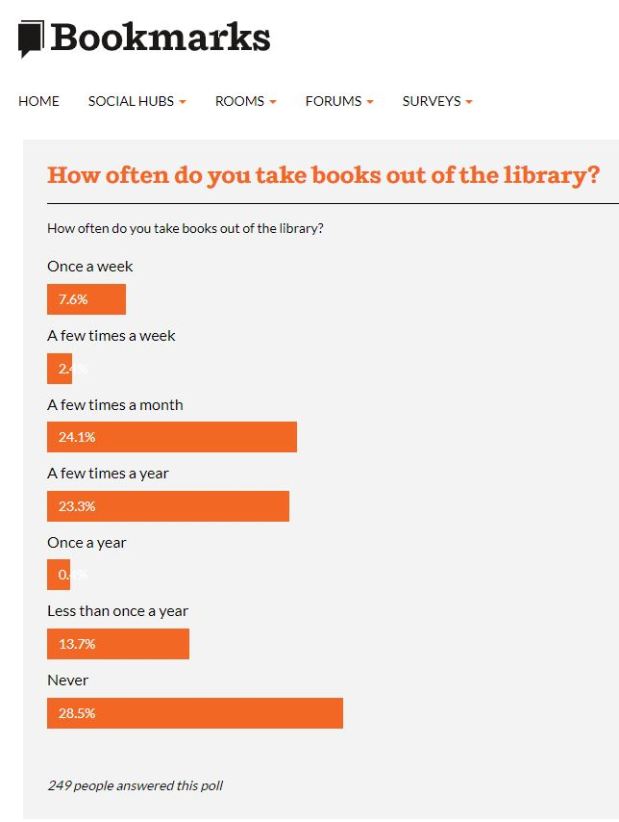
This statistic popped up on a poll I answered. Considering that this is a Penguin forum for people who consider themselves to be dedicated readers, I was appalled by the ‘Never’ figure (and the total of the bottom four bars). Do so many really buy every single book they read?! (I answered ‘Once a week’, of course.)
Literary prize season is heating up, with recent longlist announcements for the inaugural Women’s Prize for Non-Fiction and the Walter Scott Prize for historical fiction. Coming up in early March, we’ll be able to compare the Carol Shields Prize and Women’s Prize longlists. For all of these nominees and more, my first port of call is always the library. It’s especially handy when a book can do double duty for multiple lists: I’m awaiting holds of Doppelganger by Naomi Klein, which is nominated for both the Women’s Prize for Non-Fiction and the Writers’ Prize; and The Bee Sting by Paul Murray, which was on the Booker Prize shortlist, is currently shortlisted for the Writers’ Prize, and won a Nero Award.
Since last month:
READ
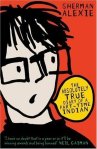
- The Absolutely True Diary of a Part-Time Indian by Sherman Alexie

- Brother Do You Love Me? by Manni Coe

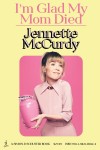
- I’m Glad My Mom Died by Jennette McCurdy

- The Tiger’s Wife by Téa Obreht (reread for book club)

- Went to London, Took the Dog by Nina Stibbe
- The Winter Wife by Claire Tomalin


CURRENTLY READING
- Sleepless: Discovering the Power of the Night Self by Annabel Abbs
- The Home Child by Liz Berry
- Death Valley by Melissa Broder
- King by Jonathan Eig
- Mrs March by Virginia Feito (for Literary Wives)
- Howards End by E.M. Forster (rereading for book club)
- Babel by R.F. Kuang
- The Collected Stories of Carol Shields
- Before the Light Fades by Natasha Walter
CHECKED OUT, TO BE READ
- Blood by Dr Jen Gunter
- Groundbreakers: The Return of Britain’s Wild Boar by Chantal Lyons
- After Dark by Haruki Murakami
- Jungle House by Julianne Pachico
RETURNED UNFINISHED
- A Thread of Violence by Mark O’Connell – I loved To Be a Machine and Notes from an Apocalypse and so thought I could happily read O’Connell on any subject, but a crime I’d never heard about and learned the basics of within the first 20 pages was never going to engage me for the length of a whole book.

RETURNED UNREAD
- None of the Above by Travis Alabanza
- Godkiller by Hannah Kaner
- Cahokia Jazz by Francis Spufford
Others of you have loved those books, but I couldn’t get anywhere with them; forgive me!
- Day by Michael Cunningham
- Wasteland by Oliver Franklin-Wallis
- Tell Me Good Things by James Runcie
- Reasons to Be Cheerful by Nina Stibbe
- Night Side of the River by Jeanette Winterson
And maybe another time for these.
What have you been reading or reviewing from the library recently?

Share a link to your own post in the comments. Feel free to use the above image. The hashtag is #LoveYourLibrary.
The Orange Fish by Carol Shields (Buddy Reread)
Marcie of Buried in Print and I are rereading Shields’s short stories for the first quarter of 2024: one volume per month from the Collected Stories. My review of the first one, Various Miracles (1985), is here. The Orange Fish followed four years later. It’s a shorter book – 12 stories rather than 21 – but again opens with the title story, which features a gentle slide into absurdity. The members of a select group think their possession of an orange fish lithograph makes them special, and the sense of being chosen enlivens and rejuvenates them. But when the artwork becomes widely available, it devalues their joy in it. This reminded me of a statistic I’ve often heard: experiments show that people don’t want to be earning a particular amount of money; they want to be earning comfortably relative to others.
 “Today Is the Day” stands out for its fable-like setup: “Today is the day the women of our village go out along the highway planting blisterlilies.” With the ritualistic activity and the arcane language, it seems borne out of women’s secret history; if it weren’t for mentions of a few modern things like a basketball court, it could have taken place in medieval times.
European settings recur in a few stories, and there are more third-person POVs than first-. And surprise! A character from Various Miracles is back: Meershank, the writer from “Flitting Behaviour,” stars in “Block Out.” Here Shields inverts the fear of writer’s block: for this prolific scribbler it’s a welcome break. “The suffering of the throttled was his, and he felt appropriately shriven, haunted, beset and blessed.”
In both “Collision” and “Family Secrets,” Shields muses on the biographer’s art, asking what passes into the historical record. The former involves a brief encounter between Martä and Malcolm, a visiting consultant, in Eastern Europe. I loved the mischievous personification: “Biography, that old buzzard, is having a field day, running along behind them picking up all the bits and pieces.” In “Family Secrets,” the narrator remembers that, before marriage, her mother took a year off teaching for “sickness,” and wonders if it was actually a pregnancy, hidden as assiduously as two amputations in the family. “Lies, secrets, casual misrepresentations and small failures of memory, all these things are useful in their way. History gobbles everything up willy-nilly”. Ernest Hemingway also makes a fun cameo appearance in this one.
I had three favourites: 1) “Hinterland” has a married couple visiting Paris at a time of terrorist activity. (There’s a fantastic list of the random things Roy might have thought of while fleeing the bomb threat, but didn’t.) The combination of that and a museum setting of course made me think of The Goldfinch. But it seems like the greater threats here are ageing and potential breakdowns within the family. “Milk Bread Beer Ice,” the last story in the collection, is also travel-based and contrasts the wife’s love of words with this marriage’s fundamental failure of communication. 2) “Hazel,” one I mistakenly read last month, is an example of Shields’s abiding interest in happenstance and how it changes a life’s direction.
 And my overall favourite, 3) “Fuel for the Fire,” a lovely festive-season story that gets beyond the everything-going-wrong-on-a-holiday stereotypes, even though the oven does play up as the narrator is trying to cook a New Year’s Day goose. The things her widowed father brings along to burn on their open fire – a shed he demolished, lilac bushes he took out because they reminded him of his late wife, bowling pins from a derelict alley – are comical yet sad at base, like so much of the story. “Other people might see something nostalgic or sad, but he took a look and saw fuel.” Fire is a force that, like time, will swallow everything.
Being a significantly shorter collection than Various Miracles, The Orange Fish seems to contain less filler and so struck me as stronger overall. There were only maybe one or two stories that I was less engaged with, and the themes of art, biography, coincidence, marriages and writers reminded me of works by some of my favourite authors, Julian Barnes, A.S. Byatt and David Lodge.
My original rating (c. 2008):
My rating now: 
Book Serendipity, January to February 2024
I call it “Book Serendipity” when two or more books that I read at the same time or in quick succession have something in common – the more bizarre, the better. This is a regular feature of mine every couple of months. Because I usually have 20–30 books on the go at once, I suppose I’m more prone to such incidents. The following are in roughly chronological order.
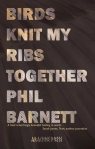
- I finished two poetry collections by a man with the surname Barnett within four days in January: Murmur by Cameron Barnett and Birds Knit My Ribs Together by Phil Barnett.

- I came across the person or place name Courtland in The Optimist’s Daughter by Eudora Welty, then Cortland in a story from The Orange Fish by Carol Shields, then Cotland (but where? I couldn’t locate it again! Was it in Elizabeth Is Missing by Emma Healey?).
- The Manet painting Olympia is mentioned in Christmas Holiday by W. Somerset Maugham and The Paris Novel by Ruth Reichl (both of which are set in Paris).


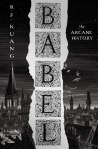
- There’s an “Interlude” section in Babel by R.F. Kuang and The Vulnerables by Sigrid Nunez.
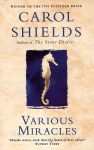
- The Morris (Minor) car is mentioned in Elizabeth Is Missing by Emma Healey and Various Miracles by Carol Shields.
- The “flour/flower” homophone is mentioned in Babel by R.F. Kuang and Various Miracles by Carol Shields.
- A chimney swift flies into the house in Cat and Bird by Kyoko Mori and The Optimist’s Daughter by Eudora Welty.
- A character named Cornelius in The Fruit Cure by Jacqueline Alnes and Wellness by Nathan Hill.
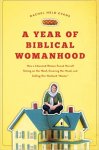
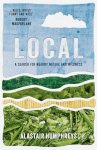
- Reading two year challenge books at the same time, A Year of Biblical Womanhood by Rachel Held Evans and Local by Alastair Humphreys, both of which are illustrated with frequent black-and-white photos by and of the author.
- A woman uses a bell to summon children in one story of Universally Adored and Other One Dollar Stories by Elizabeth Bruce and The Optimist’s Daughter by Eudora Welty.
- Apple turnovers get a mention in A Year of Biblical Womanhood by Rachel Held Evans and Wellness by Nathan Hill.
- A description of rolling out pie crust in A Year of Biblical Womanhood by Rachel Held Evans and Cat and Bird by Kyoko Mori.

- The idea of a house giving off good or bad vibrations in Wellness by Nathan Hill and a story from Various Miracles by Carol Shields.

- Emergency C-sections described or at least mentioned in Brother Do You Love Me by Manni Coe, The Unfamiliar by Kirsty Logan, Wellness by Nathan Hill, and lots more.
- Frustration with a toddler’s fussy eating habits, talk of “gentle parenting” methods, and mention of sea squirts in Wellness by Nathan Hill and Matrescence by Lucy Jones.
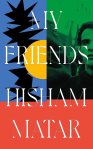
- The nickname “Poet” in The Tidal Year by Freya Bromley and My Friends by Hisham Matar.
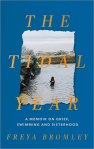
- A comment about seeing chicken bones on the streets of London in The Tidal Year by Freya Bromley and Went to London, Took the Dog by Nina Stibbe.
- Swans in poetry in The Tidal Year by Freya Bromley and Egg/Shell by Victoria Kennefick.
- A mention or image of Captcha technology in Egg/Shell by Victoria Kennefick and Went to London, Took the Dog by Nina Stibbe.
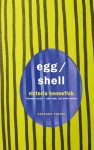

- An animal automaton in Loot by Tania James and Egg/Shell by Victoria Kennefick.
- A mention of Donna Tartt in The Tidal Year by Freya Bromley, Looking in the Distance by Richard Holloway, and Matrescence by Lucy Jones.
- Cathy Rentzenbrink appears in The Tidal Year by Freya Bromley and Went to London, Took the Dog by Nina Stibbe.
 Dialogue is given in italics in the memoirs The Tidal Year by Freya Bromley and The Unfamiliar by Kirsty Logan.
- An account of a man being forced to marry the sister of his beloved in A Year of Biblical Womanhood by Rachel Held Evans, Wellness by Nathan Hill, and The Tiger’s Wife by Téa Obreht.
- Saying that one doesn’t want to remember the loved one as ill (but really, not wanting to face death) so not saying goodbye (in Cat and Bird by Kyoko Mori) or having a closed coffin (Wellness by Nathan Hill).
- An unhappy, religious mother who becomes a hoarder in Wellness by Nathan Hill and I’m Glad My Mom Died by Jennette McCurdy.
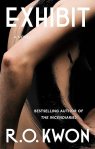
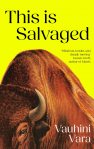
- Characters called Lidija and Jin in Exhibit by R. O. Kwon and Lydia and Jing in the first story of This Is Salvaged by Vauhini Vara.
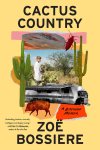
- Distress at developing breasts in Cactus Country by Zoë Bossiere and I’m Glad My Mom Died by Jennette McCurdy.
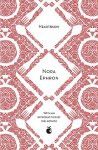
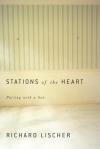
- I came across mentions of American sportscaster Howard Cosell in Heartburn by Nora Ephron and Stations of the Heart by Richard Lischer (two heart books I was planning on reviewing together) on the same evening. So random!
- Girls kissing and flirting with each other (but it’s clear one partner is serious about it whereas the other is only playing or considers it practice for being with boys) in Cactus Country by Zoë Bossiere and Winter’s Bone by Daniel Woodrell.
- A conversion to Catholicism in Places I’ve Taken My Body by Molly McCully Brown and Stations of the Heart by Richard Lischer.
- A zookeeper is attacked by a tiger when s/he goes into the enclosure (maybe not the greatest idea!!) in Tiger by Polly Clark and The Tiger’s Wife by Téa Obreht.

- The nickname Frodo appears in Tiger by Polly Clark and Brother Do You Love Me by Manni Coe.
- Opening scene of a parent in a coma, California setting, and striking pink and yellow cover to Death Valley by Melissa Broder and I’m Glad My Mom Died by Jennette McCurdy.

- An Englishman goes to Nigeria in Howards End by E.M. Forster and Immanuel by Matthew McNaught.
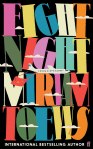 The Russian practice of whipping people with branches at a spa in Tiger by Polly Clark and Fight Night by Miriam Toews.
- A mother continues washing her daughter’s hair until she is a teenager old enough to leave home in Mrs. March by Virginia Feito and I’m Glad My Mom Died by Jennette McCurdy.
- Section 28 (a British law prohibiting the “promotion of homosexuality” in schools) is mentioned in A Bookshop of One’s Own by Jane Cholmeley, Some Kids I Taught and What They Taught Me by Kate Clanchy, and Brother Do You Love Me by Manni Coe.
- Characters named Gord (in one story from Various Miracles by Carol Shields, and in Fight Night by Miriam Toews), Gordy (in The Absolutely True Diary of a Part-Time Indian by Sherman Alexie), and Gordo (in Blood Red by Gabriela Ponce).

- Montessori and Waldorf schools are mentioned in Cactus Country by Zoë Bossiere and When Fragments Make a Whole by Lory Widmer Hess.
- A trailer burns down in The Absolutely True Diary of a Part-Time Indian by Sherman Alexie and Cactus Country by Zoë Bossiere.
What’s the weirdest reading coincidence you’ve had lately?
Three “Love” or “Heart” Books for Valentine’s Day: Ephron, Lischer and Nin
Every year I say I’m really not a Valentine’s Day person and yet put together a themed post featuring books that have “Love” or a similar word in the title. This is the eighth year in a row, in fact (after 2017, 2018, 2019, 2020, 2021, 2022, and 2023)! Today I’m looking at two classic novellas, one of them a reread and the other my first taste of a writer I’d expected more from; and a wrenching, theologically oriented bereavement memoir.
Heartburn by Nora Ephron (1983)
I’d already pulled this out for my planned reread of books published in my birth year, so it’s pleasing that it can do double duty here. I can’t say it better than my original 2013 review:
The funniest book you’ll ever read about heartbreak and betrayal, this is full of wry observations about the compromises we make to marry – and then stay married to – people who are very different from us. Ephron readily admitted that her novel is more than a little autobiographical: it’s based on the breakdown of her second marriage to investigative journalist Carl Bernstein (All the President’s Men), who had an affair with a ludicrously tall woman – one element she transferred directly into Heartburn.
Ephron’s fictional counterpart is Rachel Samstad, a New Yorker who writes cookbooks or, rather, memoirs with recipes – before that genre really took off. Seven months pregnant with her second child, she has just learned that her second husband is having an affair. What follows is her uproarious memories of life, love and failed marriages. Indeed, as Ephron reflected in a 2004 introduction, “One of the things I’m proudest of is that I managed to convert an event that seemed to me hideously tragic at the time to a comedy – and if that’s not fiction, I don’t know what is.”
As one might expect from a screenwriter, there is a cinematic – that is, vivid but not-quite-believable – quality to some of the moments: the armed robbery of Rachel’s therapy group, her accidentally flinging an onion into the audience during a cooking demonstration, her triumphant throw of a key lime pie into her husband’s face in the final scene. And yet Ephron was again drawing on experience: a friend’s therapy group was robbed at gunpoint, and she’d always filed the experience away in a mental drawer marked “Use This Someday” – “My mother taught me many things when I was growing up, but the main thing I learned from her is that everything is copy.” This is one of celebrity chef Nigella Lawson’s favorite books ever, for its mixture of recipes and rue, comfort food and folly. It’s a quick read, but a substantial feast for the emotions.
 Sometimes I wonder why I bother when I can’t improve on reviews I wrote over a decade ago (see also another upcoming reread). What I would add now, without disputing any of the above, is that there’s more bitterness to the tone than I’d recalled, even though Ephron does, yes, play it for laughs. But also, some of the humour hasn’t aged well, especially where based on race/culture or sexuality. I’d forgotten that Rachel’s husband isn’t the only cheater here; pretty much every couple mentioned is currently working through the aftermath of an affair or has survived one in the past. In one of these, the wife who left for a woman is described not as a lesbian but by another word, each time, which felt unkind rather than funny.
Still, the dialogue, the scenes, the snarky self-portrayal: it all pops. This was autofiction before that was a thing, but anyone working in any genre could learn how to write readable content by studying Ephron. “‘I don’t have to make everything into a joke,’ I said. ‘I have to make everything into a story.’ … I think you often have that sense when you write – that if you can spot something in yourself and set it down on paper, you’re free of it. And you’re not, of course; you’ve just managed to set it down on paper, that’s all.” (Little Free Library)
My original rating (2013):
My rating now:
Stations of the Heart: Parting with a Son by Richard Lischer (2013)
“What we had taken to be a temporary unpleasantness had now burrowed deep into the family pulp and was gnawing us from the inside out.” Like all life writing, the bereavement memoir has two tasks: to bear witness and to make meaning. From a distance that just happens to be Mary Karr’s prescribed seven years, Lischer opens by looking back on the day when his 33-year-old son Adam called to tell him that his melanoma, successfully treated the year before, was back. Tests revealed that the cancer’s metastases were everywhere, including in his brain, and were “innumerable,” a word that haunted Lischer and his wife, their daughter, and Adam’s wife, who was pregnant with their first child.
 The next few months were a Calvary of sorts, and Lischer, an emeritus professor at Duke Divinity School, draws deliberate parallels with the biblical and liturgical preparations for Good Friday that feel appropriate for this Ash Wednesday. Lischer had no problem with Adam’s late-life conversion from Protestantism to Catholicism, whose rites he followed with great piety in his final summer. He traces Adam and Jenny’s daily routines as well as his own helpless attendance at hospital appointments. Doped up on painkillers, Adam attended one last Father’s Day baseball game with him; one last Fourth of July picnic. Everyone so desperately wanted him to keep going long enough to meet his baby girl. To think that she is now a young woman and has opened all the presents Adam bought to leave behind for her first 18 birthdays.
The facts of the story are heartbreaking enough, but Lischer’s prose is a perfect match: stately, resolute and weighted with spiritual allusion, yet never morose. He approaches the documenting of his son’s too-short life with a sense of sacred duty: “I have acquired a new responsibility: I have become the interpreter of his death. God, I must do a better job. … I kissed his head and thanked him for being my son. I promised him then that his death would not ruin my life.” This memoir brought back so much about my brother-in-law’s death from brain cancer in 2015, from the “TEAM [ADAM/GARNET]” T-shirts to Adam’s sister’s remark, “I never dreamed this would be our family’s story.” We’re not alone. (Remainder book from the Bowie, Maryland Dollar Tree)
A Spy in the House of Love by Anaïs Nin (1954)
 I’d heard Nin spoken of in the same breath as D.H. Lawrence, so thought I might similarly appreciate her because of, or despite, comically overblown symbolism around sex. I think I was also expecting something more titillating? (I guess I had this confused for Delta of Venus, her only work that would be shelved in an Erotica section.) Many have tried to make a feminist case for this novella about Sabina, an early liberated woman in New York City who has extramarital sex with four other men who appeal to her for various not particularly good reasons (the traumatized soldier whom she comforts like a mother; the exotic African drummer – “Sabina did not feel guilty for drinking of the tropics through Mambo’s body”). She herself states, “I want to trespass boundaries, erase all identifications, anything which fixes one permanently into one mould, one place without hope of change.” The most interesting aspect of the book was Sabina’s questioning of whether she inherited her promiscuity from her father (it’s tempting to read this autobiographically as Nin’s own father left the family for another woman, a foundational wound in her life).
Come on, though, “fecundated,” “fecundation” … who could take such vocabulary seriously? Or this sex writing (snort!): “only one ritual, a joyous, joyous, joyous impaling of woman on a man’s sensual mast.” I charge you to use the term “sensual mast” wherever possible in the future. (Secondhand – Oxfam, Newbury) 
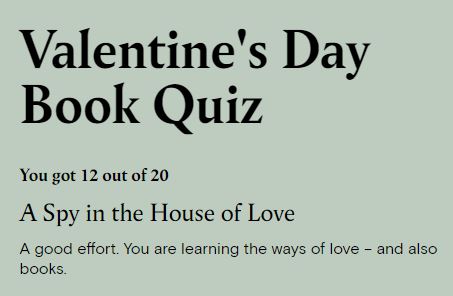
But hey, check out my score for the Faber Valentine’s quiz!
Winter Reads: Claire Tomalin, Daniel Woodrell & Picture Books
Mid-February approaches and we’re wondering if the snowdrops and primroses emerging here in the South of England mean that it will be farewell to winter soon, or if the cold weather will return as rumoured. (Punxsutawney Phil didn’t see his shadow, but that early-spring prediction is only valid for the USA, right?) I didn’t manage to read many seasonal books this year, but I did pick up several short works with “Winter” in the title: a little-known biographical play from a respected author, a gritty Southern Gothic novella made famous through a Jennifer Lawrence film, and two picture books I picked up at the library last week.
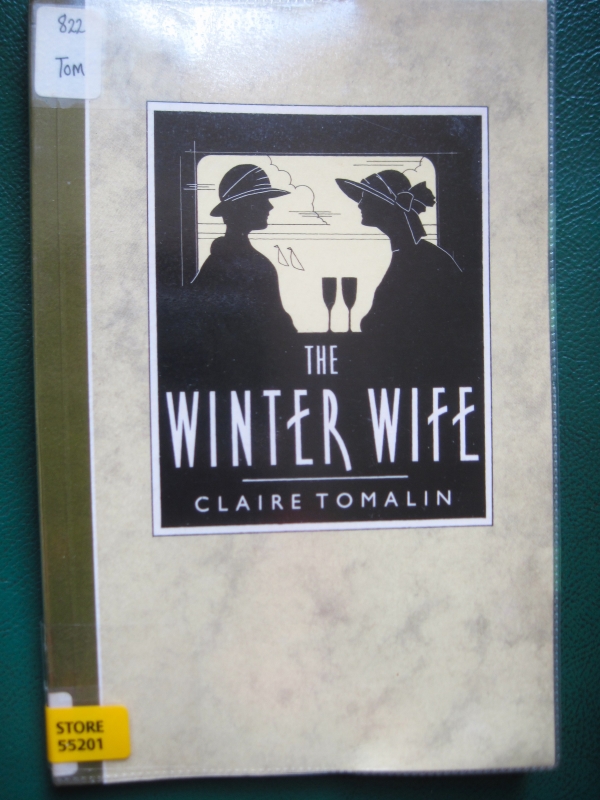
The Winter Wife by Claire Tomalin (1991)
A search of the university library catalogue turned up this Tomalin title I’d never heard of. It turns out to be a very short play (two acts of seven scenes each, but only running to 44 pages in total) about a trip abroad Katherine Mansfield took with her housekeeper?/companion, Ida Baker, in 1920. Ida clucks over Katherine like a nurse or mother hen, but there also seems to be latent, unrequited love there (Mansfield was bisexual, as I knew from fellow New Zealander Sarah Laing’s fab graphic memoir Mansfield and Me). Katherine, for her part, alternately speaks to Ida, whom she nicknames “Jones,” with exasperation and fondness. The title comes from a moment late on when Katherine tells Ida “you’re the perfect friend – more than a friend. You know what you are, you’re what every woman needs: you’re my true wife.” Maybe what we’d call a “work wife” today, but Ida blushes with pride.
Tomalin had already written a full-length biography of Mansfield, but insists she barely referred to it when composing this. The backdrops are minimal: a French sleeper train; Isola Bella, a villa on the French Riviera; and Dr. Bouchage’s office. Mansfield was ill with tuberculosis, and the continental climate was a balm: “The sun gets right into my bones and makes me feel better. All that English damp was killing me. I can’t think why I ever tried to live in England.” There are also financial worries. The Murrys keep just one servant, Marie, a middle-aged French woman who accompanies her on this trip, but Katherine fears they’ll have to let her go if she doesn’t keep earning by her pen.
Through Katherine’s conversations with the doctor, we catch up on her romantic history – a brief first marriage, a miscarriage, and other lovers. Dr. Bouchage believes her infertility is a result of untreated gonorrhea. He echoes Ida in warning Katherine that she’s working too hard – mostly reviewing books for her husband John Middleton Murry’s magazine, but also writing her own short stories – when she should be resting. Katherine retorts, “It is simply none of your business, Jones. Dr Bouchage: if I do not work, I might as well be dead, it’s as simple as that.”
She would die not three years later, a fact that audiences learn through a final flash-forward where Ida, in a monologue, contrasts her own long life (she lived to 90 and Tomalin interviewed her when she was 88) with Katherine’s short one. “I never married. For me, no one ever equalled Katie. There was something golden about her.” Whereas Katherine had mused, “I thought there was going to be so much life then … that it would all be experience I could use. I thought I could live all sorts of different lives, and be unscathed…”
The play is, by its nature, slight, but gives a lovely sense of the subject and her key relationships – I do mean to read more by and about Mansfield. I wonder if it has been performed much since. And how about this for unexpected literary serendipity?
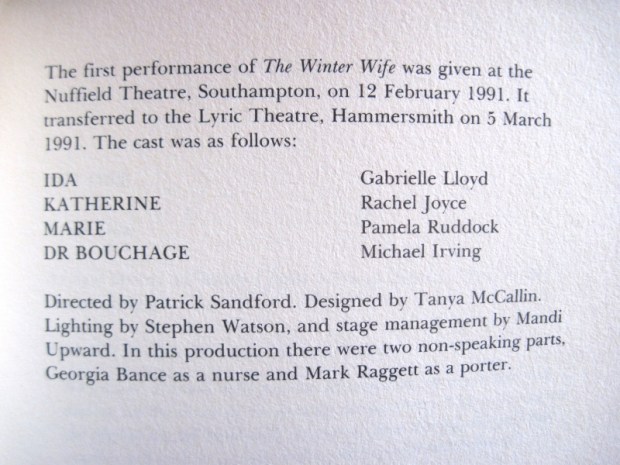
Yes, it’s that Rachel Joyce. (University library)
Winter’s Bone by Daniel Woodrell (2006)
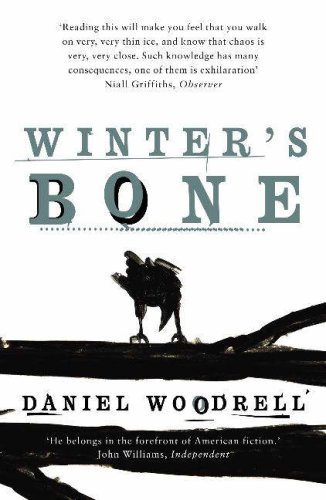 I’d seen the movie but hadn’t remembered just how bleak and violent the story is, especially considering that the main character is a teenage girl. Ree Dolly lives in Ozarks poverty with a mentally ill, almost catatonic mother and two younger brothers whom she is effectively raising on her own. Their father, Jessup, is missing; rumour has it that he lies dead somewhere for snitching on his fellow drug producers. But unless Ree can prove he’s not coming back, the bail bondsman will repossess the house, leaving the family destitute.
Forced to undertake a frozen odyssey to find traces of Jessup, she’s unwelcome everywhere she goes, even among extended family. No one is above hitting a girl, it seems, and just for asking questions Ree gets beaten half to death. Her only comfort is in her best friend, Gail, who’s recently given birth and married the baby daddy. Gail and Ree have long “practiced” on each other romantically. Without labelling anything, Woodrell sensitively portrays the different value the two girls place on their attachment. His prose is sometimes gorgeous –
Pine trees with low limbs spread over fresh snow made a stronger vault for the spirit than pews and pulpits ever could.
– but can be overblown or off-puttingly folksy:
Ree felt bogged and forlorn, doomed to a spreading swamp of hateful obligations.
Merab followed the beam and led them on a slow wamble across a rankled field
This was my second from Woodrell, after the short stories of The Outlaw Album. I don’t think I’ll need to try any more by him, but this was a solid read. (Secondhand – New Chapter Books, Wigtown)
Children’s picture books:
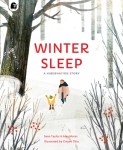 Winter Sleep: A Hibernation Story by Sean Taylor and Alex Morss [illus. Cinyee Chiu] (2019): My second book by this group; I read Busy Spring: Nature Wakes Up a couple of years ago. Granny Sylvie reassures her grandson that everything hasn’t died in winter, but is sleeping or in hiding beneath the ice or behind the scenes. As before, the only niggle is that European and North American species are both mentioned and it’s not made clear that they live in different places. (Public library)
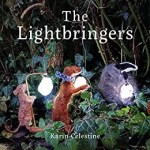 The Lightbringers: Winter by Karin Celestine (2020): An unusual artistic style here: every spread is a photograph of felted woodland creatures. The focus is on midwinter and the hope of the light coming back – depicted as poppy seed heads, lit from within and carried by mouse, hare, badger and more. “The light will always return because it is guarded by small beings and they are steadfast in their task.” The first of four seasonal stories. (Public library)
Any wintry reading (or weather) for you lately?
Recent Releases by Nathan Hill, Hisham Matar, Sigrid Nunez and More
One key way in which 2024’s reading has already differed from previous years’ is that I no longer avoid doorstoppers. I now classify any book with over 400 pages as a doorstopper, and by that definition I have already gotten through three this year: The Tidal Year plus two of the below, with Wellness standing out as the true whopper at 597 small-print pages. January offered a set of releases full of variety: gritty yet funny flash fiction; a novel of big ideas and big empathy for its flawed characters; an exile’s elegant love letter to Libya from London; a coy pandemic-era reflection on connection and creation; and a tour of nature close to home.
Universally Adored and Other One Dollar Stories by Elizabeth Bruce
 This was a great collection of 33 stories, all of them beginning with the words “One Dollar” and most of flash fiction length. Bruce has a knack for quickly introducing a setup and protagonist. The voice and setting vary enough that no two stories sound the same. What is the worth of a dollar? In some cases, where there’s a more contemporary frame of reference, a dollar is a sign of desperation (for the man who’s lost house, job and wife in “Little Jimmy,” for the coupon-cutting penny-pincher whose unbroken monologue makes up the whole of “Grocery List”), or maybe just enough for a small treat for a child (as in “Mouse Socks” or “Boogie Board”). In the historical stories, a dollar can buy a lot more. It’s a tank of gas – and a lesson on the evils of segregation – in “Gas Station”; it’s a huckster’s exorbitant charge for a mocked-up relic in “The Grass Jesus Walked On.”
The tone ranges from black comedy (“Festus”) to high tragedy (“Votive Candle”), but the book mostly falls within the realm of dirty realism with the attention to working-class country folk, so I’d recommend the collection to fans of authors who perch on the lighter side of that subgenre, such as Barbara Kingsolver or Denis Johnson. A few of my favorite stories, in addition to the above, were “Ice-Cold Water,” which I appreciated for the Washington D.C. setting and the way that an assumption about who would be racist was overturned by a moment of simple compassion; “Dolores,” in which a slick humanitarian fundraiser meets a waitress who has his number; and “Boiling the Buggers,” a window onto Covid-exacerbated mental illness. (Read via BookSirens)
Wellness by Nathan Hill
Somehow nearly eight years have passed since Hill’s debut novel, The Nix, which I dubbed “a rich, multi-layered story about family curses and failure.” I admired it as much for its prose as for its ideas, and Wellness is just as effervescent and insightful. It’s a state-of-the-nation novel filtered through one Chicago family: experimental photographer and underperforming academic Jack; his wife Elizabeth, a placebo researcher at Wellness; and their YouTube-obsessed son Toby. They’ve recently invested their life savings in a new condo and are considering trendy features like open shelves and separate master bedrooms. It would be oversimplifying, but true, to say that this couple is experiencing midlife and marital crises. Their nineties college romance – and a time of life when everything felt open and possible – is so remote now. When Elizabeth suggests they join a friend at a swingers’ club and a patient of hers who’s also a parent at Toby’s school sees them outside, chaos ensues.
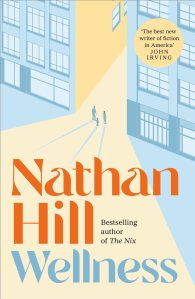
Some elements from The Nix carry over, such as campus politics, the American Midwest, and mother–son relationships, but also broader questions of authenticity, purpose and nurture. Is love itself a placebo? The novel spends time with Jack and Elizabeth at the dawn of their relationship and in the present day, but also looks back to their early careers and first years of parenthood. Hill is clearly fascinated with the sort of psychological experimentation Elizabeth engages in (there’s a whole bibliography of scientific papers consulted) but also turns it to humorous effect, as when Elizabeth subjects Toby to the marshmallow test. A lot of information is conveyed through dialogue, yet it never feels forced. A couple of long asides, on Elizabeth’s family history and the algorithms guiding Jack’s interactions with his conspiracy theorist father, tried my patience, but I loved a four-page chapter on a funeral supper where every sentence starts “There was.” Sooooo many quotable lines throughout.
The only fault in an addictive and spot-on novel (how did he know?! you’ll find yourself thinking about your own attitude to work/marriage/children) is that Hill is so committed to excavating these characters’ backstory of stunted emotion – Jack estranged from his religious Kansas farmer parents after a traumatic incident you feel right in the gut; Elizabeth glad to jettison her father’s wealth with his anger – that he hurries through the denouement. Still, this is sure to be a fiction highlight of my year. It’s one for readers of Jonathan Franzen, sure, but I also thought it reminiscent of Katherine Heiny’s Standard Deviation and Meg Wolitzer’s The Interestings.
With thanks to Picador for the proof copy for review.
My Friends by Hisham Matar
“Benghazi was the one place I longed for the most, it was also the place I most feared to return to.”
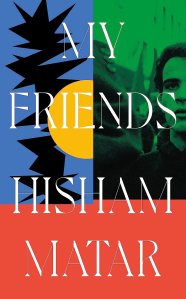 Taking a long walk through London one day, Khaled looks back from midlife on the choices he and his two best friends have made. He first came to the UK as an eighteen-year-old student at Edinburgh University. Everything that came after stemmed from one fateful day. Matar places Khaled and his university friend Mustafa at a real-life demonstration outside the Libyan embassy in London in 1984, which ended in a rain of bullets and the accidental death of a female police officer. Khaled’s physical wound is less crippling than the sense of being cut off from his homeland and his family. As he continues his literary studies and begins teaching, he decides to keep his injury a secret from them, as from nearly everyone else in his life. On a trip to Paris to support a female friend undergoing surgery, he happens to meet Hosam, a writer whose work enraptured him when he heard it on the radio back home long ago. Decades pass and the Arab Spring prompts his friends to take different paths.
I’d previously only read Matar’s short nonfiction work A Month in Siena. The slow, meditative style I enjoyed so much there didn’t translate well into doorstopper length; by the 300-page mark I found myself skimming to see if anything else might happen. Despite the title, we come to know Mustafa and Hosam much less well than we do Khaled. I would happily have had the book’s plot and sentiment concentrated into a taut 200 pages. However, I’m still interested in trying other books by Matar. In the Country of Men is significantly shorter and available from the backroom storage area of my library, and his Folio Prize-winning memoir The Return, too, is on shelf and I reckon will be right up my street.
With thanks to Viking (Penguin) for the proof copy for review.
The Vulnerables by Sigrid Nunez
I’m a huge Nunez fan after reading The Friend, What Are You Going Through, and especially A Feather on the Breath of God. Her last three books have been very much of a piece: autofiction voiced by an unnamed woman who has a duty of care towards a friend or a friend’s pet and ponders, in wry meta fashion, the nature of autobiographical writing and the meaning of life and death at a time of climate breakdown. Alas, The Vulnerables seems like no more than a rehashing of The Friend, with flanking main characters chosen at random from central casting: a parrot named Eureka and a mentally ill college drop-out called Vetch. This quirky trio is thrown together in a lavish New York City apartment during lockdown and nothing much happens but conversation brings them closer.
 A second problem: Covid-19 stories feel dated. For the first two years of the pandemic I read obsessively about it, mostly nonfiction accounts from healthcare workers or ordinary people looking for community or turning to nature in a time of collective crisis. But now when I come across it as a major element in a book, it feels like an out-of-place artefact; I’m almost embarrassed for the author: so sorry, but you missed your moment. My disappointment may primarily be because my expectations were so high. I’ve noted that two blogger friends new to Nunez were enthusiastic about this (but so was Susan, who’d enjoyed her before). That’s not to say this wasn’t a pleasantly fluid and incisive read, even if its message of essential human vulnerability is an obvious one. Anyway, I’ll take Nunez musing on familiar subjects over most other contemporary writers any day:
“Never write ‘I don’t remember,’ Editor says; it undermines your authority. But write as if you remember everything and Reader will smell a rat.”
“You can start with fiction or start with documentary, according to Jean-Luc Goddard. Either way, you will inevitably find the other.”
“I like this clarification by the narrator of a book by Stendhal: ‘It is not out of egotism that I say “I”; it is simply the quickest way to tell the story.’)”
(À propos of the doorstoppers above)
“Does that mean a long novel is easier to write than a short one? / Um, no. But, to borrow from a certain critic, in almost every long book I read I see a short one shirking its job.”
With thanks to Virago for the proof copy for review.
And a bonus work of nonfiction:
Local: A Search for Nearby Nature and Wildness by Alastair Humphreys
Lev Parikian alerted me to this amiable record of weekly discoveries of the nature on one’s home turf. Humphreys has been an international adventure traveller and written many books about his exploits. Here, by contrast, he zooms the lens in about as far as it will go, ordering a custom-made 20-km-square OS map that has his house at the centre and choosing one surrounding grid square per week (so 52 out of a total of 400) to cycle to and explore. He’s chosen to leave his town unnamed so this can function as an Everyman’s journey through edgelands. And his descriptions and black-and-white photographs really do present an accurate microcosm of modern England: fields, woods, waterways, suburban streets.
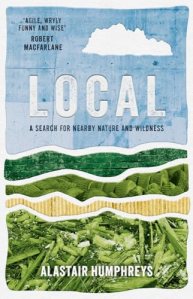 From one November to the next, he watches the seasons advance and finds many magical spaces with everyday wonders to appreciate. “This project was already beginning to challenge my assumptions of what was beautiful or natural in the landscape,” he writes in his second week. True, he also finds distressing amounts of litter, no-access signs and evidence of environmental degradation. But curiosity is his watchword: “The more I pay attention, the more I notice. The more I notice, the more I learn.”
Each week’s observations send him down a research rabbit hole, with topics including caves, land management, mudlarking, plant species, and much more. The nature of the short chapters means that there can only ever be a cursory look at huge issues like rewilding and veganism, but Humphreys is nimble in weaving in the brief, matter-of-fact discussions. His eagerness is irrepressible. “How you look, what you see, and the way all this makes you feel: a single map and the best of all possible worlds.” (See also: Paul’s review.)
With thanks to the author for the free copy for review.
New Poetry Releases by Phil Barnett, Victoria Kennefick and Rachel Mann
I was slow off the mark this month, but finally managed to finish a first batch of review copies. The rest from January will be coming up soon.
Birds link the first and second poetry collections below, and the trans experience the second and third. Other themes include chronic illness, miscarriage, motherhood, history, prayer and praise.
Birds Knit My Ribs Together by Phil Barnett
What an evocative title – reminiscent of last year’s You Bury the Birds in My Pelvis by Kelly Weber – and powerful image of how nature has bolstered the author through chronic illness.

The title phrase comes from the poem “Trepanning,” which imagines different species keeping him company in pain. If they’re sometimes held figuratively responsible, they’re also part of the solution; openness to experience means vulnerability, but also solidarity:
a woodpecker bored my skull
in trepanation
drummed a hole and wasps flew out
goldcrests’ needle-calls put punctures
all along the kidney’s line
swallow’s flightlines skywrote my ill
when thrushes sang it out loud
I appreciated the alliteration, the out-of-the-ordinary verbs, and the everyday metaphors. When spring finds Barnett unable to go further than his garden, the birds come to him, inviting him into “a prosecco world, still all winter / stirred in March, shaken in April”. There is highly visual and aural language throughout the book. In “Unsprung,” a dead heron becomes, in an echo of T.S. Eliot, the “still point at the centre of a wheeling world”. Though a pretty niche collection, it’s a lovely little one that nature-lovers should take a chance on.
With thanks to Arachne Press for the free copy for review.
Carcanet have set the bar high for 2024 poetry with these next two releases:
Egg/Shell by Victoria Kennefick
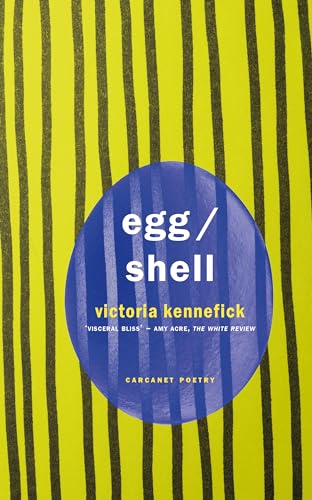 I was blown away by Kennefick’s 2021 debut, Eat or We Both Starve, which I described as “audacious,” “fleshly,” and “pleasingly morbid.” Her sophomore collection is just as strong, with motherhood and the body continuing as overarching themes. The speaker is, by turns, pregnant and mother to a daughter. She experiences multiple miscarriages and names her lost children after plants. Becoming a mother is a metamorphosis all its own (see my recent post on matrescence), while the second long section is about her husband transitioning. This is not actually the first book I’ve read about the changes in a marriage precipitated by a spouse transitioning, and the welter of emotions that it provokes; there’s also Some Body to Love by Alexandra Heminsley in memoir and Cataloguing Pain by Allison Blevins in poetry.
As in Barnett’s collection, bird metaphors are inescapable. “The Wild Swans at the Wetland Centre” must be a nod to W.B. Yeats (his were at Coole). Here, the recurring chickens and swans are the poet’s familiars, and their eggs her totems – ideal vessels, but so easily broken. The same is true of “Cup,” whose lines form the shape of a teacup perched on a saucer. The structure varies throughout: columns, stanzas; a list, a recipe. Amid the sadness, there is a lot of self-deprecation and dark humour in the poem titles (“Victoria Re-Enacts the Stations of the Cross,” falling and spilling coffee all over herself) and one-line poems that act as rejoinders. (“Orientation: A Tragedy” reads “I am so straight I give myself paper cuts.”)
If you’re wondering how life can be captured in achingly beautiful poetry, look no further. I doubt I’ll come across a better collection this year.
More favourite lines:
I get sad as earth becomes sea. I get sad
that in showing you this sinking world
I teach you how to say goodbye.
(from “On Being Two in the Anthropocene”)
I want people
to know me, and to hide.
(from “Le Cygne, My Spirit Animal”)
I want to write down the names of all my dead relatives.
How are they not here anymore? How are yours absent too?
What do we do with them, their names? Is there a box for grief?
(from “Census Night Poem”)
With thanks to Carcanet Press for the free copy for review. Coming out on 29 February.
Eleanor Among the Saints by Rachel Mann
 This is Mann’s second collection, after A Kingdom of Love. In reviewing that book I remarked on the psalm-like cadence, the anatomical and allusive language, and the contrast of past and present. All are elements here as well. The first long section was inspired by Eleanor/John Rykener, a 14th-century seamstress and sex worker whom some have claimed as a trans pioneer. Little is known about her life or self-identification, so Mann does not attempt biography here, but rather is thinking alongside the character. “Construct me weird and kind, leave it to me / To strip off when I’m ready. I shall run wild, / Naked as I dare, out into sober streets.”
Three later poems share the title “A Charm to Change Sex,” each numbered and in two columns – you have a choice of whether to read them across or down the page. Either way, they land somewhere between a spell and a prayer (and there are many other prayers in the table of contents): “Hidden: transfix / Invisible made visible … oh so holy, words lead everywhere / inside become out”. Bodies are as provisional as speech (“All text is stitched, / Body too only subset of making, a stored magic”), and inescapably frail, as evidenced by a father’s illness and death, the subject of several poems.
Repetition and wordplay (“razed/raised”) sometimes tail off into faltering phrases – “#TDOR” is most notable for this. And “Seven Proof Texts on a Transitioned Body” is, by itself, worth buying the book for, with alliteration and slang pushing back at medical and scriptural vocabulary. Mann is an incredibly versatile writer: I’ve read a memoir, a work of literary appreciation, and an academic thriller by her as well as her published poetry. And while I found less that resonated in this collection, I still admired its rigorous engagement with history, theology, and the facts of a life.
With thanks to Carcanet Press for the free copy for review.
Love Your Library, January 2024
It feels like sooooo much longer than five weeks (the week before Christmas) since I last posted one of these round-ups. The turn of the calendar to February will be a welcome milestone. My thanks, as always, go to Eleanor for her faithful participation in this monthly meme, and to Marcie for spotlighting her recent library reads.
Since last month:
READ
- Reproduction by Louisa Hall
- Flight by Lynne Seger Strong

CURRENTLY READING
- King by Jonathan Eig
- Babel by R.F. Kuang
- I’m Glad My Mom Died by Jennette McCurdy
- The Tiger’s Wife by Téa Obreht (rereading for book club)
- A Thread of Violence by Mark O’Connell
- Went to London, Took the Dog by Nina Stibbe
- Before the Light Fades by Natasha Walter
CHECKED OUT, TO BE READ
- None of the Above by Travis Alabanza
- Death Valley by Melissa Broder
- Brother Do You Love Me? by Manni Coe
- Jungle House by Julianne Pachico
- Cahokia Jazz by Francis Spufford
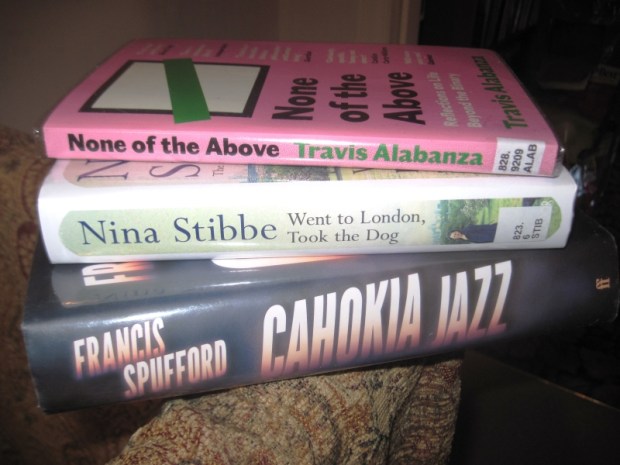
RETURNED UNFINISHED
- Undercurrent by Natasha Carthew
RETURNED UNREAD
- Stories for Christmas and the Festive Season
What have you been reading or reviewing from the library recently?
Share a link to your own post in the comments. Feel free to use the above image. The hashtag is #LoveYourLibrary.
 Bookish Beck = Rebecca Foster. American transplant to England. Freelance proofreader and book reviewer.
 Bookish Beck