Library Checkout: February 2018 – A Bumper Edition!
I found a plethora of interesting books, many of them pretty recent, on my last few trips to the public library. I had somehow convinced myself that my library system doesn’t have many interesting new books in stock, but I was proven wrong.
Plus, excellent news: As of March 1st, reservations will be free again. Eleven months ago, the library system brought in a 50-pence charge for every reservation and I stopped placing holds altogether. I can only presume that this was an experiment that didn’t bring in enough revenue, or that, now that the council has reduced hours and staffed its branch libraries with volunteers only, they can afford to offer reservations for free again. It’s a sad state of affairs in general, but a boon for me: from next month I’ll be able to place holds on any Wellcome-shortlisted titles I haven’t read, and lots of other recent books I’m interested in.
For once I’ve done a good job of plowing through a bunch of my library books, including the four books that made up the Costa Prize for Poetry shortlist. As usual, I’ve added in star ratings and links to reviews of books I haven’t already featured on the blog in some way.
LIBRARY BOOKS READ
- The Travelling Cat Chronicles by Hiro Arikawa

- Women and Power: A Manifesto by Mary Beard

- Kumukanda by Kayo Chingonyi [poetry – shortlisted for Costa Prize]

- Inside the Wave by Helen Dunmore [poetry – winner of Costa Prize]
- This Cold Heaven: Seven Seasons in Greenland by Gretel Ehrlich

- Family Matters by Rohinton Mistry

- On Balance by Sinéad Morrissey [poetry – shortlisted for Costa Prize]
- Useful Verses by Richard Osmond [poetry – shortlisted for Costa Prize]
- The Man Who Mistook His Wife for a Hat by Oliver Sacks
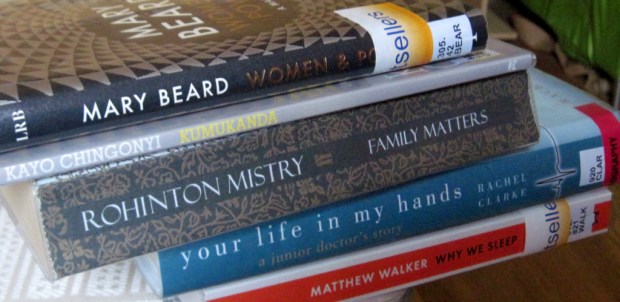
A selection of the library books I read and skimmed this past month (the others have since been returned).
SKIMMED ONLY
- Your Life in My Hands: A Junior Doctor’s Story by Rachel Clarke

- Why We Sleep: The New Science of Sleep and Dreams by Matthew Walker
CURRENTLY READING
- Little Women by Louisa May Alcott (a re-read)
- Herzog by Saul Bellow
- Harmless Like You by Rowan Hisayo Buchanan
- The Book of Forgotten Authors by Christopher Fowler
- To the Is-Land: An Autobiography by Janet Frame
- Plot 29: A Memoir by Allan Jenkins
- There Is an Anger that Moves by Kei Miller [poetry]
- And When Did You Last See Your Father? by Blake Morrison
- Spirals in Time: The Secret Life and Curious Afterlife of Seashells by Helen Scales
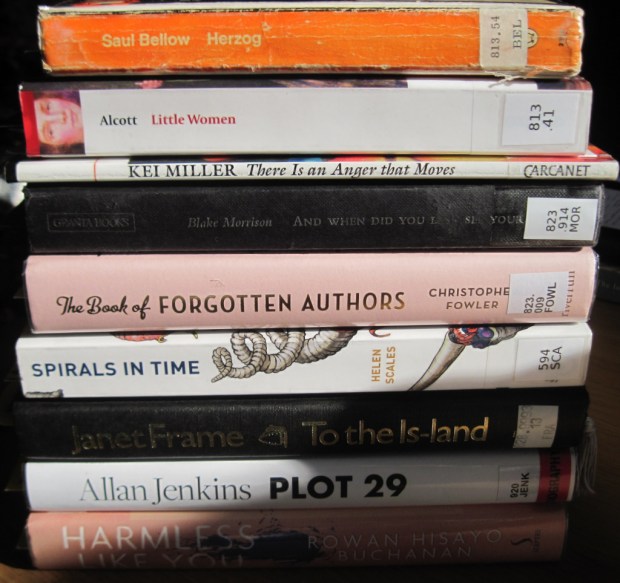
The currently reading stack.
CHECKED OUT, TO BE READ
Public library:
- The Most Perfect Thing: Inside (and Outside) a Bird’s Egg by Tim Birkhead
- Mean Time by Carol Ann Duffy [poetry]
- Testosterone Rex: Myths of Sex, Science, and Society by Cordelia Fine
- Somebody I Used to Know by Wendy Mitchell with Anna Wharton
- In the Days of Rain by Rebecca Stott
- Island Home: A Landscape Memoir by Tim Winton
- The Secret Life of Cows by Rosamund Young
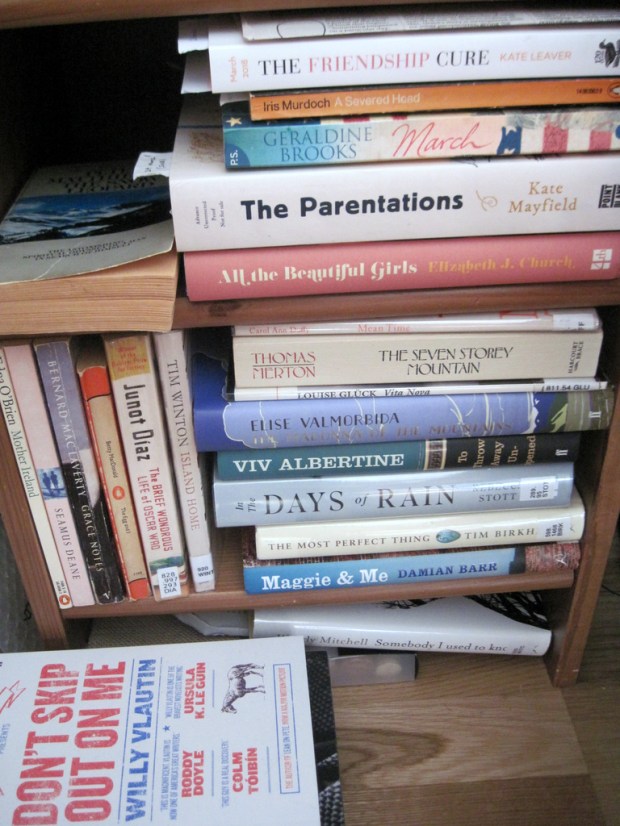
My bedside table (and environs) with its usual overwhelming selection of review books, library books, and backlist books from my own collection. And yes, it’s double-stacked!
University library:
- The Amazing Adventures of Kavalier & Clay by Michael Chabon
- The Brief Wondrous Life of Oscar Wao by Junot Díaz
- Vita Nova by Louise Glück [poetry]
- On the Road by Jack Kerouac
- The Cabaret of Plants: Botany and the Imagination by Richard Mabey
- The Sparrow by Mary Doria Russell
- The Catcher in the Rye by J.D. Salinger
- The Magnificent Spinster by May Sarton
RETURNED UNREAD
- Take Courage: Anne Brontë and the Art of Life by Samantha Ellis – This was requested by another user before I had a chance to read it. Maybe I’ll put a hold on it next month and try again.
What have you been reading from your local libraries? Does anything appeal from my stacks?
The Reading Cure: How Books Restored My Appetite by Laura Freeman
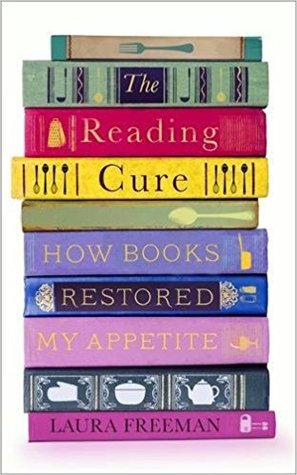 A debut memoir with food, medical and literary themes and a bibliotherapy-affirming title – this book ticks a whole lot of boxes for me. The very day I saw it mentioned on Twitter I requested a copy, and it was a warming, cozy read for the dark days of late December. As a teenager, freelance journalist Laura Freeman suffered from anorexia, and ever since she has struggled to regain a healthy relationship with food. This is decidedly not an anorexia memoir; if that’s what you’re looking for, you’ll want to pick up Nancy Tucker’s grueling but inventive The Time in Between. Instead, it’s about the lifelong joy of reading and how books have helped Freeman in the years that she has been haltingly recovering a joy of eating.
If asked to name a favorite food, Freeman writes that it would be porridge – or, if she was really pressed, perhaps her mother’s roast chicken dinner. But it’s been so long since she’s thought of food in terms of pleasure that written accounts of feasting from the likes of M.F.K. Fisher or Parson Woodforde might as well be written in a foreign language. When in 2012 she decided to read the whole of Charles Dickens’s oeuvre in his bicentenary year, she was struck afresh by the delight his characters take in meals.
While I was reading Dickens something changed. I didn’t want to be on the outside, looking at pictures, tasting recipes at one remove, seeing the last muffin go to someone else. I began to want to want food. To share it, savour it, to have it without guilt.
This nascent desire for a broader and more sumptuous food repertoire fuels the author through her voracious reading: of war writers like Siegfried Sassoon and Robert Graves with their boiled eggs and cocoa; of travel writers Laurie Lee and Patrick Leigh Fermor and their enthusiastic acceptance of whatever food came their way on treks; and of rediscovered favorite children’s books from The Secret Garden through the Harry Potter series with the characters’ greedy appetite for sweets. Other chapters are devoted to Virginia Woolf, whose depression and food issues especially resonate for Freeman; food writers; famous gluttons; and the specific challenge of chocolate, which she can’t yet bring herself to sample because it’s “so tangled up in my mind with ideas of sin, greed and loss of control.”
It’s these psychological and emotional aspects of food that Freeman is so good at capturing. She recognizes a tendency to all-or-nothing thinking that makes her prey to clean eating fads and exclusion diets. Today she still works to stifle the voices that tell her she’ll never be well and she doesn’t deserve to eat; she also tries to block out society’s contradictory messages about fat versus thin, healthy versus unhealthy, this diet versus that one. Channeling Dickens, she advises, “Don’t make a Marshalsea prison of rules for yourself – no biscuits at tea, no meat in the week, no pudding, not ever. Don’t trap yourself in lonely habits.”
Freeman’s taste in both food and literature seems a trifle old-fashioned, leaning towards jolly ol’ English stuff, but that’s because this is about comfort reading as much as it is about rediscovering comfort eating. Her memoir delicately balances optimism with reality, and encourages us to take another look at the books we love and really notice all those food scenes. Maybe our favorite writers have been teaching us how to eat well all along.
My rating:
The Reading Cure: How Books Restored My Appetite is published in the UK by Weidenfeld & Nicolson. My thanks to Virginia Woolstencroft for the review copy.
A President’s Day Reading Special
Today is President’s Day in the States, which was instituted to jointly celebrate the February birthdays of George Washington and Abraham Lincoln and is more about feting historical presidents than the current one (thank goodness). I’ve recently read four books that shed light on some American presidents: a brand-new novel, two memoirs, and a zany travel book.
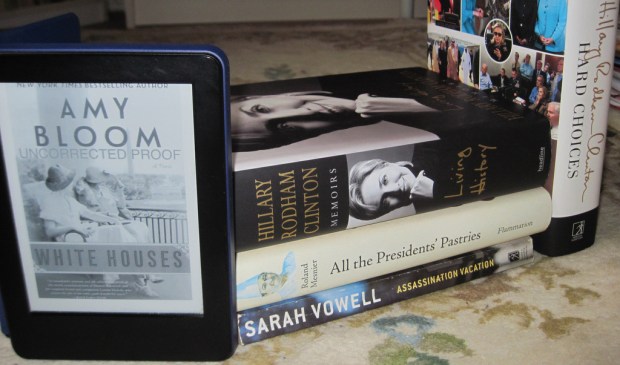
White Houses by Amy Bloom (2018)
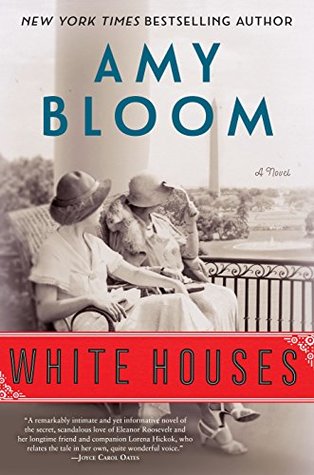 April 1945: Franklin D. Roosevelt is dead. His widow Eleanor goes to New York City to spend a long weekend with her lover, former White House reporter Lorena Hickok. Lorena, our feisty narrator, recalls her abusive upbringing in South Dakota, her early days as a reporter, and the flirtation that arose when she interviewed Eleanor about her governor husband’s presidential campaign. The open secret of FDR’s affair with his secretary, Missy LeHand, is contrasted with Eleanor and Lorena’s relationship – and with the situation of Eleanor’s cousin Parker Fiske, a closeted homosexual. Lorena’s voice is enjoyable, but I felt I gained no particular insight into Eleanor or Franklin Roosevelt. Bloom aims to reconcile Eleanor’s frumpy image with her passionate secret self, but for me that never fully happened. The most interesting scenes are from Lorena’s time working for a circus freak show on her way to Chicago (presumably completely made up). While Bloom had access to letters that passed between Lorena and Eleanor, she emphasizes that this is a work of fiction.
My rating:
[Neat little connection: As First Lady, Hillary Clinton felt a kinship with Eleanor Roosevelt, and visited her portrait in the Oval Office to have imaginary chats and buck up her courage. These are described in a chapter of Living History entitled “Conversations with Eleanor.”]
Living History: Memoirs by Hillary Rodham Clinton (2003)
 I may be showing my political colors with this choice. However, in my defense, I have also read memoirs by Laura Bush and Sarah Palin, both of which, like this, are rumored to have been ghostwritten. (In her acknowledgments Clinton mentions Lissa Muscatine as “Responsible for many of the words in my speeches as First Lady and in this book”.) The first few chapters, about Clinton’s early years and college days, are rather plodding, but once she meets Bill at Yale Law School in 1971 things pick up, and I found the whole informative and diverting. I hadn’t realized that Clinton was an accomplished lawyer in her own right, focusing on women’s and children’s rights and family law. She was also a researcher on the Nixon impeachment case – an experience that, ironically, came in handy three decades later.
Clinton is honest and self-deprecating about her image issues. She was a whole new breed of First Lady, chairing the committee for Bill’s health care bill and making state visits. Her Beijing speech is still a touchstone for international feminism. Inevitably, a good chunk of the book is devoted to the investigations that plagued the Clinton administration. The eight years of Bill’s presidency are very much the focus; the book ends with them saying a final farewell to the White House. By this point, though, Clinton had been elected a New York senator, so she left for a new mission. I picked up a secondhand copy of Hard Choices the other week and look forward to learning more about her time as a senator and then Secretary of State.
My rating:
[Neat little connection: Roland Mesnier and his sweet creations get two mentions in Living History: the giant carrot cake he made for Chelsea’s sixteenth birthday; and the book-shaped cake for her graduation.]
All the Presidents’ Pastries: Twenty-Five Years in the White House, A Memoir by Roland Mesnier with Christian Malard [trans. from French by Louise Rogers Lalaurie] (2007)
 Roland Mesnier was the White House pastry chef for 25 years. After training in France and Germany, he worked at the Savoy in London and then as head pastry chef at the Princess Hotel, Bermuda – all by age 20. His specialty was intricate sugar sculptures, for which he won international competitions. He also worked in Paris and Virginia before hearing that Rosalynn Carter was looking for a White House pastry chef. Fast-tracked to U.S. citizenship, he made elaborate desserts for presidential family occasions and state dinners. The latter were always based on research into a particular country’s culture, products, taste and traditions. These impressive constructions included molded sorbets, petits fours and marzipan figures, and were often feats of logistics and timing. The memoir is undoubtedly more interesting for what it tells about the First Families (Nancy Reagan was a hard taskmistress; Barbara Bush was his personal #1) than for its author’s life. An appendix includes 15 fairly simple (i.e., replicable at home!) recipes from his 2004 cookbook Dessert University, such as pecan bourbon pie and baked apple soufflé.
 (I must also marvel at the journey that this particular book has been on. It is signed by the English translator and inscribed to her mother: “Mum, with all love, Louise – 8 May 2007”. This hardback copy somehow made it all the way to the £1 bargain shelves outside the upper level of the castle in Hay-on-Wye, Wales, where my husband snatched it up last spring.)
My rating:
Assassination Vacation by Sarah Vowell (2005)
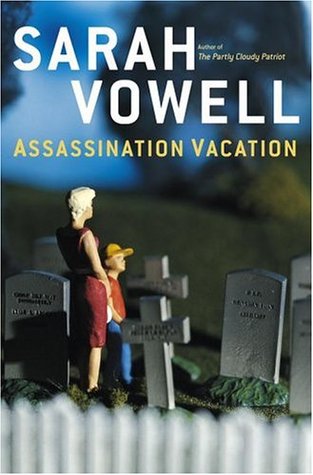 U.S. history has never been so much fun! There’s nothing Sarah Vowell loves more than a presidential plaque, monument, home or grave, and her enthusiasm is infectious. Over half of this book is about Abraham Lincoln’s assassination; the rest goes to those of James Garfield and William McKinley (attempts on T. Roosevelt and Reagan get a brief mention, but she pretty much avoids JFK – presumably because that would fill a book of its own). If all you remember about these last two assassins is that one was a disgruntled civil servant and the other was an anarchist with a funny name, let Vowell enlighten you with her mixture of travel and trivia. She follows John Wilkes Booth’s escape route from the nation’s capital, traces Charles Guiteau back to upstate New York’s Oneida community, and sympathizes with Leon Czolgosz’s hard early life. The book came out in 2005, and what with Vowell’s outrage over the Dubya administration, it does feel a little dated. But if the rest of her books are this nerdy-cool, I’ll be reading them all.
My rating:
What’s on your presidential reading list?
Review: Salt Creek by Lucy Treloar
Salt Creek is one of the very best works of historical fiction I’ve read. All the harder, then, to believe that it’s Lucy Treloar’s debut novel. Since its initial release in Australia in 2015, it has gone on to be shortlisted for the Walter Scott Prize for historical fiction and the Miles Franklin Award for Australian novels. We have Claire McAlpine of Word by Word to thank for helping this book find a publisher in the UK. I can particularly recommend it to fans of The Essex Serpent and English Passengers, and there are also resonances with Rebecca Winterer’s Australia-set The Singing Ship.
 Hester Finch is looking back from the 1870s – when she is a widowed teacher settled in England – to the eight ill-fated years her family spent at Salt Creek, a small (fictional) outpost in South Australia, in the 1850s–60s. Her luckless father tried whaling in Adelaide before turning to cheese-making as his next far-fetched money-making venture. From Quaker stock, Papa believed the natives should be well treated and even all but adopted an aboriginal boy named Tully, getting him to bathe and wear clothes and educating him alongside his seven children. However, as Hester hints starting early on in the novel, having a white family monopolizing resources put an impossible strain on relations with the natives.
It seems an inevitable irony of reviewing – or maybe it’s just me? – that the books you love the most are the hardest to write about. However can I do this book justice? I wonder about lots of 5-star books. It’s easier to put together a review when you have some mixture of positive and negative things to say, but I have no faults to find with Salt Creek. It flawlessly evokes its time period and somewhat bleak setting. Hester’s narration is as lyrical as it is nostalgic and matter-of-fact, and I sympathized with her desperation not to be drawn into a Victorian housewife’s cycle of endless pregnancies. The characterization is spot on, especially for figures like Papa or Tully who could have easily been reduced to stereotypes.
Most of all, this is the piercing story of a clash of cultures and the secret prejudices that underpin our beliefs. You might think notions of dominion and looking after ‘poor natives’ are outdated, but just listen in to what particular groups have to say about the environment and intervention abroad and you’ll realize that this is as relevant as ever. Salt Creek comes with my highest recommendation.
Some favorite lines:
“Poor Papa. He pitted himself against the land, yet it was impervious to all his learning and effort and incantatory prayers. The land had its own drives and they ran against Papa’s, blunting all his purposes.”
“I would not have a baby or that would be my life. There would be another and another and nothing left of my self; my life being decided for me.”
“Memories are just the survivors of complete events and are not easy to interpret; in the recalling they can be used to create a story that is only partially true or not true at all.”
“It seemed as if every part of the lagoon had a name and a story and a meaning. The stories were all around us wherever we went. There was scarcely a place without one and it felt as if we were nothing but one more story inside this world and the stories were without number.”
“The longer I looked the more that impression of civilization seemed an illusion.”
With thanks to Gallic Books for the free copy for review.
My rating:
Love and Lust: Four Books for Valentine’s Day
Got any romantic plans for the morrow? I’ll be having my first of six evening yoga classes at our local Waitrose (was a more middle-class phrase ever written?!), but I’ve been promised a nice dinner with dessert on my return.
Like last year, I’ve been reading a few books with “love” in the title – plus one featuring “lust” this time – in advance of the day and can report back on what I’ve gleaned. Nothing particularly optimistic about marriage or true love, I’m afraid.

Lust in Translation: Infidelity from Tokyo to Tennessee by Pamela Druckerman (2007)
 Druckerman travels from France (where she lives) to the United States, Russia, Japan, South Africa, Indonesia and China, interviewing professionals and anonymous adulterers and pondering what makes people cheat and what difference country of origin makes. Boiling it down, people in poor countries, even in parts of Africa where AIDS is a huge threat, are more likely to have multiple sexual partners than those in wealthy countries. Statistically speaking, there’s also a slight bias towards adultery in warmer countries. However, some factors that you might expect to have a big effect on the adultery rate, like religiosity (e.g. America vs. France), actually hardly do. What does differ is the level of guilt experienced over infidelity and its concomitant offense, lying. In places like France and Japan she discovers more of a don’t-ask-don’t-tell attitude: as long as the straying partner is discreet enough not to be caught, the other turns a blind eye.
Travel-based quest narratives like this usually have a personal element that helps to anchor a book. The other direction Druckerman might have taken would be a straightforward academic study, which her journalistic tone wouldn’t suit. Because this book hovers between genres/levels of discourse, it didn’t quite work for me, but if you think you might find the subject matter interesting it’s at least worth skimming.
A representative line:
“The pursuit of happiness, or true love, is one of the most salient stories that Americans use to justify affairs and overcome their moral qualms about cheating.”
My rating:
Loving Frank by Nancy Horan (2007)
 Even if you don’t have any particular interest in architect Frank Lloyd Wright, this carefully crafted and lovingly written historical novel is well worth reading. Mamah (“May-muh”) Borthwick Cheney and her husband Edwin hired Wright to design their suburban Chicago home in 1903, and in 1907 she and Wright embarked on an affair. The novel covers roughly the next seven years of their lives, and is particularly illuminating about relationships, the rights of women and the morality code of the time. Through Mamah’s eyes Horan shows just why this affair was irresistible: “Frank Lloyd Wright was a life force. He seemed to fill whatever space he occupied with a pulsing energy that was spiritual, sexual, and intellectual all at once.” But in the eyes of the public, and of their families, it was a selfish choice that left her two children adrift. Beside Mamah, Catherine Wright was held up as a paragon of fidelity, waiting patiently for Frank to come back to her and their seven children.
If you think you are at all likely to read this book, DO NOT GOOGLE Mamah Borthwick Cheney, or Frank Lloyd Wright’s life in these years. I’m now keen to compare this with T.C. Boyle’s The Women, which is about Catherine, Mamah and two other important female figures in Frank Lloyd Wright’s life.
A representative passage:
“Does that mean I have to play this hand to the bitter end, full of regret? Knowing I might have had the happiest life imaginable with the one man I love more than any other I have ever known?”
My rating:
I Love Dick by Chris Kraus (1997)
 This is one of the stranger novels I’ve ever read. It’s December 1994 and failed filmmaker Chris Kraus, 39, and her husband, 56-year-old professor Sylvère Lotringer, spend a night at the home of Dick, one of his California colleagues, to mark the end of Sylvère’s sabbatical. When they wake up the next morning Dick is gone, but he’s made a huge impression on Chris. She decides she and Dick have had something like D.H. Lawrence’s ‘sex in the head’, and becomes obsessed with him. Chris and Sylvère address reams of letters and journal entries to Dick. Some they send and some they don’t; Dick is a total blank, which allows the couple to build fantasies around him. It’s a chance for Chris to reimagine a life that’s gotten away from her and regain her voice.
I preferred Part 1, which I found quite funny. Kraus lost me a bit in Part 2, with a trip to Guatemala plus random exhibits and performance art. I think the whole thing would have been more effective at novella length. But it’s intriguing how it blends fact and fiction (Dick Hebdige is a real person, and apparently not happy about the invasion of his privacy) and adapts the epistolary form. An afterword by Joan Hawkins notes the similarity to Dangerous Liaisons, in which a couple exchange letters about a seduction plot.
A representative passage:
“Dear Dick,
No woman is an island-ess. We fall in love in hope of anchoring ourselves to someone else, to keep from falling,
Love,
Chris”
My rating:
The Pursuit of Love by Nancy Mitford (1945)
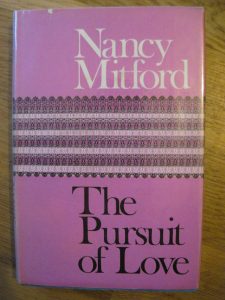 Last year I unwittingly read the 1949 sequel, Love in a Cold Climate, first. I rather enjoyed that one, but somehow wasn’t in the mood for Mitford this time around, and ended up just skimming this one. Once again Fanny traces the love life of one of her posh cousins. This time it’s Linda Radlett, whose two marriages – to a Conservative and a Communist – are doomed to failure. Then she finds her true love, too late. I liked the ball scene, and the image of Uncle Matthew using his bloodhounds to hunt down his children. Mitford mixes the lighthearted and the caustic in an amusing way. The last two pages of this novel turn particularly nasty, though, which made me wonder how people can call this a comfort read.
A representative passage:
“What we would never admit was the possibility of lovers after marriage. We were looking for real love, and that could only come once in a lifetime; it hurried to consecration, and thereafter never wavered. Husbands, we knew, were not always faithful, this we must be prepared for, we must understand and forgive.”
My rating:
Have you read anything love-ly lately?
A Publisher Party and a One-Man Play
I was a veritable social butterfly this past week: I went out two evenings in a row! (Believe me, that’s rare.) On Tuesday I met up with bloggers Annabel, Eric and Kim at the Faber Spring Party held at Crypt on the Green in London, and on Wednesday my husband and I attended a performance at the University of Reading of Michael Mears’s one-man play on the plight of Britain’s conscientious objectors during World War I, This Evil Thing.
Faber Spring Party
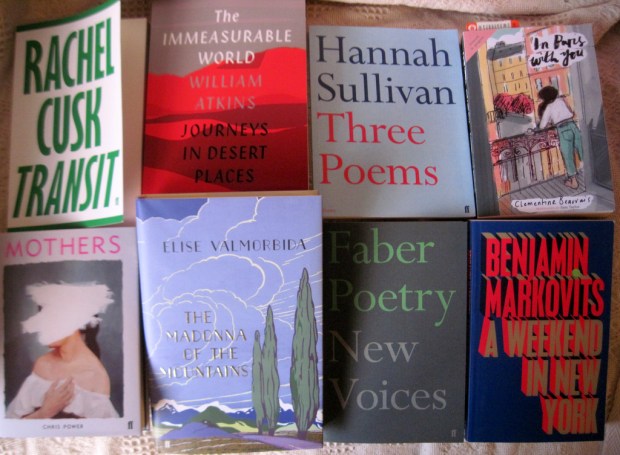
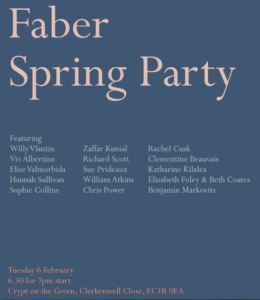 I’ve never been to an event quite like this. Publisher Faber & Faber, which will be celebrating its 90th birthday in 2019, previewed its major releases through to September. Most of the attendees seemed to be booksellers and publishing insiders. Drinks were on a buffet table at the back; books were on a buffet table along the side. Glass of champagne in hand, it was time to plunder the free books on offer. I ended up taking one of everything, with the exception of Rachel Cusk’s trilogy: I couldn’t make it through Outline and am not keen enough on her writing to get an advanced copy of Kudos, but figured I might give her another try with the middle book, Transit.

For the evening’s presentation, each featured author had a few minutes to introduce their new book and/or give a short reading.
Rachel Cusk opened the evening with a reading from Kudos. If you’re familiar with her recent work, you won’t be surprised at this synopsis: a man on a plane recounts having his dog put to sleep. (Out on May 3rd.)
William Atkins’s book on deserts, The Immeasurable World, is based on three years of travel and is, he is not ashamed to say, in the old-fashioned travel writing tradition. (Out on June 7th.)
Hannah Sullivan’s Three Poems is a hybrid work of poem-essays. #2 is more philosophical, she said; #3 is about her father’s death and her son’s birth. She read sonnet 3.21. (Out now.)
Clémentine Beauvais’s In Paris with You is a YA romance in free verse, loosely based on Eugene Onegin. I don’t know the source text but started this on the train ride home and it’s enjoyable thus far. I’m in awe at how translator Sam Taylor has taken the French of her Songe à la douceur and turned it into English poetry. (Out on June 7th.)
Chris Power’s Mothers is a book of linked short stories, three of which are about a character named Eva. He read a portion of a story about her having an encounter with an unpleasant man in Innsbruck. (Out on March 1st.)
Elise Valmorbida’s The Madonna of the Mountains, set in 1923–50, is a saga that resembles “an Italian Mother Courage,” she says. She read a scene in which a character comes across a madwoman. (Out on April 5th.)
Zaffar Kunial read the poem “Spark Hill” from his forthcoming collection Us. It’s about a childhood fight in the area of Birmingham where he grew up. He had a folder open in front of him but, impressively, recited the long poem completely from memory. (Out on July 5th.)
American novelist Benjamin Markovits was a professional basketball player in Germany for six months. Like the tennis-playing protagonist of his upcoming book, A Weekend in New York, he got tired of being measured. After 15 years, his hero is eager to escape a life of being constantly ranked. This is the first in a quartet of novels that inevitably invites comparison with John Updike’s “Rabbit” books. (Out on June 7th.)
I confess I didn’t previously know the name Viv Albertine; she was the guitarist for the female punk band The Slits, and To Throw Away Unopened is her second memoir. Albertine realized that it was her mother who had made her an angry rebel; the title is the label on a bag she found in her mother’s room after her death. (Out on April 5th.)
Sophie Collins incorporates hybrid forms in her poetry – what she calls “lyric essays.” The theme of her book Who Is Mary Sue? is perceptions of women’s writing (with “Mary Sue” as a metonym for the stereotypical good girl). She read from “Engine.” (Out now.)
Katharine Kilalea’s debut novel Ok, Mr Field is about an injured concert pianist who becomes obsessed with a house he buys in South Africa. (Out on June 7th.)
Elizabeth Foley and Beth Coates are the authors of two Homework for Grown-Ups books. Their new book, What Would Boudicca Do?, is about lessons we can draw from the women of history. For instance, the sampler booklet has pieces called “Dorothy Parker and Handling Jerks” and “Frida Kahlo and Finding Your Style.” There’s a heck of a lot of books like this out this year, though, and I’m not so sure this one will stand out. (Out on September 6th.)
Richard Scott read two amazingly intimate poems from his upcoming collection, Soho. One, “cover-boys,” was about top-shelf gay porn; the other was about mutilated sculptures of male bodies in the Athens archaeological museum. If you appreciated Andrew McMillan’s Physical, you need to get hold of this the second it comes out. I went back and read “cover-boys” in the sampler booklet and it wasn’t nearly as powerful as it was aloud; Scott’s reading really brought it to life, in contrast to some other authors’ dull delivery. (Out on April 5th.)
Sue Prideaux’s forthcoming biography of Friedrich Nietzsche is entitled I Am Dynamite! She encountered her subject when she wrote her first biography, of Edvard Munch. Although Nietzsche has been embraced by far-right groups in America, he was in fact against racism, nationalism, and anti-semitism, so he has important messages for us today. I’ll be keen to get hold of this one. (Out on September 6th.)
Guitar in hand, Willy Vlautin closed the evening with a performance of the title track from the soundtrack album to his fifth novel, Don’t Skip Out on Me – he was the singer in Portland, Oregon alt-country band Richmond Fontaine, which has recently stopped touring. He said the novel asks, “can you make the scars of broken people bearable?” (Out now.)

Now that I’ve got this terrific stack of books, wherever do I start?! I’m currently reading the Beauvais; from there I’ll focus on ones that have already been released, starting with Vlautin and the two poetry collections. The titles that aren’t out until June can probably wait – though it’s tempting to be one of the privileged few who get to read them nearly four months early. One Faber book per week should see me getting through all these by the final release date.
This Evil Thing
Michael Mears plays about 50 different characters in this one-man production. He’s an actor and pacifist who has written a number of solo pieces over 20 years. In this commemorative year of the end of the First World War, he knew we would hear a lot about battles, soldiers, and their families back home. But conscientious objectors weren’t likely to be remembered: theirs is a “story that’s rarely told,” he realized. This Evil Thing sets out to correct that omission. The title phrase refers not to war in general but specifically to conscription.
 The two main characters Mears keeps coming back to in the course of the play are Bert Brocklesby, a Yorkshire preacher, and philosopher Bertrand Russell. Brocklesby refused to fight and, when he and other COs were shipped off to France anyway, resisted doing any work that supported the war effort, even peeling the potatoes that would be fed to soldiers. He and his fellow COs were beaten, placed in solitary confinement, and threatened with execution. Meanwhile, Russell and others in the No-Conscription Fellowship fought for their rights back in London. There’s a wonderful scene in the play where Russell, clad in nothing but a towel after a skinny dip, pleads with Prime Minister Asquith.
As in solo shows I’ve seen before (e.g. A Christmas Carol with Patrick Stewart), Mears had to find subtle ways to distinguish between characters: he used a myriad different voices, including regional accents; he quickly donned a jacket, hat, or pair of glasses. Russell was identified by his ever-present pipe. The most challenging scene, Mears said in the Q&A at the end, was one with four characters in a French street café.
Mears reveals during the play that his grandfather fought in WWI and his father in WWII, but he has never had to put his own pacifist views to the test. What about Hitler? people always ask. Mears is honest and humble enough to admit that he doesn’t know what he would have done had he been called on to fight Hitler, or had he faced persecution as a CO in WWI. Ultimately, what Mears hopes audiences take from his play, which won acclaim at the Edinburgh Festival Fringe, is that “this is not an irrelevant piece of history.” Standing up for what you believe in, especially if it goes against the spirit of the times, is always valuable.
Thoughts on the Wellcome Book Prize Longlist
The 2018 Wellcome Book Prize longlist is here! From the prize’s website, you can click on any of these 12 books’ covers, titles or authors to get more information about them.

Some initial thoughts:
I correctly predicted three of the entries (or 25%) in yesterday’s post: In Pursuit of Memory by Joseph Jebelli, With the End in Mind by Kathryn Mannix, and I Am, I Am, I Am by Maggie O’Farrell. I’m pretty shocked to not see Fragile Lives or Admissions on the list.
Of the remainder, I’ve already read one (Midwinter Break) and DNFed another (Stay with Me). Midwinter Break didn’t immediately suggest itself to me for this prize because its themes of ageing and alcoholism are the background to a story about the disintegration of a long marriage. Nonetheless, it’s a lovely book that hasn’t gotten as much attention as it deserves – it was on my runners-up list from last year – so I’m delighted to see it nominated. Stay with Me was also on the Women’s Prize shortlist; it appears here for its infertility theme, but I wouldn’t attempt it again unless it made the Wellcome shortlist.

As to the rest:
- I’m annoyed with myself for not remembering The Butchering Art, which I have on my Kindle. Sometimes I assume that books I’ve gotten from NetGalley are USA-only and don’t check for a UK publisher. I plan to read this and With the End in Mind (also on my Kindle) soon.
- I already knew about and was interested in Mayhem and The White Book.
- Of the ones I didn’t know about, Plot 29 appeals to me the most. I’m off to get it from the library this very afternoon, in fact. Its health theme seems quite subtle: it’s about a devoted gardener ‘digging’ into his past in an abusive family and foster care. The Guardian review describes it thus: “Like Helen Macdonald’s H Is for Hawk, this is a profoundly moving account of mental trauma told through the author’s encounters with nature. Jenkins sees his garden as a place where a person can try to escape from, and atone for, the darkness of human existence.” This is the great thing about prize lists: they can introduce you to fascinating books you might never have heard of otherwise. Even if it’s just one book that takes your fancy, who knows? It might end up being a favorite.
- While I’m not immediately drawn to the books on the history of vaccines, the evolution of human behavior, and transhumanism, I will certainly be glad to read them if they make the shortlist.
Some statistics on this year’s longlist, courtesy of the press release I was sent by e-mail:
- Three novels, three memoirs, and six nonfiction titles
- Five debut authors
- Three titles from independent publishers (Canongate and Granta/Portobello Books)
- The authors are from the UK, Ireland, USA, Nigeria, Canada, and – making their first appearance – Sweden (Sigrid Rausing) and South Korea (Han Kang)
Chair of judges Edmund de Waal writes: “The Wellcome Book Prize is unique in its reach across genres, and so the range of books that we have considered has been exhilarating in its extent and ambition. This is a remarkable time for readers, with a great flourishing of writing on ideas around science, medicine and health, lives and deaths, histories and futures. After passionate discussions we have arrived at our longlist for the Wellcome Book Prize 2018 and are proud to be part of this process of bringing to a wider public these 12 tremendous books that have moved, intrigued and inspired us. All of them bring something new to our understanding of what it is to be human.”
The shortlist is announced on Tuesday, March 20th, and the winner will be revealed on Monday, April 30th.
Are there any books on here that you’d like to read?
My 2018 Wellcome Book Prize Wish List
Tomorrow the longlist for the 2018 Wellcome Book Prize will be announced. This year’s judging panel is chaired by Edmund de Waal, author of The Hare with Amber Eyes. I hope to once again shadow the shortlist along with a few fellow book bloggers. I don’t feel like I’ve read all that many books that are eligible (i.e., released in the UK in 2017, and on a medical theme), but here are some that I would love to see make the list. I link to all those I’ve already featured here, and give review extracts for the books I haven’t already mentioned.

 I Found My Tribe by Ruth Fitzmaurice
- In Pursuit of Memory: The Fight against Alzheimer’s by Joseph Jebelli
- Goodbye, Vitamin by Rachel Khong
- In Every Moment We Are Still Alive by Tom Malmquist
- Admissions: A Life in Brain Surgery by Henry Marsh
 I Am, I Am, I Am: Seventeen Brushes with Death by Maggie O’Farrell: O’Farrell captures fragments of her life through essays on life-threatening illnesses and other narrow escapes she’s experienced. The pieces aren’t in chronological order and aren’t intended to be comprehensive. Instead, they crystallize the fear and pain of particular moments in time, and are rendered with the detail you’d expect from her novels. She’s been mugged at machete point, nearly drowned several times, had a risky first labor, and was almost the victim of a serial killer. (My life feels awfully uneventful by comparison!) But the best section of the book is its final quarter: an essay about her childhood encephalitis and its lasting effects, followed by another about her daughter’s extreme allergies.
- The Smell of Fresh Rain: A Journey into the Sense of Smell by Barney Shaw
- Fragile Lives: A Heart Surgeon’s Stories of Life and Death on the Operating Table by Stephen Westaby
It’s also possible that we could see these make the longlist:
 History of Wolves by Emily Fridlund: Fridlund’s Minnesota-set debut novel is haunted by a dead child. From the second page readers know four-year-old Paul is dead; a trial is also mentioned early on, but not until halfway does Madeline Furston divulge how her charge died. This becomes a familiar narrative pattern: careful withholding followed by tossed-off revelations that muddy the question of complicity. The novel’s simplicity is deceptive; it’s not merely a slow-building coming-of-age story with Paul’s untimely death at its climax. For after a first part entitled “Science”, there’s still half the book to go – a second section of equal length, somewhat ironically labeled “Health”. (Reviewed for the TLS.)
- Hair Everywhere by Tea Tulić
 Modern Death: How Medicine Changed the End of Life by Haider Warraich: A learned but engaging book that intersperses science, history, medicine and personal stories. The first half is about death as a medical reality, while the second focuses on social aspects of death: religious beliefs, the burden on families and other caregivers, the debate over euthanasia and physician-assisted suicide, and the pros and cons of using social media to share one’s journey towards death. (See my full Nudge review.)
Of 2017’s medical titles that I haven’t read, I would have especially liked to have gotten to:
- Sound: A Story of Hearing Lost and Found by Bella Bathurst
 This Is Going to Hurt: Secret Diaries of a Junior Doctor by Adam Kay
- With the End in Mind: Dying, Death, and Wisdom in an Age of Denial by Kathryn Mannix [I have this one on my Kindle from NetGalley]
- Into the Grey Zone: A Neuroscientist Explores the Border between Life and Death by Adrian Owen
- Patient H69: The Story of My Second Sight by Vanessa Potter
We are also likely to see a repeat appearance from the winner of the 2017 Royal Society Science Book Prize, Testosterone Rex: Myths of Sex, Science, and Society by Cordelia Fine.
Other relevant books I read last year that have not (yet?) been released in the UK:
 The Education of a Coroner: Lessons in Investigating Death by John Bateson
- The Family Gene: A Mission to Turn My Deadly Inheritance into a Hopeful Future by Joselin Linder
- Last Things: A Graphic Memoir of Loss and Love by Marissa Moss
- Love and Laughter in the Time of Chemotherapy by Manjusha Pawagi
 No Apparent Distress: A Doctor’s Coming-of-Age on the Front Lines of American Medicine by Rachel Pearson: Pearson describes her Texas upbringing and the many different hands-on stages involved in her training: a prison hospital, gynecology, general surgery, rural family medicine, neurology, dermatology. Each comes with memorable stories, but it’s her experience at St. Vincent’s Student-Run Free Clinic on Galveston Island that stands out most. Pearson speaks out boldly about the divide between rich and poor Americans (often mirrored by the racial gap) in terms of what medical care they can get. A clear-eyed insider’s glimpse into American health care.
- The Bright Hour: A Memoir of Living and Dying by Nina Riggs
 The Tincture of Time: A Memoir of (Medical) Uncertainty by Elizabeth L. Silver: At the age of six weeks, Silver’s daughter suffered a massive brain bleed for no reason that doctors could ever determine. Thanks to the brain’s plasticity, especially in infants, the bleed was reabsorbed and Abby has developed normally, although the worry never goes away. Alongside the narrative of Abby’s baffling medical crisis, Silver tells of other health experiences in her family. An interesting exploration of the things we can’t control and how we get beyond notions of guilt and blame to accept that time may be the only healer.
Do you follow the Wellcome Book Prize? Have you read any books that might be eligible?
Five Perfect Winter Reads
When possible I enjoy reading with the seasons. As the holidays approached last year I picked out a pile of wintry reads that would see me through the dark, cold days of January. I’ve had a chance to read five of them so far, and give review extracts below. I may report back later on in the winter about a few books I plan to read with “snow” in the title.

In the Grip of Winter by Colin Dann
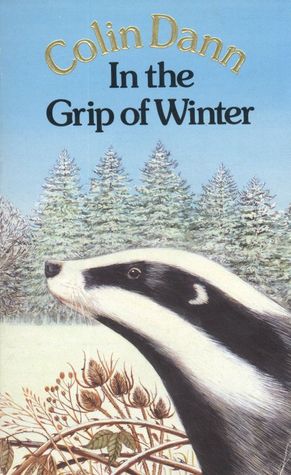 In this second book of the Farthing Wood series, the animals endure a harsh winter in their new home, the White Deer Park. When Badger falls down a slope and injures his leg, he’s nursed back to health at the Warden’s cottage, where Ginger Cat tempts him to join in a life of comfort and plenty. Meanwhile, Fox, Tawny Owl and the others are near starvation, and resort to leaving the park and stealing food from farms and rubbish bins. They have to band together and use their cunning to survive. This was a sweet book that reminded me of my childhood love of anthropomorphized animal stories (like Watership Down and the Redwall series). I doubt I’ll read another from the series, but this was a quaint read for the season.
My husband received this book for free from his school for some reason. Even early on his tastes turned towards wildlife. [One annoyance: the author always referred to Badger’s “set” instead of his “sett”; although it appears this may actually be a permissible variant, it wasn’t cool with me!]


Favorite wintry passage:
“‘Every winter is hard for some,’ Badger answered. ‘The weakest among us always suffer the most. The small creatures: the mice, the shrews, the voles and, particularly, the small birds – every winter takes its toll [on] them. But yes – I sense that this winter will be one to reckon with. There’s something in that wind…’”
My rating:
This Cold Heaven: Seven Seasons in Greenland by Gretel Ehrlich
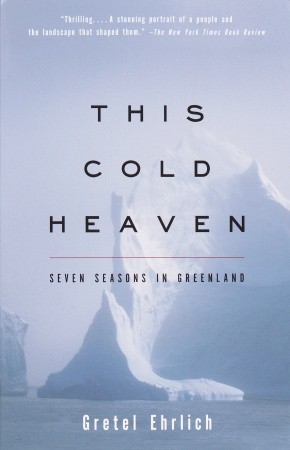 Once a year or so I encounter a book that’s so flawlessly written you could pick out just about any sentence and marvel at its construction. That’s certainly the case here. I never want to go to Greenland; English winters are quite dark and cold enough for me, and I don’t know if I could stomach seal meat at all, let alone for most meals and often raw. But that’s okay: I don’t need to book a flight to Qaanaaq, because through reading this I’ve already been in Greenland in every season, and I thoroughly enjoyed my armchair trek. Impressively, Ehrlich is always describing the same sorts of scenery, and yet every time finds a fresh way to write about ice and sun glare and frigid temperatures. I’ll be looking into her other books for sure.
Favorite wintry passage:
“The ice cap itself was a siren singing me back to Greenland, its walls of blue sapphire and sheer immensity always beguiling. Part jewel, part eye, part lighthouse, part recumbent monolith, the ice is a bright spot on the upper tier of the globe where the world’s purse strings have been pulled tight, nudging the tops of three continents together. Summers, it burns in the sun, and in the dark it hoards moonlight.”
My rating:
Further reading on Greenland: A Wilder Time: Notes from a Geologist at the Edge of the Greenland Ice by William E. Glassley (see my Foreword review) and The Prophets of Eternal Fjord by Kim Leine, an epic novel about an unconventional priest, set in late-eighteenth-century Denmark and Greenland (see my Nudge review). Also Sinéad Morrissey’s multi-part poem “Whitelessness.” You can read the first stanza of it here.
The Short Day Dying by Peter Hobbs
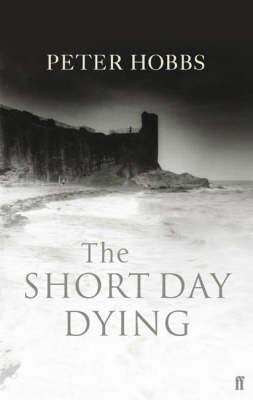 This short novel from 2005 deserves to be better known. It reminded me of Days Without End and On the Black Hill, but most of all of Francis Kilvert’s diary, perhaps as voiced by a rustic from Poldark. We journey through 1870 with Charles Wenmoth, a twenty-seven-year-old blacksmith’s apprentice and Methodist lay preacher in Cornwall mining country. Very little happens; the focus is on atmosphere and voice. The major struggle is with his melancholy spirit, which causes him to doubt his salvation. As winter circles round, the days grow shorter just as he senses life growing shorter. The short chapters are like undated diary entries (apparently based on the author’s great-great-grandfather’s); the sentences are almost completely unpunctuated, which at first had me twitching for my pencil to add commas to the run-on sentences, but eventually I gave myself over to the flow.
Favorite wintry passage:
“It is a shame we cannot stay children for ever and remain blind to the slow death of the land. How different it will all be in a few months the bare trees revealed as dark gnarled bodies. Something inside them though lives through the yearly famine and they always find new colour. I trust it is the same for us all.”
My rating:
Winter by Karl Ove Knausgaard
 This is my favorite of the three Knausgaard books I’ve read so far, and miles better than his Autumn. These short essays successfully evoke the sensations of winter and the conflicting emotions elicited by family life and childhood memories. The series is, loosely speaking, a set of instruction manuals for his unborn daughter, who is born a month premature in the course of this volume. So in the first book he starts with the basics of bodily existence – orifices, bodily fluids and clothing – and now he’s moving on to slightly more advanced but still everyday things she’ll encounter, like coins, stuffed animals, a messy house, toothbrushes, and the moon. I’ll see out this series, and see afterwards if I have the nerve to return to My Struggle.
Favorite wintry passage:
“winter not only muffles some sounds and intensifies others, it also has sounds that are entirely its own, unique to the season, and some of them are among the most beautiful of all. The low boom of ice-covered waters as they freeze, for instance, which can be heard on perfectly clear days or nights when the cold deepens, and which has something menacing or mighty about it, since it isn’t connected to an visible movement”
My rating:
Available Light by Marge Piercy
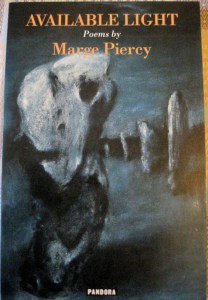 Many poetry volumes get a middling rating from me because some of the poems are memorable but others do nothing for me. This is on the longer side for a collection at 120+ pages, but only a handful of its poems fell flat. The subjects are diverse: travels in Europe (my cover depicts the Avebury stone circle in the gloom), menstruation, identifying as a Jew as well as a feminist, scattering her father’s ashes, the stresses of daily life, and being in love. The title poem, which appears first, has a slightly melancholy tone with its focus on the short days of winter, but the poet defiantly asserts meaning despite the mood: “Even the dead of winter: it seethes with more / than I can ever live to name and speak.” Piercy was a great discovery, and I’ll be trying lots more of her books from various genres.
Favorite wintry passage:
(from “Available light”)
In winter the light is red and short.
The sun hangs its wizened rosehip in the oaks.
By midafternoon night is folding in.
The ground is locked against us like a door.
Yet faces shine so the eyes stretch for them
and tracks in the snow are etched, calligraphy
My rating:
(And one book that didn’t quite work for me; I ended up abandoning it at 14%.
 The Bear and the Nightingale by Katherine Arden: Some striking turns of phrase, an enchanting wintry atmosphere … but a little Disney-fied for me. I got this free for Kindle so may come back to it at some point.
Favorite wintry passage:
“The years slipped by like leaves. …The clouds lay like wet wool above the trees.”)
Have you read any wintry books this year?
Today Is World Read Aloud Day
 An unprecedented second post in one day for me. I recently learned from Ron Charles’s article in the Washington Post that today, February 1st, is World Read Aloud Day, an annual celebration hosted by LitWorld to draw attention to ongoing literacy challenges. I mentioned in my write-up of my bibliotherapy experience that one recommendation I was given was to try reading aloud with my husband. To that end, I got hold of the three suggested books below and we’ve dipped into all of them on recent evenings. At the moment we’re managing to do a bit of reading aloud every few days, which isn’t so bad for a start.
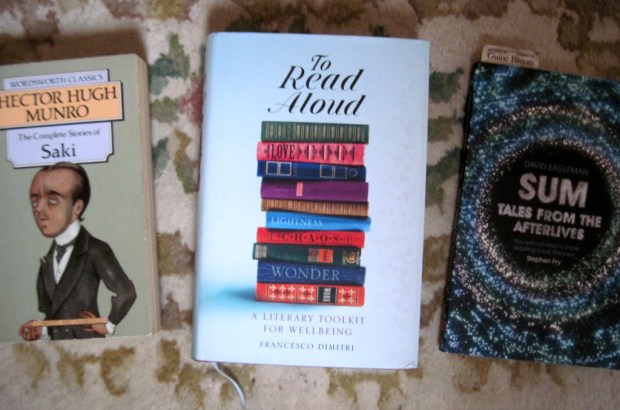
Dimitri’s book includes extracts by everyone from Neil Gaiman to Robert Macfarlane, all arranged under thematic headings. A special index at the back of the book orders the pieces according to how long they are estimated to take to read, ranging from three minutes to more like 15. So far we’ve tackled a handful of the shorter pieces; any of the longer ones we’ll probably split and each take half.
David Eagleman’s flash fiction collection is billed as being about the afterlife. The first story was a laugh-out-loud inventory of all the time the average human spends on different activities. Thirty-three hours sleeping versus 14 minutes experiencing pure joy. That kind of thing. I look forward to the rest.
Ella Berthoud particularly recommended Saki’s short story “Tobermory” since it’s about a talking cat (but is rather dark!), so we started with that one. Many of the others are only a couple of small-print pages. Have you read any Saki? What can you recommend?
Apart from classroom experiences, the last time I remember doing concerted reading aloud was with my mother when I was in my early teens. After I got home from school in the afternoons we’d convene on her bed to read Mark Twain short stories like “The Celebrated Jumping Frog of Calaveras County.”
 Bookish Beck = Rebecca Foster. American transplant to England. Freelance proofreader and book reviewer.
 Bookish Beck