My Patchy Experience with Book Clubs
I know that a number of you have long-term, faithful book clubs. Boy, am I envious! You might find it surprising that I’ve only ever been in one traditional book club, and it wasn’t a resounding success. Partway through my time working for King’s College, London, an acquaintance from another library branch started the club. A group of five to eight of us from Library Services aimed to meet after work one evening a month at a Southbank venue or a staff room to discuss our latest pick. By poring over old e-mails and my Goodreads library, I’ve managed to remember 10 of the books we read between November 2011 and June 2013:
- Do Androids Dream of Electric Sheep?, Philip K. Dick [classic science fiction]
- The Little Shadows, Marina Endicott [Canadian historical fiction]
- A Spot of Bother, Mark Haddon [contemporary fiction]
- The Talented Mr. Ripley, Patricia Highsmith [classic suspense]
- The Vintner’s Luck, Elizabeth Knox [bizarre historical fiction/magic realism]
- What Was Lost, Catherine O’Flynn [contemporary fiction]
- Franny and Zooey, J.D. Salinger [classic short fiction]
- The Rabbi’s Cat, Joann Sfar [graphic novel in translation]
- Girl Meets Boy, Ali Smith [an update of Greek myth]
- Angel, Elizabeth Taylor [an obscure English classic]
That may well be the complete list. Although I was a member for 20 months until I quit to go freelance, we often only managed to meet every other month because we couldn’t find a mutually convenient free evening or no one had read the book in time. I was consistently frustrated that – even when our selections were only about 200 pages long – I was often one of the only people to have read the whole book.
Overall, the quality of books we chose struck me as mediocre: I rated half of these books 2 stars, and the rest 3 stars. (I think I was a harsher rater then, but it’s not a good sign, is it?) Perhaps this is part of the inevitable compromising that goes with book clubs, though: You humor other people in their choices and hope they’ll be kind about yours? My suggestion, for the record, was the pretty dismal Little Shadows, for which I got a free set of book club copies to review for Booktime magazine. But I also voted in favor of most of the above list.
Looking back, I am at least impressed by how varied our selections were. People were interested in trying out different genres, so we ranged from historical fiction to sci-fi, and even managed a graphic novel. But when we did get together for discussion there was far too much gossipy chat about work, and when we finally got around to the book itself the examination rarely went deeper than “I liked it” or “I hated all the characters.”
If it was profound analysis I was after, I got that during the years I volunteered at Greenbelt, an annual summer arts festival with a progressive Christian slant. I eagerly read the eclectic set of three books the literature coordinator chose for book club meetings in 2010 – Star of the Morning: The Extraordinary Life of Lady Hester Stanhope by Kirsten Ellis, The First Person and Other Stories by Ali Smith, and The Bridge of San Luis Rey by Thornton Wilder – and then as a literature volunteer for the next three years I read and prepared copious notes and questions about our festival “Big Read.” We did Exile by Richard North Patterson in 2011, Dark Eden by Chris Beckett in 2012 and So Many Ways to Begin by Chris Beckett in 2013, and each time I offered to chair the book club meetings.
Unfortunately, due at least in part to logistical considerations, these were run in the way many festival events are: a panel of two to five talking heads with microphones was at the front of the tent, sometimes on a raised dais, while the audience of whatever size sat towards the back. This created a disconnect between the “experts” and the participants, and with the exception of the McGregor meeting I don’t recall much audience input. I’ve mostly blanked out the events – as I tend to for anything that entails public speaking and nervous preparation for something you can’t control – but I was pleased to be involved and I should probably make more of this on my CV. It wasn’t your average book club setting, that’s for sure.
In recent years the closest thing I’ve had to a book club has been online buddy reading. The shadow panels for the Wellcome Book Prize and Sunday Times Young Writer of the Year Award fall into this category, as do online readalongs I’ve done for several Iris Murdoch novels and for C.S. Lewis’s Mere Christianity with various female family members. A few of us book bloggers chatted about Andrea Levy’s Small Island in an online document earlier this year, and my mom and I e-mailed back and forth while reading W. Somerset Maugham’s The Painted Veil in May. I’m also doing my last three of the #20BooksofSummer as online buddy reads, checking in occasionally on Twitter.
Of course, there are some inherent limitations to this kind of discussion – people read at different paces and don’t want to spoil the plot for others, and at some point the back-and-forth fizzles out – but it’s always been easier for me to organize my thoughts in writing, so I likely feel more comfortable contributing than I might in an in-person meeting.
This is all context for my decision to join my neighborhood book club next month. The club arose some months back out of our community’s Facebook group, a helpful resource run by a go-getting lady a few doors down from us. So far it’s turning out to be a small group of thirty- and fortysomething women who alternate meetings at each other’s houses, and the name they’ve chosen gives an idea of the tone: “Books, Booze and Banter.”
I made the mistake of not getting involved right at the start; I wanted to hang back and see what kind of books they’d choose. This means I wasn’t part of the early process of putting titles in a hat, so I’ve looked on snobbishly for several months as they lurched between crime and women’s fiction, genres I generally avoid. (Still, there were actually a couple books I might have joined them for had I not been in America and had they been readily available at the public library.) For many people a book club selection will be the only book they get through that month, so I can understand how they’d want it to be something ‘readable’ that they’d be happy to pick up anyway. Even though statistically I read 27 books a month, I’m still jealously protective of my reading time; I want everything I read to be worthwhile.
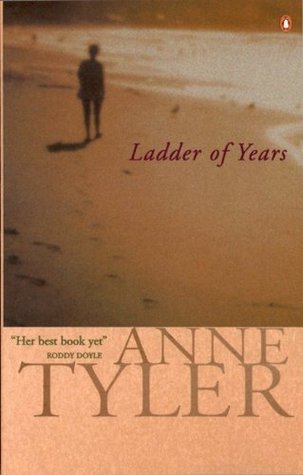 So for September I managed to steer the group away from a poorly received historical novel of over 400 pages and the new Joël Dicker and onto Ladder of Years by Anne Tyler, which the bookstore chain Waterstones has been promoting heavily as one of their books of the month. I already had a charity shop copy in hand and the others liked the sound of it, so we’re all set for September 12th! Future months’ literary fiction choices look promising, too, so provided I enjoy the discussion and the camaraderie I plan to stick with it: a backlist Pat Barker novel I’ve not read, and Kirsty Logan and Jonathan Coe novels I’ve read before and won’t reread but will remind myself about briefly before the meetings.
I’m out of practice with this book club thing. My mother tells me that I have a lot to contribute but that I must also be open to what I’ll learn from other people – even if I don’t expect to. So I don’t want to set myself up as some kind of expert. In fact, I probably won’t even mention that I’m a freelance book reviewer and book blogger. Mostly I’m hoping to find some friendly faces around the neighborhood, because even though we’ve lived here just over two years I still only know a handful of names and keep myself to myself as I work from home. Even if I have to read books I wouldn’t normally, it’ll be worth it to meet more people.
What has your experience with book clubs (in person and online) been?
#16–17: The Life and Loves of Lena Gaunt & The Invisible Bridge
I’m coming towards the close of my 20 Books of Summer challenge. Now, I’ve done plenty of substituting – some of my choices from early in the summer will have to spill over into the autumn (for instance, I’m reading the May Sarton biography slowly and carefully so am unlikely to finish it before early September) or simply wait for another time – but in the end I will have read 20+ books I own in print by women authors. (Ongoing/still to come are a few buddy reads: Half of a Yellow Sun by Chimamanda Ngozi Adichie with Anna Caig; Late Nights on Air by Elizabeth Hay with Naomi of Consumed by Ink and Penny of Literary Hoarders; and West with the Night by Beryl Markham with Laila of Big Reading Life.)
The two #20Booksof Summer I finished most recently have been the best so far. I’d heard great things about these debut novels but let years go by before getting hold of them, and then months more before picking them up. Though one is more than twice the length of the other, they are both examples of large-scale storytelling at its best: we as readers are privy to the sweep of a whole life, and get to know the protagonists so well that we ache for their sorrow. What might have helped the authors tap into the emotional power of their stories is that both drew on family history, to different extents, when creating the characters and incidents.
The Life and Loves of Lena Gaunt by Tracy Farr (2013)
 Lena Gaunt: early theremin player, grande dame of electronic music, and opium addict. When we meet our 81-year-old narrator, she’s just performed at the 1991 Transformer Festival and has caught the attention of a younger acolyte who wants to come interview her at home near Perth, Australia for a documentary film – a setup that reminded me a bit of May Sarton’s Mrs. Stevens Hears the Mermaids Singing. It’s pretty jolting the first time we see Lena smoke, but as her life story unfolds it becomes clear that it’s been full of major losses, some nearly unbearable in their cruelty, so it’s no surprise that she would wish to forget.
Though Lena bridles at Mo’s many probing questions, she realizes this may be her last chance to have her say and starts typing up a record of her later years to add to a sheaf of autobiographical stories she wrote earlier in life. These are interspersed with the present action to create a vivid collage of Lena’s life: growing up with a pet monkey in Singapore, moving to New Zealand with her lover, frequenting jazz clubs in Paris, and splitting her time between teaching music in England and performing in New York City.
With perfect pitch and recall, young Lena moved easily from the piano to the cello to the theremin. I loved how Farr evokes the strangeness and energy of theremin music, and how sound waves find a metaphorical echo in the ocean’s waves – swimming is Lena’s other great passion. Life has been an overwhelming force from which she’s only wrested fleeting happiness, and there’s a quiet, melancholic dignity to her voice. This was nominated for several prizes in Australia, where Farr is from, but has been unfairly overlooked elsewhere.
Favorite lines:
“I once again wring magic from the wires by simply plucking and stroking my fingers in the aether.”
“I felt the rush of the electrical field through my body. I felt like a god. I felt like a queen. I felt like a conqueror. And I wanted to play it forever.”
“All of the stories of my life have begun and ended with the ocean.”
My rating: 
The Life and Loves of Lena Gaunt was published in the UK by Aardvark Bureau in 2016. My thanks to the publisher for a free copy for review.
The Invisible Bridge by Julie Orringer (2010)
 It’s all too easy to burn out on World War II narratives these days, but this is among the very best I’ve read. It bears similarities to other war sagas such as Birdsong and All the Light We Cannot See, but the focus on the Hungarian Jewish experience was new for me. Although there are brief glimpses backwards and forwards, most of the 750-page book is set during the years 1937–45, as Andras Lévi travels from Budapest to Paris to study architecture, falls in love with an older woman who runs a ballet school, and – along with his parents, brothers, and friends – has to adjust to the increasingly strict constraints on Jews across Europe.
A story of survival against all the odds, this doesn’t get especially dark until the last sixth or so, and doesn’t stay really dark for long. So if you think you can’t handle another Holocaust story, I’d encourage you to make an exception for Orringer’s impeccably researched and plotted novel. Even in labor camps, there are flashes of levity, like the satirical newspapers that Andras and a friend distribute among their fellow conscripts, while the knowledge that the family line continues into the present day provides a hopeful ending.
This is a flawless blend of family legend, wider history, and a good old-fashioned love story. I read the first 70 pages on the plane back from America but would have liked to find more excuses to read great big chunks of it at once. Sinking deep into an armchair with a doorstopper is a perfect summer activity (though also winter … any time, really). [First recommended to me by Andrea Borod (aka the Book Dumpling) over five years ago.]
Favorite lines:
“He felt the stirring of a new ache, something like homesickness but located deeper in his mind; it was an ache for the time when his heart had been a simple and satisfied thing, small as the green apples that grew in his father’s orchard.”
“[It] seemed to be one of the central truths of his life: that in any moment of happiness there was a reminder of bitterness or tragedy, like the ten plague drops spilled from the Passover cup, or the taste of wormwood in absinthe that no amount of sugar could disguise.”
“For years now, he understood at last, he’d had to cultivate the habit of blind hope. It had become as natural to him as breathing.”
My rating: 
20 Books of Summer #15: Twister by Genanne Walsh
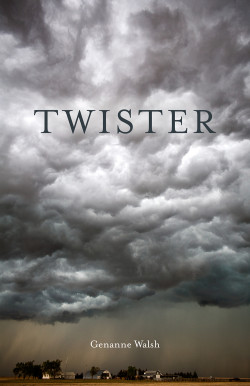 As the members of a small Midwestern town go about their daily business, it’s impossible to forget that a tornado is on its way. We begin with Rose, an ornery woman who, especially after the death of her soldier son Lance shook the town, has kept herself to herself. Perry Brown repeatedly proposes buying her farm so that he can expand his own operation, but she spurns all offers. Estranged from her stepsister Stella, Rose only has her dog Fergus for company. Short meteorological and historical overviews serve as tense interludes, moving from the general to the particular and providing brief transitions between character portraits.
The successive chapters are simultaneous, interlocking stories that all take place in the immediate run-up to the storm touching down. We meet Scottie Dunleavy, an odd fellow who runs a shoe repair shop and leaves secret messages on the soles of people’s footwear. From Louise Logan, a gossipy bank teller, we learn how Rose and Stella fell out; through the eyes of Perry’s wife Nina we see just how tenuous Rose’s solitary existence has become.
After cycling through the perspectives of eight main characters, the book returns to the past in Part II, which starts with the meeting and marriage of Stella’s mother and Rose’s father and moves forward to the near present. The chapters turn choppier as the news of Lance’s death approaches. “Everyone shrank” after the loss of this hometown boy, Walsh writes; like the tornado, his death is an inescapable reality the narrative keeps moving towards.
I love small-town tales where you get to know all the neighbors and their secrets. Twister called to mind for me works by Jane Smiley and Anne Tyler, with Rose also somewhat reminiscent of Hagar in Margaret Laurence’s The Stone Angel. Casualties by Elizabeth Marro is another readalike, focusing on a bereaved mother and her soldier son’s backstory.
Twister was a novel I read slowly, just 10 or 15 pages at a sitting, to savor Walsh’s prose. It’s not a book to race through for the plot but one to linger over as you appreciate the delicacy of the characterization and the electric descriptions of the impending storm:
“If all warnings fail, here is what to look for: the sky turns green, greenish black, brackish. Hail falls. There is a sound that some liken to a freight train, a jet engine, a thousand souped-up Buicks drag racing across a sky. Debris falls from on high—frogs, playing cards, plywood, mud, rock.”
“Warm air rushes ecstatic through the center, pulling and turning, forcing cold air out and down in waves, feeding the dance. Cold coils, pulling inward, more of it and stronger until the warm air snuffs out, the funnel choked, thinning and lifting away. It stretches into a long ribbon, harmless now, twirling across the sky.”
My rating: 
Twister, Genanne Walsh’s debut novel, was published by Black Lawrence Press in 2015 and won the publisher’s Big Moose Prize. My thanks to the author for sending a free copy for review.
Two Records of Bodily Transformation: Amateur and Shapeshifters
Amateur: A True Story about What Makes a Man, Thomas Page McBee
 Thomas Page McBee was the first transgender man to box at Madison Square Garden. In his second memoir, which arose from a Quartz article entitled “Why Men Fight,” he recounts the training leading up to his charity match and ponders whether aggression is a natural male trait. McBee grew up in a small town outside Pittsburgh with a stepfather who sexually abused him from age four. In 2011 he started the testosterone injections that would begin his gender transformation. During the years that followed, other men seemed to pick fights with him fairly often, and he was unsure what to do about it. Finally, in 2015, the Manhattan editor decided to confront the belligerent male stereotype by starting boxing training.
What I most appreciated were the author’s observations of how others have related to him since his transition. He notices that he’s taken more seriously at work as a man, and that he can be an object of fear – when jogging behind a woman at night, for instance. One of the most eye-opening moments of the book is when he realizes that he’s been talking over his own sister. Thankfully, McBee is sensitive enough to stop and change, recognizing that kindness and vulnerability are not faults but attributes any person should be proud of.
I have a feeling I would have preferred his previous memoir, Man Alive, which sounds like it has more about the transition itself. Jonathan Eig’s biography of Muhammad Ali is one of the best books I’ve read this year, and in comparison I didn’t find the boxing writing here very interesting. Likewise, this pales beside two similar but more perceptive books I’ve read that have been hugely influential on my own understanding of gender identity: Conundrum by Jan Morris and The Argonauts by Maggie Nelson.
My rating: 
Amateur was published in the UK by Canongate on August 2nd. My thanks to the publisher for the free copy for review.
Shapeshifters: On Medicine and Human Change by Gavin Francis
 Gavin Francis is a physician with a practice near Edinburgh. His latest book is like a taster course in medical topics. The overarching theme is the modifications the body undergoes, so there are chapters on, for example, body-building, tattoos, puberty, prosthetic limbs, dementia and menopause. Over his years in general practice Francis has gotten to know his patients’ stories and seen them change, for better or worse. These anecdotes of transformation are one source for his book, but he also applies insight from history, mythology, literature, etymology and more. So in a chapter on conception he discusses the Virgin Mary myth, Leonardo da Vinci’s fetal diagrams, the physiological changes pregnant women experience, and the case of a patient, Hannah, who had three difficult, surprise pregnancies in quick succession.
We are all in the process of various transformations, Francis argues, whether by choice or involuntarily. (I decided on the link with McBee because of a chapter on sex changes.) I was less convinced by the author’s inclusion of temporary, reversible changes such as sleep, hallucinations, jet lag and laughter. And while each chapter is finely wrought, I felt some sort of chronological or anatomical order was necessary to give the book more focus. All the same, I suspect this will be a strong contender for next year’s Wellcome Book Prize because of its broad relevance to human health and its compassionate picture of bodies in flux.
My rating: 
Shapeshifters was published by the Wellcome Collection/Profile Books on May 2nd. My thanks to the publisher for the proof copy for review.
Bitter Orange by Claire Fuller
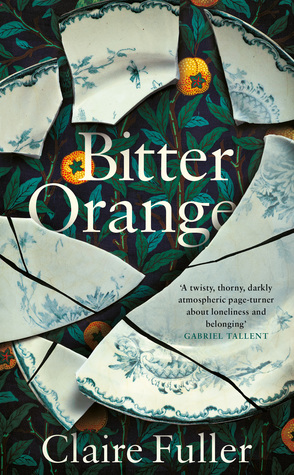 A perfect heatwave read, Claire Fuller’s third novel tells the suspenseful story of the profligate summer of 1969 spent at a dilapidated English country house. Frances Jellico, who seems to be on her deathbed in a care home, recalls for the chaplain, her friend Victor Wylde, the August 20 years ago when she stayed at Lyntons, a neoclassical mansion in Hampshire, to report on the garden architecture for the new American owner, a Mr. Liebermann. Frances was an awkward 39-year-old at that time; having spent 10 years caring for her ill mother up to her recent death, she’d never had a romantic relationship or even a real friendship. So when she got to Lyntons and met Peter Robertson, who was to survey the house and its fittings, and his girlfriend Cara Calace, a melodramatic Anglo-Irish woman who tried to pass as Italian, Frances instantly latched on to their attractively hedonistic lifestyle and felt, for the first time, as if she had people who cared about her and genuinely liked her.
I was a relative latecomer to Fuller’s work, but Swimming Lessons turned out to be one of my favorite novels of last year and I quickly caught up on her debut, Our Endless Numbered Days (2015), which won the Desmond Elliott Prize. If you’re familiar with her first novel you’ll know she’s a master of the unreliable narrator, and here there are two: Frances herself, but also Cara, who tells Frances about her past in Ireland in long monologues that start to beggar belief. Peter warns Frances that Cara is a fantasist, but Frances wants to accept her new friend’s superstition-laced stories. She’s more than half in love with both Peter and Cara. As the trio have lavish picnics on the house’s grounds and ransack the forgotten on-site museum for furniture for their bedrooms and clothes to play dress-up in, the foreshadowing makes you wonder how long it will be before this dissolute interlude shades into tragedy.
Bitter Orange reminded me most of the lowering Gothic feel of books by Daphne du Maurier and Iris Murdoch (especially The Italian Girl, but there’s also a mention of a fish’s severed head, and a couple of times Frances says she feels as if she’s in a play), but I’d also recommend it to readers who’ve enjoyed recent work by Emma Donoghue, Tessa Hadley, Sarah Perry and Sarah Waters. I didn’t enjoy it quite as much as Fuller’s two previous books: it feels a bit less original, and the symbolism of the orange tree and the various animal appearances is rather heavy-handed. But the characters and atmosphere are top-notch. It’s an absorbing, satisfying novel to swallow down in big gulps on a few of these hot summer days.
Favorite lines:
“It seemed threatening now, the empty rooms and dusty spaces sinister, when so recently I had thought it beautiful. I couldn’t help but believe it was playing tricks on me, trying to send me mad or drive me away.”
“I had thought I would like living life to the maximum, I had thought I would enjoy being unconstrained and reckless, but I learned that it is terrifying to look into the abyss.”
My rating:
Bitter Orange is released today, August 2nd, by Fig Tree (Penguin) in the UK. [It will come out on October 9th from Tin House in the USA and House of Anansi in Canada.] My thanks to the publisher for a free copy for review.
Painful but Necessary: Culling Books, Etc.
I’ve been somewhat cagey about the purpose for my trip back to the States. Yes, it was about helping my parents move, but the backstory to that is that they’re divorcing after 44 years of marriage and so their home of 13 years, one of three family homes I’ve known, is being sold. It was pretty overwhelming to see all the stacks of stuff in the garage. I was reminded of these jolting lines from Nausheen Eusuf’s lush poem about her late parents’ house, “Musée des Beaux Morts”: “Well, there you have it, folks, the crap / one collects over a lifetime.”


On the 7th I moved my mom into her new retirement community, and in my two brief spells back at the house I was busy dealing with the many, many boxes I’ve stored there for years. In the weeks leading up to my trip I’d looked into shipping everything back across the ocean, but the cost would have been in the thousands of dollars and just wasn’t worth it. Although my dad is renting a storage unit, so I’m able to leave a fair bit behind with him, I knew that a lot still had to go. Even (or maybe especially) books.
Had I had more time at my disposal, I might have looked into eBay and other ways to maximize profits, but with just a few weeks and limited time in the house itself, I had to go for the quickest and easiest options. I’m a pretty sentimental person, but I tried to approach the process rationally to minimize my emotional overload. I spent about 24 hours going through all of my boxes of books, plus the hundreds of books and DVDs my parents had set aside for sale, and figuring out the best way to dispose of everything. Maybe these steps will help you prepare for a future move.

The Great Book Sort-Out in progress.
When culling books, I asked myself:
- Do I have duplicate copies? This was often the case for works by Dickens, Eliot and Hardy. I kept the most readable copy and put the others aside for sale.
- Have I read it and rated it 3 stars or below? I don’t need to keep the Ayn Rand paperback just to prove to myself that I got through all 1000+ pages. If I’m not going to reread Jane Smiley’s A Thousand Acres, better to put it in the local Little Free Library so someone else can enjoy it for the first time.
- Can I see myself referring to this again? My college philosophy textbook had good explanations and examples, but I can access pithy statements of philosophers’ beliefs on the Internet instead. I’d like to keep up conversational French, sure, but I doubt I’ll ever open up a handbook of unusual verb conjugations.
- Am I really going to read this? I used to amass classics with the best intention of inhaling them and becoming some mythically well-read person, but many have hung around for up to two decades without making it onto my reading stack. So it was farewell to everything by Joseph Fielding and Sinclair Lewis; to obscure titles by D.H. Lawrence and Anthony Trollope; and to impossible dreams like Don Quixote. If I have a change of heart in the future, these are the kinds of books I can find in a university library or download from Project Gutenberg.
My first port of call for reselling books was Bookscouter.com (the closest equivalents in the UK are WeBuyBooks and Ziffit). This is an American site that compares buyback offers from 30 secondhand booksellers. There’s a minimum number of books / minimum value you have to meet before you can complete a trade-in. You print off a free shipping label and then drop off the box at your nearest UPS depot or arrange for a free USPS pickup. I ended up sending boxes to Powell’s Books, TextbookRush and Sellbackyourbook and making nearly a dollar per book. Powell’s bought about 18 of my paperback fiction titles, while the other two sites took a bizarre selection of around 30 books each.
Some books that were in rather poor condition or laughably outdated got shunted directly into piles for the Little Free Library or a Salvation Army donation. Many of my mom’s older Christian living books and my dad’s diet and fitness books I sorted into categories to be sold by the box in an online auction after the house sells.
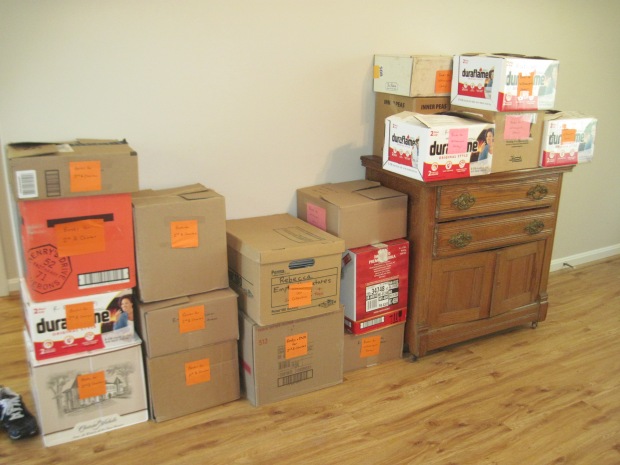
The final set of books awaiting sale.
All this still left about 18 boxes worth of rejects. For the non-antiquarian material I first tried 2nd & Charles, a new and secondhand bookstore chain that offers cash or store credit on select books. I planned to take the rest, including the antiquarian stuff, to an Abebooks seller in my mom’s new town, but I never managed to connect with him. So, the remaining boxes went to Wonder Book and Video, a multi-branch store I worked for during my final year of college. The great thing about them (though maybe not so great when you work there and have to sort through boxes full of dross) is that they accept absolutely everything when they make a cash offer. Although I felt silly selling back lots of literary titles I bought there over the years, at a massive loss, it was certainly an efficient way of offloading unwanted books.
As to everything else…
- I sent off 42.5 pounds (19.3 kilograms) of electronic waste to GreenDisk for recycling. That’s 75 VHS tapes, 63 CDs, 38 cassette tapes, 11 DVDs, five floppy disks, two dead cables, and one dead cell phone I saved from landfill, even if I did have to pay for the privilege.
- I donated all but a few of my jigsaw puzzles to my mom’s retirement community.
- I gave my mom my remaining framed artworks to display at her new place.
- I gave some children’s books, stuffed animals, games and craft supplies away to my nieces and nephews or friends’ kids.
- I let my step-nephew (if that’s a word) take whatever he wanted from my coin collection, and then sold that and most of my stamp collection back to a coin store.
- Most of my other collections – miniature tea sets, unicorn figurines, classic film memorabilia – all went onto the auction pile.
- My remaining furniture, a gorgeous rolltop desk plus a few bookcases, will also be part of the auction.
- You can tell I was in a mood to scale back: I finally agreed to throw out two pairs of worn-out shoes with holes in them, long after my mother had started nagging me about them.


Mementos and schoolwork have been the most difficult items for me to decide what to do with. Ultimately, I ran out of time and had to store most of the boxes as they were. But with the few that I did start to go through I tried to get in a habit of appreciating, photographing and then disposing. So I kept a handful of favorite essays and drawings, but threw out my retainers, recycled the science fair projects, and put the hand-knit baby clothes on the auction pile. (My mom kept the craziest things, like 12 inches of my hair from a major haircut I had in seventh grade – this I threw out at the edge of the woods for something to nest with.)


 All this work and somehow I was still left with 29 smallish boxes to store with my dad’s stuff. Fourteen of these are full of books, with another four boxes of books stored in my mom’s spare room closet to select reading material from on future visits. So to an extent I’ve just put off the really hard work of culling until some years down the road – unless we ever move to the States, of course, in which case the intense downsizing would start over here.
At any rate, in the end it’s all just stuff. What I’m really mourning, I know, is not what I had to get rid of, or even the house, but the end of our happy family life there. I didn’t know how to say goodbye to that, or to my hometown. I’ve got the photos and the memories, and those will have to suffice.
Have you had to face a mountain of stuff recently? What are your strategies for getting rid of books and everything else?
American Book Acquisitions
Now, part of the purpose of my recent three weeks in America was to shed stuff – and I did, lots of it, but that will be the subject for a longer post next week once I’ve shaken off a bit more of my jetlag- and heatwave-induced sluggishness.
It seems inevitable that when I set foot inside a bookstore, even if my primary reason for being there is to sell back loads of books, I’m going to spot some that I want to buy, too. I had some terrific finds this time around, especially at two branches of Dollar Tree. If you’re not regularly hitting up the dollar stores near you for book bargains, you’re missing out! (I always check Poundland when I’m in town here, but haven’t found anything good for ages.)
Dollar Tree / 2nd & Charles stack (not pictured: four books from Dollar Tree that I’ll give as Christmas gifts)
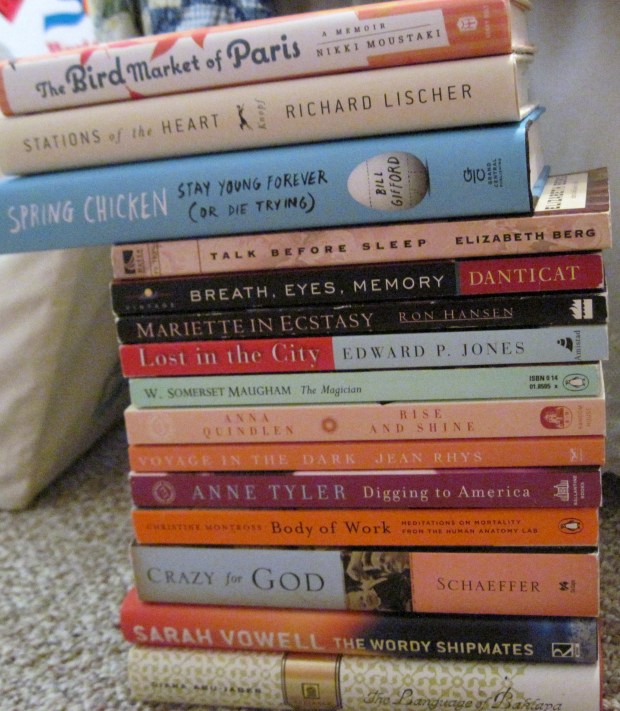
Wonder Book stack (all bargain books, 95 cents each; one memoir on top and the rest fiction)
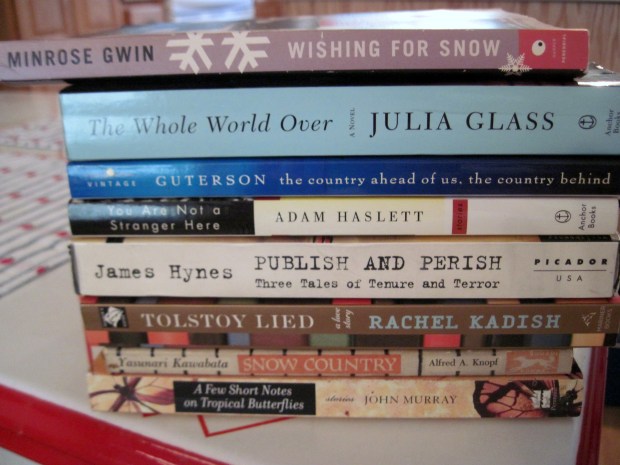
Dollar Tree haul #2 (the last thing I needed to do on the day before I flew back was acquire three more books, but I couldn’t resist these, and they fit in my suitcases!)
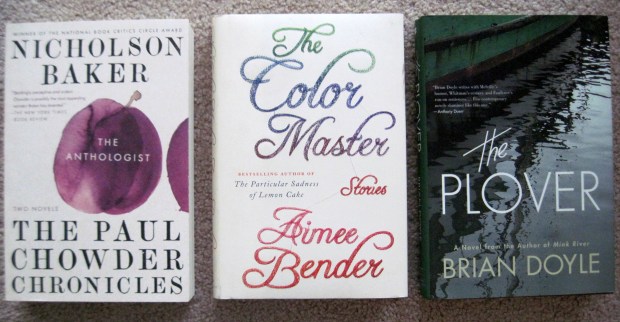
Free books acquired on this trip (three review books [the bottom two come out in October] plus a Rebecca Brown novella swiped from a Little Free Library)

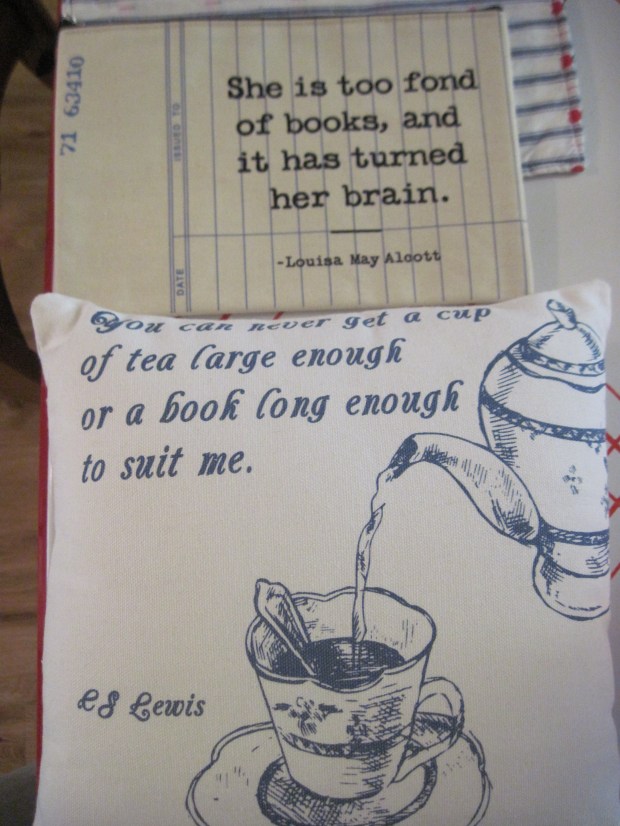
Book-themed gifts from a family friend (pencil case and cushion)
My mom paid for a second suitcase on my flight back as an early birthday present. Even so, fitting everything in was quite the challenge. I was pretty impressed with what I managed to get back in my two cases, backpack and purse, including 49 books – a mixture of favorites I want to reread, signed copies, review books, recent acquisitions, and stuff I’ve been meaning to read forever; if you want to be technical, since the Baker is two books in one and the Updike is three, I actually got 52 books over – as well as a selection of mementos, gifts and useful stuff, a lot of which didn’t even make it into the photo.


Review books waiting for me when I got back (Red Clocks for Nudge; How to Build a Boat for TLS; the rest for blog reviews)

What can I say? I’m happiest when surrounded by stacks of books.
Have you had any good book hauls recently?
20 Books of Summer #9–14: Alden, Colwin, Danticat, Kimmel, Lipman & Steinbach
I fly back to the UK later today after a fairly busy few weeks of packing, unpacking, and more packing as I got my mom settled into her new home and dealt with the substantial amount of stuff I still had in storage with my parents. I’ll post later in the week about book culling versus acquisitions. For now, here’s a quick look at the books by women I’ve been reading in print towards my summer challenge: everything from a memoir of infertility to a perfectly summery novel set at a Vermont lake resort.
Crossing the Moon by Paulette Bates Alden (1998)
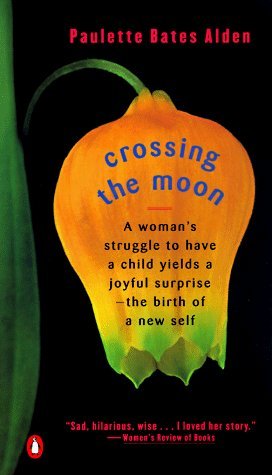 I first read this nearly four years ago (you can find my initial review in an early blog post that rounds up three of Alden’s works), and was moved to reread it this summer as a follow-up to Sheila Heti’s Motherhood. The book focuses on Alden’s uncertainty about having children all the way up to her late thirties, when she underwent three years of somewhat desperate, and ultimately unsuccessful, infertility treatment. “From the very start, I had seen writing and motherhood as mutually exclusive,” she writes, an attitude very similar to Heti’s. Yet she feared missing out on the meaning and love a child could bring to her life.
More broadly, the memoir is about the search to integrate the different aspects of a life – including family history and the fateful decisions that seem to have been made for you – into a realistic vision of the future. I didn’t find the book quite as profound this time around, but I noticed that I marked many of the same passages I did four years ago, about the dearth of childless role models and the struggle to accept the life that has become yours, even if it’s not what you predicted for yourself. That proves how influential and comforting it’s been for me.
Favorite lines:
“About the closest I can come to imagining what it would be like to have a child is with our cat, Cecil. For Cecil I feel the most delicious love, but also the most anxious responsibility.”
“It came to me that it really was a choice between two good things—having a child and not having a child. Our life without a child seemed good to me. I caught a glimpse that it was what was right for us, for the best. But who can say what is ‘best’? Maybe it’s possible to get to a place where what is best is simply what is.”
My rating:
Passion and Affect by Laurie Colwin (1974)
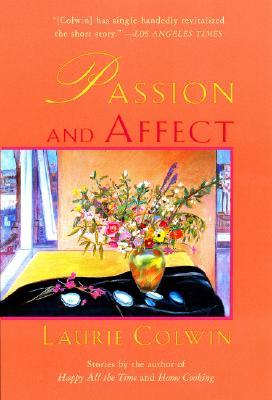 I mostly know Colwin as a food writer, but she also published fiction. This subtle story collection turns on quiet, mostly domestic dramas: people falling in and out of love, stepping out on their spouses and trying to protect their families. I didn’t particularly engage with the central two stories about cousins Vincent and Guido (characters from her novel Happy All the Time, which I abandoned a few years back), but the rest more than made up for them.
Several stories reveal the hidden depths of a character who’s only been a bit player in a protagonist’s life: a family friend who suddenly commits suicide, a Hispanic cook who has a rich boyfriend, a widowed piano teacher whose young student’s accomplishments buoy him up, and a supermarket employee whose ordinary life doesn’t live up to the fantasy background her manager, an art history PhD student, dreams up for her. In “The Water Rats” and “Wet,” water symbolizes all that we can’t control and understand, whether that’s our family’s safety or the inner life of a spouse.
Colwin writes funny, sharp descriptions, like “he was greeted by a young man wearing his hair in the manner of John Donne, a three-piece suit, and cowboy boots” and “she windowshopped, staring with rapt depression at rows of mannikins in glossy trousers.”
Favorite lines:
“She was three years married and when she looked at herself in the mirror, she did not see that she had become any more serious, any less young and heedless, or any more willing to get down to what Richard called ‘the things of life.’ He was right when he said that she had not made up her mind about anything.”
“He looked at his dissertation, or the heap that was to become his dissertation, and sighed again. He was of two minds about this Vermeer business, and he was of two minds about this supermarket business. That accounted for four minds in all, and it made life painful for him.”
My rating:
Breath, Eyes, Memory by Edwidge Danticat (1994)
 Like her protagonist, Sophie Caco, Danticat was raised by her aunt in Haiti and reunited with her parents in the USA at age 12. As Sophie grows up and falls in love with an older musician, she and her mother are both haunted by sexual trauma that nothing – not motherhood, not a long-awaited return to Haiti – seems to heal. I loved the descriptions of Haiti (“The sun, which was once god to my ancestors, slapped my face as though I had done something wrong. The fragrance of crushed mint leaves and stagnant pee alternated in the breeze” and “The stars fell as though the glue that held them together had come loose”), and the novel gives a powerful picture of a maternal line marred by guilt and an obsession with sexual purity. However, compared to Danticat’s later novel, Claire of the Sea Light, I found the narration a bit flat and the story interrupted – thinking particularly of the gap between ages 12 and 18 for Sophie. (Another Oprah’s Book Club selection.)
Favorite lines:
“She cannot stay out of duty. The things one does, one should do out of love.”
“I knew my hurt and hers were links in a long chain and if she hurt me, it was because she was hurt, too.”
My rating:
A Girl Named Zippy by Haven Kimmel (2001)
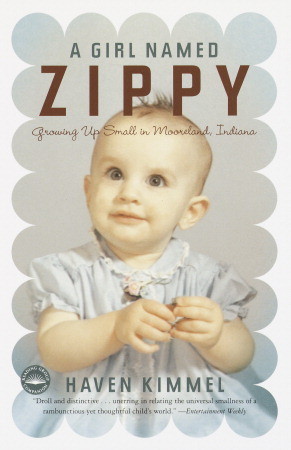 Maybe you grew up in or near a town like Mooreland, Indiana (population 300). Born in 1965 when her brother and sister were 13 and 10, Kimmel was affectionately referred to as an “Afterthought” and nicknamed “Zippy” for her boundless energy. Gawky and stubborn, she pulled every trick in the book to try to get out of going to Quaker meetings three times a week, preferring to go fishing with her father. The short chapters, headed by family or period photos, are sets of thematic childhood anecdotes about particular neighbors, school friends and pets. I especially loved her parents: her mother reading approximately 40,000 science fiction novels while wearing a groove into the couch, and her father’s love of the woods (which he called his “church”) and elaborate preparations for camping trips an hour away.
The tone is light-hearted despite hints of unpleasantness around town: open hostility towards people of color, a lecherous music teacher and a kid who abused animals. The more exaggerated stories are reminiscent of David Sedaris’s work – did she really cut hippies’ hair in exchange for an Irish Setter puppy?! Mostly, the book made me think about my mother’s small-town childhood versus my own suburban one, and how I would try to put all my early experiences together in a funny, nostalgic but honest way. It wouldn’t be easy at all, which makes Kimmel’s a noteworthy achievement.
Favorite lines:
“I figure heaven will be a scratch-and-sniff sort of place … I will ask for the smell of my dad’s truck, which was a combination of basic truck (nearly universal), plus his cologne (Old Spice), unfiltered Lucky Strikes, and when I was very lucky, leaded gasoline.”
“Mom used to say that my dad was a mountain man, which was obviously just a figure of speech, since most of Indiana is flat as a pancake. Her point was that Dad is a wild man, which was certainly true.”
My rating:
The Inn at Lake Devine by Elinor Lipman (1998)
 This was a breezy, delightful novel perfect for summer reading. In 1962 Natalie Marx’s family is looking for a vacation destination and sends query letters to various Vermont establishments. Their reply from the Inn at Lake Devine (proprietress: Ingrid Berry) tactfully but firmly states that the inn’s regular guests are Gentiles. In other words, no Jews allowed. The adolescent Natalie is outraged, and when the chance comes for her to infiltrate the Inn as the guest of one of her summer camp roommates, she sees it as a secret act of revenge.
In fact, in the years to come, after she trains as a chef, Natalie will become further entwined in the inn’s life, helping the family recover from a tragedy, falling in love with one of the Berry sons, and unwittingly contributing to a livelihood-threatening accident. Natalie’s voice drew me in right from the start. Lipman’s comedies of manners have been compared to Jane Austen’s, and you can see that likeness in the witty dialogue. I’ll certainly read more by her.
My rating:
Without Reservations: The Travels of an Independent Woman by Alice Steinbach (2000)
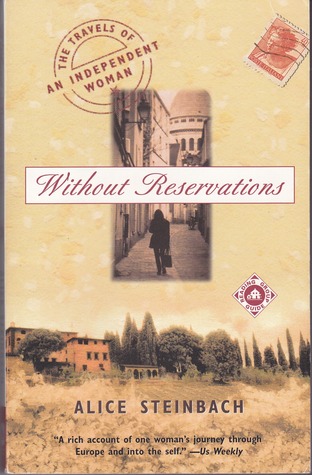 In 1993 Steinbach, then in her fifties, took a sabbatical from her job as a Baltimore Sun journalist to travel for nine months straight in Paris, England and Italy. As a divorcee with two grown sons, she no longer felt shackled to her Maryland home and wanted to see if she could recover a more spontaneous and adventurous version of herself and not be defined exclusively by her career. Her innate curiosity and experience as a reporter helped her to quickly form relationships with other English-speaking tourists, which was an essential for someone traveling alone.
I enjoyed spotting familiar sites I’ve visited, but I don’t think you need to know these countries or even have a particular interest in them to appreciate the book. Whether she’s attending a swanky party or nearly getting mugged, Steinbach is an entertaining and unpretentious tour guide. Her attitude is impressive, too: “I had surprised myself this year by jumping in to reshape my life before life stepped in to reshape it for me.” You might not be willing to give up your normal existence for nine months, but I suspect that this travel memoir might make you consider how you could be more daring in your daily life.
My rating:
20 Books of Summer, #5–8: Anderson, Cusk, Fitch & L’Engle
I’ve been reading a feminist memoir set on Cape Cod, a subtle novel about the inner life and outward experiences of a writer, a soapy literary thriller about a troubled mother and teen daughter, and a slightly melancholy reminiscence of an aged mother succumbing to dementia.
A Walk on the Beach: Tales of Wisdom from an Unconventional Woman by Joan Anderson (2004)
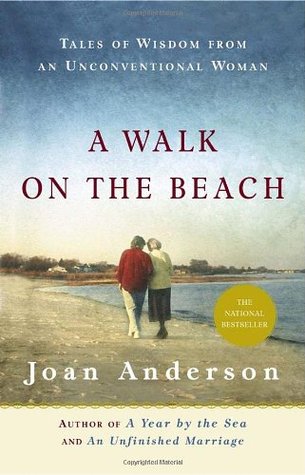 This is the third volume in a loose autobiographical trilogy about Anderson’s experiment with taking a break from her marriage and living alone in a Cape Cod cottage to figure out what she really wanted from the rest of her life. Specifically, this book is about the inspirational relationship she formed with Joan Erikson, who moved to the area in her eighties when her husband, the famous psychologist Erik Erikson, was admitted to a care home. Joanie was a thinker and author in her own right, publishing books on life’s stages, especially those of older age. She encouraged Anderson to have the confidence to write her own story, and to take up challenges like a trip to Peru and learning to weave on a loom. Joanie’s aphoristic advice is valuable, but there’s a fair bit of overlap between this book and A Year by the Sea, which I would recommend over this.
My rating:
Some of Joan Erikson’s words of wisdom:
“Doing something with your hands, rather than your head, is often the best route to clarity.”
“wisdom comes from life’s experiences well digested. Stop relying so much on your mind and get in touch with experience.”
“The struggle is to try and obtain a sense of participation in your life the whole way through. We must treasure old age, but not wallow in nostalgia.”
Transit by Rachel Cusk (2016)
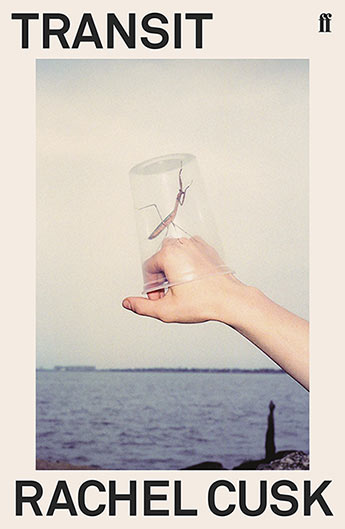 I finally made it through a Rachel Cusk book! (This was my third attempt; I made it just a few pages into Aftermath and 60 pages through Outline.) I suspected this would make a good plane read, and thankfully I was right. Each chapter is a perfectly formed short story, a snapshot of one aspect of Faye’s life and the relationships that have shaped her: a former lover she bumps into in London, a builder who tells her the flat she’s bought is a lost cause, the awful downstairs neighbors who hate her with a passion, the fellow writers (based on Edmund White and Karl Ove Knausgaard?) at a literary festival event who hog most of the time, the jolly Eastern European construction workers who undertake her renovations, a childless friend who works in fashion design, and a country cousin who’s struggling with his new blended family.
Like in Outline, the novel is based largely on the conversations Faye overhears or participates in (“I had found out more, I said, by listening than I had ever thought possible”), but I sensed more of her personality this time, and could relate to her questioning: Why do her neighbors hate her so? How much of her life is fated, and how much has she chosen? I doubt I’ll read another book by Cusk, but I ended up surprisingly grateful to have gotten hold of this one as a free proof copy of the new paperback edition from the Faber Spring Party.
My rating:
Some favorite lines:
“we examine least what has formed us the most, and instead find ourselves driven blindly to re-enact it.”
“Without children or partner, without meaningful family or a home, a day can last an eternity: a life without those things is a life without a story, a life in which there is nothing – no narrative flights, no plot developments, no immersive human dramas – to alleviate the cruelly meticulous passing of time.”
White Oleander by Janet Fitch (1999)
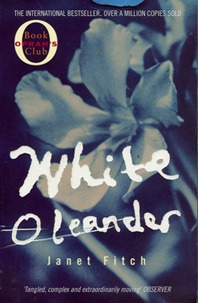 Man, that Oprah knows how to pick ’em! This was a terrific read; I’m not sure why I’d never gotten to it before. I read huge chunks during my travel to the States and then slowed down quite a bit, which was a shame because it meant I felt less connected to Astrid’s later struggles in the foster care system. It’s an atmospheric novel full of oppressive Los Angeles heat and a classic noir flavor that shades into gritty realism as it goes on, taking us from when Astrid is 12 to when she’s a young woman out in the world on her own.
Astrid’s mother Ingrid, an elitist poet, becomes obsessed with a lover who spurned her and goes to jail for his murder. Bouncing between foster homes and children’s institutions, Astrid is plunged into a world of sex, drugs, violence and short-lived piety. “Like a limpet I attached to anything, anyone who showed me the least attention,” she writes. Her role models change over the years, but always in the background is the icy influence of her mother, through letters and visits.
Fitch’s writing is sumptuous, as in a house “the color of a tropical lagoon on a postcard thirty years out of date, a Gauguin syphilitic nightmare.” I might have liked a tiny bit more of Ingrid in the book, but I can still recommend this one wholeheartedly as summer reading.
My rating:
Some favorite lines:
The knock-out opening two lines: “The Santa Anas blew in hot from the desert, shriveling the last of the spring grass into whiskers of pale straw. Only the oleanders thrived, their delicate poisonous blossoms, their dagger green leaves.”
“I couldn’t imagine my mother in prison. She didn’t smoke or chew on toothpicks. She didn’t say ‘bitch’ or ‘fuck.’ She spoke four languages, quoted T. S. Eliot and Dylan Thomas, drank Lapsang souchong out of a porcelain cup. She had never been inside a McDonald’s. She had lived in Paris and Amsterdam. Freiburg and Martinique. How could she be in prison?”
The Summer of the Great-Grandmother by Madeleine L’Engle (1974)
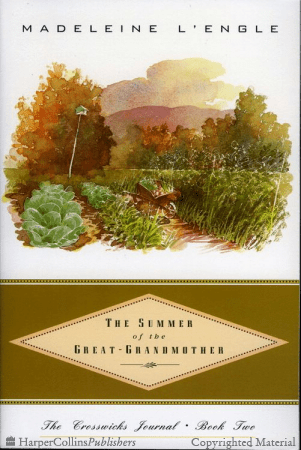 L’Engle is better known for children’s books, but wrote tons for adults, too. In this second volume of The Crosswicks Journal, she recounts her family history as a way of remembering on behalf of her mother, who at age 90 was slipping into dementia in her final summer. “I talked awhile, earlier this summer, about wanting my mother to have a dignified death. But there is nothing dignified about incontinence and senility.” L’Engle found herself in the unwanted position of being like her mother’s mother, and had to accept that she had no control over the situation. “This summer is practice in dying for me as well as for my mother.”
One of the reasons L’Engle was driven to write science fiction was because she couldn’t reconcile the idea of permanent human extinction with her Christian faith, but nor could she honestly affirm every word of the Creed. Hers is a more broad-minded, mystical spirituality that really appeals to me. (Her early life reminds me of May Sarton’s, as recounted in I Knew a Phoenix: both were born right around World War I, raised partially in Europe and sent to boarding school; a frequent theme in their nonfiction is the regenerative power of solitude and of the writing process itself.)
My rating:
Some favorite lines:
“I said [in a lecture] that the artist’s response to the irrationality of the world is to paint or sing or write, not to impose restrictive rules but to rejoice in pattern and meaning, for there is something in all artists which rejects coincidence and accident. And I went on to say that we must meet the precariousness of the universe without self-pity, and with dignity and courage.”
“Our lives are given a certain dignity by their very evanescence. If there were never to be an end to my quiet moments at the brook, if I could sit on the rock forever, I would not treasure these minutes so much. If our associations with the people we love were to have no termination, we would not value them as much as we do.”
Clock Dance by Anne Tyler: Well…
A few years back I read a rare interview with Anne Tyler in which she described getting together with her lady friends of a certain age to watch The Wire and experience how some other Baltimore residents live. The gangs-and-drugs world of The Wire, of course, could hardly be more different from the safe semi-suburban spaces Tyler’s characters inhabit.
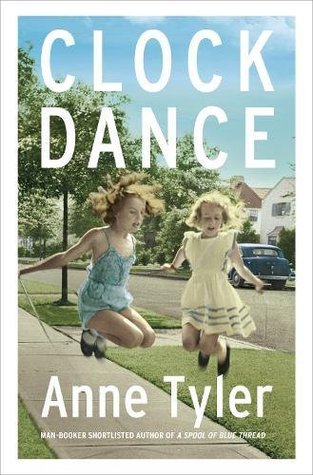 However, if you’ve heard one thing about Tyler’s new novel, Clock Dance, her twenty-second, I expect it’s that a character gets shot. Finally, a realistic look at the condition of Baltimore, I thought! To my frustration, though, Tyler does just what she did in her previous novel, the Booker-shortlisted A Spool of Blue Thread, and immediately defuses what could have been a hot-button issue. Sure, her characters have dysfunctional family problems aplenty, but nothing ever gets too out of hand. So in Spool son Denny’s confession that he thinks he’s gay is never given serious consideration, and in Clock Dance the Chekhovian gun we (perhaps) encounter early on in the novel does indeed return to be used in the contemporary-set section, but – and I’m sorry if this strikes you as a spoiler – it’s only a shot in the leg, the result of some kids playing around with a gun, and the unwitting victim is fine.
Essentially Clock Dance is three stories followed by a short novel: glimpses into four periods of Willa Drake’s life. In 1967 she’s 11 and her angry mother Alice, who’s reminiscent of Pearl Tull from Dinner at the Homesick Restaurant, gets fed up and leaves – but soon comes back. (You see what I mean about dangling life-changing traumas in front of us but then instantly neutralizing them?) In 1977 Willa is a college junior and flies home over spring break to introduce her boyfriend to her parents. He wants her to give up her linguistic studies and join him in California, where he has a job. On to 1997, when Willa suddenly becomes a widow and has to learn to survive one day at a time. Fast forward to 2017, when the remarried Willa, now based in Arizona, gets a call informing her that her son’s ex-girlfriend has been shot and she needs to come look after her and her daughter and dog in Baltimore.
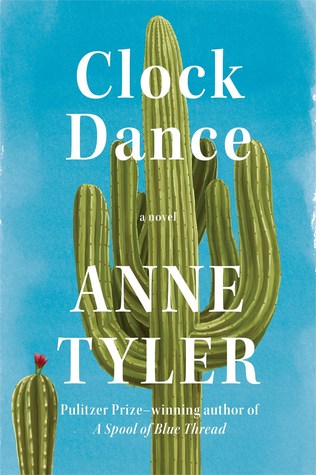 It’s somewhat ironic that I just read Breathing Lessons earlier in the summer: Clock Dance is awfully similar to Tyler’s 1988 Pulitzer winner in that both protagonists are trying to make things right with their daughter-in-law and granddaughter figures. In Willa’s case, her son never married Denise and isn’t the father of nine-year-old Cheryl, but Willa still feels a grandmotherly concern and, as she seems to be the only person the neighbor knew to call in an emergency, she agrees to fly out with her second husband, a humourless retired lawyer and golfer named Peter. They will stay in Denise’s home on Dorcas Road in Baltimore for as long as she is in the hospital. Peter is impatient with the situation, but Willa feels purposeful for the first time in years, and before long she’s starting to think about Dorcas Road, with its lovably quirky set of neighbors, as home. Could she make her own useful life here?
Tyler is surprisingly good on modern children and technology, and there are some terrific individual scenes, like the fairly awkward dinner Willa has with her elder son, Sean, and Elissa, the woman he left Denise for. But at times the dialogue didn’t ring true for me, with some 1950s vocabulary like darn, gosh, pussyfoot, hoodlum, and jeepers, plus (I checked this in the Kindle book) a whopping 188 sentences start with some variation on “Well, …” That works out to more than once every other page, a tic Tyler’s editor should have ironed out.
The U.S. edition of Clock Dance, which features a cactus on the cover, tries to make more of the partial Arizona setting, though most of the book is set in Tyler’s familiar small-town Pennsylvania and Baltimore. Willa admires saguaro cacti – “She loved their dignity, their endurance” – and Peter also buys one from the hospital gift shop, as a sort of symbol of resilience and adaptation to one’s surroundings. The U.K. cover, by contrast, goes for nostalgic Americana and reminded me of this passage from Breathing Lessons:
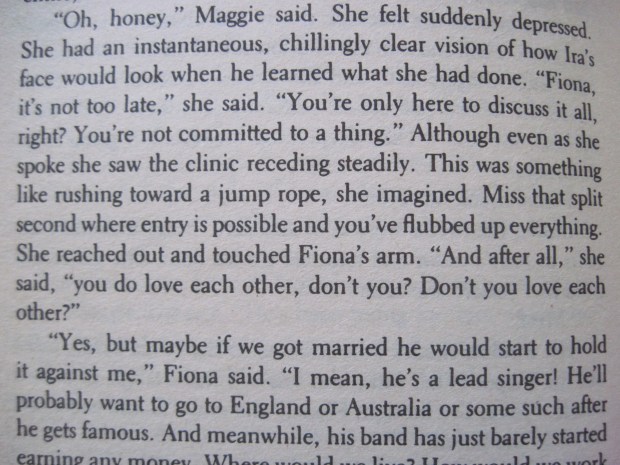
(An early Tyler novel is called The Clock Winder, but I imagine the similarity in the titles is just incidental.)

The story behind the title: Cheryl and friends perform what they call a “clock dance,” wherein two girls stand behind a third and they all move their arms in rhythmic jerks like a clock face. Willa imagines her own ‘clock dance’ would be a mad whirl from stage left to right: a race against time. Her efforts to redirect her life before it’s too late are heartening, but overall I didn’t sense strong enough themes in this novel; in particular, I would have preferred if Tyler had been consistent in checking in with Willa every decade and making each vignette truly count.
Of the eight Tyler novels I’ve read so far, here’s how I’d rank them (from best to least good). You’ll see that this latest one falls somewhere in the middle.
Dinner at the Homesick Restaurant
The Accidental Tourist
Breathing Lessons
Vinegar Girl
Clock Dance
Back When We Were Grown-ups
A Blue Spool of Thread
The Beginner’s Goodbye
My rating:
Clock Dance is released in the UK today, July 12th, by Chatto & Windus and came out on the 10th from Knopf Doubleday in the USA. My thanks to the publisher for a free copy for review.
 Bookish Beck = Rebecca Foster. American transplant to England. Freelance proofreader and book reviewer.
