Recommended July Releases: Donoghue, Maizes, Miller, Parikian, Trethewey
My five new releases for July include historical pandemic fiction, a fun contemporary story about a father-and-daughter burglar team, a new poetry collection from Carcanet Press, a lighthearted nature/travel book, and a poetic bereavement memoir about a violent death.
The Pull of the Stars by Emma Donoghue
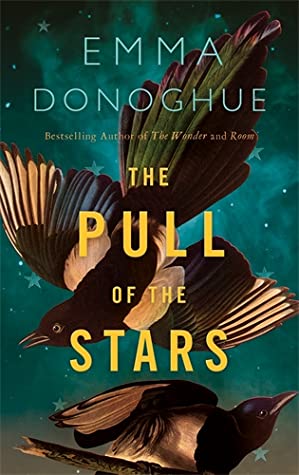 Donoghue’s last two novels, The Wonder and Akin, were big hits with me. Less than a year after the contemporary-set Akin, she’s back to a historical setting – and an uncannily pertinent pandemic theme – with her latest. In 1918, Julia Power is a nurse on a Dublin maternity ward. It’s Halloween and she is about to turn 30, making her a spinster for her day; she lives with her mute, shell-shocked veteran brother, Tim, and his pet magpie.
Because she’s already had “the grip” (influenza), she is considered immune and is one of a few staff members dealing with the flu-ridden expectant mothers in quarantine in her overcrowded hospital. Each patient serves as a type, and Donoghue whirls through all the possible complications of historical childbirth: stillbirth, obstructed labor, catheterization, forceps, blood loss, transfusion, maternal death, and so on.
It’s not for the squeamish, and despite my usual love of medical reads, I felt it was something of a box-ticking exercise, with too much telling about medical procedures and recent Irish history. Because of the limited time frame – just three days – the book is far too rushed. We simply don’t have enough time to get to know Julia through and through, despite her first-person narration; the final 20 pages, in particular, are so far-fetched and melodramatic it’s hard to believe in a romance you’d miss if you blinked. And the omission of speech marks just doesn’t work – it’s downright confusing with so many dialogue-driven scenes.
Donoghue must have been writing this well before Covid-19, but I wouldn’t be surprised if the publication was hurried forward to take advantage of the story’s newfound relevance. It shows: what I read in May and June felt like an unpolished draft, with threads prematurely tied up to meet a deadline. This was an extremely promising project that, for me, was let down by the execution, but it’s still a gripping read that I wouldn’t steer you away from if you find the synopsis appealing. (Some more spoiler-y thoughts here.)
Prescient words about pandemics:
“All over the globe … some flu patients are dropping like flies while others recover, and we can’t solve the puzzle, nor do a blasted thing about it. … There’s no rhyme or reason to who’s struck down.”
“Doctor Lynn went on, As for the authorities, I believe the epidemic will have run its course before they’ve agreed to any but the most feeble action. Recommending onions and eucalyptus oil! Like sending beetles to stop a steamroller.”
Why the title?
Flu comes from the phrase “influenza delle stelle” – medieval Italians thought that illness was fated by the stars. There’s also one baby born a “stargazer” (facing up) and some literal looking up at the stars in the book.
My rating: 
My thanks to Picador for the proof copy for review.
Other People’s Pets by R.L. Maizes
 This is Maizes’ debut novel, after her 2019 short story collection We Love Anderson Cooper. Louise “La La” Fine and her father, Zev, share an unusual profession: While outwardly they are a veterinary student and a locksmith, respectively, for many years they broke into homes and sold the stolen goods. Despite close shaves, they’ve always gotten away with it – until now. When Zev is arrested, La La decides to return to her criminal ways just long enough to raise the money to post bail for him. But she doesn’t reckon on a few complications, like her father getting fed up with house arrest, her fiancé finding out about her side hustle, and her animal empathy becoming so strong that when she goes into a house she not only pilfers valuables but also cares for the needs of ailing pets inside.
Flashbacks to La La’s growing-up years, especially her hurt over her mother leaving, take this deeper than your average humorous crime caper. The way the plot branches means that for quite a while Zev and La La are separated, and I grew a bit weary of extended time in Zev’s company, but this was a great summer read – especially for animal lovers – that never lost my attention. The magic realism of the human‒pet connection is believable and mild enough not to turn off readers who avoid fantasy. Think The Twelve Lives of Samuel Hawley meets Hollow Kingdom.
My rating: 
My thanks to the author and Celadon Books for the free e-copy for review.
The Long Beds by Kate Miller
 Here and there; now and then: the poems in Miller’s second collection enlarge such dichotomies by showcasing the interplay of the familiar and the foreign. A scientist struggles to transcribe birdsong, and a poppy opens in slow motion. “Flag” evokes the electric blue air and water of a Greek island, while “The Quarters” is set in the middle of the night in a French village. A few commissions, including “Waterloo Sunrise,” stick close to home in London or other southern England locales.
Various poems, including the multi-part “Album Without Photographs,” are about ancestor Muriel Miller’s experiences in India and Britain in the 1910s-20s. “Keepers of the States of Sleep and Wakefulness, fragment from A Masque,” patterned after “The Second Masque” by Ben Jonson, is an up-to-the-minute one written in April that names eight nurses from the night staff at King’s College Hospital (and the short YouTube film based on it is dedicated to all NHS nurses).
My two favorites were “Outside the Mind Shop,” in which urban foxes tear into bags of donations outside a charity shop one night while the speaker lies awake, and “Knapsack of Parting Gifts” a lovely elegy to a lost loved one. I spotted a lot of alliteration and assonance in the former, especially. Thematically, the collection is a bit scattered, but there are a lot of individual high points.
My rating:
My thanks to Carcanet Press for the free e-copy for review.
Into the Tangled Bank: In Which Our Author Ventures Outdoors to Consider the British in Nature by Lev Parikian
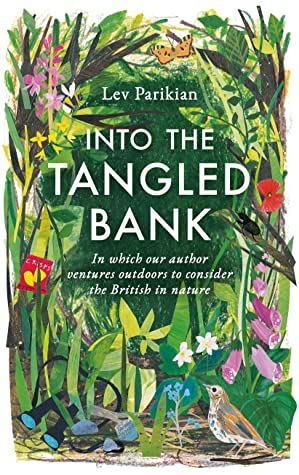 In the same way that kids sometimes write their address by going from the specific to the cosmic (street, city, country, continent, hemisphere, planet, galaxy), this book, a delightfully Bryson-esque tour, moves ever outwards, starting with the author’s own home and garden and proceeding to take in his South London patch and his journeys around the British Isles before closing with the wonders of the night sky. By slowing down to appreciate what is all around us, he proposes, we might enthuse others to engage with nature.
With the zeal of a recent convert, he guides readers through momentous sightings and everyday moments of connection. As they were his gateway, many of these memories involve birds: looking for the year’s first swifts, trying to sketch a heron and realizing he’s never looked at one properly before, avoiding angry terns on the Farne Islands, ringing a storm petrel on Skokholm, and seeing white-tailed eagles on the Isle of Skye. He brings unique places to life, and pays tribute to British naturalists who paved the way for today’s nature-lovers by visiting the homes of Charles Darwin, Gilbert White, Peter Scott, and more.
I was on the blog tour for Parikian’s previous book, Why Do Birds Suddenly Disappear?, in 2018. While the books are alike in levity (pun intended!), being full of self-deprecation and witty asides along with the astute observations, I think I enjoyed this one that little bit more for its all-encompassing approach to the experience of nature. I fully expect to see it on next year’s Wainwright Prize longlist (speaking of the Wainwright Prize, in yesterday’s post I correctly predicted four on the UK nature shortlist and two on the global conservation list!).
Readalikes (that happen to be from the same publisher): Under the Stars by Matt Gaw and The Seafarers by Stephen Rutt
My rating: 
My thanks to Elliott & Thompson for the free copy for review.
Memorial Drive: A Daughter’s Memoir by Natasha Trethewey
 Trethewey grew up in 1960s Mississippi with a Black mother and a white Canadian father, at a time when interracial marriage remained illegal in parts of the South. After her parents’ divorce, she and her mother, Gwen, moved to Georgia to start a new life, but her stepfather Joel was physically and psychologically abusive. Gwen’s murder opens and closes the book. Trethewey only returned to that Atlanta apartment on Memorial Drive after 30 years had passed. The blend of the objective (official testimonies and transcripts) and the subjective (interpreting photographs, and rendering dream sequences in poetic language) makes this a striking memoir, as delicate as it is painful. I recommend it highly to readers of Elizabeth Alexander and Dani Shapiro. (Full review forthcoming at Shiny New Books.)
My rating: 
My thanks to Bloomsbury for the proof copy for review.

 I’m reading two more July releases, Mostly Dead Things by Kristen Arnett (Corsair, 2 July; for Shiny New Books review), about a family taxidermy business in Florida, and The Liar’s Dictionary by Eley Williams (William Heinemann, 2 July), about an unusual dictionary being compiled in the Victorian period and digitized in the present day.
What July releases can you recommend?
Reading from the Wainwright Prize Longlists
Another day, another prize longlist! This year the Wainwright Prize has split into two awards for writing on 1) UK nature and 2) global conservation themes. Tomorrow (July 30th), they will be whittled down to shortlists. I happen to have read and reviewed 10 of the nominees already. I took the opportunity to experience a few more before the shortlist announcement. I give a paragraph on each below (forgive me for, in some cases, repeating the excerpts that appeared in my reviews roundups and best-of lists).
From the UK nature writing longlist:

 Dark, Salt, Clear: Life in a Cornish Fishing Town by Lamorna Ash: In her early 20s, Ash made multiple trips from London to stay in Newlyn: walking to the cove that bears her name, going out on fishing trawlers, and getting accepted into the small community. Gruelling and lonely, the fishermen’s way of life is fading away. The book goes deeper into Cornish history than non-locals need, but I enjoyed the literary allusions – the title is from Elizabeth Bishop. I liked the writing, but this was requested after me at the library, so I could only skim it.
 Wild Child: Coming Home to Nature by Patrick Barkham: Childhood has moved indoors over the course of three generations, the Guardian journalist observes. Highlighting activities that will engage budding naturalists in every season and accompanying his three children to outdoor nursery, he suggests how connection with nature can be part of everyday life. An engaging narrative not just for parents and educators but for anyone who has a stake in future generations’ resolve to conserve the natural world – which is to say, all of us. (Reviewed for Shiny New Books)
 Bird Therapy by Joe Harkness: In 2013, Harkness was in such a bad place that he attempted suicide. Although he’s continued to struggle with OCD and depression in the years since then, birdwatching has given him a new lease on life. Avoiding the hobby’s more obsessive, competitive aspects (like listing and twitching), he focuses on the benefits of outdoor exercise and mindfulness. He can be lyrical when describing his Norfolk patch and some of his most magical sightings, but the writing is weak. (My husband helped crowdfund the book via Unbound.)
 Dancing with Bees: A Journey Back to Nature by Brigit Strawbridge Howard: Bees were the author’s gateway into a general appreciation of nature, something she lost for a time in midlife because of the rat race and family complications. Allotment gardening gives her opportunities to observe bee behaviour and marvel at their various lookalikes (like hoverflies), identify plants, work on herbal remedies, and photograph her finds. She delights in discovery and is devoted to lifelong learning in a book characterized by curiosity and warmth. (On my runners-up of 2019 list)
 Surfacing by Kathleen Jamie: Jamie has a particular interest in birds, islands, archaeology and the oddities of the human body. The bulk of the book is three long pieces set in Alaska, Orkney and Tibet. Neolithic sites lead her to think about deep time – a necessary corrective to short-term thinking that has gotten us into environmental crisis. I connected with the few-page pieces on experiencing a cave, spotting an eagle or getting lost in a forest. Beautiful nature writing and relatable words on the human condition. (My #9 nonfiction book of 2019)
 Native: Life in a Vanishing Landscape by Patrick Laurie: Galloway may be the forgotten corner of Scotland, but this third-generation cattle farmer can’t imagine living anywhere else. In his year-long nature diary, each month brings rewards as well as challenges as he strives to manage the land in a manner beneficial to wildlife. I’m lucky to have visited Wigtown and the surrounding area. You needn’t have been in person, though, to appreciate this pensive account rich with the sense of place and balanced between solastalgia and practicality. (Reviewed for Shiny New Books)
 Wintering by Katherine May: May’s sympathetic memoir considers winter not only as a literal season, but also as an emotional state. Although “depression” could be substituted for “wintering” in most instances, the book gets much metaphorical mileage out of the seasonal reference as she recounts how she attempted to embrace rather than resist the gloom and chill through rituals such as a candlelit St. Lucia service and an early morning solstice gathering at Stonehenge. Wintering alternates travel and research, mind and body. (Reviewed for TLS)
 Diary of a Young Naturalist by Dara McAnulty: McAnulty is the UK’s answer to Greta Thunberg: a leader in the youth environmental movement and an impassioned speaker on the love of nature. This is a wonderfully observant and introspective account of his fifteenth year: of disruptions – moving house and school, of outrage at the state of the world and at individual and political indifference, of the complications of being autistic, but also of the joys of everyday encounters with wildlife. Impressive perspective and lyricism. (Reviewed for Shiny New Books; on my Best of 2020 so far list.)
 Wanderland: A Search for Magic in the Landscape by Jini Reddy: Reddy has often felt like a nomad and an outsider. Through a year of travelling to holy sites, she seeks to be rooted in the country she has come to call home. The quest takes her all over the British Isles, creating an accessible introduction to its sacred spots. Recovering a sense of reverence for nature can only help in the long-term mission to preserve it. Reddy is the first person of colour nominated for the Wainwright Prize in its seven-year history. (Reviewed for Shiny New Books)
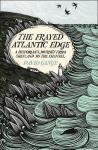 I think this year’s is an especially appealing longlist. It’s great to see small presses and debut authors getting recognition. I’ve now read 8 out of 13 (and skimmed one), and am interested in the rest, too, especially The Frayed Atlantic Edge by David Gange. The final three, all combining nature and (auto)biographical writing, are On the Red Hill by Mike Parker, The Well-Gardened Mind by Sue Stuart-Smith, and Rootbound: Rewilding a Life by Alice Vincent.
From the writing on global conservation longlist:

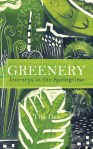 Greenery: Journeys in Springtime by Tim Dee: From the Cape of Good Hope to the Arctic Circle, Dee tracks the spring as it travels north. From first glimpse to last gasp, moving between his homes in two hemispheres, he makes the season last nearly half the year. His main harbingers are migrating birds, starting with swallows. The book is steeped in allusions and profound thinking about deep time and what it means to be alive in an era when nature’s rhythms are becoming distorted. A fresh, masterful model of how to write about nature. (Review reprinted at Shiny New Books; on my Best of 2020 so far list.)
 Irreplaceable: The Fight to Save Our Wild Places by Julian Hoffman: Species and habitat loss are hard to comprehend even when we know the facts. This exquisitely written book is about taking stock, taking responsibility, and going beyond the numbers to tell the stories of front-line conservation work. Irreplaceable is an elegy of sorts, but, more importantly, it’s a call to arms. It places environmentalism in the hands of laypeople and offers hope that in working together in the spirit of defiance we can achieve great things. (Reviewed for Shiny New Books; my #1 nonfiction book of 2019)
 Losing Eden: Why Our Minds Need the Wild by Lucy Jones: While nature’s positive effect on human mental health is something we know intuitively and can explain anecdotally, Jones wanted to investigate the scientific mechanism behind it. She makes an empirical enquiry but also attests to the personal benefits nature has. Losing Eden is full of common sense and passion, cramming masses of information into 200 pages yet never losing sight of the big picture. Like Silent Spring, on which it is patterned, I can see this leading to real change. (Reviewed for Shiny New Books; on my Best of 2020 so far list.)
 Notes from an Apocalypse: A Personal Journey to the End of the World and Back by Mark O’Connell: The same satirical outlook that made O’Connell’s first book so funny is perfect for approaches to the end of the world, especially in the early chapter about preppers. Preparing = retreating, so he travels to South Dakota bunkers; a Mars Society Conference in Los Angeles; New Zealand, where billionaires plan to take refuge; and the wilderness of the Scottish Highlands. While pessimism strikes him as the only rational attitude, he decides constant anxiety is no way to live. (More extended thoughts here.)
The other book from this longlist that I’m interested in reading is Rebirding by Benedict Macdonald. I DNFed Bloom (all you ever wanted to know about algae!) last year; the other five seem too similar to other things I’ve read.
My predictions-cum-wish lists:
UK nature writing:
- The Frayed Atlantic Edge by David Gange
- Surfacing by Kathleen Jamie*
- On the Red Hill by Mike Parker
- Diary of a Young Naturalist by Dara McAnulty
- Wanderland by Jini Reddy
- Rootbound: Rewilding a Life by Alice Vincent
Writing on global conservation:
- Greenery by Tim Dee
- What We Need to Do Now for a Zero Carbon Future by Chris Goodall
- Irreplaceable by Julian Hoffman*
- Losing Eden by Lucy Jones
- Bloom by Ruth Kassinger
- Harvest: The Hidden Histories of Seven Natural Objects by Edward Posnett
*Predicted overall winners.
Have you read anything from the Wainwright Prize longlists? Do any of these books interest you?
Quick Thoughts on the Booker Prize Longlist
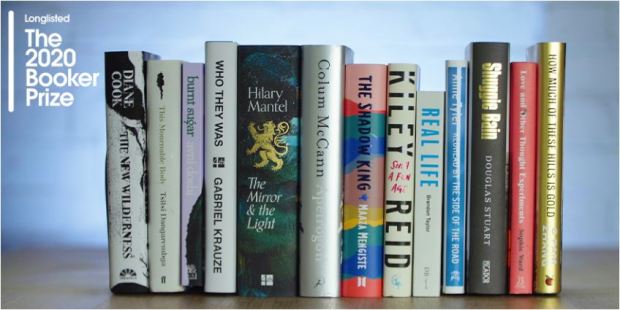
The 13-strong 2020 Booker Prize longlist was announced this morning. Looking at friends’ Booker predictions/wish lists (Clare’s and Susan’s), I didn’t think I would be invested in this year’s prize race, yet the moment I saw the longlist I scurried to look up the titles I hadn’t heard of and to request others I realized I wanted to read after all.
In general, the list achieves a nice balance between established names and debut authors, and the gender, ethnicity and sexuality statistics are good.
(Descriptions of books not experienced are from the Goodreads blurbs.)
Read:
Only one so far and, alas, I thought it among the author’s poorest work to date:
- Redhead by the Side of the Road by Anne Tyler (Chatto & Windus) – While this novella is perfectly readable – Tyler could write sympathetic characters like Micah and his Baltimore neighbors in her sleep – it felt incomplete and inconsequential, like an early draft that needed another subplot and plenty more scenes added in before it was ready for publication. Any potential controversy (illegitimate offspring and a few post-apocalyptic imaginings) is instantly neutralized, making the story feel toothless.

DNFed earlier in the year (but what do I know?):
 The Mirror & The Light by Hilary Mantel (4th Estate) – I only managed to read 80 pages or so, then skimmed to page 200 before admitting defeat. I would be totally engrossed for up to 10 pages (exposition and Cromwell one-liners), but then everything got talky or plotty and I’d skim for 20‒30 pages and set it down. I lacked the necessary singlemindedness and felt overwhelmed by the level of detail and cast of characters, so never built up momentum. Still, I can objectively recognize the prose as top-notch. But is 900 pages not a wee bit indulgent? No editor would have dared cut it…
- Such a Fun Age by Kiley Reid (Bloomsbury) – “In the midst of a family crisis one late evening, white blogger Alix Chamberlain calls her African American babysitter, Emira, asking her to take toddler Briar to the local market for distraction. There, the security guard accuses Emira of kidnapping Briar, and Alix’s efforts to right the situation turn out to be good intentions selfishly mismanaged.”
- How Much of These Hills Is Gold by C. Pam Zhang (Virago) – “Both epic and intimate, blending Chinese symbolism and re-imagined history with fiercely original language and storytelling, How Much of These Hills Is Gold is a haunting adventure story … An electric debut novel set against the twilight of the American gold rush, two siblings are on the run in an unforgiving landscape—trying not just to survive but to find a home.”
On the shelf to read soon:
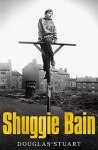 Shuggie Bain by Douglas Stuart (Picador) – “The unforgettable story of young Hugh ‘Shuggie’ Bain, a sweet and lonely boy who spends his 1980s childhood in run-down public housing in Glasgow, Scotland. Thatcher’s policies have put husbands and sons out of work, and the city’s notorious drugs epidemic is waiting in the wings.” (Out on August 6th. Proof copy from publisher)
Already wanted to read:
 Such a Fun Age by Kiley Reid (Bloomsbury) – Yes, I’m going to try this one again! (Requested from library)
- Real Life by Brandon Taylor (Daunt Books) – “An introverted young man from Alabama, black and queer, he has left behind his family without escaping the long shadows of his childhood. But over the course of a late-summer weekend, a series of confrontations with colleagues, and an unexpected encounter with an ostensibly straight, white classmate, conspire to fracture his defenses while exposing long-hidden currents of hostility and desire within their community.”
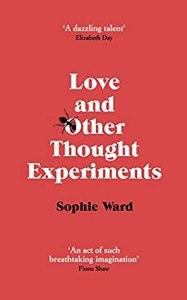
- Love and Other Thought Experiments by Sophie Ward (Corsair) – “Rachel and Eliza are hoping to have a baby. The couple spend many happy evenings together planning for the future. One night Rachel wakes up screaming and tells Eliza that an ant has crawled into her eye and is stuck there. She knows it sounds mad – but she also knows it’s true. As a scientist, Eliza won’t take Rachel’s fear seriously and they have a bitter fight. Suddenly their entire relationship is called into question.” (Requested from library)
Heard about for the first time and leapt to find:
 The New Wilderness by Diane Cook (Oneworld) – “Bea, Agnes, and eighteen others volunteer to live in the Wilderness State as part of a study to see if humans can co-exist with nature … [This] explores a moving mother‒daughter relationship in a world ravaged by climate change and overpopulation.” (Out on August 13th. Requested from publisher)
- Burnt Sugar by Avni Doshi (Hamish Hamilton) – “A searing debut novel about mothers and daughters, obsession and betrayal – for fans of Deborah Levy, Jenny Offill and Diana Evans … unpicks the slippery, choking cord of memory and myth that binds two women together, making and unmaking them endlessly.” (Out on July 30th. Requested from publisher)
Thought I didn’t want to read, but changed my mind:
 Apeirogon by Colum McCann (Bloomsbury) – I’ve only read one book by McCann and have always meant to read more. But I judged this one by the title and assumed it was going to be yet another Greek myth update. (What an eejit!) “Bassam Aramin is Palestinian. Rami Elhanan is Israeli. They inhabit a world of conflict that colors every aspect of their daily lives, from the roads they are allowed to drive on, to the schools their daughters, Abir and Smadar, each attend, to the checkpoints, both physical and emotional, they must negotiate.” (Reading from library)
Would read if it fell in my lap, but I’m not too bothered:
- Who They Was by Gabriel Krauze (4th Estate) – “An electrifying autobiographical British novel … This is a story of a London you won’t find in any guidebooks. This is a story about what it’s like to exist in the moment, about boys too eager to become men, growing up in the hidden war zones of big cities – and the girls trying to make it their own way.”
- The Shadow King by Maaza Mengiste (Canongate) – “A gripping novel set during Mussolini’s 1935 invasion of Ethiopia, The Shadow King takes us back to the first real conflict of World War II, casting light on the women soldiers who were left out of the historical record.” I have seen unenthusiastic reviews from friends.
Don’t plan to read:
- This Mournable Body by Tsitsi Dangarembga (Faber & Faber) – “Anxious about her prospects after leaving a stagnant job, Tambudzai finds herself living in a run-down youth hostel in downtown Harare. … at every turn in her attempt to make a life for herself, she is faced with a fresh humiliation, until the painful contrast between the future she imagined and her daily reality ultimately drives her to a breaking point.” This is the third book in a trilogy and I have seen unfavorable reviews from friends.
Of course, Hilary will win; skip the shortlist announcement in September and go ahead and give her the Triple Crown! But I always discover at least a couple of gems through the Booker longlist each year, so I’m grateful to the judges (Margaret Busby (chair), editor, literary critic and former publisher; Lee Child, author; Sameer Rahim, author and critic; Lemn Sissay, writer and broadcaster; and Emily Wilson, classicist and translator) for highlighting some exciting books that I may not have been induced to try otherwise. I will probably end up reading only half of the longlist, but may readjust my plans after the shortlist comes out.
What do you think about the longlist? Have you read anything from it? Which nominees appeal to you?
Classic of the Month: Cakes and Ale by W. Somerset Maugham (1930)
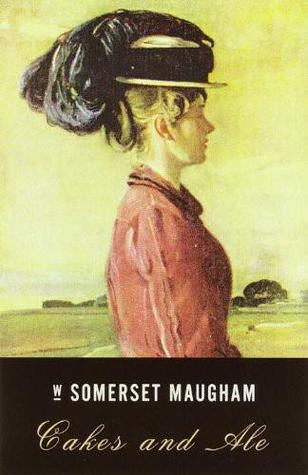 (20 Books of Summer, #12) This is the third Maugham novel I’ve reviewed here (after Of Human Bondage and The Moon and Sixpence) and my fourth overall. I’d recommend his work to fans of Charles Dickens and Thomas Hardy, or to anyone looking to expand their knowledge of the classics: his books are short (with the exception of Bondage) and accessible, and the frequent theme of struggling one’s way to love and creative success in defiance of poverty and a cruel fate resonates.
Cakes and Ale is narrated by an older writer named William Ashenden, a Maugham stand-in who previously appeared in the 1928 linked story collection Ashenden, widely recognized as the first English spy narrative. He’s contacted by a popular author of his acquaintance, Alroy Kear (“I could think of no one among my contemporaries who had achieved so considerable a position on so little talent”) with a request: Roy is writing the authorized biography of the late writer Edward Driffield, at his second wife’s behest. Remembering that Ashenden knew Driffield as a boy, Roy hopes to mine his memory for some good anecdotes. The book contains his resulting recollections – though Ashenden is unlikely to share them all with Roy.
Ashenden shares a background with Philip Carey from Of Human Bondage: both were raised in a vicar uncle’s household in Blackstable, Kent. Young Willie would go for bike rides with friendly neighbors Driffield and his wife Rosie, until his aunt and uncle forbade him.
{SPOILERS FOLLOW}
The Driffields, you see, were considered low-class and vulgar, an opinion that was seemingly confirmed first when they ran away from their debts to London, and then when Rosie left Edward for a Kent coal merchant. Rosie comes to represent a familiar type: the whore with the heart of gold. As Ashenden knows from personal experience, she enjoyed sex and slept with men out of kindness or pity. Only decades later did he learn that Edward knew Rosie was stepping out on him, and that the couple had lost a six-year-child to meningitis. This is not, I think, meant to excuse Rosie’s promiscuity, but it does give her an extra dimension, and perhaps explains why Driffield’s first marriage failed. Unfortunately, Rosie’s sexuality is racialized, with Driffield’s second wife saying, “I’ve always thought she looked rather like a white nigger” and an illustration giving her stereotypically wide nostrils and thick lips.)
{END OF SPOILERS}
I felt Driffield must be inspired by Thomas Hardy, and I’m not alone: in a preface, Maugham reports that many assumed he had Hardy in mind, but denies basing his portrait on any author in particular. Yet the similarities are undeniable: the flighty first wife; the late remarriage to his secretary; childlessness; humble origins and the fight to be taken seriously in the literary world. Maugham does, however, mention loving Tess of the d’Urbervilles and its milkmaid heroine, so Rosie is his homage (in the preface Maugham explains that, while the book’s plot occurred to him for a short story, he didn’t want to ‘waste’ Rosie on something so brief).
 Dickens is an influence, too; I enjoyed references to his work, as well as to (on consecutive pages!) the New Woman and Mrs. Humphry Ward, both of whom were part of my MA thesis. The Victorian shadow is long here. But the focus on Rosie means Driffield himself is never more than a cipher. Ashenden admits this: “I am conscious that in what I have written of him I have not presented a living man, standing on his feet, rounded, with comprehensible motives and logical activities; I have not tried to: I am glad to leave that to the abler pen of Alroy Kear.” But The Moon and Sixpence, which employs the same setup of an author reminiscing about a great man he once knew, makes its subject a three-dimensional character, and is better for it.
Note: Maugham’s titles are often unusual and allusive. “Cakes and ale,” as part of a Twelfth Night quotation, represent the luxurious lifestyle in opposition to the moral one. The book’s subtitle is “or The Skeleton in the Cupboard.”
Source: Free bookshop
My rating:
Library Checkout: July 2020
New books, at long last!! Earlier this month my public library system started an order and collection service. I have already gone to pick up two batches of reservations.


I also signed up to be a library volunteer starting in the first week of August – two hours on a Tuesday morning and two hours on a Thursday afternoon. To start with, I will mostly be helping with shelving and picking the reserved books off the shelves. It will be fun to be a part of this service, and once the library fully reopens perhaps I’ll have a little more customer interaction, too.

Have you been able to borrow more books lately, perhaps via a curbside pickup scheme? Feel free to use the image above and leave a link to your blog in the comments if you’ve taken part in Library Checkout (which runs on the last Monday of every month), or tag me on Twitter/Instagram (@bookishbeck, #TheLibraryCheckout).
READ
- Reading with Patrick: A Teacher, a Student and the Life-Changing Power of Books by Michelle Kuo
- Property by Valerie Martin
- Redhead by the Side of the Road by Anne Tyler
SKIMMED
- Death Is but a Dream: Finding Hope and Meaning at Life’s End by Dr. Christopher Kerr with Carine Mardorossian
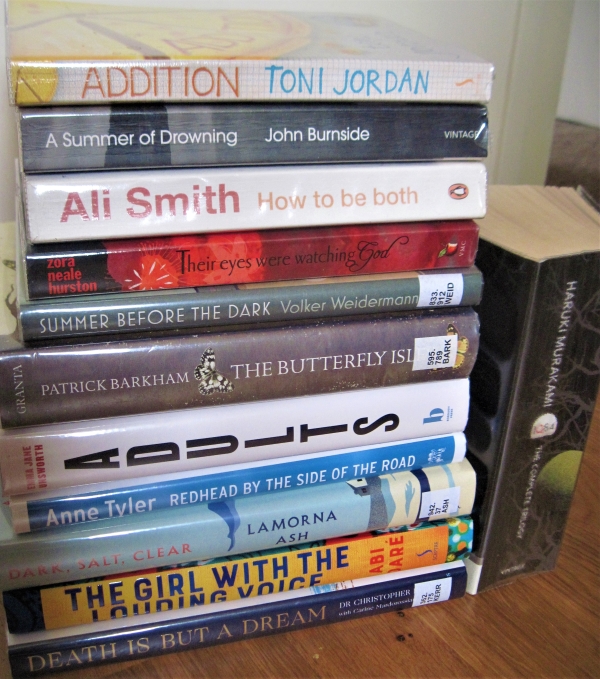
CURRENTLY READING
- The Butterfly Isles: A Summer in Search of Our Emperors and Admirals by Patrick Barkham
- Queenie by Candice Carty-Williams
- Addition by Toni Jordan
CURRENTLY SKIMMING
- Dark, Salt, Clear: Life in a Cornish Fishing Town by Lamorna Ash
CHECKED OUT, TO BE READ
- The Girl with the Louding Voice by Abi Daré
- What Have I Done?: An Honest Memoir about Surviving Postnatal Mental Illness by Laura Dockrill
- Their Eyes Were Watching God by Zora Neale Hurston
- 1Q84 by Haruki Murakami
- Kim Jiyoung, Born 1982 by Cho Nam-Joo
- How to Be Both by Ali Smith
- Adults by Emma Jane Unsworth

ON HOLD, TO BE PICKED UP
- Close to Where the Heart Gives Out: A Year in the Life of an Orkney Doctor by Malcolm Alexander
IN THE RESERVATION QUEUE
- Disobedience by Naomi Alderman
- A Traveller at the Gates of Wisdom by John Boyne
- Dependency by Tove Ditlevsen
- 33 Meditations on Death: Notes from the Wrong End of Medicine by David Jarrett
- Can You Hear Me? A Paramedic’s Encounters with Life and Death by Jake Jones
- Dear NHS: 100 Stories to Say Thank You, edited by Adam Kay
- Exchange by Paul Magrs
- Utopia Avenue by David Mitchell
- The Watchmaker of Filigree Street by Natasha Pulley
- Such a Fun Age by Kiley Reid
- Sadler’s Birthday by Rose Tremain
- Water Ways: A Thousand Miles along Britain’s Canals by Jasper Winn
- The Wild Silence by Raynor Winn
- The Interestings by Meg Wolitzer
RETURNED UNFINISHED
- A Summer of Drowning by John Burnside – The prologue didn’t draw me in.
- The Motion of the Body through Space by Lionel Shriver – Kooky names, overwriting, obvious setup, racial stereotypes.
- Summer before the Dark: Stefan Zweig and Joseph Roth, Ostend 1936 by Volker Weidermann – Too niche a subject.
What appeals from my stacks?
20 Books of Summer, #9–11: Asimov, St. Aubyn, Weiss
My summer reading has been picking up and I have a firm plan – I think – for the rest of the foodie books that will make up my final 20. I’m reading two more at the moment: a classic with an incidental food-themed title and a work of American history via foodstuffs. Today I have a defense of drinking wine for pleasure; a novel about inheritance and selfhood, especially for mothers; and a terrific foodoir set in Berlin, New York City and rural Italy.
How to Love Wine: A Memoir and Manifesto by Eric Asimov (2012)
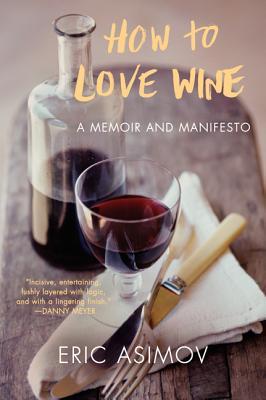 (20 Books of Summer, #9) Asimov may be the chief wine critic for the New York Times, but he’s keen to emphasize that he’s no wine snob. After decades of drinking it, he knows what he appreciates and prefers small-batch to mass market wine, but he’d rather that people find what they enjoy rather than chase after the expensive bottles they feel they should like. He finds tasting notes and scores meaningless and is more interested in getting people into wine simply for the love of it – not as a status symbol or a way of showing off arcane knowledge.
Like Anthony Bourdain (see my review of Kitchen Confidential), Asimov was drawn into foodie culture by one memorable meal in France. He’d had a childhood sweet tooth and was a teen beer drinker, but when he got to grad school in Austin, Texas an $8 bottle of wine from a local Whole Foods was an additional awakening. Following in his father’s footsteps in journalism and moving from Texas to Chicago back home to New York City for newspaper editing jobs, he had occasional epiphanies when he bought a nice bottle of wine for his parents’ anniversary and took a single wine appreciation course. But his route into writing about wine was sideways, through a long-running NYT column about local restaurants.
I might have liked a bit more of the ‘memoir’ than the ‘manifesto’ of the subtitle: Asimov makes the same argument about accessibility over and over, yet even his approachable wine attitude was a little over my head. I can’t see myself going to a tasting of 20–25 wines at a time, or ordering a case of 12 wines to sample at home. Not only can I not tell Burgundy from Bordeaux (his favorites), I can’t remember if I’ve ever tried them. I’m more of a Sauvignon Blanc or Chianti gal. Maybe the Wine for Dummies volume I recently picked up from a Little Free Library is more my speed.
Source: Free from a neighbor
My rating:
Mother’s Milk by Edward St Aubyn (2006)
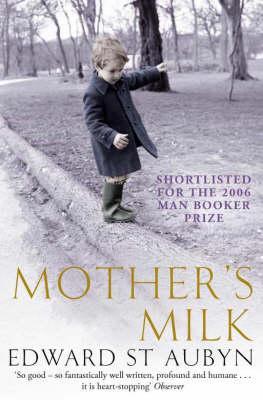 (20 Books of Summer, #10; A buddy read with Annabel, who has also reviewed the first three books here and here as part of her 20 Books of Summer.) I’ve had mixed luck with the Patrick Melrose books thus far: Book 1, Never Mind, about Patrick’s upbringing among the badly-behaving rich in France and his sexual abuse by his father, was too acerbic for me, and I didn’t make it through Book 3, Some Hope. But Book 2, Bad News, in which Patrick has become a drug addict and learns of his father’s death, hit the sweet spot for black comedy.
Mother’s Milk showcases two of St. Aubyn’s great skills: switching effortlessly between third-person perspectives, and revealing the psychology of his characters. It opens with a section from the POV of Patrick’s five-year-old son, Robert, a perfect link back to the child’s-eye view of Book 1 and a very funny introduction to this next generation of precocious mimics. The perspective is shared between Robert, Patrick, his wife Mary, and their younger son Thomas across four long chapters set in the Augusts of 2000–2003.
Patrick isn’t addicted to heroin anymore, but he still relies on alcohol and prescription drugs, struggles with insomnia and is having an affair. Even if he isn’t abusive or neglectful like his own parents, he worries he’ll still be a destructive influence on his sons. Family inheritance – literal and figurative – is a major theme, with Patrick disgruntled with his very ill mother, Eleanor, for being conned into leaving the home in France to a New Age organization as a retreat center. “What I really loathe is the poison dripping from generation to generation,” Patrick says – “the family’s tropical atmosphere of unresolved dependency.” He mentally contrasts Eleanor and Mary, the former so poor a mother and the latter so devoted to her maternal role that he feels there’s no love left for himself from either.
I felt a bit trapped during unpleasant sections about Patrick’s lust, but admired the later focus on the two mothers and their loss of sense of self, Eleanor because of her dementia and Mary because she has been subsumed in caring for Thomas. I didn’t quite see how all the elements were meant to fit together, particularly the disillusioning trip to New York City, but the sharp writing and observations were enough to keep me going through this Booker-shortlisted novella. I’ll have to get Book 5 out from the library to see how St. Aubyn tied everything up.
Source: Free bookshop
My rating:
My Berlin Kitchen: Adventures in Love and Life by Luisa Weiss (2012)
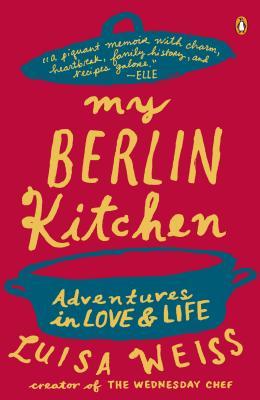 (20 Books of Summer, #11) Blog-to-book adaptations can be hit or miss; luckily, this one joins Julie Powell’s Julie and Julia and Molly Wizenberg’s A Homemade Life in the winners column. Raised in Berlin and Boston by her American father and Italian mother, Weiss felt split between her several cultures and languages. While she was working as a cookbook editor in New York City, she started a blog, The Wednesday Chef, as a way of working through the zillions of recipes she’d clipped from here and there, and of reconnecting with her European heritage: “when I came down with a rare and chronic illness known as perpetual homesickness, I knew the kitchen would be my remedy.”
After a bad breakup (for which she prescribes fresh Greek salad, ideally eaten outside), she returned to Berlin and unexpectedly found herself back in a relationship with Max, whom she’d met in Paris nearly a decade ago but drifted away from. She realized they were meant to be together when he agreed that potato salad should be dressed with oil and vinegar rather than mayonnaise. After a tough year for Weiss as she readjusts to Berlin’s bitter winters and lack of bitter greens, the book ends with the lovely scene of their rustic Italian wedding.
Weiss writes with warmth and candor and gets the food–life balance just right. I found a lot to relate to here (“I couldn’t ever allow myself to think about how annoying airports were, how expensive it was to go back and forth between Europe and the United States … I had to get on an airplane to see the people I love”) and – a crucial criterion for a foodie book – could actually imagine making most of these recipes, everything from plum preserves and a Swiss chard and Gruyère bake to a towering gooseberry meringue cream cake.
Other readalikes: From Scratch: A Memoir of Love, Sicily, and Finding Home by Tembi Locke, My Salinger Year by Joanna Rakoff, and Only in Naples: Lessons in Food and Famiglia from My Italian Mother-in-Law by Katherine Wilson
Source: A birthday gift from my wish list last year
My rating:
20 Books of Summer: Bourdain, Ozeki and More
Over halfway through the summer and my numbers are looking poor. It’s not that I’m not reading a ton – in general, I am – it’s just that I’m having trouble finishing any foodie books. I’m in the middle of two food-related memoirs plus Cakes and Ale by W. Somerset Maugham, and have recently started buddy-reading Mother’s Milk by Edward St Aubyn with Annabel, so more reviews will be along eventually, but I predict August will be a scramble.
Today I review an in-your-face tell-all about the life of a chef, and a novel set between Japan and the United States that exposes the seamy side of meat production. A lite road trip and an iffy California classic follow as bonuses.
Kitchen Confidential: Adventures in the Culinary Underbelly by Anthony Bourdain (2000)
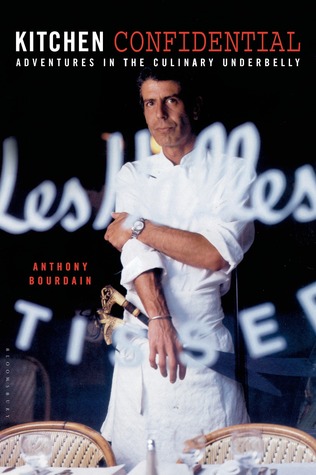 (20 Books of Summer, #5) “Get that dried crap away from my bird!” That random line about herbs is one my husband and I remember from a Bourdain TV program and occasionally quote to each other. It’s a mild curse compared to the standard fare in this flashy memoir about what really goes on in restaurant kitchens. His is a macho, vulgar world of sex and drugs. In the “wilderness years” before he opened his Les Halles restaurant, Bourdain worked in kitchens in Baltimore and New York City and was addicted to heroin and cocaine. Although he eventually cleaned up his act, he would always rely on cigarettes and alcohol to get through ridiculously long days on his feet.
From “Appetizer” to “Coffee and a Cigarette,” the book is organized like a luxury meal. Bourdain charts his development as a chef, starting with a childhood summer in France during which he ate vichyssoise and oysters for the first time and learned that food “could be important … an event” and describing his first cooking job in Provincetown and his time at the Culinary Institute of America. He also discusses restaurant practices and hierarchy, and home cook cheats and essentials. (I learned that you should never order fish in a restaurant on a Monday – it’ll be left over from Thursday’s order.) The pen portraits of his crazy sous-chef and baker are particularly amusing; other subjects include a three-star chef he envies and the dedicated Latino immigrants who are the mainstay of his kitchen staff.
My dad is not a reader but he is a foodie, and he has read Bourdain’s nonfiction (and watched all his shows), so I felt like I was continuing a family tradition in reading this. I loved my first taste of Bourdain’s writing: he’s brash, passionate, and hilariously scornful of celebrity chefs and vegetarianism (“the enemy of everything good and decent in the human spirit, an affront to all I stand for, the pure enjoyment of food”). Being in charge of a restaurant sounds manic, yet you can see why some would find it addictive. How ironic, though, to find a whole seven references to suicide in this book. Sometimes he’s joking; sometimes he’s talking about chefs he’s heard about who couldn’t take the pressure. Eighteen years after this came out, he, too, would kill himself.
(See also this article about rereading Bourdain in the 20th anniversary year of Kitchen Confidential.)
Source: Local swap shop (free)
My rating:
(These two are linked by a late chapter in the Bourdain, “Mission to Tokyo,” in which he advises on a new Les Halles offshoot in Japan and gorges himself on seafood delights.)
My Year of Meats by Ruth Ozeki (1998)
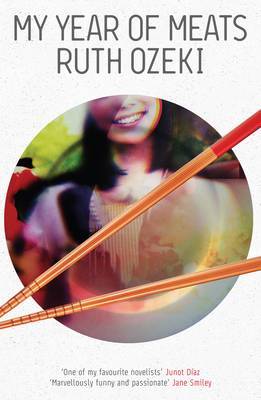 (20 Books of Summer, #6) I don’t know what took me so long to read another novel by Ruth Ozeki after A Tale for the Time Being, one of my favorite books of 2013. This is nearly as fresh, vibrant and strange. Set in 1991, it focuses on the making of a Japanese documentary series, My American Wife, sponsored by a beef marketing firm. Japanese American filmmaker Jane Takagi-Little is tasked with finding all-American families and capturing their daily lives – and best meat recipes. The traditional values and virtues of her two countries are in stark contrast, as are Main Street/Ye Olde America and the burgeoning Walmart culture.
There is a clear message here about cheapness and commodification, but Ozeki filters it through the wrenching stories of two women with fertility problems: Jane, whose reproductive system was damaged by DES, a synthetic estrogen her mother took during pregnancy to prevent a miscarriage; and Akiko, the wife of Jane’s boss, who struggles with an eating disorder and domestic violence.
Jane starts sneaking controversial subjects into her shoots: a lesbian couple, a family formed by interracial adoption, and a five-year-old who has already undergone puberty due to the hormones used on her family’s cattle feedlot. What is “natural,” and what gets branded alien or invasive? From the kudzu that strangles the South to a murdered Japanese exchange student, Ozeki probes the related issues of nativism and racism. Her two protagonists’ stories – one in the first person; the other in the third person – come together in a surprising manner as Jane decides that she has a more pressing obligation than creating a diverting television show.
This is a bold if at times discomforting novel. At first it brought to mind the exaggerated comedy of Julian Barnes’s England, England and Jane Smiley’s Moo, but as it grew darker it reminded me more of Han Kang’s The Vegetarian. It’s tricky, when a work of fiction tackles ethical or environmental matters, to balance storytelling and consciousness-raising, but Ozeki pulls it off with style. The only aspect that didn’t mean much to me, perhaps simply because of my unfamiliarity, was the excerpts from The Pillow Book of Shōnagon. How sad to think that I only have one more Ozeki awaiting me, All Over Creation. She averages a book every 5‒10 years; we can only hope that another is on the way soon.
Source: Charity shop
My rating: 
I picked up another two food-adjacent books that didn’t work for me, though I ended up skimming them to the end.
America Unchained: A Freewheeling Roadtrip in Search of Non-Corporate USA by Dave Gorman (2008)
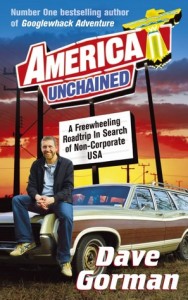 (20 Books of Summer, #7) I read the first couple of chapters, in which he plans his adventure, and then started skimming. I expected this to be a breezy read I would race through, but the voice was neither inviting nor funny. I also hoped to find more about non-chain supermarkets and restaurants – that’s why I put this on the pile for my foodie challenge in the first place – but, from a skim, it mostly seemed to be about car trouble, gas stations and fleabag motels. The only food-related moments are when Gorman (a vegetarian) downs three fast food burgers and orders of fries in 10 minutes and, predictably, vomits them all back up; and when he stops at an old-fashioned soda fountain for breakfast.
Source: Free bookshop
Tortilla Flat by John Steinbeck (1935)
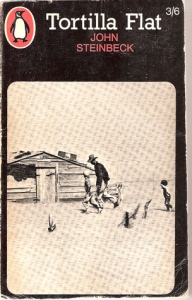 (20 Books of Summer, #8) I read the first 25 pages and then started skimming. This is a story of a group of friends – paisanos, of mixed Mexican, Native American and Caucasian blood – in Monterey, California. During World War I, Danny serves as a mule driver and Pilon is in the infantry. When discharged from the Army, they return to Tortilla Flat, where Danny has inherited two houses. He lives in one and Pilon is his tenant in the other (though Danny will never see a penny in rent). They’re a pair of loveable scamps, like Huck Finn all grown up, stealing wine and chickens left and right.
Steinbeck novels seem to fall into two camps for me. This is one of his inconsequential, largely unlikable novellas (like The Pearl and The Red Pony, which I studied in school – I’m lucky they didn’t put me off Steinbeck forever), whereas The Grapes of Wrath and East of Eden are masterful. It may also have something to do with the slight air of condescension towards characters of a different race: Steinbeck renders their speech with “thee” and “thou,” trying to imitate a Romance language’s informal pronouns, but it feels dated and alienating.
Source: Free bookshop
The Group by Lara Feigel (and Mary McCarthy)
Lara Feigel’s memoir Free Woman was one of my favourite books of 2018. In it she interrogates conventions of marriage and motherhood while rereading the works of Doris Lessing – The Golden Notebook (1962), in particular, dramatizes women’s struggles to combine their disparate roles into a harmonious identity. Drawing inspiration from Lessing as well as from another early feminist novel, The Group by Mary McCarthy (more on this below), Feigel’s debut novel crafts a kaleidoscopic portrait of five women’s lives in 2018.
 Stella, Kay, Helena, Polly and Priss met at a picnic while studying at Oxbridge and decided to rent a house together. Now 40-ish, they live in London and remain close, though their lives have branched in slightly different directions. Kay is an English teacher but has always wanted to be a novelist like her American husband, Harald. Priss is a stay-at-home mother excited to be opening a café. Polly, a gynaecological consultant at St Thomas’s Hospital, is having an affair with a married colleague. Helena, a single documentary presenter, decides she wants to have a baby and pursues insemination via a gay friend.
Narrating her friends’ lives as well as her own is Stella, an editor at a Faber-like publishing house whose director (also Helena’s uncle) is under investigation for sexual misconduct. Stella, a stand-in for the author, has split from her husband and has a new baby via IVF as well as an older child; this hint of autofiction lends the book an intimacy it might have lacked with an omniscient perspective. Although you have to suspend disbelief in a few places – could Stella really know so many details of her friends’ lives? – it feels apt that she can only understand these other women in relation to herself. Her voice can be catty, but is always candid, and Feigel is astute on the performative aspects of femininity.
Fast-forward a Sally Rooney novel by about 20 years and you’ll have an idea of what to expect here. It is a sexually frank and socially engaged narrative that arose from the context of the #MeToo movement and fully acknowledges the privilege and limitations of its setting. The characters express guilt over lamenting middle-class problems while there is such suffering in the wider world – we glimpse this in Polly’s work with African girls who have undergone genital mutilation. The diversity is limited to Black boyfriends, Helena’s bisexuality, and the fact that one group member decides not to have children (that 1 in 5 is statistically accurate).
The advantage of the apparent heterogeneity in the friend group, though, is that it highlights depths of personality and subtleties of experience. Stella even sees herself as an amateur anthropologist:
So here we are then. Five exact contemporaries who once shared a cluttered, thin-walled student house off the Cowley Road, all privileged, white, middle-class, all vestigial hangers-on, left over from an era when we received free educations at our elite university and then emerged into a world where we could still just about find jobs and buy flats, provided with opportunities for selfishness and leisure by our cleaners and our childminders. Nothing very eventful happens to us, but that gives more room for the ethnographer in me to get to work.
Feigel previously wrote two group biographies of cultural figures of the Second World War era, and she applies that precise skill set – capturing the atmosphere of a time period; noting similarities but also clear distinctions between people – to great effect here. You’ll recognize aspects of yourself in all of the characters, and be reminded of how grateful you are for (or how much you wish you had) friends whom you know will always be there for you. It’s an absorbing and relevant novel that ranks among my few favourites of the year so far.
My rating:
The Group was published by JM Originals (John Murray) on July 2nd. My thanks to the publisher for the free copy for review.
Readalikes: The Radiant Way by Margaret Drabble, Girl, Woman, Other by Bernardine Evaristo, and Expectation by Anna Hope.
See Susan’s review also.
The Group by Mary McCarthy (1963)
As soon as I heard about Lara Feigel’s forthcoming novel, I unearthed the Mary McCarthy paperback I’d plucked from Bookbarn’s shelves in 2017. I decided to read Feigel’s first, lest it feel less than fresh; perhaps inevitably, McCarthy’s felt dated in comparison. I had trouble engaging with it as a whole, but still enjoyed contrasting the two books.
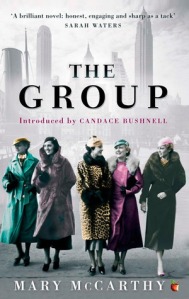 McCarthy focuses on eight girls from the Vassar class of ’33. Kay, the first to marry, has an upper-crust New York City wedding one week after graduation. But after Harald loses his theatre job, his cocktail habit and their luxury apartment soon deplete Kay’s Macy’s salary. Meanwhile, Dottie loses her virginity to Harald’s former neighbour in a surprisingly explicit scene. Contraception is complicated, but not without comic potential – as when Dottie confuses a pessary and a peccary. Career, romance, and motherhood are all fraught matters.
Feigel borrows the names of four of her five group members, plus those of some secondary characters, from McCarthy, with Stella a new character perhaps inspired in part by McCarthy’s Libby, who wants to work with books but, after delivering an earnest report on a 500-page pot-boiler, hears that “we really have no work that you’re uniquely qualified to do. You’re one of thousands of English majors who come pouring out of the colleges every June, stage-struck to go into publishing.” (That sure sounds familiar!)
Narrowing the circle and introducing a first-person narrator were wise choices that made Feigel’s version more accessible. Both, though, are characterized by forthright commentary and a shrewd understanding of human motivations. I’ll try again with McCarthy’s The Group someday, but for now I’m planning to pick up her Memories of a Catholic Girlhood.
Note: Mary McCarthy is one of the authors profiled in Michelle Dean’s Sharp.
Book Serendipity, April‒Early July
I call it serendipitous when two or more books that I read at the same time or in quick succession have something pretty bizarre in common. Because I have so many books on the go at once (usually around 20), I suppose I’m more prone to such incidents than some. I also list these occasional reading coincidences on Twitter. The following are in rough chronological order. (January to March appeared in this post.)
- Characters named Sonny in Pew by Catherine Lacey, My Father’s Wake by Kevin Toolis, and Sacred Country by Rose Tremain.
- A double dose via Greenery via Tim Dee – while reading it I was also reading Other People’s Countries by Patrick McGuinness, whom he visits in Belgium; and A Cold Spring by Elizabeth Bishop, referenced in a footnote.


- A red thread is worn as a bracelet for its emotional or spiritual significance in The Book of Longings by Sue Monk Kidd and Plan B by Anne Lamott.
- The Library of Alexandria features in Footprints by David Farrier and The Book of Longings by Sue Monk Kidd.
- The Artist’s Way is mentioned in At Hawthorn Time by Melissa Harrison and Traveling Mercies by Anne Lamott.
- Characters sleep in a church in Pew by Catherine Lacey and Abide With Me by Elizabeth Strout. (And both novels have characters named Hilda.)


- Coins being flung away among some trees in In the Springtime of the Year by Susan Hill and The Book of Longings by Sue Monk Kidd (literally the biblical 30 pieces of silver in the Kidd, which is then used as a metaphor in the Hill).
- Rabbit-breeding projects in When the Lights Go Out by Carys Bray and Parable of the Sower by Octavia E. Butler.


- Mentions of the Great Barrier Reef in When the Lights Go Out by Carys Bray and Footprints by David Farrier.
- The same very specific fact – that Seamus Heaney’s last words, in a text to his wife, were “Noli timere” – was mentioned in Curlew Moon by Mary Colwell and Greenery by Tim Dee.
- Klondike ice cream bars appeared in both Small Victories by Anne Lamott and The Fixed Stars by Molly Wizenberg.

- The metaphor of a rising flood only the parent or the child will survive is used in both Exit West by Mohsin Hamid and What We Carry by Maya Lang.
- The necessity of turning right to save oneself in a concentration camp setting is mentioned in both Man’s Search for Meaning by Viktor Frankl and Fugitive Pieces by Anne Michaels.
- An English child is raised in North Africa in Oleander, Jacaranda by Penelope Lively and The Child in Time by Ian McEwan.
- The Bristol Stool Chart appeared in both Gulp by Mary Roach and The Bad Doctor by Ian Williams.


- A Greek island setting in both Exit West by Mohsin Hamid and Fugitive Pieces by Anne Michaels (plus, earlier, in A Theatre for Dreamers by Polly Samson).
- Both Writers & Lovers by Lily King and Mother: A Memoir by Nicholas Royle mention Talking Heads within the first 20 pages.
- A trip to North Berwick in the early pages of Mother: A Memoir by Nicholas Royle, and hunting for cowrie shells on the beach – so familiar from Evie Wyld’s The Bass Rock, read the previous month. (Later, more collecting of cowrie shells in Oleander, Jacaranda by Penelope Lively.)
- Children’s authors are main characters in The Crow Road by Iain Banks and The Child in Time by Ian McEwan.

- A character is killed by a lightning strike in The Crow Road by Iain Banks and Writers & Lovers by Lily King.
- Characters named Ash in The Crow Road by Iain Banks and The Fixed Stars by Molly Wizenberg.
 A brother steals the main character’s object of affection in The Crow Road by Iain Banks and Sacred Country by Rose Tremain.
- A minor character in Parable of the Sower by Octavia E. Butler is called Richard Rohr … meanwhile, I was reading a book by Richard Rohr, The Universal Christ.
- A maternity ward setting in The Pull of the Stars by Emma Donoghue and The Bell in the Lake by Lars Mytting.
- A love triangle is a central element in Writers & Lovers by Lily King and The Bell in the Lake by Lars Mytting.


- Reading a book by a Galloway (The Trick Is to Keep Breathing by Janice Galloway) and a book about Galloway (Native: Life in a Vanishing Landscape by Patrick Laurie) simultaneously.
- Attending college in L.A. in The Vanishing Half by Brit Bennett and Dreams from My Father by Barack Obama.
- Two books that reference the same Darwin quote: Into the Tangled Bank by Lev Parikian, and “The Entangled Bank” is the title of the final poem in Red Gloves by Rebecca Watts.


- Characters with the surname Savage in The Box Garden by Carol Shields and Islands of Mercy by Rose Tremain.
- A character is taught how to eat oysters in The Vanishing Half by Brit Bennett and Kitchen Confidential by Anthony Bourdain.
- A Louisiana setting in The Vanishing Half by Brit Bennett and Property by Valerie Martin.
- Characters named Stella in The Vanishing Half by Brit Bennett and The Group by Lara Feigel.


- The last line of the book has a character saying “Come in” in Americanah by Chimamanda Ngozi Adichie and Ankomst by Gøhril Gabrielsen.
- Currently reading four books with mixed-race narrators: (Black/white) The Girl Who Fell from the Sky by Heidi Durrow, Dreams from My Father by Barack Obama, Memorial Drive by Natasha Trethewey; and (Japanese/white) My Year of Meats by Ruth Ozeki.
- Currently reading two novels in which a pair of orphaned sisters are taken in by relatives (Deerbrook by Harriet Martineau and Rise and Shine by Anna Quindlen). Plus two more novels with orphan characters: The Girl Who Fell from the Sky and My Year of Meats.
-
- In two of these four (not telling which, though you can safely assume it’s not the Victorian novel!), they are orphans because both parents were killed in a car accident. I feel like this is a fictional setup that I encounter all the time (cf. All the Beautiful Girls, The Monsters of Templeton, Saint Maybe) that can’t be that common in real life?
-


- Vassar as an alma mater in Kitchen Confidential by Anthony Bourdain and The Group by Mary McCarthy.
- Punahou School (Honolulu, Hawaii) is the author’s alma mater in The Noonday Demon by Kathleen Norris and Dreams from My Father by Barack Obama.
 Bookish Beck = Rebecca Foster. American transplant to England. Freelance proofreader and book reviewer.
 Bookish Beck
Random Blog Searches and Spam Comments
I should have another batch of summer books read and reviewed by Friday. To fill in until then, I’ve resuscitated a recurring post template that I haven’t used in over three years, looking at the random searches that have led people to my blog. (Previously surveyed in May 2016, October 2016 and June 2017.)
I keep a record of the most interesting or bizarre blog searches that show up on my dashboard. Some recent favorites are below. I may not have the dirt on a new Donna Tartt release, but some of those who came with an inquiring mind will have found answers to their questions on my site.
(Spelling and punctuation are unedited throughout!)
2018
June 23: heart surgery vs brain surgery, elderberry cordial nancy Mitford
September 8: eve schaub rag rug
October 9: i hate elena ferrante
December 20: shaun bythell partner
December 27: philip carey leg
February 8: julia buckley journalist friend with a witchdoctor
March 30: was mel love with sharon animators
April 17: parker fiske – eleanor roosevelt’s cousin
May 31: is donna tartt writing another novel after the goldfinch
September 10: reservoir 13 who did it
October 22: sample inscription in cookbook for a bride
2019
March 19: the heart’s invisible furies spoilers, culling books
2020
January 19: vikram paralkar night theatre stinks, is megan phelps roper a jehovahs witness
March 30: miochel faber interview, did shaun bythell marry jess ica fox, why did mary give thatcher a gift in the novel unsheltered
April 17: bitter orange symbolism, books under 50 pages, cystic fibrosis stevenson helen, nuts in may louis macneice
April 28: essays on comparing the novels empire falls by richard russo and cat’s eye by margaret wood
July 6: christianne ritter aurhor what became of her and her husband
Lots of curiosity about Shaun Bythell’s romantic history – my review of The Diary of a Bookseller continues to be one of my most-viewed posts. I think my favorite search, though, is “i hate elena ferrante” (hate is too strong a word, but I do remain indifferent to her charms).
I regularly check my spam folder because, every once in a while, a regular commenter’s message goes astray there and I’d hate to miss anything genuine.
In the last month I’ve noticed hundreds of spam comments on my blog, all containing identical Spanish-language text (“Muchas gracias. ?Como puedo iniciar sesion?”) and usually appearing on one of four particular posts.
Any ideas about how I can get the Spanish spam to go away?