Book Serendipity, Mid-June through August
I call it “Book Serendipity” when two or more books that I read at the same time or in quick succession have something in common – the more bizarre, the better. This is a regular feature of mine every couple of months. Because I usually have 20–30 books on the go at once, I suppose I’m more prone to such incidents. People frequently ask how I remember all of these coincidences. The answer is: I jot them down on scraps of paper or input them immediately into a file on my PC desktop; otherwise, they would flit away!
The following are in roughly chronological order.
- A description of the Y-shaped autopsy scar on a corpse in Pet Sematary by Stephen King and A Truce that Is Not Peace by Miriam Toews.
- Charlie Chaplin’s real-life persona/behaviour is mentioned in The Quiet Ear by Raymond Antrobus and Greyhound by Joanna Pocock.
- The manipulative/performative nature of worship leading is discussed in Don’t Forget We’re Here Forever by Lamorna Ash and Jarred Johnson’s essay in the anthology Queer Communion: Religion in Appalachia. I read one scene right after the other!
- A discussion of the religious impulse to celibacy in Don’t Forget We’re Here Forever by Lamorna Ash and The Dry Season by Melissa Febos.
- Hanif Kureishi has a dog named Cairo in Shattered; Amelia Thomas has a son by the same name in What Sheep Think About the Weather.
- A pilgrimage to Virginia Woolf’s home in The Dry Season by Melissa Febos and Writing Creativity and Soul by Sue Monk Kidd.
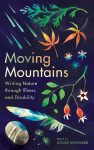
- Water – Air – Earth divisions in the Nature Matters (ed. Mona Arshi and Karen McCarthy Woolf) and Moving Mountains (ed. Louise Kenward) anthologies.
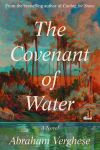 The fact that humans have two ears and one mouth and so should listen more than they talk is mentioned in What Sheep Think about the Weather by Amelia Thomas and The Covenant of Water by Abraham Verghese.
- Inappropriate sexual comments made to female bar staff in The Most by Jessica Anthony and Isobel Anderson’s essay in the Moving Mountains (ed. Louise Kenward) anthology.
- Charlie Parker is mentioned in The Most by Jessica Anthony and The Quiet Ear by Raymond Antrobus.
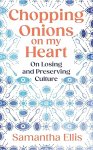
- The metaphor of an ark for all the elements that connect one to a language and culture was used in Chopping Onions on My Heart by Samantha Ellis, which I read earlier in the year, and then again in The Quiet Ear by Raymond Antrobus.
- A scene of first meeting their African American wife (one of the partners being a poet) and burning a list of false beliefs in The Dry Season by Melissa Febos and The Quiet Ear by Raymond Antrobus.
- The Kafka quote “a book must be the axe for the frozen sea inside us” appears in Shattered by Hanif Kureishi and Writing Creativity and Soul by Sue Monk Kidd. They also both quote Dorothea Brande on writing.
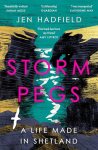
- The simmer dim (long summer light) in Shetland is mentioned in Storm Pegs by Jen Hadfield and Sally Huband’s piece in the Moving Mountains (ed. Louise Kenward) anthology (not surprising as they both live in Shetland!).
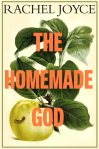
- A restaurant applauds a proposal or the news of an engagement in The Homemade God by Rachel Joyce and Likeness by Samsun Knight.
- Noticing that someone ‘isn’t there’ (i.e., their attention is elsewhere) in Woodworking by Emily St. James and Palaver by Bryan Washington.
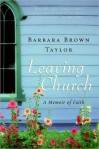
- I was reading Leaving Atlanta by Tayari Jones and Leaving Church by Barbara Brown Taylor – which involves her literally leaving Atlanta to be the pastor of a country church – at the same time. (I was also reading Leave the World Behind by Rumaan Alam.)
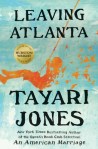
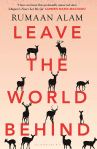
- A mention of an adolescent girl wearing a two-piece swimsuit for the first time in Leave the World Behind by Rumaan Alam, The Summer I Turned Pretty by Jenny Han, and The Stirrings by Catherine Taylor.
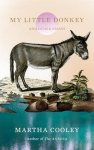
- A discussion of John Keats’s concept of negative capability in My Little Donkey by Martha Cooley and What Sheep Think About the Weather by Amelia Thomas.
- A mention of JonBenét Ramsey in Leave the World Behind by Rumaan Alam and the new introduction to Leaving Atlanta by Tayari Jones.
- A character drowns in a ditch full of water in Leaving Atlanta by Tayari Jones and The Covenant of Water by Abraham Verghese.
 A girl dares to question her grandmother for talking down the girl’s mother (i.e., the grandmother’s daughter-in-law) in Cekpa by Leah Altman and Leaving Atlanta by Tayari Jones.
- A woman who’s dying of stomach cancer in The Covenant of Water by Abraham Verghese and Book of Exemplary Women by Diana Xin.
- A woman’s genitals are referred to as the “mons” in Leave the World Behind by Rumaan Alam and The Covenant of Water by Abraham Verghese.
- A girl doesn’t like her mother asking her to share her writing with grown-ups in People with No Charisma by Jente Posthuma and one story of Book of Exemplary Women by Diana Xin.
- A girl is not allowed to walk home alone from school because of a serial killer at work in the area, and is unprepared for her period so lines her underwear with toilet paper instead in Leaving Atlanta by Tayari Jones and The Stirrings by Catherine Taylor.
 When I interviewed Amy Gerstler about her poetry collection Is This My Final Form?, she quoted a Walt Whitman passage about animals. I found the same passage in What Sheep Think About the Weather by Amelia Thomas.
- A character named Stefan in The Dime Museum by Joyce Hinnefeld and Palaver by Bryan Washington.
- A father who is a bad painter in The Dime Museum by Joyce Hinnefeld and The Homemade God by Rachel Joyce.
- The goddess Minerva is mentioned in The Dime Museum by Joyce Hinnefeld and The Stirrings by Catherine Taylor.
- A woman finds lots of shed hair on her pillow in In Late Summer by Magdalena Blažević and The Dig by John Preston.
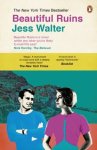 An Italian man who only uses the present tense when speaking in English in The Homemade God by Rachel Joyce and Beautiful Ruins by Jess Walter.
- The narrator ponders whether she would make a good corpse in People with No Charisma by Jente Posthuma and Terminal Surreal by Martha Silano. The former concludes that she would, while the latter struggles to lie still during savasana (“Corpse Pose”) in yoga – ironic because she has terminal ALS.
- Harry the cat in The Wedding People by Alison Espach; Henry the cat in Calls May Be Recorded by Katharina Volckmer.
- The protagonist has a blood test after rapid weight gain and tiredness indicate thyroid problems in Voracious by Małgorzata Lebda and The Stirrings by Catherine Taylor.
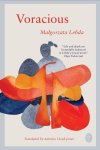
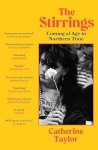
- It’s said of an island that nobody dies there in Somebody Is Walking on Your Grave by Mariana Enríquez and Beautiful Ruins by Jess Walter.
- A woman whose mother died when she was young and whose father was so depressed as a result that he was emotionally detached from her in The Wedding People by Alison Espach and People with No Charisma by Jente Posthuma.
 A scene of a woman attending her homosexual husband’s funeral in The Homemade God by Rachel Joyce and Novel About My Wife by Emily Perkins.
- There’s a ghost in the cellar in In Late Summer by Magdalena Blažević, The Covenant of Water by Abraham Verghese and Book of Exemplary Women by Diana Xin.
- Mention of harps / a harpist in The Wedding People by Alison Espach, The Homemade God by Rachel Joyce, and What Mennonite Girls Are Good For by Jennifer Sears.
- “You use people” is an accusation spoken aloud in The Dry Season by Melissa Febos and Beautiful Ruins by Jess Walter.
- Let’s not beat around the bush: “I want to f*ck you” is spoken aloud in The Wedding People by Alison Espach and Novel About My Wife by Emily Perkins; “Want to/Wanna f*ck?” is also in The Wedding People by Alison Espach and in Bigger by Ren Cedar Fuller.
 A young woman notes that her left breast is larger in Voracious by Małgorzata Lebda and Woodworking by Emily St. James. (And a girl fondles her left breast in one story of Book of Exemplary Women by Diana Xin.)
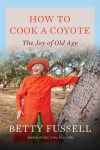
- A shawl is given as a parting gift in How to Cook a Coyote by Betty Fussell and one story of What Mennonite Girls Are Good For by Jennifer Sears.
- The author has Long Covid in Alec Finlay’s essay in the Moving Mountains anthology, and Pluck by Adam Hughes.
- An old woman applies suncream in Kate Davis’s essay in the Moving Mountains anthology, and How to Cook a Coyote by Betty Fussell.
- There’s a leper colony in What Mennonite Girls Are Good For by Jennifer Sears and The Covenant of Water by Abraham Verghese.
- There’s a missionary kid in South America in Bigger by Ren Cedar Fuller and What Mennonite Girls Are Good For by Jennifer Sears.
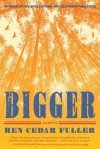
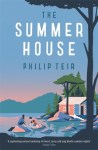 A man doesn’t tell his wife that he’s lost his job in Novel About My Wife by Emily Perkins and The Summer House by Philip Teir.
- A teen brother and sister wander the woods while on vacation with their parents in Leave the World Behind by Rumaan Alam and The Summer House by Philip Teir.
- Using a famous fake name as an alias for checking into a hotel in one story of Single, Carefree, Mellow by Katherine Heiny and Seascraper by Benjamin Wood.
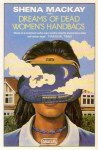
- A woman punches someone in the chest in the title story of Dreams of Dead Women’s Handbags by Shena Mackay and Novel About My Wife by Emily Perkins.
What’s the weirdest reading coincidence you’ve had lately?
My Best Backlist Reads of the Year
Like many bloggers and other book addicts, I’m irresistibly drawn to the new books released each year. However, I consistently find that many memorable reads were published earlier. A few of these are from 2022 or 2023 and most of the rest are post-2000; the oldest is from 1910. These 14 selections (alphabetical within genre but in no particular rank order), together with my Best of 2024 post coming up on Tuesday, make up about the top 10% of my year’s reading. Repeated themes included adolescence, parenting (especially motherhood) and trauma. The two not pictured below were read electronically.

Fiction
Fun facts:
- I read 4 of these for book club (Forster, Mandel, Munro and Obreht)
- 3 (Mandel, McEwan and Obreht) were rereads
- I read 2 as part of my Carol Shields Prize shadowing (Foote and Zhang)
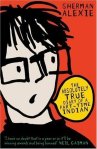 The Absolutely True Diary of a Part-Time Indian by Sherman Alexie: Groundbreaking for both Indigenous literature and YA literature, this reads exactly like a horny 14-year-old boy’s diary, but “Junior” (Arnold Spirit, Jr.) is also self-deprecating and sweetly vulnerable. Poverty, alcoholism, casinos: they don’t feel like clichés of Indian reservations because Alexie writes from experience and presents them matter-of-factly. Junior moves to a white high school and soon becomes adept at code-switching (and cartooning). Heartfelt; spot on.
 The Street by Bernardine Bishop: A low-key ensemble story about the residents of one London street: a couple struggling with infertility, a war veteran with dementia, and so on. Most touching is the relationship between Anne and Georgia, a lesbian snail researcher who paints Anne’s portrait; their friendship shades into quiet, middle-aged love. Beyond the secrets, threats and climactic moments is the reassuring sense that neighbours will be there for you. Bishop’s style reminds me most of Tessa Hadley’s. A great discovery.
 Coleman Hill by Kim Coleman Foote: Is this family memoir? Or autofiction? Foote draws on personal stories but also invokes overarching narratives of Black migration and struggle. The result is magisterial, a debut that is like oral history and a family scrapbook rolled into one, with many strong female characters. Like a linked story collection, it pulls together 15 vignettes from 1916 to 1989 and told in different styles and voices, including AAVE. The inherited trauma is clear, yet Foote weaves in counterbalancing lightness and love.
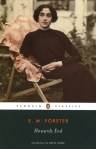 Howards End by E.M. Forster: Rereading for book club, I was so impressed by its complexities – the illustration of class, the character interactions, the coincidences, the deliberate doublings and parallels. It covers so many issues, always without a heavy touch. So many sterling sentences: depictions of places, observations of characters, or maxims that are still true of life. Well over a century later and the picture of well-meaning wealthy intellectuals’ interference making others’ lives worse is just as cutting.
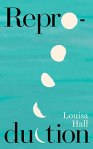 Reproduction by Louisa Hall: Procreation. Duplication. Imitation. All three connotations are appropriate for the title of an allusive novel about motherhood and doppelgangers. A pregnant writer starts composing a novel about Mary Shelley and finds the borders between fiction and (auto)biography blurring. It’s a recognisable piece of autofiction, with a sublime clarity as life is transcribed to the page exactly as it was lived. A tale of transformation – chosen or not – and peril in a country hurtling toward self-implosion. Brilliantly envisioned.
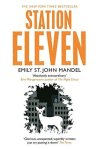 Station Eleven by Emily St. John Mandel: This has persisted as a definitive imagination of post-apocalypse life. On a reread, I was captivated by the different layers of the nonlinear story, from celebrity gossip to a rare graphic novel series, and the links between characters and storylines. Mandel also seeds subtle connections to later work. Themes that struck me were the enduring power of art and the value of the hyperlocal. It seems prescient of Covid-19, but more so of climate collapse. An ideal blend of the literary and the speculative.
 On Chesil Beach by Ian McEwan: A perfect novella. Its core is the July 1962 night when Edward and Florence attempt to consummate their marriage, but it stretches back to cover everything we need to know about them – their family dynamics, how they met, what they want from life – and forward to see their lives diverge. Is love enough? It’s a maturing of the author’s vision: tragedy is not showy and grotesque like in his early work, but quiet, hinging on the smallest action, the words not said. This absolutely flayed me emotionally on a reread.
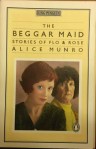 The Beggar Maid by Alice Munro: Linked short stories about a hardscrabble upbringing in small-town Ontario and a woman’s ongoing search for love. Rose’s stepmother Flo is resentful and stingy. She feels she’s always been hard done by, and takes it out on Rose. From early on, we know Rose makes it out of West Hanratty and gets a chance at a larger life, that her childhood becomes a tale of deprivation. Each story is intense, pitiless, and practically as detailed as an entire novel. Rich in insight into characters’ psychology.
 The Tiger’s Wife by Téa Obreht: Natalia, a medical worker in a war-ravaged country, learns of her grandfather’s death away from home. The only one who knew the secret of his cancer, she sneaks away from an orphanage vaccination program to reclaim his personal effects, hoping they’ll reveal something about why he went on this final trip. On this reread I was utterly entranced, especially by the sections about The Deathless Man. I had forgotten the medical element, which of course I loved. My favourite Women’s Prize winner.
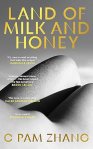 Land of Milk and Honey by C Pam Zhang: On a smog-covered planet where 98% of crops have failed, scarcity reigns – but there is a world apart, a mountaintop settlement at the Italian border where money can buy anything. The 29-year-old Chinese American chef’s job is to produce lavish, evocative multi-course meals. Her relationship with her employer’s 21-year-old daughter is a passionate secret. Each sentence is honed to flawlessness, with paragraphs of fulsome descriptions of meals. A striking picture of desire at the end of the world.
Nonfiction
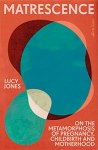 Matrescence: On the Metamorphosis of Pregnancy, Childbirth and Motherhood by Lucy Jones: A potent blend of scientific research and stories from the frontline. Jones synthesizes a huge amount of information into a tight narrative structured thematically but also proceeding chronologically through her own matrescence. The hybrid nature of the book is its genius. There’s a laser focus on her physical and emotional development, but the statistical and theoretical context gives a sense of the universal. For anyone who’s ever had a mother.
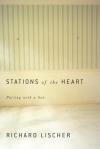 Stations of the Heart: Parting with a Son by Richard Lischer: Lischer opens by looking back on the day when his 33-year-old son Adam called to tell him his melanoma was back. Tests revealed metastases everywhere, including in his brain. The next few months were a Calvary of sorts, and Lischer, an emeritus professor at Duke Divinity School, draws deliberate parallels with biblical and liturgical preparations for Good Friday. His prose is a just right match: stately, resolute and weighted with spiritual allusion, yet never morose.
 A Flat Place by Noreen Masud: A travel memoir taking in flat landscapes of the British Isles. But flatness is a psychological motif as well as a topographical reality. Growing up with a violent Pakistani father and passive Scottish mother, Masud chose the “freeze” option in fight-or-flight situations. A childhood lack of safety, belonging and love left her with complex PTSD. Her portrayals of sites and journeys are engaging and her metaphors are vibrant. Geography, history and social justice are a backdrop for a stirring personal story.
 I’m Glad My Mom Died by Jennette McCurdy: True to her background in acting and directing, the book is based around scenes and dialogue, and present-tense narration mimics her viewpoint starting at age six. Much imaginative work was required to make her chaotic late-1990s California household, presided over by a hoarding Mormon cancer survivor, feel real. Abuse, eating disorders, a paternity secret: The mind-blowing revelations keep coming. So much is sad. And yet it’s a very funny book in its observations and turns of phrase.
What were some of your best backlist reads this year?
Three on a Theme: Books on Communes by Crossman, Heneghan & Twigg
Communal living always seems like a great idea but rarely works out well. Why? The short answer: Because people. A longer answer: Political ideals are hard to live out in the everyday when egos clash, practical arrangements become annoying, and lines of privacy or autonomy get crossed. All three books I review today are set in the aftermath of utopian failure. Susanna Crossman, who grew up in an English commune, looks back at 15 years of an abnormal childhood. The community in Birdeye is set to collapse after two founding members announce their departure, leaving one ageing woman and her disabled daughter. And in Spoilt Creatures, from a decade’s distance, Iris narrates the disastrous downfall of Breach House.
Home Is Where We Start: Growing up in the Fallout of the Utopian Dream by Susanna Crossman
For Crossman’s mother, “the community” was a refuge, a place to rebuild their family’s life after divorce and the death of her oldest daughter in a freak accident. For her three children, it initially was a place of freedom and apparent equality between “the Adults” and “the Kids” – who were swiftly indoctrinated into hippie opinions on the political matters of the day. “There is no difference between private and public conversations, between the inside and the outside. No euphemisms. Vaginas are discussed over breakfast alongside domestic violence and nuclear bombs.” Crossman’s present-tense recreation of her precocious eight-year-old perspective is canny, as when she describes watching Charles and Diana’s wedding on television:
It was beautiful, but I know marriage is a patriarchal institution, a capitalist trap, a snare. You can read about it in Spare Rib, or if you ask community members, someone will tell you marriage is legalized rape. It is a construction, and that means it’s not natural, and is part of the social reproduction of gender roles and women’s unpaid domestic labour.
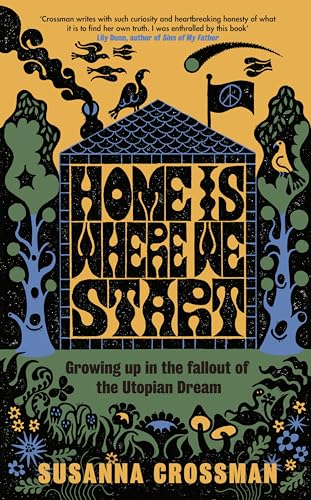 Their mum, now known only as “Alison,” often seemed unaware of what the Kids got up as they flitted in and out of each other’s units. Crossman once electrocuted herself at a plug. Another time she asked if she could go to an adult man’s unit for an offered massage. Both times her mother was unfazed.
The author is now a clinical arts therapist, so her recreation is informed by her knowledge of healthy child development and the long-term effects of trauma. She knows the Kids suffered from a lack of routine and individually expressed love. Community rituals, such as opening Christmas presents in the middle of a circle of 40 onlookers, could be intimidating rather than welcoming. Her molestation and her sister’s rape (when she was nine years old, on a trip to India ‘supervised’ by two other adults from the community) were cloaked in silence.
Crossman weaves together memoir and psychological theory as she examines where the utopian impulse comes from and compares her own upbringing with how she tries to parent her three daughters differently at home in France. Through vignettes based on therapy sessions with patients, she shows how play and the arts can help. (I’d forgotten that I’ve encountered Crossman’s writing before, through her essay on clowning for the Trauma anthology.) I somewhat lost interest as the Kids grew into teenagers. It’s a vivid and at times rather horrifying book, but the author doesn’t resort to painting pantomime villains. Behind things were good intentions, she knows, and there is nuance and complexity to her account. It’s a great mix of being back in the moment and having the hindsight to see it all clearly.
With thanks to Fig Tree (Penguin) for the proof copy for review.
Birdeye by Judith Heneghan
Like Crossman’s community, the Birdeye Colony is based in a big crumbling house in the countryside – but this time in the USA; the Catskills of upstate New York, to be precise. Liv Ferrars has been the de facto leader for nearly 50 years, since she was a young mother to twins. Now she’s a sixty-seven-year-old breast cancer survivor. To her amazement, her book, The Attentive Heart, still attracts visitors, “bringing their problems, their pain and loneliness, hoping to be mended, made whole.”
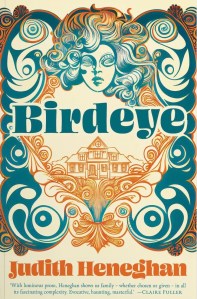 One of the ur-plots is “a stranger comes to town,” and that’s how Birdeye opens, with the arrival of a young man named Conor who’s read and admired Liv’s book, and seems to know quite a lot about the place. When Indian American siblings Sonny and Mishti, the only others who have been there almost from the beginning, announce that they’re leaving, it seems Birdeye is doomed. But Liv wonders if Conor can be part of a new generation to take it on.
It’s a bit of a sleepy book, with a touch of suspense as secrets emerge from Birdeye’s past. I was slightly reminded of May Sarton’s Kinds of Love. I most appreciated the character study of Liv and her very different relationships with her daughters, who are approaching fifty: Mary is a capable lawyer in London, while Rose suffered oxygen deprivation at birth and is severely intellectually disabled. Since Liv’s illness, Mary has pressured her to make plans for Rose’s future and, ultimately, her own. The duty of care we bear towards others – blood family; the chosen family of friends and comrades, even pets – arises as a major theme. I’d recommend this to those who love small-town novels.
With thanks to Salt Publishing for the free copy for review.
& 20 Books of Summer, #20:
Spoilt Creatures by Amy Twigg
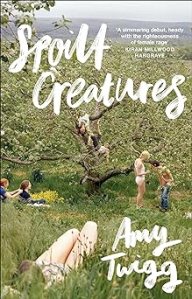 Alas, this proved to be another disappointment from the Observer’s 10 best new novelists feature (following How We Named the Stars by Andrés N. Ordorica). The setup was promising: in 2008, Iris reeling from her break-up from Nathan and still grieving her father’s death in a car accident, goes to live at Breach House after a chance meeting with Hazel, one of the women’s commune’s residents. “Breach House was its own ecosystem, removed from the malfunctioning world of indecision and patriarchy.” Any attempts to mix with the outside world go awry, and the women gain a reputation as strange and difficult. I never got a handle on the secondary characters, who fill stock roles (the megalomaniac leader, the reckless one, the disgruntled one), and it all goes predictably homoerotic and then Lord of the Flies. The dual-timeline structure with Iris’s reflections from 10 years later adds little. An example of the commune plot done poorly, with shallow conclusions rather than deeper truths at play.
With thanks to Tinder Press for the free copy for review.
On this topic, I have also read:
Novels:
Arcadia by Lauren Groff
The Blithedale Romance by Nathaniel Hawthorne
On my TBR:
O Sinners by Nicole Cuffy
We Burn Daylight by Bret Anthony Johnston
Nonfiction:
Heaven Is a Place on Earth by Adrian Shirk
Harriet Said… by Beryl Bainbridge (#NovNov23 and #ReadingBeryl23)
Beryl Bainbridge Reading Week (hosted by Annabel) is a perfect chance to combine November challenges as most of Bainbridge’s works are under 200 pages. And today would have been the author’s birthday, too. Although Harriet Said… is the first book she wrote, it was rejected and not published until 1972, making it her third novel. I can see why publishers would have been wary of taking a risk on such a nasty little story from an unknown author. Even from an established writer this would be a hard one to stomach, subverting as it does the traditional notion of the innocence of childhood.

The title is also the first two words of the novel and tells us right away that the narrator (never named) is in thrall to her friend Harriet. The young teenager is on her summer holidays from boarding school, back in a Liverpool suburb. She lets Harriet set the agenda for their long, idle, unsupervised days: “she told me what to read, explained to me the things I read, told me what painters I should admire and why. I listened, I did as she said, but I did not feel much interest, at least not on my own, only when she was directing me.”
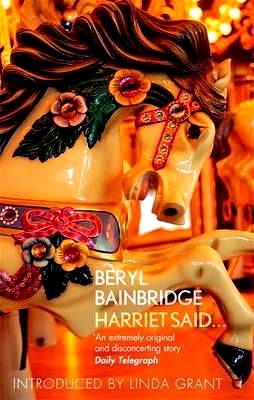
The girls dramatize their experiences in journal entries and make up stories for the people they meet on the local sand dunes, such as Peter Biggs, whom they dub Peter the Great or “the Tsar.” The narrator casts her relationship with him as a romance: “I wished I knew if I only imagined he cared for me, it seemed so strange the things I attributed to him. I did not know where the dream and the reality merged.” Together they decide to humble the Tsar.
{SPOILERS FOLLOW}
It’s uncomfortable for modern readers to encounter what is essentially a seduction plot between a teenager and a middle-aged man, but with the teen taking the active predator role. (And Harriet behind the scenes manipulating the interactions, rather like the Marquise de Merteuil in Dangerous Liaisons.) We’re fixated on the question of consent, but would the ultimate sex scene be classed as a rape? “‘Gerroff’, I wanted to shout, ‘Gerroff.’ But I did not want to hurt his feelings. … I was surprised how little discomfort I felt, apart from a kind of interior bruising, and how cheerful I was.” Harriet and the narrator both have a history of carrying on with grown men, and by peeping at windows see the Tsar having sex with Mrs Biggs on the couch. None of what they do seems accidental, or unfortunate, because they seem so determined to gravitate towards the smutty parts of life.
“What are little girls made of?
Sugar and spice,
And all that’s nice”
Fat chance!
“I tried to think what innocence meant and failed.”
“It was quite easy to bring myself to hurt him, he was such a fool.”
It’s not unexpected when the girls’ obsession leads to tragedy, but the exact form the collateral damage takes is a surprise. I’ve called this a ‘nasty little story’, but I mostly mean that in an admiring way, because it takes skill in plotting and characterization to make us keep reading even when all is so sordid.
Bainbridge has always reminded me of Penelope Fitzgerald in her concision, but I find Bainbridge less subtle and more edgy – a good combination, if you ask me. Harriet Said… feels like it falls on a continuum between, say, Barbara Comyns and Ottessa Moshfegh. I also wondered whether contemporary novelists like Eliza Clark (Penance) and Heather Darwent (The Things We Do to Our Friends) could have been influenced by the picture of teenage girls’ malevolence and the way that the action starts with hideous aftermath and then works backwards. This was a squirmy but memorable read. (Public library) [175 pages]

Summery Reading, Part I: The Greengage Summer & Sunburn by Watson
Brief thoughts on a first pair of summer-themed reads: coming-of-age stories about teenage girls who trade England for somewhere more exciting – France or Greece – for a summer and awaken to the complications of sex when let down by the adults in their lives. Both: 
The Greengage Summer by Rumer Godden (1958)
 We wanted to read something by Godden in my book club’s women’s classics subgroup, and decided on this almost purely for the evocative title. Cecil is the second of five children who run amok at a French hotel while their father is botanizing in Tibet and their mother in hospital with an infected horsefly bite. Hotel staff and hangers-on are engaged in all sorts of shenanigans – affairs and casual molestation of the maids, for instance – and the children, caught up in the thrill of it, attach themselves to Eliot, the English lover of Mademoiselle Zizi. The adults get Cecil and her older sister, Joss, drunk on champagne. Joss is the belle of the ball and attracts an inappropriate suitor; Cecil gets her first period and tells Eliot, of all people. It’s a familiar message in mid-century fiction, I suppose: loss of sexual innocence leads to disaster. I found this quite melodramatic, with a sudden ending; it didn’t live up to the terrific premise. I was similarly underwhelmed by Black Narcissus. (University library)
Sunburn by Andi Watson; illus. Simon Gane (2022)
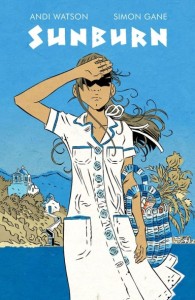 We open in suburban London in what appears to be the 1950s. Sixteen-year-old Rachel is offered a lucky escape from a summer of working at the butcher shop to stay with her parents’ friends, the Warners, at their home on a Greek island. Their life is a heady mix of languorous shopping, swimming and nightly parties. There’s a big contrast between the sophisticated expats and the local peasantry. When Rachel meets Ben, a fellow English teenager, it seems like her idyllic summer is complete, but things sour between them. Over the course of the book, Rachel realizes that not all grown-ups can be trusted. The plot took a twist I wasn’t expecting, which is always refreshing, but I should probably have been ready for it based on the depictions. The graphic novel is all in shades of blue, with white and light brown accents, as befitting the Greek flag and scenery. A problem I had was that most of the characters look the same – the artist has just the one way of drawing faces, so Rachel, Mrs. Warner and Ben have pretty much identical features. I would have catalogued this in YA. (Public library)
Both at least had a steamy summer atmosphere! My next seasonal read, picked up from the library today, will be One Midsummer’s Day by Mark Cocker, which is all about swifts. We have a pair nesting in our eaves again this year – hurrah! – and have been enjoying watching their (albeit diminished) screaming parties tear down the streets on warm summer evenings.
Any “summer” or “sun” books for you this year?
Women’s Prize Longlist Reviews (Croft, Grudova, O’Farrell) & Shortlist Predictions
The Women’s Prize shortlist will be announced on Wednesday the 26th. I’ve managed to read a few more novels from the longlist and started another (Fire Rush by Jacqueline Crooks), which would take me up to 6 read out of 16. I have a couple of others on order from the library (Kennedy and Patel), but will only bother to read them if they are shortlisted.
Homesick by Jennifer Croft
I was intrigued by the publication history of this one: Croft first wrote it in Spanish, then produced an English-language version which, in the USA, was marketed as a memoir illustrated with her own photographs. Here in the UK, though, Charco Press published it as part of their new range of untranslated fiction – with no photos, alas. So, it’s clear that this is thinly veiled autobiography; literally all that may have been changed is the character names.
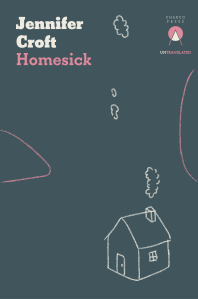 The protagonist is ‘Amy’, who lives in a tornado-ridden Oklahoma and whose sister, ‘Zoe’ – a handy A to Z of growing up there – has a mysterious series of illnesses that land her in hospital. The third person limited perspective reveals Amy to be a protective big sister who shoulders responsibility: “There is nothing in the world worse than Zoe having her blood drawn. Amy tries to show her the pictures [she’s taken of Zoe’s dog] at just the right moment, just right before the nurse puts the needle in”.
The girls are home-schooled and Amy, especially, develops a genius for languages, receiving private tutoring in Russian from Sasha, a Ukrainian former student of their father’s. Both sister are more than a little in love with Sasha. They alternate between competing for attention and indulging their joint passions – such as for the young Russian figure-skating couple who sweep the Winter Olympics. Amy starts college at 15, which earns her unwanted attention among her classmates, and struggles with her mental health before deciding to see the world. Despite periods of estrangement, her relationship with Zoe is what grounds her.
In a sense this is a simple chronological story, told in a matter-of-fact way. Yet each of its vignettes – some just a paragraph long – is perfectly chosen to reveal the family dynamic and the moment in American history. Detailed chapter headings continue the narrative and sometimes contain a shocking truth. What Croft does so brilliantly is to chart the accretion of ordinary and landmark events that form a life; Amy realizes this as she looks back at a packet of her photographs: “laid out step by step like this, more or less in order, the pictures also form a kind of path.”
Initially, I had my doubts as to whether this should have been eligible for the Women’s Prize. In the end it didn’t matter whether it was presented as memoir or autofiction, so true was it to the experience of 1990s girlhood, as well as to sisterhood and coming of age at any time in history. It reminded me strongly of Very Cold People by Sarah Manguso, but felt that little bit more universal in how it portrays family ties, ambition, and life’s winding path. (See also Annabel’s review for Shiny New Books.) 
With thanks to Charco Press for the free copy for review.
Children of Paradise by Camilla Grudova
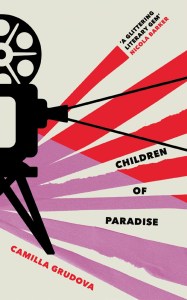 In 2017 I reviewed Grudova’s surreal story collection, The Doll’s Alphabet, describing its tales as “perverted fairytales or fragmentary nightmares.” Okay then, let’s continue in that perverted, nightmarish vein. Holly, new to the country/city, finds a room in a shared flat and a job as an usher at the Paradise Cinema, which shows a random assortment of art films and cult classics. The building is so low-rent it’s almost half derelict, and the staff take full advantage of the negligent management to get up to all sorts of sexual shenanigans, as well as drinking and drug-taking, while on duty. Holly and her co-workers are truly obsessed with the cinema, watching every showing at work but also hosting all-night movie marathons in their apartments. “The outside world, all of its news, faded away, and the movies became my main mirror of the world,” she confesses. “They were a necessary evil, customers, so that we, the true devotees, could have access to the screen, our giant godlike monument.”
The title is simultaneously ironic and an homage to Les Enfants du Paradis (1945), and the chapters are named after particular films. A change of ownership forces the Paradise to become more mainstream – hello, Marvel flicks and hipster snacks – but a series of horrific accidents and deliberate acts makes it seem like a cursed place. Aping movie genres, perhaps, Children of Paradise starts off as an offbeat stoner comedy and by the end approaches horror to an extent I didn’t expect. The content becomes increasingly sordid, visceral, with no opportunity missed to mention bodily fluids and excretions. I’m not notably opposed to gross-out humour, but the whole thing felt quite distasteful as well as miserable. (Public library e-book) 
My general feeling about these first two books, and probably a few others from the longlist (Crooks, McKenzie, Paull, et al.), is that the judges are trying to showcase the breadth of women’s writing: ‘Hey, guys, women can write autofiction and horror and humour and patois and speculative fiction and everything in between!’ But I don’t think these more niche or genre fiction representatives will make it any further in the race, especially because each may have been championed by a different judge.
Where the judges will find common ground will be on the standard stuff that always gets shortlisted: fairly run-of-the-mill character- and issue-driven contemporary or historical fiction. That makes it sound like I’m being dismissive, but in fact I do generally like much of the fiction that gets shortlisted for the WP: it’s readable book club fodder. It’s just maybe not inventive in the way that certain longlist titles can be. On which note, er, see the below!
The Marriage Portrait by Maggie O’Farrell
What a relief it was to wholeheartedly enjoy this sumptuous work of historical fiction, after the disappointment that was Hamnet (though perhaps I’ll feel more kindly towards the latter when I reread it for Literary Wives in November).
 Lucrezia di Cosimo de’ Medici is a historical figure who died at age 16, having been married off from her father’s Tuscan palazzo as a teenager to Alfonso II d’Este, Duke of Ferrara. She was reported to have died of a “putrid fever” but the suspicion has persisted that her husband actually murdered her, a story perhaps best known via Robert Browning’s poem “My Last Duchess.”
The focus is on the final year of Lucrezia’s life, but in flashbacks we meet her as a rebellious girl with a talent for drawing and a fascination with animals. At first it appears that Alfonso esteems her for her spiritedness – he gives her a painting of a stone marten as a betrothal gift, after all, and has her depicted with paintbrush in hand – but as the gradual storyline meets up with the 1561 spotlight, it becomes clear that she is only valued for her ability to produce an heir. However spacious and opulent they are, it is impossible to forget that Lucrezia, as a noblewoman, is confined to the edifices owned by her father or her husband.
O’Farrell’s usual present-tense narration is engaging throughout, and the two long chapters either side of the midpoint, one concerning her wedding day and the other the preparation for her portrait, are particularly absorbing. I was convinced I knew how this story would end, yet the author pulls off a delicious surprise. This is ripe for the miniseries treatment, not least because it is so attentive to visuals: the architecture of the main buildings, the lavish clothing, the colours, and the eye for what makes a good painting. Scenes are even described in terms of a spatial arrangement appreciated from afar: how three figures form a triangle in the centre of a room; how two people on a balcony bisect the view from a window.
Despite the length, this was thoroughly engrossing and one I’d recommend to readers of Geraldine Brooks and Tracy Chevalier. (See also Laura’s review.) (Public library) 
The other nominees I’ve read are:
Demon Copperhead by Barbara Kingsolver
Black Butterflies by Priscilla Morris
My ideal shortlist (a wish list based on my reading and what I still want to read):
Homesick by Jennifer Croft
Fire Rush by Jacqueline Crooks
Black Butterflies by Priscilla Morris
The Marriage Portrait by Maggie O’Farrell
I’m a Fan by Sheena Patel
Memphis by Tara M. Stringfellow
vs.
My predicted shortlist:
Trespasses by Louise Kennedy
Demon Copperhead by Barbara Kingsolver
Stone Blind by Natalie Haynes
The Marriage Portrait by Maggie O’Farrell
Memphis by Tara M. Stringfellow
Wandering Souls by Cecile Pin
An overall winner? Perhaps Trespasses by Louise Kennedy, or an unprecedented repeat win from Barbara Kingsolver or Maggie O’Farrell.
(See also Laura’s predictions post.)
What have you read from the longlist so far? Which of these books are calling to you?
Five Final Novellas: Adichie, Glück, Jhabvala, Victory for Ukraine, Woodson (#NovNov22)
We’ll wrap up Novellas in November and give some final statistics tomorrow. Today, I have mini reviews of another five novellas I read this month: one short nonfiction reread and then fiction ranging from India in the 1920s to short stories in comics about the war in Ukraine.
Notes on Grief by Chimamanda Ngozi Adichie (2021)
[85 pages]
 This came out in May last year – I pre-ordered it from Waterstones with points I’d saved up, because I’m that much of a fan – and it’s rare for me to reread something so soon, but of course it took on new significance for me this month. Like me, Adichie lived on a different continent from her family and so technology mediated her long-distance relationships. She saw her father on their weekly Sunday Zoom on June 7, 2020 and he appeared briefly on screen the next two days, seeming tired; on June 10, he was gone, her brother’s phone screen showing her his face: “my father looks asleep, his face relaxed, beautiful in repose.”
My experience of my mother’s death was similar: everything was sudden; my sister was the one there at the hospital, while all I could do was wait by the phone/laptop for news. So these details were particularly piercing, but the whole essay resonated with me as she navigates the early days of grief and remembers what she most admires about her father, including his piety, record-keeping and pride in her. (How lucky I am that Covid travel restrictions were no longer a factor; they delayed his memorial service.) My original review is here. Cathy also reviewed it. If you wish, you can read the New Yorker piece it arose from here.
Marigold and Rose: A Fiction by Louise Glück (2022)
[52 pages]
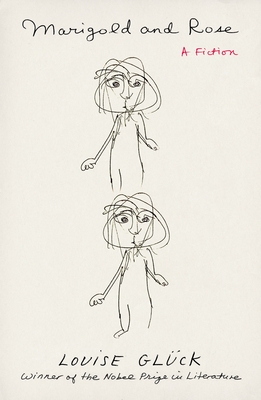 The first (and so far only) fiction by the poet and 2020 Nobel Prize winner, this is a curious little story that imagines the inner lives of infant twins and closes with their first birthday. Like Ian McEwan’s Nutshell, it ascribes to preverbal beings thoughts and wisdom they could not possibly have. Marigold, the would-be writer of the pair, is spiky and unpredictable, whereas Rose is the archetypal good baby.
Marigold did not like people. She liked Mother and Father; everyone else had not yet been properly inspected. Rose did like people and she intended them to like her. … Everyone understood that Marigold lived in her head and Rose lived in the world.
Now every day was like the days when the twins did not perform well at naptime. Then Mother and Father would begin to look tired and harassed. Mother explained that babies got tired too; often, they cried because they were tired. I don’t cry because I’m tired, Marigold thought. I cry because something has disappointed me.
As a psychological allegory, this tracks personality development and the growing awareness of Mother and Father as separate people with their own characteristics, some of which each girl replicates. But I failed to find much of a point. 
With thanks to Carcanet Press for the free e-copy for review.
Heat and Dust by Ruth Prawer Jhabvala (1975)
[181 pages]
 A lesser-known Booker Prize winner that we read for our book club’s women’s classics subgroup. My reading was interrupted by the last-minute trip back to the States, so I ended up finishing the last two-thirds after we’d had the discussion and also watched the movie. I found I was better able to engage with the subtle story and understated writing after I’d seen the sumptuous 1983 Merchant Ivory film: the characters jumped out for me much more than they initially had on the page, and it was no problem having Greta Scacchi in my head.
In 1923, Olivia is a bored young officer’s wife in India who becomes infatuated with the Nawab, an Indian prince involved in some dodgy dealings. In the novel’s present day, Olivia’s step-granddaughter (never named; in the film she’s called Anne, played by Julie Christie and changed to a great-niece for some reason) is also in India, enjoying the hippie freedom and rediscovering Olivia’s life through the letters she wrote to her sister. Both novel and film cut quickly and often between the two time periods to draw increasingly overt parallels between the women’s lives, culminating in unexpected pregnancies and difficult decisions to be made. I enjoyed the atmosphere (see also The Painted Veil and China Room) and would recommend the film, but I doubt I’ll seek out more by Jhabvala. (Public library) 
PEREMOHA: Victory for Ukraine (2022)
[96 pages]
 Various writers and artists contributed these graphic shorts, so there are likely to be some stories you enjoy more than others. “The Ghost of Kyiv” is about a mythical hero from the early days of the Russian invasion who shot down six enemy planes in a day. I got Andy Capp vibes from “Looters,” about Russian goons so dumb they don’t even recognize the appliances they haul back to their slum-dwelling families. (Look, this is propaganda. Whether it comes from the right side or not, recognize it for what it is.) In “Zmiinyi Island 13,” Ukrainian missiles destroy a Russian missile cruiser. Though hospitalized, the Ukrainian soldiers involved – including a woman – can rejoice in the win. “A pure heart is one that overcomes fear” is the lesson they quote from a legend. “Brave Little Tractor” is an adorable Thomas the Tank Engine-like story-within-a-story about farm machinery that joins the war effort. A bit too much of the superhero, shoot-’em-up stylings (including perfectly put-together females with pneumatic bosoms) for me here, but how could any graphic novel reader resist this Tokyopop compilation when a portion of proceeds go to RAZOM, a nonprofit Ukrainian-American human rights organization? (Read via Edelweiss)
Another Brooklyn by Jacqueline Woodson (2016)
[175 pages]
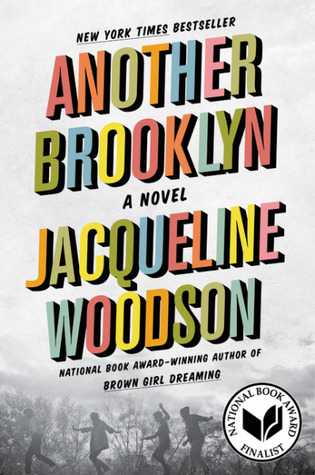 August looks back on her coming of age in 1970s Bushwick, Brooklyn. She lived with her father and brother in a shabby apartment, but friendship with Angela, Gigi and Sylvia lightened a gloomy existence: “as we stood half circle in the bright school yard, we saw the lost and beautiful and hungry in each of us. We saw home.” As in Very Cold People, though, this is not an untroubled girlhood. Male threat is everywhere, and if boyfriends bring sexual awakening they are also a constant goad to do more than girls are ready for. In short, flitting paragraphs, Woodson explores August’s past – a childhood in Tennessee, her uncle who died in the Vietnam War, her father’s growing involvement with the Nation of Islam. What struck me most, though, was August’s coming to terms with her mother’s death, a fact she doesn’t even acknowledge at first, and the anthropological asides about other cultures’ death rituals. This was my second from Woodson after the Women’s Prize-longlisted Red at the Bone, and I liked them about the same. A problem for me was that Brown Girls, which, with its New York City setting and focus on friendships between girls of colour, must have at least partially been inspired by Another Brooklyn, was better. (Public library)
In total, I read 17 novellas this November, though if you add in the ones I’d read in advance and then reviewed over the course of the month, I managed 24. All things considered, I think that’s a great showing. The 5-star stand-outs for me were The Hero of This Book and Body Kintsugi, but Up at the Villa was also a great read.
Truth Is Stranger than Fiction: The Summer of the Bear by Bella Pollen
“The island exerted a mesmeric pull. She had felt the magic of it all her life, but it was a magic that stayed on the island. You couldn’t take it with you.”
~MILD SPOILERS IN THIS ONE~
 One of my reading selections for our recent trip to the Outer Hebrides was The Summer of the Bear by Bella Pollen, which is set on a lightly fictionalized version of North Uist. It’s the summer of 1979 and the recently bereaved Fleming family is on the way from London to the island for their usual summer holiday. This year everything looks different. The patriarch, Nicky, had a fatal fall from a roof in Bonn, where he was stationed as a diplomat. Whether it was an accident or suicide is yet to be determined.
Now it’s just Letitia and the three children. Georgie is awaiting exam results and university offers. Jamie is the youngest and has an earnest, innocent, literal mind (I believe I first came across the novel in connection to my interest in depictions of autism, and I assume he is meant to be on the spectrum). Alba, smack in the middle, acts out via snarky comments as well as shoplifting and tormenting her brother. The locals look out for each of the family members and make allowances for the strange things they do because of grief.
In the meantime, there’s an escaped grizzly bear on the loose in the islands. The chapters rotate through the main characters’ perspectives and include short imaginings of the bear’s journey. I found it hard to take these seriously – could an animal really be in awe of the Northern Lights? – especially when Pollen begins to suggest telepathic communication occurring between Jamie and the bear.
I was a third of the way into the novel before I learned that the bear subplot was based on a true story – my husband saw a sidebar about it in the guidebook. I’d had no idea! Hercules the trained bear starred in films and commercials. In 1980, while filming an ad for Andrex, he slipped his rope and remained on the run for several weeks despite a military search, straying 20 miles and losing half his body weight before he was tranquillized and returned to his owner. We made the pilgrimage to his burial site in Langass Woodland.


Pollen herself spent childhood summers in the Outer Hebrides and remembered the buzz about the hunt for Hercules. This plus the recent death of their father makes it a pivotal summer for all three children. Though in general I appreciated the descriptions of the island, and liked the character interactions and Jamie’s guilelessness and gumption, I felt uncomfortable with his portrayal. I didn’t think it realistic for an 11-year-old to not understand the fact of death; it seemed almost offensive to suggest that, because he’s on the autism spectrum, he wouldn’t understand euphemisms about loss. The sequence where he goes looking for “Heaven” is pretty excruciating.
Add that to the unlikelihood of Jamie’s participation in the bear’s discovery and an unnecessary conspiracy element about Nicky’s death and this novel didn’t live up to its potential for me. I’d read one other book by Pollen, the memoir Meet Me in the In-Between, but won’t venture further into her work. Still, this was an interesting curio. (Public library)
[I thought about including this (and Sarah Moss’s Night Waking) in my flora-themed 20 Books of Summer because of the author’s surname, but I think I’ll make my 20 without stretching that far!]
 Bookish Beck = Rebecca Foster. American transplant to England. Freelance proofreader and book reviewer.
 Bookish Beck