Book Serendipity, September through Mid-November
I call it “Book Serendipity” when two or more books that I read at the same time or in quick succession have something in common – the more bizarre, the better. This is a regular feature of mine every couple of months. Because I usually have 20–30 books on the go at once, I suppose I’m more prone to such incidents. People frequently ask how I remember all of these coincidences. The answer is: I jot them down on scraps of paper or input them immediately into a file on my PC desktop; otherwise, they would flit away.
Thanks to Emma and Kay for posting their own Book Serendipity moments! (Liz is always good about mentioning them as she goes along, in the text of her reviews.)
The following are in roughly chronological order.
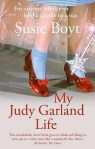
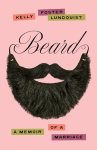
- An obsession with Judy Garland in My Judy Garland Life by Susie Boyt (no surprise there), which I read back in January, and then again in Beard: A Memoir of a Marriage by Kelly Foster Lundquist.
- Leaving a suicide note hinting at drowning oneself before disappearing in World War II Berlin; and pretending to be Jewish to gain better treatment in Aimée and Jaguar by Erica Fischer and The Lilac People by Milo Todd.
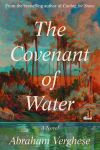
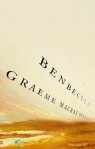
- Leaving one’s clothes on a bank to suggest drowning in The Covenant of Water by Abraham Verghese, read over the summer, and then Benbecula by Graeme Macrae Burnet.
- A man expecting his wife to ‘save’ him in Amanda by H.S. Cross and Beard: A Memoir of a Marriage by Kelly Foster Lundquist.
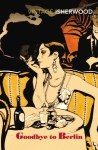 A man tells his story of being bullied as a child in Goodbye to Berlin by Christopher Isherwood and Beard by Kelly Foster Lundquist.
- References to Vincent Minnelli and Walt Whitman in a story from Touchy Subjects by Emma Donoghue and Beard by Kelly Foster Lundquist.
- The prospect of having one’s grandparents’ dining table in a tiny city apartment in Beard by Kelly Foster Lundquist and Wreck by Catherine Newman.
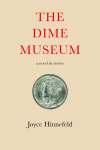
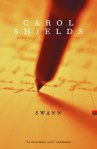
- Ezra Pound’s dodgy ideology was an element in The Dime Museum by Joyce Hinnefeld, which I reviewed over the summer, and recurs in Swann by Carol Shields.
- A character has heart palpitations in Andrew Miller’s story from The BBC National Short Story Award 2025 anthology and Endling by Maria Reva.
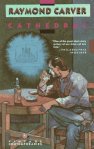
- A (semi-)nude man sees a worker outside the window and closes the curtains in one story of Cathedral by Raymond Carver and one from Good and Evil and Other Stories by Samanta Schweblin.
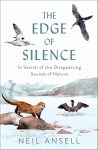
- The call of the cuckoo is mentioned in The Edge of Silence by Neil Ansell and Of All that Ends by Günter Grass.
 A couple in Italy who have a Fiat in Of All that Ends by Günter Grass and Caoilinn Hughes’s story from The BBC National Short Story Award 2025 anthology.
- Balzac’s excessive coffee consumption was mentioned in Au Revoir, Tristesse by Viv Groskop, one of my 20 Books of Summer, and then again in The Writer’s Table by Valerie Stivers.
- The main character is rescued from her suicide plan by a madcap idea in The Wedding People by Alison Espach and Endling by Maria Reva.
- The protagonist is taking methotrexate in Sea, Poison by Caren Beilin and Wreck by Catherine Newman.

- A man wears a top hat in Benbecula by Graeme Macrae Burnet and one story of Cathedral by Raymond Carver.
- A man named Angus is the murderer in Benbecula by Graeme Macrae Burnet and Swann by Carol Shields.
 The thing most noticed about a woman is a hair on her chin in the story “Pluck” in Touchy Subjects by Emma Donoghue and Swann by Carol Shields.
- The female main character makes a point of saying she doesn’t wear a bra in Sea, Poison by Caren Beilin and Find Him! by Elaine Kraf.
- A home hairdressing business in one story of Cathedral by Raymond Carver and Emil & the Detectives by Erich Kästner.
- Painting a bathroom fixture red: a bathtub in The Diary of a Nobody by George Grossmith, one of my 20 Books of Summer; and a toilet in Find Him! by Elaine Kraf.
- A teenager who loses a leg in a road accident in individual stories from A Wild Swan by Michael Cunningham and the Racket anthology (ed. Lisa Moore).
- Digging up the casket of a loved one in the wee hours features in Pet Sematary by Stephen King, one of my 20 Books of Summer; and one story of Pretty Monsters by Kelly Link.
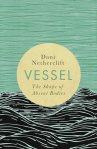
- A character named Dani in the story “The St. Alwynn Girls at Sea” by Sheila Heti and The Silver Book by Olivia Laing; later, author Dani Netherclift (Vessel).
 Obsessive cultivation of potatoes in Benbecula by Graeme Macrae Burnet and The Martian by Andy Weir.
- The story of Dante Gabriel Rossetti digging up the poems he buried with his love is recounted in Sharon Bala’s story in the Racket anthology (ed. Lisa Moore) and one of the stories in Pretty Monsters by Kelly Link.
- Putting French word labels on objects in Alone in the Classroom by Elizabeth Hay and Find Him! by Elaine Kraf.
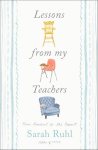 A man with part of his finger missing in Find Him! by Elaine Kraf and Lessons from My Teachers by Sarah Ruhl.
- In Minor Black Figures by Brandon Taylor, I came across a mention of the Italian film director Pier Paolo Pasolini, who is a character in The Silver Book by Olivia Laing.
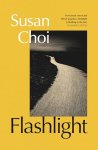
- A character who works in an Ohio hardware store in Flashlight by Susan Choi and Buckeye by Patrick Ryan (two one-word-titled doorstoppers I skimmed from the library). There’s also a family-owned hardware store in Alone in the Classroom by Elizabeth Hay.
- A drowned father – I feel like drownings in general happen much more often in fiction than they do in real life – in The Homecoming by Zoë Apostolides, Flashlight by Susan Choi, and Vessel by Dani Netherclift (as well as multiple drownings in The Covenant of Water by Abraham Verghese, one of my 20 Books of Summer).
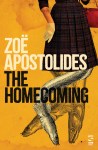
- A memoir by a British man who’s hard of hearing but has resisted wearing hearing aids in the past: first The Quiet Ear by Raymond Antrobus over the summer, then The Edge of Silence by Neil Ansell.
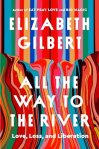 A loved one is given a six-month cancer prognosis but lives another (nearly) two years in All the Way to the River by Elizabeth Gilbert and Lessons from My Teachers by Sarah Ruhl.
- A man’s brain tumour is diagnosed by accident while he’s in hospital after an unrelated accident in Flashlight by Susan Choi and Saltwash by Andrew Michael Hurley.
- Famous lost poems in What We Can Know by Ian McEwan and Swann by Carol Shields.
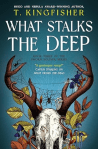
- A description of the anatomy of the ear and how sound vibrates against tiny bones in The Edge of Silence by Neil Ansell and What Stalks the Deep by T. Kingfisher.
- Notes on how to make decadent mashed potatoes in Beard by Kelly Foster Lundquist, Death of an Ordinary Man by Sarah Perry, and Lessons from My Teachers by Sarah Ruhl.
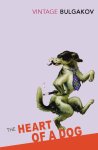
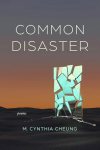
- Transplant surgery on a dog in Russia and trepanning appear in The Heart of a Dog by Mikhail Bulgakov and the poetry collection Common Disaster by M. Cynthia Cheung.
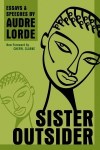
- Audre Lorde, whose Sister Outsider I was reading at the time, is mentioned in Lessons from My Teachers by Sarah Ruhl. Lorde’s line about the master’s tools never dismantling the master’s house is also paraphrased in Spent by Alison Bechdel.
- An adult appears as if fully formed in a man’s apartment but needs to be taught everything, including language and toilet training, in The Heart of a Dog by Mikhail Bulgakov and Find Him! by Elaine Kraf.
 Two sisters who each wrote a memoir about their upbringing in Spent by Alison Bechdel and Vessel by Dani Netherclift.
- The fact that ragwort is bad for horses if it gets mixed up into their feed was mentioned in Ghosts of the Farm by Nicola Chester and Understorey by Anna Chapman Parker.
- The Sylvia Plath line “the O-gape of complete despair” was mentioned in Vessel by Dani Netherclift, then I read it in its original place in Ariel later the same day.
- A mention of the Baba Yaga folk tale (an old woman who lives in the forest in a hut on chicken legs) in Common Disaster by M. Cynthia Cheung and Woman, Eating by Claire Kohda. [There was a copy of Sophie Anderson’s children’s book The House with Chicken Legs in the Little Free Library around that time, too.]
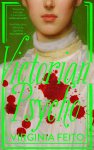
- Coming across a bird that seems to have simply dropped dead in Victorian Psycho by Virginia Feito, Vessel by Dani Netherclift, and Rainforest by Michelle Paver.
- Contemplating a mound of hair in Vessel by Dani Netherclift (at Auschwitz) and Year of the Water Horse by Janice Page (at a hairdresser’s).
- Family members are warned that they should not see the body of their loved one in Vessel by Dani Netherclift and Rainforest by Michelle Paver.
- A father(-in-law)’s swift death from oesophageal cancer in Year of the Water Horse by Janice Page and Death of an Ordinary Man by Sarah Perry.
- I saw John Keats’s concept of negative capability discussed first in My Little Donkey by Martha Cooley and then in Understorey by Anna Chapman Parker.
- I started two books with an Anne Sexton epigraph on the same day: A Portable Shelter by Kirsty Logan and Slags by Emma Jane Unsworth.
- Mentions of Martin Luther King, Jr.’s assassination in Q’s Legacy by Helene Hanff and Sister Outsider for Audre Lorde, both of which I was reading for Novellas in November.
- Mentions of specific incidents from Samuel Pepys’s diary in Q’s Legacy by Helene Hanff and Gin by Shonna Milliken Humphrey, both of which I was reading for Nonfiction November/Novellas in November.
- Starseed (aliens living on earth in human form) in Beautyland by Marie-Helene Bertino and The Conspiracists by Noelle Cook.
- Reading nonfiction by two long-time New Yorker writers at the same time: Life on a Little-Known Planet by Elizabeth Kolbert and Joyride by Susan Orlean.
- The breaking of a mirror seems like a bad omen in The Spare Room by Helen Garner and The Bell Jar by Sylvia Plath.
 The author’s husband (who has a name beginning with P) is having an affair with a lawyer in Catching Sight by Deni Elliott and Joyride by Susan Orlean.
- Mentions of Lewis Hyde’s book The Gift in Lessons from My Teachers by Sarah Ruhl and The Serviceberry by Robin Wall Kimmerer; I promptly ordered the Hyde secondhand!
- The protagonist fears being/is accused of trying to steal someone else’s cat in Minka and Curdy by Antonia White and Aunts Aren’t Gentlemen by P.G. Wodehouse, both of which I was reading for Novellas in November.
What’s the weirdest reading coincidence you’ve had lately?
The BBC National Short Story Award 2025 Anthology
Another quick contribution to #ShortStorySeptember. I was delighted when Comma Press sent me a surprise copy of The BBC National Short Story Award 2025, which prints the five stories shortlisted for this year’s prize.
Now in its 20th year, the award has recognised established authors and newcomers alike – the roster of winners includes Lucy Caldwell, Sarah Hall (twice), Cynan Jones, James Lasdun, KJ Orr, Ingrid Persaud, Ross Raisin, Lionel Shriver and Naomi Wood – and the £15,000 prize money is very generous indeed for a single story.
This very evening, the winner will be announced live on the BBC Radio 4 Front Row programme (it starts at 7:15 p.m. if you’re in the UK). I’ll update my post later with news of the winner. For now, here are my brief thoughts on the five stories and which I hope will win.
“You Cannot Thread a Moving Needle” is an excerpt from Colwill Brown’s linked short story collection, We Pretty Pieces of Flesh. It’s in broad Doncaster dialect and written in the second person, thus putting the reader into the position of a young woman who is often pressured – by men and by the prevailing standards of beauty – into uncomfortable situations. It’s all drinking and sex and feeling in competition with other girls. ‘You’ grow up limited and bitter and wondering if revenge is possible. This was admirable for its gritty realism but not pleasant per se, and convinced me I don’t want to read the whole book.
“Little Green Man” by Edward Hogan begins with a classic scenario of two very different people being thrown together. Carrie stands out not just for being nearly six feet tall but also for being the only woman working for Parks and Gardens in Derby. One morning she’s assigned a temporary apprentice, Ryan, who is half her age and might be dismissed with one look as being no good (“lines shaved into his eyebrows … dyed blond hair” and a baby at home). But their interactions go beyond stereotypes as we learn of Ryan’s ambitions and his disapproving dad; and of Carrie’s ex, Bridget, who wanted more spontaneity. It’s a solid, feel-good story about not making your mind up about people, in the vein of Groundskeeping.

“Yair” by Emily Abdeni-Holman is another two-character drama, with the title figure an Israeli estate agent who takes the female narrator looking for an apartment in Jerusalem in 2018. Sexual tension and conflicting preconceived notions are crackling between them. A simple story with an autofiction feel, it reminded me of writing by Sigrid Nunez and Elizabeth Strout and exposes the falsity of facile us-and-them distinctions.
“Two Hands” by Caoilinn Hughes is a three-player comedy starring a married couple and their driving instructor. After a motorway crash in the beloved Fiat Panda they brought with them from Italy when they moved back to Ireland, Desmond and Gemma are in need of some renewed confidence behind the wheel. They talk about work – Des’s ancient archaeology research, Gemma’s translations – but not about the accident, which clearly is still affecting them both. Meanwhile, their late-seventies instructor is a War and Peace-reading calm presence whose compassion stretches only so far. I found this sharp, witty and original, just like Hughes’s Orchid & the Wasp.
Last but not least, “Rain: a history” by Andrew Miller is set in a sodden near-future English village. The protagonist has been having heart trouble and failing to connect with his traumatized teenage son. Nothing in his house or on his person ever feels dry. Their surroundings are menacing and desolate, yet still somehow beautiful. A letter came through the door last week, inviting everyone to meet in the parish church this evening. What can be done? Perhaps solidarity is as much as they, and we, can hope for. This was spare and haunting, and so much better than The Land in Winter.
I thoroughly enjoyed reading these entries and wouldn’t mind four out of the five winning. My sense of the spirit of the award is that it should go to a stand-alone story by an up-and-coming author. It’s hard to say what judges William Boyd, Lucy Caldwell, Ross Raisin, Kamila Shamsie and Di Speirs will go for: realism, novelty, subtlety, humour or prophecy? My personal favourite was “Yair,” but I have an inkling the award might go to Caoilinn Hughes and I would be very happy with that result as well.
With thanks to Comma Press for the free copy for review.
UPDATE: The winner was … the story I enjoyed the least, “You Cannot Thread a Moving Needle.” Nonetheless, I acknowledge that Colwill Brown has a distinctive voice.
Book Serendipity, Mid-February to Mid-April
I call it “Book Serendipity” when two or more books that I read at the same time or in quick succession have something in common – the more bizarre, the better. This is a regular feature of mine every couple of months. Because I usually have 20–30 books on the go at once, I suppose I’m more prone to such incidents. People frequently ask how I remember all of these coincidences. The answer is: I jot them down on scraps of paper or input them immediately into a file on my PC desktop; otherwise, they would flit away!
The following are in roughly chronological order.
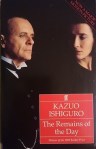
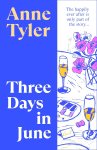
- The protagonist isn’t aware that they’re crying until someone tells them / they look in a mirror in The Remains of the Day by Kazuo Ishiguro and Three Days in June by Anne Tyler.
- A residential complex with primal scream therapy in Confessions by Catherine Airey and The Möbius Book by Catherine Lacey.
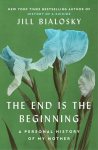
- Memories of wiping down groceries during the early days of the pandemic in The End Is the Beginning by Jill Bialosky and Human/Animal by Amie Souza Reilly.
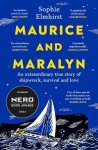
- A few weeks before I read Maurice and Maralyn by Sophie Elmhirst, I’d finished reading the author’s husband’s debut novel (Going Home by Tom Lamont); I had no idea of the connection between them until I got to her Acknowledgements.
- A mention of the same emergency money passing between friends in Alligator Tears by Edgar Gomez ($20) and The Möbius Book by Catherine Lacey ($100).
- Autobiographical discussions of religiosity and anorexia in The Möbius Book by Catherine Lacey and Godstruck by Kelsey Osgood.
- The theme of the dark night sky in The Wild Dark by Craig Childs, followed almost immediately by Night Magic by Leigh Ann Henion.
- Last year I learned about Marina Abramović’s performance art where she and her ex trekked to China’s Great Wall from different directions, met in the middle, and continued walking away to dramatize their breakup in The Ritual Effect by Michael Norton. Recently I saw it mentioned again in The Möbius Book by Catherine Lacey. Abramović’s work is also mentioned in Human/Animal by Amie Souza Reilly and is the basis for the opening track on Anne-Marie Sanderson’s album Old Light, “Amethyst Shoes.”
- The idea of running towards danger appears in Alex Marzano-Lesnevich’s essay in Edge of the World, a queer travel anthology edited by Alden Jones; and the bibliography of The Möbius Book by Catherine Lacey.
- I then read another Alex Marzano-Lesnevich essay in quick succession (both were excellent, by the way) in What My Father and I Don’t Talk About, edited by Michele Filgate.
- A scene in which a woman goes to a police station and her concerns are dismissed because she has no evidence and the man/men’s behaviour isn’t ‘bad enough’ in I Am, I Am, I Am by Maggie O’Farrell and Human/Animal by Amie Souza Reilly.
- Too many details as the sign of a lie in Dream Count by Chimamanda Ngozi Adichie and Three Days in June by Anne Tyler.
- Scenes of throwing all of a spouse’s belongings out on the yard/street in Old Soul by Susan Barker, How to Survive Your Mother by Jonathan Maitland, and Human/Animal by Amie Souza Reilly.
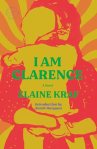
- Reading two lost American classics about motherhood and time spent in a mental institution at the same time: The Shutter of Snow by Emily Holmes Coleman and I Am Clarence by Elaine Kraf.
- Disorientation underwater: a literal experience in I Am, I Am, I Am by Maggie O’Farrell, then used as a metaphor for what it was like to be stuck in a blizzard on Annapurna in 2014 in The Secret Life of Snow by Giles Whittell.
- A teenager who has a job cleaning hotels in Old Soul by Susan Barker and I Am, I Am, I Am by Maggie O’Farrell. (In Stir-Fry by Emma Donoghue, Maria is also a teenaged cleaner, but of office buildings.)
- A vacuum cleaner bag splits in Stir-Fry by Emma Donoghue and one story of Are You Happy? by Lori Ostlund – in the latter it’s deliberate, searching for evidence of the character’s late son after cleaning his room.

- An ailing tree or trees that have to be cut down in one story of The Accidentals by Guadalupe Nettel and The Lost Trees of Willow Avenue by Mike Tidwell.
- Buchenwald was mentioned in one poem each in A God at the Door by Tishani Doshi and The Ghost Orchid by Michael Longley.
- A reference to Robin Wall Kimmerer’s Braiding Sweetgrass in To Have or to Hold by Sophie Pavelle and Human/Animal by Amie Souza Reilly.

- A mentally unwell woman deliberately burns her hands in I Am Clarence by Elaine Kraf and Every Day Is Mother’s Day by Hilary Mantel.
- A mention of the pollution caused by gas stoves in We Do Not Part by Han Kang and The Lost Trees of Willow Avenue by Mike Tidwell.
- An art installation involving part-buried trees was mentioned in Immemorial by Lauren Markham and then I encountered a similar project a few months later in We Do Not Part by Han Kang. Burying trees as a method of carbon storage is then discussed in The Lost Trees of Willow Avenue by Mike Tidwell.

- Imagining the lives of the people living in an apartment you didn’t end up renting in Scaffolding by Lauren Elkin and one story of The Accidentals by Guadalupe Nettel.
- The Anthropocene is mentioned in Scaffolding by Lauren Elkin and The Alternatives by Caoilinn Hughes.
- I was reading three debut novels from the McKitterick Prize longlist at the same time, all of them with very similar page counts of 383, 387, and 389 (i.e., too long!).
- Being appalled at an institutionalized mother’s appearance in The End Is the Beginning by Jill Bialosky and Every Day Is Mother’s Day by Hilary Mantel.
 A remote artist’s studio and severed fingers in Old Soul by Susan Barker and We Do Not Part by Han Kang.
- A lesbian couple in New Mexico, the experience of being watched through a window, and the mention of a caftan/kaftan, in Old Soul by Susan Barker and one story of Are You Happy? by Lori Ostlund.
- Refusal to go to a hospital despite being in critical condition in I Am, I Am, I Am by Maggie O’Farrell and one story of Are You Happy? by Lori Ostlund.
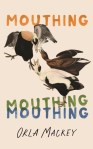
- It’s not a niche stylistic decision anymore; I was reading four novels with no speech marks at the same time: Old Soul by Susan Barker, Scaffolding by Lauren Elkin, The Alternatives by Caoilinn Hughes, and We Do Not Part by Han Kang. [And then, a bit later, three more: Wild Boar by Hannah Lutz, Mouthing by Orla Mackey, and How to Be Somebody Else by Miranda Pountney.]
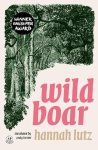
- A lesbian couple is alarmed by the one partner’s family keeping guns in Spent by Alison Bechdel and one story of Are You Happy? by Lori Ostlund.
- Responding to the 2021 murder of eight Asian spa workers in Atlanta in Foreign Fruit by Katie Goh and Find Me as the Creature I Am by Emily Jungmin Yoon.
- Disposing of a late father’s soiled mattress in Mouthing by Orla Mackey and one story of Are You Happy? by Lori Ostlund.
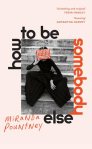 New York City tourist slogans in Apple of My Eye by Helene Hanff and How to Be Somebody Else by Miranda Pountney.
- A Jewish care home for the elderly in The End Is the Beginning by Jill Bialosky and Joanna Rakoff’s essay in What My Father and I Don’t Talk About (ed. Michele Filgate).
- A woman has no memory between leaving a bar and first hooking up with the man she’s having an affair with in If You Love It, Let It Kill You by Hannah Pittard and How to Be Somebody Else by Miranda Pountney.
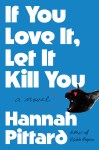 A stalker-ish writing student who submits an essay to his professor that seems inappropriately personal about her in one story of Are You Happy? by Lori Ostlund and If You Love It, Let It Kill You by Hannah Pittard.
- A pygmy goat as a pet (and a one-syllable, five-letter S title!) in Spent by Alison Bechdel and Sleep by Honor Jones.
- A Brooklyn setting and thirtysomething female protagonist in Sleep by Honor Jones, So Happy for You by Celia Laskey, and How to Be Somebody Else by Miranda Pountney.
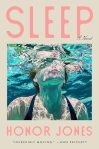
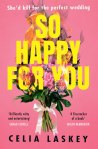
- A mention of the American Girl historical dolls franchise in Sleep by Honor Jones and If You Love It, Let It Kill You by Hannah Pittard, both of which I’m reviewing early for Shelf Awareness.
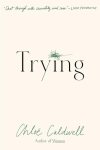 A writing professor knows she’s a hypocrite for telling her students what (not) to do and then (not) doing it herself in Trying by Chloé Caldwell and If You Love It, Let It Kill You by Hannah Pittard. These two books also involve a partner named B (or Bruce), metafiction, porch drinks with parents, and the observation that a random statement sounds like a book title.
- The protagonist’s therapist asks her to find more precise words for her feelings in Blue Hour by Tiffany Clarke Harrison and So Happy for You by Celia Laskey.
- The protagonist “talks” with a dying dog or cat in The Möbius Book by Catherine Lacey and If You Love It, Let It Kill You by Hannah Pittard.
 Shalimar perfume is mentioned in Scaffolding by Lauren Elkin and Chopping Onions on My Heart by Samantha Ellis.
- The Rapunzel fairytale is a point of reference in In the Evening, We’ll Dance by Anne-Marie Erickson and Secret Agent Man by Margot Singer, both of which I was reading early for Foreword Reviews.
What’s the weirdest reading coincidence you’ve had lately?
Heart, Be at Peace by Donal Ryan (Blog Tour)
I read Donal Ryan’s first three books – two short novels and a short story collection – but then lost track of his career. When I heard he was publishing a sequel of sorts to his terrific The Spinning Heart, I couldn’t resist. “Madness comes circling around. Ten-year cycles, as true as the sun will rise,” one character remarks here. Set a decade on, this replicates the structure of Ryan’s debut novella: 21 short chapters, each with a different first-person narrator. The Spinning Heart (see my BookBrowse review) took place in the wake of the financial crisis and centered on murder and kidnapping cases – both of which still resonate 10 years later. I read it as an e-ARC and can’t go back to check, but my impression is that Heart, Be at Peace focuses on many of the same characters, if not the same exact set and order.
Once again, Bobby Mahon is the closest thing to a protagonist. His construction business has recovered from the crash, but he still struggles with guilt and anxiety, including when a so-called friend tries to blackmail him over a compromising photograph. The main plot, which involves a small-town drug ring, pulls in so many people and incidents. You piece it all together through hints that accrete gradually. More so than parsing the Limerick organized crime network, though, the pleasure is encountering all the fully realized but very different voices. You can hear them in your head, the Irish accent stronger in some and the speech more slang-filled in others. Each narrative is self-contained but they also link together.
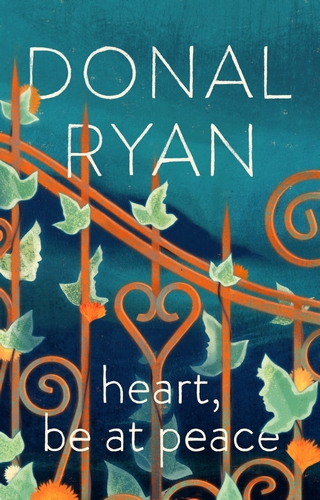
In what is quite a gritty, macho book, the women’s stories stand out all the more. Lily has ancient knowledge of spells that she’d love to pass on to her granddaughter, yet is dismayed when Millicent only wants the magic to bind her no-good boyfriend to her. Hillary is a defence lawyer whose clients never do themselves any favours with their behaviour and dress. Fathers and sons are key, as in this novel’s predecessor, but Ryan also features mothers, daughters and wives who often know more than they let on. Another interesting voice is that of Vasya, a Russian immigrant who chooses to live in an outdoor encampment.
It can be a challenge to keep track of who’s who and how everything is connected. Overall, this feels less fresh and timely than The Spinning Heart. But it’s certainly possible to enjoy it even if you haven’t read its companion novel. It reminded me especially of Paul Murray’s The Bee Sting, and you may also find the style reminiscent of Colin Barrett or Caoilinn Hughes. So many Irish writers are masters of voice and tone, and the same is true of Donal Ryan. Do try his work if you haven’t already. He has eight books to choose from now!
With thanks to Anne Cater of Random Things Tours and Doubleday for the free copy for review.
Buy Heart, Be at Peace from Bookshop.org [affiliate link]
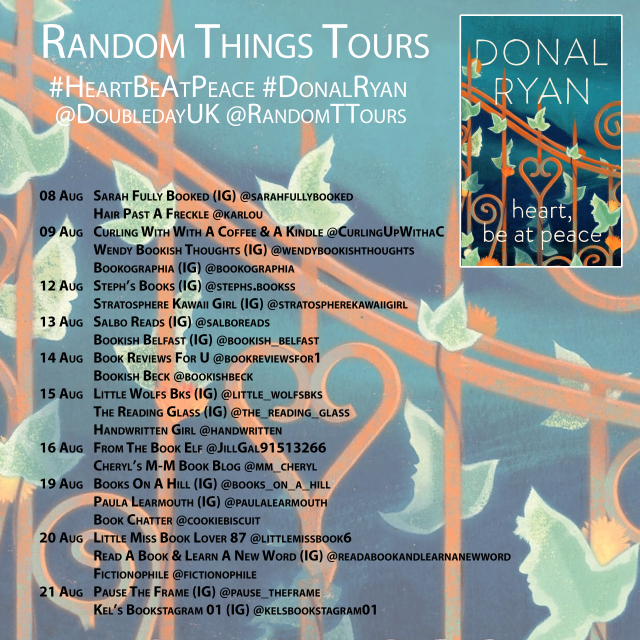
I was delighted to be part of the blog tour for Heart, Be at Peace. See below for details of where other reviews have appeared or will appear soon.
Reading Ireland Month, Part II: Hughes, Kennedy, Murray
My second contribution to Reading Ireland Month after a first batch that included poetry and a novel.

Today I have a poetry collection based around science and travel, and two multi-award-winning novels, one set in the thick of the Troubles in Belfast and another about the crumbling of an ordinary suburban family.
Gathering Evidence by Caoilinn Hughes (2014)
 I bought this in the same order as Patricia Lockwood’s poetry collection, thinking a segue to another genre within an author’s oeuvre (I’d enjoyed Hughes’s 2018 debut novel, Orchid & the Wasp) might be a clever strategy. That worked out with Lockwood, but not as well here. A collection about scientific discoveries and medical advances seemed likely to be up my street. “The Moon Should Be Turned” is about the future of the HeLa cells harvested from Henrietta Lacks; poems are dedicated to the Curies and Johannes Kepler and one has Fermi as a main character. Russian nuclear force is a background menace. There are also some poems about growing up in Dublin and travels in the Andes. “Vagabond Monologue” stood out for its voice, “Marbles” for its description of childhood booty: “A netted bag of green glass marbles with aquamarine swirls / deep in the otherworld of spherical transparency (simultaneous opacity) / was the first thing I ever stole when I was three and far from the last.” Elsewhere, though, I found the precision vocabulary austere and offputting. (New purchase with Amazon voucher)
Trespasses by Louise Kennedy (2022)
Despite its many accolades, not least a shortlisting for the Women’s Prize, I couldn’t summon much enthusiasm for reading a novel about the Troubles. I don’t know why I tend to avoid this topic; perhaps it’s the insidiousness of fighting that’s not part of a war somewhere else, but ongoing domestic terrorism instead. Combine that with an affair – Cushla is a 24-year-old schoolteacher who starts sleeping with a middle-aged, married barrister she meets in her family’s pub – and it sounded like a tired, ordinary plot. But after this won last year’s McKitterick Prize (for debut authors over 40) and I was sent the whole shortlist in thanks for being a manuscript judge, I thought I should get over myself and give it a try.
 Little surprise that Kennedy’s writing – compassionate, direct, heart-rending – is what sets the book apart. With no speech marks, radio reports of everyday atrocities blend in with thoughts and conversations. We meet and develop fondness for characters across classes and the Catholic–Protestant divide: Cushla’s favourite pupil, Davy, whose father was assaulted in the street; her alcoholic mother, Gina, who knows more than she lets on, despite her inebriation; Gerry, a colleague who takes Cushla on friend dates and covers for her when she goes to see Michael. An Irish language learning circle introduces the 1970s bourgeoisie with their dinner parties and opinions.
This doesn’t read like a first novel at all, with each character fully realized and the plot so carefully constructed that I was as shocked as Cushla by a revelation four-fifths of the way through. Desire is bound up with guilt; can anyone ever be happy when violence is so ubiquitous and random? “Booby trap. Incendiary device. Gelignite. Nitroglycerine. Petrol bomb. Rubber bullets. Saracen. Internment. The Special Powers Act. Vanguard. The vocabulary of a seven-year-old child now.” But a brief framing episode set in 2015 gives hope of life beyond seemingly inescapable tragedy. (Free from the Society of Authors) 
The Bee Sting by Paul Murray (2023)
“The trouble is coming from inside; from his family. And unless something happens to stop it, it will keep billowing out, worse and worse”
Another great Irish novel I nearly missed out on, despite it being shortlisted for the Booker Prize and Writers’ Prize and winning the inaugural Nero Book Awards’ Gold Prize, this one because I was daunted by its doorstopper proportions. I’d gotten it in mind that it was all about money: Dickie Barnes’s car dealership is foundering and the straitened circumstances affect his whole family (wife Imelda, teenage daughter Cass, adolescent son PJ). A belated post-financial crash novel? Again, it sounded tired, maybe clichéd.
 But actually, this turned out to be just the kind of wry, multi-perspective dysfunctional family novel that I love, such that I was mostly willing to excuse a baggy midsection. Murray opens with long sections of close third person focusing on each member of the Barnes family in turn. Cass is obsessed with sad-girl poetry and her best friend Elaine, but self-destructive habits threaten her university career before it’s begun. PJ is better at making friends through online gaming than in real life because of his family’s plunging reputation, so concocts a plan to run away to Dublin. Imelda is flirting with Big Mike, who’s taking over the dealership, but holds out hope that Dickie’s wealthy father will bail them out. Dickie, under the influence of a weird handyman named Victor, has become fixated on eradicating grey squirrels and building a bunker to keep his family safe.
There are no speech marks throughout, and virtually no punctuation in Imelda’s sections. There are otherwise no clever tricks to distinguish the points-of-view, though. The voice is consistent. Murray doesn’t have to strain to sound like a teenage girl; he fully and convincingly inhabits each character (even some additional ones towards the end). I particularly liked the final “Age of Loneliness” section, which starts rotating between the perspectives more quickly, each one now in the second person. It all builds towards a truly thrilling yet inconclusive ending. I could imagine this as a TV miniseries for sure.
SPOILERS, if you’re worried about that sort of thing:
It was all the details I didn’t pick up from my pre-reading about The Bee Sting that made it so intricate and rewarding. Imelda’s awful upbringing in macho poverty and how it seemed that Rose, then Frank, might save her. The cruelty of Frank’s accidental death and the way that, for both Imelda and Dickie, being together seemed like the only way of getting over him, even if Imelda was marrying the ‘wrong’ brother. The recurrence of same-sex attraction for Dickie, then Cass. The irony of the bee sting that never was.
BUT. Yes, it’s too long, particularly Imelda’s central section. I had to start skimming to have any hope of making it through. Trim the whole thing by 200 pages and then we’re really talking. But I will certainly read Murray again, and most likely will revisit this book in the future to give it the attention it deserves. I read it from the library’s Bestsellers collection; the story of how I own a copy as of this week is a long one…

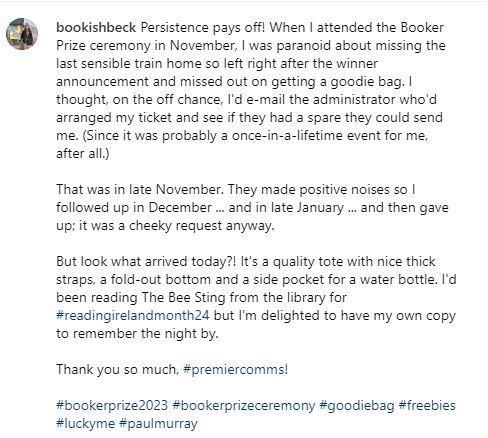
(Public library; free from the Booker Prize/Premier Comms)

I’ll be catching up on reviewing March releases in early April.
Happy Easter to those who celebrate!
Reading Ireland Month: Baume, Kennefick, Ní Ghríofa, O’Farrell
Reading Ireland Month is hosted each March by Cathy of 746 Books. This year I read works by four Irish women: a meditation on birds and craft, hard-hitting poems about body issues, autofiction that incorporates biography and translation to consider the shape of women’s lives across the centuries, and a novel that jets between Hong Kong and Scotland. Two of these were sent to me as part of the Rathbones Folio Prize shortlist. I have some Irish music lined up to listen to (Hallow by Duke Special, At Swim by Lisa Hannigan, Chop Chop by Bell X1, Magnetic North by Iain Archer) and I’m ready to tell you all about these four books.

handiwork by Sara Baume (2020)
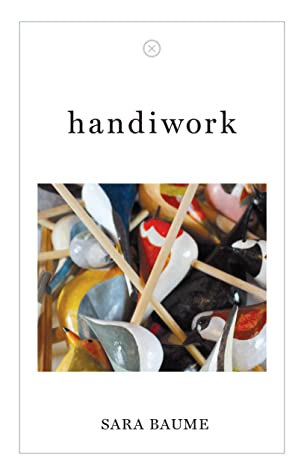 Back in February 2016, I reviewed Baume’s debut novel, Spill Simmer Falter Wither, for Third Way magazine. A dark story of a middle-aged loner and his adopted dog setting off on a peculiar road trip, it was full of careful nature imagery. “I’ve always noticed the smallest, quietest things,” the narrator, Ray, states. The same might be said of Baume, who is a visual artist as well as an author and put together this gently illuminating book over the course of 2018, at the same time as she was working on several sculptural installations. In short sections of a paragraph or two, or sometimes no more than a line, she describes her daily routines in her home workspaces: in the morning she listens to barely audible talk radio as she writes, while the afternoons are for carving and painting.
Working with her hands is a family tradition passed down from her grandfather and father, who died in the recent past – of lung cancer from particles he was exposed to at the sandstone quarry where he worked. Baume has a sense of responsibility for how she spends her time and materials. Concern about waste is at odds with a drive for perfection: she discarded her first 100 plaster birds before she was happy with the series used to illustrate this volume. Snippets of craft theory, family memories, and trivia about bird migration and behaviour are interspersed with musings on what she makes. The joy of holding a physical object in the hand somehow outweighs that of having committed virtual words to a hard drive.
Despite the occasional lovely line, this scattered set of reflections doesn’t hang together. The bird facts, in particular, feel shoehorned in for symbolism, as in Colum McCann’s Apeirogon. It’s a shame, as from the blurb I thought this book couldn’t be better suited to my tastes. Ultimately, as with Spill, Baume’s prose doesn’t spark much for me. 
Favorite lines:
“Most of the time spent making is spent, in fact, in the approach.”
“I must stop once the boredom becomes intolerable, knowing that if I plunge on past this point I will risk arriving at resentment”
“What we all shared – me, my dad, his dad – was a suspicion of modern life, a loathing of fashion, a disappointment with the new technologies and a preference for the ad hoc contraptions of the past”
“The glorious, crushing, ridiculous repetition of life.”
With thanks to Tramp Press and FMcM Associates for the free copy for review. handiwork is on the Rathbones Folio Prize shortlist.
Eat or We Both Starve by Victoria Kennefick (2021)
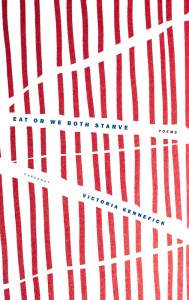 This audacious debut collection of fleshly poems is the best I’ve come across so far this year. The body is presented as a battleground: for the brain cancer that takes the poet’s father; for disordered eating that entwines with mummy issues; for the restructuring of pregnancy. Families break apart and fuse into new formations. Cannibalism and famine metaphors dredge up emotional states and religious doctrines.
Where did I start?
Yes, with the heart, enlarged,
its chambers stretched through caring.
[…]
Oh is it in defiance or defeat, I don’t know,
I eat it anyway, raw, still warm.
The size of my fist, I love it.
(from the opening poem, “Learning to Eat My Mother, where My Mother Is the Teacher”)
Meat avoidance goes beyond principled vegetarianism to become a phobia. Like the female saints, the speaker will deny herself until she achieves spiritual enlightenment.
The therapist taps my shoulders, my head, my knees,
tells me I was a nun once, very strict.
This makes sense; I know how cleanly I like
to punish myself.
(from “Alternative Medicine”)
The title phrase comes from “Open Your Mouth,” in which the god Krishna, as a toddler, nourishes his mother with clay. A child feeding its mother reverses the expected situation, which is described in one of the book’s most striking poems, “Researching the Irish Famine.” The site of an old workhouse divulges buried horrors: “Mothers exhausted their own bodies / to produce milk. […] The starving / human / literally / consumes / itself.”
Corpses and meals; body odour and graves. There’s a pleasingly morbid cast to this collection, but it also has its lighter moments: the sexy “Paris Syndrome,” the low-stakes anxiety over pleasing one’s mother in “Guest Room,” and the playful closer, “Prayer to Audrey Hepburn” (“O Blessed Audrey of the feline eye-flick, jutting / bones, slim-hipped androgyny of war-time rationing”). Rich with imagery and alliteration, this is just my kind of poetry. Verse readalikes would include The Air Year by Caroline Bird, Flèche by Mary Jean Chan, and Tongues of Fire by Seán Hewitt, while in prose I was also reminded of Milk Fed by Melissa Broder (review coming soon) and Sanatorium by Abi Palmer. 
With thanks to Carcanet Press for the free copy for review. This comes out on the 25th.
A Ghost in the Throat by Doireann Ní Ghríofa (2020)
 “This is a female text.” In an elegant loop, Ní Ghríofa begins and ends with this line, and uses it as a refrain throughout. What is the text? It is this book, yes, as well as the 18th-century Irish-language poem that becomes an obsession for the author/narrator, “The Keen for Art Ó Laoghaire” by Eibhlín Dubh Ní Chonaill; however, it is also the female body, its milk and blood just as significant for storytelling as any ink.
Because the protagonist’s name is the same as the author’s, I took her experiences at face value. As the narrative opens in 2012, Ní Ghríofa and her husband have three young sons and life for her is a list of repetitive household tasks that must be completed each day. She donates pumped breast milk for premature babies as a karmic contribution to the universe: something she can control when so much around her she feels she can’t, like frequent evictions and another pregnancy. Reading Eibhlín Dubh’s lament for her murdered husband, contemplating a new translation of it, and recreating her life from paltry archival fragments: these tasks broaden her life and give an intellectual component to complement the bodily one.
My weeks are decanted between the twin forces of milk and text, weeks that soon pour into months, and then into years. I make myself a life in which whenever I let myself sit, it is to emit pale syllables of milk, while sipping my own dark sustenance from ink. […] I skitter through chaotic mornings of laundry and lunchboxes and immunisations, always anticipating my next session at the breast-pump, because this is as close as I get to a rest. To sit and read while bound to my insatiable machine is to leave my lists behind and stroll instead through doors opened by Eibhlín Dubh.
Ní Ghríofa remembers other times in her life in an impressionistic stream: starting a premed course at university, bad behaviour that culminated in suicidal ideation, a near-collision on a highway, her daughter’s birth by emergency C-section, finally buying a house and making it a home by adopting a stray kitten and planting a bee-friendly garden. You can tell from the precision of her words that Ní Ghríofa started off as a poet, and I loved how she writes about her own life. I had little interest in Eibhlín Dubh’s story, but maybe it’s enough for her to be an example of women “cast once more in the periphery of men’s lives.” It’s a book about women’s labour – physical and emotional – and the traces of it that remain. I recommend it alongside I Am, I Am, I Am by Maggie O’Farrell and Mother Ship by Francesca Segal. 
With thanks to Tramp Press and FMcM Associates for the free copy for review. A Ghost in the Throat is on the Rathbones Folio Prize shortlist.
The Distance Between Us by Maggie O’Farrell (2004)
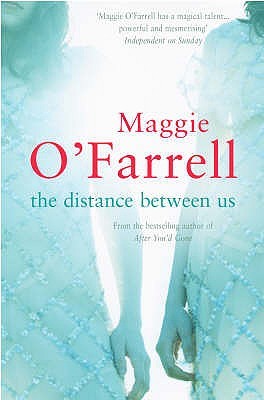 This is the earliest work of O’Farrell’s that I’ve read – it was her third novel, following After You’d Gone and My Lover’s Lover (I finally found those two at a charity shop last year and I’m saving them for a rainy day). It took me a long time to get into this one. It’s delivered in bitty sections that race between characters and situations, not generally in chronological order. It’s not until nearly the halfway point that you get a sense of how it all fits together.
Although there are many secondary characters, the two main strands belong to Jake, a young white filmmaker raised in Hong Kong by a bohemian mother, and Stella, a Scottish-Italian radio broadcaster. When a Chinese New Year celebration turns into a stampede, Jake and his girlfriend narrowly escape disaster and rush into a commitment he’s not ready for. In the meantime, Stella gets spooked by a traumatic flash from her childhood and flees London for a remote Scottish hotel. She’s very close to her older sister, Nina, who was deathly ill as a child (O’Farrell inserts a scene I was familiar with from I Am, I Am, I Am, when she heard a nurse outside her room chiding a noisy visitor, “There’s a little girl dying in there”), but now it’s Nina who will have to convince Stella to take the chance at happiness that life is offering.
In the end, this felt like a rehearsal for This Must Be the Place; it has the myriad settings (e.g., here, Italy, Wales and New Zealand are also mentioned) but not the emotional heft. With a setup like this, you sort of know where things are going, don’t you? Despite Stella’s awful secret, she is as flat a character as Jake. Simple boy-meets-girl story lines don’t hold a lot of appeal for me now, if they ever did. Still, the second half was a great ride.
Also, I’ve tried twice over the past year, but couldn’t get further than page 80 in The Wild Laughter by Caoilinn Hughes (2020), a black comedy about two brothers whose farmer father goes bankrupt and gets a terminal diagnosis. It’s a strangely masculine book (though in some particulars very similar to Scenes of a Graphic Nature) and I found little to latch on to. This was a disappointment as I’d very much enjoyed Hughes’s debut, Orchid & the Wasp, and this second novel is now on the Dylan Thomas Prize longlist.
What have you been picking up for Reading Ireland Month?

Book Serendipity, Early 2021
I call it Book Serendipity when two or more books that I read at the same time or in quick succession have something pretty bizarre in common. Because I have so many books on the go at once (usually 20‒30), I suppose I’m more prone to such incidents.
Josh Cohen’s How to Live. What to Do, a therapist’s guide to literature, explains why this might happen:
More than one writer – the French poet Stéphane Mallarmé, the Argentinian writer Jorge Luis Borges – has advanced the exhilarating idea that each book is an infinitesimally small piece of one single, endless Book. I’ve always felt that this idea, unlikely as it might sound, makes perfect sense if you read enough novels [also nonfiction, for me]. The incidents, descriptions, phrases and images in the book you’re reading will always recall the incidents in another, and those in turn will call up the incidents in another, so that even as you’re reading one book, you’re reading countless others.
The following are in roughly chronological order.
- Mother‒baby swimming sessions in Some Body to Love by Alexandra Heminsley and The Still Point of the Turning World by Emily Rapp.


- [I think it would be a spoiler to even name them, but two novels I read simultaneously in January featured 1) a marriage / close relationship between a man and a woman – even though the man is gay; and 2) a character who beat his wife and then died in a convenient ‘accident’. One was published in 1997 and the other in 2020.]
- Stomas appeared in Dazzling Darkness by Rachel Mann and First Time Ever by Peggy Seeger late in my 2020 reading, and then in early 2021 in Pain: The Science of the Feeling Brain by Abdul-Ghaaliq Lalkhen and Love’s Work by Gillian Rose.
- An account of the author’s experience of ovarian hyperstimulation syndrome in Hormonal by Eleanor Morgan and I Miss You when I Blink by Mary Laura Philpott.
- Salmon fishing takes place in Snow Falling on Cedars by David Guterson and Kings of the Yukon by Adam Weymouth.


- The medical motto “see one, do one, teach one” appears in Breathtaking by Rachel Clarke and Complications by Atul Gawande.
- Filipino medical staff feature in America Is Not the Heart by Elaine Castillo and Breathtaking by Rachel Clarke.
- Twin Peaks is mentioned in The Fragments of My Father by Sam Mills and the anthology Trauma: Essays on Art and Mental Health; a different essay in the latter talks about Virginia Woolf’s mental health struggle, which is a strand in the former.
- St. Teresa of Ávila is mentioned in Heart by Gail Godwin and Sanatorium by Abi Palmer.

- The same Rachel Long poem appears in her debut collection, My Darling from the Lions, and The Emma Press Anthology of Love – but under different titles (“Portent” vs. “Delayed Gratification”).
- There’s a matriarch named Dot in Unsettled Ground by Claire Fuller and The Magician’s Assistant by Ann Patchett.
- There’s an Alaska setting in The Quality of Silence by Rosamund Lupton and Kings of the Yukon by Adam Weymouth.
- Becoming a mother is described as a baptism in Sanctuary by Emily Rapp Black and The Fragments of My Father by Sam Mills.


- While reading America Is Not the Heart by Elaine Castillo, I saw Castillo mentioned in the Acknowledgements of My Darling from the Lions by Rachel Long.
- Polar explorers’ demise is discussed in Ex Libris by Anne Fadiman and The Still Point by Amy Sackville.
- “Butterfingers” / “butter-fingered” is used in America Is Not the Heart by Elaine Castillo and The Clock Winder by Anne Tyler.
- There’s a mention of someone eating paper torn from books (the horror!) in Ex Libris by Anne Fadiman and The Clock Winder by Anne Tyler.
- I was reading three pre-releases at once, each of 288 pages: Milk Fed by Melissa Broder, Unsettled Ground by Claire Fuller, and A Town Called Solace by Mary Lawson.
- The Jewish golem myth is the overarching metaphor of Milk Fed by Melissa Broder and Golem Girl by Riva Lehrer.
- There’s a ceremony to pay respects to those who donated their bodies for medical school dissection in Maybe You Should Talk to Someone by Lori Gottlieb and Golem Girl by Riva Lehrer.
- An old woman with dementia features in The Living Sea of Waking Dreams by Richard Flanagan, Keeper by Andrea Gillies, and The Clock Winder by Anne Tyler.


- A mother dies of cancer on Christmas Day in This Party’s Dead by Erica Buist and The Fragments of My Father by Sam Mills.
- The main character does stand-up comedy in Milk Fed by Melissa Broder and This Party’s Dead by Erica Buist.
- Winning a goldfish at a carnival in The Air Year by Caroline Bird, A Feather on the Breath of God by Sigrid Nunez, and Anna Vaught’s essay in the Trauma anthology.
- ECT (electroconvulsive therapy) is mentioned in Adventures in Human Being by Gavin Francis and Woman on the Edge of Time by Marge Piercy.


- There’s a father who is non-medical hospital staff in The Push by Ashley Audrain (a cleaner) and A Feather on the Breath of God by Sigrid Nunez (a kitchen worker).
- There’s a character named Hart in The Wild Laughter by Caoilinn Hughes and The Birth House by Ami McKay.
- Cannibalism is a point of reference, a major metaphor, or a (surreal) reality in Mother for Dinner by Shalom Auslander, Eat or We Both Starve by Victoria Kennefick, and Light Perpetual by Francis Spufford.
- Infertility and caring for animals were two big themes shared by Brood by Jackie Polzin and Catalogue Baby by Myriam Steinberg. This became clearer when I interviewed both authors in February. Also, both women have shocks of pink hair in their publicity photos!


- A young woman works at a hotel in The Distance between Us by Maggie O’Farrell and My Dark Vanessa by Kate Elizabeth Russell (and The Glass Hotel by Emily St. John Mandel, which I read late last year).
What’s the weirdest reading coincidence you’ve had lately?
Review Book Catch-Up: Gange, Mann, O’Donoghue
The end of the year is fast approaching, and one of my main reading goals is to follow through on all the rest of the review books I’ve received from publishers. I have another handful on the go, including a few holiday- and snow-themed ones I’ll review together.
Today, I have a history-rich travelogue that explores the Atlantic coast of Britain and Ireland, a memoir by an Anglican priest who has transitioned and experienced chronic illness, and a humorous, offbeat novel about finding the real Ireland.
The Frayed Atlantic Edge: A Historian’s Journey from Shetland to the Channel by David Gange (2019)
 This was one of the 2020 Wainwright Prize finalists. Having now experienced the entire nature writing shortlist, I stick with my early September pronouncement that it should have won. I was consistently impressed with the intricacy of the interdisciplinary approach. While kayaking down the western coast of the British Isles and Ireland, Gange delved into the folklore, geology, history, local language and wildlife of each region and island group. From the extreme north of Scotland at Muckle Flugga to the southwest tip of Cornwall, he devoted a month to each Atlantic-facing area, often squeezing in expeditions between commitments as a history lecturer at Birmingham.
Gange’s thesis is that the sea has done more to shape Britain and Ireland than we generally recognize, and that to be truly representative history books must ascribe the same importance to coastal communities that they do to major inland cities. Everywhere he goes he meets locals, trawls regional archives and museums, and surveys the art and literature (especially poetry) that a place has produced. Though dense with information, the book is a rollicking travelogue that – in words no less than in the two sections of stunning colour photographs – captures the elation and fear of an intrepid solo journey. He hunkers on snowy cliffs in his sleeping bag and comes face to face with otters, seals and seabirds in his kayak; at the mercy of the weather, he has deep respect for the Atlantic waves’ power.
I enjoyed revisiting places I’ve seen in person (Shetland, the Orkney Islands, Skomer) and getting a taste of others I’ve not been to but would like to go (like the Western Isles and the west coast of Ireland). Gange’s allusive writing reminds me of Tim Dee’s and Adam Nicolson’s, and Madeleine Bunting’s Love of Country is a similar read I also loved.
With thanks to William Collins for the free copy for review.
Dazzling Darkness: Gender, sexuality, illness and God by Rachel Mann (2012; 2020)
 I’ve so enjoyed discovering Rev. Rachel Mann’s work: poetry collection A Kingdom of Love, Advent devotional In the Bleak Midwinter, and novel The Gospel of Eve. This is a revised edition of her memoir, which is less an autobiographical blow-by-blow of becoming a trans priest in the Church of England than it is a vibrant theological meditation based around keywords like loneliness, reconciliation and vocation. She reflects on the apparent contradictions of her life: she was a typical boy who loved nothing more than toy guns, and then a young man obsessed with drugs and guitars; as ‘Nick’, she was married to a woman at the time of coming out, but continued to have relationships with women after transitioning and undergoing reassignment surgery, so considers herself a lesbian.
Ambiguities like this make us uncomfortable, Mann notes, but change and loss, and making the best of impossible situations, are all a part of the human condition. I appreciated how she characterizes herself as a perennial beginner: having to face the world anew after the second adolescence of becoming a woman as well as after the end of a long-term relationship and the last in a series of hospitalizations for severe Crohn’s disease.
While I’ve read other trans memoirs (Amateur by Thomas Page McBee and Conundrum by Jan Morris), this is my first from a Christian perspective, apart from the essays in The Book of Queer Prophets. Mann describes her early faith as intense but shallow, like falling in love; later it became deeper but darker as she followed Jesus’s path of suffering. Ministry has been a gift but is not without challenges: At synod meetings she is unsure whether to speak out or remain silent, but at least she bears witness to the presence of trans people in the Church.
With thanks to Wild Goose Publications for the free copy for review.
Scenes of a Graphic Nature by Caroline O’Donoghue (2020)
 Charlotte “Charlie” Regan is a 29-year-old filmmaker based in London. Her father has had cancer on and off for four years, but he got his ‘survivor’ label in a different way: when he was a child on an island off the western coast of Ireland, his teacher and 18 classmates died of carbon monoxide poisoning from the faulty secondhand oil burner in the schoolhouse; he was the only one left alive. Although her film commemorates this story, Charlie has never actually been to Ireland, so an invitation to Cork Film Festival is the perfect opportunity to see the place before her father dies. Travelling with her is her former best friend and roommate, Laura Shingle. There’s sexual tension between these two: Charlie is a lesbian, but Laura is determined to think of herself as straight even though she and Charlie would occasionally share a bed. To prove herself, Laura goes too far the other way, making homophobic comments about strangers.
If initially Charlie thinks this trip to Ireland will be about shamrock-green nostalgia, she soon snaps out of her idealism as she has to face some tough truths about the film and her family’s history. Charlie is a companionable narrator, but, while I enjoyed the pub scenes and found some of the one-liners very funny (“Everything in our room is a faint brown, as though it were daubed very gently by a child with a teabag” and “He had an X-ray and there’s legumes all over it.” / “Legumes? Do you mean lesions?”), I was underwhelmed overall. My interest peaked at the halfway point and waned thereafter. This is one I might recommend to fans of Caoilinn Hughes.
With thanks to Virago for the free copy for review.
Would you be interested in reading one or more of these?
20 Books of Summer, #7–10: Auster, Darlington, Durrell, Jansma
Owls and leopards and dogs – oh my! My animal-themed reading project continues. I’m more than halfway through in that I’m in the middle of quite a few more books, but finishing and reviewing them all before the 3rd of September may still prove to be a challenge.
Timbuktu by Paul Auster (1999)
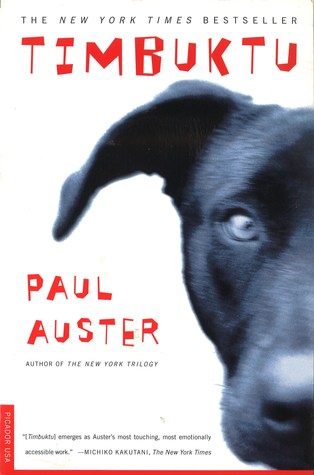 My first from Auster – and not, I take it, representative of his work in general. Never mind, though; I enjoyed it, and it was a good follow-up to Fifteen Dogs. Like the Alexis novel, this gives an intimately imagined dog’s perspective, taking seriously the creature’s whole life story. The canine protagonist is Mr. Bones, who’s accompanied his mentally unstable writer owner, Willy G. Christmas, from New York City down to Baltimore, where, one August Sunday, Willy wants to find his old high school English teacher before he dies.
What took me by surprise is that Auster doesn’t stick with Willy, but has Mr. Bones move on to two more living situations: first he’s the secret friend of 10-year-old Henry Chow, whose parents run a Chinese restaurant, then he’s a family pet in suburban Virginia. Although his English comprehension is advanced, he isn’t able to reproduce its sounds like some of the dogs in Fifteen Dogs can, so he can’t tell these new owners his real name and has to accept being called first “Cal” and then “Sparky.” In dreams he still hears Willy’s voice. He assumes Willy is now in the afterlife (“Timbuktu”), and longs to rejoin him.
The novel is tender as well as playful and funny – I loved the passage where Mr. Bones wakes up to pain but doesn’t realize he’s been castrated:
How was he to know that those missing parts had been responsible for turning him into a father many times over? Except for his ten-day affair with Greta, the malamute from Iowa City, his romances had always been brief—impetuous couplings, impromptu flings, frantic rolls in the hay—and he had never seen any of the pups he had sired. And even if he had, how would he have been able to make the connection? Dick Jones had turned him into a eunuch, but in his own eyes he was still the prince of love, the lord of the canine Romeos, and he would go on courting the ladies until his last, dying breath. For once, the tragic dimension of his own life eluded him.

Owl Sense by Miriam Darlington (2018)
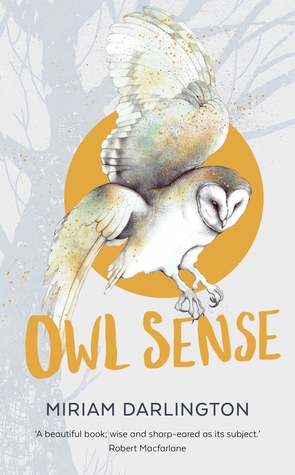 Initially the idea was to see all of Britain’s resident owls, but as often happens, the project expanded until Darlington was also taking trips to Serbia to find a Long-Eared Owl, Finland for a Eurasian Eagle Owl, and France for a Pygmy Owl; and going on a fruitless twitch to see a vagrant Snowy Owl in Cornwall. Each chapter considers a different species and includes information on its anatomy, geographical distribution, conservation status, and any associated myths and anecdotes (The Secret Life of the Owl by John Lewis-Stempel does much the same thing, but with less richness). She has closer encounters with some than with others: when volunteering with the Barn Owl Trust, she gets to ring chicks and collects pellets for dissection. But even the most fleeting sightings can be magical.
The book also subtly weaves in what was happening in Darlington’s life at the time, especially her son Benji’s struggles. On the autistic spectrum, he suddenly started having physical problems that were eventually explained by non-epileptic seizures. I would have welcomed more personal material, but that just speaks to my love of memoir. This feels slightly hurried and not quite as editorially polished as her master work, Otter Country, but it’s still well worth reading if you have any interest in birds or nature conservation. (I’ve only seen two owls in the wild: Barn and Tawny.)
Fillets of Plaice by Gerald Durrell (1971)
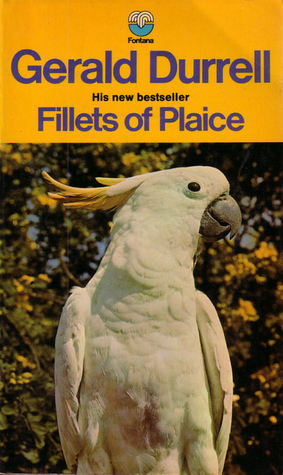 This is a pleasant miscellany of leftover essays that didn’t make it into any of Durrell’s other books. The best is “The Birthday Party,” about an incident from the Corfu years: Larry insisted on taking the fridge along on Mother’s birthday outing to an island, and their boat ran out of petrol. In “A Transport of Terrapins,” teenage Gerry works as a lowly pet shop assistant in London even though he knows twice as much as his boss; and meets other eccentric fellows, such as a bird collector and a retired colonel who has a house full of model figures for war gaming.
“A Question of Promotion” is set on one of the animal-collecting expeditions to Cameroon and turned me off a little with its colonial attitude: Durrell talks to the natives in condescending pidgin as he helps prepare a feast for the District Commissioner’s visit. In “A Question of Degrees” he visits two hospitals for a cataclysmic nosebleed, while “Ursula” is about a girlfriend who couldn’t open her mouth without uttering a malapropism. Entertaining scraps for diehard fans; if you’re new to Durrell, though, start with My Family and Other Animals and Menagerie Manor.
The Unchangeable Spots of Leopards by Kristopher Jansma (2013)
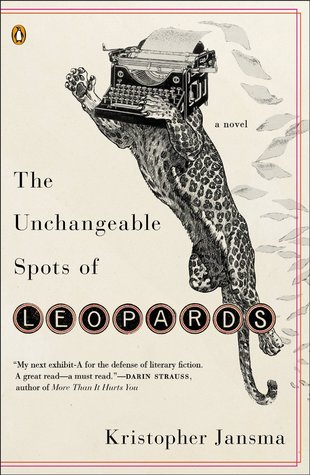 I’d meant to read Jansma’s debut ever since Why We Came to the City, his terrific novel about five university friends negotiating life in New York City during the recession, came out in 2016. I assumed the leopards of the title would be purely metaphorical – a reference to people not being able to change their inborn nature – and they are, but they’re also surprisingly literal in the one chapter set in Africa.
Jansma’s deliciously unreliable narrator, never named but taking on various aliases in these linked short stories, is a trickster, constantly reworking his life into fiction. He longs to be a successful novelist, but keeps losing his works in progress. We think we know the basics of his identity – he’s the son of a single mother who worked as a flight attendant; he grew up in North Carolina emulating the country club and debutante class; at Berkshire College he met his best friend and rival Julian McGann in creative writing class and fell for Julian’s friend Evelyn, the great unrequited love of his life – but Part II introduces doubt by calling the characters different names. Are these the ‘real’ people, or the narrator’s fictionalized versions?
The characters go on a bizarre odyssey that moves the setting from New York City to Nevada to Dubai to Sri Lanka to Ghana to Iceland to Luxembourg, finally ending up back in the very airport terminal where it started. As I remembered from Why We Came to the City, Jansma interleaves Greek mythology and allusions to other writers, especially F. Scott Fitzgerald. The coy way in which he layers fiction on fiction reminded me of work by John Boyne and Tom Rachman; other recommended readalikes are The Goldfinch and Orchid & the Wasp.
The 2019 Wellcome Book Prize: Shadow Panel and Wish List
On Tuesday the longlist for the 2019 Wellcome Book Prize will be announced. For the third year in a row I’m running a shadow panel, and it’s composed of the same four wonderful book bloggers who joined me last year: Paul Cheney of Halfman, Halfbook, Annabel Gaskell of Annabookbel, Clare Rowland of A Little Blog of Books, and Dr. Laura Tisdall.
This year we’re going to do things slightly differently: we plan to split up the longlist, taking two to three titles each, so that between us we will have read them all and can announce our own preferred shortlist before the official shortlist is announced in March. At that point we’ll catch up by (re)reading the six shortlisted books, each reviewing the ones we haven’t already. Essentially, I’m adding an extra stage of shadow panel judging, simply because I can. I hope it will be fun – and also less onerous, in that we should get a leg-up on the shortlist and not have to read all six books in March‒April, which has proved to be a challenge in the past.
My Wellcome Prize hopefuls are all the fiction or nonfiction titles I’ve read on a medical theme that were published in the UK in calendar year 2018. I have put asterisks beside the 12 books in this post that I predict for the longlist. (The combination of wishful thinking and likelihood means that these are not exclusively my personal favorites.)

Below is a list of the books I’ve already featured on the blog in some way, with links to my coverage and a few-word summary of their relevance.
Nonfiction
Gross Anatomy by Mara Altman: Female body woes
*Beneath the Skin: Great Writers on the Body: Essays on organs
*All that Remains by Sue Black: Forensic anthropology
Everything Happens for a Reason by Kate Bowler: Living with advanced cancer
Heal Me by Julia Buckley: Tackling chronic pain
*The Unmapped Mind by Christian Donlan: Adjusting to life with MS
From Here to Eternity by Caitlin Doughty: Funerary rites around the world
This Really Isn’t About You by Jean Hannah Edelstein: A genetic disease in the family
Natural Causes by Barbara Ehrenreich: Questioning the wellness culture
On Smaller Dogs and Larger Life Questions by Kate Figes: Pondering breast cancer
Shapeshifters by Gavin Francis: Instances of bodily change
The Reading Cure by Laura Freeman: Healing from an eating disorder
Nine Pints by Rose George: The story of blood
Waiting for the Last Bus by Richard Holloway: Ageing and death
*Heart: A History by Sandeep Jauhar: Heart disease and treatments
Sick by Porochista Khakpour: Chronic Lyme disease
Human Errors by Nathan Lents: Flawed bodies; evolutionary adaptations
Skybound by Rebecca Loncraine: Breast cancer; flying lessons
Amateur by Thomas Page McBee: Memoir of F2M transformation
*Face to Face by Jim McCaul: Tales of facial surgery
*Somebody I Used to Know by Wendy Mitchell: A firsthand account of early Alzheimer’s
*That Was When People Started to Worry by Nancy Tucker: Mental illness from the inside
*The Language of Kindness by Christie Watson: Nursing as a vocation
Fiction
Little by Edward Carey: Anatomical models in wax (thanks to Clare for the reminder!)
Orchid & the Wasp by Caoilinn Hughes: Non-epileptic seizures
*The Winter Soldier by Daniel Mason: Neurology, surgery during WWI
The Way of All Flesh by Ambrose Parry: Medicine in 1840s Edinburgh
Other eligible books that I have read but not happened to mention on the blog:
 In Shock by Rana Awdish: The doctor became the patient when Awdish, seven months pregnant, was rushed into emergency surgery with excruciating pain due to severe hemorrhaging into the space around her liver, later explained by a ruptured tumor. Having experienced brusque, cursory treatment, even from colleagues at her Detroit-area hospital, she was convinced that doctors needed to do better. This memoir is a gripping story of her own medical journey and a fervent plea for compassion from medical professionals.
 Doctor by Andrew Bomback: Part of the Bloomsbury Object Lessons series, this is a wide-ranging look at what it’s like to be a doctor. Bomback is a kidney specialist; his wife is also a doctor, and his father, fast approaching retirement, is the kind of old-fashioned, reassuring pediatrician who knows everything. Even the author’s young daughter likes playing with a stethoscope and deciding what’s wrong with her dolls. In a sense, then, Bomback uses fragments of family memoir to compare the past, present and likely future of medicine.
 A Moment of Grace by Patrick Dillon [skimmed]: A touching short memoir of the last year of his wife Nicola Thorold’s life, in which she battled acute myeloid leukemia. Dillon doesn’t shy away from the pain and difficulties, but is also able to summon up some gratitude.
 Get Well Soon: Adventures in Alternative Healthcare by Nick Duerden: British journalist Nick Duerden had severe post-viral fatigue after a run-in with possible avian flu in 2009 and was falsely diagnosed with ME / CFS. He spent a year wholeheartedly investigating alternative therapies, including yoga, massage, mindfulness and meditation, visualization, talk therapy and more. He never comes across as bitter or sorry for himself. Instead, he considered fatigue a fact of his new life and asked what he could do about it. So this ends up being quite a pleasant amble through the options, some of them more bizarre than others.
 *Sight by Jessie Greengrass [skimmed]: I wanted to enjoy this, but ended up frustrated. As a set of themes (losing a parent, choosing motherhood, the ways in which medical science has learned to look into human bodies and minds), it’s appealing; as a novel, it’s off-putting. Had this been presented as a set of autobiographical essays, perhaps I would have loved it. But instead it’s in the coy autofiction mold where you know the author has pulled some observations straight from life, gussied up others, and then, in this case, thrown in a bunch of irrelevant medical material dredged up during research at the Wellcome Library.
 *Brainstorm: Detective Stories From the World of Neurology by Suzanne O’Sullivan: Epilepsy affects 600,000 people in the UK and 50 million worldwide, so it’s an important condition to know about. It is fascinating to see the range of behaviors seizures can be associated with. The guesswork is in determining precisely what is going wrong in the brain, and where, as well as how medicines or surgery could address the fault. “There are still far more unknowns than knowns where the brain is concerned,” O’Sullivan writes; “The brain has a mind of its own,” she wryly adds later on. (O’Sullivan won the Prize in 2016 for It’s All in Your Head.)
 I’m also currently reading and enjoying two witty medical books, The Mystery of the Exploding Teeth and Other Curiosities from the History of Medicine by Thomas Morris, and Chicken Unga Fever by Phil Whitaker, his collected New Statesman columns on being a GP.
Four additional books I have not read but think might have a chance of making the longlist:
Primate Change: How the World We Made Is Remaking Us by Vybarr Cregan-Reid
 The Beautiful Cure: Harnessing Your Body’s Natural Defences by Daniel M. Davis
Because I Come from a Crazy Family: The Making of a Psychiatrist by Edward M. Hallowell
*She Has Her Mother’s Laugh: The Powers, Perversions, and Potential of Heredity by Carl Zimmer
Look out for the announcement of the longlist on Tuesday afternoon! I’ll report back, perhaps on Wednesday, with some reactions and the shadow panel’s reviewing strategy.
 Bookish Beck = Rebecca Foster. American transplant to England. Freelance proofreader and book reviewer.
 Bookish Beck