Book Serendipity, November to December 2024
I call it “Book Serendipity” when two or more books that I read at the same time or in quick succession have something in common – the more bizarre, the better. This is a regular feature of mine every couple of months. Because I usually have 20–30 books on the go at once, I suppose I’m more prone to such incidents. People frequently ask how I remember all of these coincidences. The answer is: I jot them down on scraps of paper or input them immediately into a file on my PC desktop; otherwise, they would flit away! The following are in roughly chronological order.
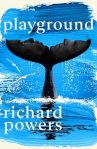
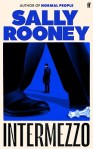
- Characters who were in a chess club and debating society in high school/college in Playground by Richard Powers and Intermezzo by Sally Rooney.
- Pondering the point of a memorial and a mention of hiring mourners in Immemorial by Lauren Markham and Basket of Deplorables by Tom Rachman.
- A mention of Rachel Carson, and her The Sea Around Us in particular, in Playground by Richard Powers, while I was also reading for review Rachel Carson and the Power of Queer Love by Lida Maxwell.
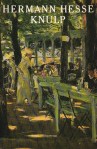
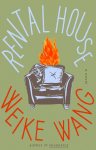
- A character pretends to be asleep when someone comes into the room to check on them in Knulp by Hermann Hesse and Rental House by Weike Wang.
- A mention of where a partner puts his pistachio shells in After the Rites and Sandwiches by Kathy Pimlott and Rental House by Weike Wang.
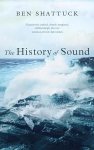
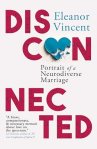 A character who startles very easily (in the last two cases because of PTSD) in Life before Man by Margaret Atwood, A History of Sound by Ben Shattuck, and Disconnected by Eleanor Vincent.
- The husband is named Nate in Life before Man by Margaret Atwood and Rental House by Weike Wang.
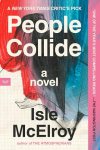
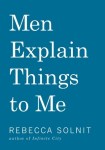
- In People Collide by Isle McElroy, there’s a mention of Elizabeth reading “a popular feminist book about how men explained things to women.” The day I finished reading the novel, I started reading the book in question: Men Explain Things to Me by Rebecca Solnit.
- I learned about the “he’s-at-home” (19th-century dildo) being used by whalers’ wives on Nantucket while the husbands are away at sea through historical fiction – Daughters of Nantucket by Julie Gerstenblatt, which I read last year – and encountered the practice again through an artefact found in the present day in The History of Sound by Ben Shattuck. Awfully specific!
- A week after I finished reading Station Eleven by Emily St. John Mandel, it turned up in a discussion of Vancouver Island in Island by Julian Hanna.
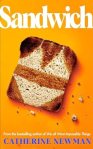
- A Cape Cod setting in Sandwich by Catherine Newman (earlier in the year) plus The History of Sound by Ben Shattuck and Rental House by Weike Wang.
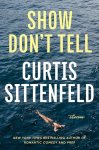
- A gay character references Mulder and Scully (of The X-Files) in the context of determining sexual preference, and there’s a female character named Kit, in The Old Haunts by Allan Radcliffe and one story of Show Don’t Tell by Curtis Sittenfeld.
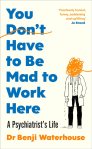
- A mention of The Truman Show in the context of delusions in The Year of Living Biblically by A.J. Jacobs and You Don’t Have to Be Mad to Work Here by Benji Waterhouse.
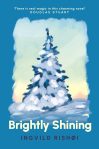
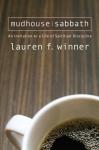
- St. Lucia is mentioned in Beasts by Ingvild Bjerkeland, Brightly Shining by Ingvild Rishøi (two Norwegian authors named Ingvild there!), and Mudhouse Sabbath by Lauren Winner.
- A pet named Darwin: in Levels of Life by Julian Barnes it’s Sarah Bernhardt’s monkey; in Cold Kitchen by Caroline Eden it’s her beagle. Within days I met another pet beagle named Darwin in Island by Julian Hanna. (It took me a moment to realize why it’s a clever choice!)
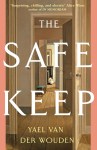
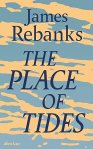
- A character named Henrik in The Place of Tides by James Rebanks and one story of Show Don’t Tell by Curtis Sittenfeld, and a Hendrik in The Safekeep by Yael van der Wouden.
- A hat with a green ribbon in The Safekeep by Yael van der Wouden and one story of Show Don’t Tell by Curtis Sittenfeld (in which it’s an emoji).
- Romanian neighbours who speak very good English in Island by Julian Hanna and Rental House by Weike Wang.
- A scene of returning to a house one used to live in in Hyper by Agri Ismaïl, The Old Haunts by Allan Radcliffe, and one story of Show Don’t Tell by Curtis Sittenfeld.
- A woman has had three abortions in The House of Dolls by Barbara Comyns and Without Exception by Pam Houston.
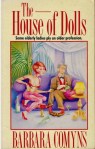
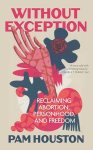
- Household items keep going missing and there’s broken china in The House of Dolls by Barbara Comyns and The Safekeep by Yael van der Wouden.
- Punctuated equilibrium (a term from evolutionary biology) is used as a metaphor in Hyper by Agri Ismaïl and Men Explain Things to Me by Rebecca Solnit.
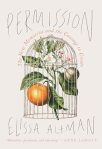 The author’s mother repeatedly asked her daughter a rhetorical question along the lines of “Do you know what I gave up to have you?” in Permission by Elissa Altman and Without Exception by Pam Houston.
- The author/character looks in the mirror at the end of a long day and hardly recognizes him/herself in The Place of Tides by James Rebanks, You Don’t Have to Be Mad to Work Here by Benji Waterhouse, and Amphibian by Tyler Wetherall.
- A man is afraid to hold his boyfriend’s hand in public in another country because he’s unsure about the cultural attitudes towards homosexuality in Clinical Intimacy by Ewan Gass and Small Rain by Garth Greenwell.
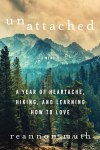
- The author’s mother is a therapist/psychologist and the author her/himself is undergoing some kind of mental health treatment in Unattached by Reannon Muth and You Don’t Have to Be Mad to Work Here by Benji Waterhouse.
- A man declares that dying in one’s mid-40s is nothing to complain about in A Beginner’s Guide to Dying by Simon Boas and Small Rain by Garth Greenwell.
- A woman ponders whether her ongoing anxiety is related to the stressful circumstances of her birth in Unattached by Reannon Muth and When the World Explodes by Amy Lee Scott.
What’s the weirdest reading coincidence you’ve had lately?
#NonFicNov Review Book Catch-Up: Cohen, Gilbert, Hodge, Piesse, Royle
I have a big backlog of review books piled beside my composition station (a corner of the lounge by the front window; an ancient PC inherited from my mother-in-law and not connected to the Internet; a wooden chair with leather seat that had been left behind in a previous rental house’s garage). Nonfiction November is the excuse I need to finally get around to writing about lots of them; at least one more catch-up will be coming later this month. My apologies to the publishers for the brief reviews.
Today I have a therapist’s take on classic literature, an optimist’s research on data use, a journalist’s response to her sister’s and father’s deaths, a professor’s search for the remnants of Charles Darwin at his family home, and a bibliophile’s tales of book-collecting exploits.
How to Live. What to Do.: In Search of Ourselves in Life and Literature by Josh Cohen
“Literature and psychoanalysis are both efforts to make sense of the world through stories, to discover the recurring problems and patterns and themes of life. Read and listen enough, and we soon come to notice how insistently the same struggles, anxieties and hopes repeat themselves down the ages and across the world.”
 This is the premise for Cohen’s work life, and for this book. Moving through the human experience from youth to old age, he examines anonymous case studies and works of literature that speak to the sorts of situations encountered in that stage. For instance, he recommends Alice in Wonderland as a tonic for the feeling of being stuck – Lewis Carroll’s “let’s pretend” attitude can help someone return to the playfulness and openness of childhood. William Maxwell’s They Came Like Swallows, set during the Spanish flu, takes on new significance for Cohen in the days of Covid as his appointments all move online; he also takes from it the importance of a mother for providing emotional security. A bibliotherapy theme would normally be catnip for me, but I often found the examples too obvious and the discussion too detailed (and thus involving spoilers). Not a patch on The Novel Cure.
(Ebury Press, February 2021.) With thanks to the publicist for the free copy for review.
Good Data: An Optimist’s Guide to Our Digital Future by Sam Gilbert
 Gilbert worked for Experian before going back to university to study politics; he is now a researcher at the Bennett Institute for Public Policy at the University of Cambridge. At a time of much anxiety about “surveillance capitalism,” he seeks to provide reassurance. He explains that Facebook and the like, with their ad-based business models, use profile data and behavioural data to make inferences about you. This is not the same as “listening in,” he is careful to assert. Gilbert contrasts broad targeting and micro-targeting, and runs through trends in search data. He highlights instances where social media and data mining have been beneficial, such as in creating jobs, increasing knowledge, or aiding communication during democratic protests. I have to confess that a lot of this went over my head; I’d overestimated my interest in a full book on technology, having reviewed Born Digital earlier in the year.
(Welbeck, April 2021.) With thanks to the publisher for the proof copy for review.
The Consequences of Love by Gavanndra Hodge (2020)
 In 1989, Hodge’s younger sister Candy died on a family holiday in Tunisia when a rare virus brought on rapid organ failure. The rest of the family exhibited three very different responses to grief: her father retreated into existing addictions, her mother found religion, and she went numb and forgot her sister as much as possible – despite having a photographic memory in general. After her father’s death, Hodge finally found the courage to look back to her early life and the effect of Candy’s death. Hers was no ordinary upbringing; her father was a drug dealer who constantly disappointed her and from her teens on roped her into his substance abuse evenings. Often she was the closest thing to a sober and rational adult in the drug den their home had become. This is a very fluidly written bereavement memoir and a powerful exploration of memory and trauma. It was unfortunate that it felt that little bit too similar to a couple of other books I’ve read in recent years: When I Had a Little Sister by Catherine Simpson and especially Featherhood by Charlie Gilmour.
(Paperback: Penguin, July 2021.) With thanks to the publicist for the free copy for review.
The Ghost in the Garden: In Search of Darwin’s Lost Garden by Jude Piesse
 When Piesse’s academic career took her back to her home county of Shropshire, she became fascinated by the Darwin family home in Shrewsbury, The Mount. A Victorian specialist, she threw herself into research on the family and particularly on the traces of the garden. Her thesis is that here, and on long walks through the surrounding countryside, Darwin developed the field methods and careful attention that would serve him well as the naturalist on board the Beagle. Piesse believes the habit of looking closely was shared by Darwin and his mother, Susannah. The author contrasts Susannah’s experience of childrearing with her own – she has two young daughters when she returns to Shropshire, and has to work out a balance between work and motherhood. I noted that Darwin lost his mother early – early parent loss is considered a predictor of high achievement (it links one-third of U.S. presidents, for instance).
I think what Piesse was attempting here was something like Rebecca Mead’s wonderful My Life in Middlemarch, but the links just aren’t strong enough: There aren’t that many remnants of the garden or the Darwins here (all the family artefacts are at Down House in Kent), and Piesse doesn’t even step foot into The Mount itself until page 217. I enjoyed her writing about her domestic life and her desire to create a green space, however small, for her daughters, but this doesn’t connect to the Darwin material. Despite my fondness for Victoriana, I was left asking myself what the point of this project was.
(Scribe, May 2021.) With thanks to the publisher for the free copy for review.
White Spines: Confessions of a Book Collector by Nicholas Royle
 From the 1970s to 1990s, Picador released over 1,000 paperback volumes with the same clean white-spined design. Royle has acquired most of them – no matter the author, genre or topic; no worries if he has duplicate copies. To build this impressive collection, he has spent years haunting charity shops and secondhand bookshops in between his teaching and writing commitments. He knows where you can get a good bargain, but he’s also willing to pay a little more for a rarer find. In this meandering memoir-of-sorts, he ponders the art of cover design, delights in ephemera and inscriptions found in his purchases (he groups these together as “inclusions”), investigates some previous owners and the provenance of his signed copies, interviews Picador staff and authors, and muses on the few most ubiquitous titles to be found in charity shops (Once in a House on Fire by Andrea Ashworth, Bridget Jones’s Diary by Helen Fielding, anything by Kathy Lette, and Last Orders by Graham Swift). And he does actually read some of what he buys, though of course not all, and finds some hidden gems.
In 2013 I read Royle’s First Novel, which also features Picador spines on its cover and a protagonist obsessed with them. I’d read enthusiastic reviews by fellow bibliophiles – Paul, Simon, Susan – so couldn’t resist requesting White Spines. While I enjoyed the conversational writing, ultimately I thought it quite an indulgent undertaking (especially the records of his dreams!), not dissimilar to a series of book haul posts. The details of shopping trips aren’t of much interest because he’s solely focused on his own quest, not on giving any insight into the wider offerings of a shop or town, e.g., Hay-on-Wye and Barter Books. But if you’re a fan of Shaun Bythell’s books you may well want to read this too. It’s also a window into the collector’s mindset: You know Royle is an extremist when you read that he once collected bread labels!
(Salt Publishing, July 2021.) With thanks to the publicist for the free copy for review.
Are you interested in reading one or more of these?
My Best Backlist Reads of 2020
Like many book bloggers, I’m irresistibly drawn to the shiny new books released each year. However, I consistently find that many of my most memorable reads were published years or even decades ago. These 29 selections, in alphabetical order by author name, account for the rest of my 4.5- and 5-star ratings of the year. Five rereads made it onto my list.
Fiction
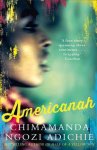 Americanah by Chimamanda Ngozi Adichie: Through Ifemelu’s years of studying, working, and blogging her way around the Eastern seaboard of the United States, Adichie explores the ways in which the experience of an African abroad differs from that of African Americans. On a sentence level as well as at a macro plot level, this was utterly rewarding.
 Year of Wonders by Geraldine Brooks: In 1665, with the Derbyshire village of Eyam in the grip of the Plague, the drastic decision is made to quarantine it. Frustration with the pastor’s ineffectuality attracts people to religious extremism. Anna’s intimate first-person narration and the historical recreation are faultless, and there are so many passages that feel apt.
 Shotgun Lovesongs by Nickolas Butler: Four childhood friends from Little Wing, Wisconsin. Which bonds will last, and which will be strained to the breaking point? This is a book full of nostalgia and small-town atmosphere. All the characters wonder whether they’ve made the right decisions or gotten stuck. A lot of bittersweet moments, but also comic ones.
 Kindred by Octavia E. Butler: A perfect time-travel novel for readers who quail at science fiction. Dana, an African American writer in Los Angeles, is dropped into early-nineteenth-century Maryland. This was such an absorbing read, with first-person narration that makes you feel you’re right there alongside Dana on her perilous travels.
 Dominicana by Angie Cruz: Ana Canción is just 15 when she arrives in New York from the Dominican Republic on the first day of 1965 to start her new life as the wife of Juan Ruiz. An arranged marriage and arriving in a country not knowing a word of the language: this is a valuable immigration story that stands out for its plucky and confiding narrator.
 Ella Minnow Pea by Mark Dunn: A book of letters in multiple sense. Laugh-out-loud silliness plus a sly message about science and reason over superstition = a rare combination that made this an enduring favorite. On my reread I was more struck by the political satire: freedom of speech is endangered in a repressive society slavishly devoted to a sacred text.
 Love Medicine by Louise Erdrich: Interlocking stories that span half a century in the lives of a couple of Chippewa families that sprawl out from a North Dakota reservation. Looking for love, looking for work. Getting lucky, getting even. Their problems are the stuff of human nature and contemporary life. I adored the descriptions of characters and of nature.
 Notes from an Exhibition by Patrick Gale: Nonlinear chapters give snapshots of the life of a bipolar artist and her interactions with her husband and children. Their Quakerism sets up a calm and compassionate atmosphere, but also allows family secrets to proliferate. The novel questions patterns of inheritance and the possibility of happiness.
 Confession with Blue Horses by Sophie Hardach: When Ella’s parents, East German art historians who came under Stasi surveillance, were caught trying to defect, their children were taken away from them. Decades later, Ella is determined to find her missing brother and learn what really happened to her mother. Eye-opening and emotionally involving.
 The Go-Between by L.P. Hartley: Twelve-year-old Leo Colston is invited to spend July at his school friend’s home, Brandham Hall. You know from the famous first line on that this juxtaposes past and present. It’s masterfully done: the class divide, the picture of childhood tipping over into the teenage years, the oppressive atmosphere, the comical touches.
 Our Souls at Night by Kent Haruf: Addie is a widow; Louis is a widower. They’re both lonely and prone to fretting about what they could have done better. Would he like to come over to her house at night to talk and sleep? Matter-of-fact prose, delivered without speech marks, belies a deep undercurrent of emotion. Understated, bittersweet, realistic. Perfect.
 The Emperor’s Children by Claire Messud: A 9/11 novel. The trio of protagonists, all would-be journalists aged 30, have never really had to grow up; now it’s time to get out from under the shadow of a previous generation and reassess what is admirable and who is expendable. This was thoroughly engrossing. Great American Novel territory, for sure.
 My Year of Meats by Ruth Ozeki: A Japanese-American filmmaker is tasked with finding all-American families and capturing their daily lives – and best meat recipes. There is a clear message here about cheapness and commodification, but Ozeki filters it through the wrenching stories of two women with fertility problems. Bold if at times discomforting.
 Small Ceremonies by Carol Shields: An impeccable novella, it brings its many elements to a satisfying conclusion and previews the author’s enduring themes. Something of a sly academic comedy à la David Lodge, it’s laced with Shields’s quiet wisdom on marriage, parenting, the writer’s vocation, and the difficulty of ever fully understanding another life.
 Larry’s Party by Carol Shields: The sweep of Larry’s life, from youth to middle age, is presented chronologically through chapters that are more like linked short stories: they focus on themes (family, friends, career, sex, clothing, health) and loop back to events to add more detail and new insight. I found so much to relate to in Larry’s story; Larry is really all of us.
 Abide with Me by Elizabeth Strout: Tyler Caskey is a widowed pastor whose five-year-old daughter has gone mute and started acting up. As usual, Strout’s characters are painfully real, flawed people, often struggling with damaging obsessions. She tenderly probes the dark places of the community and its minister’s doubts, but finds the light shining through.
 The Wife by Meg Wolitzer: On the way to Finland, where her genius writer husband will accept the prestigious Helsinki Prize, Joan finally decides to leave him. Alternating between the trip and earlier in their marriage, this is deceptively thoughtful with a juicy twist. Joan’s narration is witty and the point about the greater value attributed to men’s work is still valid.
Nonfiction
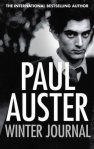 Winter Journal by Paul Auster: Approaching age 64, the winter of his life, Auster decided to assemble his most visceral memories: scars, accidents and near-misses, what his hands felt and his eyes observed. The use of the second person draws readers in. I particularly enjoyed the tour through the 21 places he’s lived. One of the most remarkable memoirs I’ve ever read.
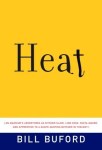 Heat by Bill Buford: Buford was an unpaid intern at Mario Batali’s famous New York City restaurant, Babbo. In between behind-the-scenes looks at frantic sessions of food prep, Buford traces Batali’s culinary pedigree through Italy and London. Exactly what I want from food writing: interesting trivia, quick pace, humor, and mouthwatering descriptions.
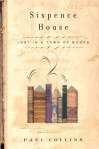 Sixpence House: Lost in a Town of Books by Paul Collins: Collins moved to Hay-on-Wye with his wife and toddler son, hoping to make a life there. As he edited the manuscript of his first book, he started working for Richard Booth, the eccentric bookseller who crowned himself King of Hay. Warm, funny, and nostalgic. An enduring favorite of mine.
 A Year on the Wing by Tim Dee: From a life spent watching birds, Dee weaves a mesh of memories and recent experiences, meditations and allusions. He moves from one June to the next and from Shetland to Zambia. The most powerful chapter is about watching peregrines at Bristol’s famous bridge – where he also, as a teen, saw a man commit suicide.
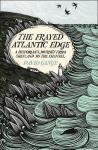 The Frayed Atlantic Edge by David Gange: While kayaking down the western coast of the British Isles and Ireland, Gange delves into the folklore, geology, history, local language and wildlife of each region and island group – from the extreme north of Scotland at Muckle Flugga to the southwest tip of Cornwall. An intricate interdisciplinary approach.
 Traveling Mercies: Some Thoughts on Faith by Anne Lamott: There is a lot of bereavement and other dark stuff here, yet an overall lightness of spirit prevails. A college dropout and addict, Lamott didn’t walk into a church and get clean until her early thirties. Each essay is perfectly constructed, countering everyday angst with a fumbling faith.
 In the Dream House by Carmen Maria Machado: This has my deepest admiration for how it prioritizes voice, theme and scene, gleefully does away with chronology and (not directly relevant) backstory, and engages with history, critical theory and the tropes of folk tales to interrogate her experience of same-sex domestic violence. (Second-person narration again!)
 Period Piece by Gwen Raverat: Raverat was a granddaughter of Charles Darwin. This is a portrait of what it was like to grow up in a particular time and place (Cambridge from the 1880s to about 1909). Not just an invaluable record of domestic history, it is a funny and impressively thorough memoir that serves as a model for how to capture childhood.
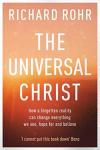 The Universal Christ by Richard Rohr: I’d read two of the Franciscan priest’s previous books but was really blown away by the wisdom in this one. The argument in a nutshell is that Western individualism has perverted the good news of Jesus, which is renewal for everything and everyone. A real gamechanger. My copy is littered with Post-it flags.
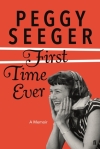 First Time Ever: A Memoir by Peggy Seeger: The octogenarian folk singer and activist has packed in enough adventure and experience for multiple lifetimes, and in some respects has literally lived two: one in America and one in England; one with Ewan MacColl and one with a female partner. Her writing is punchy and impressionistic. She’s my new hero.
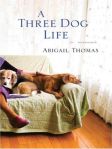 A Three Dog Life by Abigail Thomas: A memoir in essays about her husband’s TBI and what kept her going. Unassuming and heart on sleeve, Thomas wrote one of the most beautiful books out there about loss and memory. It is one of the first memoirs I remember reading; it made a big impression the first time, but I loved it even more on a reread.
 On Silbury Hill by Adam Thorpe: Explores the fragmentary history of the manmade Neolithic mound and various attempts to excavate it, but ultimately concludes we will never understand how and why it was made. A flawless integration of personal and wider history, as well as a profound engagement with questions of human striving and hubris.

(Books not pictured were read digitally, or have already gone back to the library.)
And if I really had to limit myself to just two favorites – my very best fiction and nonfiction reads of the year – they would be Our Souls at Night by Kent Haruf and Winter Journal by Paul Auster.
What were your best backlist reads this year?
Recommended July Releases: Donoghue, Maizes, Miller, Parikian, Trethewey
My five new releases for July include historical pandemic fiction, a fun contemporary story about a father-and-daughter burglar team, a new poetry collection from Carcanet Press, a lighthearted nature/travel book, and a poetic bereavement memoir about a violent death.
The Pull of the Stars by Emma Donoghue
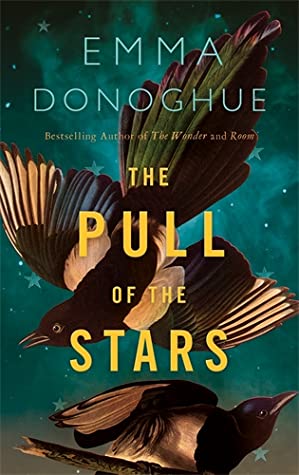 Donoghue’s last two novels, The Wonder and Akin, were big hits with me. Less than a year after the contemporary-set Akin, she’s back to a historical setting – and an uncannily pertinent pandemic theme – with her latest. In 1918, Julia Power is a nurse on a Dublin maternity ward. It’s Halloween and she is about to turn 30, making her a spinster for her day; she lives with her mute, shell-shocked veteran brother, Tim, and his pet magpie.
Because she’s already had “the grip” (influenza), she is considered immune and is one of a few staff members dealing with the flu-ridden expectant mothers in quarantine in her overcrowded hospital. Each patient serves as a type, and Donoghue whirls through all the possible complications of historical childbirth: stillbirth, obstructed labor, catheterization, forceps, blood loss, transfusion, maternal death, and so on.
It’s not for the squeamish, and despite my usual love of medical reads, I felt it was something of a box-ticking exercise, with too much telling about medical procedures and recent Irish history. Because of the limited time frame – just three days – the book is far too rushed. We simply don’t have enough time to get to know Julia through and through, despite her first-person narration; the final 20 pages, in particular, are so far-fetched and melodramatic it’s hard to believe in a romance you’d miss if you blinked. And the omission of speech marks just doesn’t work – it’s downright confusing with so many dialogue-driven scenes.
Donoghue must have been writing this well before Covid-19, but I wouldn’t be surprised if the publication was hurried forward to take advantage of the story’s newfound relevance. It shows: what I read in May and June felt like an unpolished draft, with threads prematurely tied up to meet a deadline. This was an extremely promising project that, for me, was let down by the execution, but it’s still a gripping read that I wouldn’t steer you away from if you find the synopsis appealing. (Some more spoiler-y thoughts here.)
Prescient words about pandemics:
“All over the globe … some flu patients are dropping like flies while others recover, and we can’t solve the puzzle, nor do a blasted thing about it. … There’s no rhyme or reason to who’s struck down.”
“Doctor Lynn went on, As for the authorities, I believe the epidemic will have run its course before they’ve agreed to any but the most feeble action. Recommending onions and eucalyptus oil! Like sending beetles to stop a steamroller.”
Why the title?
Flu comes from the phrase “influenza delle stelle” – medieval Italians thought that illness was fated by the stars. There’s also one baby born a “stargazer” (facing up) and some literal looking up at the stars in the book.
My rating: 
My thanks to Picador for the proof copy for review.
Other People’s Pets by R.L. Maizes
 This is Maizes’ debut novel, after her 2019 short story collection We Love Anderson Cooper. Louise “La La” Fine and her father, Zev, share an unusual profession: While outwardly they are a veterinary student and a locksmith, respectively, for many years they broke into homes and sold the stolen goods. Despite close shaves, they’ve always gotten away with it – until now. When Zev is arrested, La La decides to return to her criminal ways just long enough to raise the money to post bail for him. But she doesn’t reckon on a few complications, like her father getting fed up with house arrest, her fiancé finding out about her side hustle, and her animal empathy becoming so strong that when she goes into a house she not only pilfers valuables but also cares for the needs of ailing pets inside.
Flashbacks to La La’s growing-up years, especially her hurt over her mother leaving, take this deeper than your average humorous crime caper. The way the plot branches means that for quite a while Zev and La La are separated, and I grew a bit weary of extended time in Zev’s company, but this was a great summer read – especially for animal lovers – that never lost my attention. The magic realism of the human‒pet connection is believable and mild enough not to turn off readers who avoid fantasy. Think The Twelve Lives of Samuel Hawley meets Hollow Kingdom.
My rating: 
My thanks to the author and Celadon Books for the free e-copy for review.
The Long Beds by Kate Miller
 Here and there; now and then: the poems in Miller’s second collection enlarge such dichotomies by showcasing the interplay of the familiar and the foreign. A scientist struggles to transcribe birdsong, and a poppy opens in slow motion. “Flag” evokes the electric blue air and water of a Greek island, while “The Quarters” is set in the middle of the night in a French village. A few commissions, including “Waterloo Sunrise,” stick close to home in London or other southern England locales.
Various poems, including the multi-part “Album Without Photographs,” are about ancestor Muriel Miller’s experiences in India and Britain in the 1910s-20s. “Keepers of the States of Sleep and Wakefulness, fragment from A Masque,” patterned after “The Second Masque” by Ben Jonson, is an up-to-the-minute one written in April that names eight nurses from the night staff at King’s College Hospital (and the short YouTube film based on it is dedicated to all NHS nurses).
My two favorites were “Outside the Mind Shop,” in which urban foxes tear into bags of donations outside a charity shop one night while the speaker lies awake, and “Knapsack of Parting Gifts” a lovely elegy to a lost loved one. I spotted a lot of alliteration and assonance in the former, especially. Thematically, the collection is a bit scattered, but there are a lot of individual high points.
My rating:
My thanks to Carcanet Press for the free e-copy for review.
Into the Tangled Bank: In Which Our Author Ventures Outdoors to Consider the British in Nature by Lev Parikian
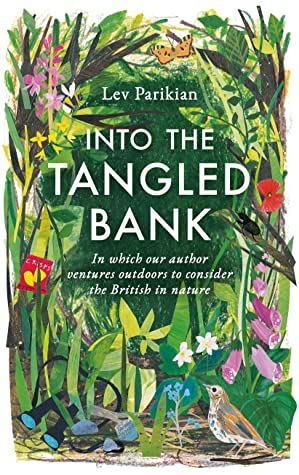 In the same way that kids sometimes write their address by going from the specific to the cosmic (street, city, country, continent, hemisphere, planet, galaxy), this book, a delightfully Bryson-esque tour, moves ever outwards, starting with the author’s own home and garden and proceeding to take in his South London patch and his journeys around the British Isles before closing with the wonders of the night sky. By slowing down to appreciate what is all around us, he proposes, we might enthuse others to engage with nature.
With the zeal of a recent convert, he guides readers through momentous sightings and everyday moments of connection. As they were his gateway, many of these memories involve birds: looking for the year’s first swifts, trying to sketch a heron and realizing he’s never looked at one properly before, avoiding angry terns on the Farne Islands, ringing a storm petrel on Skokholm, and seeing white-tailed eagles on the Isle of Skye. He brings unique places to life, and pays tribute to British naturalists who paved the way for today’s nature-lovers by visiting the homes of Charles Darwin, Gilbert White, Peter Scott, and more.
I was on the blog tour for Parikian’s previous book, Why Do Birds Suddenly Disappear?, in 2018. While the books are alike in levity (pun intended!), being full of self-deprecation and witty asides along with the astute observations, I think I enjoyed this one that little bit more for its all-encompassing approach to the experience of nature. I fully expect to see it on next year’s Wainwright Prize longlist (speaking of the Wainwright Prize, in yesterday’s post I correctly predicted four on the UK nature shortlist and two on the global conservation list!).
Readalikes (that happen to be from the same publisher): Under the Stars by Matt Gaw and The Seafarers by Stephen Rutt
My rating: 
My thanks to Elliott & Thompson for the free copy for review.
Memorial Drive: A Daughter’s Memoir by Natasha Trethewey
 Trethewey grew up in 1960s Mississippi with a Black mother and a white Canadian father, at a time when interracial marriage remained illegal in parts of the South. After her parents’ divorce, she and her mother, Gwen, moved to Georgia to start a new life, but her stepfather Joel was physically and psychologically abusive. Gwen’s murder opens and closes the book. Trethewey only returned to that Atlanta apartment on Memorial Drive after 30 years had passed. The blend of the objective (official testimonies and transcripts) and the subjective (interpreting photographs, and rendering dream sequences in poetic language) makes this a striking memoir, as delicate as it is painful. I recommend it highly to readers of Elizabeth Alexander and Dani Shapiro. (Full review forthcoming at Shiny New Books.)
My rating: 
My thanks to Bloomsbury for the proof copy for review.

 I’m reading two more July releases, Mostly Dead Things by Kristen Arnett (Corsair, 2 July; for Shiny New Books review), about a family taxidermy business in Florida, and The Liar’s Dictionary by Eley Williams (William Heinemann, 2 July), about an unusual dictionary being compiled in the Victorian period and digitized in the present day.
What July releases can you recommend?
Bookbarn Book Haul & More
 We’re back from our weekend in Bristol and Exeter to hang out with university friends and attend our goddaughter’s dedication service. On the way (ish) down, we stopped at Bookbarn International, one of my favorite places to look for secondhand books. The shop is always coming up with new ideas and ventures – a rare books room, a café, stationery and store-brand merchandise, new stock alongside the used books, and so on – and has recently been doing some renovating of the main shop space. I contributed to a crowdfunder for this and got to pick up my rewards while I was there, including the items at right and a £10 store voucher, which, along with the small balance of my vendor account, more than covered my purchases that day.
We arrived around noon so started with a café lunch of all-day veggie cooked breakfasts plus cakes and coffee. Delicious! Then it was time for some dedicated browsing. All of the books on the main shop floor are £1 each; they’re working on restocking this area after the refurbishment. I found 12 books here, and ordered another two (the Janet Frame biography and Gail Godwin’s nonfiction book Heart) from the warehouse for £2 each.

From my book haul, I’m particularly pleased with:
- The sequel to another Robertson Davies novel I own
- The Frame biography – I loved her three-part autobiography and have also been dipping into her fiction; it will be fascinating to learn the ‘truth’ behind how she presented her life in memoir and autofiction. This copy looks to be in new condition, too.
- The Tulip by Anna Pavord, which I’ve long meant to read
- Another Carolyn Parkhurst novel – I loved The Dogs of Babel and Harmony
- Another Wendy Perriam novel – I read my first last year and have been hoping to find more
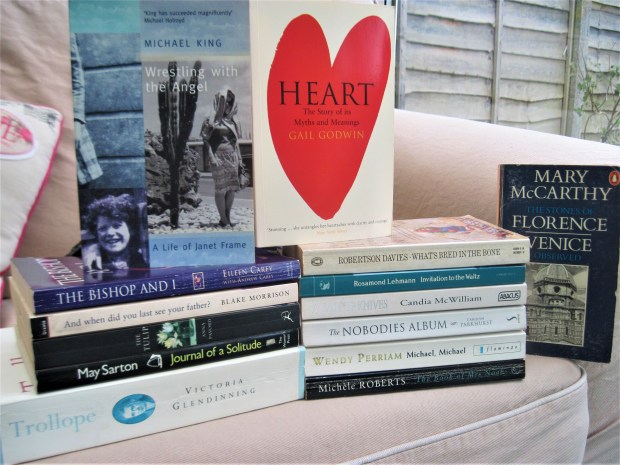
I also bought copies of two of my favorite memoirs, And When Did You Last See Your Father? and Journal of a Solitude (though I own a copy in America, I’d like it to be part of my rereading project this year). I now own two unread novels each by Candia McWilliam and Michèle Roberts and three by Rose Tremain, so I’ll need to be sure I read one from each author this year. I also have a bad habit of hoarding biographies but not reading them, so I want to at least read the Frame one before the year is out.
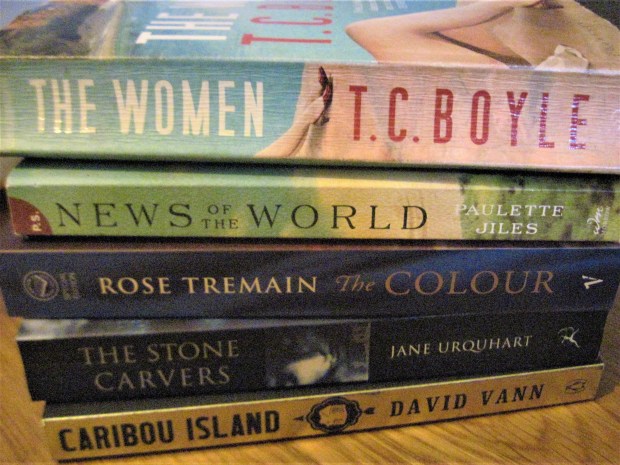
Between Bristol’s charity shops and Book-Cycle in Exeter, I bought another five novels during the weekend, including the Vann to reread and several by authors I want to increase my familiarity with. (Smug points for not buying the £2.50 copy of Boyle’s The Women at Bookbarn and then finding it at Book Cycle for 50 pence instead.) Total weekend spend on 19 books: £2.12.
Picked up any good secondhand bargains recently?
Classic of the Month: Period Piece by Gwen Raverat (1952)
Later today we’re making a pilgrimage to Bookbarn International,* one of my favorite secondhand bookshops in the UK, on the way (ish) to seeing friends in Bristol and Exeter for the weekend. In the past we’ve managed to drop in to Bookbarn annually, but it’s been nearly 2.5 years since our last visit. At that special Harvest Supper and Scrabble** tournament in October 2017 (which I wrote about here), I got to meet William Pryor, the chairman of Bookbarn, and he gave me a copy of his grandmother Gwen Raverat’s memoir, Period Piece.
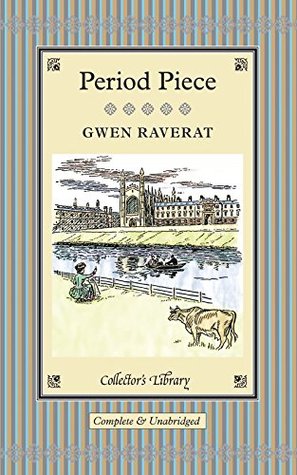 Raverat was a granddaughter of Charles Darwin (the first child of his son George) but never got to meet him as he died three years before her birth. Her book has the subtitle “A Cambridge Childhood,” which perfectly conveys the aim. This is not a comprehensive family history or autobiography, but a portrait of what it was like to grow up in a particular time and place. Raverat was born in 1885, but she begins two years earlier, when her American mother, Maud Du Puy, was 21 and in England for the first time to spend a summer with her great-aunt and -uncle. She had three suitors during that time, all of them Fellows of Trinity College. The rules had only just been changed to allow Fellows to marry, so George Darwin would be among the first married members, and Gwen was in the first batch of offspring.
Period Piece is a charming, witty look at daily life from the 1880s through about 1909 – ending with the marriage of her cousin Frances, which seemed to signal a definitive end to their collective youth. Raverat focuses on everyday sights and sounds but also points out life’s little absurdities. She proceeds thematically rather than chronologically, taking up topics like her mother’s parenting theories; her boarding school education and budding love of art; visits to Grandmamma at Down House, Kent; childhood fears and ghost stories; the five Darwin uncles; religion; sports and games; clothing; and social events such as dances.

Raverat’s childhood home in Cambridge, now part of Darwin College, University of Cambridge. CC BY-SA (https://creativecommons.org/licenses/by-sa/2.5).
Writing towards the end of her life and in the middle of the twentieth century, Raverat neatly draws contrasts between old-fashioned propriety and modern mores. For example, as a child she was often called upon to act as a chaperone to courting couples, and when ladies boated past a watering hole where boys swam naked, they would cover their faces with parasols. She herself managed to avoid the matter of sex entirely until she was an adult, though she does remember looking to an encyclopedia to find out where babies come from.
The utter reliance on servants, a profusion of buttons on every garment, and forced trips to church are a few elements that might strike today’s readers as alien. One incident felt eerily contemporary to me, though: once, walking home alone at around 10 p.m., Gwen saw a gang of dodgy-looking undergraduates carrying a drunk or dead young woman down the street and into a pub. After much internal debate, she decided not to say a word about it to her parents.
I often wonder how novelists and filmmakers get a historical setting just right. The answer is, probably by reading books like this one that so clearly convey quotidian details most people would leave out, e.g. a list of every piece of clothing a lady wore or a rundown of the steps to getting her mother out the door to catch the 8:30 train for a day out in London. Those who have visited or lived in Cambridge will no doubt enjoy spotting familiar locations. There are also amusing cameo appearances from Virginia Stephen (Woolf) and E.M. Forster.
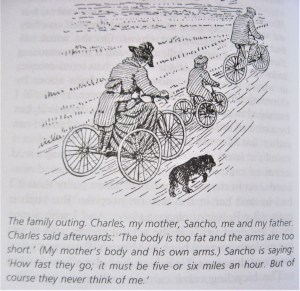 Raverat, a wood engraver, peppered Period Piece with her own illustrations (I have photographed one favorite, at left, but you can see them all in the archive here) – a lovely supplement to the highly visual text. Not just an invaluable record of domestic history, this is a very funny and impressively thorough memoir that could be used by anyone as a model for how to capture childhood. It has never been out of print, and still deserves to be widely read.
*They’ve recently had a renovation that I helped to crowdfund; I’m looking forward to seeing the results. I’ll also be sure to report back on my book haul.
**I was especially delighted to see that the Darwin family had a favorite word-making game, described in the middle of the “Sport” chapter, that sounds a fair bit like Scrabble – except that you only added one letter at a time and could scramble the letters to change the meaning.
Some favorite lines:
(describing one of her mother’s early letters home to America) “They got [rooms for the night] at last at ‘the St Pancreas Hotel’. I was delighted to find this spelling so early, as, to the end of her days, my mother always considered the saint and the internal organ as identical.”
(of their French nurserymaids) “By a provision of Providence they were always called Eugenie, so that when a new one came she could be called Newgenie.”
“The faint flavour of the ghost of my grandfather hung in a friendly way about the whole place [Down] – house, garden and all. … In fact, he was obviously in the same category as God and Father Christmas.”
My rating: 
I read the 2014 Collector’s Library edition, an attractive pocket-sized book with gilt edging and a built-in red ribbon bookmark.

Nonfiction Review Books Roundup: Hay, Hope et al., Lee, Long, McLaren, Zuckerman
I’m continuing with the Nonfiction November focus by catching up on six nonfiction review books I’ve been sent over the last half a year. We’ve got a record of elderly parents’ decline, letters and poems written about the climate crisis, a family memoir set between Taiwan and Canada, a widow’s mushroom-hunting quest, a work of ecotheology that reflects on travels in the Galápagos Islands, and a defense of an entirely secular basis for morality. You can’t say I don’t read a variety, even within nonfiction! See if one or more of these tempts you.
All Things Consoled: A Daughter’s Memoir by Elizabeth Hay
 Gordon and Jean Hay stumbled into their early nineties in an Ottawa retirement home starting in 2009. Elizabeth Hay is one of four children, but caregiving fell to her for one reason and another, and it was a fraught task because of her parents’ prickly personalities: Jean was critical and thrifty to the point of absurdity, spooning thick mold off apple sauce before serving it and needling Elizabeth for dumping perfectly good chicken juice a year before; Gordon had a terrible temper and a history of corporal punishment of his children and of his students when he was a school principal. Jean’s knee surgery and subsequent infection finally put paid to their independence; her mind was never the same and she could no longer paint.
There are many harsh moments in this memoir, but almost as many wry ones, with Hay picking just the right anecdotes to illustrate her parents’ behavior and the shifting family dynamic. She never looks away, no matter how hard it all gets. Her father’s rage against the dying of the light contrasts with her mother’s fade into confusion – lightened by the surprisingly poetic turns of phrase she came out with despite her dementia and aphasia. The title phrase, for instance, was her attempt at “all things considered.” I would wholeheartedly recommend this to readers of Hay’s novels, but anyone can appreciate the picture of complicated love and grief. (See also Susan’s review.)
With thanks to MacLehose Press for the free copy for review.
Letters to the Earth: Writing to a Planet in Crisis, edited by Anna Hope et al.
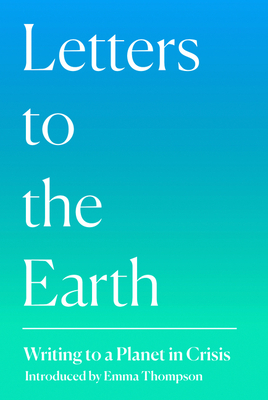 Culture Declares Emergency launched in April to bring the arts into the conversation about the climate emergency. Letters to the Earth compiles 100 short pieces by known and unknown names alike. Alongside published authors, songwriters, professors and politicians are lots of ordinary folk, including children as young as seven. The brief was broad: to write a letter in response to environmental crisis, whether to or from the Earth, to future generations (there are wrenching pieces written to children: “What can I say, now that it’s too late? … that I’m sorry, that I tried,” writes Stuart Capstick), to the government or to other species.
There are certainly relatable emotions here, especially the feeling of helplessness. “We take the train, go vegan, refuse plastic, buy less and less. But that is tiny. We are tiny,” novelist Jo Baker writes. I loved retired bishop Richard Holloway’s wry letter calling the author of Genesis to account for unhelpful language of dominion, Rob Cowen’s poem to a starling, and Anna Hope’s essay about parenting in a time of uncertainty. Unfortunately, much of the rest is twee or haranguing, e.g. “Forest fires are scorching INNOCENT wildlife. Plastic is strangling INNOCENT turtles and dolphins,” a 12-year-old writes. This was put together in a matter of months, and it shows. There is not enough tonal variety, a lot of overwriting has crept through, and errors, especially in the kids’ work, remain uncorrected. Perhaps six to 10 pieces stood out to me overall. I’d recommend the Extinction Rebellion handbook instead.
With thanks to Alison Menzies / William Collins for the free copy for review.
Two Trees Make a Forest: On Memory, Migration and Taiwan by Jessica J. Lee
 I loved Turning, Lee’s 2017 memoir about swimming in one of Berlin’s lakes per week for a year, so I jumped at the chance to read her follow-up, which delves into her maternal line’s history in Taiwan. She travels to Taipei for three months to brush up on her Chinese, write and hike. Interspersed with the lush descriptions of her walks are reflections on Taiwan’s history and on the hidden aspects of her grandfather Gong’s past that only came to light after Lee’s grandmother, Po, died and she and her mother discovered an autobiographical letter he’d written before he drifted into dementia. Nature, language, history and memory flow together in a delicate blend of genres – “I moved from the human timescale of my family’s story through green and unfurling dendrological time,” she writes.
This has got to be one of the most striking title and cover combinations of the year. Along with Chinese characters, the book includes some looping text and Nico Taylor’s maps and illustrations of Taiwanese flora and fauna. While you will likely get more out of this if you have a particular interest in Asian history, languages and culture, it’s impressive how Lee brings the different strands of her story together to form a hybrid nature memoir that I hope will be recognized by next year’s Wainwright Prize and Young Writer of the Year Award shortlists. She’d also be a perfect New Networks for Nature speaker.
With thanks to Virago for the free copy for review.
The Way through the Woods: Of Mushrooms and Mourning by Long Lit Woon
 [Trans. from the Norwegian by Barbara J. Haveland]
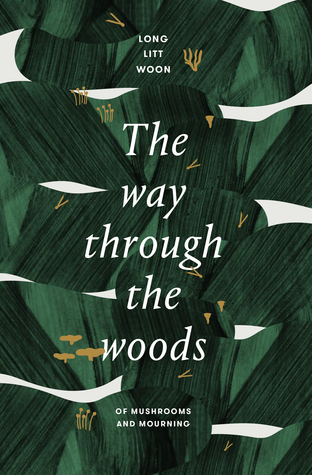
I couldn’t resist the sound of a bereavement memoir crossed with a mushroom hunting guide. When Long met her husband, Eiolf Olsen, she was an 18-year-old Malaysian exchange student in Stavanger, Norway. Meeting Eiolf changed the whole course of her life, keeping her in Europe for good; decades later, her life changed forever once again when Eiolf dropped dead at work one morning. “If anyone had told me that mushrooms would be my lifeline, the thing that would help me back onto my feet and quite literally back onto life’s track, I would have rolled my eyes. What had mushrooms to do with mourning?” she writes.
 The answer to that rhetorical question is nothing much, at least not inherently, so this ends up becoming a book of two parts, with the bereavement strand (printed in green and in a different font – green is for grief? I suppose) engaging me much more than the mushroom-hunting one, which takes her to Central Park and the annual Telluride, Colorado mushroom festival as well as to Norway’s woods again and again – “In Norway, outdoor life is tantamount to a religion.” But the quest for wonder and for meaning is a universal one. In addition, if you’re a mushroom fan you’ll find gathering advice, tasting notes, and even recipes. I fancy trying the “mushroom bacon” made out of oven-dried shiitakes.
With thanks to Scribe for the free copy for review.
God Unbound: Theology in the Wild by Brian McLaren
 McLaren was commissioned to launch a series that was part travel guide, part spiritual memoir and part theological reflection. Specifically, he was asked to write about the Galápagos Islands because he’d been before and they were important to him. He joins a six-day eco-cruise that tours around the island chain off Ecuador, with little to do except observe the birds, tortoises and iguanas, and swim with fish and sea turtles. For him this is a peaceful, even sacred place that reminds him of the beauty that still exists in the world despite so much human desecration. Although he avoids using his phone except to quickly check in with his wife, modernity encroaches unhelpfully through a potential disaster with his laptop.
I was surprised to see that McLaren leaves the Galápagos at the midpoint – whatever could fill the rest of the book, I wondered? He starts by reassessing Darwin, so often painted as a villain by Evangelical Christianity but actually a model of close, loving attention to nature. He also recalls how some of his most intense spiritual experiences have arisen from time in nature. McLaren’s books have been pivotal to my spiritual journey as we’ve both gradually become more liberal and environmentalist. His definition of God might horrify traditionalists, but holds appeal for me: “a centering singularity whose gravity holds me in insistent orbit, pulling me deeper into mystery, pondering who I am and what my life means.” This is an unusual but gently entrancing book full of photos and quotes from other thinkers including John Muir, Pope Francis and Richard Rohr. It’s an ideal introduction to ecotheology.
With thanks to Canterbury Press for the free copy for review.
What It Means to Be Moral: Why Religion Is Not Necessary for Living an Ethical Life by Phil Zuckerman
 From one end of the spectrum (progressive Christianity) to the other (atheism). Here’s a different perspective from a sociology professor at California’s Pitzer College. Zuckerman’s central argument is that humanism and free choice can fuel ethical behavior; since there’s no proof of God’s existence and theists have such a wide range of beliefs, it’s absurd to slap a “because God says so” label on our subjective judgments. Morals maintain the small communities our primate ancestors evolved into, with specific views (such as on homosexuality) a result of our socialization. Alas, the in-group/out-group thinking from our evolutionary heritage is what can lead to genocide. Instead of thinking in terms of ‘evil’, though, Zuckerman prefers Dr. Simon Baron-Cohen’s term, “empathy erosion.”
To tackle violent crime, Zuckerman contends, we need a more equal society, with the Scandinavian countries a model of how to achieve that through higher taxes, social services and the rehabilitation of prisoners. He uses a lot of relatable examples from history and from his own experience, as well as theoretical situations, to think through practical morality. I found his indictment of American Christianity accurate – how does it make sense for people who say they follow the way of Jesus to fight against equality, tolerance and scientific advances and instead advocate guns, the death penalty and Trump? Well, indeed.
It might seem odd for me to recommend this alongside the McLaren, but there is much to be gained from both viewpoints. Zuckerman’s work overlaps a fair bit with another I’ve read on the topic, Richard Holloway’s Godless Morality – even a bishop agrees we needn’t take our societal ethics straight from the Bible! I can’t go along fully with Zuckerman because I think progressive religion has been and can continue to be a force for good, but I would agree that atheists can be just as moral as people of faith – and often more so.
With thanks to Counterpoint Press for sending a proof copy for review.
Would you be interested in reading one or more of these?
Three Books that Originated on the Radio
As the end of the year approaches and I try to get through a final handful of review books, I’m looking for ways to combine posts. It may seem like a fairly arbitrary connection, but all three of these books originated as essays or short stories that were aired on British radio. I never listen to the radio so I miss out on these projects the first time around, but I’ve been interested to note how short forms and conversational styles lend themselves to oral performance.
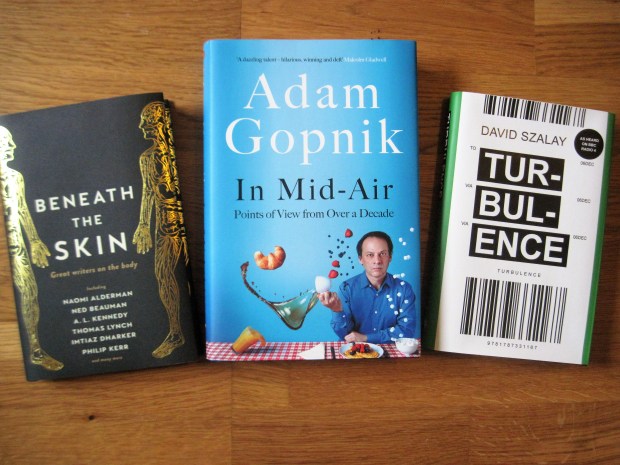
Beneath the Skin: Great Writers on the Body
These 15 pieces were commissioned for the BBC Radio 3 series “A Body of Essays.” Thomas Lynch, a small-town American undertaker and wonderful, unjustly obscure writer, opens and closes the volume. In his introduction he remarks – appropriately as Christmas draws near – that “We are an incarnate species”: we experience the world only through our bodies, which are made of disparate parts that work together as a whole. This project considers single organs by turn “in hopes that by knowing the part we might better know the whole of our predicament and condition.”
 Naomi Alderman, musing on the intestines, draws metaphorical connections between food, sex and death, and gives thanks that digestion and excretion are involuntary processes we don’t have to give any thought. Ned Beauman reports on misconceptions about the appendix as he frets about the odds of his bursting while he’s in America without health insurance. The late Philip Kerr describes the checkered history of the lobotomy, which used to reduce patients to a vegetative state but can now quite effectively treat epilepsy.
The pieces incorporate anatomical knowledge, medical history, current research, cultural connections, and sometimes observation of a hospital procedure. These threads are elegantly woven together, as in Patrick McGuinness’s essay on the ear, which skips between Hamlet’s father’s death, the secretive delight of mining for earwax, Beethoven’s ear trumpet, and what we know about in utero sounds.
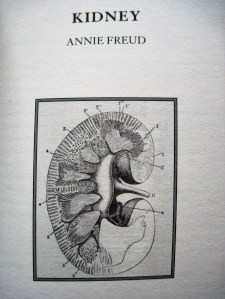 Most authors chose a particular organ because of its importance to their own health. Christina Patterson’s acne was so bad she went to the UK’s top skin specialist for PUVA light treatments, Mark Ravenhill had his gallbladder removed in an emergency surgery, and Daljit Nagra’s asthma led his parents to engage Sikh faith healers for his lungs. Two of my favorite chapters were by William Fiennes, whose extreme Crohn’s disease caused him to have a colostomy bag for two years in his early twenties, and poet Kayo Chingonyi, who has always been ashamed to admit that his parents both died of complications of HIV in Zambia. Such personal connections add poignancy to what could have been information dumps.
As is usual for essay collections, my interest varied somewhat. I had my hopes too high so was disappointed with a scattered piece on the kidneys. But the overall quality is terrific. If you enjoy medical reads to any extent, I recommend this as a bedside book to read occasionally.
Some favorite lines:
“It’s a strange and shifting thing – this sense I have that I am my body, of which some bits are essential and some expendable.” (Mark Ravenhill)
“There are things we only think about when they go wrong: the fan belt, the combi boiler, the bowel.” (William Fiennes)
“Like most of us, I take my body for granted. I live in the most complex, intricate machine and as long as it wakes up in the morning, and goes to bed at night, I am uninterested in its inner workings.” (Chibundu Onuzo, “Thyroid”)
My rating:
Beneath the Skin was published by the Wellcome Collection imprint of Profile Books on October 25th. My thanks to the publisher for a free copy for review.
In Mid-Air by Adam Gopnik
New Yorker writer Gopnik contributed to BBC Radio 4’s A Point of View for over a decade. These essays date from 2012 to 2017 and are grouped into three loosely thematic sections on family, culture and politics. Gopnik self-deprecatingly sees himself as “offering measured ambivalences on everything.” As an American who was raised in Canada and has lived in Paris and spent significant time in London, he has a refreshingly cosmopolitan outlook and can appreciate the nuances in different countries’ identities. At the same time, he brings out what’s universal: being annoying to one’s teenage children, gauging the passing of time by family members’ changes, the desire to die with dignity (remembering his father-in-law’s death at age 95), and lessons in a happy marriage from Charles and Emma Darwin – he boils it down to lust, laughter and loyalty.
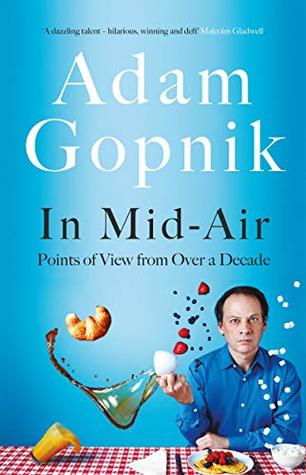 During the weeks that I spent with these essays I was frequently reminded of Jan Morris’s In My Mind’s Eye, which casts a similarly twinkling eye over the absurdities of modern life and the aging body. Gopnik endures shingles and shrugs over his funny last name (“drunken lout” in Russian) and short stature. He mostly ignores Twitter and decries our dependence on smartphones. As he’s never learned to drive, he’s amused by the idea of self-driving cars.
My favorite pieces were on significantly more trivial matters, though: the irony of famous Christmas songs being written by Jews, and a satire on society’s addiction to DVD box sets. Other arts references vary from the Beatles and Bob Dylan’s Nobel Prize to Cubism and literary festivals. It’s a quirky blend of high and low culture here. Bizarrely, Gopnik has recently written an oratorio on Alan Turing and a musical about a New York City restaurant.
The author is an unabashed liberal who prizes pluralism above all else but warns how fragile it is. In the final section he prophesies catastrophe under Trump and, afterwards, can only say that at least his election puts lesser issues into perspective. I valued the diagnosis of American insularity and British inwardness – this particular essay was written in 2013 but seems all the more relevant post-Brexit. This was my fifth book from Gopnik. While I didn’t engage with every essay and would have liked them to be chronological so there was a mix of topics all the way through, it was a pleasant and often thought-provoking read.
Some favorite lines:
“Watching the people we love die bit by bit is the hardest thing life demands until we recall that watching the people we love die bit by bit is in a certain sense what life simply is. It just usually takes more time for the bits to go by.”
“We should never believe that people who differ from us about how we ought to spend public money want to commit genocide or end democracy, and we should stop ourselves from saying so, even in the pixellated heat of internet argument. But when we see the three serpents of militarism, nationalism and hatred of difference we should never be afraid to call them out, loudly, by name”
My rating: 
In Mid-Air was published by riverrun, a new Quercus imprint, on October 18th. My thanks to the publisher for a free copy for review.
Turbulence by David Szalay
These 12 linked short stories, commissioned for BBC Radio 4, focus on travel and interconnectedness. Each is headed by a shorthand route from one airport to another, and at the destination we set out with a new main character who has crossed paths with the previous one. For instance, in “YYZ – SEA” the writer Marion Mackenzie has to cancel a scheduled interview when her daughter Annie goes into labor. There’s bad news about the baby, and when Marion steps away from the hospital to get Annie a few necessaries from a supermarket and is approached by a pair of kind fans, one of whom teaches Marion’s work back in Hong Kong, she’s overcome at the moment of grace-filled connection. In the next story we journey back to Hong Kong with the teacher, Jackie, and enter into her dilemma over whether to stay with her husband or leave him for the doctor she’s been having an affair with.
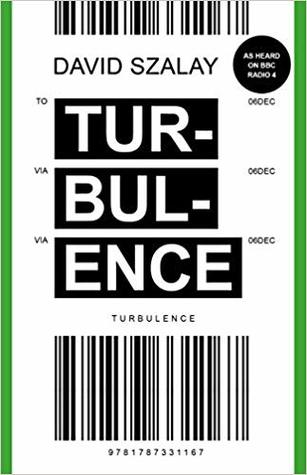 As he ushers readers around the world, Szalay invites us to marvel at how quickly life changes and how – improbable as it may seem – we can have a real impact on people we may only meet once. There’s a strong contrast between impersonal and intimate spaces: airplane cabins and hotel rooms versus the private places where relationships start or end. The title applies to the characters’ tumultuous lives as much as to the flight conditions. They experience illness, infidelity, domestic violence, homophobia and more, but they don’t stay mired in their situations; there’s always a sense of motion and possibility, that things will change one way or another.
My favorite story was “DOH – BUD,” in which Ursula goes to visit her daughter Miri and gains a new appreciation for Miri’s fiancé, Moussa, a Syrian refugee. I also liked how the book goes full circle, with the family from the final story overlapping with that of the first. Though a few of the individual stories are forgettable, I enjoyed this more than Szalay’s Booker-shortlisted All that Man Is, another globe-trotting set of linked stories.
Like Beneath the Skin, this acknowledges the many parts making up the whole of humanity; like In Mid-Air, it encourages a diversity of opinion and experience rather than narrow-mindedness. Maybe the three books had more in common than I first thought?
A favorite line:
“In fact it was hard to understand quite what an insignificant speck this aeroplane was, in terms of the size of the ocean it was flying over, in terms of the quantity of emptiness which surrounded it on all sides.”
My rating:
Turbulence is published by Jonathan Cape today, December 6th. My thanks to the publisher for a free copy for review.
Barbara Kingsolver in Conversation about “Unsheltered”
Through a Faber & Faber Twitter giveaway, I won tickets to see Barbara Kingsolver speak about her new novel, Unsheltered, at the Royal Festival Hall in London on Monday the 12th. (Yes, this is the second lot of tickets I’ve won within a month. When all you have to do is reply to a tweet or retweet it, I don’t know why more people don’t enter these competitions!) It was great to meet up with fellow bloggers Clare and Laura – half of my Wellcome Prize shadow panel – to hear Kingsolver chat with Samira Ahmed of Radio 4 and BBC One.
 In person Kingsolver was a delight – warm and funny, with a generic American accent that doesn’t betray her Kentucky roots. In her beaded caftan and knee-high oxblood boots, she exuded girlish energy despite the shock of white in her hair. Although her fervor for the scientific method and a socially responsible government came through clearly, there was a lightness about her that tempered the weighty issues she covers in her novel.
In case you are unfamiliar with it, Unsheltered is the story of two residents of Vineland, New Jersey: in the present day, fifty-something Willa Knox is trying to keep her enlarged nuclear family together in the face of underemployment, a crumbling house, divided political loyalties and serious illness. In a parallel story line set in the 1870s that unfolds in alternating chapters, science teacher Thatcher Greenwood butts heads with his principal over Darwin’s writings and is alarmed by the actions of the town’s dictator-like founder, Charles Landis.
Kingsolver revealed that she always starts with theme rather than character or setting. A novel arises from a compelling question she wants to wrestle with. When she started this one five years ago, she wanted to write about paradigm shift. She felt like the regular rules have failed us, that the world no longer provides the ‘shelter’ we expect – a good job after a degree, a pension at the end of a career, adequate health care, and so on. Consumption and growth, the economic tools we’ve always relied on, won’t work anymore. How will we cope with the end of the world as we know it? Looking for a time period when people were also asked to rise to the occasion upon a shift in worldview, she settled on the 1870s, the decade following the Civil War, when America was divided along nearly the same lines as today.
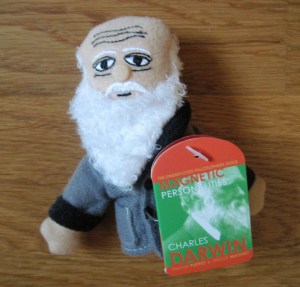
Darwin: “such a sweet guy!” said Kingsolver.
Initially she thought she might make Darwin himself a character, but that would have required setting the book at least partially in England, and she’s come to terms with the fact that she’s an American novelist. Instead, she researched the champions of Darwin in America, starting with Asa Gray. Things didn’t work out with Gray – “it was like dating,” she jokes – but then she came across Mary Treat, a self-taught ‘lady scientist’ who corresponded with Darwin, and made him Thatcher’s neighbour in Vineland.
In the scene Kingsolver read from the historical thread, Mary experiments at letting a carnivorous plant nibble at her finger. The other reading, from the contemporary section, pictured Willa – part of the “sandwich generation,” doing the unpaid labor of caring for an aging relative to make up for a shortfall in the services the state should be providing – facing a pile of bills. “Willa is the peanut butter trying to hold everything together,” Kingsolver said – a feeling familiar to her from when she and her sister cared for their dying mother.
At Ahmed’s leading, Kingsolver also discussed the modern anti-fact movement, female anger and the balance between honoring the past and erasing it (the example Ahmed gave was Laura Ingalls Wilder’s name being taken off of the ALA children’s book medal because she is now considered to have a backward attitude to race). Kingsolver described the novel as her “love letter to millennials” such as her two resilient twenty-something daughters who are having to creatively make up for the ways in which Baby Boomers have ruined the world.
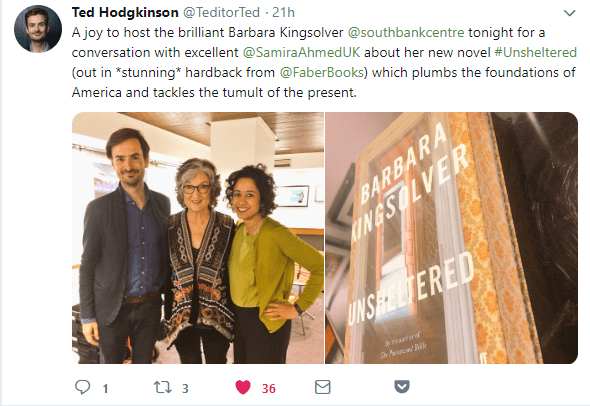
It’s impossible to ignore the similarities between Landis, Vineland’s leader, and Donald Trump. There was much knowing laughter from the audience, in fact, as she described Landis and his megalomaniac behavior. Although she peppered in a few of the more explicit Trump allusions (e.g., “Lock him up!”) later on, she wrote the bulk of the book before his presidential run was ever a possibility. Kingsolver said that this is not the first time that she has anticipated rather than responded to world events: for The Poisonwood Bible she wrote a scene of the death of Mobutu two months before he died in real life.
I reviewed Unsheltered for BookBrowse () and have also been moderating their online book club discussion of it. It’s been fascinating to see the spread of opinions, especially in the thread asking readers to describe the novel in three words. Descriptors have ranged from “preachy,” “political” and “repressive” to “prophetic,” “hopeful” and “truth.” My own three-word summary was “Bold, complex, polarizing.” I sensed that Kingsolver was going to divide readers – American ones, anyway; British readers should be a lot more positive because even centrist politics here start significantly further left, and there is for the most part very little resistance to concepts like socialism and climate change. I have a feeling the site’s users are predominantly middle-class, middle-aged white ladies (which, to be fair, was also true of the London audience), and we know that they’re a bastion of Trump support.
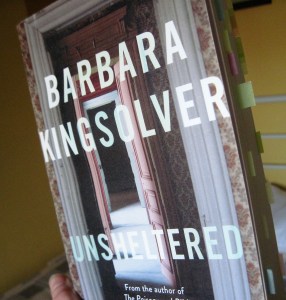
My proof copy of Unsheltered: lots to think about.
It’s clear what Kingsolver’s political leanings would be, but she emphasized the importance of having conversations with family members and neighbors who voted a different way (for Brexit, perhaps) that don’t begin with “You idiot…” “As a novelist you have to generate that absolute empathy” for every character, she insisted, even Willa’s hateful, Fox News-blasting father-in-law, Nick, who’s an example of the ‘pull up the ladder’ type of first-generation immigrant. It’s important to remember that “it’s all coming from a place of fear,” she noted.
“We come to literature with our own nutritional needs,” Kingsolver remarked, and she loves that readers can take such different messages from her writing. Novels don’t give answers but bring you into conversation with yourself, she suggested. In asking “What is the human animal?” and “What can we do about it?” she hopes that she’s expanding our humanity. That is what she believes literary fiction should do, and she argued passionately on its behalf.
Being careful not to give any spoilers about her story lines’ endings during the question time, she said, “I promise I will not leave you in despair.” I hope that, if you haven’t already, you will all read Unsheltered, coming to it with an open mind. It’s one of the most important books of the year.
Harvest Supper, Scrabble Tournament & Book Haul: A Great Trip to Bookbarn
I manage about an annual trip to Bookbarn International, one of my favorite secondhand bookshops in the UK. Apart from the stock in their newly opened Darwin Rare Books room and the 50-pence children’s books, everything in the shop is £1. I never fail to come out with a great stack of finds. Our trip on Thursday was extra special because we were going for the café’s Harvest Supper and Scrabble tournament, held as part of The Great Bath Feast.


We played one 45-minute game against another team of two, broke for an excellent vegetarian supper of squash, spinach and goat’s cheese pie with mashed potatoes and baby roast vegetables, then played a second match before dessert (vegan plum crumble with custard or gluten-free fig brownie with ice cream). Over the years my husband and I have become quite the Scrabble fiends, and together on one team I’m afraid we were unbeatable. Our bingo starting off Game #2 helped, but we worried we were at an overall advantage because the other boards each had three teams playing.


It was a special pleasure to meet William Pryor, the chairman of Bookbarn. Last year he spotted my blog posts about Bookbarn and offered me a copy of his memoir, The Survival of the Coolest. It’s a wonderful book about growing up a descendant of Charles Darwin but going off the rails and ending up addicted to heroin in his 20s:
This family of mine! On the one hand you have the royalty of science and Bloomsbury, on the other the fading world of the English landed gentry. … We had no religion but Darwin.
The months ran into each other as a blur of the chase for relief, the wheeling and dealing … One of the most striking aspects of hell is that it goes round and round; the same torments over and over again.
Mr. Pryor let me have a sneak peek at the Darwin room after the shop closed and kindly gave me a copy of his grandmother Gwen Raverat’s memoir, Period Piece. Over pudding we chatted about literary festivals, the Bookshop Band, his failed idea to return a portion of secondhand books’ resale value to the authors, and the latest Nobel Prize winner.
As to that book haul: I feel like I have fiction coming out of my ears, so with our hour of book browsing time I mainly focused on biographies and memoirs. Here are my finds:
Biographies and essays on writing biography:
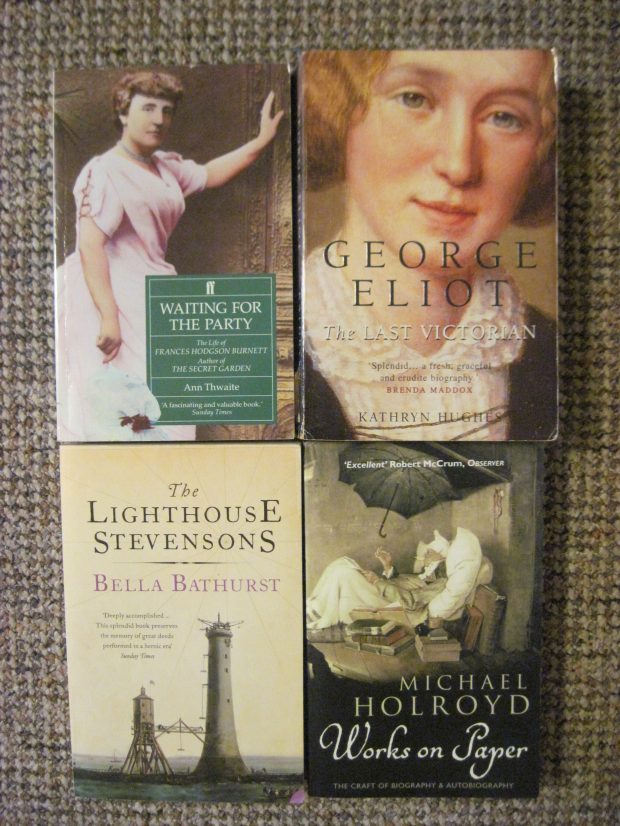
Bereavement memoirs:
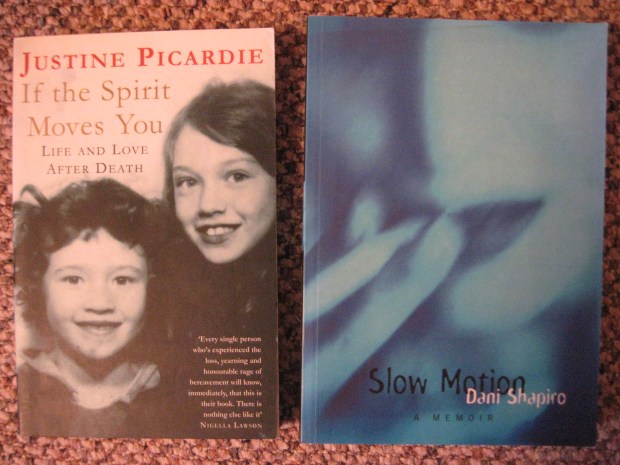
(Two of my purchases will go especially well as pairs with books I already own.)


Medical memoirs:
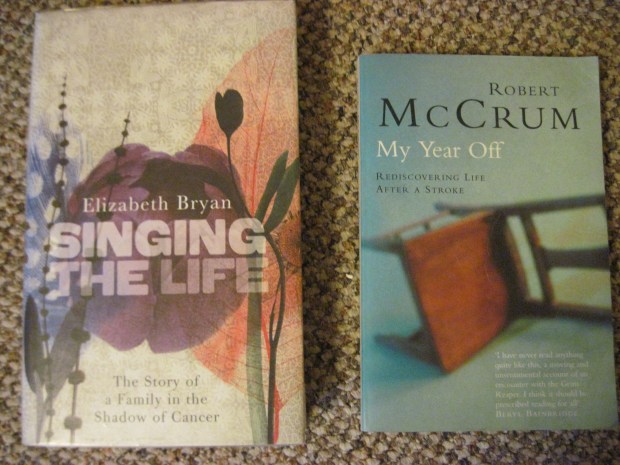
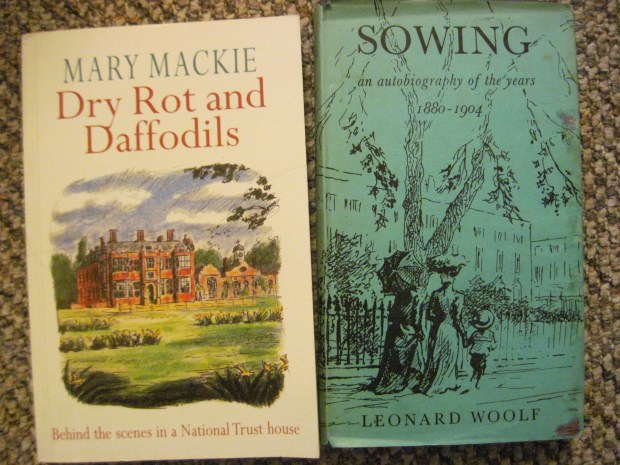
General memoirs (I was especially pleased to find the sequel to Cobwebs and Cream Teas, which I bought at Bookbarn last time and read early this year):
Plus two poetry books (one of them signed!):


And two novels I happened to grab on the way to the till:

My unexpected freebies. The Raverat is a lovely small-format hardback with gilt-edge pages and a maroon ribbon bookmark; on the right is our prize for winning the Scrabble tournament:


I’ve already had a peek inside a few of the books I bought and found some excellent passages. Leonard Woolf’s memoir opens with an extraordinary passage of almost biblical language about existence and non-existence; one of Marge Piercy’s poems struck me right away for its description of a Jewish holiday and the line “there is no justice we don’t make daily / like bread and love.”
My husband came away with three natural history books, and we also found a few children’s books to give to nieces and nephews.
Thanks to this book haul plus a trip to Book-Cycle in early September and some charity shopping last week, I’ve had to start a double stack on my biography/memoir shelves. There’s already a double stack on one of my unread fiction shelves. Next week is my birthday, so the book acquisitions are only likely to continue…
 Bookish Beck = Rebecca Foster. American transplant to England. Freelance proofreader and book reviewer.
 Bookish Beck