#NovNov24 Catch-Up, II: Ingalls; Boas, Lindbergh, Toth
Thanks for indulging me as I assemble a final catch-up of the novella-length works I started in November and didn’t manage to review until now. In fiction, I have a surreal modern classic. And in nonfiction, two books of open-hearted and witty writing on the approach of death, and a memoir with a unique framework.
Mrs Caliban by Rachel Ingalls (1982)
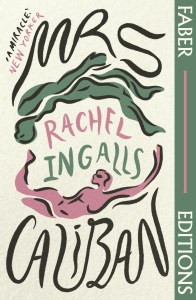 Dorothy Caliban is a California housewife whose unhappy marriage to Fred has been strained by the death of their young son (an allergic reaction during routine surgery) and a later miscarriage. When we read that Dorothy believes the radio has started delivering personalized messages to her, we can’t then be entirely sure if its news report about a dangerous creature escaped from an oceanographic research centre is real or a manifestation of her mental distress. Even when the 6’7” frog-man, Larry, walks into her kitchen and becomes her lover and secret lodger, I had to keep asking myself: is he ever independently seen by another character? Can these actions be definitively attributed to him? So perhaps this is a novella to experience on two levels. Take it at face value and it’s a lighthearted caper of duelling adulterers and revenge, with a pointed message about the exploitation of the Other. Or interpret it as a midlife fantasy of sexual rejuvenation and an attentive partner (“[Larry] said that he enjoyed housework. He was good at it and found it interesting”):
Dorothy still felt like a teenager. At the time when her hope and youth and adventurousness had left her, she had believed herself cheated of those early years when nothing had happened to her, although it might have. Later still, she realized that if she had made an effort, she herself could have made things happen. But now it didn’t matter. Here she was.
I thought of it as a waystation between Bear by Marian Engel and something like Melissa Broder’s novels or All Fours by Miranda July. I enjoyed it well enough but didn’t wholly see what the fuss was all about. (New bargain purchase from Faber) [117 pages] 
A Beginner’s Guide to Dying by Simon Boas (2024)
 I hadn’t heard of the author but picked this up from the Bestseller display in my library. It’s a posthumous collection of writings, starting with a few articles Boas wrote for his local newspaper, the Jersey Evening Post, about his experience of terminal illness. Diagnosed late on with incurable throat cancer, Boas spent his last year smoking and drinking Muscadet. Looking back at the privilege and joys of his life, he knew he couldn’t complain too much about dying at 46. He had worked in charitable relief in wartorn regions, finishing his career as director of Jersey Overseas Aid. The articles are particularly witty. After learning his cancer had metastasized to his lungs, he wrote, “The prognosis is not quite ‘Don’t buy any green bananas’, but it’s pretty close to ‘Don’t start any long books’.” While I admired the perspective and equanimity of the other essays, most of their topics were overly familiar for me (gratitude, meditation, therapy, what (not) to do/say to the dying). His openness to religion and use of psychedelics were a bit more interesting. It’s hard to write anything original about dying, and his determined optimism – to the extent of downplaying the environmental crisis – grated. (Public library) [138 pages]
No More Words: A Journal of My Mother, Anne Morrow Lindbergh by Reeve Lindbergh (2001)
 I’ve reviewed one of Anne Morrow Lindbergh’s books for a previous NovNov: Gift from the Sea. She was also a poet and aviator. Reeve Lindbergh’s memoir focuses on the last year and a half of her mother’s life, 1999–2001. At this point she was in her early nineties and mostly nonverbal after a series of mini-strokes. She moved to live with her daughter on a Vermont farm and had carers to attend to her daily needs. It’s painful for the whole family to watch someone who was so fond of words gradually lose the ability to communicate. There are still moments of connection and possible memory, as when she reads her mother’s work aloud to her, and even humour, as they eat the messiest possible strawberry shortcake. It is an easy dying: her nurses are gentle and respectful, and she lives significantly longer than anyone predicted. Along the way, we get glimpses of the running of the farm, such as bottle-feeding an abandoned lamb, and of repeated tragedies from the family’s history: the Charles Lindberghs’ first child died in a botched kidnapping attempt at age one, and Reeve also lost a son at a similar age. “It is good just to sit next to my mother, whom I have known and loved for so long,” she writes. These low-key thoughts on age, infirmity and anticipatory grief were nicely done, but won’t likely stay with me. (Secondhand – Barter Books, 2024) [174 pages]
Leaning into the Wind: A Memoir of Midwest Weather by Susan Allen Toth (2003)
 I was always going to read this because I’m a big fan of Susan Allen Toth’s work, including her trilogy of cosy travel books about Great Britain. I’m a memoir junkie in general, but I especially like ones that view the self through a particular filter, e.g., garments sewn (Bound by Maddie Ballard), houses lived in (My Life in Houses by Margaret Forster) and train journeys taken (The Lost Properties of Love by Sophie Ratcliffe). Toth grew up in Iowa and, barring stints on the coasts for her degrees, always lived in the Midwest, chiefly Minnesota. “The weather, I have happily discovered, does not grow old” – a perennial conversation starter and source of novel, cyclical experiences. She remembers huddling in a basement during tornado warnings and welcoming the peace of a first snow. Squalls seen out the window seemed to mirror her turbulent first marriage. She would fret over her daughter driving in thunderstorms until her safe arrival home. Fending off insects is a drawback to summer, and keeping a garden is an alloyed joy. I especially liked the essays on the metaphorical use of weather words and the temptation of ascribing meteorological events to divine activity. Not a squeak about climate change, though at the time the general public was aware of it; there could be an update chapter on shifts in seasonality and the increased frequency of extreme weather events. (Birthday gift from my wish list in 2021) [124 pages]
Final statistics
For this year’s Novellas in November, I reviewed a total of 30 short books, so I achieved my goal of reading the equivalent of one short book for each day of the month! The standouts were (nonfiction) Without Exception by Pam Houston and (fiction) On Chesil Beach by Ian McEwan, which was a reread for me. Other highlights included The House of Dolls by Barbara Comyns, Recognising the Stranger by Isabella Hammad, and Island by Julian Hanna. I also reviewed a film based on a novella, Small Things Like These.
It was great to get involved with Weatherglass Books in the inaugural year of their Novella Prize by attending their “The Future of the Novella” event in London, reviewing Astraea, and interviewing Neil Griffiths. I’ll review Aerth soon, too.
Collectively, we had 46 participants contributing 188 posts covering 160+ books. If you want to take a look back at the link parties, they’re all here. Another fantastic year – thank you again!

Hard-Hitting Nonfiction I Read for #NovNov24: Hammad, Horvilleur, Houston & Solnit
I often play it safe with my nonfiction reading, choosing books about known and loved topics or ones that I expect to comfort me or reinforce my own opinions rather than challenge me. I wasn’t sure if I could bear to read about Israel/Palestine, or sexual violence towards women, but these four works were all worthwhile – even if they provoked many an involuntary gasp of horror (and mild expletives).
Recognising the Stranger: On Palestine and Narrative by Isabella Hammad (2024)
 This is the text of the Edward W. Said Memorial Lecture that Hammad delivered at Columbia University on September 28, 2023. She posits that, in a time of crisis, storytelling can be a way of finding things out. Characters’ epiphanies, from Oedipus onward, see them encountering an Other but learning something about themselves in the process. In turning her great-grandfather’s life into her first novel, The Parisian, Hammad knew she had to avoid the pitfalls of nostalgia and unreliable memory. Fiction is always subjective, a matter of perspectives, and history is too. Sometimes the turning points will only be understood retrospectively.
Edward Said (1935–2003) was a Palestinian American academic and theorist who helped found the field of postcolonial studies. Hammad writes that, for him, being Palestinian was “a condition of chronic exile.” She takes his humanist ideology as a model of how to “dismantle the consoling fictions of fixed identity, which make it easier to herd into groups.” About half of the lecture is devoted to the Israel/Palestine situation. She recalls meeting an Israeli army deserter a decade ago who told her how a naked Palestinian man holding the photograph of a child had approached his Gaza checkpoint; instead of shooting the man in the leg as ordered, he fled. It shouldn’t take such epiphanies to get Israelis to recognize Palestinians as human, but Hammad acknowledges the challenge in a “militarized society” of “state propaganda.”
This was, for me, more appealing than Hammad’s Enter Ghost. Though the essay might be better aloud as originally intended, I found it fluent and convincing. It was, however, destined to date quickly. Less than two weeks later, on October 7, there was a horrific Hamas attack on Israel (see Horvilleur, below). The print version of the lecture includes an afterword written in the wake of the destruction of Gaza. Hammad does not address October 7 directly, which seems fair (Hamas ≠ Palestine). Her language is emotive and forceful. She refers to “settler colonialism and ethnic cleansing” and rejects the argument that it is a question of self-defence for Israel – that would require “a fight between two equal sides,” which this absolutely is not. Rather, it is an example of genocide, supported by other powerful nations.
The present onslaught leaves no space for mourning
To remain human at this juncture is to remain in agony
It will be easy to say, in hindsight, what a terrible thing
The Israeli government would like to destroy Palestine, but they are mistaken if they think this is really possible … they can never complete the process, because they cannot kill us all.
(Read via Edelweiss) [84 pages] 
How Isn’t It Going? Conversations after October 7 by Delphine Horvilleur (2025)
[Translated from the French by Lisa Appignanesi]
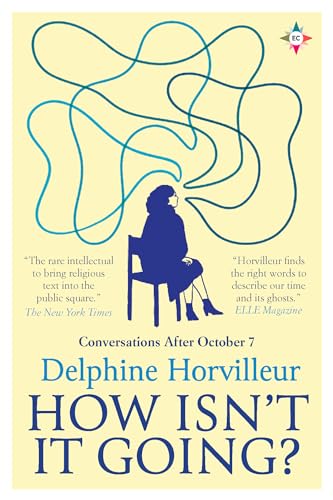 Horvilleur is one of just five female rabbis in France and is the leader of the country’s Liberal Jewish Movement. Earlier this year, I reviewed her essay collection Living with Our Dead, about attitudes toward death as illustrated by her family history, Jewish traditions and teachings, and funerals she has conducted. It is important to note that she expresses sorrow for Palestinians’ situation and mentions that she has always favoured a two-state solution. Moreover, she echoes Hammad with her final line, which hopes for “a future for those who think of the other, for those who engage in dialogue one with another, and with the humanity within them.” However, this is a lament for the Jewish condition, and a warning of the continuing and insidious nature of antisemitism. Who am I to judge her lived experience and say, “she’s being paranoid” or “it’s not really like that”? My job as reader is simply to listen.
There is by turns a stream of consciousness or folktale quality to the narrative as Horvilleur enacts 11 dialogues – some real and others imagined – with her late grandparents, her children, or even abstractions (“Conversation with My Pain,” “Conversation with the Messiah”). She draws on history, scripture and her own life, wrestling with the kinds of thoughts that come to her during insomniac early mornings. It’s not all mourning; there is sometimes a wry sense of humour that feels very Jewish. While it was harder for me to relate to the point of view here, I admired the author for writing from her own ache and tracing the repeated themes of exile and persecution. It felt important to respect and engage. [125 pages]
With thanks to Europa Editions for the advanced e-copy for review.
Without Exception: Reclaiming Abortion, Personhood, and Freedom by Pam Houston (2024)
 If you’re going to read a polemic, make sure it’s as elegantly written and expertly argued as this one. Houston responds to the overturning of Roe v. Wade with 60 micro-essays – one for each full year of her life – about what it means to be in a female body in a country that seeks to control and systematically devalue women. Roe was in force for 49 years, corresponding almost exactly to her reproductive years. She had three abortions and believes “childlessness might turn out to be the single greatest gift of my life.” Facts could serve as explanations: her grandmother died giving birth to her mother; her mother always said having her ruined her life; she was raped by her father from early childhood until she left home as a young adult; she is gender-fluid; she loves her life of adventure travel, spontaneity and chosen solitude; she adores the natural world and sees how overpopulation threatens it. But none are presented as causes or excuses. Houston is committed to nuance, recognizing individuality of circumstance and the primacy of choice.
Many of the book’s vignettes are autobiographical, but others recount statistics, track American cultural and political shifts, and reprint excerpts from the 2022 joint dissent issued by the Supreme Court. The cycling of topics makes for an exquisite structure. Houston has done extensive research on abortion law and health care for women. A majority of Americans actually support abortion’s legality, and some states have fought back by protecting abortion rights through referenda. (I voted for Maryland’s. I’ve come a long way since my Evangelical, vociferously pro-life high school and college days.) I just love Houston’s work. There are far too many good lines here to quote. She is among my top recommendations of treasured authors you might not know. I’ve read her memoir Deep Creek and her short story collections Cowboys Are My Weakness and Waltzing the Cat, and I’m already sad that I only have four more books to discover. (Read via Edelweiss) [170 pages] 
Men Explain Things to Me by Rebecca Solnit (2014)
 Solnit did not coin the term “mansplaining,” but it was created not long after the title essay’s publication in 2008 and was definitely inspired by her depiction of a male know-it-all. She was at a party in Aspen in 2003 when a man decided to tell her all about an important new book he’d heard of about Eadweard Muybridge. A friend had to interrupt him and say, “That’s her book.” A funny story, yes, but illustrative of a certain male arrogance that encourages a woman’s “belief in her superfluity, an invitation to silence” and imagines her “in some sort of obscene impregnation metaphor, an empty vessel to be filled with their wisdom and knowledge.”
This segues perfectly into “The Longest War,” about sexual violence against women, including rape and domestic violence. As in the Houston, there are some absolutely appalling statistics here. Yes, she acknowledges, it’s not all men, and men can be feminist allies, but there is a problem with masculinity when nearly all domestic violence and mass shootings are committed by men. There is a short essay on gay marriage and one (slightly out of place?) about Virginia Woolf’s mental health. The other five repeat some of the same messages about rape culture and believing women, so it is not a wholly classic collection for me, but the first two essays are stunners. (University library) [154 pages]
Have you read any of these authors? Or something else on these topics?
Short, Soul-Soothing Reads for #NovNov24 & #NonfictionNovember: Barnes, Cognetti, Lende, Mann, Nouwen and Winner
After the catastrophic U.S. election results (which we’ve all managed to ignore or normalize so as to keep going with our lives) and a medical crisis with our dear old cat, I’ve been craving literary soul food. These six short nonfiction books have been good companions, promising love, meaning and transcendence in the midst of bereavement and daily routines.
Levels of Life by Julian Barnes (2013)
 Barnes was a favourite author in my twenties and thirties, though I’ve had less success with his recent work. He wrote a few grief-soaked books in the wake of the death of his wife, celebrated literary agent Pat Kavanagh*. I had this mistaken for a different one (Through the Window, I think?) that I had enjoyed more. No matter; it was still interesting to reread this triptych of auto/biographical essays. The final, personal piece, “The Loss of Depth,” is a classic of bereavement literature on par with C.S. Lewis’s A Grief Observed; I would happily take it as a standalone pamphlet. Its every word rings true, especially the sense of duty as the lost one’s “principal rememberer.” But the overarching ballooning metaphor, and links with early French aerial photographer Nadar and Colonel Fred Burnaby, aeronaut and suitor of Sarah Bernhardt, don’t convince. The strategy feels like a rehearsal for Richard Flanagan’s Baillie Gifford Prize-winning Question 7, a similar hybrid work that pulls it off better. (Little Free Library) [118 pages]
*In spring 2008, I attended a talk by John Irving at King’s College, London, where I worked in library services for five years. Barnes and Kavanagh were in the front row and embraced Irving before the start. I was floored to hear of Kavanagh’s death later that year because she’d looked so well. It was a fast-acting brain tumour that felled her just 37 days after diagnosis.
Without Ever Reaching the Summit by Paolo Cognetti (2018; 2020)
[Translated from the Italian by Stash Luczkiw]
 Part pilgrimage and part 40th birthday treat, Cognetti’s October 2017 Himalayan trek through Dolpo (a Nepalese plateau at the Tibetan border) would also somewhat recreate Peter Matthiessen’s The Snow Leopard. Cognetti struggles with altitude sickness and the fare: “I tried salted yak butter tea for the first time—nauseating if you thought you were drinking tea, good and refreshing if you thought you were drinking broth.” He and his companions fancifully decide that Kanjiroba, the lovable stray dog who joins their party, is a reincarnation of Matthiessen. I have limited tolerance for travel books’ episodic combinations of nature descriptions, anthropological observations, and the rigours of the nomadic lifestyle. The same was true here, but the slight spiritual aspect and references to The Snow Leopard lifted it. (Public library) [135 pages]
Find the Good: Unexpected Life Lessons from a Small-Town Obituary Writer by Heather Lende (2015)
 Lende is a journalist in isolated Haines, Alaska (population: 2,000). There’s a plucky motivational bent to these mini-essays about small-town life and death. In writing obituaries for normal, flawed people, she is reminded of what matters most: family (she’s a mother of five, one adopted, and a grandmother; she includes beloved pets in this category) and vocation. The title phrase is the motto she lives by. “I believe gratitude comes from a place in your soul that knows the story could have ended differently, and often does, and I also know that gratitude is at the heart of finding the good in this world—especially in our relationships with the ones we love.” The anecdotes and morals are sweet if not groundbreaking. The pocket-sized hardback might appeal to readers of Anne Lamott and Elizabeth Strout. (Birthday gift from my wish list, secondhand) [162 pages]
Do Not Be Afraid: The joy of waiting in a time of fear by Rachel Mann (2024)
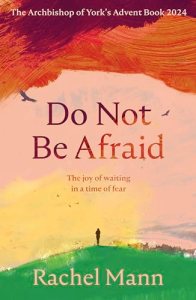 This is the Archbishop of York’s Advent Book 2024; I read it early because, pre-election, I yearned for its message of courage and patience. We need it all the more now. The bite-sized essays are designed to be read one per day from the first Sunday of Advent through to Christmas Day. Often they include a passage of scripture or poetry (including some of Mann’s own) for meditation, and each entry closes with a short prayer and a few questions for discussion or private contemplation. The topics are a real variety but mostly draw on the author’s own experiences of waiting and suffering: medical appointments and Covid isolation as well as the everyday loneliness of being single and the pain of coping with chronic illness. She writes about sitting with parishioners as they face death and bereavement. But there are also pieces inspired by popular culture – everything from Strictly to Quentin Tarantino.
Mann has written several previous Lent course books based on films. I’ve read her work in multiple genres (poetry: A Kingdom of Love and Eleanor Among the Saints; literary criticism: In the Bleak Midwinter; memoir: Dazzling Darkness; fiction: The Gospel of Eve); she is such a versatile writer, and with a fascinating story as a trans priest. Sombre yet hopeful, this is recommended seasonal reading. [114 pages]
With thanks to SPCK for the free copy for review.
The Inner Voice of Love: A Journey through Anguish to Freedom by Henri J. M. Nouwen (1997)
 Anguish is a strong word; I haven’t done any biographical digging to figure out what was going on in Nouwen’s life to prompt it, but apparently this secret journal came out of a lost relationship. (I wonder if it could have been a homosexual attachment. Nouwen was a Dutch Roman Catholic priest who became the pastor of a community for disabled adults in Canada.) He didn’t publish for another eight years but friends encouraged him to let his experience aid others. The one- or two-page reflections are written in the second person, so they feel like a self-help pep talk. The recurring themes are overcoming abandonment and rejection, relinquishing control, and trusting in God’s love and faithfulness. “You must stop being a pleaser and reclaim your identity as a free self.” The point about needing to integrate rather than sideline psychological pain is one I’m sure any therapist would affirm. Nouwen writes that a new spirituality of the body is necessary. This was a comforting bedside book with lots of passages that resonated. (Free – withdrawn from church theological library) [98 pages]
Mudhouse Sabbath: An Invitation to a Life of Spiritual Discipline by Lauren F. Winner (2003)
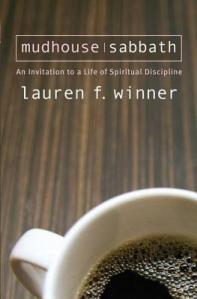 After Winner converted from Orthodox Judaism to Christianity, she found that she missed how Jewish rituals make routine events sacred. There are Christian sacraments, of course, but this book is about how the wisdom of another tradition might be applied in a new context. “Judaism offers opportunities for people to inhabit and sanctify bodies and bodily practices,” Winner writes. There are chapters on the concept of the Sabbath, wedding ceremonies, prayer and hospitality. Fasting is a particular sticking point for Winner, but her priest encourages her to see it as a way of demonstrating dependence on, and hunger for, God. I most appreciated the sections on mourning and ageing. “Perhaps the most essential insight of the Jewish approach to caring for one’s elderly is that this care is, indeed, an obligation. What Judaism understands is that obligations are good things. They are the very bedrock of the Jew’s relationship to God, and they govern some of the most fundamental human relationships”. By the way, Mudhouse is Winner’s local coffeehouse, so she believes these disciplines can be undertaken anywhere. (Secondhand – Awesomebooks.com) [142 pages]

Short Stories in September, II: Willie Davis, Gerald Durrell, Sue Mell and Lore Segal
Four more collections down. Two of them blend fictional and autobiographical modes. Two are set primarily in New York City, with another hanging out in Kentucky and the fourth touring Europe. Three of the authors were new to me and one is an old favourite. I’m borrowing Marcie’s five-sentence review format to keep things simple.
I Can Outdance Jesus by Willie Davis (2024)
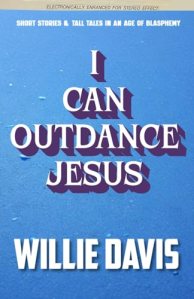 I don’t often take a look at unsolicited review copies, but I couldn’t resist the title of this and I’m glad I gave it a try. Davis’s 10 stories, several of flash length, take place in small-town Kentucky and feature a lovable cast of pranksters, drunks, and spinners of tall tales. The title phrase comes from one of the controversial songs the devil-may-care narrator of “Battle Hymn” writes. My two favourites were “Kid in a Well,” about one-upmanship and storytelling in a local bar, and “The Peddlers,” which has two rogues masquerading as Mormon missionaries. I got vague Denis Johnson vibes from this sassy, gritty but funny collection; Davis is a talent!
Published by Cowboy Jamboree Press. With thanks to publicist Lori Hettler for the free e-copy for review.
The Picnic and Suchlike Pandemonium by Gerald Durrell (1979)
 If you’ve read his autobiographical trilogy or seen The Durrells, you’ll be familiar with the quirky, chaotic family atmosphere that reigns in the first two pieces: “The Picnic,” about a luckless excursion in Dorset, and “The Maiden Voyage,” set on a similarly disastrous sailing in Greece (“Basically, the rule in Greece is to expect everything to go wrong and to try to enjoy it whether it does or not”). No doubt there’s some comic exaggeration at work here, especially in “The Public School Education,” about running into a malapropism-prone ex-girlfriend in Venice, and “The Havoc of Havelock,” in which Durrell, like an agony uncle, lends volumes of the sexologist’s work to curious hotel staff in Bournemouth. The final two France-set stories, however, feel like pure fiction even though they involve the factual framing device of hearing a story from a restaurateur or reading a historical manuscript that friends inherited from a French doctor. “The Michelin Man” is a cheeky foodie one with a surprisingly gruesome ending; “The Entrance” is a full-on dose of horror worthy of R.I.P. I wouldn’t say this is essential reading for Durrell fans, but it was a pleasant way of passing the time. (Secondhand – Lions Bookshop, Alnwick, 2021)
A New Day by Sue Mell (2024)
 Three suites of linked stories focus on young women whose choices in the 1980s have ramifications decades later. Chance meetings, addictions, ill-considered affairs, and random events all take their toll. Emma house-sits and waitresses while hoping in vain for her acting career to take off; “all she felt was a low-grade mourning for what she’d lost and hadn’t attained.” My favourite pair was about Nina, who is a photographer’s assistant in “Single Lens Reflex” and 13 years later, in “Photo Finish,” bumps into the photographer again in Central Park. With wistful character studies and nostalgic snapshots of changing cities, this is a stylish and accomplished collection.
Published by She Writes Press on September 3. With thanks to publicist Caitlin Hamilton Summie for the free e-copy for review.
Ladies’ Lunch and Other Stories by Lore Segal (2023)
 The first section contains nine linked stories about a group of five elderly female friends. Bessie jokes that “wakes and funerals are the cocktail parties of the old,” and Ruth indeed mistakes a shivah for a party and meets a potential beau who never quite successfully invites her on a date. One of their members leaves the City for a nursing home; “Sans Teeth, Sans Taste” is a good example of the morbid sense of humour. A few unrelated stories draw on Segal’s experience being evacuated from Vienna to London by Kindertransport; “Pneumonia Chronicles” is one of several autobiographical essays that bring events right up to the Covid era – closing with the bonus story “Ladies’ Zoom.” The ladies’ stories are quite amusing, but the book as a whole feels like an assortment of minor scraps; it was published when Segal, a New Yorker contributor, was 95. (Secondhand – National Trust bookshop, 2023)
Postscript: Segal died on 7 October 2024, aged 96.
I’ll have a couple more reviews roundups between now and early October.
Currently reading: The Lone-Ranger and Tonto Fistfight in Heaven by Sherman Alexie, The Skeleton in the Cupboard by Lilija Berzinska; The Woman Who Gave Birth to Rabbits by Emma Donoghue; The Best Short Stories 2023: The O. Henry Prize Winners, ed. Lauren Groff; Waltzing the Cat by Pam Houston; Dreams of Dead Women’s Handbags by Shena Mackay; How to Disappear by Tara Masih; The Souvenir Museum by Elizabeth McCracken; Like Life by Lorrie Moore; The Long Swim by Teresa Svoboda; In Love and Trouble by Alice Walker
On Trying to Keep Still (Post-Northumberland Holiday)
What’s the point of going on vacation? Expanding your cultural horizons, seeing new things and places, treating yourself to fun experiences you don’t have in the everyday, and relaxing could all be good answers. Relaxation isn’t our strong suit when we go away; we often return from a holiday wishing that we had a few recovery days before resuming work. Some combination of developing a bad cold in the last few days of the trip, coming back to non-stop rain, worrying about our cat’s ongoing health issues, and my husband already having a manically busy start to the term has left me feeling like staying put for the foreseeable.
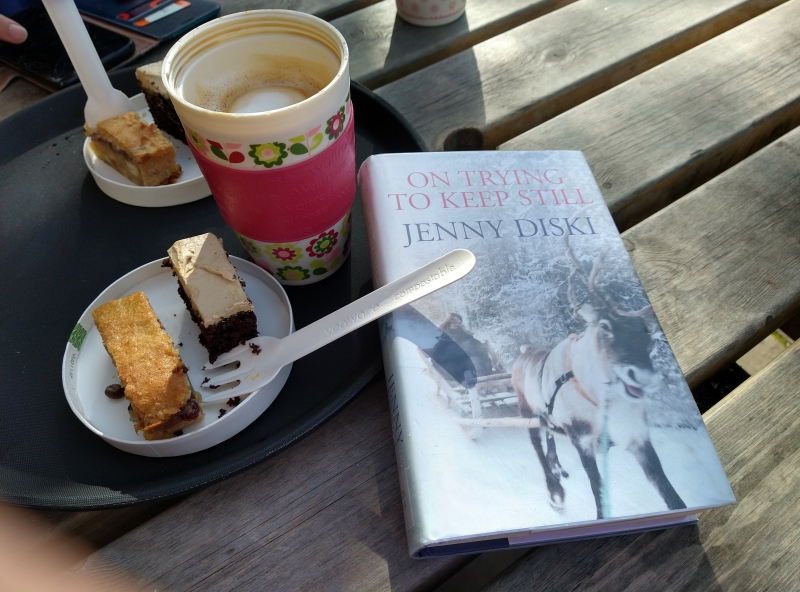
Apt reading for a coffee stop on Lindisfarne.
Jenny Diski understood that. Her collection of travel pieces, On Trying to Keep Still, was the one book I read in its entirety on our trip (along with parts of novels, poetry collections and many, many short story volumes). Essays and short stories were perfect reading for a public transport trip: ideal for taking out on a train or bus and reading one or a few. I’d earmarked the Diski for 20 Books of Summer but found a better setting for it after all. A couple of pieces touch on her traumatic childhood and time spent in a mental hospital as a teenager, which I vaguely remembered from her other autobiographical work. The essay “On Anatomy,” which doesn’t really fit with the others but may have been my favourite, matter-of-factly recounts her rape at 14, and her midlife diagnosis of Freiberg’s disease. Her doctor’s dismissive response to her debilitating foot pain was her first experience of age-related discrimination.
Diski expresses how troubled she is to have become known as a travel writer – through the two books of hers I’d previously read, Skating to Antarctica and Stranger on a Train – because, for the most part, she much prefers to stay at home and do nothing. Ironically, she ends up writing a travel feature on Lapland for the Observer, even though what she actually proposed was spending a few days in the polar dark. But the paper talked her into undertaking all sorts of uncomfortable adventures like a reindeer-drawn sleigh ride and sleeping in a tent – and this for someone who specifically hated being cold.
This is the stuff of Part Three. In Part One, she speaks at a book festival in New Zealand and resists the compulsion to skydive; in the long Part Two, she courts solitude by renting a cottage on a Somerset farm for two months. She holes up with a mini-library of silence- and seclusion-themed reads and shows her face only often enough so the owner won’t fret about her. (It took me a little while to work out that the farmer was Janet White, author of The Sheep Stell – quite a neat connection. Diski also lived with Doris Lessing as a teenager.) Here, too, Diski is delighted to eschew outings and exercise and just stay in comfort. The fact that she brought pristine Prada hiking boots tells you she’s no outdoorswoman. By the book’s end, she’s concluded it’s best to save the money and effort and just research or imagine your way to places instead. Tongue-in-cheek advice, perhaps, but the tone of cheerful indolence appealed to me. (Secondhand – Awesomebooks.com) 
Sprinting to make buses, hours-long bone-shaking rides, heavy luggage: we were out of practice at using public transport, sure, but the rigours of this trip were a bit much for me. It can’t just be age, though at nearly 41 I do long for my own bed on any stay away from home. It’s partly a matter of accepting that chronic illness means I will have limitations. Much as we wanted to do the right thing by not driving, travelling by car is so much more practical and comfortable. Trips to the Continent may still be doable by train as European services seem reliable. But within the UK? Unless it’s a short city break, I’m not sure.
All that said, we did have a nice time. Our cottage in Berwick-upon-Tweed was spacious and we had unexpectedly glorious weather for daytrips to Bamburgh Castle, the Farne islands and Lindisfarne, Alnwick and Alnmouth, and especially the fishing town of Dunbar in Scotland. If you ever find yourself in Berwick, do walk the medieval walls (plus try a charcuterie platter at Atelier wine bar, sample the sweet or savoury offerings at Northern Soul Kitchen, and find time for a drink or two at The Curfew micro-pub). Speaking of drinks, we also enjoyed our time with friends in York, not least an afternoon at the annual beer festival.


Bookishness included a return trip to Barter Books, where my store credit got me a free book and badge; Berwick’s Berrydin Books and Slightly Foxed, as well as several charity shops; the “Books by the Sea” Little Free Library network; and the John Muir birthplace museum and trail in Dunbar. Muir was a forefather of modern environmentalism involved in the inception of the U.S. national parks system. I’ll have to seek out his memoir of childhood.


My modest book haul (compared to our previous trip to Northumberland, anyway) of 12 books is testament to great restraint; had we been traveling by car, I probably would have acquired more books at each stop. I majored on short story collections and novella-length works. And I’ve started reading several already!


Other reading experiences, on a rail replacement bus and on the nearly empty Bamburgh and Dunbar beaches:


If you had to choose, would it be far-flung adventuring or the comforts of home?
20 Books of Summer, 17–18: Suzanne Berne and Melissa Febos
Nearly there! I’ll have two more books to review for this challenge as part of roundups tomorrow and Saturday. Today I have a lesser-known novel by a Women’s Prize winner and a set of personal essays about body image and growing up female.
A Perfect Arrangement by Suzanne Berne (2001)
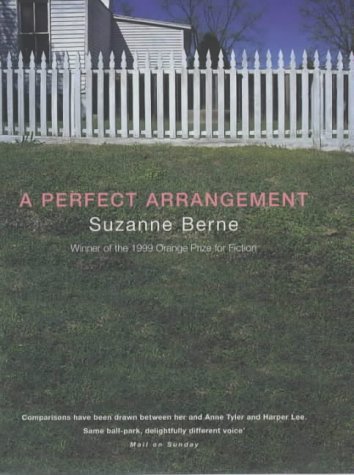 Berne won the Orange (Women’s) Prize for A Crime in the Neighbourhood in 1999. This is another slice of mild suburban suspense. The Boston-area Cook-Goldman household faces increasingly disruptive problems. Architect dad Howard is vilified for a new housing estate he’s planning, plus an affair that he had with a colleague a few years ago comes back to haunt him. Hotshot lawyer Mirella can’t get the work–life balance right, especially when she finds out she’s unexpectedly pregnant with twins at age 41. They hire a new nanny to wrangle their two under-fives, headstrong Pearl and developmentally delayed Jacob. If Randi Gill seems too good to be true, that’s because she’s a pathological liar. But hey, she’s great with kids.
It’s clear some Bad Stuff is going to happen to this family; the only questions are how bad and precisely what. Now, this is pretty much exactly what I want from my “summer reading”: super-readable plot- and character-driven fiction whose stakes are low (e.g., midlife malaise instead of war or genocide or whatever) and that veers more popular than literary and so can be devoured in large chunks. I really should have built more of that into my 20 Books plan! I read this much faster than I normally get through a book, but that meant the foreshadowing felt too prominent and I noticed some repetition, e.g., four or five references to purple loosestrife, which is a bit much even for those of us who like our wildflowers. It seemed a bit odd that the action was set back in the Clinton presidency; the references to the Lewinsky affair and Hillary’s “baking cookies” remark seemed to come out of nowhere. And seriously, why does the dog always have to suffer the consequences of humans’ stupid mistakes?!
This reminded me most of Friends and Strangers by J. Courtney Sullivan and a bit of Breathing Lessons by Anne Tyler, while one late plot turn took me right back to The Senator’s Wife by Sue Miller. While the Goodreads average rating of 2.93 seems pretty harsh, I can also see why fans of A Crime would have been disappointed. I probably won’t seek out any more of Berne’s fiction. (Secondhand – Community Furniture Project, Newbury)
Girlhood by Melissa Febos (2021)
I was deeply impressed by Febos’s Body Work (2022), a practical guide to crafting autobiographical narratives as a way of reckoning with the effects of trauma. Ironically, I engaged rather less with her own personal essays. One issue for me was that her highly sexualized experiences are a world away from mine. I don’t have her sense of always having had to perform for the male gaze, though maybe I’m fooling myself. Another was that it’s over 300 pages and only contains seven essays, so there were several pieces that felt endless. This was especially true of “The Mirror Test” (62 pp.) which is about double standards for girls as they played out in her simultaneous lack of confidence and slutty reputation, but randomly references The House of Mirth quite a lot; and “Thank You for Taking Care of Yourself” (74 pp.), which ponders why Febos has such trouble relaxing at a cuddle party and whether she killed off her ability to give physical consent through her years as a dominatrix.
 “Wild America,” about her first lesbian experience and the way she came to love a perceived defect (freakishly large hands; they look perfectly normal to me in her author photo), and “Intrusions,” about her and other women’s experience with stalkers, worked a bit better. But my two favourites incorporated travel, a specific relationship, and a past versus present structure. “Thesmophoria” opens with her arriving in Rome for a mother–daughter vacation only to realize she told her mother the wrong month. Feeling guilty over the error, she remembers other instances when she valued her mother’s forgiveness, including when she would leave family celebrations to buy drugs. The allusions to Greek myth were neither here nor there for me, but the words about her mother’s unconditional love made me cry.
I also really liked “Les Calanques,” which again draws on her history of heroin addiction, comparing a strung-out college trip to Paris when she scored with a sweet gay boy named Ahmed with the self-disciplined routines and care for her body she’d learned by the time she returns to France for a writing retreat. This felt like a good model for how to write about one’s past self. “I spend so much time with that younger self, her savage despair and fleeting reliefs, that I start to feel as though she is here with me.” The prologue, “Scarification,” is a numbered list of how she got her scars, something Paul Auster also gives in Winter Journal. As if to insist that we can only ever experience life through our bodies.
Although I’d hoped to connect to this more, and ultimately felt it wasn’t really meant for me (and maybe I’m a deficient feminist), I did admire the range of strategies and themes so will keep it on the shelf as a model for approaching the art of the personal essay. I think I would probably prefer a memoir from Febos, but don’t need to read more about her sex work (Whip Smart), so might look into Abandon Me. If bisexuality and questions of consent are of interest, you might also like Another Word for Love by Carvell Wallace, which I reviewed for BookBrowse. (Gift (secondhand) from my Christmas wish list last year) 
The Best Books from the First Half of 2024
Hard to believe, but it’s that time of year already! It’s the eighth year in a row that I’ve been making a first-half superlatives list. It remains to be seen how many of these will make it onto my overall best-of year rundown, but for now, these are my 18 favourite 2024 releases that I’ve read so far (representing the top 20% of my current-year reading). One is a bonus in that it won’t actually be published until August; six happen to be books I reviewed for Shelf Awareness. Pictured below are the ones I read in print; all the others were e-copies. Links are to my full reviews where available.


Fiction
 The Ministry of Time by Kaliane Bradley: This nuanced debut novel alternately goes along with and flouts the tropes of spy fiction and time travel sci-fi, making clever observations about how we frame stories of empire and progress. The narrator is a “bridge” helping to resettle a Victorian polar explorer in near-future London. You just have to suspend disbelief and go with it. Bradley’s descriptive prose is memorable but never quirky for the sake of it. I haven’t had so much fun with a book since Romantic Comedy. A witty, sexy, off-kilter gem.
 Behind You Is the Sea by Susan Muaddi Darraj: Darraj’s second novel-in-stories is a shimmering composite portrait of a Palestinian American community in Baltimore. Across nine stellar linked stories, she explores the complex relationships between characters divided by—or connected despite—class, language, and traditional values. Each of the stories (four in the first person, five in the third person) spotlights a particular character. The book depicts the variety of immigrant and second-generation experience, especially women’s.
 Piglet by Lottie Hazell: The protagonist works for a cookbook publisher, loves to cook, and has a history of overeating during psychological distress. When her fiancé blindsides her with a confession 13 days before their wedding, she returns to binge eating, dress fittings be damned. Food is also a sign of her education and class pretensions. Uncomfortable themes, but I kept reading in fascinated horror because Hazell writes absolutely incredible scenes. This is also about what women are allowed to want, and how they are expected to settle.
 Wellness by Nathan Hill: A state-of-the-nation novel filtered through one Chicago family experiencing midlife and marital crises: underperforming academic Jack; his wife Elizabeth, a placebo researcher at Wellness; and their YouTube-obsessed son Toby. They’ve recently invested their life savings in a new condo. The addictive and spot-on novel asks questions about authenticity, purpose, and nurture. Is love itself a placebo? Hill is clearly fascinated with psychological experimentation but also turns it to humorous effect.
 Happiness Falls by Angie Kim: Over 2.5 days in June 2020, a Korean American family (mother Hannah and 20-year-old twins Mia and John, home from college for the lockdown) investigates, on their own and with the help of police and tip-offs, what happened to the father, Adam, who’d been at River Falls Park with the severely disabled 14-year-old son, Eugene, who is autistic and has mosaic Angelman syndrome. Mia narrates, and it’s a pleasure spending time with her quick, systematic brain as she considers each theory and red herring.
 Company by Shannon Sanders: This energetic debut novel in 13 linked stories traces several generations of the Collins clan, whose experiences at once exemplify African American gentrification and evoke timeless patterns of parental legacy and sibling jealousy. Sisters Cassandra, Fay, Lee and Suzette grew up at their parents’ Atlantic City jazz club before going their separate ways. We revisit relatives at different points in their lives, mostly between the 1990s and the present day. Celebration scenes make for memorable moments.
 Lunar New Year Love Story by Gene Luen Yang (illus. LeUyen Pham): A super-cute teen story with gorgeous illustrations, including lots of pink and red to suit the theme. We follow Vietnamese-American Valentina through high school as she plays host to an internal debate between cynicism and romanticism. Ever since her mother left, she’s longed to believe in romance but feared that love is a doomed prospect for her family. The Asian community of Oakland, California and a new hobby of lion dancing provide engrossing cultural detail.
Nonfiction
 Intervals by Marianne Brooker: An extended essay about her mother’s protracted death with multiple sclerosis and the issues it brought up around disability, poverty, and inequality of access to medical care and services. Brooker decries the injustice of the wealthy having the option of travelling to Dignitas in Switzerland for an assisted death, whereas her single mother had so such relief in sight. Brooker’s description of the vigil of the last days, like her account of her vivacious mother’s life, is both tender and unflinching.
 Grief Is for People by Sloane Crosley: A bereavement memoir like no other. Heart-wrenching yet witty, it bears a unique structure and offers fascinating glimpses into the New York City publishing world. Crosley’s Manhattan apartment was burgled exactly a month before the suicide of her best friend and former boss, Russell. Throughout the book, the whereabouts of her family jewelry is as much of a mystery as the reason for Russell’s death, and investigating the stolen goods in parallel serves as a displacement activity for her.
 First Love: Essays on Friendship by Lilly Dancyger: Poignant interlocking essays about female friendship. Love and death coexist here. Dancyger’s first best friend was her cousin Sabina, who was raped and murdered at age 20. “Sad Girls” takes on Sylvia Plath fandom. Dancyger also maps her bisexuality and ponders whether to have a child. She is nostalgic for the freedom of being young and unsupervised in New York City and Europe. A sensitive interrogation of women’s relationships, perfect for fans of Melissa Febos and Emma Straub.
 Alphabetical Diaries by Sheila Heti: Heti put 10 years of diary contents into a spreadsheet, alphabetizing each sentence, and then ruthlessly culled the results. The recurring topics are familiar from the rest of her oeuvre: obsessive cogitating about relationships, art and identity, but also the practicalities of trying to make a living as a woman in a creative profession. Heti transcends the quotidian by exploding chronology. Remarkably, the collage approach produces a genuine, crystalline vision of the self. A sui generis work of life writing.

Others Like Me: The Lives of Women without Children by Nicole Louie: This impassioned auto/biographical collage combines the strengths of oral history, group biography and a fragmented memoir. “Motherhood as the epicentre of women’s lives was all I’d ever witnessed” via her mother and grandmother, Louie writes, so finding examples of women living differently was key. As readers, we watch her life, her thinking and the book all take shape. It’s intimate and empathetic, with layers of stories that reflect diversity of experience.
 The Age of Loneliness: Essays by Laura Marris: A perceptive, moving collection of nine braided essays linking personal experience of loss with the climate crisis. “Cancerine” is a strong example. Cancer, the sign of the crab, was her father’s cause of death; horseshoe crabs were ground into fertilizer in the 19th century, and their blood is still harvested for biomedical testing. Driven by curiosity and environmental conscience, these reflective pieces reminiscent of Helen Macdonald’s longform journalism ponder human responsibility and resilience. [Graywolf Press, 6 August]
 Knife: Meditations after an Attempted Murder by Salman Rushdie: I’ve not had much success with Rushdie’s fiction, but this is excellent, with intriguing side tendrils and lots of quotable lines. It traces lead-up and aftermath; unexpected echoes, symbolism and ironies. Although Rushdie goes into some medical detail about his recovery, you get the sense of him more as an unchanging mind and a resolute will. The most remarkable section imagines dialogues between him and his imprisoned assailant, probing his beliefs and motivations.
Poetry
 Theophanies by Sarah Ghazal Ali: In this poised debut collection by a Muslim poet, spiritual enlightenment is a female, embodied experience, mediated by the matriarchs of the Abrahamic faiths. Ali’s poems hymn women’s bodies, desire, and motherhood. She blurs the line between human and divine with her allusions to the Quran. Ambivalence towards faith is clear in the alliteration-laden verse that recalls Kaveh Akbar’s. Wordplay, floral metaphors, and multiple ghazals make for dazzling language.
 Baby Schema by Isabel Galleymore: A slant-wise look at environmental crisis and an impending decision about motherhood. The title comes from Konrad Lorenz’s identification of features that invite nurture. Galleymore edges towards the satirical fantasies of Caroline Bird or Patricia Lockwood as she imagines alternative scenarios of caregiving. What is worthy of maternal concern? Does cuteness merit survival? Extinction and eco-grief on the one hand, yes, but the implacability of biological cycles on the other. Sardonic yet humane.
 Inconsolable Objects by Nancy Miller Gomez: This debut collection recalls a Midwest girlhood of fairground rides and lake swimming, tornadoes and cicadas. But her Kansas isn’t all rose-tinted nostalgia; there’s an edge of sadness and danger. “Missing History” notes how women’s stories, such as her grandmother’s, are lost to time. In “Tilt-A-Whirl,” her older sister’s harmless flirtation with a ride operator turns sinister. She also takes inspiration from headlines. The alliteration and slant rhymes are to die for. (Full review to come.)
 Egg/Shell by Victoria Kennefick: Motherhood and the body are overarching themes. The speaker experiences multiple miscarriages and names her lost children after plants. Becoming a mother is a metamorphosis all its own, while the second long section is about her husband transitioning. Bird metaphors are inescapable. The structure varies throughout: columns, stanzas; a list, a recipe. Amid the sadness, there is dark humour and one-line rejoinders. If you’re wondering how life can be captured in achingly beautiful poetry, look no further.
Two of the novels above were among my Most Anticipated books of the year. I’ve now read 10 of the 12 on that list and DNFed another (the Sarah Perry), which just leaves Memory Piece by Lisa Ko to find – though others’ responses make me think it might not be worthwhile to do so. I sometimes wonder if designating a book as anticipated or a priority is a kiss of death, as I was at least somewhat disappointed with over half of my choices this time.
In the second part of the year, I’m looking forward to new releases from Rachel Clarke, Sarah Manguso, Charlotte Mendelson, Richard Powers, Sally Rooney, Elizabeth Strout and Evie Wyld.
What 2024 releases should I catch up on? What’s in your sights for the rest of the year?
June Releases by Caroline Bird, Kathleen Jamie, Glynnis MacNicol and Naomi Westerman
These four books by women all incorporate life writing to an extent. Although the forms differ, a common theme – as in the other June releases I’ve reviewed, Sandwich and Others Like Me – is grappling with what a woman’s life should be, especially for those who have taken an unconventional path (i.e. are queer or childless) or are in midlife or later. I’ve got a poet up to her usual surreal shenanigans but with a new focus on lesbian parenting; a hybrid collection of poetry and prose giving snapshots of nature in crisis; an account of a writer’s hedonistic month in pandemic-era Paris; and mordant essays about death culture.
Ambush at Still Lake by Caroline Bird
 Caroline Bird has become one of my favourite contemporary poets over the past few years. Her verse is joyously cheeky and absurdist. A great way to sample it is via her selected poems, Rookie. This seventh collection is muted by age and circumstance – multiple weddings and a baby – but still hilarious in places. Instead of rehab or hospital as in In These Days of Prohibition, the setting is mostly the domestic sphere. Even here, bizarre things happen. The police burst in at 4 a.m. for no particular reason; search algorithms and the baby monitor go haywire. Her brother calls to deliver a paranoid rant (in “Up and at ’Em”), while Nannie Edna’s dying wish is to dangle her great-grandson from her apartment window (in “Last Rites”). The clinic calls to announce that their sperm donor was a serial killer – then ‘oops, wrong vial, never mind!’ A toddler son’s strange and megalomaniac demands direct their days. My two favourites were “Ants,” in which a kitchen infestation signals general chaos, and “The Frozen Aisle,” in which a couple scrambles to finish the grocery shop and get home to bed before a rare horny moment passes. A lesbian pulp fiction cover, mischievous wit and topics of addiction and queer parenting: this is not your average poetry.
With thanks to Carcanet Press for the free copy for review.
A sample poem:
Siblings
A woman gave birth
to the reincarnation
of Gilbert and Sullivan
or rather, two reincarnations:
one Gilbert, one Sullivan.
What are the odds
of both being resummoned
by the same womb
when they could’ve been
a blue dart frog
and a supply teacher
on separate continents?
Yet here they were, squidged
into a tandem pushchair
with their best work
behind them, still smarting
from the critical reception
of their final opera
described as ‘but an echo’
of earlier collaborations.
Cairn by Kathleen Jamie
 As she approached age 60, Kathleen Jamie found her style changing. Whereas her other essay collections alternate extended nature or travel pieces with few-page vignettes, Cairn eschews longer material and instead alternates poems with micro-essays on climate crisis and outdoor experiences. In the prologue she calls these “distillations and observations. Testimonies” that she has assembled into “A cairn of sorts.”
As in Surfacing, she writes many of the autobiographical fragments in the second person. The book is melancholy at times, haunted by all that has been lost and will be lost in the future:
What do we sense on the moor but ghost folk,
ghost deer, even ghost wolf. The path itself is a
phantom, almost erased in ling and yellow tormentil (from “Moor”)
In “The Bass Rock,” Jamie laments the effect that bird flu has had on this famous gannet colony and wishes desperately for better news:
The light glances on the water. The haze clears, and now the rock is visible; it looks depleted. But hallelujah, a pennant of twenty-odd gannets is passing, flying strongly, now rising now falling They’ll be Bass Rock birds. What use the summer sunlight, if it can’t gleam on a gannet’s back? You can only hope next year will be different. Stay alive! You call after the flying birds. Stay alive!
Natural wonders remind her of her own mortality and the insignificance of human life against deep time. “I can imagine the world going on without me, which one doesn’t at 30.” She questions the value of poetry in a time of emergency: “If we are entering a great dismantling, we can hardly expect lyric to survive. How to write a lyric poem?” (from “Summer”). The same could be said of any human endeavour in the face of extinction: We question the point but still we continue.
My two favourite pieces were “The Handover,” about going on an environmental march with her son and his friends in Glasgow and comparing it with the protests of her time (Greenham Common and nuclear disarmament) – doom and gloom was ever thus – and the title poem, which piles natural image on image like a cone of stones. Although I prefer the depth of Jamie’s other books to the breadth of this one, she is an invaluable nature writer for her wisdom and eloquence, and I am grateful we have heard from her again after five years.
With thanks to Sort Of Books for the free copy for review.
I’m Mostly Here to Enjoy Myself: One Woman’s Pursuit of Pleasure in Paris by Glynnis MacNicol
 I loved New York City freelance writer Glynnis MacNicol’s No One Tells You This (2018), which approached her 40th year as an adventure into the unknown. This second memoir is similarly frank and intrepid as MacNicol examines the unconscious rules that people set for women in their mid-forties and gleefully flouts them, remaining single and childfree and delighting in the freedom that allows her to book a month in Paris on a whim. She knows that she is an anomaly for being “untethered”; “I am ready for anything. To be anyone.”
This takes place in August 2021, when some pandemic restrictions were still in force, and she found the city – a frequent destination for her over the years – drained of locals, who were all en vacances, and largely empty of tourists, too. Although there was still a queue for the Mona Lisa, she otherwise found the Louvre very quiet, and could ride her borrowed bike through the streets without having to look out for cars. She and her single girlfriends met for rosé-soaked brunches and picnics, joined outdoor dance parties and took an island break.
And then there was the sex. MacNicol joined a hook-up app called Fruitz and met all sorts of men. She refused to believe that, just because she was 46 going on 47, she should be invisible or demure. “All the attention feels like pure oxygen. Anything is possible.” Seeing herself through the eyes of an enraptured 27-year-old Italian reminded her that her body was beautiful even if it wasn’t what she remembered from her twenties (“there is, on average, a five-year gap between current me being able to enjoy the me in the photos”). The book’s title is something she wrote while messaging with one of her potential partners.
As I wrote yesterday about Others Like Me, there are plenty of childless role models but you may have to look a bit harder for them. MacNicol does so by tracking down the Paris haunts of women writers such as Edith Wharton and Colette. She also interrogates this idea of women living a life of pleasure by researching the “odalisque” in 18th- and 19th-century art, as in the François Boucher painting on the cover. This was fun, provocative and thoughtful all at once; well worth seeking out for summer reading and armchair travelling.
(Read via Edelweiss) Published in the USA by Penguin Life/Random House.
Happy Death Club: Essays on Death, Grief & Bereavement across Cultures by Naomi Westerman
 Like Erica Buist (This Party’s Dead) and Caitlin Doughty (Smoke Gets in Your Eyes, From Here to Eternity and Will My Cat Eat My Eyeballs?), playwright Naomi Westerman finds the comical side of death. Part of 404 Ink’s Inklings series (“Big ideas, pocket-sized books” – perfect for anyone looking for short nonfiction for Novellas in November!), this is a collection of short essays about her own experiences of bereavement as well as her anthropological research into rituals and beliefs around death. “The Rat King of South London” is about her father’s sudden death from an abdominal aneurysm. An instantaneous death is a good one, she contends. More than 160,000 people die every day, and what to do with all those bodies is a serious question. A subversive sense of humour is there right from the start, as she gives a rundown of interment options. “Mummification: Beloved by Ancient Egyptians and small children going through their Ancient Egypt phase, it’s a classic for a reason!” Meanwhile, she legally owns her father’s plot so also buries dead pet rats there.
Other essays are about taking her mother’s ashes along on world travels, the funeral industry and “red market” sales of body parts, grief as a theme in horror films, the fetishization of dead female bodies, Mexico’s Day of the Dead festivities, and true crime obsession. In “Batman,” an excerpt from one of her plays, she goes to have a terrible cup of tea with the man she believes to be responsible for her mother’s death – a violent one, after leaving an abusive relationship. She also used the play to host an on-stage memorial for her mother since she wasn’t able to sit shiva. In the final title essay, Westerman tours lots of death cafés and finds comfort in shared experiences. These pieces are all breezy, amusing and easy to read, so it’s a shame that this small press didn’t achieve proper proofreading, making for a rather sloppy text, and that the content was overall too familiar for me.
With thanks to 404 Ink and publicist Claire Maxwell for the free copy for review.
Does one or more of these catch your eye?
What June releases can you recommend?
20 Books of Summer, 3–4: Cheri & All Things Are Too Small
A cancer story that treads the line between biography and fiction, and a set of high-brow essays about popular culture and modern life.
Cheri by Jo Ann Beard (2023)
{SPOILERS IN THIS ONE}
Claire Keegan helped popularize the trend of publishing stand-alone stories as small hardback volumes. It was my first time reading Beard, and her style does in fact remind me of Keegan, along with Denis Johnson and Ann Patchett. This originally appeared in the literary magazine Tin House in 2002. It is the life story of Cheri Tremble, a real woman who was born in 1950 and died in 1997 via an illegal assisted suicide conducted by Dr. Jack Kevorkian. I’d heard a lot about Cheri, but his name was never mentioned – to avoid spoilers, of course, yet it’s key.
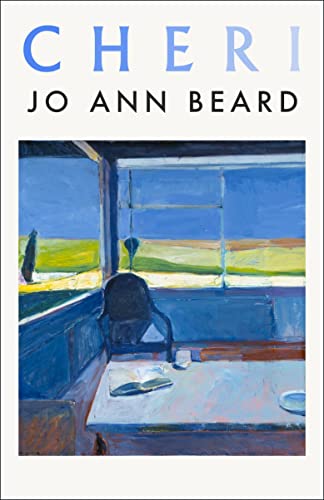 Cheri is an Amtrak ticket-taker who’s diagnosed with breast cancer in her mid-forties. After routine reconstructive surgery goes wrong and she’s left disabled, she returns to the Midwest and buys a home in Iowa. Here she’s supported by her best friends Linda and Wayne, and visited by her daughters Sarah and Katy. “Others have lived. She won’t be one of them. She feels it in her bones, quite literally.” When she hears the cancer has metastasized, she refuses treatment and starts making alternative plans. She’s philosophical about it; “Forty-six years is a long time if you look at it a certain way. Ursa is her seventh dog.”
Beard recounts all of this matter-of-factly (“the diminished lung capacity, the clangorous pain”), drawing on what is known of Cheri Tremble’s life and only adding her own stamp by making up memories that fuel flashbacks as Cheri drifts through pain-filled half-waking. One of these, of falling through the ice on a frozen pond as a child, appears early in the book and recurs at her moment of death. Beard also contrasts onlookers’ compassion or lack thereof.
It’s a potent portrait of everyday suffering and heroism and, in its way, an argument for assisted dying, which mustn’t be cloaked in secrecy as it was for Cheri – “They leave under cover of darkness, like duck hunters or criminals” to meet ‘Dr. Death’ in another state. I finished the story feeling underwhelmed; maybe I’ve simply read too much around the topic, but I couldn’t see how granting the subject interiority (which is what fiction is all about, yes, though the best biographies can do it, too) was enough to set it apart. (New purchase with birthday voucher, Hungerford Bookshop)
All Things Are Too Small: Essays in Praise of Excess by Becca Rothfeld (2024)
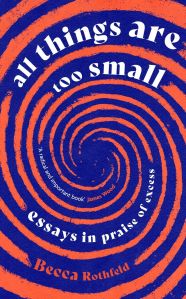 Rothfeld, the Washington Post’s nonfiction book reviewer, is on hiatus from a philosophy PhD at Harvard. Her academic background is clear from her vocabulary. The more accessible essays tend to be ones that were previously published in periodicals. Although the topics range widely – decluttering, true crime, consent, binge eating, online stalking – she’s assembled them under a dichotomy of parsimony versus indulgence. And you know from the title that she errs on the side of the latter. Luxuriate in lust, wallow in words, stick two fingers up to minimalism and mindfulness and be your own messy self. You might boil the message down to: Love what you love, because that’s what makes you an individual. And happy individuals – well, ideally, in an equal society that gives everyone the same access to self-fulfillment and art – make for a thriving culture. That, with some Barthes and Kant quotes.
The writing has verve, from the alliterative word choice to the forcefulness of Rothfeld’s opinions. But in places her points of reference (from classic cinema, especially) are so obscure that I had no way in and the pieces felt like they would never end. My two favourites were “More Is More,” in which she’s as down on fragmentary autofiction (Jenny Offill et al.) as she is on Marie Kondo; and “Normal Novels,” about how she finds Sally Rooney’s self-deprecation and communism problematic. I knew the subject matter well enough to follow the arguments here, even if I ultimately disagreed with them.
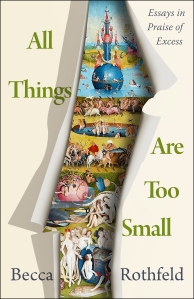
The U.S. cover featuring a Bosch painting is so much better!
Rothfeld is worth reading as a cultural critic, at least in small doses. She is clearly not interested in being a personal essayist, however, as the intimacy she keeps discussing in theory is almost completely absent. A piece on mental health, “Wherever You Go, You Could Leave,” opens with one tantalizing autobiographical line – “My first year of college, I attempted suicide and was promptly hastened home by an ominously smiling administrator” – then proceeds to poke fun at meditation for most of its 40 pages. It was interesting to see her fan-girl over her favourite novel, which I would even try if it wasn’t 480 pages: “I want to be reading Mating [by Norman Rush] constantly; I want to have been reading Mating forever, but always for the first time; I want everything in my life to be Mating and nothing but Mating”. Keep an eye out for the sequel: Actually, Moderation Is Cool: How I Learned to Temper My Expectations.
With thanks to Virago Press for the free copy for review.
Fathers: Reflections by Daughters (Virago Anthology)
Books that dwell on family bonds often spotlight mothers and daughters, or fathers and sons; it seems a bit less common to examine the relationship with the parent of the opposite sex. In advance of Father’s Day, I picked up Fathers: Reflections by Daughters (1983; 1994) and read the first third. As I once did for Mother’s Day with another Virago anthology, Close Company: Stories of Mothers and Daughters, I’ll end up reading it across several years. Where that was a short fiction collection, though, this is all autobiographical pieces.
The section I’ve read so far contains seven essays counting editor Ursula Owen’s introduction, plus a retelling of the fairy tale “Cap o’ Rushes.” Most of the authors were born in the 1940s or 1950s, so a common element is having a father who served in the Second World War – or the First (for Angela Carter and Doris Lessing). There’s a sense, therefore, of momentous past experience that will never be disclosed. As Lessing writes of her father, “I knew him when his best years were over” – that is, after he had lost a leg, given up his favourite foods due to diabetes, and undertaken a doomed farming enterprise in colonial Africa.

Freudian interpretation seems like a given for several of the memoirists. Anne Boston was a posthumous child whose father was killed in the last days of WWII; in “Growing Up Fatherless,” she explores how this might have affected her.
I’ve always tended to discount the effects of being without a father – quite wrongly, I think now. There were effects, and they continued to influence my entire life, if anything increasingly so.
Among these effects, she enumerates a lack of proper “sexual conditioning.” Anthropologist Olivia Harris, too, wonders how a father determines a woman’s relationships with other men:
How far do women choose in their spouses, encourage in their sons, the ideal remembrance of the father? Am I, but not being married, refusing to exchange my father, or am I diffusing that chain of being?
Two authors specifically interrogate the alignment of the father with God. In “Heavenly Father,” Harris compares visions of fatherhood in various cultures, including in Anglican Christianity. Here the father, in parallel with the deity, is something of a distant moral arbiter. Sara Maitland felt the same about her father:
he really did correspond to the archetype of the Father. Many women grow out of their father when they discover that he is not really like what fathers are supposed, imaginatively, mythologically to be: he is weak, or a failure, or dishonest, or uninterested, or goes away. My father was not a perfect person, but he was very Father-like.
Unknown, aloof, a disciplinarian … I wonder if those descriptions resonate with you as much as they do with me?
In between pieces, Owen has reprinted 1–4 quotes from novels or academic sources that are relevant to fathers and daughters. The result is, as she acknowledges in the introduction, “a sort of collage.” She also remarks on the fact that it was difficult for more than one contributor to find a photo of herself with her father because “Dad always takes the photograph.” The essay I haven’t yet mentioned is a sweet but inconsequential two-pager by 13-year-old Kate Owen; it’s just occurred to me that that’s probably the editor’s daughter.
I’ll be interested to see how Michèle Roberts, Adrienne Rich, Alice Munro and more will clarify or complicate the picture of father–daughter relationships in the rest of the volume. (Secondhand from a National Trust bookshop)
 Bookish Beck = Rebecca Foster. American transplant to England. Freelance proofreader and book reviewer.
