Four (Almost) One-Sitting Novellas by Blackburn, Murakami, Porter & School of Life (#NovNov25)
I never believe people who say they read 300-page novels in a sitting. How is that possible?! I’m a pretty slow reader, I like to bounce between books rather than read one exclusively, and I often have a hot drink to hand beside my book stack, so I’d need a bathroom break or two. I also have a young cat who doesn’t give me much peace. But 100 pages or thereabouts? I at least have a fighting chance of finishing a novella in one go. Although I haven’t yet achieved a one-sitting read this month, it’s always the goal: to carve out the time and be engrossed such that you just can’t put a book down. I’ll see if I can manage it before November is over.
A couple of longish car rides last weekend gave me the time to read most of three of these, and the next day I popped the other in my purse for a visit to my favourite local coffee shop. I polished them all off later in the week. I have a mini memoir in pets, a surreal Japanese story with illustrations, an innovative modern classic about bereavement, and a set of short essays about money and commodification.
My Animals and Other Family by Julia Blackburn; illus. Herman Makkink (2007)
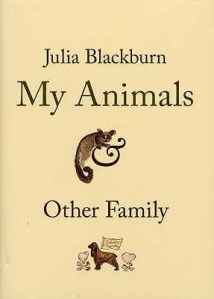 In five short autobiographical essays, Blackburn traces her life with pets and other domestic animals. Guinea pigs taught her the facts of life when she was the pet monitor for her girls’ school – and taught her daughter the reality of death when they moved to the country and Galaxy sired a kingdom of outdoor guinea pigs. They also raised chickens, then adopted two orphaned fox cubs; this did not end well. There are intriguing hints of Blackburn’s childhood family dynamic, which she would later write about in the memoir The Three of Us: Her father was an alcoholic poet and her mother a painter. It was not a happy household and pets provided comfort as well as companionship. “I suppose tropical fish were my religion,” she remarks, remembering all the time she devoted to staring at the aquarium. Jason the spaniel was supposed to keep her safe on walks, but his presence didn’t deter a flasher (her parents’ and a policeman’s reactions to hearing the story are disturbingly blasé). My favourite piece was the first, “A Bushbaby from Harrods”: In the 1950s, the department store had a Zoo that sold exotic pets. Congo the bushbaby did his business all over her family’s flat but still was “the first great love of my life,” Blackburn insists. This was pleasant but won’t stay with me. (New purchase – remainder copy from Hay Cinema Bookshop, 2025) [86 pages]
Super-Frog Saves Tokyo by Haruki Murakami; illus. Seb Agresti and Suzanne Dean (2000, 2001; this edition 2025)
[Translated from Japanese by Jay Rubin]
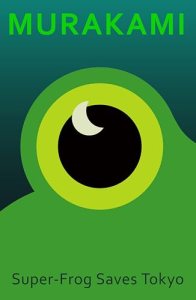 This short story first appeared in English in GQ magazine in 2001 and was then included in Murakami’s collection after the quake, a response to the Kobe earthquake of 1995. “Katigiri found a giant frog waiting for him in his apartment,” it opens. The six-foot amphibian knows that an earthquake will hit Tokyo in three days’ time and wants the middle-aged banker to help him avert disaster by descending into the realm below the bank and doing battle with Worm. Legend has it that the giant worm’s anger causes natural disasters. Katigiri understandably finds it difficult to believe what’s happening, so Frog earns his trust by helping him recover a troublesome loan. Whether Frog is real or not doesn’t seem to matter; either way, imagination saves the city – and Katigiri when he has a medical crisis. I couldn’t help but think of Rachel Ingalls’ Mrs. Caliban (one of my NovNov reads last year). While this has been put together as an appealing standalone volume and was significantly more readable than any of Murakami’s recent novels that I’ve tried, I felt a bit cheated by the it-was-all-just-a-dream motif. (Public library) [86 pages]
Grief Is the Thing with Feathers by Max Porter (2015)
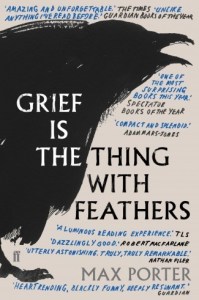 A reread – I reviewed this for Shiny New Books when it first came out and can’t better what I said then. “The novel is composed of three first-person voices: Dad, Boys (sometimes singular and sometimes plural) and Crow. The father and his two young sons are adrift in mourning; the boys’ mum died in an accident in their London flat. The three narratives resemble monologues in a play, with short lines often laid out on the page more like stanzas of a poem than prose paragraphs.” What impressed me most this time was the brilliant mash-up of allusions and genres. The title: Emily Dickinson. The central figure: Ted Hughes’s Crow. The setup: Edgar Allan Poe’s “The Raven” – while he’s grieving his lost love, a man is visited by a black bird that won’t leave until it’s delivered its message. (A raven cronked overhead as I was walking to get my cappuccino.) I was less dazzled by the actual writing, though, apart from a few very strong lines about the nature of loss, e.g. “Moving on, as a concept, is for stupid people, because any sensible person knows grief is a long-term project.” I have a feeling this would be better experienced in other media (such as audio, or the play version). I do still appreciate it as a picture of grief over time, however. Porter won the Sunday Times Young Writer of the Year Award as well as the Dylan Thomas Prize. (Secondhand – Gifted by a friend as part of a trip to Community Furniture Project, Newbury last year; I’d resold my original hardback copy – more fool me!) [114 pages]


My original rating (in 2015): 
My rating now: 
Why We Hate Cheap Things by The School of Life (2017)
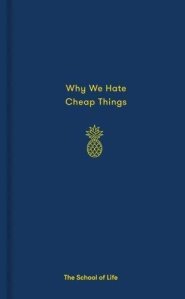 I’m generally a fan of the high-brow self-help books The School of Life produces, but these six micro-essays feel like cast-offs from a larger project. The title essay explores the link between the cost of an item or experience and how much we value it – with reference to pineapples and paintings. The other essays decry the fact that money doesn’t get fairly distributed, such that craftspeople and arts graduates often struggle financially when their work and minds are exactly what we should be valuing as a society. Fair enough … but any suggestions for how to fix the situation?! I’m finding Robin Wall Kimmerer’s The Serviceberry, which is also on a vaguely economic theme, much more engaging and profound. There’s no author listed for this volume, but as The School of Life is Alain de Botton’s brainchild, I’m guessing he had a hand. Perhaps he’s been cancelled? This raises a couple of interesting questions, but overall you’re probably better off spending the time with something more in depth. (Little Free Library) [78 pages]
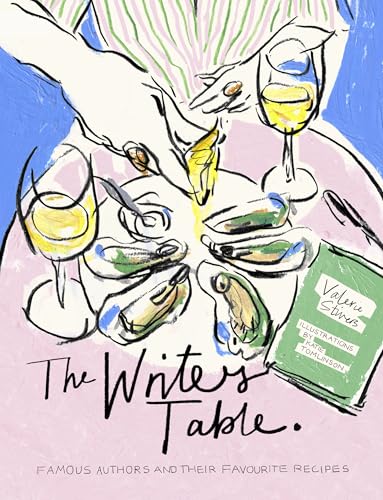
The Writer’s Table by Valerie Stivers (Blog Tour)
In 2017, Valerie Stivers started writing about food in classic fiction for The Paris Review. Her particular project for the “Eat Your Words” column would be cooking and baking her way through literature. It was a larger undertaking than she realized and became something of an obsession. A selection of the greatest hits made it into The Writer’s Table. Each few-page biographical profile opens with a recipe drawn from that author’s work or developed by Stivers. A surprising number of writers published cookbooks – or had one compiled after their death – including Maya Angelou, Jane Austen (of family friend and housekeeper Martha Lloyd’s recipes), Ernest Hemingway, Barbara Pym, George Sand and Alice B. Toklas.
 Though I’ve read a lot by and about D.H. Lawrence, I didn’t realise he did all the cooking in his household with Frieda, and was renowned for his bread. And who knew that Emily Dickinson was better known in her lifetime as a baker? Her coconut cake is beautifully simple, containing just six ingredients. Flannery O’Connor’s peppermint chiffon pie also sounds delicious. Some essays do not feature a recipe but a discussion of food in an author’s work, such as the unusual combinations of mostly tinned foods that Iris Murdoch’s characters eat. It turns out that that’s how she and her husband John Bayley ate, so she saw nothing odd about it. And Murakami’s 2005 New Yorker story “The Year of Spaghetti” is about a character whose fixation on one foodstuff reflects, Stivers notes, his “emotional … turmoil.”
The alphabetical arrangement of the pieces emphasizes the wide range of eras, regions, and genres. It’s a fun book for browsing, though I might have liked more depth on fewer authors. I especially liked the listicles on “Writers’ Favourite Cocktails” – E.B. White’s triple-strength gin martinis sound lethal! – and “Writers Who Didn’t Eat Proper Meals.” Proust subsisted on croissants and café au lait, while Highsmith ate nothing but bacon and eggs (hers being mostly a liquid diet). Katie Tomlinson’s colourful sketches are delightful. I enjoyed having this around to flick through and can recommend it as a gift for the literary foodie in your life.
With thanks to Anne Cater of Random Things Tours and Frances Lincoln (Quarto Books) for the free copy for review.
Buy The Writer’s Table from Bookshop.org [affiliate link]
I was pleased to be part of the blog tour for The Writer’s Table. See below for details of where other reviews have appeared or will appear soon.
20 Books of Summer, 13–16: Tony Chan, Jen Hadfield, Kenward Anthology, Catherine Taylor
Three from my initial list (all nonfiction) and one substitute picked up at random (poetry). These are strongly place-based selections, ranging from Sheffield to Shetland and drawing on travels while also commenting on how gender and dis/ability affect daily life as well as the experience of nature.
Four Points Fourteen Lines by Tony Chan (2016)
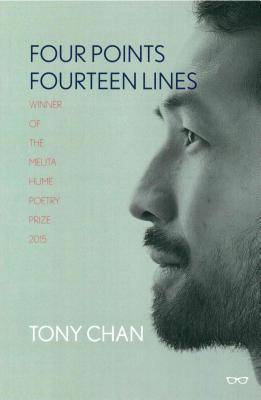 Chan is a schoolteacher who, in 2015, left his day job to undertake a 78-day solo walk between “the four extreme cardinal points of the British mainland”: Dunnet Head (North) to Ardnamurchan Point (West) in Scotland, down to Lowestoft Ness (East) in Suffolk and across to Lizard Point, Cornwall (South). It was a solo trek of 1,400 miles. He wrote one sonnet per day, not always adhering to the same rhyme scheme but fitting his sentiments into 14 lines of standard length. He doesn’t document much practical information, but does admit he stayed in decent hotels, ate hot meals, etc. Each poem is named for the starting point and destination, but the topic might be what he sees, an experience on the road, a memory, or whatever. “Evanton to Inverness” decries a gloomy city; “Inverness to Foyers” gives thanks for his shoes and lycra undershorts. He compares Highlanders to heroic Trojans: “Something sincere in their browned, moss-green tweeds, / In their greeting voice of gentle tenor. / From ancient Hector or from ancient clans, / Here live men most earnest in words and deeds.” None of the poems are laudable in their own right, but it’s a pleasant enough project. Too often, though, Chan resorts to outmoded vocabulary to fit the form or try to prove a poetic pedigree (“Suddenly comes an Old Testament of deluge and / Tempest, deluding the sense wholly”; “I know these streets, whence they come and whither / They run”; “I learnt well some verses of Tennyson / Years ago when noble dreams were begat”) when he might have been better off varying the form and/or using free verse. (Signed copy from Little Free Library)
Storm Pegs: A Life Made in Shetland by Jen Hadfield (2024)
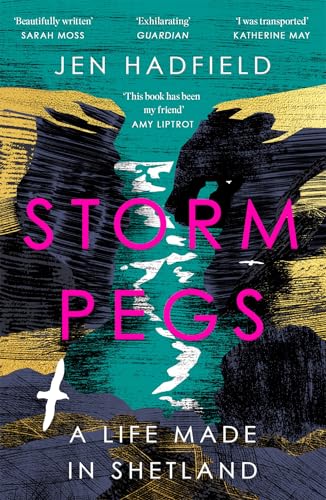 This is not so much a straightforward memoir as a set of atmospheric vignettes, each headed by a relevant word or phrase in the Shaetlan dialect. Hadfield, who is British Canadian, moved to the islands in her late twenties in 2006 and soon found her niche. “My new life quickly debunked those Edge-of-the-World myths – Shetland was too busy to feel remote, and had too strong a sense of its own identity to feel frontier-like.” It’s gently ironic, she notes, that she’s a terrible sailor and gets vertigo at height yet lives somewhere with perilous cliff edges that is often reachable only by sea. Living in a trailer waiting for her home to be built on West Burra, she feels the line between indoors and out is especially thin. It’s a life of wild swimming, beachcombing, fresh fish, folk music, seabirds, kind neighbours, and good cheer that warms long winter nights. After the isolation of the pandemic period comes the unexpected joy of a partner and a pregnancy in her mid-forties. Hadfield is a Windham-Campbell Prize-winning poet, and her lyrical prose is full of lovely observations that made me hanker to return to Shetland – it’s been 19 years since my only visit, after all. This was a slow read I savoured for its language and sense of place.
With thanks to Picador for the free paperback copy for review.
From Shetland authors, I have also reviewed:
Orchid Summer by Jon Dunn (Hadfield mentions him)
Sea Bean by Sally Huband (Hadfield meets her)
The Valley at the Centre of the World by Malachy Tallack
Moving Mountains: Writing Nature through Illness and Disability, ed. Louise Kenward (2023)
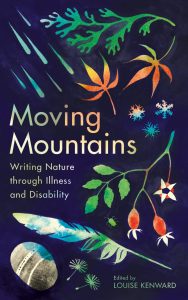 I often read memoirs about chronic illness and disability – the sort of narratives recognized by the Barbellion and ACDI Literary Prizes – and the idea of nature essays that reckon with health limitations was an irresistible draw. The quality in this anthology varies widely, from excellent to barely readable (for poor prose or pretentiousness). I’ll be kind and not name names in the latter category; I’ll only say the book has been poorly served by the editing process. The best material is generally from authors with published books: Polly Atkin (Some of Us Just Fall; see also her recent response to the Raynor Winn fiasco), Victoria Bennett (All My Wild Mothers), Sally Huband (as above!), and Abi Palmer (Sanatorium). For the first three, the essay feels like an extension of their memoir, while Palmer’s inventive piece is about recreating seasons for her indoor cats. My three favourite entries, however, were Louisa Adjoa Parker’s poem “This Is Not Just Tired,” Nic Wilson’s “A Quince in the Hand” (she’s an acquaintance through New Networks for Nature and has a memoir out this summer, Land Beneath the Waves), and Eli Clare’s “Moving Close to the Ground,” about being willing to scoot and crawl to get into nature. A number of the other pieces are repetitive, overlong or poorly shaped and don’t integrate information about illness in a natural way. Kudos to Kenward for including BIPOC and trans/queer voices, though. (Christmas gift from my wish list)
The Stirrings: Coming of Age in Northern Time by Catherine Taylor (2023)
“A typical family and an ordinary story, although neither the family nor the story seems commonplace when it is your family and your story.”
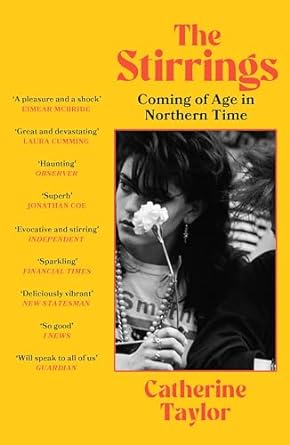 Taylor, who was born in New Zealand and grew up in Sheffield, won the Ackerley Prize for this memoir. (After Dunmore and King, this is the third in my intended four-in-a-row on the 20 Books of Summer Bingo card, fulfilling the “Book published in summer” category – August 2023.) It is bookended by two pivotal summers: 1976, the last normal season in her household before her father left; and 1989, the “Second Summer of Love,” when she had an abortion (the subject of “Milk Teeth,” the best individual chapter and a strong stand-alone essay). In between, fear and outrage overshadow her life: the Yorkshire Ripper is at large, nuclear war looms, mines are closing and protesters meet with harsh reprisals, and her own health falters until she gets a diagnosis of Graves’ disease. Then, in her final year at Cardiff, one of their housemates is found dead. Taylor draws reasonably subtle links to the present day, when fascism, global threats, and femicide are, unfortunately, as timely as ever. She’s the sort of personality I see at every London literary event I attend: Wellcome Book Prize ceremonies, Weatherglass’s Future of the Novella event, and so on. I got the feeling this book is more about bearing witness to history than revealing herself, and so I never warmed to it or to her on the page. But if you’d like to get a feel for the mood of the times, or you have experience of the settings and period, you may well enjoy it more than I did. (New purchase from Bookshop.org with a Christmas book token)
Most Anticipated Books of the Second Half of 2025
My “Most Anticipated” designation sometimes seems like a kiss of death, but other times the books I choose for these lists live up to my expectations, or surpass them!
(Looking back at the 25 books I selected in January, I see that so far I have read and enjoyed 8, read but been disappointed by 4, not yet read – though they’re on my Kindle or accessible from the library – 9, and not managed to get hold of 4.)
This time around, I’ve chosen 15 books I happen to have heard about that will be released between July and December: 7 fiction and 8 nonfiction. (In release date order within genre. UK release information generally given first, if available. Note given on source if I have managed to get hold of it already.)
Fiction
 The Girls Who Grew Big by Leila Mottley [10 July, Fig Tree (Penguin) / June 24, Knopf]: I was impressed with the confident voice in Mottley’s debut, Nightcrawling. She’s just 22 years old so will only keep getting better. This is “about the joys and entanglements of a fierce group of teenage mothers in a small town on the Florida panhandle. … When [16-year-old Adela] tells her parents she’s pregnant, they send her from … Indiana to her grandmother’s in Padua Beach, Florida.” I’ve read one-third so far. (Digital review copy)
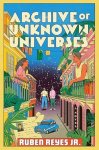 Archive of Unknown Universes by Ruben Reyes Jr. [21 Aug., Footnote Press (Bonnier) / July 1, Mariner Books]: There Is a Rio Grande in Heaven was a strong speculative short story collection and I’m looking forward to his debut novel, which involves alternative history elements. (Starred Kirkus review.) “Cambridge, 2018. Ana and Luis’s relationship is on the rocks, despite their many similarities, including … mothers who both fled El Salvador during the war. In her search for answers, and against her best judgement, Ana uses The Defractor, an experimental device that allows users to peek into alternate versions of their lives.”
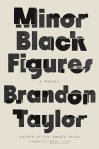 Minor Black Figures by Brandon Taylor [Oct. 7, Riverhead / 5 March 2026, Jonathan Cape (Penguin)]: I’ve read all of his works … but I’m so glad he’s moving past campus settings now. “A newcomer to New York, Wyeth is a Black painter who grew up in the South and is trying to find his place in the contemporary Manhattan art scene. … When he meets Keating, a white former seminarian who left the priesthood, Wyeth begins to reconsider how to observe the world, in the process facing questions about the conflicts between Black and white art, the white gaze on the Black body, and the compromises we make – in art and in life.” (Edelweiss download)
 Heart the Lover by Lily King [16 Oct., Canongate / Oct. 7, Grove Press]: I’ve read several of her books and after Writers & Lovers I’m a forever fan. “In the fall of her senior year of college, [Jordan] meets two star students from her 17th-Century Lit class, Sam and Yash. … she quickly discovers the pleasures of friendship, love and her own intellectual ambition. … when a surprise visit and unexpected news brings the past crashing into the present, Jordan returns to a world she left behind and is forced to confront the decisions and deceptions of her younger self.” (Edelweiss download)
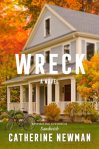 Wreck by Catherine Newman [28 Oct., Transworld / Harper]: This is a sequel to Sandwich, and in general sequels should not exist. However, I can make a rare exception. Set two years on, this finds “Rocky, still anxious, nostalgic, and funny, obsessed with a local accident that only tangentially affects them—and with a medical condition that, she hopes, won’t affect them at all.” In a recent Substack post, Newman compared it to Small Rain, my book of 2024, for the focus on a mystery medical condition. (Edelweiss download)
 Palaver by Bryan Washington [Nov. 4, Farrar, Straus, and Giroux / 1 Jan. 2026, Atlantic]: I’ve read all his work and I’m definitely a fan, though I wish that (like Taylor previously) he wouldn’t keep combining the same elements each time. I’ll be reviewing this early for Shelf Awareness; hooray that I don’t have to wait until 2026! “He’s entangled in a sexual relationship with a married man, and while he has built a chosen family in Japan, he is estranged from his family in Houston, particularly his mother … Then, in the weeks leading up to Christmas, ten years since they’ve last seen each other, the mother arrives uninvited on his doorstep. Separated only by the son’s cat, Taro, the two of them bristle against each other immediately.” (Edelweiss download)
 The Silver Book by Olivia Laing [6 Nov., Hamish Hamilton (Penguin) / 11 Nov., Farrar, Straus and Giroux]: I’ve read all but one of Laing’s books and consider her one of our most important contemporary thinkers. I was also pleasantly surprised by Crudo so will be reading this second novel, too. I’ll be reviewing it early for Shelf Awareness as well. “September 1974. Two men meet by chance in Venice. One is a young English artist, in panicked flight from London. The other is Danilo Donati, the magician of Italian cinema. … The Silver Book is at once a queer love story and a noirish thriller, set in the dream factory of cinema. (Edelweiss download)
Nonfiction
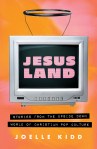 Jesusland: Stories from the Upside[-]Down World of Christian Pop Culture by Joelle Kidd [Aug. 12, ECW]: “Through nine incisive, honest, and emotional essays, Jesusland exposes the pop cultural machinations of evangelicalism, while giving voice to aughts-era Christian children and teens who are now adults looking back at their time measuring the length of their skirts … exploring the pop culture that both reflected and shaped an entire generation of young people.” Yep, that includes me! Looking forward to a mixture of Y2K and Jesus Freak. (NetGalley download)
 Somebody Is Walking on Your Grave: My Cemetery Journeys by Mariana Enríquez; translated from Spanish by Megan McDowell [25 Sept., Granta / Sept. 30, Hogarth]: I’ve enjoyed her creepy short stories, plus I love touring graveyards. “In 2013, when the body of a friend’s mother who was disappeared during Argentina’s military dictatorship was found in a common grave, she began to examine more deeply the complex meanings of cemeteries and where our bodies come to rest. In this vivid, cinematic book … Enriquez travels North and South America, Europe and Australia … [and] investigates each cemetery’s history, architecture, its dead (famous and not), its saints and ghosts, its caretakers and visitors.” (Edelweiss download, for Shelf Awareness review)
 Ghosts of the Farm: Two Women’s Journeys Through Time, Land and Community by Nicola Chester [30 Sept., Chelsea Green]: Nicola is our local nature writer and is so wise on class and countryside matters. On Gallows Down was her wonderful debut and, though I know very little about it, I’m looking forward to her second book. “This is the story of Miss White, a woman who lived in the author’s village 80 years ago, a pioneer who realised her ambition to become a farmer during the Second World War. … Moving between Nicola’s own attempts to work outdoors and Miss White’s desire to farm a generation earlier, Nicola explores the parallels between their lives – and the differences.”
 Death of an Ordinary Man by Sarah Perry [2 Oct., Vintage (Penguin)]: I’ve had a very mixed experience with Perry’s fiction, but a short bereavement memoir should be right up my street. “Sarah Perry’s father-in-law, David, died at home nine days after a cancer diagnosis and having previously been in the good health. The speed of his illness outstripped that of the NHS and social care, so the majority of nursing fell to Sarah and her husband. They witnessed what happens to the body and spirit, hour by hour, as it approaches death.”
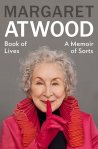 Book of Lives: A Memoir of Sorts by Margaret Atwood [4 Nov., Vintage (Penguin) / Doubleday]: It’s Atwood; ’nuff said, though I admit I’m daunted by the page count. “Raised by ruggedly independent, scientifically minded parents – entomologist father, dietician mother – Atwood spent most of each year in the wild forest of northern Quebec. … [She links] seminal moments to the books that have shaped our literary landscape. … In pages bursting with bohemian gatherings … and major political turning points, we meet poets, bears, Hollywood actors and larger-than-life characters straight from the pages of an Atwood novel.”
 Tigers Between Empires: The Improbable Return of Great Cats to the Forests of Russia and China by Jonathan C. Slaght [4 Nov., Allen Lane / Farrar, Straus and Giroux]: Slaght’s Owls of the Eastern Ice was one of the best books I read in 2022; he’s a top-notch nature and travel writer with an environmentalist’s conscience. After the fall of the Soviet Union, “scientists came together to found the Siberian Tiger Project[, which …] captured and released more than 114 tigers over three decades. … [C]haracters, both feline and human, come fully alive as we travel with them through the quiet and changing forests of Amur.” (NetGalley download)
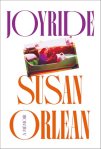 Joyride by Susan Orlean [6 Nov., Atlantic Books / Oct. 14, Avid Reader Press (Simon & Schuster)]: I’m a fan of Orlean’s genre-busting nonfiction, e.g. The Orchid Thief and The Library Book, and have always wanted to try more by her. “Joyride is her most personal book ever—a searching journey through finding her feet as a journalist, recovering from the excruciating collapse of her first marriage, falling head-over-heels in love again, becoming a mother while mourning the decline of her own mother, sojourning to Hollywood for films based on her work. … Joyride is also a time machine to a bygone era of journalism.”
 A Long Game: Notes on Writing Fiction by Elizabeth McCracken [Dec. 2, Ecco]: I’m not big on craft books, but will occasionally read one by an author I admire; McCracken won my heart with The Hero of This Book. “How does one face the blank page? Move a character around a room? Deal with time? Undertake revision? The good and bad news is that in fiction writing, there are no definitive answers. … McCracken … has been teaching for more than thirty-five years [… and] shares insights gleaned along the way, offering practical tips and incisive thoughts about her own work as an artist.” (Edelweiss download)
As a bonus, here are two advanced releases that I reviewed early:
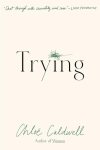 Trying: A Memoir by Chloe Caldwell [Aug. 5, Graywolf] (Reviewed for Foreword): Caldwell devoted much of her thirties to trying to get pregnant via intrauterine insemination. She developed rituals to ease the grueling routine: After every visit, she made a stop for luxury foodstuffs and beauty products. But then her marriage imploded. When she began dating women and her determination to become a mother persisted, a new conception strategy was needed. The book’s fragmentary style suits its aura of uncertainty about the future. Sparse pages host a few sentences or paragraphs, interspersed with wry lists.
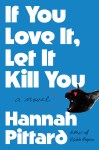 If You Love It, Let It Kill You by Hannah Pittard [July 15, Henry Holt] (Reviewed for Shelf Awareness): A quirky work of autofiction about an author/professor tested by her ex-husband’s success, her codependent family, and an encounter with a talking cat. Hana P. (or should that be Pittard?) relishes flouting the “rules” of creative writing. With her affectations and unreliability, she can be a frustrating narrator, but the metafictional angle renders her more wily than precious. The dialogue and scenes sparkle, and there are delightful characters This gleefully odd book is perfect for Miranda July and Patricia Lockwood fans.
I can also recommend:
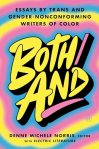
Both/And: Essays by Trans and Gender-Nonconforming Writers of Color, ed. Denne Michele Norris [Aug. 12, HarperOne / 25 Sept., HarperCollins] (Review to come for Shelf Awareness)
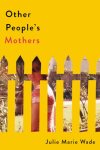
Other People’s Mothers by Julie Marie Wade [Sept. 2, Univ. of Florida Press] (Review pending for Foreword)
Which of these catch your eye? Any other books you’re looking forward to in this second half of the year?
The Best Books from the First Half of 2025
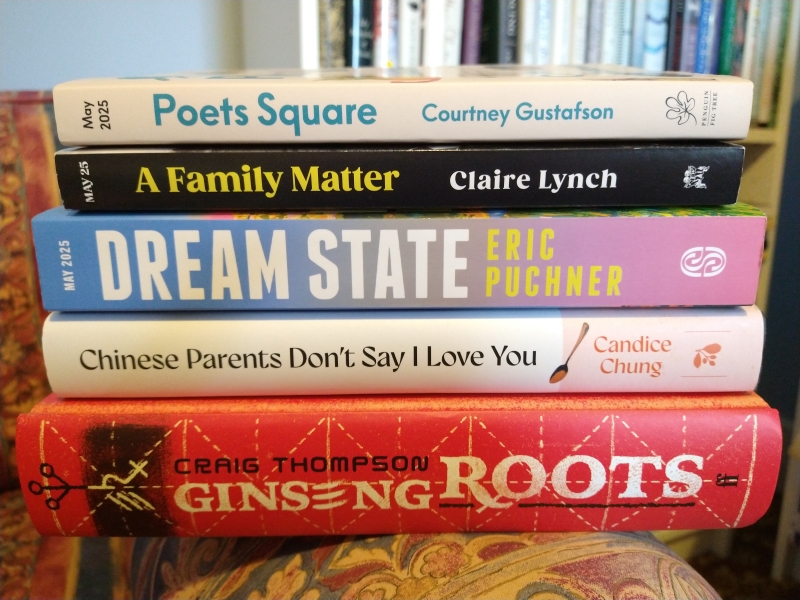
Hard to believe it, but it’s that time of year already. It’s the ninth year in a row that I’ve been making a first-half superlatives list. It remains to be seen how many of these will make it onto my overall best-of year rundown, but for now, these are my 16 favourite 2025 releases that I’ve read so far (representing the top ~21% of my current-year reading). Pictured below are the ones I read in print; all the others were e-copies. Links are to my full reviews.
Fiction
 Spent: A Comic Novel by Alison Bechdel: Alison has writer’s block and is consumed with anxiety about the state of the world. “Who can draw when the world is burning?” Then she has an idea for a book – or maybe a reality TV series – called $UM that will wean people off of capitalism. That creative journey is mirrored here. Through Alison’s ageing hippie friends and their kids, Bechdel showcases alternative ways of living. Even the throwaway phrases are hilarious. It’s a gleeful and zeitgeist-y satire, yet draws to a touching close.
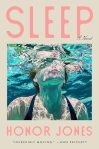 Sleep by Honor Jones: A breathtaking character study of a woman raising young daughters and facing memories of childhood abuse. Margaret’s 1990s New Jersey upbringing seems idyllic, but upper-middle-class suburbia conceals the perils of a dysfunctional family headed by a narcissistic, controlling mother. Jones crafts unforgettable, crystalline scenes. There are subtle echoes throughout as the past threatens to repeat. Reminiscent of Sarah Moss and Evie Wyld, and astonishing for its psychological acuity, this promises great things from Jones.
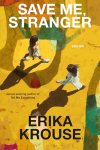 Save Me, Stranger by Erika Krouse: Twelve first-person narratives voiced by people in crisis, for whom encounters with strangers tender the possibility of transformation. In the title story, the narrator is taken hostage in a convenience store hold-up. Others are set in Thailand and Japan as well as various U.S. states. Krouse focuses on young women presented with dilemmas and often eschews tidy endings, leaving characters on the brink and allowing readers to draw inferences. Fans of Danielle Evans and Lauren Groff have a treat in store.
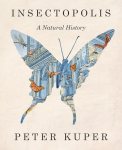 Insectopolis: A Natural History by Peter Kuper: “If insects were to vanish, the environment would collapse into chaos.” (E. O. Wilson) After an unspecified apocalypse, only insects remain. Group by group, they guide readers through an empty New York Public Library exhibit, interacting within and across species. It’s a sly blend of science, history, stories and silliness. There are interludes about insects in literature and unsung heroines of entomology. Informative and entertaining at once; what could be better? Welcome our insect overlords!
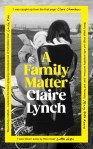 A Family Matter by Claire Lynch: In her research into UK divorce cases in the 1980s, Lynch learned that 90% of lesbian mothers lost custody of their children. Her earnest, delicate debut novel, which bounces between 2022 and 1982, imagines such a situation through close portraits of three family members. Maggie knew only that her mother, Dawn, abandoned her when she was little. Lynch’s compassion is equal for all three characters. This confident, tender story of changing mores and steadfast love is the new Carol for our times.
 Are You Happy? by Lori Ostlund: Nine short fictions form a stunning investigation into how violence and family dysfunction reverberate. “The Peeping Toms” and “The Stalker” are a knockout pair featuring Albuquerque lesbian couples under threat by male acquaintances. Characters are haunted by loss and grapple with moral dilemmas. Each story has the complexity and emotional depth of a novel. Freedom versus safety for queer people is a resonant theme in an engrossing collection ideal for Alice Munro and Edward St. Aubyn fans.
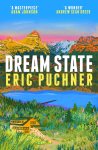 Dream State by Eric Puchner: It starts as a glistening romantic comedy about t Charlie and Cece’s chaotic wedding at a Montana lake house in summer 2004. First half the wedding party falls ill with norovirus, then the best man, Garrett, falls in love with the bride. The rest examines the fallout of this uneasy love triangle as it stretches towards 2050 and imagines a Western USA smothered in smoke from near-constant forest fires. Still, there are funny set-pieces and warm family interactions. Cross Jonathan Franzen and Maggie Shipstead.
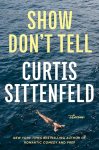 Show Don’t Tell by Curtis Sittenfeld: Sittenfeld’s second collection features characters negotiating principles and privilege in midlife. Split equally between first- and third-person perspectives, the 12 contemporary storylines spotlight everyday marital and parenting challenges. Dual timelines offer opportunities for hindsight on the events of decades ago. Nostalgic yet clear-eyed, these witty stories exploring how decisions determine the future are perfect for fans of Rebecca Makkai, Kiley Reid, and Emma Straub.
Nonfiction
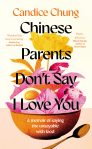 Chinese Parents Don’t Say I Love You: A memoir of saying the unsayable with food by Candice Chung: A vibrant essay collection spotlighting food and family. Chung reconnects with her semi-estranged parents by taking them along on restaurant review gigs for a Sydney newspaper. Fresh from a 13-year relationship with “the psychic reader,” she starts dating again and quickly falls in deep with “the geographer.” The essays range in time and style, delicately contrasting past and present, singleness and being partneredr.
 Poets Square: A Memoir in 30 Cats by Courtney Gustafson: Working for a food bank, trapped in a cycle of dead-end jobs and rising rents: Gustafson saw firsthand how broken systems and poverty wear people down. She’d recently started feeding and getting veterinary care for a feral cat colony in her Tucson, Arizona neighbourhood. With its radiant portraits of individual cats and its realistic perspective on personal and collective problems, this is a cathartic memoir and a probing study of building communities of care in times of hardship.
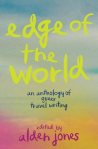 Edge of the World: An Anthology of Queer Travel Writing, ed. Alden Jones: Sixteen authors of diverse sexual orientations and genders contrast here and there and then and now as they narrate sensory memories and personal epiphanies. In these pieces, time abroad sparks clarity. There’s power in queer solidarity, whether one is in Berlin or Key West. Alex Marzano-Lesnevich’s piece is the highlight. A stellar anthology of miniature travelogues that are as illuminating about identity as they are about the places they feature.
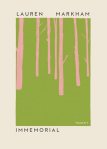 Immemorial by Lauren Markham: An outstanding book-length essay that compares language, memorials, and rituals as strategies for coping with climate anxiety and grief. The dichotomies of the physical versus the abstract and the permanent versus the ephemeral are explored. Forthright, wistful, and determined, the book treats grief as a positive, as “fuel” or a “portal.” Hope is not theoretical in this setup, but solidified in action. This is an elegant meditation on memory and impermanence in an age of climate crisis.
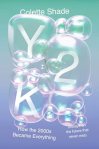 Y2K: How the 2000s Became Everything (Essays on the Future that Never Was) by Colette Shade: Shade’s debut collection contains 10 perceptive essays that contrast the promise and political pitfalls of “the Y2K Era” (1997–2008). The author recalls the thrill of early Internet use and celebrity culture. Consumerism was a fundamental doctrine but the financial crash prompted a loss of faith in progress. Outer space motifs, reality television, Smashmouth lyrics: it’s a feast of millennial nostalgia. Yet this hard-hitting work of cultural criticism, recommended to Jia Tolentino fans, reminisces only to burst bubbles.
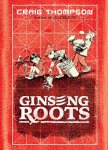 Ginseng Roots by Craig Thompson: A book about everything, by way of ginseng. It begins with Thompson’s childhood summers working on American ginseng farms with his siblings in Marathon, Wisconsin. As an adult, he travels first to Midwest ginseng farms and festivals and then through China and Korea to learn about the plant’s history, cultivation, lore, and medicinal uses. Roots are symbolic of a family story that unfolds in parallel. Both expansive and intimate, this is a surprising gem from one of the best long-form graphic storytellers.
Poetry
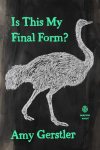 Is This My Final Form? by Amy Gerstler: This delightfully odd collection amazes with its range of voices and techniques. It leaps from surrealism to elegy as it ponders life’s unpredictability. The language of transformation is integrated throughout. Aging and the seasons are examples of everyday changes. Elsewhere, speakers fall in love with the bride of Frankenstein or turn to dinosaur urine for a wellness regimen. Monologues and sonnets recur. Alliteration plus internal and end rhymes create satisfying resonance.
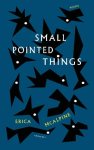 Small Pointed Things by Erica McAlpine: McAlpine’s second collection is full of flora and fauna imagery. The title phrase comes from the opening poem, “Bats and Swallows” – in the “gloaming,” it’s hard to tell the difference between the flying creatures. The verse is bursting with alliteration and end rhymes. She expands the view through conversations, theories and travel. What-ifs, consequences and regrets; mythical allusions, elegies and the concerns of motherhood. Just my sort of poetry: sweet on the ear, rooted in nature and the everyday.
Which of these grab your attention? What other 2025 releases should I catch up on?
Three on a Theme for Father’s Day: Holt Poetry, Filgate & Virago Anthologies
A rare second post in a day for me; I got behind with my planned cat book reviews. I happen to have had a couple of fatherhood-themed books come my way earlier this year, an essay anthology and a debut poetry collection. To make it a trio, I finished an anthology of autobiographical essays about father–daughter relationships that I’d started last year.
What My Father and I Don’t Talk About: Sixteen Writers Break the Silence, ed. Michele Filgate (2025)
This follow-up to Michele Filgate’s What My Mother and I Don’t Talk About is an anthology of 16 compassionate, nuanced essays probing the intricacies of family relationships.
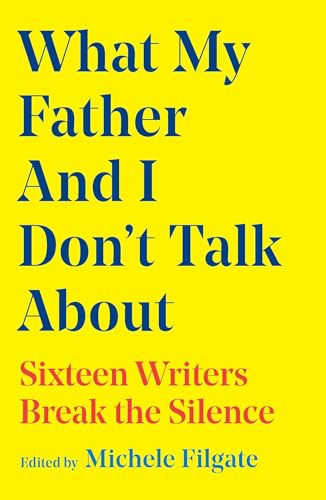 Understanding a father’s background can be the key to interpreting his later behavior. Isle McElroy had to fight for scraps of attention from their electrician father, who grew up in foster care; Susan Muaddi Darraj’s Palestinian father was sent to America to make money to send home. Such experiences might explain why the men were unreliable or demanding as adults. Patterns threaten to repeat across the generations: Andrew Altschul realizes his father’s hands-off parenting (he joked he’d changed a diaper “once”) was an outmoded convention he rejects in raising his own son; Jaquira Díaz learns that the depression she and her father battle stemmed from his tragic loss of his first family.
Some take the title brief literally: Heather Sellers dares to ask her father about his cross-dressing when she visits him in a nursing home; Nayomi Munaweera is pleased her 82-year-old father can escape his arranged marriage, but the domestic violence that went on in it remains unspoken. Tomás Q. Morín’s “Operation” has the most original structure, with the board game’s body parts serving as headings. All the essays display psychological insight, but Alex Marzano-Lesnevich’s—contrasting their father’s once-controlling nature with his elderly vulnerability—is the pinnacle.
Despite the heavy topics—estrangement, illness, emotional detachment—these candid pieces thrill with their variety and their resonant themes. (Read via Edelweiss)
Reprinted with permission from Shelf Awareness. (The above is my unedited version.)
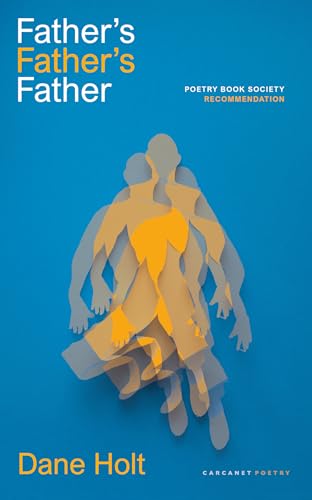
Father’s Father’s Father by Dane Holt (2025)
Holt’s debut collection interrogates masculinity through poems about bodybuilders and professional wrestlers, teenage risk-taking and family misdemeanours.
Your father’s father’s father
poisoned a beautiful horse,
that’s the story. Now you know this
you’ve opened the door marked
‘Family History’.
(from “‘The Granaries are Bursting with Meal’”)
The only records found in my grandmother’s attic
were by scorned women for scorned women
written by men.
(from “Tammy Wynette”)
He writes in the wake of the deaths of his parents, which, as W.S. Merwin observed, makes one feel, “I could do anything,” – though here the poet concludes, “The answer can be nothing.” Stylistically, the collection is more various than cohesive, with some of the late poetry as absurdist as you find in Caroline Bird’s. My favourite poem is “Humphrey Bogart,” with its vision of male toughness reinforced by previous generations’ emotional repression:
My grandfather
never told his son that he loved him.
I said this to a group of strangers
and then said, Consider this:
his son never asked to be told.
They both loved
the men Humphrey Bogart played.
…
There was
one thing my grandfather could
not forgive his son for.
Eventually it was his son’s dying, yes.
With thanks to Carcanet Press for the free e-copy for review.
Fathers: Reflections by Daughters, ed. Ursula Owen (1983; 1994)
“I doubt if my father will ever lose his power to wound me, and yet…”
~Eileen Fairweather
I read the introduction and first seven pieces (one of them a retelling of a fairy tale) last year and reviewed that first batch here. Some common elements I noted in those were service in a world war, Freudian interpretation, and the alignment of the father with God. The writers often depicted their fathers as unknown, aloof, or as disciplinarians. In the remainder of the book, I particularly noted differences in generations and class. Father and daughter are often separated by 40–55 years. The men work in industry; their daughters turn to academia. Her embrace of radicalism or feminism can alienate a man of conservative mores.
 Sometimes a father is defined by his emotional or literal absence. Dinah Brooke addresses her late father directly: “Obsessed with you for years, but blind – seeing only the huge holes you had left in my life, and not you at all. … I did so want someone to be a father to me. You did the best you could. It wasn’t a lot. The desire was there, but the execution was feeble.” Had Mary Gordon been tempted to romanticize her father, who died when she was seven, that aim was shattered when she learned how much he’d lied about and read his reactionary and ironically antisemitic writings (given that he was a Jew who converted to Catholicism).
I mostly skipped over the quotes from novels and academic works printed between the essays. There are solid pieces by Adrienne Rich, Michèle Roberts, Sheila Rowbotham, and Alice Walker, but Alice Munro knocks all the other contributors into a cocked hat with “Working for a Living,” which is as detailed and psychologically incisive as one of her stories (cf. The Beggar Maid with its urban/rural class divide). Her parents owned a fox farm but, as it failed, her father took a job as night watchman at a factory. She didn’t realize, until one day when she went in person to deliver a message, that he was a janitor there as well.
This was a rewarding collection to read and I will keep it around for models of autobiographical writing, but it now feels like a period piece: the fact that so many of the fathers had lived through the world wars, I think, might account for their cold and withdrawn nature – they were damaged, times were tough, and they believed they had to be an authority figure. Things have changed, somewhat, as the Filgate anthology reflects, though father issues will no doubt always be with us. (Secondhand – National Trust bookshop)
April Releases by Chung, Ellis, Gaige, Lutz, McAlpine and Rubin
April felt like a crowded publishing month, though May looks to be twice as busy again. Adding this batch to my existing responses to books by Jean Hannah Edelstein & Emily Jungmin Yoon plus Richard Scott, I reviewed nine April releases. Today I’m featuring a real mix of books by women, starting with two foodie family memoirs, moving through a suspenseful novel about a lost hiker, a sparse Scandinavian novella, and a lovely poetry collection with themes of nature and family, and finishing up with a collection of aphorisms. I challenged myself to write just a paragraph on each for simplicity and readability.

Chinese Parents Don’t Say I Love You: A memoir of saying the unsayable with food by Candice Chung
“to love is to gamble, sometimes gastrointestinally … The stomach is a simple animal. But how do we settle the heart—a flailing, skittish thing?”
 I got Caroline Eden (Cold Kitchen) and Nina Mingya Powles (Tiny Moons) vibes from this vibrant essay collection spotlighting food and family. The focus is on 2019–2021, a time of huge changes for Chung. She’s from Hong Kong via Australia, and reconnects with her semi-estranged parents by taking them along on restaurant review gigs for a Sydney newspaper. Fresh from a 13-year relationship with “the psychic reader,” she starts dating again and quickly falls in deep with “the geographer.” Sharing meals in restaurants and at home kindles closeness and keeps their spirits up after Covid restrictions descend. But when he gets a job offer in Scotland, they have to make decisions about their relationship sooner than intended. Although there is a chronological through line, the essays range in time and style, including second-person advice column (“Faux Pas”) and choose-your-own adventure (“Self-Help Meal”) segments alongside lists, message threads and quotes from the likes of Deborah Levy. My favourite piece was “The Soup at the End of the Universe.” Chung delicately contrasts past and present, singleness and being partnered, and different mental health states. The essays meld to capture a life in transition and the tastes and bonds that don’t alter.
With thanks to Elliott & Thompson for the free copy for review.
Chopping Onions on My Heart: On Losing and Preserving Culture by Samantha Ellis
 Ellis was distressed to learn that her refugee parents’ first language, Judeo-Iraqi Arabic, is in danger of extinction. Her own knowledge of it is piecemeal, mostly confined to its colourful food-inspired sayings – for example, living “eeyam al babenjan (in the days of the aubergines)” means that everything feels febrile and topsy-turvy. She recounts her family’s history with conflict and displacement, takes a Zoom language class, and ponders what words, dishes, and objects she would save on an imaginary “ark” that she hopes to bequeath to her son. Along the way, she reveals surprising facts about Ashkenazi domination of the Jewish narrative. “Did you know the poet [Siegfried Sassoon] was an Iraqi Jew?” His great-grandfather even invented a special variety of mango pickle. All of the foods described sound delicious, and some recipes are given. Ellis’s writing is enthusiastic and she braids the book’s various strands effectively. I wasn’t as interested in the niche history as I wanted to be, but I did appreciate learning about an endangered culture and language.
With thanks to Chatto & Windus (Vintage/Penguin) for the proof copy for review.
Heartwood by Amity Gaige
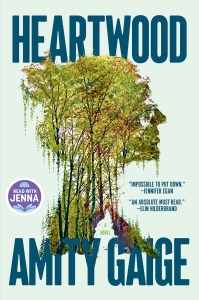 This was on my Most Anticipated list after how much I’d enjoyed Sea Wife when we read it for Literary Wives club. In July 2022, 42-year-old nurse Valerie Gillis, nicknamed “Sparrow,” goes missing in the Maine woods while hiking the Appalachian Trail. An increasingly desperate search ensues as the chances of finding her alive diminish with each day. The shifting formats – letters, transcripts, news reports, tip line messages – hold the interest. However, the chapters voiced by Lt. Bev, the warden who heads the mission, are much the most engaging, and it’s a shame that her delightful interactions with her sisters and nieces are so few and come so late. The third-person passages about Lena Kucharski in her Connecticut retirement home are intriguing but somehow feel like they belong in a different book. Gaige attempts to bring the threads together through three mother–daughter pairs, which struck me as heavy-handed. Mostly, this hits the sweet spot between mystery and literary fiction (apart from some red herrings), but because I wasn’t particularly invested in the characters, even Valerie, this fell a little short of my expectations. (Read via Edelweiss)
Wild Boar by Hannah Lutz (2016; 2025)
[Translated from Swedish by Andy Turner]
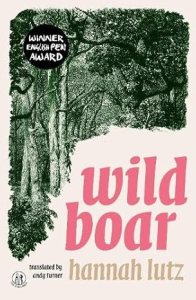 “I have seen them, the wild boar, they have found their way into my dreams!” Ritve travels from Finland to the forests of southern Sweden to track the creatures. Glenn, who appraises project applications for the council, has boar wander onto his property in the middle of the night. Mia, recipient of a council grant for her Recollections of a Sigga Child proposal, brings her ailing grandfather to record his memories for the local sound archive. As midsummer approaches, these three characters plus a couple of their partners will have encounters with the boar and with each other. Short sections alternate between their first-person perspectives. There is a strong sense of place and how migration poses challenges for both the human and more-than-human worlds. But it’s over before it begins. I found myself frustrated by how little happens, how stingily the characters reveal themselves, and how the boar, ultimately, are no more than a metaphor or plot device – a frequent complaint of mine when animals are central to a narrative. This might appeal to fans of Melissa Harrison’s fiction. In any case, I congratulate The Emma Press on their first novel, which won an English PEN Award.
With thanks to The Emma Press for the free copy for review.
Small Pointed Things by Erica McAlpine
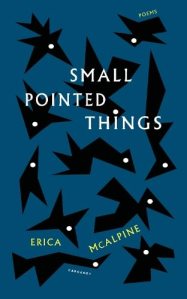 McAlpine is an associate professor of English at Oxford. Her second poetry collection is full of flora and fauna imagery. The title phrase comes from the opening poem, “Bats and Swallows” – in the “gloaming,” it’s hard to tell the difference between the flying creatures. The verse is bursting with alliteration and end rhymes, as just this first one shows (emphasis mine): “we couldn’t see / from where we stood in soft shadows / any signs that they were swallows // or bats”; “One seemed almost iridescent / as I tried to track / its crescent / flight across the hill.” Other poems consider moths, manatees, bees, swans and ladybirds; snowdrops and a cedar tree. Part II expands the view through conversations, theories and travel. What-ifs, consequences and regrets seep in. Parts III and IV incorporate mythical allusions, elegies and the concerns of motherhood. Sometimes the rhyme scheme adheres to a particular form. For instance, I loved “Triolet on My Mother’s 74th Birthday” – “You cannot imagine one season in another. … You cannot imagine life without your mother.” This is just my sort of poetry, sweet on the ear and rooted in nature and the everyday. A sample poem:
“Clementines”
New Year’s Day – another turning
of the sphere, with all we planned
in yesteryear as close to hand
as last night’s coals left unmanned
in the fire, still orange and burning.
It is the season for clementines
and citrus from Seville
and whatever brightness carries us until
leaves and petals once more fill
the treetops and the vines.
If ever you were to confess
some cold truth about love’s
dwindling, now would be the time – less
in order for things to improve
than for the half-bitter happiness
of peeling rinds
during mid-winter
recalling days that are behind
us and doors we cannot re-enter
and other doors we couldn’t find.
With thanks to Carcanet Press for the advanced e-copy for review.
Secrets of Adulthood: Simple Truths for Our Complex Lives by Gretchen Rubin
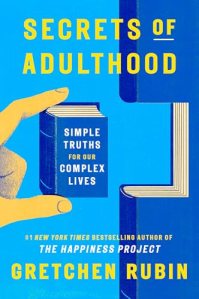 Rubin is one of the best self-help authors out there: Her books are practical, well-researched and genuinely helpful. She understands human nature and targets her strategies to suit different personality types. If you know her work, you’re likely aware of her fondness for aphorisms. “Sometimes, a single sentence can provide all the insight we need,” she believes. Here she collects her own pithy sayings relating to happiness, self-knowledge, relationships, work, creativity and decision-making. Some of the aphorisms were familiar to me through her previous books or her social media. They’re straightforward and sensible, distilling down to a few words truths we might be aware of but hadn’t truly absorbed. Like the great aphorists throughout history, Rubin relishes alliteration, repetition and contrasts. Some examples:
Accept yourself, and expect more from yourself.
I admire nature, and I am also nature. I resent traffic, and I am also traffic.
Work is the play of adulthood. If we’re not failing, we’re not trying hard enough.
Don’t wait until you have more free time. You may never have more free time.
This is not as meaty as her other work, and some parts feel redundant, but that’s the nature of the project. It would make a good bedside book for nibbles of inspiration. (Read via Edelweiss)
Which of these appeal to you?
April 3rd Releases by Emily Jungmin Yoon & Jean Hannah Edelstein
It’s not often that I manage to review books for their publication date rather than at the end of the month, but these two were so short and readable that I polished them off over the first few days of April. So, out today in the UK: a poetry collection about Asian American identity and environmental threat, and a memoir in miniature about how body parts once sexualized and then functionalized are missed once they’re gone.
Find Me as the Creature I Am by Emily Jungmin Yoon (2024)
 The Korean American poet’s second full-length work is broadly about loss experienced or expected – but also about the love that keeps us going in dire times. The free verse links personal bereavement with larger-scale tragedies, including climate grief. “All my friends who loved trees are dead” tells of Yoon’s grandmother’s death, while “I leave Asia and become Asian” remembers the murders of eight Asian spa workers in Atlanta in 2021. Violence against women, and the way the Covid-19 pandemic spurred further anti-Asian racism, are additional topics in the early part of the book. For me, Part III’s environmental poems resonated the most. Yoon reflects on the ways in which we are, sometimes unwittingly, affecting the natural world, especially marine ecosystems: “there is no ‘eco-friendly’ way to swim with dolphins. / We do not have to touch everything we love,” she writes. “I look at the ocean like it’s goodbye. … I look at your face / like it’s goodbye.” This is a tricky one to assess; while I appreciated the themes, I did not find the style or language distinctive. The collection reminded me of a cross between Rupi Kaur and Jenny Xie.
Published in the USA by Knopf on October 22, 2024. With thanks to Atlantic Books for the free copy for review.
Breasts: A Relatively Brief Relationship by Jean Hannah Edelstein
From my Most Anticipated list. I loved Edelstein’s 2018 memoir This Really Isn’t About You, and I regularly read her Substack. This micro-memoir in three essays explores the different roles breasts have played in her life: “Sex” runs from the day she went shopping for her first bra as a teenager with her mother through to her early thirties living in London. Edelstein developed early and eventually wore size DD, which attracted much unwanted attention in social situations and workplaces alike. (And not just a slightly sleazy bar she worked in, but an office, too. Twice she was groped by colleagues; the second time she reported it. But: drunk, Christmas party, no witnesses; no consequences.) “It felt like a punishment, a consequence of my own behavior (being a woman, having a fun night out, doing these things while having large breasts),” she writes.
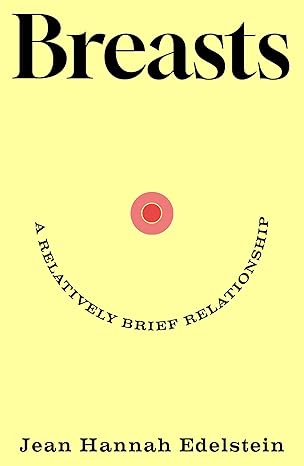 “Food” recounts how her perspective on her breasts changed when she had her two children via IVF – so they wouldn’t inherit Lynch syndrome from her – and initially struggled to breastfeed. “I wanted to experience the full utility of my breasts,” she explains, so, living in Brooklyn now, she consulted a lactation consultant known as “the breast whisperer.” Part 3 is “Cancer”: when Edelstein was 41, mammograms discovered Stage 0 cancer in one breast. “For so long I’d been subject to unwelcome opinions about the kind of person that I was because of the size of my breasts.” But now it was up to her. She chose a double mastectomy for balance, with simultaneous reconstruction by a plastic surgeon.
Although this is a likable book, the retelling is quite flat; better that than mawkish, certainly, but none of the experiences feel particularly unique. It’s more a generic rundown of what it’s like to be female – which, yes, varies to an extent but not that much if we’re talking about the male gaze. There wasn’t the same spark or wit that I found in Edelstein’s first book. Perhaps in the context of a longer memoir, I would have appreciated these essays more.
With thanks to Phoenix for the free copy for review.
Reading Ireland Month, Part II: Barrett, More Donoghue, O’Farrell x 2
My second set of contributions to Cathy’s Reading Ireland Month. Emma Donoghue also appeared in my first instalment of reviews. Today I’m featuring her latest novel, published just a couple of weeks ago, and taking a quick look at a few other Irish books I’ve read recently: a light-hearted debut featuring small-town criminals, and two by Maggie O’Farrell: a reread of her only nonfiction work to date (for book club), and her newest children’s book.
Wild Houses by Colin Barrett (2024)
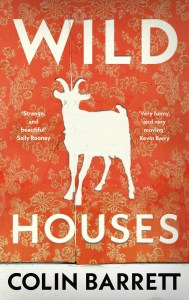 When Doll English is kidnapped by the Ferdia brothers in revenge for a huge loss on a drug deal, his girlfriend, mother and brother must go to unexpected lengths to set him free. There’s plenty of cursing and violence in this small-town crime caper, yet Barrett has a light touch; the dialogue, especially, is funny. The dialect is easy enough to decipher. Nicky, Doll’s girlfriend, lost both parents young and works in a hotel bar. She’s a strong character reminiscent of the protagonist in Trespasses. Overall, I felt that this was nicely written but that Barrett’s talent was somewhat wasted on a thin story. I’ve encountered similar plots in better books by Paul Murray and Donal Ryan. (Free from the publisher)
The Paris Express by Emma Donoghue
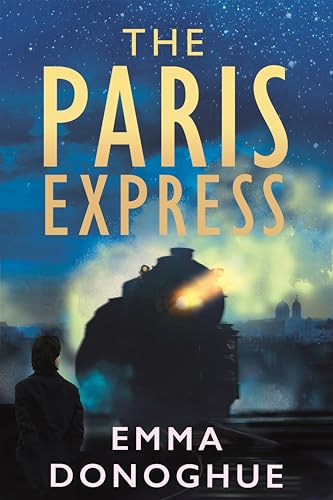 Inspired by a real-life disaster involving a train on the approach to Paris’s Montparnasse station in 1895. The Author’s Note at the end reveals the blend of characters included: people known to have been on that particular train, whether as crew or passengers; those who might have journeyed on it because they spent time in Paris at around that period (such as Irish playwright John Millington Synge); and those made up from scratch. It’s a who’s-who of historical figures, many of whom represent different movements or social issues, such as a woman medical student and an African American painter who can pass as white in certain circumstances. Donoghue clearly intends to encompass the entire social hierarchy, from a maid to a politician with a private carriage. She also crafts a couple of queer encounters.
The premise is appealing: a train hurtling toward catastrophe is in a sense a locked room, seeding much drama and intrigue. A young female radical is on board with a bomb, so all along you speculate about whether she’ll set it off and when. While I found the general thrust engaging, it was harder to develop interest in the large cast of characters. I also found the passages personifying the train (she “carries death in her belly”) hokey and thought that, as has sometimes been the case with Donoghue’s historical work, there’s too much research that’s there just for the sake of it, because she came across a fact she found fascinating and couldn’t bear to leave out (“These days every public building has three rubbish bins—one for the reclaiming of paper and cloth, the next for glass, ceramics, and oyster shells, and the last for perishables, which is where she drops the handkerchief.”). So this was enjoyable enough but not among her best.
With thanks to Picador for the proof copy for review.
I Am, I Am, I Am: Seventeen Brushes with Death by Maggie O’Farrell (2017)
 This was a reread for book club, and oh how brilliant it is. I’m more convinced than ever that the memoir-in-essays is a highly effective form because it focuses on themes or moments of great intensity and doesn’t worry about accounting for all the boring intermediate material. A few of these pieces feel throwaway, but together they form a vibrant picture of a life and also inspire awe at what the human body can withstand. No doubt on Wednesday we will each pick out different essays that resonated the most with us, perhaps because they run very close to our own experience. I imagine our discussion will start there – and with sharing our own NDEs. Stylistically, the book has a lot in common with O’Farrell’s fiction, which often employs the present tense and a complicated chronology. The present tense and a smattering of second person make the work immediate and invite readers to feel their way into her situations. Otherwise, my thoughts are as before – the last two essays are the pinnacle.
My original review from 2018:
We are, all of us, wandering about in a state of oblivion, borrowing our time, seizing our days, escaping our fates, slipping through loopholes, unaware of when the axe may fall.
O’Farrell captures fragments of her life through 17 essays on life-threatening illnesses and other narrow escapes she’s experienced. The pieces aren’t in chronological order and aren’t intended to be comprehensive. Instead, they crystallize the fear and pain of particular moments in time, and are rendered with the detail you’d expect from a scene in one of her novels. (Indeed, you can spot a lot of the real-life influences on her fiction, particularly This Must Be the Place – travels in China and Chile; eczema and stammering.)
She’s been mugged at machete point, has nearly drowned several times, had a risky first labour, and was almost the victim of a serial killer. (My life feels awfully uneventful by comparison!) But the best section of the book is its final quarter: an essay about her childhood encephalitis and its lasting effects, followed by another about her daughter’s extreme allergies. Only now, as a mother, can she understand how terrifying it must have been for her parents to wait at her side during days when she might not have survived. O’Farrell depicts parenthood better than any other author I can think of – letting those of us who haven’t experienced it do so vicariously. (Gift from my wish list)
My original rating (2018): 
My rating now: 
When the Stammer Came to Stay by Maggie O’Farrell (2024)
 This is actually her third children’s book, after Where Snow Angels Go (2020) and The Boy Who Lost His Spark (2022). All are illustrated by Daniela Jaglenka Terrazzini, who has a richly colourful and slightly old-fashioned style; she makes kids look as dignified as adults. The books are intended for slightly older children in that they’re on the longer side, have more words than pictures, and are more serious than average. They all weave in gentle magic as a way of understanding and coping with illness, a mental health challenge, or a disability.
When the Stammer Came to Stay is a perfect follow-on to I Am, I Am, I Am because it, too, draws on O’Farrell’s personal struggles. It’s the fable-like story of two sisters, Bea and Min, who share an attic room. The one is perfectly tidy; the other is a messy tomboy. When the stammer, pictured as a blob of silver ectoplasm above the shoulder, starts stealing Min’s words, they gather advice from their parents and the lodgers about how she can accept her new reality instead of fighting it or closing herself off by not speaking at all. The mycologist’s symbiosis metaphor is perhaps a bit too neat, but it contrasts with the impish connotations of the dibbuk, another useful parallel the girls discover. With this I’ve now read O’Farrell’s complete published works!
2025 Releases Read So Far, Including a Review of Aerth by Deborah Tomkins
I’ve gotten to 22 books with a 2025 publication date so far, most of them for paid reviews for Foreword Reviews or Shelf Awareness. I give review excerpts, links where available, and ratings below to pique your interest. (I’ll follow up on Friday with a list of my 25 Most Anticipated titles for the first half of the year!) First, though, it’s time to introduce you to the joint winner of the inaugural Weatherglass Novella Prize, as chosen by Ali Smith – I reviewed the other winner, Astraea by Kate Kruimink, as part of Novellas in November.
Aerth by Deborah Tomkins
At Weatherglass Books’ “The Future of the Novella” event in September (my write-up is here), I was intrigued to learn about this sci-fi novella in flash set on alternative Earths. The draft title was “First, Do No Harm,” referring to one of the five mantras for life on Aerth, a peaceful matriarchal planet that has been devastated by a pandemic. Magnus, the Everyman protagonist, is his parents’ only surviving offspring after their first nine children died of the virus. We meet Magnus in what seems an idyllic childhood of seasonal celebrations and his mother’s homemade cakes. But the weight of his parents’ expectations is too much, and after his relationship with Tilly disintegrates, he decides to fulfil a long-held ambition of becoming an astronaut and travelling to Urth. Here he starts off famous – a sought-after talking head in the media with the ear of the prime minister – but public opinion eventually turns against him.

Urth could be modelled on contemporary London: polluted, capitalist and celebrity-obsessed. But it would be oversimplifying to call Aerth a pre-industrial foil; although at first its lifestyle seems more wholesome, later revelations force us to question why it developed in this way. The planets are twins with potentially parallel environmental and societal trajectories and some exact counterparts; the hints about this “mirrorverse” are eerie. It all could have added up to an unsubtle allegory in which Aerth represents what we should aspire to and Urth symbolizes what we must resist, but Tomkins makes it more nuanced than that. Magnus’s homesickness when he fears he’s trapped on Urth is a heart-rending element, and the diverse styles and formats (such as lists, documents, and second-person sections) keep things interesting. The themes of parenting and loneliness are particularly potent.
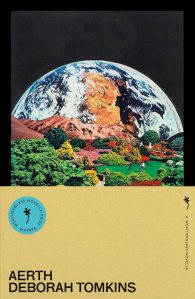 Tomkins first wrote this for the Bath Prize in 2018 and was longlisted. She initially sent the book out to science fiction publishers but was told that it wasn’t ‘sci-fi enough’. I can see how it could fall into the gap between literary fiction and genre fiction: though it’s set on other planets and involves space travel, its speculative nature is understated; it feels more realist. A memorable interrogation of longing and belonging, this novella ponders the value of individuals and their choices in the midst of inexorable planetary trajectories.
(Wowee, Aerth made it onto Eric of Lonesome Reader’s Top Ten list for 2024!)
With thanks to Weatherglass Books for the free copy for review. Aerth will be released on 25 January.
My top recommendations so far for 2025:
(in alphabetical order) All:
 Save Me, Stranger by Erika Krouse (Flatiron Books, January 21): These 12 first-person narratives are voiced by people in crisis, for whom encounters with strangers tender the possibility of transformation. In the title story, the narrator is taken hostage in a convenience store hold-up. Krouse frequently focuses on young women presented with dilemmas. In “The Pole of Cold,” Vera meets Theo, the son of the American weather researchers who died in the same Siberian plane crash that killed her reindeer herder father. Travel is a recurring element, with stories set in Thailand and Japan as well as various U.S. states. The book exhibits tremendous range, imagining a myriad places, minds, and situations. Krouse often eschews tidy endings, leaving characters on the brink and allowing readers to draw inferences about what they will decide. Fans of Danielle Evans and Lauren Groff have a treat in store.
 Immemorial by Lauren Markham (Transit Books, February 4): This outstanding book-length essay compares language, memorials, and rituals as strategies for coping with climate anxiety and grief. The dichotomies of the physical versus the abstract and the permanent versus the ephemeral are explored; the past, present, and future dance through the text. With language not changing at the pace of the climate, Markham turns to the “Bureau of Linguistical Reality” for help coining a new term for anticipatory ecological grief. The title is one candidate, “premation” another. Forthright, wistful, and determined, the book treats grief as a positive, as “fuel” or a “portal.” Hope is not theoretical in this setup, but solidified in action. In Markham’s case, becoming a parent embodied her trust in the future. Immemorial is an elegant meditation on memory and impermanence in an age of climate crisis.
Y2K: How the 2000s Became Everything (Essays on the Future that Never Was) by Colette Shade (out today from Dey Street Books!): Shade’s debut collection contains 10 perceptive essays that contrast the promise and political pitfalls of “the Y2K Era” (1997–2008). The author was an adolescent at the turn of the millennium and recalls the thrill of early Internet use and celebrity culture. Consumerism was a fundamental doctrine but the financial crash prompted a loss of faith in progress. It’s a feast of millennial nostalgia but also a hard-hitting work of cultural criticism.
Show Don’t Tell by Curtis Sittenfeld (Random House, February 25; Transworld, 27 February): Sittenfeld’s second collection features characters negotiating principles and privilege in midlife. The 12 stories spotlight everyday marital and parenting challenges. Dual timelines offer opportunities for hindsight on the events of decades ago. College and boarding school experiences, in particular, remain pivotal. The arbitrary nature of wealth and celebrity is a central theme. Warm, witty, and insightful.
Other 2025 releases:
(in publication date order)
 How Isn’t It Going? Conversations after October 7 by Delphine Horvilleur [trans. from the French by Lisa Appignanesi] (out today from Europa Editions!): There is by turns a stream of consciousness or folktale quality to the narrative as Horvilleur enacts 11 dialogues – some real and others imagined – with her late grandparents, her children, or even abstractions. She draws on history, scripture and her own life, wrestling with thoughts that come during insomniac early mornings. It’s a lament for the Jewish condition, and a warning of the continuing and insidious nature of antisemitism. But it’s not all mourning; there is sometimes a wry sense of humour that feels very Jewish.
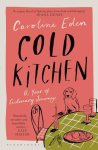 Cold Kitchen: A Year of Culinary Travels by Caroline Eden (Out in UK since May 2024; U.S. release: Bloomsbury, January 14): Eden cooks and writes in the basement kitchen of her Edinburgh apartment. When wanderlust strikes, she revisits favorite places via their cuisine. Her sumptuous fourth book journeys across Central Asia and Eastern Europe, harvesting memories and recipes. (Plus my Shelf Awareness interview)
 North of Ordinary by John Rolfe Gardiner (Bellevue Literary Press, January 14): I read 5 of 10 stories about young men facing life transitions and enjoyed the title one set at a thinly veiled Liberty University but found the rest dated in outlook; all have too-sudden endings.
 If Nothing by Matthew Nienow (Alice James Books, January 14): Straightforward poems about giving up addiction and seeking mental health help in order to be a good father.
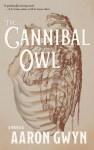 The Cannibal Owl by Aaron Gwyn (Belle Point Press, January 28): An orphaned boy is taken in by the Comanche in 1820s Texas in a brutal novella for fans of Cormac McCarthy.
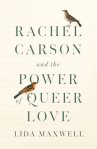 Rachel Carson and the Power of Queer Love by Lida Maxwell (Stanford University Press, January 28): Maxwell’s enthusiastic academic study reappraises scientist Rachel Carson’s motivations in light of ecological crisis and queer studies.
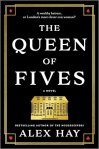 The Queen of Fives by Alex Hay (Graydon House, January 21; Headline, 30 January): Quinn Le Blanc, the latest in a dynasty of London con artists, resolves to pose as a debutante and marry a duke for his fortune – all in just five days in 1898. Like The Housekeepers, it’s a playful romp featuring strong female characters.
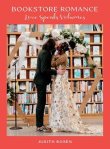 Bookstore Romance: Love Speaks Volumes by Judith Rosen (Brandeis University Press, February 1): A bibliophile’s time capsule and an enduring record of love and literary obsessions, this is a swoon-worthy coffee table book about couples who formalized their relationships in bookstores.
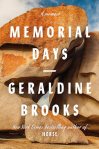 Memorial Days by Geraldine Brooks (Viking, February 4): This elegant bereavement memoir chronicles the sudden death of Brooks’s husband (journalist Tony Horwitz) in 2019 and her grief retreat to Flinders Island, Australia.
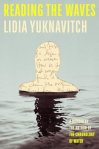 Reading the Waves by Lidia Yuknavitch (Riverhead, February 4): Yuknavitch’s bold memoir-in-essays focuses on pivotal scenes and repeated themes from her life as she reckons with trauma and commemorates key relationships. (A little too much repeated content from The Chronology of Water for me.)
 The Book of Flaco: The World’s Most Famous Bird by David Gessner (Blair, February 11): Gessner’s engaging nature book tells the story of the escaped Central Park Zoo Eurasian eagle-owl. It’s a touching tribute and a subtle challenge to reconsider human effects on wildlife.
 We Would Never by Tova Mirvis (Avid Reader Press, February 11): Mirvis’s fourth novel, inspired by real-life headlines, tells the taut story of an acrimonious divorce case gone horribly wrong. It explores the before and after of a murder, as the victim’s soon-to-be-ex-wife comes under suspicion and her family huddles around to protect her.
 The Café with No Name by Robert Seethaler [trans. from the German by Katy Derbyshire] (Europa Editions, 25 February): Set in 1960s and 1970s Vienna, where World War II still reverberates, this tender novel about a restaurateur’s interactions with acquaintances and customers meditates on the passage of time and bonds that last.
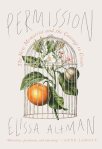 Permission: The New Memoirist and the Courage to Create by Elissa Altman (David R. Godine, March 4): Full of stories drawn from Altman’s life and other authors’ experience, this is an inspirational guide to defusing shame through self-disclosure and claiming the time and focus to write.
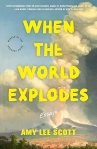 When the World Explodes: Essays by Amy Lee Scott (Mad Creek Books, March 6): Eleven inquisitive pieces set personal crises alongside natural disasters and gun violence. Scott was adopted as a baby from Korea; motherhood and adoption are potent themes across the book.
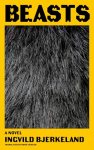 Beasts by Ingvild Bjerkeland [trans. from the Norwegian by Rosie Hedger] (Levine Querido, April 1): In this chilling young adult novella, a teenager tries to keep his little sister safe and reunite with their father in a hazardous postapocalyptic world.
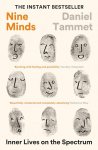 Nine Minds: Inner Lives on the Spectrum by Daniel Tammet (Out in UK since July 2024; U.S. release: The Experiment, April 1): A biographical mosaic of neurodivergence built of stories of individuals whose struggles and achievements defy the clichés surrounding autism. (Notable inclusions: actor Dan Aykroyd, novelist Naoise Dolan.)
Will you look out for one or more of these?
Any other 2025 reads you can recommend?
 Bookish Beck = Rebecca Foster. American transplant to England. Freelance proofreader and book reviewer.
