20 Books of Summer: Bourdain, Ozeki and More
Over halfway through the summer and my numbers are looking poor. It’s not that I’m not reading a ton – in general, I am – it’s just that I’m having trouble finishing any foodie books. I’m in the middle of two food-related memoirs plus Cakes and Ale by W. Somerset Maugham, and have recently started buddy-reading Mother’s Milk by Edward St Aubyn with Annabel, so more reviews will be along eventually, but I predict August will be a scramble.
Today I review an in-your-face tell-all about the life of a chef, and a novel set between Japan and the United States that exposes the seamy side of meat production. A lite road trip and an iffy California classic follow as bonuses.
Kitchen Confidential: Adventures in the Culinary Underbelly by Anthony Bourdain (2000)
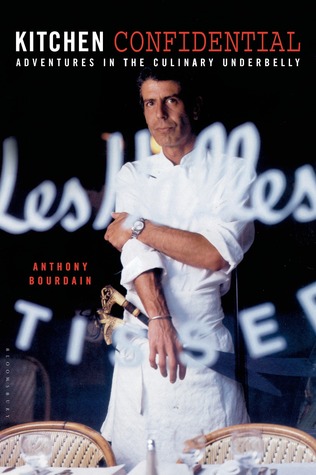 (20 Books of Summer, #5) “Get that dried crap away from my bird!” That random line about herbs is one my husband and I remember from a Bourdain TV program and occasionally quote to each other. It’s a mild curse compared to the standard fare in this flashy memoir about what really goes on in restaurant kitchens. His is a macho, vulgar world of sex and drugs. In the “wilderness years” before he opened his Les Halles restaurant, Bourdain worked in kitchens in Baltimore and New York City and was addicted to heroin and cocaine. Although he eventually cleaned up his act, he would always rely on cigarettes and alcohol to get through ridiculously long days on his feet.
From “Appetizer” to “Coffee and a Cigarette,” the book is organized like a luxury meal. Bourdain charts his development as a chef, starting with a childhood summer in France during which he ate vichyssoise and oysters for the first time and learned that food “could be important … an event” and describing his first cooking job in Provincetown and his time at the Culinary Institute of America. He also discusses restaurant practices and hierarchy, and home cook cheats and essentials. (I learned that you should never order fish in a restaurant on a Monday – it’ll be left over from Thursday’s order.) The pen portraits of his crazy sous-chef and baker are particularly amusing; other subjects include a three-star chef he envies and the dedicated Latino immigrants who are the mainstay of his kitchen staff.
My dad is not a reader but he is a foodie, and he has read Bourdain’s nonfiction (and watched all his shows), so I felt like I was continuing a family tradition in reading this. I loved my first taste of Bourdain’s writing: he’s brash, passionate, and hilariously scornful of celebrity chefs and vegetarianism (“the enemy of everything good and decent in the human spirit, an affront to all I stand for, the pure enjoyment of food”). Being in charge of a restaurant sounds manic, yet you can see why some would find it addictive. How ironic, though, to find a whole seven references to suicide in this book. Sometimes he’s joking; sometimes he’s talking about chefs he’s heard about who couldn’t take the pressure. Eighteen years after this came out, he, too, would kill himself.
(See also this article about rereading Bourdain in the 20th anniversary year of Kitchen Confidential.)
Source: Local swap shop (free)
My rating: 
(These two are linked by a late chapter in the Bourdain, “Mission to Tokyo,” in which he advises on a new Les Halles offshoot in Japan and gorges himself on seafood delights.)
My Year of Meats by Ruth Ozeki (1998)
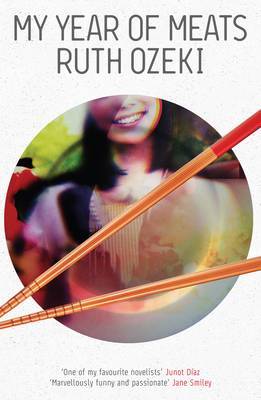 (20 Books of Summer, #6) I don’t know what took me so long to read another novel by Ruth Ozeki after A Tale for the Time Being, one of my favorite books of 2013. This is nearly as fresh, vibrant and strange. Set in 1991, it focuses on the making of a Japanese documentary series, My American Wife, sponsored by a beef marketing firm. Japanese American filmmaker Jane Takagi-Little is tasked with finding all-American families and capturing their daily lives – and best meat recipes. The traditional values and virtues of her two countries are in stark contrast, as are Main Street/Ye Olde America and the burgeoning Walmart culture.
There is a clear message here about cheapness and commodification, but Ozeki filters it through the wrenching stories of two women with fertility problems: Jane, whose reproductive system was damaged by DES, a synthetic estrogen her mother took during pregnancy to prevent a miscarriage; and Akiko, the wife of Jane’s boss, who struggles with an eating disorder and domestic violence.
Jane starts sneaking controversial subjects into her shoots: a lesbian couple, a family formed by interracial adoption, and a five-year-old who has already undergone puberty due to the hormones used on her family’s cattle feedlot. What is “natural,” and what gets branded alien or invasive? From the kudzu that strangles the South to a murdered Japanese exchange student, Ozeki probes the related issues of nativism and racism. Her two protagonists’ stories – one in the first person; the other in the third person – come together in a surprising manner as Jane decides that she has a more pressing obligation than creating a diverting television show.
This is a bold if at times discomforting novel. At first it brought to mind the exaggerated comedy of Julian Barnes’s England, England and Jane Smiley’s Moo, but as it grew darker it reminded me more of Han Kang’s The Vegetarian. It’s tricky, when a work of fiction tackles ethical or environmental matters, to balance storytelling and consciousness-raising, but Ozeki pulls it off with style. The only aspect that didn’t mean much to me, perhaps simply because of my unfamiliarity, was the excerpts from The Pillow Book of Shōnagon. How sad to think that I only have one more Ozeki awaiting me, All Over Creation. She averages a book every 5‒10 years; we can only hope that another is on the way soon.
Source: Charity shop
My rating: 
I picked up another two food-adjacent books that didn’t work for me, though I ended up skimming them to the end.
America Unchained: A Freewheeling Roadtrip in Search of Non-Corporate USA by Dave Gorman (2008)
 (20 Books of Summer, #7) I read the first couple of chapters, in which he plans his adventure, and then started skimming. I expected this to be a breezy read I would race through, but the voice was neither inviting nor funny. I also hoped to find more about non-chain supermarkets and restaurants – that’s why I put this on the pile for my foodie challenge in the first place – but, from a skim, it mostly seemed to be about car trouble, gas stations and fleabag motels. The only food-related moments are when Gorman (a vegetarian) downs three fast food burgers and orders of fries in 10 minutes and, predictably, vomits them all back up; and when he stops at an old-fashioned soda fountain for breakfast.
Source: Free bookshop
Tortilla Flat by John Steinbeck (1935)
 (20 Books of Summer, #8) I read the first 25 pages and then started skimming. This is a story of a group of friends – paisanos, of mixed Mexican, Native American and Caucasian blood – in Monterey, California. During World War I, Danny serves as a mule driver and Pilon is in the infantry. When discharged from the Army, they return to Tortilla Flat, where Danny has inherited two houses. He lives in one and Pilon is his tenant in the other (though Danny will never see a penny in rent). They’re a pair of loveable scamps, like Huck Finn all grown up, stealing wine and chickens left and right.
Steinbeck novels seem to fall into two camps for me. This is one of his inconsequential, largely unlikable novellas (like The Pearl and The Red Pony, which I studied in school – I’m lucky they didn’t put me off Steinbeck forever), whereas The Grapes of Wrath and East of Eden are masterful. It may also have something to do with the slight air of condescension towards characters of a different race: Steinbeck renders their speech with “thee” and “thou,” trying to imitate a Romance language’s informal pronouns, but it feels dated and alienating.
Source: Free bookshop
20 Books of Summer 2020 (Food & Drink Theme): #1 Tiny Moons
It’s my third year participating in Cathy’s 20 Books of Summer challenge. Two years ago I read only books by women; last year I did an animal theme. This year, my 20 books will all tie into a food and drink theme. This includes recognizable foodie lit, memoirs and travel books that have a food element (such as Dave Gorman seeking out non-chain restaurants in America Unchained and Alice Steinbach taking French cooking lessons in Educating Alice), and fiction or nonfiction works that just happen to have a food word in the title. To avoid being grisly, I’ll try not to include any animal books left over from last year!


I have around 30 books to choose from, including these slightly cheaty selections whose authors’ names bring food to mind.

The one constant in my three summers’ selections is that all the books have to be from my own shelves – it’s my way of trying to tackle my hundreds-strong physical TBR. I also have a few classics and two rereads (Dunn and Kingsolver) in the mix here, which would contribute to other ongoing reading goals.
I’m kicking off #20BooksofSummer20 with a quick win, only 85 pages long and read in a single sitting this morning. It was a great start to the project and had my mouth watering for elevenses two hours early…
Tiny Moons: A Year of Eating in Shanghai by Nina Mingya Powles (2020)
This lovely pamphlet of food-themed essays arose from a blog Powles kept while in Shanghai on a one-year scholarship to learn Mandarin. She’d lived in the city as a teen, attending an international high school, so it was somewhat familiar – yet she struggled with homesickness. From one winter to another, she explores the city’s culinary offerings and muses on the ways in which food is bound up with her memories of people and places.
As a child in a mixed-race household in New Zealand, she only knew food words in her Malaysian Chinese mother’s native languages. “My earliest childhood impressions are ones where I am just about to eat something,” she writes. That something might have been Western or Asian food – they coexist in the book (most delightfully on a long-distance train ride she takes: you can buy noodles and dried chicken feet, but also Oreos and Pringles).

As a student in Shanghai, she has dumplings and soup for lunch almost every day. She could live off of spring onion oil noodles and pineapple buns (named for their cross-hatched top rather than their flavour). Messy foods, greasy foods, comfort foods – “It is tiring to be a woman who loves to eat in a society where hunger is something not to be satisfied but controlled.” She and her classmates know that their time here is limited, and they’re going to make the most of these flavours you can’t find every day.
Two sets of cooking lessons add dishes like sticky rice dumplings and stir-fried aubergines to her repertoire. She learns about the traditional foods associated with Chinese festivals, and about the country’s north/south divides: wheat noodles versus rice and thick-skinned dumplings versus thin ones. Street food and snacks abound, including savoury and sweet buns, filled pancakes, tofu bowls and mooncakes.
This is a book about how food can help you be at home, despite loneliness or a language barrier: “In any city anywhere, if there’s a Chinatown I’ll feel at home,” Powles concludes. I love how she uses the senses – not just taste, but also smell and sight – to recreate important places in her life. A fresh banana fritter eaten at her grandparents’ home in Borneo brings it all back, with the senses mingling synaesthetically: “I taste tropical heat. I can taste the slow hours spent in the back garden beneath the mango tree … I taste the fierce sun on my neck”.
My rating:
Readalikes: Shark’s Fin and Sichuan Pepper: A Sweet-Sour Memoir of Eating in China by Fuchsia Dunlop & Two Trees Make a Forest: On Memory, Migration and Taiwan by Jessica J. Lee
Note: Last year Nina Mingya Powles won the inaugural Nan Shepherd Prize for underrepresented voices in nature writing, earning a publishing contract with Canongate for a nature/travel memoir that will be released in August 2021. I’m looking forward to it already.
Tiny Moons was published on February 27th. My thanks to Emma Dai’an Wright of The Emma Press, a small press based in Birmingham, UK, for the free copy for review. (Emma also illustrated the book!)
Are you joining in the summer reading challenge? What’s the first book on the docket?
Do you spy any favorites on my piles? Which ones should I be sure to read?
Three May Releases: Climate Change, a Son’s Elegy, and Sexual Fluidity
I’m still averaging four new releases per month: a nicely manageable number. In addition to Lily King’s Writers & Lovers, in May I’ve read a novel about eco-anxiety and marital conflict, a memoir of losing a mother to grief and dementia, and an account of a shift in sexuality. I had a somewhat mixed reaction to all three books, but see if one or more catches your eye anyway.
When the Lights Go Out by Carys Bray
Perhaps if this had come out two or three years ago, it could have felt fresh. As it is, it felt like a retread of familiar stories about eco-grief and -anxiety among the middle classes (such as Weather and Unsheltered). Emma Abram is an average suburban mother of two in the north of England, upcycling fabrics and doing her best with other little green initiatives around the house since she got laid off from her job when the local library closed. She feels guilty a lot of the time, but what else can she do?
Nero fiddled while Rome burned; she will sew while the polar ice melts and the seas surge.
She couldn’t un-birth the children, un-earth the disposable nappies or un-plumb the white goods.
 Such sentiments also reminded me of the relatable, but by no means ground-breaking, contents of Letters to the Earth.
Emma’s husband Chris, though, has taken things to an extreme: as zealous as he once was about his childhood faith, he now is about impending climate change. One day, a week or so before Christmas, she is embarrassed to spot him by the roadside in town, holding up a signboard prophesying environmental doom. “In those days, Chris had been spreading the Good News. Now he is spreading the Bad News.” He thinks cold-weather and survivalist gear makes appropriate gifts; he raises rabbits for meat; he makes Emma watch crackpot documentaries about pandemic preparation. (Oh, the irony! I was sent this book in December.)
Part of the problem was to do with my expectations: from the cover and publicity materials I thought this was going to be a near-future speculative novel about a family coping with flooding and other literal signs of environmental apocalypse. Instead, it is a story about a marriage in crisis. (I cringed at how unsubtly this line put it: “The climate of her marriage [has] been changing, and she has been in denial about it for a long time.”) It is also, like Unless, about how to relate to a family member who has, in your opinion, gone off the rails.
Nothing wrong with those themes, of course, but my false assumptions meant that I spent well over 200 pages waiting for something to happen, thinking that everything I had read thus far was backstory and character development that, in a more eventful novel, would have been dispatched within, say, the first 40 pages. I did enjoy the seasonal activity leading up to Christmas Eve, and the portrayal of Chris’s widowed, pious mother. But compared to A Song for Issy Bradley, one of my favorite books of 2014, this was a disappointment.
My thanks to Hutchinson for the proof copy for review. This came out in e-book and audio on May 7th but the print edition has been delayed until November 12th.
Mother: A Memoir by Nicholas Royle
“A memoir is about what survives. But it is also about what is enigmatic and irretrievable. Cryptic and unknown.”
 A few years ago I read Royle’s An English Guide to Birdwatching, one of the stranger novels I’ve ever come across (it brings together a young literary critic’s pet peeves, a retired couple’s seaside torture by squawking gulls, the confusion between the two real-life English novelists named Nicholas Royle, and bird-themed vignettes). It was joyfully over-the-top, full of jokes and puns as well as trenchant observations about modern life.
I found that same delight in the vagaries of language and life in Mother: A Memoir. Royle’s mother, Kathleen, had Alzheimer’s and died in 2003. At least to start with, she was aware of what was happening to her: “I’m losing my marbles,” she pronounced one day in the kitchen of the family home in Devon. Yet Royle pinpoints the beginning of the end nearly two decades earlier, when his younger brother, Simon, died of a rare cancer. “From that death none of us recovered. But my mother it did for. She it by degrees sent mad.”
In short, titled sections that function almost like essays, Royle traces his mother’s family history and nursing career, and brings to life her pastimes and mannerisms. She passed on to Royle, a professor of English and creative writing at the University of Sussex, a love of literature and of unusual words and sayings. She was often to be found with a crossword puzzle in front of her, she devoured books (devoting a whole summer to the complete works to date of Doris Lessing, for instance), and she gave advice on her son’s early stories.
The narrative moves back and forth in time and intersperses letters, lists and black-and-white photographs. Royle often eschews punctuation and indulges in wordplay. “These details matter. The matter of my mater. Matador killing metaphor.” I found that I remained at arm’s length from the book – admiring it rather than becoming as emotionally engaged with it as I wanted to be – but it’s certainly not your average memoir, and it’s always refreshing to find (auto)biographical work that does something different.
My thanks to Myriad Editions for the free copy for review.
The Fixed Stars by Molly Wizenberg
Wizenberg is the author of two terrific food-themed memoirs. I particularly loved A Homemade Life, which chronicles the death of her father Burg from cancer, her time living in Paris, building a new life in Seattle, starting her famous food blog (Orangette), and meeting her husband, Brandon. Her follow-up, Delancey, was about the ups and downs of them opening a pizza restaurant and bar in Seattle while she was pregnant with June.
By contrast, The Fixed Stars was an uncomfortable read in more ways than one. For one thing, it unpicks the fairy tale of what had looked like a pretty ideal marriage and entrepreneurial partnership. It turns out Wizenberg wasn’t wholly on board with their little restaurant empire and found the work overwhelming. It was all Brandon’s dream, not hers. (She admits to these facts in Delancey, but it was the success, not the doubt, that I remembered.)
And then, in the summer of 2015, Wizenberg was summoned for jury duty and found herself fascinated by one of the defense attorneys, a woman named Nora who wore a man’s suit and a butch haircut. The author had always considered herself straight, had never been attracted to a woman before, but this crush wouldn’t go away. She and Brandon tried an open marriage so that she could date Nora and he could see other people, too, but it didn’t work out. Brandon didn’t want her to fall in love with anyone else, but that was just what was happening.
 Wizenberg announced her coming-out and her separation from Brandon on her blog, so I was aware of all this for the last few years and via Instagram followed what came next. I knew her new spouse is a non-binary person named Ash who was born female but had top surgery to remove their breasts. (At first I was assumed Nora was an alias for Ash, but they are actually different characters. After things broke down with Nora, a mutual friend set her up with Ash.) The other source of discomfort for me here was the explicit descriptions of her lovemaking with Nora – her initiation into lesbian sex – though she draws a veil over this with Ash.
I’m not sure if the intimate details were strictly necessary, but I reminded myself that a memoir is a person’s impressions of what they’ve done and what has happened to them, molded into a meaningful shape. Wizenberg clearly felt a need to dig for the why of her transformation, and her answers range from her early knowledge of homosexuality (an uncle who died of AIDS) to her frustrations about her life with Brandon (theirs really was a happy enough marriage, and a markedly amicable divorce, but had its niggles, like any partnership).
I appreciated that, ultimately, Wizenberg leaves her experience unlabeled. She acknowledges that hers is a messy story, but an honest one. While she entertains several possibilities – Was she a closeted lesbian all along? Or was she bisexual? Can sexual orientation change? – she finds out that sexual fluidity is common in women, and that all queer families are unique. An obvious comparison is with Maggie Nelson’s The Argonauts, which is a bit more profound and original. But the mourning for her marriage and the anguish over what she was doing to her daughter are strong elements alongside the examination of sexuality. The overarching metaphor of star maps is effective and reminded me of Constellations by Sinéad Gleeson.
There were points in the narrative where I was afraid the author would resort to pat answers about what was ‘meant to be’ or to depicting villains versus heroic actions, but instead she treats this all just as something that happened and that all involved coped with as best they could, hopefully making something better in the end. It’s sensitively told and, while inevitably different from her other work, well worth reading for anyone who’s been surprised where life has led.
I read an advanced e-copy from Abrams Press via Edelweiss. A Kindle edition came out on May 12th, but the hardback release has been pushed back to August 4th.
What recent releases can you recommend?
April Releases: Motherhood, Medicine, Wine … And an Aardvark
I’m averaging four new releases a month: a nicely manageable number. In April I read a memoir about a mother’s dementia, a bizarre little novel about a stuffed aardvark linking two centuries, a history of medicine in graphic novel form, and a sommelier’s memoir.
My top recommendation for the month is:
What We Carry by Maya Shanbhag Lang
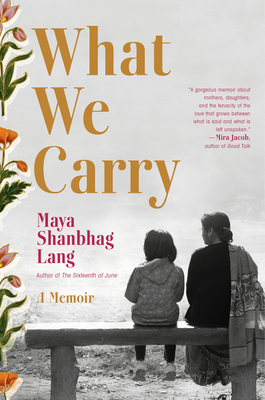 Maya Lang’s novel The Sixteenth of June* was one of my top three novels of 2014, so I was eager to read her next book, a forthright memoir of finding herself in the uncomfortable middle (the “sandwich generation”) of three generations of a female family line. Her parents had traveled from India to the USA for her mother’s medical training and ended up staying on permanently after she became a psychiatrist. Lang had always thought of her mother as a superwoman who managed a career alongside parenthood, never asked for help, and reinvented herself through a divorce and a career change.
When Lang gave birth to her own daughter, Zoe, this model of self-sufficiency mocked her when she had postpartum depression and needed to hire a baby nurse. It was in her daughter’s early days, just when she needed her mother’s support the most, that her mother started being unreliable: fearful and forgetful. Gradually it became clear that she had early-onset Alzheimer’s. Lang cared for her mother at home for a year before making the difficult decision to see her settled into a nearby nursing home.
Like Elizabeth Hay’s All Things Consoled, this is an engaging, bittersweet account of obligation, choices and the secrets that sometimes come out when a parent enters a mental decline. I especially liked how Lang frames her experiences around an Indian folktale of a woman who enters a rising river, her child in her arms. She must decide between saving her child or herself. Her mother first told this story soon after Zoe’s birth to acknowledge life’s ambiguity: “Until we are in the river, up to our shoulders—until we are in that position ourselves, we cannot say what the woman will do. We must not judge. That is the lesson of the story. Whatever a woman decides, it is not easy.” The book is a journey of learning not to judge her mother (or herself), of learning to love despite mistakes and personality changes. 
*One for me to reread in mid-June!
Published by Dial Press on the 28th. I read an e-copy via NetGalley.
Full disclosure: Maya and I are Facebook friends.
Other April releases to look out for:
(All:  )
)
Enter the Aardvark by Jessica Anthony
 On a scoreboard of the most off-the-wall, zany and fun novels I’ve read, this one would be right up there with Ned Beauman’s Boxer, Beetle and Alex Christofi’s Glass. The two story lines, one contemporary and one set in the 1870s, are linked by a taxidermied aardvark that makes its way from Namibia to the Washington, D.C. suburbs by way of Victorian England.
The aardvark was collected by naturalist Sir Richard Ostlet and stuffed by Titus Downing, his secret lover. Ostlet committed suicide in Africa, but his wife could still sense him walking up and down outside her London home. In the present day, Republican congressman Alexander Paine Wilson, who emulates Ronald Reagan in all things, gets a FedEx delivery of a taxidermied aardvark – an apparent parting gift from Greg Tampico before the latter committed suicide. To keep his gay affair from becoming public knowledge, Wilson decides it’s high time he found himself a trophy wife. But the damned aardvark keeps complicating things in unexpected ways.
A scene where a police officer stops Wilson for texting and driving and finds the stuffed aardvark in the back of his SUV had me laughing out loud (“Enter the aardvark, alight on its mount. Enter the aardvark, claw raised, head covered with a goddamned gourmet $22 dish towel that suddenly looks incredibly suspicious hanging over the head of an aardvark, like it’s an infidel”). History repeats itself amusingly and the aardvark is an entertaining prop, but Wilson is too obviously odious, and having his narrative in the second person doesn’t add anything. This is not a debut novel but reads like one: full of bright ideas, but falling a bit short in the execution.
Published by Doubleday on the 23rd. I won a proof copy in a Twitter giveaway.
Medicine: A Graphic History by Jean-Noël Fabiani
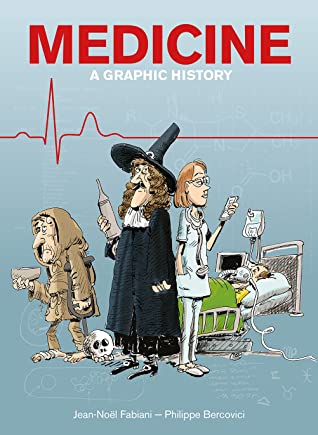 [Illustrated by Philippe Bercovici; translated from the French by Edward Gauvin]
From prehistory to nanotechnology, this is a thorough yet breezy survey of what people have learned about the body and how to treat it. (In approach it reminded me most of another SelfMadeHero graphic novel I reviewed last year, ABC of Typography.) Some specific topics are the discovery of blood circulation, the development of anesthesia, and the history of mental health treatment.
Fabiani, a professor as well as the head of cardiac surgery at Georges Pompidou European Hospital in Paris, focuses on the key moments when ideas became testable theories and when experiments gave groundbreaking results. While he provided the one-page introduction to each chapter and the expository writing at the head of each comic pane, I suspect it was illustrator Philippe Bercovici who added most of the content in the speech bubbles, including plenty of jokes (especially since Fabiani thanks Bercovici for bringing his talent and humor to the project).
This makes for a lighthearted book that contains enough detail so that you feel like you are still getting the full story. Unsurprisingly, I took the most interest in chapters entitled The Great Epidemics and A Few Modern Plagues. I would especially recommend this to teenagers with an interest in medicine.
Published by SelfMadeHero on the 9th. My thanks to the publisher for the free copy for review.
Wine Girl by Victoria James
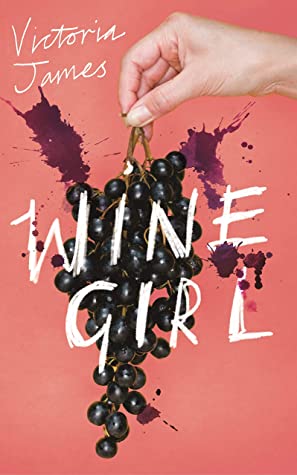 In 2012, at age 21, Victoria James became America’s youngest certified sommelier. Still in her twenties, she has since worked in multiple Michelin-starred restaurants in New York City and became the only American female to win the Sud de France Sommelier Challenge. But behind all the competition wins, celebrity sightings, and international travel for wine festivals and conferences is a darker story.
This is a tell-all about a toxic restaurant culture of overworked employees and casual sexism. James regularly worked 80-hour weeks in addition to her wine school studies, and suffered multiple sexual assaults. In addition, sexual harassment was common – even something as seemingly harmless as the title epithet a dismissive diner launched at her when he ordered a $650 bottle of wine for his all-male table and then told her it was corked and had to be replaced. “Wine girl” was a slur against her for her age, her gender and her presumed lack of experience, even though by that point she had an encyclopedic knowledge of wine varieties and service.
That incident from the prologue was my favorite part of the book; unfortunately, nothing that came afterwards really lived up to it. The memoir goes deep into James’s dysfunctional upbringing (her parents’ bitter divorce, her mother’s depression, her father’s alcoholism and gambling, her own battle with addictions), which I found I had little interest in. It’s like Educated lite, but with a whiney tone: “I grew up in a household of manipulation and neglect, left to fend for myself.”
For those interested in reading about wine and restaurant culture, I’d recommend Cork Dork by Bianca Bosker and Sweetbitter by Stephanie Danler (one of my pairings here) instead.
A favorite line: “Like music, the wonders of art, food, and beverage can transcend all boundaries. … I wanted to capture that feeling, the exhilaration of familiarity, and bring people together through wine.”
Published by Fleet on the 16th. My thanks to the publisher for the free copy for review.
What recent releases can you recommend?
The Best Books of 2019: Some Runners-Up
I sometimes like to call this post “The Best Books You’ve Probably Never Heard Of (Unless You Heard about Them from Me)”. However, these picks vary quite a bit in terms of how hyped or obscure they are; the ones marked with an asterisk are the ones I consider my hidden gems of the year. Between this post and my Fiction/Poetry and Nonfiction best-of lists, I’ve now highlighted about the top 13% of my year’s reading.
Fiction:
 Salt Slow by Julia Armfield: Nine short stories steeped in myth and magic. The body is a site of transformation, or a source of grotesque relics. Armfield’s prose is punchy, with invented verbs and condensed descriptions that just plain work. She was the Young Writer of the Year Award shadow panel winner. I’ll be following her career with interest.
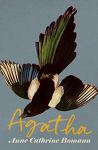 *Agatha by Anne Cathrine Bomann: In late-1940s Paris, a psychiatrist counts down the days and appointments until his retirement. A few experiences awaken him from his apathy, including meeting Agatha, a new German patient with a history of self-harm. This debut novel is a touching, subtle and gently funny story of rediscovering one’s purpose late in life.
 A Single Thread by Tracy Chevalier: Chevalier is an American expat like me, but she’s lived in England long enough to make this very English novel convincing and full of charm. Violet Speedwell, 38, is an appealing heroine who has to fight for a life of her own in the 1930s. Who knew the hobbies of embroidering kneelers and ringing church bells could be so fascinating?
 Akin by Emma Donoghue: An 80-year-old ends up taking his sullen pre-teen great-nephew with him on a long-awaited trip back to his birthplace of Nice, France. The odd-couple dynamic works perfectly and makes for many amusing culture/generation clashes. Donoghue nails it: sharp, true-to-life and never sappy, with spot-on dialogue and vivid scenes.
 Things in Jars by Jess Kidd: In 1863 Bridie Devine, female detective extraordinaire, is tasked with finding the six-year-old daughter of a baronet. Kidd paints a convincingly stark picture of Dickensian London, focusing on an underworld of criminals and circus freaks. The prose is spry and amusing, particularly in her compact descriptions of people.
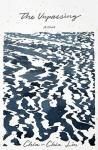 *The Unpassing by Chia-Chia Lin: Bleak yet beautiful in the vein of David Vann’s work: the story of a Taiwanese immigrant family in Alaska and the bad luck and poor choices that nearly destroy them. This debut novel is full of atmosphere and the lowering forces of weather and fate.
 The Doll Factory by Elizabeth Macneal: Set in the early 1850s and focusing on the Great Exhibition and Pre-Raphaelite Brotherhood, this reveals the everyday world of poor Londoners. It’s a sumptuous and believable fictional world, with touches of gritty realism. A terrific debut full of panache and promise.
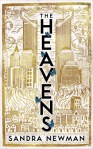 *The Heavens by Sandra Newman: Not a genre I would normally be drawn to (time travel), yet I found it entrancing. In her dreams Kate becomes Shakespeare’s “Dark Lady” and sees visions of a future burned city. The more she exclaims over changes in her modern-day life, the more people question her mental health. Impressive for how much it packs into 250 pages; something like a cross between Jonathan Franzen and Samantha Harvey.
 *In Love with George Eliot by Kathy O’Shaughnessy: Many characters, fictional and historical, are in love with George Eliot over the course of this debut novel. We get intriguing vignettes from Eliot’s life with her two great loves, and insight into her scandalous position in Victorian society. O’Shaughnessy mimics Victorian prose ably.
 Daisy Jones and The Six by Taylor Jenkins Reid: This story of the rise and fall of a Fleetwood Mac-esque band is full of verve and heart. It’s so clever how Reid delivers it all as an oral history of pieced-together interview fragments. Pure California sex, drugs, and rock ’n roll, yet there’s nothing clichéd about it.
Graphic Novels:
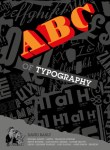 *ABC of Typography by David Rault: From cuneiform to Comic Sans, this history of typography is delightful. Graphic designer David Rault wrote the whole thing, but each chapter has a different illustrator, so the book is like a taster course in comics styles. It is fascinating to explore the technical characteristics and aesthetic associations of various fonts.
 *The Lady Doctor by Ian Williams: Dr. Lois Pritchard works at a medical practice in small-town Wales and treats embarrassing ailments at a local genitourinary medicine clinic. The tone is wonderfully balanced: there are plenty of hilarious, somewhat raunchy scenes, but also a lot of heartfelt moments. The drawing style recalls Alison Bechdel’s.
Poetry:
 *Thousandfold by Nina Bogin: This is a lovely collection whose poems devote equal time to interactions with nature and encounters with friends and family. Birds are a frequent presence. Elsewhere Bogin greets a new granddaughter and gives thanks for the comforting presence of her cat. Gentle rhymes and half-rhymes lend a playful or incantatory nature.
Nonfiction:
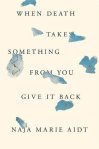 *When Death Takes Something from You Give It Back by Naja Marie Aidt: Aidt’s son Carl Emil died in 2015, having jumped out of his fifth-floor Copenhagen window during a mushroom-induced psychosis. The text is a collage of fragments. A playful disregard for chronology and a variety of fonts, typefaces and sizes are ways of circumventing the feeling that grief has made words lose their meaning forever.
 *Homesick: Why I Live in a Shed by Catrina Davies: Penniless during an ongoing housing crisis, Davies moved into the shed near Land’s End that had served as her father’s architecture office until he went bankrupt. Like Raynor Winn’s The Salt Path, this intimate, engaging memoir serves as a sobering reminder that homelessness is not so remote.
 *Hard Pushed: A Midwife’s Story by Leah Hazard: An empathetic picture of patients’ plights and medical professionals’ burnout. Visceral details of sights, smells and feelings put you right there in the delivery room. This is a heartfelt read as well as a vivid and pacey one, and it’s alternately funny and sobering.
 *Deep Creek: Finding Hope in the High Country by Pam Houston: Autobiographical essays full of the love of place, chiefly her Colorado ranch – a haven in a nomadic career, and a stand-in for the loving family home she never had. It’s about making your own way, and loving the world even – or especially – when it’s threatened with destruction. Highly recommended to readers of The Chronology of Water by Lidia Yuknavitch.
 *Dancing with Bees: A Journey back to Nature by Brigit Strawbridge Howard: Bees were the author’s gateway into a general appreciation of nature, something she lost for a time in midlife because of the rat race and family complications. She clearly delights in discovery and is devoted to lifelong learning. It’s a book characterized by curiosity and warmth. I ordered signed copies of this and the Simmons (below) directly from the authors via Twitter.
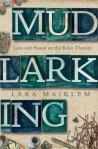 *Mudlarking: Lost and Found on the River Thames by Lara Maiklem: Maiklem is a London mudlark, scavenging for what washes up on the shores of the Thames, including clay pipes, coins, armaments, pottery, and much more. A fascinating way of bringing history to life and imagining what everyday existence was like for Londoners across the centuries.
 Unfollow: A Journey from Hatred to Hope, Leaving the Westboro Baptist Church by Megan Phelps-Roper: Phelps-Roper grew up in a church founded by her grandfather and made up mostly of her extended family. Its anti-homosexuality message and picketing of military funerals became trademarks. This is an absorbing account of doubt and making a new life outside the only framework you’ve ever known.
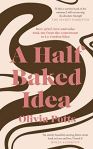 *A Half Baked Idea: How Grief, Love and Cake Took Me from the Courtroom to Le Cordon Bleu by Olivia Potts: Bereavement memoir + foodie memoir = a perfect book for me. Potts left one very interesting career for another. Losing her mother when she was 25 and meeting her future husband, Sam, who put time and care into cooking, were the immediate spurs to trade in her wig and gown for a chef’s apron.
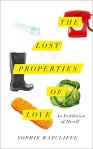 *The Lost Properties of Love by Sophie Ratcliffe: Not your average memoir. It’s based around train journeys – real and fictional, remembered and imagined; appropriate symbols for many of the book’s dichotomies: scheduling versus unpredictability, having or lacking a direction in life, monotony versus momentous events, and fleeting versus lasting connections.
 Inheritance: A Memoir of Genealogy, Paternity, and Love by Dani Shapiro: On a whim, in her fifties, Shapiro sent off a DNA test kit and learned she was only half Jewish. Within 36 hours she found her biological father, who’d donated sperm as a medical student. It’s a moving account of her emotional state as she pondered her identity and what her sense of family would be in the future.
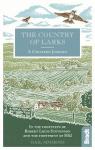 *The Country of Larks: A Chiltern Journey by Gail Simmons: Reprising a trek Robert Louis Stevenson took nearly 150 years before, revisiting sites from a childhood in the Chilterns, and seeing the countryside that will be blighted by a planned high-speed railway line. Although the book has an elegiac air, Simmons avoids dwelling in melancholy, and her writing is a beautiful tribute to farmland that was once saturated with the song of larks.

(Books not pictured were read from the library or on Kindle.)
Coming tomorrow: Other superlatives and some statistics.
20 Books of Summer, #1–3: Hadley, Timms & Tyler
I’ve been reading sophisticated short stories, a food/travel memoir, and a prize-winning slice of cozy Americana.
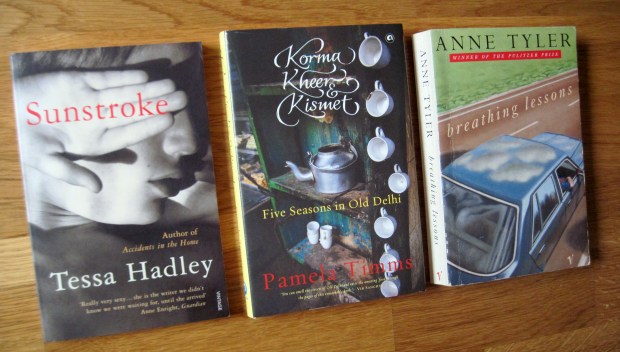
Sunstroke and Other Stories by Tessa Hadley (2007)
Everything is running away so fast; your deepest responsibility is to snatch at all the living you can.
Here’s a little something I wrote as an introduction to a review of Hadley’s most recent short story collection: “When I think of Tessa Hadley’s books, I picture a certain quality of light. I see piercing yellow shafts of sunlight filling airy, wood-floored rooms and lowering over suburban English gardens to create languid summer evenings. I think of childhood’s sense of possibility and adolescence’s gently scary feeling of new freedoms opening up. And, even when the story lines are set in the present day, I imagine the calm sophistication of 1950s–70s fashions: smart sweater sets and skirts, or flowing hippie dresses.” This volume is from a decade earlier and is not quite as strong, but that distinct atmosphere is still there.
 Each story pivots on a particular relationship: A mother fends off her son’s spurned lover; a teenager helps her older sister recover from a miscarriage; a woman hosts her former brother-in-law. Several stories revisit the same place or situation decades later. Claudia flirted with Graham when he was a teenager and she a grown woman; in “Phosphorescence” he tests whether there’s still any power in that connection 25 years later. In “A Card Trick” Gina goes back to a writer’s home she visited with family friends 25 years ago and reflects on how life has failed to live up to expectations. In “Matrilineal” Nia shares the comfort of a bed with her mother twice: once as a little girl the night they run away from her father, and again 40 years later in a hotel in New York City.
My two favorites were “The Surrogate,” in which a young woman falls for her professor – and for a pub customer who happens to look like him; and “Exchanges,” about two women on the cusp of middle age whose lives have diverged.

Korma, Kheer and Kismet: Five Seasons in Old Delhi by Pamela Timms (2014)
The only diary I’ve ever religiously maintained is my food journal.
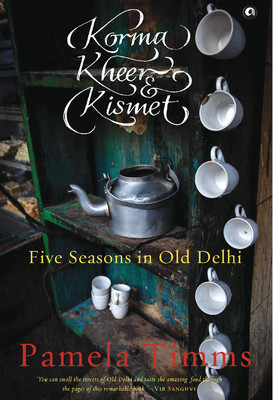 Timms is a Scottish journalist and food blogger who moved to India in 2005 when her husband got a job as a foreign correspondent. She delights in the street food stalls of Old Delhi, where you can get a hearty and delicious meal of mutton curry or fried vegetable dumplings for very little money. Often the snacks are simple – the first roasted sweet potatoes of the season or a big bowl of rice pudding made with buffalo milk and flavored with cardamom – but something about snatching sustenance while you’re on the go can make it the best thing you’ve ever tasted. It takes some searching to avoid the “pizza-fication” of Indian cuisine and discover an authentic hole-in-the-wall. Timms relies on local knowledge to locate hidden treasures and probes the owners until she gets recipes to recreate at home.
There isn’t a strong narrative to the book, but the food descriptions are certainly mouth-watering. Timms also captures the “magnificent mayhem of the spice market” and the extremes of the climate – a Delhi summer is like “being trapped inside a tandoor for three months of the year.” I reckon “Mr Naseem’s Sheer Khurma” will be fairly easy and so worth trying as a light dessert to follow a curry feast. Made with whole milk, ground rice, dried fruits and nuts, it’s a sweet custard traditionally used to break the Ramadan fast.
Breathing Lessons by Anne Tyler (1988)
“Was there a certain conscious point in your life when you decided to settle for being ordinary?”
Tyler won the Pulitzer Prize for this one. I’d rate it third out of the seven of her novels I’ve read so far, after Dinner at the Homesick Restaurant and The Accidental Tourist. (In general I seem to like her 1980s work the best.) The main action takes place all on one day, as Maggie Moran and her husband Ira travel from Baltimore up to Pennsylvania to attend the funeral of her childhood friend’s husband and pay a visit to their son’s ex-wife and their granddaughter.
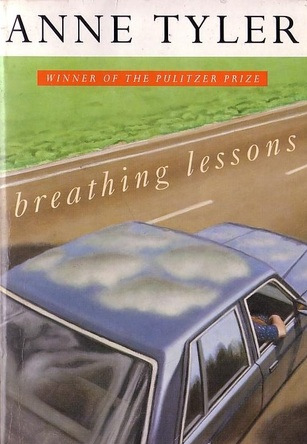 Of course, circadian narratives are so clever because they manage to interleave sufficient flashbacks to fill in the background. So we learn how 48-year-old Maggie – a precursor of Rebecca Davitch from Back When We Were Grown-ups and Abby Whitshank from A Spool of Blue Thread and the epitome of the exuberant, slightly ditzy, do-gooding heroine – has always meant well but through a combination of misunderstandings and fibs has botched things. She settled on Ira almost out of embarrassment: she’d heard a rumor he’d been killed in military training and sent his father an effusive condolence letter. When their son Jesse got Fiona pregnant, Maggie convinced Fiona to give him a chance based on a sentimental story about him that she perhaps half believed, and now, years later, she’s trying to do the same.
I loved the funeral scene itself – Serena is determined to recreate her wedding to Max, note for note – but I wearied of a sequence in which Maggie and Ira help an older African-American gentleman with car trouble. This is very much the Maggie show, so your reaction to the novel will largely depend on how well you’re able to tolerate her irksome habits. (Really, does she have to confuse the brake and the accelerator TWICE in one day?) Ira is the usual Tylerian standoffish husband, and Jesse the standard layabout progeny. What I found strangest was how little Tyler bothers to develop the character of the Moran daughter, Daisy.
Still, I enjoyed this. It’s a story about the mistakes we make, the patterns we get stuck in, and the ways we try to put things right. Sometimes it works; sometimes it doesn’t. Ultimately, we’re all making up this life business as we go along.
(I’ll also be reviewing Anne Tyler’s new novel, Clock Dance, on July 12th.)
Books in Brief: Five I Enjoyed Recently
Despite my largely successful resolution to focus on my own books for the summer, I’ve also gotten through plenty of e-books from NetGalley and Edelweiss, too. I just find it easier to fit time with the Kindle into my day, whether it’s 20 minutes over lunch (food-themed nonfiction works particularly well for such situations) or 30 minutes on the cross trainer. Here’s a sample of the e-books I’ve enjoyed this summer: four nonfiction and one fiction.
Pancakes in Paris: Living the American Dream in France
By Craig Carlson
 A good-natured memoir about the travails of opening the first American-style diner in Paris. Carlson charts his somewhat chaotic growing-up years in Connecticut, the college study abroad experience that kindled his love for France, his years trying to make it as a screenwriter and director in Hollywood, his long-held dream of opening Breakfast in America, and finding a French sweetheart of his own. Much of the book is devoted to a blow-by-blow of the bureaucratic nightmare of opening a restaurant, starting with getting investors on board and continuing through France’s ridiculously restrictive labor laws. (The impression I came away with was: France – great place to be an employee or rent property; terrible place to start a business.) Next time I’m in Paris, I will be looking to get myself a stack of his signature blueberry and white chocolate chip pancakes. Releases September 6th.
When in French: Love in a Second Language
By Lauren Collins
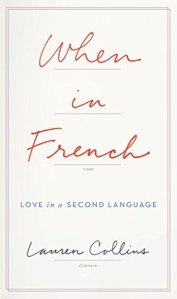 Collins, a journalist from North Carolina, married a Frenchman named Olivier she met while working in London. They then moved to Geneva, a mutually unfamiliar place but one where French reigned. For the first time, she was forced to learn a new language to survive. I love how she blends her own story with the philosophy, history and science behind language use. As she learned how to do things she never expected to have to in French – deal with her in-laws and give birth, for instance – she developed a new appreciation for the marvel that is bilingualism and pondered whether she was the same person in a different language. My favorite section recounts a holiday to Corsica that brought her family and Olivier’s into close quarters and cast her in the unforeseen role of translator. There’s a surprising amount of linguistic detail here, but Collins incorporates it well. Releases September 13th.
A Body, Undone: Living On After Great Pain
By Christina Crosby
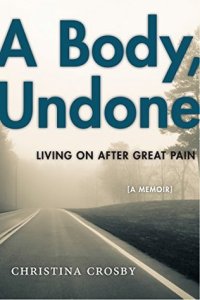 Crosby teaches English and gender studies at Wesleyan University. Her inclusion in this “Sexual Cultures” series has to do with her lesbian feminist ideology but also the new understanding of her body an accident forced upon her at age 50. While she was cycling, a stick stuck in her spokes and she fell over onto concrete, breaking vertebrae in her neck that damaged her spinal cord. In the midst of a full and physical life, she became a quadriplegic. The great irony was that in this she joined her brother Jeff, whose MS had long since reduced him to a wheelchair. Here, in a memoir written 11 years after the accident, she reflects on chronic pain and new limitations – even including bowel habits – with blunt honesty as well as literary allusions. Along the way she remembers physical pleasures now denied to her. Nonetheless, she never comes across as sorry for herself. I found this to be highly absorbing.
The Reader on the 6.27
By Jean-Paul Didierlaurent
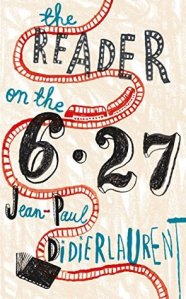 Guylain Vignolles works in a paper pulping plant. Rather than an enemy of books, however, he’s really a champion of the written word and its power to improve people’s lives. Every day when he descends into the belly of “The Thing” to clean it, he rescues the stray pages that escaped destruction and reads them aloud the following morning on his twenty-minute train commute, or to the residents of an old-folks home, no matter what their subject. He also helps his disabled former colleague Giuseppe stockpile all the books made from the recycled paper created on the fateful day the machine shredded his legs. There’s a charming Amélie vibe to this short novel, especially in the later chapters when Guylain sets off on a romantic quest to find the lavatory attendant whose wry diary he finds on a memory stick on the train. Most of the subplots could do with some expanding, but it’s a pleasant and super-quick read.
Stir: My Broken Brain and the Meals that Brought Me Home
By Jessica Fechtor
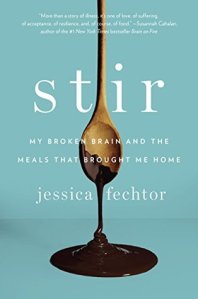 For me this is right up there with Molly Wizenberg and Ruth Reichl in how the author merges food writing with a frank recounting of personal experiences with crisis and heartache. At age 28 Fechtor, then a graduate student in history and Yiddish, collapsed on a treadmill with a brain bleed. Surgery to clip the aneurysm left her blind in one eye. During her long recovery process she started a food blog. At the end of each chapter she shares recipes that alternate between simple, favorite dishes and more involved ones. It’s that unpretentiousness that really endears her to me. She doesn’t think she was particularly brave in getting through an unwanted illness; nor does she think the perfect almond macaroon or cherry clafoutis is beyond anyone’s capability. Instead, she gives a glimpse into an ordinary life turned upside down and the foods that helped her regain a zest for life.
Have you read any of these? Which one takes your fancy?
Reviews Roundup, January–February
One of my goals with this blog is to have one convenient place where I can gather together all my writing that has appeared in disparate online locations. To that end, once a month I provide links to all book reviews I’ve published elsewhere, with a rating (below each description) and a taster so you can decide whether to read more. A few exceptions: I won’t point out my Kirkus Indie, BlueInk or Publishers Weekly reviews since I don’t get a byline. Meanwhile, I’ve done my first review for the Pittsburgh Post-Gazette – exciting!
The Bookbag
The Noise of Time by Julian Barnes: “Art is the whisper of history, heard above the noise of time.” Through a fictionalized biography of the Russian composer Shostakovich, Barnes questions how art can withstand political oppression. Knowing Barnes’s penchant for stylistic experimentation, this was never going to be a straightforward, chronological life story. Instead, as he so often does, he sets up a tripartite structure, focusing on three moments when Shostakovich has a reckoning with Power. The book is full of terrific one-liners (“Integrity is like virginity: once lost, never recoverable”), but there are not many memorable scenes to latch on to.

Motions and Moments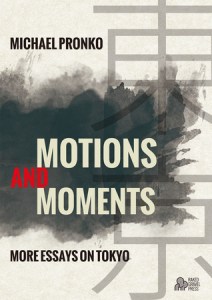 : More Essays on Tokyo (& interview) by Michael Pronko: Pronko’s third collection of essays about his adopted city is an eloquent tribute to a place full of contradictions and wonders. Compared to his earlier collection, Beauty and Chaos, I sense Pronko is now more comfortable in his surroundings, perhaps happier to include himself in ‘we’ rather than looking on passively at ‘them’. For instance – inspired by Japanese women’s perfect outfits – he consciously tries to dress better, and he’s taken to eating ramen and sleeping on a futon, just like a native. The highlight is a set of pieces written in the aftermath of the 2011 earthquake / tsunami.

BookBrowse
 The Portable Veblen by Elizabeth McKenzie: Veblen, named after the late-nineteenth-century Norwegian-American economist, is one of the oddest heroines you’ll ever meet. She thinks squirrels are talking to her and kisses flowers. But McKenzie doesn’t just play Veblen for laughs; she makes her a believable character well aware of her own psychological backstory. I suspect the squirrel material could be a potential turn-off for readers who can’t handle too much whimsy. Over-the-top silly in places, this is nonetheless a serious account of the difficulty of Veblen and Paul, her neurology researcher fiancé, blending their dysfunctional families and different ideologies – which is what marriage is all about.
 Weathering by Lucy Wood: This atmospheric debut novel is set in a crumbling house by an English river and stars three generations of women – one of them a ghost. Ada has returned to her childhood home after 13 years to scatter her mother Pearl’s ashes, sort through her belongings, and get the property ready to sell. In a sense, then, this is a haunted house story. Yet Wood introduces the traces of magical realism so subtly that they never feel jolting. Like the river, the novel is fluid, moving between the past and present with ease. The vivid picture of the English countryside and clear-eyed look at family dynamics remind me most of Tessa Hadley (The Past) and Polly Samson (The Kindness).
Foreword Reviews
When We Were Invincible by Jonathan Harnisch: In this short novel, a young man wrestles with depression and Tourette’s syndrome, which together drive him to the point of suicide. A series of dreams and chance meetings, along with the possibility of romance and faith in God, pull him back from the edge. The book successfully introduces philosophical themes and gives a sympathetic picture of mental illness. However, it is weaker at filling in background and providing transitions, and there are many awkward, unlikely lines of dialogue. Recommended to fans of The Curious Incident of the Dog in the Night-Time.

Nudge
 The Life and Death of Sophie Stark by Anna North: The twisty, clever story of a doomed filmmaker – perfect for fans of Hausfrau. Who is Sophie Stark? A New York City-based indie director whose four documentary-style movies are “almost more like life than life itself.” Bisexual and with certain traits of high-functioning autism, Sophie is easily misunderstood. She’s a rebel who doesn’t conform to social niceties. The book is told through five first-person reminiscences from the people closest to her. In this respect the novel’s format recalls Kitchens of the Great Midwest. My favorite sections, though, are the reviews of her films, all by the same critic.
 Casualties by Betsy Marro: A powerful, melancholy debut novel about how war affects whole families, not just individual soldiers. As in Bill Clegg’s Did You Ever Have a Family, which Casualties resembles in tone if not in style, a bereaved mother sets off on a journey. Ruth’s unlikely companion on the road trip east is a Gulf War amputee who appears little more than a conman but genuinely wants to clean up his act so he can reconcile with his teenage daughter. At times the road trip scenario felt a little far-fetched to me, and Casey too obvious a replacement son figure. Yet as both he and Ruth ponder how much they have lost and the small things they can try to put right, they together form a touching picture of the various ways war’s effects can linger.
Pittsburgh Post-Gazette
 Mr. Splitfoot by Samantha Hunt: “All stories are ghost stories,” Samantha Hunt proclaims in her quirky third novel about the crossover between motherhood and mysticism. In a dual storyline that takes in fundamentalist cults, unlikely mediums and a pregnant woman’s pilgrimage, Hunt asks whether one can ever believe in the unseen. Mr. Splitfoot has the offbeat charm of Scarlett Thomas’s work. While the plot ultimately feels like a bit of a jumble, its vision of unexpected love and loyalty remains compelling. “The End’s always coming,” but it is how one lives in the face of brutality and impending extinction that matters.
I also post reviews of most of my casual reading and skimming on Goodreads:
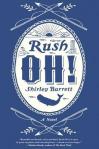 Rush Oh! by Shirley Barrett: A debut novel in which an Australian whaler’s daughter looks back at 1908, a catastrophic whaling season but also her first chance at romance. I felt that additional narrators, such as a whaleman or an omniscient voice, would have allowed for more climactic scenes. Still, I found this gently funny, especially the fact that the family’s cow and horse are inseparable and must be together on any outing. There are some great descriptions of whales, too.
 Felicity by Mary Oliver: I was disappointed with my first taste of Mary Oliver’s poetry. So many readers praise her work to the skies, and I’ve loved excerpts I’ve read elsewhere. However, I found these to be rather simplistic and clichéd, especially poems’ final lines, e.g. “Soon now, I’ll turn and start for home. / And who knows, maybe I’ll be singing.” or “Late, late, but now lovely and lovelier. / And the two of us, together—a part of it.” I’ll definitely try more of her work, but I’ll look out for an older, classic collection.
 Paulina & Fran by Rachel B. Glaser: Full of blunt, faux-profound sentences and smutty, two-dimensional characters. Others may rave about it, but this wasn’t for me. I get that it is a satire on female friendship and youth entitlement. But I hated how the main characters get involved in a love triangle, and once they leave college any interest I had in them largely disappeared. Least favorite lines: “Paulina. She’s like Cleopatra, but more squat.” / “She’s more like Humphrey Bogart” and “She craved the zen-ness of being rammed.”

 Noah’s Wife by Lindsay Starck: I kept wanting to love this book, but never quite did. It’s more interesting as a set of ideas – a town where it won’t stop raining, a minister losing faith, homeless zoo animals sheltering with ordinary folk – than as an executed plot. My main problem was that the minor characters take over so that you never get to know the title character, who remains nameless. There’s also a ton of platitudes towards the end. It reminded me most of The Readers of Broken Wheel Recommend and Not Forgetting the Whale (another cozy environmental dystopia based around biblical allusions).
 Spill Simmer Falter Wither by Sara Baume: This sounded like a charmingly offbeat story about a loner and his adopted dog setting off on a journey. As it turns out, this debut is much darker than expected, but what saves it from being unremittingly depressing is the same careful attention to voice you encounter in fellow Irish writers like Donal Ryan and Anne Enright. It’s organized into four sections, with the title’s four verbs as headings. In a novel low on action, the road trip is much the most repetitive section, extending to the language as well. Even so, Baume succeeds in giving a compassionate picture of a character whose mental state comes into question. (Full review in March 2016 issue of Third Way magazine.)
 Medium Hero by Korby Lenker: Lenker is an indie musician, and the 27 autobiographical stories in his debut collection are about the everyday challenges of being on the road versus trying to pay the bills. Many feature “Korby” or “Simon” as fictional stand-ins, and recurring locations include his hometown of Twin Falls, Idaho and his adopted home of Nashville. As the title suggests, Lenker has no illusions about being famous or out of the ordinary. Most of the time he just tries to be a decent guy, the kind who prays for family members in distress even though he’s not sure he believes in God. Lest that sound too serious, though, there are also stories about peeing his pants and the perils of being a metrosexual.
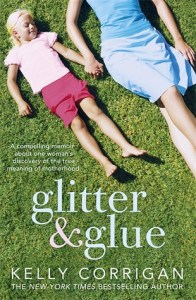 Glitter and Glue by Kelly Corrigan: Slides down like ice cream. And I say that even though the whole basis for this memoir feels rather thin. Corrigan frames it around five months in the early 1990s when she worked as a nanny for two Australian kids whose mother died of cancer. For a young woman fresh out of college, it was like a trial run for being a mother, and also gave her a new appreciation for everything her own mother had done for her during her Philadelphia Catholic upbringing. If Corrigan’s father was the ‘glitter’ of the family, her mother was the ‘glue’ – holding everything together in the background. This is impressively reconstructed, dialogue and all, from letters, journals and photos.
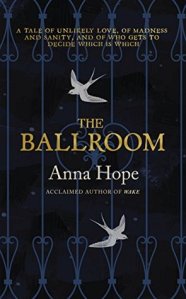 The Ballroom by Anna Hope: This novel was inspired by the story of the author’s great-great-grandfather, an Irishman who was a patient at Menston Asylum in West Yorkshire from 1909 to 1918. The novel zeroes in on the long, hot summer of 1911, focusing through alternating close third-person chapters on John Mulligan, a new patient named Ella Fay, and Dr. Charles Fuller, who wants to put his mental hospital at the frontline of eugenics research. Ultimately I didn’t like this quite as much as Wake, but I think it cements Anna Hope’s reputation as a solid historical fiction writer. I hope with her next book she’ll move beyond the years around World War I to consider a less-chronicled era.
 Life without a Recipe by Diana Abu-Jaber: The Jordanian–American writer reflects on how various food cultures have sustained her through a life that hasn’t always turned out as expected. Three marriages, a move from Portland to Florida, a winding path to motherhood in her forties, and her father’s death from leukemia are some of the main events. Like Sasha Martin’s Life from Scratch, this is more about family and personal history than it is about food (and there are no recipes). Still, food is the stuff of memories, and it is what binds her to two strong characters: her Jordanian father Bud with his stuffed grape leaves, and her maternal grandmother Grace with her frequent baking and the pastries they consumed together in Paris.
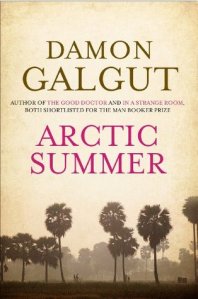 Arctic Summer by Damon Galgut: This fictionalized account of the life of E.M. Forster focuses on the drawn-out composition of A Passage to India, which he began in 1913 but wouldn’t complete and publish until 1924. In between he broke off to write his explicitly homosexual novel Maurice (only published posthumously), spent three years working in Egypt during the war, and served as a secretary to an Indian maharajah. As fictionalized biographies of authors go, I’d rate this somewhere between David Lodge’s A Man of Parts (H.G. Wells) and Colm Tóibín’s superior The Master (Henry James); all three share a heavy focus on the author’s sexuality. “Buggery in the colonies. It wasn’t noble” is one of my favorite random snippets from this novel, and sums up, for me, its slightly prurient aftertaste.
My Favorite Nonfiction Reads of 2015
Without further ado, I present to you my 15 favorite non-fiction books read in 2015. I’m a memoir junkie so many of these fit under that broad heading, but I’ve dipped into other areas too. I give two favorites for each category, then count down my top 7 memoirs read this year.
Note: Only four of these were actually published in 2015; for the rest I’ve given the publication year. Many of them I’ve already previewed through the year, so – like I did yesterday for fiction – I’m limiting myself to two sentences per title: the first is a potted summary; the second tells you why you should read this book. (Links given to full reviews.)
Foodie Lit
 A Homemade Life: Stories and Recipes from My Kitchen Table by Molly Wizenberg (2009): Wizenberg reflects on the death of her father Burg from cancer, time spent living in Paris, building a new life in Seattle, starting her food blog, and meeting her husband through it. Each brief autobiographical essay is perfectly formed and followed by a relevant recipe, capturing precisely how food is tied up with memories.
 Comfort Me with Apples: More Adventures at the Table by Ruth Reichl (2001): Reichl traces the rise of American foodie culture in the 1970s–80s (Alice Waters and Wolfgang Puck) through her time as a food critic for the Los Angeles Times, also weaving in personal history – from a Berkeley co-op with her first husband to a home in the California hills with her second after affairs and a sticky divorce. Throughout she describes meals in mouth-watering detail, like this Thai dish: “The hot-pink soup was dotted with lacy green leaves of cilantro, like little bursts of breeze behind the heat. … I took another spoonful of soup and tasted citrus, as if lemons had once gone gliding through and left their ghosts behind.”
Nature Books
 Meadowland: The Private Life of an English Field by John Lewis-Stempel (2014): Lewis-Stempel is a proper third-generation Herefordshire farmer, but also a naturalist with a poet’s eye. Magical moments and lovely prose, as in “The dew, trapped in the webs of countless money spiders, has skeined the entire field in tiny silken pocket squares, gnomes’ handkerchiefs dropped in the sward.”
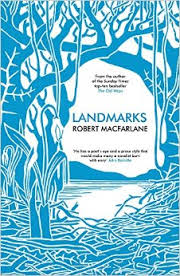 Landmarks by Robert Macfarlane: This new classic of nature writing zeroes in on the language we use to talk about our environment, both individual words – which Macfarlane celebrates in nine mini-glossaries alternating with the prose chapters – and the narratives we build around places, via discussions of the work of nature writers he admires. Whether poetic (“heavengravel,” Gerard Manley Hopkins’s term for hailstones), local and folksy (“wonty-tump,” a Herefordshire word for a molehill), or onomatopoeic (on Exmoor, “zwer” is the sound of partridges taking off), his vocabulary words are a treasure trove.
Theology Books
 Amazing Grace: A Vocabulary of Faith by Kathleen Norris (1998): In few-page essays, Norris gives theological words and phrases a rich, jargon-free backstory through anecdote, scripture and lived philosophy. This makes the shortlist of books I would hand to skeptics to show them there might be something to this Christianity nonsense after all.
 My Bright Abyss: Meditation of a Modern Believer by Christian Wiman (2013): Seven years into a cancer journey, Wiman, a poet, gives an intimate picture of faith and doubt as he has lived with them in the shadow of death. Nearly every page has a passage that cuts right to the quick of what it means to be human and in interaction with other people and the divine.
General Nonfiction
 Penelope Fitzgerald: A Life by Hermione Lee (2013): Although Penelope Fitzgerald always guarded literary ambitions, she was not able to pursue her writing wholeheartedly until she had reared three children and nursed her hapless husband through his last illness. This is a thorough and sympathetic appreciation of an underrated author, and another marvellously detailed biography from Lee.
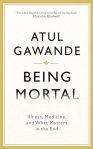 Being Mortal: Medicine and What Matters in the End by Atul Gawande (2014): A surgeon’s essential guide to decision-making about end-of-life care, but also a more philosophical treatment of the question of what makes life worth living: When should we extend life, and when should we concentrate more on the quality of our remaining days than their quantity? The title condition applies to all, so this is a book everyone should read.
Memoirs
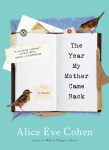 The Year My Mother Came Back by Alice Eve Cohen: Wry and heartfelt, this is a wonderful memoir about motherhood in all its variations and complexities; the magic realism (Cohen’s dead mother keeps showing up) is an added delight. I recommend this no matter what sort of relationship, past or present, you have with your mother, especially if you’re also a fan of Anne Lamott and Abigail Thomas.
- The Art of Memoir
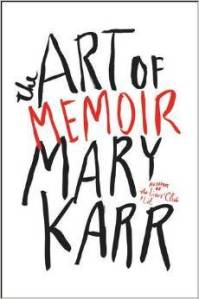 by Mary Karr: There is a wealth of practical advice here, on topics such as choosing the right carnal details (not sexual – or not only sexual – but physicality generally), correcting facts and misconceptions, figuring out a structure, and settling on your voice. Karr has been teaching (and writing) memoirs at Syracuse University for years now, so she’s thought deeply about what makes them work, and sets her theories out clearly for readers at any level of familiarity.
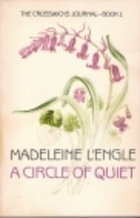 A Circle of Quiet by Madeleine L’Engle (1971): In this account of a summer spent at her family’s Connecticut farmhouse, L’Engle muses on theology, purpose, children’s education, the writing life, the difference between creating stories for children and adults, neighbors and fitting into a community, and much besides. If, like me, you only knew L’Engle through her Wrinkle in Time children’s series, this journal should come as a revelation.
-
 Do No Harm: Stories of Life, Death and Brain Surgery by Henry Marsh (2014): “Terrible job, neurosurgery. Don’t do it.” – luckily for us, Henry Marsh reports back from the frontlines of brain surgery so we don’t have to. In my favorite passages, Marsh reflects on the mind-blowing fact that the few pounds of tissue stored in our heads could be the site of our consciousness, our creativity, our personhood – everything we traditionally count as the soul.
 I Hate to Leave This Beautiful Place by Howard Norman (2013): Norman has quickly become one of my favorite writers. You wouldn’t think these disparate autobiographical essays would fit together as a whole, given that they range in subject from Inuit folktales and birdwatching to a murder–suicide committed in Norman’s Washington, D.C. home and a girlfriend’s death in a plane crash, but somehow they do; after all, “A whole world of impudent detours, unbridled perplexities, degrading sorrow, and exacting joys can befall a person in a single season, not to mention a lifetime.”
 Portrait of an Addict as a Young Man by Bill Clegg (2010): Through this book I followed literary agent Bill Clegg on dozens of taxi rides between generic hotel rooms and bar toilets and New York City offices and apartments; together we smoked innumerable crack pipes and guzzled dozens of bottles of vodka while letting partners and family members down and spiraling further down into paranoia and squalor. He achieves a perfect balance between his feelings at the time – being out of control and utterly enslaved to his next hit – and the hindsight that allows him to see what a pathetic figure he was becoming.
And my overall favorite nonfiction book of the year:
 1. The Light of the World by Elizabeth Alexander: In short vignettes, beginning afresh with every chapter, Alexander conjures up the life she lived with – and after the sudden death of – her husband Ficre Ghebreyesus, an Eritrean chef and painter. This book is the most wonderful love letter you could imagine, and no less beautiful for its bittersweet nature.
What were some of your best nonfiction reads of the year?
Reviews Roundup, November–December
One of my goals with this blog is to have one convenient place where I can gather together all my writing that has appeared in disparate online locations. To that end, once a month I provide links to all book reviews I’ve published elsewhere, with a rating (below each description) and a taster so you can decide whether to read more. A few exceptions: I won’t point out my Kirkus Indie, BlueInk or Publishers Weekly reviews since I don’t get a byline.
The Bookbag
 In Search of Mary: The Mother of All Journeys by Bee Rowlatt: A BBC journalist and mother of four sets out, baby in tow, to trace the steps of Mary Wollstonecraft in Norway and France. A follow-up trip to California is a little off-topic, but allows Rowlatt to survey the development of feminism over the last few centuries. This isn’t as successful a bibliomemoir as many I’ve read in recent years, such as Rebecca Mead’s My Life in Middlemarch or Samantha Ellis’s How to Be a Heroine, but for readers interested in engaging in the ongoing debate about how women can balance work life with motherhood, and especially for any women who have attempted traveling with children, it’s a fun, sassy travelogue.

Foreword Reviews
 Italy Invades: How Italians Conquered the World by Christopher Kelly and Stuart Laycock: Proceeding alphabetically from Afghanistan to Zimbabwe, the authors give a comprehensive picture of Italians’ global reach through one- to five-page snapshots. There are many familiar names here, such as Caesar, Garibaldi and Marco Polo. Along with exploration, some major reasons for historical crossover were trade, war, colonialism and immigration. At times it feels as if the authors are grasping at straws; better to skip one-paragraph write-ups altogether and focus instead on the countries that have extensive links with Italy. Nonetheless, this is a lively, conversational book full of surprising facts.

Why You Won’t Go to Hell by Benjamin Vande Weerdhof Andrews: In a well-structured argument, Andrews prizes empirical thinking, rejects the supernatural, and affirms the possibility of godless morality. His central thesis is that religion doesn’t evolve to keep pace with society and so holds humanity back. The book’s tone is too often defensive, often in response to included website comments, and there are some failures of accuracy and fairness. Ultimately, though, this could be an inspirational book for atheists or believers, prompting both groups to question their assumptions and be willing to say “I don’t know.” Readers of Sam Harris and Christopher Hitchens will be particularly drawn to the book, but others should take a chance on it too.

 Cultured Food for Health by Donna Schwenk: When Schwenk started eating cultured foods in 2002, she had diabetes, high blood pressure, and a premature newborn. Keen to see if good bacteria could help with her medical problems, she started introducing the “healing powerhouse” of kefir (a fermented milk product resembling thin yogurt), kombucha (bubbly tea), and cultured vegetables into her diet, and soon reaped the rewards. About a quarter of the book is background information about probiotic foods. Bullet-pointed lists of health benefits, along with an alphabetical inventory of the diseases that cultured foods can treat, should prove helpful. The rest of the book is devoted to recipes, most vegetarian.
Three Simple Questions: Being in the World, But Not of It by Charlie Horton: Horton, trained as a social worker, was diagnosed with cerebellar degeneration in 1988. It has gradually affected his speech and movement. Despite having lived with disability for nearly three decades, he declares, “the world I live in is rich, and my spirit is young.” Here he documents how he deals with depression and physical limitations through guided meditations that bring him closer to God. Although he comes from a Christian perspective, he writes about spirituality in such inclusive terms that his work should speak to people of any faith.
Middle Passage: The Artistic Life of Lawrence Baker by Louis B. Burroughs, Jr.: This ghostwritten autobiography of an African-American artist is not only an evocative, eventful life story that moves from the Jim Crow South to the North, but also a forceful artist’s manifesto. Burroughs writes in Baker’s voice, a decision that works surprisingly well. The title is a powerful reference to the slave trade. Indeed, Burroughs consciously crafts Baker’s autobiography as an “up from slavery” narrative reminiscent of Richard Wright and Maya Angelou – with ‘slavery’ in this case being poverty and racism.
Nudge
 40 Sonnets by Don Patterson: All but one of the poems in this new book have the sonnet’s traditional 14 lines; “The Version” is a short prose story about writing an untranslatable poem. However, even in the more conventional verses, there is a wide variety of both subject matter and rhyme scheme. Topics range from love and death to a phishing phone call and a footpath blocked off by Dundee City Council. A few favorites were “A Powercut,” set in a stuck elevator; “Seven Questions about the Journey,” an eerie call-and-response; and “Mercies,” a sweet elegy to an old dog put to sleep. There weren’t quite enough stand-outs here for my liking, but I appreciated the book as a showcase for just how divergent in form sonnets can be.
 Without You There Is No Us by Suki Kim: This is a quietly gripping book even though not much of moment happens over Kim’s five months teaching young men at a missionary-run college in Pyongyang. She was in a unique position in that students saw her as ethnically one of their own but she brought an outsider’s perspective to bear on what she observed. Just before she flew back to the States in 2011, Kim Jong-Il died, an event she uses as a framing device. It could have represented a turning point for the country, but instead history has repeated itself with Kim Jong-un. Kim thus ends on a note of frustration: she wants better for these young men she became so fond of. A rare glimpse into a country that carefully safeguards its secrets and masks its truth.
 Alive, Alive Oh!: And Other Things that Matter by Diana Athill: Diana Athill turns 98 on December 21st. Apart from “Dead Right,” however, this collection is not primarily concerned with imminent death. Instead Athill is still grateful to be alive: marveling at a lifetime of good luck and health and taking joy in gardening, clothing, books, memories and friendships. Six of the 10 essays originally appeared elsewhere. The collection highlight is the title piece, about a miscarriage she suffered in her forties. Another stand-out is “The Decision,” about moving into a retirement home in her nineties. This doesn’t live up to her best memoirs, but is an essential read for a devoted fan, and a consolation given she will likely not publish anything else (though you never know). [For first-time Athill readers, I’d recommend starting with Somewhere Towards the End, followed by Stet, about her work as a literary editor.]
I also post reviews of most of my casual reading and skimming on Goodreads:
The Weightless World by Anthony Trevelyan: This debut novel blends postcolonial bureaucracy with steampunk zaniness. The setup is familiar enough: businessmen head overseas to take financial advantage of a former colony, puzzle over unfamiliar customs, and by the end are chastened but gain a clearer sense of values. Narrator Steven Strauss is the personal assistant to Raymond Ess, an entrepreneur with a history of mental illness. Their aviation company has gone bust; Strauss is to accompany Ess to India and keep him occupied by looking for an anti-gravity machine. Not anchored by either current events or convincing fantasy, the plot suffers in comparison to works by Geoff Dyer or Nick Harkaway. Despite entirely serviceable writing and a gravity-defying theme, it never really takes off.

 My Confection: Odyssey of a Sugar Addict by Lisa Kotin: 1978. Twenty-one-year-old mime goes to macrobiotic rehab to recover from sugar addiction. Fails. Shows signs of being a sex addict as well. Pared down to headlines, that’s how this fairly rambling memoir about Kotin’s relationships with food, family, lovers, and career opens. I kept waiting for a turn, some moment of revelation, when Kotin’s binge eating would be solved. Still, her recreation of her obsessive younger self can be pretty funny and charming, and her family sounds a bit like the Sedaris clan. I found this a bit dated, but others may find the time period and Jewish family background more evocative.
 Good on Paper by Rachel Cantor: I’m going to chalk this one up to blurb inflation. The writing is lively and the plot well crafted, with quirky postmodern touches, but the novel as a whole did not live up to my absurdly high expectations: it’s really nothing like A.S. Byatt’s Possession. It’s 1999 and Shira Greene is a failed translator from the Italian, now working as a temp in New York City and raising her daughter Andi with the help of her gay, Pakistani co-parent, Ahmad. One day she gets a call from Romei, a Nobel Prize-winning Italian poet who wants her to translate his new work, a version of Dante’s Vita Nuova that focuses on his relationship with his ill wife – and eventually starts to comment on Shira’s own life in surprising ways.
Water Sessions by James Lasdun: Wonderful poems from a severely underrated writer. The British Lasdun has relocated to small-town upstate New York, where he’s learned the spiritual worth of manual labor. There are such interesting rhyme schemes and half-rhymes throughout. One of the most striking poems, “Thing One and Thing Two,” compares human and animal sexuality in a rather disturbing way. The title sequence is a dialogue between a patient and a therapist, discussing what went wrong in a relationship and how arguments are never ‘about’ the thing that started it.
 The Secret Chord by Geraldine Brooks: A retelling of the life of King David from the perspective of the prophet Nathan. The naming takes some getting used to, but the stories – from gory massacres to moments of triumph – are recognizable from the Old Testament. What makes Brooks’s take unique is the different points of view it shows and the ways it subtly introduces doubt about David’s carefully cultivated image. It’s sensual historical fiction, full of rich descriptive language. Strangely unmemorable for me, perhaps because the storyline is just too familiar. Brooks doesn’t offer a radical reinterpretation but sows small seeds of doubt about the hero we think we know. (Full review in Jan/Feb 2016 issue of Third Way magazine.)
 When I Die: Lessons from the Death Zone by Philip Gould: Gould may be familiar to British readers as a key strategist of the New Labour movement and one of Tony Blair’s advisors. In 2008 he was diagnosed with esophageal cancer and chose to pay for private treatment at New York’s Sloan-Kettering hospital instead of going for a radical operation through the NHS – a fateful decision. Gould’s own account is fairly short, about 140 pages, but it’s supplemented by short reminiscences from his wife and two daughters. Daughter Georgia’s, especially, is a very good blow-by-blow of his final week. All royalties from the book went to the National Oesophago-Gastric Cancer Fund.
 Twain’s End by Lynn Cullen: “Twain’s End” was a possible name for the Clemens house in Connecticut, but it’s also a tip of the hat to Howards End and an indication of the main character’s impending death. In January 1909, when the novel opens, Samuel Clemens, 74, is busy dictating his autobiography and waiting for Halley’s Comet, the heavenly body that accompanied his birth, to see him back out. His secretary, Isabel Lyon, is 45 and it’s no secret that the two of them are involved. I love how the novel shifts between the perspectives of several strong female characters yet still gives a distinct portrait of Clemens/Twain. Interestingly, I found that it helped to have visited the Twain house in Connecticut – I could truly picture all the scenes, especially those set in the billiard room and conservatory.
 Meadowland: The Private Life of an English Field by John Lewis-Stempel: Lewis-Stempel is a proper, third-generation Herefordshire farmer, but also a naturalist with a poet’s eye. His day job might involve shooting rabbits, cutting hay and delivering lambs, but he still finds the time to notice and appreciate wildlife. He knows his field’s flowers, insects and birds as well as he knows his cows; he gets quiet and close enough to the ground to watch a shrew devouring beetles. June and July are the stand-out chapters, with some truly magical moments. When his mower breaks on a stone, he has to cut the hay by hand, returning him to a centuries-gone model of hard labor. All delivered in the loveliest prose.

Did You Ever Have a Family by Bill Clegg: A strong debut novel about personal and community responses to tragedy. Clegg’s multivocal approach works quite well, though there are perhaps a few too many voices diluting the mixture. I like how the revelations of what really happened that night before the wedding to cause the fatal house fire come gradually, making you constantly rethink who was responsible and what it all means. The small-town Connecticut setting is a good one, but I’d question the decision to set so much of the book in Washington, where the bereaved June drives on a whim. For a tragic story, it’s admirably lacking in melodrama.
 A Homemade Life: Stories and Recipes from My Kitchen Table by Molly Wizenberg: Foodoir extraordinaire! I liked this even better than Delancey, which is a terrific book about opening a pizza restaurant in Seattle with her husband. Here we get the prequel: the death of her father Burg from cancer, time spent living in Paris, building a new life in Seattle, starting her now-famous food blog (Orangette), and meeting her husband Brandon through it. Each brief autobiographical essay is perfectly formed and followed by a relevant recipe, capturing precisely how food is tied up with her memories. Wizenberg’s very fond of salad, but also of cake, and every recipe is full-on in terms of flavors and ingredients.
Ellen Foster by Kaye Gibbons: This was a random library book sale purchase, chosen almost entirely for the title. I set aside my usual dislike of child narrators and found an enjoyable voice-driven novella about a feisty ten-year-old who loses both her parents (good riddance to her father, at least) and finds her own unconventional family after cycling through the homes of some truly horrid relatives. Just as an example, her maternal grandmother sends her out to work picking cotton. The book is set in the South, presumably in the 1970s or 80s, so it’s alarming to see how strong racial prejudice still was.
 The Ecco Book of Christmas Stories, edited by Alberto Manguel: I read this over several years, a handful each holiday season. There are some very unusual choices, including some that really have hardly anything to do with Christmas (e.g. one by Bessie Head). Still, it’s a nice book to have to hand, even if just to skip through. Manguel strikes a good balance between well-known short story writers, authors you might never think to associate with Christmas, and fairly obscure works in translation. Four favorites: “A Christmas Memory,” Truman Capote (overall favorite); “Christmas Is a Sad Season for the Poor,” John Cheever; “The Zoo at Christmas,” Jane Gardam; and “O’Brien’s First Christmas,” Jeanette Winterson.
 Bookish Beck = Rebecca Foster. American transplant to England. Freelance proofreader and book reviewer.
 Bookish Beck