20 Books of Summer, 11–12 (Victoriana): Edward Carey & George Grossmith
Neither of these appeared on my initial list, but I thought a middle-grade novel and a classic would be good for variety. Though I have an MA in Victorian Literature, I don’t often read from the period anymore because I’m allergic to wordy triple-deckers, so it was a delight to encounter something short and lighthearted. I’ve always been partial to a contemporary Victorian pastiche, though.
Heap House (Iremonger, #1) by Edward Carey (2013)
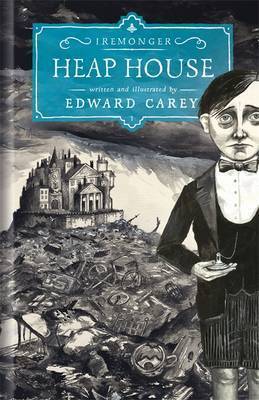 The Iremonger family wealth came from salvaging treasure from the rubbish heaps surrounding their London mansion. Every Iremonger has a birth object (like a daemon?) associated with them. Clodius Iremonger, adolescent descendant of the great family, has a special skill: he hears each birth object speaking its name. His own bath plug, for instance, cries out, “James Henry Hayward.” These objects house enchanted souls; people can change back into objects and vice versa. The narration alternates between Clod and plucky Lucy Pennant, who arrives from a local orphanage to work as a house servant. All staff and heap-workers are called “Iremonger,” but Lucy refuses to cede her identity and wants justice for the oppressed workers. She and Clod form a bond against the odds and there’s an upstairs–downstairs tinge to their ensuing adventures in the house and on the heaps.
Carey’s trademark twisted combination of Dickensian charm and Gothic gloom is certainly on display here. All the other names are slightly off-kilter: Rosamud, Moorcus, Aliver, Pinalippy and so on. I laughed out loud at a passage about the dubious purpose of doilies. Little truly won me over, but all my experiences with Carey’s work since then (also including The Swallowed Man, B: A Year in Plagues and Pencils, and Edith Holler) have been a slight letdown. This was highly readable and I galloped through the midsection, but I found the whole thing overlong; I’m undecided about reading the other books, though they do have higher average ratings on Goodreads. I got the second, Foulsham, from the Little Free Library and it’s significantly shorter. Shall I continue? (Secondhand – Awesomebooks.com) 
The Diary of a Nobody by George Grossmith; illus. Weedon Grossmith (1892)
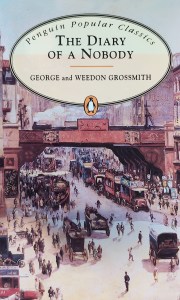 It must be rare for a fictional character to be memorialized in the dictionary. I was vaguely aware of the word “Pooterism” but thought it referred to small-minded, pompous, fussy individuals, so my preconception of City clerk Charles Pooter was probably more negative than is warranted. (In fact, “Pooterish” means taking oneself too seriously.) He’s actually a lovable, hapless Everyman who tries desperately to keep up with middle-class society but often gets it wrong. He can’t handle his champagne; and he wants so much to be funny – his are definite dad jokes avant la lettre – but only sometimes pulls it off. He regularly offends tradesmen, servants and neighbours alike, and tries but fails to ingratiate himself with his betters. Luckily, his mistakes are mild and just leave him out of favour – or pocket.

Charles and Lupin Pooter, as depicted by
Weedon Grossmith. Public domain, via Wikimedia Commons.
Originally serialized in Punch, the book is in short entries of one paragraph to a few pages, recounting the Pooters’ first 15 months in their new home. Events range from the mundane – home repairs and decoration – to the great excitement of being invited to the mayor’s ball. Charles and Carrie’s young adult son, Lupin (surely a partial inspiration for Roger Mortimer’s Dear Lupin and its sequels?), who comes back to live with them partway through, is a feckless bounder always being taken in by new money-making schemes and unsuitable ladies. Charles hopes to find Lupin steady employment and steer him away from his infatuation with Daisy Mutlar.
It’s well worth reading for its own sake, but also for the window onto daily Victorian life, including things that aren’t always recorded, such as fashion and slang. And it’s clever how Pooter’s pretensions get punctured by the others around him: longsuffering Carrie (“He tells me his stupid dreams every morning nearly”), insolent Lupin (“Look here, Guv.; excuse me saying so, but you’re a bit out of date”), and testy Gowing – that’s right, the neighbours are named Cummings and Gowing (“I would add, you’re a bigger fool than you look, only that’s absolutely impossible”). All very amusing. (Free from mall bookshop c. 2020) 
Never fear, I’m still on track to finish the challenge by the 31st!
#1970Club: Desperate Characters & I’m the King of the Castle
Simon and Karen’s classics reading weeks are always a great excuse to pick up some older books. I found on my shelves a chilly Brooklyn-set novella that has been praised to the skies by the likes of Jonathan Franzen, and then borrowed a short and unsettling novel about warring English schoolboys from the library.

Desperate Characters by Paula Fox
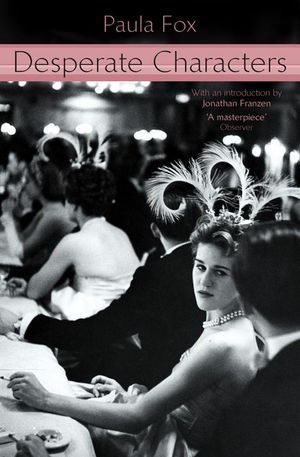 Other covers feature a cat, which is probably why this was on my radar. Don’t expect a cat lover’s book, though. The cat simply provides the opening incident. Sophie Bentwood is a forty-year-old underemployed translator; she doesn’t really need to work because her lawyer husband Otto keeps them in comfort. Feeding a feral cat, she is bitten savagely on the hand and over the next several days puts off seeking medical attention, wanting to stay in uncertainty rather than condemn herself to rounds of shots – and the cat to possible euthanasia. Both she and Otto live in this state of inertia. They were never able to have children but couldn’t take the step of adopting; Sophie had an affair but couldn’t leave Otto to commit elsewhere.
The cat bite seems to set off a chain of mishaps, culminating with the Bentwoods discovering that their house in the country has been vandalized. In the meantime, not a lot happens. The couple goes to a party and Sophie sneaks out for late-night drinks with her husband’s ex-partner, to whom she confides her affair. In Jonathan Franzen’s introduction, he compares to Bellow, Roth and Updike – but thinks Fox surpasses them all. The book explicitly references the Thoreau quote about people living lives of quiet desperation. I could sympathize with the midlife malaise depicted. As stagnant marriage stories go, this reminded me of what I’ve read by Richard Yates, just with a little less drinking. It would have made a good Literary Wives selection. In general, though, I can’t summon much enthusiasm. Given the cult classic status, I expected more. (Secondhand – Community Furniture Project, Newbury)
I’m the King of the Castle by Susan Hill
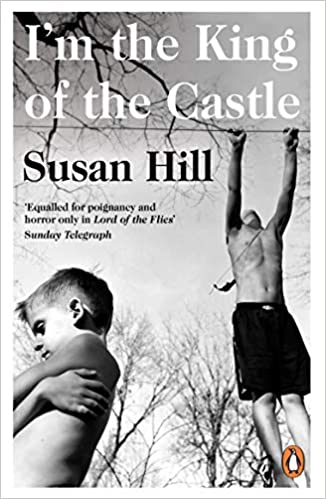 I’m almost tempted to mark this as an R.I.P. read, because it’s very dark indeed. Like The Woman in Black, it takes place in an ominous English mansion and its environs. Other scenes take place in a creepy forest and at castle ruins, adding to the Gothic atmosphere. Edmund Hooper and his father move into Warings after his grandparents’ death. Soon his father makes an unwelcome announcement: he’s hired a housekeeper, Helena Kingshaw, who will be moving in with her son, Charles, who is the same age as Edmund. Hooper writes Kingshaw (as the boys are called throughout the book, probably to replicate how they were known at their boarding schools) a note: “I DIDN’T WANT YOU TO COME HERE.”
That initial hostility erupts into psychological, and sometimes physical, abuse. Kingshaw quickly learns not to trust Hooper. “He thought, I mustn’t let Hooper know what I truly think, never, not about anything.” He tries running away to the woods but Hooper follows him; he makes friends with a local farm boy but it’s little comfort when he’ll soon be starting at Hooper’s school and it looks as if their lonely widowed parents might marry. The boys learn each other’s weaknesses and exploit them. At climactic moments, they have the opportunity to be gracious but retreat from every potential truce.
Heavy on dialogue and description, the book moves quickly with its claustrophobic scenes of nightmares come to life. Referring to the boys by surname makes them seem much older than 10 going on 11. Their antagonism is no child’s play – as the title ironically suggests – or harmless bullying. Is it evil? The reader feels for Kingshaw, the more passive one, yet what he does in revenge is nearly as bad. I was reminded somewhat of Harriet Said… by Beryl Bainbridge. It’s a deeply uncomfortable story, not least for how nature (pecking crows, cases of dead moths) is portrayed as equally menacing. (Public library)
Another 15 books from 1970 that I’ve read:
Jonathan Livingston Seagull by Richard Bach (in the running for worst book I’ve ever read)
Are You There, God? It’s Me, Margaret by Judy Blume
Runaway Ralph by Beverly Cleary
Fifth Business by Robertson Davies
84, Charing Cross Road by Helene Hanff
If Only They Could Talk by James Herriot
Ripley Under Ground by Patricia Highsmith
Crow by Ted Hughes
Moominvalley in November by Tove Jansson
Being There by Jerzy Kosiński
The Bluest Eye by Toni Morrison
Sing Down the Moon by Scott O’Dell
Love Story by Erich Segal
The Driver’s Seat by Muriel Spark
The Trumpet of the Swan by E.B. White
(Lots of children’s books there! Clearly they were considered modern classics during my 1980s childhood.)
I’ve previously participated in the 1920 Club, 1956 Club, 1936 Club, 1976 Club, 1954 Club, 1929 Club, 1940 Club and 1937 Club.
Short Stories in September (and R.I.P.): The Secret Life of Insects by Bernardo Esquinca
For the ninth year in a row, I’m making a special effort to read short stories in September; otherwise, short fiction volumes tend to languish on my shelves (and e-readers) unread. In the past few years, I’ve managed to read 11 or 12 collections during the month of September.
I don’t consider myself a great short story fan, so I was surprised to see I’ve already read 20 collections this year. Several were via a spring rereading of Carol Shields’s complete stories with Marcie (Buried in Print). Some other highlights: Cocktail by Lisa Alward, longlisted for the Carol Shields Prize; Barcelona by Mary Costello; The Beggar Maid by Alice Munro; and a speculative trio: There Is a Rio Grande in Heaven by Ruben Reyes Jr. (reviewed for BookBrowse), The Man in the Banana Trees by Marguerite Sheffer (University of Iowa Press, 5 November; reviewed for Shelf Awareness), and How We Know Our Time Travelers by Anita Felicelli (WTAW Press, 3 December; forthcoming for Foreword Reviews).
First of my dedicated reviews for the month is a set of Mexican horror stories that happens to tie into R.I.P. (I always think that’s only in October, but it technically starts on 1 September):

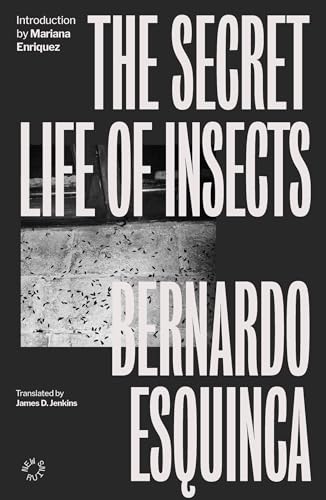
The Secret Life of Insects by Bernardo Esquinca (2023)
[Translated from the Spanish by James D. Jenkins]
Esquinca channels classic horror authors such as H.P. Lovecraft and Edgar Allan Poe in these 14 creepy stories drawn from across his career. The settings include caves, forests and abandoned apartments; and octopi, cursed dolls and dreams are among the subjects. These characters are obsessed – or possessed. As in classic ghost stories, the protagonists tend to be researchers or writers whose absolute faith in logic is shaken by encounters with the supernatural. For instance, the narrator of the title story is a forensic entomologist who makes contact with his murdered wife; the undead feature in a couple of other stories, too.
 Mysterious manuscripts and therapy appointments also recur – there’s a scholarly Freudianism at play here. In the novella-length “Demoness,” friends at a twentieth high school reunion recount traumatic experiences from adolescence (not your average campfire fare). “Our traumas define us much more than our happy moments, [Ignacio, a Jesuit priest] thought. They’re the real revelations about ourselves.” Masturbation features heavily in this and in “Pan’s Noontide,” which has both of Arturo’s wives disappear in connection with an ecoterrorism cult. I occasionally found the content a bit macho and gross-out, and wished the women could be more than just sexualized supporting figures in male fantasies.
My favourite story was “Señor Ligotti” (no doubt in homage to American horror writer Thomas Ligotti), in which a struggling novelist unwittingly signs away more than he intended when the title character offers him an apartment and then a publishing deal. The Gothic black-and-white illustrations by Luis Perez Ochando are surreal or grotesque, and recall Bosch, Dalí and Hogarth. There is an introduction by Mariana Enriquez, whose stories I found more memorable in general, and I was also reminded slightly of Agustina Bazterrica. I’m by no means a regular horror reader yet found this book consistently engaging, though I concluded it had more style than soul. 
With thanks to New Ruins (Dead Ink) for the free copy for review.
Currently reading: I Can Outdance Jesus by Willie Davis, The Woman Who Gave Birth to Rabbits by Emma Donoghue, The Forester’s Daughter by Claire Keegan, The Souvenir Museum by Elizabeth McCracken, A New Day by Sue Mell, Ladies’ Lunch by Lore Segal
Resuming soon: The Secrets of a Fire King by Kim Edwards, The Best Short Stories 2023: The O. Henry Prize Winners (ed. Lauren Groff)
Up next: The Lone Ranger and Tonto Fistfight in Heaven by Sherman Alexie, The End of the World is a Cul de Sac by Louise Kennedy, Sinking Bell by Bojan Louis, Light Box by K.J. Orr, The Forgetters by Greg Sarris, The Long Swim by Terese Svoboda
Are you a short story fan? Read any good ones recently?
#WITMonth, Part II: Wioletta Greg, Dorthe Nors, Almudena Sánchez and More
My next four reads for Women in Translation month (after Part I here) were, again, a varied selection: a mixed volume of family history in verse and fragmentary diary entries, a set of nature/travel essays set mostly in Denmark, a memoir of mental illness, and a preview of a forthcoming novel about Mary Shelley’s inspirations for Frankenstein. One final selection will be coming up as part of my Love Your Library roundup on Monday.
(20 Books of Summer, #13)
Finite Formulae & Theories of Chance by Wioletta Greg (2014)
[Translated from the Polish by Marek Kazmierski]
 I loved Greg’s Swallowing Mercury so much that I jumped at the chance to read something else of hers in English translation – plus this was less than half price AND a signed copy. I had no sense of the contents and might have reconsidered had I known a few things: the first two-thirds is family wartime history in verse, the rest is a fragmentary diary from eight years in which Greg lived on the Isle of Wight, and the book is a bilingual edition, with Polish and English on facing pages (for the poems) or one after the other (for the diary entries). I’m not sure what this format adds for English-language readers; I can’t know whether Kazmierski has rendered anything successfully. I’ve always thought it must be next to impossible to translate poetry, and it’s certainly hard to assess these as poems. They are fairly interesting snapshots from her family’s history, e.g., her grandfather’s escape from a stalag, and have quite precise vocabulary for the natural world. There’s also been an attempt to create or reproduce alliteration. I liked the poem the title phrase comes from, “A Fairytale about Death,” and “Readers.” The short diary entries, though, felt entirely superfluous. (New purchase – Waterstones bargain, 2023)
(20 Books of Summer, #14)
A Line in the World: A Year on the North Sea Coast by Dorthe Nors (2021; 2022)
[Translated from the Danish by Caroline Waight]
 Nors’s first nonfiction work is a surprise entry on this year’s Wainwright Prize nature writing shortlist. I’d be delighted to see this work in translation win, first because it would send a signal that it is not a provincial award, and secondly because her writing is stunning. Like Patrick Leigh Fermor, Aldo Leopold or Peter Matthiessen, she doesn’t just report what she sees but thinks deeply about what it means and how it connects to memory or identity. I have a soft spot for such philosophizing in nature and travel writing.
You carry the place you come from inside you, but you can never go back to it.
I longed … to live my brief and arbitrary life while I still have it.
This eternal, fertile and dread-laden stream inside us. This fundamental question: do you want to remember or forget?
Nors lives in rural Jutland – where she grew up, before her family home was razed – along the west coast of Denmark, the same coast that reaches down to Germany and the Netherlands. In comparison to Copenhagen and Amsterdam, two other places she’s lived, it’s little visited and largely unknown to foreigners. This can be both good and bad. Tourists feel they’re discovering somewhere new, but the residents are insular – Nors is persona non grata for at least a year and a half simply for joking about locals’ exaggerated fear of wolves.
Local legends and traditions, bird migration, reliance on the sea, wanderlust, maritime history, a visit to church frescoes with Signe Parkins (the book’s illustrator), the year’s longest and shortest days … I started reading this months ago and set it aside for a time, so now find it difficult to remember what some of the essays are actually about. They’re more about the atmosphere, really: the remote seaside, sometimes so bleak as to seem like the ends of the earth. (It’s why I like reading about Scottish islands.) A bit more familiarity with the places Nors writes about would have pushed my rating higher, but her prose is excellent throughout. I also marked the metaphors “A local woman is standing there with a hairstyle like a wolverine” and “The sky looks like dirty mop-water.” 
With thanks to Pushkin Press for the proof copy for review.
Pharmakon by Almudena Sánchez (2021; 2023)
[Translated from the Spanish by Katie Whittemore]
 This is a memoir in micro-essays about the author’s experience of mental illness, as she tries to write herself away from suicidal thoughts. She grew up on Mallorca, always feeling like an outsider on an island where she wasn’t a native. Did her depression stem from her childhood, she wonders? She is also a survivor of ovarian cancer, diagnosed when she was 16. As her mind bounces from subject to subject, “trying to analyze a sick brain,” she documents her doctor visits, her medications, her dreams, her retweets, and much more. She takes inspiration from famous fellow depressives such as William Styron and Virginia Woolf. Her household is obsessed with books, she says, and it’s mostly through literature that she understands her life. The writing can be poetic, but few pieces stand out on the whole. My favourite opens: “Living in between anxiety and apathy has driven me to flowerpot decorating.”
With thanks to Fum d’Estampa Press for the free copy for review.
And a bonus preview:
Mary and the Birth of Frankenstein by Anne Eekhout (2021; 2023)
[Translated from the Dutch by Laura Watkinson]
 Anne Eekhout’s fourth novel and English-language debut is an evocative recreation of two momentous periods in Mary Shelley’s life that led – directly or indirectly – to the composition of her 1818 masterpiece. Drawing parallels between the creative process and motherhood and presenting a credibly queer slant on history, the book is full of eerie encounters and mysterious phenomena that replicate the Gothic science fiction tone of Frankenstein itself. The story lines are set in the famous “Year without a Summer” of 1816 (the storytelling challenge with Lord Byron) and during a period in 1812 that she spent living in Scotland with the Baxter family; Mary falls in love with the 17-year-old daughter, Isabella.
Coming out on 3 October from HarperVia. My full review for Shelf Awareness is pending.
R.I.P. Reads, Part I: Ahlberg, Gaskell, Hinchcliffe and Watson
I don’t generally read horror or suspense, but the R.I.P. challenge is my annual excuse to pick up some slightly scarier material. For this first installment of super-short responses, I have a children’s book about a seriously problematic cat, a Victorian ghost story, and two recent Scotland-set novels about exiles haunted by the unexplained. (All: Public library)

The Improbable Cat by Allan Ahlberg (2003)
 I picked this up expecting a cute cat tale for children, only realizing afterwards that it’s considered horror. When a grey kitten wanders into their garden, Davy is less enamoured than the rest of the Burrell family. His suspicion mounts as the creature starts holding court in the lounge, expecting lavish meals and attention at all times. His parents and sister seem to be under the cat’s spell in some way, and it’s growing much faster than any young animal should. Davy and his pal George decide to do something about it. Since I’m a cat owner, I’m not big into evil cat stories (e.g., Cat out of Hell by Lynne Truss), and this one was so short as to feel underdeveloped.
 “The Old Nurse’s Story” by Elizabeth Gaskell (1852)
(collected in Gothic Tales (2000), ed. Laura Kranzler)
I had no idea that Gaskell had published short fiction, let alone ghost stories. Based on the Goodreads and blogger reviews, I chose one story to read. The title character tells her young charges about when their mother was a child and the ghost of a little girl tried to lure her out onto the Northumberland Fells one freezing winter. It’s predictable for anyone who reads ghost stories, but had a bit of an untamed Wuthering Heights feel to it.
Hare House by Sally Hinchcliffe (2022)
 The unnamed narrator is a disgraced teacher who leaves London for a rental cottage on the Hare House estate in Galloway. Her landlord, Grant Henderson, and his rebellious teenage sister, Cass, are still reeling from the untimely death of their brother. The narrator gets caught up in their lives even though her shrewish neighbour warns her not to. There was a lot that I loved about the atmosphere of this one: the southwest Scotland setting; the slow turn of the seasons as the narrator cycles around the narrow lanes and finds it getting dark earlier, and cold; the inclusion of shape-shifting and enchantment myths; the creepy taxidermy up at the manor house; and the peculiar fainting girls/mass hysteria episode that precipitated the narrator’s banishment and complicates her relationship with Cass. The further you get, the more unreliable you realize this narrator is, yet you keep rooting for her. There are a few too many set pieces involving dead animals, and, overall, perhaps more supernatural influences than are fully explored, but I liked Hinchcliffe’s writing enough to look out for what else she will write. (Readalikes: The Haunting of Hill House and Wakenhyrst)
Metronome by Tom Watson (2022)
 Ever since I read Blurb Your Enthusiasm, I’ve been paying more attention to jacket copy. This is an example of a great synopsis that really gives a sense of the plot: mysterious events, suspicion within a marriage, and curiosity about what else might be out there. Aina and Whitney believe they are the only people on their island. They live simply on a croft and hope that, 12 years after their exile, they’ll soon be up for parole. Whitney stubbornly insists they wait for the warden to rescue them, while Aina has given up thinking anyone will ever come. There’s a slight Beckettian air, then, to the first two-thirds of this dystopian novel. When someone does turn up, it’s not who they expect. The eventual focus on parenthood meant this reminded me a lot of The Road; there are also shades of The Water Cure and Doggerland (though, thankfully, the dual protagonists ensure a less overly male atmosphere than in the latter). This was an easy and reasonably intriguing read, but ultimately a bit vague and bleak for me, and not distinguished enough at the level of the prose (e.g., way too many uses of “onside”).
Winter Reads, Part II: Au, Glück, Hall, Rautiainen, Slaght
In the week before Christmas I reviewed a first batch of wintry reads. We’ve had hardly any snowfall here in southern England this season, so I gave up on it in real life and sought winter weather on the page. After we’ve seen the back of Storm Franklin (it’s already moved on from Eunice!), I hope it will feel appropriate to start right in on some spring reading. But for today I have a Tokyo-set novella, sombre poems, an OTT contemporary Gothic novel, historical fiction in translation from the Finnish, and – the cream of the crop – a real-life environmentalist adventure in Russia.
Cold Enough for Snow by Jessica Au (2022)
 This slim work will be released in the UK by Fitzcarraldo Editions on the 23rd and came out elsewhere this month from New Directions and Giramondo. I actually read it in December during my travel back from the States. It’s a delicate work of autofiction – it reads most like a Chloe Aridjis or Rachel Cusk novel – about a woman and her Hong Kong-raised mother on a trip to Tokyo. You get a bit of a flavour of Japan through their tourism (a museum, a temple, handicrafts, trains, meals), but the real focus is internal as Au subtly probes the workings of memory and generational bonds.
The woman and her mother engage in surprisingly deep conversations about the soul and the meaning of life, but these are conveyed indirectly rather than through dialogue: “she said that she believed that we were all essentially nothing, just series of sensations and desires, none of it lasting. … The best we could do in this life was to pass through it, like smoke through the branches”. Though I highlighted a fair few passages, I find that no details have stuck with me. This is just the sort of spare book I can admire but not warm to. (NetGalley)
Winter Recipes from the Collective by Louise Glück (2021)
 The only other poetry collection of Glück’s that I’d read was Vita Nova. This, her first release since her Nobel Prize win, was my final read of 2021 and my shortest, at 40-some pages; it’s composed of just 15 poems, a few of which stretch to five pages or more. “The Denial of Death,” a prose piece with more of the feel of an autobiographical travel essay, was a standout; the title poem, again in prose paragraphs, and the following one, “Winter Journey,” about farewells, bear a melancholy chill. Memories and dreams take pride of place, with the poet’s sister appearing frequently. “How heavy my mind is, filled with the past.” There are also multiple references to Chinese concepts and characters (as on the cover). The overall style is more aphoristic and reflective than expected. Few individual lines or images stood out to me.
With thanks to Carcanet Press for the e-copy for review.
The Snow Collectors by Tina May Hall (2020)
 Henna is alone in the world since her parents and twin sister disappeared in a boating accident. She lives a solitary existence with her sister’s basset hound Rembrandt in a New England village, writing encyclopaedia entries on the Arctic, until she stumbles on a corpse and embarks on an amateur investigation involving scraps of 19th-century correspondence. The dead woman asked inconvenient questions about a historical cover-up; if she takes up the thread, Henna could be a target, too. Her collaboration with the police chief, Fletcher, turns into a flirtation. After her house burns down, she ends up living with him – and his mother and housekeeper – in a Gothic mansion stuffed with birds of prey and historical snow samples. She’s at the mercy of this quirky family and the weather, wearing ancient clothing from Fletcher’s great-aunts and tramping through blizzards looking for answers.
This is a kitchen-sink novel with loads going on, as if Hall couldn’t decide which of her interests to include so threw them all in. Yet at only 221 pages, it might actually have been expanded a little to flesh out the backstory and mystery plot. It gets more than a bit ridiculous in places, but its Victorian fan fiction vibe is charming escapism nonetheless. What with the historical fiction interludes about the Franklin expedition, this reminded me most of The Still Point, but also of The World Before Us and The Birth House. I’d happily read Hall’s 2010 short story collection, too. (Christmas gift) 
Land of Snow and Ashes by Petra Rautiainen (2022)
[Translated from the Finnish by David Hackston]
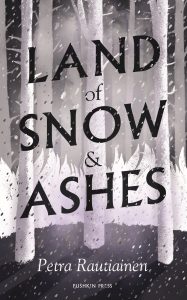 In the middle years of World War II, Finland was allied with Nazi Germany against Russia, a mutual enemy. After the Moscow Armistice, the Germans retreated in disgrace, burning as many buildings and planting as many landmines as they could (“the Lapland War”). I gleaned this helpful background information from Hackston’s preface. The story that follows is in two strands: one is set in 1944 and told via diary entries from Väinö Remes, a Finnish soldier called up to interpret at a Nazi prison camp in Inari. The other, in third person, takes place between 1947 and 1950, the early years of postwar reconstruction. Inkeri, a journalist, has come to Enontekiö to find out what happened to her husband. An amateur photographer, she teaches art to the local Sámi children and takes on one girl, Bigga-Marja, as her protégée.
Collusion and secrets; escaped prisoners and physical measurements being taken of the Sámi: there are a number of sinister hints that become clearer as the novel goes on. I felt a distance from the main characters that I could never quite overcome, such that the reveals didn’t land with as much power as I think was intended. Still, this has the kind of forthright storytelling and precise writing that fans of Hubert Mingarelli should appreciate. For another story of the complexities of being on the wrong side of history, see The Women in the Castle by Jessica Shattuck.
With thanks to Pushkin Press for the proof copy for review.
Winter words:
“Fresh snow has fallen, forming drifts across the terrain. White. Grey. Undulating. The ice has cracked here and there, raising its head in the thawed sections of the river. There is only a thin layer of ice left.”
Owls of the Eastern Ice: The Quest to Find and Save the World’s Largest Owl by Jonathan C. Slaght (2020)
Slaght has become an expert on the Blakiston’s fish owl during nearly two decades of fieldwork in the far east of Russia – much closer to Korea and Japan than to Moscow, the region is also home to Amur tigers. For his Master’s and PhD research at the University of Minnesota, he plotted the territories of breeding pairs of owls and fit them with identifying bands and data loggers to track their movements over the years. He describes these winter field seasons as recurring frontier adventures. Now, I’ve accompanied my husband on fieldwork from time to time, and I can tell you it would be hard to make it sound exciting. Then again, gathering beetles from English fields is pretty staid compared to piloting snowmobiles over melting ice, running from fire, speeding to avoid blockaded logging roads, and being served cleaning-grade ethanol when the vodka runs out.
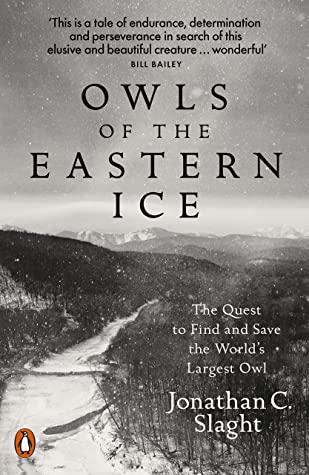 The sorts of towns Slaght works near are primitive places where adequate food and fuel is a matter of life and death. He and his assistants rely on the hospitality of Anatoliy the crazy hermit and also stay in huts and caravans. Tracking the owls is a rollercoaster experience, with expensive equipment failures and trial and error to narrow down the most effective trapping methods. His team develops a new low-tech technique involving a tray of live fish planted in the river shallows under a net. They come to know individuals and mourn their loss: the Sha-Mi female he’s holding in his author photo was hit by a car four years later.
Slaght thinks of Russia as his second home, and you can sense his passion for the fish owl and for conservation in general. He boils down complicated data and statistics into the simple requirements for this endangered species (fewer than 2000 in the wild): valleys containing old-growth forest with large trees and rivers that don’t fully freeze over. There are only limited areas with these characteristics. These specifications and his ongoing research – Slaght is now the Northeast Asia Coordinator for the Wildlife Conservation Society – inform the policy recommendations given to logging companies and other bodies.
Amid the science, this is just a darn good story, full of bizarre characters like Katkov, a garrulous assistant exiled for his snoring. (“He fueled his monologue with sausage and cheese, then belched zeppelins of aroma into that confined space.”) Slaght himself doesn’t play much of a role in the book, so don’t expect a soul-searching memoir. Instead, you get top-notch nature and travel writing, and a ride along on a consequential environmentalist quest. This is the kind of science book that, like Lab Girl and Entangled Life, I’d recommend even if you don’t normally pick up nonfiction. (Christmas gift) 
And a bonus children’s book:
If Winter Comes, Tell It I’m Not Here by Simona Ciraolo (2020)

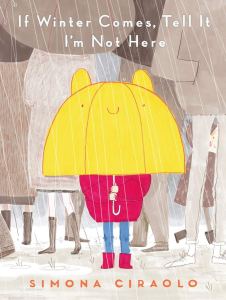 The little boy loves nothing more than to spend hours at the swimming pool and then have an ice cream cone. His big sister warns him the carefree days of summer will be over soon; it will turn cold and dark and he’ll be cooped up inside. Her words come to pass, yet the boy realizes that every season has its joys and he has to take advantage of them while they last. Cute and colourful, though the drawing style wasn’t my favourite. And a correction is in order: as President Biden would surely tell you, ice cream is a year-round treat! (Public library)
Any snowy or icy reading (or weather) for you lately?
New Networks for Nature 2021 Conference in Bath
 Hard to believe, but this past weekend was my seventh time attending the New Networks for Nature conference. It was held in Bath on this occasion, after a number of years in Stamford plus once each in Cambridge, York, and online (last year, of course). I happen to have written about it in most other years (2015, 2016, 2018, 2019 and 2020), and this year’s programme was so brilliant it would be a shame not to commemorate it. The weekend in Bath started off in a wonderful way: I was finally able to meet Susan of A life in books in person. We talked blogs and book prizes (and Covid and cats) over hot drinks by the Abbey square, and I even got her to sign my copy of her book, the Bloomsbury Essential Guide for Reading Groups.
As I’ve mentioned before, what makes New Networks for Nature special is the interdisciplinary approach: artists, poets, musicians, activists, academics and conservationists attend and speak. The audience, let alone the speakers’ roster, is a who’s who of familiar names and faces from the UK nature writing world. So although the event might seem geared more towards my ecologist husband, there’s always plenty to interest me, too. The conference planners make ongoing efforts to diversify the programme: this year there were several all-female panels and seven BIPOC appeared on stage. It was a hybrid event in two senses: people could live-stream from home if not comfortable attending in person, and a few speakers appeared on the screen from locations as far-flung as India and New Zealand.

Exploring the Kennet & Avon canal (which also runs behind our house) one lunchtime. Photo by Chris Foster.
I hadn’t had much time to peruse the programme before the conference began. Without exception, the sessions surpassed my expectations. The opening event on the Friday evening was, fittingly, about the question of inclusivity. Nicola Chester, author of On Gallows Down; Anita Roy, part of the Transition Town Wellington movement and co-editor of Gifts of Gravity and Light; and David Lindo, known as “The Urban Birder,” had a discussion with Seb Choudhury about access to ‘the countryside’, which they agreed is perhaps an unhelpful term that discourages people from going out and experiencing the wildlife on their doorstep.

Saturday opened with a panel on art and environmental awareness. Harriet Mead welds sculptures out of found objects, Rachel Taylor is a scientist who makes birds out of glass, and Sarah Gillespie is a landscape painter whose prints of moths are so lifelike you’d swear they’re photographs. Gillespie spoke for all of them when she said that attention breaks down the dualism between self and other, creating an exchange of energies, with the artist serving as the watchman. These observations appeared to hold true for nature writing as well.
Scientists and writers alike commented on plastics in the environment and species migration. Did you know that 500,000 tons of plastic food packaging is created in the UK per year? Or that dolphins form allyships and have a culture? In the afternoon we met three teenage climate activists who have been involved in school strikes, COP26 protests, and volunteering to cultivate green spaces. Their public speaking ability was phenomenal. A final session of the day was with Julian Hector, head of the BBC Natural History Unit. He showed clips from some of the most famous nature documentaries made during his tenure and polled the room about how they feel about the use of music for emotional manipulation.

Eurasian Curlew, photographed by Andreas Trepte, CC BY-SA 2.5, via Wikimedia Commons.
Speaking of music, the highlight of the conference came about due to the unlikely friendship between Mary Colwell, writer and curlew conservation activist, and singer/songwriter David Gray, who met her after he donated to one of her campaigns and has since gone along on one of her fundraising walks, narrated and scored a short documentary on curlews (you can watch it here), and contributed a song to a forthcoming RSPB-funded album inspired by curlews. We had the absolute treat of attending his first public performance in over two years on the Saturday evening at St Swithin’s Church, a venue that holds perhaps 200 people – versus next year he’ll be filling 20,000-seat stadiums for his White Ladder 20th anniversary tour.
This was carefully billed as an evening in conversation with David Gray rather than a gig, but in the end we got seven songs performed live at the church piano, as opposed to the three originally planned, so I call that a win! Other song excerpts were played over the sound system: “Let the Truth Sting” from his ‘angry young man’ phase, “Accumulates” as an anti-consumerism screed, and “Gulls” (based on an obscure Belgian poem) and “The Sapling” to illustrate how nature imagery enters into his lyrics.

Raised in Pembrokeshire, Gray loved going out on a fishing boat with his neighbours and seeing the seabirds massing around Skomer Island. He said he doesn’t think he’s ever gotten over those childhood experiences, and now he welcomes every sighting of a barn owl near his home in Norfolk (and encouraged us all to start gluing ourselves to roads). One of the songs he performed was indeed “The White Owl,” from Skellig, released early this year. Subtler than some of his albums, it was mostly recorded in a live setup and is built around simple, almost chant-like repeats and harmonies. That incantatory beauty was evident on another song he played live, “No False Gods,” which I didn’t realize has at its core a line from a Nan Shepherd poem: “We are love’s body or we are undone.”

Gray finished the official programme with his unreleased curlew song, “The Arc,” but came back for an encore of “Birds of the High Arctic,” “All that We Asked For” and “Sail Away” – this last to great cheers of recognition. He couldn’t figure out how to finish it after the whistling so just gave a few last plinks and then a hearty laugh as he returned to the stage to answer questions. We were impressed with his eloquence, sense of humour and BIG voice, especially on “Ain’t No Love” (from what has been our favourite of his albums, 2005’s Life in Slow Motion) – I got the feeling he barely needed a microphone to fill the whole church.
Sunday morning opened, appropriately, with a panel on nature and spirituality, featuring Satish Kumar, an octogenarian peace pilgrim to nuclear sites; Jini Reddy, author of Wanderland; and Nick Mayhew-Smith, who’s travelled to places of Celtic spirituality around the British Isles, such as hermits’ caves. Kumar led us in a meditation on gratitude and belonging, and suggested that we are all connected, and all spiritual, because we all share the same breath. He described the world’s religions as many tributaries of the same river.
Perhaps my favourite session of all was on the role of nature in weird and Gothic literature. Authors Maggie Gee and Laura Jean McKay (both appearing via video link), and Ruth Padel, a New Networks stalwart, conversed with Bath Spa professor Richard Kerridge. Gee has been writing about climate change in her novels for nearly 40 years; she said the challenge is to make the language fresh again and connect with readers subliminally and emotionally, without preaching or lecturing. She called The Red Children, coming out in March, a future fairy tale, comic and hopeful, and read from the beginning, including a raven’s speech.
 This connected with McKay’s The Animals in That Country, from which she read the passage where Jean realizes she can hear the lab mice talking to her. McKay said speculative fiction has been edging ever closer to reality in recent years; she recently realized she was reading Ling Ma’s zombie novel Severance as a guide to surviving the pandemic. In her opinion, novels are to open doors and ask questions – the opposite of what politicians do. Padel added that attention can be an antidote to eco-grief, with art a framework for creating resolution.
 Longer sessions were punctuated with readings (from On Gallows Down and Samantha Walton’s Everybody Needs Beauty), performances (Merlyn Driver, who grew up without electricity and not going to school on Orkney, proposed the curlew album to the RSPB and played his song “Simmer Dim”) or short films – one on the plastic pollution encountered by a stand-up paddle boarder travelling the length of the Severn river and another on the regenerative farming a young couple are doing in Spain at Wild Finca.
The closest we came to a debate over the weekend was with the final session on ecotourism. Representing the pro side was Ian Redmond, who works with mountain gorillas in Rwanda. The $1500 fee that each group of tourists pays to be taken into the reserve goes directly to conserving their habitat. But to get there people burn carbon flying long distances, and Nick Acheson finds that unconscionable. After 20 years as a wildlife guide to the amazing animals of Madagascar and South America, he’s vowed never to fly again. He stays close to home in Norfolk and travels by bike. His statistics were arresting and his argumentation hard to counter. Think hard about your motivation, he challenged. If you truly want to help local people and wildlife, donate money instead. The white saviour mentality is a danger here, too.
Much food for thought, then, though always in the back of the mind is the knowledge that (as some speakers did say aloud) this event preaches to the choir. How to reach those who haven’t fallen in love with the natural world, or haven’t woken up to the climate crisis? Those questions remain, but each year we have NNN to recharge the batteries.
Next time the conference will be back to York for the first weekend of November, with a tagline of “Survive, Thrive, Revive.” I’m looking forward to it already!
Would any of the conference’s themes or events have interested you?
Daphne du Maurier Reading Week: My Cousin Rachel (1951)
It’s probably a decade or more since I read anything by Daphne du Maurier. The three novels of hers that I know are Rebecca (of course), Jamaica Inn, and The House on the Strand. HeavenAli’s annual reading week was the excuse I needed to pick up the copy of My Cousin Rachel that I grabbed from the closed-down free bookshop in the mall about a year ago as we were clearing it out. I’m glad I finally got to this one: it has a gripping storyline and the title character is a complex woman it’s impossible to make up your mind about.
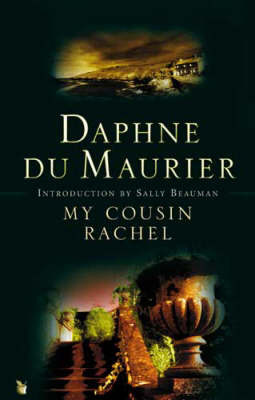 To start with, we have an opening line that’s sure to make my year-end superlatives post: “They used to hang men at Four Turnings in the old days.” The whole first chapter is heavy with foreboding, most of which I didn’t pick up on. It’s clear at once that the narrator, a young man named Philip Ashley, feels guilty for the situation he finds himself in, but can’t decide whether Rachel shares his culpability. Philip is the ward and heir of his older cousin, Ambrose, who winters in Florence for his health but on his latest trip marries Rachel, a widow and distant half-Italian cousin who also has roots in Cornwall, and stays in Italy.
From what little he learns of her through Ambrose’s increasingly incoherent letters, Philip is predisposed to dislike Rachel. When Ambrose dies of a suspected brain tumour, Philip is alarmed to hear that Rachel has already emptied their Florence villa and is reluctant to meet her when she arrives in Plymouth some weeks later. But she is not what he expected: just 35 and beautiful; with a passion for garden design and herbal medicine; witty and gently flirtatious. Before long Philip is smitten. “Why, in heaven’s name, did she have to be so different and play such havoc with my plans?”
The plot revolves around Ambrose’s unsigned will and what it means for the ownership of the Ashleys’ Cornwall estate. Philip is now 24, but on his 25th birthday, which happens to fall on April Fool’s Day, he will come into his inheritance and can make his own decisions. Will Rachel, notorious for her extravagant spending, bewitch him into altering the will to her advantage? A pearl necklace, hidden letters, a beggar woman, churchyard conversations, tisanes, lavish curtains, and a foppish Italian visitor form the backdrop to this Gothic tale.
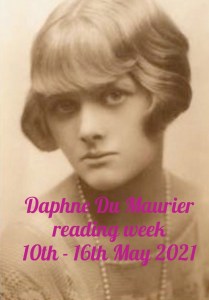 I never succeeded in dating the action: the only major clue is that it takes three weeks to travel between southwest England and Florence, which seems to point to the nineteenth century. But a lack of definite markers makes the story feel timeless and almost like a fairy tale. Although she shrewdly looks out for her own interests and can manipulate Philip’s emotions, Rachel is no stereotypical witch. Sally Beauman’s introduction to my Virago paperback usefully points out that we only ever see Rachel through the male gaze (Philip’s perhaps unreliable narration and Ambrose’s letters) and that from the title onward she is defined in relation to men. In making a bid for her own independent life, she is the true heroine of what Beauman calls du Maurier’s “most overtly feminist” novel.
I always love the murky atmosphere of du Maurier’s work, but can find her plots contrived. However, this ended up being my favourite of the four I’ve read so far. Initially, it reminded me of E.M. Forster’s Where Angels Fear to Tread, while by the end I was wondering if Janet Fitch took it as inspiration for White Oleander. There’s an unusual pair for you! Make of it what you will…
What else should I read by du Maurier?
R.I.P. Part II: Wakenhyrst by Michelle Paver
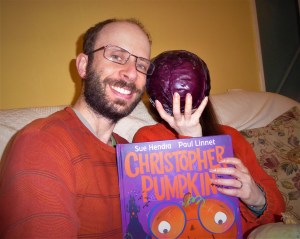
A rainy and blustery Halloween here in southern England, with a second lockdown looming later in the week. I haven’t done anything special to mark Halloween since I was in college, though this year a children’s book inspired me to have some fun with our veg box vegetables for this photo shoot. Just call us Christopher Pumpkin and Rebecca Red Cabbage.
It’s my third year participating in R.I.P. (Readers Imbibing Peril). In each of those three years I’ve reviewed a novel by Michelle Paver. First it was Thin Air, then Dark Matter – two 1930s ghost stories of men undertaking an adventure in a bleak setting (the Himalayas and the Arctic, respectively). I found a copy of her latest in the temporary Little Free Library I started to keep the neighborhood going while the public library was closed during the first lockdown.

Wakenhyrst by Michelle Paver (2019)
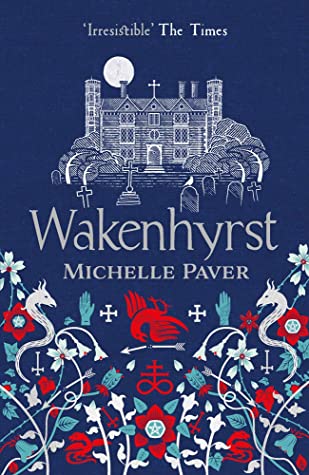 There’s a Gothic flavor to this story of a mentally unstable artist and his teenage daughter. Edmund Stearne is obsessed with the writings of Medieval mystic Alice Pyett (based on Margery Kempe) and with a Bosch-like Doom painting recently uncovered at the local church. Serving as his secretary after her mother’s death, Maud reads his journals to follow his thinking – but also uncovers unpleasant truths about his sister’s death and his relationship with the servant girl. As Maud tries to prevent her father from acting on his hallucinations of demons and witches rising from the Suffolk Fens, she falls in love with someone beneath her class. Only in the 1960s framing story, which has a journalist and scholar digging into what really happened at Wake’s End in 1913, does it become clear how much Maud gave up.
There are a lot of appealing elements in this novel, including Maud’s pet magpie, the travails of her constantly pregnant mother (based on the author’s Belgian great-grandmother), the information on early lobotomies, and the mixture of real (eels!) and imagined threats encountered at the fen. The focus on a female character is refreshing after her two male-dominated ghost stories. But as atmospheric and readable as Paver’s writing always is, here the plot sags, taking too much time over each section and filtering too much through Stearne’s journal. After three average ratings in a row, I doubt I’ll pick up another of her books in the future.
My rating:
My top R.I.P. read this year was Sisters by Daisy Johnson, followed by 666 Charing Cross by Paul Magrs (both reviewed here).
Have you been reading anything spooky for Halloween?
Six Degrees of Separation: From The Turn of the Screw to The Cider House Rules
This month we’re starting with The Turn of the Screw, a Gothic horror novella about a governess and her charges – and one of only two Henry James novels I’ve read (the other is What Maisie Knew; I’ve gravitated towards the short, atypical ones, and even in those his style is barely readable). Most of my links are based on title words this time, along with a pair of cover images.
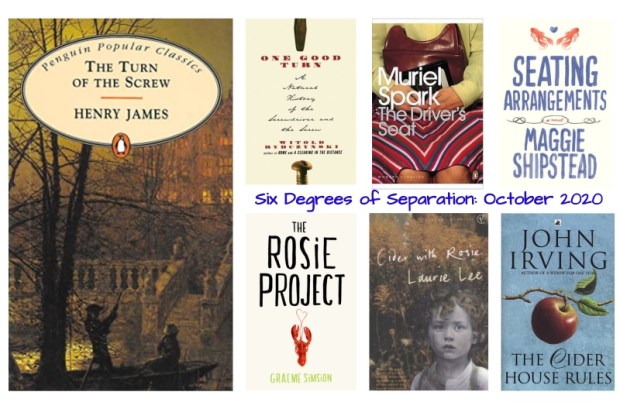
#1 On our trip to Hay-on-Wye last month, I was amused to see in a shop a book called One Good Turn: A Natural History of the Screwdriver and the Screw (2000) by Witold Rybczynski. A bit of a niche subject and nothing I can ever imagine myself reading, but it’s somehow pleasing to know that it exists.

#2 I’m keen to try Muriel Spark again with The Driver’s Seat (1970), a suspense novella with a seam of dark comedy. I remember reading a review of it on Heaven Ali’s blog and thinking that it sounded deliciously creepy. My plan is to get it out from the university library to read and review for Novellas in November.
#3 Seating Arrangements by Maggie Shipstead was one of my favorite debut novels of 2012. An upper-middle-class family prepares for their heavily pregnant daughter’s wedding weekend on an island off Connecticut. Shipstead is great at capturing social interactions. There’s pathos plus humor here; I particularly liked the exploding whale carcass. I’m still waiting for her to come out with a worthy follow-up (2014’s Astonish Me was so-so).

#4 The cover lobsters take me to The Rosie Project (2013) by Graeme Simsion, the first and best book in his Don Tillman trilogy. A (probably autistic) Melbourne genetics professor, Don decides at age 39 that it is time to find a wife. He goes about it in a typically methodical manner, drawing up a 16-page questionnaire, but still falls in love with the ‘wrong’ woman.
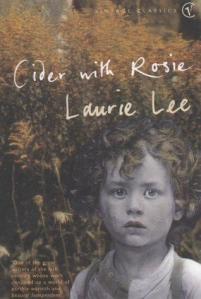
#5 Earlier in the year I reviewed Cider with Rosie (1959) by Laurie Lee as my classic of the month and a food-themed entry in my 20 Books of Summer. It’s a nostalgic, evocative look at a country childhood. The title comes from a late moment when Rosie Burdock tempts the adolescent Lee with alcoholic cider and kisses underneath a hay wagon.
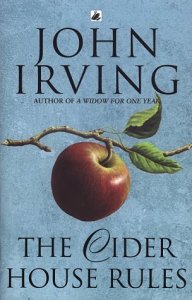
#6 My current reread is The Cider House Rules (1985), one of my favorite John Irving novels. Homer Wells is the one kid at the St. Cloud’s, Maine orphanage who never got adopted. Instead, he assists the director, Dr. Wilbur Larch, and later runs a cider factory. Expect a review in a few weeks – this will count as my Doorstopper of the Month.
Going from spooky happenings to apple cider, my chain feels on-brand for October!
Join us for #6Degrees of Separation if you haven’t already! (Hosted the first Saturday of each month by Kate W. of Books Are My Favourite and Best. Her introductory post is here.) Next month is a wildcard: start with a book you’ve ended a previous chain with.
Have you read any of my selections? Are you tempted by any you didn’t know before?
 Bookish Beck = Rebecca Foster. American transplant to England. Freelance proofreader and book reviewer.
 Bookish Beck