All Souls’ Day Reading: Armitage, Campbell, Mah & Perry
Along with my Halloween-tide R.I.P. reading (here and here), I’ve been reading books about ancestors and the dead – appropriate for All Saints’ Day (yesterday) and All Souls’ Day (today). Both are in the Church calendar but less a part of popular culture.
My mind naturally turns toward the dead as October advances: on the 30th, it was three years since my mother’s death (plus the 25th marked a year since we started losing sweet Alfie). To allay dread at the impending anniversary, I booked myself a treat to look forward to that day. For some reason, Wantage Literary Festival included a Gin Tasting Extravaganza alongside its bookish events. I didn’t fancy any book talks but was keen to try 10 British Isles gins, 9 of which were new to me and 5 of which were ticks in my 101 Gins to Try before You Die book.


Beforehand, I did some secondhand book shopping. Regent is an excellent and enormous maze of a bookshop that I’d been to once before. It has an exhaustive selection and great prices (£2.50 paperbacks / £3–5 hardbacks) that haven’t changed in three years. I considered this return trip a chance for another birthday book haul and was delighted with my finds (the Gleeson was from a charity shop in the town).


My All Souls’ stack includes a poetry collection and three #NonfictionNovember reads.
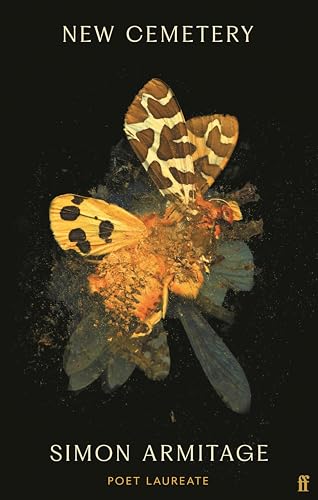
New Cemetery by Simon Armitage (2025)
Not far from the English Poet Laureate’s home in Huddersfield, some cow fields were recently converted into a municipal graveyard. I can’t do better than Armitage’s own description of the style in this collection: “short-lined tercets linked with/by intermittent rhymes and half-rhymes … like threading daisy chains.” Each one is titled in brackets after a species of moth, in a rather arbitrary way, as he acknowledges. The point was to – in a time of climate breakdown – include nature in the inevitable march of death and decay. I most liked the poems about the cemetery, whereas the majority of the book is about everyday moments from a writer’s life.
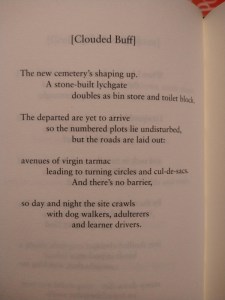
There are some amusing and poignant lines among the rest:
 I died and went
to Bristol Parkway
for my sins,
interchange
between soul and flesh
the whispered half-rhymes
of earth and death
on the spade’s tongue.
I also appreciated this haiku-like stanza: “Almond blossom / slash rotten confetti / clogging the church drains.” But there was little that struck me otherwise. I’ve tried to love Armitage’s poetry, but this third experience again leaves me unmoved. I’ve preferred his travel memoirs. Still, the book ends on the perfect note:
the dead are patiently
killing time
between visiting hours,
deaf, blind, mute
and numb,
unable to love
but capable still
of being loved.
(Public library) 
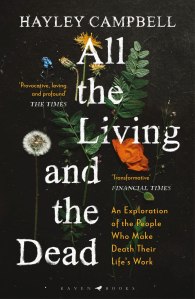 I’ve read the first two chapters of a long-neglected review copy of All the Living and the Dead by Hayley Campbell (2022), in which she shadows various individuals who work in the death industry, starting with a funeral director and the head of anatomy services for the Mayo Clinic in Minnesota. In Victorian times, corpses were stolen for medical students to practice on. These days, more people want to donate their bodies to science than can usually be accommodated. The Mayo Clinic receives upwards of 200 cadavers a year and these are the basis for many practical lessons as trainees prepare to perform surgery on the living. Campbell’s prose is journalistic, detailed and matter-of-fact, but I’m struggling with the very small type in my paperback. Upcoming chapters will consider a death mask sculptor, a trauma cleaner, a gravedigger, and more. If you’ve enjoyed Caitlin Doughty’s books, try this.
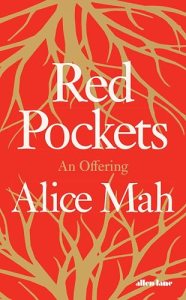 I’m halfway through Red Pockets: An Offering by Alice Mah (2025) from the library. I borrowed it because it was on the Wainwright Prize for Conservation Writing shortlist. During the Qingming Festival, the Chinese return to their hometowns to honour their ancestors. By sweeping their tombs and making offerings, they prevent the dead from coming back as hungry ghosts. When Mah, who grew up in Canada and now lives in Scotland, returns to South China with a cousin in 2017, she finds little trace of her ancestors but plenty of pollution and ecological degradation. Their grandfather wrote a memoir about his early life and immigration to Canada. In the present day, the cousins struggle to understand cultural norms such as gifting red envelopes of money to all locals. This is easy reading but slightly dull; it feels like Mah included every detail from her trips simply because she had the material, whereas memoirs need to be more selective. But I’m reminded of the works of Jessica J. Lee, which is no bad thing.
Death of an Ordinary Man by Sarah Perry (2025)
Perry recognises what a sacred privilege it was to witness her father-in-law’s death, which occurred just nine days after his diagnosis with oesophageal cancer. She concludes, like Simone de Beauvoir does of her mother in A Very Easy Death, that David’s end was as good as one might hope for. Viz., he was in his late seventies, remained at home, was looked after by his son and daughter-in-law, more or less maintained his mental capacity until the end, and showed minimal signs of pain or distress. Still, every death is fraught, to some degree, with bureaucracy, medical error and pangs of regret. There is a searing encounter here with an unfeeling GP; on the other hand, there is such kindness from nurses, relatives and a pastor.
The beauty of Perry’s memoir is its patient, clear-eyed unfolding of every stage of dying, a natural and inexorable process that in other centuries would have been familiar to anyone – having observed it with siblings, children, parents, neighbours, distant relatives and so on. She felt she was joining a specifically womanly lineage of ministering, a destiny so quotidian that she didn’t feel uncomfortable with any of the intimate care involved. I thought of my sister and her mother- and sister-in-law sitting vigil at my brother-in-law’s deathbed in 2015.
 Perry traces the physical changes in David as he moved with alarming alacrity from normal, if slowed, daily life to complete dependency to death’s door. At the same time, she is aware that this is only her own perspective on events, so she records her responses and emotional state and, to a lesser extent, her husband’s. Her quiver of allusions is perfectly chosen and she lands on just the right tone: direct but tender. Because of her and David’s shared upbringing, the points of reference are often religious, but not obtrusive. My only wish is to have gotten more of a sense of David alive. There’s a brief section on his life at the start, mirrored by a short “Afterlife” chapter at the end telling what succeeded his death. But the focus is very much on the short period of his illness and the days of his dying. During this time, he appears confused and powerless. He barely says anything beyond “I’m in a bit of a muddle,” to refer to anything from incontinence to an inability to eat. At first I thought this was infantilizing him. But I came to see it as a way of reflecting how death strips everything away.
As I read, I often had tears in my eyes, thinking of the deaths I have experienced at second hand and the many more that will come my way until my own. In this gift of a book, Perry captures the emotional poles of bearing witness, and the dignity and uniqueness of every life:
There was relief, and there was loss – it was the saddest thing we’d ever seen, and the best thing we had ever done – all these things existing together undiminished, and never cancelling each other out.
now I understand there are no ordinary lives – that every death is the end of a single event in time’s history: an event so improbable it represents a miracle, and irreplaceable in every particular.
(Public library) 
Death and grief are common topics in my stacks at all times of year. I see more books on dying and the dead in my immediate future, starting with two rereads for #NovNov – The Death of Ivan Ilych and Death in Venice, along with The Field by Robert Seethaler (narrated by the inhabitants of a cemetery), the latter two for #GermanLitMonth; and A Single Man by Christopher Isherwood.
Book Serendipity, Mid-December 2024 to Mid-February 2025
I call it “Book Serendipity” when two or more books that I read at the same time or in quick succession have something in common – the more bizarre, the better. This is a regular feature of mine every couple of months. Because I usually have 20–30 books on the go at once, I suppose I’m more prone to such incidents. People frequently ask how I remember all of these coincidences. The answer is: I jot them down on scraps of paper or input them immediately into a file on my PC desktop; otherwise, they would flit away!
The following are in roughly chronological order.
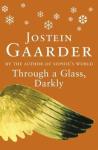
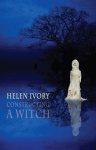
- The angel Ariel appears in Through a Glass Darkly by Jostein Gaarder and Constructing a Witch by Helen Ivory.
- The protagonist’s surname is English in Wild Houses by Colin Barrett and The Cannibal Owl by Aaron Gwyn.
- I read scenes of grief over a tree being cut down / falling next to one’s house in Dispersals by Jessica J. Lee and Small Rain by Garth Greenwell, one right after the other.
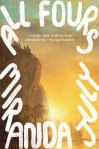
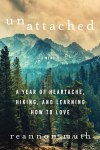
- A mother who does kundalini yoga in All Fours by Miranda July and Unattached by Reannon Muth.
- The idea that happiness (unlike anxiety and sorrow) leaves no trace in writing or in life appeared for me on the same day in Memorial Days by Geraldine Brooks and Small Rain by Garth Greenwell.
- Someone considers suicide by falling but realizes that at the current height they would injure themself but not die in Wild Houses by Colin Barrett, The Snow Queen by Michael Cunningham, and The Courage Consort by Michel Faber.
- The homosexual “bear” stereotype appears in The Snow Queen by Michael Cunningham and Small Rain by Garth Greenwell.
- A William Blake epigraph in Open, Heaven by Seán Hewitt and one of the poems included in Poetry Unbound by Pádraig Ó Tuama.
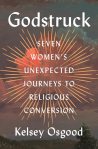
- A group biography including nine pen portraits (plus the author): Nine Minds by Daniel Tammet, followed in quick succession by Uneven by Sam Mills. (Similar, but with just seven subjects, is a book I’m currently reading about women’s religious conversions, Godstruck by Kelsey Osgood.)
- A book–life serendipity moment: in All Fours by Miranda July there is mention of an elderly cat named Alfie who needs to be given medication several times a day. Snap!
- By chance, I started reading Myself and Other Animals, a posthumous collection of short autobiographical pieces by Gerald Durrell, on his centenary (7 January 2025).
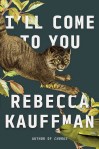
- Guilt over destroying a bird’s nest in The Book of George by Kate Greathead and I’ll Come to You by Rebecca Kauffman.
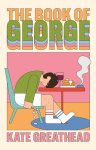
- The main female character has a birthmark in The Book of George by Kate Greathead and The Blindfold by Siri Hustvedt.
- Reading two novels at the same time that open with a new family having to be found for a little boy because his mentally ill mother is presumed to have died by suicide: Unexpected Lessons in Love by Bernardine Bishop and Going Home by Tom Lamont.
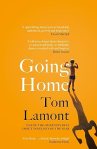 The protagonist is mistaken for a two-year-old boy’s father in The Book of George by Kate Greathead and Going Home by Tom Lamont.
- The mother is named Ellen in The Book of George by Kate Greathead and I’ll Come to You by Rebecca Kauffman.
- An ailing elderly father named Vic in Going Home by Tom Lamont and The God of the Woods by Liz Moore.
- A mother is sent to a mental hospital after the loss of her young son in Invisible by Paul Auster and The God of the Woods by Liz Moore.
- A brother and sister share a New York City apartment in Invisible by Paul Auster and The Book of George by Kate Greathead.
- A mention of the Japanese artist Hokusai in While the Earth Holds Its Breath by Helen Moat and The Secret Life of Snow by Giles Whittell.
 Adults dressing up for Halloween in The Blindfold by Siri Hustvedt and I’ll Come to You by Rebecca Kauffman.
- A second husband named Tim in Unexpected Lessons in Love by Bernardine Bishop and Because We Must by Tracy Youngblom.
- The idea that ‘queers find each other’ in Edge of the World: An Anthology of Queer Travel Writing edited by Alden Jones and My Autobiography of Carson McCullers by Jenn Shapland.
- Experiencing 9/11 as a freshman in college (just like me!) in Dirty Kitchen by Jill Damatac and The Book of George by Kate Greathead. (There is also a 9/11 section in Confessions by Catherine Airey.)
- An intense poker game in I’ll Come to You by Rebecca Kauffman and Going Home by Tom Lamont.
 The main character is expelled on false drug possession charges in Invisible by Paul Auster and Alligator Tears by Edgar Gomez.
- Missing the chance to say goodbye before a father’s death, and a parent wondering aloud to their son whether they’ve been a good parent in The Book of George by Kate Greathead and The Remains of the Day by Kazuo Ishiguro.
- Someone departs suddenly, leaving her clothes and books behind, in Invisible by Paul Auster and My Autobiography of Carson McCullers by Jenn Shapland.
- Mentions of DACA (Deferred Action for Childhood Arrivals, an Obama-era U.S. immigration policy) and “Two-Buck Chuck” (a nickname for the Charles Shaw bargain wine sold at Trader Joe’s) in Dirty Kitchen by Jill Damatac and Alligator Tears by Edgar Gomez.
- A City Hall wedding in New York City in Baumgartner by Paul Auster and Dirty Kitchen by Jill Damatac.
- Polish Jewish heritage and a parent who died of pancreatic cancer in Baumgartner by Paul Auster and The History of Love by Nicole Krauss.
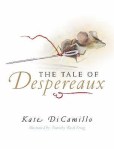
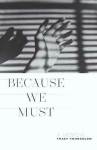
- In Because We Must by Tracy Youngblom, she reads The Tale of Despereaux by Kate DiCamillo aloud to her son while he is recovering in hospital. I was reading Despereaux at the same time! (Also, in real-life serendipity, Youngblom and I both have a sister named Trish.)
- A code of 1–3 knocks is used in Confessions by Catherine Airey and The History of Love by Nicole Krauss.
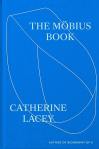 A scene of a teacup breaking in Junction of Earth and Sky by Susan Buttenwieser and The Möbius Book by Catherine Lacey.
What’s the weirdest reading coincidence you’ve had lately?
Review: The Tidal Year by Freya Bromley (2023)
The Nero Book Awards category winners will be announced on Tuesday. I haven’t had a chance to read as many of the nominees as I would like, but I’m catching up on one that I’ve wanted to read ever since I first heard about it early last year. Even though Stephen Collins sums up about my feelings about coldwater swimming well in this cartoon –

– I was drawn to The Tidal Year for several reasons. First off, I’ll read just about any bereavement memoir going. Second, I love following along on a year challenge. Third, even though I haven’t been much of a swimmer since childhood, I appreciate how outdoor swimming combines observation of nature and the seasons with achievable bodily exploits; you don’t have to be an exercise nut or undergo lots of training to get into it. There was a spate of swimming memoirs back in 2017, including Jessica J. Lee’s superb Turning and Ruth Fitzmaurice’s I Found My Tribe. Headlines often tout the physical benefits of coldwater swimming, but it’s the emotional benefits that Bromley emphasizes in this record of facing grief and opening up to love.
Bromley was the middle of five children but her boisterous family’s dynamic went out of kilter when her younger brother Tom was diagnosed with bone cancer and died at age 19. Suddenly she could hardly talk to her mother, let alone to Tom’s twin, Emma. Isolated in London, where she worked in music journalism, she roped her friend Miri into wild swimming excursions and threw herself into Internet dating. She and Miri concocted a plan to swim in all of Britain’s mainland tidal pools (saltwater enclosed by manmade elements) in a year; she started seeing Jem, a free-spirited documentary filmmaker – but also Flip, a Black actor she met when he came to buy her neighbour’s antique chairs; he nicknamed her “Poet” and encouraged her in her writing.
Each short chapter is identified by a place name and its geographical coordinates. Most often, these correspond to a swimming destination, but they can also be clues to interludes or flashbacks, whether set in London (“Jem’s Skylight”), on the last night she spent by Tom’s hospital bedside, or at the Brecon Beacons home her parents moved to after Tom’s death. A lot of the tidal pools are in Devon and Cornwall, but she and Miri also make expeditions to Scotland and Wales and elsewhere along the south coast.

At a certain point Bromley realizes that they aren’t going to hit every single pool before the year is over, but the goal starts to matter less than the slow internal transformation that’s taking place. “Swimming had been a way for me to rediscover my body as a place of power, play and movement.” We see the gradual shifts: she’s more able to talk about Tom, she commits to her writing through a Cambridge course, she’s a supportive big sister to Emma, and she breaks it off with one of the boyfriends.
I had to suppress my judgemental side here. I know monogamy is not a universal value, especially among a younger generation, and Bromley does acknowledge that she was behaving badly in stringing two partners along – grief leads people to make decisions they might not normally. The other niggle for this pedantic proofreader was the non-standard way of introducing dialogue. Bromley chose to put all dialogue in italics – fine with me – but doesn’t consistently bracket phrases with “I said” or “she asked.” Usually it’s clear enough, but sometimes the interruption of speech with gesture is downright maddening, e.g., “There’s this, I blew on the tea, well inside me” and “It’s magic isn’t it, Miri rolled down her window”.
But I was (mostly) able to excuse this stylistic quirk because Bromley writes so acutely about herself and others, giving a lucid sense of the passage of time and the particularities of place. She’s observant and funny, too. “I find what people often mean when they say ‘resilient’ is that they want people to be good at suffering in silence.” Youthful, playful, sexy: those are unusual characteristics for a book on the fringes of nature writing. The voice was distinctive enough that, though I’ve rarely met a 400+-page book that couldn’t stand to be closer to 300, I thoroughly enjoyed my time spent with it.
The Nero Awards judges chose an all-female inaugural shortlist made up of four works of opinionated nonfiction. I’ve read the first 42 pages of Undercurrent, Natasha Carthew’s memoir of growing up in poverty in Cornwall, and will probably leave it there; I didn’t care for the writing in Fern Brady’s Strong Female Character, her memoir of being a young autistic woman (it’s said to be funny but I didn’t get the humour). Hags, Victoria Smith’s book about the societal marginalizing of older women, is the sort of book I’d skim from the library but am unlikely to read in its entirety. I would have been very happy for Bromley to win. 
With thanks to Coronet (Hodder & Stoughton) for the free copy for review.
Review Catch-Up: Jhalak and Women’s Prize Nominees, Etc.
Another in an ongoing series as I catch up on the current and previous year releases I’ve been sent for review. Today I have four books by women: a poetry collection about living between countries and languages, a magic realist novel about vengeful spirits in Vietnam, a memoir in verse about the disabled body and queer parenting, and a novel set in gentrifying Puerto Rican neighbourhoods of New York City.
From the Jhalak Prize longlist:
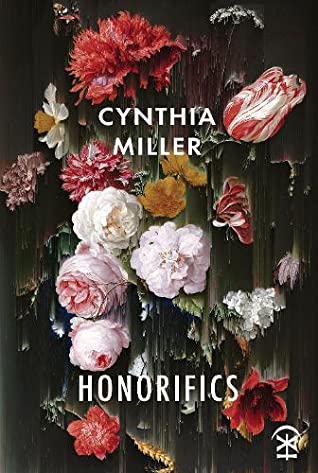
Honorifics by Cynthia Miller (2021)
Miller is a Malaysian American poet currently living in Edinburgh. Honorifics was also shortlisted for the Forward Prize for Best First Collection. Its themes resonate with poetry I’ve read by other Asian women like Romalyn Ante and Jenny Xie and with the works of mixed-race authors such as Jessica J. Lee and Nina Mingya Powles: living between two or more countries and feeling like an exile versus finding a sense of home.
Nightly, you rosary American synonyms for success learned the hard way: suburb – 10-year visa – promotion – carpool – mortgage – parent-teacher conference – nuclear family – assimilation … Homecoming is the last, hardest thing you’ll ask yourself to do.
(from “Homecoming”)
 “Loving v. Virginia” celebrates interracial love: “Look at us, improper. Look at us, indecent. Look at us, incandescent and loving.” Food is a vehicle for memory, as are home videos. Like Ante, Miller has a poem based on her mother’s voicemail messages. “Glitch honorifics” gives the characters for different family relationships, comparing Chinese and Hokkien. The imagery is full of colour and light, plants and paintings. A terrific central section called “Bloom” contains 10 jellyfish poems (“We bloom like nuclear hydrangea … I’m an unwound chandelier, / a 150-foot-long coil of cilia, // made up of a million gelatinous foxgloves.”).
Miller incorporates a lot of unusual structures, some of them traditional forms (“Sonnet with lighthouses,” “Moon goddess ghazal,” “Persimmon abecedarian”) and others freer forms like a numbered list, columns, dictionary definitions or prose paragraphs. Six of the poems cite an inspiration; I could particularly see the influence in “The Home Office after Caroline Bird” – an absurdist take on government immigration policy.
There’s much variety here, and so many beautiful lines and evocative images. “Malaysiana,” a tour through everything she loves about the country of her birth, was my single favourite poem, and a couple more passages I loved were “the heart measuring breaths like levelling sugar / for a batter, the heart saying / why don’t you come in from the cold.” (from “The impossible physiology of the free diver”) and the last two stanzas of “Lupins”: “Some days / their purple spines // are the only things / holding me up.” Flora and fauna references plus a consideration of the expat life meant this was custom made for me, but I’d recommend it to anyone looking to try out different styles of contemporary poetry.
With thanks to Nine Arches Press for the free copy for review.
From the Women’s Prize longlist:
Build Your House around My Body by Violet Kupersmith (2021)
 Back in 2014, I reviewed Kupersmith’s debut collection, The Frangipani Hotel, for BookBrowse. I was held rapt by its ghostly stories of Vietnam, so I was delighted to hear that she had written a debut novel, and it was one of my few correct predictions for the Women’s Prize nominees. The main action takes place between when Winnie – half white and half Vietnamese – arrives in Saigon to teach English in 2010, and when she disappears from the house she shared with her boyfriend of three months, Long, in March 2011. But the timeline darts about to tell a much more expansive story, starting with the Japanese invasion of Vietnam in the 1940s. Each date is given as the number of months or years before or after Winnie’s disappearance.
Winnie starts off living with a great-aunt and cousins, and meets a family friend, Dr. Sang, who’s been experimenting on a hallucinogenic drug made from cobra venom. Long and his brother, Tan, a policeman, were childhood friends with a fearless young woman named Binh – now a vengeful ghost haunting them both. Meanwhile, the Saigon Spirit Eradication Company, led by the Fortune Teller, is called upon to eradicate a ghost – which from time to time seems to inhabit a small dog – from a snake-infested highland estate. These strands are bound to meet, and smoke and snakes wind their way through them all.
I enjoyed Kupersmith’s energetic writing, which reminded me by turns of Nicola Barker, Ned Beauman, Elaine Castillo and Naoise Dolan, and the glimpses of Cambodia and Vietnam we get through meals and motorbike rides. What happens with Belly the dog towards the end is fantastic. But the chronology feels needlessly complex, with the flashbacks to colonial history and even to Binh’s story not adding enough to the narrative. While I’d still like to see Kupersmith make the shortlist, I can recommend her short stories that bit more highly.
With thanks to Oneworld for the free copy for review.
Handbook for the Newly Disabled: A Lyric Memoir by Allison Blevins (2022)
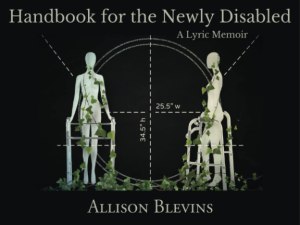 Allison Blevins, a poet, has published five chapbooks or collections and has another forthcoming. Based in Missouri and the director of an indie press, she tells her story of chronic illness and queer parenting in 10 “chapters” composed of multi-part poems. She moves through brain fog and commemorates pain and desire, which cannot always coexist (as in “How to F**k a Disabled Body”).
I’ll never
ride a bike again, hike, carry my children. I’m learning to number what I’ve lost.
Because of the pills, I no longer fall into sleep, I stop. I used to hate queer at 19
when I was a dyke. I can’t be disabled. I need a better word. I need a body that floats—
translucent and liquid—to my daughter’s bed, to cover her like cotton-red quilted stars.
(from “Brain Fog”)
Sometimes the title is enough: “My Neurologist (Who Doesn’t Have MS) Explains Pain Is Not a Symptom of MS.” Other times, what is left out, or erased (as in “Five by Five”) is what matters the most. For instance, the Photo Illustrations promised in the titles of two chapters are replaced by Accessibility Notes. That strategy reminded me of one Raymond Antrobus has used. Alliteration, synesthesia and the language of the body express the complexities of a friend’s cancer, having a trans partner, and coming to terms with sexuality (“I think now that being queer was easy, easy as forgetting / being born”). A really interesting work and an author I’d like to read more from.
Published by BlazeVOX [books] on 22 March. With thanks to the author for the e-copy for review.
Olga Dies Dreaming by Xóchitl González (2022)
 This was on my radar thanks to a starred Kirkus review. It would have been a good choice for the Women’s Prize longlist, with its bold heroine, Latinx and gay characters, and blend of literary and women’s fiction. The Puerto Rican immigrant community and gentrifying neighbourhoods of New York City are appealing locales, and Olga is a clever, gutsy protagonist. As the novel opens in 2017, she’s working out how best to fleece the rich families whose progeny’s weddings she plans. Today it’s embezzling napkins for her cousin Mabel’s wedding. Next: stockpiling cut-price champagne. Olga’s brother Prieto, a slick congressman inevitably nicknamed the “Latino Obama,” is a closeted gay man. Their late father was a drug addict; their mother left to be part of a revolutionary movement back in PR and sends her children occasional chiding letters when they appear to be selling out.
The aftermath of Hurricane Maria coincides with upheaval in Olga’s and Prieto’s personal and professional lives. The ins and outs of Puerto Rican politics went over my head somewhat, and the various schemes and conspiracy theories get slightly silly. The thread that most engaged me was Olga’s relationship with Matteo, a hoarder. I hoped that, following the satire of earlier parts (“Olga realized she’d allowed herself to become distracted from the true American dream—accumulating money—by its phantom cousin, accumulating fame. She would never make that mistake again”), there might be a message about the emptiness of the pursuit of wealth. So I ended up a little disappointed by a late revelation about Matteo.
However, I did appreciate the picture of how Olga is up against it as both a woman and a person of colour (“no person of color serious about being taken seriously was ever late to meet white people”). This debut was perhaps a little unsure of what it wanted to be, but the novelty of the main elements was enough to make it worth reading.
With thanks to Fleet for the free copy for review.
Would you be interested in reading one or more of these?
Review Catch-Up: Brackenbury, McLaren, Wellcome Collection
As usual, I have a big backlog of 2021–22 releases I’m working my way through. I’ll get there eventually! Today I’m reporting on a poetry collection about English ancestry and wildlife, a vision of post-doubt Christian faith, and a set of essays on connection to nature, specifically flora. (I also take a brief look at some autofiction that didn’t work for me.)
Thorpeness by Alison Brackenbury (2022)
 I’m familiar with Brackenbury from her appearance at New Networks for Nature in 2016 and her latest selected poems volume, Gallop. This, her tenth stand-alone collection, features abundant imagery of animals and the seasons, as in “Cucu” and “Postcard,” which marks the return of swifts. Alliteration is prominent, but there is also a handful of rhymes, like in “Fern.” Family history and the perhaps-idyllic rural underpin the verse set in Lincolnshire and Gloucestershire as Brackenbury searches for ancestral graves and delivers elegies.
I especially loved “Aunt Margaret’s Pudding,” a multipart poem about her grandmother’s life as a professional cook and then a mother of four, and “My Grandmother Waits for Christmas,” about a simple link between multiple generations’ Christmases: a sugar mouse. Caring for horses is another recurring theme; a 31-year-old blind pony receives a fond farewell.
There are also playful meetings between historical figures (“Purple Haze,” a dialogue between George Frideric Handel and Jimi Hendrix, who saw the composer’s ghost in their shared London home) and between past and contemporary, like “Thomas Hardy sends an email” (it opens “I need slide no confessions under doors”). “Charles Dickens at Home” was another favourite of mine. The title is the never-to-be-reached destination in the final poem, “Shingle.” A number of these poems were first broadcast on BBC Radio. 
With thanks to Carcanet Press for the e-copy for review.
Faith after Doubt: Why Your Beliefs Stopped Working and What to Do about It by Brian McLaren (2021)
I’ve explained before how McLaren’s books were pivotal to my spiritual journey, even before I attended the church he founded in Maryland. (I’ve also reviewed his previous book, God Unbound). His progressive, environmentalist theology is perfect for continuing searchers like me. At one of last year’s online Church Times Festival events, I saw him introduce the schema that underpins this book. He proposes that the spiritual life (not just Christian) has four stages that may overlap or repeat: simplicity, complexity, perplexity and harmony. The first stage is for new zealots who draw us–them divisions and are most concerned with orthodoxy. In the second, practitioners are more concerned with practicalities: what works, what makes life better. Perplexity is provoked by cynicism about injustice and hypocrisy, while harmony moves beyond dualism and into connection with other people and with nature.
 McLaren suggest that honest doubting, far from being a problem, might present an opportunity for changing in the right direction, getting us closer to the “revolutionary love” at the heart of the gospel. He shares stories from his own life, in and out of ministry, and from readers who have contacted him remotely or come up to him after events, caught in dilemmas about what they believe and whether they want to raise their children into religion. Though he’s fully aware of the environmental crisis and doesn’t offer false hope that we as a species will survive it, he isn’t ready to give up on religion; he believes that a faith seasoned by doubt and matured into an understanding of the harmony of all things can be part of a solution.
It’s possible some would find McLaren’s ideas formulaic and his prose repetitive. His point of view always draws me in and gives me much to think about. I’ve been stuck in perplexity for, ooh, 20 years? I frequently ask myself why I persist in going to church when it’s so boring and so often feels like a social club for stick-in-the-mud white people instead of a force for change. But books like this and Robin Wall Kimmerer’s Braiding Sweetgrass, my current soul food, encourage me to keep pursuing spiritual connection as a worthwhile path. I’ll be seeking out his forthcoming book (due out in May), Do I Stay Christian?, too.
Some favourite lines:
“only doubt can save the world. Only doubt will open a doorway out of hostile orthodoxies – whether religious, cultural, economic or political. Only through the difficult passage of doubt can we emerge into a new stage of faith and a new regenerative way of life. Everything depends on making this passage.”
“Among all the other things doubt is – loss, loneliness, crisis, doorway, descent, dissent [these are each the subject of individual chapters early on in the book] – it is also this: a crossroads. At the crossroads of doubt, we either become better or bitter. We either break down or break through. We become cynics or sages, hollow or holy. We choose love or despair.”
“Blessed are the wonderers, for they shall find what is wonderful. … Blessed are the doubters, for they shall see through false gods. Blessed are the lovers, for they shall see God everywhere.”
With thanks to Hodder & Stoughton for the free copy for review.
This Book Is a Plant: How to Grow, Learn and Radically Engage with the Natural World (2022)
 This collection of new essays and excerpts from previously published volumes accompanies the upcoming Wellcome Collection exhibition Rooted Beings (a collaboration with La Casa Encendida, Madrid, it’s curated by Bárbara Rodríguez Muñoz and Emily Sargent and will run from 24 March to 29 August). The overarching theme is our connection with plants and fungi, and the ways in which they communicate. Some of the authors are known for their nature writing – there’s an excerpt from Merlin Sheldrake’s Entangled Life, Jessica J. Lee (author of Turning and Two Trees Make a Forest) contributes an essay on studying mosses, and a short section from Kimmerer’s Braiding Sweetgrass closes the book – while others are better known in other fields, like Susie Orbach and Abi Palmer (author of Sanatorium).
I especially enjoyed novelist Rowan Hisayo Buchanan’s “Wilder Flowers,” which is about landscape painting, balcony gardening in pots, and what’s pretty versus what’s actually good for nature. (Wildflowers aren’t the panacea we are sometimes sold.) I was also interested to learn about quinine, which comes from the fever tree, in Kim Walker and Nataly Allasi Canales’ “Bitter Barks.” Sheila Watt-Cloutier’s essay on the Western influence on Inuit communities in northern Canada, reprinted from Granta, is one of the best individual pieces – forceful and with a unique voice, it advocates reframing the climate change debate in terms of human rights as opposed to the economy – but has nothing to do with plants specifically. There are also a couple of pieces that go strangely mystical, such as one on plant metaphors in the Kama Sutra. So, a mixed bag that jumbles science, paganism and postcolonial thought, but if you haven’t already encountered the Kimmerer and Sheldrake (or, e.g., Rooted by Lyanda Lynn Haupt and Losing Eden by Lucy Jones) you might find this a good primer. 
With thanks to Profile Books / Wellcome Collection for the free copy for review.
And one that really didn’t work for me; my apologies to the author and publisher.
I Love You but I’ve Chosen Darkness by Claire Vaye Watkins (2021)
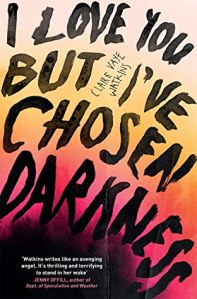 What a letdown after Gold Fame Citrus, one of my favourite novels of 2015. I’d also read Watkins’s debut short story collection, Battleborn, which won the Dylan Thomas Prize. Despite the amazing title and promising setup – autofiction that reflects on postpartum depression and her Mojave Desert upbringing as a daughter of one of the Manson Family cult members – this is indulgent, misguided, and largely unreadable.
A writer named Claire Vaye Watkins flies to Nevada to give a lecture and leaves her husband and baby daughter behind – for good? To commemorate her mother Martha, who died of an opiate overdose, she reprints Martha’s 1970s letters, which are unspeakably boring. I feel like Watkins wanted to write a memoir but didn’t give herself permission to choose nonfiction, so tried to turn her character Claire’s bad behaviour into a feminist odyssey of sexual freedom and ended up writing such atrocious lines as the below:
“I mostly boinked millennial preparers of beverages and schlepped to book festivals to hook up with whatever adequate rando lurked at the end of my signing line. This was what our open marriage looked like”
“‘Psychedelics tend to find me when I need them,’ she said, sending a rush of my blood to my vulva.”
Her vagina dentata (a myth, or a real condition?!) becomes a bizarre symbol of female power and rage. I could only bear to skim this. 
Some lines I liked:
Listen: I am a messenger from the future. I am you in ten years. Pay attention! Don’t fetishize marriage and babies. Don’t succumb to the axial tilt of monogamy! I don’t pretend to know the details of your…situation, but I guarantee you, you’re as free as you’ll ever be. Have sex with anyone you want. Enjoy the fact that it might happen any minute. You could have sex with a man, a woman, both—tonight!
I went from being raised by a pack of coyotes to a fellowship at Princeton where I sat next to John McPhee at a dinner and we talked about rocks and he wasn’t at all afraid of me.
With thanks to riverrun for the proof copy for review.
Would you be interested in reading one or more of these?
New Networks for Nature 2020 (Online)
 It’s not November without a New Networks for Nature conference. Originally 2020’s was scheduled to take place in Norwich in July; it was then postponed to the usual November in hopes of an in-person meeting, but ultimately had to be online this year, like so much else. This was my sixth time taking part in this interdisciplinary gathering of authors, academics, and activists (I’ve also written about the 2015, 2016, 2018, and 2019 conferences). The UEA organizers, Jean McNeil and Jos Smith, with New Networks stalwart John Fanshawe, did an excellent job of creating three virtual events for people to engage with from home.
Two pre-recorded panels brought together writers from different fields to reflect on nature literature and the environmental crisis. First up was “New Perspectives on Nature Writing,” picking up on a perennial conference theme.
 I was delighted to hear Jessica J. Lee speak – I’ve reviewed both of her nature-infused memoirs, Turning and Two Trees Make a Forest, and in last year’s feedback I suggested her as a future speaker (I’m sure I’m not solely responsible!). After a PhD in environmental history, she moved into more personal writing. Questions of home, place, language, and identity were natural for her as a third-generation migrant. She initially felt alone as a person of colour in nature writing, but when she founded the Willowherb Review she quickly learned that it wasn’t that POC weren’t out there; it was that they did not have opportunities to publish – she has had 300+ submissions per issue to the online literary magazine, which welcomes work from all genres by authors of colour.

(Clockwise from top left) Smith, Arshi, McNeil, Lee.
Also on the panel were Mona Arshi, a Punjabi poet based in London, and McNeil, a creative writing professor. Arshi has been a human rights lawyer and is the current poet-in-residence at Cley Marshes, Norfolk, in association with the Wildlife Trusts and UEA. She has had to try to absorb the landscape via video and sound recordings since COVID-19 has limited her in-person visits. She read a sonnet she wrote about her last trip there in September. All three panellists spoke about land being in some ways beyond language, though.
 Jean McNeil’s Ice Diaries is a memoir of a year in residence with the British Antarctic Survey, a very male, scientific world. Antarctica is “no one’s country,” she remarked, though it’s the fifth-largest continent; it’s as if the land has no memory of people. She observed that it’s impossible to write about Antarctica without giving a sense of the journey (so she includes travel writing) and mentioning death. Raised without technology by back-to-the-land parents in Canada, McNeil has been active in the environmental movement in Brazil, Central America, and Africa (as a safari guide). Ice Diaries was already on my TBR, but I’m impressed by her breadth of experience and want to explore her varied work.
 The second panel, “States of Emergency,” included an academic, a playwright, the CEO of an environmental charity, and a philosopher and activist. I was intrigued by UEA’s Rebecca Tillett’s brief opening address about contemporary North American indigenous responses to climate change in fiction (her research speciality). Her primary example was the Moon of the Crusted Snow by Waubgeshig Rice, a postapocalyptic thriller in which the Wendigo, a figure from First Nations folklore, embodies capitalism as it consumes people with greed.

(Clockwise from top left) Waters , McNeil, Reed, Tillett, Thornton.
UEA-based playwright Steve Waters is planning outdoor theatre projects at nature reserves. James Thornton, the CEO of ClientEarth, spoke about starting with the science, the “grammar of the Earth.” His team has prevented new coal-fired stations in Europe and encouraged NGOs in China to sue polluting companies. Philosophy professor Rupert Reed was, until recently, an Extinction Rebellion spokesman. He noted that the climate emergency feels too slow and too long – a marathon, not a sprint; people don’t realize how profoundly our way of life and future are threatened. Alas, COVID-19 is not having the desired effect of turning people’s attention to the greater, ongoing emergency. He counselled acceptance and adaptation, stating that hope and action must go hand in hand. Thornton recalled the Dalai Lama telling him early in his career that he needed to get beyond anger because angry people don’t come up with viable solutions. The anger has to be turned into a positive vision.
There were live Q&A sessions for these two panels, but we weren’t able to watch. However, we did attend Saturday’s live keynote event featuring Tim Dee and Kathleen Jamie, two of the finest nature writers working today. Speaking from Cape Town, where he has been stranded since the start of the pandemic, Dee said that his current writing is about birds that are new to him but familiar to his neighbours. He explained that he admires and understands the world through birds, “who carry no bags or passports and are at home wherever they are.” In his work he explores how we are “made by places,” often returning to a place to reprocess his experiences there (e.g. Hungary in his latest book, Greenery). His notebooks, which are often just lists of birds seen, help him to “reinflate” a place when writing about it later.


Jamie agreed that her work also has this quality of “afterwardness” – finding the meaning of an experience long after the moment. She came across as down-to-earth, shrugging off McNeil’s question about transcendence and remarking that a sign above her desk reads “Nay narrative!” What is left for a lyric poet who loses faith in lyricism? For Jamie, the answer is prose poetry, as in “Tree on the Hill,” recently published in the LRB. Her poetry has always been local but her longform nonfiction has only ever come from other places, so while she’s been stuck in Fife she’s been unable to progress. But she never has any idea of what she’s writing, she said; she and her editor work out a theme once a whole book exists (for instance, the linking metaphor for Surfacing – unearthing archaeological evidence and memories).
Dee called himself a materialist – “no ideas but in things” – with language being what we clothe things in. He always double-checks his (sometimes elaborate) metaphors by putting them back onto a bird to ensure they fit. Jamie said she used to believe language was humans’ “fall” and would try to maintain a “pre-language state” for as long as possible every morning, but ultimately she changed her mind, accepting that language is what makes us human; it’s what we do. She acknowledges that nature writing like hers is not going to achieve things in the way that environmental activism can, but she hopes that bringing non-human creatures into the culture (as if it were an ark) can be a way of advocating for them all the same.

 A brilliant programme, capped off with some visual and musical delights: “Where Song Began,” a one-hour cello and violin response/accompaniment to Australian birdsong created by Simone Slattery and Anthony Albrecht in January; and a brief virtual tour of the Nature Writing Collection in the British Archive for Contemporary Writing at UEA, which includes the papers of the late Roger Deakin and of (alive and kicking!) Mark Cocker, a UEA graduate. The archive contains Deakin’s drafts and pitches (Waterlog’s working title was “The Waters of the Wondrous Isle,” and he imagined it as an aquatic Rural Rides), photos, and even his Speedo bathing suit; along with Cocker’s field notebooks and fan mail.
The two panels, musical event, and archive tour are freely available on the NNN website, and you can watch the Dee/Jamie discussion back here.
November Plans: Novellas, Margaret Atwood Reading Month & More
My big thing next month will, of course, be Novellas in November, which I’m co-hosting with Cathy of 746 Books as a month-long challenge with four weekly prompts. I’m taking the lead on two alternating weeks and will introduce them with mini-reviews of some of my favorite short books from these categories:
9–15 November: Nonfiction novellas
23–29 November: Short classics

I’m also using this as an excuse to get back into the nine books of under 200 pages that have ended up on my “Set Aside Temporarily” shelf. I swore after last year that I would break myself of the bad habit of letting books linger like this, but it has continued in 2020.
Other November reading plans…
Readalong of Derek Jarman’s Modern Nature
 I learned about this book through Losing Eden by Lucy Jones; she mentions it in the context of nature helping people come to terms with their mortality. Jarman found solace in his Dungeness, Kent garden while dying of AIDS. Shortly after I came across that reference, I learned that his home, Prospect Cottage, had just been rescued from private sale by a crowdfunding campaign. I hope to visit it someday. In the meantime, Creative Folkestone is hosting an Autumn Reads festival on his journal, Modern Nature, running from the 19th to 22nd. I’ve already begun reading it to get a headstart. Do you have a copy? If so, join in!
Margaret Atwood Reading Month
 This is the third year of #MARM, hosted by Canadian bloggers extraordinaires Marcie of Buried in Print and Naomi of Consumed by Ink. (Check out the neat bingo card they made this year!) I plan to read the short story volume Wilderness Tips and her new poetry collection, Dearly,on the way for me to review for Shiny New Books. If I fancy adding anything else in, there are tons of her books to choose from across the holdings of the public and university libraries.
Nonfiction November
I don’t usually participate in this challenge because nonfiction makes up at least 40% of my reading anyway, but the past couple of years I enjoyed putting together fiction and nonfiction pairings and “Being the Expert” on women’s religious memoirs. I might end up doing at least one post, especially as I have some “Three on a Theme” posts in mind to encompass a couple of nonfiction topics I happen to have read several books about. The full schedule is here.

Young Writer of the Year Award
 Being on the shadow panel for the Sunday Times Young Writer of the Year Award was a highlight of 2017 for me. I look forward to following along with the nominated books, as I did last year, and attending the virtual prize ceremony. With any luck I will already have read at least one or two books from the shortlist of four. Fingers crossed for Rowan Hisayo Buchanan, Naoise Dolan, Jessica J. Lee, Olivia Potts and Nina Mingya Powles; Niamh Campbell, Catherine Cho, Tiffany Francis and Emma Glass are a few other possibilities. (By chance, only young women are on my radar this year!)
November is such a busy month for book blogging: it’s also Australia Reading Month and German Literature Month. I don’t happen to have any books on the pile that will fit these prompts, but you might like to think about how you can combine one of them with some of the other challenges out there!
Any reading plans for November? Will you be joining in with novellas, Margaret Atwood’s books or Nonfiction November?
20 Books of Summer 2020 (Food & Drink Theme): #1 Tiny Moons
It’s my third year participating in Cathy’s 20 Books of Summer challenge. Two years ago I read only books by women; last year I did an animal theme. This year, my 20 books will all tie into a food and drink theme. This includes recognizable foodie lit, memoirs and travel books that have a food element (such as Dave Gorman seeking out non-chain restaurants in America Unchained and Alice Steinbach taking French cooking lessons in Educating Alice), and fiction or nonfiction works that just happen to have a food word in the title. To avoid being grisly, I’ll try not to include any animal books left over from last year!


I have around 30 books to choose from, including these slightly cheaty selections whose authors’ names bring food to mind.

The one constant in my three summers’ selections is that all the books have to be from my own shelves – it’s my way of trying to tackle my hundreds-strong physical TBR. I also have a few classics and two rereads (Dunn and Kingsolver) in the mix here, which would contribute to other ongoing reading goals.
I’m kicking off #20BooksofSummer20 with a quick win, only 85 pages long and read in a single sitting this morning. It was a great start to the project and had my mouth watering for elevenses two hours early…
Tiny Moons: A Year of Eating in Shanghai by Nina Mingya Powles (2020)
This lovely pamphlet of food-themed essays arose from a blog Powles kept while in Shanghai on a one-year scholarship to learn Mandarin. She’d lived in the city as a teen, attending an international high school, so it was somewhat familiar – yet she struggled with homesickness. From one winter to another, she explores the city’s culinary offerings and muses on the ways in which food is bound up with her memories of people and places.
As a child in a mixed-race household in New Zealand, she only knew food words in her Malaysian Chinese mother’s native languages. “My earliest childhood impressions are ones where I am just about to eat something,” she writes. That something might have been Western or Asian food – they coexist in the book (most delightfully on a long-distance train ride she takes: you can buy noodles and dried chicken feet, but also Oreos and Pringles).

As a student in Shanghai, she has dumplings and soup for lunch almost every day. She could live off of spring onion oil noodles and pineapple buns (named for their cross-hatched top rather than their flavour). Messy foods, greasy foods, comfort foods – “It is tiring to be a woman who loves to eat in a society where hunger is something not to be satisfied but controlled.” She and her classmates know that their time here is limited, and they’re going to make the most of these flavours you can’t find every day.
Two sets of cooking lessons add dishes like sticky rice dumplings and stir-fried aubergines to her repertoire. She learns about the traditional foods associated with Chinese festivals, and about the country’s north/south divides: wheat noodles versus rice and thick-skinned dumplings versus thin ones. Street food and snacks abound, including savoury and sweet buns, filled pancakes, tofu bowls and mooncakes.
This is a book about how food can help you be at home, despite loneliness or a language barrier: “In any city anywhere, if there’s a Chinatown I’ll feel at home,” Powles concludes. I love how she uses the senses – not just taste, but also smell and sight – to recreate important places in her life. A fresh banana fritter eaten at her grandparents’ home in Borneo brings it all back, with the senses mingling synaesthetically: “I taste tropical heat. I can taste the slow hours spent in the back garden beneath the mango tree … I taste the fierce sun on my neck”.
My rating:
Readalikes: Shark’s Fin and Sichuan Pepper: A Sweet-Sour Memoir of Eating in China by Fuchsia Dunlop & Two Trees Make a Forest: On Memory, Migration and Taiwan by Jessica J. Lee
Note: Last year Nina Mingya Powles won the inaugural Nan Shepherd Prize for underrepresented voices in nature writing, earning a publishing contract with Canongate for a nature/travel memoir that will be released in August 2021. I’m looking forward to it already.
Tiny Moons was published on February 27th. My thanks to Emma Dai’an Wright of The Emma Press, a small press based in Birmingham, UK, for the free copy for review. (Emma also illustrated the book!)
Are you joining in the summer reading challenge? What’s the first book on the docket?
Do you spy any favorites on my piles? Which ones should I be sure to read?
Nonfiction Review Books Roundup: Hay, Hope et al., Lee, Long, McLaren, Zuckerman
I’m continuing with the Nonfiction November focus by catching up on six nonfiction review books I’ve been sent over the last half a year. We’ve got a record of elderly parents’ decline, letters and poems written about the climate crisis, a family memoir set between Taiwan and Canada, a widow’s mushroom-hunting quest, a work of ecotheology that reflects on travels in the Galápagos Islands, and a defense of an entirely secular basis for morality. You can’t say I don’t read a variety, even within nonfiction! See if one or more of these tempts you.
All Things Consoled: A Daughter’s Memoir by Elizabeth Hay
 Gordon and Jean Hay stumbled into their early nineties in an Ottawa retirement home starting in 2009. Elizabeth Hay is one of four children, but caregiving fell to her for one reason and another, and it was a fraught task because of her parents’ prickly personalities: Jean was critical and thrifty to the point of absurdity, spooning thick mold off apple sauce before serving it and needling Elizabeth for dumping perfectly good chicken juice a year before; Gordon had a terrible temper and a history of corporal punishment of his children and of his students when he was a school principal. Jean’s knee surgery and subsequent infection finally put paid to their independence; her mind was never the same and she could no longer paint.
There are many harsh moments in this memoir, but almost as many wry ones, with Hay picking just the right anecdotes to illustrate her parents’ behavior and the shifting family dynamic. She never looks away, no matter how hard it all gets. Her father’s rage against the dying of the light contrasts with her mother’s fade into confusion – lightened by the surprisingly poetic turns of phrase she came out with despite her dementia and aphasia. The title phrase, for instance, was her attempt at “all things considered.” I would wholeheartedly recommend this to readers of Hay’s novels, but anyone can appreciate the picture of complicated love and grief. (See also Susan’s review.)
With thanks to MacLehose Press for the free copy for review.
Letters to the Earth: Writing to a Planet in Crisis, edited by Anna Hope et al.
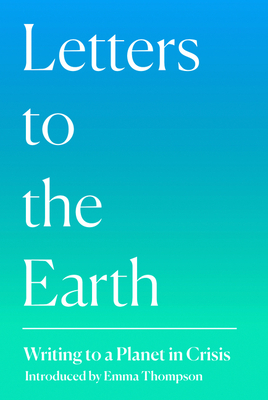 Culture Declares Emergency launched in April to bring the arts into the conversation about the climate emergency. Letters to the Earth compiles 100 short pieces by known and unknown names alike. Alongside published authors, songwriters, professors and politicians are lots of ordinary folk, including children as young as seven. The brief was broad: to write a letter in response to environmental crisis, whether to or from the Earth, to future generations (there are wrenching pieces written to children: “What can I say, now that it’s too late? … that I’m sorry, that I tried,” writes Stuart Capstick), to the government or to other species.
There are certainly relatable emotions here, especially the feeling of helplessness. “We take the train, go vegan, refuse plastic, buy less and less. But that is tiny. We are tiny,” novelist Jo Baker writes. I loved retired bishop Richard Holloway’s wry letter calling the author of Genesis to account for unhelpful language of dominion, Rob Cowen’s poem to a starling, and Anna Hope’s essay about parenting in a time of uncertainty. Unfortunately, much of the rest is twee or haranguing, e.g. “Forest fires are scorching INNOCENT wildlife. Plastic is strangling INNOCENT turtles and dolphins,” a 12-year-old writes. This was put together in a matter of months, and it shows. There is not enough tonal variety, a lot of overwriting has crept through, and errors, especially in the kids’ work, remain uncorrected. Perhaps six to 10 pieces stood out to me overall. I’d recommend the Extinction Rebellion handbook instead.
With thanks to Alison Menzies / William Collins for the free copy for review.
Two Trees Make a Forest: On Memory, Migration and Taiwan by Jessica J. Lee
 I loved Turning, Lee’s 2017 memoir about swimming in one of Berlin’s lakes per week for a year, so I jumped at the chance to read her follow-up, which delves into her maternal line’s history in Taiwan. She travels to Taipei for three months to brush up on her Chinese, write and hike. Interspersed with the lush descriptions of her walks are reflections on Taiwan’s history and on the hidden aspects of her grandfather Gong’s past that only came to light after Lee’s grandmother, Po, died and she and her mother discovered an autobiographical letter he’d written before he drifted into dementia. Nature, language, history and memory flow together in a delicate blend of genres – “I moved from the human timescale of my family’s story through green and unfurling dendrological time,” she writes.
This has got to be one of the most striking title and cover combinations of the year. Along with Chinese characters, the book includes some looping text and Nico Taylor’s maps and illustrations of Taiwanese flora and fauna. While you will likely get more out of this if you have a particular interest in Asian history, languages and culture, it’s impressive how Lee brings the different strands of her story together to form a hybrid nature memoir that I hope will be recognized by next year’s Wainwright Prize and Young Writer of the Year Award shortlists. She’d also be a perfect New Networks for Nature speaker.
With thanks to Virago for the free copy for review.
The Way through the Woods: Of Mushrooms and Mourning by Long Lit Woon
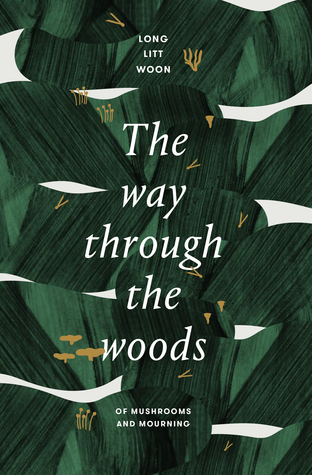 [Trans. from the Norwegian by Barbara J. Haveland]
I couldn’t resist the sound of a bereavement memoir crossed with a mushroom hunting guide. When Long met her husband, Eiolf Olsen, she was an 18-year-old Malaysian exchange student in Stavanger, Norway. Meeting Eiolf changed the whole course of her life, keeping her in Europe for good; decades later, her life changed forever once again when Eiolf dropped dead at work one morning. “If anyone had told me that mushrooms would be my lifeline, the thing that would help me back onto my feet and quite literally back onto life’s track, I would have rolled my eyes. What had mushrooms to do with mourning?” she writes.
 The answer to that rhetorical question is nothing much, at least not inherently, so this ends up becoming a book of two parts, with the bereavement strand (printed in green and in a different font – green is for grief? I suppose) engaging me much more than the mushroom-hunting one, which takes her to Central Park and the annual Telluride, Colorado mushroom festival as well as to Norway’s woods again and again – “In Norway, outdoor life is tantamount to a religion.” But the quest for wonder and for meaning is a universal one. In addition, if you’re a mushroom fan you’ll find gathering advice, tasting notes, and even recipes. I fancy trying the “mushroom bacon” made out of oven-dried shiitakes.
With thanks to Scribe for the free copy for review.
God Unbound: Theology in the Wild by Brian McLaren
 McLaren was commissioned to launch a series that was part travel guide, part spiritual memoir and part theological reflection. Specifically, he was asked to write about the Galápagos Islands because he’d been before and they were important to him. He joins a six-day eco-cruise that tours around the island chain off Ecuador, with little to do except observe the birds, tortoises and iguanas, and swim with fish and sea turtles. For him this is a peaceful, even sacred place that reminds him of the beauty that still exists in the world despite so much human desecration. Although he avoids using his phone except to quickly check in with his wife, modernity encroaches unhelpfully through a potential disaster with his laptop.
I was surprised to see that McLaren leaves the Galápagos at the midpoint – whatever could fill the rest of the book, I wondered? He starts by reassessing Darwin, so often painted as a villain by Evangelical Christianity but actually a model of close, loving attention to nature. He also recalls how some of his most intense spiritual experiences have arisen from time in nature. McLaren’s books have been pivotal to my spiritual journey as we’ve both gradually become more liberal and environmentalist. His definition of God might horrify traditionalists, but holds appeal for me: “a centering singularity whose gravity holds me in insistent orbit, pulling me deeper into mystery, pondering who I am and what my life means.” This is an unusual but gently entrancing book full of photos and quotes from other thinkers including John Muir, Pope Francis and Richard Rohr. It’s an ideal introduction to ecotheology.
With thanks to Canterbury Press for the free copy for review.
What It Means to Be Moral: Why Religion Is Not Necessary for Living an Ethical Life by Phil Zuckerman
 From one end of the spectrum (progressive Christianity) to the other (atheism). Here’s a different perspective from a sociology professor at California’s Pitzer College. Zuckerman’s central argument is that humanism and free choice can fuel ethical behavior; since there’s no proof of God’s existence and theists have such a wide range of beliefs, it’s absurd to slap a “because God says so” label on our subjective judgments. Morals maintain the small communities our primate ancestors evolved into, with specific views (such as on homosexuality) a result of our socialization. Alas, the in-group/out-group thinking from our evolutionary heritage is what can lead to genocide. Instead of thinking in terms of ‘evil’, though, Zuckerman prefers Dr. Simon Baron-Cohen’s term, “empathy erosion.”
To tackle violent crime, Zuckerman contends, we need a more equal society, with the Scandinavian countries a model of how to achieve that through higher taxes, social services and the rehabilitation of prisoners. He uses a lot of relatable examples from history and from his own experience, as well as theoretical situations, to think through practical morality. I found his indictment of American Christianity accurate – how does it make sense for people who say they follow the way of Jesus to fight against equality, tolerance and scientific advances and instead advocate guns, the death penalty and Trump? Well, indeed.
It might seem odd for me to recommend this alongside the McLaren, but there is much to be gained from both viewpoints. Zuckerman’s work overlaps a fair bit with another I’ve read on the topic, Richard Holloway’s Godless Morality – even a bishop agrees we needn’t take our societal ethics straight from the Bible! I can’t go along fully with Zuckerman because I think progressive religion has been and can continue to be a force for good, but I would agree that atheists can be just as moral as people of faith – and often more so.
With thanks to Counterpoint Press for sending a proof copy for review.
Would you be interested in reading one or more of these?
A Spate of Swimming Memoirs
In the first four months of this year, I got my hands on no fewer than four swimming memoirs. For the upcoming July/August issue of Foreword Reviews magazine I’ve reviewed Floating: A Life Regained by Joe Minihane, in which the author recreates the late nature writer Roger Deakin’s wild swimming journeys from Waterlog (1999) in an attempt to overcome anxiety; I have Leap In by Alexandra Heminsley on my Kindle; and I read roughly the first 60 pages of a library copy of Al Álvarez’s 2013 Pondlife: A Swimmer’s Journal.
For now, I’m featuring Turning by Jessica J. Lee, which has strong similarities to these other memoirs – especially Minihane’s – but is its own beautifully reflective personal story. The book arose from Lee’s resolution, when she was 28 and in Berlin on a research placement for her dissertation in environmental history, to swim in 52 local lakes – a year’s worth – no matter the weather. At the time she blogged about her “52 Lakes Project” for Slow Travel Berlin, and kept friends and family up to date through social media as well. Her focus would be on the former East German region of Brandenburg, which has Berlin at its center and was first popularized by Theodor Fontane’s 1862 travel book.
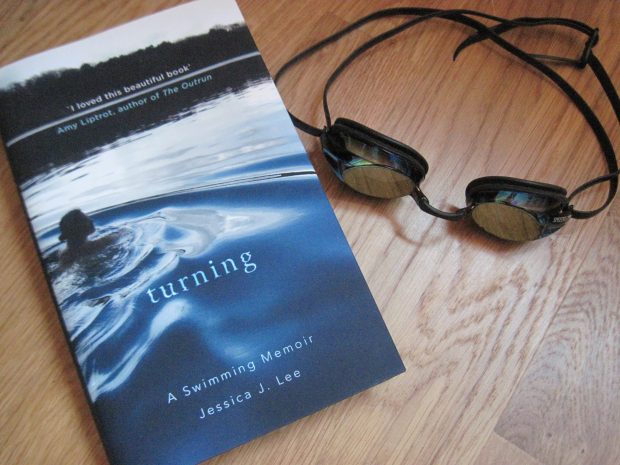
Lee traveled to the lakes under her own steam, using trains and her bicycle; occasionally she took friends with her, but most often she was alone, which became a chance to cultivate solitude – not the same as loneliness. The challenge entailed all kinds of practical difficulties like bike trouble, getting lost, and a dead phone battery, but gradually it became routine and held less fear for her. On summer days she could manage multiple lakes in a day, and even small encounters with Germans gave her a newfound sense of belonging.
Within chapters, the memoir gracefully alternates pieces of the author’s past with her lake travels. With a father from Wales and a mother from Taiwan, Lee grew up in Ontario and spent summers in Florida. She remembers taking YMCA swimming lessons alongside her mother, and swimming in Canadian lakes. Back then the water usually intimidated her, but over the years her feelings have changed:
Water feels different in each place. The water I grew up with was hard, cutting, and when I go back to visit it now, I feel it in my ears when I dive in. something different, more like rock. The lake a whetted blade. The water in Berlin has a softness to it. Maybe it’s the sand, buffing the edges off the water like splinters from a beam. It slips over you like a blanket. There’s a safety in this feeling. In the lakes here, there is a feeling of enclosure and security that Canada can’t replicate. And it shouldn’t – the pelagic vastness there is entirely its own, and I’ve learned to love that too.
Swimming fulfills many functions for Lee. It served variously as necessary discipline after going mildly off the rails in young adulthood (drinking, smoking pot and having an abortion during college; a short-lived marriage in her early twenties); as a way of bouncing back from depression when her planned life in London didn’t pan out and a budding relationship failed; and as a way of being in touch with the turning seasons and coming to know the German landscape intimately. Symbolically, of course, it’s also a baptism into a new life.
Yet I had to wonder if there was also something masochistic about this pursuit, especially in the winter months. On the back cover there’s a photograph of Lee using a hammer to chip out a path through the ice so she can do her minimum of 45 strokes. (No wetsuit!) As spring came, ironically, the water felt almost too warm to her. She had learned to master the timing of a winter swim: “Between pain and numbness there’s a brightness, a crisp, heightened sensation in the cold: that’s the place to swim through. When it ends, when numbness arrives, it’s time to get out.”
The end of Lee’s year-long project is bittersweet, but she’s consoled by the fact that she didn’t have to leave her ordinary life in order to complete it. It was a companion alongside the frantic last-minute work on her dissertation and it never got in the way of her relationships; on the contrary, it strengthened certain friendships. And with Berlin looking like her home for the foreseeable future, she’s committed to seeking out more lakes, too.
There are a lot of year quest books out there, but this one never feels formulaic because there’s such a fluid intermingling of past and present. As memoirs go, it is somewhat like Amy Liptrot’s The Outrun – but much better. It’s also comparable to Angela Palm’s Riverine, with a watery metaphor at the heart to reflect the author’s conception of life as a meandering route. Unlike the other swimming memoirs I’ve sampled, I can recommend this one to a general reader with no particular interest in wild swimming or any other sport. It’s for you if you enjoy reading about the ebb and flow of women’s lives.
In the stillness of the lakes, the border between nature and culture is thinned. Swimming takes place at this border, as if constantly searching for home. Water is a place in which I don’t belong, but where I find myself nonetheless. Out of my culture, out of my depth.
There is more space inside than I can imagine, more hope and possibility than I’d known. Feeling as clear as the day, as deep as the lake.
Turning: A Swimming Memoir was published in the UK by Virago on May 4th. My thanks to the publisher for sending a free copy for review.
My rating:
 Bookish Beck = Rebecca Foster. American transplant to England. Freelance proofreader and book reviewer.
 Bookish Beck
