November Releases Including #NovNov24: Bennett, Pimlott, Rishøi, Shattuck
Two belated novellas: one a morbid farce set at an old folks’ home; the other a sweet Norwegian tale that offers sisterhood and magic as ways to survive a rough upbringing. Plus a lovely poetry pamphlet about the early days of widowhood and a linked short story collection spanning several centuries of art and relationships in New England.
Killing Time by Alan Bennett
I’d only previously read The Uncommon Reader by Alan Bennett; I perpetually have him confused with Arnold Bennett, by whom I know more. It could be debated whether this is a novella by word count, but even if more of a short story, for me it counts for #NovNov24 because it’s in a stand-alone volume, as publishing partner Faber produced for Claire Keegan’s So Late in the Day last year.
I polished this off in one sitting. Bennett’s black comedy is set at a posh home for the elderly, the Edwardian mansion Hill Topp House. (Residents know to be on their best behaviour lest they be demoted to an inferior neighbouring facility, Low Moor.) When a prospective client calls, Mrs McBryde enthusiastically lists the assets:
We have a choir and on special occasions a glass of dry sherry. It’s less of a home and more of a club and very much a community. We go on frequent trips out. Only last week we went to a local farm where they have a flamingo. … We don’t vegetate at Hill Topp. And the cuisine is not unadventurous. It’s not long since we had a Norwegian evening.
 The dialogue is sparkling, just like you’d expect from a playwright. As in the Hendrik Groen books and Elizabeth Taylor’s Mrs Palfrey at the Claremont, the situation invites cliques and infantilizing. The occasional death provides a bit more excitement than jigsaws and knitting. Ageing bodies may be pitiable (the incontinence!), but sex remains a powerful impulse.
Here is where readers might start to feel disconnected from Bennett’s dated humour. The window cleaner turned gigolo is somewhat amusing; the repeated gag of a flasher, not so much. “Has she seen the sights yet?” two ladies ask. And a jesting conversation about clerical sexual abuse scandals seems particularly ill considered given recent news.
The story is most interesting and fresh once Covid comes onto the scene. Some perish early on; the survivors, ungoverned, do their best. I loved the detail of a resident turning a velvet dress into 60 masks. Two objects, one of them depicted on the cover (it’s not a grenade as I thought at first!), come to have particular importance. I liked this but thought by favouring broad humour it sacrificed characterization or compassion. You’ll enjoy it if you’re fond of wicked comedy by the likes of Alan Ayckbourn. [112 pages]
With thanks to Profile Books for the free copy for review.
After the Rites and Sandwiches: Poems by Kathy Pimlott
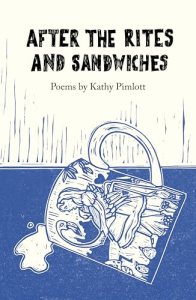 The 18 poems in this pamphlet (in America it would be called a chapbook) orbit the sudden death of Pimlott’s husband a few years ago. By the time she found Robert at the bottom of the stairs, there was nothing paramedics could do. What next? The callousness of bureaucracy: “Your demise constitutes a quarter off council tax; / the removal of a vote you seldom cast and then / only to be contrary; write-off of a modest overdraft; / the bill for an overpaid pension” (from “Death Admin I”). Attempts at healthy routines: “I’ve written my menu for the week. Today’s chowder. / I manage ten pieces of the 1000-piece jigsaw’s scenes / from Jane Austen. Tomorrow I’ll visit friends and say // it’s alright, it’s alright, seventy, eighty percent / alright” (from “How to be a widow”). Pimlott casts an eye over the possessions he left behind, remembering him in gardens and on Sunday walks of the sort they took together. Grief narratives can err towards bitter or mawkish, but this one never does. Everyday detail, enjambment and sprightly vocabulary lend the wry poems a matter-of-fact grace. I plan to pass on my copy to a new book club member who was widowed unexpectedly in May – no doubt she’ll recognise the practical challenges and emotional reality depicted.
With thanks to The Emma Press for the free copy for review.
Brightly Shining by Ingvild Rishøi (2021; 2024)
[Translated from the Norwegian by Caroline Waight]
 Ten-year-old Ronja and her teenage sister Melissa have to stick together – their single father may be jolly and imaginative, but more often than not he’s drunk and unemployed. They can’t rely on him to keep food in their Tøyen flat; they subsist on cereal. When Ronja hears about a Christmas tree seller vacancy, she hopes things might turn around. Their father lands the job but, after his crew at a local pub pull him back into bad habits, Melissa has to take over his hours. Ronja hangs out at the Christmas tree stand after school, even joining in enthusiastically with publicity. The supervisor, Tommy, doesn’t mind her being around, but it’s clear that Eriksen, the big boss, is uncomfortable with even a suggestion of child labour.
It’s touching to see Melissa take on a caring role and to meet the few indisputably good people who help the sisters, such as their elderly neighbour, Aronsen. Ronja’s innocent narration emphasizes her disbelief at their father’s repeated failings and also sets the story up for a late swerve into what seems like magic realism. I’m genuinely not sure what’s supposed to happen at the end, but the sisters find themselves alone in a wintry storm and the language of miracles is used. Rishøi’s debut will surely be compared to Small Things Like These and other classic holiday novellas. I found it a little obvious and saccharine, but if you find the right mood and moment it might just tug at your heart in the run-up to Christmas. [182 pages]
With thanks to Grove Press UK for the free copy for review.
The History of Sound by Ben Shattuck
“history is personal, even when it isn’t”
The dozen stories of Shattuck’s fiction debut form a “hook-and-chain” structure of five couplets, bookended by a first and last story that are related to each other. The links are satisfyingly overt: A pair might take place in the same house in different centuries, or the second will fill in the history of the characters from the first. In “Edwin Chase of Nantucket,” the eponymous figure recognizes his bereaved mother’s loneliness and does her a kindness. “Silver Clip,” which follows, is separated by 200 years, but its accounts of a young painter living in his ancestral island home reprises the motifs of grief, compassion and memory. “Graft,” about a woman spurned in the 1880s, and “Tundra Swan,” in which a man concocts a swindle to pay for his son’s rehab in the present day, are connected by a Cape Cod orchard. Artefacts and documents also play important roles: a journal accounts for a mysterious mass death, a radio transcript and a photograph explain a well-meaning con, and an excerpt from a history textbook follows up on the story of the religious cult in “The Children of New Eden.”
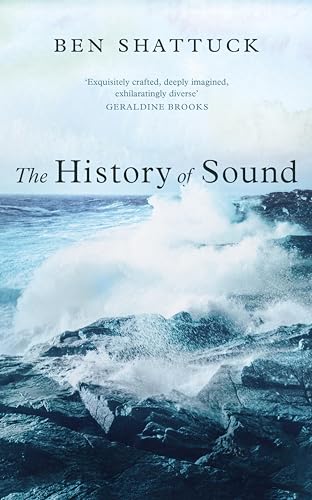 My favourite individual story was “August in the Forest,” about a poet whose artist’s fellowship isn’t all it cracked up to be – the primitive cabin being no match for a New Hampshire winter. His relationships with a hospital doctor, Chloe, and his childhood best friend, Elizabeth, seem entirely separate until Elizabeth returns from Laos and both women descend on him at the cabin. Their dialogues are funny and brilliantly awkward (“Sorry not all of us are quietly chiseling toward the beating heart of the human experience, August. One iamb at a time”) and it’s fascinating to watch how, years later, August turns life into prose. But the crowning achievement is the opening title story and its counterpart, “Origin Stories,” about folk music recordings made by two university friends during the First World War – and the afterlife of both the songs and the men.
From the start I was reminded strongly of North Woods by Daniel Mason, and particular sequences recall Shoot the Horses First by Leah Angstman and An Account of the Decline of the Great Auk, According to One Who Saw It by Jessie Greengrass. It’s a slight shame for Shattuck that what he was doing here didn’t seem as original to me because of my familiarity with these predecessors. Yet, to my surprise, I found that The History of Sound was more consistent than any of those. With the exception of a few phrases from “Graft” (“living room,” “had sex” and “boring” don’t strike me as 1880s lingo), all of the stories are historically convincing, and the very human themes of lust, parenthood, sorrow and frustrated ambition resonate across centuries and state lines. Really beautiful. (See Susan’s review too.)
[Some you-couldn’t-make-it-up trivia about Shattuck: he’s married to Jenny Slate (author of Little Weirds et al., as well as an actress known to me as Mona Lisa from Parks and Recreation); and he runs the oldest general store in America, built in 1793.]
With thanks to Swift Press for the free copy for review.
Which of these November releases catches your eye? What others can you recommend?
Thoughts on Literary Prizes, Sequels, and Finishing Books
I feel like my blogging is all over the place so far this month, but I’ll get back on track in the next couple of weeks with a few thematic roundups. Today, some disparate thoughts.
 Literary prize season will soon be in full swing, and can be overwhelming. I’m currently reading Megan Nolan’s Acts of Desperation, doing double duty from the Dylan Thomas Prize longlist and the Sunday Times Young Writer of the Year Award shortlist, and enjoying it more than expected given the inevitable Sally Rooney comparisons and messed-up young female tropes. However, I abandoned Here Comes the Miracle (from the latter) after 46 pages because it was just as When God Was a Rabbit as I feared.
 Today the second Barbellion Prize winner was announced: Lynn Buckle for What Willow Says, her lyrical novella about communication between a terminally ill woman, her deaf granddaughter, and the natural world. My choice from the shortlist would have been Josie George’s A Still Life, but I can see how the judges might have felt, in an early year when precedents are still being set, that it was important to recognize fiction as being just as valid a way of writing about disability and chronic illness.
Earlier in the week, the Rathbones Folio Prize shortlist was announced. Everyone remarked on the attractive mint green colour scheme! I found myself slightly disappointed; the Prize is usually more various since it includes nonfiction and poetry as well as fiction. Only one nonfiction title here: Philip Hoare going on (again) about whales. I’ve read another of poet Selima Hill’s collections so would gladly read this, too. I’ve already read the Brown and Keegan novellas and Sahota’s novel; I DNFed the Riley. Galgut has already won the Booker Prize. I’m awaiting a library hold of The Magician but I rather doubt my staying power with a 500-page biographical novel. My vote would, overwhelmingly, be for China Room.

I’m more tempted by the Fiction with a Sense of Place shortlist, announced as part of the Edward Stanford Travel Writing Awards early this month. What an intriguing and non-obvious set of nominees! Elena Knows was on the Barbellion longlist and the Greengrass and Shafak novels were previously shortlisted for the Costa Prize. I plan to try the Heller again this summer.

I’m also delighted to see that Small Bodies of Water by Nina Mingya Powles is shortlisted for the Stanford Dolman Travel Book of the Year Award.

I’ve been pondering my predictions and wishes (entirely separate things) for the Women’s Prize longlist and will post them early next month; for now, check out Laura’s.
I believe books should be self-contained and I struggle to engage with ANY series. Unpopular opinion alert: sequels are almost always indulgent and/or money-grubbing on the part of the author. Here are four high-profile literary fiction sequels I plan on skipping this year (in all the cases, I just didn’t like the original enough to continue the story):
- Either/Or by Elif Batuman – The Idiot was bizarre, deadpan and slightly entertaining, but I have no need to spend any more time with Selin.)
 The Candy House by Jennifer Egan – A Visit from the Goon Squad didn’t stand up to a reread.
- Less Is Lost by Andrew Sean Greer – Less, only mildly funny, was hugely overrated by critics.
- Tracy Flick Can’t Win by Tom Perrotta – I read, and saw the Reese Witherspoon-starring movie version of, Election ages ago; this is the one I’d be most likely to change my mind about, if I read good reviews.
I learned via a friend’s Instagram post that there is such a thing as #FinishItFebruary and felt seen. My goal had been to clear my set-aside shelf by the end of January; of course that didn’t happen, but I have been making some progress, reducing it from about 40 to more like 25. I try to reintroduce a part-finished book into my stack every few days. Sometimes it ‘takes’ and I finish it shortly; other times it languishes again, just in a different location. I’ll see how many more I can get to before the end of February.

A reminder of that set-aside shelf, as of early January.
Following any literary prize races this year?
Do you also avoid sequels, and leave books part-read?
October Recommendations: Ashworth, Donoghue, Kay & McWatt
Intricate essays about writing in the wake of trauma, a feel-good novel about an odd couple on a trip to France, hilarious festive outtakes from a career in medicine, and a race-themed family memoir: I have four very different books to recommend to you this month. All: 
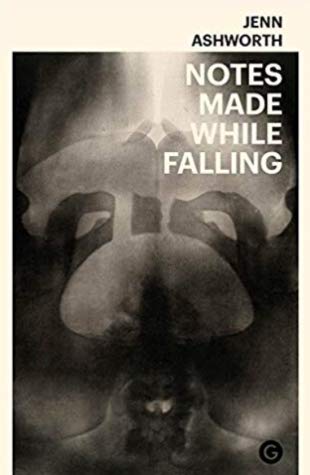
Notes Made while Falling by Jenn Ashworth
(Coming from Goldsmiths Press [UK] on the 15th; already out from MIT Press [USA])
Like Anne Boyer’s The Undying and Sinéad Gleeson’s Constellations, this is an incisive memoir-in-essays about the effects of trauma on a woman’s body. Specifically, Ashworth’s story starts with her son’s birth in 2010, a disaster she keeps returning to over the course of seven sinuous personal essays. A routine C-section was followed by haemorrhaging, blood transfusions and anaphylaxis. The effects lasted for years afterwards: haunted by the sound of her blood dripping and the feeling that her organs could fall out of her abdomen at any time, she suffered from vomiting, insomnia and alcoholism, drinking late into the night as she watched gruesome true crime films.
 Ashworth toggles between experience, memory, and the transformation of experience into a written record. She admits she has lost faith in fiction, either reading or writing it (she is a lecturer at Lancaster University and the author of four novels). Her Mormon upbringing in Preston is a major part of her backstory, and along with her childhood indoctrination she remembers brief stays in a children’s home and in the hospital with chicken pox.
The essays experiment with structure and content. For instance, “Ground Zero” counts down from #8, with incomplete final lines in each section, then back up to #8, with each piece from the second set picking up where the first left off. Slashes and cross-outs represent rethinking or alternate interpretations. “Off Topic: On Derailment” encompasses so many topics, from excommunication to Agatha Christie to rollercoasters to Charles Dickens, that you have to read it to believe she can make it all fit together (elsewhere she muses on Chernobyl, magic tricks and hating King Lear).
“How to Begin: The Cut” started as a talk given at Greenbelt 2013, when I was in the audience. I especially loved “A Lecture on Influence,” a coy self-examination through creative writing lessons, and “How to Fall without Landing: Celestial City,” a meditation on the precariousness of the human condition. Her frame of literary reference is wide and surprising. This also reminded me of Sight by Jessie Greengrass, The Empathy Exams by Leslie Jamison, I Am, I Am, I Am by Maggie O’Farrell, and In the Days of Rain by Rebecca Stott; I would recommend it to readers of any of the above.
Some favorite lines:
“My God-hurt head has a hole in it or needs one; to let the world in, or out – I can’t ever decide.”
“how to write about everything? How to take in the things that don’t belong to you without being poisoned by them? How to make use of the things that live inside, those seedlings you never asked for? How to breathe in? How to breathe out? How to keep on doing that?”
“Some days it feels like writing truthfully about her own life is the most subversive thing a woman can do.”
My thanks to the publisher for the free copy for review.
Akin by Emma Donoghue
(Coming from Picador [UK] on the 3rd; already out from Little, Brown and Co. [USA])
I’ve read Donoghue’s six most recent works of fiction. Her books are all so different from each other in setting – a one-room prison in contemporary America, bawdy 1870s San Francisco, rural Ireland in the 1850s – that it’s hard to pin her down to one time period or roster of topics. She never writes the same book twice, and that’s got to be a good thing.
 Akin gets off to a slightly slow start but soon had me hooked. Noah Selvaggio, a childless widower and retired chemist in New York City, is looking forward to an imminent trip to Nice, where he was born, to celebrate his 80th birthday. He never guessed that he’d have company on his trip, much less a surly 11-year-old. This is Michael Young, his nephew Victor’s son. Victor died of a drug overdose a year and a half ago; the boy’s mother is in prison; his maternal grandmother has just died. There’s no one else to look after Michael, so with a rush passport he’s added to the itinerary.
In some ways Michael reminded me of my nephews, ages 11 and 14: the monosyllabic replies, the addiction to devices and online gaming, the finicky eating, and the occasional flashes of childlike exuberance. Having never raised a child, Noah has no idea how strict to be with his great-nephew about screen time, unhealthy food and bad language. He has to learn to pick his battles, or every moment of this long-awaited homecoming trip would be a misery. And he soon realizes that Michael’s broken home and troubled area of NYC make him simultaneously tougher and more vulnerable than your average kid.
The odd-couple dynamic works perfectly here and makes for many amusing culture clashes, not so much France vs. the USA as between these Americans of different generations. The dialogue, especially, made me laugh. Donoghue nails it:
[Noah:] “The genre, the style. Is rap the right word for it? Or hip-hop?”
[Michael:] “Don’t even try.” Michael turned his music back on.
(At the cathedral)
[Michael:] “This is some seriously frilly shit.”
[Noah:] “It’s called Baroque style.”
[Michael:] “I call it fugly.”
But there’s another dimension to the novel that keeps it from being pleasant but forgettable. Noah’s grandfather was a famous (fictional) photographer, Père Sonne, and he has recently found a peculiar set of photographs left behind by his late mother, Margot. One is of the hotel where they’re staying in Nice, known to be a holding tank for Jews before they were sent off to concentration camps. The more Noah looks into it, the more he is convinced that his mother was involved in some way – but which side was she on?
This is feel-good fiction in the best possible sense: sharp, true-to-life and never sappy. With its spot-on dialogue and vivid scenes, I can easily see it being made into a movie, too. It’s one of my favorite novels of the year so far.
My thanks to the publisher for the proof copy for review.
Twas the Nightshift before Christmas by Adam Kay
(Coming from Picador on the 17th)
 If you’ve read This Is Going to Hurt, the UK’s bestselling nonfiction title of 2018, you’ll know just what to expect from the comedian’s holiday-themed follow-up. It’s raunchy, morbid and laugh-out-loud funny. In the seven years that Kay was a medical doctor, he had to work on Christmas Day six times. He takes us through the holiday seasons of 2004 to 2009, from the sickeningly festive run-up to the letdown of Christmas day and its aftermath. With his Rudolph tie on and his Scrooge spirit intact, he attends to genital oddities, childbirth crises and infertility clients, and feebly tries to keep up his relationships with his family and his partner despite them having about given up on him after so many holiday absences.
This will be a stocking-stuffer for many this year, and I can see myself returning to it year after year and flicking through for a laugh. However, there’s one story here that Kay regrets omitting from This Is Going to Hurt as being too upsetting, and he also ends on a serious note, urging readers to spare a thought for those who give up their holidays to keep our hospitals staffed.
A favorite passage:
“A lot of the reward for this job comes in the form of a warm glow. It doesn’t make you look any less tired, you can’t pay the rent with it, and it’s worth a lot less than the social life you’ve traded it for, but this comforting aura of goodness and purpose definitely throws light into some dark corners and helps you withstand a lot of the shit.”
My thanks to the publisher for the proof copy for review.
Shame on Me: An Anatomy of Race and Belonging by Tessa McWatt
(Coming from Scribe UK on the 10th)
 “What are you?” This question has followed McWatt since she was eight years old. When her third-grade teacher asked the class if they knew what “Negro” meant, one boy pointed to her. “Oh, no, not Tessa,” the teacher replied, following up with a question: “What are you, Tessa?” But it has always been hard to put her mixed-race background into one word. Her family moved from Guyana to Canada and she has since settled in England, where she is a professor of creative writing; her ancestry is somewhat uncertain but may include Chinese, Indian, indigenous South American, Portuguese, French/Jewish, African, and Scottish.
The book opens with the startling scene of her grandmother, a young Chinese woman brought over to work the sugarcane fields of British Guiana, being raped by her own uncle. “To strangers, even friends—on some days also to myself—I am images of violence and oppression. I am the language of shame and destitution, of slavery and indenture, of rape and murder. I am images of power and privilege, of denial and shades of skin, shapes of faces,” McWatt writes.
Her investigation of the meaning of race takes the form of an academic paper, Hypothesis–Experiment–Analysis–Findings, and within the long third section she goes part by part through the bodily features that have most often been used as markers of racial identity, including the nose, eyes, hair and buttocks. She dives into family history but also into wider historical movements, literature and science to understand her hybrid self. It’s an inventive and sensitive work reminiscent of The Color of Water by James McBride. I would recommend it to anyone who enjoys reading (or feels they should try) interrogations of race.
A favorite line:
“as I try to square my politics with my privilege, it seems that my only true inheritance is that I am always running somewhere else.”
I won a signed proof copy in a Twitter giveaway.
Have you read any October releases that you would recommend? Do any of these tempt you?
Wellcome Book Prize 2019: Announcing Our Shadow Panel Shortlist
Here’s a recap of what’s on the Wellcome Book Prize longlist, with links to all the reviews that have gone up on our blogs so far:

Amateur: A true story about what makes a man by Thomas Page McBee
Astroturf by Matthew Sperling
Educated by Tara Westover
Freshwater by Akwaeke Emezi
Heart: A history by Sandeep Jauhar
Mind on Fire: A memoir of madness and recovery by Arnold Thomas Fanning
Murmur by Will Eaves
My Year of Rest and Relaxation by Ottessa Moshfegh
Polio: The odyssey of eradication by Thomas Abraham
Sight by Jessie Greengrass
The Trauma Cleaner: One woman’s extraordinary life in death, decay and disaster by Sarah Krasnostein
This Really Isn’t About You by Jean Hannah Edelstein
Together we have chosen the six* books we would like to see advance to the shortlist. This is based on our own reading and interest, but also on what we think best fits the prize’s aim, as stated on the website:
To be eligible for entry, a book should have a central theme that engages with some aspect of medicine, health or illness. At some point, medicine touches all our lives. Books that find stories in those brushes with medicine are ones that add new meaning to what it means to be human. The subjects these books grapple with might include birth and beginnings, illness and loss, pain, memory, and identity. In keeping with its vision and goals, the Wellcome Book Prize aims to excite public interest and encourage debate around these topics.
Here are the books (*seven of them, actually) that we’ll be rooting for – we had a tie on a couple:

Amateur: A true story about what makes a man by Thomas Page McBee
Educated by Tara Westover
Heart: A history by Sandeep Jauhar
Murmur by Will Eaves
Sight by Jessie Greengrass
The Trauma Cleaner by Sarah Krasnostein
This Really Isn’t About You by Jean Hannah Edelstein
The official Wellcome Book Prize shortlist will be announced on Tuesday the 19th. I’ll check back in on Wednesday with our reactions to the shortlist and the plan for covering the rest of the books we haven’t already read.
The Wellcome Book Prize 2019 Longlist: Reactions & Shadow Panel Reading Strategy
The 2019 Wellcome Book Prize longlist was announced on Tuesday. From the prize’s website, you can click on any of these 12 books’ covers, titles or authors to get more information about them.
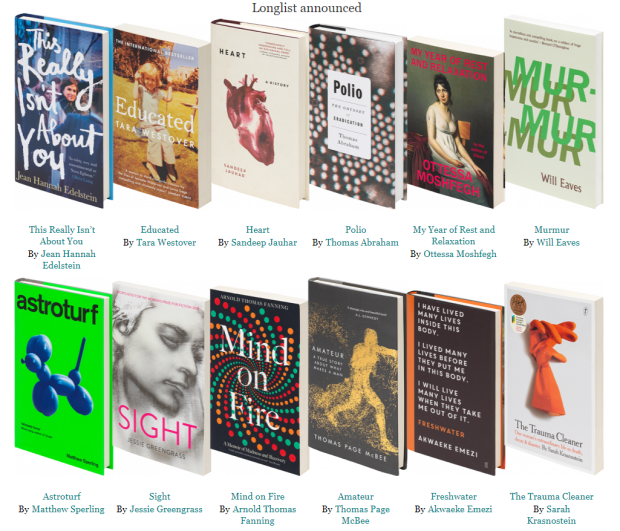
This year marks the 10th anniversary of the prize. As always, it’s a strong and varied set of nominees, with an overall focus on gender and mental health. Here are some initial thoughts (see also Laura’s thorough rundown of the 12 nominees):

- I correctly predicted just two, Sight by Jessie Greengrass and Heart: A History by Sandeep Jauhar, but had read another three: This Really Isn’t About You by Jean Hannah Edelstein, Amateur by Thomas Page McBee, and Educated by Tara Westover (reviewed for BookBrowse).
- I’m particularly delighted to see Edelstein on the longlist as her book was one of my runners-up from last year and deserves more attention.
- I’m not personally a huge fan of the Greengrass or McBee books, but can certainly see why the judges thought them worthy of inclusion.
- Though it’s a brilliant memoir, I never would have thought to put Educated on my potential Wellcome list. However, the more I think about it, the more health elements it has: her father’s possible bipolar disorder, her brother’s brain damage, her survivalist family’s rejection of modern medicine, her mother’s career in midwifery and herbalism, and her own mental breakdown at Cambridge.
- Books I knew about and was keen to read but hadn’t thought of in conjunction with the prize: The Trauma Cleaner by Sarah Krasnostein and My Year of Rest and Relaxation by Ottessa Moshfegh.
- Novels I had heard of but wasn’t necessarily interested in beforehand: Murmur by Will Eaves and Freshwater by Akwaeke Emezi. I went to get Freshwater from the library the afternoon of the longlist announcement and am now 60 pages in. I’d be tempted to call it this year’s Stay with Me except that the magic realist elements are much stronger here, reminding me of what I know about work by Chigozie Obioma and Ben Okri. The novel is narrated in the first person plural by a pair of (gods? demons? spirits?) inhabiting Ada’s head.
- And lastly, there are a few books I had never even heard of: Polio: The Odyssey of Eradication by Thomas Abraham, Mind on Fire: A Memoir of Madness and Recovery by Arnold Thomas Fanning, and Astroturf by Matthew Sperling. I’m keen on the Fanning but not so much on the other two. Polio will likely make it to the shortlist as this year’s answer to The Vaccine Race; if it does, I’ll read it then.

Some statistics on this year’s longlist, courtesy of a press release sent by Midas PR:
- Five novels (two more than last year – I think we can see the influence of novelist Elif Shafak), five memoirs, one biography, and one further nonfiction title
- Six debut authors
- Six titles from independent publishers (Canongate, CB Editions, Faber & Faber, Oneworld, Hurst Publishers, and The Text Publishing Company)
- Most of the authors are British or American, while Fanning is Irish (Emezi is Nigerian-American, Jauhar is Indian-American, and Krasnostein is Australian-American).
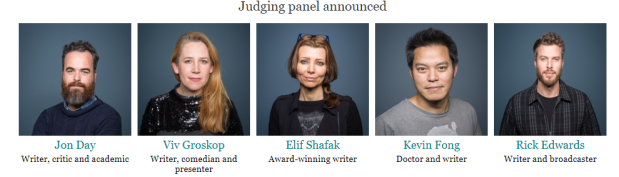
Chair of judges Elif Shafak writes: “In a world that remains sadly divided into echo chambers and mental ghettoes, this prize is unique in its ability to connect various disciplines: medicine, health, literature, art and science. Reading and discussing at length all the books on our list has been fascinating from the very start. We now have a wonderful longlist, of which we are all very proud. Although it sure won’t be easy to choose the shortlist, and then, finally, the winner, I am thrilled about and truly grateful for this fascinating journey through stories, ideas, ground-breaking research and revolutionary knowledge.”
We of the shadow panel have divided up the longlist titles between us as follows (though we may well each get hold of and read more of the books, simply out of personal interest) and will post reviews on our blogs within the next five weeks.
Amateur: A true story about what makes a man by Thomas Page McBee – LAURA
Astroturf by Matthew Sperling – PAUL
Educated by Tara Westover – CLARE
Freshwater by Akwaeke Emezi – REBECCA
Heart: A history by Sandeep Jauhar – LAURA
Mind on Fire: A memoir of madness and recovery by Arnold Thomas Fanning – REBECCA
Murmur by Will Eaves – PAUL
My Year of Rest and Relaxation by Ottessa Moshfegh – CLARE
Polio: The odyssey of eradication by Thomas Abraham – ANNABEL
[Sight by Jessie Greengrass – 4 of us have read this; I’ll post a composite of our thoughts]
The Trauma Cleaner: One woman’s extraordinary life in death, decay and disaster by Sarah Krasnostein – ANNABEL
This Really Isn’t About You by Jean Hannah Edelstein – LAURA
The Wellcome Book Prize shortlist will be announced on Tuesday, March 19th, and the winner will be revealed on Wednesday, May 1st.
We plan to choose our own shortlist to announce on Friday, March 15th. Follow along here and on Halfman, Halfbook, Annabookbel, A Little Blog of Books, and Dr. Laura Tisdall for reviews and predictions.
Are there any books on here that you’d like to read?
The 2019 Wellcome Book Prize: Shadow Panel and Wish List
On Tuesday the longlist for the 2019 Wellcome Book Prize will be announced. For the third year in a row I’m running a shadow panel, and it’s composed of the same four wonderful book bloggers who joined me last year: Paul Cheney of Halfman, Halfbook, Annabel Gaskell of Annabookbel, Clare Rowland of A Little Blog of Books, and Dr. Laura Tisdall.
This year we’re going to do things slightly differently: we plan to split up the longlist, taking two to three titles each, so that between us we will have read them all and can announce our own preferred shortlist before the official shortlist is announced in March. At that point we’ll catch up by (re)reading the six shortlisted books, each reviewing the ones we haven’t already. Essentially, I’m adding an extra stage of shadow panel judging, simply because I can. I hope it will be fun – and also less onerous, in that we should get a leg-up on the shortlist and not have to read all six books in March‒April, which has proved to be a challenge in the past.
My Wellcome Prize hopefuls are all the fiction or nonfiction titles I’ve read on a medical theme that were published in the UK in calendar year 2018. I have put asterisks beside the 12 books in this post that I predict for the longlist. (The combination of wishful thinking and likelihood means that these are not exclusively my personal favorites.)

Below is a list of the books I’ve already featured on the blog in some way, with links to my coverage and a few-word summary of their relevance.
Nonfiction
Gross Anatomy by Mara Altman: Female body woes
*Beneath the Skin: Great Writers on the Body: Essays on organs
*All that Remains by Sue Black: Forensic anthropology
Everything Happens for a Reason by Kate Bowler: Living with advanced cancer
Heal Me by Julia Buckley: Tackling chronic pain
*The Unmapped Mind by Christian Donlan: Adjusting to life with MS
From Here to Eternity by Caitlin Doughty: Funerary rites around the world
This Really Isn’t About You by Jean Hannah Edelstein: A genetic disease in the family
Natural Causes by Barbara Ehrenreich: Questioning the wellness culture
On Smaller Dogs and Larger Life Questions by Kate Figes: Pondering breast cancer
Shapeshifters by Gavin Francis: Instances of bodily change
The Reading Cure by Laura Freeman: Healing from an eating disorder
Nine Pints by Rose George: The story of blood
Waiting for the Last Bus by Richard Holloway: Ageing and death
*Heart: A History by Sandeep Jauhar: Heart disease and treatments
Sick by Porochista Khakpour: Chronic Lyme disease
Human Errors by Nathan Lents: Flawed bodies; evolutionary adaptations
Skybound by Rebecca Loncraine: Breast cancer; flying lessons
Amateur by Thomas Page McBee: Memoir of F2M transformation
*Face to Face by Jim McCaul: Tales of facial surgery
*Somebody I Used to Know by Wendy Mitchell: A firsthand account of early Alzheimer’s
*That Was When People Started to Worry by Nancy Tucker: Mental illness from the inside
*The Language of Kindness by Christie Watson: Nursing as a vocation
Fiction
Little by Edward Carey: Anatomical models in wax (thanks to Clare for the reminder!)
Orchid & the Wasp by Caoilinn Hughes: Non-epileptic seizures
*The Winter Soldier by Daniel Mason: Neurology, surgery during WWI
The Way of All Flesh by Ambrose Parry: Medicine in 1840s Edinburgh
Other eligible books that I have read but not happened to mention on the blog:
 In Shock by Rana Awdish: The doctor became the patient when Awdish, seven months pregnant, was rushed into emergency surgery with excruciating pain due to severe hemorrhaging into the space around her liver, later explained by a ruptured tumor. Having experienced brusque, cursory treatment, even from colleagues at her Detroit-area hospital, she was convinced that doctors needed to do better. This memoir is a gripping story of her own medical journey and a fervent plea for compassion from medical professionals.
 Doctor by Andrew Bomback: Part of the Bloomsbury Object Lessons series, this is a wide-ranging look at what it’s like to be a doctor. Bomback is a kidney specialist; his wife is also a doctor, and his father, fast approaching retirement, is the kind of old-fashioned, reassuring pediatrician who knows everything. Even the author’s young daughter likes playing with a stethoscope and deciding what’s wrong with her dolls. In a sense, then, Bomback uses fragments of family memoir to compare the past, present and likely future of medicine.
 A Moment of Grace by Patrick Dillon [skimmed]: A touching short memoir of the last year of his wife Nicola Thorold’s life, in which she battled acute myeloid leukemia. Dillon doesn’t shy away from the pain and difficulties, but is also able to summon up some gratitude.
 Get Well Soon: Adventures in Alternative Healthcare by Nick Duerden: British journalist Nick Duerden had severe post-viral fatigue after a run-in with possible avian flu in 2009 and was falsely diagnosed with ME / CFS. He spent a year wholeheartedly investigating alternative therapies, including yoga, massage, mindfulness and meditation, visualization, talk therapy and more. He never comes across as bitter or sorry for himself. Instead, he considered fatigue a fact of his new life and asked what he could do about it. So this ends up being quite a pleasant amble through the options, some of them more bizarre than others.
 *Sight by Jessie Greengrass [skimmed]: I wanted to enjoy this, but ended up frustrated. As a set of themes (losing a parent, choosing motherhood, the ways in which medical science has learned to look into human bodies and minds), it’s appealing; as a novel, it’s off-putting. Had this been presented as a set of autobiographical essays, perhaps I would have loved it. But instead it’s in the coy autofiction mold where you know the author has pulled some observations straight from life, gussied up others, and then, in this case, thrown in a bunch of irrelevant medical material dredged up during research at the Wellcome Library.
 *Brainstorm: Detective Stories From the World of Neurology by Suzanne O’Sullivan: Epilepsy affects 600,000 people in the UK and 50 million worldwide, so it’s an important condition to know about. It is fascinating to see the range of behaviors seizures can be associated with. The guesswork is in determining precisely what is going wrong in the brain, and where, as well as how medicines or surgery could address the fault. “There are still far more unknowns than knowns where the brain is concerned,” O’Sullivan writes; “The brain has a mind of its own,” she wryly adds later on. (O’Sullivan won the Prize in 2016 for It’s All in Your Head.)
 I’m also currently reading and enjoying two witty medical books, The Mystery of the Exploding Teeth and Other Curiosities from the History of Medicine by Thomas Morris, and Chicken Unga Fever by Phil Whitaker, his collected New Statesman columns on being a GP.
Four additional books I have not read but think might have a chance of making the longlist:
Primate Change: How the World We Made Is Remaking Us by Vybarr Cregan-Reid
 The Beautiful Cure: Harnessing Your Body’s Natural Defences by Daniel M. Davis
Because I Come from a Crazy Family: The Making of a Psychiatrist by Edward M. Hallowell
*She Has Her Mother’s Laugh: The Powers, Perversions, and Potential of Heredity by Carl Zimmer
Look out for the announcement of the longlist on Tuesday afternoon! I’ll report back, perhaps on Wednesday, with some reactions and the shadow panel’s reviewing strategy.
Have you read, or are you interested in, any of these books?
Can you think of other 2018 releases that might be eligible for the Wellcome Book Prize?
Vocabulary Words I Learned from Books This Year
These are in chronological order by my reading.
- borborygmi = stomach rumblings caused by the movement of fluid and gas in the intestines
- crapula = sickness caused by excessive eating and drinking
- olm = a cave-dwelling aquatic salamander
~The Year of the Hare, Arto Paasilinna
- befurbelowed = ornamented with frills (the use seems to be peculiar to this book, as it is the example in every online dictionary!)
~The Awakening, Kate Chopin
 roding = the sound produced during the mating display of snipe and woodcock, also known as drumming
- peat hag = eroded ground from which peat has been cut
~Deep Country, Neil Ansell
- rallentando = a gradual decrease in speed
~Sight, Jessie Greengrass
- piceous = resembling pitch
~March, Geraldine Brooks
- soffit = the underside of eaves or an arch, balcony, etc.
~The Only Story, Julian Barnes
 lemniscate = the infinity symbol, here used as a metaphor for the pattern of pipe smoke
~The Invisible Bridge, Julie Orringer
- purfling = a decorative border
- lamingtons = sponge cake squares coated in chocolate and desiccated coconut (sounds yummy!)
~The Life and Loves of Lena Gaunt, Tracy Farr
- ocellated = having eye-shaped markings
~Red Clocks, Leni Zumas
- balloonatic (WWI slang) = a ballooning enthusiast
- skinkling = sparkling
- preludial = introductory
- claustral = confining
- baccalà = salted cod
~The Incendiaries, R. O. Kwon
(There were so many words I didn’t immediately recognize in this novel that I thought Kwon must have made them up; preludial and claustral, especially, are words I didn’t know existed but that one might have extrapolated from their noun forms.)
 bronies = middle-aged male fans of My Little Pony (wow, who knew this was a thing?! I feel like I’ve gone down a rabbit hole just by Googling it.)
- callipygian = having well-shaped buttocks
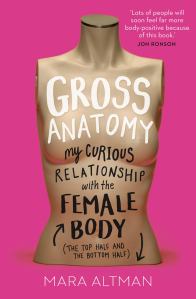
~Gross Anatomy, Mara Altman
- syce = someone who looks after horses; a groom (especially in India; though here it was Kenya)
- riem = a strip of rawhide or leather
- pastern = a horse’s ankle equivalent
~West with the Night, Beryl Markham
- blintering = flickering, glimmering (Scottish)
- sillion = shiny soil turned over by a plow
~The Light in the Dark: A Winter Journal, Horatio Clare
- whiffet = a small, young or unimportant person
~Ladder of Years, Anne Tyler
- trilliant = a triangular gemstone cut
- cabochon = a gemstone that’s polished but not faceted
- blirt = a gust of wind and rain (but here used as a verb: “Coldness blirted over her”)
- contumacious = stubbornly disobedient
~Four Bare Legs in a Bed, Helen Simpson
 xeric = very dry (usually describes a habitat, but used here for a person’s manner)
~Unsheltered, Barbara Kingsolver
- twitten = a narrow passage between two walls or hedges (Sussex dialect – Marshall is based near Brighton)
~The Power of Dog, Andrew Marshall
- swither (Scottish) = to be uncertain as to which course of action to take
- strathspey = a dance tune, a slow reel
~Stargazing, Peter Hill
- citole = a medieval fiddle
- naker = a kettledrum
- amice = a liturgical vestment that resembles a cape
~The Western Wind, Samantha Harvey
 pareidolia = seeing faces in things, an evolutionary adaptation (check out @FacesPics on Twitter!)
~The Overstory, Richard Powers
Have you learned any new vocabulary words recently?
How likely am I to use any of these words in the next year?
Reviews Roundup, May–June
One of my goals with this blog is to have one convenient place where I can gather together all my writing that has appeared in disparate online locations. To that end, once a month – or maybe more often – I’ll provide links to all the book reviews I’ve published elsewhere, with a rating and a short taster so you can decide whether to click to read more. (A couple of exceptions: I won’t point out my Kirkus Indie or BlueInk reviews since I don’t get a byline.)
BookBrowse
Girl at War by Sara Nović [subscription service; excerpt available to non-subscribers]: This pitch-perfect debut novel is an inside look at the Yugoslavian Civil War and its aftermath, from the perspective of a young girl caught up in the fighting. The careful structure is what keeps it from becoming just another ordinary, chronological war story. The recreation of a child’s perspective on the horrors of war is stunning. In fact, I can barely think of a negative thing to say about this concise novel. It strikes a perfect balance between past and present, tragic and hopeful.

 Church of Marvels by Leslie Parry [subscription service; excerpt available to non-subscribers]: With settings ranging from a Coney Island theater to an opium den and a mental asylum, this is a gritty look at late-nineteenth-century outsiders. Circus and sideshow themes have been very popular in fiction in recent years, and this is a great example of a novel that uses those elements as background but goes beyond the incidentals of the carnival lifestyle to examine sexuality and societal outcasts. A very atmospheric and accomplished debut novel.

The Bookbag
Secrets of the Pomegranate by Barbara Lamplugh (& interview): In the aftermath of the 2004 Madrid train bombings, the secrets harbored by two English sisters, one of them settled in Granada, will come out into the open and affect the entire family. Lamplugh does a great job of unveiling a little at a time – but still maintaining tension until the surprise of the final revelation. The novel shifts easily between the central narrative and Deb’s diary entries, and between Alice’s and Mark’s perspectives. A strong debut novel.
An Account of the Decline of the Great Auk, According to One Who Saw It by Jessie Greengrass: An unusual mixture of historical, contemporary and dystopian short stories. A number of the first-person narratives feel like vague interior monologues, though there are some universal sentiments. When Greengrass picks one genre (but which will it be?) and sticks with it for the length of a whole book, she should have the time and space for the deep characterizations I thought were missing here. (But you can’t beat this book’s title, can you?)

 From the Mixed-Up Files of Mrs. Basil E. Frankweiler by E.L. Konigsburg: This was one of the key books of my American childhood. All these years later, phrases were still familiar to me, such as Jamie’s frequent exclamation of “Oh, boloney!” I clearly remembered the delicious overall sense of adventure and secrecy. Konigsburg captures school group chatter and brother/sister banter perfectly. The museum and archive settings are a great way to get children interested in art, history and library research. This was the original Night at the Museum before that franchise was ever dreamed up.
The Hunt for the Golden Mole by Richard Girling: From Victorian animal collecting to present-day poaching, Girling surveys the contradictory human instincts toward exploitation and preservation of mammals. The book is rather scattered, with too little about the actual quest for the mole, but the message about species extinction is powerful. (The Somali golden mole has never been seen in the wild, except as a few bones in an owl pellet found by an Italian zoologist in 1964. For some reason, it captured Girling’s imagination, becoming a symbol of rarity and fragility.)

Nudge
Road Ends by Mary Lawson: Contrasting rural Canada and London in the 1960s, Lawson’s third novel is a powerful story about how people deal with a way of life ending. She creates a perfect balance between her two plot strands, and the evocation of both locations is flawless, perhaps because they have autobiographical worth for her – she grew up on a farm in Ontario but moved to England in 1968. One remarkable thing about the novel is how she traces every decision back to a traumatic event in a character’s past.
 The Wolf Border by Sarah Hall: Rachel Caine has run Idaho’s Chief Joseph wolf preserve for nearly a decade, but her roots are in England’s Lake District. Her two worlds unexpectedly collide when an earl asks for her help reintroducing wolves near the Scottish border. Alongside the story of the wolves’ release runs Rachel’s decision to become a mother. The twin plot strands – one environmental and the other personal – ask what can be salvaged from the past.
Italian Ways by Tim Parks: Parks, an Englishman, has lived and worked in northern Italy for over 30 years. To start with he saw his train travel as an everyday source of woes about ticket queues, late running, officious staff, and so on, but as years passed he decided to interrogate Italy’s rail system as a metaphor for the country itself. He structures this book around seven train journeys. It’s better suited to train spotters than to armchair travelers: there is quite a lot about train schedules and not enough about the countryside itself.
 Landmarks by Robert Macfarlane: This new classic of nature writing zeroes in on the language we use to talk about our environment, both individual words – which Macfarlane celebrates in nine mini-glossaries alternating with the prose chapters – and the narratives we build around places, via discussions of the work of nature writers he admires. Whether poetic (“heavengravel,” Gerard Manley Hopkins’s term for hailstones), local and folksy (“wonty-tump,” a Herefordshire word for a molehill), or onomatopoeic (on Exmoor, “zwer” is the sound of partridges taking off), his vocabulary words are a treasure trove.
Penelope Fitzgerald: A Life by Hermione Lee: A thorough and sympathetic appreciation of an underrated author, and another marvelously detailed biography from Lee. Fitzgerald is, like Diana Athill, a reassuring examples of an author who did not find success until well into middle age. Although she always guarded literary ambitions, she was not able to pursue her work wholeheartedly until she had reared three children and nursed her hapless husband through his last illness. The approach is largely chronological, though Lee pauses at key moments to investigate the biographical origins of each of Fitzgerald’s books.
Saint Mazie by Jami Attenberg: Mazie Phillips-Gordon, a real ticket-taker at The Venice movie theatre, barely gets a footnote in history. Here we see all sides of this bold, brassy broad through Attenberg’s fragmented, epistolary narrative. The novel intersperses Mazie’s fictional diary entries (1907 to 1939) with excerpts from her unpublished autobiography and interviews with people who knew her. This is historical fiction – but not as we’re accustomed to it. Attenberg shows how fragile and incomplete the documentary record can be. A hard-nosed heroine with a heart of gold, Mazie will leave her mark on you.
 A Buzz in the Meadow by Dave Goulson: As Goulson did in his book about bees, A Sting in the Tale, he treats readers like friends he is taking on a gentle tour to have everyday encounters with nature. The low-key, humorous anecdotes are reminiscent of the writings of Gerald Durrell, but – like Durrell – Goulson has a serious environmental agenda. Some of the most amusing chapters are about the sexual habits of insects and plants. This is less focused than his previous book, though, and repeats some of the material. The main draw, as always, is Goulson’s infectious enthusiasm and excellent explanations of science.
We Love This Book
War of the Encyclopaedists by Christopher Robinson and Gavin Kovite: In this postmodern satire, two Seattle hipsters must face reality when one of them leaves to fight in the Iraq War. From now on they keep in touch by updating their pretentious Wikipedia article. While Hal applies literary criticism to Star Wars and tries to make amends to his ex-girlfriend, Mickey is in life-and-death situations, looking for car bombs and overseeing local elections. Robinson and Kovite (an Iraq War veteran) alternate their settings in a fairly seamless whole.
The Edible Atlas by Mina Holland: Food lovers and armchair travelers alike will savor this tour through the world’s regional cuisines and trademark dishes. In her first book, the editor of the Guardian’s Cook supplement introduces 39 cuisines with larder lists, a rundown of crucial flavors, and one to four recipes. Maps show which spices and chilies are used in different areas, while sidebars present key ingredients. The book strives for a balance of common imports and unknown dishes, prioritizing authenticity and reproducibility at home.
 Hollow Heart by Viola di Grado: Twenty-five-year-old Dorotea Giglio slit her wrists in the bathtub in July 2011 and expired in “a grim mojito of mint bubble bath and blood.” Over the next four years she chronicles her physical decomposition as well as her spirit’s enduring search for love. In alternately clinical and whimsical language, with fresh metaphors that have survived translation from Italian admirably, di Grado’s second novel examines the secret sadness passed down through families.
Foreword Reviews
Auschwitz #34207: The Joe Rubinstein Story by Nancy Sprowell Geise: This eye-opening account of a Polish Jew’s life before, during, and after Auschwitz deposits readers right into concentration camp horrors. Instead of presenting this as a third-person biography, Geise writes as Rubinstein, using extensive interviews and documentary research to recreate his perspective. While the story is necessarily a bit less dramatic after the chapters on the Holocaust, the fact that Rubinstein survived and later became a successful shoe designer in New York is inspiring.
The Contaminants by Devin K. Smyth: Two teens aboard a spacecraft hold out hope for new life on post-apocalyptic Earth in this believable YA science fiction novel. Composed of two solid first-person narratives and based around two father-child relationships, this is a novel that prizes emotions as much as it does technology. The novel is on the thin side; it could have done with another subplot or two to add some complexity. However, the subtle eugenics theme will give teen readers plenty to think about while they follow the fast-paced story.
 The Loneliness Cure by Kory Floyd: A professor of communication tackles the loneliness epidemic with stories and science. Floyd explains the problems associated with chronic affection deprivation and suggests practical strategies for getting more of the human contact we naturally crave. Two-thirds of the text goes to preliminaries, but the subtitle’s six strategies are worth waiting for. Like the best self-help books, this convinces readers that “it pays to reach out for help when you need it” and gives the confidence and tactics to do so.
BookTrib
In this article I give a more in-depth preview of Circling the Sun by Paula McLain, her fictionalized biography of Beryl Markham.
I also post reviews of most of my casual reading and skimming on Goodreads.
Insomnia by Linda Pastan: Excellent free verse poems infused with images of weather, heavenly bodies, the night sky, art history, and travels. No rhymes to speak of, but plenty of alliteration and repetition – like in “Necklace,” where nearly every line ends with “pearl” or “pearls.” Historical and mythological references are frequent and highbrow. Especially in Part 3, the main theme is facing old age and illness. Linda Pastan has been writing poetry for nearly half a century; I’ll be sure to seek out more of her collections. Releases October 26th.
The Kindness by Polly Samson: This very subtle novel reminds me of works by Tessa Hadley and Lucy Caldwell. It takes one seemingly perfect couple – Julia and Julian – and parses out what went wrong between them and the aftermath. The book is so elegantly structured; characters drift in and out of flashbacks with none of the customary warnings. Instead Samson leaves it to readers to piece together the jigsaw puzzle of how they met and raised their daughter, Mira, and then how everything fell apart.
 The Versions of Us by Laura Barnett: In this impressive debut, Barnett chronicles the romantic lives of two Cambridge graduates through three-quarters of a century, giving three options for how their connection might play out. She juggles her storylines and moves through decades with ease. Less mawkish than One Day; less gimmicky than Life After Life – though there are shades of both. The message seems to be: there is no one perfect person, no one perfect story. Unsentimental this may be, but it feels true to how life works. (My full review will appear in the July 2015 issue of Third Way magazine.)
Eating Appalachia: Rediscovering Regional American Flavors by Darrin Nordahl: Nordahl travels through Ohio, West Virginia, Kentucky and North Carolina in search of truly indigenous local ingredients. He highlights ramsons, pawpaw, elk (leaner and richer than beef), squirrel, hickory nuts and black walnuts, sumac, spicebush berry, sassafras, and persimmons. There are a few recipes and photographs in each chapter, although this is more of a narrative than a cookbook. I loved how he brought it all together with an imagined Appalachian Thanksgiving feast.
Eating Rome: Living the Good Life in the Eternal City by Elizabeth Minchilli: Minchilli’s parents moved the family from America to Rome when she was 12. Over the years she kept going back to Italy: to Florence as a graduate student, and then to stay when she married Domenico. Here, through recipes and personal stories, she shares her enthusiasm for Italian food and for Rome in particular. She finishes each chapter with a list of favorite eateries, so this is a practical guide anyone would benefit from taking along on a trip to Rome.
Some Churches by Tasha Cotter: I loved the first two poems but felt a number of the rest were lacking in artistry. Almost all are written in complete sentences, some in paragraph blocks, and alliteration isn’t always enough to differentiate them from prose. Favorite lines (from “Blood Orange”): “People think that either the red or the orange should go, because to blend the two / alienates some readers. / … I, too, am having an identity crisis, / just like the blood orange. Now that we’ve peeled back / the artifice, you’re inviting me in anyway”.
South Toward Home: Travels in Southern Literature by Margaret Eby: This tour through Southern literature is a great introduction for someone whose familiarity with Southern authors is minimal. Starting off in her home state of Mississippi, Eby travels through Georgia, Alabama, Louisiana, and back to Mississippi in a roughly circular road trip. My favorite chapter was on Flannery O’Connor, but I was also interested to learn about Harry Crews, who I’d never heard of before – it certainly sounds like he was a character. Releases September 8th.
 Post-Traumatic Church Syndrome: A Memoir of Humor and Healing by Reba Riley: I could relate to much of Riley’s story. She was a Pentecostal-leaning fundamentalist through high school, but now even setting foot in a church made her feel nauseous. Yet she retained a strong spiritual compass that helped her tap into the energy of the “Godiverse.” Aged 29, Riley had the idea of experiencing 30 different religious traditions before 30. She writes in a chatty, girlfriend-to-girlfriend style, as if you’ve joined her book club for a glass of pinot grigio.
 Bookish Beck = Rebecca Foster. American transplant to England. Freelance proofreader and book reviewer.
 Bookish Beck