My Year in Short Stories (#ShortStorySeptember)
The Short Story September link-up is open (see my pinned post). At the start of the month, I’m inviting you to tell about the short stories you’ve already read this year, especially any that you’ve particularly enjoyed.

I don’t consider myself a great short story reader, so I was surprised to look back and find that I’ve already read 17 collections this year. I include in that four books that I consider to be linked short story collections, even though they were all published as novels rather than stories. (I’m sure Susan is right when she theorizes that this is about marketing – what’s expected to sell.) The best have been Brawler by Lauren Groff and Nightjar by Emily Ruskovich, which are actually quite similar.
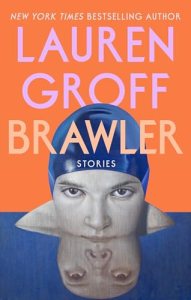
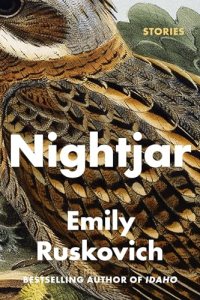
Some other favourites were:
 The Daffodil Days by Helen Bain: A slantwise biographical portrait of Sylvia Plath through her interactions in the last years of her life. The 16 chapters adopt the points-of-view of various secondary characters (e.g., Plath’s housekeeper, riding teacher, and brother), but the kernel of each is an encounter with Plath that illuminates her personality and state of mind. (Reviewed for Shelf Awareness)
Strange Weather in Tokyo by Hiromi Kawakami: Tsukiko is a lonely barfly in her late thirties when she bumps into a secondary school teacher again. She calls him “Sensei,” and they start meeting up for low-key adventures. Kawakami infuses the book with attention to the seasons’ changes and everyday sensual pleasures like food. A lovely, subtle romance.
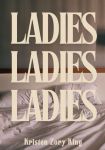 Ladies, Ladies, Ladies by Kristen Zory King: A “chapbook” containing 18 flash stories. It’s remarkable how much is packed into a few pages: a voice, a character, a setting and situation, an incident, a salient backstory, and some kind of epiphany or resolution. Fifteen of the pieces focus on one named character. Each story is distinctive, with no words wasted.
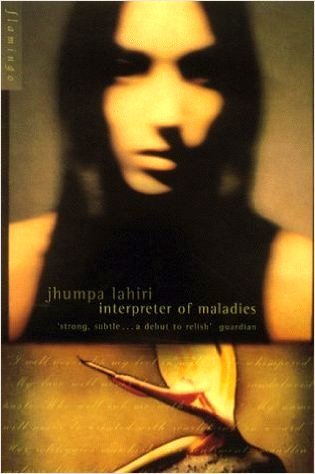
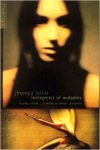 Interpreter of Maladies by Jhumpa Lahiri: Lahiri won the Pulitzer for this debut. Her characters tend to be Indian or Bengali immigrants in New England. Relationship studies trade off with accounts of encounters with strangers across generations and/or cultures. Often, food is a reminder of home. An overall theme is denying or affirming common humanity.
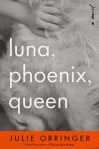 Luna, Phoenix, Queen by Julie Orringer: In Orringer’s wonderful third novel, the secrets between two literature professors and the adoption of a remarkable dog fuel an absorbing story of love, memory, and connection beyond words. Chapters take on different characters’ perspectives. (Review forthcoming for Shelf Awareness)
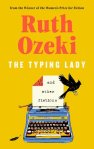 The Typing Lady and Other Fictions by Ruth Ozeki: Ozeki is up to her usual auto/metafiction tricks here, blurring the lines between fact and fiction, life and death. Themes include memory, creativity, language, ageing and cross-generation connections. The stories are playful without being twee, and represent a real return to form.
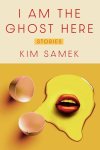 I Am the Ghost Here by Kim Samek: The television producer’s inventive debut recalls Ed Park and George Saunders with its focus on the mixed blessing of technology. Her speculative short stories’ protagonists deal with grief or new motherhood, often while also struggling with their health. Samek sets up unusual situations with knock-out first lines. (Reviewed for BookBrowse)
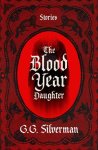 The Blood Year Daughter by G.G. Silverman: A remarkable collection that mixes feminist horror and twisted fairy tales into potent concoctions. Women’s bodies are imperiled by sadistic men and acts of self-sacrifice. Blood is a symbol of desire or power. Motherhood and sisterhood are vital bonds. Among bleak storylines come flashes of morbid humor. (Reviewed for Foreword Reviews)
All by women!
And the rest:
- Love Invents Us by Amy Bloom
- Baby in a Box by Sarah Braunstein (Reviewed for BookBrowse)
- A Calendar of Love and Other Stories by George Mackay Brown
- Museum Visits by Éric Chevillard
- Lesser Known Monsters of the 21st Century by Kim Fu
- It Will Come Back to You: Collected Stories by Sigrid Nunez
- The Book of Mating by Laksmi Pamuntjak [trans. from Indonesian by Annie Tucker] (Review forthcoming for Foreword Reviews)


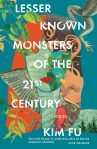
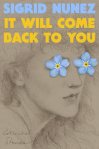
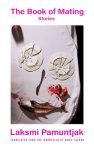
(All but two by women!)
What are some of your recent favorite experiences with short fiction?
Book Serendipity, March to May
I call it “Book Serendipity” when two or more books that I read at the same time or in quick succession have something in common – the more bizarre, the better. This is a regular feature of mine every couple of months. Because I usually have 20–30 books on the go at once, I suppose I’m more prone to such incidents. People frequently ask how I remember all of these coincidences. The answer is: I jot them down on scraps of paper or input them immediately into a file on my PC desktop; otherwise, they would flit away! Feel free to join in with your own.
The following are in roughly chronological order.
- A sister named Fiona in The Forgotten Waltz by Anne Enright and Leaving Home by Mark Haddon.
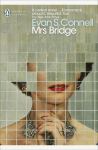
- A parent burns a dirty magazine in Mrs. Bridge by Evan S. Connell and The Blood Year Daughter by G.G. Silverman.
- Sabbath chains, Gaelic sermons, and psalm singing on the very pious Isle of Lewis in John of John by Douglas Stuart (set in the 1990s), then Findings by Kathleen Jamie (essay from the early 2000s). I doubt any of the above can still be found there, though we did note “Respect the Sabbath” signs on playground equipment on our 2022 trip.
- A single mother who won’t answer the phone because she’s afraid of who/what it might be in Blonde by Joyce Carol Oates and The First Day of Spring by Nancy Tucker.
- An orphaned narrator named (Eva) Luna in Eva Luna by Isabel Allende and Fountainville by Tishani Doshi. Then I came across a dog named Luna in Transcription by Ben Lerner! And the main character in one story of Baby in a Box by Sarah Braunstein starts going by her nickname, Luna.
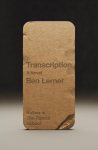
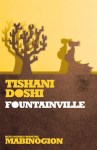
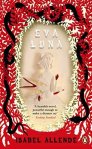
- There’s a Muriel Rukeyser poem in the anthology Night Feeds and Morning Songs (ed. Ana Sampson) and Rukeyser is a character in Sophie Ward’s Our Better Natures, which I was also reading at the time.
- Eating boiled ham in Ordinary Saints by Niamh Ni Mhaoileoin and I Capture the Castle by Dodie Smith (and boiled turkey in The First Day of Spring by Nancy Tucker).
 Checking a hotel room for bedbugs in Transcription by Ben Lerner and Half His Age by Jennette McCurdy.
- A young person writing in shorthand in I Capture the Castle by Dodie Smith and First Class Murder by Robin Stevens.
- A character named Emmie in Transcription by Ben Lerner and (no surprise here) Emmie Arbel: The Colour of Memory by Barbara Yelin.
- Noting that roses are not suited to a particular climate in The Memory of Borrowed Books by Meg Anderson and Late Migrations by Margaret Renkl.
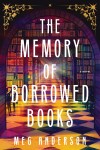

- A Welsh character named Owain in Fountainville by Tishani Doshi and Bog Child by Siobhan Dowd.
- The Secret Garden is discussed/mentioned in Reading My Mother Back by Timothy C. Baker and Mare by Emily Haworth-Booth, and mentioned in The Memory of Borrowed Books by Meg Anderson.
- The protagonist is emotionless at their mother’s deathbed in Like Mother by Jenny Diski and Leaving Home by Mark Haddon.
- (Apologies: this one is grim.) A young woman is sexually assaulted with a bottle in The Benefactors by Wendy Erskine and The Truth about Ruby Cooper by Liz Nugent (both Irish novelists).
- A husband is involved in a deliberate (suicidal) crash in Show Me Where It Hurts by Claire Gleeson and one story of I Am the Ghost Here by Kim Samek.
- Ali Baba’s cave is used as a metaphor in The Usual Desire to Kill by Camilla Barnes and Rita Hayworth and Shawshank Redemption by Stephen King.

- A brother- and sister-in-law have an affair in the two Portuguese novels I read on my Portugal holiday, The Migrant Painter of Birds by Lídia Jorge and The Piano Cemetery by José Luís Peixoto.
- A woman describes her discovery of orgasm in The Half Life by Rachel Beanland and The High Mountains of Portugal by Yann Martel.
- ‘There are two kinds of people…’ thinking in The Mighty Red by Louise Erdrich and one story of It Will Come Back to You by Sigrid Nunez.
- Money is hidden behind a boiler in The Mighty Red by Louise Erdrich and The Murderer’s Ape by Jakob Wegelius.
 The surname Callaway in The Half Life by Rachel Beanland and Calloway in The Watersmith by Yance Wyatt.
- Louise Erdrich, whose The Mighty Red I was reading at the time, is mentioned in The Madman’s Guide to Stamp Collecting by Robert Irwin.
- A minor character named Genevieve appears in Our Numbered Bones by Katya Balen and The Watersmith by Yance Wyatt.

- The Mighty Red by Louise Erdrich is the second novel I’ve read within eight months (after The Wedding People by Alison Espach) in which a reluctant bride is saddled with a groom named Gary.
- A mountain lion sighting in The Mighty Red by Louise Erdrich and Learning from Silence by Pico Iyer.
- A character has a love of Agatha Christie novels in The High Mountains of Portugal by Yann Martel and Buckeye by Patrick Ryan.
- A character with the nickname Kitten in Nonesuch by Francis Spufford (particularly funny because it’s for a thug) and Kitten by Stacey Yu.
- Reading two queer novels with an academic writing course setting at the same time: Almost Life by Kiran Millwood Hargrave and Kingfisher by Rozie Kelly.
- A remark about the rare beauty of black hair with blue eyes in Kingfisher by Rozie Kelly and My Year in Paris with Gertrude Stein by Deborah Levy.
- An STD is evidence of a husband’s infidelity in The Daffodil Days by Helen Bain and A Beautiful Loan by Mary Costello.
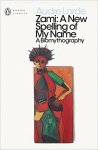
- Bottles being used to hold picnic meals / foraged blackberries (noted because these days it would be plastic pots for everything) in Zami by Audre Lorde (the 1940s) and The Daffodil Days by Helen Bain (the 1960s).
 Kismet is a character name in The Mighty Red by Louise Erdrich, so I was primed to notice the word being used in Almost Life by Kiran Millwood Hargrave (it’s a synonym for fate).
- A writer who faces the wall to work in The Daffodil Days by Helen Bain (Ted Hughes, that is) and The Autobiography of Alice B. Toklas by Gertrude Stein (referring to Alice B. Toklas!).
- A painting of an Arctic tern features in The Migrant Painter of Birds by Lídia Jorge (on the cover) and Kingfisher by Rozie Kelly.
- Hot milk is drunk in The Memory of Borrowed Books by Meg Anderson, Kingfisher by Rozie Kelly (with Ovaltine), Nonesuch by Francis Spufford, and Kitten by Stacey Yu.

- William James is mentioned in My Year in Paris with Gertrude Stein by Deborah Levy and Wise by Frank Tallis.
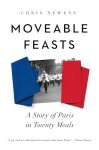 Algerian Muslim men appear in A Beautiful Loan by Mary Costello and Moveable Feasts by Chris Newens.
- A pet cat was found on the shore in The Memory of Borrowed Books by Meg Anderson and Kitten by Stacey Yu.
- Bringing cherries to an invalid in Almost Life by Kiran Millwood Hargrave and Kingfisher by Rozie Kelly.
- Sex with a woman who has a mastectomy scar in Kingfisher by Rozie Kelly and Zami by Audre Lorde.
- A sighting of a kingfisher as auspicious in Kingfisher by Rozie Kelly and Transcription by Ben Lerner.
- The idea that former lovers leave a mark on people in Almost Life by Kiran Millwood Hargrave and Zami by Audre Lorde.
- Pet cat(s) do themselves a mischief by getting into paint supplies in Zami by Audre Lorde and Kitten by Stacey Yu.
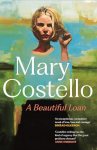
- A Sandymount, Dublin setting in A Beautiful Loan by Mary Costello and Hood by Emma Donoghue.
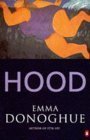
- An Irish family where the mother and one daughter move to the USA and the father and other daughter stay behind in Hood by Emma Donoghue and The Truth about Ruby Cooper by Liz Nugent (both Irish novelists).
- The concept of a “funeral cake” in The Mighty Red by Louise Erdrich and Kingfisher by Rozie Kelly.
- A character regrets wearing eye makeup on an emotional occasion in The Memory of Borrowed Books by Meg Anderson and Kingfisher by Rozie Kelly.
 My second Irish novel of the year that takes place over one week: Hood by Emma Donoghue (after One by One in the Dark by Deirdre Madden).
- A cat of confusing gender: Grace is male in Hood by Emma Donoghue and Bob is always referred to as “it” in My Year in Paris with Gertrude Stein by Deborah Levy.
- The idea that it’s rare for a woman to a) be a good storyteller (in The Torrents of Spring by Ivan Turgenev) or b) tell a punchline with a straight face (in The Correspondent by Virginia Evans – at least the man gets called out on his sexist opinion in this case). I also noticed the use of the word “caprice” in both books (and also in Turgenev’s First Love) because it’s unusual and I like it.
- Another grim, grim one: reading two books at the same time in which a woman is / women are drugged and raped while unconscious (A Hymn to Life by Gisèle Pelicot and Women Talking by Miriam Toews).

- I read two short stories in quick succession about a peasant porter who carries a broom: “A Real Durwan” by Jhumpa Lahiri (from Interpreter of Maladies) followed by “Mumu” by Ivan Turgenev.
- An older woman insists that she still is/has a little girl inside in The Correspondent by Virginia Evans and A Hymn to Life by Gisèle Pelicot.
 The number 7 has magical significance for the author in Ghost Stories by Siri Hustvedt and A Hymn to Life by Gisèle Pelicot.
- A couple meets when they see each other reading the same book in an outdoor location: A Lover’s Discourse by Roland Barthes in Almost Life by Kiran Millwood Hargrave; and The Great Gatsby in Sunset Park by Paul Auster.
- Alison Bechdel’s Dykes to Watch Out For is mentioned in Hood by Emma Donoghue; I was reading a Bechdel book, The Secret of Superhuman Strength, at the same time.
- Gnats are irksome in Sunset Park by Paul Auster and Lost Lambs by Madeline Cash.
What’s the weirdest reading coincidence you’ve had lately?
Literary Wives Club: Interpreter of Maladies by Jhumpa Lahiri (1999)
This was an unusual selection for us in that it’s a short fiction collection, not all of whose stories are about marriage. Lahiri won a Pulitzer Prize for this debut work and I’m so pleased to have finally had an excuse to pick it up. Her characters tend to be Indian or Bengali (first- or second-generation) immigrants in New England, though there are also two pen portraits of unfortunate peasant women back in India. These two are less fixed in time and feel rather fable-like, especially with the plural observers’ voice in “The Treatment of Bibi Haldar.”
Of the nine stories, six are in the third person and three in first. Apart from a couple set in 1969 or 1971, the rest are contemporary. Lahiri alternates between relationship studies and accounts of encounters with strangers across generations and/or cultures. There’s a girl’s impressions of the dignified fellow expat visitor at a time of political instability in “When Mr. Pirzada Came to Dine,” and the American boy who gets a glimpse into an unfamiliar world on afternoons at his Indian child-minder’s house in “Mrs. Sen’s.” Culture shock goes the other way for the narrator of “The Third and Final Continent,” who has moved from Calcutta to London to Cambridge and rents a room from a formidable 103-year-old landlady.
 Often, food is a reminder of home; there are lots of delicious descriptions of curries. Extramarital infatuation is contrasted with true knowledge of another person – a child is wise beyond his years in defining “sexy” as “loving someone you don’t know.”
If you seek out just one story from this excellent collection, make it “A Temporary Matter,” about a couple reeling from a stillbirth. On five successive evenings when the power company cuts their electricity to repair the line, they cook a special meal, light candles and tell secrets, including one concerning the child they lost. This story, which opens the collection, blew me away. The other highlight among a very strong pool is “This Blessed House,” in which a couple keep finding tacky Christian religious relics the previous owners left behind. Even though they’re Hindus, Twinkle decides to keep it all up for superstitious reasons, though her new husband disapproves.
All but one of the stories are standouts, and I could see how they’ve influenced story writers in the decades since, including Anuja Varghese. What linked them all together for me was the theme of denying or affirming common humanity.
More fool me for waiting all these years to try Lahiri! I have two more of her books on the shelf that I’ll try to get to soon. (Secondhand – Community Furniture Project, Newbury) 
The main question we ask about the books we read for Literary Wives is:
What does this book say about wives or about the experience of being a wife?
Marriage can be a welcome support, or a handicap. We see timid wives adjusting to a new country, and newlyweds – via arranged marriage or choice – trying to understand each other’s ways. The loss of a baby threatens to separate one couple, but instead they cling to each other. (Statistics show that 20% of marriages break up over the death of a child; previously it was thought to be 80%.) The villagers think marriage will cure Bibi Haldar, but no man will have her. Mrs. Sen is dependent on her husband for everything because she’s too scared to learn to drive.
In some traditional cultures, it’s risky for wives to assert their independence. America seems to offer women greater freedom. Mrs. Das, from the title story about an Indian American family touring India, transgresses traditional expectations by admitting to not loving her husband and children and having had an affair. Twinkle, too, flouts conventionality by refusing to submit to her husband’s wishes. But, of course, this doesn’t guarantee happiness.
See the reviews by Becky, Kate, Kay, and Marianne, too! (Naomi has stepped down from the club.)
 Bookish Beck = Rebecca Foster. American transplant to England. Freelance proofreader and book reviewer.
