Book Serendipity, March to May
I call it “Book Serendipity” when two or more books that I read at the same time or in quick succession have something in common – the more bizarre, the better. This is a regular feature of mine every couple of months. Because I usually have 20–30 books on the go at once, I suppose I’m more prone to such incidents. People frequently ask how I remember all of these coincidences. The answer is: I jot them down on scraps of paper or input them immediately into a file on my PC desktop; otherwise, they would flit away! Feel free to join in with your own.
The following are in roughly chronological order.
- A sister named Fiona in The Forgotten Waltz by Anne Enright and Leaving Home by Mark Haddon.
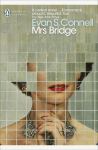
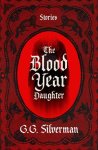
- A parent burns a dirty magazine in Mrs. Bridge by Evan S. Connell and The Blood Year Daughter by G.G. Silverman.
- Sabbath chains, Gaelic sermons, and psalm singing on the very pious Isle of Lewis in John of John by Douglas Stuart (set in the 1990s), then Findings by Kathleen Jamie (essay from the early 2000s). I doubt any of the above can still be found there, though we did note “Respect the Sabbath” signs on playground equipment on our 2022 trip.
- A single mother who won’t answer the phone because she’s afraid of who/what it might be in Blonde by Joyce Carol Oates and The First Day of Spring by Nancy Tucker.
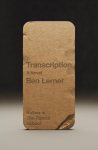
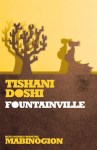
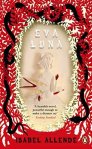
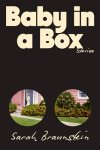
- An orphaned narrator named (Eva) Luna in Eva Luna by Isabel Allende and Fountainville by Tishani Doshi. Then I came across a dog named Luna in Transcription by Ben Lerner! And the main character in one story of Baby in a Box by Sarah Braunstein starts going by her nickname, Luna.
- There’s a Muriel Rukeyser poem in the anthology Night Feeds and Morning Songs (ed. Ana Sampson) and Rukeyser is a character in Sophie Ward’s Our Better Natures, which I was also reading at the time.
- Eating boiled ham in Ordinary Saints by Niamh Ni Mhaoileoin and I Capture the Castle by Dodie Smith (and boiled turkey in The First Day of Spring by Nancy Tucker).
 Checking a hotel room for bedbugs in Transcription by Ben Lerner and Half His Age by Jennette McCurdy.
- A young person writing in shorthand in I Capture the Castle by Dodie Smith and First Class Murder by Robin Stevens.
- A character named Emmie in Transcription by Ben Lerner and (no surprise here) Emmie Arbel: The Colour of Memory by Barbara Yelin.
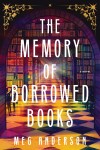
- Noting that roses are not suited to a particular climate in The Memory of Borrowed Books by Meg Anderson and Late Migrations by Margaret Renkl.

- A Welsh character named Owain in Fountainville by Tishani Doshi and Bog Child by Siobhan Dowd.
- The Secret Garden is discussed/mentioned in Reading My Mother Back by Timothy C. Baker and Mare by Emily Haworth-Booth, and mentioned in The Memory of Borrowed Books by Meg Anderson.
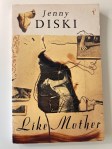
- The protagonist is emotionless at their mother’s deathbed in Like Mother by Jenny Diski and Leaving Home by Mark Haddon.
- (Apologies: this one is grim.) A young woman is sexually assaulted with a bottle in The Benefactors by Wendy Erskine and The Truth about Ruby Cooper by Liz Nugent (both Irish novelists).
- A husband is involved in a deliberate (suicidal) crash in Show Me Where It Hurts by Claire Gleeson and one story of I Am the Ghost Here by Kim Samek.
- Ali Baba’s cave is used as a metaphor in The Usual Desire to Kill by Camilla Barnes and Rita Hayworth and Shawshank Redemption by Stephen King.
- A brother- and sister-in-law have an affair in the two Portuguese novels I read on my Portugal holiday, The Migrant Painter of Birds by Lídia Jorge and The Piano Cemetery by José Luís Peixoto.
- A woman describes her discovery of orgasm in The Half Life by Rachel Beanland and The High Mountains of Portugal by Yann Martel.
- ‘There are two kinds of people…’ thinking in The Mighty Red by Louise Erdrich and one story of It Will Come Back to You by Sigrid Nunez.
- Money is hidden behind a boiler in The Mighty Red by Louise Erdrich and The Murderer’s Ape by Jakob Wegelius.
 The surname Callaway in The Half Life by Rachel Beanland and Calloway in The Watersmith by Yance Wyatt.
- Louise Erdrich, whose The Mighty Red I was reading at the time, is mentioned in The Madman’s Guide to Stamp Collecting by Robert Irwin.
- A minor character named Genevieve appears in Our Numbered Bones by Katya Balen and The Watersmith by Yance Wyatt.
- The Mighty Red by Louise Erdrich is the second novel I’ve read within eight months (after The Wedding People by Alison Espach) in which a reluctant bride is saddled with a groom named Gary.
- A mountain lion sighting in The Mighty Red by Louise Erdrich and Learning from Silence by Pico Iyer.
- A character has a love of Agatha Christie novels in The High Mountains of Portugal by Yann Martel and Buckeye by Patrick Ryan.
- A character with the nickname Kitten in Nonesuch by Francis Spufford (particularly funny because it’s for a thug) and Kitten by Stacey Yu.
- Reading two queer novels with an academic writing course setting at the same time: Almost Life by Kiran Millwood Hargrave and Kingfisher by Rozie Kelly.
- A remark about the rare beauty of black hair with blue eyes in Kingfisher by Rozie Kelly and My Year in Paris with Gertrude Stein by Deborah Levy.
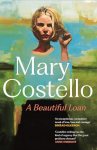
- An STD is evidence of a husband’s infidelity in The Daffodil Days by Helen Bain and A Beautiful Loan by Mary Costello.
- Bottles being used to hold picnic meals / foraged blackberries (noted because these days it would be plastic pots for everything) in Zami by Audre Lorde (the 1940s) and The Daffodil Days by Helen Bain (the 1960s).
 Kismet is a character name in The Mighty Red by Louise Erdrich, so I was primed to notice the word being used in Almost Life by Kiran Millwood Hargrave (it’s a synonym for fate).
- A writer who faces the wall to work in The Daffodil Days by Helen Bain (Ted Hughes, that is) and The Autobiography of Alice B. Toklas by Gertrude Stein (referring to Alice B. Toklas!).
- A painting of an Arctic tern features in The Migrant Painter of Birds by Lídia Jorge (on the cover) and Kingfisher by Rozie Kelly.
- Hot milk is drunk in The Memory of Borrowed Books by Meg Anderson, Kingfisher by Rozie Kelly (with Ovaltine), Nonesuch by Francis Spufford, and Kitten by Stacey Yu.
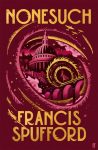

- William James is mentioned in My Year in Paris with Gertrude Stein by Deborah Levy and Wise by Frank Tallis.
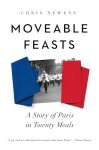 Algerian Muslim men appear in A Beautiful Loan by Mary Costello and Moveable Feasts by Chris Newens.
- A pet cat was found on the shore in The Memory of Borrowed Books by Meg Anderson and Kitten by Stacey Yu.
- Bringing cherries to an invalid in Almost Life by Kiran Millwood Hargrave and Kingfisher by Rozie Kelly.
- Sex with a woman who has a mastectomy scar in Kingfisher by Rozie Kelly and Zami by Audre Lorde.
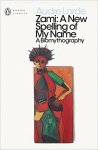
- A sighting of a kingfisher as auspicious in Kingfisher by Rozie Kelly and Transcription by Ben Lerner.
- The idea that former lovers leave a mark on people in Almost Life by Kiran Millwood Hargrave and Zami by Audre Lorde.
- Pet cat(s) do themselves a mischief by getting into paint supplies in Zami by Audre Lorde and Kitten by Stacey Yu.
- A Sandymount, Dublin setting in A Beautiful Loan by Mary Costello and Hood by Emma Donoghue.
- An Irish family where the mother and one daughter move to the USA and the father and other daughter stay behind in Hood by Emma Donoghue and The Truth about Ruby Cooper by Liz Nugent (both Irish novelists).
- The concept of a “funeral cake” in The Mighty Red by Louise Erdrich and Kingfisher by Rozie Kelly.
- A character regrets wearing eye makeup on an emotional occasion in The Memory of Borrowed Books by Meg Anderson and Kingfisher by Rozie Kelly.
 My second Irish novel of the year that takes place over one week: Hood by Emma Donoghue (after One by One in the Dark by Deirdre Madden).
- A cat of confusing gender: Grace is male in Hood by Emma Donoghue and Bob is always referred to as “it” in My Year in Paris with Gertrude Stein by Deborah Levy.
- The idea that it’s rare for a woman to a) be a good storyteller (in The Torrents of Spring by Ivan Turgenev) or b) tell a punchline with a straight face (in The Correspondent by Virginia Evans – at least the man gets called out on his sexist opinion in this case). I also noticed the use of the word “caprice” in both books (and also in Turgenev’s First Love) because it’s unusual and I like it.
- Another grim, grim one: reading two books at the same time in which a woman is / women are drugged and raped while unconscious (A Hymn to Life by Gisèle Pelicot and Women Talking by Miriam Toews).

- I read two short stories in quick succession about a peasant porter who carries a broom: “A Real Durwan” by Jhumpa Lahiri (from Interpreter of Maladies) followed by “Mumu” by Ivan Turgenev.
- An older woman insists that she still is/has a little girl inside in The Correspondent by Virginia Evans and A Hymn to Life by Gisèle Pelicot.
 The number 7 has magical significance for the author in Ghost Stories by Siri Hustvedt and A Hymn to Life by Gisèle Pelicot.
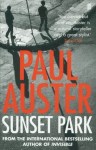
- A couple meets when they see each other reading the same book in an outdoor location: A Lover’s Discourse by Roland Barthes in Almost Life by Kiran Millwood Hargrave; and The Great Gatsby in Sunset Park by Paul Auster.
- Alison Bechdel’s Dykes to Watch Out For is mentioned in Hood by Emma Donoghue; I was reading a Bechdel book, The Secret of Superhuman Strength, at the same time.
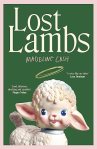
- Gnats are irksome in Sunset Park by Paul Auster and Lost Lambs by Madeline Cash.
What’s the weirdest reading coincidence you’ve had lately?
12 Days in Portugal and Spain & What I Read
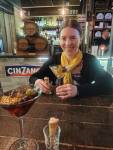 It’s the second time we’ve braved the 20+-hour ferry crossing from the south coast of England to Santander in the north of Spain. Four years ago, we stayed on the edge of the Picos de Europa national park in Spain. This time we prioritized Portugal, spending a night in Spain on the way out and back. (In Léon, we acquired a taste for vermouth – and the free tapas that come with it. So cheap, too. What a fun eating-out culture!)
Portugal was a new country for us and we thoroughly enjoyed getting a taste of it. Spring seemed to be a month ahead of the UK and blossom was abundant. We stayed in three places in the north: Guimarães, the Douro Valley, and the Côa Valley. We took our new-to-us EV and found the distances manageable and charging cheaper and easier than in the UK. Going by car made packing easy and allowed us to bring back some port, Mr. F’s favourite tipple. However, there were hairy drives along confusing city streets and narrow mountain roads.


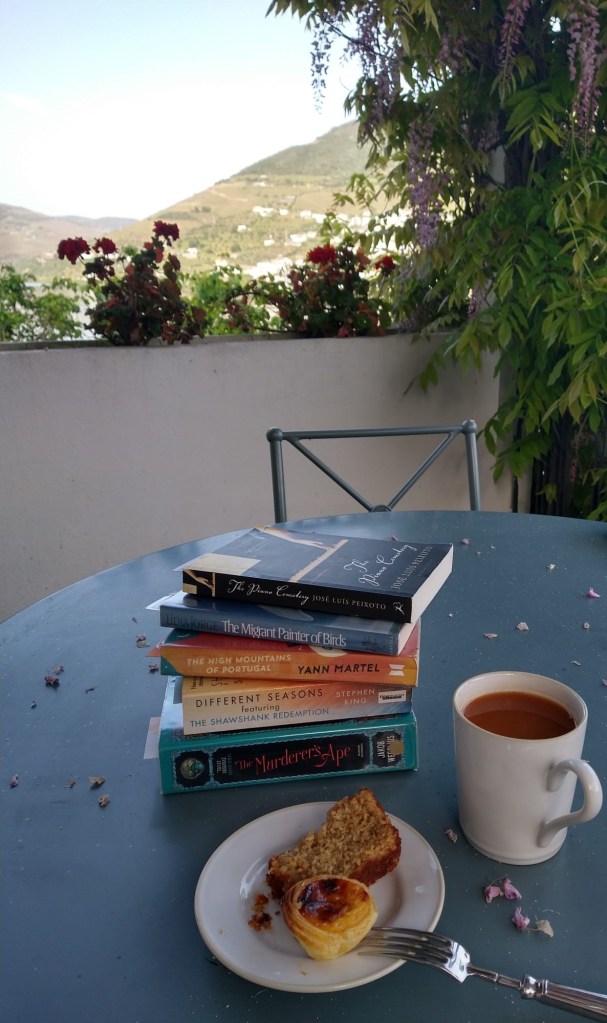
Our first stay was at Pousada de Santa Marinha, overlooking Portugal’s oldest city. One of a chain of state-restored castles and convents, it was originally a 12th-century monastery. We relished the bountiful breakfast buffet and manicured grounds but wished for more free time to relax in the grand common areas. Mostly we used this as a base for the first of two day trips to Porto, where we got good views from the cathedral tower, had delicious coffee and veggie snacks at 7g Roaster, and did a tour and tasting at Taylor’s port house. Portugal does a good line in doorstep cats. We also had our first sighting of swifts for the year on the 7th, flying above the azulejos (painted tiles) and cobbled streets of Guimarães before a traditional taverna meal of bacalhau (salt cod) fritters and bean stew with vinho verde.


Quinta dos Murças was, if anything, even more luxurious than the pousada. We were the only guests on our first of three nights at the winery, and after a private English-language cellar tour and wine and port tasting, a sit on the wisteria-covered balcony, and a three-course meal in the dining room, we were feeling like royalty. Along with grapes, they grow almonds, olives and several types of citrus. The lemon trees were dripping with the biggest fruits I’ve ever seen, and the smell of the orange blossom was truly intoxicating. The next morning we got up early and took a pack-up picnic on the train back into Porto, which was so hot and busy that we wondered why we’d bothered – though we did have an excellent tasting experience at a smaller producer, Poças, that included white and red wine, several ports, and a cocktail of white port, lime juice, and blood orange tonic served with a salt rim.


Portuguese is significantly more challenging than Spanish, so I was pleased with myself for managing an all-Portuguese transaction with the conductor on the rural branch line. The old-fashioned train carriages were spacious with comfortable seats, though the ride was not what one would call speedy. The journey back was fraught because we found ourselves pressed to catch the final train of the day (at just after 5:30 p.m.!), couldn’t figure out how to buy tickets at the station machines, were short of cash to pay the conductor on board, and arrived 2 hours late after a car collided with a telegraph pole and left the track blocked for an hour. The following day, what did we do? Got back on a train! (In the opposite direction, with tickets we’d carefully purchased ahead online.) This time we traveled toward the eastern end of the scenic Douro Valley so that we managed to see the whole river in pieces. The village of Tua had no particular sights, but we had a pleasant amble along its river boardwalk.


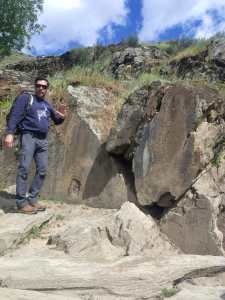 We’d earmarked the Côa Valley because it’s home to a sizable rewilding project. On the way, we stopped at Penascosa, an outdoor rock art site with etchings of ibex, aurochs and deer – and even ancient attempts at animation! The Rewilding Centre, where we stayed, is similar to a hostel and has an industrial kitchen because it also operates as a café for the villagers. In cities, we had tended to find English speakers, but the centre manager here had no English, so we happily switched to French (a true lingua franca!) to communicate with her.
The accommodation may have felt like a step down after our two previous splurges, but we’d booked a different treat to selves: an English-speaking guide from Wildlife Portugal who took us out in a Land Rover and found us loads of eagles, vultures and warblers. Bee-eaters and black storks were particular highlights. We were impressed by the array of landscapes: vines and olive groves, granite boulders, high cliffs, pools created by former mining, and green glens. At the hostel we met an English couple (one half a botanist) who are exploring Europe on Interrail passes during a three-month sabbatical, and they joined us for the second day of wildlife tourism; we discovered that Fernando is just as good with plants as with birds.


It was a varied, comfy, boozy trip. There was the touristy experience in Porto and parts of the Douro Valley, but also the ‘real’ countryside. Things ended on something of a sour note due to a rough return crossing of the Bay of Biscay. We’ll be back in Spain next summer to meet up with my sister and our nephew on his school trip to Barcelona, but that jaunt will be by train!


What I Read
En route: Rita Hayworth and Shawshank Redemption by Stephen King, which I’ll review for a spring-themed post as it’s the first in a quartet of loosely seasonal novellas. You likely know this prison story from the film version.
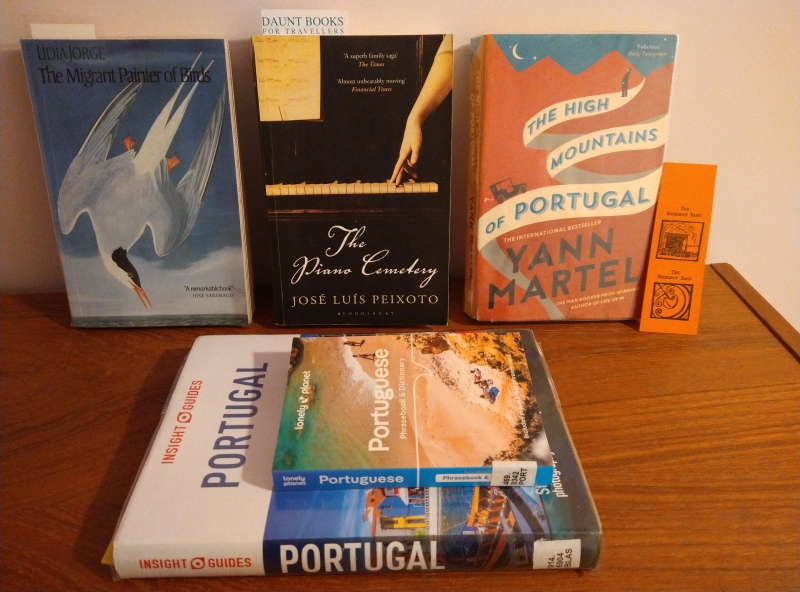
In Portugal: three Portugal-set novels I’d proudly sourced, including two in translation. My only previous knowledge of Portuguese literature had been a DNF of a José Saramago novel.
The Migrant Painter of Birds by Lídia Jorge (1998; 2001)
[Translated by Margaret Jull Costa]
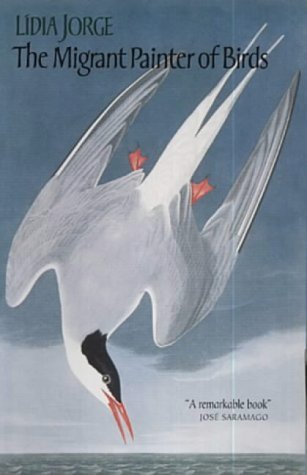 The title figure is Walter, a former soldier who wanders the world and sends his bird paintings back to his daughter at the Dias family home in (fictional) Valmares. His actual visits are few and clandestine: Jorge keeps returning to a scene of him holding his shoes in his hand so he can soundlessly climb the stairs to see his daughter. You see, his daughter is officially his ‘niece’, born of an affair Maria Ema had with her husband Custódio’s brother. That act of adultery is the foundation of the novel but so tacit that it influences everything, including the language and narration. “Walter’s daughter” narrates – in third person or first – and frequently refers to herself as “Walter’s niece” instead.
The slippery narrative moves back and forth in time, pausing at a few landmark years. Very little happens, per se, apart from Walter’s daughter having a liaison with her mother’s therapist and then going to find her father in Argentina, but throughout we are invited to observe the family’s shifting dynamic and understand the narrator’s growing bitterness – “so bruised are we all by the passing of time.” I found the writing intermittently beautiful (“the sun was setting, persimmon red, behind the smooth fields”; “A tangle of living ghosts, the magical cortège of all tyrannies”) but sometimes pretentious or obfuscating to no purpose (“I invoke the decade of irony, the decade of silence pierced by the oblique laughter of cynicism”). (Interlibrary loan) 
The High Mountains of Portugal by Yann Martel (2016)
 I knew of Martel’s obscure fourth novel through The Bookshop Band’s song “Why I Travel This Way,” about a bereaved man who starts walking backwards. What I didn’t realize is that the book is essentially three linked novellas and that song responds to just the first one, “Homeless.” Within a week, museum curator Tomás’s son, common-law wife, and father all died. Tomás sets off in his uncle’s early motorcar (this being 1904) to find a religious relic he learned about from a 17th-century priest’s journal written in São Tomé. But he has no idea how to drive, and accidents and persecution continue to beset him. A Job-like figure, he has set “his back to the world, his back to God” as a way of “not grieving” but “objecting.” Next, pathologist Eusebio and his wife have a high-minded discussion of the morality of murder mysteries in the 1939-set “Homeward.” Eusebio then undertakes an unexpected late-night job when an old woman arrives with her late husband’s corpse in a suitcase. Every cut reveals the substance of the man’s life rather than the reason for his death.
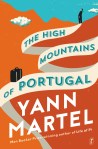 After religious parable and magic realism, “Home” initially seems more straightforward with its story of a widowed Canadian senator who buys Odo the chimpanzee from a research centre and relocates to rural Portugal. If you’ve read Life of Pi and/or Beatrice and Virgil, you know that Martel really goes in for his animal allegories. Odo might be considered symbolic of simplicity and joy in life. There are apt connections with the other novellas: not only an overarching theme of grief, but the specifics of one northern Portuguese village and its events that have become legend. And, yes, chimpanzees. A line from the first part serves as Martel’s mantra: “We are risen apes, not fallen angels.” Weird but satisfying. (Public library)
The Piano Cemetery by José Luís Peixoto (2006; 2010)
[Translated by Daniel Hahn]
 It may be premature, but I feel I can pinpoint some trademarks of Portuguese literature based on the few examples I’ve now read (plus Martel’s pastiche): narrative trickery, family dysfunction, metaphors of blindness, philosophical and religious dialogues, and a fine line between life and death. Unfortunately, in this case I found the appealing elements buried under an off-putting style. The Lázaro family are carpenters in 1910s Lisbon with a back room housing busted pianos that they use for their instrument-repair side business. To start with, the narrator is the dead patriarch of the family, who remembers how he met his wife at the piano cemetery and keeps watch over his children and grandchildren in the present day. There are also two long sections of stream-of-consciousness memories of his son Francisco as he runs the marathon at the 1912 Stockholm Olympics. Francisco Lázaro was a historical figure who died in that athletic pursuit, but the family backstory of estrangement, domestic violence, and adultery that Peixoto builds around him is fictional. Punctuated by distance markers (“Kilometre one” and so on), Francisco’s fragments are decontextualised and often don’t join up or even form complete sentences. Add in the father’s fatphobic attitude toward one of his daughters and the laughably circuitous phrasing (“my thick hand in a single movement, like an impulse, but not even an impulse, like a desire you have for a moment and which becomes concrete in that same moment, another person’s desire within me, a desire which is not thought, but which rises up like a flame” – huh? can I blame the translator?) and you might see why this was a slog for me. (Secondhand purchase – Awesomebooks.com)
Plus a partial reread of a delightful teen novel we both read the last time we were in Spain:
The Murderer’s Ape by Jakob Wegelius
[Translated from the Swedish by Peter Graves]
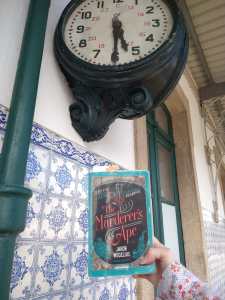 Talk about a risen ape! Sally Jones is an animal narrator extraordinaire: a ship’s engineer who meets every challenge that comes her way with aplomb, traveling from Portugal to India and back just to clear the Chief’s name after he’s falsely accused of murder. She happens to be a gorilla, but her only real limitation is that she can’t voice human language; she understands and writes it perfectly, and can beat most people at chess. This doorstopper never feels like one because it races along on a tide of adventure and intrigue. The technology suggests a 1920s date. All the settings are evocative, but historical Lisbon is especially enticing (and not dissimilar to Peixoto’s): Sally Jones lives with Ana Molina, a famous fado singer, and works in her neighbour Signor Fidardo’s instrument workshop repairing accordions.
 Plus the latter half of another novel or two I had on the go, and most of a couple of pre-release e-books for Shelf Awareness reviews: the odd Kitten by Stacey Yu, about a cat-identifying millennial Disaster woman, and The Half Life by Rachel Beanland. Set in 1970s Sardinia, this was a perfect summer read – intelligent as well as sultry – about a young Navy wife’s sexual coming of age and casual investigation into the ongoing effect of American nuclear submarines on the island’s natural environment.
 Bookish Beck = Rebecca Foster. American transplant to England. Freelance proofreader and book reviewer.
