The 2025 McKitterick Prize Winner & SoA Awards Ceremony
Yesterday the Society of Authors’ awards were announced and the prizes handed out at a ceremony in London. As a McKitterick Prize judge, I was asked last month to give a 50-word blurb on the shortlist as a whole—
Each of these six novels has a fully realized style. So confident and inviting are they that it’s hard to believe they are debuts. With nuanced characters and authentic settings and dilemmas, they engage the mind and delight the emotions. I will be following these authors’ careers with keen interest.
—and on each individual shortlisted title:
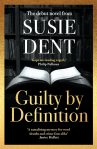 Etymology and Shakespeare studies are the keys to solving a cold case in Susie Dent’s clever, engrossing mystery, Guilty by Definition.
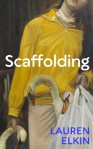 Psychoanalysis, motherhood, and violence against women are resounding themes in Lauren Elkin’s Scaffolding. As history repeats itself one sweltering Paris summer, the personal and political structures undergirding the protagonists’ parallel lives come into question. This fearless, sophisticated work ponders what to salvage from the past—and what to tear down.
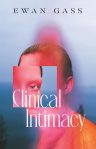 Clinical Intimacy’s mysterious antihero comes to life through interviews with his family, friends and clients. The brilliant oral history format builds a picture of isolation among vulnerable populations, only alleviated by care and touch—especially during Covid-19. Ewan Gass’s intricate story reminds us of the ultimate unknowability of other people.
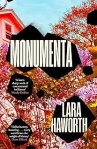
In Monumenta, Lara Haworth braids satire, magic realism, and metafiction into a compact and surprising meditation on how we seek to memorialise the tragedies of history.
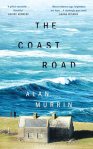
Set in small-town Ireland, The Coast Road is a subtle, compassionate novel in which the characters learn to write their own stories rather than bow to convention and fate. Alan Murrin is a must-read author for fans of Claire Keegan, Louise Kennedy, and Colm Tóibín.
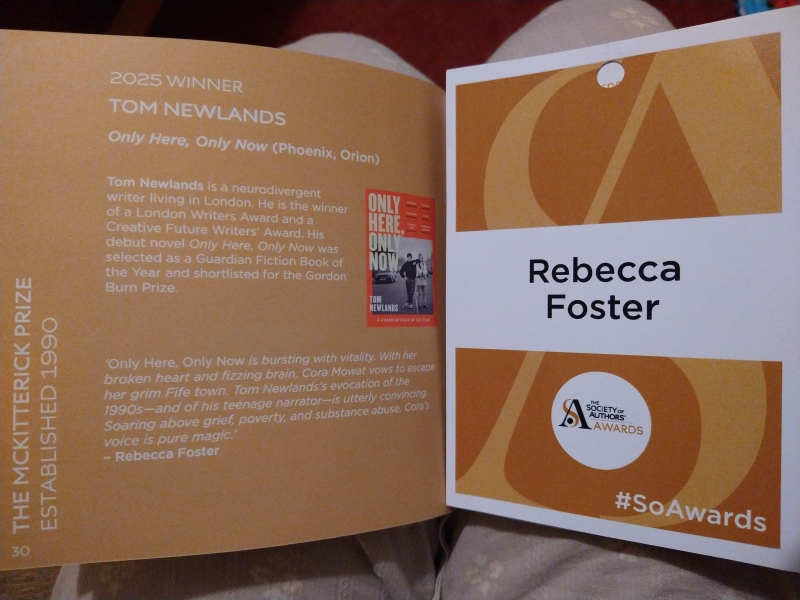
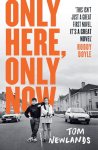 Only Here, Only Now is bursting with vitality. With her broken heart and fizzing brain, Cora Mowat vows to escape her grim Fife town. Tom Newlands’s evocation of the 1990s—and of his teenage narrator—is utterly convincing. Soaring above grief, poverty, and substance abuse, Cora’s voice is pure magic.
Our winner was Tom Newlands for Only Here, Only Now and our runner-up was Lauren Elkin for Scaffolding. (What an honour to have my blurb for the former used in the winners press release, the ceremony programme, and social media publicity.)


Newlands was also a runner-up for the ADCI Literary Prize “for a disabled or chronically ill writer, for an outstanding novel containing a disabled or chronically ill character or characters.” Here’s an excerpt from his statement for the press release:
To have my debut novel recognised in these two categories is particularly meaningful for me because they are linked by my experience. I didn’t start writing until the age of 40, in large part because growing up neurodivergent I didn’t feel my thought processes or methods of working were compatible with the production of a novel. There were no role models out there publishing stories like mine, and in the end, I wrote Only Here, Only Now because I couldn’t find the novel I wanted to read – a warm, vivid and funny story that examined poverty, disability and belonging, and that featured characters rarely found in British fiction.
Looking back to early on in this prize journey (which started back in November) … here was some of my early reading:
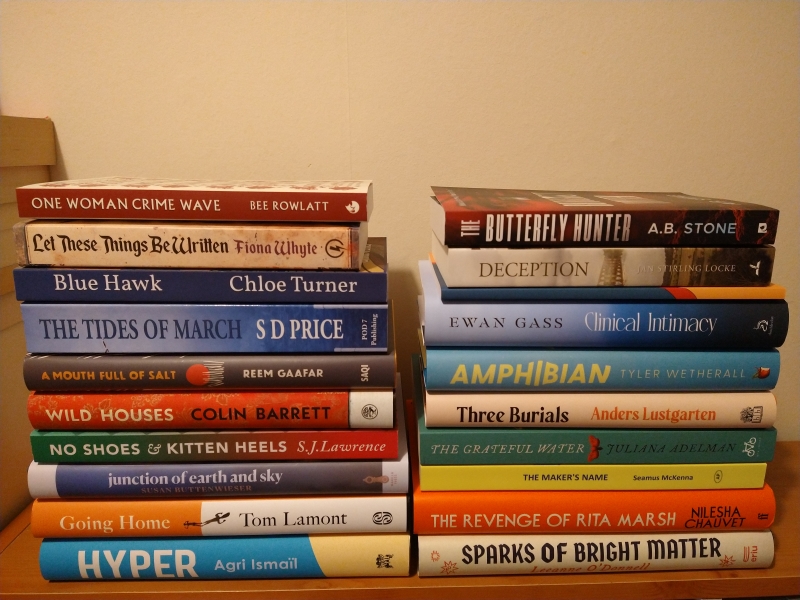
And our longlist:
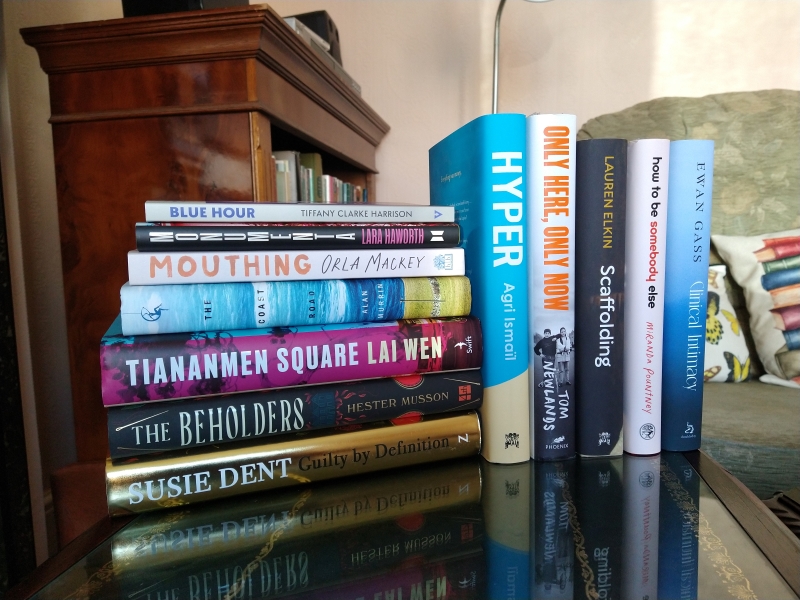
A couple of my favourite books from my reading that didn’t make the shortlist were:
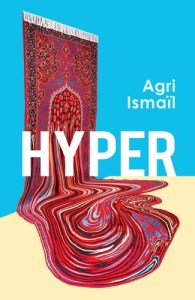 Hyper by Agri Ismaïl [I longlisted it – and then shortlisted it – but was outvoted]
Following a Kurdish family across several decades, this is a zeitgeist-y story that examines questions of national and personal autonomy. With its Dubai, Baghdad, London, and New York settings, it sets the second generation’s luxury, high finance, and fully online worlds against their parents’ bitter experience of exile after a failed independence movement. With its themes of dysfunction and failures and the long view of how we got here from there, it reminded me of Jonathan Franzen’s body of work.
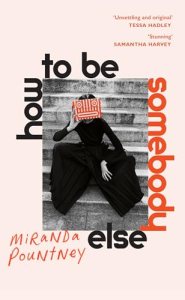 How to Be Somebody Else by Miranda Pountney [It had two votes to make the shortlist, but because it was so similar to Scaffolding in its basics (a thirtysomething woman in a big city, the question of motherhood, and pregnancy loss) we decided to cut it.]
This is the addictively readable story of Dylan, a late-thirties English woman who gives up her New York City advertising job and ponders authorship and motherhood while house-sitting an acquaintance’s apartment—and carrying on an affair with the married downstairs neighbour. As we see her interact with family and friends, we come to appreciate her not as some stereotypical ‘sad girl’ or ‘disaster woman’, but as an Everywoman seeking the time and space to become herself. It’s a sharp and witty novel for fans of Sally Rooney.
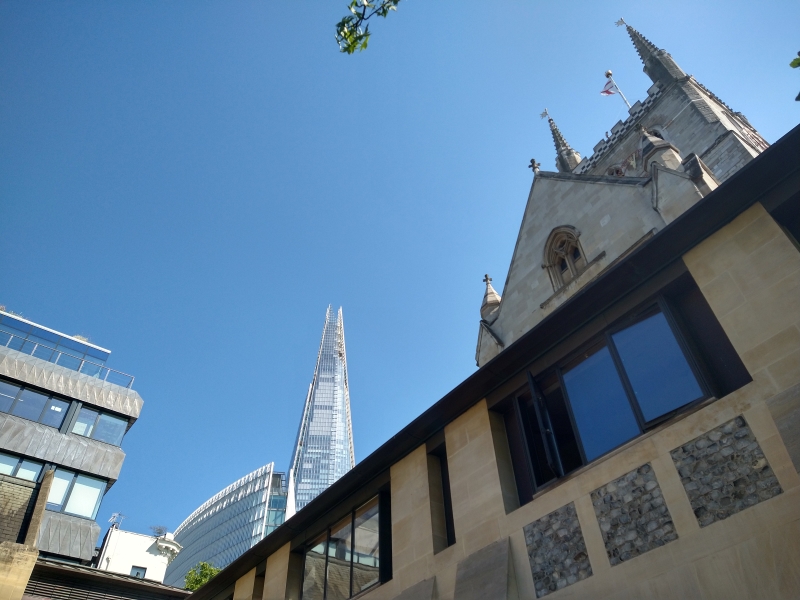
For the first time, I got to attend the SoA Awards ceremony in person yesterday. It was a hot day to be travelling in London, and after the oven of the Bakerloo line I was grateful to escape into the cool of Southwark Cathedral and its grounds. It was such a juxtaposition between the sleek City architecture and the ancient refuge of a church.
I worried that on such a warm and then busy day Hodge the cathedral cat wouldn’t show himself, but as I picked up my name badge he was asking to be let inside from the courtyard. He didn’t seem interested in strokes so I followed him at a respectful distance and let him settle in for a watchful rest.


Nominated authors and judges were treated to an exceptional afternoon tea, followed by the ceremony and drinks reception. It was lovely to meet my fellow judges Anietie Isong and Kathy O’Shaughnessy (author of the fantastic In Love with George Eliot, which won the SoA’s Paul Torday Memorial Prize) in the flesh as I’d only met them on Zoom before. We chatted a good bit with Lara Haworth, one of our shortlistees, and with Anne Booth, one of the Queen’s Knickers Award (children’s books) nominees, and also got to briefly meet Tom Newlands when he arrived for the ceremony. I always look out for literary ‘celebrities’ at such events and yesterday spotted Naomi Alderman, Caroline Bird, Joanne Harris and Alice Jolly.
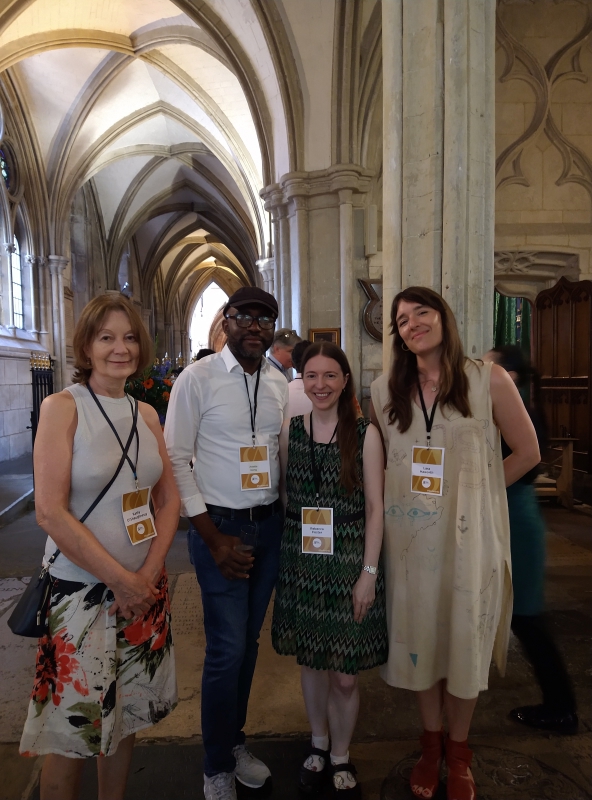


Dean Rev. Mark Oakley gave a welcome address via video, praising authors for bringing “resonance” rather than just “relevance.” He exhorted us, in the words of David Copperfield, to “read as if for life.” Joseph Coelho then gave a terrific keynote speech celebrating words written by humans (as opposed to an inaccurate AI-written bio of himself that he once encountered) and encouraging shortlistees, especially, to take time to bask in their achievement. Rejection is an ongoing, annual thing for him even at this stage of his career – he still remembers the £50 poetry gigs, changing in library toilets and school staff rooms; and the 12 years he spent trying to get published – even after he became the youngest-ever children’s laureate in 2022. “Wait for no one,” he challenged us: no one is going to give you permission or come save you, so go out there and do what you’re meant to do.
What an all-round fantastic experience this was! I’m so grateful to the Society of Authors for the opportunity.
Other notable winners announced yesterday included:
- Ashani Lewis (the only double winner): the Betty Trask Prize and Somerset Maugham award for Winter Animals
- Hisham Matar & Elif Shafak: the Gordon Bowker Volcano Prize (for a novel focusing on the experience of travel away from home), joint winners for My Friends and There Are Rivers in the Sky
May Releases, Part II (Fiction): Le Blevennec, Lynch, Puchner, Stanley, Ullmann, and Wald
A cornucopia of May novels, ranging from novella to doorstopper and from Montana to Tunisia; less of a spread in time: only the 1980s to now. Just a paragraph on each to keep things simple. I’ll catch up soon with May nonfiction and poetry releases I read.
Friends and Lovers by Nolwenn Le Blevennec (2023; 2025)
[Translated from French by Madeleine Rogers]
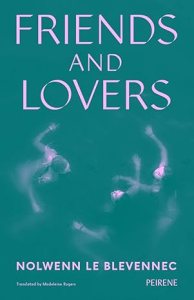 Armelle, Rim, and Anna are best friends – the first two since childhood. They formed a trio a decade or so ago when they worked on the same magazine. Now in their mid-thirties, partnered and with children, they’re all gripped by a sexual “great awakening” and long to escape Paris and their domestic commitments – “we went through it, this mutiny, like three sisters,” poised to blow up the “perfectly executed choreography of work, relationships, children”. The friends travel to Tunisia together in December 2014, then several years later take a completely different holiday: a disaster-prone stay in a lighthouse-keeper’s cottage on an island off the coast of Brittany. They used to tolerate each other’s foibles and infidelities, but now resentment has sprouted up, especially as Armelle (the narrator) is writing a screenplay about female friendship that’s clearly inspired by Rim and Anna. Armelle is relatably neurotic (a hilarious French blurb for the author’s previous novel is not wrong: “Woody Allen meets Annie Ernaux”) and this is wise about intimacy and duplicity, yet I never felt invested in any of the three women or sufficiently knowledgeable about their lives.
With thanks to Peirene Press for the free copy for review.
A Family Matter by Claire Lynch
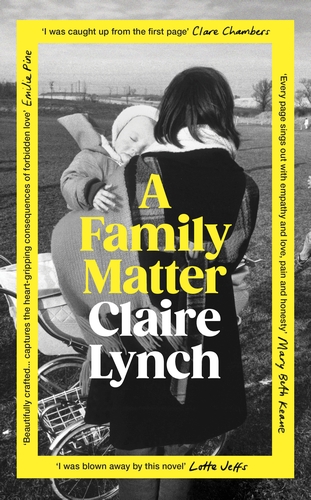 “The fluke of being born at a slightly different time, or in a slightly different place, all that might gift you or cost you.” At events for Small, Lynch’s terrific memoir about how she and her wife had children, women would speak up about how different their experience had been. Lesbians born just 10 or 20 years earlier didn’t have the same options. Often, they were in heterosexual marriages because that’s all they knew to do; certainly the only way they thought they could become mothers. In her research into divorce cases in the UK in the 1980s, Lynch learned that 90% of lesbian mothers lost custody of their children. Her aim with this earnest, delicate debut novel, which bounces between 2022 and 1982, is to imagine such a situation through close portraits of Heron, an ageing man with terminal cancer; his daughter, Maggie, who in her early forties bears responsibility for him and her own children; and Dawn, who loved Maggie desperately but felt when she met Hazel that she was “alive at last, at twenty-three.” How heartbreaking that Maggie knew only that her mother abandoned her when she was little; not until she comes across legal documents and newspaper clippings does she understand the circumstances. Lynch made the wise decision to invite sympathy for Heron from the start, so he doesn’t become the easy villain of the piece. Her compassion, and thus ours, is equal for all three characters. This confident, tender story of changing mores and steadfast love is the new Carol for our times. (Such a lovely but low-key novel was liable to make few ripples, so I’m delighted for Lynch that the U.S. release got a Read with Jenna endorsement.)
With thanks to Chatto & Windus (Penguin) for the proof copy for review.
Dream State by Eric Puchner
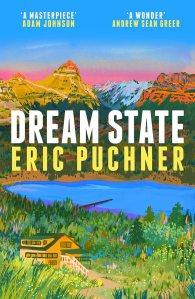 If it starts and ends with a wedding, it must be a comedy. If much of the in between is marked by heartbreak, betrayal, failure, and loss, it must be a tragedy. If it stretches towards 2050 and imagines a Western USA smothered in smoke from near-constant forest fires, it must be an environmental dystopian. Somehow, this novel is all three. The first 163 pages are pure delight: a glistening romantic comedy about the chaos surrounding Charlie and Cece’s wedding at his family’s Montana lake house in the summer of 2004. First half the wedding party falls ill with norovirus, then Charlie’s best friend, Garrett (who’s also the officiant), falls in love with the bride. Do I sound shallow if I admit this was the section I enjoyed the most? The rest of this Oprah’s Book Club doorstopper examines the fallout of this uneasy love triangle. Charlie is an anaesthesiologist, Cece a bookstore owner, and Garrett a wolverine researcher in Glacier National Park, which is steadily losing its wolverines and its glaciers. The next generation comes of age in a diminished world, turning to acting or addiction. There are still plenty of lighter moments: funny set-pieces, warm family interactions, private jokes and quirky descriptions. But this feels like an appropriately grown-up vision of idealism ceding to a reality we all must face. I struggled with a lack of engagement with the children, but loved Puchner’s writing so much on the sentence level that I will certainly seek out more of his work. Imagine this as a cross between Jonathan Franzen and Maggie Shipstead.
With thanks to Sceptre (Hodder) for the proof copy for review.
Consider Yourself Kissed by Jessica Stanley
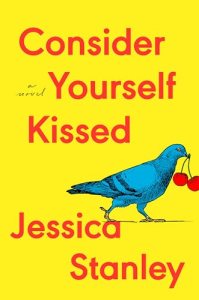 Coralie is nearing 30 when her ad agency job transfers her from Australia to London in 2013. Within a few pages, she meets Adam when she rescues his four-year-old, Zora, from a lake. That Adam and Coralie will be together is never really in question. But over the next decade of personal and political events, we wonder whether they have staying power – and whether Coralie, a would-be writer, will lose herself in soul-destroying work and motherhood. Adam’s job as a political journalist and biographer means close coverage of each UK election and referendum. As I’ve thought about some recent Jonathan Coe novels: These events were so depressing to live through, who would want to relive them through fiction? I also found this overlong and drowning in exclamation points. Still, it’s so likable, what with Coralie’s love of literature (the title is from The Group) and adjustment to expat life without her mother; and secondary characters such as Coralie’s brother Daniel and his husband, Adam’s prickly mother and her wife, and the mums Coralie meets through NCT classes. Best of all, though, is her relationship with Zora. This falls solidly between literary fiction and popular/women’s fiction. Given that I was expecting a lighter romance-led read, it surprised me with its depth. It may well be for you if you’re a fan of Meg Mason and David Nicholls.
With thanks to Hutchinson Heinemann for the proof copy for review.
Girl, 1983 by Linn Ullmann (2021; 2025)
[Translated from Norwegian by Martin Aitken]
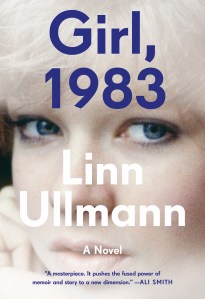 Ullmann is the daughter of actress Liv Ullmann and film director Ingmar Bergman. That pedigree perhaps accounts for why she got the opportunity to travel to Paris in the winter of 1983 to model for a renowned photographer. She was 16 at the time and spent the whole trip disoriented: cold, hungry, lost. Unable to retrace the way to her hotel and wearing a blue coat and red hat, she went to the only address she knew – that of the photographer, K, who was in his mid-forties. Their sexual relationship is short-lived and unsurprising, at least in these days of #MeToo revelations. Its specifics would barely fill a page, yet the novel loops around and through the affair for more than 250. Ullmann mostly pulls this off thanks to the language of retrospection. She splits herself both psychically and chronologically. There’s a “you” she keeps addressing, a childhood imaginary friend who morphs into a critical voice of conscience and then the self dissociated from trauma. And there’s the 55-year-old writer looking back with empathy yet still suffering the effects. The repetition made this something of a sombre slog, though. It slots into a feminist autofiction tradition but is not among my favourite examples.
With thanks to Hamish Hamilton (Penguin) for the proof copy for review.
The Bayrose Files by Diane Wald
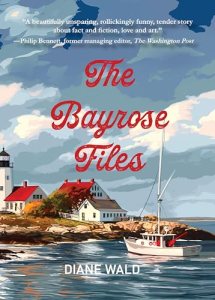 In the 1980s, Boston journalist Violet Maris infiltrates the Provincetown Home for Artists and Writers, intending to write a juicy insider’s exposé of what goes on at this artists’ colony. But to get there she has to commit a deception. Her gay friend Spencer Bayrose has a whole sheaf of unpublished short stories drawing on his Louisiana upbringing, and he offers to let her submit them as her own work to get a place at PHAW. Here Violet finds eccentrics aplenty, and even romance, but when news comes that Spence has AIDS, she has to decide how far she’ll go for a story and what she owes her friend. At barely over 100 pages, this feels more like a long short story, one with a promising setting and a sound plot arc, but not enough time to get to know or particularly care about the characters. I was reminded of books I’ve read by Julia Glass and Sara Maitland. It’s offbeat and good-natured but not top tier.
Published by Regal House Publishing. With thanks to publicist Jackie Karneth of Books Forward for the advanced e-copy for review.
A Family Matter was the best of the bunch for me, followed closely by Dream State.
Which of these do you fancy reading?
#1970Club: Desperate Characters & I’m the King of the Castle
Simon and Karen’s classics reading weeks are always a great excuse to pick up some older books. I found on my shelves a chilly Brooklyn-set novella that has been praised to the skies by the likes of Jonathan Franzen, and then borrowed a short and unsettling novel about warring English schoolboys from the library.
Desperate Characters by Paula Fox
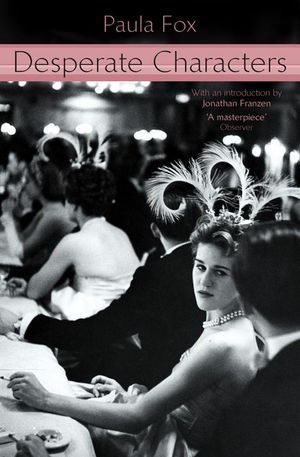 Other covers feature a cat, which is probably why this was on my radar. Don’t expect a cat lover’s book, though. The cat simply provides the opening incident. Sophie Bentwood is a forty-year-old underemployed translator; she doesn’t really need to work because her lawyer husband Otto keeps them in comfort. Feeding a feral cat, she is bitten savagely on the hand and over the next several days puts off seeking medical attention, wanting to stay in uncertainty rather than condemn herself to rounds of shots – and the cat to possible euthanasia. Both she and Otto live in this state of inertia. They were never able to have children but couldn’t take the step of adopting; Sophie had an affair but couldn’t leave Otto to commit elsewhere.
The cat bite seems to set off a chain of mishaps, culminating with the Bentwoods discovering that their house in the country has been vandalized. In the meantime, not a lot happens. The couple goes to a party and Sophie sneaks out for late-night drinks with her husband’s ex-partner, to whom she confides her affair. In Jonathan Franzen’s introduction, he compares to Bellow, Roth and Updike – but thinks Fox surpasses them all. The book explicitly references the Thoreau quote about people living lives of quiet desperation. I could sympathize with the midlife malaise depicted. As stagnant marriage stories go, this reminded me of what I’ve read by Richard Yates, just with a little less drinking. It would have made a good Literary Wives selection. In general, though, I can’t summon much enthusiasm. Given the cult classic status, I expected more. (Secondhand – Community Furniture Project, Newbury)
I’m the King of the Castle by Susan Hill
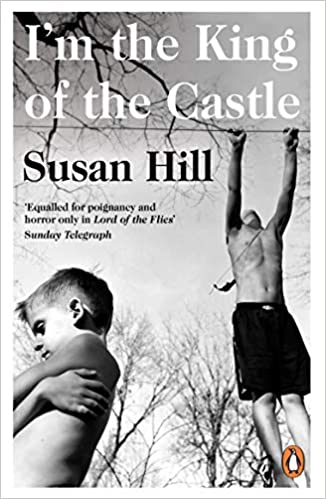 I’m almost tempted to mark this as an R.I.P. read, because it’s very dark indeed. Like The Woman in Black, it takes place in an ominous English mansion and its environs. Other scenes take place in a creepy forest and at castle ruins, adding to the Gothic atmosphere. Edmund Hooper and his father move into Warings after his grandparents’ death. Soon his father makes an unwelcome announcement: he’s hired a housekeeper, Helena Kingshaw, who will be moving in with her son, Charles, who is the same age as Edmund. Hooper writes Kingshaw (as the boys are called throughout the book, probably to replicate how they were known at their boarding schools) a note: “I DIDN’T WANT YOU TO COME HERE.”
That initial hostility erupts into psychological, and sometimes physical, abuse. Kingshaw quickly learns not to trust Hooper. “He thought, I mustn’t let Hooper know what I truly think, never, not about anything.” He tries running away to the woods but Hooper follows him; he makes friends with a local farm boy but it’s little comfort when he’ll soon be starting at Hooper’s school and it looks as if their lonely widowed parents might marry. The boys learn each other’s weaknesses and exploit them. At climactic moments, they have the opportunity to be gracious but retreat from every potential truce.
Heavy on dialogue and description, the book moves quickly with its claustrophobic scenes of nightmares come to life. Referring to the boys by surname makes them seem much older than 10 going on 11. Their antagonism is no child’s play – as the title ironically suggests – or harmless bullying. Is it evil? The reader feels for Kingshaw, the more passive one, yet what he does in revenge is nearly as bad. I was reminded somewhat of Harriet Said… by Beryl Bainbridge. It’s a deeply uncomfortable story, not least for how nature (pecking crows, cases of dead moths) is portrayed as equally menacing. (Public library)
Another 15 books from 1970 that I’ve read:
Jonathan Livingston Seagull by Richard Bach (in the running for worst book I’ve ever read)
Are You There, God? It’s Me, Margaret by Judy Blume
Runaway Ralph by Beverly Cleary
Fifth Business by Robertson Davies
84, Charing Cross Road by Helene Hanff
If Only They Could Talk by James Herriot
Ripley Under Ground by Patricia Highsmith
Crow by Ted Hughes
Moominvalley in November by Tove Jansson
Being There by Jerzy Kosiński
The Bluest Eye by Toni Morrison
Sing Down the Moon by Scott O’Dell
Love Story by Erich Segal
The Driver’s Seat by Muriel Spark
The Trumpet of the Swan by E.B. White
(Lots of children’s books there! Clearly they were considered modern classics during my 1980s childhood.)
I’ve previously participated in the 1920 Club, 1956 Club, 1936 Club, 1976 Club, 1954 Club, 1929 Club, 1940 Club and 1937 Club.
Recent Releases by Nathan Hill, Hisham Matar, Sigrid Nunez and More
One key way in which 2024’s reading has already differed from previous years’ is that I no longer avoid doorstoppers. I now classify any book with over 400 pages as a doorstopper, and by that definition I have already gotten through three this year: The Tidal Year plus two of the below, with Wellness standing out as the true whopper at 597 small-print pages. January offered a set of releases full of variety: gritty yet funny flash fiction; a novel of big ideas and big empathy for its flawed characters; an exile’s elegant love letter to Libya from London; a coy pandemic-era reflection on connection and creation; and a tour of nature close to home.
Universally Adored and Other One Dollar Stories by Elizabeth Bruce
 This was a great collection of 33 stories, all of them beginning with the words “One Dollar” and most of flash fiction length. Bruce has a knack for quickly introducing a setup and protagonist. The voice and setting vary enough that no two stories sound the same. What is the worth of a dollar? In some cases, where there’s a more contemporary frame of reference, a dollar is a sign of desperation (for the man who’s lost house, job and wife in “Little Jimmy,” for the coupon-cutting penny-pincher whose unbroken monologue makes up the whole of “Grocery List”), or maybe just enough for a small treat for a child (as in “Mouse Socks” or “Boogie Board”). In the historical stories, a dollar can buy a lot more. It’s a tank of gas – and a lesson on the evils of segregation – in “Gas Station”; it’s a huckster’s exorbitant charge for a mocked-up relic in “The Grass Jesus Walked On.”
The tone ranges from black comedy (“Festus”) to high tragedy (“Votive Candle”), but the book mostly falls within the realm of dirty realism with the attention to working-class country folk, so I’d recommend the collection to fans of authors who perch on the lighter side of that subgenre, such as Barbara Kingsolver or Denis Johnson. A few of my favorite stories, in addition to the above, were “Ice-Cold Water,” which I appreciated for the Washington D.C. setting and the way that an assumption about who would be racist was overturned by a moment of simple compassion; “Dolores,” in which a slick humanitarian fundraiser meets a waitress who has his number; and “Boiling the Buggers,” a window onto Covid-exacerbated mental illness. (Read via BookSirens)
Wellness by Nathan Hill
Somehow nearly eight years have passed since Hill’s debut novel, The Nix, which I dubbed “a rich, multi-layered story about family curses and failure.” I admired it as much for its prose as for its ideas, and Wellness is just as effervescent and insightful. It’s a state-of-the-nation novel filtered through one Chicago family: experimental photographer and underperforming academic Jack; his wife Elizabeth, a placebo researcher at Wellness; and their YouTube-obsessed son Toby. They’ve recently invested their life savings in a new condo and are considering trendy features like open shelves and separate master bedrooms. It would be oversimplifying, but true, to say that this couple is experiencing midlife and marital crises. Their nineties college romance – and a time of life when everything felt open and possible – is so remote now. When Elizabeth suggests they join a friend at a swingers’ club and a patient of hers who’s also a parent at Toby’s school sees them outside, chaos ensues.
Some elements from The Nix carry over, such as campus politics, the American Midwest, and mother–son relationships, but also broader questions of authenticity, purpose and nurture. Is love itself a placebo? The novel spends time with Jack and Elizabeth at the dawn of their relationship and in the present day, but also looks back to their early careers and first years of parenthood. Hill is clearly fascinated with the sort of psychological experimentation Elizabeth engages in (there’s a whole bibliography of scientific papers consulted) but also turns it to humorous effect, as when Elizabeth subjects Toby to the marshmallow test. A lot of information is conveyed through dialogue, yet it never feels forced. A couple of long asides, on Elizabeth’s family history and the algorithms guiding Jack’s interactions with his conspiracy theorist father, tried my patience, but I loved a four-page chapter on a funeral supper where every sentence starts “There was.” Sooooo many quotable lines throughout.
The only fault in an addictive and spot-on novel (how did he know?! you’ll find yourself thinking about your own attitude to work/marriage/children) is that Hill is so committed to excavating these characters’ backstory of stunted emotion – Jack estranged from his religious Kansas farmer parents after a traumatic incident you feel right in the gut; Elizabeth glad to jettison her father’s wealth with his anger – that he hurries through the denouement. Still, this is sure to be a fiction highlight of my year. It’s one for readers of Jonathan Franzen, sure, but I also thought it reminiscent of Katherine Heiny’s Standard Deviation and Meg Wolitzer’s The Interestings.
With thanks to Picador for the proof copy for review.
My Friends by Hisham Matar
“Benghazi was the one place I longed for the most, it was also the place I most feared to return to.”
 Taking a long walk through London one day, Khaled looks back from midlife on the choices he and his two best friends have made. He first came to the UK as an eighteen-year-old student at Edinburgh University. Everything that came after stemmed from one fateful day. Matar places Khaled and his university friend Mustafa at a real-life demonstration outside the Libyan embassy in London in 1984, which ended in a rain of bullets and the accidental death of a female police officer. Khaled’s physical wound is less crippling than the sense of being cut off from his homeland and his family. As he continues his literary studies and begins teaching, he decides to keep his injury a secret from them, as from nearly everyone else in his life. On a trip to Paris to support a female friend undergoing surgery, he happens to meet Hosam, a writer whose work enraptured him when he heard it on the radio back home long ago. Decades pass and the Arab Spring prompts his friends to take different paths.
I’d previously only read Matar’s short nonfiction work A Month in Siena. The slow, meditative style I enjoyed so much there didn’t translate well into doorstopper length; by the 300-page mark I found myself skimming to see if anything else might happen. Despite the title, we come to know Mustafa and Hosam much less well than we do Khaled. I would happily have had the book’s plot and sentiment concentrated into a taut 200 pages. However, I’m still interested in trying other books by Matar. In the Country of Men is significantly shorter and available from the backroom storage area of my library, and his Folio Prize-winning memoir The Return, too, is on shelf and I reckon will be right up my street.
With thanks to Viking (Penguin) for the proof copy for review.
The Vulnerables by Sigrid Nunez
I’m a huge Nunez fan after reading The Friend, What Are You Going Through, and especially A Feather on the Breath of God. Her last three books have been very much of a piece: autofiction voiced by an unnamed woman who has a duty of care towards a friend or a friend’s pet and ponders, in wry meta fashion, the nature of autobiographical writing and the meaning of life and death at a time of climate breakdown. Alas, The Vulnerables seems like no more than a rehashing of The Friend, with flanking main characters chosen at random from central casting: a parrot named Eureka and a mentally ill college drop-out called Vetch. This quirky trio is thrown together in a lavish New York City apartment during lockdown and nothing much happens but conversation brings them closer.
 A second problem: Covid-19 stories feel dated. For the first two years of the pandemic I read obsessively about it, mostly nonfiction accounts from healthcare workers or ordinary people looking for community or turning to nature in a time of collective crisis. But now when I come across it as a major element in a book, it feels like an out-of-place artefact; I’m almost embarrassed for the author: so sorry, but you missed your moment. My disappointment may primarily be because my expectations were so high. I’ve noted that two blogger friends new to Nunez were enthusiastic about this (but so was Susan, who’d enjoyed her before). That’s not to say this wasn’t a pleasantly fluid and incisive read, even if its message of essential human vulnerability is an obvious one. Anyway, I’ll take Nunez musing on familiar subjects over most other contemporary writers any day:
“Never write ‘I don’t remember,’ Editor says; it undermines your authority. But write as if you remember everything and Reader will smell a rat.”
“You can start with fiction or start with documentary, according to Jean-Luc Goddard. Either way, you will inevitably find the other.”
“I like this clarification by the narrator of a book by Stendhal: ‘It is not out of egotism that I say “I”; it is simply the quickest way to tell the story.’)”
(À propos of the doorstoppers above)
“Does that mean a long novel is easier to write than a short one? / Um, no. But, to borrow from a certain critic, in almost every long book I read I see a short one shirking its job.”
With thanks to Virago for the proof copy for review.
And a bonus work of nonfiction:
Local: A Search for Nearby Nature and Wildness by Alastair Humphreys
Lev Parikian alerted me to this amiable record of weekly discoveries of the nature on one’s home turf. Humphreys has been an international adventure traveller and written many books about his exploits. Here, by contrast, he zooms the lens in about as far as it will go, ordering a custom-made 20-km-square OS map that has his house at the centre and choosing one surrounding grid square per week (so 52 out of a total of 400) to cycle to and explore. He’s chosen to leave his town unnamed so this can function as an Everyman’s journey through edgelands. And his descriptions and black-and-white photographs really do present an accurate microcosm of modern England: fields, woods, waterways, suburban streets.
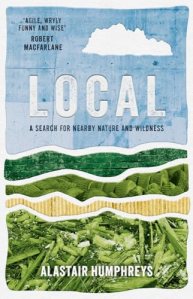 From one November to the next, he watches the seasons advance and finds many magical spaces with everyday wonders to appreciate. “This project was already beginning to challenge my assumptions of what was beautiful or natural in the landscape,” he writes in his second week. True, he also finds distressing amounts of litter, no-access signs and evidence of environmental degradation. But curiosity is his watchword: “The more I pay attention, the more I notice. The more I notice, the more I learn.”
Each week’s observations send him down a research rabbit hole, with topics including caves, land management, mudlarking, plant species, and much more. The nature of the short chapters means that there can only ever be a cursory look at huge issues like rewilding and veganism, but Humphreys is nimble in weaving in the brief, matter-of-fact discussions. His eagerness is irrepressible. “How you look, what you see, and the way all this makes you feel: a single map and the best of all possible worlds.” (See also: Paul’s review.)
With thanks to the author for the free copy for review.
Love Your Library, November 2021
It’s the second month of the new Love Your Library feature.

I’d like to start out by thanking all those who have taken part since last month’s post:
Adrian shared lovely stories about the libraries he’s used in Ireland, from childhood onwards.
Laila, Lori and Margaret highlighted their recent loans and reads.
Laura sent a photo of her shiny new library copy of Sally Rooney’s latest novel.

Finally, Marcie contributed this TikTok video of her library stacks!
As for my recent library experiences…
A stand-out read:
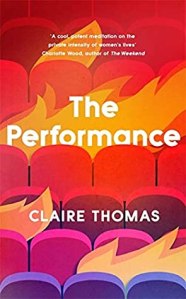 The Performance by Claire Thomas: What a terrific setup: three women are in a Melbourne theatre watching a performance of Samuel Beckett’s Happy Days. Margot is a veteran professor whose husband is developing dementia. Ivy is a new mother whose wealth hardly makes up for the devastating losses of her earlier life. Summer is a mixed-race usher concerned about her girlfriend during the fires rampaging outside the city. In rotating close third person sections, Thomas takes us into these characters’ inner worlds, contrasting their personal worries with wider issues of women’s and indigenous people’s rights and the environmental crisis, as well as with the increasingly claustrophobic scene on stage. In “The Interval,” written as a script, the main characters interact with each other, with the “forced intimacy between strangers” creating opportunities for chance meetings and fateful decisions.
Doorstoppers: A problem
Aware that I’m heading to the States for Christmas on the 14th of December (only a couple of weeks from now!), I’ve started culling my library stacks, returning any books that I’m not super-keen to read before the end of the year. A few I’ll borrow another time, but most I decided weren’t actually for me, even if raved about elsewhere.
I mentioned in a post last week that I’ve had a hard time finding the concentration for doorstoppers lately, which is ironic giving how many high-profile ones there have been this year – or even just this autumn. (For example, seven of BookPage’s top 20 fiction releases of 2021 are over 450 pages.) I gave up twice on Great Circle by Maggie Shipstead, swiftly abandoned Cloud Cuckoo Land by Anthony Doerr (a silly bookish attempt at something like Cloud Atlas), didn’t have time to attempt Tenderness by Alison Macleod and The Magician by Colm Tóibín, and recently returned The Morning Star by Karl Ove Knausgaard unread.
Why so many chunky reads this year, and this season in particular? I’ve wondered if it has had something to do with the lockdown mentality – for authors or readers, or both. It can be awfully cozy, especially as winter advances (in this hemisphere), to sink into a big book. But I find that I’m always looking for an excuse to not engage with a doorstopper.
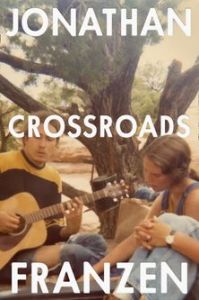 I generally enjoy the scope, detail and moral commentary of Jonathan Franzen’s novels; his previous two, Freedom and Purity, which also numbered 500+ pages, were fantastic. But Crossroads wasn’t happening for me, at least not right now. I only got to page 23 on this attempt. The Chicago setting was promising, and I’m there for the doubt and hypocrisy of church-bound characters. But with text this dense, it feels like it takes SO MANY WORDS to convey just one scene or conversation. I was finding the prose a little obnoxious, too, e.g.
Of Santa the Hildebrandts had always said, Bah, humbug. And yet somehow, long past the age of understanding that presents don’t just buy and wrap themselves, he’d accepted their sudden annual appearance as, if not a miraculous provision, then a phenomenon like his bladder filling with urine, part of the normal course of things. How had he not grasped at nine a truth so obvious to him at ten? The epistemological disjunction was absolute.
Problems here: How many extra words do you need to say “He stopped believing in Santa at age 10”? When is the phrase “epistemological disjunction” ever anything other than showing off? And why did micturition present itself as an apt metaphor?
But anyway, I’ve hardly given this a fair shake yet. I daresay I’ll read it another time; it’ll be my eighth book by Franzen.
Do share a link to your own post in the comments, and feel free to use the above image. I’ve co-opted a hashtag that is already popular on Twitter and Instagram: #LoveYourLibrary.
Here’s a reminder of my ideas of what you might choose to post (this list will stay up on the project page):
- Photos or a list of your latest library book haul
- An account of a visit to a new-to-you library
- Full-length or mini reviews of some recent library reads
- A description of a particular feature of your local library
- A screenshot of the state of play of your online account
- An opinion piece about library policies (e.g. Covid procedures or fines amnesties)
- A write-up of a library event you attended, such as an author reading or book club.
If it’s related to libraries, I want to hear about it!
Book Serendipity, July to August 2021
I call it Book Serendipity when two or more books that I read at the same time or in quick succession have something pretty bizarre in common. Because I have so many books on the go at once (usually 20–30), I suppose I’m more prone to such incidents. I’ve realized that, of course, synchronicity is really the more apt word, but this branding has stuck. This used to be a quarterly feature, but to keep the lists from getting too unwieldy I’ve shifted to bimonthly.
The following are in roughly chronological order.
- I read two novels about the disappearance of a 15-year-old girl at the same time: Heatstroke by Hazel Barkworth and When the Stars Go Dark by Paula McLain.
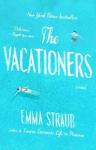
- Two novels in a row were set on a holiday in Spain: Nothing but Blue Sky by Kathleen MacMahon and The Vacationers by Emma Straub.
- I encountered mentions of the removal of the Edward Colston statue in God Is Not a White Man by Chine McDonald and I Belong Here by Anita Sethi on the same evening.
- Characters have the habit of making up names and backstories for strangers in Ruby by Ann Hood and Nothing but Blue Sky by Kathleen MacMahon.
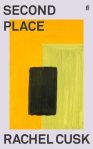
- The main female character says she works out what she thinks by talking in Second Place by Rachel Cusk and The Amateur Marriage by Anne Tyler.

- A passive mother is bullied by her controlling husband in Nothing but Blue Sky by Kathleen MacMahon and Female Friends by Fay Weldon.
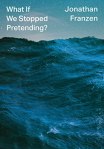
- Two reads in a row were a slim volume on the necessity of giving up denial: What White People Can Do Next by Emma Dabiri (re: racism) and What If We Stopped Pretending by Jonathan Franzen (re: climate change).

- Expressions of a strange sense of relief at disaster in Forecast by Joe Shute (re: flooding) and The Amateur Marriage by Anne Tyler (re: a car accident).
- The biomass ratios of livestock to humans to other mammals are cited in Silent Earth by Dave Goulson, The Anthropocene Reviewed by John Green, and Bewilderment by Richard Powers.
- Two Booker nominees referencing china crockery: An Island by Karen Jennings and China Room by Sunjeev Sahota (yep, it’s talking about the plates rather than the country).


- Teens sneak vodka in Heartstopper, Volume 3 by Alice Oseman and The Interestings by Meg Wolitzer.
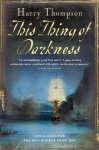
- Robert FitzRoy appears in The Glitter in the Green by Jon Dunn and Forecast by Joe Shute, and is the main subject of This Thing of Darkness by Harry Thompson, a doorstopper that has been languishing on my set-aside pile.
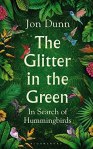

- Dave Goulson’s bumblebee research is mentioned in The Glitter in the Green by Jon Dunn, which I was reading at the same time as Goulson’s new book, Silent Earth.
- Reading two cancer memoirs that mention bucket lists at the same time: No Cure for Being Human by Kate Bowler and Year of Plagues by Fred D’Aguiar.


- Mentions of the damaging practice of clearing forest to plant eucalyptus in The Glitter in the Green by Jon Dunn and Forecast by Joe Shute.
- Mentions of mosquito coils being used (in Borneo or Australia) in Small Bodies of Water by Nina Mingya Powles and The Weekend by Charlotte Wood.


- Different words to the tune of Leonard Cohen’s “Hallelujah” in In Every Mirror She’s Black by Lola Akinmade Åkerström and How We Do Family by Trystan Reese.
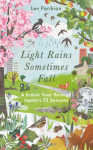 A brief mention of China and Japan’s 72 mini-seasons in Small Bodies of Water by Nina Mingya Powles: this will then be the setup for Light Rains Sometimes Fall by Lev Parikian, which I’ll be reading later in September.
- Beached whales feature in Fathoms by Rebecca Giggs and Small Bodies of Water by Nina Mingya Powles.
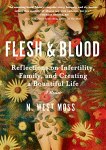
- A chapter in No Cure for Being Human by Kate Bowler is entitled “Flesh & Blood,” which is the title of the whole memoir by N. West Moss that I picked up next – and both are for Shelf Awareness reviews.
- A description of a sonogram appointment where the nurse calls the doctor in to interpret the results and they know right away that means the pregnancy is unviable, followed by an account of a miscarriage, in Flesh & Blood by N. West Moss and How We Do Family by Trystan Reese.

- Robin Wall Kimmerer and Robert Macfarlane quoted in Church of the Wild by Victoria Loorz and Small Bodies of Water by Nina Mingya Powles.
What’s the weirdest reading coincidence you’ve had lately?
Reading from the Wainwright Prize Longlists
The Wainwright Prize is one that I’ve ended up following closely almost by accident, simply because I tend to read most of the nature books released in the UK in any given year. A few months back I cheekily wrote to the prize director, proffering myself as a judge and appending a list of eligible titles I hoped were in consideration. Although they already had a full judging roster for 2021, I got a very kind reply thanking me for my recommendations and promising to bear me in mind for the future. Fifteen of my 25 suggestions made it onto the lists below.
This is the second year that there have been two awards, one for writing on UK nature and the other on global conservation themes. Tomorrow (August 4th) at 4 p.m., the longlists will be narrowed down to shortlists. I happened to have read and reviewed 12 of the nominees already, and I have a few others in progress.
UK nature writing longlist:

 The Circling Sky by Neil Ansell: Hoping to reclaim an ancestral connection, Ansell visited the New Forest some 30 times between January 2019 and January 2020, observing the unfolding seasons and the many uncommon and endemic species its miles house. He weaves together his personal story, the shocking history of forced Gypsy relocation into forest compounds starting in the 1920s, and the unfairness of land ownership in Britain. The New Forest is a model of both wildlife-friendly land management and freedom of human access. (On my Best of 2021 so far list.)
T he Screaming Sky by Charles Foster: A Renaissance man as well versed in law and theology as he is in natural history, Foster is obsessed with swifts and ashamed of his own species: for looking down at their feet when they could be watching the skies; for the “pathological tidiness” that leaves birds and other creatures no place to live. He delivers heaps of information on the birds but refuses to stick to a just-the-facts approach. The book quotes frequently from poetry and the prose is full of sharp turns of phrase and whimsy. (Also on my Best of 2021 so far list.)
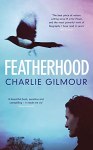 Featherhood by Charlie Gilmour: As an aimless twentysomething, Gilmour tried to rekindle a relationship with his unreliable poet father at the same time that he and his wife were pondering starting a family of their own. Meanwhile, he was raising Benzene, a magpie that fell out of the nest and ended up in his care. The experience taught him responsibility and compassionate care for another creature. Gilmour makes elegant use of connections and metaphors. He’s so good at scenes, dialogue and emotion – a natural writer.
 Seed to Dust by Marc Hamer: Hamer paints a loving picture of his final year at the 12-acre British garden he tended for decades. In few-page essays, the book journeys through a gardener’s year. This is creative nonfiction rather than straightforward memoir. The prose is adorned with lovely metaphors. In places, the language edges towards purple and the content becomes repetitive – a danger of the diary format. However, the focus on emotions and self-perception – rare for a male nature writer – is refreshing. (Reviewed for Foreword.)
 The Stubborn Light of Things by Melissa Harrison: A collection of five and a half years’ worth of Harrison’s monthly Nature Notebook columns for The Times. Initially based in South London, Harrison moved to the Suffolk countryside in late 2017. In the grand tradition of Gilbert White, she records when she sees her firsts of a year. I appreciate how hands-on and practical Harrison is. She never misses an opportunity to tell readers about ways they can create habitat for wildlife and get involved in citizen science projects. (Reviewed for Shiny New Books.)
 Birdsong in a Time of Silence by Steven Lovatt: During the UK’s first lockdown, with planes grounded and cars stationary, many remarked on the quiet. All the better to hear birds going about their usual spring activities. For Lovatt, it was the excuse he needed to return to his childhood birdwatching hobby. In between accounts of his spring walks, he tells lively stories of common birds’ anatomy, diet, lifecycle, migration routes, and vocalizations. Lovatt’s writing is introspective and poetic, delighting in metaphors for sounds.
 Vesper Flights by Helen Macdonald: Though written for various periodicals and ranging in topic from mushroom-hunting to deer–vehicle collisions and in scope from deeply researched travel pieces to one-page reminiscences, these essays form a coherent whole. Equally reliant on argument and epiphany, the book has more to say about human–animal interactions in one of its essays than some whole volumes manage. Her final lines are always breath-taking. I’d rather read her writing on any subject than almost any other author’s. (My top nonfiction release of 2020.)
 Skylarks with Rosie by Stephen Moss: Devoting a chapter each to the first 13 weeks of the initial UK lockdown, Moss traces the season’s development in Somerset alongside his family’s experiences and what was emerging on the national news. He welcomed migrating birds and marked his first sightings of butterflies and other insects. Nature came to him, too. For once, he felt that he had truly appreciated the spring, noting its every milestone and “rediscovering the joys of wildlife-watching close to home.”
 Thin Places by Kerri ní Dochartaigh: I received a proof copy from Canongate and twice tried the first few pages, but couldn’t wade through the excessive lyricism (and downright incorrect information – weaving a mystical description of a Winter Moth’s flight, she keeps referring to the creature as “she,” whereas when I showed the passage to my entomologist husband he told me that the females of that species are flightless). I’m told it develops into an eloquent memoir of growing up during the Troubles. Perhaps reminiscent of The Outrun?
 Into the Tangled Bank by Lev Parikian: A delightfully Bryson-esque tour that moves ever outwards, starting with the author’s own home and garden and proceeding to take in his South London patch and his journeys around the British Isles before closing with the wonders of the night sky. By slowing down to appreciate what is all around us, he proposes, we might enthuse others to engage with nature. With the zeal of a recent convert, he guides readers through momentous sightings and everyday moments of connection. (When I reviewed this in July 2020, I correctly predicted it would make the longlist!)
 English Pastoral by James Rebanks: This struck me for its bravery, good sense and humility. The topics of the degradation of land and the dangers of intensive farming are of the utmost importance. Daring to undermine his earlier work and his online persona, the author questions the mythos of modern farming, contrasting its practices with the more sustainable and wildlife-friendly ones his grandfather espoused. Old-fashioned can still be best if it means preserving soil health, river quality and the curlew population.
 I Belong Here by Anita Sethi: I recently skimmed this from the library. Two things are certain: 1) BIPOC writers should appear more frequently on prize lists, so it’s wonderful that Sethi is here; 2) this book was poorly put together. It’s part memoir of an incident of racial abuse, part political manifesto, and part quite nice travelogue. The parts don’t make a whole. The contents are repetitive and generic (definitions, overstretched metaphors). Sethi had a couple of strong articles here, not a whole book. I blame her editors for not eliciting better.
 The Wild Silence by Raynor Winn: I only skimmed this, too. I got the feeling her publisher was desperate to capitalize on the popularity of her first book and said “give us whatever you have,” cramming drafts of several different projects (a memoir that went deeper into the past, a ‘what happened next’ sequel to The Salt Path, and an Iceland travelogue) into one book and rushing it through to publication. Winn’s writing is still strong, though; she captures dialogue and scenes naturally, and you believe in how much the connection to the land matters to her.
Global conservation longlist:

Like last year, I’ve read much less from this longlist since I gravitate more towards nature writing and memoirs than to hard or popular science. So I have read, am reading or plan to read about half of this list, as opposed to pretty much all of the other one.
 Islands of Abandonment by Cal Flyn: This was on my Most Anticipated list for 2021 and I treated myself to a copy while we were up in Northumberland. I’m nearly a third of the way through this fascinating, well-written tour of places where nature has spontaneously regenerated due to human neglect: depleted mining areas in Scotland, former conflict zones, Soviet collective farms turned feral, sites of nuclear disaster, and so on. I’m about to start the chapter on Chernobyl, which I expect to echo Mark O’Connell’s Notes from an Apocalypse.
 What If We Stopped Pretending? by Jonathan Franzen: The message of this controversial 2019 New Yorker essay is simple: climate breakdown is here, so stop denying it and talking of “saving the planet”; it’s too late. Global warming is locked in; the will is not there to curb growth, overhaul economies, and ask people to relinquish developed world lifestyles. Instead, start preparing for the fallout (refugees) and saving what can be saved (particular habitats and species). Franzen is realistic about human nature and practical about what to do next.
 Entangled Life by Merlin Sheldrake: Sheldrake’s enthusiasm is infectious as he researches fungal life in the tropical forests of Panama, accompanies truffle hunters in Italy, and takes part in a clinical study on the effects of LSD (derived from a fungus). More than a travel memoir, though, this is a work of proper science – over 100 pages are taken up by notes, bibliography and index. This is a perspective-altering text that reveals our unconscious species bias. I’ve recommended it widely, even to those who tend not to read nonfiction.
 Ice Rivers by Jemma Wadham: I have this out from the library and am two-thirds through. Wadham, a leading glaciologist, introduces readers to the science of glaciers: where they are, what lives on and under them, how they move and change, and the grave threats they face (and, therefore, so do we). The science, even dumbed down, is a little hard to follow, but I love experiencing extreme landscapes like Greenland and Antarctica with her. She neatly inserts tiny mentions of her personal life, such as her mother’s death, a miscarriage and a benign brain cyst.
The rest of the longlist is:
- A Life on Our Planet by David Attenborough – I’ve never read a book by Attenborough (and tend to worry this sort of book would be ghostwritten), but wouldn’t be averse to doing so.
 Fathoms by Rebecca Giggs – All about whales. Kate raved about it. I have this on hold at the library.
- Net Zero: How We Stop Causing Climate Change by Dieter Helm
- Under a White Sky by Elizabeth Kolbert – I have read her before and would again.
- Riders on the Storm by Alistair McIntosh – My husband has read several of his books and rates them highly.
- The New Climate War by Michael E. Mann
- The Reindeer Chronicles by Judith D. Schwartz – I’ve been keen to read this one.
- A World on the Wing by Scott Weidensaul – My husband is reading this from the library.
My predictions/wishes for the shortlists:
It’s high time that a woman won again. And why not for both, eh? (Amy Liptrot is still the only female winner in the Prize’s seven-year history, for The Outrun in 2016.)
UK nature writing:
- The Circling Sky by Neil Ansell
- The Screaming Sky by Charles Foster
- Featherhood by Charlie Gilmour
- Vesper Flights by Helen Macdonald*
- English Pastoral by James Rebanks
- I Belong Here by Anita Sethi
- The Wild Silence by Raynor Winn
Writing on global conservation:
- Islands of Abandonment by Cal Flyn*
- Fathoms by Rebecca Giggs
- Under a White Sky by Elizabeth Kolbert
- Entangled Life by Merlin Sheldrake
- Ice Rivers by Jemma Wadham
- A World on the Wing by Scott Weidensaul
*Overall winners, if I had my way.


Have you read anything from the Wainwright Prize longlists?
Do any of these books interest you?
Booker Prize 2020: Two More Shortlist Reviews and a Prediction
The 2020 Booker Prize will be announced on Thursday the 19th. (Delayed from the 17th, the date on my commemorative bookmark, so as not to be overshadowed by the release of the first volume of Barack Obama’s presidential memoirs.) After I reviewed Burnt Sugar and correctly predicted half of the shortlist in this post, I’ve managed to finish another two of the novels on the shortlist, along with two more from the longlist. As sometimes happens with prize lists – thinking also of the Women’s Prize race in 2019 – this year’s shortlist fell into rough pairs: two stark mother–daughter narratives, two novels set in Africa, and two gay coming-of-age stories.

The New Wilderness by Diane Cook
In a striking opening to a patchy novel, Bea goes off to the woods to give birth alone to a stillborn daughter. It’s such a different experience to when she birthed Agnes in a hospital eight years ago. Now, with coyotes and buzzards already circling, there’s no time for sentimentality; she turns her back on the baby and returns to the group. Bea is part of a wilderness living experiment that started out with 20 volunteers, but illness and accidents have since reduced their number.
 Back in the toxic, overcrowded City, Bea was an interior decorator and her partner a professor of anthropology. Bea left to give Agnes a better chance at life; like so many other children, she had become ill from her polluted surroundings. Now she is a bright, precocious leader in the making, fully participating in the community’s daily chores. Settlement tempts them, but the Rangers enforce nomadism. Newcomers soon swell their numbers, and there are rumors of other groups, too. Is it even a wilderness anymore if so many people live in it?
The cycles of seasons and treks between outposts make it difficult to get a handle on time’s passing. It’s a jolt to realize Agnes is now of childbearing age. Only when motherhood is a possibility can she fully understand her own mother’s decisions, even if she determines to not repeat the history of abandonment. The blurb promised a complex mother–daughter relationship, but this element of the story felt buried under the rigor of day-to-day survival.
It is as if Cook’s primary interest was in how humans would react to being returned to primitive hunter–gatherer conditions – she did a lot of research into Native American practices, for instance, and she explores the dynamics of sex and power and how legends arise. As a child I was fascinated by Native cultures and back-to-the-land stories, so I enjoyed the details of packing lists, habits, and early rituals that form around a porcelain teacup.
But for me some nuts and bolts of storytelling were lacking here: a propulsive plot, a solid backstory, secondary characters that are worthwhile in their own right and not just stereotypes and generic roles. The appealing description induced me to overcome my usual wariness about dystopian novels, but a plodding pace meant it took me months to read. A lovely short epilogue narrated by Agnes made me wonder how much less tedious this chronicle might have been if told in the first person by Bea and Agnes in turn. I’ll try Cook’s story collection, Man V. Nature, to see if her gifts are more evident in short form.
My rating: 
My thanks to Oneworld for the free copy for review.
Real Life by Brandon Taylor
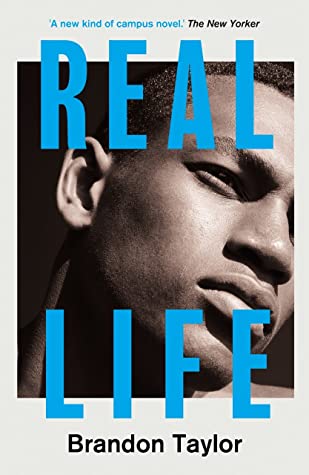 Over the course of one late summer weekend, Wallace questions everything about the life he has built. As a gay African American, he has always been an outsider at the Midwestern university where he’s a graduate student in biochemistry. Though they vary in background and include several homosexuals, some partnered and some unattached, most of his friends are white, and he’s been so busy that he’s largely missed out on evening socializing by the lake – and skipped his father’s funeral (though there are other reasons for that as well).
Tacit prejudice comes out into the open in ugly ways in these few days. When he finds his nematode experiments sabotaged, a female colleague at his lab accuses him of misogyny, brandishing his identity as a weapon against him: “you think that you get to walk around because you’re gay and black and act like you can do no wrong.” Then, in a deliciously awkward dinner party scene, an acquaintance brings up Wallace’s underprivileged Alabama upbringing as if it explains why he’s struggling to cope in his academic career.
Meanwhile, Wallace has hooked up with a male – and erstwhile straight – friend, and though there is unwonted tenderness in this relationship, there is also a hint of menace. The linking of sexuality and violence echoes the memories of abuse from Wallace’s childhood, which tumble out in the first-person stream of consciousness of Chapter 5. Other male friends, too, are getting together or breaking apart over mismatched expectations. Kindness is possible, but built-in injustice and cruelty, whether vengeful or motiveless, too often take hold.
There are moments when Wallace seems too passive or self-pitying, but the omniscient narration emphasizes that all of the characters have hidden depths and that emotions ebb and flow. What looks like despair on Saturday night might feel like no big deal come Monday morning. I so admired how this novel was constructed: the condensed timeframe, the first and last chapters in the past tense (versus the rest in the present tense), the contrast between the cerebral and the bodily, and the thematic and linguistic nods to Virginia Woolf. A very fine debut indeed.
My rating:
I also read two more of the longlisted novels from the library:
Such a Fun Age by Kiley Reid
 Such a fun book! I’d read the first chapter earlier in the year and set it aside, thinking it was too hip for me. I’m glad I decided to try again – it was a great read, so assured and contemporary. Once I got past a slightly contrived first chapter, I found it completely addictive. The laser-precision plotting and characterization reminded me of Jennifer Egan, Jonathan Franzen and Zadie Smith at their peak, but the sassy voice is all Reid’s own. There are no clear villains here; Alix Chamberlain could easily have filled that role, but I felt for her and for Kelley as much as I did for Emira. The fact that I didn’t think anyone was completely wrong shows how much nuance Reid worked in. The question of privilege is as much about money as it is about race, and these are inextricably intertwined.
Love and Other Thought Experiments by Sophie Ward
 An intriguing set of linked short stories that combine philosophy and science fiction. Rachel and Eliza are preparing to have a baby together when an ant crawls into Rachel’s eye and she falls ill. Eliza wants to believe her partner but, as a scientist, can’t affirm something that doesn’t make sense (“We don’t need to resort to the mystical to describe physical processes,” she says). Other chapters travel to Turkey, Brazil and Texas – and even into space. It takes 60+ pages to figure out, but you can trust all the threads will converge around Rachel and her son, Arthur, who becomes an astronaut. I was particularly taken by a chapter narrated by the ant (yes, really) as it explores Rachel’s brain. Each section is headed by a potted explanation of a thought experiment from philosophy. I wasn’t entirely sure what to make of the alternative future of the two final chapters. Still, I was impressed with the book’s risk-taking and verve. It’s well worth making a rare dip into sci-fi for this one.
Back in September I still thought Hilary Mantel would win the whole thing, but since her surprise omission from the shortlist I’ve assumed the prize will go to Shuggie Bain by Douglas Stuart. This was a DNF for me, but I’ll try it again next year in case it was just a matter of bad timing (like the Reid and The Go-Between – two books I attempted a second time this year and ended up loving). Given that it was my favorite of the ones I read, I would be delighted to see Real Life win, but I think it unlikely. My back-up prediction is The Shadow King by Maaza Mengiste, which I would consider reserving from the library if it wins.

Have you read anything from the Booker shortlist?
Which book do you expect to win?
The Best Books of 2019: Some Runners-Up
I sometimes like to call this post “The Best Books You’ve Probably Never Heard Of (Unless You Heard about Them from Me)”. However, these picks vary quite a bit in terms of how hyped or obscure they are; the ones marked with an asterisk are the ones I consider my hidden gems of the year. Between this post and my Fiction/Poetry and Nonfiction best-of lists, I’ve now highlighted about the top 13% of my year’s reading.
Fiction:
 Salt Slow by Julia Armfield: Nine short stories steeped in myth and magic. The body is a site of transformation, or a source of grotesque relics. Armfield’s prose is punchy, with invented verbs and condensed descriptions that just plain work. She was the Young Writer of the Year Award shadow panel winner. I’ll be following her career with interest.
 *Agatha by Anne Cathrine Bomann: In late-1940s Paris, a psychiatrist counts down the days and appointments until his retirement. A few experiences awaken him from his apathy, including meeting Agatha, a new German patient with a history of self-harm. This debut novel is a touching, subtle and gently funny story of rediscovering one’s purpose late in life.
 A Single Thread by Tracy Chevalier: Chevalier is an American expat like me, but she’s lived in England long enough to make this very English novel convincing and full of charm. Violet Speedwell, 38, is an appealing heroine who has to fight for a life of her own in the 1930s. Who knew the hobbies of embroidering kneelers and ringing church bells could be so fascinating?
 Akin by Emma Donoghue: An 80-year-old ends up taking his sullen pre-teen great-nephew with him on a long-awaited trip back to his birthplace of Nice, France. The odd-couple dynamic works perfectly and makes for many amusing culture/generation clashes. Donoghue nails it: sharp, true-to-life and never sappy, with spot-on dialogue and vivid scenes.
 Things in Jars by Jess Kidd: In 1863 Bridie Devine, female detective extraordinaire, is tasked with finding the six-year-old daughter of a baronet. Kidd paints a convincingly stark picture of Dickensian London, focusing on an underworld of criminals and circus freaks. The prose is spry and amusing, particularly in her compact descriptions of people.
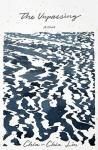 *The Unpassing by Chia-Chia Lin: Bleak yet beautiful in the vein of David Vann’s work: the story of a Taiwanese immigrant family in Alaska and the bad luck and poor choices that nearly destroy them. This debut novel is full of atmosphere and the lowering forces of weather and fate.
 The Doll Factory by Elizabeth Macneal: Set in the early 1850s and focusing on the Great Exhibition and Pre-Raphaelite Brotherhood, this reveals the everyday world of poor Londoners. It’s a sumptuous and believable fictional world, with touches of gritty realism. A terrific debut full of panache and promise.
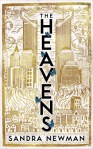 *The Heavens by Sandra Newman: Not a genre I would normally be drawn to (time travel), yet I found it entrancing. In her dreams Kate becomes Shakespeare’s “Dark Lady” and sees visions of a future burned city. The more she exclaims over changes in her modern-day life, the more people question her mental health. Impressive for how much it packs into 250 pages; something like a cross between Jonathan Franzen and Samantha Harvey.
 *In Love with George Eliot by Kathy O’Shaughnessy: Many characters, fictional and historical, are in love with George Eliot over the course of this debut novel. We get intriguing vignettes from Eliot’s life with her two great loves, and insight into her scandalous position in Victorian society. O’Shaughnessy mimics Victorian prose ably.
 Daisy Jones and The Six by Taylor Jenkins Reid: This story of the rise and fall of a Fleetwood Mac-esque band is full of verve and heart. It’s so clever how Reid delivers it all as an oral history of pieced-together interview fragments. Pure California sex, drugs, and rock ’n roll, yet there’s nothing clichéd about it.
Graphic Novels:
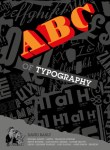 *ABC of Typography by David Rault: From cuneiform to Comic Sans, this history of typography is delightful. Graphic designer David Rault wrote the whole thing, but each chapter has a different illustrator, so the book is like a taster course in comics styles. It is fascinating to explore the technical characteristics and aesthetic associations of various fonts.
 *The Lady Doctor by Ian Williams: Dr. Lois Pritchard works at a medical practice in small-town Wales and treats embarrassing ailments at a local genitourinary medicine clinic. The tone is wonderfully balanced: there are plenty of hilarious, somewhat raunchy scenes, but also a lot of heartfelt moments. The drawing style recalls Alison Bechdel’s.
Poetry:
 *Thousandfold by Nina Bogin: This is a lovely collection whose poems devote equal time to interactions with nature and encounters with friends and family. Birds are a frequent presence. Elsewhere Bogin greets a new granddaughter and gives thanks for the comforting presence of her cat. Gentle rhymes and half-rhymes lend a playful or incantatory nature.
Nonfiction:
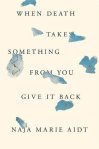 *When Death Takes Something from You Give It Back by Naja Marie Aidt: Aidt’s son Carl Emil died in 2015, having jumped out of his fifth-floor Copenhagen window during a mushroom-induced psychosis. The text is a collage of fragments. A playful disregard for chronology and a variety of fonts, typefaces and sizes are ways of circumventing the feeling that grief has made words lose their meaning forever.
 *Homesick: Why I Live in a Shed by Catrina Davies: Penniless during an ongoing housing crisis, Davies moved into the shed near Land’s End that had served as her father’s architecture office until he went bankrupt. Like Raynor Winn’s The Salt Path, this intimate, engaging memoir serves as a sobering reminder that homelessness is not so remote.
 *Hard Pushed: A Midwife’s Story by Leah Hazard: An empathetic picture of patients’ plights and medical professionals’ burnout. Visceral details of sights, smells and feelings put you right there in the delivery room. This is a heartfelt read as well as a vivid and pacey one, and it’s alternately funny and sobering.
 *Deep Creek: Finding Hope in the High Country by Pam Houston: Autobiographical essays full of the love of place, chiefly her Colorado ranch – a haven in a nomadic career, and a stand-in for the loving family home she never had. It’s about making your own way, and loving the world even – or especially – when it’s threatened with destruction. Highly recommended to readers of The Chronology of Water by Lidia Yuknavitch.
 *Dancing with Bees: A Journey back to Nature by Brigit Strawbridge Howard: Bees were the author’s gateway into a general appreciation of nature, something she lost for a time in midlife because of the rat race and family complications. She clearly delights in discovery and is devoted to lifelong learning. It’s a book characterized by curiosity and warmth. I ordered signed copies of this and the Simmons (below) directly from the authors via Twitter.
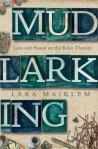 *Mudlarking: Lost and Found on the River Thames by Lara Maiklem: Maiklem is a London mudlark, scavenging for what washes up on the shores of the Thames, including clay pipes, coins, armaments, pottery, and much more. A fascinating way of bringing history to life and imagining what everyday existence was like for Londoners across the centuries.
 Unfollow: A Journey from Hatred to Hope, Leaving the Westboro Baptist Church by Megan Phelps-Roper: Phelps-Roper grew up in a church founded by her grandfather and made up mostly of her extended family. Its anti-homosexuality message and picketing of military funerals became trademarks. This is an absorbing account of doubt and making a new life outside the only framework you’ve ever known.
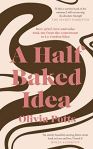 *A Half Baked Idea: How Grief, Love and Cake Took Me from the Courtroom to Le Cordon Bleu by Olivia Potts: Bereavement memoir + foodie memoir = a perfect book for me. Potts left one very interesting career for another. Losing her mother when she was 25 and meeting her future husband, Sam, who put time and care into cooking, were the immediate spurs to trade in her wig and gown for a chef’s apron.
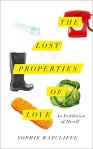 *The Lost Properties of Love by Sophie Ratcliffe: Not your average memoir. It’s based around train journeys – real and fictional, remembered and imagined; appropriate symbols for many of the book’s dichotomies: scheduling versus unpredictability, having or lacking a direction in life, monotony versus momentous events, and fleeting versus lasting connections.
 Inheritance: A Memoir of Genealogy, Paternity, and Love by Dani Shapiro: On a whim, in her fifties, Shapiro sent off a DNA test kit and learned she was only half Jewish. Within 36 hours she found her biological father, who’d donated sperm as a medical student. It’s a moving account of her emotional state as she pondered her identity and what her sense of family would be in the future.
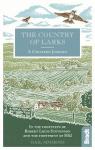 *The Country of Larks: A Chiltern Journey by Gail Simmons: Reprising a trek Robert Louis Stevenson took nearly 150 years before, revisiting sites from a childhood in the Chilterns, and seeing the countryside that will be blighted by a planned high-speed railway line. Although the book has an elegiac air, Simmons avoids dwelling in melancholy, and her writing is a beautiful tribute to farmland that was once saturated with the song of larks.

(Books not pictured were read from the library or on Kindle.)
Coming tomorrow: Other superlatives and some statistics.
Choose the Year Book Tag: 2010
Thanks to a couple of Lauras (Reading in Bed and Dr Laura Tisdall) for making me aware of this tag that has also been going around on BookTube. If you haven’t already taken part and think this looks like fun, why not give it a try?
Goodreads lists the 200 most popular books of any given year. Skim through and see how many you’ve read from the list and discuss whichever ones you like. (I chose not to answer the last two questions of this prompt but have included them at the bottom of the post.)
- Choose a year and say why.
I browsed a few of the years and found that 2010 contained 12 books that I’ve read, including some that stood out to me for various reasons. For instance, two of them marked the start of my interest in medical-themed reading. I also think of 2010 as when my reading went into ‘mega’ mode, i.e. approaching 200 books per year. (Now it’s more like 320 a year.)
- Which books published in that year have you read [or if none, heard of]?
Because the list is based on the number of times a book has been added to users’ shelves (though not necessarily read and rated) on Goodreads, there is a LOT of YA and series fiction, e.g. Mockingjay at #1. Other notable inclusions: Heaven Is for Real by Todd Burpo and Orange Is the New Black before that really took off.
Read at the time:
 Gimmicky child narrator, but thoroughly readable: Room by Emma Donoghue (#4)
Medical masterpieces: The Immortal Life of Henrietta Lacks by Rebecca Skloot (#6) and The Emperor of All Maladies: A Biography of Cancer by Siddhartha Mukherjee (#45)
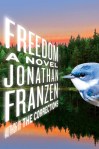 Postmodern, angsty pop culture-filled delights: A Visit from the Goon Squad by Jennifer Egan (#31) and Freedom by Jonathan Franzen (#37). I wonder if they’ve stood the test of time?
Vintage Bryson in curiosity-indulging mode: At Home: A Short History of Private Life by Bill Bryson (#69)
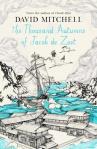 Not his usual sort of thing, but my introduction to him and a damn fine work of historical fiction: The Thousand Autumns of Jacob de Zoet by David Mitchell (#112)
Not my usual sort of thing (sappiness + magic realism), but I read it at a festival and it passed the time: The Particular Sadness of Lemon Cake by Aimee Bender (#116)
Part of my progressive Christian education, but not a great example; not memorable in the least: Radical: Taking Back Your Faith from the American Dream by David Platt (#138)
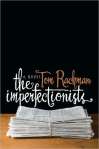 A joy of a linked short story collection set among expat journalists in Rome; this author hasn’t disappointed me since: The Imperfectionists by Tom Rachman (#156)
Who knew typesetting could be so fascinating?! Just My Type: A Book About Fonts by Simon Garfield (#178)
 Read later on:
A brilliant WWII novel, truly among the best of the best: The Invisible Bridge by Julie Orringer (#93)
A DNF: Washington: A Life by Ron Chernow (#73) was way too involved for my level of interest.
- Are there any books published in that year that sound interesting, and would you read them now?
On the TBR:
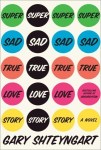 #50 Major Pettigrew’s Last Stand by Helen Simonson
#75 The Warmth of Other Suns: The Epic Story of America’s Great Migration by Isabel Wilkerson
#124 Girl in Translation by Jean Kwok
#152 Super Sad True Love Story by Gary Shteyngart
None of these are priorities, but I’d still read them if a copy came my way.
[4. Most obscure-sounding book
5. Strangest book cover]
 Bookish Beck = Rebecca Foster. American transplant to England. Freelance proofreader and book reviewer.
 Bookish Beck