The Circling Sky & The Sleeping Beauties
I think I have another seven April releases on the go that kind publishers have sent my way, but I’m so slow at finishing books that these two are the only ones I’ve managed so far. (I see lots of review catch-up posts in my future!) For now I have a travel memoir musing on the wonders of the New Forest and the injustice of land ownership policies, and a casebook of medical mysteries that can all be classed as culturally determined psychosomatic illnesses.
The Circling Sky: On Nature and Belonging in an Ancient Forest by Neil Ansell
After The Last Wilderness and especially Deep Country, his account of five solitary years in a Welsh cabin, Ansell is among my most-admired British nature writers. I was delighted to learn that his new book would be about the New Forest as it’s a place my Hampshire-raised husband and I have visited often and feel fond of. It has personal significance for Ansell, too: he grew up a few miles from Portsmouth. On Remembrance Sunday 1966, though, his family home burned down when a spark from a central heating wire sent the insulation up in flames. He can see how his life was shaped by this incident, making him a nomad who doesn’t accumulate possessions.
Hoping to reclaim a sense of ancestral connection, he returned to the New Forest some 30 times between January 2019 and January 2020, observing the unfolding seasons and the many uncommon and endemic species its miles house. The Forest has more than 1000 trees of over 400 years old, mostly oak and beech. Much of the rest is rare heath habitat, and livestock grazing maintains open areas. There are some plants only found in the New Forest, as well as a (probably extinct) cicada. He has close encounters with butterflies, a muntjac, and less-seen birds like the Dartford warbler, firecrest, goshawk, honey buzzard, and nightjar.
 But this is no mere ‘white man goes for a walk’ travelogue, as much of modern nature writing has been belittled. Ansell weaves many different themes into the work: his personal story (mostly relevant, though his mother’s illness and a trip to Rwanda seemed less necessary), the shocking history of forced Gypsy relocation into forest compounds starting in the 1920s, biomass decline, and especially the unfairness of land ownership in Britain. More than 99% of the country is in the hands of a very few, and hardly any is left as common land. There is also enduring inequality of access to what little there is, often along race and class lines. The have-nots have been taught to envy the haves: “We are all brought up to aspire to home ownership,” Ansell notes. As a long-term renter, it’s a goal I’ve come to question, even as I crave the security and self-determination that owning a house and piece of land could offer.
Ansell speaks of “environmental dread” as a “rational response to the way the world is turning,” but he doesn’t rest in that mindset of despair. He’s in favour of rewilding, which is not, as some might assume, about leaving land alone to revert to its original state, but about the reintroduction of native species and intentional restoration of habitat types. In extending these rewilded swathes, we would combat the tendency to think of nature as something kept ‘over there’ in small reserves while subjecting the rest of the land to intensive, pesticide-based farming and the exploitation of resources. The New Forest thus strikes him as an excellent model of both wildlife-friendly land management and freedom of human access.
I appreciated how Ansell concludes that it’s not enough to simply love nature and write about the joy of spending time in it. Instead, he accepts a mantle of responsibility: “nothing is more political than the way we engage with the world around us. … Nature writing may often be read for comfort and reassurance, but perhaps we need to allow a little room for anger, too, for the ability to rage at everything that has been taken from us, and taken by us.” The bibliography couldn’t be more representative of my ecologist husband’s and my reading interests and nature library. The title is from John Clare and the book is a poetic meditation as well as a forthright argument. It also got me hankering for my next trip to the New Forest.
My rating: 
With thanks to Tinder Press for the proof copy for review.
The Sleeping Beauties: And Other Stories of Mystery Illness by Suzanne O’Sullivan
O’Sullivan is a consultant at the National Hospital for Neurology and Neurosurgery. She won the Wellcome Book Prize for It’s All in Your Head, and The Sleeping Beauties picks up on that earlier book’s theme of psychosomatic illness – with the key difference being that this one travels around the world to investigate outbreaks of mass hysteria or sickness that have arisen in particular cultural contexts. An important thing to bear in mind is that O’Sullivan and other doctors in her field are not dismissing these illnesses as “fake”; they acknowledge that they are real and meaningful, yet there is clear evidence that they are not physical in origin – brain tests come back normal – but psychological with bodily manifestations.
 The case that gives the book its title appeared in Sweden in 2017. Child asylum seekers who had experienced trauma in their home country were falling into a catatonic state. O’Sullivan visited the home of sisters Nola and Helan, part of the Yazidi ethnic minority group from Iraq and Syria. The link between them and the other children affected was that they were all now threatened with deportation: Their hopelessness had taken on physical form, giving the illness the name resignation syndrome. “Predictive coding” meant their bodies did as they expected them to. She describes it as “a very effective culturally agreed means of expressing distress.”
In Texas, the author meets Miskito people from Nicaragua who combat the convulsions and hallucinations of “grisi siknis” in their community with herbs and prayers; shamans are of more use in this circumstance than antiepileptic drugs. A sleeping sickness tore through two neighbouring towns of Kazakhstan between 2010 and 2015, affecting nearly half of the population. As with the refugee children in Sweden, it was a stress response to being forced to move away – though people argued they were being poisoned by a local uranium mine. There is often a specific external factor that is blamed in these situations, as when mass hysteria and seizures among Colombian schoolgirls were attributed to the HPV vaccine.
This book was released on the 1st of April, and at times I felt I was the victim of an elaborate April Fool’s joke: the cases are just so bizarre, and we’re used to rooting out a physical cause. But she makes clear that, in a biopsychosocial understanding (as also discussed in Pain by Abdul-Ghaaliq Lalkhen), these illnesses are serving “a vital purpose” – just psychological and cultural. The first three chapters are the strongest; the book feels repetitive and somewhat aimless thereafter, especially in Chapter 4, which hops between different historical outbreaks of psychosomatic illness, like among the Hmong (cf. Anne Fadiman’s The Spirit Catches You and You Fall Down), and other patients she treated for functional disorders. The later example of “Havana syndrome” doesn’t add enough to warrant its inclusion.
Still, O’Sullivan does well to combine her interviews and travels into compelling mini-narratives. Her writing has really come on in leaps and bounds since her first book, which I found clunky. However, much my favourite of her three works is Brainstorm, about epilepsy and other seizure disorders of various origins.
My rating: 
With thanks to Picador for the proof copy for review.
What recent releases can you recommend?
Spring Reading 2021: Birdsong, Cherry Blossom & More
It’s been a gorgeously sunny spring here – how about where you are? Although there have still been some frosty nights troubling the gardeners among us, it’s been warm in the daytime and the flowers and blossom are coming on apace.
Recently I’ve read a couple of books reflecting on the spring of 2020, specifically the opportunities it offered to reconnect with local nature at a time when we were isolated and couldn’t travel.
I’ve also been feeling nostalgic for Washington, D.C. and the Maryland suburbs, where I grew up. It’s been two years since my last trip back, but I’m holding out hope that I can make it over in June for a family wedding.
Rounding out my selection of “Spring” titles is an offbeat Japanese novella.
Looking back to the coronavirus spring:
On Thursday evening I watched “The Act of Nature Watching,” a special Earth Day Zoom talk for West Berkshire Libraries by local nature writer Nicola Chester, whose memoir is coming out in the autumn. The UK is one of the most nature-depleted countries, she lamented. We are hardwired to watch and love nature, she noted, yet have never been more alienated from it. Reading from her columns and anthology contributions (as well as the Lovatt, below) and giving tips on recognizing birdsong and mammal signs, she spoke of nature-watching as a form of mindfulness – an approach that chimed with the first three books I feature here.
Birdsong in a Time of Silence: An Awakening by Steven Lovatt (2021)
 During the UK’s first lockdown, with planes grounded and cars stationary, many remarked on the quiet. All the better to hear birds going about their usual spring activities. For Lovatt, from Birmingham and now based in South Wales, it was the excuse he needed to return to his childhood birdwatching hobby. In between accounts of his spring walks, he tells lively stories of common birds’ anatomy, diet, lifecycle, migration routes, and vocalizations. (He even gives step-by-step instructions for sounding like a magpie.) Birdsong takes him back to childhood, but feels deeper than that: a cultural memory that enters into our poetry and will be lost forever if we allow our declining bird species to continue on the same trajectory.
Mentions of current events are sparse and subtle, so the spring feels timeless, as it should. I worried there might be too much overlap with A Sweet, Wild Note by Richard Smyth, but there’s room for both on your shelf. Lovatt’s writing is introspective and poetic, delighting in metaphors for sounds: “The song of a turtle dove is like the aural equivalent of a heat-haze, the gentlest corrugation of air, always just on the edge of your hearing.” 
Skylarks with Rosie: A Somerset Spring by Stephen Moss (2021)
 Lovatt must have been a pupil of Moss’s on the Bath Spa University MA degree in Travel and Nature Writing. The prolific Moss’s latest also reflects on the spring of 2020, but in a more overt diary format. Devoting one chapter to each of the 13 weeks of the first lockdown, he traces the season’s development alongside his family’s experiences and the national news. With four of his children at home, along with one of their partners and a convalescing friend, it’s a pleasingly full house. There are daily cycles or walks around “the loop,” a three-mile circuit from their front door, often with Rosie the Labrador; there are also jaunts to corners of the nearby Avalon Marshes. Nature also comes to him, with songbirds in the garden hedges and various birds of prey flying over during their 11:00 coffee breaks.
His speaking engagements and trips cancelled, Moss turns to online events instead. Twitter serves as a place for sharing outrage over UK politics and world events like George Floyd’s murder, but also as a welcoming community for sharing nature sightings. As the lockdown come to a close, he realizes that this time has had unexpected benefits: “Having to press the pause button … has made me rethink my life, in a good way.” He feels that, for once, he has truly appreciated the spring, “rediscovering the joys of wildlife-watching close to home”. This made for perfect reading in Somerset last week. 
Also recommended: The Consolation of Nature by Marren, McCarthy and Mynott
Remembering springs back home:
Spring in Washington by Louis J. Halle (1947)
“The discovery of spring each year, after the winter’s hibernation, is like a rediscovery of the universe … knowledge of spring gives me the freedom of the world.”
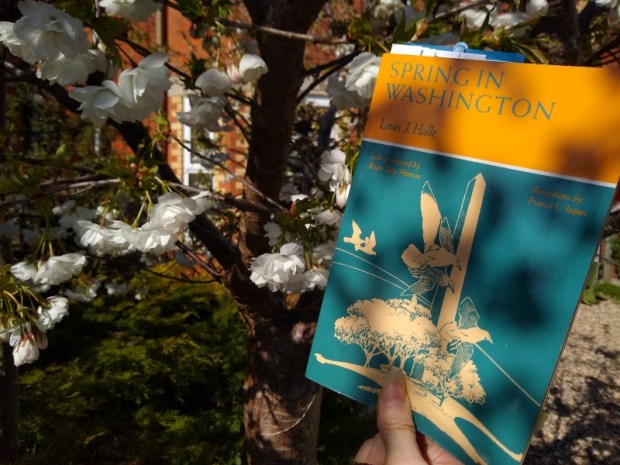 For Halle, who worked in the State Department, nature was an antidote to hours spent shuffling papers behind a desk. In this spring of 1945, there was plenty of wildfowl to see in central D.C. itself, but he also took long early morning bike rides along the Potomac or the C&O Canal, or in Rock Creek Park. From first migrant in February to last in June, he traces the spring mostly through the birds that he sees. More so than the specific observations of familiar places, though, I valued the philosophical outlook that makes Halle a forerunner of writers like Barry Lopez and Peter Matthiessen. He notes that those caught up in the rat race adapt the world to their comfort and convenience, prizing technology and manmade tidiness over natural wonders. By contrast, he feels he sees more clearly – literally as well as metaphorically – when he takes the long view of a landscape.
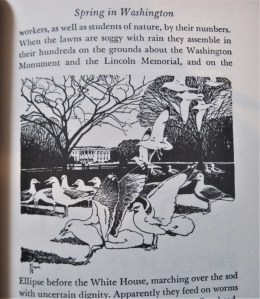 I marked so many passages of beautiful description. Halle had mastered the art of noticing. But he also sounds a premonitory note, one that was ahead of its time in the 1940s and needs heeding now more than ever: “When I see men able to pass by such a shining and miraculous thing as this Cape May warbler, the very distillate of life, and then marvel at the internal-combustion engine, I think we had all better make ourselves ready for another Flood.”
This was a lucky find at Hay Cinema Bookshop back in September. For me it was the ideal combination of thoughtful prose and vicarious travel, though I imagine it might not mean as much to those without a local connection. The black-and-white in-text illustrations by Francis L. Jaques are a particularly nice addition.
Pussy cat, pussy cat, where have you been? I’ve been to Washington, and guess what I’ve seen… by Russell Punter and Dan Taylor (2019)
 More cherry blossoms over tourist landmarks! This is part of a children’s series inspired by the 1805 English rhyme about London; other volumes visit New York City, Paris, and Rome. In rhyming couplets, he takes us from the White House to the Lincoln Memorial via all the other key sights of the Mall and further afield: museums and monuments, the Library of Congress, the National Cathedral, Arlington Cemetery, even somewhere I’ve never been – Theodore Roosevelt Island. Realism and whimsy (a kid-sized cat) together; lots of diversity in the crowd scenes. What’s not to like? (Titled Kitty cat, kitty cat… in the USA.)
And, as a bonus, some fiction in translation:
Spring Garden by Tomoka Shibasaki (2014; 2017)
[Translated from the Japanese by Polly Barton]
 Like a Murakami protagonist, Taro is a divorced man in his thirties, mildly interested in the sometimes peculiar goings-on in his vicinity. Rumor has it that his Tokyo apartment complex will be torn down soon, but for now the PR manager is happy enough here. “Avoiding bother was Taro’s governing principle.” But bother comes to find him in the form of a neighbor, Nishi, who is obsessed with a nearby house that was the backdrop for the art book Spring Garden, a collection of photographs of a married couple’s life. Her enthusiasm gradually draws Taro into the depicted existence of the TV commercial director and actress who lived there 25 years ago, as well as the young family who live there now. This Akutagawa Prize winner failed to hold my interest – like The Guest Cat, it’s oddly preoccupied with architectural detail, a Japanese fascination that doesn’t translate so well.
Have you been reading anything particularly appropriate for spring this year?
Miscellaneous Novellas: Murdoch, Read & Spark; Comics; Art Books
Novellas in November will be coming to a close on Monday and has been a great success in terms of blogger engagement. I’ve been adding review links to the master post nearly every day of the month, and I’m sure there are some I have missed. Although I still have a couple of novellas on the go, I don’t see myself finishing them this month, so I’m going to end with this set: three short classics to continue the week’s theme, two graphic novels, and a pair of nature/art/music/poetry books.
Classics:
Something Special by Iris Murdoch (1957)
[51 pages]
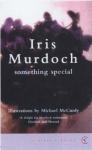 A Murdoch rarity, this appeared in a 1950s anthology and in an English-language textbook in Japan, but was not otherwise published in the author’s lifetime. I think it’s her only short story. I’m counting it as a novella because it was published as a stand-alone volume by Vintage Classics in 2000. Twenty-four-year-old Yvonne Geary doesn’t know precisely what she wants from life, but hopes there might be more for her than a conventional marriage to Sam, her beau. “Can’t I live my life as I please since it’s the only thing I have?” she asks her hen-pecking mother. “I can’t see him as something special and I won’t marry him if I can’t.” Maybe she’ll escape to England. But for now she’s off for a night on the town in Dublin with Sam, going from a rowdy pub to the quiet of a locked-up park. Sam may be dull, but he seems sensitive, solicitous and well-meaning. Yvonne’s feelings for him flip-flop over the course of the evening. I’ve noticed before that Murdoch is a bit funny about Jewishness, but this is still a brisk, bittersweet story in the direct lineage of Sally Rooney’s Normal People. (With striking black-and-white woodcut-style illustrations by Michael McCurdy.)
The Fairacre Festival by ‘Miss Read’ (1968)
[80 pages]
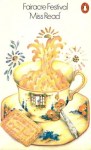 I’m not sure why I’d never tried anything by ‘Miss Read’ (the pseudonym of Dora Jessie Saint, a teacher turned author who was based not far from me in Berkshire) until now. She wrote two series of quaint novels set in the fictional villages of Fairacre and Thrush Green; this is #7 in the Fairacre series. Miss Read, her narrator, is a schoolteacher who records her wry observations of all the local happenings. After an autumn storm damages the church roof, the parishioners are dismayed to learn the renovations could cost £2000. No amount of jumble sales, concerts and tea dances will raise that much. So they set their sights higher, to an Edinburgh-style festival with a light show and an appearance from a famous opera singer. But it’s not going to be smooth sailing now, is it? This was cozy, quaint fun, and if I wished it had been a full-length book, that means I’ll just have to begin at the beginning with 1955’s Village School.
The Driver’s Seat by Muriel Spark (1970)
[107 pages]
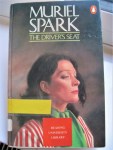 Lise has her “glad rags” on – bright new clothes in clashing patterns that strangers can’t help commenting on. The 34-year-old single woman has worked in an accounting office for the last 16 years and is now off to the South (Italy?) for a long-awaited vacation. This will be no blissful holiday, though. Just 11 pages in, we get our first hint that things are going to go wrong, and in the opening line of Chapter 3 Spark gives the game away. Clearly, her intention is to subordinate what happens to why it happens, so the foreshadowing of the early chapters is twisted to ironic effect later on. Lise is an unappealing character, haughty and deceitful, and the strangers she meets on the flight and at the hotel, including a man obsessed with the macrobiotic diet, are little better. I felt I didn’t have enough time to change my mind about Lise before we’re asked to have pity. Of course, this is meant to be a black comedy, but it was a little abrasive for my taste. This was my third and probably last from Spark, as I haven’t particularly enjoyed any of her work; I do love this pithy description of The Ballad of Peckham Rye, though: “An entertaining tale of satanism in South London.”
Graphic Novels:
Why Don’t You Write My Eulogy Now So I Can Correct It? A Mother’s Suggestions by Patricia Marx, illus. Roz Chast (2019)
[81 pages]
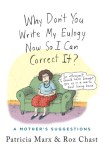 I loved Chast’s graphic memoir Can’t We Talk about Something More Pleasant? and figured this would have the same witty approach to an elderly parent’s decline. Apart from a brief introduction to her mother (from Philadelphia, outspoken, worked as a guidance counselor and for her husband’s office supplies company), there is hardly any text; the rest is just illustrated one-liners, sayings her mother had or opinions she espoused. Many of these have to do with fashion no-nos, dinner party etiquette, grammar pedantry, avoiding the outdoors and exercise, and childrearing. “My mother never hesitates to say what other mothers would not even think to think. She calls it constructive criticism.” She reminds me of Bess Kalb’s grandmother in Nobody Will Tell You This but Me, an overall much funnier and more complete picture of an entertaining figure.
The Exciting World of Churchgoing by Dave Walker (2010)
[90 pages]
 A third set of Church Times comics, not as memorable as the original Dave Walker Guide to the Church. Once again, Walker pokes fun at bureaucracy, silly traditions, closed-mindedness, and the oddities of church buildings and parishioners’ habits. You really need to be familiar with the UK churchgoing scene, and specifically with Anglican churches, to get much out of the cartoons. I loved “According to legend, there is a lady who changes the teatowels in the church kitchen from time to time” and the “Infestations” spread that starts with bats and wasps and moves on to Charismatics. Most striking are two pages on church proceedings during swine flu – what was meant to be a joke doesn’t seem so funny now that it literally describes in-person services during COVID-19: “Shaking hands during the peace should be replaced by a friendly wave,” “Administration of anti-bacterial gel should take place,” etc.
Art Books:
The Lost Words: A Spell Book by Robert Macfarlane, illus. Jackie Morris (2017)
[112 pages]
 Macfarlane’s work has been hit or miss for me and I was suspicious of this project in general, thinking it would be twee or juvenile, but the beauty of the artwork and playful energy of the poems won me over. It’s common knowledge that this book arose as a response to news that many words to do with nature had been removed from the latest version of a junior dictionary published in the UK, to be replaced by technology vocabulary. Macfarlane spotlights these omitted words through acrostic poems alive with alliteration (“Fern’s first form is furled, / Each frond fast as a fiddle-head”), wordplay and internal rhymes. He peppers in questions, both rhetorical and literal-minded, and exclamations. Conker, Dandelion, Lark and Otter are highlights. Morris’s wildlife paintings are superb, with a Giotto-like gilt portrait facing each poem and two-page in situ tableaux in between.
The Lost Words Spell Songs (2019)
[112 pages]
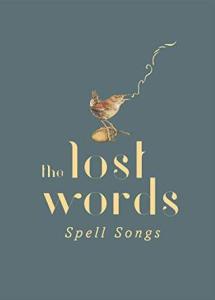 I followed up immediately with this companion book to the 14-track album a group of eight folk musicians made in response to The Lost Words. We were already fans of Kris Drever (mostly via Lau), Karine Polwart and Beth Porter (via the Bookshop Band), and became familiar with a few more of the artists (Kerry Andrew, Julie Fowlis and Rachel Newton) earlier this year through the online Folk on Foot festivals. This volume includes six additional poems, four of which directly inspired songs on the album, plus brief bios and words on the project from each artist (each portrayed by Morris as a relevant bird, with the musician serving as the “spirit human” for the bird) the complete lyrics with notes from whoever took the lead on a particular song, and short essays by Macfarlane, Morris (also an interview) and Polwart.
It was interesting to compare the different approaches to the project: five songs directly set Macfarlane’s poetry to music, two of them primarily in spoken word form; five are based on Macfarlane “extras,” like the new spells and the “charm against harm” he wrote during anti-tree felling campaigns like the one in Sheffield; a few are essentially pop songs based around major lines from Dandelion, Goldfinch and Lark (these plus “Selkie-Boy,” based on Grey Seal, ended up being my favorites); one is a traditional song from Seckou Keita’s native Senegal that also incorporates the bilingual Fowlis’s Gaelic to mourn the words that are lost with the past; and one is a final blessing song that weaves in bits from multiple spells. The artists all bring their individual styles, but the collaborations are strong, too.

Are you squeezing in any more novellas this month?
Do you like the sound of any of the ones I’ve read?
My Year in Nonfiction (Thus Far)
If your household is anything like mine, stressful days and nights of lost sleep are ceding to relief after the U.S. election result was finally announced. We celebrated with whoopie pies (a Pennsylvania specialty) and Prosecco.


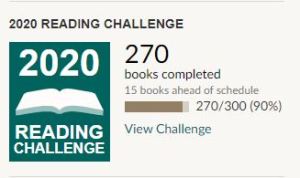
And look: I happened to pass 270 yesterday as well!
I’d taken part in the Six Degrees of Separation meme every month since February, but this time I had no inspiration. I was going to start with these two apple covers…
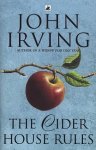
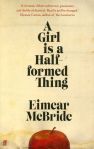
…but that’s as far as I got. Never mind! I’ll be back next month, when we all start with the YA classic Are You There God? It’s Me, Margaret by Judy Blume.
Instead, I’m catching up with this past week’s Nonfiction November prompt: Your Year in Nonfiction. It was hosted by Leann of Shelf Aware.

 What topics have been prominent in your year’s nonfiction reading?
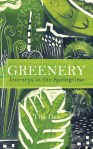
I’ve read a lot of nature and popular science, probably more than in an average year. Greenery by Tim Dee has been an overall highlight. I managed to read 12 books from the Wainwright Prize longlists, and I’m currently reading four books of nature-themed essays or journals. Thoughtful as well as consoling.

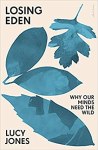
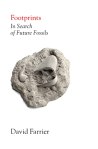
The popular science material has focused on environmentalism and current events, which has inevitably involved politics and long-term planning (Annabel called this category “The State We’re In”): e.g. Losing Eden, Footprints, The Good Ancestor, and Notes from an Apocalypse.


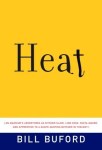 Thanks to the food and drink theme I set for my 20 Books of Summer, I read a number of foodie memoirs. The best one was Heat by Bill Buford, but I also really enjoyed Kitchen Confidential by Anthony Bourdain and My Berlin Kitchen by Luisa Weiss.
 Since the Wellcome Book Prize didn’t run this year, I’ve read fewer health-related books, although I did specially read Not the Wellcome Prize shortlistee The Remarkable Life of the Skin by Monty Lyman, and Dear Life by Rachel Clarke, a palliative care doctor, has been one of my overall best nonfiction reads of the year.
Not very well represented in my nonfiction reading this year were biographies and travel books. I can struggle with the depth and dryness of some books from these genres, but I’d like to find some readable options to get stuck into next year.
What are your favorite nonfiction books you’ve read so far?
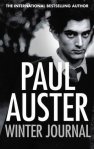
I’m a huge memoir junkie. Some of the most memorable ones this year have been Winter Journal by Paul Auster, Traveling Mercies by Anne Lamott (a reread), and A Three Dog Life by Abigail Thomas (another reread).


An incidental theme in the life writing I’ve read in 2020 is childhood (Childhood by Tove Ditlevsen, Cider with Rosie by Laurie Lee, Oleander, Jacaranda by Penelope Lively, Period Piece by Gwen Raverat); I hope to continue reading around this topic next year.
What books have you recommended the most to others?
I’ve mentioned the Clarke (above) in any discussions of books about illness and death.
I recommended the memoir Are You Somebody? by Nuala O’Faolain more than once following Reading Ireland Month.
Entangled Life, Merlin Sheldrake’s enthusiastic book about fungi, is one I can imagine suggesting to readers who don’t often pick up nonfiction.
And Signs of Life by Dr. Stephen Fabes has generated a fair bit of interest among my Goodreads friends.


Besides Annabel, Kate and Liz also wrote about their 2020 nonfiction reading habits.
How has your nonfiction reading been going this year?
Reading from the Wainwright Prize Longlists
Another day, another prize longlist! This year the Wainwright Prize has split into two awards for writing on 1) UK nature and 2) global conservation themes. Tomorrow (July 30th), they will be whittled down to shortlists. I happen to have read and reviewed 10 of the nominees already. I took the opportunity to experience a few more before the shortlist announcement. I give a paragraph on each below (forgive me for, in some cases, repeating the excerpts that appeared in my reviews roundups and best-of lists).
From the UK nature writing longlist:

 Dark, Salt, Clear: Life in a Cornish Fishing Town by Lamorna Ash: In her early 20s, Ash made multiple trips from London to stay in Newlyn: walking to the cove that bears her name, going out on fishing trawlers, and getting accepted into the small community. Gruelling and lonely, the fishermen’s way of life is fading away. The book goes deeper into Cornish history than non-locals need, but I enjoyed the literary allusions – the title is from Elizabeth Bishop. I liked the writing, but this was requested after me at the library, so I could only skim it.
 Wild Child: Coming Home to Nature by Patrick Barkham: Childhood has moved indoors over the course of three generations, the Guardian journalist observes. Highlighting activities that will engage budding naturalists in every season and accompanying his three children to outdoor nursery, he suggests how connection with nature can be part of everyday life. An engaging narrative not just for parents and educators but for anyone who has a stake in future generations’ resolve to conserve the natural world – which is to say, all of us. (Reviewed for Shiny New Books)
 Bird Therapy by Joe Harkness: In 2013, Harkness was in such a bad place that he attempted suicide. Although he’s continued to struggle with OCD and depression in the years since then, birdwatching has given him a new lease on life. Avoiding the hobby’s more obsessive, competitive aspects (like listing and twitching), he focuses on the benefits of outdoor exercise and mindfulness. He can be lyrical when describing his Norfolk patch and some of his most magical sightings, but the writing is weak. (My husband helped crowdfund the book via Unbound.)
 Dancing with Bees: A Journey Back to Nature by Brigit Strawbridge Howard: Bees were the author’s gateway into a general appreciation of nature, something she lost for a time in midlife because of the rat race and family complications. Allotment gardening gives her opportunities to observe bee behaviour and marvel at their various lookalikes (like hoverflies), identify plants, work on herbal remedies, and photograph her finds. She delights in discovery and is devoted to lifelong learning in a book characterized by curiosity and warmth. (On my runners-up of 2019 list)
 Surfacing by Kathleen Jamie: Jamie has a particular interest in birds, islands, archaeology and the oddities of the human body. The bulk of the book is three long pieces set in Alaska, Orkney and Tibet. Neolithic sites lead her to think about deep time – a necessary corrective to short-term thinking that has gotten us into environmental crisis. I connected with the few-page pieces on experiencing a cave, spotting an eagle or getting lost in a forest. Beautiful nature writing and relatable words on the human condition. (My #9 nonfiction book of 2019)
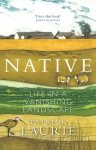 Native: Life in a Vanishing Landscape by Patrick Laurie: Galloway may be the forgotten corner of Scotland, but this third-generation cattle farmer can’t imagine living anywhere else. In his year-long nature diary, each month brings rewards as well as challenges as he strives to manage the land in a manner beneficial to wildlife. I’m lucky to have visited Wigtown and the surrounding area. You needn’t have been in person, though, to appreciate this pensive account rich with the sense of place and balanced between solastalgia and practicality. (Reviewed for Shiny New Books)
 Wintering by Katherine May: May’s sympathetic memoir considers winter not only as a literal season, but also as an emotional state. Although “depression” could be substituted for “wintering” in most instances, the book gets much metaphorical mileage out of the seasonal reference as she recounts how she attempted to embrace rather than resist the gloom and chill through rituals such as a candlelit St. Lucia service and an early morning solstice gathering at Stonehenge. Wintering alternates travel and research, mind and body. (Reviewed for TLS)
 Diary of a Young Naturalist by Dara McAnulty: McAnulty is the UK’s answer to Greta Thunberg: a leader in the youth environmental movement and an impassioned speaker on the love of nature. This is a wonderfully observant and introspective account of his fifteenth year: of disruptions – moving house and school, of outrage at the state of the world and at individual and political indifference, of the complications of being autistic, but also of the joys of everyday encounters with wildlife. Impressive perspective and lyricism. (Reviewed for Shiny New Books; on my Best of 2020 so far list.)
 Wanderland: A Search for Magic in the Landscape by Jini Reddy: Reddy has often felt like a nomad and an outsider. Through a year of travelling to holy sites, she seeks to be rooted in the country she has come to call home. The quest takes her all over the British Isles, creating an accessible introduction to its sacred spots. Recovering a sense of reverence for nature can only help in the long-term mission to preserve it. Reddy is the first person of colour nominated for the Wainwright Prize in its seven-year history. (Reviewed for Shiny New Books)
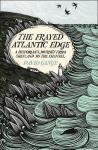 I think this year’s is an especially appealing longlist. It’s great to see small presses and debut authors getting recognition. I’ve now read 8 out of 13 (and skimmed one), and am interested in the rest, too, especially The Frayed Atlantic Edge by David Gange. The final three, all combining nature and (auto)biographical writing, are On the Red Hill by Mike Parker, The Well-Gardened Mind by Sue Stuart-Smith, and Rootbound: Rewilding a Life by Alice Vincent.
From the writing on global conservation longlist:

Greenery: Journeys in Springtime by Tim Dee: From the Cape of Good Hope to the Arctic Circle, Dee tracks the spring as it travels north. From first glimpse to last gasp, moving between his homes in two hemispheres, he makes the season last nearly half the year. His main harbingers are migrating birds, starting with swallows. The book is steeped in allusions and profound thinking about deep time and what it means to be alive in an era when nature’s rhythms are becoming distorted. A fresh, masterful model of how to write about nature. (Review reprinted at Shiny New Books; on my Best of 2020 so far list.) 
 Irreplaceable: The Fight to Save Our Wild Places by Julian Hoffman: Species and habitat loss are hard to comprehend even when we know the facts. This exquisitely written book is about taking stock, taking responsibility, and going beyond the numbers to tell the stories of front-line conservation work. Irreplaceable is an elegy of sorts, but, more importantly, it’s a call to arms. It places environmentalism in the hands of laypeople and offers hope that in working together in the spirit of defiance we can achieve great things. (Reviewed for Shiny New Books; my #1 nonfiction book of 2019)
 Losing Eden: Why Our Minds Need the Wild by Lucy Jones: While nature’s positive effect on human mental health is something we know intuitively and can explain anecdotally, Jones wanted to investigate the scientific mechanism behind it. She makes an empirical enquiry but also attests to the personal benefits nature has. Losing Eden is full of common sense and passion, cramming masses of information into 200 pages yet never losing sight of the big picture. Like Silent Spring, on which it is patterned, I can see this leading to real change. (Reviewed for Shiny New Books; on my Best of 2020 so far list.)
 Notes from an Apocalypse: A Personal Journey to the End of the World and Back by Mark O’Connell: The same satirical outlook that made O’Connell’s first book so funny is perfect for approaches to the end of the world, especially in the early chapter about preppers. Preparing = retreating, so he travels to South Dakota bunkers; a Mars Society Conference in Los Angeles; New Zealand, where billionaires plan to take refuge; and the wilderness of the Scottish Highlands. While pessimism strikes him as the only rational attitude, he decides constant anxiety is no way to live. (More extended thoughts here.)
The other book from this longlist that I’m interested in reading is Rebirding by Benedict Macdonald. I DNFed Bloom (all you ever wanted to know about algae!) last year; the other five seem too similar to other things I’ve read.
My predictions-cum-wish lists:
UK nature writing:
- The Frayed Atlantic Edge by David Gange
- Surfacing by Kathleen Jamie*
- On the Red Hill by Mike Parker
- Diary of a Young Naturalist by Dara McAnulty
- Wanderland by Jini Reddy
- Rootbound: Rewilding a Life by Alice Vincent
Writing on global conservation:
- Greenery by Tim Dee
- What We Need to Do Now for a Zero Carbon Future by Chris Goodall
- Irreplaceable by Julian Hoffman*
- Losing Eden by Lucy Jones
- Bloom by Ruth Kassinger
- Harvest: The Hidden Histories of Seven Natural Objects by Edward Posnett
*Predicted overall winners.
Have you read anything from the Wainwright Prize longlists? Do any of these books interest you?
Most Anticipated Releases of the Second Half of 2020
Although over 100 books from the second half of the year are already on my radar, I’ve limited myself here to the 15 July to November releases that I’m most excited about.
The modest number is a cheat in that I’ve already read seven books from this period in advance (plus I’m currently reading another three), and I haven’t listed any that I already have access to via proofs, promised finished copies, NetGalley, Edelweiss, or library preorders. Some of these that I intend to read are A Traveler at the Gates of Wisdom by John Boyne, D (A Tale of Two Worlds): A Modern-Day Dickensian Fable by Michel Faber, Bringing Back the Beaver by Derek Gow, Just Like You by Nick Hornby, How to Fly (poems) by Barbara Kingsolver, Vesper Flights by Helen Macdonald, Utopia Avenue by David Mitchell, Summerwater by Sarah Moss, Lake Life by David James Poissant, Dear Reader by Cathy Rentzenbrink, Jack by Marilynne Robinson and The Wild Silence by Raynor Winn.

(Meanwhile, two of my overall most anticipated 2020 releases have been pushed back to 2021, at least in the UK: Transcendent Kingdom by Yaa Gyasi and The Anthill by Julianne Pachico.)


The following are in release date order, within sections by genre; the quoted descriptions are from the publisher blurbs on Goodreads. For most I’ve added a note on why I want to read it. Nonfiction dominates: this seems to be the way of 2020 for me. Lots of flora and fauna on the covers and in the themes. Look out for antlers x 2.
Fiction

I love the U.S. cover.
Artifact by Arlene Heyman [July 9, Bloomsbury] “A sweeping debut novel about love, sex, motherhood, and ambition that follows a gifted and subversive scientist’s struggle to reach beyond cultural constraints for the life she wants. … Artifact is an intimate and propulsive portrait of a whole woman.” Susan of A life in books put me onto this one; here’s her review.

I love the U.S. cover.
Sisters by Daisy Johnson [Aug. 13, Jonathan Cape / Aug. 25, Riverhead] “After a serious case of school bullying becomes too much to bear, sisters July and September move across the country with their mother to a long-abandoned family home. … With its roots in psychological horror, Sisters is a taut, powerful and deeply moving account of sibling love.” I loved Johnson’s Booker-shortlisted debut, Everything Under.
 Piranesi by Susanna Clarke [Sept. 15, Bloomsbury] “Piranesi’s house is no ordinary building: its rooms are infinite, its corridors endless. … For readers of Neil Gaiman’s The Ocean at the End of the Lane … Piranesi introduces an astonishing new world.” It feels like forever since we had a book from Clarke. I remember devouring Jonathan Strange & Mr Norrell during a boating holiday on the Norfolk Broads in 2006. But whew: this one is only 272 pages.
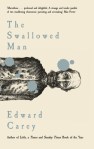 The Swallowed Man by Edward Carey [Nov. 5, Gallic / Oct. 27, Riverhead] “A beautiful and haunting imagining of the years Geppetto spends within the belly of a sea beast. Drawing upon the Pinocchio story while creating something entirely his own, Carey tells an unforgettable tale of fatherly love and loss, pride and regret, and of the sustaining power of art and imagination.” His Little was one of my favorite novels of 2018.
Poetry
 Dearly: New Poems by Margaret Atwood [Nov. 10, Chatto & Windus / Ecco / McClelland & Stewart] “By turns moving, playful and wise, the poems … are about absences and endings, ageing and retrospection, but also about gifts and renewals. They explore bodies and minds in transition … Werewolves, sirens and dreams make their appearance, as do various forms of animal life and fragments of our damaged environment.”
Nonfiction
 Bright Precious Thing: A Memoir by Gail Caldwell [July 7, Random House] “In a voice as candid as it is evocative, Gail Caldwell traces a path from her west Texas girlhood through her emergence as a young daredevil, then as a feminist.” I’ve enjoyed two of Caldwell’s previous books, especially Let’s Take the Long Way Home. Also, I’ve been reading a lot of childhood memoirs and I like comparing them to see how authors capture that time of life.
 The Fragments of My Father by Sam Mills [July 9, Fourth Estate] A memoir of being the primary caregiver for her father, who had schizophrenia; with references to F. Scott Fitzgerald and Leonard Woolf, who also found themselves caring for people struggling with mental illness. “A powerful and poignant memoir about parents and children, freedom and responsibility, madness and creativity and what it means to be a carer.”
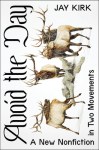 Avoid the Day: A New Nonfiction in Two Movements by Jay Kirk [July 28, Harper Perennial] Transylvania, Béla Bartók’s folk songs, an eco-tourist cruise in the Arctic … “Avoid the Day is part detective story, part memoir, and part meditation on the meaning of life—all told with a dark pulse of existential horror.” It was Helen Macdonald’s testimonial that drew me to this: it “truly seems to me to push nonfiction memoir as far as it can go.”
 World of Wonders: In Praise of Fireflies, Whale Sharks, and Other Astonishments by Aimee Nezhukumatathil [Aug. 3, Milkweed Editions] “From beloved, award-winning poet Aimee Nezhukumatathil comes a debut work of nonfiction—a collection of essays about the natural world, and the way its inhabitants can teach, support, and inspire us. … Even in the strange and the unlovely, Nezhukumatathil finds beauty and kinship.” Who could resist that title or cover?
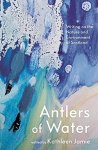 Antlers of Water: Writing on the Nature and Environment of Scotland, edited by Kathleen Jamie [Aug. 6, Canongate] Contributors include Amy Liptrot, musician Karine Polwart and Malachy Tallack. “Featuring prose, poetry and photography, this inspiring collection takes us from walking to wild swimming, from red deer to pigeons and wasps, from remote islands to back gardens … writing which is by turns celebratory, radical and political.”
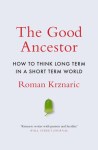 The Good Ancestor: How to Think Long Term in a Short-Term World by Roman Krznaric [Aug. 27, W.H. Allen] “Drawing on radical solutions from around the world, Krznaric celebrates the innovators who are reinventing democracy, culture and economics so that we all have the chance to become good ancestors and create a better tomorrow.” I’ve been reading a fair bit around this topic. I got a sneak preview of this one from Krznaric’s Hay Festival talk.
 Eat the Buddha: The Story of Modern Tibet through the People of One Town by Barbara Demick [Sept. 3, Granta / July 28, Random House] “Illuminating a culture that has long been romanticized by Westerners as deeply spiritual and peaceful, Demick reveals what it is really like to be a Tibetan in the twenty-first century, trying to preserve one’s culture, faith, and language.” I read her book on North Korea and found it eye-opening. I’ve read a few books about Tibet over the years; it is fascinating.
 Entangled Life: How Fungi Make Our Worlds, Change Our Minds and Shape Our Futures by Merlin Sheldrake [Sept. 3, Bodley Head / May 12, Random House] “Entangled Life is a mind-altering journey into this hidden kingdom of life, and shows that fungi are key to understanding the planet on which we live, and the ways we think, feel and behave.” I like spotting fungi. Yes, yes, the title and cover are amazing, but also the author’s name!! – how could you not want to read this?
 Between Light and Storm: How We Live with Other Species by Esther Woolfson [Sept. 3, Granta] “Woolfson considers prehistoric human‒animal interaction and traces the millennia-long evolution of conceptions of the soul and conscience in relation to the animal kingdom, and the consequences of our belief in human superiority.” I’ve read two previous nature books by Woolfson and have done some recent reading around deep time concepts. This is sure to be a thoughtful and nuanced take.
 The Stubborn Light of Things: A Nature Diary by Melissa Harrison [Nov. 5, Faber & Faber] “Moving from scrappy city verges to ancient, rural Suffolk, where Harrison eventually relocates, this diary—compiled from her beloved “Nature Notebook” column in The Times—maps her joyful engagement with the natural world and demonstrates how we must first learn to see, and then act to preserve, the beauty we have on our doorsteps.” I love seeing her nature finds on Twitter. I think her writing will suit this format.
Which of these do you want to read, too?
What other upcoming 2020 titles are you looking forward to?
Recent Writing for BookBrowse, Shiny New Books and the TLS
A peek at the bylines I’ve had elsewhere so far this year.
BookBrowse
 A Good Neighborhood by Therese Anne Fowler: In Fowler’s sixth novel, issues of race and privilege undermine a teen romance and lead to tragedy in a seemingly idyllic North Carolina neighborhood. A Good Neighborhood is an up-to-the-minute story packed with complex issues including celebrity culture, casual racism, sexual exploitation, and environmental degradation. It is narrated in a first-person plural voice, much like the Greek chorus of a classical tragedy. If you loved Tayari Jones’s An American Marriage, this needs to be next on your to-read list. It is a book that will make you think, and a book that will make you angry; I recommend it to socially engaged readers and book clubs alike.
 Pew by Catherine Lacey: Lacey’s third novel is a mysterious fable about a stranger showing up in a Southern town in the week before an annual ritual. Pew’s narrator, homeless, mute and amnesiac, wakes up one Sunday in the middle of a church service, observing everything like an alien anthropologist. The stranger’s gender, race, and age are entirely unclear, so the Reverend suggests the name “Pew”. The drama over deciphering Pew’s identity plays out against the preparations for the enigmatic Forgiveness Festival and increasing unrest over racially motivated disappearances. Troubling but strangely compelling; recommended to fans of Shirley Jackson and Flannery O’Connor. [U.S. publication pushed back to July 21st]
Shiny New Books
 Losing Eden: Why Our Minds Need the Wild by Lucy Jones: While nature’s positive effect on human mental health is something we know intuitively and can explain anecdotally, Jones was determined to investigate the scientific mechanism behind it. She set out to make an empirical enquiry and discovered plenty of evidence in the scientific literature, but also attests to the personal benefits that nature has for her and explores the spiritual connection that many have found. Losing Eden is full of both common sense and passion, cramming masses of information into 200 pages yet never losing sight of the big picture. Just as Silent Spring led to real societal change, let’s hope Jones’s work inspires steps in the right direction.
[+ Reviews of 4 more Wainwright Prize (for nature writing) longlistees on the way!]
 The Bass Rock by Evie Wyld: While it ranges across the centuries, the novel always sticks close to the title location. Just as the louring rock is inescapable in the distance if you look out from the Edinburgh hills, there’s no avoiding violence for the women and children of the novel. It’s a sobering theme, certainly, but Wyld convinced me that hers is an accurate vision and a necessary mission. The novel cycles through its three strands in an ebb and flow pattern that seems appropriate to the coastal setting and creates a sense of time’s fluidity. The best 2020 novel I’ve read, memorable for its elegant, time-blending structure as well as its unrelenting course – and set against that perfect backdrop of an indifferent monolith.
Times Literary Supplement
 I Am an Island by Tamsin Calidas: A record of a demoralizing journey into extreme loneliness on a Scottish island, this offers slivers of hope that mystical connection with the natural world can restore a sense of self. In places the narrative is a litany of tragedies and bad news. The story’s cathartic potential relies on its audience’s willingness to stick with a book that can be – to be blunt –depressing. The writing often tends towards the poetic, but is occasionally marred by platitudes and New Age sentiments. As with Educated, it’s impossible not to marvel at all the author has survived. Admiring Calidas’s toughness, though, doesn’t preclude relief at reaching the final page. (Full review in May 29th issue.)
 We Swim to the Shark: Overcoming fear one fish at a time by Georgie Codd: Codd’s offbeat debut memoir chronicles her quest to conquer a phobia of sea creatures. Inspired by a friend’s experience of cognitive behavioral therapy to cure arachnophobia, she crafted a program of controlled exposure. She learned to scuba dive before a trip to New Zealand, returning via Thailand with an ultimate challenge in mind: her quarry was the whale shark, a creature even Jacques Cousteau only managed to sight twice. The book has a jolly, self-deprecating tone despite its exploration of danger and dread. A more directionless second half leads to diminished curiosity about whether that elusive whale shark will make an appearance. (Full review in a forthcoming issue.)
 Dottoressa: An American Doctor in Rome by Susan Levenstein: In the late 1970s, Levenstein moved from New York City to Rome with her Italian husband and set up a private medical practice catering to English-speaking expatriates. Her light-hearted yet trenchant memoir highlights the myriad contrasts between the United States and Italy revealed by their health care systems. Italy has a generous national health service, but it is perennially underfunded and plagued by corruption and inefficiency. The tone is conversational and even-handed. In the pandemic aftermath, though, Italian sloppiness and shortages no longer seem like harmless matters to shake one’s head over. (Full review coming up in June 19th issue.)
Do any of these books (all by women, coincidentally) interest you?
Thinking about the Future with David Farrier & Roman Krznaric (Hay Festival)
My last of three digital Hay Festival* talks this year was by Roman Krznaric, a School of Life philosopher with a background in politics and gardening. I discovered him through Greenbelt Festival eight years ago and have since enjoyed several of his books on the topics of empathy, finding purposeful work, and models for living well. His talk on his upcoming book, The Good Ancestor: How to Think Long Term in a Short Term World, was an ideal follow-up to one of the top three 2020 nonfiction works I’ve read so far:
Footprints: In Search of Future Fossils by David Farrier
Look on my Works, ye Mighty, and despair!
Nothing beside remains. Round the decay
Of that colossal Wreck, boundless and bare
The lone and level sands stretch far away.
~from “Ozymandias” by Percy Bysshe Shelley
In May 2013 a set of fossil human footprints was found at Happisburgh in Norfolk. At 850,000 years old, they were the oldest outside of Africa. In the same month, atmospheric CO2 passed 400 ppm for the first time. It’s via such juxtapositions of past and future, and longevity versus precariousness, that Farrier’s book – a sophisticated lattice of human and planetary history, environmental realism and literary echoes – tells the story of the human impact on the Earth.
Unusually, Farrier is not a historian or a climate scientist, but a senior lecturer in English literature at the University of Edinburgh specializing in nature and place writing, especially in relation to the Anthropocene. That humanities focus allowed him to craft a truly unique, interdisciplinary work in which the canon both foreshadows and responds to environmental collapse. On a sabbatical in Australia, he also gets to hold an ice core taken by an icebreaker, swim above coral reefs and visit a uranium mine exempted from protection in a national park.
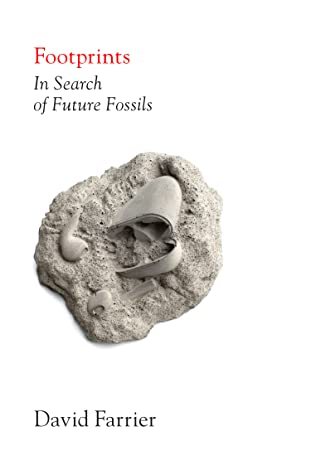 He travels not just through space, but also through time, tracing a plastic bottle from algal bloom to oil to factory to river/landfill to ocean; he thinks about how cultural memory can preserve vanished landscapes; he imagines propitiatory rites arising around radioactive waste to explain poisoned lakes and zinc-lined coffins; and he wonders how to issue appropriate warnings to the future when we don’t even know if English, or language in general, will persist (a nuclear waste storage site in Carlsbad uses a combination of multilingual signs, symbols, monoliths and planned oral tradition, while one in Finland is unmarked).
Each chapter is an intricate blend of fact, experience and story. For example, “The Insatiable Road” is about cars and the concrete landscapes they zip through – all made possible by oil. Farrier wins a chance to be among the first to cross the new Forth Bridge on foot and finds himself awed by the human achievement. Yet he knows that, in a car, the bridge will be crossed in seconds and soon taken for granted. Whether as a driver or a passenger, we have become detached from the journey and from the places we are travelling through. The road trip, a standard element of twentieth-century art and literature, has lost its lustre. “Really, we have conceded so much,” he writes. “Most of us live and wander only where road networks permit us to, creeping along their edges and lulled into deafness by their constant roar.” Ben Okri’s legend provides the metaphor of a famished road that swallows all in its path.
What will the human species leave behind? “The entire atmosphere now bears the marks of our passage … Perhaps no one will be around to read our traces, but nonetheless we are, everywhere, constantly, and with the most astonishing profligacy, leaving a legacy that will endure for hundreds of thousands or even hundreds of millions of years to come.” That legacy includes the concrete foundations of massive road networks, the remnants of megacities on coastal plains, plastics that will endure for many centuries, carbon and methane locked up in permafrost, the 2300-km fossil of the dead Great Barrier Reef, nuclear waste in isolation plants, jellyfish-dominated oceans and decimated microbial life.
Thinking long term doesn’t come naturally. In the same way that multiple books of 2019 (Time Song, Surfacing, Underland) helped us think about the place of humanity in reference to deep time, Footprints offers an invaluable window onto the deep future. Its dichotomies of hubris and atonement, and culpability versus indifference, are essential to ponder. It was always going to be sobering to read about how we have damaged our only home, but I never found this to be a needlessly depressing book; it is clear-eyed and forthright, but also meditative and beautifully constructed. Life on the planet continues in spite of our alterations, but all the diminishment was unavoidable, and perhaps some of it is remediable still.
My rating:
Related reading: Notes from an Apocalypse by Mark O’Connell. I’m only up to page 36 and at the moment it’s just him watching loads of crackpot preppers’ videos on YouTube, but already I think that Footprints should have had this book’s spot on the Wainwright Prize for Writing on Global Conservation longlist (a new prize run in addition to the standard UK nature writing one) for being more directly engaged with conservation issues rather than just humorously commenting on the end-of-the-world mindset.
Roman Krznaric at Hay Festival
 Krznaric’s discussion of being a “good ancestor” resonated in connection with the long-term thinking of Farrier’s book. “This is the age of the tyranny of the now,” he began, but “humankind has colonized the future” as well, treating it as a tempus nullius where we can dump our ecological waste and tech failures. Yet long-termism is needed more than ever as a way of planning for environmental challenges (and pandemics and the like). Future generations have no say in the decisions we make now that will affect them. To put this in perspective, he showed an image of three spheres, proportionally sized: one represented the 100 billion dead, one was the 7.7 billion currently living, and one was the 6.75 trillion in unborn generations (if the current birth rate continues).
It was Jonas Salk, creator of the polio vaccine, who asked, “Are we being good ancestors?” Krznaric invited the audience to come up with examples (in the chat window on the sidebar) of long-term projects through which people are trying to help future generations, such as the Svalbard Seed Depository, the Green New Deal, the 10,000-Year Clock (inside a mountain in the Texas desert), the Long Play piece of music to last 1,000 years, rewilding, archives and libraries, and tree planting. He had also opened the talk with his own modest contribution: he and his partner ‘gave’ their 11-year-old twins their votes in the latest election.
Krznaric elaborated on four of his book’s six ways of thinking about the future: 1) Rethink human nature by using the “acorn brain” (long-term thinking) rather than the “marshmallow brain” (instant gratification). 2) Embark on projects with long time horizons (“cathedral thinking”). 3) Think in terms of legacies, whether familial or transcendent – leaving a gift to the citizens of the future (e.g. The Future Library of 100 books not published or read until 2114). 4) Create a politics for the future, e.g. the citizen assembly movement.
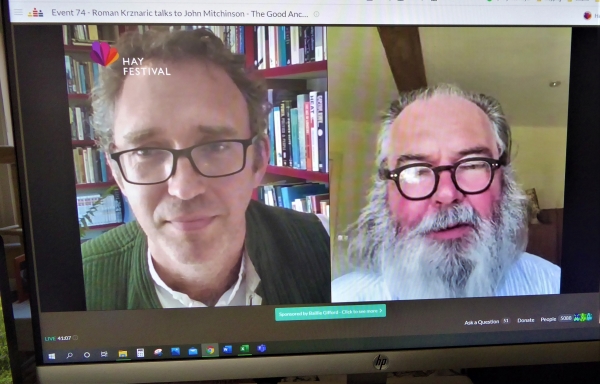
Roman Krznaric at the digital Hay Festival. Q&A led by John Mitchinson (right).
In the case of the UK, Krznaric advocates abolishing the House of Lords, replacing it with a citizens’ assembly and a Minister for the Future, and establishing legal rights for future generations. He noted that globally we’re at a “devil’s fork” where there’s a danger of authoritarian regulations continuing around the world after quarantine ends, endangering the future of social democracy. Instead, we need grassroots activism and “doughnut economics.” He pictures devolution of power away from central governments, with progressive cities becoming new loci of power. Individual actions like vowing not to fly and installing solar panels can inspire peers, but only collective action can tackle environmental breakdown.
 Related reading: I’ll be reviewing Eric Holthaus’s forthcoming book The Future Earth: A Radical Vision for What’s Possible in the Age of Warming for BookBrowse later this month. The meteorologist and science journalist fleshes out some of Krznaric’s ideas, such as a citizen assembly and the cyclical economy, in his proposal for the drastic changes needed over the next three decades.
*You can access the recorded Hay Festival talks by paying a £10 annual subscription here.
Have you read anything about the deep future?
The Seafarers by Stephen Rutt (Paperback Release)
It’s the paperback release date for The Seafarers: A Journey among Birds by Stephen Rutt, one of my highlights from last year’s summer reading and ultimately one of my top 5 nonfiction reads of 2019.
I’ve been asked to repost my review, and you get a bonus: I’m also posting part of the review my husband wrote for his blog last year, which opens with memories of seabird-rich trips he and I have taken. (Chris is a lecturer in animal ecology at the University of Reading, a Newbury Town councillor, and an off-and-on nature blogger.)
Rebecca’s review:
 In 2016 Rutt left his anxiety-inducing life in London in a search for space and silence. He found plenty of both on the Orkney Islands, where he volunteered at the North Ronaldsay bird observatory for seven months. In the few years that followed, the young naturalist travelled the length and breadth of the British Isles – from Skomer to Shetland – courting encounters with seabirds. He’s surrounded by storm petrels one magical night at Mousa Broch; he runs from menacing skuas; he watches eider and terns and kittiwakes along the northeast coast; he returns to Orkney to marvel at gannets and fulmars. Whether it’s their beauty, majesty, resilience, or associations with freedom, such species are for him a particularly life-enhancing segment of nature to spend time around.
Discussion of the environmental threats that hit seabirds hardest, such as plastic pollution, make for a timely tie-in to wider conservation issues. Rutt also sees himself as part of a long line of bird-loving travellers, including James Fisher and especially R. M. Lockley, whose stories he weaves in. This is one of the best nature/travel books I’ve read in a long time, especially enjoyable because I’ve been to a lot of the island locations and the elegantly evocative writing, making particularly effective use of varied sentence lengths, brought back to me just what it’s like to be in the far north of Scotland in the midst of an endless summer twilight, a humbled observer as a whole whirlwind of bird life carries on above you.
A favorite passage:
“Gannets nest on the honeycombs of the cliff, in their thousands. They sit in pairs, pointing to the sky, swaying heads. They stir. The scent of the boat’s herring fills the air. They take off, tessellating in a sky that is suddenly as much bird as light. The great skuas lurk.”
Chris’s review
Scotland, 2005. That’s the trip I always cite as my ‘conversion experience’ as a birder. Perhaps the most memorable element was a boat trip out to the seabird colonies of the Treshnish Isles. Puffins were the draw, but other memories are more vivid. The sudden appearance of a great skua, powering through at low level causing consternation among other birds and excitement among birdwatchers. A minke whale blowing spray near the boat. The dark eye of a shag up close, inscrutably ancient, a pterodactyl that somehow survived to the present.

Puffins at Hermaness, Shetland. Photo by Chris Foster.
Captivated by the peace and isolation of Scottish islands and the incredible sights, sounds and smells of seabirds we did it all again the following year, heading farther north. We started on mainland Orkney, travelling overland by train before catching the ferry from Thurso. During a few days on Westray we experienced a small island community, intriguing to a child of English suburbia, though mostly I remember the rain and superb traybakes in the village café. Finally on to Shetland, making our way up to Hermaness, the very northern end of Britain on the island of Unst. Towering skua-ruled cliffs with the most inquisitive, trusting puffins I have ever known, no land between us and the North Pole. Some four years later we visited Skomer in Pembrokeshire, another famed seabird destination, but since then our visits to Britain’s seabird islands have, alas, largely dried up. I’ve caught up with seabirds on and off since but perhaps let the full wonder of seabirds and the magic of islands drift out of my life.
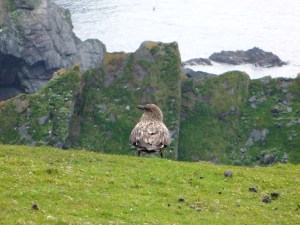
Great skua at Hermaness, Shetland. Photo by Chris Foster.
In that respect The Seafarers was a timely read. It takes the reader, via a series of personal journeys, through the major groups of ocean-going birds that visit Britain while also introducing a significant seabird location in each chapter. It’s an appealing blend of travel, descriptive nature writing, popular science and biography. Author Stephen Rutt balances a highly personal account of what seabirds have meant for him with some solid seabird facts which are well explained, detailed but not at all dense. Rutt is a young birder, naturalist and writer. Since I too am a bearded, balding young (though not nearly so young as he) birder who is not fond of crowds I was probably predisposed to enjoy his voice, and I did, but I also admired its freshness. He successfully avoids the ‘lone white male’ cliché often accused of dominating nature writing. The writing is accomplished throughout and Rutt’s prose is distinctive, concise yet poetic. The life-affirming, simple joy of birding shines through.
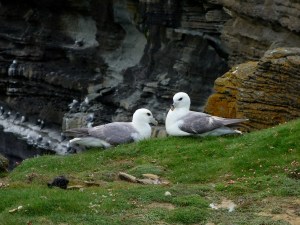
Fulmars on Westray, Orkney Islands. Photo by Chris Foster.
The particularly well-crafted short chapter on vagrant birds may be one of those rare pieces of writing to actually change my mind. Where I have lately been inclined toward the view that twitching exotic vagrants is “a morbid act, a premature wake for a waif that won’t last out the day,” as Rutt puts it, I was won over by his “faith in the wondrous, sense-defying, thrilling capacity that birds have of being lost and making that seem … OK.”
The Seafarers follows just two years after Adam Nicolson’s The Seabird’s Cry. The latter is the more complete (and global) treatment of seabirds, what we know about them and why they matter, but that’s not really a criticism of Rutt’s book. The Seafarers is as much an autobiographical account of the transformative power of birding as it is a compilation of seabird lore. What they have in common is that both books are love letters to this extraordinary group of animals.
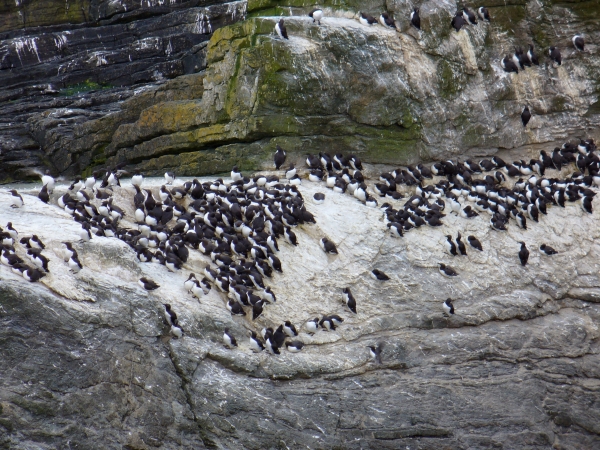
Guillemots at Sumburgh Head, Shetland. Photo by Chris Foster.
Rutt has added his own unique chapter to the shared history of people and seabirds on these islands, as well as establishing himself as a writer with real promise. I look forward to seeing what he turns his thoughts to next.
[The answer was geese; see my review of Rutt’s second 2019 publication, Wintering.]
Note: The Seafarers won the Saltire First Book of the Year award and was longlisted for the Highland Book Prize 2019.
(Order from your local independent bookstore, Hive or Waterstones.)
Spring Reading 2020, Part II
According to the Sámi reindeer herders, there are actually eight seasons; we’d now be in “Spring-summer” (gidágiesse), which runs from May to June.
In recent weeks I’ve read some more books that engage with the spring and/or its metaphors of planting and resurrection. (The first installment was here.) Two fiction and two nonfiction selections this time.
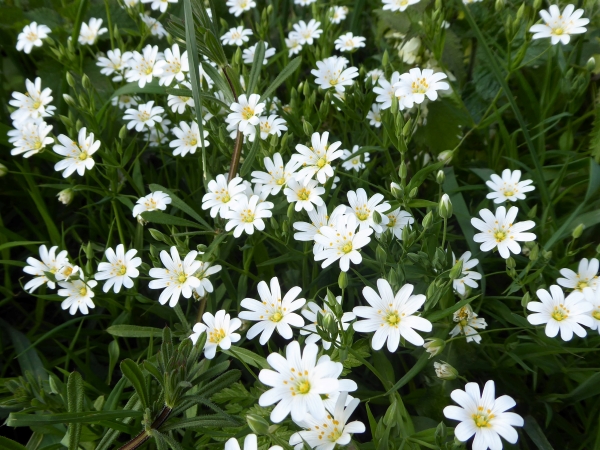
Stitchwort beside a nearby lane. Photo by Chris Foster.
The White Garden: A Novel of Virginia Woolf by Stephanie Barron (2009)
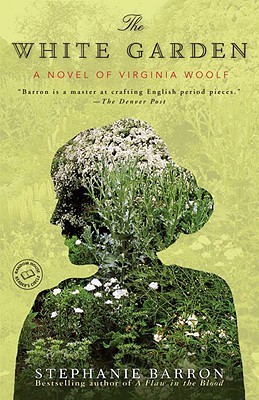 Barron is best known for her Jane Austen Mysteries series. Here she takes up the relationship between Virginia Woolf and Vita Sackville-West and crafts a conspiracy theory / alternative history in which Virginia did not commit suicide upon her disappearance in March 1941 but hid with Vita at Sissinghurst, her Kent home with the famous gardens. Investigating this in the autumn of 2008 are Jo Bellamy, an American garden designer who has been tasked with recreating Sackville-West’s famous White Garden at her wealthy client’s upstate New York estate, and Peter Llewelyn, a Sotheby’s employee who helps Jo authenticate a journal she finds hidden in a gardener’s shed at Sissinghurst.
Jo has a secret connection: her grandfather, Jock, who recently committed suicide, was a gardener here at the time of Woolf’s visit, and she believes the notebook may shed light on Virginia’s true fate and what led Jock to kill himself. Romantic complications ensue. This is fun escapism for Americans after an armchair trip to England (including Oxford and Cambridge for research), but so obviously written by an outsider. I had to correct what felt like dozens of errors (e.g. the indoor smoking ban came into effect in July 2007, so the hotel dining room wouldn’t have been filled with cigarette smoke; “pulling a few” is not slang for having a few drinks – rather, “pulling” has the connotation of making a romantic conquest).
I’ve visited Sissinghurst and Knole and had enough of an interest in the historical figures involved to keep me going through a slightly silly, frothy novel.
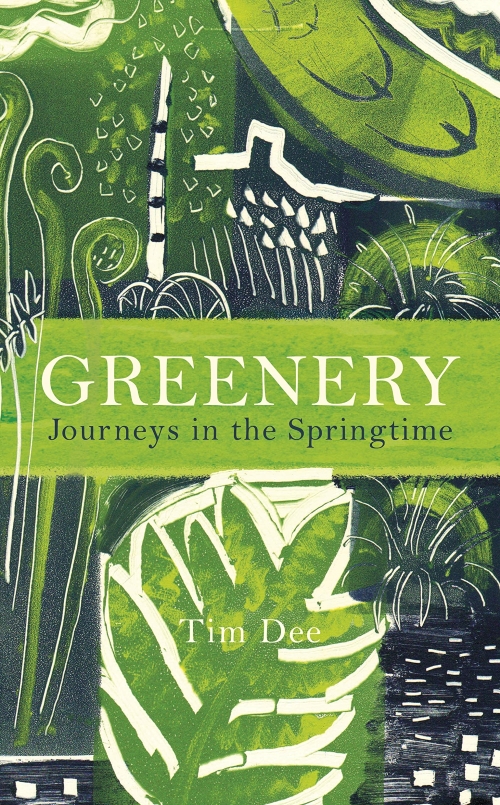
Greenery: Journeys in Springtime by Tim Dee (2020)
From the Cape of Good Hope to the Arctic Circle, Dee tracks the spring as it travels north. From first glimpse to last gasp, moving between his homes in two hemispheres, he makes the season last nearly half the year. His harbingers are chiefly migrating birds – starting with swallows. Here’s how he states his aim:
Knowing those annually recurring gifts of nature, and registering them alongside our own one-way journey through life, why not try to travel with the season and be in springtime for as long as possible, why not try to start where the season starts, and then to keep up with it, in step, walking a moving green room, travelling under the sun, like swallows out of Africa?
Starting in February in the Sahara Desert, he sees an abundance of the songbirds and raptors he’s used to finding in Europe, as well as more exotic species endemic to Africa. Any fear that this will turn out to be some plodding ‘I went here and saw this, then there and saw that’ nature/travel narrative dissipates instantly; although the book has a strong geographical and chronological through line, it flits between times and places as effortlessly as any bird, with the poetic quality of Dee’s observations lifting mundane moments into sharp focus. For instance, at their Ethiopian hotel, a wedding photography mecca, “a waiting wedding dress collapsed on a black cane chair, like an ostrich suicide.” A nightjar startled in the New Forest is “a bandaged balsa-wood model: a great moth’s head with the wings of a dark dragonfly.”
Dee’s wanderings take him from Scandinavia to central Europe and back. Wherever he happens to be, he is fully present, alive to a place and to all its echoes in memory and literature. He recalls a lonely year spent in Budapest studying Hungarian poetry in the 1980s, and how the sight and sound of birds like black woodpeckers and eagle owls revived him. Visits to migration hotspots like Gibraltar and Heligoland alternate with everyday jaunts in Ireland or the Bristol and Cambridgeshire environs he knows best.
Each vignette is headed with a place name and latitude, but many are undated, recalling springs from decades past or from the work of admired writers. Some of his walking companions and mentioned friends are celebrated nature or travel writers in their own right (like Julia Blackburn, Mark Cocker, Patrick McGuinness and Adam Nicolson; there’s also his cousin, fiction writer Tessa Hadley), while Samuel Taylor Coleridge, Seamus Heaney, D. H. Lawrence and Gilbert White are some of the book’s presiding spirits.
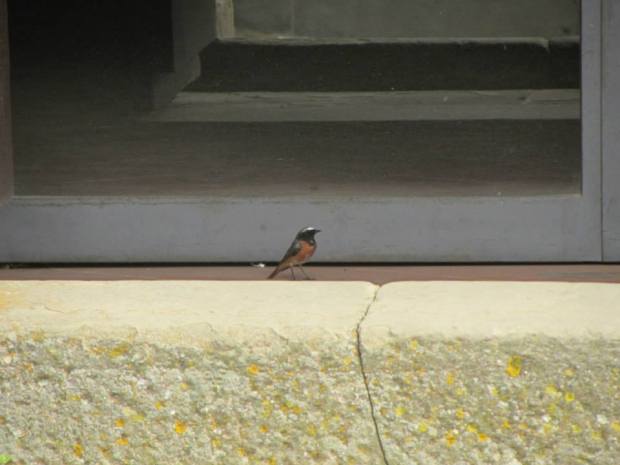
A redstart on some church steps in Tuscany, April 2014. Not the best view, but this is Dee’s favourite bird. Photo by Chris Foster.
Greenery is steeped in allusions and profound thinking about deep time and what it means to be alive in an era when nature’s rhythms are becoming distorted. It is so gorgeously literary, so far from nature and travel writing as usual, that it should attract readers who wouldn’t normally dip into those genres. While Dee’s writing reminds me somewhat of Barry Lopez’s, closer comparisons could be made with Helen Macdonald’s H Is for Hawk and Peter Matthiessen’s The Snow Leopard: quest narratives that nestle their nature writing within a substrate of memoir and philosophy. The last few pages, in which Dee, now in his late fifties, loses a close friend (Greg Poole, who painted the book’s cover) and receives a diagnosis of Parkinson’s disease but also learns he is to become a father again, are achingly beautiful.
I find I’ve written more about this book than I intended to in a reviews roundup, but it’s so extraordinary it deserves this much and more. It’s not just one of the few best nonfiction books of the year, but a fresh, masterful model of how to write about nature.
In the Springtime of the Year by Susan Hill (1975)
 This is my favorite of the six books I’ve now read by Hill. Early one spring, Ruth Bryce’s husband, Ben, dies in a forestry accident. They had been only married a year and now here she is, aged 20 and a widow. Ben’s little brother, 14-year-old Jo, is a faithful visitor, but after the funeral many simply leave Ruth alone. Ben’s death is a “stone cast into still water,” whose ripples spread out beyond his immediate family.
There is little plot as such, yet this is a lovely, quiet meditation on grief and solitude amid the rhythms of country life. Ruth vacillates between suicidal despair and epiphanies of exaltation at how all of life is connected. Religious imagery coinciding with Easter describes a cycle of death and renewal. Very late on in the book, as winter comes round again, she has the chance to be of help to another local family that has suffered a loss, and to a member of Ben’s remaining family.
It took me two whole springs to read this. For those who think of Hill as a writer of crime novels (the Simon Serrailler series) and compact thrillers (The Woman in Black et al.), this may seem very low on action in comparison, but there is something hypnotic about the oddly punctuated prose and the ebb and flow of emotions.
Plant Dreaming Deep by May Sarton (1968)
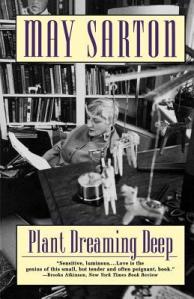 This serves as a prelude to the eight journals for which Sarton would become famous. It’s a low-key memoir about setting up home in the tiny town of Nelson, New Hampshire, making a garden and meeting the salt-of-the-earth locals who provided her support system and are immortalized in fictional form in the novel she published two years later, Kinds of Love. At the time of publication, she’d been in Nelson for 10 years; she would live there for 15 years in all, and (after seeing out her days in a rented house by the coast in Maine) be buried there.
Sarton was nearing 50 by the time she bought this, her first home, and for her it represented many things: a retreat from the world; a place for silence and solitude; and somewhere she could bring together the many aspects of herself, even if just by displaying her parents’ furniture, long in storage, and the souvenirs from her travels – “all the threads I hold in my hands have at last been woven together into a whole—the threads of the English and Belgian families from which I spring … the threads of my own wanderings”.
Nelson feels like a place outside of time. It holds annual Town Meetings, as it has for nearly two centuries. Her man-of-all-work, Perley Cole, still cuts the meadow with a scythe. After years of drought, she has to have water-drillers come and find her a new source. An ancient maple tree has to be cut down, reminding her of other deaths close to home. Through it all, her beloved garden is a reminder that new life floods back every year and the routines of hard work will be rewarded.
Some favorite lines:
“Experience is the fuel; I would live my life burning it up as I go along, so that at the end nothing is left unused, so that every piece of it has been consumed in the work.”
“gardening is one of the late joys, for youth is too impatient, too self-absorbed, and usually not rooted deeply enough to create a garden. Gardening is one of the rewards of middle age, when one is ready for an impersonal passion, a passion that demands patience, acute awareness of a world outside oneself, and the power to keep on growing through all the times of drought, through the cold snows, toward those moments of pure joy when all failures are forgotten and the plum tree flowers.”
Note: I discovered I’ve always misunderstood this title, thinking it whimsically imagined a plant having dreams; instead, “plant” is an imperative verb, as in Sarton’s adaptation of Joachim du Bellay: “Happy the man who can long roaming reap, / Like old Ulysses when he shaped his course / Homeward at last toward the native source, / Seasoned and stretched to plant his dreaming deep.” It’s about a place where one can root one’s work and intentions.
 Bookish Beck = Rebecca Foster. American transplant to England. Freelance proofreader and book reviewer.
 Bookish Beck