Nonfiction November: Two Memoirs of Biblical Living by Evans and Jacobs
I love a good year-challenge narrative and couldn’t resist considering these together because of the shared theme. Sure, there’s something gimmicky about a rigorously documented attempt to obey the Bible’s literal commandments as closely as possible in the modern day. But these memoirs arise from sincere motives, take cultural and theological matters seriously, and are a lot of fun to read.
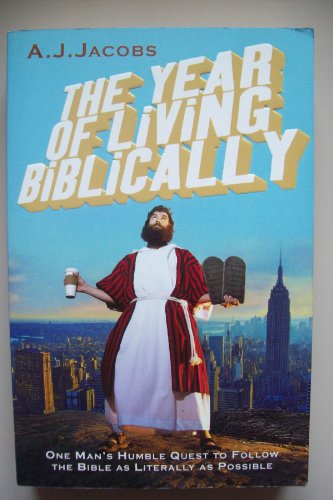
The Year of Living Biblically: One Man’s Humble Quest to Follow the Bible as Literally as Possible by A.J. Jacobs (2007)
Jacobs came up with the idea, so I’ll start with him. His first book, The Know-It-All, was about absorbing as much knowledge as possible by reading the encyclopaedia. This starts in similarly intellectual fashion with a giant stack of Bible translations and commentaries. From one September to the next, Jacobs vows, he’ll do his best to understand and implement commandments from both the Old and New Testaments. It’s not a completely random choice of project in that he’s a secular Jew (“I’m Jewish in the same way the Olive Garden is an Italian restaurant. Which is to say: not very.”). Firstly, and most obviously, he stops shaving and getting haircuts. “As I write this, I have a beard that makes me resemble Moses. Or Abe Lincoln. Or [Unabomber] Ted Kaczynski. I’ve been called all three.” When he also takes to wearing all white, he really stands out on the New York subway system. Loving one’s neighbour isn’t easy in such an antisocial city, but he decides to try his best.
 Jacobs is confused by the Bible’s combination of sensible moral guidelines and bizarre, arcane stuff. His conviction is that you can’t pick and choose – even if you don’t know why a law is important, you have to go with it. One of his “Top Five Most Perplexing Rules in the Bible” is a ban on clothing made of mixed fibers (shatnez). So he hires a shatnez tester, Mr. Berkowitz, who comes to investigate his entire wardrobe. To fulfil another obscure commandment, Berkowitz helps him ceremonially take an egg from a pigeon’s nest. Jacobs takes up prayer, hospitality, tithing, dietary restrictions, and avoiding women at the wrong time of the month. He gamely puts up a mezuzah, which displays a Bible passage above his doorframe. He even, I’m sorry to report, has a chicken sacrificed. Despite the proverb about not ‘sparing the rod’, he can’t truly bring himself to punish his son, so taps him gently with a Nerf bat; alas, Jasper thinks it’s a game. Stoning adulterers? Jacobs tosses pebbles at ankles.
The book is a near-daily journal, with a new rule or three grappled with each day. There are hundreds of strange and culturally specific guidelines, but the heart issues – covetousness, lust – pose more of a challenge. Alongside his work as a journalist for Esquire and this project, Jacobs has family stuff going on: IVF results in his wife’s pregnancy with twin boys. Before they become a family of five, he manages to meet some Amish people, visit the Creation Museum, take a trip to the Holy Land to see a long-lost uncle, and engage in conversation with Evangelicals across the political spectrum, from Jerry Falwell’s megachurch to Tony Campolo (who died just last week). Jacobs ends up a “reverent agnostic.” We needn’t go to such extremes to develop the gratitude he feels by the end, but it sure is a hoot to watch him. This has just the sort of amusing, breezy yet substantial writing that should engage readers of Bill Bryson, Dave Gorman and Jon Ronson. (Free mall bookshop) 
A Year of Biblical Womanhood: How a Liberated Woman Found Herself Sitting on Her Roof, Covering Her Head, and Calling Her Husband “Master” by Rachel Held Evans (2012)
 Evans’s book proposal must have referenced Jacobs’s project, but she comes at things from a different perspective as a progressive Christian, and likely had a separate audience in mind. Namely, the sort of people who worry about the concept of biblical womanhood and wrestle with Bible verses about women remaining silent in church and not holding positions of religious leadership over men. There are indeed factions of Christianity that take these passages literally. Given that she was a public speaker and popular theologian, Evans obviously didn’t. But in her native Alabama and her new home of Tennessee, many would. She decides to look more closely at some of the prescriptions for women in the scriptures, focusing on Proverbs 31, which describes the “woman of valor.” She looks at this idealized woman’s characteristics in turn and tries to adhere to them by dressing modestly, taking etiquette lessons, learning to cook and hosting dinners, and practicing for parenthood with a “Baby-Think-It-Over” doll. Like Jacobs, she stops cutting her hair and meets some Amish people. But she also sleeps outside in a tent while menstruating and undertakes silent meditation at an abbey and a mission trip to Bolivia. Each monthly chapter ends with a profile of a female character from the Bible and what might be learned from her story.
It’s a sweet, self-deprecating book. You can definitely tell that she was only 29 at the time she started her project. It’s okay with me that Evans turned all her literal intentions into more metaphorical applications by the end of the year. She concludes that the Church has misused Proverbs 31: “We abandoned the meaning of the poem by focusing on the specifics, and it became just another impossible standard by which to measure our failures. We turned an anthem into an assignment, a poem into a job description.” Her determination is not to obsess over rules but to continue with the habits that benefited her spiritual life, and to champion women whenever she can. I suspect this is a lesser entry from Evans’s oeuvre. She died too soon – suddenly in 2019, of brain swelling after a severe allergic reaction to an antibiotic – but remains a valued voice, and I’ll catch up on the rest of her books. Searching for Sunday, for instance, was great, and I’m keen to read Evolving in Monkey Town (about living in Dayton, Tennessee, where the famous Scopes Monkey Trial took place). (Birthday gift from my wish list, 2023) 
Short Stories in September Roundup: Alexie, Donoghue, Groff Anthology, Houston, McCracken, Moore, Svoboda, Walker
I gave myself an extra week to finish up the story collections I was in the middle of, so I’ve managed to read 13 during this challenge to self (including my first and second posts). Again I’m borrowing Marcie’s five-sentence review format to keep things simple.
The Lone-Ranger and Tonto Fistfight in Heaven by Sherman Alexie (1993)
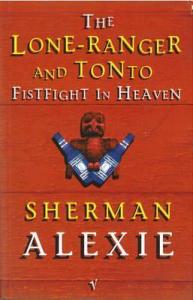 There are 22 stories in this fairly short book, so most top out at no more than 10 pages: little slices of life on and around the reservation at Spokane, Washington. Some central characters recur, such as Victor, Thomas Builds-the-Fire and James Many Horses, but there are so many tales that I couldn’t keep track of them across the book even though I read it quickly. My favourite was “This Is What It Means to Say Phoenix, Arizona,” in which Victor and Thomas fly out to collect the ashes of Victor’s father. Some of the longer titles give a sense of the tone: “Because My Father Always Said He Was the Only Indian Who Saw Jimi Hendrix Play ‘The Star-Spangled Banner’ at Woodstock” and “Jesus Christ’s Half-Brother Is Alive and Well on the Spokane Indian Reservation.” I couldn’t help but think of it as a so-so rehearsal for The Absolutely True Diary of a Part-Time Indian because a similar cast of drunks, jokers, relatives and basketball players populates the stories and a comparable voice prevails. (University library)
The Woman Who Gave Birth to Rabbits by Emma Donoghue (2002)
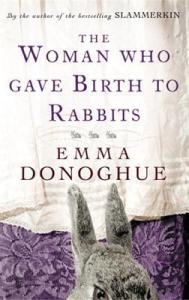 The title story is about Mary Toft – I thought of making her hoax the subject of a Three on a Theme post because I actually have two novels about her downloaded from NetGalley and Edelweiss (Mary and the Rabbit Dream by Noémi Kiss-Deáki and Mary Toft; or, The Rabbit Queen by Dexter Palmer), but the facts as conveyed here don’t seem like nearly enough to fuel a whole book, so I doubt I’ll read those. Donoghue has a good eye for historical curios and incidents and an academic’s gift for research, yet not many of these 17 stories, most of which are in the third person, rise above the novelty. Many protagonists are British or Irish women who were a footnote in the historical record: an animal rights activist, a lord’s daughter, a cult leader, a blind poet, a medieval rioter, a suspected witch. There are mild homoerotic touches, too. I enjoyed “Come, Gentle Night,” about John Ruskin’s honeymoon, and “Cured,” which reveals a terrifying surgical means of controlling women’s moods but, as I found with Astray and Learned by Heart, Donoghue sometimes lets documented details overwhelm other elements of a narrative. (Secondhand – Awesomebooks.com)
The Best Short Stories 2023: The O. Henry Prize Winners, ed. Lauren Groff (2023)
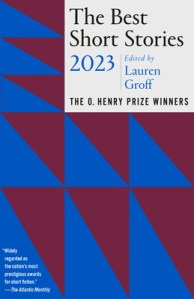 Hard to convey the variety of this 20-story anthology in a concise way because they run the gamut from realist (Nigerian homosexuality in “Happy Is a Doing Word” by Arinze Ifeakandu; Irish gangsters in “The Blackhills” by Eamon McGuinness) to absurd (Ling Ma’s “Office Hours” has academics passing through closet doors into a dream space; the title of Catherine Lacey’s “Man Mountain” is literal; “Ira and the Whale” is Rachel B. Glaser’s gay version of the Jonah legend). Also difficult to encapsulate my reaction, because for every story I would happily have seen expanded into a novel (the gloomy character study “The Locksmith” by Grey Wolfe LaJoie, the teenage friends’ coming-of-age in “After Hours at the Acacia Park Pool” by the marvellous Kirstin Valdez Quade), there was another I thought might never end (“Dream Man” by Cristina Rivera-Garza and “Temporary Housing” by Kathleen Alcott). Three are in translation. I admired Lisa Taddeo’s tale of grief and revenge, “Wisconsin,” and Naomi Shuyama-Gómez’s creepy Colombian-set “The Commander’s Teeth.” But my two favourites were probably “Me, Rory, and Aurora” by Jonas Eika (Danish), which combines an uneasy threesome, the plight of the unhoused and a downright chilling Ishiguro-esque ending; and “Xífù,” K-Ming Chang’s funny, morbid take on daughter/mother-in-law relations in China. (PDF review copy)
Waltzing the Cat by Pam Houston (1998)
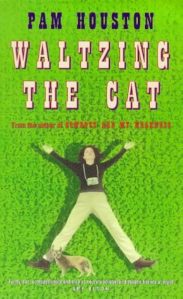 The novel-in-stories is about Lucy, a photographer in her early thirties with a penchant for falling for the wrong men – alcoholics or misogynists or ones who aren’t available. When she’s not working she’s thrill-seeking: rafting in Colorado, travelling in the Amazon, sailing in the Caribbean, or gliding. “Everything good I’ve gotten in life I’ve gotten by plunging in,” she boasts, to which a friend replies, “Sure, and everything bad you’ve gotten in your life you’ve gotten by plunging in.” Ultimately she ‘settles down’ on the Colorado ranch she inherits from her grandmother with a dog, making this – based on what I learned from the autobiographical essays in Deep Creek – even more autofiction for Houston than her debut, Cowboys Are My Weakness, was. Although the final magic realist touch of having her child-self come to her with a box of photographs of traumatic memories is overdone, the themes of accepting vulnerability, seeking to freeze time and creating a home for yourself resonated, and the title story, about the death of Lucy’s mother, is a brilliant and heart-wrenching standalone. (Secondhand – British Red Cross, Berwick)
The Souvenir Museum by Elizabeth McCracken (2021)
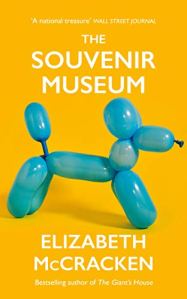 McCracken is terrific in short forms: The Hero of This Book, a novella, was one of my top books of 2022, and I also loved her previous story collection, Thunderstruck. Five of these dozen stories are taken from different points in the lives of Jack and Sadie, English and American academics (who I inevitably read as McCracken and her husband, Edward Carey) who come from large-family zaniness versus claustrophobic mother–daughter melancholy. I kept thinking that McCracken’s are just the sorts of scenarios Lucy and Olive would have told stories about in Tell Me Everything: accidents, misfortunes; random connections. Travel is a major element in many of the stories, including to Denmark (in the title story) and Amsterdam. I couldn’t decide whether I preferred the Jack-and-Sadie material or the rest, but I had a favourite from each: “The Irish Wedding” cracked me up as much as it did Sadie with the accidental use of crass American slang, while “Proof,” about a man communing with his father despite his early dementia, is set on a boat trip I’ve made (in 2004!) to see puffins on the Treshnish islands of Scotland. (Secondhand – Dogs Trust charity shop, Marlborough)
Like Life by Lorrie Moore (1990)
 Compared to Birds of America, this feels a little dated and the plots are overall less memorable. Still, the eight stories of Moore’s second collection are chewy with insight into relationships and the mindsets of youngish and middle-aged women, and there’s an effortless wry wit to her turns of phrase. Her exasperated would-be feminist characters remind me of Helen Simpson’s, while the cheese-selling protagonist of “Joy” made me think of an early Carol Shields story; and who knew a “cute meet” (aka a meet-cute) was a thing back then? New York City contrasts with the Midwest, most notably in “You’re Ugly, Too” and “The Jewish Hunter.” The title story, which comes last, crafts a weirdly muted dystopia built around shortages and marital misery; I preferred the (comparative lightness) of “Vissi d’Arte,” about a lonely playwright, and “Places to Look for Your Mind,” in which an empty-nest entrepreneur hosts an aimless young Englishman her daughter met on her study abroad year. (Secondhand – Bark charity shop, Berwick)
The Long Swim by Terese Svoboda (2023)
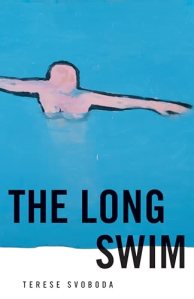 These 44 stories, mostly of flash fiction length, combine the grit of Denis Johnson with the bite of Flannery O’Connor. Siblings squabble over a late parent’s effects or wishes, marriages go wrong, the movie business isn’t as glittering as it’s cracked up to be, and drugs and alcohol complicate everything. The settings range through North America and the Caribbean, with a couple of forays to Europe. There are no speech marks and, whether the narrative is in first person or third, all the voices are genuine and distinctive yet flow together admirably. Svoboda has a poet-like talent for compact, zingy lines; two favourites were “my laziness is born of generalized-looking-to-get-specific grief, like an atom trying to make salt” (“Niagara”) and “Ditziness, a kind of Morse code of shriek-and-stop, erupts around the girls” (“Orphan Shop”).
Winner of the Juniper Prize for Fiction. Published by University of Massachusetts Press. With thanks to the author for the free PDF copy for review.
In Love and Trouble by Alice Walker (1973)
 I’d only ever read The Color Purple, so when I spotted this in a bookshop on our Northumberland holiday it felt like a good excuse to try something else by Walker. I had actually encountered one of the stronger stories before: “Everyday Use” is in the Close Company Virago anthology. In these Southern scenes (“a hate-filled state complete with magnolias, tornadoes and broken-tongued field hands”), Black women oppressed by fathers and partners gain what few advantages they can through deception or folk medicine. I liked “Entertaining God,” which opens with a boy abducting a gorilla from a zoo, and “To Hell with Dying,” about a friendship with an elderly neighbour in cotton country. Setting, style, characters; nothing drew me to any of the others or made me think I’ll read Walker again in the future. (Secondhand – Berrydin Books, Berwick)
Which of these would you read?
Currently reading: I’m not good at picking up short stories in the rest of the year, but I’ve discovered that I really enjoy reviewing them for Shelf Awareness – the length and format of their reviews really suits essay and story collections. So I’m now partway through Save Me, Stranger by Erika Krouse (2025) for an early Shelf Awareness review. Another book I started in Northumberland, Dreams of Dead Women’s Handbags by Shena Mackay, I didn’t finish in time for this challenge but will either continue or set aside and pick back up next year. Both are fantastic!
Short Stories in September, II: Willie Davis, Gerald Durrell, Sue Mell and Lore Segal
Four more collections down. Two of them blend fictional and autobiographical modes. Two are set primarily in New York City, with another hanging out in Kentucky and the fourth touring Europe. Three of the authors were new to me and one is an old favourite. I’m borrowing Marcie’s five-sentence review format to keep things simple.
I Can Outdance Jesus by Willie Davis (2024)
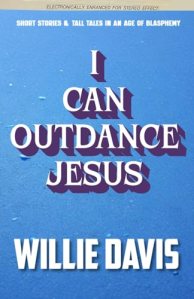 I don’t often take a look at unsolicited review copies, but I couldn’t resist the title of this and I’m glad I gave it a try. Davis’s 10 stories, several of flash length, take place in small-town Kentucky and feature a lovable cast of pranksters, drunks, and spinners of tall tales. The title phrase comes from one of the controversial songs the devil-may-care narrator of “Battle Hymn” writes. My two favourites were “Kid in a Well,” about one-upmanship and storytelling in a local bar, and “The Peddlers,” which has two rogues masquerading as Mormon missionaries. I got vague Denis Johnson vibes from this sassy, gritty but funny collection; Davis is a talent!
Published by Cowboy Jamboree Press. With thanks to publicist Lori Hettler for the free e-copy for review.
The Picnic and Suchlike Pandemonium by Gerald Durrell (1979)
 If you’ve read his autobiographical trilogy or seen The Durrells, you’ll be familiar with the quirky, chaotic family atmosphere that reigns in the first two pieces: “The Picnic,” about a luckless excursion in Dorset, and “The Maiden Voyage,” set on a similarly disastrous sailing in Greece (“Basically, the rule in Greece is to expect everything to go wrong and to try to enjoy it whether it does or not”). No doubt there’s some comic exaggeration at work here, especially in “The Public School Education,” about running into a malapropism-prone ex-girlfriend in Venice, and “The Havoc of Havelock,” in which Durrell, like an agony uncle, lends volumes of the sexologist’s work to curious hotel staff in Bournemouth. The final two France-set stories, however, feel like pure fiction even though they involve the factual framing device of hearing a story from a restaurateur or reading a historical manuscript that friends inherited from a French doctor. “The Michelin Man” is a cheeky foodie one with a surprisingly gruesome ending; “The Entrance” is a full-on dose of horror worthy of R.I.P. I wouldn’t say this is essential reading for Durrell fans, but it was a pleasant way of passing the time. (Secondhand – Lions Bookshop, Alnwick, 2021)
A New Day by Sue Mell (2024)
 Three suites of linked stories focus on young women whose choices in the 1980s have ramifications decades later. Chance meetings, addictions, ill-considered affairs, and random events all take their toll. Emma house-sits and waitresses while hoping in vain for her acting career to take off; “all she felt was a low-grade mourning for what she’d lost and hadn’t attained.” My favourite pair was about Nina, who is a photographer’s assistant in “Single Lens Reflex” and 13 years later, in “Photo Finish,” bumps into the photographer again in Central Park. With wistful character studies and nostalgic snapshots of changing cities, this is a stylish and accomplished collection.
Published by She Writes Press on September 3. With thanks to publicist Caitlin Hamilton Summie for the free e-copy for review.
Ladies’ Lunch and Other Stories by Lore Segal (2023)
 The first section contains nine linked stories about a group of five elderly female friends. Bessie jokes that “wakes and funerals are the cocktail parties of the old,” and Ruth indeed mistakes a shivah for a party and meets a potential beau who never quite successfully invites her on a date. One of their members leaves the City for a nursing home; “Sans Teeth, Sans Taste” is a good example of the morbid sense of humour. A few unrelated stories draw on Segal’s experience being evacuated from Vienna to London by Kindertransport; “Pneumonia Chronicles” is one of several autobiographical essays that bring events right up to the Covid era – closing with the bonus story “Ladies’ Zoom.” The ladies’ stories are quite amusing, but the book as a whole feels like an assortment of minor scraps; it was published when Segal, a New Yorker contributor, was 95. (Secondhand – National Trust bookshop, 2023)
Postscript: Segal died on 7 October 2024, aged 96.
I’ll have a couple more reviews roundups between now and early October.
Currently reading: The Lone-Ranger and Tonto Fistfight in Heaven by Sherman Alexie, The Skeleton in the Cupboard by Lilija Berzinska; The Woman Who Gave Birth to Rabbits by Emma Donoghue; The Best Short Stories 2023: The O. Henry Prize Winners, ed. Lauren Groff; Waltzing the Cat by Pam Houston; Dreams of Dead Women’s Handbags by Shena Mackay; How to Disappear by Tara Masih; The Souvenir Museum by Elizabeth McCracken; Like Life by Lorrie Moore; The Long Swim by Teresa Svoboda; In Love and Trouble by Alice Walker
Summery Reading, Part I: Heatwave, Summer Fridays
Here we are between short, bearable heat waves. As the climate changes, I’m more grateful than ever to live somewhere with reasonably mild and predictable weather; I don’t miss the swampy humidity of the Maryland summers I grew up with one bit. Today I have some brief thoughts on a first pair of summer-themed reads I picked up last month: a queasy coming-of-age novella about French teenagers’ self-destructive actions on a camping holiday; and a fun, nostalgic romance novel set in New York City at the turn of the millennium.
Heatwave by Victor Jestin (2019; 2021)
[Translated from the French by Sam Taylor]
 Victor Jestin was in his early twenties when he wrote this debut novella, which won the Prix Femina des Lycéens and was longlisted for the CWA Crime Fiction in Translation Dagger. It opens, memorably, with Leonard’s confession: “Oscar is dead because I watched him die and did nothing. He was strangled by the ropes of a swing … Oscar was not a child. At seventeen, you don’t die like that by accident.” A suicide, then: fitting given the other dangerous behaviours – drinking and promiscuity – rife among the gang of teenagers at this campsite in the South of France. What turns it into a crime is that Leonard, addled by alcohol and the heat, doesn’t report the death but buries Oscar in the sand and pretends nothing happened.
The rest of the book takes place over about 24 hours, the final day of a two-week vacation. Leo stumbles about as if in a trance, outwardly relating to his family, a male friend who seems to have a crush on him, and girls he’d like to sleep with, but all the while inwardly wondering what to do next. “I hadn’t made many stupid mistakes in my seventeen years of life. This one was difficult to understand. It all happened too fast; I felt powerless.” This is interesting enough if you like unreliable teenage narrators or are drawn by the critics’ comparisons to Françoise Sagan – accurate for the sense of sleepwalking toward disaster. One could easily breeze through the 104 pages during one hot afternoon. It didn’t stand out to me particularly, though. (Little Free Library)
Summer Fridays by Suzanne Rindell (2024)
 I was a big fan of Rindell’s first two stylish historical novels, The Other Typist and Three-Martini Lunch. She seemed to go off the boil with the next two, which I skipped, and now she’s back with an unexpected foray into romance, a genre I almost never read. The cover’s whimsical (nonexistent) birds and Ryan Gosling-like male figure make the novel seem frothier than it actually is, though we’re definitely in classic romcom territory here. The comparisons to You’ve Got Mail are apt in that the main character, Sawyer, strikes up a flirtation over e-mail and instant messaging. She’s a New York City publishing assistant whose ambitions threaten her day job when she has several poems accepted by The Paris Review. Nick, her correspondent, teases and cheers her on in equal measure. The complicated thing is that Sawyer is engaged to Charles, her college sweetheart, and Nick is dating Kendra. Nick and Sawyer initially became digital pen pals because they suspected that their partners, who work together at a law firm, were having an affair; they never expected sparks to fly.
It’s overlong and reasonably predictable, but I enjoyed the languid unfolding of the romance over the weeks of summer 1999. It was truly a simpler time when you had to dial up and wait for an inbox to load instead of having it in your pocket 24/7. Every Friday afternoon, Sawyer and Nick do touristy things like taste-test hotdogs and slushees, ride the Staten Island ferry back and forth all day, and visit little-known bars and restaurants Nick knows through his amateur rock band. They try to convince themselves that these are not dates. It’s like time outside of time for them, and a chance to sightsee in one’s own town. Eventually, though, Sawyer has to face reality. The 2001 framing story reflects the fact that, after the events of 9/11, many asked themselves what they really wanted out of life. This was cute but doesn’t quite live up to, e.g., Romantic Comedy. (Read via Edelweiss)
Any “heat” or “summer” books for you this year?
20 Books of Summer, 1: Company by Shannon Sanders
I started the summer’s reading right with Company. Shannon Sanders’s energetic debut novel-in-stories traces several generations of the Collins clan, whose experiences at once exemplify African American gentrification and evoke timeless patterns of parental legacy and sibling jealousy. Sisters Cassandra, Fay, Lee and Suzette grew up at their parents’ Atlantic City jazz club before going their separate ways: Cassandra to a PhD and provost position at a college, Fay to painting and the role of family spirit-keeper, Lee to her own brood of four and a no-good jazz musician husband, and Suzette to music and a too-early death. With roots in Mississippi, they have dispersed to Atlanta, New York City and Washington, DC.
We revisit relatives at different points in their lives, mostly between the 1990s and the present day. There are 13 linked stories here, 10 in the third person and three with a first-person narrator. Each focuses on a different individual or set of characters. Celebration scenes make for memorable moments. “Bird of Paradise” is set at the party to commemorate Cassandra’s new position. There’s a Black president at the time and people can’t stop comparing her dress to Michelle Obama’s inaugural ball attire, while she can’t stop fretting that she and her nieces will live up to stereotypes of Black women’s bodies. Later, “La Belle Hottentote” revisits this evening from the nieces’ perspective as they ponder where the family’s money came from. In “Rioja,” Cassandra’s daughter Cecilia, visiting her boyfriend Cole’s family for Thanksgiving, tries not to embarrass him with any pretentious or avant-garde behavior.
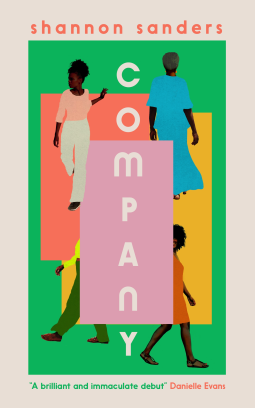
The title story, which is among the stand-outs, is the only one to feature the grandparent generation – though Opal and Centennial are but ghosts commenting on the begrudging welcome Fay offers when her niece Aubrey turns up on her doorstep in New Jersey. Fay is the sole sister without partner or children, but she got the family home as a sort of consolation prize and fills its walls with symbolism-heavy portraits of four sisters. My other favorite, alongside this and “Bird of Paradise,” was “The Opal Cleft,” in which Lee’s son Theo hosts his cousin Cyrus (Cassandra’s son) while the latter performs his drag queen act in the area.
I was reminded by turns of Danielle Evans, Kim Coleman Foote and Deesha Philyaw, while final story “The Everest Society,” about Lee’s daughter Mariolive’s desperation to impress the social worker who has to okay her and Dante adopting, recalls Sidik Fofana with its composite picture of their apartment building’s residents. In a few cases I felt that Sanders might have extended the sphere too wide by moving outside the family: “The Gatekeepers” I assume is about a co-worker or neighbor of Cassandra’s; “Mote” is about Cole’s cousin and his partner (and makes the one white woman in the book evil…); and “Dragonflies” features that cousin’s colleague. It’s not to say that these aren’t good stories, but I wondered why they couldn’t have starred extended family members instead.
Trying to get pregnant and the early days of motherhood are recurring concerns, as is the distribution of talent and wealth around the family and beyond. As these characters reach toward the upper middle class, they keep in mind the struggles they came from. Although the family legends morph over the years, shared habits and heirlooms make connections across the generations. Sanders is strong on characterization, scene-setting and social observation; I would happily have spent even longer with the Collins family. I’ll be keen to follow her career in the years to come.
With thanks to Pushkin Press for the free copy for review.
Spring Reads, Part II: Blossomise, Spring Chicken & Cold Spring Harbor
Our garden is an unruly assortment of wildflowers, rosebushes, fruit trees and hedge plants, along with an in-progress pond, and we’ve made a few half-hearted attempts at planting vegetable seeds and flower bulbs. It felt more like summer earlier in May, before we left for France; as the rest of the spring plays out, we’ll see if the beetroot, courgettes, radishes and tomatoes amount to anything. The gladioli have certainly been shooting for the sky!
I recently encountered spring (if only in name) through these three books, a truly mixed bag: a novelty poetry book memorable more for the illustrations than for the words, a fascinating popular account of the science of ageing, and a typically depressing (if you know the author, anyway) novel about failing marriages and families. Part I of my Spring Reading was here.
Blossomise by Simon Armitage; illus. Angela Harding (2024)
 Armitage has been the Poet Laureate for yonks now, but I can’t say his poetry has ever made much of an impression on me. That’s especially true of this slim volume commissioned by the National Trust: it’s 3 stars for Angela Harding’s lovely if biologically inaccurate (but I’ll be kind and call them whimsical) engravings, and 2 stars for the actual poems, which are light on content. Plum, cherry, apple, pear, blackthorn and hawthorn blossom loom large. It’s hard to describe spring without resorting to enraptured clichés, though: “Planet Earth in party mode, / petals fizzing and frothing / like pink champagne.” The haiku (11 of 21 poems) feel particularly tossed-off: “The streets are learning / the language of plum blossom. / The trees have spoken.” But others are sure to think more of this than I did.
A favourite passage: “Scented and powdered / she’s staging / a one-tree show / with hi-viz blossoms / and lip-gloss petals; / she’ll season the pavements / and polished stones / with something like snow.” (Public library) 
Spring Chicken: Stay Young Forever (or Die Trying) by Bill Gifford (2015)
 Gifford was in his mid-forties when he undertook this quirky journey into the science and superstitions of ageing. As a starting point, he ponders the differences between his grandfather, who swam and worked his orchard until his death from infection at 86, and his great-uncle, not so different in age, who developed Alzheimer’s and died in a nursing home at 74. Why is the course of ageing so different for different people? Gifford suspects that, in this case, it had something to do with Uncle Emerson’s adherence to the family tradition of Christian Science and refusal to go to the doctor for any medical concern. (An alarming fact: “The Baby Boom generation is the first in centuries that has actually turned out to be less healthy than their parents, thanks largely to diabetes, poor diet, and general physical laziness.”) But variation in healthspan is still something of a mystery.
Over the course of the book, Gifford meets all number of researchers and cranks as he attends conferences, travels to spend time with centenarians and scientists, and participates in the Baltimore Longitudinal Study of Aging. There have been some truly zany ideas about how to pause or reverse aging, such as self-dosing with hormones (Suzanne Somers is one proponent), but long-term use is discouraged. Some things that do help, to an extent, are calorie restriction and periodic fasting plus, possibly, red wine, coffee and aspirin. But the basic advice is nothing we don’t already know about health: don’t eat too much and exercise, i.e., avoid obesity. The layman-interpreting-science approach reminded me of Mary Roach’s. There was some crossover in content with Mark O’Connell’s To Be a Machine and various books I’ve read about dementia. Fun and enlightening. (New purchase – bargain book from Dollar Tree, Bowie, MD)
Cold Spring Harbor by Richard Yates (1986)
 Cold Spring Harbor is a Long Island hamlet whose name casts an appropriately chilly shadow over this slim novel about families blighted by alcoholism and poor decisions. Evan Shepard, only in his early twenties, already has a broken marriage behind him after a teenage romance led to an unplanned pregnancy. Mary and their daughter Kathleen seem to be in the rearview mirror as he plans to return to college for an engineering degree. One day he accompanies his father into New York City for an eye doctor appointment and the car breaks down. The men knock on a random door and thereby become entwined with the Drakes: Gloria, the unstable, daytime-drinking mother; Rachel, her beautiful daughter; and Phil, her earnest but unconfident adolescent son.
Evan and Rachel soon marry and agree to Gloria’s plan of sharing a house in Cold Spring Harbor, where the Shepards live (Evan’s mother is also an alcoholic, but less functional; she hides behind the “invalid” label). Take it from me: living with your in-laws is never a good idea! As the Second World War looms, and with Evan and Rachel expecting a baby, it’s clear something will have to give with this uneasy family arrangement, but the dramatic break I was expecting – along the lines of a death or accident – never arrived. Instead, there’s just additional slow crumbling, and the promise of greater suffering to come. Although Yates’s character portraits are as penetrating as in Easter Parade, I found the plot a little lacklustre here. (Secondhand – Clutterbooks, Sedbergh)
Any ‘spring’ reads for you recently?
Carol Shields Prize Reading: Daughter and Dances
Two more Carol Shields Prize nominees today: from the shortlist, the autofiction-esque story of a father and daughter, both writers, and their dysfunctional family; and, from the longlist, a debut novel about the physical and emotional rigours of being a Black ballet dancer.
Daughter by Claudia Dey
Like her protagonist, Mona Dean, Dey is a playwright, but the Canadian author has clearly stated that her third novel is not autofiction, even though it may feel like it. (Fragmentary sections, fluidity between past and present, a lack of speech marks; not to mention that Dey quotes Rachel Cusk and there’s even a character named Sigrid.) Mona’s father, Paul, is a serial adulterer who became famous for his novel Daughter and hasn’t matched that success in the 20 years since. He left Mona and Juliet’s mother, Natasha, for Cherry, with whom he had another daughter, Eva. There have been two more affairs. Every time Mona meets Paul for a meal or a coffee, she’s returned to a childhood sense of helplessness and conflict.
I had a sordid contract with my father. I was obsessed with my childhood. I had never gotten over my childhood. Cherry had been cruel to me as a child, and I wanted to get back at Cherry, and so I guarded my father’s secrets like a stash of weapons, waiting for the moment I could strike.
It took time for me to warm to Dey’s style, which is full of flat, declarative sentences, often overloaded with character names. The phrasing can be simple and repetitive, with overuse of comma splices. At times Mona’s unemotional affect seems to be at odds with the melodrama of what she’s recounting: an abortion, a rape, a stillbirth, etc. I twigged to what Dey was going for here when I realized the two major influences were Hemingway and Shakespeare.
 Mona’s breakthrough play is Margot, based on the life of one Hemingway granddaughter, and she’s working on a sequel about another. There are four women in Paul’s life, and Mona once says of him during a period of writer’s block, “He could not write one true sentence.” So Paul (along with Mona, along with Dey) may be emulating Hemingway.
And then there’s the King Lear setup. (I caught on to this late, perhaps because I was also reading a more overt Lear update at the time, Private Rites by Julia Armfield.) The larger-than-life father; the two older daughters and younger half-sister; the resentment and estrangement. Dey makes the parallel explicit when Mona, musing on her Hemingway-inspired oeuvre, asks, “Why had Shakespeare not called the play King Lear’s Daughters?”
Were it not for this intertextuality, it would be a much less interesting book. And, to be honest, the style was not my favourite. There were some lines that really irked me (“The flowers they were considering were flamboyant to her eye, she wanted less flamboyant flowers”; “Antoine barked. He was barking.”; “Outside, it sunned. Outside, it hailed.”). However, rather like Sally Rooney, Dey has prioritized straightforward readability. I found that I read this quickly, almost as if in a trance, inexorably drawn into this family’s drama.
Related reads: Monsters by Claire Dederer, The Wren, The Wren by Anne Enright, The Wife by Meg Wolitzer, Mrs. Hemingway by Naomi Wood
With thanks to publicist Nicole Magas and Farrar, Straus and Giroux for the free e-copy for review.
Also from the shortlist:
 Brotherless Night by V.V. Ganeshananthan – The only novel that is on both the CSP and Women’s Prize shortlists. I dutifully borrowed a copy from the library, but the combination of the heavy subject matter (Sri Lanka’s civil war and the Tamil Tigers resistance movement) and the very small type in the UK hardback quickly defeated me, even though I was enjoying Sashi’s quietly resolute voice and her medical training to work in a field hospital. I gave it a brief skim. The author researched this second novel for 20 years, and her narrator is determined to make readers grasp what went on: “You must understand: that word, terrorist, is too simple for the history we have lived … You must understand: There is no single day on which a war begins.” I know from Laura and Marcie that this is top-class historical fiction, never mawkish or worthy, so I may well try it some other time when I have the fortitude.
Longlisted:
Dances by Nicole Cuffy
This was a buddy read with Laura (see her review); I think we both would have liked to see it on the shortlist as, though we’re not dancers ourselves, we’re attracted to the artistry and physicality of ballet. It’s always a privilege to get an inside glimpse of a rarefied world, and to see people at work, especially in a field that requires single-mindedness and self-discipline. Cuffy’s debut novel focuses on 22-year-old Celine Cordell, who becomes the first Black female principal in the New York City Ballet. Cece marvels at the distance between her Brooklyn upbringing – a single mother and drug-dealing older brother, Paul – and her new identity as a celebrity who has brand endorsements and gets stopped on the street for selfies.
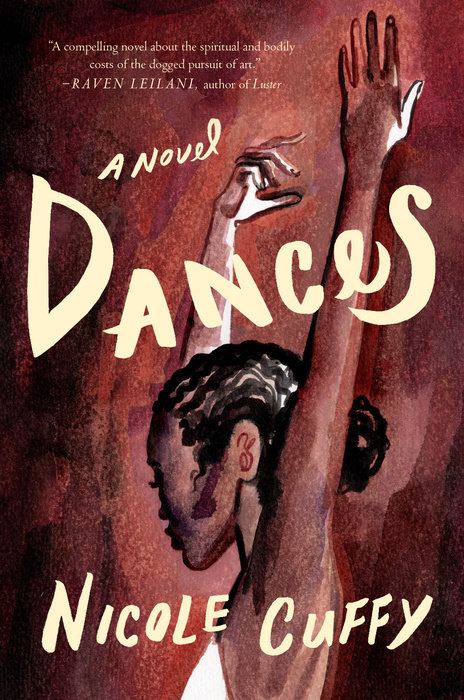
Even though Kaz, the director, insists that “Dance has no race,” Cece knows it’s not true. (And Kaz in some ways exaggerates her difference, creating a role for her in a ballet based around Gullah folklore from South Carolina.) Cece has always had to work harder than the others in the company to be accepted:
Ballet has always been about the body. The white body, specifically. So they watched my Black body, waited for it to confirm their prejudices, grew ever more anxious as it failed to do so, again and again.
A further complication is her relationship with Jasper, her white dance partner. It’s an open secret in the company that they’re together, but to the press they remain coy. Cece’s friends Irine and Ryn support her through rocky times, and her former teachers, Luca and Galina, are steadfast in their encouragement. Late on, Cece’s search for Paul, who has been missing for five years, becomes a surprisingly major element. While the sibling bond helps the novel stand out, I most enjoyed the descriptions of dancing. All of the sections and chapters are titled after ballet terms, and even when I was unfamiliar with the vocabulary or the music being referenced, I could at least vaguely picture all the moves in my head. It takes real skill to render other art forms in words. I’ll look forward to following Cuffy’s career.
With thanks to publicist Nicole Magas and One World for the free e-copy for review.
Currently reading:
(Shortlist) Coleman Hill by Kim Coleman Foote
(Longlist) Between Two Moons by Aisha Abdel Gawad
Up next:
(Longlist) You Were Watching from the Sand by Juliana Lamy
I’m aiming for one more batch of reviews (and a prediction) before the winner is announced on 13 May.
March Releases by Akbar, Bosker, García Márquez, and Wrenn
I’m catching up after a busy end to last month. Today I have an uneven debut novel from a poet whose work I’ve enjoyed before, a journalist’s jaunty submersion in the world of modern art, a posthumous novella from a famous Colombian author I’d not previously read, and a (literally) trippy memoir about C-PTSD, coral, climate breakdown, queerness and more. I can pinpoint a couple of elements that some or all of them have in common: beauty (whether in art or in nature) and dead mothers.
Martyr! by Kaveh Akbar
I’d read the Iranian American poet’s two full-length collections and particularly admired Pilgrim Bell, one of my favourite books of 2021. That was enough for me to put this on my Most Anticipated list for 2024, even though based on the synopsis I wrote: “His debut novel sounds kind of unhinged, but I figure it’s worth a try.” Here’s an excerpt from the publisher’s blurb: “When Cyrus’s obsession with the lives of the martyrs – Bobby Sands, Joan of Arc – leads him to a chance encounter with a dying artist, he finds himself drawn towards the mysteries of an uncle who rode through Iranian battlefields dressed as the Angel of Death; and toward his [late] mother, who may not have been who or what she seemed.”
 Cyrus Shams is an Iranian American aspiring poet who grew up in Indiana with a single father, his mother Roya having died in a passenger aircraft mistakenly shot down by a U.S. Navy missile cruiser (this really happened: Iran Air Flight 655, on 3 July 1988). He continues to lurk around the Keady University campus, working as a medical actor at the hospital, but his ambition is to write. During his shaky recovery from drug and alcohol abuse, he undertakes a project that seems divinely inspired: “Tired of interventionist pyrotechnics like burning bushes and locust plagues, maybe God now worked through the tired eyes of drunk Iranians in the American Midwest”. By seeking the meaning in others’ deaths, he hopes his modern “Book of Martyrs” will teach him how to cherish his own life.
This document, which we see in fragments, sets up hypothetical dialogues between figures real and imaginary, dead and living, and intersperses them with poems and short musings. But when a friend tells Cyrus about the Brooklyn Museum installation “DEATH-SPEAK,” which has terminally ill Iranian artist Orkideh living out her last days in public, he spies an opportunity to move the work beyond theory and into the physical realm. So he flies to New York City with his best friend (and occasional f**kbuddy), bartender Zee Novak, and visits Orkideh every day until the installation’s/artist’s end.
This is a wildly original but unruly novel with a few problems. One: Akbar has clung too obviously to his own story and manner of speaking with Cyrus (e.g., “I honestly actually do worry about that, no joke. Being a young Iranian man making a book about martyrdom, going around talking to people about becoming a martyr. It’s not inert, you know?”). Another is that the poems, and poetic descriptions, are much the best material. The only exception might be a zany scene where Zee and Cyrus chop wood while high. But the main issue I had is that the plot turns on a twist 50 pages from the end, a huge coincidence that feels unearned. I admire the ambition Akbar had for this – a seething, open-hearted enquiry into addiction, love, suicide and queerness – but look forward to him getting back to poetry.
With thanks to Picador for the proof copy for review.
Get the Picture: A Mind-Bending Journey among the Inspired Artists and Obsessive Art Fiends Who Taught Me How to See by Bianca Bosker
I was a big fan of Bosker’s Cork Dork (2017), her deep dive into the world of fine wine. Her second book is similarly constructed and equally fun: more personal than authoritative, light yet substantial, and accessible to the uninitiated as well as those with an existing interest in the subject. She begins as a complete novice, wondering if she’ll ever know what art is, let alone what it means and whether it’s any good (“the familiar feeling that everyone got the punch line except me”). By the end, she has discovered that, like the love of wine, art appreciation can be a way of expanding and savouring one’s life.
The aim was to get the broadest experience possible, generally through voluntary placements. She started out as an assistant at Jack Barrett’s 315 Gallery, where one of her tasks was to paint a wall white; she failed miserably to meet his expectations even for this simple task. He never lost his fundamental distrust of her, a writer and outsider, as one of “the enemy.” It was expected that she would attend as many art shows and openings as possible per week. “Talking shit was essentially a job requirement.” Bosker might not have known what to make of the art, but others were gossipy, snobbish and opinionated enough to make up for it. When she was tasked with writing a press release for an exhibit, a gallerist taught her the clichéd shorthand: “Every f**king artist allegedly transforms the familiar into the unfamiliar, or vice versa.”

In the course of the book, the New York City-based author also:
- attends the Art Basel Miami Beach contemporary art fair and sells photographs on behalf of Denny Dimin Gallery;
- befriends performance artist and “ass influencer” Mandy AllFIRE, who – ahem – sits on Bosker’s face as part of a temporary installment;
- serves as a studio assistant for French painter Julie Curtiss, whose work is selling for alarmingly high amounts at auction (not actually what a painter wants, as it tends to signal bad things for a career);
- meets a pair of North Dakota collectors known as “the Icy Gays”; and
- works as a Guggenheim Museum guard.
This last was my favourite episode. Forty-minute placements on particular ramps gave her time to focus on one chosen artwork – for instance, an abstract sculpture. She challenged herself to stay with it for that whole time, doing as one artist advised and simply noticing five things about the work. Before, her “default approach to art had just been to plant myself in front of a piece and wait for the epiphany to wash over me.” Now, she worked at it. In fact, she counsels newcomers to not read a caption because many people take a title at face value and an interpretation as gospel, and so don’t experience the art for themselves.
At times I found the book slightly scattered in the way that it zigzags from one challenge to another. There’s differing attention to various experiences; a week-long art school merits just one paragraph. And there’s no getting past the fact that some art she encounters sounds outlandish or just plain silly. (Is it any surprise that she mistakes part of a wall, and a mousetrap, for art pieces?) Ultimately, I think it’s best if you have at least a modicum of appreciation for modern art, which I don’t; whereas I do enjoy drinking wine even if I don’t have a trained palate.
Even so, Bosker’s writing has such verve (“artists were coyly evasive about their work and treated my questions like I was a cactus running after their balloon”; “a hazy daydream of an idea solidified into a yappy, un-shut-uppable chihuahua of want”) that you’ll be glad you went along for the ride. She concludes that taste is subjective, but “Beauty … pulls you close.” Art is valuable because it “knocks us off our well-worn pathways” into something uncharted, a tantalizing prospect.
With thanks to Allen & Unwin (Grove Press) for the free copy for review.
{SPOILERS IN THIS NEXT ONE}
Until August by Gabriel García Márquez
[Translated from the Spanish by Anne McLean]
A posthumous ‘lost’ novella was not a good place for me to have started with this celebrated author. García Márquez okayed the fifth draft of the text in 2004, 10 years before his death. By this time he was already suffering with memory loss that interfered with his creativity. His sons got the message that he didn’t think the book worked and should be destroyed. But they didn’t do his bidding and, revisiting the book nearly a decade on from his death, decided it wasn’t that bad, if not up to the standard of his best work, and that it should see the light of day after all.
Every August 16th, Ana Magdalena Bach travels to the island where her mother is buried to visit the grave and lay gladioli on it. (My review book came with a bag of three gladioli bulbs and a mini Colombian chocolate bar.) Each year she takes a different lover for the one night at a hotel. The first time, the man leaves her a $20 bill and she feels ashamed, but it doesn’t stop her doing the same thing again for the next four years in a row. Once it’s a long-ago school friend whom she runs into on the ferry. Another time, by golly, it’s a bishop.

It’s refreshing to have a woman in middle age as protagonist and for her to claim sexual freedom. However, the setup is formulaic and repetitive, the sex scenes are somewhat excruciating, and the hypocrisy of her gleefully having one-night stands while fretting over her husband’s potential infidelity is grating. I did like the ending – Ana hears that an anonymous elderly gentleman has been paying to have gladioli laid on her mother’s grave year-round and she wonders if she is in a sense following in her mother’s footsteps all along without knowing it; and decides she’s had enough and exhumes her mother’s remains, returning to her husband with a bag of bones (gruesome!).
But nothing about the plot or the writing – fluid enough bar one awkward sentence (“She listened to him worried that he meant it, but she had the strength not to appear as easy a woman as he might think”) – suggested to me a master at work. At best, this might be reminiscent of the late work of misogynist-leaning authors like Coetzee or Updike.
In my mind García Márquez is linked with magic realism, so I’d be better off trying one of his more representative works. I have several of his earlier novellas on the shelf (received as review copies as part of the same recent marketing push), and if I get on better with those then I’ll be sure to try one of the most famous full-length novels.
With thanks to Viking (Penguin) for the free copy for review.
Mothership: A Memoir of Wonder and Crisis by Greg Wrenn
Wrenn is an associate English professor teaching environmental literature at James Madison University. He has also been exploring coral reefs for 25 years, with a love of marine wildlife sparked by growing up in Florida. But all along, he’s been trying (much like Cyrus Shams) to come to terms with addiction, queerness, suicidal inclinations, and especially his mother’s place in his life. She made him feel dirty, that he would never be good enough; she hit him with a wooden spoon and bathed him until he was 17. Though he never found out for sure, he suspects his mother was sexually abused by her father and repeated the cycle of molestation.
 This is the third C-PTSD memoir I’ve read (after What My Bones Know and A Flat Place), and has a lot in common with I’m Glad My Mom Died, which features a co-dependent relationship with an abusive mother. After Wrenn’s parents’ divorce, he and his mother remained close. “I had been her therapist, confessor, girlfriend, and punching bag.” He helped care for her after a stroke but eventually had to throw up his hands at her stubborn refusal to follow doctors’ orders. Drawing on the Greek etymology of ecology (oikos means house or family), Wrenn insists on a parallel between the personal and the environmental here: “What we’re facing amounts to global C-PTSD” as “Mother” Earth turns against us. On each trip to Raja Ampat, he knows the coral reef is dying, his carbon footprint only accelerating it.
There’s a lot in this short memoir. Even the summary had me shaking my head in disbelief. For me, though, the tone and style were too erratic. Wrenn can be wry, sorrowful, or campy; he includes scientific data, letters to Adrienne Rich and an imagined descendent, a chapter riffing on “Otters” (the animal and the gay stereotype), flashbacks, and E.T. metaphors. The final third of the book then takes a left turn as he experiments with therapeutic psychedelics via ayahuasca ceremonies in South America, and ditches dating apps and casual sex to try to find a long-term relationship. The drug literally alters his brain, allowing him to feel trust and love. Add on nature and a husband and that’s why he’s still here rather than dead by suicide.
Like Akbar, Wrenn published poetry before switching genre. Their books are both amazing in premise but wobbly in execution. Still, I’d say both authors are laudable for their effort to depict lives wrenched back from extremity. 
With thanks to Regalo Press (USA) for the proof copy for review.
Reading Ireland Month: Seán Hewitt, Maggie O’Farrell
Reading Ireland Month is hosted each year by Cathy of 746 Books. I’m wishing you all well on St. Patrick’s Day with this first of two planned tie-in posts. Today I have a poetry collection that sets grief and queer longing amid nature, and my last unread novel – a somewhat middling one, unfortunately – by one of my favourite authors.

Rapture’s Road by Seán Hewitt (2024)
 The points of reference are so similar to his 2020 debut collection, Tongues of Fire, that parts of what I wrote about that one are fully applicable here: “Sex and grief, two major themes, are silhouetted against the backdrop of nature. Fields and forests are loci of meditation and epiphany, but also of clandestine encounters between men.” Perhaps inevitably, then, this felt less fresh, but there was still much to enjoy. I particularly loved two poems about moths (the merveille du jour as an “art-deco mint-green herringbone. Soft furred little absinthe warrior”), “To Autumn,” and “Alcyone,” which likens a kingfisher to “a rip / in the year’s old fabric”.
In “Two Apparitions,” the poet’s late father seems visible again. Many of the scenes take place at dusk or dark. There’s a layer of menace to “Night-Scented Stock,” about an abusive relationship, and the account of a slaughter in “Pig.” But the stand-out is “We Didn’t Mean to Kill Mr Flynn,” based on the 1982 murder of a gay man in a Dublin park. Hewitt drew lines from court proceedings and periodicals in the Irish Queer Archive at the National Library of Ireland, where he was poet in residence. He voices first the gang of killers, then Flynn himself. The trial kickstarted Ireland’s Pride movement.
More favourite lines:
Come out, make a verb of me, let
my body do your speaking tonight —
(from “A Strain of the Earth’s Sweet Being”)
awestruck, bright,
a child in the bell-tower of beauty —
(from “Skylarks”)
Love, the world is failing:
come and fail with me.
(from “Nightfall”)
With thanks to Jonathan Cape (Penguin) for the free copy for review.
My Lover’s Lover by Maggie O’Farrell (2002)
I was so excited, a few years ago, to find battered copies of this and After You’d Gone in a local charity shop for 50 pence each, even though it appears a mouse had a nibble on one corner here. They were her first two books, but the last that I managed to source. Whereas After You’d Gone is a surprisingly confident and elegant debut novel about a woman in a coma and the family and romantic relationships that brought her to this point, My Lover’s Lover ultimately felt like a pretty run-of-the-mill story about two women finding out that (some) men are dogs and they need to break free.
 Lily meets Marcus, an architect, at a party and almost before she knows it has moved into the spare room of his apartment, a Victorian factory space he renovated himself, and become his lover. But there’s an uncomfortable atmosphere in the flat: She can still smell perfume from Marcus’s ex, Sinead; one of her dresses hangs in the closet. We, along with Lily, get the impression Sinead has died. She haunts not just the flat but also the streets of London. It becomes Lily’s obsession to find out what happened to Sinead and why Marcus is so morose. Part Two gives Sinead’s side of things, in a mix of third person/present tense and first person/past tense, before we return to Lily to see what she’ll do with her new knowledge.
As in some later novels, there are multiple locales (here, NYC, the Australian desert, and China – a country O’Farrell often revisits in fiction) and complicated point-of-view shifts, but I felt the sophisticated craft was rather wasted on a book that boils down to a self-explanatory maxim: past relationships always have an effect on current ones. I also found the writing overmuch in places (“the grass swooshing, sussurating, cleaving open to her steps”; “letting fall a box of cereal into its [a shopping trolley’s] chrome meshing”; “her fingertips meeting the ceraceous, heated skin of his cheek”). However, this was an engrossing read – I read most of it in two days. It’s bottom-tier O’Farrell, though, along with The Distance Between Us and Hamnet – sorry, I know many adore it. (If you’re interested: middle tier = The Vanishing Act of Esme Lennox, Instructions for a Heatwave, her two children’s books, and The Marriage Portrait; top tier = After You’d Gone, The Hand that First Held Mine, This Must Be the Place, and I Am, I Am, I Am.)
I’ve gotten in the habit of reading one of Maggie O’Farrell’s works per year, so I will just have to reread my favourites until we get a new one. I’m already tapping a foot in impatience. (Secondhand from Bas, Newbury) 
Have you read any Irish literature this month?
Literary Wives Club: Mrs. March by Virginia Feito (2021)
{SPOILERS IN THIS REVIEW!}
What a deliciously odd debut novel, reminiscent of Patricia Highsmith’s work for how it places a neurotic outsider at the heart of an unlikely murder investigation. George March is a popular author whose latest novel stars Johanna, a prostitute so ugly that men feel sorry for her and can’t bear to sleep with her. Meanwhile, the news cycle is consumed with the strangling of a young woman named Sylvia Gibbler in Gentry, Maine, where George goes on hunting trips with his editor. Mrs. March takes two misconceptions – that George modeled Johanna on her, and that he was somehow involved in Sylvia’s death because he kept newspaper clippings about it on his desk – and runs with them, to catastrophic effect.
Mrs. March’s usual milieu is the New York City apartment she shares with George and their son, Jonathan. Martha, the housekeeper, keeps the daily details under control, leaving Mrs. March with little to do. She doesn’t seem very interested in her son, and resents George. Each morning she walks to the bakery to buy olive bread. Every so often she’ll host an extravagant dinner party. But there is plenty of time in between to fill with flashbacks to shameful memories (having an imaginary friend, wetting the bed, her mother’s favoritism towards her sister, being raped in Cádiz) and hallucinations (a dead pigeon in the bathtub, cockroaches scuttling around the apartment). She decides to travel to Maine herself to investigate Sylvia’s death; it’s not what she finds there but what she returns to that changes things forever.

There are so many intriguing factors. One is the nebulous time period: what with Mrs. March’s fur coat and head scarf, the train cars and payphone calls, it could be the 1950s; but then there are more modern references (a washing machine, holiday flights) that made me inclined to point to the 1980s. It couldn’t be the present day unless Feito is deliberately setting the story in an alternative world without much tech. As in Highsmith, we get mistaken identity and disguises. Feito really ramps up the psychological elements, interrogating how trauma, paranoia and extreme body issues may have led to dissociation in her protagonist. Mrs. March is both obsessed with and repulsed by bodily realities. It’s only through other characters’ reactions, though, that we see just how mentally disturbed she is. Worryingly, patterns seem to be repeating with her son, who is suspended for ‘doing something’ to a girl.
I can see how this would be a divisive read: the characters are thoroughly unlikable and it can be difficult to decide what is real and what is not. Incidents I took at face value may well be symbolic, or psychological manifestations of trauma. But I found it morbidly fascinating. I never knew what was going to happen next. (Public library/NetGalley) 
The main question we ask about the books we read for Literary Wives is:
What does this book say about wives or about the experience of being a wife?
In terms of Literary Wives reads, this reminded me most of The Harpy by Megan Hunter because of its eventual focus on adultery and revenge. Notably, until the very last sentence, we only know Mrs. March’s identity through her relationship to her husband. (Her first name is finally revealed to be Agatha, which of course made me think of Agatha Christie and detection, but its meaning is “good” or “honorable” – there was a martyred saint by the name.) What I took from that is that defining oneself primarily through marriage is dangerous because personality and control can be lost. This character was in need of a wider purpose to take her outside of her home and family – though those would always be her refuge to return to. Even setting Mrs. March’s mental problems aside, it is frighteningly easy to indulge in delusions about oneself or one’s spouse, so getting a reality check via communication is key.
See Kay’s and Naomi’s reviews, too!
We’ve recently acquired a new member – welcome to Kate of Books Are My Favourite and Best! – and chosen our books for the next two and a bit years. Anyone is welcome to join us in reading them. Here’s the club page on Kay’s blog, and our schedule through the end of 2026:
June 2024 Recipe for a Perfect Marriage by Karma Brown
Sept. 2024 Their Eyes Were Watching God by Zora Neale Hurston
Dec. 2024 Euphoria by Elin Culhed
March 2025 Lessons in Chemistry by Bonnie Garmus
June 2025 The Constant Wife by W. Somerset Maugham
Sept. 2025 Novel about My Wife by Emily Perkins
Dec. 2025 The Soul of Kindness by Elizabeth Taylor
March 2026 Mrs. Bridge by Evan S. Connell
June 2025 Interpreter of Maladies by Jhumpa Lahiri
Sept. 2026 Family Family by Laurie Frankel
Dec. 2026 The Eden Test by Adam Sternbergh
 Bookish Beck = Rebecca Foster. American transplant to England. Freelance proofreader and book reviewer.
 Bookish Beck