Five Novellas in Translation
We’re coming to the close of Literature in Translation week of Novellas in November. Cathy and I have both noted that novellas seem more common in other languages, with the work more likely to take on experimental forms. We wondered why this is – do foreign languages and cultures somehow lend themselves to concise storytelling that takes more risks? However, a commenter on a post of Cathy’s suggested that economic realities may have something to do with it: translating short works is faster and cheaper. In a recent blog post, Louise Walters, whose indie publishing imprint is preparing to release its shortest book yet (In the Sweep of the Bay by Cath Barton, 22,000 words), confirms that production and shipping costs are lower for novellas, so she has the chance of recouping her investment.

I’ve gotten to five short translated works this month: three fiction and two nonfiction. (Or should that be four fiction and one nonfiction? With autofiction it’s hard to tell.)
Dependency by Tove Ditlevsen (1971; 2019)
[Translated from the Danish by Michael Favala Goldman]
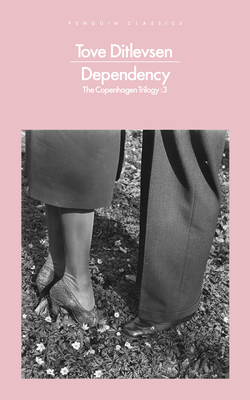 The final volume of the autobiographical Copenhagen Trilogy, after Childhood and Youth. Ditlevsen recalls her upbringing in poverty and her early success as a poet. By the end of the second book, she’s engaged to a much older literary editor. A series of marriages and affairs follows: Viggo, Ebbe, Carl and Victor are the major names, with some others in between. She produces stories and poems as well as a daughter and a son, but also has two abortions. Carl performs one of these and gives her a Demerol shot; ever afterwards, she takes advantage of his obsession with her chronic ear infection to beg for painkiller shots. “Then time ceases to be relevant. An hour could be a year, and a year could be an hour. It all depends on how much is in the syringe.” Addiction interferes with her work and threatens her relationships, but it’s an impulse that never leaves her even when she swaps the harder stuff for alcohol.
I only skimmed this one because from the other volumes I knew how flat and detached the prose is, even when describing desperate circumstances. I can admire this kind of writing – the present-tense scenes, the lack of speech marks, the abrupt jumps between time periods and emotional states, all coldly expressed – but I’m not sure I’ll ever love it. Of the three books, I liked Childhood the best for its universal observations. 
La Symphonie Pastorale by André Gide (1919; 1931)
[Translated from the French by Dorothy Bussy]
“Love is blindness / I don’t want to see” (U2)
 I had a secondhand French copy when I was in high school, always assuming I’d get to a point of fluency where I could read it in its original language. It hung around for years unread and was a victim of the final cull before my parents sold their house. Oh well! There’s always another chance with books. In this case, a copy of this plus another Gide novella turned up at the free bookshop early this year. A country pastor takes Gertrude, the blind 15-year-old niece of a deceased parishioner, into his household and, over the next two years, oversees her education as she learns Braille and plays the organ at the church. He dissuades his son Jacques from falling in love with her, but realizes that he’s been lying to himself about his own motivations. This reminded me of Ethan Frome as well as of other French classics I’ve read (Madame Bovary and Thérèse Raquin). Melodramatic, maybe, but I loved the religious and medical themes (deaf-blind Laura Bridgman gets a mention; when the preacher and Gertrude attend the title symphony, he encourages her synesthetic thinking).
Stammered Songbook: A Mother’s Book of Hours by Erwin Mortier (2011; 2015)
[Translated from the Dutch by Paul Vincent]
 In fragmentary vignettes, some as short as a few lines, Belgian author Mortier chronicles his mother’s Alzheimer’s, which he describes as a “twilight zone between life and death.” His father tries to take care of her at home for as long as possible, but it’s painful for the family to see her walking back and forth between rooms, with no idea of what she’s looking for, and occasionally bursting into tears for no reason. Most distressing for Mortier is her loss of language. As if to compensate, he captures her past and present in elaborate metaphors: “Language has packed its bags and jumped over the railing of the capsizing ship, but there is also another silence … I can no longer hear the music of her soul”. He wishes he could know whether she feels hers is still a life worth living. There are many beautifully meditative passages, some of them laid out almost like poetry, but not much in the way of traditional narrative; it’s a book for reading piecemeal, when you have the fortitude.
Bonjour Tristesse by Françoise Sagan (1954; 1955)
[Translated from the French by Irene Ash]
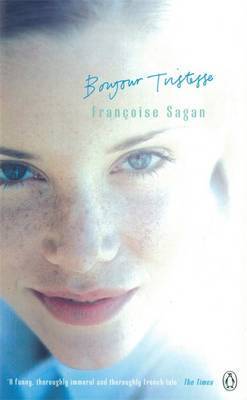 Like The Go-Between and Atonement, this is overlaid with regret about childhood caprice that has unforeseen consequences. That Sagan, like her protagonist, was only a teenager when she wrote it only makes this 98-page story the more impressive. Although her widower father has always enjoyed discreet love affairs, seventeen-year-old Cécile has basked in his undivided attention until, during a holiday on the Riviera, he announces his decision to remarry a friend of her late mother. Over the course of one summer spent discovering the pleasures of the flesh with her boyfriend, Cyril, Cécile also schemes to keep her father to herself. Dripping with sometimes uncomfortable sensuality, this was a sharp and delicious read.
The Order of the Day by Éric Vuillard (2017; 2018)
[Translated from the French by Mark Polizzotti]
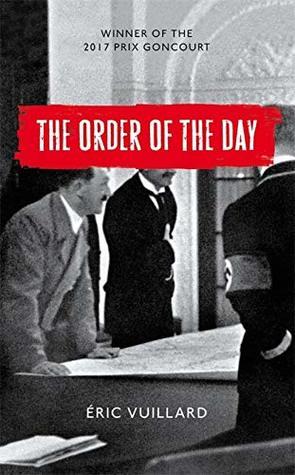 February 1933: 24 German captains of industry meet with Hitler to consider the advantages of a Nazi government. I loved the pomp of the opening chapter: “Through doors obsequiously held open, they stepped from their huge black sedans and paraded in single file … they doffed twenty-four felt hats and uncovered twenty-four bald pates or crowns of white hair.” As the invasion of Austria draws nearer, Vuillard recreates pivotal scenes featuring figures who will one day commit suicide or stand trial for war crimes. Reminiscent in tone and contents of HHhH, The Tobacconist, and the film Downfall, this starts off promisingly and ends with clear relevance to the present moment (“a mysterious respect for lies. Political manoeuvring tramples facts”) and a brilliant final paragraph, but in between was dull. You’d have to have more interest in history than I do to love this Prix Goncourt winner.
Publishers that specialize in novellas in translation:
Charco Press – I’ve reviewed:
 The Wind that Lays Waste by Selva Almada
Fish Soup by Margarita García Robayo
Die, My Love by Ariana Harwicz
Peirene Press – I’ve reviewed:
Mr. Darwin’s Gardener by Kristina Carlson
The Looking-Glass Sisters by Gøhril Gabrielsen
Ankomst by Gøhril Gabrielsen
 Dance by the Canal by Kerstin Hensel
The Last Summer by Ricarda Huch
Snow, Dog, Foot by Claudio Morandini
Her Father’s Daughter by Marie Sizun
The Orange Grove by Larry Tremblay
The Man I Became by Peter Verhelst
A few more favorite novellas in translation:
The Plimsoll Line by Juan Gracia Armendáriz
 Silk by Alessandro Baricco
Agatha by Anne Cathrine Bomann
Swallowing Mercury by Wioletta Greg
Next week, we’re closing out Novellas in November with a focus on short classics. I’ll introduce the week’s theme with some of my favorite examples on Monday.
Any theories as to why so many novellas are from other languages?
What are some of your favorites?
Four More Short Nonfiction Books for Novellas for November
Short nonfiction turns up in every genre. Today I have a feminist manifesto, some miniature travel essays, a memoir of the writing life, and a book of environmentalist speeches.
Dear Ijeawele, or A Feminist Manifesto in Fifteen Suggestions by Chimamanda Ngozi Adichie (2017)
[63 pages]
 My fourth book this year by Adichie, who is also making a repeat appearance on one of my nonfiction novellas lists; I reviewed “We Should All Be Feminists” in 2017. While this builds on the TED talk that fueled that essay, it is more successful for me because of the frame: a long letter to a childhood friend who had just had a baby girl and wanted advice about how to raise her as a feminist. Adichie’s premises are that women matter equally and that if you can’t reverse the genders in a scenario and get acceptable results (e.g. ‘women should leave men who cheat,’ but we don’t necessarily demand the opposite), an argument is sexist.
Even when her points seem obvious – gender roles are nonsense, don’t hold up marriage as the pinnacle of achievement, downplay appearance – they are beautifully expressed, and there are lots of tactics that wouldn’t have occurred to me in the context of feminism: Normalize differences between people. Teach a girl to love reading – “Books will help her understand and question the world, help her express herself”. And beware of how language is used: if people deride a woman for ambition where they wouldn’t criticize a man, their problem is not with ambition but with women. Hillary Clinton and Kamala Harris come to mind…
Go ahead and buy a stack of this book to have on hand the next time a friend has a baby (boy or girl). Adichie wasn’t a mother when she wrote it, but in her Introduction she says that, looking back after the birth of her daughter, it still rang true and gave her plenty to live up to.
[By the way, did you hear that Adichie is the Women’s Prize’s Winner of Winners for Half of a Yellow Sun? Her novel came out at #2 in my ranking of all 25 winners, so I’m pleased!]
A Time to Keep Silence by Patrick Leigh Fermor (1957)
[95 pages]
 Three brief essays about visits to monasteries: The Abbey of St. Wandrille de Fontanelle (Benedictine) and La Grande Trappe (Cistercian) in France, and the rock monasteries of Cappadocia in Turkey. I’ve read a fair bit about the monastic life, so I found little that was new in Fermor’s accounts of austere daily routines and religious history. I had more interest in the rock monasteries where some Church Fathers were based, simply because Turkey is a relatively unfamiliar setting for me, but despite Fermor’s rich descriptive gifts, this piece was, at nine pages, little more than a sketch. Alas, this was a disappointment.
The Cost of a Best Seller by Frances Parkinson Keyes (1953)
[118 pages]
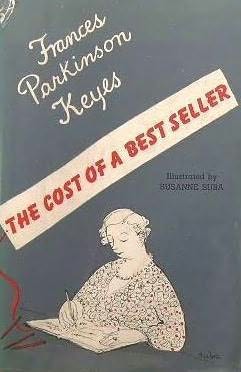 I picked up a £1 dustjacketless copy on a whim from the outdoor clearance area at the Hay Cinema Bookshop in September and started reading it immediately, off and on as a bedside book. Keyes is a twentieth-century author whose dozens of potboilers sold in their millions, but she has been largely forgotten since. Imagine my surprise, then, when her best-known novel, Dinner at Antoine’s (1948), turned up on a recent Book Riot list of New Orleans-themed literature – though mostly for the reference to the still-popular title restaurant.
When Keyes began writing, a mother of three young children in an attic room, it was to supplement her husband’s income, but the work soon became an obsession and allowed her to maintain her independence after her husband, a U.S. senator, died. Not until 17 years after the publication of her first novel did she have her first bestseller. She depicts fame as a double-edged sword: It allowed her to travel in Europe and to Louisiana, where she later made her home, but also made heavy demands on her time, requiring responses to annoying letters, hours spent signing books, and attendance at literary lunches. For someone with back problems, these commitments could be literally as well as figuratively painful.
Keyes has the popular fiction writer’s bitterness about never getting critical recognition. This memoir was pleasant enough, but hasn’t induced me to read any more by her. Readers fond of her work might get something more out of it. For the most part, it doesn’t feel dated, but one detail really got to me: Whenever she needed to ensure that she wouldn’t be disturbed, she would go work in the old slave quarters of her New Orleans mansion. Yipes!
No One Is Too Small to Make a Difference by Greta Thunberg (2019)
[68 pages]
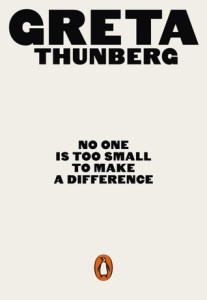 “Our house is on fire. … I want you to panic.” Starting with a speech she gave on a climate march in Stockholm in September 2018 and ending with her address to the UK parliament in April 2019, this punchy pamphlet of rhetoric makes it clear why the teenage Thunberg has rapidly become such an important public figure. She attributes her bluntness to her Asperger’s: the way her mind works, she sees climate breakdown as a simple, black and white issue – either we care or we don’t; either we stop emitting carbon or we don’t; either we find new ways of doing things now, or we stand by and watch it all go to ruin. She calls governments and international bodies to account for their inaction and lack of commitment, and for subsidizing fossil fuels and encouraging consumerism as usual.
Peppering in key statistics and accepted scientific guidelines but staying at a lay level, she calls on the world’s decision-makers to create hope for young people and others who will be most affected by global warming but don’t have a seat at the table. I admire Thunberg’s bravery as well as her words. The only issue with a wee book like this one is that the same points and language recur in multiple speeches, so there is inevitable repetition.
It’s been Nonfiction week here on Novellas in November. #NovNov meets #NonficNov!

Starting Monday: Literature in Translation week, which Cathy is hosting.
10 Favorite Nonfiction Novellas from My Shelves
What do I mean by a nonfiction novella? I’m not claiming a new genre like Truman Capote did for the nonfiction novel (so unless they’re talking about In Cold Blood or something very similar, yes, I can and do judge people who refer to a memoir as a “nonfiction novel”!); I’m referring literally to any works of nonfiction shorter than 200 pages. Many of my selections even come well under 100 pages.
I’m kicking off this nonfiction-focused week of Novellas in November with a rundown of 10 of my favorite short nonfiction works. Maybe you’ll find inspiration by seeing the wide range of subjects covered here: bereavement, social and racial justice, hospitality, cancer, nature, politics, poverty, food and mountaineering. I’d reviewed all but one of them on the blog, half of them as part of Novellas in November in various years.
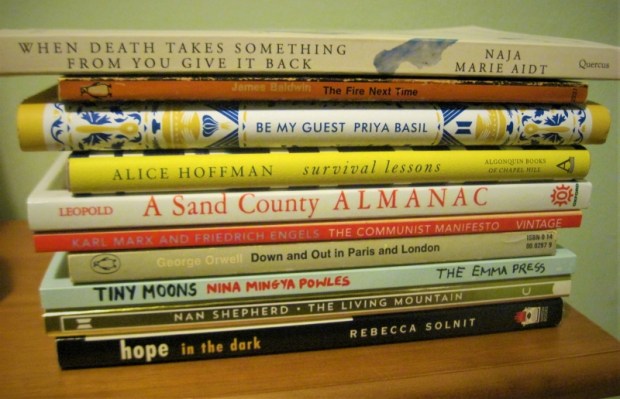
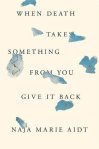 When Death Takes Something from You Give It Back: Carl’s Book by Naja Marie Aidt [137 pages]: In March 2015 Aidt got word that her son Carl Emil was dead. The 25-year-old jumped out of his fifth-floor Copenhagen window after taking some mushrooms. The text is a collage of fragments: memories, dreams, dictionary definitions, journal entries, and quotations. The playful disregard for chronology and the variety of fonts, typefaces and sizes are a way of circumventing the feeling that grief has made words lose their meaning forever.
 The Fire Next Time by James Baldwin [89 pages]: A hard-hitting book composed of two essays: “My Dungeon Shook,” is a letter addressed to his nephew and namesake on the 100th anniversary of emancipation; and “Down at the Cross: Letter from a Region in My Mind,” which first appeared in the New Yorker and tells of a crisis of faith that hit Baldwin when he was a teenager and started to question to what extent Christianity of all stripes was upholding white privilege. This feels completely relevant, and eminently quotable, nearly 60 years later.
 Be My Guest: Reflections on Food, Community and the Meaning of Generosity by Priya Basil [117 pages]: A thought-provoking essay that reaches into many different topics. Part of an Indian family that has lived in Kenya and England, Basil is used to culinary abundance. However, living in Berlin increased her awareness of the suffering of the Other – hundreds of thousands of refugees have entered the EU to be met with hostility. Yet the Sikh tradition she grew up in teaches kindness to strangers. She asks how we can all cultivate a spirit of generosity.
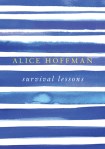 Survival Lessons by Alice Hoffman [83 pages]: Hoffman wrote this 15 years after her own experience of breast cancer to encourage anyone going through a crisis. Each chapter title begins with the word “Choose” – a reminder that, even when you can’t choose your circumstances, you can choose your response. This has been beautifully put together with blue-tinted watercolor-effect photographs and an overall yellow and blue theme (along with deckle edge pages – a personal favorite book trait). It’s a sweet little memoir with a self-help note.
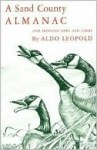 A Sand County Almanac by Aldo Leopold [92 pages]: Few know how much of our current philosophy of wilderness and the human impact on the world is indebted to Aldo Leopold. This was published in 1949, but so much rings true today: how we only appreciate wildlife if we can put an economic value on it, the troubles we get into when we eradicate predators and let prey animals run rampant, and the danger of being disconnected from the land that supplies our very life. And all this he delivers in stunning, incisive prose.
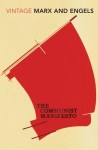 The Communist Manifesto by Karl Marx and Friedrich Engels [70 pages]: Maybe you, like me, had always assumed this was an impenetrable tome of hundreds of pages? But, as I discovered when I read it on the train to Manchester some years ago, it’s very compact. That’s not to say it’s an easy read; I’ve never been politically or economically minded, so I struggled to follow the argument at times. Mostly what I appreciated was the language. Like The Origin of Species, it has many familiar lines and wonderful metaphors.
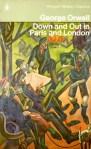 Down and Out in Paris and London by George Orwell [189 pages]: Orwell’s first book, published when he was 30, is an excellent first-hand account of the working and living conditions of the poor in two world cities. He works as a dishwasher and waiter in Paris hotel restaurants for up to 80 hours a week and has to pawn his clothes to scrape together enough money to ward off starvation. Even as he’s conveying the harsh reality of exhaustion and indignity, Orwell takes a Dickensian delight in people and their eccentricities.
 Tiny Moons: A Year of Eating in Shanghai by Nina Mingya Powles [85 pages]: This lovely pamphlet of food-themed essays arose from a blog Powles kept while in Shanghai on a one-year scholarship to learn Mandarin. From one winter to another, she explores the city’s culinary offerings and muses on the ways in which food is bound up with her memories of people and places. This is about how food can help you be at home. I loved how she used the senses – not just taste, but also smell and sight – to recreate important places in her life.
 The Living Mountain by Nan Shepherd [108 pages]: This is something of a lost nature classic. Composed during the later years of World War II but only published in 1977, it’s Shepherd’s tribute to her beloved Cairngorms, a mountain region of Scotland. But it’s not a travel or nature book in the way you might usually think of those genres. It’s a subtle, meditative, even mystical look at the forces of nature, which are majestic but also menacing. Shepherd dwells on the senses, the mountain flora and fauna, and the special quality of time and existence (what we’d today call mindfulness) achieved in a place of natural splendor and solitude.
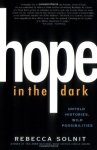 Hope in the Dark: Untold Histories, Wild Possibilities by Rebecca Solnit [143 pages]: Solnit believes in the power of purposeful individuals working towards social justice, even in the face of dispiriting evidence (e.g. the largest protests the world had seen didn’t stop the Iraq War). Instead of perfectionism, she advises flexibility and resilience; things could be even worse had we not acted. Her strong and stirring writing is a reminder that, though injustice is always with us, so is everyday heroism.
Keep in touch via Twitter (@bookishbeck / @cathy746books) and Instagram (@bookishbeck / @cathy_746books). We’ll add any of your review links in to our master posts. Feel free to use the terrific feature image Cathy made and don’t forget the hashtag #NovNov.
Any suitably short nonfiction on your shelves?
Three for Novellas in November: Bythell, Carey and Diop
I started my reading for Novellas in November early with these three review books, one nonfiction and two fiction. They have in common the fact that they are published today –although I believe two were released early to beat the lockdown. Don’t worry, though; there are still plenty of ways of getting hold of new books: most publishers and bookshops are still filling orders, or you can use the UK’s newly launched Bookshop.org site and support your local indie.
Seven Kinds of People You Find in Bookshops by Shaun Bythell
[137 pages]
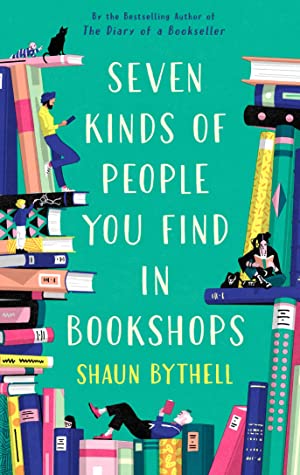 Cheerfully colored and sized to fit into a Christmas stocking, this is a fun follow-up to Bythell’s accounts of life at The Bookshop in Wigtown, The Diary of a Bookseller and Confessions of a Bookseller. Within his seven categories are multiple subcategories, all given tongue-in-cheek Latin names as if naming species. When I saw him chat with Lee Randall at the opening event of the Wigtown Book Festival, he introduced a few, such as the autodidact who knows more than you and will tell you all about their pet subject (the Homo odiosus, or bore). This is not the same, though, as the expert who shares genuinely useful knowledge – of a rare cover version on a crime paperback, for instance (Homo utilis, a helpful person).
There’s also the occultists, the erotica browsers, the local historians, the self-published authors, the bearded pensioners (Senex cum barba) holidaying in their caravans, and the young families – now that he has one of his own, he’s become a bit more tolerant. Setting aside the good-natured complaints, who are his favorite customers? Those who revel in the love of books and don’t quibble about the cost. Generally, these are not antiquarian book experts looking for a bargain, but everyday shoppers who keep a low-key collection of fiction or maybe specifically sci-fi and graphic novels, which fly off the shelves for good prices.
So which type am I? Well, occasionally I’m a farter (Crepans), but you won’t hold that against me, will you? I’d like to think I fit squarely into the normal people category (Homines normales) when I visited Wigtown in April 2018: we went in not knowing what we wanted but ended up purchasing a decent stack and even had a pleasant conversation with the man himself at the till – he’s much less of a curmudgeon in person than in his books. I do recommend this to those who have read and loved his other work.
With thanks to Profile Books for the free copy for review.
The Swallowed Man by Edward Carey
[160 pages]
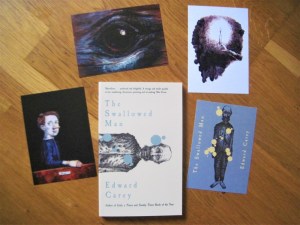
 Carey’s historical novel Little was one of my highlights of 2018, so I jumped at the chance to read his new book. Interestingly, this riff on the Pinocchio story, narrated by Geppetto from the belly of a giant shark, originally appeared in Italian to accompany an exhibition hosted by the Fondazione Nazionale Carlo Collodi at the Parco di Pinocchio in Collodi. Geppetto came from a pottery-painting family but turned to wood when creating a little companion for his loneliness, the wooden boy who astounded him by coming to life. Now a son rather than a mere block of wood, Pinocchio sets off for school but never comes home. When he gets word that a troublesome automaton has been thrown into the sea, Geppetto sets out in a dinghy to find his son but is swallowed by the enormous fish that has been seen off the coast.
The picture of this new world-within-a-world is enthralling. Geppetto finds himself inside a swallowed ship, the Danish schooner Maria. Within the vessel is all he needs to occupy himself, at least for now: wood on which to paint the women he has loved; candle wax and hardtack for sculpting figures. Seaweed to cover his bald spot. Squid ink for his pen so he can write this notebook. A crab that lives in his beard. Relics of the captain’s life to intrigue him.
As a narrator, Geppetto is funny and gifted at wordplay (“This tome is my tomb”; “I unobjected him. Can you object to that?”), yet haunted by his decisions. Carey deftly traces Geppetto’s state of mind as he muses on his loss and imprisonment. The Afterword adds a sly pseudohistorical note to the fantasy. There are black-and-white illustrations throughout, as well as photos of the objects described in the text (and, presumably, featured in the exhibition). For me this didn’t live up to Little, but it would be a great introduction to Carey’s work.
With thanks to Gallic Books for the free copy for review.
At Night All Blood Is Black by David Diop
[145 pages; translated from the French by Anna Moschovakis]
 I had no idea that Africans (“Chocolat soldiers”) fought for France in World War I. Diop’s second novel, which has already won several major European prizes, is about two Senegalese brothers-in-arms caught up in trench warfare. Alfa Ndaiye, aged 20, considers Mademba Diop his blood brother or “more-than-brother” (the novel’s French title is “Soul Brother”). From the start we know that Mademba has died. Gravely injured in battle, entrails spilling out, he begged Alfa to end his misery; three times Alfa refused. Having watched his friend die in agony, he knows he did the wrong thing. Slitting the man’s throat would have been the compassionate choice. From now on, Alfa will atone by brutally wreaking Mademba’s method of death on Germans. “The captain’s France needs our savagery, and because we are obedient, myself and the others, we play the savage.” Alas, I thought this bleak exploration of (in)humanity was marred by the repetitive language and unpleasantly sexualized metaphors.
With thanks to Pushkin Press for the proof copy for review.
Do any of these novellas take your fancy?
What November releases can you recommend?
Novellas in November Begins!
Burnt out on doorstoppers after Victober? Wondering how you’ll ever reach your reading target in this strange year? It’s time to stack up the short books (anything under 200 pages) and get reading towards Novellas in November!
Here’s a reminder of the weekly themes Cathy and I are taking it in turn to host:
2–8 November: Contemporary fiction (Cathy)
9–15 November: Nonfiction novellas (Rebecca)
16–22 November: Literature in translation (Cathy)
23–29 November: Short classics (Rebecca)
Leave your links here and/or on Cathy’s intro post at 746 Books and we’ll update our blogs through the month to include them. We look forward to seeing what you read!
Don’t forget to tag us on Twitter (@bookishbeck / @cathy746books) and Instagram (@bookishbeck / @cathy_746books) and use the hashtag #NovNov.
Novellas in November 2020 posts:
Mrs Caliban by Rachel Ingalls (reviewed by Cathy at 746books)
The Spare Room by Helen Garner (reviewed by Cathy at 746books)
Train Dreams by Denis Johnson (reviewed by Hopewell’s Library of Life)
Three Novellas – Bythell, Carey and Diop
Mostly Hero by Anna Burns (reviewed by Cathy at 746books)
Dark Wave by Lana Guineay (reviewed by Lisa at ANZ LitLovers)
Train Dreams by Denis Johnson (reviewed by Cathy at 746books)
The Swallowed Man by Edward Carey (reviewed by Susan at A life in books)
The Man from London by Georges Simenon (reviewed by Helen at She Reads Novels)
Cyclone by Vance Palmer (reviewed by Lisa at ANZ LitLovers)
Short Fiction from Steinbeck and Triolet (reviewed by Carol at cas d’intérêt)
Contemporary Fiction novella recommendations (Monika at Lovely Bookshelf)
Red at the Bone by Jacqueline Woodson (reviewed by Kim at Reading Matters)
Surfacing – Margaret Atwood (1973) (reviewed by Ali at Heavenali)
Simenon, Greg & Moss (reviewed by Annabel at Annabookbel)
10 Favorite Nonfiction Novellas from My Shelves
The Guest Cat by Takashi Hiraide (reviewed by Margaret at BooksPlease)
300 Arguments by Sarah Manguso (reviewed by Cathy at 746books)
The Poisoning by Maria Lazar (reviewed by Juliana at The Blank Garden)
Summerwater by Sarah Moss (reviewed by Lisa at ANZ LitLovers)
The Invisible Land by Hubert Mingarelli (reviewed by Susan at A life in books)
The Moon Is Down by John Steinbeck (reviewed by Lisa at ANZ LitLovers)
Two Reviews for Non-fiction Novella Week (Cathy at 746books)
A Month in Siena by Hisham Matar (reviewed by Imogen at Reading and Viewing the World)
Our Nig by Harriet E. Wilson (reviewed by Juliana at The Blank Garden)
Runaway Amish Girl: The Great Escape by Emma Gingerich (reviewed by Hopewell’s Library of Life)
The Days of Abandonment by Elena Ferrante (reviewed by Radhika’s Reading Retreat)
8 Novellas in Translation (reviewed by Grant at 1streading)
Nonfiction novella recommendations (Monika at Lovely Bookshelf)
Four More Short Nonfiction Books for Novellas for November
Quicksand and Passing by Nella Larsen (reviewed by Davida at The Chocolate Lady’s Book Review Blog)
Bill Bailey’s Remarkable Guide to Happiness (reviewed by Annabel at Annabookbel)
The Legend of the Holy Drinker by Joseph Roth (reviewed by Karen at Kaggsy’s Bookish Ramblings)
Chess by Stefan Zweig (reviewed by Cathy at 746books)
Popcorn by Cornelia Otis Skinner (reviewed by Ali at Heavenali)
The Transmigration of Bodies by Yuri Herrera (reviewed by Imogen at Reading and Viewing the World)
The Hidden Life of Trees by Peter Wohlleben (reviewed by Hopewell’s Library of Life)
The Taiga Syndrome by Cristina Rivera Garza (reviewed by Cathy at 746books)
Three novellas: Albertalli, Meruane, Moore (reviewed by Dr Laura Tisdall)
A Meal in Winter by Hubert Mingarelli (reviewed by Karen at Booker Talk)
Wendy McGrath’s Trilogy (reviewed by Marcie at Buried in Print)
Dog Island by Philippe Claudel (reviewed by Susan at A life in books)
The Man behind Narnia by AN Wilson (reviewed by Margaret at BooksPlease)
Fall on Me by Nigel Featherstone (reviewed by Nancy at NancyElin)
An interview with Cath Barton, author of novella The Plankton Collector, by Kathryn at Nut Press
Black Water by Joyce Carol Oates (reviewed by Kim at Reading Matters)
Translated novella recommendations (Monika at Lovely Bookshelf)
Happiness, As Such by Natalia Ginzberg (reviewed by Jacqui at JacquiWine’s Journal)
Dolores by Lauren Aimee Curtis (reviewed by Nancy at NancyElin)
The Provincial Lady Goes Further by E.M. Delafield (reviewed by Hopewell’s Library of Life)
The Pigeon by Patrick Süskind (reviewed by Cathy at 746books)
A Girl Returned by Donatella Di Pietrantonio (reviewed by Ali at Heavenali)
Sweet Days of Discipline by Fleur Jaeggy (reviewed by Cathy at 746books)
Icefall by Stephanie Gunn (reviewed by Nancy at NancyElin)
Maigret and the Reluctant Witnesses by Georges Simenon (reviewed by Margaret at BooksPlease)
The Silence by Don DeLillo (reviewed by Kim at Reading Matters)
My favourite classic novellas (Cathy at 746books)
Short Classics recommendations (Monika at Lovely Bookshelf)
Good Morning, Midnight by Jean Rhys (reviewed by Imogen at Reading and Viewing the World)
Cheerful Weather for the Wedding by Julia Strachey (reviewed by Radhika’s Reading Retreat)
The Spare Room by Helen Garner (reviewed by Brona’s Books)
The Jew’s Beech-Tree by Annette von Droste-Hülshoff (reviewed by Juliana at The Blank Garden)
Daughters by Lucy Fricke (reviewed by Lizzy’s Literary Life)
What Are You Going Through by Sigrid Nunez (reviewed by Kim at Reading Matters)
The Mystery of the Enchanted Crypt by Eduardo Mendoza (reviewed by Reese Warner)
The Hound of the Baskervilles by Sir Arthur Conan Doyle (reviewed by Cathy at 746books)
In the Sweep of the Bay by Cath Barton (reviewed by Calmgrove)
Maud Martha by Gwendolyn Brooks (reviewed by Juliana at The Blank Garden)
Short Classics: Orwell + Austen, Buchan, Capote, Wharton (Margaret at BooksPlease)
Follies and The Power of Privilege (reviewed by Liz at Adventures in reading, running and working from home)
The Strange Bird by Jeff Vandermeer (reviewed by Annabel at Annabookbel)
Girl Reporter by Tansy Roberts (reviewed by Nancy at NancyElin)
The House of Dolls by Barbara Comyns (reviewed by Ali at Heavenali)
Elizabeth and Her German Garden by Elizabeth Von Arnim (reviewed by Brona’s Books)
Simpson Returns by Wayne Macauley (reviewed by Nancy at NancyElin)
Miscellaneous Novellas: Murdoch, Read & Spark; Comics; Art Books
Three short classics from the 746: Mann, West, Atwood (reviewed by Cathy at 746books)
Writers on Writers: Josephine Rowe on Beverley Farmer (reviewed by Brona’s Books)
Utz by Bruce Chatwin (reviewed by Calmgrove)
A Novellas Inventory (Market Garden Reader)
Three novellas by Ivan Turgenev (reviewed by Book Around the Corner)
The Lifted Veil & Silly Novels by Lady Novelists by George Eliot (reviewed by Helen at She Reads Novels)
The Weight of Things by Marianne Fritz (reviewed by J. C. Greenway at 10 million hardbacks)
Theo by Paul Torday (reviewed by Davida at The Chocolate Lady’s Book Review Blog)
Another novella by Triolet (reviewed by Carol at cas d’intérêt)
The Three Graces of Va-Kill by
Miscellaneous novellas: Oates, Moss, Orstavik, de Moor, Hull (reviewed by Naomi at Consumed by Ink)
See also this terrific list of Australian novellas put together by Brona, a list of 17 intriguing novellas you can read in a day (or an afternoon) put together by Kim, and Louise Walter’s thoughts on the writing (and publishing) of novellas.
November Plans: Novellas, Margaret Atwood Reading Month & More
My big thing next month will, of course, be Novellas in November, which I’m co-hosting with Cathy of 746 Books as a month-long challenge with four weekly prompts. I’m taking the lead on two alternating weeks and will introduce them with mini-reviews of some of my favorite short books from these categories:
9–15 November: Nonfiction novellas
23–29 November: Short classics
I’m also using this as an excuse to get back into the nine books of under 200 pages that have ended up on my “Set Aside Temporarily” shelf. I swore after last year that I would break myself of the bad habit of letting books linger like this, but it has continued in 2020.
Other November reading plans…
Readalong of Derek Jarman’s Modern Nature
 I learned about this book through Losing Eden by Lucy Jones; she mentions it in the context of nature helping people come to terms with their mortality. Jarman found solace in his Dungeness, Kent garden while dying of AIDS. Shortly after I came across that reference, I learned that his home, Prospect Cottage, had just been rescued from private sale by a crowdfunding campaign. I hope to visit it someday. In the meantime, Creative Folkestone is hosting an Autumn Reads festival on his journal, Modern Nature, running from the 19th to 22nd. I’ve already begun reading it to get a headstart. Do you have a copy? If so, join in!
Margaret Atwood Reading Month
 This is the third year of #MARM, hosted by Canadian bloggers extraordinaires Marcie of Buried in Print and Naomi of Consumed by Ink. (Check out the neat bingo card they made this year!) I plan to read the short story volume Wilderness Tips and her new poetry collection, Dearly,on the way for me to review for Shiny New Books. If I fancy adding anything else in, there are tons of her books to choose from across the holdings of the public and university libraries.
Nonfiction November
I don’t usually participate in this challenge because nonfiction makes up at least 40% of my reading anyway, but the past couple of years I enjoyed putting together fiction and nonfiction pairings and “Being the Expert” on women’s religious memoirs. I might end up doing at least one post, especially as I have some “Three on a Theme” posts in mind to encompass a couple of nonfiction topics I happen to have read several books about. The full schedule is here.

Young Writer of the Year Award
 Being on the shadow panel for the Sunday Times Young Writer of the Year Award was a highlight of 2017 for me. I look forward to following along with the nominated books, as I did last year, and attending the virtual prize ceremony. With any luck I will already have read at least one or two books from the shortlist of four. Fingers crossed for Rowan Hisayo Buchanan, Naoise Dolan, Jessica J. Lee, Olivia Potts and Nina Mingya Powles; Niamh Campbell, Catherine Cho, Tiffany Francis and Emma Glass are a few other possibilities. (By chance, only young women are on my radar this year!)
November is such a busy month for book blogging: it’s also Australia Reading Month and German Literature Month. I don’t happen to have any books on the pile that will fit these prompts, but you might like to think about how you can combine one of them with some of the other challenges out there!
Any reading plans for November? Will you be joining in with novellas, Margaret Atwood’s books or Nonfiction November?
Autumn Reading: The Pumpkin Eater and More
I’ve been gearing up for Novellas in November with a few short autumnal reads, as well as some picture books bedecked with fallen leaves, pumpkins and warm scarves.
An Event in Autumn by Henning Mankell (2004)
[Translated from the Swedish by Laurie Thompson, 2014]
 My first and probably only Mankell novel; I have a bad habit of trying mystery series and giving up after one book – or not even making it through a whole one. This was written for a Dutch promotional deal and falls chronologically between The Pyramid and The Troubled Man, making it #9.5 in the Wallander series. It opens in late October 2002. After 30 years as a police officer, Kurt Wallander is interested in living in the countryside instead of the town-center flat he shares with his daughter Linda, also a police officer. A colleague tells him about a house in the country owned by his wife’s cousin and Wallander goes to have a look.
Of course things aren’t going to go smoothly with this venture. You have to suspend disbelief when reading about the adventures of investigators; it’s like they attract corpses. So it’s not much of a surprise that while he’s walking the grounds of this house he finds a human hand poking out of the soil, and eventually the remains of a middle-aged couple are unearthed. The rest of the book is about finding out what happened on the property at the time of the Second World War. Wallander says he doesn’t believe in ghosts, but victims of wrongful death are as persistent as ghosts: they won’t be ignored until answers are found.
This was a quick and easy read, but nothing about it (setting, topics, characterization, prose) made me inclined to read further in the author’s work.
My rating:
The Pumpkin Eater by Penelope Mortimer (1962)
 (Classic of the Month, #1)
Like a nursery rhyme gone horribly wrong, this is the story of a woman who can’t keep it together. She’s the woman in the shoe, the wife whose pumpkin-eating husband keeps her safe in a pumpkin shell, the ladybird flying home to find her home and children in danger. Aged 31 and already on her fourth husband, the narrator, known only as Mrs. Armitage, has an indeterminate number of children. Her current husband, Jake, is a busy filmmaker whose philandering soon becomes clear, starting with the nanny. A breakdown at Harrods is the sign that Mrs. A. isn’t coping, and she starts therapy. Meanwhile, they’re building a glass tower as their countryside getaway, allowing her to contemplate an escape from motherhood.
An excellent 2011 introduction by Daphne Merkin reveals how autobiographical this seventh novel was for Mortimer. But her backstory isn’t a necessary prerequisite for appreciating this razor-sharp period piece. You get a sense of a woman overwhelmed by responsibility and chafing at the thought that she’s had no choice in what life has dealt her. Most chapters begin in medias res and are composed largely of dialogue, including with Jake or her therapist. The book has a dark, bitter humor and brilliantly recreates a troubled mind. I was reminded of Janice Galloway’s The Trick Is to Keep Breathing and Elizabeth Hardwick’s Sleepless Nights. If you’re still looking for ideas for Novellas in November, I recommend it highly.
My rating:
Snow in Autumn by Irène Némirovsky (1931)
[Translated from the French by Sandra Smith, 2007]
(Classic of the Month, #2)
 I have a copy of Suite Française, Némirovsky’s renowned posthumous classic, in a box in America, but have never gotten around to reading it. This early tale of the Karine family, forced into exile in Paris after the Russian Revolution, draws on the author’s family history. The perspective is that of the family’s old nanny, Tatiana Ivanovna, who guards the house for five months after the Karines flee and then, joining them in Paris after a shocking loss, longs for the snows of home. “Autumn is very long here … In Karinova, it’s already all white, of course, and the river will be frozen over.” Nostalgia is not as innocuous as it might seem, though. This gloomy short piece brought to mind Gustave Flaubert’s story “A Simple Heart.” I wouldn’t say I’m taken by Némirovsky’s style thus far; in fact, the frequent ellipses drove me mad! The other novella in my paperback is Le Bal, which I’ll read next month.
My rating:
Plus a quartet of children’s picture books from the library:

Pumpkin Soup by Helen Cooper: A cat, a squirrel and a duck live together in a teapot-shaped cabin in the woods. They cook pumpkin soup and make music in perfect harmony, each cheerfully playing their assigned role, until the day Duck decides he wants to be the one to stir the soup. A vicious quarrel ensues, and Duck leaves. Nothing is the same without the whole trio there. After some misadventures, when the gang is finally back together, they’ve learned their lesson about flexibility … or have they? Adorably mischievous.
Moomin and the Golden Leaf by Richard Dungworth: Beware: this is not actually a Tove Jansson plot, although her name is, misleadingly, printed on the cover (under tiny letters “Based on the original stories by…”). Autumn has come to Moominvalley. Moomin and Sniff find a golden leaf while they’re out foraging. He sets out to find the golden tree it must have come from, but the source is not what he expected. Meanwhile, the rest are rehearsing a play to perform at the Autumn Ball before a seasonal feast. This was rather twee and didn’t capture Jansson’s playful, slightly melancholy charm. 
Little Owl’s Orange Scarf by Tatyana Feeney: Ungrateful Little Owl thinks the orange scarf his mother knit for him is too scratchy. He tries “very hard to lose his new scarf” and finally manages it on a trip to the zoo. His mother lets him choose his replacement wool, a soft green. I liked the color blocks and the simple design, and the final reveal of what happened to the orange scarf is cute, but I’m not sure the message is one to support (pickiness vs. making do with what you have).
Christopher Pumpkin by Sue Hendra and Paul Linnet: The witch of Spooksville needs help preparing for a big party, so brings a set of pumpkins to life. Something goes a bit wrong with the last one, though: instead of all things ghoulish, Christopher Pumpkin loves all things fun. He bakes cupcakes instead of stirring gross potions and strums a blue ukulele instead of inducing screams. The witch threatens to turn Chris into soup if he can’t be scary. The plan he comes up with is the icing on the cake of a sweet, funny book delivered in rhyming couplets. Good for helping kids think about stereotypes and how we treat those who don’t fit in.
Have you read any autumn-appropriate books lately?
Announcing Novellas in November!
Lots of us make a habit of prioritizing novellas in our November reading. (Who can resist that alliteration?) Perhaps you’ve been finding it hard to focus on books with all the bad news around, and your reading target for the year is looking out of reach. If you’re beset by distractions or only have brief bits of free time in your day, short books can be a boon.
In 2018 Laura Frey surveyed the history of Novellas in November, which has had various incarnations but no particular host. This year Cathy of 746 Books and I are co-hosting it as a month-long challenge with four weekly prompts. We’ll both put up an opening post on 1 November where you can leave your links throughout the month, to be rounded up on the 30th, and we’ll take turns introducing a theme each Monday.
The definition of a novella is loose – it’s based on word count rather than number of pages – but we suggest aiming for 150 pages or under, with a firm upper limit of 200 pages. Any genre is valid. As author Joe Hill (the son of Stephen King) has said, a novella should be “all killer, no filler.” With distinctive characters, intense scenes and sharp storytelling, the best novellas can draw you in for a memorable reading experience – maybe even in one sitting.
It’s always a busy month in the blogging world, what with Nonfiction November, German Literature Month, Australia Reading Month, and Margaret Atwood Reading Month. Why not search your shelves and/or local library for novellas that count towards multiple challenges? See Cathy’s recent post for ideas of how books can overlap on a few categories. Or you might choose a short Atwood novel, like Surfacing (186 pages) or The Penelopiad (199 pages).
2–8 November: Contemporary fiction (Cathy)
9–15 November: Nonfiction novellas (Rebecca)
16–22 November: Literature in translation (Cathy)
23–29 November: Short classics (Rebecca)
We’re looking forward to having you join us! Keep in touch via Twitter (@bookishbeck / @cathy746books) and Instagram (@bookishbeck / @cathy_746books) and feel free to use the terrific feature image Cathy made and the hashtag #NovNov.
My stacks of possibilities for the four weeks (with a library haul of mostly lit in translation to follow).
Bonus points for three of the below being November review books!


R.I.P. Reads, Part I: Magrs Buddy Read; Hynes, Johnson, Oates
This is my third year participating in R.I.P. (Readers Imbibing Peril), now in its 15th year. I read my first novel by Paul Magrs as a buddy read with Liz of Adventures in reading, running and working from home, and coincidentally had Daisy Johnson’s creepy second novel out from the library. Rounding out this first post are a novella by James Hynes and a short story by Joyce Carol Oates, by whom I still haven’t managed to read a whole book. For my planned Part II, I’m working on historical suspense novels by Michelle Paver (a constant on my R.I.P. lists, it seems) and Laura Purcell, and trying my first Henning Mankell.

666 Charing Cross Road by Paul Magrs (2011)
 Apart from Dracula, my only previous experience of vampire novels was Deborah Harkness’s books. My first book from Paul Magrs ended up being a great choice because it’s pretty lighthearted and as much about the love of books as it is about supernatural fantasy – think of a cross between Jasper Fforde and Neil Gaiman. The title is a tongue-in-cheek nod to Helene Hanff’s memoir, 84 Charing Cross Road. Like Hanff, Aunt Liza sends letters and money to a London bookstore in exchange for books that suit her tastes. A publisher’s reader in New York City, Liza has to read new stuff for work but not-so-secretly prefers old books, especially about the paranormal – a love she shares with her gay bookseller friend, Jack.
One day the bookstore (actual address: 66b) sends a gruesome treasure, a grimoire soaked in vampire blood. In the wrong hands, it returns the vampiric spirit to life and sets off a chain reaction as each victim bites and infects others. I couldn’t help but think of the pandemic; indeed, Magrs uses the word “disease” at one point. Vampirism always has erotic overtones, though, making it seem more like an STD. As it happens, the vampires’ New York leader is Liza’s niece Shelley’s boyfriend, Daniel. Meanwhile, the star exhibit at the Museum of Outsider Art where Shelley works, a Scottish Bride effigy nicknamed Bessie, has come to life. Bessie leads Liza and Jack to London in the fight against Daniel and his kind.
Set between Halloween and Christmas, this is a pacy and quick-witted story that is easy to follow even as it gets more complicated and adds in ever more secondary characters. Hints about Liza’s past experience of the supernatural and an open ending leave room for a prequel or sequel. There were a few melodramatic moments and I wasn’t always convinced by Liza’s New Yawk accent. (I also wanted to stick up for Liza and another character about her age, Consuela – Magrs often refers to one or both as “the old woman,” when in the context they can’t be far past 60!) But these are minor niggles about a book that was so much fun to read. I’ll try something else by Magrs, probably Exchange and/or one of the Brenda and Effie series – who could resist that premise of the Bride of Frankenstein running a B&B in Whitby? (See also Liz’s review.)
My rating:
The rest…
Queen of the Jungle (from Publish and Perish: Three Tales of Tenure and Terror) by James Hynes (1997)
 I read the first of this volume’s three suspense novellas and will save the others for future years of R.I.P. or Novellas in November. At 95 pages, it feels like a complete, stand-alone plot with solid character development and a believable arc. Paul and Elizabeth are academics marooned at different colleges: Paul is finishing up his postdoc and teaches menial classes at an English department in Iowa, where they live; Elizabeth commutes long-distance to spend four days a week in Chicago, where she’s on track for early tenure at the university.
The couple’s cat, Charlotte, starts acting up, peeing in random places around the apartment. The animal psychic they hire says it’s because a woman keeps coming and going, disturbing the cat’s routines. Elizabeth assumes it’s her fault, feels terrible, and redoubles her efforts to get her boss to offer Paul a job on the basis of his bizarre literary/pop culture mash-up thesis chapters. But readers soon learn the real reason for the cat’s unease: Paul is carrying on an affair with Kymberly, a graduate student from the communications department. Charlotte is preternaturally determined to terrorize Kym and broadcast Paul’s secret. It’s an amusing battle of wills that comes to have greater stakes. Mentions of computer and telephone technology made this seem slightly dated, but I liked Hynes’s writing.
My rating:
Sisters by Daisy Johnson (2020)
 Teenagers September and July were born just 10 months apart, with July always in thrall to her older sister. September can pressure her into anything, no matter how risky or painful, in games of “September Says.” But one time things went too far. That was the day they went out to the tennis courts to confront the girls at their Oxford school who had bullied July.
For much of this short novel, Johnson keeps readers guessing about what happened that day and why the girls’ mother, Sheela, took them away to Settle House, her late husband’s family home in the North York Moors. Despite the new setting, July finds it impossible to shrug off her sister’s influence. Their psychic connection is such that she feels she’s losing her own virginity as she watches September have sex with a local boy on the beach. September’s is so much the dominant personality that July admits she feels like no more than “an appendage.”
Emotionally used and physically harmed, July starts to doubt her sanity. This was most evident for me in the scene where she goes up to a soggy-looking wall of Settle House and puts a hand through it, hearing “the rustle and gurgle of motion, the shuttering of thousands of wings.” (Presuming that’s a deliberate word choice and not a typo for shuddering.) Ants start pouring out of the wall, followed by a bird. But when she goes back to look at the wall later that day, it’s intact. I was reminded of The Haunting of Hill House, with its picture of a malevolent house preying on its inhabitants’ fears.

Sisters is a book that depends entirely on its late twist, so I shall say no more. About halfway through, I had a vague idea of what the surprise might be, but convinced myself I was wrong. “What if? … Nah, couldn’t be.” I wonder how early you’ll catch on. I adore the U.S. cover, but the UK cover contains more of a hint. I think I liked Everything Under, Johnson’s Booker-shortlisted debut novel, that little bit more, but my bottom line for that one goes for this, too: “As mesmerizing as it is unsettling.” Johnson is such a talented young author, and she also has the best author photo out there at the moment, a black-and-white image of her reflected in a train window.
My rating:
“The Woman in the Window” (from Night-Gaunts and Other Tales of Suspense) by Joyce Carol Oates (2018)
 Oates was inspired by Edward Hopper’s 1926 painting, Eleven A.M. (The striking cover image is from a photographic recreation by Richard Tuschman. Very faithful except for the fact that Hopper’s armchair was blue.) A secretary pushing 40 waits in the New York City morning light for her married lover to arrive. She’s tired of him using her and keeps a sharp pair of sewing shears under her seat cushion. We bounce between the two characters’ perspectives as their encounter nears. He’s tempted to strangle her. Will today be that day, or will she have the courage to plunge those shears into his neck before he gets a chance? In this room, it’s always 11 a.m. The tension is well maintained, but the punctuation kind of drove me crazy. I might try the rest of the book next year.
Have you been reading anything fantastical or spooky this October?
Six Degrees of Separation: From The Turn of the Screw to The Cider House Rules
This month we’re starting with The Turn of the Screw, a Gothic horror novella about a governess and her charges – and one of only two Henry James novels I’ve read (the other is What Maisie Knew; I’ve gravitated towards the short, atypical ones, and even in those his style is barely readable). Most of my links are based on title words this time, along with a pair of cover images.
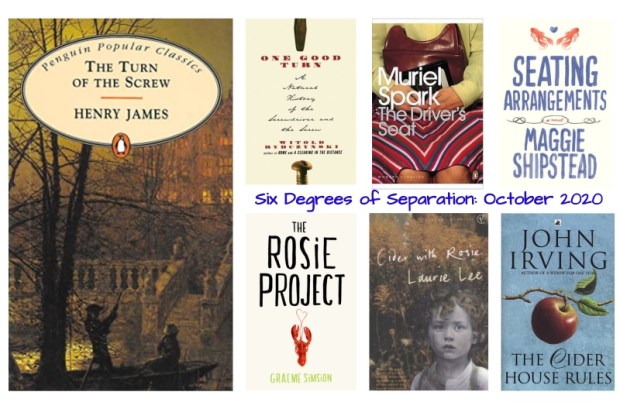
#1 On our trip to Hay-on-Wye last month, I was amused to see in a shop a book called One Good Turn: A Natural History of the Screwdriver and the Screw (2000) by Witold Rybczynski. A bit of a niche subject and nothing I can ever imagine myself reading, but it’s somehow pleasing to know that it exists.

#2 I’m keen to try Muriel Spark again with The Driver’s Seat (1970), a suspense novella with a seam of dark comedy. I remember reading a review of it on Heaven Ali’s blog and thinking that it sounded deliciously creepy. My plan is to get it out from the university library to read and review for Novellas in November.
#3 Seating Arrangements by Maggie Shipstead was one of my favorite debut novels of 2012. An upper-middle-class family prepares for their heavily pregnant daughter’s wedding weekend on an island off Connecticut. Shipstead is great at capturing social interactions. There’s pathos plus humor here; I particularly liked the exploding whale carcass. I’m still waiting for her to come out with a worthy follow-up (2014’s Astonish Me was so-so).

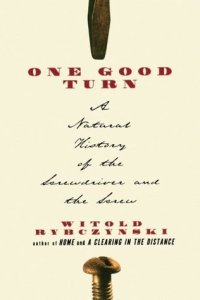
#4 The cover lobsters take me to The Rosie Project (2013) by Graeme Simsion, the first and best book in his Don Tillman trilogy. A (probably autistic) Melbourne genetics professor, Don decides at age 39 that it is time to find a wife. He goes about it in a typically methodical manner, drawing up a 16-page questionnaire, but still falls in love with the ‘wrong’ woman.
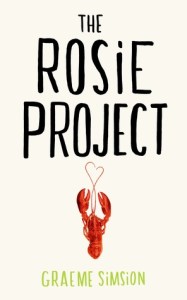
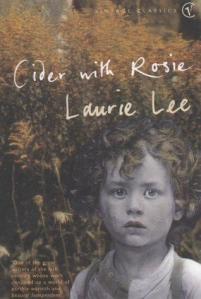
#5 Earlier in the year I reviewed Cider with Rosie (1959) by Laurie Lee as my classic of the month and a food-themed entry in my 20 Books of Summer. It’s a nostalgic, evocative look at a country childhood. The title comes from a late moment when Rosie Burdock tempts the adolescent Lee with alcoholic cider and kisses underneath a hay wagon.
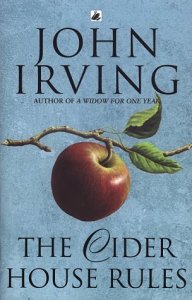
#6 My current reread is The Cider House Rules (1985), one of my favorite John Irving novels. Homer Wells is the one kid at the St. Cloud’s, Maine orphanage who never got adopted. Instead, he assists the director, Dr. Wilbur Larch, and later runs a cider factory. Expect a review in a few weeks – this will count as my Doorstopper of the Month.
Going from spooky happenings to apple cider, my chain feels on-brand for October!
Join us for #6Degrees of Separation if you haven’t already! (Hosted the first Saturday of each month by Kate W. of Books Are My Favourite and Best. Her introductory post is here.) Next month is a wildcard: start with a book you’ve ended a previous chain with.
Have you read any of my selections? Are you tempted by any you didn’t know before?
 Bookish Beck = Rebecca Foster. American transplant to England. Freelance proofreader and book reviewer.
 Bookish Beck
