Book Serendipity, August to September
From Jennifer Croft’s superb Notes on Postcards (forthcoming in November):
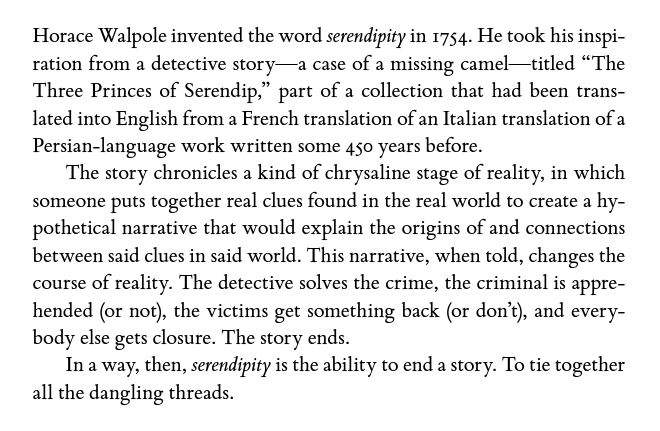
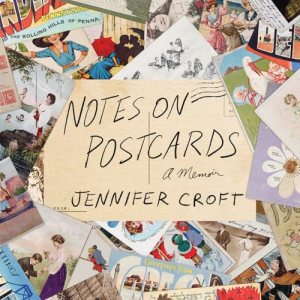
I’d heard that story of Horace Walpole and the etymology of “serendipity” before. Tying together dangling threads is a good description of what I try to do with these posts, which arise from my reading.
I call it “Book Serendipity” when two or more books that I have read at the same time or in quick succession have something in common – the more bizarre, the better. This is a regular feature of mine every couple of months. Because I usually have 20–30 books on the go at once, I suppose I’m more prone to such incidents. People frequently ask how I remember all of these coincidences. The answer is: I jot them down on scraps of paper or input them immediately into a file on my PC desktop; otherwise, they would flit away!
 The more accurate keyword would probably be “synchronicity,” which according to Carl Jung, who “believed in a universe of mysterious connections,” is “a meaningful coincidence in which an internal mental state somehow attracts a real-world parallel” (quotes from The Spirituality Gap by Ali Millar). An intriguing idea, that: somehow, by thinking about these ideas or details, I might be … luring repeat incidents to me?!
The following are in roughly chronological order.
What’s in a name?
- Girlfriends named Maddie (in Year of the Drought by Roland Buti) and Mattie (Tom’s in Pardon Our French by Alex Durand and Tom Carles); plus a granddaughter (in The Typing Lady and Other Fictions by Ruth Ozeki) and niece (in The Land and Its People by David Sedaris) named Maddy.
- A character named Hattie in Leaving the Yellow House by Saul Bellow and The Correspondent by Virginia Evans.
- A character named India in Leaving the Yellow House by Saul Bellow and Family Family by Laurie Frankel (our second The Marriage Plot/Literary Wives club read this year in which the protagonist was named India, after Mrs. Bridge by Evan S. Connell).
 A daughter named Rebecca in Switzy by Emma Cline and Family Family by Laurie Frankel (where she’s known as Bex); and sisters named Rebecca (known as Becks) in one story of The Rental Heart and Other Fairytales by Kirsty Logan and The Long Road to Holy Island by Austin Suggs. Those are both nicknames I’ve had, by the way. The one nickname I detest is Becky.
- A mother named Monica in The Summerhouse Trilogy by Alice Thomas Ellis and Apt Pupil by Stephen King.
- A Hilda in The Given World by Melissa Harrison and one story of Self-Help by Lorrie Moore.
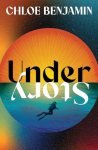
- A Clare in Under Story by Chloe Benjamin, The Leveret by Anna Goldreich and The Given World by Melissa Harrison.
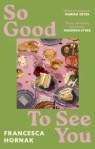
- A Sergio in Old Romantics by Maggie Armstrong and a Serge in So Good to See You by Francesca Hornak.
- A son named Silas in Under Story by Chloe Benjamin and So Good to See You by Francesca Hornak.
- Compensation for run-over chickens in Year of the Drought by Roland Buti and Don’t Let’s Go to the Dogs Tonight by Alexandra Fuller.
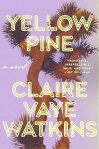
- “Enough is enough” is a slogan in The Land and Its People by David Sedaris (where it’s also an essay title) and Yellow Pine by Claire Vaye Watkins.
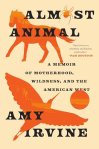
 Telluride, Colorado features as a setting in Almost Animal by Amy Irvine and in one essay of The Land and Its People by David Sedaris.
- A trip from Paris to see Chartres Cathedral in The Magician by W. Somerset Maugham and Shadow of a Man by May Sarton.
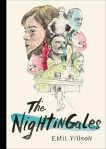
- Fleeting references to the Donner Party in Yellow Pine by Claire Vaye Watkins and The Nightingales by Emil Wilson.
- An essay about an Icelandic sheep ram, and the idea that one should ride geldings because they’re calmer and more reliable than mares, in Animals Taught Me Everything by Pam Houston and The Land and Its People by David Sedaris.
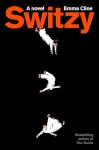
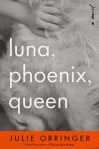
- The protagonist’s work performance declining due to dementia, and a tweed jacket, in Switzy by Emma Cline and Luna, Phoenix, Queen by Julie Orringer. (There’s also a tweed jacket mentioned in Strange Weather in Tokyo by Hiromi Kawakami.)

- German artist Käthe Kollwitz is mentioned in Seed Corn Must Not Be Ground (the title is from one of her works) by Pat Browne and The Book of Mating by Laksmi Pamuntjak.
- Child brides and incestuous rape are mentioned/feature in Almost Animal by Amy Irvine and The Book of Mating by Laksmi Pamuntjak, both of which I was reading early for Foreword Reviews.
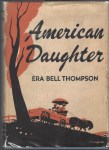
- The keeping of goats in Almost Animal by Amy Irvine and American Daughter by Era Bell Thompson, both of which I was reading early for Foreword Reviews.
- In August I unwittingly started rereading two books that I’d first read in April 2013 (is 13+ years the ideal interval?!): I Feel Bad about My Neck by Nora Ephron and Flush by Virginia Woolf.
- Men by the name of Christmas: the narrator’s parents wanted to name him Noel (but the German state didn’t allow it?!) in Botany of Madness by Leon Engler; and a main character is named Joe Christmas in Light in August by William Faulkner.
- To the narrator’s question of whether something awful has happened / they’ve done something wrong, a reply of “it very likely had but she hadn’t heard about it yet” in Our Spoons Came from Woolworths by Barbara Comyns and “Most likely. You know that better than I do” in Botany of Madness by Leon Engler.
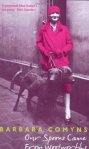
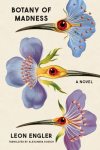
- The idea that human–animal communication/connection is deeper than that between humans because it is beyond language plays a major role in three books I read around the same time: Animals Taught Me Everything by Pam Houston, Mitz by Sigrid Nunez, and Luna, Phoenix, Queen by Julie Orringer. (The Houston and Orringer both publish on 13 October and I was reviewing them early for Shelf Awareness.)
- The fact that children of alcoholics feel they have to make everything perfect to avoid conflict appears in Botany of Madness by Leon Engler and Animals Taught Me Everything by Pam Houston.
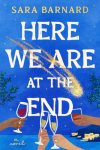 I encountered lines from the song “Closing Time” by Semisonic in Here We Are at the End by Sara Barnard (a specific reference to the pop song accompanied “Every new beginning comes from some other beginning’s end” – which I was amused to learn is actually a quote from Seneca!) and Family Family by Laurie Frankel (“You don’t have to go home. But you can’t stay here.” – not attributed, but I can’t but think she had the song in mind.)
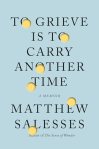
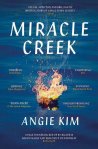
- The stereotype of overachieving Asian Americans is mentioned or discussed in Family Family by Laurie Frankel, Miracle Creek by Angie Kim, and To Grieve Is to Carry Another Time by Matthew Salesses. There are Korean Americans in all three, and Korean children adopted into a white family in the Frankel and Salesses.
- A young woman is aghast at her mother getting rid of loved pet(s) in Nightjar by Emily Ruskovich and The Nightingales by Emil Wilson (both titled after birds!)
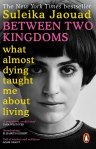
- A mention of the practice of buying single cigarettes from a city corner shop for 50 cents in Between Two Kingdoms by Suleika Jaouad and Miracle Creek by Angie Kim.
- Saving turtles from the road in Yellow Pine by Claire Vaye Watkins and then a mention of someone else doing so in To Grieve Is to Carry Another Time by Matthew Salesses.
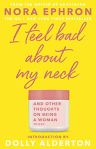 The lines “Leave as soon as you think to yourself, ‘This is a great party. I’m having a wonderful time’” from Nora Ephron’s I Feel Bad About My Neck are echoed in Emma Cline’s Switzy.
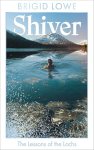
- A holy well is mentioned in The Given World by Melissa Harrison and Shiver by Brigid Lowe.
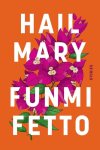
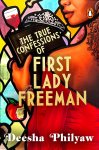
- A sexy pastor’s wife features in one story of Hail Mary by Funmi Fetto and The True Confessions of First Lady Freeman by Deesha Philyaw.
- A flawed pearl is mentioned in Apt Pupil by Stephen King and A Desert between Two Seas by A. Muia.
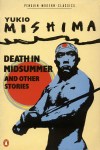
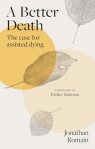
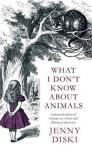
- A mention of hara-kiri (literal) in Death in Midsummer by Yukio Mishima and A Better Death by Jonathan Romain; and as a metaphor in What I Don’t Know about Animals by Jenny Diski.
- Camel cigarettes appear in Miracle Creek by Angie Kim and Apt Pupil by Stephen King.
- A woman remembers being nicknamed an “ice queen” in one story of Everest by Ashani Lewis and Plum by Hollie McNish.
- A woman has to have a bowel movement in the labour ward in Old Romantics by Maggie Armstrong and Natural Disaster by Lisa Owens.
- The challenge of being a mother in the film industry is discussed in Family Family by Laurie Frankel and So Good to See You by Francesca Hornak.
 A three-year-old gets their own cereal breakfast in Old Romantics by Maggie Armstrong and So Good to See You by Francesca Hornak.
- A woman feels guilty of neglect due to her eight-year-old son’s death in a lake in Under Story by Cloe Benjamin and The Correspondent by Virginia Evans.
- A viral scandal where photographs/video footage are misconstrued to make a woman look bad in Hum by Helen Phillips and The True Confessions of First Lady Freeman by Deesha Philyaw.
- A misunderstanding causes a mother to be investigated for child neglect in one story of Old Romantics by Maggie Armstrong and Hum by Helen Phillips.
 Shirley Temples (the non-alcoholic cocktail) are mentioned in Idle Grounds by Krystelle Bamford and The True Confessions of First Lady Freeman by Deesha Philyaw.
- A woman impulsively takes a dishwashing job in Under Story by Cloe Benjamin and Exit Party by Emily St. John Mandel.

- A scene of putting out sandbags in Rattlebone by Maxine Clair and The Long Road to Holy Island by Austin Suggs.
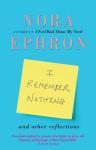 An unwanted mince pie in Idle Grounds by Krystelle Bamford and I Remember Nothing by Nora Ephron.
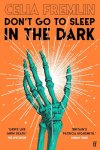
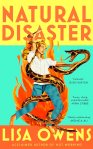
- A child in hospital with acute appendicitis in one story of Don’t Go to Sleep in the Dark by Celia Fremlin and Natural Disaster by Lisa Owens (and with suspected appendicitis in Shiver by Brigid Lowe).
- The Tennyson poem “The Charge of the Light Brigade” is mentioned in Idle Grounds by Krystelle Bamford and Peck & Peck by Bonnie Garmus.
- Having to get off an elevator at the previous floor because it doesn’t go up to the destination in Exit Party by Emily St. John Mandel and Blood Is Dripping onto the Courtyard by Elvira Navarro.
- Realizing one’s bed is unmade in one story of Everest by Ashani Lewis and A Very British Midlife Crisis by Rob Temple.
- Confusion over the name of a possibly abused dog (with special powers!) adopted from a shelter in Peck & Peck by Bonnie Garmus and Luna, Phoenix, Queen by Julie Orringer.
- I encountered the phrase “She’s not worth it” in both Peck & Peck by Bonnie Garmus and The True Confessions of First Lady Freeman by Deesha Philyaw within 10 minutes!
 Someone being pulled back into the womb in Under Story by Chloe Benjamin and Nightmares and Daydreams: A.C. 2020 by Mirko Ilić.
- An apple orchard as a setting in Under Story by Chloe Benjamin and one story of Apple and Palm by Patricia Henley.

- “Little Nemo in Slumberland” as an image and metaphor in Switzy by Emma Cline and Nightmares and Daydreams: A.C. 2020 by Mirko Ilić.
- A lost twin sibling – lost at birth in Peck & Peck by Bonnie Garmus and H Is for Hawk by Helen Macdonald; lost later on in one story of The Rental Heart and Other Fairytales by Kirsty Logan.


- A portal to another timeline, and characters who are doubles of each other, in Under Story by Chloe Benjamin and Exit Party by Emily St. John Mandel.
- A lesbian couple moves to a new house and the one woman feels isolated and sad because she’s recently had a miscarriage in the debut novels The New People by Andrea Uptmor (reviewed for BookBrowse) and then The Leveret by Anna Goldreich.

- Nagging a woman to use lotion on her hands as they’re the first place to show signs of ageing in Hum by Helen Phillips and one story of Moderate to Poor, Occasionally Good by Eley Williams.
A couple of visual ones:
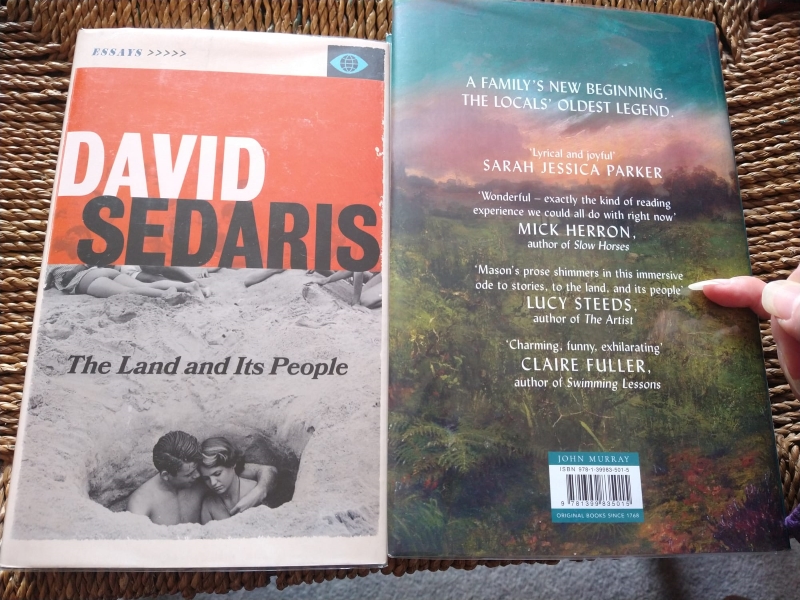
- I was reading The Land and Its People by David Sedaris at the same time as Country People by Daniel Mason, one of whose blurbs happens to borrow Sedaris’s title phrase.
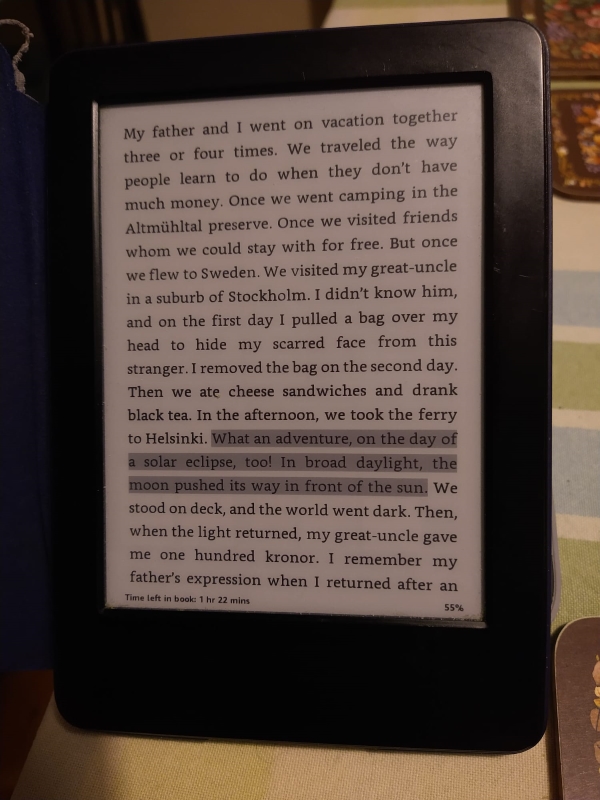
- I was reading Botany of Madness by Leon Engler and encountered this passage on the day of the solar eclipse in Europe (12 August):
What’s the weirdest reading coincidence you’ve had lately?
Booker Prize Longlist Reads (Switzy, The End of Everything) & Shortlist Predictions
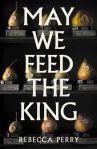
In an hour or so, the Booker Prize shortlist will be announced. I’ve now read four of the longlisted novels; I’m still awaiting a library hold of May We Feed the King by Rebecca Perry, which is the only other I’m particularly keen to read. This is the first time in four years that I’ve made much of an effort to read from the longlist, i.e., besides what I happen to have already read. I think this year’s judging panel may have something to do with it: I have read (almost) everything by Raymond Antrobus and Patricia Lockwood, and I admire Mary Beard even if I don’t know her work so well.

This pair contains unavoidably bleak stuff – dementia and preparing for an assisted death at Dignitas; weird goings-on in postapocalyptic London and Kent – but with some glints of humour. I could see the first being shortlisted but not the second.
Switzy by Emma Cline
Like many, I read Cline’s debut, The Girls, but lost track of her career afterwards. I was taken aback at the subject matter of her fourth book, which sounded like fodder for a different author – an older male. I also worried that her portrait of a privileged businessman trying to make meagre amends for the wrongs from his past would be too similar to George Saunders’s subpar Vigil. But in the end she won me over with her close-third-person portrait of the last few days of an Everyman defying the inexorable course of dementia.
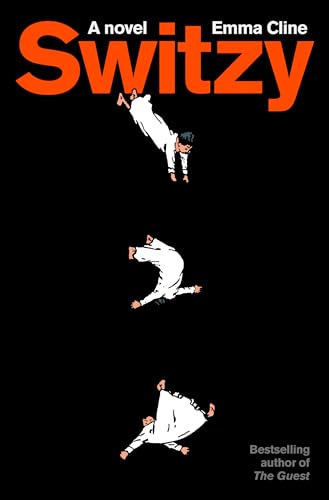 David Hastings, 70, is en route to Zurich, headed to the never-named Dignitas. He’s on a private plane borrowed from a longtime associate, and has with him a personal assistant, Cody. Their first stop is London so he can see his daughter, Rebecca, and his musical prodigy grandson, Rainer, and say a sort of goodbye – although his relatives have no idea it’s the last time they’ll see him. He has one more stop to make, just over the Swiss border, to see Tom, a boarding school chum who endured hazing that David didn’t intervene to stop. Beyond the guilt, we sense that he longs to see Tom because he has always been half in love with him – a recurring homoerotic impulse never consummated. (An interesting parallel is that Rebecca is having clandestine meet-ups with a female friend. Is same-sex attraction inherited?)
Depicting the mental turmoil of a character sinking into dementia is not that ground-breaking; I’ve read a number of novels that do so with aplomb (Still Alice, Elizabeth Is Missing, Turn of Mind, The Night Guest, The Swimmers). However, Cline convincingly traces David’s bewilderment at everyday traveller experiences of hotels, restaurants and taxis. It’s no mawkish tour through disability; instead, his outsider’s view skewers the ridiculousness of modern life. I was most impressed by the way David’s internal monologue skirts lost language and gets stuck on arbitrary phrases: sayings, song lyrics, liturgy. “The quick brown fox jumps over the lazy dog”; “The hills are alive…”; “Now and at the hour of our death…”; his ex-wife’s exhortation to their little girl to “brush away the sugar bugs”; and the story of Little Nemo in Slumberland (which lends the anomalous cover image).
“Unflinching” is a reviewing cliché, but this is what people have in mind when they say it. Cline follows David right up to his last moment, taking us into the room at the clinic with him. There’s nothing special, or even very likable, about this man, but as we follow along on his final physical experiences we get a sense of the weight of any life – which can still have value even if there are no longer any words for what’s happening. I found this much more affecting than I expected to, reaching the final pages with tear-soaked cheeks. (Read via NetGalley) 
Also recently reviewed by Cathy and Susan.
I’ve read and thought a lot about the topic of assisted dying, including with In Love by Amy Bloom, Intervals by Marianne Brooker, That One Patient by Ellen de Visser, The Inevitable by Katie Engelhart, and One Last Thing by Wendy Mitchell. Switzy would make a particularly good fictional counterpart to the Bloom, for those who wish to read further.
A bonus review:
A Better Death: The case for assisted dying by Jonathan Romain
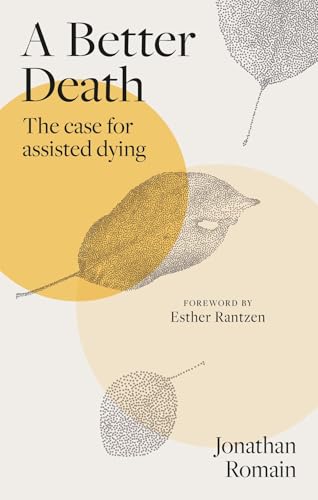 Romain is a rabbi and former chair of Dignity in Dying. In this short work, he gives a valuable history of relevant legislation in the UK and internationally, and a rundown (with rebuttals) of potential ethical objections to assisted dying. The party line of the major religions is to uphold the sanctity of life and thus oppose assisted suicide, but there are notable exceptions. Romain mentions a former archbishop of Canterbury who attends my church. George Carey changed his mind after the high-profile case of Tony Nicklinson, who was paralysed after a stroke and lost his appeal over the right to die. Pious supporters of the Campaign for Dignity in Dying emphasise the duty to be merciful to the suffering. Romain puts it this way: “From a religious perspective[,] it makes much more sense to say that we honour God most by healing someone when we can, comforting them when we cannot do so and helping them let go of life gently when desired.” Most medical bodies, too, have now reversed their official positions, with the majority voting to remain neutral on the matter. Romain characterises the campaign as a sign of humanitarian progress – like universal suffrage or the abolition of slavery – that future generations will look back on as overdue. He hopes that charismatic campaigners will arise from among the dying and their relatives. (The foreword is by TV presenter Esther Rantzen, who appealed after being diagnosed with terminal lung cancer. Just days ago, she announced she’s too fragile to travel to Dignitas.)
For me, this book offered little new because I was familiar with arguments around the issue, pro and con. However, it would be a good primer for those coming to such questions for the first time. What I did find helpful was a discussion of rituals we might develop to accompany an assisted death – a new sort of funeral that may one day be routine. Music, readings, a toast; a candle snuffed out or lit at the moment of death, and so on. Imagine a whole new category of human rite, one that should no longer be clouded in secrecy or available only to the wealthy. Alas, the latest version of the Terminally Ill Adults (End of Life) Bill was voted down by the House of Commons on 11 September, but no doubt it will be back in a new form soon. 
With thanks to Reaktion Books for the free copy for review.
The End of Everything by M. John Harrison
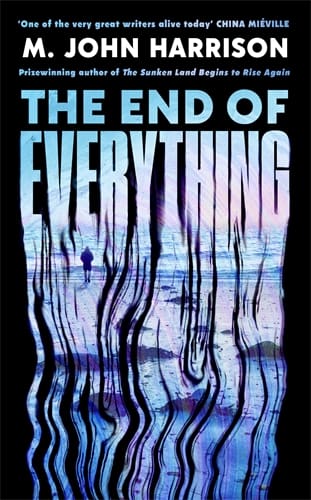 I was willing to give this a try for several reasons: it was readily available from my library (someone donated it), Harrison is lauded yet I’ve never approached his large back catalogue, and it’s novella length. Alas, those were insufficient to overcome my antipathy for vague dystopian scenarios in which characters’ actions have no clear motivations. Years post-crisis and -invasion, some people are still trying to flee Britain, but most seem content muddling along. “What were the iGhetti and where had they come from?” That’s a good question, and one to which we never get a straightforward answer, but the main hint is that they are jelly-like and arrived from elsewhere. Phillip Tennent engages in mudlarking – except some of the artefacts he discovers are amorphously humanoid and evolve human traits.
Initially it seems as if Phillip is the protagonist, but his 70-year-old painter aunt, Marnie, has more enduring importance. When she’s hounded out of her falling-down home, she shelters in an abandoned art gallery. She’s a surprising and almost admirable broad, handy with a weapon whenever she senses her way of life being threatened. There are some darkly comic outrageous happenings, and gruesome set pieces that blur the line between living and dead, human and non-. I had to wonder if there is also a Brexit allegory, given Marnie’s signs reading “HOW CAN YOU MISPLACE A CONTINENT?” Harrison’s prose is smooth and the pages turn quickly, but when I look back at the gnomic dictums I marked out, they don’t seem to mean anything:
Are we watching a film the universe is showing itself?
The world’s over. But that doesn’t matter. Because another one will be along soon enough.
Rather, significance is located in the expressions of uncertainty:
the apocalypse seemed to withhold itself, quickly becoming just another historical continuity.
There was a vigorous ambiguity to everything.
Believe all you like that at some level unavailable to you an organising principle exists. You will never have any evidence of that.
I suspect Harrison’s aim was to show how one can get used to anything, even random violence and purposeless wandering. But this watery postapocalyptic meander sheds no real light on the past, present, or future, and feels as if it should have been published more like a decade ago (at the time of The Wall by John Lanchester et al.). A couple of great scenes, such as children playing with fallen ash as if it were snow, aren’t enough to take the bitter edge off even such a short novel. I’m not tempted to try more by Harrison. (Public library) 
Also recently reviewed by Annabel.
Longlisted novels that I’d already read:
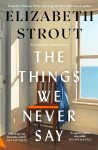 The Things We Never Say by Elizabeth Strout: Artie Dam is a likeable Everyman with the same sorts of secrets and struggles we all have. Sometimes he thinks his marriage is going well and he’s touching his high school history students’ lives; other times he feels fatalistic about his relationships and the US’s trajectory. Along with Lucy by the Sea, this is the most engaged Strout has been with the present day, and the most specific she’s gotten about political outrages. I liked how the flash-forwards prove Artie right in his predictions (occasionally based on premonitory dreams) or confirm what he couldn’t have known about the difference he made for two particular students. In his small way, Artie is a new Stoner.
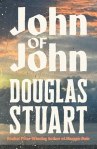 John of John by Douglas Stuart: One of my books of the year for sure. (I reviewed it for Shelf Awareness.) Stuart’s superb third novel is set on the Isle of Harris in the 1990s. Cal seeks to reconcile his sexuality and artistic goals with his family’s expectations and his devout upbringing. An absorbing, deliciously melodramatic story is built around the contrast between modernity and the old ways. The characters’ power plays and acts of desperation are heartrending, but mischief and love of colour and crafts lend lightness. Stuart’s every observation is profound; the simplest phrase is memorable for its beauty.
Here’s my thinking about the shortlist:
Lockwood may be to thank/blame for the weirder and more niche selections (i.e. previously unknown young Americans’ second books), whereas the judges are likely to come to a consensus on more straightforward, reader-friendly material. I imagine we’ll see a shortlist dominated by women and repeat nominees.
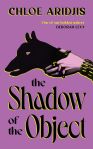
The Shadow of the Object by Chloe Aridjis – Especially with Antrobus and critic Rebecca Liu on the panel, we can expect at least two non-Anglo authors to make it through. Djamel White’s subject matter sounds neither appealing nor fresh. [Kenan Orhan is apparently Turkish American, though he looks white.] Though I’m personally not eager to read Aridjis again (after a DNF of Sea Monsters), I’m taking a gamble on this one being the second.
Switzy by Emma Cline – Edgy and powerful enough to deserve a place.
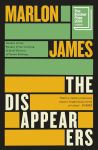
The Disappearers by Marlon James – A previous winner and a writer’s writer, though I’ve never particularly gotten on with his work.
May We Feed the King by Rebecca Perry – I’ve heard almost exclusively good things.
The Things We Never Say by Elizabeth Strout – She’s getting to be a Booker bridesmaid and has been nominated for poorer books, so I hope she’ll get another shot.
John of John by Douglas Stuart – How could you not?! I’ll throw a tantrum if it doesn’t make it through.
But, of course, the judges could surprise me with a wildcard such as Black Bag by Luke Kennard; Gwendoline Riley is inexplicably popular with judging panels, too.
What have you read from the longlist? Which book(s) do you most want to read, or see on the shortlist?
 Bookish Beck = Rebecca Foster. American transplant to England. Freelance proofreader and book reviewer.
