Poetry Month Reviews & Interview: Amy Gerstler, Richard Scott, Etc.
April is National Poetry Month in the USA, and I was delighted to have several of my reviews plus an interview featured in a special poetry issue of Shelf Awareness on Friday. I’ve also recently read Richard Scott’s second collection.
Wrong Winds by Ahmad Almallah
Palestinian poet Ahmad Almallah’s razor-sharp third collection bears witness to the devastation of Gaza.
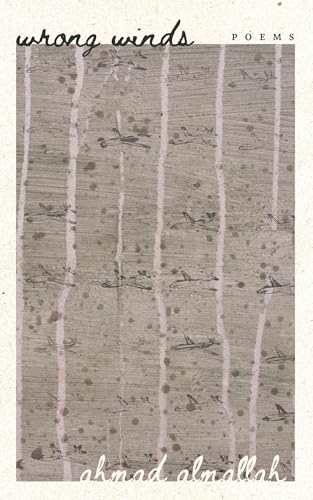 Through allusions, Almallah participates in an ancient lineage of poets, opening the collection with an homage to Al-Shanfarā and ending with “A Lament” for Zbigniew Herbert. Federico García Lorca is also a major influence. Occasional snippets of Arabic, French, and German, and accounts of travels in Berlin and Granada, reveal a cosmopolitan background. The speaker in “Loose Strings” considers exile, engaged in the potentially futile search for a homeland that is being destroyed: “What does it mean to be a poet, another ‘Homer’/ going home? Trying to find one?”
Tonally, anger and grief alternate, while alliteration and slant rhymes (sweat/sweet) create entrancing rhythms. In “Before Gaza, a Fall” and “My Tongue Is Tied Up Today,” staccato phrasing and spaced-out stanzas leave room for the unspeakable. The pièce de résistance is “A Holy Land, Wasted” (co-written with Huda Fakhreddine), which situates T.S. Eliot’s existential ruin in Palestine. Almallah contrasts Gaza then and now via childhood memories and adult experiences at checkpoints. His pastiche of “The Waste Land” starts off funny (“April is not that bad actually”) but quickly darkens, scorning those who turn away from tragedy: “It’s not good/ for your nerves to watch/ all that news, the sights/ of dead children.” The wordplay dazzles again here: “to motes the world crumbles, shattered/ like these useless mots.”
For Almallah, who now lives in Philadelphia, Gaza is elusive, enduringly potent—and mourned. Sometimes earnest, sometimes jaded, Wrong Winds is a remarkable memorial. 
Is This My Final Form? by Amy Gerstler
 Amy Gerstler’s exceptional book of poetry leaps from surrealism to elegy as it ponders life’s unpredictability.
The language of transformation is integrated throughout. Aging and the seasons are examples of everyday changes. “As Winter Sets In” delivers “every day/ a new face you can’t renounce or forsake.” “When I was a bird,” with its interspecies metamorphoses, introduces a more fantastical concept: “I once observed a scurry of squirrels,/ concealed in a hollow tree, wearing seventeenth/ century clothes. Alas, no one believes me.” Elsewhere, speakers fall in love with the bride of Frankenstein or turn to dinosaur urine for a wellness regimen.
The collection contains five thematic slices. Part I spotlights women behaving badly (such as “Marigold,” about a wild friend; and “Mae West Sonnet,” in an hourglass shape); Part II focuses on music and sound. The third section veers from the inherited grief of “Schmaltz Alert” to the miniplay “Siren Island,” a tragicomic Shakespearean pastiche. Part IV spins elegies for lives and works cut short. The final subset includes a tongue-in-cheek account of pandemic lockdown activities (“The Cure”) and wry advice for coping (“Wound Care Instructions”).
Monologues and sonnets recur—the title’s “form” refers to poetic structures as much as to personal identity. Alliteration plus internal and end rhymes create satisfying resonance. In the closing poem, “Night Herons,” nature puts life into perspective: “the whir of wings/ real or imagined/ blurs trivial things.”
This delightfully odd collection amazes with its range of voices and techniques.
I also had the chance to interview Amy Gerstler, whose work was new to me. (I’ll certainly be reading more!) We chatted about animals, poetic forms and tone, Covid, the Los Angeles fires, and women behaving ‘badly’. 
Little Mercy by Robin Walter
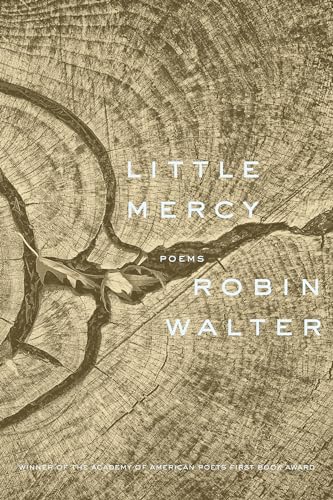 In Robin Walter’s refined debut collection, nature and language are saving graces.
Many of Walter’s poems are as economical as haiku. “Lilies” entrances with its brief lines, alliteration, and sibilance: “Come/ dark, white/ petals// pull/close// —small fists// of night—.” A poem’s title often leads directly into the text: “Here” continues “the body, yes,/ sometimes// a river—little/ mercy.” Vocabulary and imagery reverberate, as the blessings of morning sunshine and a snow-covered meadow salve an unquiet soul (“how often, really, I want/ to end my life”).
Frequent dashes suggest affinity with Emily Dickinson, whose trademark themes of loss, nature, and loneliness are ubiquitous here, too. Vistas of the American West are a backdrop for pronghorn antelope, timothy grass, and especially the wrens nesting in Walter’s porch. Animals are also seen in peril sometimes: the family dog her father kicked in anger or a roadkilled fox she encounters. Despite the occasional fragility of the natural world, the speaker is “held by” it and granted “kinship” with its creatures. (How appropriate, she writes, that her mother named her for a bird.)
The collection skillfully illustrates how language arises from nature (“while picking raspberries/ yesterday I wanted to hold in my head// the delicious names of the things I saw/ so as to fold them into a poem later”—a lovely internal rhyme) and becomes a memorial: “Here, on earth,/ we honor our dead// by holding their names/ gentle in our hollow mouths—.”
This poised, place-saturated collection illuminates life’s little mercies. 
The three reviews above are posted with permission from Shelf Awareness.
That Broke into Shining Crystals by Richard Scott
 I’ve never forgotten how powerful it was to hear Richard Scott read aloud from his forthcoming collection, Soho, at the Faber Spring Party in February 2018. Back then I called his work “amazingly intimate,” and that is true of this second collection as well.
It also mirrors his debut in that the book is in several discrete sections – like movements of a musical composition – and there are extended allusions to particular poets (there, Paul Verlaine and Walt Whitman; here, Andrew Marvell and Arthur Rimbaud). But there is one overall theme, and it’s a tough one: Scott’s boyhood grooming and molestation by a male adult, and how the trauma continues to affect him.
Part I contains 21 “Still Life” poems based on particular paintings, mostly by Dutch or French artists (see the Notes at the end for details). I preferred to read the poems blind so that I didn’t have the visual inspiration in my head. The imagery is startlingly erotic: the collection opens with “Like a foreskin being pulled back, the damask / reveals – pelvic bowl of pink-fringed shadow” (“Still Life with Rose”) and “Still Life with Bananas” starts “curved like dicks they sit – cosy in wicker – an orgy / of total yellowness – all plenty and arching – beyond / erect – a basketful of morning sex and sugar and sunlight”.
“O I should have been the / snail,” the poet laments; “Living phallus that can hide when threatened. But / I’m the oyster. … Cold jelly mess of a / boy shucked wide open.” The still life format allows him to freeze himself at particular moments of abuse or personal growth; “still” can refer to his passivity then as well as to his ongoing struggle with PTSD.
Part II, “Coy,” is what Scott calls a found poem or “vocabularyclept,” rearranging the words from Marvell’s 1681 “To His Coy Mistress” into 21 stanzas. The constraint means the phrases are not always grammatical, and the section as a whole is quite repetitive.
The title of the book (and of its final section) comes from Rimbaud and, according to the Notes, the 22 poems “all speak back to Arthur Rimbaud’s Illuminations but through the prism of various crystals and semi-precious stones – and their geological and healing properties.” My lack of familiarity with Rimbaud and his circle made me wonder if I was missing something, yet I thrilled to how visual the poems in this section were.
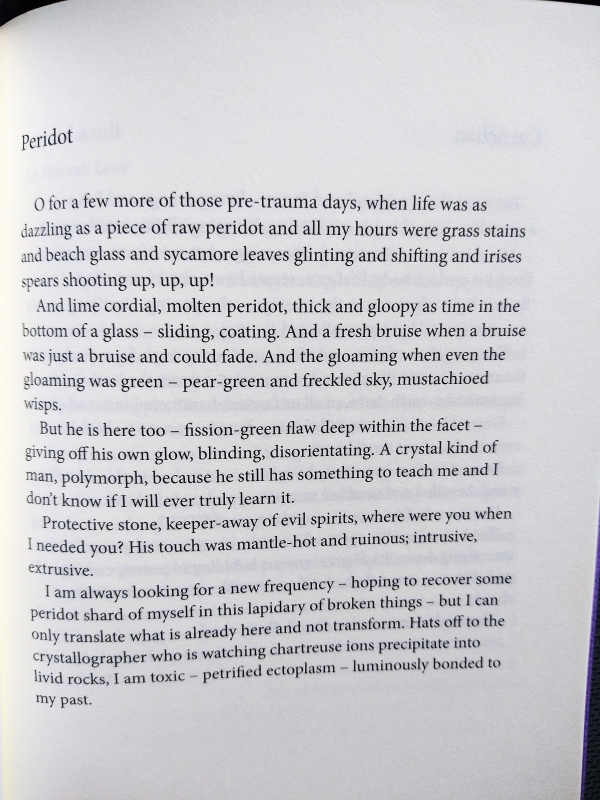
As with the Still Lifes, there’s an elevated vocabulary, forming a rich panoply of plants, creatures, stones, and colours. Alliteration features prominently throughout, as in “Citrine”: “O citrine – patron saint of the molested, sunny eliminator – crown us with your polychromatic glittering and awe-flecks. Offer abundance to those of us quarried. A boy is igneous.”
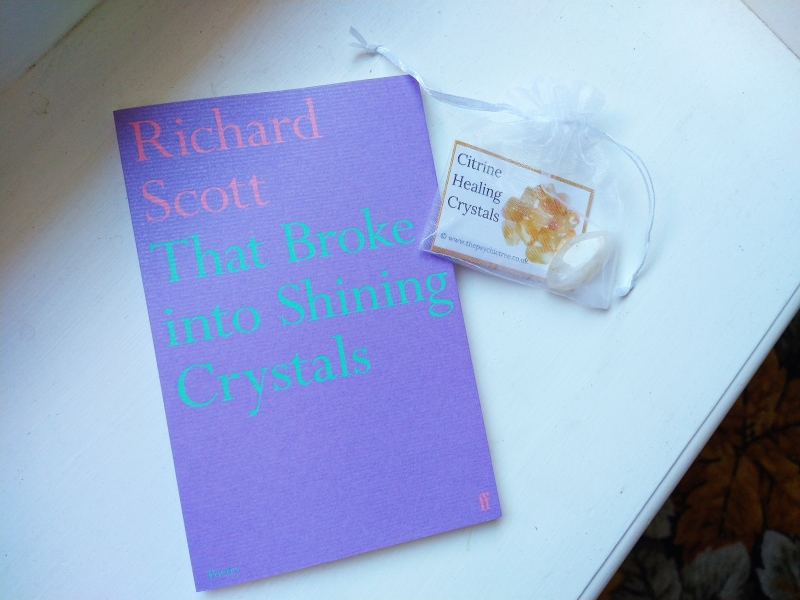
I’ve photographed “Peridot” (which was my mother’s birthstone) as an example of the before-and-after setup, the gorgeous language including alliteration, the rhetorical questioning, and the longing for lost innocence.
It was surprising to me that Scott refers to molestation and trauma so often by name, rather than being more elliptical – as poetry would allow. Though I admire this collection, my warmth towards it ebbed and flowed: I loved the first section; felt alienated by the second; and then found the third rather too much of a good thing. Perhaps encountering Part I or III as a chapbook would have been more effective. As it is, I didn’t feel the sections fully meshed, and the theme loses energy the more obsessively it’s repeated. Nonetheless, I’d recommend it to readers of Mark Doty, Andrew McMillan and Brandon Taylor.
Published today. With thanks to Faber for the free copy for review. An abridged version of this review first appeared in my Instagram post of 11 April.
Read any good poetry recently?
New Poetry Releases by Phil Barnett, Victoria Kennefick and Rachel Mann
I was slow off the mark this month, but finally managed to finish a first batch of review copies. The rest from January will be coming up soon.
Birds link the first and second poetry collections below, and the trans experience the second and third. Other themes include chronic illness, miscarriage, motherhood, history, prayer and praise.
Birds Knit My Ribs Together by Phil Barnett
What an evocative title – reminiscent of last year’s You Bury the Birds in My Pelvis by Kelly Weber – and powerful image of how nature has bolstered the author through chronic illness.

The title phrase comes from the poem “Trepanning,” which imagines different species keeping him company in pain. If they’re sometimes held figuratively responsible, they’re also part of the solution; openness to experience means vulnerability, but also solidarity:
a woodpecker bored my skull
in trepanation
drummed a hole and wasps flew out
goldcrests’ needle-calls put punctures
all along the kidney’s line
swallow’s flightlines skywrote my ill
when thrushes sang it out loud
I appreciated the alliteration, the out-of-the-ordinary verbs, and the everyday metaphors. When spring finds Barnett unable to go further than his garden, the birds come to him, inviting him into “a prosecco world, still all winter / stirred in March, shaken in April”. There is highly visual and aural language throughout the book. In “Unsprung,” a dead heron becomes, in an echo of T.S. Eliot, the “still point at the centre of a wheeling world”. Though a pretty niche collection, it’s a lovely little one that nature-lovers should take a chance on.
With thanks to Arachne Press for the free copy for review.
Carcanet have set the bar high for 2024 poetry with these next two releases:
Egg/Shell by Victoria Kennefick
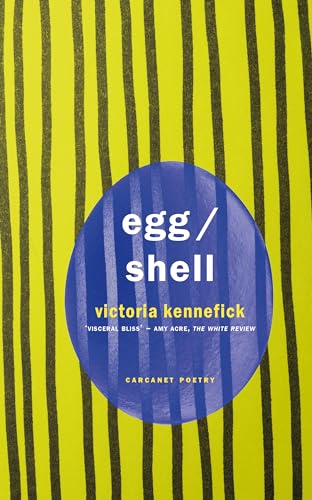 I was blown away by Kennefick’s 2021 debut, Eat or We Both Starve, which I described as “audacious,” “fleshly,” and “pleasingly morbid.” Her sophomore collection is just as strong, with motherhood and the body continuing as overarching themes. The speaker is, by turns, pregnant and mother to a daughter. She experiences multiple miscarriages and names her lost children after plants. Becoming a mother is a metamorphosis all its own (see my recent post on matrescence), while the second long section is about her husband transitioning. This is not actually the first book I’ve read about the changes in a marriage precipitated by a spouse transitioning, and the welter of emotions that it provokes; there’s also Some Body to Love by Alexandra Heminsley in memoir and Cataloguing Pain by Allison Blevins in poetry.
As in Barnett’s collection, bird metaphors are inescapable. “The Wild Swans at the Wetland Centre” must be a nod to W.B. Yeats (his were at Coole). Here, the recurring chickens and swans are the poet’s familiars, and their eggs her totems – ideal vessels, but so easily broken. The same is true of “Cup,” whose lines form the shape of a teacup perched on a saucer. The structure varies throughout: columns, stanzas; a list, a recipe. Amid the sadness, there is a lot of self-deprecation and dark humour in the poem titles (“Victoria Re-Enacts the Stations of the Cross,” falling and spilling coffee all over herself) and one-line poems that act as rejoinders. (“Orientation: A Tragedy” reads “I am so straight I give myself paper cuts.”)
If you’re wondering how life can be captured in achingly beautiful poetry, look no further. I doubt I’ll come across a better collection this year.
More favourite lines:
I get sad as earth becomes sea. I get sad
that in showing you this sinking world
I teach you how to say goodbye.
(from “On Being Two in the Anthropocene”)
I want people
to know me, and to hide.
(from “Le Cygne, My Spirit Animal”)
I want to write down the names of all my dead relatives.
How are they not here anymore? How are yours absent too?
What do we do with them, their names? Is there a box for grief?
(from “Census Night Poem”)
With thanks to Carcanet Press for the free copy for review. Coming out on 29 February.
Eleanor Among the Saints by Rachel Mann
 This is Mann’s second collection, after A Kingdom of Love. In reviewing that book I remarked on the psalm-like cadence, the anatomical and allusive language, and the contrast of past and present. All are elements here as well. The first long section was inspired by Eleanor/John Rykener, a 14th-century seamstress and sex worker whom some have claimed as a trans pioneer. Little is known about her life or self-identification, so Mann does not attempt biography here, but rather is thinking alongside the character. “Construct me weird and kind, leave it to me / To strip off when I’m ready. I shall run wild, / Naked as I dare, out into sober streets.”
Three later poems share the title “A Charm to Change Sex,” each numbered and in two columns – you have a choice of whether to read them across or down the page. Either way, they land somewhere between a spell and a prayer (and there are many other prayers in the table of contents): “Hidden: transfix / Invisible made visible … oh so holy, words lead everywhere / inside become out”. Bodies are as provisional as speech (“All text is stitched, / Body too only subset of making, a stored magic”), and inescapably frail, as evidenced by a father’s illness and death, the subject of several poems.
Repetition and wordplay (“razed/raised”) sometimes tail off into faltering phrases – “#TDOR” is most notable for this. And “Seven Proof Texts on a Transitioned Body” is, by itself, worth buying the book for, with alliteration and slang pushing back at medical and scriptural vocabulary. Mann is an incredibly versatile writer: I’ve read a memoir, a work of literary appreciation, and an academic thriller by her as well as her published poetry. And while I found less that resonated in this collection, I still admired its rigorous engagement with history, theology, and the facts of a life.
With thanks to Carcanet Press for the free copy for review.
20 Books of Summer, 14–16: Barba, Bersweden and Solnit
I’m all about flowers today: American wildflowers in poetry and prose, a year of hunting down the flora of the British Isles, and a discursive account of a famous English author’s life and times through the prism of his rose garden.
American Wildflowers: A Literary Field Guide, ed. Susan Barba; illus. Leanne Shapton (2022)
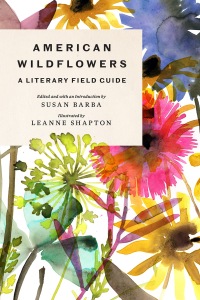 This comes out from Abrams Press in the USA on 8 November and I’ll be reviewing it for Shelf Awareness, so I’ll just give a few brief thoughts for now. Barba is a poet and senior editor for New York Review Books. She has collected pieces from a wide range of American literature, including essays, letters and early travel writings as well as poetry, which dominates.
Apart from a closing section on various/anonymous wildflowers, where particular species are named they are grouped into families, which are arranged alphabetically. The Asteraceae section is particularly strong, with poems on dandelions and sunflowers, a typically prophetic Aldo Leopold fragment about the decline of native flora, and “Asters and Goldenrod,” an extract from Robin Wall Kimmerer’s Braiding Sweetgrass (itself one of my 20 Books of Summer – review to come in the week) that I think was also excerpted in This Book Is a Plant.
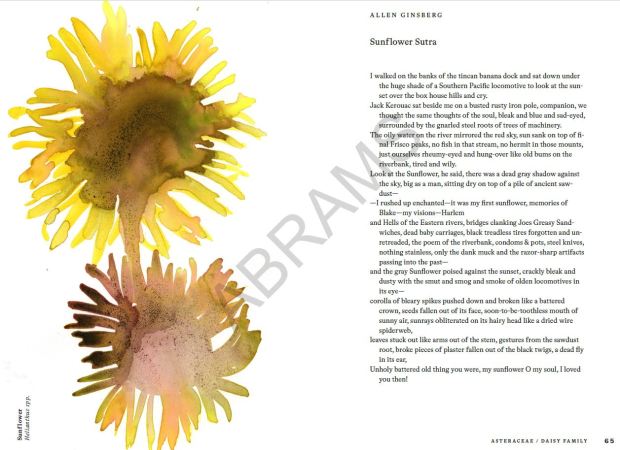
Sample two-page spread with a Leanne Shapton watercolor and part of an Allen Ginsberg poem.
In general, I engaged more with the poetry than with the prose. Barba has ensured a real variety of styles, with good representation for BIPOC. What draws it all together into a beautiful whole I wish I could see as a physical object is Leanne Shapton’s watercolor illustrations, painted from pressed flowers. “What a gift to stare at flowers—these ephemeral miracles of color and synthesis and botany,” she writes in an opening note. This would be a perfect coffee table book for any gardener or nature lover. (E-review copy)
Where the Wildflowers Grow: My Botanical Journey through Britain and Ireland by Leif Bersweden (2022)
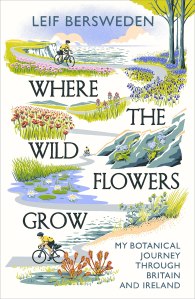 A good case of nominative determinism – the author’s name is pronounced “leaf” – and fun connections abound: during the course of his year-long odyssey, he spends time plant-hunting with Jon Dunn and Sophie Pavelle, whose books featured earlier in my flora-themed summer reading: Orchid Summer and Forget Me Not. With Dunn on Unst, Shetland, he sees not only rare flowers but close-up orcas. Like Pavelle, who he meets up with in Cornwall, he has an eye to how species will be affected by climate change and commits to doing his hunting by train and bike; there’s only so much you can see when zooming by in a car. Bersweden makes a case for spending time with plants – after all, they don’t move, so once you’ve found them you can commune in a way you can’t during, say, a fleeting mammal encounter.
He starts 2021 with a New Year Plant Hunt in central London with his mother – more is in bloom in January than ever before, at least in part due to climate warming. Even when the weather is foul on his travels, there is plenty to be seen. Everywhere he goes, he meets up with fellow experts and plant enthusiasts to marvel at bluebell woodlands or ancient pine forests, alpine or bog species. The floral circuit (documented in full on the book’s website through chapter-by-chapter photographs; there are two small sections of colour plates in the hardback) is also a chance to tour the British Isles, from Kent to Cork, coast to mountaintop.
Bersweden has been in love with plants ever since childhood; he believes they have nostalgia value for many people, and can be an easy way into appreciation of nature. “A wildflower growing from a crack in the wall is an everyday miracle.” His casual writing style and clear zeal for his subject – his author photo is of him hugging a tree, and another has such a cute caption: “Being given the opportunity to hold a Greater Bladderwort (Utricularia vulgaris) was one of the best things that’s ever happened to me!” – make this a pleasure even though it’s a bit overlong at points. (Public library)
Orwell’s Roses by Rebecca Solnit (2021)
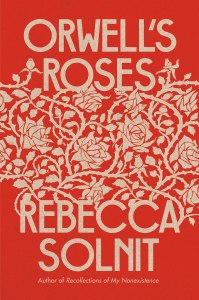 I was fascinated by the concept behind this one. “In the spring of 1936 a writer planted roses” is Solnit’s refrain; from there sprawls a book that’s somehow about everything: botany, geology, history, politics and war – as well as, of course, George Orwell’s life and works (with significant overlap with the graphic novel biography of him that I read last year). On a trip to England with a friend who is a documentary filmmaker, Solnit had the impulse to go find what might be left of Orwell’s garden. When she arrived in the Hertfordshire village of Wallington, the current owners of his home kindly showed her round. His fruit trees had long since been cut down, but the rosebushes were still going strong some 80 years later.
This goes down as a skim for me: though I read the first 30%, after that I just browsed to the end. Some side tracks lost me, e.g. Tina Modotti’s presentation of roses in her photographs; Orwell’s interest in mining, which leads Solnit to investigate how coal is formed; much history; and a week spent observing the rose-growing industry in Colombia. I most enjoyed the book when it stayed close to Orwell’s biography and writings, positing gardening as his way of grounding his ideas in the domestic and practical. “Pursuits like that can bring you back to earth from the ether and the abstractions.” I also liked – briefly, at least – thinking about the metaphorical associations of roses, and flowers in general.
If you’ve read Solnit before, you’ll know that her prose is exquisite, but I think this was the stuff of a long article rather than a full book. As it is, it’s a pretty indulgent project. (Kaggsy reviewed this recently and came to somewhat similar conclusions.) (NetGalley)
Book Serendipity, May to June 2021
I call it Book Serendipity when two or more books that I read at the same time or in quick succession have something pretty bizarre in common. Because I have so many books on the go at once (usually 20‒30), I suppose I’m more prone to such incidents. I’ve realized that, of course, synchronicity is really the more apt word, but this branding has stuck.
The following are in roughly chronological order.
- Sufjan Stevens songs are mentioned in What Is a Dog? by Chloe Shaw and After the Storm by Emma Jane Unsworth.
- There’s a character with two different coloured eyes in The Mothers by Brit Bennett and Painting Time by Maylis de Kerangal.

- A description of a bathroom full of moisturizers and other ladylike products in The Mothers by Brit Bennett and The Interior Silence by Sarah Sands.
- A description of having to saw a piece of furniture in half to get it in or out of a room in A Braided Heart by Brenda Miller and After the Storm by Emma Jane Unsworth.

- The main character is named Esther Greenwood in the Charlotte Perkins Gilman short story “The Unnatural Mother” in the anthology Close Company and The Bell Jar by Sylvia Plath. Indeed, it seems Plath may have taken her protagonist’s name from the 1916 story. What a find!
- Reading two memoirs of being in a coma for weeks and on a ventilator, with a letter or letters written by the hospital staff: Many Different Kinds of Love by Michael Rosen and Coma by Zara Slattery.


- Reading two memoirs that mention being in hospital in Brighton: Coma by Zara Slattery and After the Storm by Emma Jane Unsworth.
- Reading two books with a character named Tam(b)lyn: My Cousin Rachel by Daphne du Maurier and Coma by Zara Slattery.
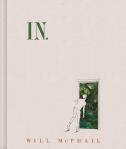
- A character says that they don’t miss a person who’s died so much as they miss the chance to have gotten to know them in Featherhood by Charlie Gilmour and In by Will McPhail.

- A man finds used condoms among his late father’s things in The Invention of Solitude by Paul Auster and Featherhood by Charlie Gilmour.
- An absent husband named David in Open House by Elizabeth Berg and Ruby by Ann Hood.
- The murder of Thomas à Becket featured in Murder in the Cathedral by T.S. Eliot (read in April) and Heavy Time by Sonia Overall (read in June).


- Adrienne Rich is quoted in (M)otherhood by Pragya Agarwal and Heavy Time by Sonia Overall.
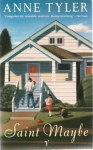
- A brother named Danny in Immediate Family by Ashley Nelson Levy and Saint Maybe by Anne Tyler.
- The male lead is a carpenter in Early Morning Riser by Katherine Heiny and Saint Maybe by Anne Tyler.
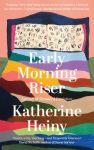
- An overbearing, argumentative mother who is a notably bad driver in Early Morning Riser by Katherine Heiny and Blue Shoe by Anne Lamott.
- That dumb 1989 movie Look Who’s Talking is mentioned in (M)otherhood by Pragya Agarwal and Early Morning Riser by Katherine Heiny.
- In the same evening, I started two novels that open in 1983, the year of my birth: The Other Black Girl by Zakiya Dalila Harris and Malibu Rising by Taylor Jenkins Reid.


- “Autistic” is used as an unfortunate metaphor for uncontrollable or fearful behavior in Open House by Elizabeth Berg and Blue Shoe by Anne Lamott (from 2000 and 2002, so they’re dated references rather than mean-spirited ones).
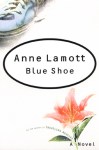 A secondary character mentions a bad experience in a primary school mathematics class as being formative to their later life in Blue Shoe by Anne Lamott and Saint Maybe by Anne Tyler (at least, I think it was in the Tyler; I couldn’t find the incident when I went back to look for it. I hope Liz will set me straight!).
- The panopticon and Foucault are referred to in Great Circle by Maggie Shipstead and I Live a Life Like Yours by Jan Grue. Specifically, Jeremy Bentham’s panopticon is the one mentioned in the Shipstead, and Bentham appears in The Cape Doctor by E.J. Levy.
What’s the weirdest reading coincidence you’ve had lately?
Three May Graphic Novel Releases: Orwell, In, and Coma
These three terrific graphic novels all have one-word titles and were published on the 13th of May. Outwardly, they are very different: a biography of a famous English writer, the story of an artist looking for authentic connections, and a memoir of a medical crisis that had permanent consequences. The drawing styles are varied as well. But if the books share one thing, it’s an engagement with loneliness: It’s tempting to see the self as being pitted against the world, with illness an additional isolating force, but family, friends and compatriots are there to help us feel less alone and like we are a part of something constructive.
Orwell by Pierre Christin; illustrated by Sébastien Verdier
[Translated from the French by Edward Gauvin]
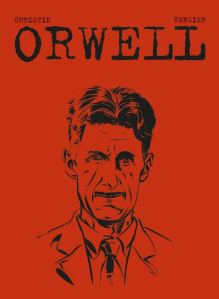 George Orwell was born Eric Blair in Bengal, where his father worked for the colonial government. As a boy, he loved science fiction and knew that he would become a writer. He had an unhappy time at prep school, where he was on reduced fees, and proceeded to Eton and then police training in Burma. Already he felt that “imperialism was an evil thing.” Among this book’s black-and-white panes, the splashes of colour – blood, a British flag – stand out, and guest artists contribute a two-page colour spread each, illustrating scenes from Orwell’s major works. His pen name commemorates a local river and England’s patron saint, marking his preoccupation with the essence of Englishness: something deeper than his hated militarism and capitalism. Even when he tried to ‘go native’ for embedded journalism (Down and Out in Paris and London and The Road to Wigan Pier), his accent marked him out as posh. He was opinionated and set out “rules” for clear writing and the proper making of tea.
The book’s settings range from Spain, where Orwell went to fight in the Civil War, via a bomb shelter in London’s Underground, to the island of Jura, where he retired after the war. I particularly loved the Scottish scenery. I also appreciated the notes on where his life story entered into his fiction (especially in A Clergyman’s Daughter and Keep the Aspidistra Flying). During World War II he joined the Home Guard and contributed to BBC broadcasting alongside T.S. Eliot. He had married Eileen, adopted a baby boy, and set up a smallholding. Even when hospitalized for tuberculosis, he wouldn’t stop typing (or smoking).
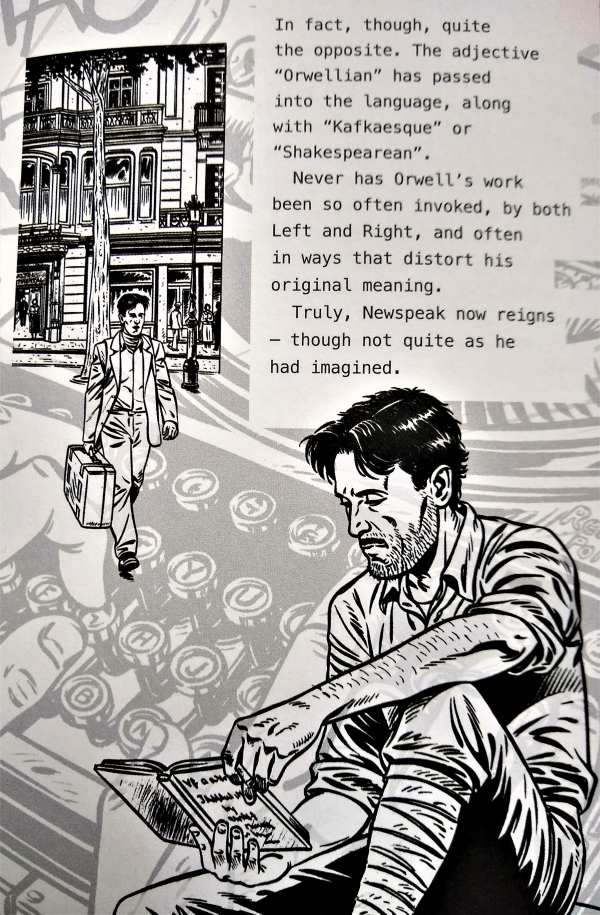 Christin creates just enough scenes to give a sense of the sweep of Orwell’s life, and incorporates plenty of the author’s own words in a typewriter font. He recognizes all the many aspects, sometimes contradictory, of his subject’s life. And in an afterword, he makes a strong case for Orwell’s ideas being more important now than ever before. My knowledge of Orwell’s oeuvre, apart from the ones everyone has read – Animal Farm and 1984 – is limited; luckily this is suited not just to Orwell fans but to devotees of life stories of any kind.
With thanks to SelfMadeHero for the free copy for review.
In by Will McPhail
Nick never knows the right thing to say. The bachelor artist’s well-intentioned thoughts remain unvoiced, such that all he can manage is small talk. Whether he’s on a subway train, interacting with his mom and sister, or sitting in a bar with a tongue-in-cheek name (like “Your Friends Have Kids” or “Gentrificchiato”), he’s conscious of being the clichéd guy who’s too clueless or pathetic to make a real connection with another human being. That starts to change when he meets Wren, a Black doctor who instantly sees past all his pretence.
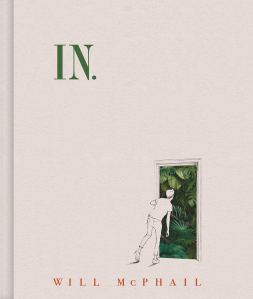 Like Orwell, In makes strategic use of colour spreads. “Say something that matters,” Nick scolds himself, and on the rare occasions when he does figure out what to say or ask – the magic words that elicit an honest response – it’s as if a new world opens up. These full-colour breakthrough scenes are like dream sequences, filled with symbols such as a waterfall, icy cliff, or half-submerged building with classical façade. Each is heralded by a close-up image on the other person’s eyes: being literally close enough to see their eye colour means being metaphorically close enough to be let in. Nick achieves these moments with everyone from the plumber to his four-year-old nephew.

Alternately laugh-out-loud funny and tender, McPhail’s debut novel is as hip as it is genuine. It’s a spot-on picture of modern life in a generic city. I especially loved the few pages when Nick is on a Zoom call with carefully ironed shirt but no trousers and the potential employers on the other end get so lost in their own jargon that they forget he’s there. His banter with Wren or with his sister reveals a lot about these characters, but there’s also an amazing 12-page wordless sequence late on that conveys so much. While I’d recommend this to readers of Alison Bechdel, Craig Thompson, and Chris Ware (and expect it to have a lot in common with Kristen Radtke’s forthcoming Seek You: A Journey through American Loneliness), it’s perfect for those brand new to graphic novels, too – a good old-fashioned story, with all the emotional range of Writers & Lovers. I hope it’ll be a wildcard entry on the Sunday Times Young Writer of the Year Award shortlist.
With thanks to Sceptre for the free copy for review.
Coma by Zara Slattery
In May 2013, Zara Slattery’s life changed forever. What started as a nagging sore throat developed into a potentially deadly infection called necrotising fascitis. She spent 15 days in a medically induced coma and woke up to find that one of her legs had been amputated. As in Orwell and In, colour is used to differentiate different realms. Monochrome sketches in thick crayon illustrate her husband Dan’s diary of the everyday life that kept going while she was in hospital, yet it’s the coma/fantasy pages in vibrant blues, reds and gold that feel more real.
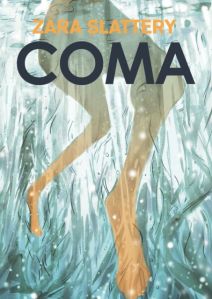 Slattery remembers, or perhaps imagines, being surrounded by nightmarish skulls and menacing animals. She feels accused and guilty, like she has to justify her continued existence. In one moment she’s a puppet; in another she’s in ancient China, her fate being decided for her. Some of the watery landscapes and specific images here happen to echo those in McPhail’s novel: a splash park, a sunken theatre; a statue on a plinth. There’s also a giant that reminded me a lot of one of the monsters in Spirited Away.
Meanwhile, Dan was holding down the fort, completing domestic tasks and reassuring their three children. Relatives came to stay; neighbours brought food, ran errands, and gave him lifts to the hospital. He addresses the diary directly to Zara as a record of the time she spent away from home and acknowledges that he doesn’t know if she’ll come back to them. A final letter from Zara’s nurse reveals how bad off she was, maybe more so than Dan was aware.


This must have been such a distressing time to revisit. In this interview, Slattery talks about the courage it took to read Dan’s diary even years after the fact. I admired how the book’s contrasting drawing styles recreate her locked-in mental state and her family’s weeks of waiting – both parties in limbo, wondering what will come next.
Brighton, where Slattery is based, is a hotspot of the Graphic Medicine movement spearheaded by Ian Williams (author of The Lady Doctor). Regular readers know how much I love health narratives, and with my keenness for graphic novels this series couldn’t be better suited to my interests.
With thanks to Myriad Editions for the free copy for review.
Read any graphic novels recently?
The 1936 Club: Murder in the Cathedral and Ballet Shoes
It’s my third time participating in one of Simon and Karen’s reading weeks (after last year’s 1920 Club and 1956 Club). Like last time, I made things easy for myself by choosing two classics of novella length – as opposed to South Riding, another 1936 book on my shelves. They also both happen to be theatrical in nature.
Murder in the Cathedral by T.S. Eliot
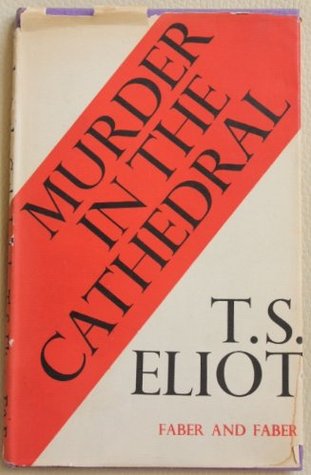 At about the time her memoir came out, I remember Jeanette Winterson describing this as her gateway drug into literature: she went to the library and picked it out for her mother, thinking it was just another murder mystery, and ended up devouring it herself. It is in fact a play about the assassination of Thomas à Becket, a medieval archbishop of Canterbury. The last time I read a play was probably eight years ago, when I was on an Alan Ayckbourn kick; before that, I likely hadn’t read one since my college Shakespeare class. And indeed, this wasn’t dissimilar to Shakespeare’s histories (or tragedies) in content and tone. It is mostly in verse, with some rhyming couplets, offset by a couple of long prose passages.
I struggled mostly because of complete unfamiliarity with the context, though some liberal Googling would probably be enough to set anyone straight. The action takes place in December 1170 and is in two long acts, separated by an interlude in which Thomas gives a Christmas sermon. The main characters besides Thomas are three priests who try to protect him and a chorus of local women who lament his fate. In Part I there are four tempters who, like Satan to Jesus in the desert, come to taunt Thomas with the lure of political power – upon being named archbishop, he resigned his chancellorship. The four knights, who replace the tempters in Part II and ultimately kill Thomas, feel that he betrayed King Henry and the nation by not keeping both roles and thus linking Church and state.
Most extraordinary is the knights’ prose defence late in the second act, in which they claim to have been completely “disinterested” in killing Thomas and that it was his own fault – to the extent that his death might as well be deemed a suicide. I always appreciate a first-person plural chorus, and I love Eliot’s poetry in general: there are some of his lines I keep almost as mantras, and more I read nearly 20 years ago that still resonate. I expected notable quotes here, but there were no familiar lines. As usually is the case with plays, this probably works better on stage. A nice touch was that my 1938 Faber copy, acquired from the free bookshop we used to have in our local mall, was owned by two fellows of St. Chad’s College, Durham, whose names appear one after the other in blue ink on the flyleaf. One of them added in marginal notes relating to how the play was performed by the Pilgrim Players in March 1941.
My rating: 
Ballet Shoes by Noel Streatfeild
I was glad to have an excuse to read this beloved children’s classic. Like many older books and films geared towards children, it’s a realistic fantasy about orphans finding affection and success. Great-Uncle Matthew (“Gum”) goes hunting for fossils around the world and has a peculiar habit of finding unwanted babies that are to be raised by his niece, Sylvia (“Garnie”), and a nursemaid, Nana. He names the three girls he has magically acquired Pauline, Petrova, and Posy, and gifts them all the surname Fossil. When Gum goes back out on his travels, the money soon runs out and the girls’ schooling takes a backseat to the need for money. Sylvia takes in lodgers and the girls are accepted to attend a dance and theatre academy for free.
 Every year, the sisters vow to do all they can to get the Fossil name in history books – and this on their own merit, not based on anything their (unknown) ancestors have done – and to get as much household money for Garnie as possible. Pauline is a gifted actress and Posy a talented dancer, but Petrova knows the performing world is not for her; she’d rather learn about how machines work, and operate cars and airplanes. While beautiful blonde Pauline plays the lead role in Alice in Wonderland and one of the princes in Richard III, Petrova is happy to stay in the background as a fairy or a page in Shakespeare productions.
I found the social history particularly interesting here. The family seems upper class by nature, yet a lack of money means they find it a challenge to keep the girls in an appropriate wardrobe. There is much counting of guineas and shillings, with Pauline the chief household earner. Acting in plays and films is no mere hobby for her. The same goes for Winifred, who auditions opposite Pauline for Alice but doesn’t get the part – even though she is the better actress and needs the money to care for her ill father and five younger siblings – because she’s not as pretty. Pauline and Petrova also notice that child actors with cockney accents don’t get picked for the best roles. The Fossils sometimes feel compassion for those children worse off than themselves, but at other times let their achievements go to their heads.
At a certain point, I wearied of the recurring money, wardrobe, and audition issues, but I still found this a charming book about how luck and skill combine as girls dream about who they want to be when they grow up. There are also some cosy and witty turns of phrase, like “She was in that state of having a cold when nothing is very nice to do … she felt hot, and not very much like eating toffee, and what is the fun of making toffee unless you want to eat it.” I daresay if I had encountered this at age seven instead of 37, it would have been a favourite.
My rating: 
The Still Point (of the Turning World & Sanctuary)
Amy Sackville’s debut novel, The Still Point, had been on my radar ever since I read her follow-up, Orkney. I finally put it on my wish list and got a copy for Christmas. In the meantime, I’d also acquired a copy of Emily Rapp’s memoir The Still Point of the Turning World as part of a big secondhand book haul at the start of the first lockdown.
Both books take their title from the eminently quotable T.S. Eliot*, specifically his poem “Burnt Norton.” I couldn’t resist the urge to review them together (along with Rapp’s recent sequel) – although, unlike with my dual review of two books titled Ex Libris, I won’t pit them against each other because they’re such different books.
That said, they do share a dreamlike quality and the search for people and places that might serve as refuges in a shattered life. All: 
The Still Point by Amy Sackville (2010)
no
I am not heroic, I prefer
not to conquer
polar regions, my
gardens in July
serve for me.
~from “emperor’s walk” by G.F. Dutton
 A sweltering summer versus an encasing of ice; an ordinary day versus decades of futile waiting. Sackville explores these contradictions only to deflate them, collapsing time such that a polar explorer’s wife and her great-great-niece can inhabit the same literal and emotional space despite being separated by more than a century. When Edward Mackley went off on his expedition in the early 1900s, he left behind Emily, his devoted, hopeful new bride. She was to live out the rest of her days in the Mackley family home with her brother-in-law and his growing family; Edward never returned. Now Julia and her husband Simon reside in that same Victorian house, serving as custodians of memories and artifacts from her ancestors’ travels and naturalist observations. From one early morning until the next, we peer into this average marriage with its sadness and silences. On this day, Julia discovers a family secret, and late on reveals another of her own, that subtly change how we see her and Emily.
This is a highly fluid and sensual novel, but somehow so sinuous as to be hard to grasp. I took in its interlocking story lines just a few pages at a time; floating on the gorgeous prose, basking in the alternating heat and chill. Sackville’s greatest stylistic debt must be to Virginia Woolf, but I was also reminded of Lucy Wood’s Weathering and Evie Wyld’s The Bass Rock – two similarly beautiful books in which a house and its ghosts are major characters – and of how some of Sarah Moss’s work braids the past into the everyday. I suspect this won’t be for every reader, but if you can find the right moment and mood, you might just be entranced.
One of Sackville’s research sources was Arctic Dreams by Barry Lopez, a work I recently skimmed for a winter post. Two passages that stood out to me apply equally well to Rapp’s books:
 “The literature of nineteenth-century arctic exploration is full of coincidence and drama—last-minute rescues, a desperate rifle shot to secure food for starving men, secret letters written to painfully missed loved ones. There are moments of surreal stillness, as in Parry’s journal when he writes of the sound of the human voice in the land. And of tender ministration and quiet forbearance in the face of inevitable death.”
“The continuous work of the imagination, I thought, to bring what is actual together with what is dreamed is an expression of human evolution. The conscious desire is to achieve a state, even momentarily, that like light is unbounded, nurturing, suffused with wisdom and creation, a state in which one has absorbed that very darkness which before was the perpetual sign of defeat.”
The Still Point of the Turning World by Emily Rapp (2013)
 In 2011 Rapp’s baby son Ronan was diagnosed with Tay-Sachs disease, a degenerative nerve condition that causes blindness, deafness, seizures, paralysis and, ultimately, death. Tay-Sachs is usually seen in Ashkenazi Jews, so it came as a surprise: Rapp and her husband Rick both had to be carriers, whereas only he was Jewish; they never thought to get tested.
This memoir was written while Ronan was still alive, and the rapid, in-the-thick-of-it composition is evident: it rides the same rollercoaster of feelings over and over again, even repeating some of the same facts. I put this down to the brain fog of anticipatory grief. “The constant push-pull: here but not for long. What will come next?” Rapp quotes extensively from other writers who have grappled with bereavement, especially poets, as if building an inner library to bolster herself against what is to come (“it wasn’t consolation I needed or desired, but the tools to walk through this fire without being consumed by it”).
Rapp puts her son’s life into context through memories of growing up disabled (she had a rare condition that necessitated the amputation of a leg as a child, and wore a prosthesis) in the conservative Midwest, contrasting the Christian theology she grew up in and studied at college with the Eastern and New Age spiritualities that prevail in Santa Fe, where she and Rick then lived with Ronan. She ponders the worth of a life that will be marked by no traditional achievements.
In The Art of Memoir, Mary Karr advises seven years between the events and the writing about them, but Rapp explains her strategy of instant reaction thus:
grief, this extreme experience, forces a writer to draw on her deepest resources, and such a dive demands so much work that what comes up must be heaved onto the page almost immediately; otherwise it might eat the thinker alive, drown them … Or at least that’s how I felt. You can eat fire for only so long, and then you’ve got to spit it out in another form or risk the burn.
She felt that “rendering loss was a way of honoring life,” which even with this death sentence hanging over the family had its times of pure joy: “there existed inside this helpless, frantic sadness exquisite moments of pristine happiness and an almost-perfect peace.” The title perfectly captures the necessity of finding this calmness of soul amidst a tumultuous life.
Sanctuary by Emily Rapp Black (2021)
 Things got worse before they got better. As is common for couples who lose a child, Rapp and her first husband separated, soon after she completed her book. In the six months leading up to Ronan’s death in February 2013, his condition deteriorated rapidly and he needed hospice caretakers. Rapp came close to suicide. But in those desperate months, she also threw herself into a new relationship with Kent, a 20-years-older man who was there for her as Ronan was dying and would become her second husband and the father of her daughter, Charlotte (“Charlie”). The acrimonious split from Rick and the astonishment of a new life with Kent – starting in the literal sanctuary of his converted New Mexico chapel, and then moving to California – were two sides of a coin. So were missing Ronan and loving Charlie.
Sanctuary is a similarly allusive text, with each chapter prefaced by a poem, and it is again full of flashbacks, threading all the seemingly disparate parts of a life into a chaotic tapestry. Rapp Black questions the sorts of words that she and her experience got branded with: “brave,” “tragic,” “resilient” – “I unwittingly became the poster child,” she wryly reports. In the same way that she’d been praised for “overcoming disability,” she saw that she was now being trotted out as an example of coping with unimaginable loss. But she didn’t want to be someone’s model; she just wanted the chance to live her life and be happy again. Her wisdom isn’t what makes it onto inspirational stickers, but it’s genuine and hard-won:
“It has little or nothing to do with bravery. Nobody is charging into warfare here. No gold stars are given because none are earned. I am no warrior of love or anything else.”
“Time doesn’t heal anything; it just changes things—reshapes and reorients them.”
“resilience is not always a function of the desire to survive. Either you survive, or you don’t. There’s no fault, no moral judgment, assigned to either outcome.”
“Isn’t it true that what doesn’t kill you makes you stronger? No. What doesn’t kill you changes you, and those who chose to love you. That is what it means to bear witness, a unique and salvific form of resilience.”
Although I was glad to have read both, to have experienced both the in-the-moment and the after-the-fact, I think Sanctuary could easily function as a standalone memoir because of how much of Ronan’s illness it relives. For being that bit more measured and wrought, I think it’s the better book by a hair’s breadth. It tames the fire and just radiates the light and warmth.
I read an advanced e-copy via NetGalley. Thanks to John Murray Press for the approval.
*Other Eliot-sourced titles I have reviewed: Teach Us to Sit Still by Tim Parks and The Stillness The Dancing by Wendy Perriam.
Doorstopper of the Month: The Stillness The Dancing (1985) by Wendy Perriam
When she read my review of As a God Might Be by Neil Griffiths, Liz Dexter suggested Wendy Perriam’s books as readalikes and very kindly sent me one to try: The Stillness The Dancing – a title whose lack of punctuation confused me until I discovered that it’s taken from a line of T. S. Eliot’s “East Coker”: “So the darkness shall be the light, and the stillness the dancing.” It took me nearly a year and a half to get around to it, but I’ve finally read my first Perriam (fairly autobiographical, it seems) and found it very striking and worthwhile.
 The comparison with the Griffiths turned out to be apt: both are hefty, religion-saturated novels dwelling on themes of purpose, mysticism, asceticism, and the connection between the mind and body, especially when it comes to sex. Perriam’s protagonist is Morna Gordon, a 41-year-old translator. The end of her marriage was nearly as disorienting for her as the loss of her Catholic faith. Occasional chapters spotlight the perspective of the other women in this family line: Morna’s mother, Bea, who’s been a widow for as long as Morna has been alive and finally finds a vocation at an age when most people are retiring; and Morna’s daughter Chris, who’s tasting freedom before starting uni and settling down with her diver boyfriend, Martin.
When Morna accompanies Bea on a week-long religious retreat in the countryside, she meets David Anthony, a younger man she initially assumes is a priest. Here to deliver a lecture on miracles, he’s a shy scholar researching a seventh-century Celtic saint, Abban, who led an austere life on a remote Scottish island. Morna is instantly captivated by David’s intellectual passion, and in lieu of flirting offers to help him with his medieval translations. Still bruised by her divorce, she longs to make a move yet doesn’t want to scare David off. After 14 years of Neil telling her she was frigid, she’s startled to find herself in the role of sexual temptress.
Staid suburban England is contrasted with two very different locales: Saint Abban’s island and the outskirts of Los Angeles, where Morna and Chris travel for a few weeks in January so Chris can spend time with her father and meet his new family: (younger) wife Bunny and Chris’s four-year-old half-brother, Dean. California is “another world completely,” a fever dream of consumerism and excess, and Morna does things that are completely outside her comfort zone, like spending hours submerged in a sensory deprivation tank and breaking down in tears in the middle of Bunny’s women’s consciousness-raising circle.
The differences between England and California are exaggerated for comic effect in a way that reminded me of David Lodge’s Changing Places – but if for Chris it’s all about hedonistic self-expression, for Morna America is more of an existential threat, and she rushes back to be with David. There are several such pivotal moments when Morna flees one existence for another, often accompanied by a time of brain fog: alcohol, sleeping pills or grief disrupt her normal thought processes, as reflected in choppy, repetitive sentences.
I bristled slightly at the melodramatic nature of the final 60 pages, unsure to what extent the ending should be seen as altering the book’s overall message: Morna is denied a full transformation, but it seems she’s still on the spiritual path towards detachment from material things. Though still a lapsed Catholic, she finds some fresh meaning in the Church’s history and rituals. As her mother and daughter both embark on their new lives, her ongoing task is to figure out who she is apart from the connections that have defined her for so many years.
My favorite parts of the novel, not surprisingly, were Morna’s internal monologue – and her conversations with David – about faith and doubt. Perhaps I wasn’t wholeheartedly convinced that all the separately enjoyable components fit together, or that all the strands were fully followed through, but it’s an exuberant as well as a meditative work and I will certainly seek out more from Perriam.
Some favorite lines:
(Morna thinks) “If one had been exhorted all one’s girlhood to live for God alone, then how could one have purpose if He vanished?”
David: “I know our society shies away from any type of self-denial, regards it as neurotic or obsessional, but I disagree with that. Anything worth having is worth suffering for.”
Morna: “Are you still a Catholic? I know you said you believed in God, but that’s not the same, is it?” / David: “I’m still redefining all my terms. That can take a lifetime.”
Author note: Wendy Perriam’s name was completely new to me, though this was her 11th novel. Now in her 70s, she is still publishing fiction, with a crime novel released in 2017.
Page count: 536
My rating:
Wellcome Book Prize 10th Anniversary Blog Tour: Teach Us to Sit Still by Tim Parks (2010)
“Launched in 2009, the Wellcome Book Prize, worth £30,000, celebrates the best new books that engage with an aspect of medicine, health or illness, showcasing the breadth and depth of our encounters with medicine through exceptional works of fiction and non-fiction.” I was delighted to be asked to participate in the official Wellcome Book Prize 10th anniversary blog tour. For this stop on the tour I’m highlighting a shortlisted title from 2010, a very strong year. The winning book, Rebecca Skloot’s The Immortal Life of Henrietta Lacks, along with Siddhartha Mukherjee’s The Emperor of All Maladies, turned me on to health-themed reading and remains one of my most memorable reads of the past decade.
Teach Us to Sit Still: A Sceptic’s Search for Health and Healing by Tim Parks
 Tim Parks, an Englishman, has lived and worked in Italy for over 30 years. He teaches translation at the university in Milan, and is also a novelist and a frequent newspaper columnist on literary topics. Starting in his forties, Parks was plagued by urinary problems and abdominal pain. Each night he had to get up five or six times to urinate, and when he didn’t have fiery pangs shooting through his pelvic area he had a dull ache. Doctors assessed his prostate and bladder in tests that seemed more like torture sessions, but ultimately found nothing wrong. While he was relieved that his worst fears of cancer were allayed, he was left with a dilemma: constant, unexplained discomfort and no medical strategy for treating it.
When conventional medicine failed him, Parks asked himself probing questions: Had he in some way brought this pain on himself through his restless, uptight and pessimistic ways? Had he ever made peace with his minister father’s evangelical Christianity after leaving it for a life based on reason? Was his obsession with transmuting experience into words keeping him from living authentically? During a translation conference in Delhi, he consulted an ayurvedic doctor on a whim and heard words that haunted him: “This is a problem you will never get over, Mr Parks, until you confront the profound contradiction in your character.”
The good news is: some things helped. One was the book A Headache in the Pelvis, which teaches a paradoxical relaxation technique that Parks used for up to an hour a day, lying on a yoga mat in his study. Another was exercise, especially running and kayaking – a way of challenging himself and seeking thrills in a controlled manner. He also started shiatsu therapy. And finally, Vipassana meditation retreats helped him shift his focus off the mind’s experience of pain and onto bodily wholeness. Vipassana is all about “seeing things as they really are,” so the retreats were for him a “showdown with this tangled self” and a chance to face the inevitability of death. Considering he couldn’t take notes at the time, I was impressed by the level of detail with which Parks describes his breakthroughs during meditation.
Though I was uneasy reading about a middle-aged man’s plumbing issues and didn’t always follow the author on his digressions into literary history (Coleridge et al.), I found this to be an absorbing and surprising quest narrative. If not with the particulars, I could sympathize with the broader strokes of Parks’s self-interrogation. He wonders whether sitting at a desk, tense and with poor posture, and wandering around with eyes on the ground and mind on knots of words for years contributed to his medical crisis. Borrowing the title phrase from T.S. Eliot, he’s charted an unlikely journey towards mindfulness in a thorough, bracingly honest, and diverting book that won’t put off those suspicious of New Age woo-woo.
My rating: 
With thanks to Midas PR for the free copy for review.
Wellcome Book Prize 2010
Winner: The Immortal Life of Henrietta Lacks by Rebecca Skloot
Shortlist: Angel of Death by Gareth Williams; Grace Williams Says It Loud by Emma Henderson; So Much for That by Lionel Shriver; Medic by John Nicols and Tony Rennell; Teach Us to Sit Still by Tim Parks
Judges: Comedy writer and television presenter Clive Anderson (chair); novelist and academic Maggie Gee; academic and writer Michael Neve; television presenter and author Alice Roberts; academic and writer A.C. Grayling
The 2019 Wellcome Book Prize longlist will be announced in February. I’m already looking forward to it, of course, and I’m planning to run a shadow panel once again.
Elif Shafak, award-winning author, is the chair of this year’s judges and is joined on the panel by Kevin Fong, consultant anaesthetist at University College London Hospitals; Viv Groskop, writer, broadcaster and stand-up comedian; Jon Day, writer, critic, and academic; and Rick Edwards, broadcaster and author.
See below for details of where other reviews have appeared or will be appearing soon as part of the Wellcome Book Prize 10th anniversary blog tour.

20 Books of Summer, #5–8: Anderson, Cusk, Fitch & L’Engle
I’ve been reading a feminist memoir set on Cape Cod, a subtle novel about the inner life and outward experiences of a writer, a soapy literary thriller about a troubled mother and teen daughter, and a slightly melancholy reminiscence of an aged mother succumbing to dementia.
A Walk on the Beach: Tales of Wisdom from an Unconventional Woman by Joan Anderson (2004)
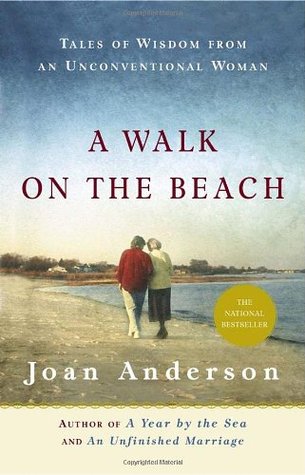 This is the third volume in a loose autobiographical trilogy about Anderson’s experiment with taking a break from her marriage and living alone in a Cape Cod cottage to figure out what she really wanted from the rest of her life. Specifically, this book is about the inspirational relationship she formed with Joan Erikson, who moved to the area in her eighties when her husband, the famous psychologist Erik Erikson, was admitted to a care home. Joanie was a thinker and author in her own right, publishing books on life’s stages, especially those of older age. She encouraged Anderson to have the confidence to write her own story, and to take up challenges like a trip to Peru and learning to weave on a loom. Joanie’s aphoristic advice is valuable, but there’s a fair bit of overlap between this book and A Year by the Sea, which I would recommend over this.
My rating: 
Some of Joan Erikson’s words of wisdom:
“Doing something with your hands, rather than your head, is often the best route to clarity.”
“wisdom comes from life’s experiences well digested. Stop relying so much on your mind and get in touch with experience.”
“The struggle is to try and obtain a sense of participation in your life the whole way through. We must treasure old age, but not wallow in nostalgia.”
Transit by Rachel Cusk (2016)
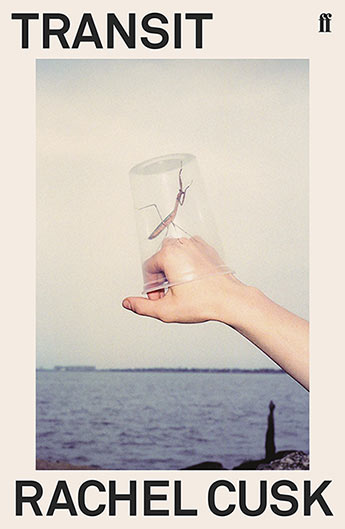 I finally made it through a Rachel Cusk book! (This was my third attempt; I made it just a few pages into Aftermath and 60 pages through Outline.) I suspected this would make a good plane read, and thankfully I was right. Each chapter is a perfectly formed short story, a snapshot of one aspect of Faye’s life and the relationships that have shaped her: a former lover she bumps into in London, a builder who tells her the flat she’s bought is a lost cause, the awful downstairs neighbors who hate her with a passion, the fellow writers (based on Edmund White and Karl Ove Knausgaard?) at a literary festival event who hog most of the time, the jolly Eastern European construction workers who undertake her renovations, a childless friend who works in fashion design, and a country cousin who’s struggling with his new blended family.
Like in Outline, the novel is based largely on the conversations Faye overhears or participates in (“I had found out more, I said, by listening than I had ever thought possible”), but I sensed more of her personality this time, and could relate to her questioning: Why do her neighbors hate her so? How much of her life is fated, and how much has she chosen? I doubt I’ll read another book by Cusk, but I ended up surprisingly grateful to have gotten hold of this one as a free proof copy of the new paperback edition from the Faber Spring Party.
My rating:
Some favorite lines:
“we examine least what has formed us the most, and instead find ourselves driven blindly to re-enact it.”
“Without children or partner, without meaningful family or a home, a day can last an eternity: a life without those things is a life without a story, a life in which there is nothing – no narrative flights, no plot developments, no immersive human dramas – to alleviate the cruelly meticulous passing of time.”
White Oleander by Janet Fitch (1999)
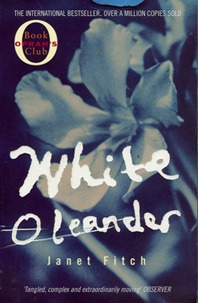 Man, that Oprah knows how to pick ’em! This was a terrific read; I’m not sure why I’d never gotten to it before. I read huge chunks during my travel to the States and then slowed down quite a bit, which was a shame because it meant I felt less connected to Astrid’s later struggles in the foster care system. It’s an atmospheric novel full of oppressive Los Angeles heat and a classic noir flavor that shades into gritty realism as it goes on, taking us from when Astrid is 12 to when she’s a young woman out in the world on her own.
Astrid’s mother Ingrid, an elitist poet, becomes obsessed with a lover who spurned her and goes to jail for his murder. Bouncing between foster homes and children’s institutions, Astrid is plunged into a world of sex, drugs, violence and short-lived piety. “Like a limpet I attached to anything, anyone who showed me the least attention,” she writes. Her role models change over the years, but always in the background is the icy influence of her mother, through letters and visits.
Fitch’s writing is sumptuous, as in a house “the color of a tropical lagoon on a postcard thirty years out of date, a Gauguin syphilitic nightmare.” I might have liked a tiny bit more of Ingrid in the book, but I can still recommend this one wholeheartedly as summer reading.
My rating:
Some favorite lines:
The knock-out opening two lines: “The Santa Anas blew in hot from the desert, shriveling the last of the spring grass into whiskers of pale straw. Only the oleanders thrived, their delicate poisonous blossoms, their dagger green leaves.”
“I couldn’t imagine my mother in prison. She didn’t smoke or chew on toothpicks. She didn’t say ‘bitch’ or ‘fuck.’ She spoke four languages, quoted T. S. Eliot and Dylan Thomas, drank Lapsang souchong out of a porcelain cup. She had never been inside a McDonald’s. She had lived in Paris and Amsterdam. Freiburg and Martinique. How could she be in prison?”
The Summer of the Great-Grandmother by Madeleine L’Engle (1974)
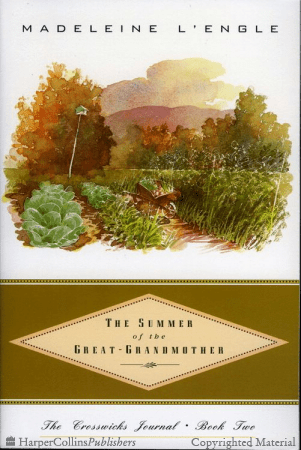 L’Engle is better known for children’s books, but wrote tons for adults, too. In this second volume of The Crosswicks Journal, she recounts her family history as a way of remembering on behalf of her mother, who at age 90 was slipping into dementia in her final summer. “I talked awhile, earlier this summer, about wanting my mother to have a dignified death. But there is nothing dignified about incontinence and senility.” L’Engle found herself in the unwanted position of being like her mother’s mother, and had to accept that she had no control over the situation. “This summer is practice in dying for me as well as for my mother.”
One of the reasons L’Engle was driven to write science fiction was because she couldn’t reconcile the idea of permanent human extinction with her Christian faith, but nor could she honestly affirm every word of the Creed. Hers is a more broad-minded, mystical spirituality that really appeals to me. (Her early life reminds me of May Sarton’s, as recounted in I Knew a Phoenix: both were born right around World War I, raised partially in Europe and sent to boarding school; a frequent theme in their nonfiction is the regenerative power of solitude and of the writing process itself.)
My rating:
Some favorite lines:
“I said [in a lecture] that the artist’s response to the irrationality of the world is to paint or sing or write, not to impose restrictive rules but to rejoice in pattern and meaning, for there is something in all artists which rejects coincidence and accident. And I went on to say that we must meet the precariousness of the universe without self-pity, and with dignity and courage.”
“Our lives are given a certain dignity by their very evanescence. If there were never to be an end to my quiet moments at the brook, if I could sit on the rock forever, I would not treasure these minutes so much. If our associations with the people we love were to have no termination, we would not value them as much as we do.”
 Bookish Beck = Rebecca Foster. American transplant to England. Freelance proofreader and book reviewer.
 Bookish Beck