Books of Summer, 3–4: Anthony Bourdain and Meron Hadero
Back to the foodie lit. A chef’s memoir of adventurous travel and eating, and a short story collection about Ethiopian American immigrants – for some of whom learning how to cook traditional American food is a sign of integration.
A Cook’s Tour: In Search of the Perfect Meal by Anthony Bourdain (2001)
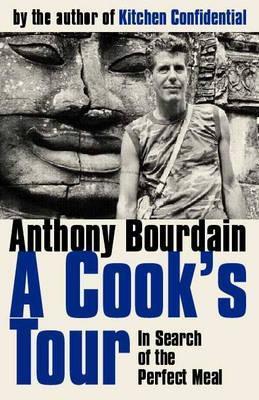 Anthony Bourdain also appeared on my summer reading list when I reviewed Kitchen Confidential in 2020; I have both books in an omnibus edition. The chef acknowledges there’s no such thing as a perfect dining experience as there are many subjective factors apart from the food, but a few of his meals here are pretty close to ideal. Others are horrific. But everywhere he goes, from England to Cambodia, he gives a fair try. Four interspersed chapters are set in Vietnam, a country he falls in love with, but the rest are like individual essays with a different destination each time: Spain, Russia, Morocco, Japan, Scotland…
Some places are chosen due to personal significance or professional connections. He goes back to where he spent childhood summers in France, but it doesn’t live up to expectations: “I’d thought everything would be instant magic. That the food would taste better because of all the memories. … But you can never be ten years old again.” His boss arranges a pig roast for him in Portugal; he travels to the state in Mexico where most of his kitchen staff come from. With several other chefs, he journeys to Thomas Keller’s The French Laundry in California for a 20-course tasting menu – the rundown of the dishes takes him several pages. The key ingredients of this and the other near-perfect meals seem to be excellent quality of food, innovative flavors, a variety of dishes, and a languid pace with the alcohol flowing.
Bourdain sheepishly confesses that his travels were documented for television; the Food Network made him agree to some filming opportunities he would otherwise have avoided. Vegetarians be warned: some of these involve slaughter, and/or eating exotic animals. Aside from the pig, there’s a whole lamb cooked over a fire in the desert in Morocco, a turkey he beheads, and rabbits he shoots. And while you might think he’d eat anything with pleasure, there are in fact a few meals that leave him feeling ill: iguana tamales, bird’s nest soup, and dishes that use up all parts of a cobra. A notorious vegetarian hater, he even agrees to attend a vegan potluck in Berkeley, but reports that “not one of them could cook a f***ing vegetable.”
This was fast-moving, brash and funny; just as good as Kitchen Confidential and something I’d recommend to anyone who enjoys cooking shows or stunt travel. (Free – swap shop) 
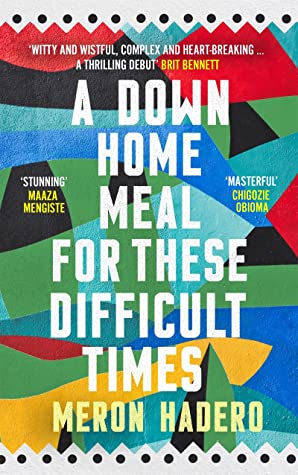
A Down Home Meal for These Difficult Times by Meron Hadero (2022)
Debut author Hadero won the Restless Books Prize for New Immigrant Writing for this work in progress, many of whose stories had been published in periodicals in 2015–20. The 15 stories are roughly half in the first person and half in the third person, and apart from a couple whose place or character origins aren’t specified, I think all are about Ethiopians or Ethiopian Americans. Often, the protagonist is a recent immigrant. Yohannes, in “Medallion,” is recruited by his taxi driver almost immediately upon his arrival in Los Angeles, but finds that his American dream never comes through. In “The Thief’s Tale,” an old Ethiopian man who speaks no English is lost in Prospect Park. When the man who holds him up at knifepoint realizes there is no watch or wallet to take, he lets him call his daughter from a payphone and, as they wait, the two strangers share their stories of failure and regret.
Sometimes Ethiopia is the setting instead. “The Suitcase” has Saba getting ready to return to the USA after a one-month visit to Addis Ababa, her bag 10 kilograms too heavy because of everything people are sending back with her. In “The Street Sweep,” Getu hopes to impress a departing NGO worker enough at his leaving party at the Addis Sheraton that he’ll get a life-changing job offer. This one was a standout, though distressing for how it rests on misunderstanding.
 My favorites seem like they could be autobiographical for the author. “The Wall” is narrated by a man who immigrated to Iowa via Berlin at age 10 in the mid-1980s. At a potluck dinner, he met Professor Johannes Weill, who gave him free English lessons. Six years later, he heard of the Berlin Wall coming down and, though he’d lost touch with the professor, made a point of sending a note. The connection across age, race and country is touching. “Sinkholes” is a short, piercing one about the single Black student in a class refusing to be the one to write the N-word on the board during a lesson on Invisible Man. The teacher is trying to make a point about not giving a word power, but it’s clear that it does have significance whether uttered or not. “Swearing In, January 20, 2009” is a poignant flash story about an immigrant’s patriotic delight in Barack Obama’s inauguration, despite prejudice encountered.
The title story is the only foodie link, but it’s a sweet one. Two women who attend church Amharic classes in New York City admit that they can’t cook, but want to impress at the PTA bake sale, so go in search of a quintessential American cookbook, and in the years to come prepare dishes from The Good Housekeeping Illustrated Cookbook every time there is a crisis. “When Yeshi’s husband left her for a blonde waitress, they made Broiled Hamburg Steak, just the once. … When Jazarah’s credit cards were stolen and maxed out, they made trays of Corn Fritters.” Eventually, they start to make a living from their own food truck.
There were no bad stories here per se, but several too many, and not enough variety. I also didn’t warm to the couple of political satires involving manuscripts. “The Case of the Missing _______,” set in 2036 and counting backwards from Day 100, is a document full of erasure, produced by the Minnesota newspaper The Exile Gazeta and concerning an absent authoritarian leader. It made me think of Ella Minnow Pea, or perhaps novels by Jonathan Safran Foer and Hernan Diaz, and felt different to the rest, but not in a good way. It would be interesting to try a novel by Hadero someday. See also Liz’s review. (Other challenges this met: review catch-up, set-aside) 
With thanks to Canongate for the proof copy for review.
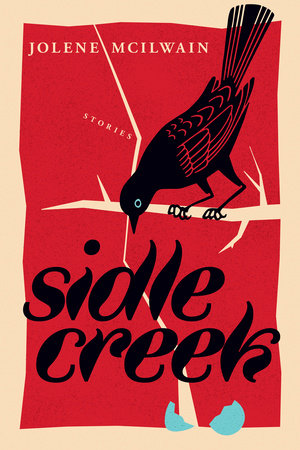
Sidle Creek by Jolene McIlwain (Blog Tour)
I’m a sucker for “dirty realism,” a term coined in the 1980s to encompass gritty stories of blue-collar Americana: Ron Rash, David Vann, Daniel Woodrell et al. (I wrote a whole article about it in 2013). It’s less common, certainly, to find women writing in this subgenre, and that feminine touch is part of what makes Sidle Creek unique. In this debut collection of 22 short stories, loosely linked by their location in the Appalachian hills in western Pennsylvania and a couple of recurring minor characters, Jolene McIlwain softens the harsh realities of addiction, poverty and violence with the tender bruises of infertility and lost love.
The title story, which opens the book, has a shifting first-person point-of-view, first telling us about and then putting us into the mind of Esme Andersen, who’s 20 in 1975. Various diagnoses have plagued her family, medical words that repeat as chants: hemorrhage, endometriosis. Superstitions around the creek cast it alternately as a potential site of harm or healing as her single father tries to help her deal with her severe periods. The cover image comes from “Shell,” in which Tiller Shanty reads signs in the markings on red-winged blackbird eggs. He learned his skill of divination from his Vietnamese wife, but conceals from her a portent about her future. It turns out there’s more than one way to lose a beloved.
Grief is a resonant theme in so many of the stories. “The Fractal Geometry of Grief” is a shining example. Hubert Ashe, a widowed mathematician, becomes obsessed with a doe and sets up trail cams and a feeding station to watch her. It’s not clear whether he believes the animal is a reincarnation of his wife or not, but it’s unwise to get so attached in a hunting area. In “Seeds,” a man finds a photograph of his dying wife as a girl and revisits the sadness of her life. “Steer,” one of the most affecting stories, has a middle-aged man hit by anxiety, unable to forget the death of one of their cattle back when he was 16. As horrific as the experience was, it made him receptive to both beauty and pain.
Animal suffering is indeed frequent – something that seems important to mention, as I know a lot of readers who avoid scenes of it whenever possible. In “Eminent Domain,” the electricity shed where teenagers used to go drinking is found to be full of slaughtered cats. It’s the prompt the protagonist needs to escape this dead-end town. “Loosed” is a masterpiece in the vein of Demon Copperhead (though much more violent) about a man who makes money on increasingly cruel sport: cock fighting, then dog fighting, then dirty fights between his own four sons. The flash forward that ends this one is devastating. I, too, am sensitive to reading about animal deaths, but the animal suffering only matches the human here. The nastiness of “The Less Said” makes that plain.
Pregnancy or infant loss is a recurring element. In just three pages, “Seed to Full” expresses a world of sorrow as a woodworker crafts a coffin for his infant son. Even where it is not a central subject, infertility is mentioned in a number of stories. In “You Four Are the One,” four adolescent neighbor girls help Cinta Johns out around the house, hoping with her that this fifth pregnancy will be the one that lasts. “The Steep Side,” a memorable closer that shifts between past and future, has a teen coming across a crashed van, a heavily pregnant woman, and an older woman claiming to be a nurse. What he sees haunts him into adulthood.
There’s an air of mystery to that one, and particularly in “Those Red Boots,” about the disappearance of a waitress who worked at a Hooters-style joint where all the comely staff wear the same uniforms and perform titillating dances. My preference was for longer stories like this where you get greater depth of characterization and more scenes and dialogue. I might have considered cutting a handful of the flash-length stories. However, even in these micro-fictions, there are still interesting setups. My favorite among them was “The Fourth,” in which Independence Day fireworks are triggering for shell-shocked Uncle Ron.
At times harrowing, always clear-eyed, these stories are true to life and compassionate about human foibles and animal pain. I would highly recommend them to readers of Kent Haruf and Jayne Anne Phillips. McIlwain has such an established voice that this hardly seems like a first book. I can’t wait to read whatever she writes next.
With thanks to Melville House for the proof copy for review.
Buy Sidle Creek from Bookshop.org [affiliate link]
I was delighted to be invited to participate in the blog tour for Sidle Creek. See below for details of where other reviews have appeared or will be appearing soon.
Short Stories in September, Part I: Nam Le, Deesha Philyaw, Dan Rhodes
Part of my annual project to read as many short story collections as possible in September. Here’s the first three.
The Boat by Nam Le (2008)
Le, who was born in Vietnam and raised in Australia, won the Dylan Thomas Prize for this collection of seven stories. The opener, “Love and Honor and Pity and Pride and Compassion and Sacrifice” – the title being William Faulkner’s advice for what authors should write about – knocked my socks off. It’s a crisp slice of autofiction about his father coming to visit him while he is a student at the Iowa Writers’ Workshop. Nam (the character) is ambivalent about whether to write about his family’s history of escaping Vietnam by boat, but as a deadline looms he decides to go for it, no matter what his father might think. There’s a coy remark here from one of his friends: “you could just write about Vietnamese boat people all the time. … You could totally exploit the Vietnamese thing. But instead, you choose to write about lesbian vampires [not in this collection!] and Colombian assassins, and Hiroshima orphans—and New York painters with hemorrhoids.”
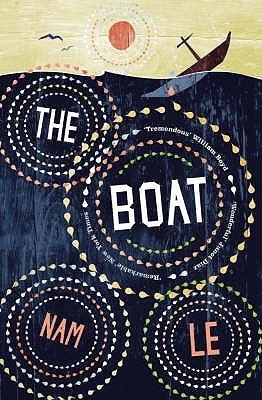 So there you have four of the story plots in a nutshell. “Cartagena” is an interesting enough inside look at a Colombian gang, but Le’s strategy for revealing that these characters would be operating in a foreign language is to repeatedly use the construction “X has Y years” for giving ages, which I found annoying. “Meeting Elise” is the painter-with-hemorrhoids one (though I would have titled it “A Big Deal”) and has Henry nervously awaiting his reunion with his teenage daughter, a cello prodigy. There’s a Philip Roth air to that one. “Hiroshima” is brief and dreamy, and works because of the dramatic irony between what readers know and the narrator does not. “The Boat,” the final story, is the promised Vietnam adventure, but took forever to get to. I skimmed/skipped two stories of 50+ pages, “Halflead Bay,” set among Australian teens, and “Tehran Calling.”
It’s a shame that the rest of the book didn’t live up to the first story. The settings and styles felt too disparate overall, with no linking theme. I know that authors are supposed to be able to write about whatever they want, rather than just sticking to their own heritage – a provincial attitude the above quote is mocking, surely – but I had to wonder why these stories mattered to the author, and thus why they should matter to me. As far as I can tell, this is all Le has published. He won another five awards for it, and landed on the National Book Foundation’s 5 under 35 list in 2008. What happened after that?? (Public library) 
The Secret Lives of Church Ladies by Deesha Philyaw (2020)
I’d heard such good things about this collection after its U.S. release (it was a National Book Award finalist and won a Los Angeles Times Book Prize, PEN/Faulkner Award and more), so was delighted to learn that it was coming to the UK earlier this year. These nine stories, mostly set among Black women in the Southern USA, are bold and sexy. The opening pair is a particularly provocative one-two punch. In “Eula,” two friends with benefits meet up in a hotel on New Year’s Eve 2000, as they do every year; narrator Caroletta is committed to this relationship, while Eula is only killing time until she can marry a man as everyone expects. In “Not-Daniel,” a man and woman have sex in a car parked behind a hospice to try to forget that their mothers are dying inside.
 “How to Make Love to a Physicist,” told in the second person, is about an art teacher scared to embark on a relationship with a seemingly perfect man she meets at a conference. “Dear Sister,” in the form of a long, gossipy letter, is about a tangled set of half-siblings. “Jael” alternates a young teen’s diary entries and her great-grandmother’s fretting over what to do with her wild ward. (The biblical title takes on delicious significance later on.) Multiple characters clash with authority figures about church attendance, with the decision to leave the fold coinciding with claiming autonomy or rejecting hypocrisy.
“Peach Cobbler” and “Snowfall” were my two favourites. In the former, reminiscent of Tayari Jones’s Silver Sparrow, Olivia’s mother has been having a long-term affair with the pastor, for whom she bakes a special dessert she denies her own daughter (“I’m not going to raise [my child] to go through life expecting it to be sweet, when for her, it ain’t going to be”). The latter has Arletha and Rhonda suffering through a Midwest winter and dreaming of a Southern crab boil, but fearing they can never go home to mothers who stubbornly refuse to acknowledge their bond as anything other than friendship (“like a beautiful quilt in summertime, my mother’s love was the suffocating kind”).
The insight into familial and romantic relationships, the frank bisexuality, the allusions to scripture and churchgoing traditions, and the folksy foods and metaphors all made this stand out for me. The collection tails off with two unmemorable stories, but the previous seven are more than compelling enough for me to recommend this to your attention.
With thanks to Pushkin Press (the ONE imprint) for the proof copy for review.
Anthropology: and a Hundred Other Stories by Dan Rhodes (2000)
 I should have known, after reading When the Professor Got Stuck in the Snow (an obvious satire on Richard Dawkins’s atheism) in 2017, that Dan Rhodes’s humour wasn’t for me. However, I generally love flash fiction so thought I might as well give these 101 stories – all about 100 words, or one paragraph, long – a go when I found a copy in a giveaway box across the street. Each has a one-word title, proceeding alphabetically from A to W, and many begin “My girlfriend…” as an unnamed bloke reflects on a relationship. Most of the setups are absurd; the girlfriends’ names (Foxglove, Miracle, Nightjar) tell you so, if nothing else.
There’s a kind of ‘nothing sacred’ approach here, with death, disability, race and gender the fodder for any number of gags. For example, in the title story the ex-girlfriend “went to Mongolia to study the gays. … It breaks my heart to think of her herding those yaks in the freezing hills, … nothing but a handlebar moustache to keep her top lip warm.” Or “Taxidermy”: “Columbine broke her neck by mistake. I took her to the taxidermist, and they delivered to my house a fortnight later. When I unwrapped the package I found the wrong girl.” I marked out a couple that I liked, “Beauty” and “Eggs,” but 2/101 is a poor return. Flippant, repetitive and ridiculous; best avoided. (Free from a neighbour) 
Currently reading: The Dinner Party by Joshua Ferris, Delicate Edible Birds by Lauren Groff, Hearts & Bones by Niamh Mulvey
Up next: The Quarry by Ben Halls, The High Places by Fiona McFarlane, Birds of America by Lorrie Moore
Review Catch-Up: Jhalak and Women’s Prize Nominees, Etc.
Another in an ongoing series as I catch up on the current and previous year releases I’ve been sent for review. Today I have four books by women: a poetry collection about living between countries and languages, a magic realist novel about vengeful spirits in Vietnam, a memoir in verse about the disabled body and queer parenting, and a novel set in gentrifying Puerto Rican neighbourhoods of New York City.
From the Jhalak Prize longlist:
Honorifics by Cynthia Miller (2021)
Miller is a Malaysian American poet currently living in Edinburgh. Honorifics was also shortlisted for the Forward Prize for Best First Collection. Its themes resonate with poetry I’ve read by other Asian women like Romalyn Ante and Jenny Xie and with the works of mixed-race authors such as Jessica J. Lee and Nina Mingya Powles: living between two or more countries and feeling like an exile versus finding a sense of home.
Nightly, you rosary American synonyms for success learned the hard way: suburb – 10-year visa – promotion – carpool – mortgage – parent-teacher conference – nuclear family – assimilation … Homecoming is the last, hardest thing you’ll ask yourself to do.
(from “Homecoming”)
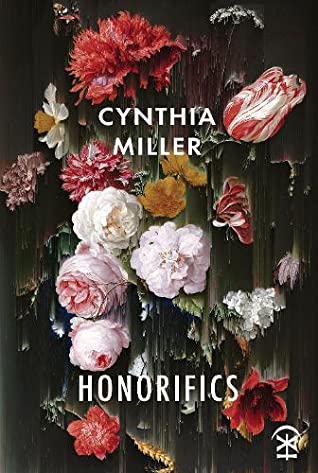 “Loving v. Virginia” celebrates interracial love: “Look at us, improper. Look at us, indecent. Look at us, incandescent and loving.” Food is a vehicle for memory, as are home videos. Like Ante, Miller has a poem based on her mother’s voicemail messages. “Glitch honorifics” gives the characters for different family relationships, comparing Chinese and Hokkien. The imagery is full of colour and light, plants and paintings. A terrific central section called “Bloom” contains 10 jellyfish poems (“We bloom like nuclear hydrangea … I’m an unwound chandelier, / a 150-foot-long coil of cilia, // made up of a million gelatinous foxgloves.”).
Miller incorporates a lot of unusual structures, some of them traditional forms (“Sonnet with lighthouses,” “Moon goddess ghazal,” “Persimmon abecedarian”) and others freer forms like a numbered list, columns, dictionary definitions or prose paragraphs. Six of the poems cite an inspiration; I could particularly see the influence in “The Home Office after Caroline Bird” – an absurdist take on government immigration policy.
There’s much variety here, and so many beautiful lines and evocative images. “Malaysiana,” a tour through everything she loves about the country of her birth, was my single favourite poem, and a couple more passages I loved were “the heart measuring breaths like levelling sugar / for a batter, the heart saying / why don’t you come in from the cold.” (from “The impossible physiology of the free diver”) and the last two stanzas of “Lupins”: “Some days / their purple spines // are the only things / holding me up.” Flora and fauna references plus a consideration of the expat life meant this was custom made for me, but I’d recommend it to anyone looking to try out different styles of contemporary poetry.
With thanks to Nine Arches Press for the free copy for review.
From the Women’s Prize longlist:
Build Your House around My Body by Violet Kupersmith (2021)
 Back in 2014, I reviewed Kupersmith’s debut collection, The Frangipani Hotel, for BookBrowse. I was held rapt by its ghostly stories of Vietnam, so I was delighted to hear that she had written a debut novel, and it was one of my few correct predictions for the Women’s Prize nominees. The main action takes place between when Winnie – half white and half Vietnamese – arrives in Saigon to teach English in 2010, and when she disappears from the house she shared with her boyfriend of three months, Long, in March 2011. But the timeline darts about to tell a much more expansive story, starting with the Japanese invasion of Vietnam in the 1940s. Each date is given as the number of months or years before or after Winnie’s disappearance.
Winnie starts off living with a great-aunt and cousins, and meets a family friend, Dr. Sang, who’s been experimenting on a hallucinogenic drug made from cobra venom. Long and his brother, Tan, a policeman, were childhood friends with a fearless young woman named Binh – now a vengeful ghost haunting them both. Meanwhile, the Saigon Spirit Eradication Company, led by the Fortune Teller, is called upon to eradicate a ghost – which from time to time seems to inhabit a small dog – from a snake-infested highland estate. These strands are bound to meet, and smoke and snakes wind their way through them all.
I enjoyed Kupersmith’s energetic writing, which reminded me by turns of Nicola Barker, Ned Beauman, Elaine Castillo and Naoise Dolan, and the glimpses of Cambodia and Vietnam we get through meals and motorbike rides. What happens with Belly the dog towards the end is fantastic. But the chronology feels needlessly complex, with the flashbacks to colonial history and even to Binh’s story not adding enough to the narrative. While I’d still like to see Kupersmith make the shortlist, I can recommend her short stories that bit more highly.
With thanks to Oneworld for the free copy for review.
Handbook for the Newly Disabled: A Lyric Memoir by Allison Blevins (2022)
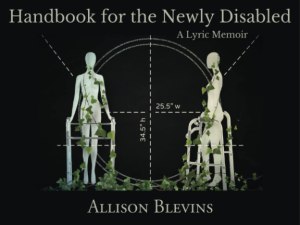 Allison Blevins, a poet, has published five chapbooks or collections and has another forthcoming. Based in Missouri and the director of an indie press, she tells her story of chronic illness and queer parenting in 10 “chapters” composed of multi-part poems. She moves through brain fog and commemorates pain and desire, which cannot always coexist (as in “How to F**k a Disabled Body”).
I’ll never
ride a bike again, hike, carry my children. I’m learning to number what I’ve lost.
Because of the pills, I no longer fall into sleep, I stop. I used to hate queer at 19
when I was a dyke. I can’t be disabled. I need a better word. I need a body that floats—
translucent and liquid—to my daughter’s bed, to cover her like cotton-red quilted stars.
(from “Brain Fog”)
Sometimes the title is enough: “My Neurologist (Who Doesn’t Have MS) Explains Pain Is Not a Symptom of MS.” Other times, what is left out, or erased (as in “Five by Five”) is what matters the most. For instance, the Photo Illustrations promised in the titles of two chapters are replaced by Accessibility Notes. That strategy reminded me of one Raymond Antrobus has used. Alliteration, synesthesia and the language of the body express the complexities of a friend’s cancer, having a trans partner, and coming to terms with sexuality (“I think now that being queer was easy, easy as forgetting / being born”). A really interesting work and an author I’d like to read more from.
Published by BlazeVOX [books] on 22 March. With thanks to the author for the e-copy for review.
Olga Dies Dreaming by Xóchitl González (2022)
 This was on my radar thanks to a starred Kirkus review. It would have been a good choice for the Women’s Prize longlist, with its bold heroine, Latinx and gay characters, and blend of literary and women’s fiction. The Puerto Rican immigrant community and gentrifying neighbourhoods of New York City are appealing locales, and Olga is a clever, gutsy protagonist. As the novel opens in 2017, she’s working out how best to fleece the rich families whose progeny’s weddings she plans. Today it’s embezzling napkins for her cousin Mabel’s wedding. Next: stockpiling cut-price champagne. Olga’s brother Prieto, a slick congressman inevitably nicknamed the “Latino Obama,” is a closeted gay man. Their late father was a drug addict; their mother left to be part of a revolutionary movement back in PR and sends her children occasional chiding letters when they appear to be selling out.
The aftermath of Hurricane Maria coincides with upheaval in Olga’s and Prieto’s personal and professional lives. The ins and outs of Puerto Rican politics went over my head somewhat, and the various schemes and conspiracy theories get slightly silly. The thread that most engaged me was Olga’s relationship with Matteo, a hoarder. I hoped that, following the satire of earlier parts (“Olga realized she’d allowed herself to become distracted from the true American dream—accumulating money—by its phantom cousin, accumulating fame. She would never make that mistake again”), there might be a message about the emptiness of the pursuit of wealth. So I ended up a little disappointed by a late revelation about Matteo.
However, I did appreciate the picture of how Olga is up against it as both a woman and a person of colour (“no person of color serious about being taken seriously was ever late to meet white people”). This debut was perhaps a little unsure of what it wanted to be, but the novelty of the main elements was enough to make it worth reading.
With thanks to Fleet for the free copy for review.
Would you be interested in reading one or more of these?
Quick Thoughts on the Women’s Prize 2022 Longlist & My Reading Plans
Tuesday is my volunteering morning at the library, but at 9:45 I nipped onto one of the public access PCs so I could find out which books were on the Women’s Prize longlist. I just couldn’t wait until I got home! It’s a surprising list. Those who thought Rooney and Yanagihara would be snubbed were absolutely right. Debuts and historical fiction aren’t as plentiful as forecast, but there are two doorstoppers on there, plus another 450+-pager. And it is great to see a list that is half by BIPOC women.
Of my wishes and predictions, 1 and 2 were correct, so I got 3 right overall, with my wildcard choice being the only nominee I’ve read in full so far. I’m currently reading another 2 and have 3 more set to read – the moment I got the news I marched over to borrow a couple more.
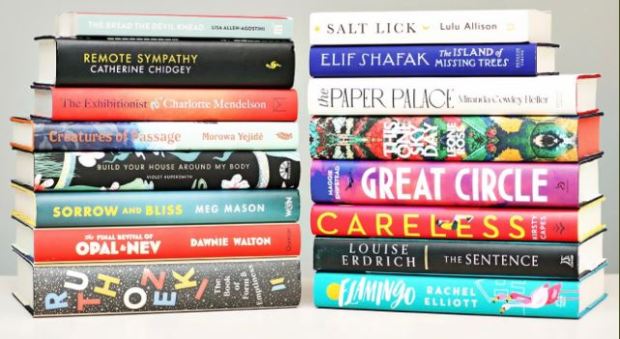
Fair play to the judges – I hadn’t even HEARD of these SIX titles:
- The Bread the Devil Knead by Lisa Allen-Agostini
- Salt Lick by Lulu Allison
- Careless by Kirsty Capes
- Remote Sympathy by Catherine Chidgey
- Flamingo by Rachel Elliott
- Creatures of Passage by Morowa Yejidé
I haven’t had a chance to look into these half-dozen, but will do so later on. I’m only likely to pick them up if a) others rave about them and/or b) they’re shortlisted.
Read:
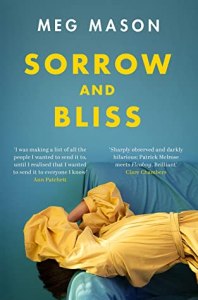 Sorrow and Bliss by Meg Mason: They say turning 40 can do weird things to you. Martha Friel gets a tattoo – so far, so stereotypical – but also blows up her marriage to Patrick, who’s been devoted to her since they were teens and met as family friends. In the year that follows, she looks back on a life that’s been defined by mental illness. As a young woman she was told she should never have children, but recently she met a new psychiatrist who gave her a proper diagnosis and told her motherhood was not out of the question. But is it too late for Martha and Patrick? Martha’s narration is a delight, wry and deadpan but also with moments of wrenching emotion. Her relationship with her sister, Ingrid, who gives birth to her first child on their aunt’s bathroom floor and eventually has four under the age of nine, is a highlight, and it’s touching to see how their mother and their aunt, both initially standoffish, end up being pillars of support. (My full review)
Currently reading:
 Build Your House Around My Body by Violet Kupersmith – I’m just over half done, and loving it. A weird and magical and slightly horror-tinged story set in Vietnam past and present, it builds on her debut ghost stories. Sort of plays the role Our Wives Under the Sea would have had on the longlist (though I dearly wish it could have been nominated as well).
 Set aside last year because it’s twee and annoying, but will now continue (ARGH + le sigh):
The Book of Form and Emptiness by Ruth Ozeki
 Own and will read soon (this was a treat to self with birthday money last year):
The Final Revival of Opal and Nev by Dawnie Walton
 Borrowed from library:
The Paper Palace by Miranda Cowley Heller
The Island of Missing Trees by Elif Shafak
 DNFed last year (twice); will not attempt again:
Great Circle by Maggie Shipstead
 On request from the library:
The Sentence by Louise Erdrich
The Exhibitionist by Charlotte Mendelson
Not interested in reading:
This One Sky Day by Leone Ross – I saw Ross speak about this and read an excerpt as part of a Faber showcase. I have a limited tolerance for magic realism and don’t think this appeals.
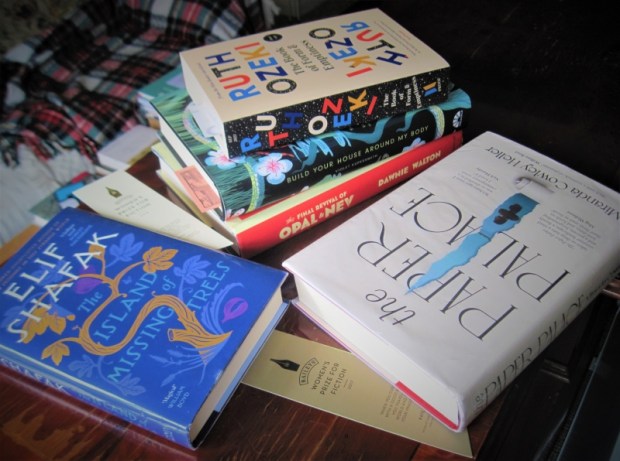
Above: my reading plans. Plenty to be getting on with before the shortlist announcement on 27th April!
What have you read, or might you read, from the longlist?
Recent Writing for BookBrowse, Shiny New Books and the TLS
We’re back from a pleasant but whirlwind weekend in France. Even just sticking to one corner of Normandy, there was far too much to see and do and not enough good weather to do it all in. Highlights were the Bayeux tapestry, the gorse-covered rocky cliff above a river at Les Roches de Ham, a delicious three-course meal in a restaurant just outside Bayeux, fresh bread and cake from boulangeries, and the enormous Sunday morning open-air market in Caen. (Low point: being sick on the boat on the way back. I hate sailing.) I finished up The Dreamers by Karen Thompson Walker, read all of A Breath of French Air by H.E. Bates, and started a few more books.
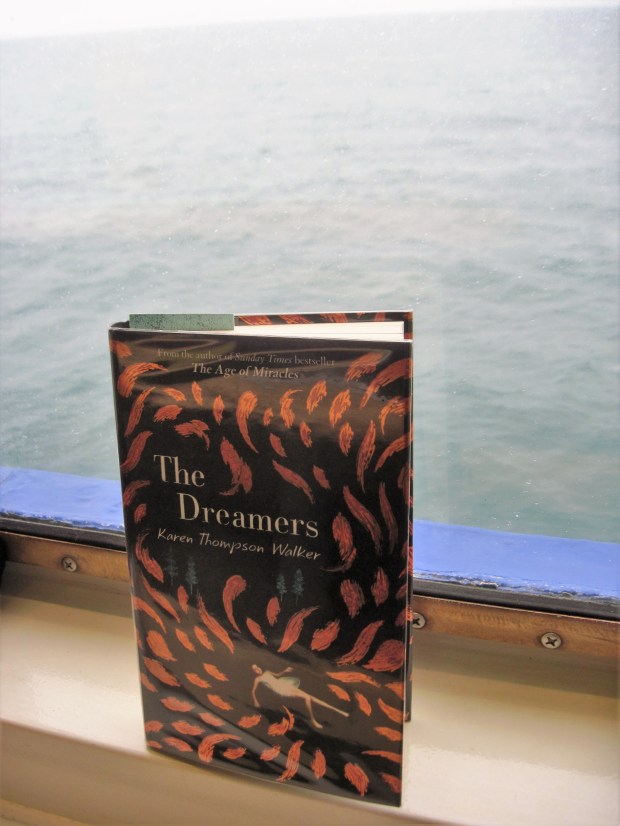
It was good to have a gripping novel to take my mind off the rocking motion of the ferry on the trip out.
Here are excerpts from and links to some of my recent print or online writing for other places. (No surprise that four out of the five are nonfiction and involve medical or bereavement themes!)
BookBrowse
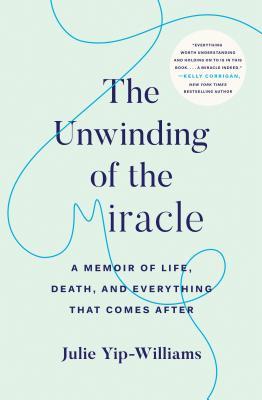 The Unwinding of the Miracle: A Memoir of Life, Death, and Everything That Comes After by Julie Yip-Williams: A lawyer facing late-stage cancer reflects on the happy life she had despite disability and an inauspicious start, and bids farewell to her family. It was miracle enough to have survived her first few years (blindness, a euthanasia attempt, and fleeing Vietnam by boat), but she eventually graduated from Harvard Law School and joined a Wall Street law firm. The author dubs herself “a somewhat ruthless realist.” Early on she vowed she would do nothing desperate or bizarre in her quest for healing, in contravention of what she calls the American “hope industrial complex.” Yet she also left room for spirituality to surprise her. The book resembles a set of journal entries or thematic essays, written at various times over her five years with colon cancer. Some stories are told more than once; an editor might have combined or cut some passages to avoid repetitiveness. Still, this posthumous memoir stands as a testament to a remarkable life of overcoming adversity, asking questions, and appreciating beauty wherever it’s found. (See also my list of other recommended posthumous cancer memoirs.)
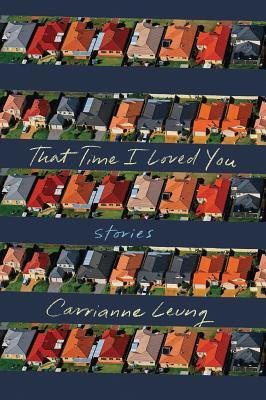 That Time I Loved You: Stories by Carrianne Leung: The residents of a Toronto suburb cope with growing up amid a spate of surprise suicides in the late 1970s and early 1980s. Leung explores different points of view on the same events and changes that take place in a community over several years. Three of the stories are narrated by June, who is 11 years old at the start. Her parents came over from Hong Kong 15 years ago. Other stories fill in a kaleidoscopic view of the neighborhood, showing how lonely the residents are – and how segregated along ethnic lines. Leung returns to June’s perspective at the beginning, middle, and end of the book, so we see her growing up and learning how the world works. Hard lessons are in store for her: people are sometimes punished for their differences, and the older generation doesn’t have it all figured out. Suburbia gets a bad rap, but it’s where so many of us come from, so it’s heartening to see a writer taking it seriously here. (See also my article on linked short story collections, for which I enlisted lots of blogger help via book Twitter.)
Shiny New Books
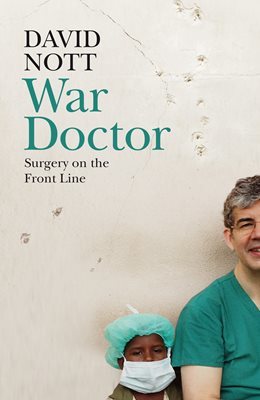 War Doctor: Surgery on the Front Line by David Nott: Welsh surgeon David Nott combines advanced technical skills with extreme altruism: for weeks of every year he takes unpaid leave to volunteer with a medical charity like Médecins sans Frontières or Syria Relief in war zones or disaster areas around the world. The kinds of procedures he has performed in Sarajevo, Kabul and Darfur are a world away from his normal work as an NHS consultant in London: amputations, treating injuries caused by homemade bombs, and delivering the babies of young rape victims. His memoir is mostly structured by countries and/or time periods. There are gripping moments – such as completing a difficult amputation by following instructions texted to him by a London colleague – but also some less fascinating chronology. The book is slow to start and took me weeks to get through. However, it shines when Nott recalls particular patients who have stood out for him. All told, his is an amazing and inspiring story.
As if you haven’t already heard enough about the Wellcome Book Prize from me (!), I also wrote this article for Shiny about the Prize’s history and the range of books that have won or been nominated over the last 10 years, finishing up with some reflections on this year’s shortlist.
Times Literary Supplement
Somehow I seem to have become a TLS regular. The biography editor periodically contacts me with lists of recent memoirs to be reviewed in 400 words for the “In Brief” section, and I’ve been doing about one per month this year.
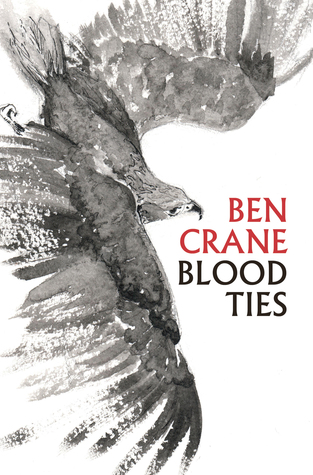 Blood Ties by Ben Crane: Artist Ben Crane has developed a passion for birds of prey, raising hawks and training as a falconer. “I saw that my feelings towards nature, and birds of prey in particular, ran in parallel with my feelings for my son,” he writes. Blood Ties accordingly cuts between the story of rehabilitating a pair of rescued sparrowhawks named Girl and Boy and a parallel story about raising his son as a part-time single father. Together these strands emphasize the common concerns that arise when caring for any creature. Crane’s descriptive language is memorably sharp. Whatever struggles his Asperger’s entails, it seems to heighten his observational skills. Pruning the travel segments would have produced a more focused memoir, but this is a powerful story all the same – of the ties that bind us, both to nature and our own families. (Full review in February 8th issue.)
 Notes for the Everlost: A Field Guide to Grief by Kate Inglis: Inglis, a Nova Scotian photographer and children’s author, has written this delicate, playful handbook – something between a bereavement memoir and a self-help guide – for people who feel they might disappear into grief for ever. In 2007, Inglis’s identical twin sons were born premature, at twenty-seven weeks. Ben lived but Liam died. Every milestone in Ben’s life would serve as a reminder of the brother who should have been growing up alongside him. The unfairness was particularly keen on the day she returned to hospital for two appointments: Ben’s check-up and a report on Liam’s autopsy. Unable to sustain the eye-popping freshness of the prose in the introduction, Inglis resorts to some clichés in what follows. But this kooky, candid book will be valuable to anyone facing bereavement or supporting a loved one through it. (Full review in March 15th issue.)
Would any of these books interest you?
Dylan Thomas Prize Blog Tour: Eye Level by Jenny Xie
The Swansea University International Dylan Thomas Prize recognizes the best published work in the English language written by an author aged 39 or under. All literary genres are eligible, so short stories and poetry sit alongside novels on this year’s longlist of 12 titles:
- Nana Kwame Adjei-Brenyah, Friday Black
- Michael Donkor, Hold
- Clare Fisher, How the Light Gets In
- Zoe Gilbert, Folk
- Emma Glass, Peach
- Guy Gunaratne, In Our Mad and Furious City
- Louisa Hall, Trinity
- Sarah Perry, Melmoth
- Sally Rooney, Normal People
- Richard Scott, Soho
- Novuyo Rosa Tshuma, House of Stone
- Jenny Xie, Eye Level
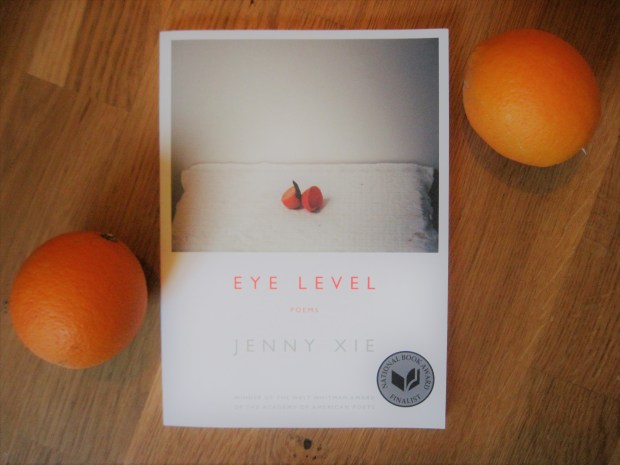
For this stop on the official blog tour, I’m featuring the debut poetry collection Eye Level by Jenny Xie (winner of the Walt Whitman Award of the Academy of American Poets), which was published by Graywolf Press in 2018 and was a National Book Award finalist in the USA last year. Xie, who was born in Hefei, China and grew up in New Jersey, now teaches at New York University. Her poems focus on the sense of displacement that goes hand in hand with immigration or just everyday travel, and on familial and evolutionary inheritance.
The opening sequence of poems is set in Vietnam, Cambodia and Corfu, with heat and rain as common experiences that also enter into the imagery: “See, counting’s hard in half-sleep, and the rain pulls a sheet // over the sugar palms and their untroubled leaves” and “The riled heat reaches the river shoal before it reaches the dark.” The tragic and the trivial get mixed up in ordinary sightseeing:
The tourists curate vacation stories,
days summed up in a few lines.
Killing fields tour, Sambo the elephant
in clotted street traffic,
dusky-complexioned children hesitant in their approach.
Seeing and being seen are a primary concern, with the “eye” of the title deliberately echoing the “I” that narrates most of the poems. I actually wondered if there was a bit too much first person in the book, which always complicates the question of whether the narrator equals the poet. One tends to assume that the story of a father going to study in the USA and the wife following, giving up her work as a doctor for a dining hall job, is autobiographical. The same goes for the experiences in “Naturalization” and “Exile.”
The metaphors Xie uses for places are particularly striking, often likening a city/country to a garment or a person’s appearance: “Seeing the collars of this city open / I wish for higher meaning and its histrionics to cease,” “The new country is ill fitting, lined / with cheap polyester, soiled at the sleeves,” and “Here’s to this new country: / bald and without center.”
The poet contemplates what she has absorbed from her family line and upbringing, and remembers the sting of feeling left behind when a romance ends:
I thought I owned my worries, but here I was only pulled along by the needle
of genetics, by my mother’s tendency to pry at openings in her life.
Love’s laws are simple. The leaving take the lead.
The left-for takes a knife to the knots of narrative.
Those last two lines are a good example of the collection’s reliance on alliteration, which, along with repetition, is used much more often than end rhymes and internal or slant rhymes. Speaking of which, this was my favorite pair of lines:
Slant rhyme of current thinking
and past thinking.
Meanwhile, my single favorite poem was “Hardwired,” about the tendency to dwell on the negative:
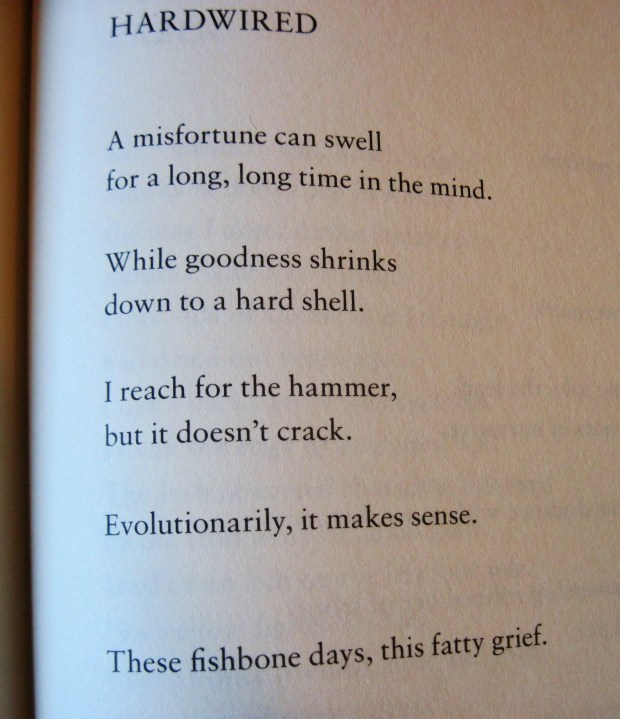
Though I didn’t always connect with Xie’s style – it can be slightly detached and formal in a way that is almost at odds with the fairly personal subject matter, and there were some pronouncements that seemed to me not as profound as they intended to be (it may well be that her work would be best read aloud) – there were occasional lines and images that pulled me up short and made me think, Yes, she gets it. What it’s like to be from one place but live in another; what it’s like to be fond but also fearful of the ways in which you resemble your parents. I expect this to be a strong contender for the Dylan Thomas Prize shortlist, which will be announced on April 2nd. The winner is then announced on May 16th.
My thanks to Midas PR for the free copy for review.
 Bookish Beck = Rebecca Foster. American transplant to England. Freelance proofreader and book reviewer.
 Bookish Beck