Book Serendipity, September through Mid-November
I call it “Book Serendipity” when two or more books that I read at the same time or in quick succession have something in common – the more bizarre, the better. This is a regular feature of mine every couple of months. Because I usually have 20–30 books on the go at once, I suppose I’m more prone to such incidents. People frequently ask how I remember all of these coincidences. The answer is: I jot them down on scraps of paper or input them immediately into a file on my PC desktop; otherwise, they would flit away.
Thanks to Emma and Kay for posting their own Book Serendipity moments! (Liz is always good about mentioning them as she goes along, in the text of her reviews.)
The following are in roughly chronological order.
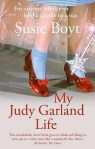
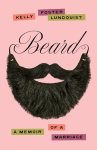
- An obsession with Judy Garland in My Judy Garland Life by Susie Boyt (no surprise there), which I read back in January, and then again in Beard: A Memoir of a Marriage by Kelly Foster Lundquist.
- Leaving a suicide note hinting at drowning oneself before disappearing in World War II Berlin; and pretending to be Jewish to gain better treatment in Aimée and Jaguar by Erica Fischer and The Lilac People by Milo Todd.
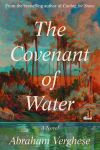
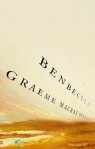
- Leaving one’s clothes on a bank to suggest drowning in The Covenant of Water by Abraham Verghese, read over the summer, and then Benbecula by Graeme Macrae Burnet.
- A man expecting his wife to ‘save’ him in Amanda by H.S. Cross and Beard: A Memoir of a Marriage by Kelly Foster Lundquist.
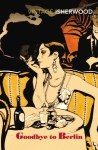 A man tells his story of being bullied as a child in Goodbye to Berlin by Christopher Isherwood and Beard by Kelly Foster Lundquist.
- References to Vincent Minnelli and Walt Whitman in a story from Touchy Subjects by Emma Donoghue and Beard by Kelly Foster Lundquist.
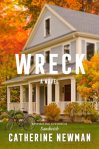
- The prospect of having one’s grandparents’ dining table in a tiny city apartment in Beard by Kelly Foster Lundquist and Wreck by Catherine Newman.
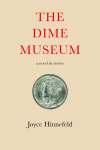
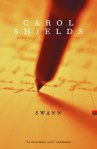
- Ezra Pound’s dodgy ideology was an element in The Dime Museum by Joyce Hinnefeld, which I reviewed over the summer, and recurs in Swann by Carol Shields.
- A character has heart palpitations in Andrew Miller’s story from The BBC National Short Story Award 2025 anthology and Endling by Maria Reva.
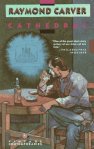
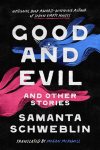
- A (semi-)nude man sees a worker outside the window and closes the curtains in one story of Cathedral by Raymond Carver and one from Good and Evil and Other Stories by Samanta Schweblin.
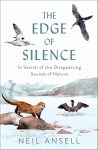
- The call of the cuckoo is mentioned in The Edge of Silence by Neil Ansell and Of All that Ends by Günter Grass.
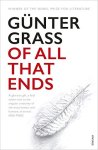 A couple in Italy who have a Fiat in Of All that Ends by Günter Grass and Caoilinn Hughes’s story from The BBC National Short Story Award 2025 anthology.
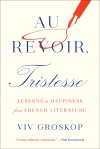
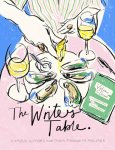
- Balzac’s excessive coffee consumption was mentioned in Au Revoir, Tristesse by Viv Groskop, one of my 20 Books of Summer, and then again in The Writer’s Table by Valerie Stivers.
- The main character is rescued from her suicide plan by a madcap idea in The Wedding People by Alison Espach and Endling by Maria Reva.
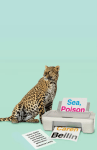
- The protagonist is taking methotrexate in Sea, Poison by Caren Beilin and Wreck by Catherine Newman.
- A man wears a top hat in Benbecula by Graeme Macrae Burnet and one story of Cathedral by Raymond Carver.
- A man named Angus is the murderer in Benbecula by Graeme Macrae Burnet and Swann by Carol Shields.
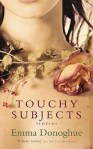 The thing most noticed about a woman is a hair on her chin in the story “Pluck” in Touchy Subjects by Emma Donoghue and Swann by Carol Shields.
- The female main character makes a point of saying she doesn’t wear a bra in Sea, Poison by Caren Beilin and Find Him! by Elaine Kraf.
- A home hairdressing business in one story of Cathedral by Raymond Carver and Emil & the Detectives by Erich Kästner.
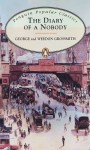
- Painting a bathroom fixture red: a bathtub in The Diary of a Nobody by George Grossmith, one of my 20 Books of Summer; and a toilet in Find Him! by Elaine Kraf.
- A teenager who loses a leg in a road accident in individual stories from A Wild Swan by Michael Cunningham and the Racket anthology (ed. Lisa Moore).
- Digging up the casket of a loved one in the wee hours features in Pet Sematary by Stephen King, one of my 20 Books of Summer; and one story of Pretty Monsters by Kelly Link.
- A character named Dani in the story “The St. Alwynn Girls at Sea” by Sheila Heti and The Silver Book by Olivia Laing; later, author Dani Netherclift (Vessel).
 Obsessive cultivation of potatoes in Benbecula by Graeme Macrae Burnet and The Martian by Andy Weir.
- The story of Dante Gabriel Rossetti digging up the poems he buried with his love is recounted in Sharon Bala’s story in the Racket anthology (ed. Lisa Moore) and one of the stories in Pretty Monsters by Kelly Link.
- Putting French word labels on objects in Alone in the Classroom by Elizabeth Hay and Find Him! by Elaine Kraf.
 A man with part of his finger missing in Find Him! by Elaine Kraf and Lessons from My Teachers by Sarah Ruhl.
- In Minor Black Figures by Brandon Taylor, I came across a mention of the Italian film director Pier Paolo Pasolini, who is a character in The Silver Book by Olivia Laing.
- A character who works in an Ohio hardware store in Flashlight by Susan Choi and Buckeye by Patrick Ryan (two one-word-titled doorstoppers I skimmed from the library). There’s also a family-owned hardware store in Alone in the Classroom by Elizabeth Hay.
- A drowned father – I feel like drownings in general happen much more often in fiction than they do in real life – in The Homecoming by Zoë Apostolides, Flashlight by Susan Choi, and Vessel by Dani Netherclift (as well as multiple drownings in The Covenant of Water by Abraham Verghese, one of my 20 Books of Summer).
- A memoir by a British man who’s hard of hearing but has resisted wearing hearing aids in the past: first The Quiet Ear by Raymond Antrobus over the summer, then The Edge of Silence by Neil Ansell.
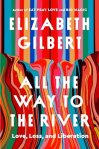 A loved one is given a six-month cancer prognosis but lives another (nearly) two years in All the Way to the River by Elizabeth Gilbert and Lessons from My Teachers by Sarah Ruhl.
- A man’s brain tumour is diagnosed by accident while he’s in hospital after an unrelated accident in Flashlight by Susan Choi and Saltwash by Andrew Michael Hurley.
- Famous lost poems in What We Can Know by Ian McEwan and Swann by Carol Shields.
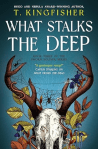
- A description of the anatomy of the ear and how sound vibrates against tiny bones in The Edge of Silence by Neil Ansell and What Stalks the Deep by T. Kingfisher.
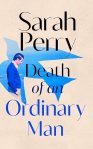
- Notes on how to make decadent mashed potatoes in Beard by Kelly Foster Lundquist, Death of an Ordinary Man by Sarah Perry, and Lessons from My Teachers by Sarah Ruhl.
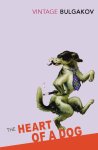
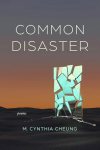
- Transplant surgery on a dog in Russia and trepanning appear in The Heart of a Dog by Mikhail Bulgakov and the poetry collection Common Disaster by M. Cynthia Cheung.
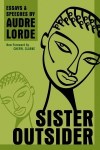
- Audre Lorde, whose Sister Outsider I was reading at the time, is mentioned in Lessons from My Teachers by Sarah Ruhl. Lorde’s line about the master’s tools never dismantling the master’s house is also paraphrased in Spent by Alison Bechdel.
- An adult appears as if fully formed in a man’s apartment but needs to be taught everything, including language and toilet training, in The Heart of a Dog by Mikhail Bulgakov and Find Him! by Elaine Kraf.
 Two sisters who each wrote a memoir about their upbringing in Spent by Alison Bechdel and Vessel by Dani Netherclift.
- The fact that ragwort is bad for horses if it gets mixed up into their feed was mentioned in Ghosts of the Farm by Nicola Chester and Understorey by Anna Chapman Parker.
- The Sylvia Plath line “the O-gape of complete despair” was mentioned in Vessel by Dani Netherclift, then I read it in its original place in Ariel later the same day.
- A mention of the Baba Yaga folk tale (an old woman who lives in the forest in a hut on chicken legs) in Common Disaster by M. Cynthia Cheung and Woman, Eating by Claire Kohda. [There was a copy of Sophie Anderson’s children’s book The House with Chicken Legs in the Little Free Library around that time, too.]
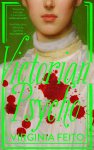
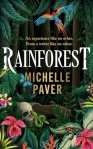
- Coming across a bird that seems to have simply dropped dead in Victorian Psycho by Virginia Feito, Vessel by Dani Netherclift, and Rainforest by Michelle Paver.
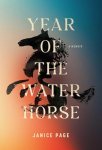
- Contemplating a mound of hair in Vessel by Dani Netherclift (at Auschwitz) and Year of the Water Horse by Janice Page (at a hairdresser’s).
- Family members are warned that they should not see the body of their loved one in Vessel by Dani Netherclift and Rainforest by Michelle Paver.
- A father(-in-law)’s swift death from oesophageal cancer in Year of the Water Horse by Janice Page and Death of an Ordinary Man by Sarah Perry.
- I saw John Keats’s concept of negative capability discussed first in My Little Donkey by Martha Cooley and then in Understorey by Anna Chapman Parker.
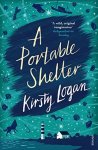
- I started two books with an Anne Sexton epigraph on the same day: A Portable Shelter by Kirsty Logan and Slags by Emma Jane Unsworth.
- Mentions of Martin Luther King, Jr.’s assassination in Q’s Legacy by Helene Hanff and Sister Outsider for Audre Lorde, both of which I was reading for Novellas in November.
- Mentions of specific incidents from Samuel Pepys’s diary in Q’s Legacy by Helene Hanff and Gin by Shonna Milliken Humphrey, both of which I was reading for Nonfiction November/Novellas in November.
- Starseed (aliens living on earth in human form) in Beautyland by Marie-Helene Bertino and The Conspiracists by Noelle Cook.
- Reading nonfiction by two long-time New Yorker writers at the same time: Life on a Little-Known Planet by Elizabeth Kolbert and Joyride by Susan Orlean.
- The breaking of a mirror seems like a bad omen in The Spare Room by Helen Garner and The Bell Jar by Sylvia Plath.
 The author’s husband (who has a name beginning with P) is having an affair with a lawyer in Catching Sight by Deni Elliott and Joyride by Susan Orlean.
- Mentions of Lewis Hyde’s book The Gift in Lessons from My Teachers by Sarah Ruhl and The Serviceberry by Robin Wall Kimmerer; I promptly ordered the Hyde secondhand!
- The protagonist fears being/is accused of trying to steal someone else’s cat in Minka and Curdy by Antonia White and Aunts Aren’t Gentlemen by P.G. Wodehouse, both of which I was reading for Novellas in November.
What’s the weirdest reading coincidence you’ve had lately?
20 Books of Summer, 8: Au Revoir, Tristesse by Viv Groskop
This is a substitute I picked out as a potential (now belated) #ParisinJuly2025 contribution. There’s been little time for writing over the past week while we’ve been hosting my sister and brother-in-law. Their whirlwind trip was shortened by a day due to a cancelled flight from the States, but we managed to pack in a lot, including a two-night mini-break down in Devon.

Reminiscent of Something to Declare by Julian Barnes and How Proust Can Change Your Life by Alain de Botton, this is a lighthearted tour through a dozen great works of French literature and the lessons they might offer modern readers on how to live well. Ever since her school days of studying French and spending every family holiday in France, Groskop has been obsessed with the language and culture. In most of the chapters, she undertakes a rereading of a novel she first read as a teenager or Cambridge student, marveling at how much more she gets out of it with greater life experience.
 Although her choices are indisputable classics, she acknowledges they can only ever be an incomplete and biased selection, unfortunately all white and largely male, though she opens with Bonjour Tristesse and also includes Colette and Duras novels. I’d only read three of her dozen, in translation: along with the Sagan, Dangerous Liaisons and Madame Bovary (as well as other books by two of the additional authors), but it didn’t make much difference whether I was familiar with a plot or not. So long as one is not allergic to spoilers, it’s possible to enjoy these miniature essays’ witty combination of literary criticism, biographical information, self-help messaging, and a bit of autobiographical context.
The male writers tended to be syphilitic workaholics – Balzac is reputed to have drunk 50 cups of coffee per day to sustain his output – while the women flouted social conventions by drinking, taking much younger (and/or female) lovers and driving recklessly. While the subtitle promises “Lessons in Happiness,” from Hugo to Camus these are in fact pretty miserable narratives in which, as was especially common in the 19th century, protagonists are punished for ambition or transgressions, or never reach contentment because of self-delusion.
In boiling down each plot to one line of advice for a chapter title, Groskop’s tone alternates between earnest (“Our greatest weaknesses conceal our greatest strengths” = Cyrano de Bergerac) and tongue in cheek (“Social climbing rarely pays off, but you’ll probably want to do it anyway” = Le Rouge et le Noir). She describes the works with genuine affection and clearly believes they are still worth reading, yet isn’t afraid to question those aspects that have aged less well. Controversially, she suggests being selective with Proust’s mammoth oeuvre: “skim-read, rereading the passages you fall in love with and discarding the rest.” She also surveys how the stories live on through adaptations. Of the new-to-me, I’m most drawn to Bel-Ami but also fancy La Cousine Bette. This was a delight I wouldn’t hesitate to recommend to fellow Francophiles. (New purchase – remainder from Hay Cinema Bookshop) 

The Wellcome Book Prize 2019 Awards Ceremony
The winner of the 10th anniversary Wellcome Book Prize is Murmur, Will Eaves’s experimental novel about Alan Turing’s state of mind and body after being subjected to chemical castration for homosexuality. It is the third novel to win the Prize. Although it fell in the middle of the pack in our shadow panel voting because of drastically differing opinions, it was a personal favorite for Annabel and myself – though we won’t gloat (much) for predicting it as the winner!

Clare, Laura and I were there for the announcement at the Wellcome Collection in London. It was also lovely to meet Chloe Metzger, another book blogger who was on the blog tour, and to see UK book v/blogging legends Eric Karl Anderson and Simon Savidge again.
The judges’ chair, novelist Elif Shafak, said, “This prize is very special. It opens up new and vital conversations and creates bridges across disciplines.” At a time when we “are pushed into monolithic tribes and artificial categories, these interdisciplinary conversations can take us out of our comfort zones, encouraging cognitive flexibility.” She praised the six shortlisted books for their energy and the wide range of styles and subjects. “Each book, each author, from the beginning, has been treated with the utmost respect,” she reassured the audience, and the judges approached their task with “an open mind and an open heart,” arriving at an “inspiring, thought-provoking, but we believe also accessible, shortlist.”
The judges brought each of the five authors present (all but Thomas Page McBee) onto the stage one at a time for recognition. Shafak admired how Sandeep Jauhar weaves together his professional expertise with stories in Heart, and called Sarah Krasnostein’s The Trauma Cleaner a “strangely life-affirming and uplifting book about a remarkable woman. … It’s about transitions.”
Doctor and writer Kevin Fong championed Amateur, his answer to the question “which of these books, if I gave it to someone, would make them better.” McBee’s Canongate editor received the recognition/flowers on the author’s behalf.

Writer and broadcaster Rick Edwards chose Arnold Thomas Fanning’s Mind on Fire for its “pressability factor” – the book about which he kept saying to friends and family, “you must read this.” It’s an “uncomfortably honest” memoir, he remarked, “a vivid and unflinching window, and for me it was revelatory.”
Writer, critic and academic Jon Day spoke up for Murmur, “a novel of great power and astonishing achievement,” about “what it means to know another person.”
Lastly, writer, comedian and presenter Viv Groskop spoke about Ottessa Moshfegh’s My Year of Rest and Relaxation, which she described as “Jane Eyre meets Prozac Nation.” The judges “had a lot of fun” with this novel, she noted; it’s “caustic, feminist … original, playful, [and] strangely profound.”
But only one book could win the £30,000 10th anniversary prize, and it was one that Shafak predicted will be “a future classic,” Murmur. Will Eaves thanked Charles Boyle of CB Editions for taking a chance on his work. He also acknowledged Alan Turing, who, like him, attended King’s College, Cambridge. As he read Turing’s papers, Eaves reported, he was gripped by the quality of the writing – “there’s a voice there.” Finally, in a clearly emotional moment, he thanked his mother, who died several years ago and grew up in relative poverty. She was a passionate believer in education, and Eaves encouraged the audience to bear in mind the value of a state education when going to the polls.
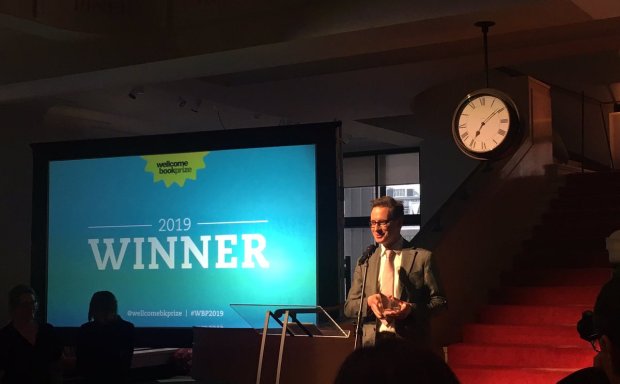
Photo by Eric Karl Anderson.
After the announcement we found Sarah Krasnostein, our shadow panel winner, and got a photo and a signature. She gave us the scoop on her work-in-progress, which examines six case studies, three from Australia and three from the USA, of people with extreme religious or superstitious beliefs, such as a widow who believes her husband was abducted by aliens. She’s exploring the “cognitive dissonance” that goes on in these situations, she said. Can’t wait for the new book!
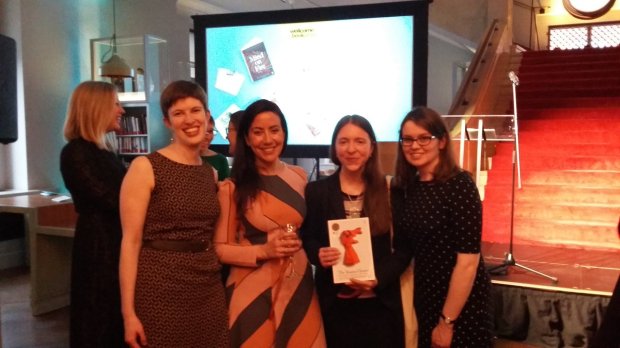
Laura, Sarah Krasnostein, me, Clare.
I also congratulated Will Eaves, whose book I’d covered for the blog tour, and got a signature. Other ‘celebrities’ spotted: Suzanne O’Sullivan, Ruth Padel and Robin Robertson. (Also a couple of familiar faces from Twitter that I couldn’t place, one of whom I later identified as Katya Taylor.)
I again acquired a Wellcome goody bag: this year’s limited-edition David Shrigley tote (I now have two so will pass one on to Annabel, who couldn’t be there) with an extra copy of The Trauma Cleaner to give to my sister.


Another great year of Wellcome festivities! Thanks to Midas PR, the Wellcome Book Prize and my shadow panel. Looking forward to next year already – I have a growing list of 2020 hopefuls I’ve read or intend to read.
See also: Laura’s post on the ceremony and the 5×15 event that took place the night before.
Wellcome Book Prize 10th Anniversary Blog Tour: Teach Us to Sit Still by Tim Parks (2010)
“Launched in 2009, the Wellcome Book Prize, worth £30,000, celebrates the best new books that engage with an aspect of medicine, health or illness, showcasing the breadth and depth of our encounters with medicine through exceptional works of fiction and non-fiction.” I was delighted to be asked to participate in the official Wellcome Book Prize 10th anniversary blog tour. For this stop on the tour I’m highlighting a shortlisted title from 2010, a very strong year. The winning book, Rebecca Skloot’s The Immortal Life of Henrietta Lacks, along with Siddhartha Mukherjee’s The Emperor of All Maladies, turned me on to health-themed reading and remains one of my most memorable reads of the past decade.
Teach Us to Sit Still: A Sceptic’s Search for Health and Healing by Tim Parks
 Tim Parks, an Englishman, has lived and worked in Italy for over 30 years. He teaches translation at the university in Milan, and is also a novelist and a frequent newspaper columnist on literary topics. Starting in his forties, Parks was plagued by urinary problems and abdominal pain. Each night he had to get up five or six times to urinate, and when he didn’t have fiery pangs shooting through his pelvic area he had a dull ache. Doctors assessed his prostate and bladder in tests that seemed more like torture sessions, but ultimately found nothing wrong. While he was relieved that his worst fears of cancer were allayed, he was left with a dilemma: constant, unexplained discomfort and no medical strategy for treating it.
When conventional medicine failed him, Parks asked himself probing questions: Had he in some way brought this pain on himself through his restless, uptight and pessimistic ways? Had he ever made peace with his minister father’s evangelical Christianity after leaving it for a life based on reason? Was his obsession with transmuting experience into words keeping him from living authentically? During a translation conference in Delhi, he consulted an ayurvedic doctor on a whim and heard words that haunted him: “This is a problem you will never get over, Mr Parks, until you confront the profound contradiction in your character.”
The good news is: some things helped. One was the book A Headache in the Pelvis, which teaches a paradoxical relaxation technique that Parks used for up to an hour a day, lying on a yoga mat in his study. Another was exercise, especially running and kayaking – a way of challenging himself and seeking thrills in a controlled manner. He also started shiatsu therapy. And finally, Vipassana meditation retreats helped him shift his focus off the mind’s experience of pain and onto bodily wholeness. Vipassana is all about “seeing things as they really are,” so the retreats were for him a “showdown with this tangled self” and a chance to face the inevitability of death. Considering he couldn’t take notes at the time, I was impressed by the level of detail with which Parks describes his breakthroughs during meditation.
Though I was uneasy reading about a middle-aged man’s plumbing issues and didn’t always follow the author on his digressions into literary history (Coleridge et al.), I found this to be an absorbing and surprising quest narrative. If not with the particulars, I could sympathize with the broader strokes of Parks’s self-interrogation. He wonders whether sitting at a desk, tense and with poor posture, and wandering around with eyes on the ground and mind on knots of words for years contributed to his medical crisis. Borrowing the title phrase from T.S. Eliot, he’s charted an unlikely journey towards mindfulness in a thorough, bracingly honest, and diverting book that won’t put off those suspicious of New Age woo-woo.
My rating: 
With thanks to Midas PR for the free copy for review.
Wellcome Book Prize 2010
Winner: The Immortal Life of Henrietta Lacks by Rebecca Skloot
Shortlist: Angel of Death by Gareth Williams; Grace Williams Says It Loud by Emma Henderson; So Much for That by Lionel Shriver; Medic by John Nicols and Tony Rennell; Teach Us to Sit Still by Tim Parks
Judges: Comedy writer and television presenter Clive Anderson (chair); novelist and academic Maggie Gee; academic and writer Michael Neve; television presenter and author Alice Roberts; academic and writer A.C. Grayling
The 2019 Wellcome Book Prize longlist will be announced in February. I’m already looking forward to it, of course, and I’m planning to run a shadow panel once again.
Elif Shafak, award-winning author, is the chair of this year’s judges and is joined on the panel by Kevin Fong, consultant anaesthetist at University College London Hospitals; Viv Groskop, writer, broadcaster and stand-up comedian; Jon Day, writer, critic, and academic; and Rick Edwards, broadcaster and author.
See below for details of where other reviews have appeared or will be appearing soon as part of the Wellcome Book Prize 10th anniversary blog tour.

 Bookish Beck = Rebecca Foster. American transplant to England. Freelance proofreader and book reviewer.
 Bookish Beck