New Reading Projects! (Join Me?)
It’s only one week since we announced the Not the Wellcome Prize winner, the culmination of a month-long project that was months more in the planning. I don’t think I’ll be coordinating another blog tour anytime soon, as it was a lot of work finding participants, working out a schedule and keeping on top of the publicizing via social media. Still, it was a lot of fun, and already I’m missing the buzz and ready to get stuck into more projects.
I’d love it if you joined me for one or more of these. Some could be combined with your 20 Books of Summer or other challenges, too.
Ongoing buddy reads
 It would have been Richard Adams’s 100th birthday on the 9th. That night I started rereading his classic tale of rabbits in peril, Watership Down, which was my favorite book from childhood even though I only read it the once at age nine. I’m 80 pages in and enjoying all the local place names. Who would ever have predicted that that mousy tomboy from Silver Spring, Maryland would one day live just 6.5 miles from the real Watership Down?!
 My husband is joining me for the Watership Down read (he’s not sure he ever read it before), and we’re also doing a buddy read of Arctic Dreams by Barry Lopez. In that case, we ended up with two free copies, one from the bookshop where I volunteer and the other from The Book Thing of Baltimore, so we each have a copy on the go. Lopez’s style, like Peter Matthiessen’s, lends itself to slower, reflective reading, so I’m only two chapters in. It’s novel to journey to the Arctic, especially as we approach the summer.
I plan to take my time over these two, so tell me if you have a copy of either and feel like picking it up at any point over the next few months.
Bibliotherapy self-prescriptions
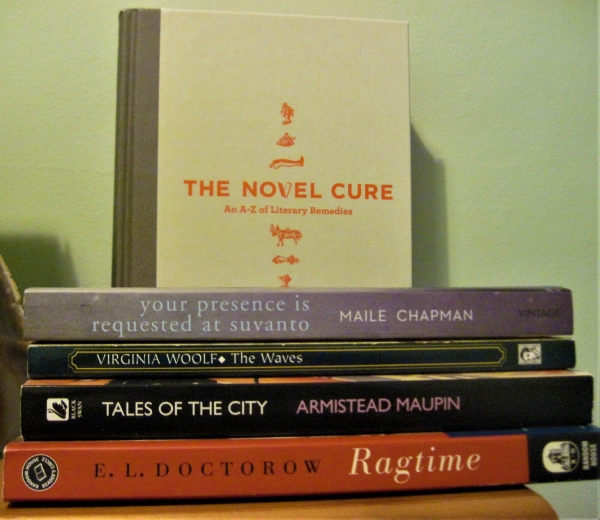
The other day I got out my copy of The Novel Cure by School of Life bibliotherapists Ella Berthoud and Susan Elderkin and browsed through the categories for some prescriptions that might feel relevant to the current situation. I found four books I own that fit the bill:
From the list of “The Ten Best Novels to Lower Your Blood Pressure”: Your Presence Is Requested at Suvanto by Maile Chapman & The Waves by Virginia Woolf (and I’ve read another three of them, including, recently, Crossing to Safety).
One of several prescriptions for Loneliness: Tales of the City by Armistead Maupin.
The cure for Zestlessness: Ragtime by E. L. Doctorow.
If you have access to one of these, or have a copy of The Novel Cure and are keen on following up on another of the prescriptions, let me know.
And now for two memes that I (think I) have created. Although I’m sure something similar has been done in the past, I couldn’t find any specific blogs about them. I don’t know about you, but I always need encouragement to pick up books from my own shelves – even though libraries are currently closed, I’m still working my way through a library stack, and I’m tempted to make another order of new books from Hungerford Bookshop. It’s great to support libraries and independent bookstores, of course, but there could be no better time to mine your own bookshelves for treasures you bought ages ago but still have never read.
Journey through the Day with Books
I enjoyed picking out 18 books from my shelves that refer to particular times of day or meals or activities associated therewith. Four of these are books I’ve already read and four are ones I’m currently reading. You can piggyback on my selections if you wish, or find your own set.
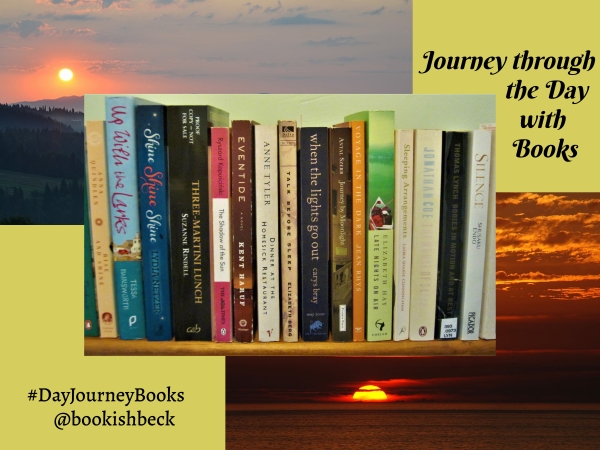
Here’s my full list:
Zennor in Darkness by Helen Dunmore
Rise and Shine by Anna Quindlen
Up with the Larks by Tessa Hainsworth
Shine Shine Shine by Lydia Netzer
Three-Martini Lunch by Suzanne Rindell
The Shadow of the Sun by Ryszard Kapuściński
Eventide by Kent Haruf
Dinner at the Homesick Restaurant by Anne Tyler
Talk before Sleep by Elizabeth Berg
When the Lights Go Out by Carys Bray
Journey by Moonlight by Antal Szerb
Voyage in the Dark by Jean Rhys
Late Nights on Air by Elizabeth Hay
Sleeping Arrangements by Laura Shaine Cunningham
The House of Sleep by Jonathan Coe
Bodies in Motion and at Rest by Thomas Lynch
Silence by Shūsaku Endō
Arctic Dreams by Barry Lopez
The Four in a Row Challenge
I’ve been contemplating this one for quite a while. It’s inspired by Phyllis Rose’s The Shelf –from LEQ to LES: Adventures in Extreme Reading (one of Simon’s favourite books – see his review), for which she picked a shelf of the New York Society Library, eliminated duplicates and repeat entries from the same author, and read the remainder – whether she’d heard of them or not; whether they were awful or not. (“Hands down the worst book on the shelf is Le Queux’s Three Knots, a mystery that reads as if it were written by an eight-year-old on Percocet.”)

This is a variation in that you’re looking at your own TBR shelves and picking a set of four books in a row. For many, that will be four novels whose authors’ surnames all start with the same letter. But if you organize your books differently (especially within nonfiction), you may find that the set of four is more arbitrary. You never know what they might have in common, though (book serendipity!).
I’m no strict challenge host, so if you want to engineer your shelf order, or if you decide to swap a book in later on, that is no problem at all. My one firm rule is only one book per author.
I’ve picked out a few appealing sets, all from my fiction shelves. F, G, L and M had particularly rich pickings. I’ll report back as I finish each set, while the “Journey through a Day” may well take me the whole rest of the year.
Still ongoing (more here): Projects to read as many Bellwether Prize, Wellcome Book Prize and Women’s Prize winners as possible, as well as Wellcome long- and shortlistees.
Can I tempt you to take part in any of these reading projects?
[Journey through the Day: Sunrise in Pieniny, Poland (Pudelek / CC BY-SA (https://creativecommons.org/licenses/by-sa/4.0)) / Sunset (Alvesgaspar / CC BY-SA (https://creativecommons.org/licenses/by-sa/3.0))
Four in a Row: Four pelicans in a row (Sheba_Also 43,000 photos / CC BY-SA (https://creativecommons.org/licenses/by-sa/2.0)) / Phone boxes, Market Place, Ripon (Tim Green from Bradford / CC BY (https://creativecommons.org/licenses/by/2.0))]
The Book of Longings by Sue Monk Kidd (& Audiobook Blog Tour)
~This review contains plot spoilers.~
Sue Monk Kidd’s bold fourth novel started as a what-if question: What if Jesus had a wife? Church tradition has always insisted that he remained unmarried, but she felt that, given the cultural norms of the Middle East at that time, it would have been highly unusual for him not to marry. Musing on the motivation for airbrushing a spouse out of the picture, on the last page of the novel Kidd asks, “Did [early Christians] believe making him celibate rendered him more spiritual?” Or “Was it because women were so often invisible?” Although The Book of Longings retells biblical events, it is chiefly an attempt to illuminate women’s lives in the 1st century CE and to chart the female contribution to sacred literature and spirituality.
Fourteen-year-old Ana is a headstrong young woman with a forthright voice and a determination to choose her own life. Privilege and luck are on her side: her father is the head scribe to Herod Antipas, the ruler of Galilee; and the repulsive widower to whom she’s been betrothed dies, freeing her to marry Jesus, a travelling craftsman who caught her eye at the market. Ana’s aunt, Yaltha from Alexandria, is a major influence in her life. She had a rare chance at education and encourages her niece in her writing. Ana knows several ancient languages and fills every papyrus scroll she can get her hands on with stories of the women in the Bible. Yaltha also gives her an incantation bowl in which to write her deeply held prayers.
If you’re familiar with Kidd’s other work (such as The Secret Life of Bees and Traveling with Pomegranates), you know that she often explores the divine feminine and matriarchal units. Historically, Christianity has a poor record of acknowledging its patriarchal tendencies and redressing the balance. But Kidd imagines that, right at the beginning, Jesus valued women and was open to them having a life beyond domestic chores and childrearing. He involves Ana in his discussions about God and the nature of the Kingdom; they both see and take compassion on people’s suffering; together they are baptized by John the Baptist. And when Ana tells Jesus she doesn’t believe she is meant to be a mother – her mother and aunt took herbal potions and have passed on their contraceptive knowledge to her – he accepts her choice, even though childlessness could bring shame on both of them.

I appreciated this picture of a woman who opts for writing and the spiritual life over motherhood. However, Kidd portrays a whole range of women’s experiences: Jesus’s mother and sister-in-law submit to the drudgery of keeping a household going; Ana’s friend is raped and has her tongue cut out in an attempt to silence her, yet finds new ways to express herself; and another major character is a servant involved in the healing rituals at a temple to Isis. A practicing Jew, Ana finds meaning in other religious traditions rather than dismissing them as idolatry. She also participates in wider intellectual life, such as by reading The Odyssey.
Some descriptions make this novel sound like alternative history. If you’re expecting Ana to save the day and change the course of history, you will be disappointed. Ana is simply an observer of the events documented in the Bible. While she recounts the inspirations for some parables and healing incidents, during two years in exile with her aunt she only hears secondhand accounts of Jesus’s ministry. Her brother, a Zealot, disagrees with Jesus on how to usher in the Kingdom of God. By the time Ana returns to Jerusalem, the events leading to the crucifixion have already been set in motion; she can only bear witness. For her, life will continue after Jesus’s death, in a women-led spiritual community. From avoiding motherhood to choosing a monastic-type life, Ana has a lot of freedom. Some readers may be skeptical about how realistic this life course is, but the key, I think, is to consider Ana as an outlier.
Kidd has made wise decisions here: for the most part she makes her story line parallel or tangential to the biblical record, rather than repeating material many will find overly familiar. She takes Jewish teaching as a starting point but builds a picture of a more all-encompassing spirituality drawn from multiple traditions. Her Jesus is recognizable and deeply human; Ana calls him “a peacemaker and a provocateur in equal measures” and remembers him telling her what it was like growing up with the stigma of his illegitimate birth. The novel is rooted in historical detail but the research into the time and place never takes over. Engrossing and convincing, this is a story of women’s intuition and yearning, and of the parts of history that often get overlooked. It wouldn’t be out of place on next year’s Women’s Prize longlist.
My rating: 
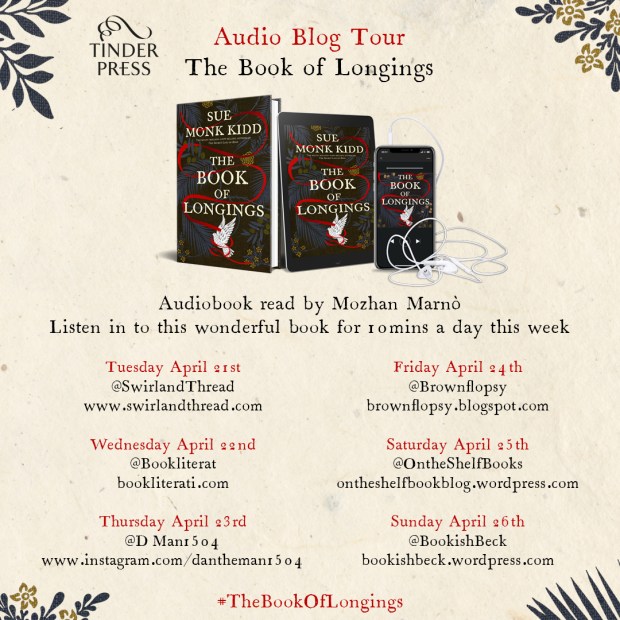
The Book of Longings was released on Tuesday the 21st. My thanks to Tinder Press for the proof copy for review.
I’m the last stop on a small blog tour for the audiobook release: if you’re interested in listening to the first hour of The Book of Longings, visit the blogs below and follow the links. Each one is hosting a 10-minute excerpt. The final one is available here.
Women’s Prize Longlist 2020 Thoughts & Other Prize Reading Projects
Next Wednesday the 22nd, the Women’s Prize shortlist will be revealed. However, the winner announcement has been delayed until September 9th, so we all get extra time to read the finalists (which is handy since the 900-page Hilary Mantel is a shoo-in). I happen to have gotten through half of the longlist so far. There were some books I cared for more than others. Of the remainder, I plan to pick up a few more once my library reopens.
Here’s how I’ve fared this year, in categories from best to worst, with excerpts and links to any I’ve reviewed in full:
Loved! (5)
 Dominicana by Angie Cruz: In 1965, 15-year-old Ana Canción, married off to an older man, leaves the Dominican Republic for New York City. With not a word of English, she feels trapped in her apartment and in this abusive relationship. Yet Ana is such a plucky and confiding narrator that you’re drawn into her world and cheer for her as she figures out what she wants from her life. This compassionate novel is proof that not all the immigration stories have been told yet.
 Girl, Woman, Other by Bernardine Evaristo: A terrific linked short story collection about 12 black women in twentieth-century and contemporary Britain balancing external and internal expectations and different interpretations of feminism to build lives of their own. The prose is more like poetry: a wry, radical stream of consciousness. A warm, spirited book, it never turns strident. It’s timely and elegantly constructed – and, it goes without saying, a worthy Booker Prize winner. To win the Women’s Prize too would be unprecedented, I think? But no surprise.
 Weather by Jenny Offill: Could there be a more perfect book for 2020? It’s a blunt, unromanticized but wickedly funny novel about how eco-anxiety permeates everyday life. Set either side of Trump’s election, it amplifies many voices prophesying doom, from environmentalists to Bible-thumpers. Lizzie’s sardonic narration is an ideal way of capturing relatable feelings of anger and helplessness. Don’t expect to come away with your worries soothed, though there is some comfort to be found in the feeling that we’re all in this together.
 The Dutch House by Ann Patchett: A memorable exploration of family secrets and memories. Maeve and Danny Conroy are an inseparable brother-and-sister pair. When their father dies, they become like Hansel and Gretel: cast out into the wilds by an evil stepmother who takes possession of the only home they’ve ever known, a suburban Philadelphia mansion built on the proceeds of the VanHoebeek cigarette empire. Patchett always captures the psychology of complicated families, and her sharp prose never fails to hit the nail on the head.
 Red at the Bone by Jacqueline Woodson: Like a family saga in miniature, this short novel stretches backward from Melody’s 16th birthday party, held in Brooklyn in 2001, to explore previous generations of the African American experience. Chapters alternate between first- and third-person narration, highlighting the perspectives of all the major family members. I raced through to see who would follow in family footsteps, or not. The title is apt: the book is sometimes raw and sometimes tender. It’s an emotionally engaging story of loss and memory.
Currently skimming (1)
 The Mirror and the Light by Hilary Mantel: I’ve stalled around page 200. I’ll be totally engrossed for a few pages of exposition and Cromwell one-liners, but then everything gets talky or plotty and I skim for 20‒30 pages and put it down. My constant moving between 10‒20 books and the sudden loss of a deadline have not served me well: I feel overwhelmed by the level of detail and the cast of characters, and haven’t built up momentum. Still, I can objectively recognize the prose as top-notch.
Did not particularly enjoy (3)
 Fleishman Is in Trouble by Taffy Brodesser-Akner: To me this didn’t stand out at all from the sea of fiction about crumbling marriages and upper-middle-class angst.
- Actress by Anne Enright: A slow-burning backstory of trauma and mental illness. I found I wasn’t warming to the voice or main characters and mostly skimmed this.

- Hamnet by Maggie O’Farrell: In comparison with other historical fiction, this fell short. Overall, I found the prose flat and repetitive, which diluted the portrait of grief.

Attempted but couldn’t get through (1)
 Djinn Patrol on the Purple Line by Deepa Anappara – I’m wary of child narrators anyway, and the voice didn’t grab me within the first few pages.
Still plan to read (3)
 Queenie by Candice Carty-Williams
- How We Disappeared by Jing-Jing Lee
- The Most Fun We Ever Had by Claire Lombardo
Not interested (3)
 Nightingale Point by Luan Goldie: Sounds subpar.
- A Thousand Ships by Natalie Haynes: Say no to updated Greek classics.
- Girl by Edna O’Brien: I don’t care for O’Brien’s writing. Though this was well received by the critics, it’s not finding much love among my trusted bloggers. (Plus there’s the cultural appropriation issue.)
My ideal shortlist
(A wishlist based on my reading and what I want to read)
 Dominicana by Angie Cruz
Girl, Woman, Other by Bernardine Evaristo
How We Disappeared by Jing-Jing Lee
The Mirror and the Light by Hilary Mantel
Weather by Jenny Offill
The Dutch House by Ann Patchett
vs.
My predicted shortlist
 Queenie by Candice Carty-Williams
Actress by Anne Enright
Girl, Woman, Other by Bernardine Evaristo
The Mirror and the Light by Hilary Mantel
Girl by Edna O’Brien OR Hamnet by Maggie O’Farrell
The Dutch House by Ann Patchett
Callum, Eric, Laura and Rachel have been posting lots of reviews and thoughts related to the Women’s Prize. Have a look at their blogs!
In this 25th anniversary year of the Women’s Prize, readers are also being encouraged to catch up on previous winners.
- I’ve read 13 so far (and am currently rereading On Beauty by Zadie Smith).
 I already had Half of a Yellow Sun by Chimamanda Ngozi Adichie and The Idea of Perfection by Kate Grenville on my shelves, plus The Song of Achilles by Madeline Miller on my Nook.
- I recently found a copy of A Crime in the Neighborhood by Suzanne Berne at the free bookshop where I volunteer.
- On my current library stack are When I Lived in Modern Times by Linda Grant, Property by Valerie Martin and Fugitive Pieces by Anne Michaels.
I can’t promise to be a completist about this project because the prospect of reading A Girl Is a Half-formed Thing and The Glorious Heresies fills me with dread, but we’ll see…
Other Prize Reading Projects
 I’d been trying to make my way through some previous Wellcome Book Prize winners and nominees, but have been scuppered by my library’s closure. At the moment I have Adam Rutherford’s A Brief History of Everyone Who Ever Lived (2017 longlist; passed on from my father-in-law) and Steve Silberman’s Neurotribes (2016 shortlist; from the library) on my pile to read or, more likely, skim.
 I also had the idea to read all the Bellwether Prize winners because I loved The Leavers so much. (Known in full as the PEN/Bellwether Prize for Socially Engaged Fiction, it is a biennial award given by PEN America and Barbara Kingsolver, who created and funds the prize, “to a U.S. citizen for a previously unpublished work of fiction that address issues of social justice.”) This project did not start particularly well as I DNFed Running the Rift by Naomi Benaron. However, I own copies of Mudbound by Hillary Jordan and The Girl Who Fell from the Sky by Heidi W. Durrow and hope I’ll have better luck with them.
What prize lists or other reading projects are keeping you busy?
Pandemic Reading Strategies & Recommendations, Serious or Tongue-in-Cheek
If you’ve been spending time blog-hopping or on Twitter over the last few weeks, you will have seen countless riffs on this topic. Everyone’s pondering what’s best to read in these times. All we can get our hands on about plagues (Boccaccio, Camus, Defoe)? Allegories of similarly challenging worldwide disasters (WWII, 9/11)? Childhood favorites? Comfort reads? Funny books? Light, undemanding stuff? Rereads?
My general answer would be: as always, read whatever you want or can – anything that captures your attention is worthwhile. We’re under so much stress that our reading should be entirely unpressured. But to be a little more specific, I’ve gathered reading recommendations on a variety of topics, drawing on lists that others have made and linking to my own blog reviews where applicable.
(Some of these ideas are less serious than others.)
If you are brave enough to learn about zoonotic diseases:
 Spillover: Animal Infections and the Next Human Pandemic by David Quammen: This is top-notch scientific journalism: pacey, well-structured, and gripping. The best chapters are on Ebola and SARS; the SARS chapter, in particular, reads like a film screenplay, if this were a far superior version of Contagion. It’s a sobering subject, with some quite alarming anecdotes and statistics, but this is not scare-mongering for the sake of it; Quammen is frank about the fact that we’re still all more likely to get heart disease or be in a fatal car crash.
If you can’t look away from pandemic stories, historical or imagined:


I already had Philip Roth’s Nemesis (set in 1940s New Jersey amid a polio epidemic) out from the library because it was on the Wellcome Book Prize shortlist in 2011. I was also inspired to take Year of Wonders by Geraldine Brooks (set in the 1660s and featuring an English village that quarantined itself during the Plague) off the shelf. I’m nearing the end of these two and should have my reviews up next week.
You will see no one book referenced more than Station Eleven by Emily St. John Mandel. It’s a wholly believable dystopian novel in which 99% of the population has been wiped out by a pandemic. The remnant bands together not just to survive but to create and preserve art. “What was lost in the collapse: almost everything, almost everyone, but there is still such beauty.” (My full BookBrowse review from December 2014.)
See also this Publishers Weekly list of “13 Essential Pandemic Novels.”
If you’re feeling cooped up…
 Infinite Home by Kathleen Alcott: “Edith is a widowed landlady who rents apartments in her Brooklyn brownstone to an unlikely collection of humans, all deeply in need of shelter.” (I haven’t read it, but I do have a copy; now would seem like the time to read it!)
…yet want to appreciate the home you’re stuck in:


Years ago I read and loved At Home: A Short History of Private Life by Bill Bryson and Happier at Home by Gretchen Rubin. I can’t tell you anything more than that because it was before the days when I reviewed everything I read, but these are both reliable authors.
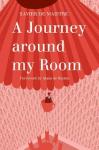 I love the sound of A Journey Around My Room by Xavier de Maistre: “Finding himself locked in his room for six weeks, a young officer journeys around his room in his imagination, using the various objects it contains as inspiration for a delightful parody of contemporary travel writing and an exercise in Sternean picaresque.”
I’m also drawn to Home: The Story of Everyone Who Ever Lived in Our House by Julie Myerson, who combed archives for traces of all the former residents of her 1870s terraced house in Clapham.
If you’re struggling with being on your own:


The Lonely City by Olivia Laing: This remarkable book on outsider artists interweaves biography, art criticism and memoir. Laing is a tour guide into the peculiar, lonely crowdedness you find in a world city.
How to Be Alone by Sara Maitland: Maitland argues that although being alone is easy to achieve, there is an art to doing it properly, and solitude and loneliness are by no means the same thing. Profiling everyone from the Desert Fathers of early Christianity to the Romantic poets, she enumerates all the benefits that solitude confers.
Journal of a Solitude by May Sarton: A one-year account of her writing life in New Hampshire, this is Sarton’s best. The book dwells on the seasonal patterns of the natural world (shovelling snow, gardening, caring for animals) but also the rhythms of the soul – rising in hope but also falling into occasional, inevitable despair.
See also this Penguin UK list of books to read in self-isolation.
If you’ve been passing the time by baking…
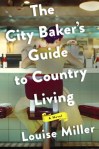 The City Baker’s Guide to Country Living by Louise Miller: As chief baker at the Sugar Maple Inn in Guthrie, Vermon, Olivia Rawlings settles into a daily routine of baking muffins, bread and cakes. This is a warm, cozy debut novel full of well-drawn secondary characters and romantic possibilities. There’s nothing clichéd about it, though. Livvy is a sassy narrator, and I loved how Miller documents the rhythms of the small-town country year, including tapping the maple trees in the early spring and a pie baking contest at the summer county fair.
 Sourdough by Robin Sloan: Lois Clary, a Bay Area robot programmer, becomes obsessed with baking. “I needed a more interesting life. I could start by learning something. I could start with the starter.” She attempts to link her job and her hobby by teaching a robot arm to knead the bread she makes for a farmer’s market. Madcap adventures ensue. It’s a funny and original novel and it makes you think, too – particularly about the extent to which we should allow technology to take over our food production.
…but can’t find yeast or eggs in the shop:
Yeast: A Problem by Charles Kingsley (1851). Nope, I haven’t read it, but our friend has a copy in his Everyman’s Library collection and the title makes us laugh every time we see it.
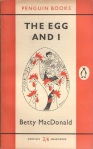 The Egg & I by Betty Macdonald: MacDonald and her husband started a rural Washington State chicken farm in the 1940s. Her account of her failure to become the perfect farm wife is hilarious. The voice reminded me of Doreen Tovey’s: mild exasperation at the drama caused by household animals, neighbors, and inanimate objects. “I really tried to like chickens. But I couldn’t get close to the hen either physically or spiritually, and by the end of the second spring I hated everything about the chicken but the egg.” Perfect pre-Easter reading.
And here are a few lists I put together for Hungerford Bookshop:
If you need a laugh:
Fiction:
Lucky Jim by Kingsley Amis
The Darling Buds of May (and sequels) by H.E. Bates
Ella Minnow Pea by Mark Dunn
Heartburn by Nora Ephron
 Cold Comfort Farm by Stella Gibbons
Anything by Nick Hornby
Three Men in a Boat by Jerome K. Jerome
Anything by David Lodge
Dear Committee Members by Julie Schumacher
The Rosie Project (and sequels) by Graeme Simsion
To Say Nothing of the Dog by Connie Willis
Nonfiction:
 Anything by Bill Bryson
21st-Century Yokel by Tom Cox
Anything by Gerald Durrell
Anything by Nora Ephron (essays)
This Is Going to Hurt by Adam Kay
Priestdaddy by Patricia Lockwood
Dear Lupin by Roger Mortimer
Anything by David Sedaris
Little Failure by Gary Shteyngart
If you want to disappear into a long book:


The Heart’s Invisible Furies by John Boyne
Jonathan Strange & Mr Norrell by Susanna Clarke
David Copperfield by Charles Dickens
Middlesex by Jeffrey Eugenides
The Crimson Petal and the White by Michel Faber
The Signature of All Things by Elizabeth Gilbert
The Nix by Nathan Hill
We, the Drowned by Carsten Jensen
Mary Ann Sate, Imbecile by Alice Jolly
The Poisonwood Bible by Barbara Kingsolver
The Wind-Up Bird Chronicle by Haruki Murakami
The Sparrow by Mary Doria Russell
American Wife by Curtis Sittenfeld
East of Eden by John Steinbeck
The Goldfinch by Donna Tartt
Cutting for Stone by Abraham Verghese
The Paying Guests by Sarah Waters
If you’re looking for some hope:
 Almost Everything: Notes on Hope by Anne Lamott
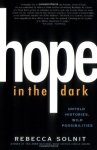
Hope in the Dark by Rebecca Solnit
Hope Dies Last: Making a Difference in an Indifferent World by Studs Terkel
I’ve been doing a combination of the above strategies, reading about historical plagues in fiction and nonfiction but also doing some rereading and consuming lighter genre stuff like mysteries. I continue to dip into new releases, and I enjoy the ongoing challenge of my reading projects. Right now, I’m working through a few current Women’s Prize longlistees, as well as some past Wellcome Book Prize nominees and Women’s Prize winners, and I’m about to start a third #1920Club title. Plus I’m already thinking about my 20 Books of Summer (I’m considering an all-foodie theme).
Further reading:
- Book Riot pinpoints seven categories of books to read during a pandemic.
- Clare surveys the post-pandemic literary landscape.
- Elle logs her pandemic reading and viewing.
- Laura discusses pandemic reading strategies and distraction reading.
- Literary Hub looks at parallel situations, including post-9/11 reads, to make predictions, and asks what your “go-to quarantine read” says about you. (I’ve read Kindred most recently, but I wouldn’t say that describes me.)
- Simon thinks about what we can and should read.
- Susan highlights some comfort reads.
What are your current reading strategies?
Reading Ireland Month 2020: Nuala O’Faolain and More
It feels like the whole world has changed in the past week, doesn’t it? I hope you all are keeping well and turning to books for comfort and escape. Reading Ireland Month is run each March by Cathy of 746 Books. I’m wishing you a happy (if subdued) St. Patrick’s Day with this post on the Irish books I’ve been perusing recently. Even before this coronavirus situation heated up, I’d been struggling with my focus, so only one of these was a proper read, while the rest ended up being skims. In the meantime, I’m trying out a new blog design and have been working to create more intuitive menu headings and helpful intro pages.

Are You Somebody? The Accidental Memoir of a Dublin Woman by Nuala O’Faolain (1996)
 Before writing this landmark memoir, O’Faolain was a TV documentary producer and Irish Times columnist. Her upbringing in poverty is reminiscent of Frank McCourt’s: one of nine children, she had a violent father and an alcoholic mother who cheated on each other and never seemed to achieve happiness. Educated at a convent school and at university in Dublin (until she dropped out), she was a literary-minded romantic who bounced between relationships and couldn’t decide whether marriage or a career should be her highest aim. Though desperate not to become her mother – a bitter, harried woman who’d wanted to be a book reviewer – she didn’t want to miss out on a chance for love either.
O’Faolain feels she was born slightly too early to benefit from the women’s movement. “I could see sexism in operation everywhere in society; once your consciousness goes ping you can never again stop seeing that. But I was quite unaware of how consistently I put the responsibility for my personal happiness off onto men.” Chapter 16 is a standout, though with no explanation (all her other lovers were men) it launches into an account of her 15 years living with Nell McCafferty, “by far the most life-giving relationship of my life.”
Although this is in many respects an ordinary story, the geniality and honesty of the writing account for its success. It was an instant bestseller in Ireland, spending 20 weeks at number one, and made the author a household name. I especially loved her encounters with literary figures. For instance, on a year’s scholarship at Hull she didn’t quite meet Philip Larkin, who’d been tasked with looking after her, but years later had a bizarre dinner with him and his mother, both rather deaf; and David Lodge was a friend. The boarding school section reminded me of The Country Girls. Two bookish memoirs I’d recommend as readalikes are Ordinary Dogs by Eileen Battersby and Leave Me Alone, I’m Reading by Maureen Corrigan.
Skims (all: )
Actress by Anne Enright (2020)
 The Green Road is among my most memorable reads of the past five years, so I was eagerly awaiting Enright’s new novel, which is on the Women’s Prize longlist. I read the first 30 pages and found I wasn’t warming to the voice or main characters. Norah is a novelist who, prompted by an interviewer, realizes the story she most needs to tell is her mother’s. Katherine O’Dell was “a great fake,” an actress who came to epitomize Irishness even though she was actually English. Her slow-burning backstory is punctuated by trauma and mental illness. “She was a great piece of anguish, madness and sorrow,” Norah concludes. I could easily see this making the Women’s Prize shortlist and earning a Booker nomination as well. It’s the sort of book I’ll need to come back to some years down the line to fully appreciate.
Cal by Bernard MacLaverty (1983)
 As Catholics, Cal McCluskey and his father are a rarity in their community and fear attacks on their home. Resistant to join his father in working at the local abattoir, Cal spends his days doing odd jobs and lurking around the public library – he has a crush on a married librarian named Marcella. Aimless and impressionable, he’s easily talked into acting as a driver for Crilly and Skeffington, the kind of associates who have gotten him branded as “Fenian scum.” The novella reflects on the futility of cycles of violence (“If you’re not part of the solution, you’re part of the problem,” Crilly says, to which Cal replies, “But it all seems so pointless”), but is definitely a period piece. Cal is not the most sympathetic of protagonists. I didn’t enjoy this as much as the two other books I’ve read by MacLaverty.
Full Tilt: Ireland to India with a Bicycle by Dervla Murphy (1965)
 Murphy and her bike “Roz” set out on an epic Fermor-like journey in the first six months of 1963. She covered 60 to 100 miles a day, facing sunburn, punctured tires and broken ribs. She was relieved she brought a gun: it came in handy for fending off wolves, deterring a would-be rapist, and preventing bike thieves. For some reason travel books are slow, painstaking reads for me. I never got into the flow of this one, and was troubled by snap judgments about groups of people – “I know instinctively the temper of a place, after being five minutes with the inhabitants. … the Afghans are, on balance, much dirtier in clothes, personal habits and dwellings than either the Turks or Persians.” Murphy does have a witty turn of phrase, though, e.g. “I suppose I’ll get used to it but at the moment I wouldn’t actually say that camel’s milk is my favourite beverage.”
My Father’s Wake: How the Irish Teach Us to Live, Love and Die by Kevin Toolis (2017)
 Toolis is a journalist and filmmaker from Dookinella, on an island off the coast of County Mayo. His father Sonny’s pancreatic cancer prompted him to return to the ancestral village and reflect on his own encounters with death. As a young man he had tuberculosis and stayed on a male chest ward with longtime smokers; despite a bone marrow donation, his older brother Bernard died from leukemia.
As a reporter during the Troubles and in Malawi and Gaza, Toolis often witnessed death, but at home in rural Ireland he saw a model for how it should be: accepted, and faced with the support of a whole community. People made a point of coming to see Sonny as he was dying. Keeping the body in the home and holding a wake are precious opportunities to be with the dead. Death is what’s coming for us all, so why not make its acquaintance? Toolis argues.
I’ve read so much around the topic that books like this don’t stand out anymore, and while I preferred the general talk of death to the family memoir bits, it also made very familiar points. At any rate, his description of his mother’s death is just how I want to go: “She quietly died of a heart attack with a cup of tea and a biscuit on a sunny May morning.”
What have you been picking up for Reading Ireland Month?
11 Days, 11 Books: 2020’s Reads, from Best to Worst
I happen to have finished 11 books so far this year – though a number of them were started in 2019 (one as far back as September) and several of them are novelty books and/or of novella length. Just for kicks, I’ve arranged them from best to worst. Here’s how my reading year has started off…
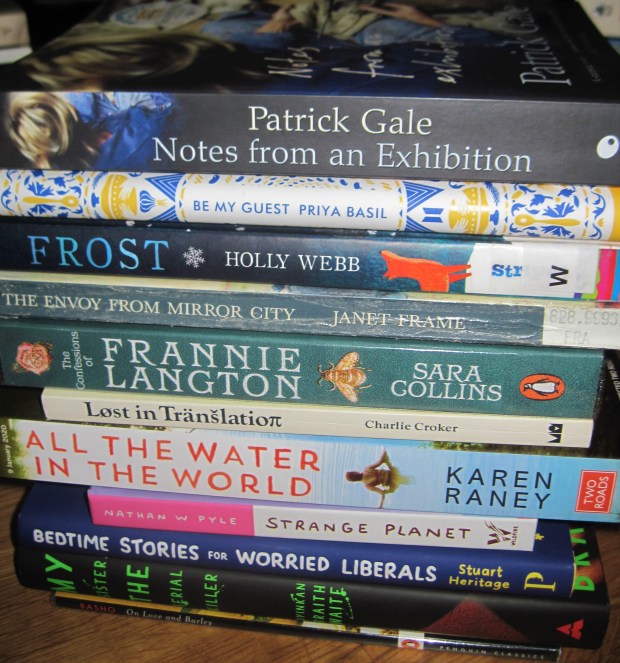
 Notes from an Exhibition by Patrick Gale – Nonlinear chapters give snapshots of the life of bipolar Cornwall artist Rachel Kelly and her interactions with her husband and four children, all of whom are desperate to earn her love. Quakerism, with its emphasis on silence and the inner light in everyone, sets up a calm and compassionate atmosphere, but also allows for family secrets to proliferate. There are two cameo appearances by an intimidating Dame Barbara Hepworth, and three wonderfully horrible scenes in which Rachel gives a child a birthday outing. The novel questions patterns of inheritance (e.g. of talent and mental illness) and whether happiness is possible in such a mixed-up family. (Our joint highest book club rating ever, with Red Dust Road. We all said we’d read more by Gale.)
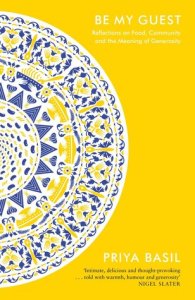 Be My Guest: Reflections on Food, Community and the Meaning of Generosity by Priya Basil – An extended essay whose overarching theme of hospitality stretches into many different topics. Part of an Indian family that has lived in Kenya and England, Basil is used to a culture of culinary abundance. Greed, especially for food, feels like her natural state, she acknowledges. However, living in Berlin has given her a greater awareness of the suffering of the Other – hundreds of thousands of refugees have entered the EU, often to be met with hostility. Yet the Sikhism she grew up in teaches unconditional kindness to strangers. She asks herself, and readers, how to cultivate the spirit of generosity. Clearly written and thought-provoking. (And typeset in Mrs Eaves, one of my favorite fonts.) See also Susan’s review, which convinced me to order a copy with my Christmas bookstore voucher.
 Frost by Holly Webb – Part of a winter animals series by a prolific children’s author, this combines historical fiction and fantasy in an utterly charming way. Cassie is a middle child who always feels left out of her big brother’s games, but befriending a fox cub who lives on scrubby ground near her London flat gives her a chance for adventures of her own. One winter night, Frost the fox leads Cassie down the road – and back in time to the Frost Fair of 1683 on the frozen Thames. I rarely read middle-grade fiction, but this was worth making an exception for. It’s probably intended for ages eight to 12, yet I enjoyed it at 36. My library copy smelled like strawberry lip gloss, which was somehow just right.
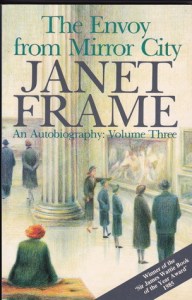 The Envoy from Mirror City by Janet Frame – This is the last and least enjoyable volume of Frame’s autobiography, but as a whole the trilogy is an impressive achievement. Never dwelling on unnecessary details, she conveys the essence of what it is to be (Book 1) a child, (2) a ‘mad’ person, and (3) a writer. After years in mental hospitals for presumed schizophrenia, Frame was awarded a travel fellowship to London and Ibiza. Her seven years away from New Zealand were a prolific period as, with the exception of breaks to go to films and galleries, and one obsessive relationship that nearly led to pregnancy out of wedlock, she did little else besides write. The title is her term for the imagination, which leads us to see Plato’s ideals of what might be.
 The Confessions of Frannie Langton by Sara Collins – Collins won the first novel category of the Costa Awards for this story of a black maid on trial in 1826 London for the murder of her employers, the Benhams. Margaret Atwood hit the nail on the head in a tweet describing the book as “Wide Sargasso Sea meets Beloved meets Alias Grace” (she’s such a legend she can get away with being self-referential). Back in Jamaica, Frances was a house slave and learned to read and write. This enabled her to assist Langton in recording his observations of Negro anatomy. Amateur medical experimentation and opium addiction were subplots that captivated me more than Frannie’s affair with Marguerite Benham and even the question of her guilt. However, time and place are conveyed convincingly, and the voice is strong.
(The next one is a book my husband received for Christmas, as are the Heritage and Pyle, further down, which were from me. Yes, I read them as well. What of it?)
 Lost in Translation by Charlie Croker – This has had us in tears of laughter. It lists examples of English being misused abroad, e.g. on signs, instructions and product marketing. China and Japan are the worst repeat offenders, but there are hilarious examples from around the world. Croker has divided the book into thematic chapters, so the weird translated phrases and downright gobbledygook are grouped around topics like food, hotels and medical advice. A lot of times you can see why mistakes came about, through the choice of almost-but-not-quite-right synonyms or literal interpretation of a saying, but sometimes the mind boggles. Two favorites: (in an Austrian hotel) “Not to perambulate the corridors in the hours of repose in the boots of ascension” and (on a menu in Macao) “Utmost of chicken fried in bother.”
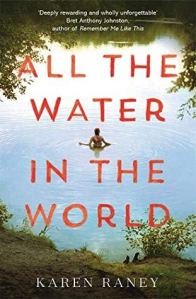 All the Water in the World by Karen Raney – Like The Fault in Our Stars (though not YA), this is about a teen with cancer. Sixteen-year-old Maddy is eager for everything life has to offer, so we see her having her first relationship – with Jack, her co-conspirator on an animation project to be used in an environmental protest – and contacting Antonio, the father she never met. Sections alternate narration between her and her mother, Eve. I loved the suburban D.C. setting and the e-mails between Maddy and Antonio. Maddy’s voice is sweet yet sharp, and, given that the main story is set in 2011, the environmentalism theme seems to anticipate last year’s flowering of youth participation. However, about halfway through there’s a ‘big reveal’ that fell flat for me because I’d guessed it from the beginning.
This was published on the 9th. My thanks to Two Roads for the proof copy for review.
 Strange Planet by Nathan W. Pyle – I love these simple cartoons about aliens and the sense they manage to make of Earth and its rituals. The humor mostly rests in their clinical synonyms for everyday objects and activities (parenting, exercise, emotions, birthdays, office life, etc.). Pyle definitely had fun with a thesaurus while putting these together. It’s also about gentle mockery of the things we think of as normal: consider them from one remove, and they can be awfully strange. My favorites are still about the cat. You can also see his work on Instagram.

 Bedtime Stories for Worried Liberals by Stuart Heritage – I bought this for my husband purely for the title, which couldn’t be more apt for him. The stories, a mix of adapted fairy tales and new setups, are mostly up-to-the-minute takes on US and UK politics, along with some digs at contemporary hipster culture and social media obsession. Heritage quite cleverly imitates the manner of speaking of both Boris Johnson and Donald Trump. By its nature, though, the book will only work for those who know the context (so I can’t see it succeeding outside the UK) and will have a short shelf life as the situations it mocks will eventually fade into collective memory. So, amusing but not built to last. I particularly liked “The Night Before Brexmas” and its all-too-recognizable picture of intergenerational strife.
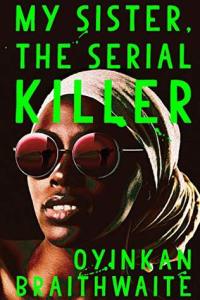 My Sister, the Serial Killer by Oyinkan Braithwaite – The Booker Prize longlist and the Women’s Prize shortlist? You must be kidding me! The plot is enjoyable enough: a Nigerian nurse named Korede finds herself complicit in covering up her gorgeous little sister Ayoola’s crimes – her boyfriends just seem to end up dead somehow; what a shame! – but things get complicated when Ayoola starts dating the doctor Korede has a crush on and the comatose patient to whom Korede had been pouring out her troubles wakes up. My issue was mostly with the jejune writing, which falls somewhere between high school literary magazine and television soap (e.g. “My hands are cold, so I rub them on my jeans” & “I have found that the best way to take your mind off something is to binge-watch TV shows”).
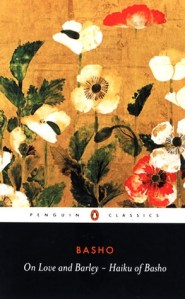 On Love and Barley – Haiku of Basho [trans. from the Japanese by Lucien Stryk] – These hardly work in translation. Almost every poem requires a contextual note on Japan’s geography, flora and fauna, or traditions; as these were collected at the end but there were no footnote symbols, I didn’t know to look for them, so by the time I read them it was too late. However, here are two that resonated, with messages about Zen Buddhism and depression, respectively: “Skylark on moor – / sweet song / of non-attachment.” (#83) and “Muddy sake, black rice – sick of the cherry / sick of the world.” (#221; reminds me of Samuel Johnson’s “tired of London, tired of life” maxim). My favorite, for personal relevance, was “Now cat’s done / mewing, bedroom’s / touched by moonlight.” (#24)
Any of these you have read or would read?
Onwards with the 2020 reading!
Women’s Prize 2019: Longlist Review Excerpts and Shortlist Thoughts
There’s a reason I could never wholeheartedly shadow the Women’s Prize: although each year the prize introduces me one or two great novels I might never have heard of otherwise, inevitably there are also some I don’t care for, or have zero interest in reading. Here’s how I fared this year, in categories from best to worst, with excerpts and links to any I’ve reviewed in full:
Loved! (5)
- The Pisces by Melissa Broder: This starts off as a funny but somewhat insubstantial novel about a thirtysomething stuck with a life she isn’t sure she wants, morphs into a crass sex comedy (featuring a merman), but ultimately becomes a profound exploration of possession, vulnerability and the fluidity of gender roles. It’s about the prison of the body, and choosing which of the many different siren voices calling us we’ll decide to listen to. It’s a Marmite book, but perfect Women’s Prize material.
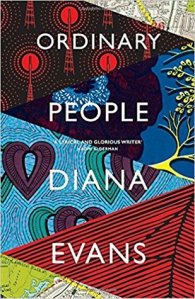 Ordinary People by Diana Evans: Reminds me of On Beauty by Zadie Smith, one of my favorite novels of this millennium. It focuses on two Black couples in South London and the suburbs who, in the wake of Obama’s election, are reassessing their relationships. Their problems are familiar middle-class ones, but Evans captures them so candidly that many passages made me wince. The chapter in which two characters experience mental instability is a standout, and the Black slang and pop music references a nice touch.
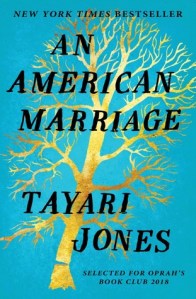
- An American Marriage by Tayari Jones: Roy and Celestial only get a year of happy marriage before he’s falsely accused of rape and sentenced to 12 years in prison in Louisiana. I ached for all three main characters: It’s an impossible situation. There’s a lot to probe about the characters’ personalities and motivations, and about how they reveal or disguise themselves through their narration. I found it remarkable how the letters, which together make up not even one-fifth of the text, enhance the raw honesty of the book.
- Ghost Wall by Sarah Moss: It’s the late 1980s and teenager Silvie Hampton and her parents have joined a university-run residential archaeology course in the North of England, near the bogs where human sacrifice once took place. Nationalism, racism, casual misogyny – there are lots of issues brewing under the surface here. Women’s bodies and what can be done to them is central; as the climax approaches, the tricksy matter of consent arises. I ended up impressed by how much Moss conveys in so few pages. Another one custom-made for the Women’s Prize.
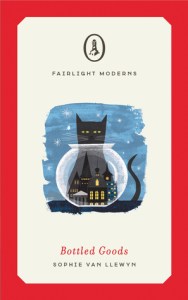 Bottled Goods by Sophie van Llewyn: I just finished this the other day. It’s a terrific hybrid work that manages to combine several of my favorite forms: a novella, flash fiction and linked short stories. The content is also an intriguing blend, of the horrific and the magical. After her brother-in-law’s defection, Alina and her husband Liviu come under extra scrutiny in Communist Romania. Bursts of magic realism and a delightful mixture of narrative styles (lists and letters; alternating between the first and third person) make all this material bearable.
Did not particularly enjoy (2)
- Freshwater by Akwaeke Emezi: Magic realism and mental illness fuel a swirl of disorienting but lyrical prose. Much of the story is told by the ọgbanje (an Igbo term for evil spirits) inhabiting Ada’s head. The conflation of the abstract and the concrete didn’t quite work for me, and the whole is pretty melodramatic. Although I didn’t enjoy this as much as some other inside-madness tales I’ve read, I can admire the attempt to convey the reality of mental illness in a creative way.
 Normal People by Sally Rooney: This book’s runaway success continues to baffle me. I kept waiting for more to happen, skimming ahead to see if there would be anything more to it than drunken college parties and frank sex scenes. It is appealing to see into these characters’ heads and compare what they think of themselves and each other with their awareness of what others think. But page to page it is pretty tedious, and fairly unsubtle.
Attempted but couldn’t get through (3)
- Remembered by Yvonne Battle-Felton: A historical novel marked by the presence of ghosts, this is reminiscent of the work of Cynthia Bond, Toni Morrison and Jesmyn Ward. It’s the closest thing to last year’s Sing, Unburied, Sing. I only read the first 36 pages as neither the characters nor the prose struck me as anything special.
 Swan Song by Kelleigh Greenberg-Jephcott: Full of glitzy atmosphere contrasted with washed-up torpor. I have no doubt the author’s picture of Truman Capote is accurate, and there are great glimpses into the private lives of his catty circle. I always enjoy first person plural narration, too. However, I quickly realized I don’t have sufficient interest in the figures or time period to sustain me through nearly 500 pages. I read the first 18 pages and skimmed to p. 35.
- Number One Chinese Restaurant by Lilian Li: Vague The Nest vibes, but the prose felt flat and the characters little more than clichés (especially scheming ‘Uncle’ Pang). I grew up in Silver Spring, Maryland so was expecting there to be more local interest for me, but this could be taking place anywhere. Reviews from trusted Goodreads friends suggested that the plot and characterization don’t significantly improve as the book goes on, so I gave up after the first two chapters.
Not interested (6)
(Don’t you go trying to change my mind!)

- The Silence of the Girls by Pat Barker: Updated Greek classics are so not my bag.
- My Sister, the Serial Killer by Oyinkan Braithwaite: Meh.
- Milkman by Anna Burns: Nah.
- Lost Children Archive by Valeria Luiselli: I’ll try something else by Luiselli.
- Praise Song for the Butterflies by Bernice L. McFadden: The setting of a fictional African country and that title already have me groaning.
- Circe by Madeline Miller: See the note on Barker above.
The shortlist will be announced on Monday the 29th. Broder and Moss will most likely make the cut. I’d love to see the van Llewyn make it through, as it’s my favorite of what I’ve read from the longlist, but I think it will probably be edged out by more high-profile releases. Either Evans or Jones will advance; Jones probably has the edge with more of an issues book. One of the Greek myth updates is likely to succeed. Luiselli is awfully fashionable right now. Emezi’s is an interesting book and the Prize is making a statement by supporting a non-binary author. Rooney has already won or been nominated for every prize going, so I don’t think she needs the recognition. Same for Burns, having won the Booker.
So, quickly pulling a combination of wanted and expected titles out of the air would give this predicted shortlist:
 The Silence of the Girls by Pat Barker
The Pisces by Melissa Broder
Freshwater by Akwaeke Emezi
An American Marriage by Tayari Jones
Lost Children Archive by Valeria Luiselli
Ghost Wall by Sarah Moss
Eleanor, Eric, Laura and Rachel have been posting lots of reviews and thoughts related to the Women’s Prize. Have a look at their blogs!
Fun with Titles
I’m certainly not the first to notice these rather similar titles – both of which appear on this year’s Folio Prize and Women’s Prize longlists. I preferred Diana Evans’s Ordinary People (), which I just finished earlier this week, to Sally Rooney’s Normal People (). The two novels look at fairly average situations – two Black couples with children in South London and the Surrey suburbs; a pair of university students in Ireland – and probe the emotional intricacies.


Michelle Obama’s Becoming is now set to become the bestselling memoir of all time. I enjoyed it as much as any memoir-loving fan of the Obamas would (), but after I found out that it was ghostwritten I couldn’t get that little fact out of my mind. By contrast, Anuradha Bhagwati’s Unbecoming is the memoir of a bisexual U.S. Marine captain and tells of the racism and sexism she experienced. It came out last week and has only six ratings on Goodreads, so it’s as under-the-radar as Becoming is overexposed.


Just one letter separates the titles of these two books. I’ve been slowly making my way through All the Lives We Ever Lived, Katharine Smyth’s elegant bibliomemoir about her father’s death and the comfort she found in rereading To the Lighthouse. I don’t know much about All the Lives We Never Lived by Anuradha Roy, just that it’s set in 1930s India and Bali and has been longlisted for the Walter Scott Prize for historical fiction. Her previous novel, Sleeping on Jupiter (2015), was shortlisted for the Man Booker Prize.


Which of the books from these pairs would tempt you?
Recommended June Releases
I have an all-female line-up for you this time, with selections ranging from a YA romance in verse to a memoir by a spiritual recording artist. There’s a very random detail that connects two of these books – look out for it!

In Paris with You by Clémentine Beauvais
[Faber & Faber, 7th]
 I don’t know the source material Beauvais was working with (Eugene Onegin, 1837), but still enjoyed this YA romance in verse. Eugene and Tatiana meet by chance in Paris in 2016 and the attraction between them is as strong as ever, but a possible relationship is threatened by memories of a tragic event from 10 years ago involving Lensky, Eugene’s friend and the boyfriend of Tatiana’s older sister Olga. I’m in awe at how translator Sam Taylor has taken the French of her Songe à la douceur and turned it into English poetry with the occasional rhyme. This is a sweet book that would appeal to John Green’s readers, but it’s more sexually explicit than a lot of American YA, so is probably only suitable for older teens. (Proof copy from Faber Spring Party)
Favorite lines:
“Her heart takes the lift / up to her larynx, / where it gets stuck / hammering against the walls of her neck.”
“an adult with a miniature attention span, / like everyone else, refreshing, updating, / nibbling at time like a ham baguette.”
“helium balloons in the shape of spermatozoa straining towards the dark sky.”
My rating:
Implosion: A Memoir of an Architect’s Daughter by Elizabeth W. Garber
[She Writes Press, 12th]
 The author grew up in a glass house designed by her father, Modernist architect Woodie Garber, outside Cincinnati in the 1960s–70s. This and his other most notable design, Sander Hall, a controversial tower-style dorm at the University of Cincinnati that was later destroyed in a controlled explosion, serve as powerful metaphors for her dysfunctional family life. Woodie is such a fascinating, flawed figure. Manic depression meant he had periods of great productivity but also weeks when he couldn’t get out of bed. He and Elizabeth connected over architecture, like when he helped her make a scale model of Le Corbusier’s Villa Savoye for a school project, but it was hard for a man born in the 1910s to understand his daughter’s generation or his wife’s desire to go back to school and have her own career.
Mixed feelings towards a charismatic creative genius who made home life a torment and the way their fractured family kept going are reasons enough to read this book. But another is just that Garber’s life has been so interesting: she witnessed the 1968 race riots and had a black boyfriend when interracial relationships were frowned upon; she was briefly the librarian for the Oceanics School, whose boat was taken hostage in Panama; and she dropped out of mythology studies at Harvard to become an acupuncturist. Don’t assume this will be a boring tome only for architecture buffs. It’s a masterful memoir for everyone. (Read via NetGalley on Nook)
My rating:
Florida by Lauren Groff
[William Heinemann (UK), 7th / Riverhead (USA), 5th]
 My review is in today’s “Book Wars” column in Stylist magazine. Two major, connected threads in this superb story collection are ambivalence about Florida, and ambivalence about motherhood. The narrator of “The Midnight Zone,” staying with her sons in a hunting camp 20 miles from civilization, ponders the cruelty of time and her failure to be sufficiently maternal, while the woman in “Flower Hunters” is so lost in an eighteenth-century naturalist’s book that she forgets to get Halloween costumes for her kids. A few favorites of mine were “Ghosts and Empties,” in which the narrator goes for long walks at twilight and watches time passing through the unwitting tableaux of the neighbors’ windows; “Eyewall,” a matter-of-fact ghost story; and “Above and Below,” in which a woman slips into homelessness – it’s terrifying how precarious her life is at every step. (Proof copy)
Favorite lines:
“What had been built to seem so solid was fragile in the face of time because time is impassive, more animal than human. Time would not care if you fell out of it. It would continue on without you.” (from “The Midnight Zone”)
“The wind played the chimney until the whole place wheezed like a bagpipe.” (from “Eyewall”)
“How lonely it would be, the mother thinks, looking at her children, to live in this dark world without them.” (from “Yport”)
My rating:
The Most Beautiful Thing I’ve Seen: Opening Your Eyes to Wonder by Lisa Gungor
[Zondervan, 26th]
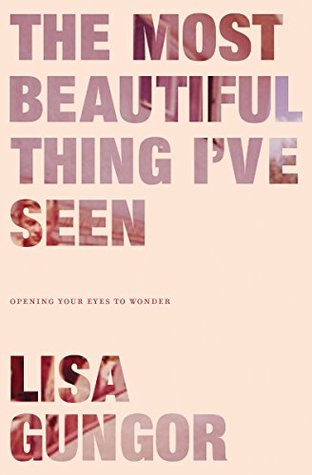 You’re most likely to pick this up if you enjoy Gungor’s music, but it’s by no means a band tell-all. The big theme of this memoir is moving beyond the strictures of religion to find an all-encompassing spirituality. Like many Gungor listeners, Lisa grew up in, and soon outgrew, a fundamentalist Christian setting. She bases the book around a key set of metaphors: the dot, the line, and the circle. The dot was the confining theology she was raised with; the line was the pilgrimage she and Michael Gungor embarked on after they married at 19; the circle was the more inclusive spirituality she developed after their second daughter, Lucie, was born with Down syndrome and required urgent heart surgery. Being mothered, becoming a mother and accepting God as Mother: together these experiences bring the book full circle. Barring the too-frequent nerdy-cool posturing (seven mentions of “dance parties,” and so on), this is a likable memoir for readers of spiritual writing by the likes of Sue Monk Kidd, Mary Oliver and Terry Tempest Williams. (Read via NetGalley on Kindle)
My rating:
 Orchid & the Wasp by Caoilinn Hughes
[Oneworld, 7th] – see my full review.
Ok, Mr Field by Katharine Kilalea
[Faber & Faber, 7th]
 Mr. Field is a concert pianist whose wrist was shattered in a train crash. With his career temporarily derailed, there’s little for him to do apart from wander his Cape Town house, a replica of Le Corbusier’s Villa Savoye, and the nearby coastal path. He also drives over to spy on his architect’s widow, with whom he’s obsessed. He’s an aimless voyeur who’s more engaged with other people’s lives than with his own – until a dog follows him home from a graveyard. This is a strangely detached little novel in which little seems to happen. Like Asunder by Chloe Aridjis and Leaving the Atocha Station by Ben Lerner, it’s about someone who’s been coasting unfeelingly through life and has to stop to ask what’s gone wrong and what’s worth pursuing. It’s so brilliantly written, with the pages flowing effortlessly on, that I admired Kilalea’s skill. Her descriptions of scenery and music are particularly good. In terms of the style, I was reminded of books I’ve read by Katie Kitamura and Henrietta Rose-Innes. (Proof copy from Faber Spring Party)
My rating:
This came out in the States (from Riverhead) back in early April, but releases here in the UK soon, so I’ve added it in as a bonus.
The Female Persuasion by Meg Wolitzer
[Chatto & Windus, 7th]
 An enjoyable story of twentysomethings looking for purpose and trying to be good feminists. To start with it’s a fairly familiar campus novel in the vein of The Art of Fielding and The Marriage Plot, but we follow Greer, her high school sweetheart Cory and her new friend Zee for the next 10+ years to see the compromises they make as ideals bend to reality. Faith Frank is Greer’s feminist idol, but she’s only human in the end, and there are different ways of being a feminist: not just speaking out from a stage, but also quietly living every day in a way that shows you value people equally. I have a feeling this would have meant much more to me a decade ago, and the #MeToo-ready message isn’t exactly groundbreaking, but I very much enjoyed my first taste of Wolitzer’s sharp, witty writing and will be sure to read more from her. This seems custom-made for next year’s Women’s Prize shortlist. (Free from publisher, for comparison with Florida in Stylist “Book Wars” column.)
My rating:
What June books do you have on the docket? Have you already read any that you can recommend?
In Praise of Literary Prizes
I like a spot of competition. Whether watching Olympic figure skating, playing board games like Scrabble and Boggle, entering a low-key Oscars pool, or rooting for my favorites in American Idol seasons and Miss America pageants, I’ve always loved trying to pick the best. This means that literary prizes are hugely exciting for me, and I follow the races closely.
I’m particularly devoted to the Man Booker Prize. I was delighted to see Hanya Yanagihara’s A Little Life on the recent longlist (catch up on it here), a truly interesting set of books, diverse in terms of their genres and authors’ nationalities and nicely balanced between male and female writers (6:7). I’ve read four of the longlisted titles so far:
 The Fishermen, Chigozie Obioma (full review in May 2015 issue of Third Way): From a young Nigerian debut novelist comes a haunting tale of sibling rivalry and revenge. With sectarian riots afoot, the four oldest Agwu boys decide to make money by skipping school and fishing in the Omi-Ala River. Things get more complicated when Abulu, the local madman, issues a prophecy that seems bound to divide the brothers. The first quarter of the novel, especially, is drenched in foreshadowing (not always subtle, nor do the plot turns often rise above the predictable). Rich with prophecy and allusions, this owes much to biblical narratives and tragedies from Shakespeare to Chinua Achebe.
- Lila, Marilynne Robinson – reviewed at For Books’ Sake
- A Spool of Blue Thread, Anne Tyler – also reviewed at For Books’ Sake
- A Little Life, Hanya Yanagihara – reviewed at Shiny New Books

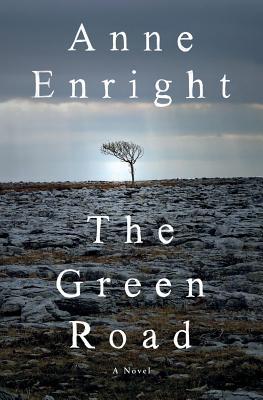 Next up: I’m reviewing The Green Road by Anne Enright for the November 2015 issue of Third Way. The Booker Prize shortlist will be announced on September 15th and the winner on October 13th.
Beyond the Booker, here are some of the other prizes I follow throughout the year, listed in vague chronological order:
 The Not the Booker Prize run by the Guardian. On this year’s shortlist is Shame by Melanie Finn, a book I loved when I reviewed it for Third Way’s April 2015 issue. It’s a powerful story of regret and the search for redemption. Though it has elements of a straightforward psychological thriller, the daring structure and moral complexities are more akin to Graham Greene. In alternating chapters, Pilgrim Jones contrasts flashbacks to her car accident and the subsequent investigation back in Switzerland with her present-tense African odyssey. This is Conrad’s Africa, a continent characterized by darkness and suffering. The question of culpability remains murky, yet the possibility of salvation shines through. [Voting will take place in October.]

- The Guardian First Book Award (open to both fiction and nonfiction): the shortlist will be announced this Friday, August 14th. One entry, Spill Simmer Falter Wither by Sara Baume, has already been chosen by readers, and the other nine are selected from publishers’ submissions. [Winner announced in late November.]
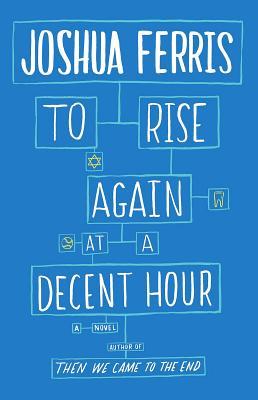
 The Dylan Thomas Prize for young writers (under 39) went to Joshua Ferris for To Rise Again at a Decent Hour last year. [Longlist in September, shortlist in October and winner announced in November.]
- The Costa Book Awards give separate prizes for fiction, debut fiction, biography, poetry, and children’s books, and also choose one overall winner. [Category shortlists in late November, category winners in early January and overall winner on January 26, 2016.]
- The Folio Prize, only two years old, considers any work of fiction published in English; before the Booker expanded to include American entries last year, it was the most Catholic of the fiction prizes. Now it risks being considered redundant; especially since it lost its Folio Society sponsorship, it’s unclear whether it will continue. [Shortlist in February and winner announced in March.]
 The Wellcome Book Prize is for medical-themed literature, fiction or nonfiction. Last year’s winner, The Iceberg by Marion Coutts, meant a lot to me for personal reasons but was also one of the most unusual and impressive memoirs I’ve ever read. I reviewed it for The Bookbag here. [Shortlist in March and winner announced in April.]

- The Pulitzer Prize is America’s premier literary award. I confess I often feel a little out of touch with the winners and don’t necessarily make a conscious effort to seek out the nominated books. I’d like to be more familiar with Pulitzer winners. Next year marks the prize’s centennial, so there’s no better time! [Winners announced in April.]
- The Independent Foreign Fiction Prize is for any book that has been translated into English and published in the UK in the previous year. I’ve found some great offbeat reads by browsing through previous longlists. As of next year, the prize is merging with the Man Booker International award, which previously recognized the life work of a foreign author every other year. [Longlist in March, shortlist in April and winner announced in May.]
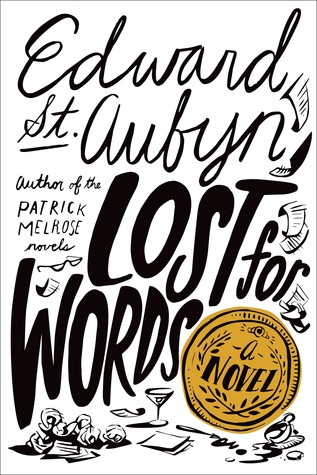
 The Bollinger Everyman Wodehouse Prize, the UK’s prize for comic literature, has run since 2000. Among the past winners are Paul Torday, Howard Jacobson, Terry Pratchett, Geoff Dyer, Gary Shteyngart, and (surprise!) Ian McEwan. I’ve read five of the winners, including Lost for Words by Edward St. Aubyn. [Shortlist in March and winner announced in May.]
- The Baileys Women’s Prize for Fiction (formerly known as the Orange Prize). Ali Smith won the 2015 award for How to Be Both. [Longlist in March; shortlist and winner announced in June.]
Do you follow literary prize races? Do you make a point of reading the winner and/or the shortlisted books? All comments welcome!
 Bookish Beck = Rebecca Foster. American transplant to England. Freelance proofreader and book reviewer.
 Bookish Beck


.jpg)
.jpg)