Love Your Library: March 2026
Thanks, as always, to Eleanor and Skai for posting about their recent library borrowing.
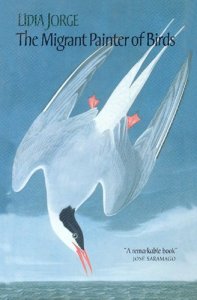 I’ve ordered my first interlibrary loan from another library in the SELMS (South East Library Management Systems) consortium: The Migrant Painter of Birds by Lídia Jorge. This is a novel I discovered through the Rough Guide to Portugal (Rough Guides always have a great section at the back for related reading, including not just travel books but also varied fiction). There is a £4 charge for the ILL service, but I decided it’s worth it because the Kindle book is £7.99 – more than I’d pay for an e-book, plus I read so much electronically for work that I prefer to read in print when I can – and secondhand copies are much more.
I’ll take it on our trip to Portugal next month, along with a couple more Portugal-set novels I found through a catalogue search, some doorstoppers for getting stuck into on the 20-hour ferry rides, and the audiobook of Shuggie Bain in case the waves are so bad I can only lie on my bunk, close my eyes and wait for death. (We had a beautifully smooth sailing to Spain in 2022 and hope that history repeats itself, but can’t count on it. I’ll have the Kwells, acupressure bracelets, ginger ales and ginger biscuits all to hand!)
Spotted with delight in the Acknowledgements of two recent reads:
- Wendy Erskine: “If I’ve not written The Benefactors sitting at my kitchen table, it’s been in one of these beloved spots: Belfast Central Library, the Linen Hall Library, Woodstock Library, Zentralbibliothek Zürich, the Mitchell Library, Glasgow, the Central Library, Liverpool and Central Library, Dublin. Thank you. Nowhere finer than a public library.”
- Niamh Ni Mhaoileoin (Ordinary Saints): “My heartfelt thanks to literally everyone in the world who does anything to support the continued existence of public libraries. In particular, to the staff, volunteers and taxpayers who sustain the National Library of Scotland, Edinburgh Libraries and Leith Library.”

My library use over the last month:
READ
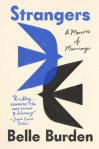
- Strangers: The Story of a Marriage by Belle Burden

- Like Mother by Jenny Diski

- Leaving Home: A Memoir in Full Colour by Mark Haddon

- Of Thorn & Briar: A Year with the West Country Hedgelayer by Paul Lamb

- Half His Age by Jennette McCurdy
- The First Day of Spring by Nancy Tucker
CURRENTLY READING
- Eva Luna by Isabel Allende (for book club)
- The Heart of Christianity by Marcus Borg (a reread)
- Bog Child by Siobhan Dowd
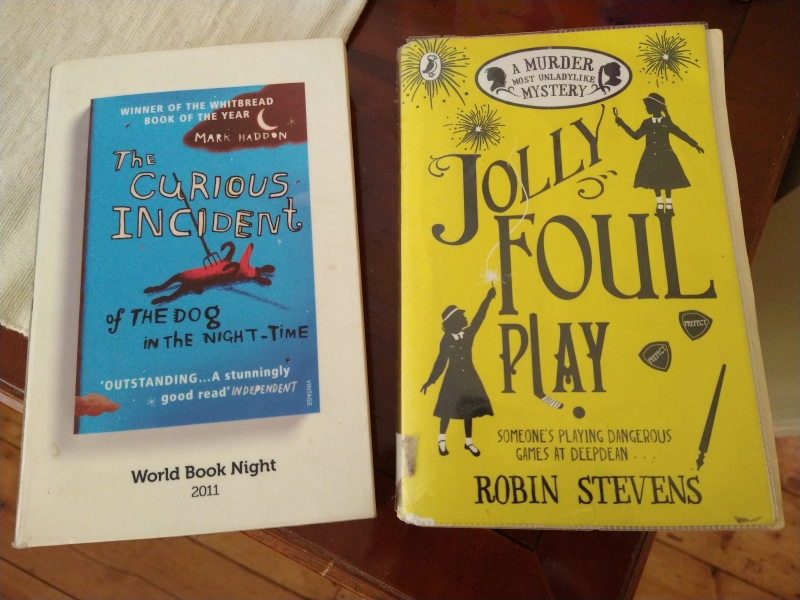
- The Curious Incident of the Dog in the Night-Time by Mark Haddon (a reread)
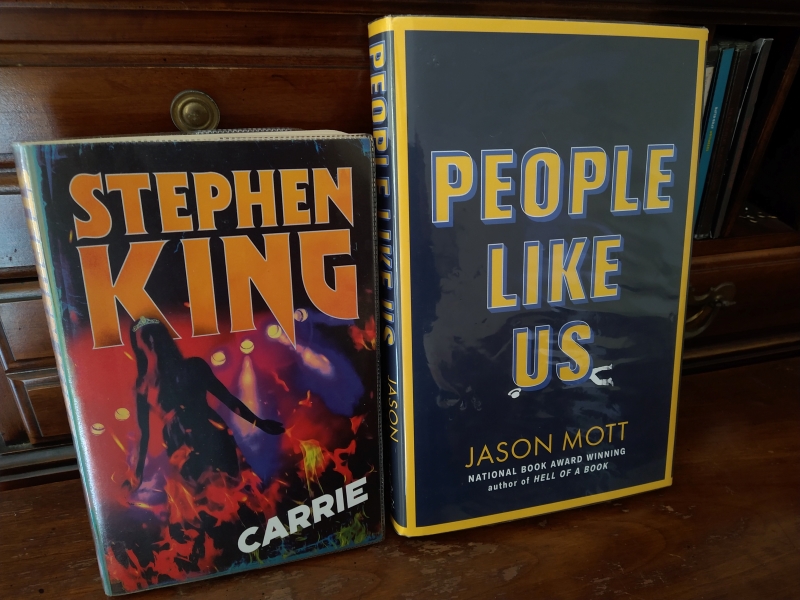
- Carrie by Stephen King
- The Spirituality Gap by Abi Millar
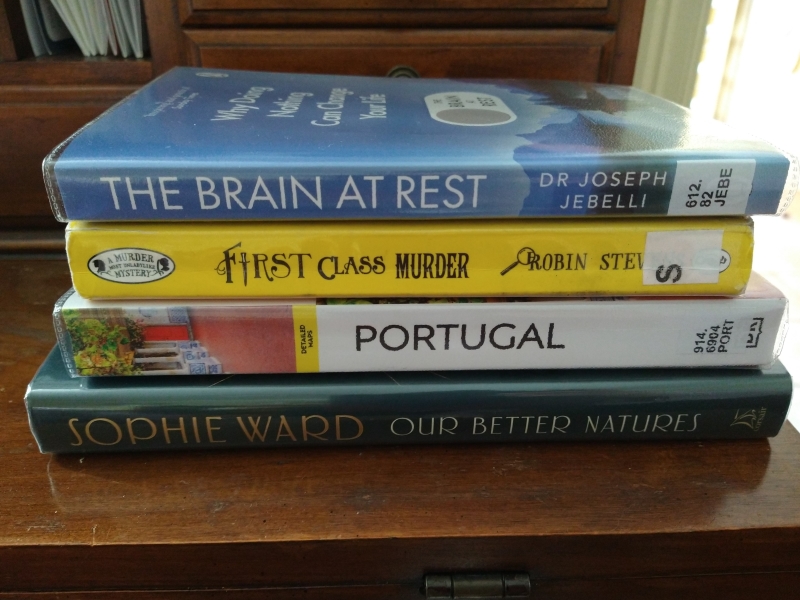
- First Class Murder by Robin Stevens
- Our Better Natures by Sophie Ward
CHECKED OUT, TO BE READ
- Pathfinding: On Walking, Motherhood and Freedom by Kerri Andrews
- The Swell by Kat Gordon
- Skylark by Paula McLain
- Wandering Stars by Tommy Orange
- Carrion Crow by Heather Parry
- Women Talking by Miriam Toews
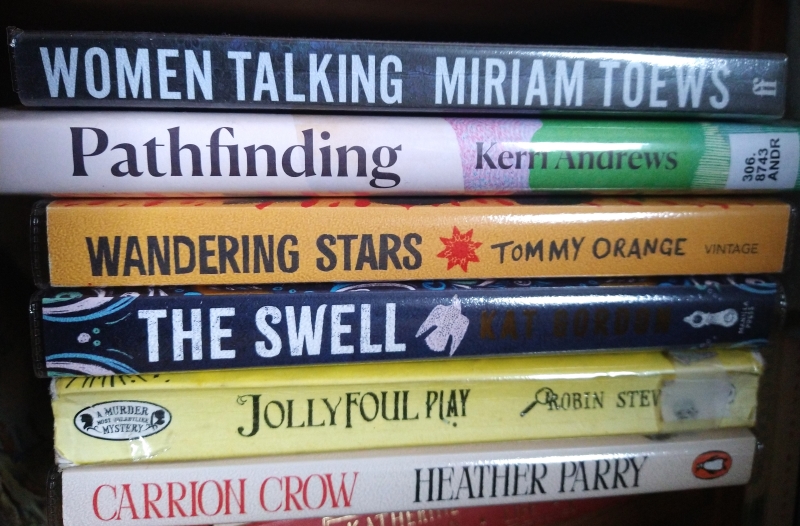
I was amused by the found poem (below) that a subset of my borrowed books created on my bedside shelf. I imagined a group of women walking along a coastal path, being overcome by a malevolent wave, and perishing.
ON HOLD, TO BE COLLECTED
- Tender: 100 Poems for the First 100 Days of Life by Harry Baker
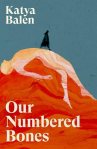
- Our Numbered Bones by Katya Balen
- The Impossible Thing by Belinda Bauer
- The Mighty Red by Louise Erdrich (for May book club)
- The Migrant Painter of Birds by Lídia Jorge
- The High Mountains of Portugal by Yann Martel
- Katherine by Anya Seton
- Shuggie Bain by Douglas Stuart (audiobook)
- Wise: Finding Purpose, Meaning and Wisdom Beyond the Midpoint of Life by Frank Tallis
IN THE RESERVATION QUEUE
- Lost Lambs by Madeline Cash
- A Beautiful Loan by Mary Costello
- The Correspondent by Virginia Evans
- Art Cure: The Science of How the Arts Transform Our Health by Daisy Fancourt
- Agnes Aubert’s Mystical Cat Shelter by Heather Fawcett
- Honour & Other People’s Children by Helen Garner
- The Shock of the Light by Lori Inglis Hall
- Almost Life by Kiran Millwood Hargrave
- The Careful Surgeon: Finding Light, Courage and Compassion in the Face of Life and Death by Shehan Hettiaratchy
- Alice with a Why by Anna James
- The Wilds by Sarah Pearse
- A Hymn to Life: Shame Has to Change Sides by Gisèle Pelicot
- Sempre: Finding Home by Raymond Silverthorne
- A Far-Flung Life by M.L. Stedman
- The Original by Nell Stevens
- Greenwild by Pari Thomson
RETURNED UNFINISHED
- The Parallel Path: Love, Grit and Walking the North by Jenn Ashworth – I have to admit to myself that I don’t enjoy long-distance walking travelogues, even when written by authors I generally like.
- Seven by Joanna Kavenna – I hadn’t the patience for something so experimental.
- People Like Us by Jason Mott – I read about 50 pages and it was so satirical, like Paul Beatty on steroids, that there was no reason to care.
- Pick a Colour by Souvankham Thammavongsa – I read 60-some pages and was unspeakably bored. Such a shame as her short story collection was great.
RETURNED UNREAD
- The Brain at Rest: Why Doing Nothing Can Change Your Life by Joseph Jebelli – Requested off me before I had time to even skim it.
- Jolly Foul Play by Robin Stevens – Ditto, but that’s okay because I think I’m tiring of the series and it’s time for a break.
What have you been reading or reviewing from the library recently?
Share a link to your own post in the comments. Feel free to use the image below. The hashtag is #LoveYourLibrary.

Rearranging and Culling My Library
I’m a thrill-seeker, me; when life gets boring, it’s time to engage in the extreme sport of rearranging my home library. My goal this month has been to shake things up and trick myself into being lured by my own books. After all, I was attracted enough to acquire them all. But at some point it’s as if I stop seeing the individual books and they collectively become a sort of wallpaper.
And as I’ve mentioned to some of you, I’ve been disappointed that attempts to highlight segments of my collection – e.g. shelves devoted to BIPOC authors and Women’s Prize nominees – failed: these books seemed more likely to sit unread for years. It must be something to do with creating a feeling of obligation. Even my piles of foodie reads and medical memoirs, two of my favourite subgenres, have gotten ignored.
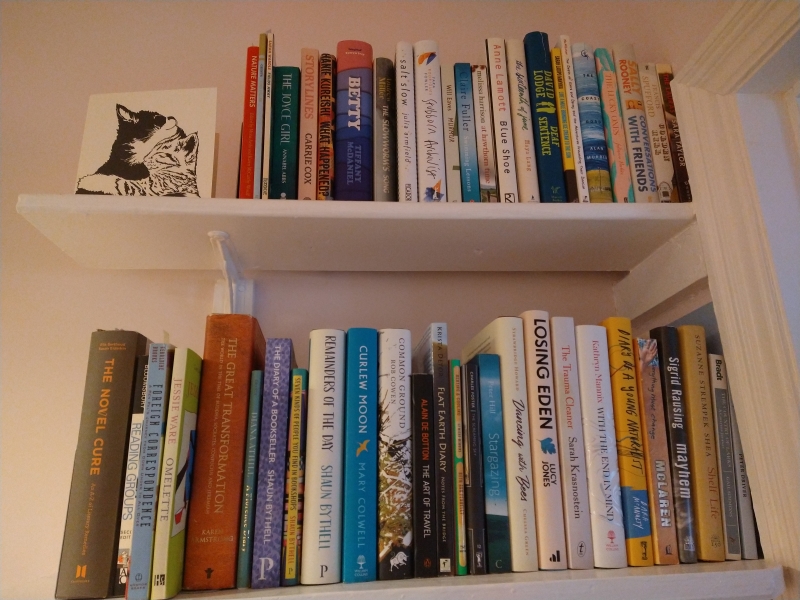
Signed copies shelves: fiction; nonfiction
Setting up special-interest sections backfired, so what next? First, I switched up locations in the upstairs; second, I adjusted the classifications. The one hard and fast rule in my collection is that I separate read from unread books. I don’t currently have room to display read paperbacks, which are in boxes upstairs awaiting built-in shelving in our lounge. I only have one bookcase for read hardbacks, and it’s at capacity; I’ll soon have to reconsider how I display them (and double-stack in the meantime).
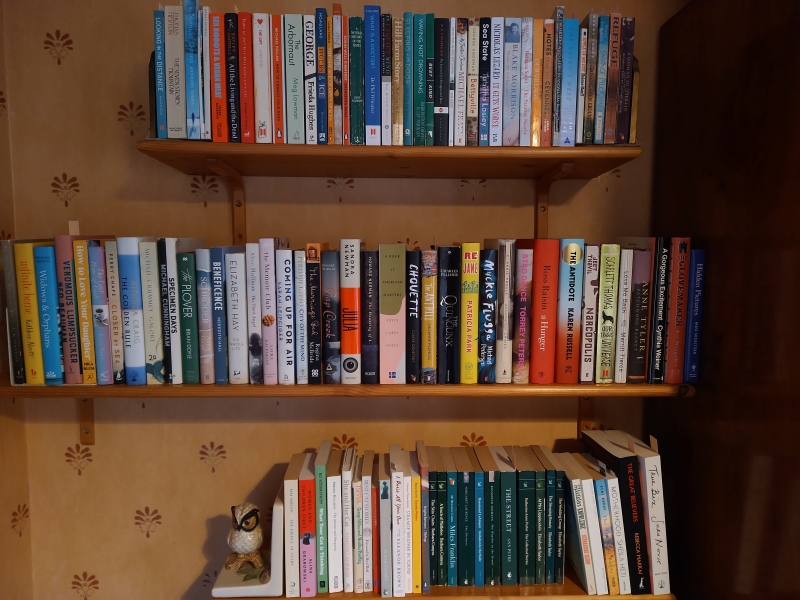
Nonfiction priority; hardback fiction; upcoming challenges and miscellaneous
For my fiction TBR, I interfiled everything into one sequence. Previously, I had kept story collections and novellas separate, but the latter are easy to spot. I’m a librarian at heart and could never eradicate alphabetical order. But, as Jan Morris observed in A Writer’s House in Wales, “I am … stymied in my methodical ordering of this library by the matter of size. Books can be maddeningly un-uniform, meaning that some … which should be side by side with their fellows, are too tall to get on the proper shelves.” Thus a separate shelf for hardbacks and oversize paperbacks.
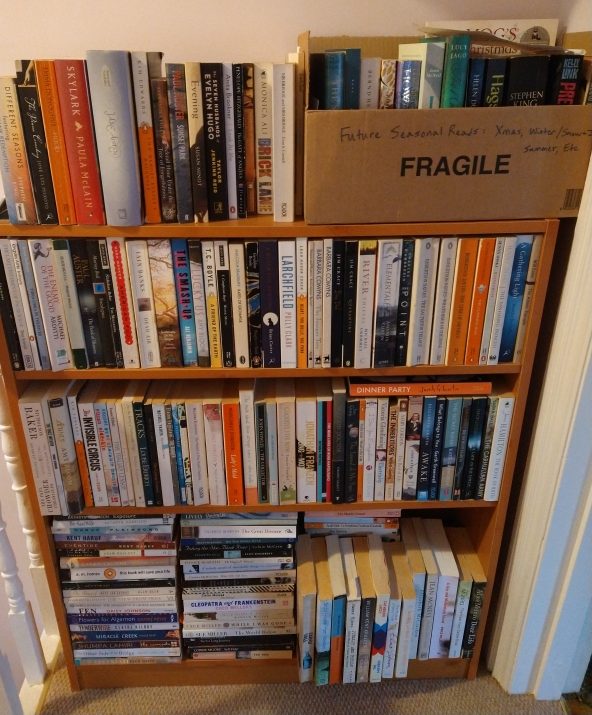
Upcoming and seasonal reads; first half of Fiction A-Z
Then, on a whim, I decided to mix it up by creating a rainbow bookcase on the landing. (To make it more of a challenge, I told myself I could use no Penguins for orange. And I put all the green Viragos together on a different shelf for visual impact.) This made me appreciate just how many books have blue spines, and dull white or black ones! I’m rather pleased with the result, but I will have to be loose about the contents: books will come and go as I read and pass them on, and add others in. In fact, I slotted three in yesterday – two green and a pink – after a trip to our local indie bookstore for my friend’s belated 70th birthday treat.
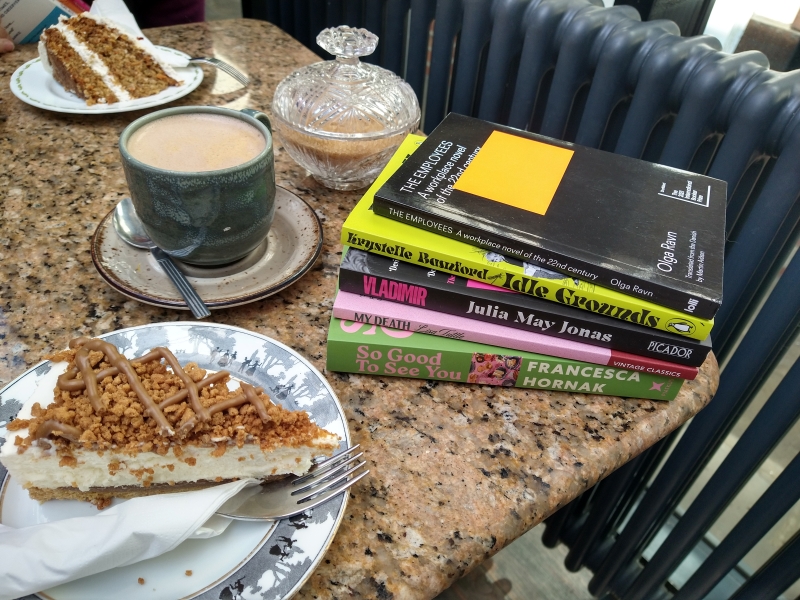
Other areas I’ve created:
- Priority shelves for time-sensitive books (to be reviewed at publication or for challenges)
- Nonfiction priority – two shelves, one in approximated Dewey order; another that includes review copies and some part-read
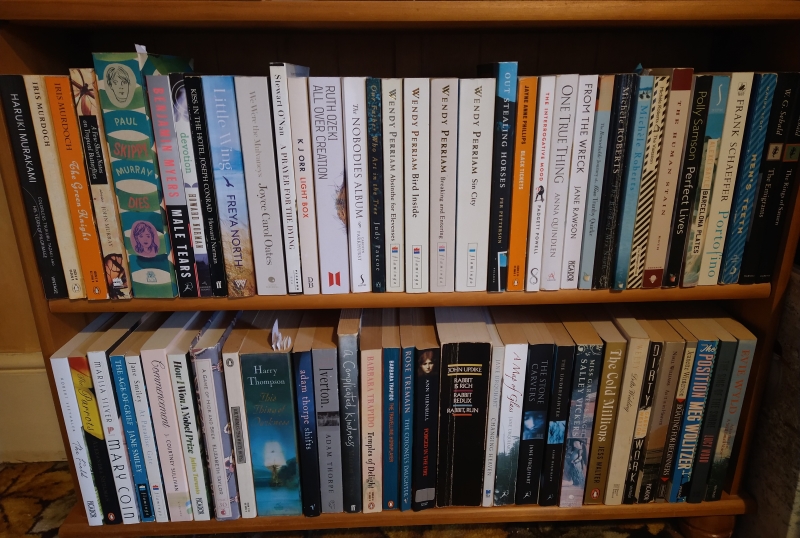
Fiction A-Z, part II
Plus some I’ve maintained:
- Priority to reread
- Seasonal books, in a box
- Signed copies – fiction and nonfiction separate; the handful of unread ones are offset
All through this process, I kept an eye out for books I was no longer keen to read. I ended up jettisoning another 81 (after the 90–100 I culled last year during our hallway redecoration), 17 of which I’ll sell; the rest will be donated to charity or the Little Free Library or given to book club friends as part of the book swap game we do for our holiday social each year.
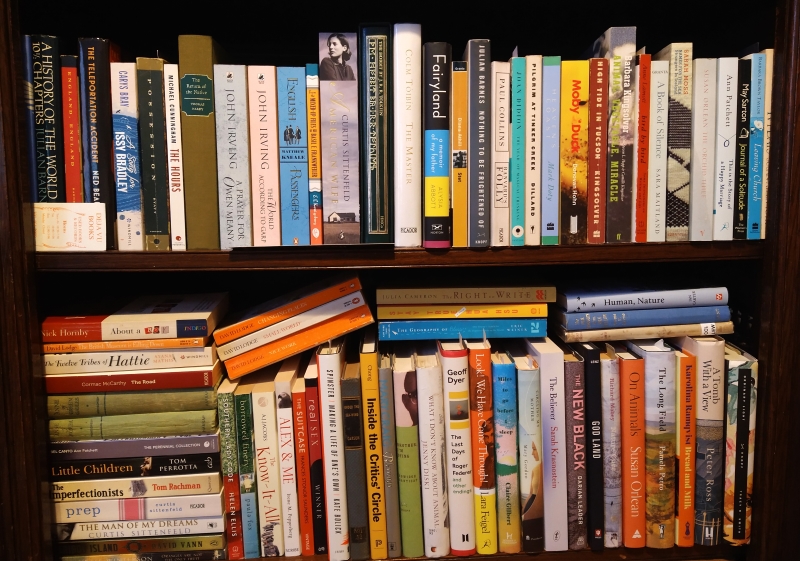
To reread (top shelf and bottom left stack); nonfiction priority
My criteria for getting rid of books were, as I’ve expounded in several posts before.
- Is it a duplicate copy? I used to keep two copies of certain books, thinking I’d do buddy reads with my husband. I have to face facts, though: buddy reads don’t work for us. He tends to read one book at a time and races ahead, while I falter or give up entirely (ahem, Cloud Atlas). I’ve only kept multiple copies where I think it’s a book we might consider setting for book club.
- Is the condition too poor? I’m not usually overly picky about this, but I did ditch four books whose spines were so faded that the title was no longer legible.
- Am I really going to read it? This is a difficult one. I like the idea of certain books but forget that I have random pet peeves, and only so much space – and time. If unsure, I checked the Goodreads page. Ratings and reviews from my friends, but also from randoms whose taste I’ve come to know, can be very helpful in telling me if something is likely to be for me. Some examples of books I decided against keeping, and the reasons:
- Peculiar Ground by Lucy Hughes-Hallett: A doorstopper of a saga that starts in the 17th century, one of my last choices of historical period to read about.
- The Mammoth Cheese by Sheri Holman: Shortlisted for the Orange Prize, but it’s over 400 pages and has great potential to be hokey.
- Eothen by Alexander Kinglake: I had two copies and rid myself of both, even though Jan Morris called it one of the best travel books of all time, because I can’t bear straight travelogues, especially antiquated ones.
- The Mars Room by Rachel Kushner: I DNFed her previous novel and decided against reading her latest; why would the one in between suit me any better?
- The Men Who Stare at Goats and Them by Jon Ronson: I enjoyed two of his books pre-pandemic, but when I look at these now, they just seem dated.
- Pharmakon by Dirk Wittenborn: Bought at The Works in Whitby in 2016 and kept all these years because I was amused by the sales stickers layering up from £2 to £1 to 50p to 25p to 10p. Yes, I bought it for 10 pence. But after a decade, I accepted that I was never going to read this 400+-page novel about an invented drug that induces happiness but then leads to a murder.
As I was going through my groaning set-aside shelf, especially, I had to be honest with myself. Sometimes I misjudge and request a review copy, then for years feel guilty about not reading something that turned out not to be for me. Or I might have liked something enough to get 50–100 pages, or more, into it but then ran out of steam. My choices for these (80+) books were: resume it right away; shelve it with the TBR, either with my progress marked with a slip of paper, or with the intention of starting over at the beginning; or call it unfinished and get rid of it.
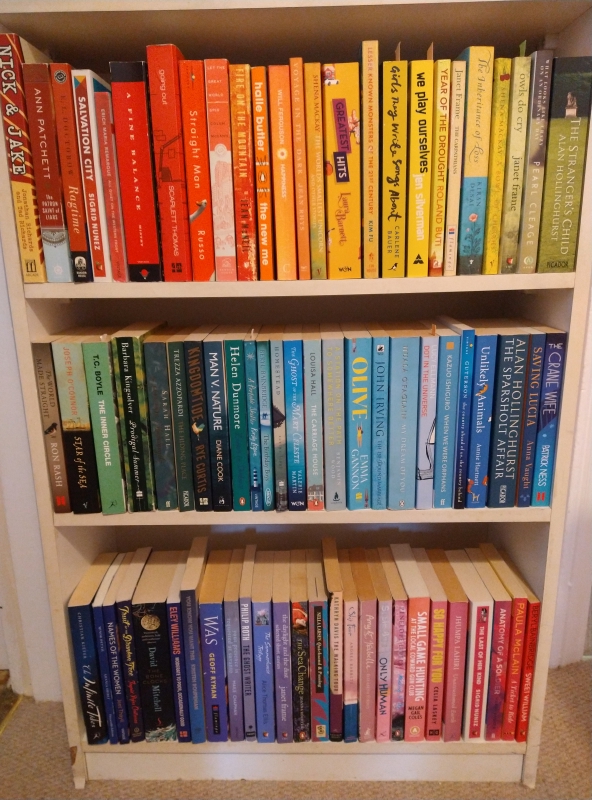
The rainbow bookcase! Have you ever made one of these?
This will be an ongoing task and an evolving system, especially if I ship the remainder of my books over from the USA in June. They’ve been in boxes in my sister’s basement – before that, my dad’s storage unit; before that, my parents’ garage – for far too long. It’s time for a final prune and a reunion with the rest of their family across the pond.
Whether all this honing and rearranging of my collection has been successful, time will tell: my end-of-year stats will reveal whether I’ve managed to read more from my own shelves. I reckon I’ll enjoy the mental athletics of remembering where I’ve moved a book and finding something to fit a seasonal challenge or personal goal. Now that the books have new neighbours, I might be tempted by my long-neglected Four in a Row project again. And for 20 Books of Summer, the only parameter will be that they must be from my own shelves.
How have you kept your TBR under control recently? Do you also have to ‘trick’ yourself into reading your own books?
Book Serendipity, January to February
I call it “Book Serendipity” when two or more books that I read at the same time or in quick succession have something in common – the more bizarre, the better. This is a regular feature of mine every couple of months. Because I usually have 20–30 books on the go at once, I suppose I’m more prone to such incidents. People frequently ask how I remember all of these coincidences. The answer is: I jot them down on scraps of paper or input them immediately into a file on my PC desktop; otherwise, they would flit away! Feel free to join in with your own.
The following are in roughly chronological order.
- An old woman with purple feet (due to illness or injury) in one story of Brawler by Lauren Groff and John of John by Douglas Stuart.

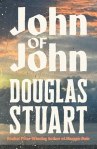
- Someone is pushed backward and dies of the head injury in Zofia Nowak’s Book of Superior Detecting by Piotr Cieplak and one story of Brawler by Lauren Groff.
- The Hindenburg disaster is mentioned in A Long Game by Elizabeth McCracken and Evensong by Stewart O’Nan.
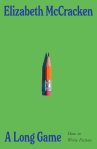
- Reluctance to cut into a corpse during medical school and the dictum ‘see one, do one, teach one’ in the graphic novel See One, Do One, Teach One: The Art of Becoming a Doctor by Grace Farris and Separate by C. Boyhan Irvine.
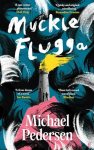 A remote Scottish island setting and a harsh father in Muckle Flugga by Michael Pedersen [Shetland] and John of John by Douglas Stuart [Harris]. (And another Scottish island setting in A Calendar of Love by George Mackay Brown [Orkney].)
- A mention of genuine Harris tweed in Alone in the Classroom by Elizabeth Hay and John of John by Douglas Stuart.
- The Katharine Hepburn film The Philadelphia Story is mentioned in The Girls’ Guide to Hunting and Fishing by Melissa Bank and Woman House by Lauren W. Westerfield.
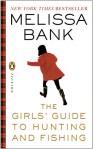
- A mention of Icelandic poppies in Nighthawks by Lisa Martin and Boundless by Kathleen Winter.
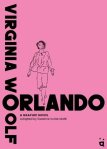
- Vita Sackville-West is mentioned in the Orlando graphic novel adaptation by Susanne Kuhlendahl and Boundless by Kathleen Winter.
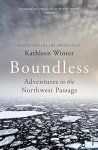
- Fear of bear attacks in Black Bear by Trina Moyles and Boundless by Kathleen Winter. Bears also feature in A Rough Guide to the Heart by Pam Houston and No Paradise with Wolves by Katie Stacey. [Looking through children’s picture books at the library the other week, I was struck by how many have bears in the title. Dozens!]
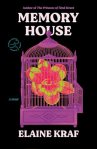
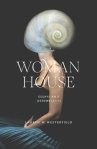
- I was reading books called Memory House (by Elaine Kraf) and Woman House (by Lauren W. Westerfield) at the same time, both of them pre-release books for Shelf Awareness reviews.
- An adolescent girl is completely ignorant of the facts of menstruation in I Who Have Never Known Men by Jacqueline Harpman and Carrie by Stephen King.
- Camembert is eaten in The Honesty Box by Lucy Brazier and Ordinary Saints by Niamh Ni Mhaoileoin.
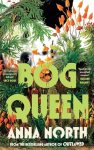
- A herbal tonic is sought to induce a miscarriage in The Girls Who Grew Big by Leila Mottley and Bog Queen by Anna North.

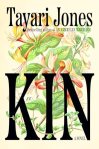
- Vicks VapoRub is mentioned in Love Invents Us by Amy Bloom, Kin by Tayari Jones, and Dirt Rich by Graeme Richardson.
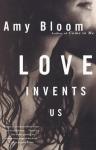
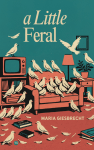
- An adolescent girl only admits to her distant mother that she’s gotten her first period because she needs help dealing with a stain (on her bedding / school uniform) in Love Invents Us by Amy Bloom, An Experiment in Love by Hilary Mantel, and Ordinary Saints by Niamh Ni Mhaoileoin. (I had to laugh at the mother asking the narrator of the Mantel: “Have you got jam on your underskirt?”) Basically, first periods occurred a lot in this set! They are also mentioned in A Little Feral by Maria Giesbrecht and one story of The Blood Year Daughter by G.G. Silverman. [I also had three abortion scenes in this cycle, but I think it would constitute spoilers to say which novels they appeared in.)
- A casual job cleaning pub/bar toilets in Kin by Tayari Jones and John of John by Douglas Stuart.
- Kansas City is a location mentioned in Strangers by Belle Burden, Mrs. Bridge by Evan S. Connell, and Dreams in Which I’m Almost Human by Hannah Soyer. (Not actually sure if that refers to Kansas or Missouri in two of them.)
- The notion of “flirting with God” is mentioned in Love Invents Us by Amy Bloom and A Little Feral by Maria Giesbrecht.
- A signature New Orleans cocktail, the Sazerac (a variation on the whisky old-fashioned containing absinthe), appears in Kin by Tayari Jones and Let the Bad Times Roll by Alice Slater.
- An older person’s smell brings back childhood memories in Love Invents Us by Amy Bloom and Whistler by Ann Patchett.
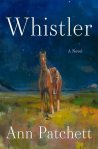
- The fact that complaining of chest pain will get you seen right away in an emergency room is mentioned in Love Invents Us by Amy Bloom and The Girls Who Grew Big by Leila Mottley.
- Thickly buttered toast is a favoured snack in The Honesty Box by Lucy Brazier and An Experiment in Love by Hilary Mantel.
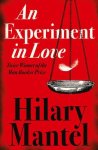 A scene of trying on fur coats in Love Invents Us by Amy Bloom and An Experiment in Love by Hilary Mantel.
- Lime and soda is drunk in Our Numbered Bones by Katya Balen, Kin by Tayari Jones, and Whistler by Ann Patchett.
- A husband 17 years older than his wife in Kin by Tayari Jones and Whistler by Ann Patchett.
- The protagonist seems to hold a special attraction for old men in Love Invents Us by Amy Bloom and Whistler by Ann Patchett.
- A tattoo of a pottery shard (her ex-husband’s) in Strangers by Belle Burden and one of an arrowhead (her own) in Dreams in Which I’m Almost Human by Hannah Soyer.
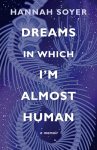
- A relationship with an older editor at a publishing house: The Girls’ Guide to Hunting and Fishing by Melissa Bank (romantic) and Whistler by Ann Patchett (stepfather–stepdaughter).
- Repeated vomiting and a fever of 103–104°F leads to a diagnosis of appendicitis in My Grandmothers and I by Diana Holman-Hunt and Whistler by Ann Patchett.
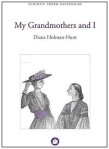 Multiple pet pugs in Strangers by Belle Burden and My Grandmothers and I by Diana Holman-Hunt.
- Palm crosses are mentioned in My Grandmothers and I by Diana Holman-Hunt and Kin by Tayari Jones.
- A Miss Jemison in Kin by Tayari Jones and a Miss Jamieson in Elizabeth and Ruth by Livi Michael.
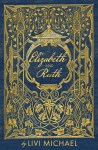
- Pasley as a surname in Elizabeth and Ruth by Livi Michael and a place name (Pasley Bay) in Boundless by Kathleen Winter.
- A remark on a character’s unwashed hair in My Grandmothers and I by Diana Holman-Hunt and Let the Bad Times Roll by Alice Slater.
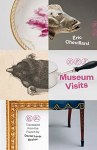
- A mention of a monkey’s paw in Museum Visits by Éric Chevillard and Let the Bad Times Roll by Alice Slater.

- A character gets 26 (22) stitches in her face (head) after a car accident, a young person who’s vehemently anti-smoking, and a mention of being dusted orange from eating Cheetos, in Whistler by Ann Patchett and Let the Bad Times Roll by Alice Slater.
- Pre-eclampsia occurs in Strangers by Belle Burden and The Girls Who Grew Big by Leila Mottley.
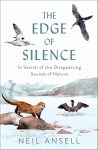
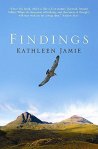
- There’s a chapter on searching for corncrakes on the Isle of Coll (the Inner Hebrides of Scotland) in The Edge of Silence by Neil Ansell, which I read last year; this year I reread the essay on the same topic in Findings by Kathleen Jamie.
- Worry over women with long hair being accidentally scalped – if a horse steps on her ponytail in Mare by Emily Haworth-Booth; if trapped in a London Underground escalator in Leaving Home by Mark Haddon.
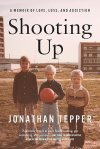 A pet ferret in My Grandmothers and I by Diana Holman-Hunt and Shooting Up by Jonathan Tepper.
- A dodgy doctor who molests a young female patient in Leaving Home by Mark Haddon and Elizabeth and Ruth by Livi Michael.
- A high school girl’s inappropriate relationship with her English teacher is the basis for Love Invents Us by Amy Bloom, and then Half His Age by Jennette McCurdy, which I started soon after.

- College roommates who become same-sex lovers, one of whom goes on to have a heterosexual marriage, in Kin by Tayari Jones and Whistler by Ann Patchett.
- A mention of Sephora (the cosmetics shop) in Half His Age by Jennette McCurdy and Whistler by Ann Patchett.
- A discussion of the Greek mythology character Leda in Mrs. Bridge by Evan S. Connell and Whistler by Ann Patchett (where it’s also a character name).
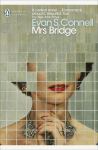
- A workaholic husband who rarely sees his children and leaves their care to his wife in Strangers by Belle Burden and Mrs. Bridge by Evan S. Connell.
- An apparently wealthy man who yet steals food in Strangers by Belle Burden and Let the Bad Times Roll by Alice Slater.
- Characters named Lulubelle in Mrs. Bridge by Evan S. Connell and Lulabelle in Kin by Tayari Jones.
- Characters named Ruth in Mrs. Bridge by Evan S. Connell, Kin by Tayari Jones, and Elizabeth and Ruth by Livi Michael.
 A mention of Mary McLeod Bethune in Negroland by Margo Jefferson and Kin by Tayari Jones.
- Doing laundry at a whorehouse in Kin by Tayari Jones and Elizabeth and Ruth by Livi Michael.
- A male character nicknamed Doll in John of John by Douglas Stuart and then Elizabeth and Ruth by Livi Michael.
- A mention of tuberculosis of the stomach in Findings by Kathleen Jamie and Shooting Up by Jonathan Tepper. I was also reading a whole book on tuberculosis, Everything Is Tuberculosis by John Green, at the same time.
- Mention of Doberman dogs in Mrs. Bridge by Evan S. Connell and one story of The Blood Year Daughter by G.G. Silverman.
- Extreme fear of flying in Leaving Home by Mark Haddon and Whistler by Ann Patchett.
What’s the weirdest reading coincidence you’ve had lately?
Love Your Library: February 2026
Thanks, as always, to Eleanor and Skai for posting about their recent library borrowing/reading!
All of the books that I asked to be added to stock seemed to arrive at once. By the time I picked them up, four already had at least one further reservation on them, which was pleasing as it shows it these weren’t selfish requests; the books are of interest to others, too. Although a 2026 goal of mine was to read more from my own shelves, I’m having to balance that with big stacks of library books – which I’m glad I didn’t have to buy. A few will count towards #ReadIndies if I manage to finish them before the end of the month.
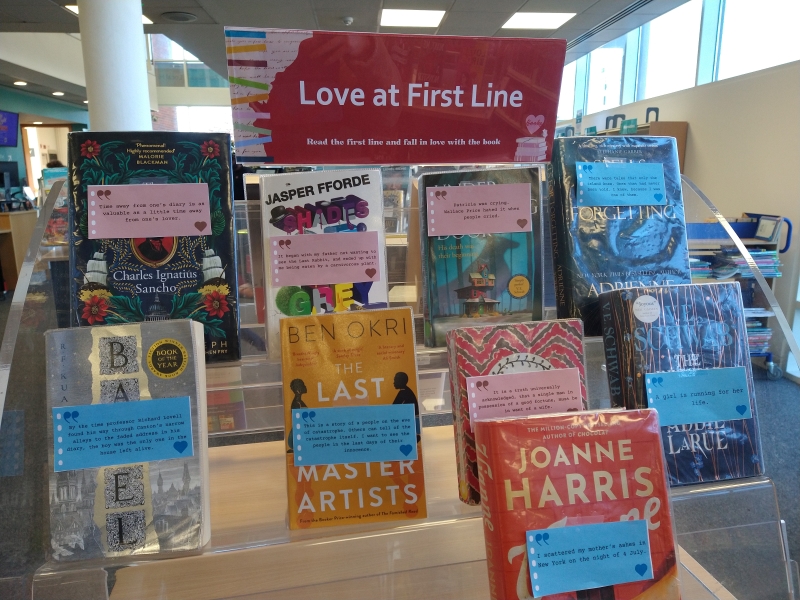
I mentioned last month that loans are down in my library system. I’ve noticed a couple of new initiatives that must be intended to boost borrowing: a “Love at First Line” Valentine’s Day display, and ‘blind date with a book’-style bundles distributed around the shelves.
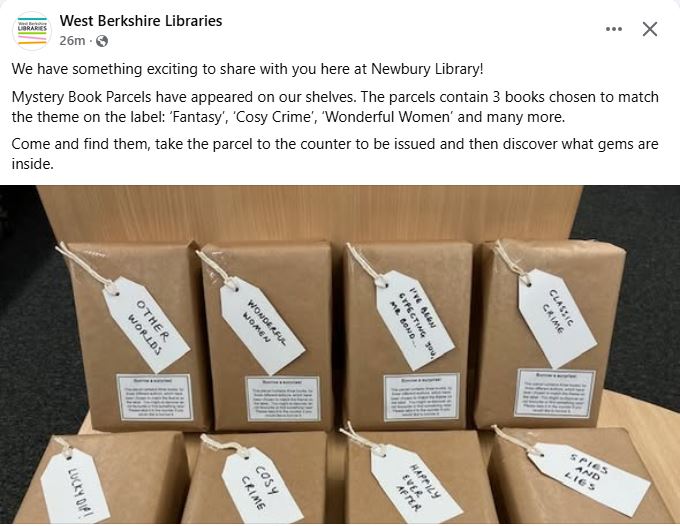
One unfortunate necessity to keep stock turning over is weeding. I recently noticed that a couple of books I’d long meant to read were culled from the collection before I was able to borrow them: A Widow’s Story by Joyce Carol Oates and The Cold Millions by Jess Walter.
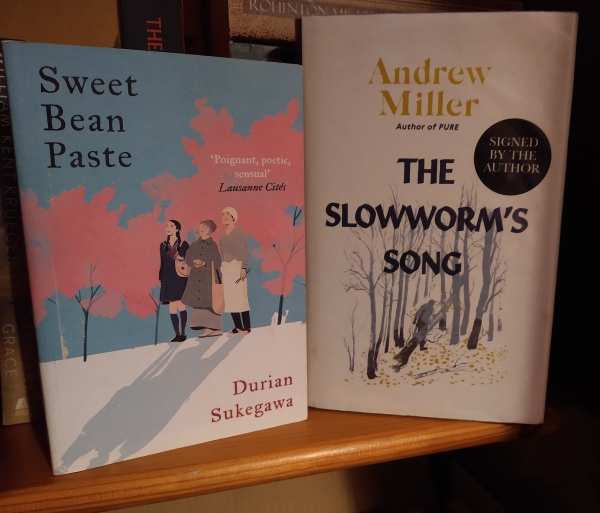
The majority of the library’s withdrawn books are sold. The latest book sale started mid-month and I was among the first through the door on that Saturday morning to have a rummage. I came away with one mostly pristine paperback (probably a rejected donation) and a signed ex-library hardback of an Andrew Miller novel for a grand total of 80 pence.
I’ve had to do some weeding myself recently, of the theology library I run at my church. We’re pushing 500 items, and given the limited space on the shelves in the lobby, I often find I’m having to wedge books in or lay them across the top. I’ve culled 24 items over the years: duplicates, books in poor condition, and a couple I labelled as irrelevant (a Barbara Pym novel set among clergy types and a book of Coronavirus prayers I’ll keep for posterity).
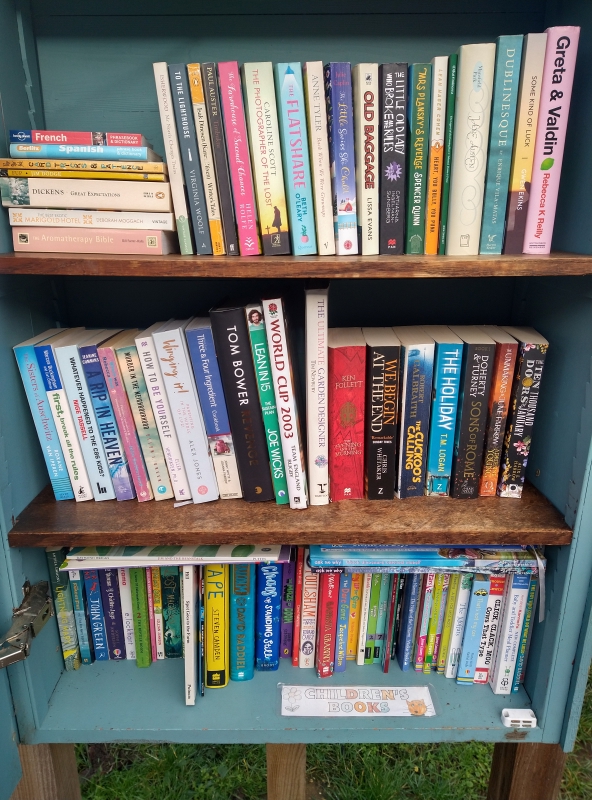
I do much more frequent culling at the neighbourhood Little Free Library I curate. Turnover is low in the winter (and I put fewer books in there than usual anyway, to try to cut down on condensation), so the same stuff often hangs around for many weeks. I immediately remove anything tatty or with a spine so faded the title is unreadable, and I try to keep only one book per author (series are frequent donations but take up too much space and don’t shift). Every so often I do a complete changeover of the stock and take the rejects to a charity warehouse or have them picked up for charity – the same strategy as with the withdrawn theology books.
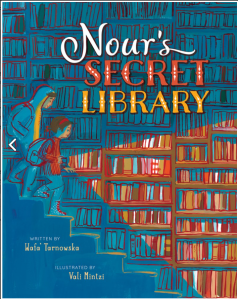
Appropriately, I found this next one among the Little Free Library donations: a sweet picture book based on the true story of how the young people of Daraya amassed a 15,000-volume basement library of rescued books during the first four years of the Syrian civil war. The author grew up during the Lebanese civil war and the illustrator in communist Romania, so they, too, know how books can give comfort and courage during the hardest times. “Their secret library had become a safe port in a sea of war. The hope it brought carried them from the darkness of destruction into a bright new dawn.” Lovely.
You’ll see from the Rough Guide and phrase book that we’re pondering a trip to Portugal in April. It’s feeling last minute now; we hope to book our travel and accommodation soon.
My library use over the last month:
READ
- Eva Trout by Elizabeth Bowen

- The Honesty Box by Lucy Brazier
- Badger Books by Paddy Donnelly
- Mildred the Gallery Cat by Jono Ganz
- Everything Is Tuberculosis by John Green
- Green by Louise Greig

- I Who Have Never Known Men by Jacqueline Harpman
- Footpath Flowers by JonArno Lawson
- An Experiment in Love by Hilary Mantel
- The Girls Who Grew Big by Leila Mottley
- Bog Queen by Anna North
- Winter Trees by Sylvia Plath
- Let the Bad Times Roll by Alice Slater
- Ultra-Processed People by Chris van Tulleken
- Alexander and the Terrible, Horrible, No Good, Very Bad Day by Judith Viorst
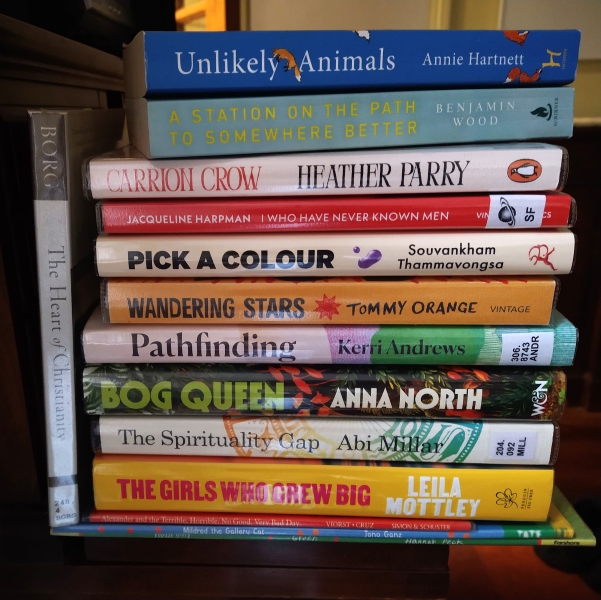
With a cheeky Oxfam book haul (Hartnett and Wood) on the top.
CURRENTLY READING
- The Parallel Path: Love, Grit and Walking the North by Jenn Ashworth
- The Heart of Christianity by Marcus Borg (a reread)
- Strangers: The Story of a Marriage by Belle Burden
- Leaving Home: A Memoir in Full Colour by Mark Haddon
- Carrie by Stephen King
- Of Thorn & Briar: A Year with the West Country Hedgelayer by Paul Lamb
- Half His Age by Jennette McCurdy
- The Spirituality Gap by Abi Millar
- People Like Us by Jason Mott
- Pick a Colour by Souvankham Thammavongsa
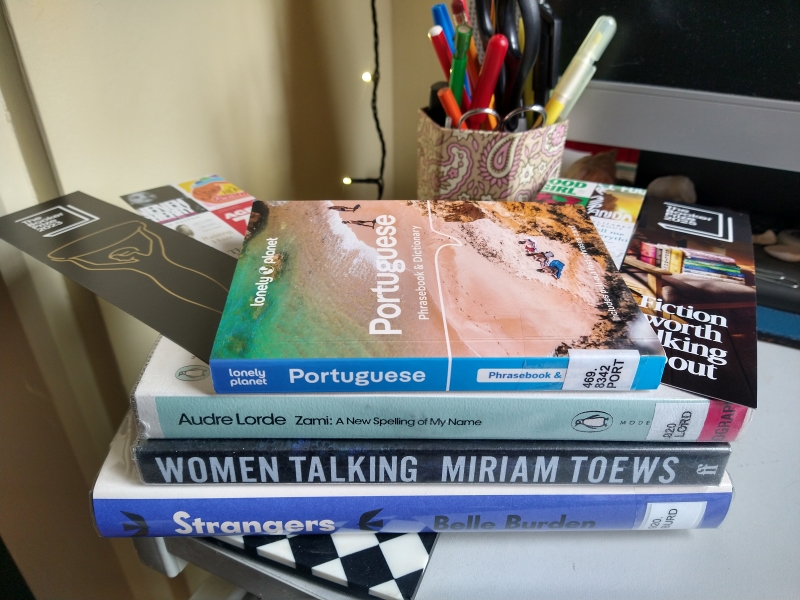
CHECKED OUT, TO BE READ
- Eva Luna by Isabel Allende (for April book club)
- Pathfinding: On Walking, Motherhood and Freedom by Kerri Andrews
- Like Mother by Jenny Diski
- Bog Child by Siobhan Dodd
- The Swell by Kat Gordon
- Skylark by Paula McLain
- Wandering Stars by Tommy Orange
- Carrion Crow by Heather Parry
- The Original by Nell Stevens
- Women Talking by Miriam Toews
- The First Day of Spring by Nancy Tucker
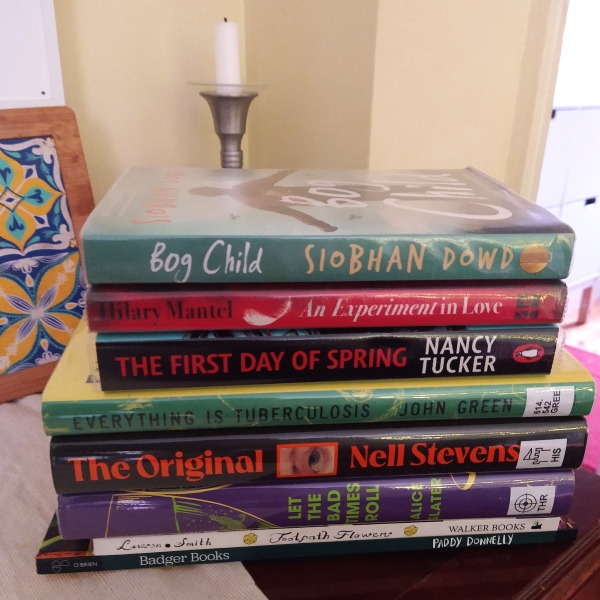
ON HOLD, TO BE COLLECTED
- The Brain at Rest: Why Doing Nothing Can Change Your Life by Joseph Jebelli
- Seven by Joanna Kavenna
- Our Better Natures by Sophie Ward
IN THE RESERVATION QUEUE
- A Beautiful Loan by Mary Costello
- The Correspondent by Virginia Evans
- Honour & Other People’s Children by Helen Garner
- Almost Life by Kiran Millwood Hargrave
- Frostlines: An Epic Exploration of the Transforming Arctic by Neil Shea
- First Class Murder by Robin Stevens
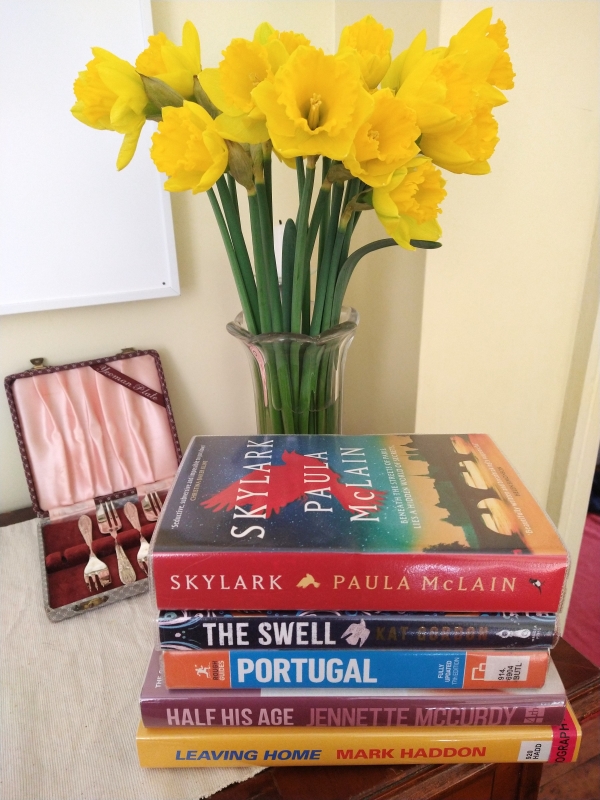
RETURNED UNFINISHED
- Redwall by Brian Jacques – I read 60 pages before this was requested off me, and I decided it was probably for the best to leave this series to my childhood.
- A Long Game: How to Write Fiction by Elizabeth McCracken – I was about halfway through when this was requested off me, but I have it from Edelweiss so can finish it on my Kindle.
RETURNED UNREAD
- Zami by Audre Lorde – I have it on my Kindle so will return this for another member of my book club (the women’s classics subgroup) to borrow as our May read.
What have you been reading or reviewing from the library recently?
Share a link to your own post in the comments. Feel free to use the above image. The hashtag is #LoveYourLibrary.
Love Your Library: January 2026
Thanks to Eleanor, Laura and Skai for posting about their recent reading from the library! Margaret has also contributed a profile of a library she visited in Spain.
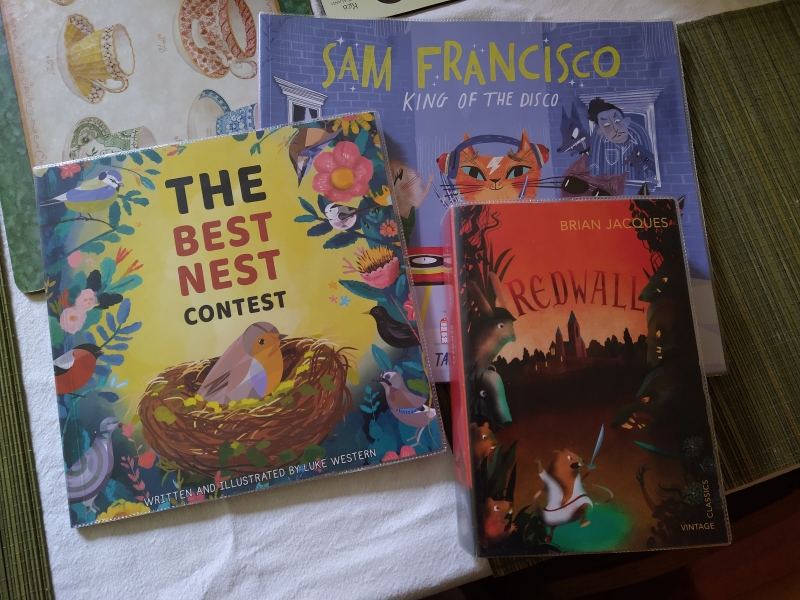
It’s been a lighter library month for me because I’ve been focusing on my own shelves. You can tell I’ve been looking for comfort reads during a damp, dark and illness-marred month, as there have been a lot of children’s books on my stacks, including Redwall, part of a series I loved when I was a kid. Rereading it 33 years or so later, it’s hard to recapture the magic, but I’m enjoying it well enough.
This Independent subheading was served up to me on Facebook early in the month: “Library use in the UK is dwindling with less than a third of the population using a library service in the last year.” To me, that’s a sad and shocking statistic. A staff member at the library where I volunteer said that loans are down at the moment and it’s important to increase them. Well, I’m doing my best (see reservation list below)!
My library use over the last month:
READ
- The Two Faces of January by Patricia Highsmith

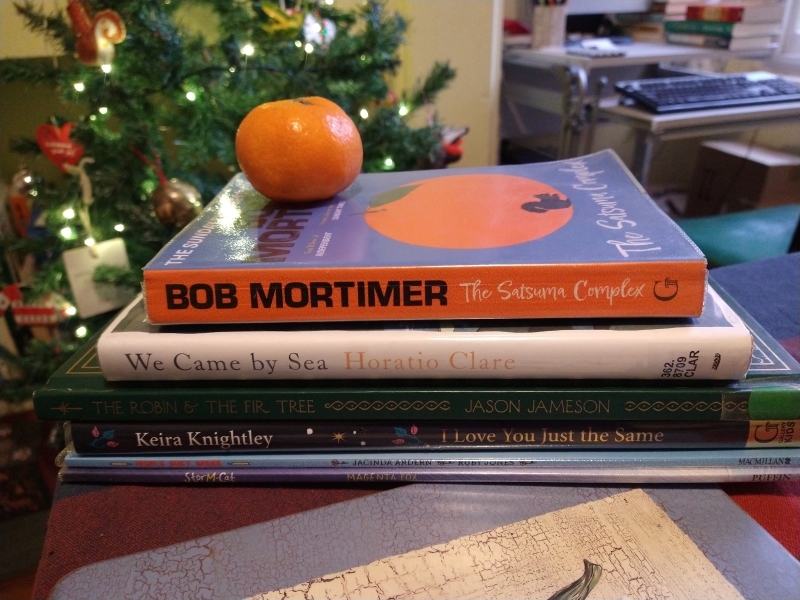
- The Satsuma Complex by Bob Mortimer

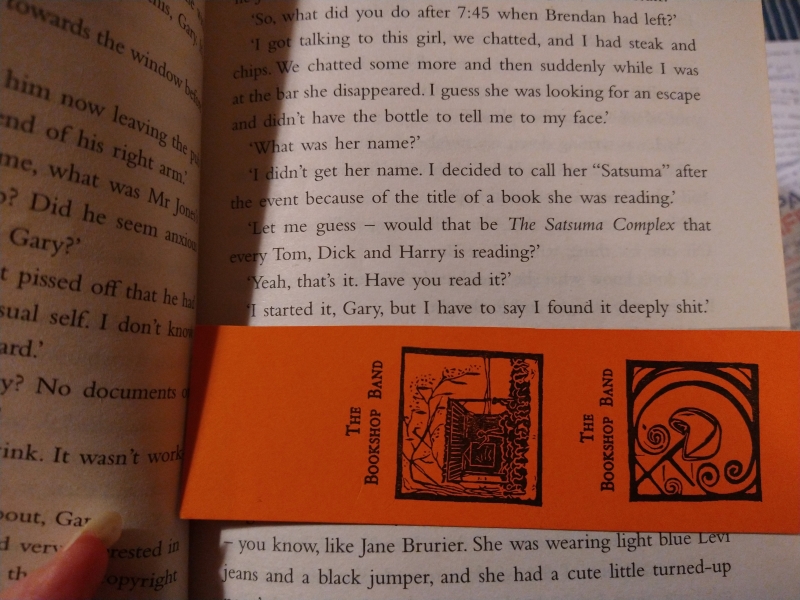
An attempt at a meta passage reveals the stark truth about this one!
- Arsenic for Tea by Robin Stevens

- Sam Francisco, King of the Disco by Sarah Tagholm, illus. Binny Talib
- The Best Nest Contest by Luke Western
SKIMMED
- It’s Not a Bloody Trend: Understanding Life as an ADHD Adult by Kat Brown
CURRENTLY READING
- The Parallel Path: Love, Grit and Walking the North by Jenn Ashworth
- Eva Trout by Elizabeth Bowen (for February book club – classics subgroup)
- The Honesty Box by Lucy Brazier
- Redwall by Brian Jacques (reread)
- Carrie by Stephen King
- Of Thorn & Briar: A Year with the West Country Hedgelayer by Paul Lamb
- A Long Game: How to Write Fiction by Elizabeth McCracken
- People Like Us by Jason Mott
- Ultra-Processed People: Why Do We All Eat Stuff that Isn’t Food … and Why Can’t We Stop? by Chris van Tulleken (for February book club)
CHECKED OUT, TO BE READ
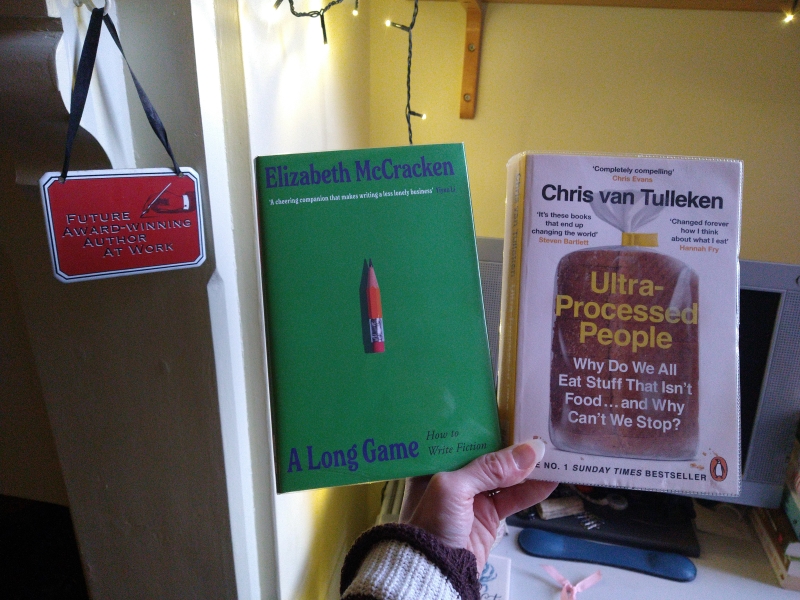
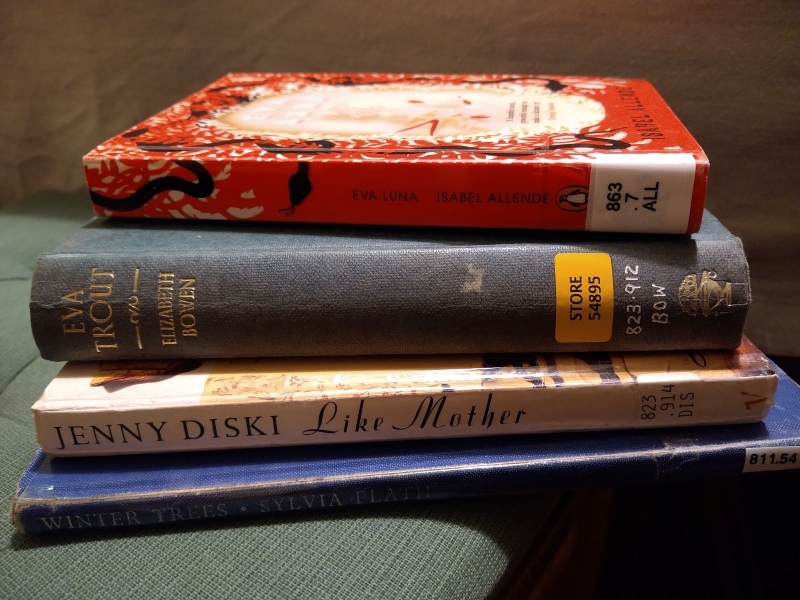
A rare university library book haul…
- Eva Luna by Isabel Allende (for April book club)
- Like Mother by Jenny Diski
- Winter Trees by Sylvia Plath
IN THE RESERVATION QUEUE
- Strangers: The Story of a Marriage by Belle Burden
- Honour & Other People’s Children by Helen Garner
- The Swell by Kat Gordon
- Leaving Home: A Memoir in Full Colour by Mark Haddon
- Snegurochka by Judith Heneghan
- The Brain at Rest: Why Doing Nothing Can Change Your Life by Joseph Jebelli
- Half His Age by Jennette McCurdy
- Skylark by Paula McLain
- Frostlines: An Epic Exploration of the Transforming Arctic by Neil Shea
- First Class Murder by Robin Stevens
- Our Better Natures by Sophie Ward
Also … I took a cue from Eleanor and, even though I felt a little sheepish about it, sent an e-mail to the stock librarian back in November asking if the library system could acquire certain books for me. I thought maybe they’d purchase a few of my requests, but they bought all 13! So I’ve placed holds on all but one (I’ll wait until summer to borrow and read Kakigori Summer by Emily Itami). I hope other patrons will get much enjoyment out of these, too!
Fiction:
-
- I Who Have Never Known Men by Jacqueline Harpman
- The Girls Who Grew Big by Leila Mottley
- Bog Queen by Anna North
- Wandering Stars by Tommy Orange
- Carrion Crow by Heather Parry
- Let the Bad Times Roll by Alice Slater
- The Original by Nell Stevens
- Pick a Colour by Souvankham Thammavongsa
- The First Day of Spring by Nancy Tucker
Nonfiction:
-
- Pathfinding by Kerri Andrews
- Everything Is Tuberculosis by John Green
- The Spirituality Gap by Abi Millar
RETURNED UNFINISHED
- We Live Here Now by C.D. Rose – Requested off of me, but I’ll get it back out another time.
What have you been reading or reviewing from the library recently?
Share a link to your own post in the comments. Feel free to use the above image. The hashtag is #LoveYourLibrary.
Book Serendipity, Mid-November–Early January
This is a short set but I’ll post it now to keep things ticking over. I’ve lost nearly a week to the upper respiratory virus from hell, and haven’t felt up to sitting at my computer for any extended periods of time. I had to request extensions on a few of my work deadlines; I’ll hope to be back to normal blogging next week, too.
I call it “Book Serendipity” when two or more books that I read at the same time or in quick succession have something in common – the more bizarre, the better. This is a regular feature of mine every couple of months. Because I usually have 20–30 books on the go at once, I suppose I’m more prone to such incidents. People frequently ask how I remember all of these coincidences. The answer is: I jot them down on scraps of paper or input them immediately into a file on my PC desktop; otherwise, they would flit away! Feel free to join in with your own.
The following are in roughly chronological order.
- Ayot St Lawrence as a setting in Q’s Legacy by Helene Hanff and Flesh by David Szalay.
- A man who has panic attacks in Pan by Michael Clune and All the World Can Hold by Jung Yun.
- Two of my Shelf Awareness PRO (early) reviews in a row were of 2026 novels set on a celebrity/reunion cruise: All the World Can Hold by Jung Yun, followed by American Fantasy by Emma Straub. In both, the narrative alternates between three main characters, the cruise is to celebrate a milestone birthday for a passenger’s relative, and there’s a celebrity who’s in AA.
- A teacher–student relationship develops into a friendship in The Irish Goodbye by Beth Ann Fennelly (with Molly McCully Brown, whose Places I’ve Taken My Body I’ve reviewed) and Lessons from My Teachers by Sarah Ruhl (with Max Ritvo, about whom she wrote a whole book).
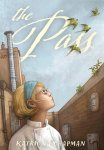 Someone becomes addicted to benzodiazepines in The Pass by Katriona Chapman and All the World Can Hold by Jung Yun (both 2026 releases).
- A New York City event scheduled to occur on September 15 or 16, 2001 is postponed because of 9/11 in Joyride by Susan Orlean (her wedding) and All the World Can Hold by Jung Yun (a cruise departure – it’s moved to Boston).
- A 1960s attempted suicide by putting one’s head in a gas oven in The Mercy Step by Marcia Hutchinson and The Soul of Kindness by Elizabeth Taylor.
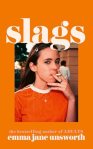
- A plan to eat cheese to induce dreams in The Reservation by Rebecca Kauffman and Slags by Emma Jane Unsworth.
- An author is (at least initially) aghast at the liberties taken with an adaptation of her book in Spent by Alison Bechdel and Joyride by Susan Orlean (the film Adaptation, one of my favourites, bears little relation to her nonfiction work The Orchid Thief, which I also love).
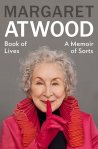
- A North American author meets her British publishers, André Deutsch and Diana Athill, in Book of Lives by Margaret Atwood and Q’s Legacy by Helene Hanff. (Atwood also mentions Sir Arthur Quiller-Couch, the title reference in the Hanff.)
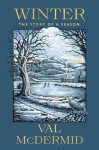
- An older white woman feels compelled to add, as an aside after a memory of slightly dodgy behaviour observed, that cultural appropriation was not a thing in those days in Book of Lives by Margaret Atwood and Winter by Val McDermid.
- I read two books in 2025 with a title taken from a Christian Wiman poem: A Truce that Is Not Peace by Miriam Toews, then Some Bright Nowhere by Ann Packer.
- A special trip undertaken for a younger sister’s milestone birthday: a road trip through Scotland in a campervan in Slags by Emma Jane Unsworth for a 40th; and a boy band reunion cruise to the Bahamas for a 45th in American Fantasy by Emma Straub.
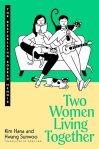
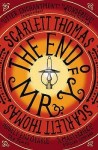
- A reference to Sartre’s “hell is other people” line (paraphrased) in Two Women Living Together by Kim Hana and Hwang Sunwoo and The End of Mr Y by Scarlett Thomas.
- The clock-drawing test as a shorthand for assessing a loved one’s dementia in Book of Lives by Margaret Atwood (her partner Graeme) and Joyride by Susan Orlean (her mother).
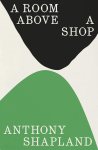 A sexual encounter between two men is presaged by them relieving themselves side by side at urinals in A Room Above a Shop by Anthony Shapland and The End of Mr Y by Scarlett Thomas.
- An older man who knows he’s having a stroke just wants to sit quietly in a chair and not be taken to hospital in Book of Lives by Margaret Atwood (her partner Graeme) and The Boy from the Sea by Garrett Carr.
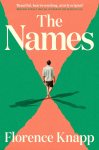
- A man who’s gone through Alcoholics Anonymous gets dangerously close to falling off the wagon: picks up a bottle of gin in a shop in The Names by Florence Knapp / buys a drink at a bar in All the World Can Hold by Jung Yun.
- I was reading two nonfiction books with built-in red ribbon bookmarks at the same time: Book of Lives by Margaret Atwood and Robin by Stephen Moss.
- Homoeopathy is an element in The Names by Florence Knapp and The End of Mr Y by Scarlett Thomas.
- A character named Sparrow in Spent by Alison Bechdel and Songs of No Provenance by Lydi Conklin.

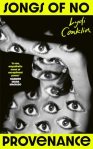
- A mention of special celebrations for a Korean mother’s 70 birthday in Two Women Living Together by Kim Hana and Hwang Sunwoo and All the World Can Hold by Jung Yun.
- Some kinky practices in Songs of No Provenance by Lydi Conklin and Mr Norris Changes Trains by Christopher Isherwood.
- A girl from an immigrant family reads Greek mythology for escape in Visitations by Julia Alvarez and The Mercy Step by Marcia Hutchinson.
- “View halloo” (originally a fox-hunting term) is used as a greeting in Talking It Over by Julian Barnes and Arsenic for Tea by Robin Stevens.
What’s the weirdest reading coincidence you’ve had lately?
The 2026 Releases I’ve Read So Far
I happen to have read a number of pre-release books, generally for paid reviews for Foreword and Shelf Awareness. (I already previewed six upcoming novellas here.) Most of my reviews haven’t been published yet, so I’ll just give brief excerpts and ratings here to pique the interest. I link to the few that have been published already, then list the 2026 books I’m currently reading. Soon I’ll follow up with a list of my Most Anticipated titles.


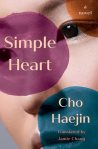 Simple Heart by Cho Haejin (trans. from Korean by Jamie Chang) [Other Press, Feb. 3]: A transnational adoptee returns to Korea to investigate her roots through a documentary film. A poignant novel that explores questions of abandonment and belonging through stories of motherhood.
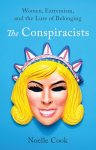 The Conspiracists: Women, Extremism, and the Lure of Belonging by Noelle Cook [Broadleaf Books, Jan. 6]: An in-depth, empathetic study of “conspirituality” (a philosophy that blends conspiracy theories and New Age beliefs), filtered through the outlook of two women involved in storming the Capitol on January 6, 2021.

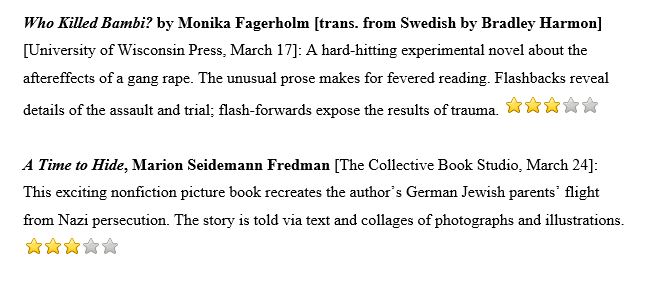
 The Reservation by Rebecca Kauffman [Counterpoint, Feb. 24]: The staff members of a fine-dining restaurant each have a moment in the spotlight during the investigation of a theft. Linked short stories depict character interactions and backstories with aplomb. Big-hearted; for J. Ryan Stradal fans.


 Taking Flight by Kashmira Sheth (illus. Nicolo Carozzi) [Dial Press, April 21]: A touching story of the journeys of three refugee children who might be from Tibet, Syria and Ukraine. The drawing style reminded me of Chris Van Allsburg’s. This left a tear in my eye.
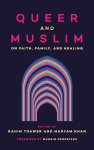

Currently reading:
(Blurb excerpts from Goodreads; all are e-copies apart from Evensong)
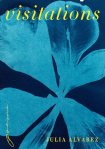 Visitations: Poems by Julia Alvarez [Knopf, April 7]: “Alvarez traces her life [via] memories of her childhood in the Dominican Republic … and the sisters who forged her, her move to America …, the search for mental health and beauty, redemption, and success.”
Our Numbered Bones by Katya Balen [Canongate, 12 Feb. / HarperVia, Feb. 17]: Her “adult debut [is] about a grieving author who heads to rural England for a writer’s retreat, only to stumble upon an incredible historical find” – a bog body!
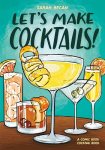 Let’s Make Cocktails!: A Comic Book Cocktail Book by Sarah Becan [Ten Speed Press, April 7]: “With vivid, easy-to-follow graphics, Becan guides readers through basic techniques such as shaking, stirring, muddling, and more. With all recipes organized by spirit for easy access, readers will delight in the panelized step-by-step comic instructions.”
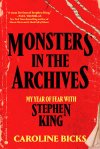 Monsters in the Archives: My Year of Fear with Stephen King by Caroline Bicks [Hogarth/Hodder & Stoughton, April 21]: “A fascinating, first of its kind exploration of Stephen King and his … iconic early books, based on … research and interviews with King … conducted by the first scholar … given … access to his private archives.”
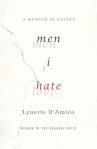 Men I Hate: A Memoir in Essays by Lynette D’Amico [Mad Creek Books, Feb. 17]: “Can a lesbian who loves a trans man still call herself a lesbian? As D’Amico tries to engage more deeply with the man she is married to, she looks at all the men—historical figures, politicians, men in her family—in search of clear dividing lines”.
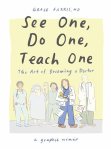 See One, Do One, Teach One: The Art of Becoming a Doctor: A Graphic Memoir by Grace Farris [W. W. Norton & Company, March 24]: “In her graphic memoir debut, Grace looks back on her journey through medical school and residency.”
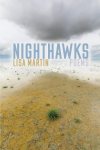 Nighthawks by Lisa Martin [University of Alberta Press, April 2]: “These poems parse aspects of human embodiment—emotion, relationship, mortality—and reflect on how to live through moments of intense personal and political upheaval.”
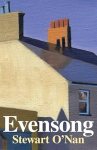 Evensong by Stewart O’Nan [published in USA in November 2025; Grove Press UK, 1 Jan.]: “An intimate, moving novel that follows The Humpty Dumpty Club, a group of women of a certain age who band together to help one another and their circle of friends in Pittsburgh.”
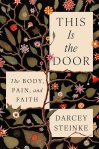 This Is the Door: The Body, Pain, and Faith by Darcey Steinke [HarperOne, Feb. 24]: “In chapters that trace the body—The Spine, The Heart, The Knees, and more—[Steinke] introduces sufferers to new and ancient understandings of pain through history, philosophy, religion, pop culture, and reported human experience.”
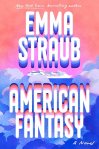 American Fantasy by Emma Straub [Riverhead, April 7 / Michael Joseph (Penguin), 14 May]: “When the American Fantasy cruise ship sets sail for a four-day themed voyage, aboard are all five members of a famous 1990s boyband, and three thousand screaming women who have worshipped them for thirty years.”
Additional pre-release review books on my shelf:
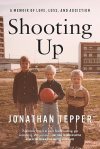 Shooting Up by Jonathan Tepper [Constable, 19 Feb.]: “Born into a family of American missionaries driven by unwavering faith … Jonathan’s home became a sanctuary for society’s most broken … AIDS hit Spain a few years after it exploded in New York and, like an invisible plague, … claimed countless lives – including those … in the family rehabilitation centre.”
Elizabeth and Ruth by Livi Michael [Salt Publishing, 9 Feb.]: “Based on the real correspondence between Elizabeth Gaskell and Charles Dickens … [Gaskell] visits a young Irish prostitute in Manchester’s New Bailey prison. … [A] story of hypocrisy and suppression, and how Elizabeth navigates the … prejudice of the day to help the young girl”.
Will you look out for one or more of these?
Any other 2026 reads you can recommend?
Final Reading Statistics for 2025 & Goals for 2026
Happy New Year! We went to a neighbours’ party again this year and played silly games and chased their kittens until 1:30 a.m. It was a fun, low-key way to see in 2026.
I read 313 books last year. (2024’s total of 352 will never be topped!) Initially, I set a goal of 350, but by midyear I downgraded it to 300 and it was easy to reach. I can’t pinpoint a particular reason for the decline. In general, I felt like I was chasing my tail all year, despite having less work on than ever (but increased volunteering commitments). Often, I struggled with fatigue or being on the verge of illness. What a fun guessing game: is it long Covid or perimenopause?
Goodreads was glitchy for me all year, randomly counting books two or three times and falsely inflating my total by a whole extra 33 books at one point. It also has a lot of annoying, automatically generated book records that duplicate ISBNs or add the publisher to the title field. So I’m thinking about moving over to StoryGraph this year – I just imported my Goodreads library – though I always quail at learning new online systems. It would also be the next logical step in divesting from Am*zon.
The year that was…
2025’s notable happenings:
- Twice assessing the ‘proper’ (published) books as a McKitterick Prize judge
- Adopting crazy Benny (though that was after losing our precious Alfie)
- Acquiring a secondhand electric car for the household
- Holidays in Hay-on-Wye; the Outer Hebrides; Suffolk; Berlin and Lübeck, Germany
- A summer visit from my sister and brother-in-law
- Having the windows and door replaced in the back of our house; and the hall and stairwell/landing redecorated
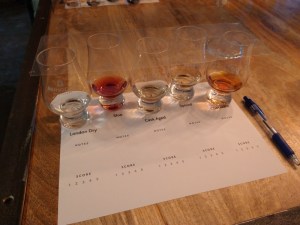
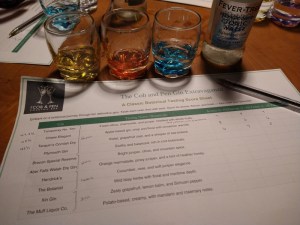
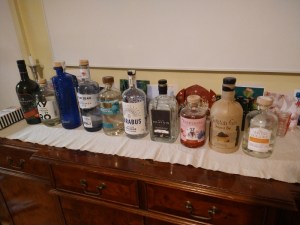
- I got ever more into gin and cocktails, with tastings in Abingdon and Wantage (and in December I led two informal tastings for friends). I also acquired the taste for rum!





The reading statistics, as compared to 2024:
Fiction: 54.7% (↑3.3%)
Nonfiction: 31.6% (↓0.2%)
Poetry: 13.7% (↓3.1%)
Female author: 67.7% (↓0.2%)
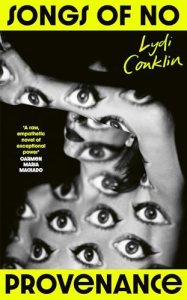
Lydi Conklin was one of 10 nonbinary authors I read from this year. Had I read their novel earlier, this would have made it into my Cover Love post!
Nonbinary author: 3.2% (↑2.1%)
BIPOC author: 18.5% (↑0.1%)
How to get it to 25% or more??
LGBTQ: 20.4% (↓1.1%)
(Author’s identity or a major theme in the work.) It’s the first time this has decreased since 2021, but I’m still pleased with the figure overall.
Work in translation: 9.6% (↑3.6%)
Going the right way with this trend! 10% seems like a good minimum to aim for. I find I have to make a conscious effort by accepting translated review copies or picking them off my shelves to tie in with particular reading challenges.
German (6) – mainly because of our trip in September
French (5)
Swedish (4)
Korean (3)
 Italian (2)
Japanese (2)
Spanish (2)
Chinese (1)
Dutch (1)
Norwegian (1)
Polish (1)
Portuguese (1)
Russian (1)
2025 (or pre-release 2026) books: 55.6% (↑3.2%)
Backlist: 44.4%
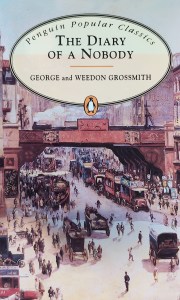
But a lot of that ‘backlist’ stuff was still from the 2020s; I only read eight pre-1950 books, the oldest being Diary of a Nobody from 1892.
E-books: 35.5% (↑3.4%)
Print books: 64.5%
I almost exclusively read e-books for BookBrowse, Foreword and Shelf Awareness reviews. The number of overall Shelf Awareness reviews will be decreasing because of changes to their publishing model, so this figure may well change by next year.
Rereads: 11, vs. last year’s 18
I managed nearly one a month. Like last year, three of my rereads ended up being among my most memorable reading experiences of the year, so I should really reread more often.
And, courtesy of Goodreads:
- 69,616 pages read
- Average book length: 221 pages (just one off of last year’s 220; in previous years it has always been 217–225, driven downward by poetry collections and novellas)
- Average rating for 2025: 6 (identical to the last three years)
Where my books came from for the whole year, compared to 2024:
- Free print or e-copy from publisher: 33.9% (↓10.9%)
- Public library: 18.8% (↑0.4%)
- Free (gifts, giveaways, Little Free Library/free bookshop, from friends or neighbours): 15.3% (↑2.9%)
- Downloaded from NetGalley, Edelweiss or BookSirens: 15% (↑7.2%)
- Secondhand purchase: 12.8% (↑1.3%)
- New purchase (often at a bargain price; includes Kindle purchases): 2.6% (↓0.5%)
- University library: 1.3% (↓0.7%)
- Other (church theological library): 0.3% (↑0.3%)


I’m pleased that 30.3% of my reading was from my own shelves, versus last year’s 24%. It looks like I mainly achieved this through a reduction in review copies. In 2026, I’d like to read even more backlist material from my own shelves (including rereads). This will be a particular focus in January, and then I’ll plan how to incorporate it for the rest of the year.
I have an absurd number of review books to catch up on (42), some stretching back to 2022 – the year of my mother’s death, which put me off my stride in many ways – as well as part-read books (116) to get real about and either finish or call DNFs and clear from my shelves. Dealing with these can be part of the reading-from-my-shelves initiative.
What trends did you see in your year’s reading? What is your plan for 2026?
Last Love Your Library of 2025 & Another for #DoorstoppersInDecember
Thanks to Eleanor, Margaret and Skai for writing about their recent library reading! Marcie also joined in with a post about completing Toronto Public Library’s 2025 Reading Challenge with books by Indigenous authors.
I managed to fit in a few more 2025 releases before Christmas. My plan for January is to focus on reading from my own shelves (which includes McKitterick Prize submissions and perhaps also review copies to catch up on), so expect next month to be a lighter one.
My recent reading has featured many mentions of how much libraries mean, particularly to young women.
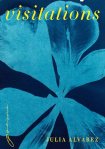 In her autobiographical poetry collection Visitations (coming out in April), Julia Alvarez writes of how her family’s world changed when they moved to New York City from the Dominican Republic in the 1960s. “Waiting for My Father to Pick Me Up at the Library” adopts the tropes of Alice in Wonderland: as her future expands, her father’s life shrinks.
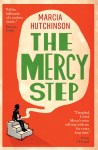 In The Mercy Step by Marcia Hutchinson, the public library is a haven for Mercy, growing up in Bradford in the 1960s. She can hardly believe it’s free for everyone to use, even Black people. Greek mythology is her escape from an upbringing that involves domestic violence and molestation. “It’s peaceful and quiet in the Library. No one shouts or throws things or hits anyone. If anyone talks, the Librarian puts a finger to her mouth and tells them to shush.”
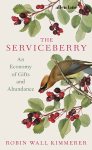 The Serviceberry by Robin Wall Kimmerer affirms the social benefits of libraries: “I love bookstores for many reasons but revere both the idea and the practice of public libraries. To me, they embody the civic-scale practice of a gift economy and the notion of common property. … We don’t each have to own everything. The books at the library belong to everyone, serving the public with free books”.
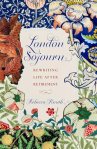 After Rebecca Knuth retired from an academic career in library and information science, she moved to London for a master’s degree in creative nonfiction and joined the London Library as well as the public library. But in her memoir London Sojourn (coming out in January), she recalls that she caught the library bug early: “Each weekday, I bused to school and, afterward, trudged to the library and then rode home with my geologist father. … Mostly, I read.”
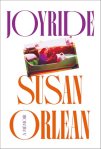 And in Joyride, Susan Orlean recounts the writing of each of her books, including The Library Book, which is about the 1986 arson at the Los Angeles Central Library but also, more widely, about what libraries have to offer and the oddballs often connected with them.
My library use over the last month:
(links are to any reviews of books not already covered on the blog)
READ
- Mum’s Busy Work by Jacinda Ardern; illus. Ruby Jones
- Book of Lives: A Memoir of Sorts by Margaret Atwood

- Storm-Cat by Magenta Fox
- The Robin & the Fir Tree by Jason Jameson
- I Love You Just the Same by Keira Knightley – Proof that celebrities should not be writing children’s books. I would say the story and drawings were pretty good … if she were a college student.
- Winter by Val McDermid
- The Search for the Giant Arctic Jellyfish, The Search for Carmella, & The Search for Our Cosmic Neighbours by Chloe Savage
- Weirdo Goes Wild by Zadie Smith and Nick Laird; illustrated by Magenta Fox
- Murder Most Unladylike by Robin Stevens


+ A final contribution to #DoorstoppersInDecember
Do Admit: The Mitford Sisters and Me by Mimi Pond
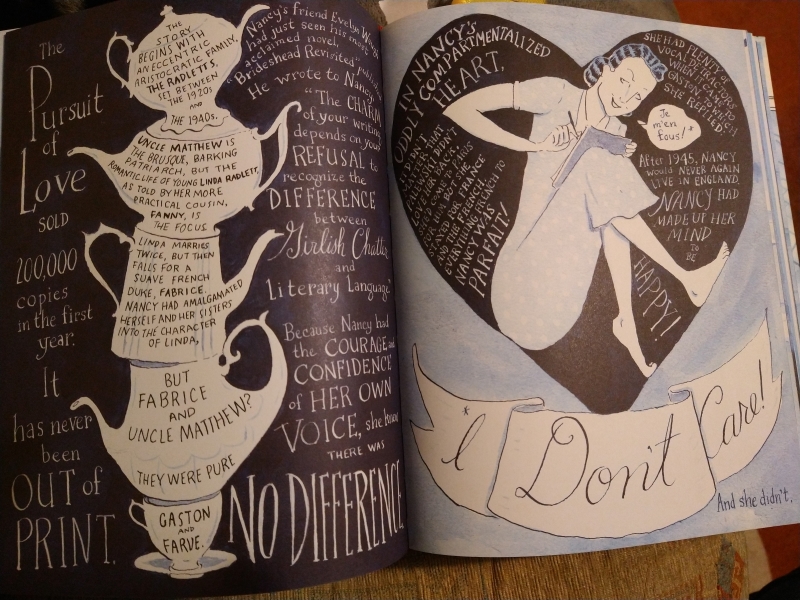
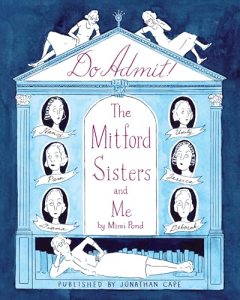 Truth really is stranger than fiction. Of the six Mitford sisters, two were fascists (Diana and Unity) and one was a communist (Jessica). Two became popular authors (Nancy and Jessica). One (Unity) was pals with Hitler and shot herself in the head when Britain went to war with Germany; she didn’t die then but nine years later of an infection from the bullet still stuck in her brain. This is all rich fodder for a biographer – the batshit lives of the rich and famous are always going to fascinate us peons – and Pond’s comics treatment is a great way of keeping history from being one boring event after another. Although she uses the same Prussian blue tones throughout, she mixes up the format, sometimes employing 3–5 panes but often choosing to create one- or two-page spreads focusing on a face, a particular setting or a montage. No two pages are exactly alike and information is conveyed through dialogue, documents and quotations. If just straight narrative, there are different typefaces or text colours and it is interspersed with the pictures in a novel way. Whether or not you know a thing about the Mitfords, the book intrigues with its themes of family dynamics, grief, political divisions, wealth and class. My only misgiving, really, was about the “and Me” part of the title; Pond appears in maybe 5% of the book, and the only personal connections I gleaned were that she wished she had sisters, wanted to escape, and envied privilege and pageantry. [444 pages]
CURRENTLY READING
- The Parallel Path: Love, Grit and Walking the North by Jenn Ashworth
- The Honesty Box by Lucy Brazier
- Of Thorn & Briar: A Year with the West Country Hedgelayer by Paul Lamb
- The Satsuma Complex by Bob Mortimer (for book club in January; I’m grumpy about it because I didn’t vote for this one, had no idea who the author [a TV comedian in the UK] was, and the writing is shaky at best)
- We Live Here Now by C.D. Rose
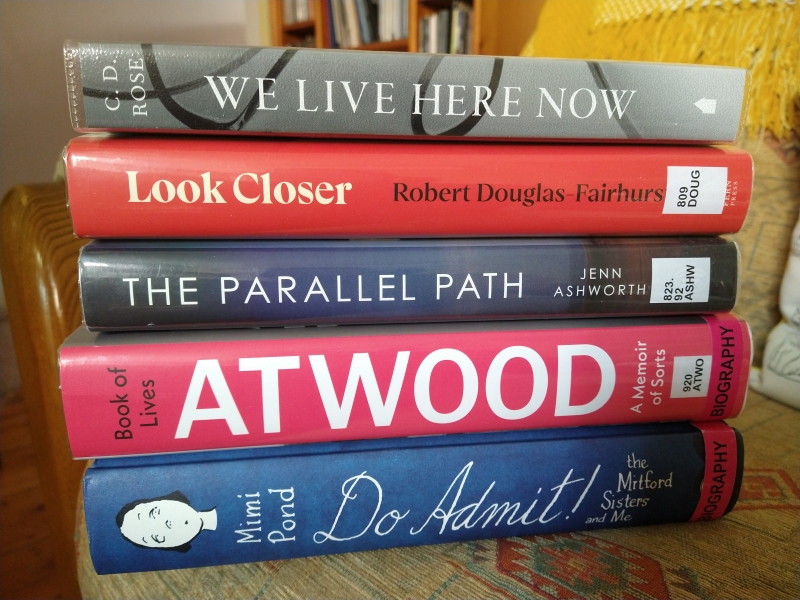
SKIMMED
- Look Closer: How to Get More out of Reading by Robert Douglas-Fairhurst
CHECKED OUT, TO BE READ
- It’s Not a Bloody Trend: Understanding Life as an ADHD Adult by Kat Brown
- We Came by Sea by Horatio Clare
ON HOLD, TO BE COLLECTED
- The Two Faces of January by Patricia Highsmith
- Arsenic for Tea by Robin Stevens
IN THE RESERVATION QUEUE
- Honour & Other People’s Children by Helen Garner
- Snegurochka by Judith Heneghan
- Ultra-Processed People by Dr. Chris van Tulleken (for book club in February)
RETURNED UNFINISHED
- Night Life: Walking Britain’s Wild Landscapes after Dark by John Lewis-Stempel
What have you been reading or reviewing from the library recently?
Share a link to your own post in the comments. Feel free to use the above image. The hashtag is #LoveYourLibrary.
Some 2025 Reading Superlatives
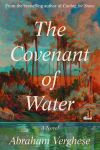
Longest book read this year: The Covenant of Water by Abraham Verghese (724 pages)
Shortest book read this year: Sky Tongued Back with Light by Sébastien Luc Butler (a 38-page poetry chapbook coming out in 2026)
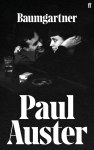
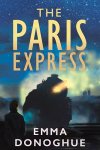
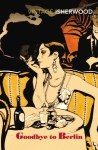
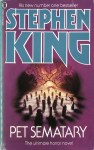
Authors I read the most by this year: Paul Auster and Emma Donoghue (3) [followed by Margaret Atwood, Chloe Caldwell, Michael Cunningham, Mairi Hedderwick, Christopher Isherwood, Rebecca Kauffman, Stephen King, Elaine Kraf, Maggie O’Farrell, Sylvia Plath and Jess Walter (2 each)]
Publishers I read the most from: (Besides the ubiquitous Penguin Random House and its myriad imprints) Faber (14), Canongate (12), Bloomsbury (11), Fourth Estate (7); Carcanet, Picador/Pan Macmillan and Virago (6)
My top author ‘discoveries’ of the year (I’m very late to the party on some of these!): poet Amy Gerstler, Christopher Isherwood, Stephen King, Elaine Kraf, Sylvia Plath, Chloe Savage’s children’s picture books (women + NB characters, science, adventure, dogs), Robin Stevens’s middle-grade mysteries, Jess Walter
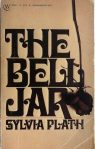
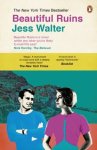
Proudest book-related achievement: Clearing 90–100 books from my shelves as part of our hallway redecoration. Some I resold, some I gave to friends, some I put in the Little Free Library, and some I donated to charity shops.
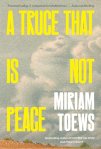
Most pinching-myself bookish moment: Miriam Toews’ U.S. publicist e-mailing me about my Shelf Awareness review of A Truce That Is Not Peace to say, “saw your amazing review! Thank you so much for it – Miriam loved it!”
Books that made me laugh: LOTS, including Spent by Alison Bechdel (which I read twice), The Wedding People by Alison Espach, Victorian Psycho by Virginia Feito, Is This My Final Form? by Amy Gerstler, The Diary of a Nobody by George Grossmith, The Sacred Diary of Adrian Plass Aged 37 ¾, and Slags by Emma Jane Unsworth
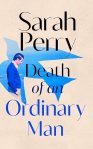
A book that made me cry: Death of an Ordinary Man by Sarah Perry
Best book club selections: Leave the World Behind by Rumaan Alam; The Remains of the Day by Kazuo Ishiguro, I Am, I Am, I Am by Maggie O’Farrell and Stoner by John Williams (these three were all rereads)
Best first line encountered this year:
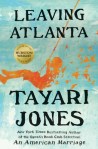
- From Leaving Atlanta by Tayari Jones: “Hard, ugly, summer-vacation-spoiling rain fell for three straight months in 1979.”
Best last lines encountered this year:
- Is a River Alive? by Robert Macfarlane: “Death and love and life, all mingled in the flow.”
(Two quite similar rhetorical questions:)
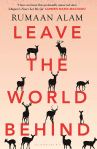 Leave the World Behind by Rumaan Alam: “If they didn’t know how it would end—with night, with more terrible noise from the top of Olympus, with bombs, with disease, with blood, with happiness, with deer or something else watching them from the darkened woods—well, wasn’t that true of every day?”
&
- Beautiful Ruins by Jess Walter: “And even if they don’t find what they’re looking for, isn’t it enough to be out walking together in the sunlight?”
- Wreck by Catherine Newman: “You are still breathing.”
 The Irish Goodbye by Beth Ann Fennelly: “Dear viewer of my naked body, Enjoy the bunions.”
- A Certain Smile by Françoise Sagan: “It was a simple story; there was nothing to make a fuss about.”
- Book of Lives by Margaret Atwood: “We scribes and scribblers are time travellers: via the magic page we throw our voices, not only from here to elsewhere, but also from now to a possible future. I’ll see you there.”
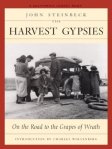
Book that put a song in my head every time I picked it up: The Harvest Gypsies by John Steinbeck (see Kris Drever’s song of the same name). Also, one story of Book of Exemplary Women by Diana Xin mentioned lyrics from “Wild World” by Cat Stevens (“Oh, baby, baby, it’s a wild world. And I’ll always remember you like a child, girl”).
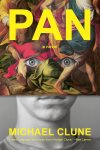
Shortest book titles encountered: Pan (Michael Clune), followed by Gold (Elaine Feinstein) & Girl (Ruth Padel); followed by an 8-way tie! Spent (Alison Bechdel), Billy (Albert French), Carol (Patricia Highsmith), Pluck (Adam Hughes), Sleep (Honor Jones), Wreck (Catherine Newman), Ariel (Sylvia Plath) & Flesh (David Szalay)
Best 2025 book titles: Chopping Onions on My Heart by Samantha Ellis [retitled, probably sensibly, Always Carry Salt for its U.S. release], A Truce That Is Not Peace by Miriam Toews [named after a line from a Christian Wiman poem – top taste there] & Calls May Be Recorded for Training and Monitoring Purposes by Katharina Volckmer.
Best book titles from other years: Dreams of Dead Women’s Handbags by Shena Mackay
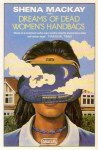
Biggest disappointments: Dream Count by Chimamanda Ngozi Adichie – so not worth waiting 12 years for – and Heart the Lover by Lily King, which kind of retrospectively ruined her brilliant Writers & Lovers for me.

The 2025 books that it seemed like everyone was reading but I decided not to: Helm by Sarah Hall, The Persians by Sanam Mahloudji, What We Can Know by Ian McEwan (I’m 0 for 2 on his 2020s releases)
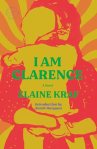
The downright strangest books I read this year: Both by Elaine Kraf: I Am Clarence and Find Him! (links to my Shelf Awareness reviews) are confusing, disturbing, experimental in language and form, but also ahead of their time in terms of their feminist content and insight into compromised mental states. The former is more accessible and less claustrophobic.
 Bookish Beck = Rebecca Foster. American transplant to England. Freelance proofreader and book reviewer.
 Bookish Beck