Autumnal Children’s and YA Books
Browsing through old magazines, I found a fun BookPage reading list from October 2019 entitled “Pumpkin spice latte literature.” It asks, “what if autumn were distilled into a book? The mixture of crispness and warmth, the thrill of possibility, the bittersweetness of change—these books are pure pumpkin spice.” I love the lateral thinking that came up with
 The Art of Fielding by Chad Harbach (back to school in the Midwest)
- I Remember Nothing by Nora Ephron (wry reflections from the autumn of a life)
- Possession by A.S. Byatt (bookish geeking out)
- Calling a Wolf a Wolf by Kaveh Akbar (taking comfort from a vision of recovery from alcoholism)
- An Enchantment of Ravens by Margaret Rogerson (wit and magic)
I’ve read the first three, and am keen to catch up on Akbar’s debut poetry collection after loving Pilgrim Bell this summer. I’m only unlikely to pick up Rogerson’s fantasy. In any case, I enjoyed seeing how the editors came up with their selections.
I tend to be rather more literal with my seasonal reading recommendations. Does it have autumn in the title or as a setting?! Is it about pumpkins or Halloween?
This year I happen to have amassed all children’s and YA selections.
October, October by Katya Balen (2020)
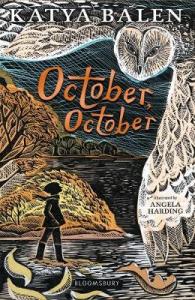 I’ll admit it: it was Angela Harding’s gorgeous cover illustration that drew me to this one. But I found a story that lived up to it, too. October, who has just turned 11 and is named after her birth month, lives in the woods with her father. Their shelter and their ways are fairly primitive, but it’s what October knows and loves. When her father has an accident and she’s forced into joining her mother’s London life, her only consolations are her rescued barn owl chick, Stig, and the mudlarking hobby she takes up with her new friend, Yusuf.
The child’s perspective is well rendered through artful run-on sentences. Balen is careful to show the consequences of October’s decisions and to present advantages as well as disadvantages so it’s not just countryside = good, city = bad. I thought the father’s recovery a bit too quick, but overall, this middle grade novel was a great read for any age, as well as one to get kids thinking about illness and loss. And how about these heart-tugging last lines? “There are stories everywhere and I want to tell them all. And all the world is wild and waiting for me.” (Public library) 
Autumn Story by Jill Barklem (1980)
 The second in the quartet of seasonal “Brambly Hedge” stories. Autumn is a time for stocking the pantry shelves with preserves, so the mice are out gathering berries, fruit and mushrooms. Young Primrose wanders off, inadvertently causing alarm – though all she does is meet a pair of elderly harvest mice and stay for tea and cake in their round nest amid the cornstalks. I love all the little touches in the illustrations: the patchwork tea cosy matches the quilt on the bed one floor up, and nearly every page is adorned with flowers and other foliage. After we get past the mild peril that seems to be de rigueur for any children’s book, all is returned to a comforting normal. Time to get the Winter volume out from the library. (Public library)
Une Chanson d’ours by Benjamin Chaud (2011)
 The first whole book I’ve read in French in many a year. I just about coped, given that it’s a picture book with not all that many words on a page; any vocabulary I didn’t know offhand, I could understand in context. It’s late into the autumn and Papa Bear is ready to start hibernating for the year, but Little Bear spies a late-flying bee and follows it out of the woods and all the way to the big city. Papa Bear, realizing his lad isn’t beside him in the cave, sets out in pursuit and bee, cub and bear all end up at the opera hall, to the great surprise of the audience. What will Papa do with his moment in the spotlight? This is a lovely book that, despite the whimsy, still teaches about the seasons and parent–child bonds as it offers a vision of how humans and animals could coexist. I’ve since found out that this was made into a series of four books, all available in English translation. (Little Free Library)
Pumpkinheads by Rainbow Rowell; illus. Faith Erin Hicks (2019)
 This YA graphic novel is set on a Nebraska pumpkin patch that’s more like Disney World than a simple field down the road. Josiah and Deja have worked together at the Succotash Hut for the last three autumns. Today they’re aware that it’s their final Halloween before leaving for college. Deja’s goal is to try every culinary delicacy the patch has to offer – a smorgasbord of foodstuffs that are likely to be utterly baffling to non-American readers: candy apples, Frito pie (even I hadn’t heard of this one), kettle corn, s’mores, and plenty of other saccharine confections.
Josiah’s goal, by contrast, is to catch the eye of Marcy, the beauty who works at the fudge stand. Deja convinces him to desert the Succotash Hut and go in pursuit of Marcy via as many food stands as possible. She’s willing to indulge his unrealistic fantasy even though, as a bisexual who’s dated just about everyone at the patch, she knows romance is sometimes not all it’s cracked up to be. Meanwhile, there’s an angry billy goat on the loose.
This is a fun and quick romp, and the ending genuinely surprised me. I liked the story better than the art, though – my main problem was that these teen characters look more like they’re 30 (Josiah, especially, looks almost haggard what with the sharp lines down the sides of his face – I guess they’re to give him a ‘chiselled’ jaw?), similar to that weird phenomenon of much older actors playing high schoolers. So, I laughed to see in an afterword conversation between Rowell and Hicks that one of the major things they changed from early mock-ups was making the protagonists look older. (Public library) 
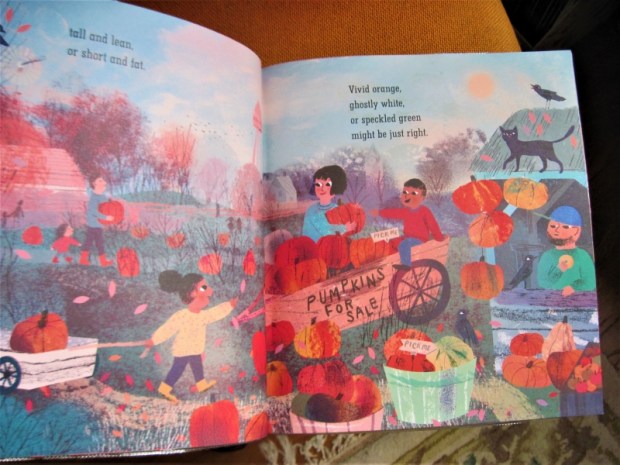
Pick a Pumpkin by Patricia Toht; illus. Jarvis (2019)
 From picking the best pumpkin at the patch to going out trick-or-treating, this is a great introduction to Halloween traditions. It even gives step-by-step instructions for carving a jack-o’-lantern. The drawing style – generally 2D, and looking like it could be part cut paper collages, with some sponge painting – reminds me of Ezra Jack Keats and most of the characters are not white, which is refreshing. There are lots of little autumnal details to pick out in the two-page spreads, with a black cat and crows on most pages and a set of twins and a mouse on some others. The rhymes are either in couplets or ABCB patterns. Perfect October reading. (Public library)
 Any super-autumnal reading for you this year?
Do you read children’s picture books and YA novels even if you (and any children) are well past that age – or is it just me?
The 1976 Club: Woman on the Edge of Time & The Takeover
It’s my fourth time participating in one of Simon and Karen’s reading weeks (after last year’s 1920 Club and 1956 Club and April’s 1936 Club). I start with a novel I actually read for my book club’s short-lived feminist classics subgroup way back in March but didn’t manage to review before now, and then have another I picked up especially for this challenge. Both were from the university library.

Woman on the Edge of Time by Marge Piercy
An unusual and fascinating novel with hints of science fiction, but still grounded in the real world (in a way that would attract fans of Octavia E. Butler’s Kindred and Parable duology), this contrasts utopian and dystopian scenes experienced by a Latina woman who’s been confined to a mental hospital. At 37, Connie Ramos has had a tough life marked by deprivation and domestic violence; “it was a crime to be born poor as it was a crime to be born brown.” She finds herself in conversation with Luciente, a plant geneticist who claims to be visiting from the future – coastal Massachusetts in 2137 – and has heard rumors of this prior Age of Greed and Waste. Luciente senses that Connie is a “catcher,” receptive to the wavelength of other times and places.
 When drawn into Luciente’s future, Connie thinks of it more as a peasant past because of the animal husbandry and agriculture, but comes to appreciate how technology and gender equality contribute to a peaceful society and environmentally restored landscape. I was intrigued by the dynamic Piercy imagines: everyone is of indeterminate gender (the universal pronouns are “person” and “per” – how about it? Both less confusing and more aesthetically pleasing than they/them!); embryos are cultured in machines and the resulting children raised communally with three honorary named “mother” figures. People choose their own names and change them in response to rites of passage. There’s no government or police. Free love reigns. “Our notions of evil center around power and greed” rather than sex, Connie is told.
With Connie and her fellow inmates facing mind-altering surgery in the ‘real’ world, Luciente’s community becomes a blessed escape. But on one of her time travels, she ends up in a dystopian future New York City instead. From 126 floors up, all that’s visible through the smoggy air is other towers. Everyone is genetically modified and everything is owned by corporations. Which scenario represents the authentic evolution of human society?
The way Piercy intersperses these visions with life at the mental hospital, and closes with excerpts from Connie’s patient notes, forces you to question whether they might all be hallucinations. We didn’t come to any firm conclusion during our Zoom discussion. The others found Connie’s life unremittingly bleak, but I love me a good mental hospital narrative. While I wearied a bit of the anthropological detail as the novel went on, I thought it an intense cultural commentary from a writer ahead of her time on gender roles and the environment (small-scale food production, foraging, renewable energy and reusing/recycling are givens in her utopia, and she questions the nonsensical reliance on cars. Why didn’t we listen to the prophets of the 1970s when we maybe had a chance to turn things around?!).
My rating:
The Takeover by Muriel Spark
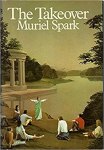 Had I read this in manuscript with no author name attached, I might have declared it to have been written by Iris Murdoch for the clutch of amoral characters, the love triangles, the peculiar religious society, the slight meanness of the attitude, and the detachment of the prose. Maggie Radcliffe is a rich American who owns three houses in the vicinity of Rome, one of which she rents out to Hubert Mallindaine, an effete homosexual who alleges that he is descended from the goddess Diana and founds a cult in her honour. He holds to this belief as fiercely as he defends his right to remain at Nemi even when Maggie decides she wants him out and employs lawyers to start eviction proceedings. There are odd priests, adulterous family members, scheming secretaries, and art and jewellery thieves, too. I wouldn’t say I’m a fan, but I liked this, my fourth novel by Spark, better than the rest. Italian bureaucracy makes for an amusing backdrop to what is almost a financial farce with an ensemble cast.
My rating:
Another 1976 release I’ve reviewed this year: The Easter Parade by Richard Yates.
Local Resistance: On Gallows Down by Nicola Chester
It’s mostly by accident that we came to live in Newbury: five years ago, when a previous landlord served us notice, we viewed a couple of rental houses in the area to compare with what was available in Reading and discovered that our money got us more that little bit further out from London. We’ve come to love this part of West Berkshire and the community we’ve found. It may not be flashy or particularly famous, but it has natural wonders worth celebrating and a rich history of rebellion that Nicola Chester plumbs in On Gallows Down. A hymn-like memoir of place as much as of one person’s life, her book posits that the quiet moments of connection with nature and the rights of ordinary people are worth fighting for.
So many layers of history mingle here: from the English Civil War onward, Newbury has been a locus of resistance for centuries. Nicola* has personal memories of the long-running women’s peace camps at Greenham Common, once a U.S. military base and cruise missile storage site – to go with the Atomic Weapons Establishment down the road at Aldermaston. As a teenager and young woman, she took part in symbolic protests against the Twyford Down and Newbury Bypass road-building projects, which went ahead and destroyed much sensitive habitat and many thousands of trees. Today, through local and national newspaper and magazine columns on wildlife, and through her winsome nagging of the managers of the Estate she lives on, she bears witness to damaging countryside management and points to a better way.

While there is a loose chronological through line, the book is principally arranged by theme, with experiences linked back to historical or literary precedents. An account of John Clare and the history of enclosure undergirds her feeling of the precarity of rural working-class life: as an Estate tenant, she knows she doesn’t own anything, has no real say in how things are done, and couldn’t afford to move elsewhere. Nicola is a school librarian and has always turned to books and writing to understand the world. I particularly loved Chapter 6, about how she grounds herself via the literature of this area: Kenneth Grahame’s The Wind in the Willows, Adam Thorpe’s Ulverton, and especially Richard Adams’s Watership Down.
Whatever life throws at her – her husband being called up to fight in Iraq, struggling to make ends meet with small children, a miscarriage, her father’s unexpected death – nature is her solace. She describes places and creatures with a rare intimacy borne out of deep knowledge. To research a book on otters for the RSPB, she seeks out every bridge over every stream. She goes out “lamping” with the local gamekeeper after dark and garners priceless nighttime sightings. Passing on her passion to her children, she gets them excited about badger watching, fossil collecting, and curating shelves of natural history treasures like skulls and feathers. She also serves as a voluntary wildlife advocate on her Estate. For every victory, like the re-establishment of the red kite population in Berkshire and regained public access to Greenham Common, there are multiple setbacks, but she continues to be a hopeful activist, her lyrical writing a means of defiance.
We are writing for our very lives and for those wild lives we share this one, lonely planet with. Writing was also a way to channel the wildness; to investigate and interpret it, to give it a voice and defend it. But it was also a connection between home and action; a plank bridge between a domestic and wild sense. A way both to home and resist.
You know that moment when you’re reading a book and spot a place you’ve been or a landmark you know well, and give a little cheer? Well, every site in this book was familiar to me from our daily lives and countryside wanderings – what a treat! As I was reading, I kept thinking how lucky we are to have such an accomplished nature writer to commemorate the uniqueness of this area. Even though I was born thousands of miles away and have moved more than a dozen times since I settled in England in 2007, I feel the same sense of belonging that Nicola attests to. She explicitly addresses this question of where we ‘come from’ versus where we fit in, and concludes that nature is always the key. There is no exclusion here. “Anyone could make a place their home by engaging with its nature.”
*I normally refer to the author by surname in a book review, but I’m friendly with Nicola from Twitter and have met her several times (and she’s one of the loveliest people you’ll ever meet), so somehow can’t bring myself to be that detached!
On Gallows Down was released by Chelsea Green Publishing on October 7th. My thanks to the author and publisher for arranging a proof copy for review.
My husband and I attended the book launch event for On Gallows Down in Hungerford on Saturday evening. Nicola was introduced by Hungerford Bookshop owner Emma Milne-White and interviewed by Claire Fuller, whose Women’s Prize-shortlisted novel Unsettled Ground is set in a fictional version of the village where Nicola lives.
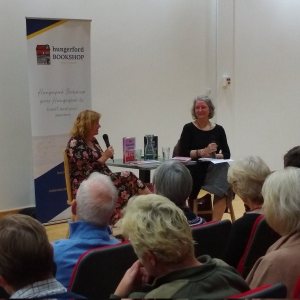
Nicola Chester and Claire Fuller. Photo by Chris Foster.
Nicola dated the book’s genesis to the moment when, 25 years ago, she queued up to talk to a TV news reporter about Newbury Bypass and froze. She went home and cried, and realized she’d have to write her feelings down instead. Words generally come to her at the time of a sighting, as she thinks about how she would tell someone how amazing it was.
Her memories are tied up with seasons and language, especially poetry, she said, and she has recently tried her hand at poetry herself. Asked about her favourite season, she chose two, the in-between seasons – spring for its abundance and autumn for its nostalgia and distinctive smells like tar spot fungus on sycamore leaves and ivy flowers.


A bonus related read:
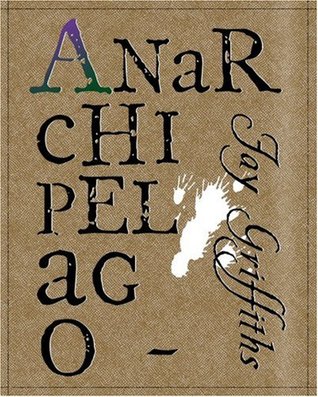
Anarchipelago by Jay Griffiths (2007)
This limited edition 57-page pamphlet from Glastonbury-based Wooden Books caught my eye from the library’s backroom rolling stacks. Griffiths wrote her impish story of Newbury Bypass resistance in response to her time among the protesters’ encampments and treehouses. Young Roddy finds a purpose for his rebellious attitude wider than his “McTypical McSuburb” by joining other oddballs in solidarity against aggressive policemen and detectives.
There are echoes of Ali Smith in the wordplay and rendering of accents.
“When I think of the road, I think of more and more monoculture of more and more suburbia. What I do, I do in defiance of the Louis Queasy Chintzy, the sickly stale air of suburban car culture. I want the fresh air of nature, the lifefull wind of the French revolution.”
In a nice spot of Book Serendipity, both this and On Gallows Down recount the moment when nature ‘fought back’ as a tree fell on a police cherry-picker. Plus Roddy is kin to the tree-sitting protesters in The Overstory by Richard Powers as well as another big novel I’m reading now, Damnation Spring by Ash Davidson.
Review and Q&A: Those Fantastic Lives by Bradley Sides
Bradley Sides and I worked together on Bookkaholic web magazine in 2014–15 and I’ve been following his career ever since. I was delighted to get early access to his debut short story collection, Those Fantastic Lives (out today from Blacklight Press), which was an ideal transition for me from September’s short story focus to October’s R.I.P. challenge for how it blends the genres of dystopia, horror, and magic realism with literary writing.
Many of the protagonists in these 17 stories are orphans or children who have lost one parent. Grief uproots them, leaves them questing; combine their loneliness with dashes of the supernatural and you have perfect situations for strange and wonderful things to happen. So in the title story we have Sam, who at eight longs to follow in his psychic grandmother’s footsteps. In the achingly beautiful “Dolls for the End of the World,” young Patrick’s empathy somehow makes the apocalypse more bearable. In “The Hunt,” 10-year-old Zoey is obsessed with finding a sasquatch, while “In the Hollow” Walt trusts wolf-like creatures to lead him to his dead mother.
“Commencement,” in a first-person plural voice, is the creepiest of the lot, documenting preparations for graduation at a special academy. To be named the class valedictorian is an enduring yet dubious honor… But there are flashes of humor in the book as well. For instance, the lighthearted werewolf story “A Complicated Correspondence” is told via a series of increasingly convoluted e-mails. These two and “Back in Crowville,” in which scarecrows are used to scare off ghosts, too, struck me as perfect Halloween reading. I’d particularly recommend the book to readers of Kelly Link and Lydia Millet.
Brad and I had a chat over e-mail about his inspiration, themes and publication process.
Can you remember what the seed was for some of these stories? A particular line, scene, image, or character? Do you start writing a story with a title in mind, or does the title usually suggest itself later on?
Almost all of the stories I write come to me initially as a vision. I don’t mean in a dream or anything that dramatic, but I might be walking and see a stream, and suddenly that stream is placed in another world, and the stakes are much, much higher. Once I see my characters or my setting or my situation, I have to write a story that leads up to the moment I’m seeing. Writing and creating is, for me, a very internalized process.
Titles are so hard for me. I wish this weren’t the case, but I never write with titles in mind. Sometimes I’ll have the story ready, and I might have to wait weeks before I come to the right title. In regards to writing, I think I’m the worst at titling.
I think my favorite line in the book might be “Just because something can’t be seen doesn’t mean that it’s gone.” That’s from “The Comet Seekers,” about a pair of brothers in search of their father. A number of the stories feature children who have lost a guardian. How does bereavement alter the course of these coming-of-age narratives?
I’m so interested in loss in general. In life, we lose things. As kids. As adults. It doesn’t stop. I grew up on a farm, and animals died constantly. Chickens were slaughtered by foxes. Ducks were killed on their nests by turtles. Cows were sold and slaughtered. Pets died. Loss was everywhere. I’ve always thought about it. I guess, in many ways, loss haunts me.
I feel like bereavement and orphanhood create tension in many of my stories, but they also serve to add stakes to my characters’ lives. It’s tough to keep losing. Sometimes, you’ll do anything to keep from experiencing that—or to try to keep from experiencing that, at least. There’s power there.
I imagine that, like sequencing an album, choosing the order of the stories was a pleasurable challenge. How did you decide on the structure of the book – the opening story, the closing story; the themes running into or contrasting with each other; transitions; and so on?
It was a fun process to start putting all of my work together. I mean, it was also a little stressful once I got near the end and was getting ready to send Those Fantastic Lives out, but it was still fun. I have written a lot of stories, but for my collection, I wanted to only include the stories I love the most. I cut and cut based on just pure writerly love first—and gut instinct, I suppose. Once I had it narrowed, I started looking closely at themes. I removed a handful that felt like they didn’t belong. I really like slim collections (and slim books in general), so I wanted something relatively short—something less than 200 pages. The strangest thing I did was that I read the collection aloud. SEVERAL times, too. If a story didn’t fit the sound, I cut it. I really wanted to put out a cohesive collection, and I think (hope?) I’ve done that with these seventeen stories.
I loved how elements recurred in later tales – for instance, in both “Losing Light” and “The Mooneaters” characters consume sources of light and glow from the inside, and “What They Left Behind” connects back to “The Mooneaters” in that a character starts to sprout feathers. How do you account for these pervasive images?
This is probably a terrible response to such a great question, but it’s the truth: I look at the sky a lot. As in, probably way beyond what is normal. When I walk my dog, I look up at the morning sky and think about the clouds and the rising sun. When my wife and I are out on the porch in the evenings, I look up and think about the approaching stars. The coming moon. Whether early or late, the birds are always around, flying to wherever it is they go. I am so amazed by and curious of the sky. It’s such a beautiful, mysterious place that hovers above us, and it’s kind of the perfect space for me to root a lot of the fantastical elements of my stories.
In my favorite story, “The Galactic Healers,” Lian makes contact with aliens who offer a therapeutic balm. His suspicious father takes the medicine by force – a plan that quickly backfires. To what extent might this one be read as a parable of colonial exploitation and toxic masculinity?
I’m so glad you liked “The Galactic Healers,” Rebecca. It is one of my favorites, too. I’m naturally drawn, just as a human and not even necessarily speaking as a writer, to the topics you mention. I think about otherness. What it means to be outside or different. In that same way, I think about tender versus toxic behavior. I think the reading you have of the story is definitely a good one. And it probably captures where I was, in my head, at that time.
I sensed shades of Karen Russell and George Saunders. Who are some of your favorite writers, and who would you cite as inspirations for the collection?
I love Karen Russell and George Saunders both. I’m honored that my work reminds you of their writing. I think they are both influences on my fiction. I’m also inspired by Ray Bradbury a lot. I’m a very visual creator, so television writers also serve as huge inspirations for me. Mike Flanagan’s work (The Haunting of Hill House and The Haunting of Bly Manor) haunts me, and I love it.

Bradley Sides. Photo by Abraham Rowe.
Versions of 12 of the stories previously appeared in various publications. What has your experience been of getting your work into literary magazines?
Getting published in literary magazines is an exhausting process. Don’t get me wrong, it’s a necessary one and one that gives me a lot of joy in the long run, but it’s also tough. I write weird stuff. Not every magazine wants a story about glowing monsters or a tiny kid whose home planet was invaded by giants and now lives on an ice cube. Finding the right magazine takes time, and even when I think I’ve found the right place, I’m sometimes wrong. I submit, hope for the best, and keep submitting. Usually, most of my stories wind up finding homes in the first five or so magazines I submit them to, but that’s not always the case. With “What They Left Behind,” for example, I bet I sent that story to twenty or thirty magazines before I found the perfect match at Crow & Cross Keys. Although it took some time to land at its home, it found its PERFECT home.
These stories were seven years in the making. What was your road to publication like, and how did you land at Blacklight Press?
Like many yet-to-publish-a-book writers, I was constantly searching for publication information as I was reaching the end of my writing cycle for Those Fantastic Lives, and I kept encountering these articles about how long and tough the publication process can be. I was prepared for it to take years before I found a press willing to take on my collection.
Once it was ready, I sent Those Fantastic Lives out to a handful of publishers—all of which I’d found out about with basic web searches. A couple were interested, but the offer wasn’t what I was looking for. A couple showed interest, but ultimately passed. Blacklight landed, and I knew it was what I was looking for very early on.
The process of when I began to when I found my publisher was probably less than six months.
The whole team at Blacklight has been fantastic, too. It’s really been a dream experience. I feel very grateful.
In your day job, you teach English and creative writing to high schoolers. What are some of the most important lessons you hope your students will take away from your classes, and what have you learned from them?
I hope, more than anything, that my students learn that their words—and their stories—matter. If they truly put themselves into their work, it is art, and it is important. I also hope they leave my classroom knowing how important respect is. To other writers. To themselves. To their eventual readers. To people in general. Respect is key.
I’ve learned so much from my creative writing students. They inspire me. They motivate me. Seeing their excitement when they write something they are proud of reminds me why I write in the first place. They are also wonderfully eager readers. I love discussing stories with them and learning how they perceive texts. Creative writing classes are treasured places.
What are you working on next?
Earlier this year, I began working on my next set of stories. I’m a slow writer. Maybe a very slow writer. With it being so early in the process, it’s hard to say exactly what the next collection will look like, but I do think I’ll largely stay focused on the same kinds of themes. Loss, loneliness, and transformation are naturally interesting to me. There’ll be more experimentation with form. A story in the shape of a manual. A gameplay story. A transcript. A flash in questions. There’ll be plenty of magical weirdness, too, with, probably, pond monsters, apocalypses, a shark boy, kidnapping ghosts, and who knows what else. I just hope it won’t take me so long to write this second book!

Short Stories in September, Part III: Butler, Costello, MacLaverty, Washington
Today I have a third set of terrific and varied short story collections. Between this, my Part I and Part II posts, and a bonus review I have coming up on Friday, I’ve gotten through 12 volumes of stories this month. This feels like a great showing for me because I don’t naturally gravitate to short stories and have to force myself to make a special effort to read them every September; otherwise, they tend to languish unread on my shelves and TBR.
From science fiction and horror tales set in alternate worlds to gritty slices of real life in Texas via two sets of quiet Irish relationship studies, this quartet of books showcases a range of tones and genres but fairly straightforward story structures and points of view. This was such a strong batch, I had to wonder why I never call myself a short story fan. All:
Bloodchild and Other Stories by Octavia E. Butler (2005)
 My first R.I.P. selection and one I can heartily recommend – even if you’re normally wary of dystopias, horror and science fiction. Butler makes these genres accessible by peopling her plots with relatable protagonists and carefully accounting for their bizarre predicaments without wasting time on extraneous world-building. The way in which she explores very human issues alongside the existence of alien beings reminds me of Mary Doria Russell’s The Sparrow, another of my rare forays into sci fi.
Along with the original five stories Butler published in 1970s and 1980s magazines and anthologies, this second edition contains two essays on her writing process and two new stories that date to 2003. In “Bloodchild,” a small band of humans live on another planet ruled by the Tlic, which sound like giant spiders or scorpions. Gan learns he is expected to play his part by being a surrogate for T’Gatoi’s eggs, but is haunted by what he’s heard this process involves. In a brief afterword (one is included with each piece here), Butler explains that the story arose from her terror of botflies, which she knew she might encounter in the Peruvian Amazon, and that she has always faced what scares her through her writing.
My other favorite story was “The Evening and the Morning and the Night,” about a subclass of people afflicted with Duryea-Gode disease. A cruel side effect of a parent’s cancer treatment, the illness compels sufferers to self-harm and they are often confined to asylums. Lynn and Alan visit his mother in one such institution and see what their future might hold. “Speech Sounds” and “Amnesty” reminded me most of the Parable novels, with the latter’s Noah a leader figure similar to Lauren. After an apocalyptic event, people must adapt and cooperate to survive. I appreciated how the two essays value persistence – more so than talent or inspiration – as the key to success as a writer. This was my fourth book by Butler and I don’t see why I shouldn’t keep going and read her whole oeuvre. (University library)
The China Factory by Mary Costello (2012)
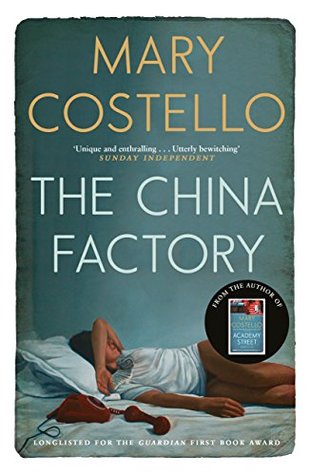 Academy Street is a near-perfect novella and I also enjoyed The River Capture, so I wanted to complete the set by reading Costello’s first book. Its dozen understated stories are about Irish men and women the course of whose lives are altered by chance meetings, surprise liaisons, or not-quite-affairs that needle them ever after with the could-have-been. The mood of gentle melancholy would suit a chilly moonlight drive along the coast road to Howth. In the opening title story, a teenage girl rides to her work sponging clay cups with an oddball named Gus. Others can’t get past things like his body odour, but when there’s a crisis at the factory she sees his calm authority save the day. Elsewhere, a gardener rushes his employer to the hospital, a woman attends her ex-husband’s funeral, and a school inspector becomes obsessed with one of the young teachers he observes.
Three favourites: In “And Who Will Pay Charon?” a man learns that, after he rejected Suzanne, she was hideously attacked in London. When she returns to the town as an old woman, he wonders what he might have done differently. “The Astral Plane” concerns a woman who strikes up a long-distance e-mail correspondence with a man from New York who picked up a book she left behind in a library. How will their intellectual affair translate into the corporeal world? The final story, “The Sewing Room,” reminded me most of Academy Street and could be a novel all of its own, as a schoolteacher and amateur fashion designer prepares for her retirement party and remembers the child she gave up for adoption. (Secondhand, gifted)
Blank Pages and Other Stories by Bernard MacLaverty (2021)
 I knew from The Great Profundo that I liked MacLaverty’s stories, and I also enjoyed his latest novel, Midwinter Break, so I was delighted to hear news of a new collection. A number of the longer stories are set at turning points in twentieth-century history. In 1940, a mother is desperate to hear word of her soldier son; in 1971 Belfast, officers search a woman’s house. Two of the historical stories appealed to me for their medical elements: “The End of Days,” set in Vienna in 1918, dramatizes Egon Schiele’s fight with Spanish flu, while “Blackthorns” gives a lovely picture of how early antibiotics promoted miraculous recovery. In the title story, a cat is all a writer has left to remind him of his late wife. “Wandering” has a woman out looking for her dementia-addled mother. “The Dust Gatherer” muses on the fate of an old piano. Elderly parents and music recur, establishing filaments of thematic connection.
Three favourites: In “Glasshouses,” a man temporarily misplaces his grandchildren in the botanical gardens; “The Fairly Good Samaritan” is the fable of a jolly drunk who calls an ambulance for his poorly neighbour – but not before polishing off her brandy; and in the gorgeous “Sounds and Sweet Airs” a young woman’s harp music enthrals the passengers on a ferry.
With thanks to Jonathan Cape for the free copy for review.
Lot: Stories by Bryan Washington (2019)
 The musical equivalent of Lot might be a mixtape played on a boombox or blasted from an open-top Corvette while touring the streets of Houston, Texas. Most of this Dylan Thomas Prize-winning linked collection follows Nic, a mixed-race Black/Latino boy who works in the family restaurant. As his family situation realigns – his father leaves, his older brother Javi enlists, his sister Jan has a baby – he’s trying to come to terms with his homosexuality and wondering if this gentrifying city suits him anymore. But he knows he’ll take himself wherever he goes, and as the book closes with “Elgin” (the most similar in mood and setup to Washington’s debut novel, Memorial) he’s thinking of taking a chance on love.
Drug dealers, careworn immigrants and prostitutes: Even the toughest guys have tender hearts in these stories. Eleven of 13 stories are in the first person. Where the narration isn’t Nic’s, it’s usually the collective voice of the neighbourhood boys. As far as I can tell, most of the story titles refer to Houston sites: particular addresses or neighbourhoods, or more vague locations. Like in Memorial, there are no speech marks. Washington’s prose is earthy and slang-filled. The matter-of-fact phrasing made me laugh: “He knocked her up in the usual way. For six minutes it looked like he’d stick around”; “He’d been staying there since the Great Thanksgiving Rupture, back when his brother’d found the dick pic in his pillowcase.” With the melting pot of cultures, the restaurant setting, and the sharp humour, this reminded me of Elaine Castillo’s America Is Not the Heart.
Three favourites: In “Shepherd,” the narrator emulates a glamorous cousin from Jamaica; “Bayou” is completely different from the rest, telling the urban legend of a “chupacubra” (a mythical creature like a coyote); “Waugh,” the longest story and one of just two told in the third person, is about a brothel’s worth of male sex workers and their pimp. Its final page is devastating. Despite their bravado, Washington’s characters are as vulnerable as Brandon Taylor’s. I think of these two young gay African American writers as being similar at root even though their style and approach are so very different. (New purchase)
A side note: I’m wondering how an author chooses primarily first person or third person POVs for short stories. MacLaverty and Taylor write exclusively in an omniscient third person; Washington and Eley Williams almost always plump for the first person. (Here, Butler was about half and half and Costello only used first person in three stories.) Is the third person seen as more impartial and commanding – a more elevated form of fiction? Is first person more immediate, informal and natural, but also perhaps too easy? I wouldn’t say I prefer one or the other (not in my novels, either); it all depends on the execution. Notably, none of this year’s stories were in the second person or employed experimental structures.
Two more collections I’m reading are spilling across into October for R.I.P., but will I keep up the short story habit after that? I still have a shelf full of unread story collections, and I have my eye on My Monticello, which I got from NetGalley…
Short Stories in September, Part II: Tove Jansson, Brandon Taylor, Eley Williams
Each September I make a special effort to read short stories, which otherwise tend to languish on my shelves and TBR unread. After my first four reviewed last week, I have another three wonderfully different collections, ranging from bittersweet children’s fantasy in translation to offbeat, wordplay-filled love notes via linked stories suffused with desire and desperation.
Tales from Moominvalley by Tove Jansson (1962; 1963)
[Trans. from the Swedish by Thomas Warburton]
 I only discovered the Moomins in my late twenties, but soon fell in love with the quirky charm of Jansson’s characters and their often melancholy musings. Her stories feel like they can be read on multiple levels, with younger readers delighting in the bizarre creations and older ones sensing the pensiveness behind their quests. There are magical events here: Moomintroll discovers a dragon small enough to be kept in a jar; laughter is enough to bring a fearful child back from literal invisibility. But what struck me more was the lessons learned by neurotic creatures. In “The Fillyjonk who believed in Disasters,” the title character fixates on her belongings—
“we are so very small and insignificant, and so are our tea cakes and carpets and all those things, you know, and still they’re important, but always they’re threatened by mercilessness…”
—but when a gale and a tornado come and sweep it all away, she experiences relief and joy:
“the strange thing was that she suddenly felt quite safe. It was a very strange feeling, and she found it indescribably nice. But what was there to worry about? The disaster had come at last.”
My other favourite was “The Hemulen who loved Silence.” After years as a fairground ticket-taker, he can’t wait to retire and get away from the crowds and the noise, but once he’s obtained his precious solitude he realizes he needs others after all. The final story, “The Fir Tree,” is a lovely Christmas one in which the Moomins, awoken midway through their winter hibernation, get caught up in seasonal stress and experience the holiday for the first time. (Public library)
Filthy Animals by Brandon Taylor (2021)
Real Life was one of my five favourite novels of 2020, and we are in parallel fictional territory here. Lionel, the protagonist in four of the 11 stories, is similar to Wallace insomuch as both are gay African Americans at a Midwestern university who become involved with a (straight?) white guy. The main difference is that Lionel has just been released from hospital after a suicide attempt. A mathematician (rather than a biochemist like Wallace), he finds numbers soothingly precise in comparison to the muddle of his thoughts and emotions.
 In the opening story, “Potluck,” he meets Charles, a dancer who’s dating Sophie, and the three of them shuffle into a kind of awkward love triangle where, as in Real Life, sex and violence are uncomfortably intertwined. It’s a recurring question in the stories, even those focused around other characters: how does tenderness relate to desire? In the throes of lust, is there room for a gentler love? The troubled teens of the title story are “always in the thick of violence. It moves through them like the Holy Ghost might.” Milton, soon to be sent to boot camp, thinks he’d like to “pry open the world, bone it, remove the ugly hardness of it all.”
Elsewhere, young adults face a cancer diagnosis (“Mass” and “What Made Them Made You”); a babysitter is alarmed by her charge’s feral tendencies (“Little Beast”); and same-sex couples renegotiate their relationships (Simon and Hartjes in “As Though That Were Love” and Sigrid and Marta in “Anne of Cleves,” one of my favourites). While the longer Lionel/Charles/Sophie stories, “Potluck” and “Proctoring,” are probably the best and a few others didn’t make much of an impression, the whole book has an icy angst that resonates. Taylor is a confident orchestrator of scenes and conversations, and the slight detachment of the prose only magnifies his characters’ longing for vulnerability (Marta says to Sigrid before they have sex for the first time: “I’m afraid I’ll mess it up. I’m afraid you’ll see me.” To which Sigrid replies, “I see you. You’re wonderful.”). (New purchase, Forum Books)
 A bonus story: “Oh, Youth” was published in Kink (2021), an anthology edited by Garth Greenwell and R.O. Kwon. I requested this from NetGalley just so I could read the stories by Carmen Maria Machado and Brandon Taylor. All of Taylor’s work feels of a piece, such that his various characters might be rubbing shoulders at a party – which is appropriate because the centrepiece of Real Life is an excruciating dinner party, Filthy Animals opens at a potluck, and “Oh, Youth” is set at a dinner party.
Grisha is here with Enid and Victor, his latest summer couple. He’s been a boytoy for hire since his architecture professor, Nate, surprised him by inviting him into his open marriage with Brigid. “His life at the time was a series of minor discomforts that accumulated like grit in a socket until rotation was no longer possible.” The liaisons are a way to fund a more luxurious lifestyle and keep himself in cigarettes.
While Real Life brought to mind Virginia Woolf, Taylor’s stories recall E.M. Forster or Thomas Mann. In other words, he’s the real deal: a blazing talent, here to stay.
Attrib. and Other Stories by Eley Williams (2017)
 After enjoying her debut novel, The Liar’s Dictionary, this time last year, I was pleased to find Williams’s first book in a charity shop last year. Her stories are brief (generally under 10 pages) and 15 of the 17 are first-person narratives, often voiced by a heartbroken character looking for the words to describe their pain or woo back a departed lover. A love of etymology is patent and, as in Ali Smith’s work, the prose is enlivened by the wordplay.
The settings range from an art gallery to a beach where a whale has washed up, and the speakers tend to have peculiar careers like an ortolan chef or a trainer of landmine-detecting rats. My favourite was probably “Synaesthete, Would Like to Meet,” whose narrator is coached through online dating by a doctor.
 I found a number of the stories too similar and thin, and it’s a shame that the hedgehog featured on the cover of the U.S. edition has to embody human carelessness in “Spines,” which is otherwise one of the standouts. But the enthusiasm and liveliness of the language were enough to win me over. (Secondhand purchase from the British Red Cross shop, Hay-on-Wye – how fun, then, to find the line “Did you know Timbuktu is twinned with Hay-on-Wye?”)
I’ll have one more set of short story reviews coming up before the end of the month, with a few other collections then spilling into October for R.I.P.
Noah’s Compass by Anne Tyler (2009)
This year I’ve been joining in Liz’s Anne Tyler readalong for most of the novels I own and hadn’t read yet. I’ve discovered a few terrific new-to-me ones: Earthly Possessions, Saint Maybe, The Amateur Marriage … but there have also been some slight duds. Alas, this one falls into the latter category. A Tyler novel is never less than readable, but a habit that I find irksome is on show here, and she’s used this story template more successfully before.
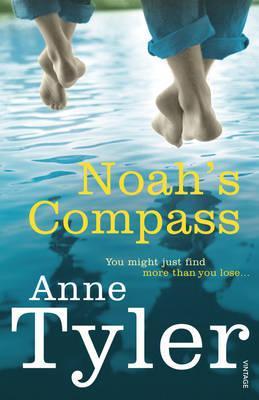 In 2006, Liam Pennywell is forced to start a new life at age 60. After being laid off from his private school teaching job, he downsizes to a smaller apartment further out from central Baltimore. On his first night in the place, he’s assaulted by a would-be burglar and wakes up in hospital with no memory of the lost hours. As he tries to piece together what happened, his three daughters, grandson and ex-wife flit in and out of his life, tutting at his bachelor ways and later disapproving of his budding relationship with a much younger woman.
The focus on a hapless male trying to do better is a familiar setup for Tyler (Saint Maybe, The Accidental Tourist, A Patchwork Planet, The Beginner’s Goodbye, and Redhead by the Side of the Road, at least – have I missed any?). Liam especially reminded me of Michael in The Amateur Marriage: they feel they have been sleepwalking through life and wish they had appreciated it more and shaped it more through their decisions. As Liam says at one point, “It’s as if I’ve never been entirely present in my own life.” Dating Eunice is his only bid for freedom and happiness. But, in the book’s most memorable scene, a visit to his elderly father is a revelation to Liam: he never wanted to be like this man, but accidentally almost was.
Much as I enjoy sinking into a Tyler novel (the closest I come to a ‘guilty pleasure’ read?), I get exasperated with the way she includes an ostensibly momentous event that doesn’t actually matter much, or only insomuch as it sets up the plot. (Clock Dance is the worst offender in this respect.) There is a suicide in the background, but the assault and memory loss soon fade into the background, to be replaced by well-worn, breezy dysfunctional family happenings. The title, from a Sunday school-based conversation Liam has with his grandson, is cute and meaningful in context – about a drifting life in search of direction – but won’t help as an aide-mémoire for the story. The same goes for the twee cover image on my Vintage paperback.
So, a rather forgettable one – which, unfortunately, has largely been my experience of Tyler’s later work (with the exception of the punchy Shakespearean fun of Vinegar Girl). But you can do much worse than pick up one of her paperbacks on a sunny afternoon.
See also Liz’s review. She’s as lukewarm as I am on this one. (Secondhand purchase from Thatcham Library sale trolley)
My rating: 
The 16 Tyler novels I’ve read, in order of preference (greatest to least), are:
Dinner at the Homesick Restaurant
Saint Maybe
The Amateur Marriage
Ladder of Years
The Accidental Tourist
Earthly Possessions
Breathing Lessons
Digging to America
Vinegar Girl
Back When We Were Grown-ups
Clock Dance
A Blue Spool of Thread
The Beginner’s Goodbye
Noah’s Compass
Redhead by the Side of the Road
The Clock Winder
 The only unread Tyler I have remaining on my shelves is A Patchwork Planet, which I started in July but didn’t get far with. I’ll try it again another time. And there’s not long to wait now for her NEW novel, French Braid, coming out in March. (Even though I’m sure she announced in 2015 that she was retiring, we’ll have had four novels since then.) The other one that this readalong project has piqued my interest in is Celestial Navigation. I don’t think I’ll bother with her first four novels, which she’d like to see struck from the record. Morgan’s Passing and Searching for Caleb I’m unsure about. Should I find them very cheap secondhand, I’d probably have a go.
Summer 2021 Reading, Part II & Transitioning into Autumn
In the past couple of weeks, we’ve taken advantage of the last gasp of summer with some rare chances at socializing, outdoors and in. Our closest friends came to visit us last weekend and accompanied us to a beer festival held in a local field, and this weekend we’ve celebrated birthdays with a formal-wear party at a local arts venue and a low-key family meal.


After my first installment of summer reads, I’ve also finished Klara and the Sun (a bust with me, alas) and the three below: a wildlife photographer’s memoir of lockdown summer spent filming in the New Forest, a record of searching for the summer’s remnants of snow in the Highlands, and an obscure 1950s novel about the psychological connections between four characters in one Irish summer. I close with a summer-into-autumn children’s book.
Goshawk Summer: A New Forest Season Unlike Any Other by James Aldred (2021)
My second nature book about the New Forest this year (after The Circling Sky by Neil Ansell) has only sharpened my hankering to get back there and have a good wander after many years away. In March 2020, Aldred had recently returned from filming cheetahs in Kenya when the UK went into its first national lockdown. He had the good fortune to obtain authorization from Forestry England that allowed him to travel regularly from his home in Somerset to the New Forest to gather footage for a documentary for the Smithsonian channel.
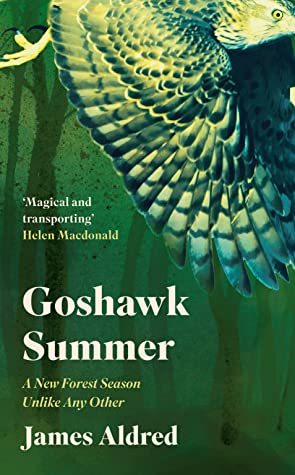 Zooming up on empty roads and staying in local cottages so he can start at 4 each morning, he marvels at the peace of a place when humans are taken out of the equation. His diary chronicles a few months of extraordinary wildlife encounters – not only with the goshawks across from whose nest he built a special treetop platform, but also with dragonflies, fox cubs, and rare birds like cuckoo and Dartford warbler. The descriptions of animal behaviour are superb, and the tone is well balanced: alongside the delight of nature watching is anger at human exploitation of the area after the reopening and despair at seemingly intractable declines – of 46 curlew pairs in the Forest, only three chicks survived that summer.
Despite the woe at nest failures and needless roadkill, Aldred is optimistic – in a similar way to Ansell – that sites like the New Forest can be a model of how light-handed management might allow animals to flourish. “I believe that a little space goes a long way and sometimes all we really need to do is take a step back to let nature do its thing. … It is nature’s ability to help itself, to survive in spite of us in fact, that gives me tentative hope”. (Unsolicited review copy)
With thanks to Elliott & Thompson for the free copy.
Among the Summer Snows by Christopher Nicholson (2017)
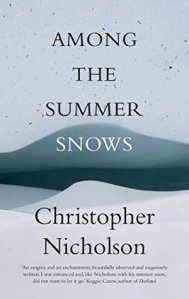 After the death from cancer of his wife Kitty, a botanical illustrator, Nicholson set off for Scotland’s Cairngorms and Ben Nevis in search of patches of snow that persist into summer. “Summer snow is a miracle, a piece of out-of-season magic: to see it is one thing, to make physical contact with it is another.” His account of his travels washed over me, leaving little impression. I appreciated the accompanying colour photographs, as the landscape is otherwise somewhat difficult to picture, but even in these it is often hard to get a sense of scale. I think I expected more philosophical reflection in the vein of The Snow Leopard, and, while Nicholson does express anxiety over what happens if one day the summer snows are no more, I found the books on snow by Charlie English and Marcus Sedgwick more varied and profound. (Secondhand, gifted)
A Shower of Summer Days by May Sarton (1952)
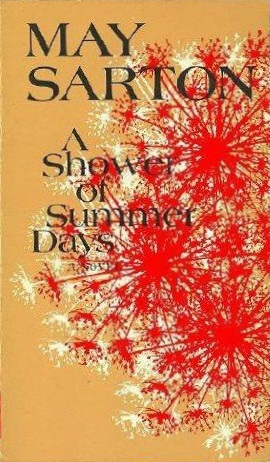 Although I’m more a fan of Sarton’s autobiographical material, especially her journals, I’ve also enjoyed exploring her fiction. This was my seventh of her novels. It’s set in Ireland at Dene’s Court, the grand house Violet inherited. She and her husband Charles have lived in Burma for two decades, but with the Empire on the wane they decide to settle in Violet’s childhood home. Gardening and dressing for dinner fill their languid days until word comes that Violet’s 20-year-old niece, Sally, is coming to stay.
The summer is meant to cure Sally of her infatuation with an actor named Ian. Violet reluctantly goes along with the plan because she feels so badly about the lasting rivalry with her sister, Barbara. Sally is a “bolt of life” shaking up Violet and Charles’s marriage, and when Ian, too, flies out from America, a curious love triangle is refashioned as a quadrilateral. The house remains the one constant as the characters wrestle with their emotional bonds (“the kaleidoscope of feelings was being rather violently shaken up”) and reflect on the transitory splendour of the season (“a kind of timelessness, the warm sun in the enclosed garden in the morning, the hum of bees, and the long slow twilights”). This isn’t one of my favourites from Sarton, but it has low-key charm. I saw it as being on a continuum from Virginia Woolf to Tessa Hadley (e.g. The Past) via Elizabeth Bowen. (Secondhand purchase from Awesomebooks.com)
And finally, one for the seasons’ transition:
Goodbye Summer, Hello Autumn by Kenard Pak (2016)
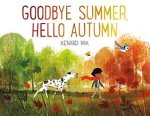 A child and dog pair set out from home, through the woods, by a river, and into town, greeting other creatures and marking the signs of the season. “Hello!” the beavers reply. “We have no time to play because we’re making cozy nests and dens. It will be cold soon, and we want to get ready.” The quaint Americana setting and papercut-style illustrations reminded me of Vermont college towns and Jon Klassen’s work. I liked the focus on nature. (Free from a neighbour)
What books are accompanying you from summer into autumn this year?
Short Stories in September, Part I: Byatt, Hildyard, Okorie, Simpson
Each September I make a special effort to read short stories, which otherwise tend to languish on my shelves unread. In 2020 I read eight collections for this challenge. This year I hope to outdo myself. I’m knee-deep in seven more collections at the moment, including a couple from the library and two from my set-aside-temporarily shelf. Here’s my first four.
Medusa’s Ankles: Selected Stories by A.S. Byatt (2021)
I’ve long considered Byatt my favourite author, and have read all of her published short story collections before. One I even reread last year. So when approaching this chronological selection of 18 stories, I skipped the couple I’d read recently, even though that includes perhaps my favourite stand-alone story of all time (“Medusa’s Ankles”), plus a few more that I’d read before. This time around, I found I wasn’t as interested in the historical stories in the Angels and Insects or Possession vein – chiefly “Precipice-Encurled,” a long story about Robert Browning from her first collection – and instead focused on stories where fantasy or horror breaks into everyday life, and writerly or metafictional ones.
As David Mitchell notes in his introduction, Byatt’s range, from fairy tales to historical realism, is almost overwhelming; it’s hard to do it justice in a short review, but I’ll highlight five brilliant stories beyond the title one. “The July Ghost,” an early story, is another that has stuck with me over the years, turning up in one of my Six Degrees posts. It’s a straight-up ghost story but also a tale within a tale being recounted by a man at a party, and blends sex and death in a creepy way. “Racine and the Tablecloth” pits a clever boarding school girl and her literature professor against each other in a tacit psychological conflict. “Who won, you will ask, Emily or Miss Crichton-Walker, since the Reader is mythical and detached?”

“A Lamia in the Cévennes,” about a seductive snake-spirit living in a painter’s swimming pool, provides a delicious lick of magic. I’m surprised I didn’t remember “Raw Material,” as it was a favourite on this reread. A working-class author teaches his creative writing students to write what they know and avoid melodrama. Yet most of them craft over-the-top graphic tales of torture and revenge. Only an unassuming octogenarian follows his instructions, spinning lovingly meticulous accounts of polishing stoves and washing laundry by hand in the old days. He is captivated by her stories, reading them aloud to an unappreciative class and even entering them into a competition. But the old woman’s life holds a sordid surprise. It’s mind-blowing how Byatt turns all our expectations for this story on their head and forces us to question nostalgia and the therapeutic value of writing fiction.
Five of the late stories were originally printed in other publications and had not previously been collected. Of these, I most liked “Dolls’ Eyes” (2013), which is available as a Comma Singles e-book and was in the anthology The New Uncanny. A schoolteacher who lives in a house full of dolls welcomes a new fellow teacher to be her lodger and trusts her with her love and her dolls, only to be betrayed and call down vengeance. “Sea Story,” which appeared in the Guardian, is a thoroughly depressing closer about the persistence of plastic (but how about that last line?!).
One of the things I most admire about Byatt is her use of colour, and visual detail in general. As Mitchell puts it, “It is not easy to think of another writer with so painterly and exact an eye for the colours, textures and appearances of things. The visual is in constant dialogue with the textual.” Witness in the autobiographical “Sugar” the descriptions of boiled sweets being made almost like blown glass in a grandfather’s factory, or the colourful minerals participating in the metamorphosis in “A Stone Woman.”
If you’re new to Byatt’s work, picking a handful of stories from this collection would be a great way of trying out her style and figuring out which of her full-length books you might like to read. Fans of Margaret Atwood, Julian Barnes and Michèle Roberts are specially invited to the feast. (Public library)
Some favourite lines:
“Such wonder, such amazement, are the opposite, the exact opposite, of boredom, and many people only know them after fear and loss. Once known, I believe, they cannot be completely forgotten; they cast flashes and floods of paradisal light in odd places and at odd times.”
“the world is full of light and life, and the true crime is not to be interested in it. You have a way in. Take it. It may incidentally be a way out, too, as all skills are.”
After that in-depth review, I’ll give just brief responses to the next three slim volumes.
Slaughter by Rosanna Hildyard (2021)
 A debut trio of raw stories set in the Yorkshire countryside. In “Offcomers,” the 2001 foot and mouth disease outbreak threatens the happiness of a sheep-farming couple. The effects of rural isolation on a relationship resurface in “Outside Are the Dogs.” In “Cull Yaw,” a vegetarian gets involved with a butcher who’s keen on marketing mutton and ends up helping him with a grisly project. This was the stand-out for me. I appreciated the clear-eyed look at where food comes from. At the same time, narrator Star’s mother is ailing: a reminder that decay is inevitable and we are all naught but flesh and blood. I liked the prose well enough, but found the characterization a bit thin. One for readers of Andrew Michael Hurley and Cynan Jones. (See also Annabel’s review.)
A favourite passage:
“his mother silently spoons out second helpings of beef lasagne. Outside, the lasagne’s sisters cavort in the paddock.”
This story pamphlet was released by Broken Sleep Books, an indie publisher in Wales, in March. My thanks to Annabel for passing on her review copy.
This Hostel Life by Melatu Uche Okorie (2018)
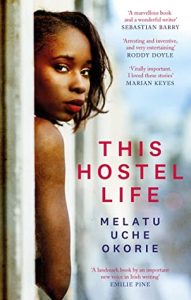 Okorie emigrated from Nigeria to Ireland in 2005. Her time living in a direct provision hostel for asylum seekers informed the title story about women queuing for and squabbling over food rations, written in an African pidgin. In “Under the Awning,” a Black woman fictionalizes her experiences of racism into a second-person short story her classmates deem too bleak. The Author’s Note reveals that Okorie based this one on comments she herself got in a writers’ group. “The Egg Broke” returns to Nigeria and its old superstition about twins.
Fans of Chimamanda Ngozi Adichie will find a similar voice here, and enough variety to distract from the low page count (the book is padded out with an essay on refugees in Ireland) and so-so writing. (Little Free Library)
Dear George and Other Stories by Helen Simpson (1995)
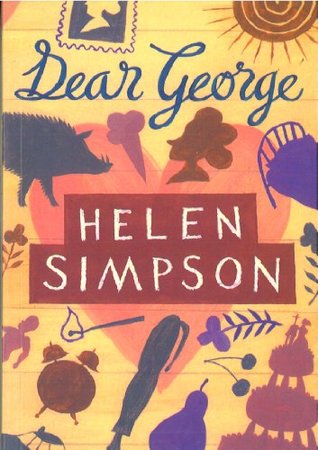 This is the third time Simpson has made it into one of my September features (after Four Bare Legs in a Bed in 2018 and In the Driver’s Seat in 2019); safe to say she’s becoming one of my favourite short story writers. Deciding to have children (or not) looms large. In “When in Rome,” Geraldine is relieved to get her period as her relationship limps to an end. In “Last Orders,” the heavily pregnant protagonist, now 12 days overdue, fears the transformation ahead of her. “To Her Unready Boyfriend,” echoing Andrew Marvell’s “To His Coy Mistress,” has the narrator warn him time runs short for babymaking.
I also liked “Bed and Breakfast,” about a young couple hoping not to turn into their boring parents; “Caput Apri” and its magical twist on the story behind “The Boar’s Head Carol” (a Christmas story or two is a trademark of Simpson’s collections, like the focus on motherhood); and “Heavy Weather,” in which parents of two small children have a manic Dorset holiday that takes in some beloved sites like Hardy’s cottage and marvel at the simultaneous joys and tyranny of childrearing.
The gentle absurdity of “The Immaculate Bridegroom” reminded me of a previous Simpson story in which a woman marries herself, and “Creative Writing” connects back to two of the other collections I’ve featured here with its writers’ workshop setting. (Secondhand purchase from Oxfam Books, Hexham)
Some favourite lines:
“You will not be you any more, her ego told her id. Not only will you have produced somebody else from inside you, someone quite different and separate, but you yourself will change into somebody quite different, overnight – a Mother.”
“Children were petal-skinned ogres, Frances realized, callous and whimsical, holding autocratic sway over lower, larger vassals like herself.”
Are you a short story fan? Read any good ones recently?
Booker Prize 2021: Longlist Reading and Shortlist Predictions
The 2021 Booker Prize shortlist will be announced tomorrow, September 14th, at 4 p.m. via a livestream. I’ve managed to read or skim eight of 13 from the longlist, only one of which I sought out specifically after it was nominated (An Island – the one no one had heard of; it turns out it was released by a publisher based just 1.5 miles from my home!). I review my four most recent reads below, followed by excerpts of reviews of ones I read a while ago and my brief thoughts on the rest, including what I expect to see on tomorrow’s shortlist.
Klara and the Sun by Kazuo Ishiguro
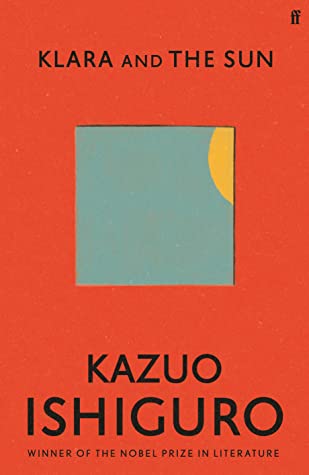 Why ever did I put this on my Most Anticipated list of the year and pre-order a signed copy?! I’m a half-hearted Ishiguro fan at best (I love Nocturnes but am lukewarm on the other four I’ve read, including his Booker winner) and should have known that his take on AI would be no more inspiring than Ian McEwan’s (Machines Like Me) a couple of years back.
Klara is an Artificial Friend purchased as part of an effort to combat the epidemic of teenage loneliness – specifically, to cheer up her owner, Josie, who suffers from an unspecified illness and is in love with her neighbour, Rick, a bright boy who remains excluded. Klara thinks of the sun as a god, praying to it and eventually making a costly bargain to try to secure Josie’s future health.
Part One’s 45 pages are slow and tedious; the backstory could have been dispensed with in five fairy tale-like pages. There’s a YA air to the story: for much of the length I might have been rereading Everything, Everything. In fact, when I saw Ishiguro introduce the novel at a Guardian/Faber launch event, he revealed that it arose from a story he wrote for children. The further I got, the more I was sure I’d read it all before. That’s because the plot is pretty much identical to the final story in Mary South’s You Will Never Be Forgotten.
Klara’s highly precise diction, referring to everyone in the third person, also gives this the feeling of translated fiction. While that is part of Ishiguro’s aim, of course – to explore the necessarily limited perspective and speech of a nonhuman entity (“Her ability to absorb and blend everything she sees around her is quite amazing”) – it makes the prose dull and belaboured. The secondary characters include various campy villains, the ‘big reveals’ aren’t worth waiting for, and the ending is laughably reminiscent of Toy Story. This took me months and months to force myself through. What a slog! (New purchase) 
An Island by Karen Jennings (2019)
 Seventy-year-old Samuel has been an island lighthouse keeper for 14 years when a brown-skinned stranger washes up on his beach. Sole survivor from a sunken refugee boat, the man has no English, so they communicate through gestures. Jennings convincingly details the rigors of the isolated life here: Samuel dug his own toilet pipes, burns his trash once a week, and gets regular deliveries from a supply boat. Nothing is wasted and everything is appreciated here, even the thirdhand magazines and videotapes he inherits from the mainland.
Although the core action takes place in just four days, Samuel is so mentally shaky that his memories start getting mixed up with real life. We learn that he has been a father, a prisoner and a beggar. Jennings is South African, and in this parallel Africa, racial hierarchy still holds sway and a general became a dictator through a military coup. Samuel’s father was involved in the independence movement, while Samuel himself was arrested for resisting the dictator.
The novella’s themes – jealousy, mistrust, possessiveness, suspicion, and a return to primitive violence – are of perennial relevance. Somehow, it didn’t particularly resonate for me. It’s not dissimilar in style to J. M. Coetzee’s vague but brutal detachment, and it’s a highly male vision à la Doggerland. Though highly readable, it’s ultimately a somewhat thin fable with a predictable message about xenophobia. Still, I’m glad I discovered it through the Booker longlist.
My thanks to Holland House for the free copy for review.
Bewilderment by Richard Powers
 This has just as much of an environmentalist conscience as The Overstory, but a more intimate scope, focusing on a father and son who journey together in memory and imagination as well as in real life. The novel leaps between spheres: between the public eye, where neurodivergent Robin is a scientific marvel and an environmental activist, and the privacy of family life; between an ailing Earth and the other planets Theo studies; and between the humdrum of daily existence and the magic of another state where Robin can reconnect with his late mother. When I came to the end, I felt despondent and overwhelmed. But as time has passed, the book’s feral beauty has stuck with me. The pure sense of wonder Robin embodies is worth imitating. (Review forthcoming for BookBrowse.)
China Room by Sunjeev Sahota
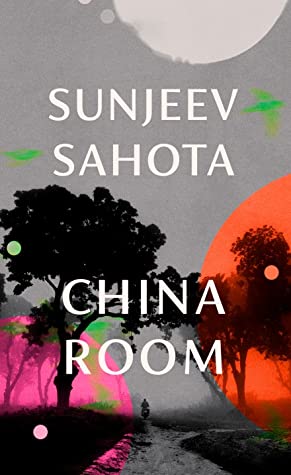 Sahota appeared on Granta’s list of Best Young British Novelists in 2013 and was previously shortlisted for The Year of the Runaways, a beautiful novel tracking the difficult paths of four Indian immigrants seeking a new life in Sheffield.
Three brides for three brothers: as Laura notes, it sounds like the setup of a folk tale, and there’s a timeless feel to this short novel set in the Punjab in the late 1920s and 1990s – it also reminded me of biblical stories like those of Jacob and Leah and David and Bathsheba. Mehar is one of three teenage girls married off to a set of brothers. The twist is that, because they wear heavy veils and only meet with their husbands at night for procreation, they don’t know which is which. Mehar is sure she’s worked out which brother is her husband, but her well-meaning curiosity has lasting consequences.
In the later storyline, a teenage addict returns from England to his ancestral estate to try to get clean before going to university and becomes captivated by the story of his great-grandmother and her sister wives, who were confined to the china room. The characters are real enough to touch, and the period and place details make the setting vivid. The two threads both explore limitations and desire, and the way the historical narrative keeps surging back in makes things surprisingly taut. See also Susan’s review. (Read via NetGalley)
Other reads, in brief:
(Links to my full reviews)
 Second Place by Rachel Cusk: Significantly more readable than the Outline trilogy and with psychological depths worth pondering, though Freudian symbolism makes it old-fashioned. M’s voice is appealing, as is the marshy setting and its isolated dwellings. This feels like a place outside of time. The characters act and speak in ways that no real person ever would – the novel is most like a play: melodramatic and full of lofty pronouncements. Interesting, but nothing to take to heart; Cusk’s work is always intimidating in its cleverness.
 A Town Called Solace by Mary Lawson: In 1972, Clara, a plucky seven-year-old, sits vigil for the return of her sixteen-year-old sister, who ran away from home; and their neighbour, who’s in the hospital. One day Clara sees a strange man moving boxes in next door. This is Liam Kane, who inherited the house from a family friend. Like Lawson’s other works, this is a slow burner featuring troubled families. It’s a tender and inviting story I’d recommend to readers of Tessa Hadley, Elizabeth Strout and Anne Tyler.
 No One Is Talking About This by Patricia Lockwood: This starts as a flippant skewering of modern life. A woman who became a social media star by tweeting quips like “Can a dog be twins?” reflects on life on “the portal” and under “the dictator.” Midway through the book, she gets a wake-up call when her mother summons her back to the Midwest for a family emergency. It’s the about-face that makes this novel, forcing readers to question the value of a digital existence based on glib pretence. Funny, but with an ache behind it.
 Light Perpetual by Francis Spufford: While I loved the premise, the execution didn’t live up to it. Spufford calls this an act of “literary resurrection” of five figures who survive a South London bombing. But these particular characters don’t seem worth spending time with; their narratives don’t connect up tightly, as expected, and feel derivative, serving only as ways to introduce issues (e.g. mental illness, sexual assault, racial violence, eating disorders) and try out different time periods. I would have taken a whole novel about Ben.
 This leaves five more: Great Circle (by Maggie Shipstead) I found bloated and slow when I tried it in early July, but I’m going to give it another go when my library hold comes in. The Sweetness of Water (Nathan Harris) I might try if my library acquired it, but I’m not too bothered – from Eric’s review on Lonesome Reader, it sounds like it’s a slavery narrative by the numbers. I’m not at all interested in the novels by Anuk Arudpragasam, Damon Galgut, or Nadifa Mohamed but can’t say precisely why; their descriptions just don’t excite me.
Here’s what I expect to still be in the running after tomorrow. Clear-eyed, profound, international; bridging historical and contemporary; much that’s unabashedly highbrow.
- Second Place by Rachel Cusk
 The Promise by Damon Galgut (will win)
- No One Is Talking About This by Patricia Lockwood
- Bewilderment by Richard Powers
- China Room by Sunjeev Sahota
- Light Perpetual by Francis Spufford
 Bookish Beck = Rebecca Foster. American transplant to England. Freelance proofreader and book reviewer.
