Library Checkout: October 2019
The R.I.P. challenge plus a bunch of in-demand reservations coming in for me at around the same time meant that I had a lot to read from the library this month. I give links to reviews of any books I haven’t already featured, as well as ratings for all.
What have you been reading from your local libraries? Library Checkout runs on the last Monday of every month. I don’t have an official link-up system, but feel free to use this image in your post and to leave a link to your blog in the comments if you’ve taken part.

READ
- Time Song: Searching for Doggerland by Julia Blackburn

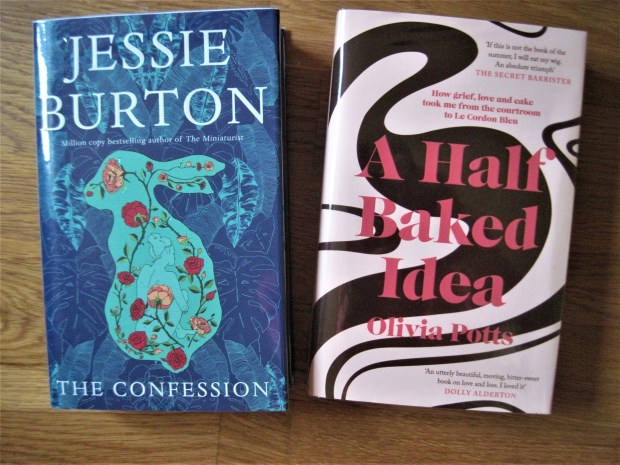
- The Confession by Jessie Burton

- A Single Thread by Tracy Chevalier
- Girl, Woman, Other by Bernardine Evaristo
- The Fifth Child by Doris Lessing

- The Grass Is Singing by Doris Lessing

- The Electricity of Every Living Thing: One Woman’s Walk with Asperger’s by Katherine May
- Dark Matter by Michelle Paver

- The Nickel Boys by Colson Whitehead
SKIMMED
- The Prison Doctor: My time inside Britain’s most notorious jails by Dr Amanda Brown with Ruth Kelly

- Life Lessons from a Brain Surgeon: The New Science and Stories of the Brain by Rahul Jandial

CURRENTLY READING
- A Half Baked Idea: How Grief, Love and Cake Took Me from the Courtroom to Le Cordon Bleu by Olivia Potts
- Chances Are by Richard Russo
- The Poetry Pharmacy Returns: More Prescriptions for Courage, Healing and Hope by William Sieghart
CHECKED OUT, TO BE READ
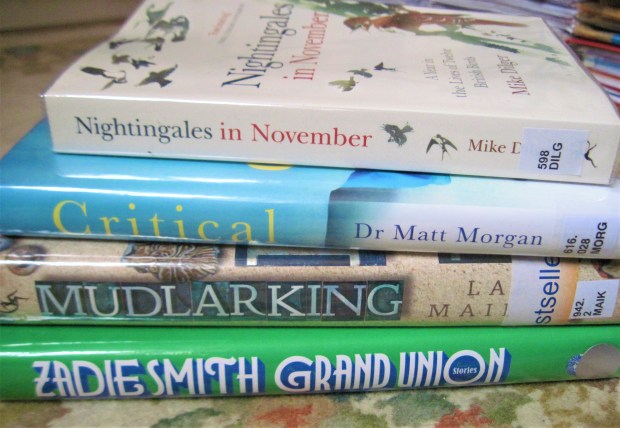
- Nightingales in November: A Year in the Lives of Twelve British Birds by Mike Dilger
- Owls Do Cry by Janet Frame [university library]
- Mudlarking: Lost and Found on the River Thames by Lara Maiklem
- Critical: Science and Stories from the Brink of Human Life by Dr Matt Morgan
- Grand Union: Stories by Zadie Smith
IN THE RESERVATION QUEUE
- Five Ingredient Vegan: 100 Simple, Fast, Modern Recipes by Katy Beskow
- The Easternmost House: A Year of Life on the Edge of England by Juliet Blaxland
- Ring the Hill by Tom Cox
- Invisible Women: Exposing Data Bias in a World Designed for Men by Caroline Criado Perez
- The School of Life: An Emotional Education by Alain de Botton
- Starve Acre by Andrew Michael Hurley
- My Name Is Why: A Memoir by Lemn Sissay
- Feel Free: Essays by Zadie Smith
- The Burgess Boys by Elizabeth Strout
RETURNED UNFINISHED
- The Hoarder by Jess Kidd
- The Silent Companions by Laura Purcell
- On Earth We’re Briefly Gorgeous by Ocean Vuong – I read the first chapter (11 pages), which, had it been a short story, would have been a 5-star stand-alone. But I felt that this was a novel that would be characterized more for its beautiful language and observations than for its plot, and as such the reading experience might be akin to eating a three-course meal made up entirely of toffee – just too much. I’d be happy to stand corrected and try this again another time, though.
Does anything appeal from my stacks?
Ake Book Festival: An Extract from Manchester Happened
Africa’s leading literary festival, Ake Book Festival in Lagos, Nigeria, is in its seventh year. Appearing this year are 100 authors including Ayobami Adebayo, Oyinkan Braithwaite, Reni Eddo-Lodge, Bernadine Evaristo, Jennifer Nansubuga Makumbi and Nnedi Okarafor. I was asked to take part in a blog tour celebrating the festival and the authors involved – specifically, to host an extract of Makumbi’s Manchester Happened, which I’ve been especially keen to read since hearing her in conversation with Evaristo last week.
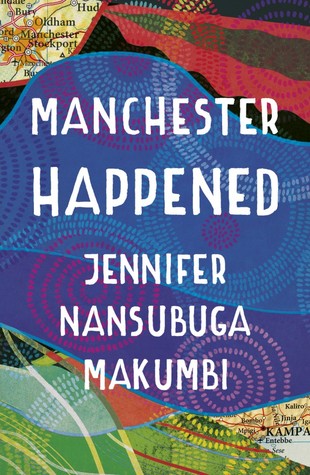
This is the opening few pages of “Our Allies the Colonies,” the first story following the Prologue. I hope it whets your appetite to read the whole thing.
First he felt a rush of dizziness like life was leaving his body, then the world wobbled. Abbey stopped and held onto a bollard outside the Palace Theatre. He had not eaten all day. He considered nipping down to Maama Rose’s for fried dumplings and kidney beans, but the thought of eating brought nausea to his throat. He steered his mind away from food. He gave himself some time then let go of the bollard to test his steadiness. His head felt right, and his vision was back. He started to walk tentatively at first then steadily, down Oxford Road, past the Palace Hotel, under the train bridge, upwards, towards the Grosvenor Picture Palace.
Abbey was set to return to Uganda. He had already paid for the first leg of the journey – the passage from Southampton to Mombasa – and was due to travel within six months. For the second and third legs of the journey – Mombasa to Nairobi, then Nairobi to Kampala – he would pay at the ticket offices on arrival. He had saved enough to start a business either dealing in kitenge textiles from the Belgian Congo or importing manufactured goods from Mombasa. Compete with the Indians even. As a starter, he had bought rolls of fabric prints from Summer Mist Textiles for women’s dresses and for men’s suits, to take with him. All that commercial development in Uganda he had read about – increased use of commercial vehicles; the anticipated opening of the Owen Falls Dam, which would provide electricity for everyone; he had even heard that Entebbe had opened an airport back in 1951 – was beckoning.
But his plan was in jeopardy. It was his one-month-old baby, Moses. Abbey had just returned from Macclesfield Children’s Home, where the baby’s mother, Heather Newton, had given him up for adoption, but he had not seen his son. In fact, he did not know what the baby looked like: he never saw him in hospital when he was born. Abbey suspected that Heather feared that one day she might bump into him and Moses. But Heather was fearful for nothing. Abbey was taking Moses home, never to return.
Suppose the children’s home gave you the child, what then, hmm? the other side of his mind asked. What do you know about babies? The journey from Southampton to Mombasa is at least two weeks long on a cheap vessel. The bus ride from Mombasa to Nairobi would last up to two days. Then the following night you would catch the mail train from Nairobi to Kampala: who knows if it is still running? All those journeys with luggage and a six-month-old ankle-biter on your own. Yet Abbey knew that if he left Britain without his boy, that would be it. Moses would be adopted, given a new name and there would be no way of finding him. Then his son would be like those rootless Baitale children you heard of in Toro, whose Italian fathers left them behind.
He was now outside Manchester Museum, by the university. He was on his way to his second job, at the Princess Road bus depot, where he cleaned Manchester Corporation buses. His shift began at 9 p.m. It was almost 8 p.m., but the day was bright. He could not wait to get home and tell people how in Britain the sun had moods. It barely retired in summer yet in winter it could not be bothered to rise. He could not wait to tell them things about Britain. It was a shame he had stayed this long. But having a job and saving money made him feel like he was not wasting his youth away in a foreign land. His day job paid the bills while the evening job put savings away in his Post Office account. His mind turned on him again: Maybe Heather had a point – you don’t have a wife to look after Moses while you work. You still have five months before you set off; if the home gives him to you, how will you look after him? But then shame rose and reason was banished. Blood is blood, a child is better off with his father no matter what.
He reached Whitworth Park. It was packed with people sunning themselves, young men throwing and catching Frisbees, families picnicking. At the upper end, close to Whitworth Art Gallery, he caught sight of a group of Teddy boys who, despite the warm evening, wore suits, crêpe-soled shoes and sunglasses, their greased hair slicked back. They looked like malnourished dandies. Even though Teddy Boys tended to hunt blacks in the night, Abbey decided against crossing the park. Instead, he walked its width to Moss Lane East. The way the sun had defrosted British smiles. ‘Enjoy it while it lasts,’ strangers will tell you now.
Jane Eyre at the Newbury Corn Exchange
This is the second theatre adaptation of Jane Eyre that I’ve reviewed since I started my blog (and my second trip to Newbury’s Corn Exchange within two weeks). The previous one was just over four years ago, of the celebrated touring production that I saw at London’s National Theatre (review here). In comparing my notes from last night with my write-up from four years ago, I’ve discovered that the two productions were fairly similar in approach, with a bare-bones collection of wooden structures and furniture creating the set, and a handful of actors covering all the parts. Last night’s was even more stripped-back, with just a few blackened planks and a partial staircase representing the ruin of Thornfield Hall and serving as the backdrop for all the other settings. And here there were only five cast members, as compared to the NT’s 10: three actresses and two actors, with all bar one (Jane) revolving through the roles via simple costume changes like donning a bonnet or a waistcoat.
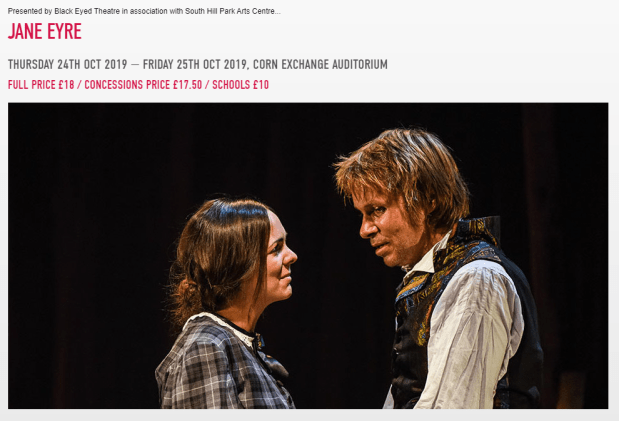
Probably my favorite aspect of this production was the live music. An antique piano stood at stage left and all the actors took turns playing it for background music or as part of a specific scene. Other instruments were also taken up occasionally: fiddle, cello, guitar, harmonium and recorder. Whereas the NT production made anachronistic use of pop songs, this production stuck to folk music that seemed appropriate to the time period. St. John Rivers’s pompous piety was exaggerated for comic effect, with Mrs. Fairfax another particularly amusing character. As in the NT show, one actor even briefly played Pilot the dog.
There were a few decisions that were less than successful for me, though. An eight-year jump between Helen’s death at Lowood School and Jane’s arrival at Thornfield Hall feels like a jolt. Jane wears the same dress throughout and nothing indicates her aging. She narrates her story as if she is revisiting her life in her mind. At a few points these explanations from the front of the stage slow down the action. Meanwhile, the strong Yorkshire accent the actress used was so much like Daisy’s in Downton Abbey that I struggled to take her seriously – it’s too much of a contrast with the Queen’s English most of the other characters speak. Is what we think of as a Yorkshire accent now actually how people spoke at that time?
But the chief transgression was omitting the pivotal scene in which Jane hears Rochester calling out to her and knows she has to return to Thornfield. Instead, Jane just makes a rational decision to “go home” after St. John leaves for India. Did the director think that modern audiences would find the mild supernatural content too unbelievable? Or was it just a practical matter in that the actor portraying Rochester happened to be playing the piano at that point? Surely a way could have been found around that.
In any case, it was a pleasant way to pass a few hours on a squally October night.
My rating:
There is more information on the play, including photographs and a video trailer, on the Corn Exchange website.
What’s the last thing you saw at the theatre?
“All to Do with the Moon”: Four Books with Moon in the Title
I happened to read two books with the word moon in their titles within a couple of weeks in September, which prompted me to ransack my shelves and find two more. While these four are in completely different genres – one women’s fiction, one poetry, one memoir and one Booker-winning literary novel – they are all by women (naturally more in touch with the moon?) and all worth reading. In the weeks that I was undertaking this mini reading project, I couldn’t get Krista Detor’s song “All to Do with the Moon” out of my head (on this video, a live recording of the entire “Night Light” suite of three songs, it starts at about 6:15). She’s one of our favorite singer-songwriters, though, so this was no problem.
The Pull of the Moon by Elizabeth Berg (1996)
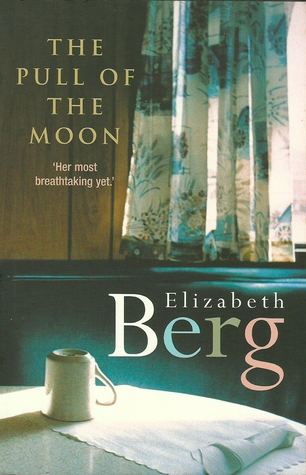 This is my second contemporary novel from Berg. I find her work effortlessly readable. She’s comparable to those other Elizabeths, McCracken and Strout, but also to Alice Hoffman and Anne Tyler. This one reminded me most of Tyler’s Ladder of Years in that both are about a middle-aged woman who takes a break from her marriage to figure out what she wants from life. Nan, “a fifty-year-old runaway,” takes off from her suburban Boston home and drives west, stopping at motels and cabins, eating at diners, and meeting the locals; eventually she gets as far as South Dakota. Her narration is in the form of letters to her husband, Martin, alternated with italicized passages from her journal. She reflects on everything that has made up her life – her upbringing, her marriage and other sexual encounters, raising her daughter, Ruthie – as well as on the small-town folk she meets in Iowa and Minnesota. The moon is a symbol of the femininity Nan fears she’s losing through menopause and hopes to reclaim on this journey.
The Moon Is Almost Full by Chana Bloch (2017)
 This was a lucky find in the clearance section at Blackwell’s on my Oxford day with Annabel. It’s a beautifully produced book from Autumn House, the small Pittsburgh press that released my favorite poetic work of last year: The Small Door of Your Death by Sheryl St. Germain. This was Bloch’s sixth and final book of poetry, published in the year of her death. She writes in the awareness that this cancer will be her end and doesn’t gloss over losses of function and dignity, but still finds delight in life through her family, writing and Jewish rituals: “Never forget / you were put on earth to gather joy // with melancholy hands” (from “Instructions for the Bridegroom”). A favorite poem was “The Will,” in which she imagines how the physical and intangible relics of her life will be distributed (“My plans and projects I hereby bequeath to the air / of which they were conceived. … Let the doctors pack up my heart / and keep it humming for the right customer.”).
Off-topic note: This was typeset in Mrs Eaves, which may well be one of my favorite fonts.
To the Moon and Back: A Childhood under the Influence by Lisa Kohn (2018)
 My special interest in women’s religious memoirs led me to list this among my most anticipated titles of 2018. I had it on my wish list for quite a while and then, when I saw it available for a bargain price online, snapped it up for myself. Lisa Kohn grew up in the New York City environs, the child of hippie parents she called Mimi and Danny rather than Mom and Dad. After their parents divorced, she and her brother lived in New Jersey with their mother and went into the City to visit their father, who was very lax about things like drugs. By the time Kohn was 10, her mother had gotten caught up in Reverend Moon’s Unification Church.
I knew next to nothing about the “Moonies,” so I found it fascinating to learn about this cult led by a South Korean reverend who let it be assumed that he was the new incarnation of Jesus Christ and the flourishing of his family on Earth would usher in God’s Kingdom. The Church became Kohn’s whole life until internal questioning set in during high school, and by the time she went to college she was adrift and into drugs instead. The book recreates scenes and dialogue well, but I found myself losing interest once the cult itself stopped being the main focus.
Readalikes: Small Fry by Lisa Brennan-Jobs and In the Days of Rain by Rebecca Stott
Moon Tiger by Penelope Lively (1987)
 Seventy-six-year-old Claudia Hampton, on her deathbed in a nursing home, determines to write a history of the world – or at least, the world as she’s seen it. She’s been an author of popular history books (one of which, on Mexico, was made into a film), but she’s also been a daughter, a sister, a lover and a mother. As the book shifts between the first person and the third person, the present and the past, we learn volumes about Claudia and how her memory has preserved the layers of her personal history. There are a couple of big reveals, about her relationship with her brother Gordon and her time as a Second World War correspondent in Egypt, but what’s more impressive than these plot surprises is how Lively packs the whole sweep of a life into just 200 pages, all with such rich, wry commentary on how what we remember constructs our reality.
I made the fine choice to start reading this on holiday at the Jurassic coast in Dorset, which was fitting because Claudia grew up in Dorset and uses ammonites and rock strata as recurring metaphors. This won a well-deserved Booker Prize and is the best of the five Lively books I’ve read. I wasn’t particularly taken with the first couple I read by her, so I’m glad I tried again this year (with Heat Wave and then this). It’s just a shame that the copy I found in the free bookshop where I volunteer has such a dreadfully inappropriate cover, making it look like contemporary chick lit rather than serious literature.
Some favorite lines:
“Argument, of course, is the whole point of history. Disagreement; my word against yours; this evidence against that. If there were such a thing as absolute truth the debate would lose its lustre. I, for one, would no longer be interested.”
“In life as in history the unexpected lies waiting, grinning from around corners. Only with hindsight are we wise about cause and effect.”
“Once it is all written down we know what really happened.”
A note on the title: From the context, it seems that a moon tiger was a special inflammatory device, maybe like a citronella candle, used to repel mosquitoes and other insects.
 Other ‘Moon’ books I have happened to review:
Crossing the Moon by Paulette Bates Alden
The Moon and Sixpence by W. Somerset Maugham
Doris Lessing’s Centenary & The Grass Is Singing
Today would have been Doris Lessing’s 100th birthday; she in fact died in 2013. Reading Lara Feigel’s Free Woman last year encouraged me to try more from Lessing, and I’m glad that I did so this month. I started with The Fifth Child, a horror novella for R.I.P., followed by the novel Lessing brought with her when she left Southern Rhodesia (now Zimbabwe) for England.
.jpg)
Doris Lessing at Cologne Literature Festival, 2006. Elke Wetzig / Juan Pablo Arancibia Medina [CC BY-SA 3.0 (http://creativecommons.org/licenses/by-sa/3.0/)%5D.
The Grass Is Singing (1950)
I had trouble believing that this novel a) was Lessing’s debut and b) is now nearly 70 years old. It felt both fresh and timeless, and I could see how it has inspired writing about the white experience in Africa ever since, especially a book like Fiona Melrose’s Midwinter, in which an English farmer and his son are haunted by the violent death of the young man’s mother back in Zambia 10 years ago.
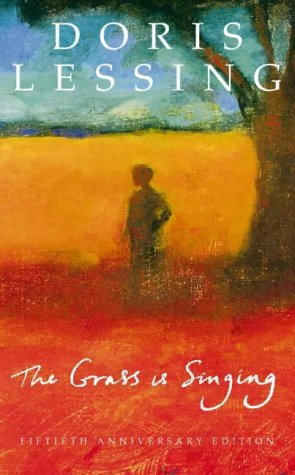 For The Grass Is Singing begins with two sly words, “MURDER MYSTERY”: a newspaper headline announcing that Mary, wife of Rhodesian farmer Dick Turner, has been found murdered by their houseboy. It’s a tease because in one sense there’s no mystery to this at all: we know from the first lines what happened to Mary. And yet we are drawn in, wondering why she was killed and how the Turners went from an idealistic young couple enthusiastic about their various money-making schemes – a shop, chickens, tobacco – to a jaded, distant pair struggling for their health, both mental and physical.
The breakdown of their marriage and the failure of their farm form a dual tragedy that Lessing explores in searing psychological detail, all while exposing (with neither judgment nor approval) how Anglos felt about the natives at that time.
There’s a sense in which this was all fated: Dick is weak, someone Mary pities rather than loves and respects; and Mary’s mixed-up feelings toward her black servants – fear, contempt, curiosity and attraction – were bound to lead to an explosion. The land itself seems to be conspiring against them, too, or is at least indifferent to their plans and dreams.
So many passages struck me for their effortless profundity. I cringed to see myself so clearly in Mary’s boredom and restlessness, along with her ambivalence about the idea of motherhood: “She hated the idea of a baby, when she thought of its helplessness, its dependence, the mess, the worry. But it would give her something to do.”
This was the fifth full-length book I’ve read by Lessing, and by far the best.
My rating:
Alas, I had a Lessing DNF this month, too:
The Memoirs of a Survivor (1974)
 This was shelved in with the memoirs in The Bookshop, Wigtown. I’m not blaming Mr. Bythell or his staff, as this would be a very easy shelving error to make, even for those well versed in literature. But I was disappointed to realize that it’s actually one of Lessing’s detached, dreamy dystopian novels. I tried really hard with this but couldn’t make it past page 48. There’s just not much detail to latch onto. You know that it is set in a vague but believable near future (London?) in which there has been political and social breakdown, followed by gangs, looting and fighting. The narrator hides out in her apartment and is able to live a fairly normal life (“We can get used to anything at all”), at least until an adolescent girl named Emily Cartright is deposited into her care. The novel still feels relevant – the comments on rumor and gossip being as important as news; the sense that the narrator’s generation has ruined things for Emily’s generation and should accept guilt and responsibility – but there is just no plot to speak of.
Next up for me from Lessing’s works will be at least one of her heavily autobiographical Martha Quest novels.
Bernardine Evaristo and Jennifer Nansubuga Makumbi in Conversation
Through a giveaway on Eric’s blog, I won tickets to see Bernardine Evaristo and Jennifer Nansubuga Makumbi speak about their latest books at the London Literature Festival (this year’s theme: “Once Upon Our Times”) at the Southbank Centre yesterday. It was great to meet up with fellow bloggers Eric and Eleanor to hear these two black women writers read from their recent work and discuss feminism, the political landscape for writers of African descent, and their experiments with form.


Frustrated by the lack of black women in British literature, Evaristo started writing Girl, Woman, Other in 2013. She began with Carole (Anglo-Nigerian, like herself), who has to change to fit in, first at Oxford and then as a City banker. Next she moved on to the stories of Carole’s mother and school friend, and the book grew from there. All told, there are four mother–daughter pairs. Evaristo believes her background as an actress (in her twenties) allowed her to almost become these characters and write them from the inside, so that even though the chapters are written in the third person they feel like first-person narratives. The 12 flawed, complex main characters are “equal protagonists,” she insisted. Her aim was “to explore multiplicity to address our invisibility.” She characterizes the book’s style as “fusion fiction”: an accessible take on the experimental novel, with unorthodox, free-flowing language that allows readers to move easily between the different characters’ storylines.
Both Evaristo and Makumbi admitted to having a complicated relationship with feminism, Evaristo because the feminism of the 1980s did not seem to include black women and Makumbi because the fight for equality is still ongoing in patriarchal African societies like her native Uganda’s. Evaristo feels that feminism is now more inclusive and, also thanks to the #MeToo movement, there has been a place for her book that may not have been there five or 10 years ago. (The same goes for Makumbi, who has only now found a publisher for her very feminist first novel, which was rejected in the 2000s.) Both authors spoke of the ways in which people are made to feel “Other”: through sex, race and class. Makumbi pointed out that Africans experience a specific racism separate from other blacks in Britain. “I’m not racist, but I draw the line at Africans” is how she caricatured this view.
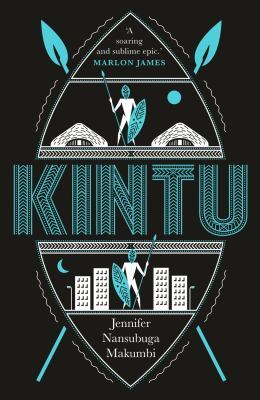 Makumbi’s novel Kintu is a sprawling family saga that has been compared to Roots, but she has recently released a collection of short stories that focus on Ugandan immigration to Britain between the 1950s and today. She envisioned Manchester Happened as “a letter back home” to tell people what it’s really like to settle in a new country, as well as a chance to reflect on the underrepresented East African immigration experience. Much of the book is drawn from her life, such as working as an airport security officer to fund her creative writing degree. Her mentor recommended that she start writing stories as a way to counterbalance the intensity of Kintu – a chance to see the beginning, middle and end as a simple arc. She assumed short stories would be easier than a novel, yet her first story took her four years to write. It is as if she can only look into her past for brief moments, anyway, she explained, so the story form has been perfect. She has deliberately avoided the negativity of many migration narratives, she said: Things have in fact gone well for her, and we’ve heard about things going wrong many times before.
I’m over halfway through Girl, Woman, Other now, and enjoying it very much – but wondering if its breadth sacrifices some depth. Evaristo acknowledged that she felt a bit less attached to these characters than she has in novels where she followed just one or two characters all the way through. Still, she feels that she knows and understands these women, even if she doesn’t like or approve of all of them. She read excerpts from the sections about Yazz, a feisty and opinionated young woman waiting for her mother’s play to start, and Hattie, a strong-willed 93-year-old from a Northumberland farming family. Makumbi read from two stories, one about a Ugandan couple arriving in Manchester in 1950 and the other set in the airport security area. In the latter the protagonist confiscates a whip from a priest, a funny moment that seems to represent Makumbi’s style – moderator Irenosen Okojie, a Nigerian author, mentioned another notable story from the perspective of a Ugandan street dog newly pampered in Britain.
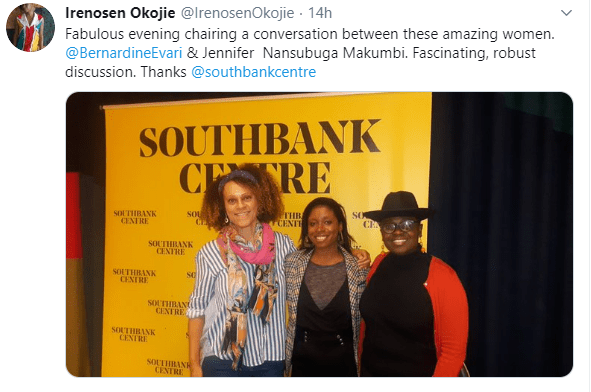
I hope to read Manchester Happened soon, and should be featuring an extract from it next week as part of the Ake Book Festival blog tour. I’ll also finish the Evaristo this week and expect it to be on my Best of 2019 fiction list.
R.I.P. Reads: Dahl, Le Guin, Lessing, Paver
This is my second year participating in R.I.P. – Readers Imbibing Peril, now in its 14th year. I assembled a lovely pile of magical or spooky reads to last me through October and noticed they were almost all by women, so I decided to make it an all-female challenge (yes, even with a Dahl title – see below) this year. I’m in the middle of another book and have a few more awaiting me, but with just two weeks left in the month I don’t know if I’ll manage to follow up this post with a Part II. At any rate, these first four were solid selections: classic ghost stories, children’s fantasy, a horror novella about an evil child, and an Arctic chiller.

Fear: Tales of Terror and Suspense (selected by Roald Dahl) (2017)
“Spookiness is, after all, the real purpose of the ghost story. It should give you the creeps and disturb your thoughts.”
I was sent this selection of Dahl-curated ghost stories as part of a book bundle in advance of a blog tour for Roald Dahl Day last year. For now I’ve read just the five stories by women, and will polish off the rest next year.
 This collection originated from a television series on ghost stories that Dahl proposed for the American market in 1958 (the pilot was poorly received and it never got made). For his research he read nearly 750 ghost stories and whittled them down to the top 24. Women authors dominated early on in the selection process, but by the end the genders came out nearly even, with 13 men and 11 women. It’s disappointing, then, that only five of the 14 stories included here are by women – one of whom gets two entries, so there’s just four female authors recognized. And this even though Dahl claims that, when it comes to ghost stories, “it is the women who have written some of the very best ones.”
Any road, these are the five stories I read, all of which I found suitably creepy, though the Wharton is overlong. Each one pivots on a moment when the narrator realizes that a character they have been interacting with is actually dead. Even if you’ve seen the twist coming, there’s still a little clench of the heart when you have it confirmed by a third party.
“Harry” and “Christmas Meeting” by Rosemary Timperley: A little girl who survived a murder attempt is reclaimed by her late brother; a woman meets a century-dead author one lonely holiday – I liked that in this one each character penetrates the other’s time period.
“The Corner Shop” by Cynthia Asquith: An inviting antique shop is run by two young women during the day, but by a somber old man in the evenings. He likes to give his customers a good deal to atone for his miserly actions of the past.
“The Telephone” by Mary Treadgold: A man continues communicating with his dead ex-wife via the phone line.
“Afterward” by Edith Wharton: An American couple settles in a home in Dorset, and the husband disappears, after a dodgy business deal, in the company of a mysterious stranger.
A Wizard of Earthsea by Ursula K. Le Guin (1968)
 This was my second attempt with the late Le Guin, who would be turning 90 on the 21st; I didn’t get far at all with a buddy read of The Left Hand of Darkness last year. I enjoyed this a fair bit more, perhaps because it’s meant for children – I reckon I would have liked it most when I was ages nine to 11 and obsessed with various series of fantasy novels featuring dragons.
Long before Harry Potter was a glimmer, this was the archetypal story of a boy wizard learning magic at school. Ged meets many cryptic mentors and realizes that naming a thing gives you power over it. In his rivalry with the other boys, he accidentally releases a shadow beast and has to try to gain back control of it. It’s slightly difficult to keep on top of all the names and places (Le Guin created a whole archipelago, which you can see in the opening map) and I found my interest waning after the halfway point, but I did love the scene of Ged fighting with a dragon.
A favorite passage: “But you must not change one thing, one pebble, one grain of sand, until you know what good and evil will follow on the act. … A wizard’s power of Changing and of Summoning can shake the balance of the world.”
The Fifth Child by Doris Lessing (1988)
Shelve this alongside We Need to Talk about Kevin as a book to make you rethink having kids. Harriet and David Lovatt buy a large Victorian house within commuting distance of London and dream of filling it with children – six, eight; however many. Their first four children are all they’d hoped for, if not spaced out as much as they intended. The Lovatts enjoy hosting the extended family at Easter and Christmas and during the summer holidays. Although there are good-natured jokes about the couple’s fertility, everyone enjoys the cozy, bustling atmosphere. “The Lovatts were a happy family. It was what they had chosen and what they deserved.”
[MILD SPOILERS ENSUE]
 Everything changes with pregnancy #5, which is different right from the off. This “savage thing inside her” is kicking Harriet black and blue from the inside and grown to full term by eight months. When Ben is born Harriet thinks, “He’s like a troll, or a goblin.” Like a succubus, he sucks her dry, biting her nipples black and blue; he screams and thrashes non-stop; he’s freakishly strong and insatiably hungry. He strangles house pets and eats a raw chicken with his bare hands. Although he learns basic language and social skills from watching his older siblings and mimicking his idols from a motorcycle gang, something in him is not human. Yet Harriet cannot bear to leave Ben to rot in an institution.
At first I wondered if this was a picture of an extremely autistic child, but Lessing makes the supernatural element clear. “We are being punished,” Harriet says to David. “For presuming … we could be happy.” I think I was waiting for a few more horrific moments and a climactic ending, whereas Lessing almost normalizes Ben, making him part of a gang of half-feral youths who rampage around late-1980s Britain (and she took up his story in a sequel, Ben in the World). But I raced through this in just a few days and enjoyed the way dread overlays the fable-like simplicity of the family’s early life.
Dark Matter: A Ghost Story by Michelle Paver (2010)
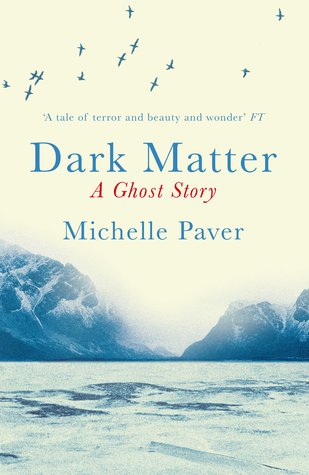 I read Paver’s Thin Air as part of last year’s R.I.P. challenge and it was very similar: a 1930s setting, an all-male adventure, an extreme climate (in that case: the Himalayas). Most of Dark Matter is presented as a journal written by Jack Miller, a lower-class lad who wanted to become a physicist but had to make a living as a clerk instead. He feels he doesn’t truly belong among the wealthier chaps on this Arctic expedition, but decides this is his big chance and he’s not going to give it up.
Even as the others drop out due to bereavement and illness, he stays the course, continuing to gather meteorological data and radio it back to England from this bleak settlement in the far north of Norway. For weeks his only company is a pack of sled dogs, and his grasp on reality becomes shaky as he begins to be visited by the ghost of a trapper who was tortured to death nearby – “the one who walks again.” Paver’s historical thrillers are extremely readable. I tore through this, yet never really found it scary.
Note: This book is the subject of the Bookshop Band song “Steady On” (video here).
And, alas, three DNFs:
 The Wych Elm by Tana French – French writes really fluid prose and inhabits the mind of a young man with admirable imagination. I read the first 100 pages and skimmed another 50 and STILL hadn’t gotten to the main event the blurb heralds: finding a skull in the wych elm in the garden at Ivy House. I kept thinking, “Can we get on with it? Let’s cut to the chase!” I have had French’s work highly recommended so may well try her again.
 The Hoarder by Jess Kidd – Things in Jars was terrific; I thought Kidd’s back catalogue couldn’t fail to draw me in. This was entertaining enough that I made it to page 152, if far too similar to Jars (vice versa, really, as this came first; ghosts/saints only the main character sees; a transgender landlady/housekeeper); I then found that picking it back up didn’t appeal at all. Maud Drennan is a carer to a grumpy giant of a man named Cathal Flood whose home is chock-a-block with stuff. What happened to his wife? And to Maud’s sister? Who cares!
 The Silent Companions by Laura Purcell – Purcell is now on her third Gothic novel in three years. I had a stab at her first and it was distinctly okay. I read the first 24 pages and skimmed to p. 87. Reminiscent of The Shadow Hour, The Familiars, etc.
Have you been reading anything fantastical or spooky this October?
Booker Prize and Birthday Goings-On
The Booker Prize was announced last night in a live feed I watched over a glass of wine between my yoga class and birthday dessert. As chair of judges Peter Florence recapped each book, he said the most, and most effusively, about Ducks, Newburyport, so I thought Ellmann had it in the bag. Then, when it became clear there would be joint winners, I thought maybe Ellmann and Evaristo would share the Prize. But that’s not how things panned out…
I don’t have much to add to the conversation after yesterday’s Twitter storm; I remain entirely uninterested in reading The Testaments, an unnecessary sequel and, by all accounts, subpar Atwood work that didn’t need more buzz than it’s already attracted. Atwood won the Booker in 2000 for a brilliant novel, The Blind Assassin, one of my absolute favorites, and while she’s enough of a legend to be among the few authors to have won the Prize twice (along with Peter Carey, J.M. Coetzee and Hilary Mantel), maybe not for this book?

I am, however, delighted for Evaristo. If you haven’t yet picked up Girl, Woman, Other, I’d urge you to give it a try. I’m 1/3 into it now. Through a giveaway on Eric’s blog I won a copy plus two tickets to see Evaristo in conversation with Jennifer Nansubuga Makumbi (author of Manchester Happened, which I’ll be covering for the Ake Book Festival blog tour later this month) at the London Literature Festival on the 20th, but I couldn’t wait until I pick up my copy from the Southbank Centre so have been reading a library copy in the meantime.
You probably know that Girl, Woman, Other is a linked short story collection about 12 characters (mostly Black women) navigating twentieth-century and contemporary Britain, balancing external and internal expectations and different interpretations of feminism to build lives of their own. I’ve been surprised by the structure and style, however. It’s in four long chapters, each divided between three characters. These are almost like musical suites, with the three stories interlocking (I’m not in far enough to know if there is overlap between the suites). The prose is mostly uncapitalized and unpunctuated, with only a handful of full stops closing sections. This makes it more like poetry: a wry, radical stream of consciousness. I’d compare it, content-wise, to Homegoing by Yaa Gyasi and The Female Persuasion by Meg Wolitzer.
This is the third tie in Booker history – though after a 1992 tie the rules were changed so that it shouldn’t have happened again. As Gaby Wood, literary director of the Booker Prize Foundation, puts it, “The thinking was it just doesn’t work—it sort of detracts attention from both, rather than drawing attention to either.” So while it’s wonderful that Evaristo is the first Black woman to win the Booker, there is something almost sinister about the fact that, due to the tie, she gets just £25,000 in prize money rather than the full £50,000. However, both she and Atwood were extremely graceful in their acceptance speeches (Atwood sheepish and apologetic at the same time), so I will try to be as well. It’s a turn-up for the books, anyway!
 Yesterday was also my 36th birthday. A dismally wet Monday may not be ideal for a birthday, but I’d had the whole previous weekend for celebrating so can’t really complain. Saturday was a very Newbury day of volunteer gardening in the drizzle; an excellent lunch at Henry & Joe’s, a reasonably new restaurant with small plates of seasonal food, exquisitely presented – on the way to Michelin star quality; an early evening showing of Downton Abbey in the intimate upstairs theatre at the Corn Exchange; and a wander around the Fire Garden art installation, which features giant candles and automata. On Sunday I helped out at a fun and chaotic pet blessing service at church, followed by cake, presents and a homemade feast.


 One of the best parts of preparing for my birthday is finding recipes for my husband to make for me. This year I picked a Chocolate Orange Truffle Cake from Perfect Chocolate Desserts (which includes photographs of every step), a veganized Chicken Jackfruit Mole with Red Cabbage Slaw and flatbreads from Pip & Nut: The Nut Butter Cookbook, and A Rum of One’s Own (aka hot buttered rum) from the Tequila Mockingbird literary cocktails book. All amazingly rich and delicious; by nightcap time, I could only manage a sip or two of the rum.

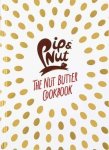
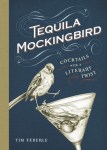
I gave myself the Monday off work (the nice thing about being a freelancer, even if I don’t get paid) and spent much of it reading in comfy spots around the house and looking out at the rain. I also picked out a pile of books I’ve been meaning to reread, but only got around to starting the Thomas. I hadn’t read it since it came out in 2006 yet I remember it so well, even particular phrasing. It was one of the first memoirs to make a really big impression on me.


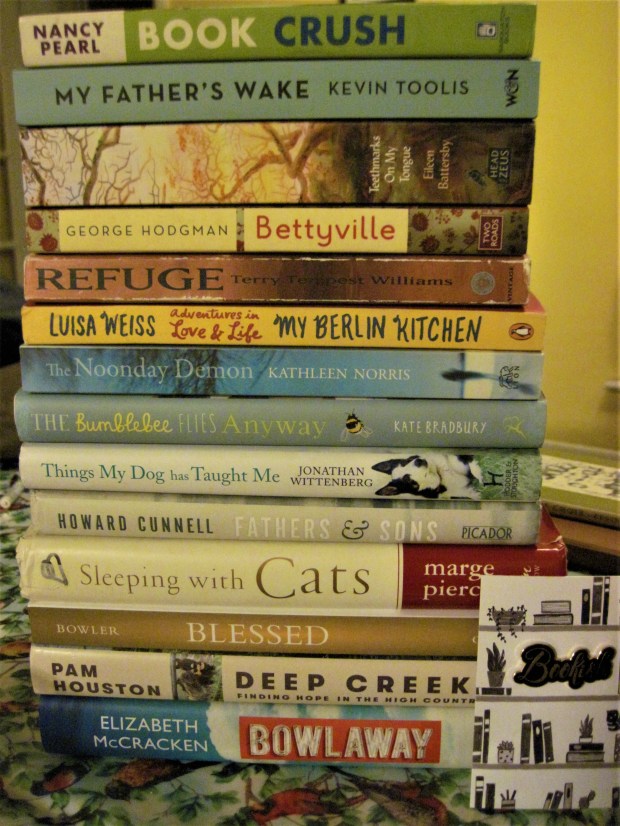
It won’t surprise you that my wish list contained only books this year, so with the exception of a mug mat, puffin socks and notecards, a couple of CDs, some chocolate and the perfect pin badge (“Bookish”), I received 14 books as presents: two novels and the rest nonfiction, mostly memoirs. I get much of my fiction from the library or from NetGalley/Edelweiss (particularly the American releases I can’t find elsewhere), but there are lots of nonfiction authors whose work I can’t find other than secondhand. I know where I’ll start with this pile: the Houston and McCracken are 2019 releases, so I want to read them before the end of the year in case they make a Best Of list. After that, I’ll let whimsy be my guide. A great haul!
Any additional Booker thoughts?
What caught your eye from my birthday stacks?
We Are the Weather by Jonathan Safran Foer
I’ve read all of Jonathan Safran Foer’s major releases, from Everything Is Illuminated onwards, and his 2009 work Eating Animals had a major impact on me. (I included it on a 2017 list of “Books that (Should Have) Literally Changed My Life.”) It’s an exposé of factory farming that concludes meat-eating is unconscionable, and while I haven’t gone all the way back to vegetarianism in the years since I read it, I eat meat extremely rarely, usually only when a guest at others’ houses, and my husband and I often eat vegan meals at home.
 When I heard that Foer’s new book, We Are the Weather: Saving the Planet Begins at Breakfast, would revisit the ethics of eating meat, I worried it might feel redundant, but still wanted to give it a try. Here he examines the issue through the lens of climate change, arguing that slashing meat consumption by two-thirds or more (by eating vegan until dinner, i.e., for two meals a day) is the easiest way for individuals to decrease their carbon footprint. I don’t disagree with this proposal. It would be churlish to fault a reasonable suggestion that gives ordinary folk something concrete to do while waiting (in vain?) for governments to act.
My issues, then, are not with the book’s message but with its methods and structure. Initially, Foer successfully makes use of historical parallels like World War II and the civil rights movement. He rightly observes that we are at a crucial turning point and it will take self-denial and joining in with a radical social movement to protect a whole way of life. Don’t think of living a greener lifestyle as a sacrifice or a superhuman feat, Foer advises; think of it as an opportunity for bravery and for living out the convictions you confess to hold.
As the book goes on, however, the same reference points come up again and again. It’s an attempt to build on what’s already been discussed, but just ends up sounding repetitive. Meanwhile, the central topic is brought in as a Trojan horse: not until page 64 (of 224 in the main text) does Foer lay his cards on the table and admit “This is a book about the impacts of animal agriculture on the environment.” Why be so coy when the book has been marketed as being about food choices? The subtitle and blurb make the topic clear. “Our planet is a farm,” Foer declares, with animal agriculture the top source of deforestation and methane emissions.
Fair enough, but as I heard a UK climate expert explain the other week at a local green fair, you can’t boil down our response to the climate crisis to ONE strategy. Every adjustment has to work in tandem. So while Foer has chosen meat-eating as the most practical thing to change right now, the other main sources of emissions barely get a mention. He admits that car use, number of children, and flights are additional areas where personal choices make a difference, but makes no attempt to influence attitudes in these areas. So diet is up for discussion, but not family planning, commuting or vacations? This struck me as a lack of imagination, or of courage. Separating Americans from their vehicles may be even tougher than getting them to put down the burgers. But that doesn’t mean it’s not worth trying.
 Part II is a bullet-pointed set of facts and statistics reminiscent of the “Tell the Truth” section in the Extinction Rebellion handbook. It’s an effective strategy for setting things out briefly, yet sits oddly between narrative sections of analogies and anecdotes. My favorite bits of the book were about visits to his dying grandmother back at the family home in Washington, D.C. It took him many years to realize that his grandfather, who lost everything in Poland and began again with a new wife in America, committed suicide. This family history,* nestled within the canon of Jewish stories like Noah’s Ark, Masada and the Holocaust, dramatizes the conflict between resistance and self-destruction – the very battle we face now.
 Part IV, Foer’s “Dispute with the Soul,” is a philosophical dialogue in the tradition of Talmudic study, while the book closes with a letter to his sons. Individually, many of these segments are powerful in the way they confront hypocrisy and hopelessness with honesty. But together in the same book they feel like a jumble. Although it was noble of Foer to tackle the subject of climate change, I’m not convinced he was the right person to write this book, especially when we’ve already had recent works like The Uninhabitable Earth by David Wallace-Wells. Arriving at a rating has been very difficult for me because I support the book’s aims but often found it a frustrating reading experience. Still, if it wakes up even a handful of readers to the emergency we face, it will have been worthwhile.
My rating: 
A favorite passage: “Climate change is not a jigsaw puzzle on the coffee table, which can be returned to when the schedule allows and the feeling inspires. It is a house on fire.”
 *I’m looking forward to his mother Esther Safran Foer’s family memoir, I Want You to Know We’re Still Here: A Post-Holocaust Memoir, which is coming out from Tim Duggan Books on March 31, 2020.
We Are the Weather is published today, 10th October, in the UK by Hamish Hamilton (my thanks for the proof copy for review). It came out in the States from Farrar, Straus and Giroux last month.
My (Not the) Booker Prize Reading
A week from today, on the 14th (my birthday, as well as Susan’s – be sure to wish her a happy one!), this year’s Booker Prize will be announced. The Prize’s longlist didn’t contain much that piqued my interest this time around; I read one book from it and didn’t get on with it well at all, and I also DNFed another three.
Read
Frankissstein by Jeanette Winterson
 Winterson does her darndest to write like Ali Smith here (no speech marks, short chapters and sections, random pop culture references). Cross Smith’s Seasons quartet with the vague aims of the Hogarth Shakespeare project and Margaret Atwood’s The Heart Goes Last and you get this odd jumble of a novel that tries to combine the themes and composition of Frankenstein with the modern possibilities of transcending bodily limitations. Her contemporary narrator is Ry Shelley, a transgender doctor sponsored by the Wellcome Trust who supplies researcher Victor Stein with body parts for his experiments in Manchester. In Memphis for a tech expo, Ry meets Ron Lord, a tactless purveyor of sexbots.
Their interactions alternate with chapters narrated by Mary Shelley in the 1810s; I found this strand much more engaging and original, perhaps because I haven’t read that much about Shelley and her milieu, whereas it feels like I’ve read a lot about machine intelligence and transhumanism recently (To Be a Machine, Murmur, Machines Like Me). I think Winterson’s aim was to link the two time periods through notions of hybridness and resistance to death. It never really came together for me. 
DNFed
 Night Boat to Tangier by Kevin Barry – I read the first 76 pages. The other week two grizzled Welsh guys came to deliver my new fridge. Their barely comprehensible banter reminded me of that between Maurice and Charlie, two ageing Irish gangsters. The long first chapter is terrific. At first these fellas seem like harmless drunks, but gradually you come to realize just how dangerous they are. Maurice’s daughter Dilly is missing, and they’ll do whatever is necessary to find her. Threatening to decapitate someone’s dog is just the beginning – and you know they could do it. “I don’t know if you’re getting the sense of this yet, Ben. But you’re dealing with truly dreadful fucken men here,” Charlie warns at one point. I loved the voices; if this was just a short story it would have gotten a top rating, but I found I had no interest in the backstory of how these men got involved in heroin smuggling.
The Wall by John Lanchester – I lost interest in it and wasn’t drawn in by the first pages.
 The Man Who Saw Everything by Deborah Levy – I read the first 35 pages. There’s a lot of repetition; random details seem deliberately placed as clues. I’m sure there’s a clever story in here somewhere, but apart from a few intriguing anachronisms (in 1988 a smartphone is just “A small, flat, rectangular object … lying in the road. … The object was speaking. There was definitely a voice inside it”) there is not much plot or character to latch onto. I suspect there will be many readers who, like me, can’t be bothered to follow Saul Adler from London’s Abbey Road, where he’s hit by a car in the first paragraph, to East Berlin.
 There’s only one title from the Booker shortlist that I’m interested in reading: Girl, Woman, Other by Bernardine Evaristo. I’ll be reviewing it later this month as part of a blog tour celebrating the Aké Book Festival, but as a copy hasn’t yet arrived from either the publisher or the library I won’t have gotten far into it before the Prize announcement.
As for the other five on the shortlist…
- I’m a conscientious objector to Margaret Atwood’s The Testaments. I haven’t appreciated her previous dystopian sequels, and I’ve never really understood all the hype around The Handmaid’s Tale.
- I don’t plan on reading Lucy Ellmann’s Ducks, Newburyport – unless some enterprising soul produces an abridged version of no more than 250 pages.*

Ducks, Newbury
- I didn’t rate The Fishermen highly enough to give Chigozie Obioma’s An Orchestra of Minorities a try.
- I forced myself through Midnight’s Children some years back. What a pointless slog! Lukewarm reviews of his recent work mean I’m now doubly determined to avoid Salman Rushdie’s Quichotte.
- Although the setup appeals to me (a prostitute’s whole life spooling out in front of her in the moments before her death) and I enjoyed her previous novel well enough, I’ve not heard enough good things to pick up Elif Shafak’s 10 Minutes 38 Seconds in this Strange World.
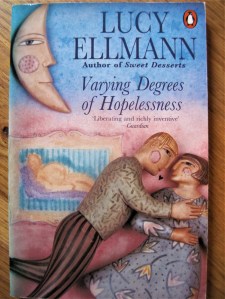 *However, I was delighted to find a copy of her 1991 novel, Varying Degrees of Hopelessness (just 182 pages, with short chapters often no longer than a paragraph and pithy sentences) in a 3-for-£1 sale at our local charity warehouse. Isabel, a 31-year-old virgin whose ideas of love come straight from the romance novels of ‘Babs Cartwheel’, hopes to find Mr. Right while studying art history at the Catafalque Institute in London (a thinly veiled Courtauld, where Ellmann studied). She’s immediately taken with one of her professors, Lionel Syms, whom she dubs “The Splendid Young Man.” Isabel’s desperately unsexy description of him had me snorting into my tea:
He had a masculinity.
His broad shoulders and narrow hips gave him a distinctive physique.
He held seminars and wore red socks.
To hold seminars seemed to indicate a wish to develop a rapport with his students.
The red socks seemed to indicate testosterone.
I swooned in admiration of him.
Unfortunately, the Splendid Young Man is more interested in Isabel’s portly flatmate, Pol. There’s a screwball charm to this campus novel full of love triangles and preposterous minor characters. I laughed at many of Ellmann’s deadpan lines, and would recommend this to fans of David Lodge’s academic comedies. But if you wish to, you could read this as a cautionary tale about the dangers of romantic fantasies. Ellmann even offers two alternate endings, one melodramatic and one more prosaic but believable. I’ll seek out the rest of her back catalogue – so thanks to the Booker for putting her on my radar.
In the meantime, I did a bit better with the “Not the Booker Prize” (administered by the Guardian) shortlist, reading three out of their six:
Flames by Robbie Arnott
 This strange and somewhat entrancing debut novel is set in Arnott’s native Tasmania. The women of the McAllister family are known to return to life – even after a cremation, as happened briefly with Charlotte and Levi’s mother. Levi is determined to stop this from happening again, and decides to have a coffin built to ensure his 23-year-old sister can’t ever come back from the flames once she’s dead. The letters that pass between him and the ill-tempered woodworker he hires to do the job were my favorite part of the book. In other strands, we see Charlotte traveling down to work at a wombat farm in Melaleuca, a female investigator lighting out after her, and Karl forming a close relationship with a seal. This reminded me somewhat of The Bus on Thursday by Shirley Barrett and Orkney by Amy Sackville. At times I had trouble following the POV and setting shifts involved in this work of magic realism, though Arnott’s writing is certainly striking.
A favorite passage:
“The Midlands droned on, denuded hill after denuded hill, until I rolled into sprawling suburbs around noon. Here’s a list of the places I’d choose to visit before the capital: hell, anywhere tropical, the Mariana Trench, a deeper pit of hell, my mother’s house.”
My thanks to Atlantic Books for the free paperback copy for review.
See Susan’s review for a more enthusiastic response.
 The Unauthorised Biography of Ezra Maas by Daniel James: A twisty, clever meta novel about “Daniel James” trying to write a biography of Ezra Maas, an enigmatic artist who grew up a child prodigy in Oxford and attracted a cult following in 1960s New York City, where he was a friend of Warhol et al. (See my full review.)
Supper Club by Lara Williams: A great debut novel with strong themes of female friendship and food. The Supper Club Roberta and Stevie create is performance art, but it’s also about creating personal meaning when family and romance have failed you. (See my full review.)
The other three books on the shortlist are:
- Skin by Liam Brown: A dystopian novel in which people become allergic to human contact. I think I’ll pass on this one.
 Please Read This Leaflet Carefully by Karen Havelin: A debut novel by a Norwegian author that proceeds backwards to examine the life of a woman struggling with endometriosis and raising a young daughter. I’m very keen to read this one.
- Spring by Ali Smith: I’ve basically given up on Ali Smith – and certainly on the Seasons quartet, after DNFing Winter.
(The Not the Booker Prize will be announced on the Guardian website this Friday the 11th.)
 Bookish Beck = Rebecca Foster. American transplant to England. Freelance proofreader and book reviewer.
