#NovNov25 and Other November Reading Plans
Not much more than two weeks now before Novellas in November (#NovNov25) begins! Cathy and I are getting geared up and making plans for what we’re going to read. I have a handful of novellas out from the library, but mostly I gathered potential reads from my own shelves. I’m hoping to coincide with several of November’s other challenges, too.

Although we’re not using the below as themes this year, I’ve grouped my options into categories:
Short Classics (pre-1980)
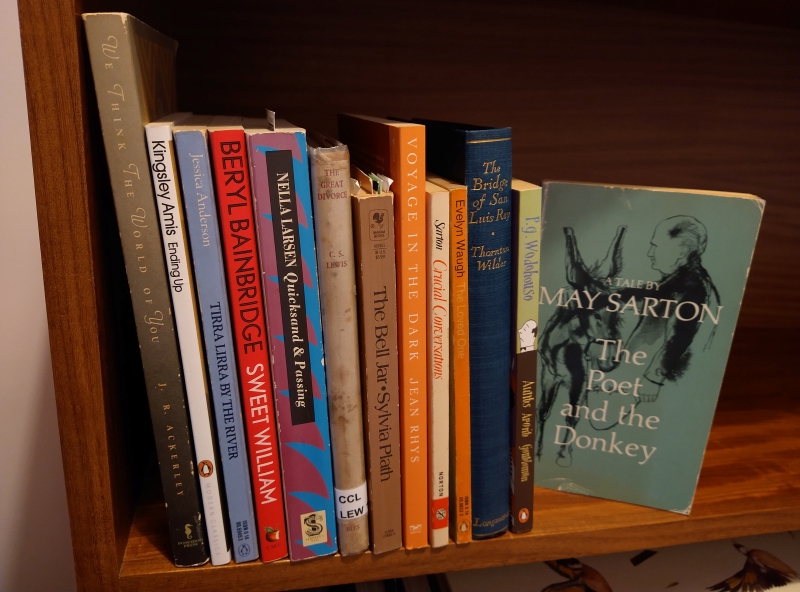
Just Quicksand to read from the Larsen volume; the Wilder would be a reread.
Contemporary Novellas
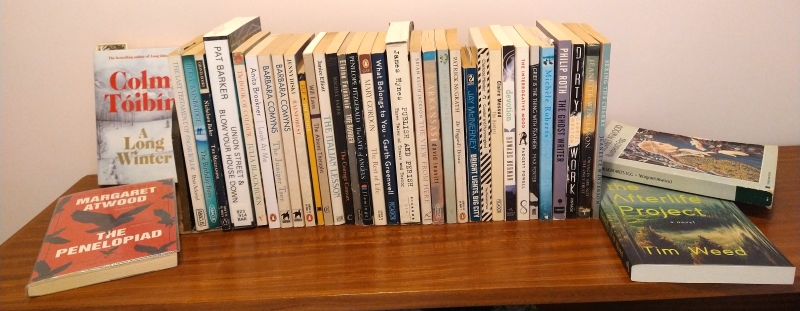
(Just Blow Your House Down; and the last two of the three novellas in the Hynes.)
Also, on my e-readers: Sea, Poison by Caren Beilin, Likeness by Samsun Knight, Eradication: A Fable by Jonathan Miles (a 2026 release, to review early for Shelf Awareness)
 *Margaret Atwood Reading Month is hosted by Marcie of Buried in Print. I’ve just read The Penelopiad for book club, so I’ll start off with a review of that. I might also reread Bluebeard’s Egg, and I’ll be eagerly awaiting her memoir from the library.
[*Science Fiction Month: Beautyland by Marie-Helene Bertino, Archive of Unknown Universes by Ruben Reyes Jr., and The Afterlife Project (all catch-up review books) are options, plus I recently started reading The Martian by Andy Weir.]
Short Nonfiction
Including our buddy read, Sister Outsider by Audre Lorde. (A shame about that cover!)
Also, on my e-readers: The Serviceberry by Robin Wall Kimmerer, No Straight Road Takes You There by Rebecca Solnit, Because We Must by Tracy Youngblom. And, even though it doesn’t come out until February, I started reading The Irish Goodbye: Micro-Memoirs by Beth Ann Fennelly via Edelweiss.
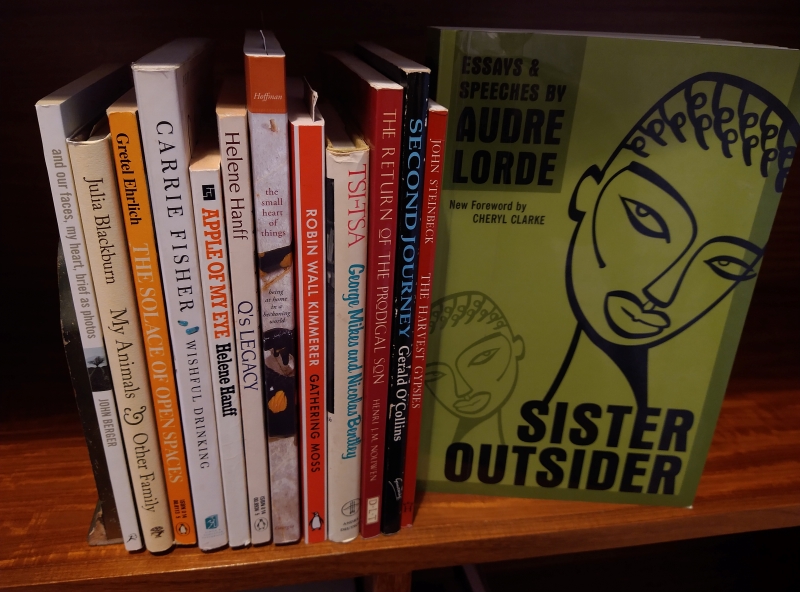
For Nonfiction November, I also have plenty of longer nonfiction on the go, a mixture of review books to catch up on and books from the library:
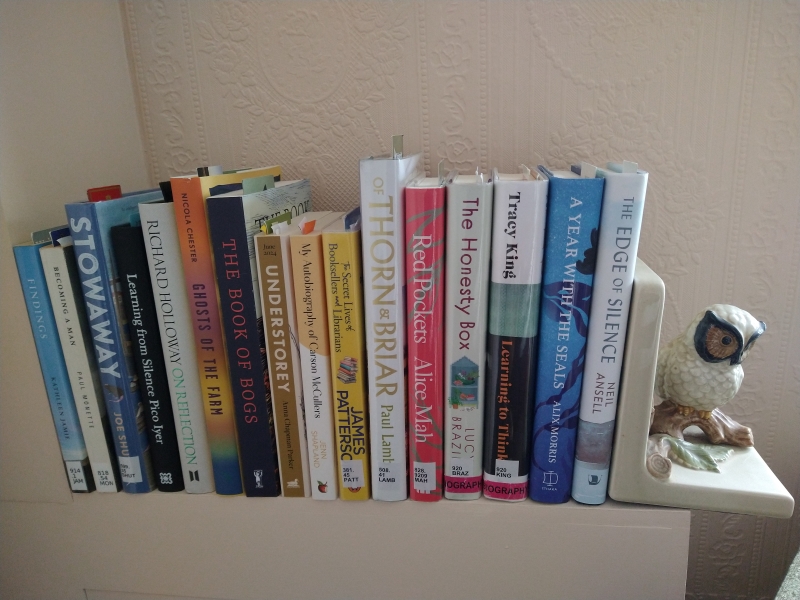
I also have one nonfiction November release, Joyride by Susan Orlean, to review.
Novellas in Translation
At left are all the novella-length options, with four German books on top.
The Chevillard and Modiano are review copies to catch up on.

Also on the stack, from the library: Super-Frog Saves Tokyo by Haruki Murakami
On my e-readers: The Old Fire by Elisa Shua Dusapin, The Old Man by the Sea by Domenico Starnone, Our Precious Wars by Perrine Tripier
 *German Literature Month: Our recent trip to Berlin and Lübeck whetted my appetite to read more German/German-language fiction. I’ll try to coincide with the Thomas Mann week as I was already planning to reread Death in Venice. I have some longer German books on the right-hand side as well. I started Kairos but found it hard going so might switch to audiobook. I also have Demian by Hermann Hesse on my Nook, downloaded from Project Gutenberg.
Spy any favourites or a particularly appealing title in my piles?
The link-up is now open for you to share your planning post!
Any novellas lined up to read next month?
The Writer’s Table by Valerie Stivers (Blog Tour)
In 2017, Valerie Stivers started writing about food in classic fiction for The Paris Review. Her particular project for the “Eat Your Words” column would be cooking and baking her way through literature. It was a larger undertaking than she realized and became something of an obsession. A selection of the greatest hits made it into The Writer’s Table. Each few-page biographical profile opens with a recipe drawn from that author’s work or developed by Stivers. A surprising number of writers published cookbooks – or had one compiled after their death – including Maya Angelou, Jane Austen (of family friend and housekeeper Martha Lloyd’s recipes), Ernest Hemingway, Barbara Pym, George Sand and Alice B. Toklas.
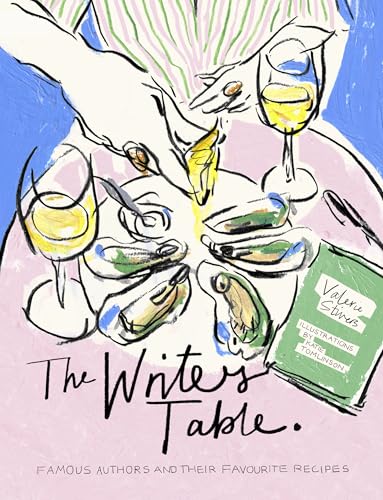 Though I’ve read a lot by and about D.H. Lawrence, I didn’t realise he did all the cooking in his household with Frieda, and was renowned for his bread. And who knew that Emily Dickinson was better known in her lifetime as a baker? Her coconut cake is beautifully simple, containing just six ingredients. Flannery O’Connor’s peppermint chiffon pie also sounds delicious. Some essays do not feature a recipe but a discussion of food in an author’s work, such as the unusual combinations of mostly tinned foods that Iris Murdoch’s characters eat. It turns out that that’s how she and her husband John Bayley ate, so she saw nothing odd about it. And Murakami’s 2005 New Yorker story “The Year of Spaghetti” is about a character whose fixation on one foodstuff reflects, Stivers notes, his “emotional … turmoil.”
The alphabetical arrangement of the pieces emphasizes the wide range of eras, regions, and genres. It’s a fun book for browsing, though I might have liked more depth on fewer authors. I especially liked the listicles on “Writers’ Favourite Cocktails” – E.B. White’s triple-strength gin martinis sound lethal! – and “Writers Who Didn’t Eat Proper Meals.” Proust subsisted on croissants and café au lait, while Highsmith ate nothing but bacon and eggs (hers being mostly a liquid diet). Katie Tomlinson’s colourful sketches are delightful. I enjoyed having this around to flick through and can recommend it as a gift for the literary foodie in your life.
With thanks to Anne Cater of Random Things Tours and Frances Lincoln (Quarto Books) for the free copy for review.
Buy The Writer’s Table from Bookshop.org [affiliate link]
I was pleased to be part of the blog tour for The Writer’s Table. See below for details of where other reviews have appeared or will appear soon.
Short Story Catch-Up: Carver, Cunningham, Park, Polders, Racket, Schweblin, Williams (& Heti Stand-Alone)
I actually read 15 collections in total for Short Story September. I’m finally catching up on reviews, though I’m aware that I’ve missed out on Lisa’s link-up. (My other reviews: Heiny, Mackay, McEwan; the BBC National Short Story Award 2025 anthology; Donoghue, Grass, Isherwood, Mansfield as part of my Germany reading.) To keep it simple and get the basics across before I forget any more about these books, I’ll post some shorthand notes under headings.
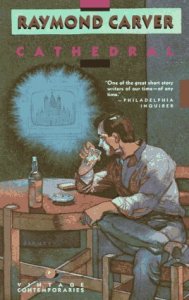
Cathedral by Raymond Carver (1983)
Why I read it:
- I’d really enjoyed What We Talk about When We Talk about Love.
- This fits into my project to read books from my birth year.
 Stats: 12 stories (6 x 1st-person, 6 x 3rd-person)
Themes: alcoholism, adultery, fatherhood, crap jobs, crumbling families
Tone: melancholy, laconic
File under: grit-lit
For fans of: John Cheever, Ernest Hemingway, Denis Johnson
Caveat(s): It doesn’t match What We Talk about When We Talk about Love.
If you read just one story, make it: “A Small, Good Thing”
(University library) 
A Wild Swan and Other Tales by Michael Cunningham (2015)
Why I read it:
- I have a vague plan to read through Cunningham’s whole oeuvre.
- This one is different to his others, and beautifully illustrated by Yuko Shimizu.
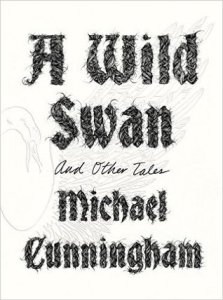 Stats: 11 stories (3 x 2nd-person, 8 x 3rd-person)
Themes: coming of age, longing, loss, bargaining
Tone: witty, knowing
File under: fairy tale updates
For fans of: Margaret Atwood, Neil Gaiman
Caveat(s): For the most part, he doesn’t do anything interesting with the story lines.
If you read just one story, make it: “Little Man” (the Rumpelstiltskin remake)
(Secondhand – Awesomebooks.com) 
An Oral History of Atlantis by Ed Park (2025)
Why I read it:
- I’d heard buzz, probably because Park was a Pulitzer Prize finalist for his novel.
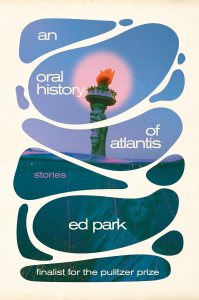 Stats: 16 stories (12 x 1st-person, 1 x 1st-person plural, 1 x 2nd-person, 2 x 3rd-person)
Themes: the Asian American and university experience, writing, translation, aphorisms
Tone: jokey, nostalgic
File under: dystopian fiction, metafiction
For fans of: George Saunders
Caveat(s): There’s more intellectual experimentation than emotional engagement.
If you read just one story, make it: “An Accurate Account”
(Read via NetGalley)
Woman of the Hour by Clare Polders (2025)
Why I read it:
- I always like to sneak at least one flash fiction collection in for this challenge.
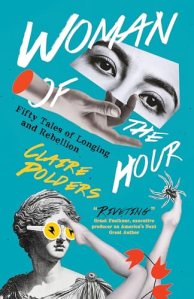 Stats: 50 stories, a mixture of 1st- and 3rd-person
Themes: childhood, sexuality, motherhood, choices vs. fate
Tone: sharp, matter-of-fact
File under: feminist, satire
For fans of: Claire Fuller, Terese Svoboda
Caveat(s): There’s too many stories to keep track of and not enough stand-outs.
If you read just one story, make it: “Woman of the Hour”
(BookSirens)
Racket: New Writing Made in Newfoundland, ed. Lisa Moore (2015)
Why I read it:
- Naomi’s blog always whets my appetite for Atlantic Canadian fiction, but I’m rarely able to find it over here.
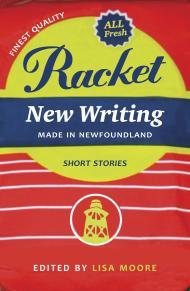 Stats: 11 stories, mostly by Memorial University creative writing graduates (7 x 1st-person, 1 x 2nd-person, 3 x 3rd-person)
Themes: mental health, bereavement, tragic accidents
Tone: jaunty, reflective
File under: voice-y early-2000s lit-fic
For fans of: Sharon Bala (her story is among the best here), Jonathan Safran Foer; hockey
Caveat(s): I wouldn’t say I’m now a fan of any of the writers I hadn’t heard of before.
If you read just one story, make it: “23 Things I Hate in No Particular Order” by Gary Newhook
(Little Free Library)
Good and Evil and Other Stories by Samanta Schweblin (2025)
[Translated from Spanish by Megan McDowell]
Why I read it:
- I thought it would be good to add in another title in translation.
- I’d read Schweblin before (but I wish I’d remembered that I rated Fever Dream 2*.)
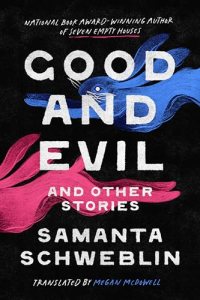 Stats: 6 stories (5 x 1st-person, 1 x 3rd-person)
Themes: near-misses, grief, memory, suicidal ideation
Tone: introspective, jaded
File under: Latin American weirdness (some mild magic realism)
For fans of: Guadalupe Nettel (The Accidentals is very similar but a bit better)
Caveat(s): A couple of the stories are overlong and none of them are particularly memorable.
If you read just one story, make it: “William in the Window”
(Read via NetGalley) 
The Doctor Stories by William Carlos Williams, compiled by Robert Coles (1939)
Why I read it:
- I’m not sure how I came across it; perhaps through another doctor–author such as Gavin Francis or Atul Gawande?
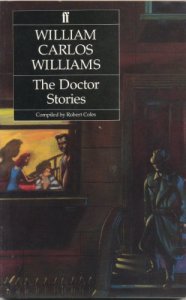 Stats: 14 stories (plus a handful of poems and an autobiographical fragment), all 1st-person
Themes: addiction, childbirth, immigrants, poverty, the randomness of suffering
Tone: hardboiled, dedicated
File under: autofiction, dirty realism
For fans of: Raymond Carver, Gabriel Weston
Caveat(s): The descriptions of immigrants’ appearance/behaviour/speech is not always kind.
If you read just one story, make it: “Old Doc Rivers”
(University library) 
And a stand-alone story:
“The St. Alwynn Girls at Sea” by Sheila Heti (New Yorker, 2025)
To my knowledge, this is the only short fiction Heti has published. I’m generally a big fan of her bizarre autofiction – though Pure Colour was a step too far for me – and was fascinated to see on Eleanor’s blog that this is historical fiction, a genre Heti hasn’t attempted before. Or is it historical? The students of a girls’ boarding school have been sent out on a ship for their safety during a conflict. With news of a planned meet-up with a boys’ boat for a talent show and calls to knit socks for soldiers, it seems it must be the Second World War. But then there are references to headphones, Prince and Kurt Vonnegut. So it’s an alternative Cold War fantasy? Or a dystopian future scenario with retro elements? As in Motherhood, the characters appeal to an Oracle (here, a photograph of a departed girl called Audrey) when stymied by confusion. But the actual plot is just girls wanting men to love them – Dani obsesses about Sebastien, with whom she’s exchanging letters; Flora can’t stop thinking about her father’s infidelity – a common Heti theme, but the teenage perspective feels glib, indulgent; it’s YA without the heart or commitment. So I was somewhat aghast to learn this is from Heti’s novel in progress.
Novellas in November 2025 Link-Up (#NovNov25)
Novellas in November 2025 was a roaring success: In total, we had 50 bloggers contributing 216 posts covering at least 207 books! The buddy read(s) had 14 participants. It was our best year yet – thank you.
*For the curious, our most reviewed book was The Wax Child by Olga Ravn (4 reviews), followed by The Most by Jessica Anthony (3). Authors covered three times: Franz Kafka and Christian Kracht. Authors with work(s) reviewed twice: Margaret Atwood, Nora Ephron, Hermann Hesse, Claire Keegan, Irmgard Keun, Thomas Mann, Patrick Modiano, Edna O’Brien, Clare O’Dea, Max Porter, Brigitte Reimann, Ivana Sajko, Georges Simenon, Colm Tóibín and Stefan Zweig.*
Check out all the posts here:
Nine Days in Germany and What I Read, II: Lübeck
(Part I covered Berlin.) Three works of short fiction embodied the rest of our journeying, from Berlin to Lübeck to home. We were sad to say goodbye to Lemmy and Roxanne, the affectionate, fluffy cats who came with our Berlin flat, but there were further adventures to be had. The hosts of our Lübeck Airbnb apartment also owned two cats we briefly met, but it wasn’t the same as having surrogate pets around.
Goodbye to Berlin by Christopher Isherwood (1939)
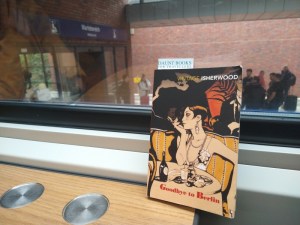 Isherwood intended for these six autofiction stories to contribute to a “huge episodic novel of pre-Hitler Berlin” titled The Lost. Two “Berlin Diary” segments from 1930 and 1933 bear witness to a change in tenor accompanying the rise of Nazism. Even in lighter pieces about a holiday at the Baltic coast and his friendship with a family who run a department store, menace creeps in through characters’ offhand remarks about “dirty Jews” ruining the country. The narrator, Christopher Isherwood, is a private English tutor staying in squalid boarding houses or spare rooms. His living conditions are mostly played for laughs – his landlady, Fraulein Schroeder, calls him “Herr Issyvoo” – but I was also reminded of George Orwell’s didactic realism. I had it in mind that Isherwood was homosexual; the only evidence of that here is his observation of the homoerotic tension between two young men, Otto and Peter, whom he meets on the Ruegen Island vacation, so he was still being coy in print. Famously, the longest story introduces Sally Bowles (played by Liza Minnelli in Cabaret), the lovable club singer who flits from man to man and feigns a carefree joy she doesn’t always feel. This is the second of two Berlin books; I will have to find the other and explore the rest of Isherwood’s work as I found this witty and humane, restrained but vigilant. (Little Free Library)
On balance, we planned the division well: busy city days first, followed by a more restful long weekend; reliable English-speaking opportunities while we built up our confidence, then a more provincial setting where we could try out a bit of German. Friends were curious why we chose Lübeck. Two charitably assumed that I went for the Thomas Mann connections, but that was an incidental side benefit. (I quailed at the prospect of reading the 700+-page debut novel based on his family history, Buddenbrooks; instead, I intended to reread Death in Venice, but my Project Gutenberg download didn’t work, so I’ve earmarked it for Novellas in November instead.)
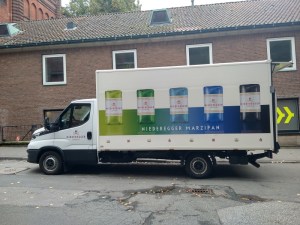
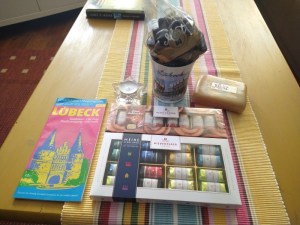
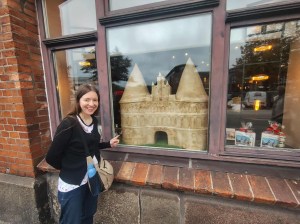
Nope, I was in it for the marzipan. Lübeck has been known for its marzipan since 1795. In 1926, there were 36 marzipan manufacturers in this northern city; three remain today and of course we visited both cafes and all three shops. Niederegger has a small museum above the Bettys-like café. You would not believe the scale or number of tableaux made entirely of almond paste! Nor the variety of flavours and packaging in the shop downstairs. We enjoyed marzipan hot chocolate, cappuccino and cakes, and came away with a modest supply of treats. We also dropped into a trendy restaurant where I had a “Lübecker martini” combining rum, marzipan liqueur and espresso.
-
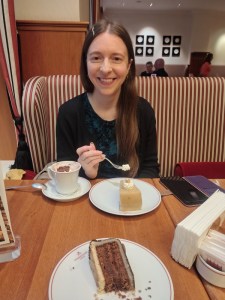
- Marzipan hot chocolate and traditional nusstorte at the Niederegger cafe.
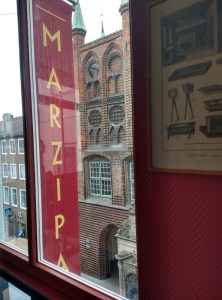
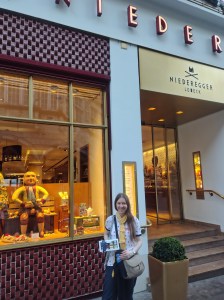
-
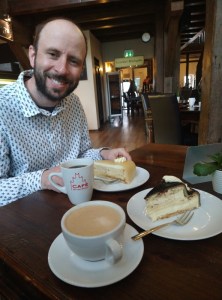
- Marzipanland was better! I had Othello Torte and a marzipan cappuccino.


In a German Pension by Katherine Mansfield (1911)
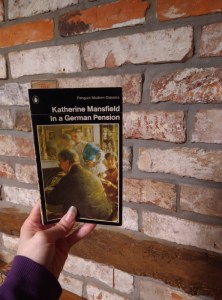 Mansfield was 19 when she composed this slim debut collection of arch sketches set in and around a Bavarian guesthouse. The narrator is a young Englishwoman traveling to take the waters for her health. A quiet but opinionated outsider (“I felt a little crushed … at the tone – placing me outside the pale – branding me as a foreigner”), she crafts pen portraits of a gluttonous baron, the fawning Herr Professor, and various meddling or air-headed fraus and frauleins. There are funny lines that rest on stereotypes (“you English … are always exposing your legs on cricket fields, and breeding dogs in your back gardens”; “a tired, pale youth … was recovering from a nervous breakdown due to much philosophy and little nourishment”) but also some alarming scenarios. One servant girl narrowly escapes being violated, while “The-Child-Who-Was-Tired” takes drastic action when another baby is added to her workload. Most of the stories are unmemorable, however. Mansfield renounced this early work as juvenile and inferior – her first publisher went bankrupt and when war broke out in Europe, sparking renewed interest in a book that pokes fun at Germans, she refused republishing rights. (Secondhand – Well-Read Books, Wigtown)
On our travels, I also read…
- portions of various e-books for paid Shelf Awareness reviews: Benbecula by Graeme Macrae Burnet, Beard by Kelly Foster Lundquist, Wreck by Catherine Newman;
- part of Bright Lights, Big City by Jay McInerney, which I’ll finish for Novellas in November;
- and portions of e-books for fun: Startlement by Ada Limón and An Oral History of Atlantis by Ed Park (more short story catch-up reviews to come).
Aside from marzipan, Lübeck has a lot going for it: lovely medieval Brick Gothic architecture – the iconic Holstentor gate once featured on the 50-mark note; proximity to the Baltic Sea; and connections with three Nobel Prize winners, two for literature – the other being Günter Grass. On the Saturday morning, we took a bus to Travemünde, a popular seaside resort town, for a walk along the cliffs. The path was busy with cyclists but the dog beach was nearly deserted. We watched a ferry setting off for Sweden. (Had we had a few more days to play with, we would have liked to tack on trips to Denmark from here and into Poland from Berlin.)


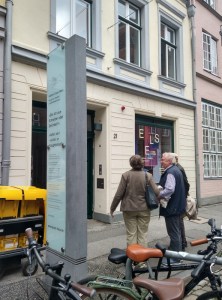
Buddenbrookhaus, the home of Mann’s grandparents, is undergoing a several-year renovation and expansion project. I wasn’t too upset about missing out on it, and there was a Mann exhibit in the tourist information centre. Instead, I went to the Günter Grass House museum, which opened in 2002. Grass spent his last 20 years living 15 miles south of Lübeck and kept an office in this building. For future reference, there’s a good-value day-ticket one can buy that covers all the museums in Lübeck. My husband went to the natural history museum while I learned about Grass, whom I’d never read before, and about Else Lasker-Schüler, whose works were on display in the rotating upstairs exhibit featuring figures who, like Grass, were writers and visual artists.


Grass grew up in what is now Danzig, Poland and was drafted into the Waffen-SS at age 17. He was lucky in that he soon received a minor injury that landed him in American custody. The Tin Drum, his well-known debut novel, drew on his military background, which he otherwise rarely discussed. Formally trained in art, he illustrated his works with the same motifs that appear in words. Flora and fauna run all through: fruit, onions; birds, snails, the flounder, cats and dogs. A multitalented writer, he also produced plays, poetry and political commentary. He won the Nobel Prize in 1999 and died in 2015. I found the material on his life and work unexpectedly diverting. I read the short volume below as soon as we got back.
-
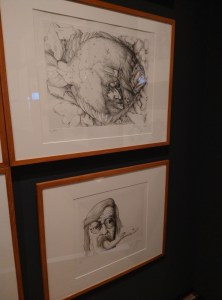
- Some of Grass’s grotesque hybrid animal drawings
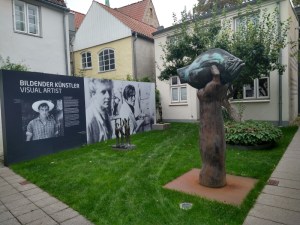
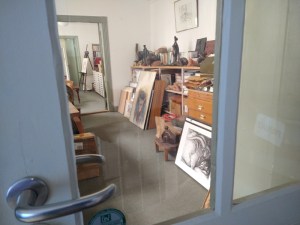
-
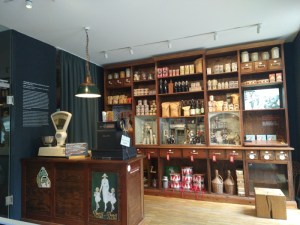
- Replica of the Grass family’s store in Danzig
-
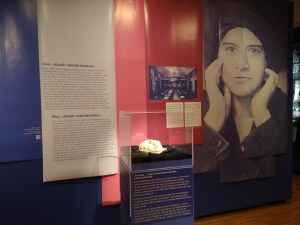
- Else Lasker-Schüler exhibit, including her death mask
Of All that Ends by Günter Grass (2015)
[Translated from German by Breon Mitchell]
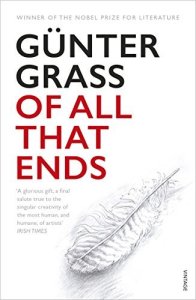 This posthumous prosimetric collection contains miniature essays, stories and poems, many of which seem autobiographical. By turns nostalgic and morbid, the pieces are very much concerned with senescence and last things. The black-and-white sketches, precise like Dürer’s but looser and more impressionistic, obsessively feature dead birds, fallen leaves, bent nails and shorn-off fingers. The speaker and his wife order wooden boxes in which their corpses will lie and store them in the cellar. One winter night they’re stolen, only to be returned the following summer. He has lost so many friends, so many teeth; there are few remaining pleasures of the flesh that can lift him out of his naturally melancholy state. Though, in Lübeck for the Christmas Fair, almonds might just help? The poetry happened to speak to me more than the prose in this volume. I’ll read longer works by Grass for future German Literature Months. My library has his first memoir, Peeling the Onion, as well as The Tin Drum, both doorstoppers. (Public library)


Of all that ends: books, holidays, seasons. It was a trip that, like so many we take these days, was sometimes irksome and exhausting, and could be overwhelming (Berlin) or boring (Lübeck) by turns – yet was still far preferable to the humdrum of home life. And – isn’t it always the way? – just as we’d gotten comfortable with greetings, farewells and other everyday phrases in a new language, it was time to leave. We were more comfortable with French when ordering a vegan supper at a café and drinks in a bustling Art Deco bar during our quick overnight stay in Brussels, then it was onto the Eurostar to come back home. Somewhere on those many train rides back, I caught this monster cold that will not die after 10 days and counting. And the very day we arrived back in the UK, we felt a sudden shift to late autumn weather.
November will be here before we know it.
Nine Days in Germany and What I Read, Part I: Berlin
We’ve actually been back for more than a week, but soon after our return I was felled by a nasty cold (not Covid, surprisingly), which has left me with a lingering cough and ongoing fatigue. Finally, I’m recovered just about enough to report back.
This Interrail adventure was more low-key than the one we took in 2016. The first day saw us traveling as far as Aachen, just over the border from France. It’s a nice small city with Christian and culinary history: Charlemagne is buried in the cathedral; and it’s famous for a chewy, spicy gingerbread called printen. Before our night in a chain hotel, we stumbled upon the mayor’s Green Party rally in the square – there was to be an election the following day – and drank and dined well. The Gin Library, spotted at random on the map, is an excellent and affordable Asian-fusion cocktail bar. My “Big Ben,” for instance, featured Tanqueray gin, lemon juice, honey, fresh coriander, and cinnamon syrup. Then at Hanswurst – Das Wurstrestaurant (cue jokes about finding the “worst” restaurant in Aachen!), a superior fast-food joint, I had the vegetarian “Hans Berlin,” a scrumptious currywurst with potato wedges.


The next day it was off to Berlin with a big bag of bakery provisions. For the first time, we experienced the rail cancellations and delays that would plague us for much of the next week. We then had to brave the only supermarket open in Berlin on a Sunday – the Rewe in the Hauptbahnhof – before taking the S-Bahn to Alexanderplatz, the nearest station to our Airbnb flat.


It was all worth it to befriend Lemmy (the ginger one) and Roxanne. It’s a sweet deal the host has here: whenever she goes away, people pay her to look after her cats. At the same time as we were paying for a cat-sitter back home. We must be chumps!


I’ll narrate the rest of the trip through the books I read. I relished choosing relevant reads from my shelves and the library’s holdings – I was truly spoiled for choice for Berlin settings! – and I appreciated encountering them all on location.


As soon as we walked into the large airy living room of the fifth-floor Airbnb flat, I nearly laughed out loud, for there in the corner was a monstera plant. The trendy, minimalist décor, too, was just like that of the main characters’ place in…
Perfection by Vincenzo Latronico (2022; 2025)
[Translated from Italian by Sophie Hughes]
 Anna and Tom are digital nomads from Southern Europe who offer up their Berlin flat as a short-term rental. In the listing photographs it looks pristine, giving no hint of the difficulties of the expatriate life such as bureaucracy and harsh winters. “Creative professionals” working in the fields of web development and graphic design, they are part of the micro-generation that grew up as the Internet was becoming mainstream, and they tailor their products and personal lives to social media’s preferences. They are lazy liberals addicted to convenience and materialism; aspiring hedonists who like the idea of sex clubs but don’t enjoy them when they actually get there. When Berlin loses its magic, they try Portugal and Sicily before an unforeseen inheritance presents them with the project of opening their own coastal guesthouse. “What they were looking for must have existed once upon a time, back when you only had to hop onto a train or a ferry to reach a whole other world.” This International Booker Prize shortlistee is a smart satire about online posturing and the mistaken belief that life must be better elsewhere. There are virtually no scenes or dialogue but Latronico gets away with the all-telling style because of the novella length. Were it not for his note in the Acknowledgements, I wouldn’t have known that this is a tribute to Things by Georges Perec. (Read via Edelweiss)
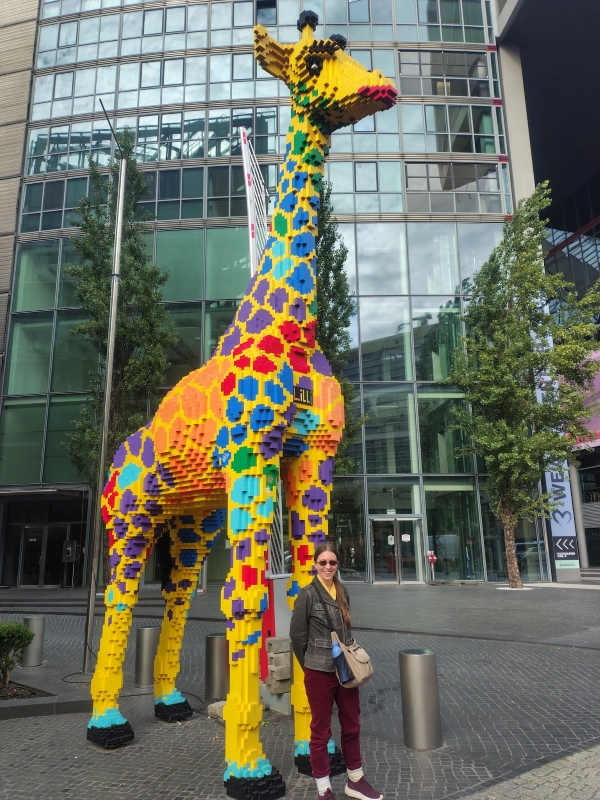
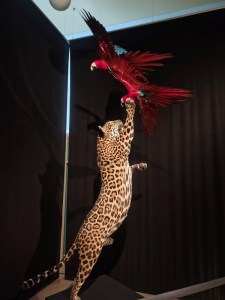 We got to pretend to be hip locals for four days, going up the Reichstag tower, strolling through the Tiergarten, touring the Natural History Museum (which has some excellent taxidermy as at left), walking from Potsdam station through Park Sanssouci and ogling the castles and windmill, chowing down on hand-pulled noodles and bao buns at neighbourhood café Wen Cheng, catching an excellent free lunchtime concert at the Philharmonic, and bringing back pastries or vegan doughnuts to snack on while hanging out with the kitties. The S-Bahn was included on our Interrail passes but didn’t go everywhere we needed, so we were often on the handy U-Bahn and tram system instead. Graffiti is an art form rather than an antisocial activity in Berlin; there is so much of it, everywhere.
-

- Reichstag (Photos 1, 2 and 4 by Chris Foster)
-

- Reichstag tower designed by Norman Foster
-

- The Philharmonic
-
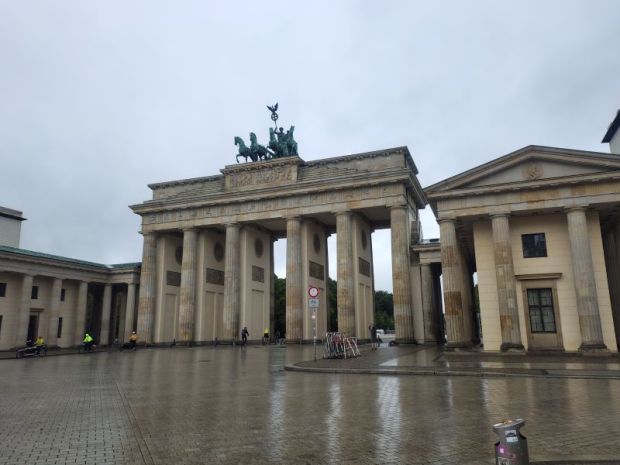
- Brandenburg Gate (Photos 1-3 by Chris Foster)
-
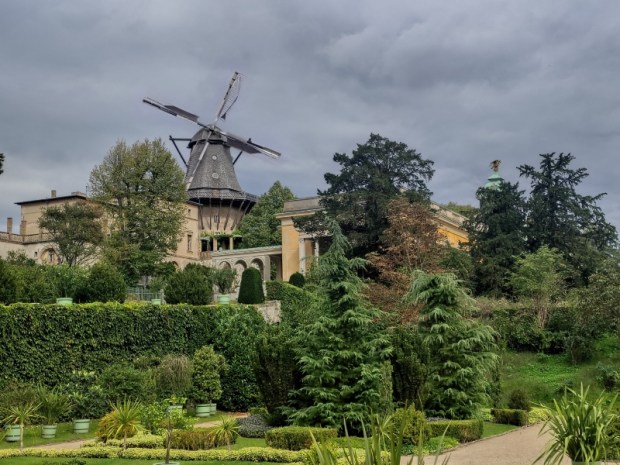
- Postdam’s Park Sanssouci
-
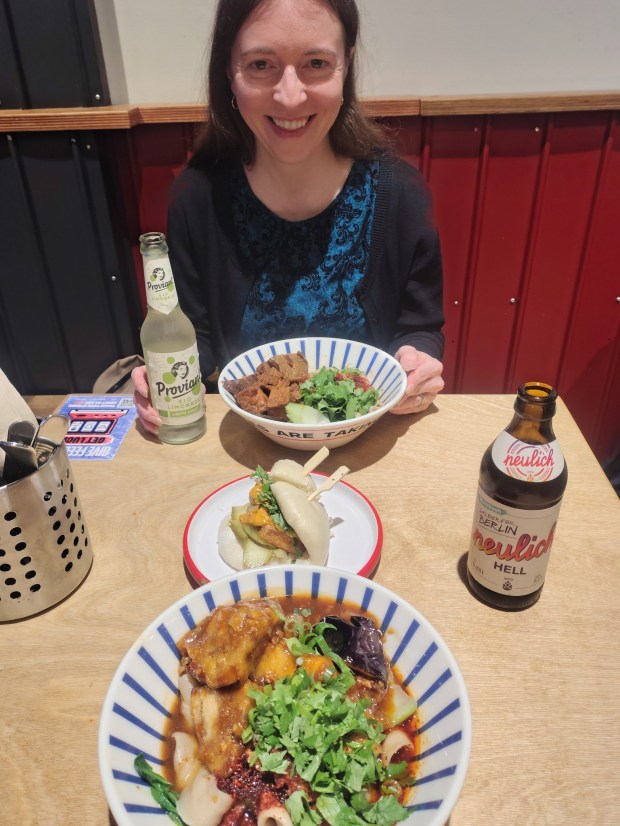
- Wen Cheng noodles
-

- Brammibal’s vegan doughnuts
I brought along another novella that proved an apt companion for our explorations of the city. Even just spotting familiar street and stop names in it felt like reassurance.
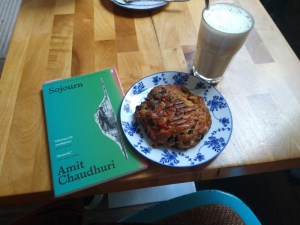
Sojourn by Amit Chaudhuri (2022)
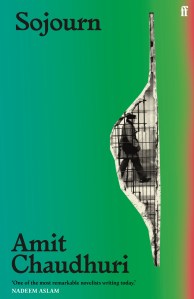 The narrator of this spare text is a Böll Visiting Professor experiencing disorientation yet resisting gestures of familiarity. Like a Teju Cole or Rachel Cusk protagonist, his personality only seeps in through his wanderings and conversations. After his first talk, he meets a fellow Indian from the audience, Faqrul Haq, who takes it upon himself to be his dedicated tour guide. The narrator isn’t entirely sure how he feels about Faqrul, yet meets him for meals and seeks his advice about the best place to buy warm outerwear. An expat friend is a crutch he wishes he could refuse, but the bewilderment of being somewhere you don’t speak the language at all is such that he feels bound to accept. Meanwhile, there is the possibility of another academic admirer, Birgit, becoming his lover. Strangely, his relationship with his cleaning lady, who addresses him only in German, seems the healthiest one on offer. As the book goes on, the chapters get shorter and shorter, presaging some kind of mental crisis. “I keep walking – in which direction I’m not sure; Kreuzberg? I’ve lost my bearings – not in the city; in its history. The less sure I become of it, the more I know my way.” This was interesting, even admirable, but I wanted more story. (Public library)
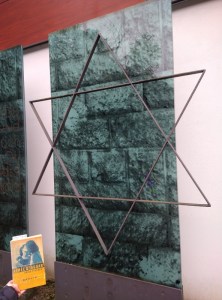
We spent a drizzly and slightly melancholy first day and final morning making pilgrimages to Jewish graveyards and monuments to atrocities, some of them nearly forgotten. I got the sense of a city that has been forced into a painful reckoning with its past – not once but multiple times, perhaps after decades of repression. One morning we visited the claustrophobic monument to the Murdered Jews of Europe, and, in the Tiergarten, the small memorials to the Roma and homosexual victims of the Holocaust. The Nazis came for political dissidents and the disabled, too, as I was reminded at the Topography of Terrors, a free museum where brutal facts are laid bare. We didn’t find the courage to go in as the timeline outside was confronting enough. I spotted links to the two historical works I was reading during my stay (Stella the red-haired Jew-catcher in the former and Magnus Hirschfeld’s institute in the latter). As I read both, I couldn’t help but think about the current return of fascism worldwide and the gradual erosion of rights that should concern us all.


Aimée and Jaguar: A Love Story, Berlin 1943 by Erica Fischer (1994; 1995)
[Translated from German by Edna McCown]
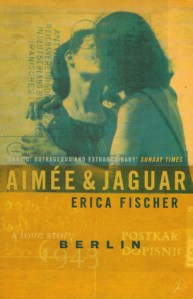 Elisabeth “Lilly” Wust was a good German: the estranged wife of a Nazi and mother of four young sons. She met Felice Schragenheim via her new domestic helper, Inge Wolf. Lilly (aka Aimée) was slow to grasp that Inge and Felice were part of a local lesbian milieu, and didn’t realize Felice (aka Jaguar) was a “U-boat” (Jew living underground) until they’d already become lovers. They got nearly a year and a half together, living almost as a married couple – they had rings engraved and everything – before Felice was taken into Gestapo custody. You know from the outset that this story won’t end well, but you keep hoping – just like Lilly did. It’s not a usual or ‘satisfying’ tragedy, though, because there is no record of what happened to Felice. She was declared legally dead in 1948 but most likely shared the fate of Anne and Margot Frank, dying of typhus at Bergen-Belsen. It’s heartbreaking that Felice, the orphaned daughter of well-off dentists, had multiple chances to flee Berlin – via her sister in London, their stepmother in Palestine, an uncle in America, or friends escaping through Switzerland – but chose to remain.
 The narrative incorporates letters, diaries and interviews, especially with Lilly, who clearly grieved Felice for the rest of her life. The book is unsettling, though, in that Fischer doesn’t let it stand as a simple Juliet & Juliet story; rather, she undermines Lilly by highlighting Felice’s promiscuity (so she likely would not have remained faithful) and Lilly’s strange postwar behaviour: desperately trying to reclaim Felice’s property, and raising her sons as Jewish. This was a time capsule, a wholly absorbing reclamation of queer history, but no romantic vision. (Secondhand purchase – Community Furniture Project)
[A similar recent release: Milena and Margarete: A Love Story in Ravensbrück by Gwen Strauss]
The Lilac People by Milo Todd (2025)
 This was illuminating, as well as upsetting, about the persecution of trans people in Nazi Germany. Todd alternates between the gaiety of early 1930s Berlin – when trans man Bertie worked for Magnus Hirschfeld’s Institute of Sexual Science and gathered with friends at the Eldorado Club for dancing and singing their anthem, “Das Lila Lied” – and 1945 Ulm, where Bert and his partner Sofie have been posing as an older farming couple. At the novel’s start, a runaway from Dachau, a young trans man named Karl, joins their household. Ironically, it is at this point safer to be Jewish than to be different in any other way; even with the war over, rumour has it the Allies are rounding up queer people and putting them in forced labour camps, so the trio pretend to be Jews as they ponder a second round of escapes.
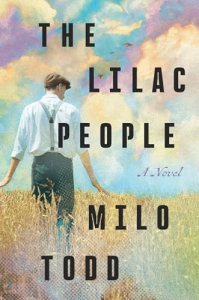 While this is slow to start with, and heavy on research throughout, it does gather pace. The American officer, Ward, is something of a two-dimensional villain who keeps popping back up. Still, the climactic scenes are gripping and the dual timeline works well. Todd explores survivor guilt and gives much valuable context. He is careful to employ language in use at that time (transvestites, transsexuals, “inverts,” “third sex”) and persuasively argues that, in any era, how we treat the vulnerable is the measure of our humanity. (Read via Edelweiss)
[A similar recent release: Under the Pink Triangle by Katie Moore (set in Dachau)]
We might have been at the Eldorado in the early 1930s on the evening when we ventured out to the bar Zosch for a “New Orleans jazz” evening. The music was superb, the German wine tasty, the whole experience unforgettable … but it sure did feel like being in a bygone era. We’re so used to the indoor smoking ban (in force in the UK since 2007) that we didn’t expect to find young people chain-smoking rollies in an enclosed brick basement, and got back to the flat with our clothes reeking and our lungs burning.


It was good to see visible signs of LGTBQ support in Berlin, though they weren’t as prevalent as I perhaps expected.


 For a taste of more recent German history, I’ve started Kairos by Jenny Erpenbeck, which is set in the 1980s not long before the Berlin Wall came down. Unfortunately, my library hold didn’t arrive until too late to take it with me. We made a point of seeing the wall remnants and Checkpoint Charlie on our trip.


Other Berlin highlights: a delicious vegetarian lunch at the canteen of an architecture firm, the Ritter chocolate shop, and the pigeons nesting on the flat balcony – the chicks hatched on our final morning!


And a belated contribution to Short Story September:
Touchy Subjects by Emma Donoghue (2006)
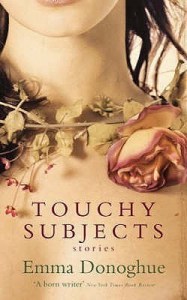 I seem to pluck one or two books at random from Donoghue’s back catalogue per year. I designated this as reliable train reading. The 19 contemporary stories fall into thematic bundles: six about pregnancy or babies, several about domestic life, a few each on “Strangers” and “Desire,” and a final set of four touching on death. The settings range around Europe and North America. It’s impressive how Donoghue imagines herself into so many varied situations, including heterosexual men longing for children in their lives and rival Louisiana crawfishermen setting up as tour-boat operators. The attempts to write Black characters in “Lavender’s Blue” and “The Welcome” are a little cringey, and the latter felt dated with its ‘twist’ of a character being trans. She’s on safer ground writing about a jaded creative writing tutor or football teammates who fall for each other. I liked a meaningful encounter between a tourist and an intellectually disabled man in a French cave (“The Sanctuary of Hands”), an Irishwoman’s search for her missing brother in Los Angeles (“Baggage”) and a contemporary take on the Lazarus myth (“Necessary Noise”), but my two favourites were “The Cost of Things,” about a lesbian couple whose breakup is presaged by their responses to their cat’s astronomical vet bill; and “The Dormition of the Virgin,” in which a studious young traveller to Florence misses what’s right under his nose. There are some gems here, but the topics are so scattershot the collection doesn’t cohere. (Secondhand – Awesomebooks.com)
Trip write-up to be continued (tomorrow, with any luck)…
The BBC National Short Story Award 2025 Anthology
Another quick contribution to #ShortStorySeptember. I was delighted when Comma Press sent me a surprise copy of The BBC National Short Story Award 2025, which prints the five stories shortlisted for this year’s prize.
Now in its 20th year, the award has recognised established authors and newcomers alike – the roster of winners includes Lucy Caldwell, Sarah Hall (twice), Cynan Jones, James Lasdun, KJ Orr, Ingrid Persaud, Ross Raisin, Lionel Shriver and Naomi Wood – and the £15,000 prize money is very generous indeed for a single story.
This very evening, the winner will be announced live on the BBC Radio 4 Front Row programme (it starts at 7:15 p.m. if you’re in the UK). I’ll update my post later with news of the winner. For now, here are my brief thoughts on the five stories and which I hope will win.
“You Cannot Thread a Moving Needle” is an excerpt from Colwill Brown’s linked short story collection, We Pretty Pieces of Flesh. It’s in broad Doncaster dialect and written in the second person, thus putting the reader into the position of a young woman who is often pressured – by men and by the prevailing standards of beauty – into uncomfortable situations. It’s all drinking and sex and feeling in competition with other girls. ‘You’ grow up limited and bitter and wondering if revenge is possible. This was admirable for its gritty realism but not pleasant per se, and convinced me I don’t want to read the whole book.
“Little Green Man” by Edward Hogan begins with a classic scenario of two very different people being thrown together. Carrie stands out not just for being nearly six feet tall but also for being the only woman working for Parks and Gardens in Derby. One morning she’s assigned a temporary apprentice, Ryan, who is half her age and might be dismissed with one look as being no good (“lines shaved into his eyebrows … dyed blond hair” and a baby at home). But their interactions go beyond stereotypes as we learn of Ryan’s ambitions and his disapproving dad; and of Carrie’s ex, Bridget, who wanted more spontaneity. It’s a solid, feel-good story about not making your mind up about people, in the vein of Groundskeeping.

“Yair” by Emily Abdeni-Holman is another two-character drama, with the title figure an Israeli estate agent who takes the female narrator looking for an apartment in Jerusalem in 2018. Sexual tension and conflicting preconceived notions are crackling between them. A simple story with an autofiction feel, it reminded me of writing by Sigrid Nunez and Elizabeth Strout and exposes the falsity of facile us-and-them distinctions.
“Two Hands” by Caoilinn Hughes is a three-player comedy starring a married couple and their driving instructor. After a motorway crash in the beloved Fiat Panda they brought with them from Italy when they moved back to Ireland, Desmond and Gemma are in need of some renewed confidence behind the wheel. They talk about work – Des’s ancient archaeology research, Gemma’s translations – but not about the accident, which clearly is still affecting them both. Meanwhile, their late-seventies instructor is a War and Peace-reading calm presence whose compassion stretches only so far. I found this sharp, witty and original, just like Hughes’s Orchid & the Wasp.
Last but not least, “Rain: a history” by Andrew Miller is set in a sodden near-future English village. The protagonist has been having heart trouble and failing to connect with his traumatized teenage son. Nothing in his house or on his person ever feels dry. Their surroundings are menacing and desolate, yet still somehow beautiful. A letter came through the door last week, inviting everyone to meet in the parish church this evening. What can be done? Perhaps solidarity is as much as they, and we, can hope for. This was spare and haunting, and so much better than The Land in Winter.
I thoroughly enjoyed reading these entries and wouldn’t mind four out of the five winning. My sense of the spirit of the award is that it should go to a stand-alone story by an up-and-coming author. It’s hard to say what judges William Boyd, Lucy Caldwell, Ross Raisin, Kamila Shamsie and Di Speirs will go for: realism, novelty, subtlety, humour or prophecy? My personal favourite was “Yair,” but I have an inkling the award might go to Caoilinn Hughes and I would be very happy with that result as well.
With thanks to Comma Press for the free copy for review.
UPDATE: The winner was … the story I enjoyed the least, “You Cannot Thread a Moving Needle.” Nonetheless, I acknowledge that Colwill Brown has a distinctive voice.
Love Your Library, September 2025
Thanks, as always, to Eleanor for posting about her recent library reading! And thank you to Skai for joining in again.
Somehow over the summer I forgot to mark two anniversaries: my library’s 25th birthday (July), and five years of me volunteering there (August). When I first started as a volunteer, Covid was still a raging unknown and the library was closed to the public. I shelved returns in an empty building. It was blissful, in all honesty. But I know it’s perverse to be nostalgic about the pandemic. I still enjoy my Tuesday morning sessions of hunting for reservations, even when it’s (too) busy and noisy during the school holidays.

Early in the month, my husband and I went to an evening event at the library with Jasper Fforde. C is a fan, having read five of his novels, whereas I read The Eyre Affair during graduate school and found it silly – in the same way I can’t really get on with Douglas Adams or Terry Pratchett. But with tickets just £5, I thought why not go and support the library.
Fforde considers himself an “accidental author” for two reasons: one, he was seen as a stupid child who would never achieve anything – his dyslexia wasn’t diagnosed until he was in his fifties; and two, he wanted to work on films, and indeed did for a time. In 1988 he sat down to write a short story treatment of his intended film script and fell in love with the process of writing. He described it as being like a jigsaw where the words just fell into place. Thirteen years of hard work later, he made the New York Times bestseller list.

I didn’t realize that Fforde has lived fairly locally and set novels in Reading and Swindon – comic in itself because these are very unlovely towns. His first two series, nursery rhyme crime novels and the Thursday Next books (the eighth and last, Dark Reading Matter, is due out in September 2026), were about “moving the furniture around in people’s heads,” taking existing classic stories and twisting them. When he tried making things up, as with the Shades of Grey and Red Side Story duology and The Last Dragonslayer children’s books, the results were not as commercially successful. During the question time he reflected on the irony of his book getting confused with the blockbuster Fifty Shades of Grey. He joked that some probably bought his book by mistake and then wondered where the bondage was.
The evening was a conversation with the library staff member who seems to organise all the events. She asked him a lot of questions about his process. He listed a few tenets he lives by: “the narrative dare” (come up with a random idea and then figure out how to pull it off), “the path less-trodden,” and “the no-plan plan” (he makes it up as he goes along). His mind works like a drift net, he said, saving bits and pieces up to use another time, such as snippets of conversation overheard on a bus. For instance, “Oh my goodness, they’ve trodden on the gibbon!” and “They say haddock is making a comeback.” He also leaves himself “off-ramps” he can take up later if he ends up writing a sequel.
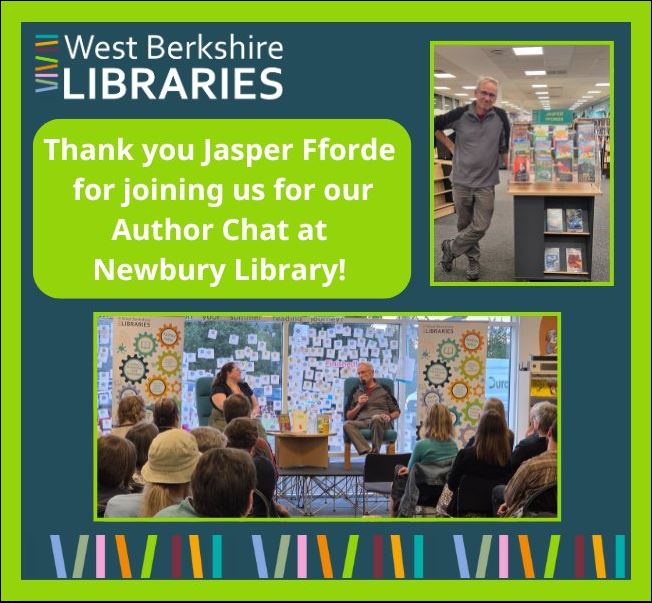
(C is at the bottom right of the second photo.)
Fforde was very personable and self-deprecating and I got more out of the event than I might have expected to.
My library use over the last month:
(links are to books not already reviewed on the blog)
READ
- The Most by Jessica Anthony
- Sojourn by Amit Chaudhuri

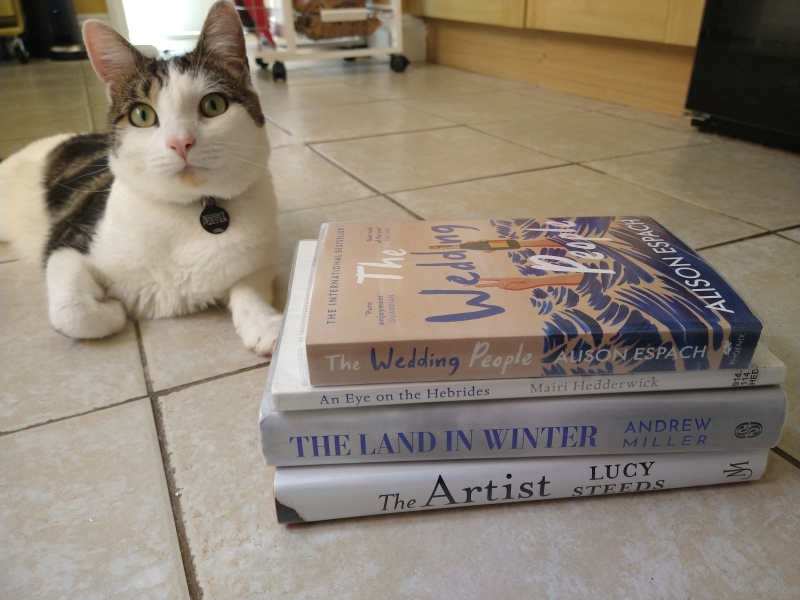
- The Wedding People by Alison Espach
- Of All that Ends, Günter Grass
- The Summer I Turned Pretty by Jenny Han

- Seascraper by Benjamin Wood

SKIMMED
- Wild City by Ben Hoare
- The Land in Winter by Andrew Miller – The chilly writing and atmosphere suit the subject matter, but didn’t draw me in or make me care about the central characters.
- Cuddy by Benjamin Myers (for book club)
CURRENTLY READING
- Kairos by Jenny Erpenbeck
- Of Thorn & Briar: A Year with the West Country Hedgelayer by Paul Lamb
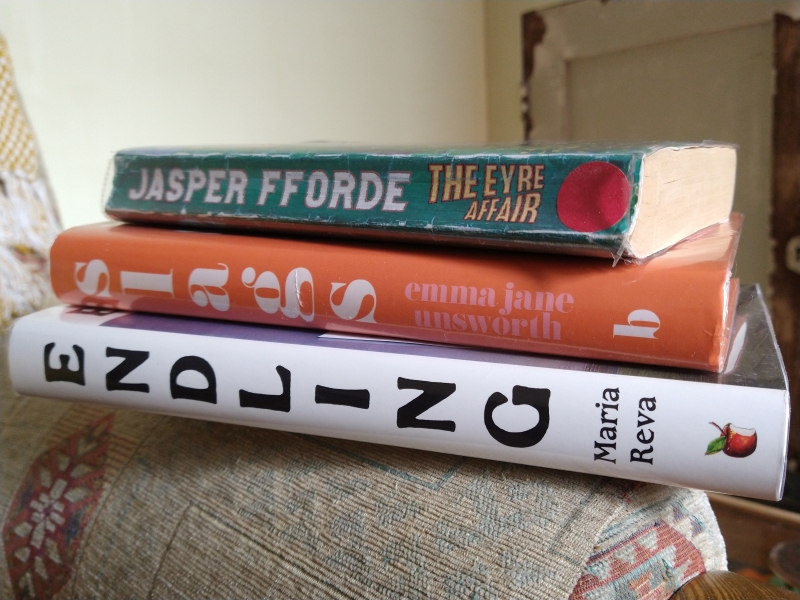
- Endling by Maria Reva
CHECKED OUT, TO BE READ
- The Penelopiad by Margaret Atwood (for book club)
- Red Pockets: An Offering by Alice Mah
- Death in Venice and Other Stories by Thomas Mann
- Opt Out by Carolina Setterwall
- Slags by Emma Jane Unsworth
ON HOLD, TO BE COLLECTED
- The Two Roberts by Damian Barr
- All the Way to the River by Elizabeth Gilbert
- The Haunted Wood: A History of Childhood Reading by Sam Leith
- Buckeye by Patrick Ryan
- A Long Winter by Colm Tóibín
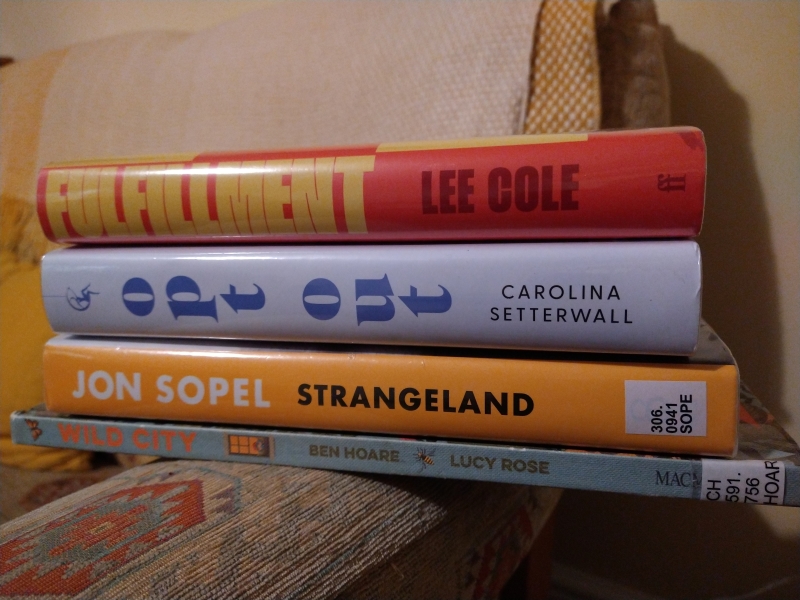
C will read the Sopel for book club, but I have to miss that meeting for a Repair Cafe committee meeting.
IN THE RESERVATION QUEUE
- New Cemetery by Simon Armitage
- Book of Lives: A Memoir of Sorts by Margaret Atwood
- It’s Not a Bloody Trend: Understanding Life as an ADHD Adult by Kat Brown
- Flashlight by Susan Choi
- The Perimenopause Survival Guide: A Feel-Like-Yourself-Again Roadmap for Every Woman over 35 by Heather Hirsch
- Queen Esther by John Irving
- The Matchbox Girl by Alice Jolly
- Heart the Lover by Lily King
- Misery by Stephen King
- The Rest of Our Lives by Benjamin Markovits
- What We Can Know by Ian McEwan
- The Eights by Joanna Miller
- Mexican Gothic by Silvia Moreno-Garcia
- Super-Frog Saves Tokyo by Haruki Murakami
- Rainforest by Michelle Paver
- Death of an Ordinary Man by Sarah Perry
- The Lamb by Lucy Rose
- Flesh by David Szalay
RETURNED UNREAD
- Fulfillment by Lee Cole – Argh, this keeps being requested off me!
- An Eye on the Hebrides by Mairi Hedderwick
- Love in Five Acts by Daniela Krien
- The Artist by Lucy Steeds
I missed the moment on the last three but may try another time.
- The Eyre Affair by Jasper Fforde – I thought about giving him another try after the event, but … no.
RETURNED UNFINISHED
- The Mermaid Chair by Sue Monk Kidd – I read about 45 pages. The setup was interesting but the narrative voice did not captivate.
- The Names by Florence Knapp – Ditto, but only 25 pages. The writing was just not very good.
What have you been reading or reviewing from the library recently?

Share a link to your own post in the comments. Feel free to use the above image. The hashtag is #LoveYourLibrary.
#ShortStorySeptember: Stories by Katherine Heiny, Shena Mackay and Ian McEwan
Every September I enjoy focusing on short stories, which I seem to read at a rate of only one or two collections per month in the rest of a year. This year, Lisa of ANZ Lit Lovers is hosting Short Story September as a blogger challenge for the first time. She’s encouraging people to choose individual short stories they would recommend, so I’ll be centring all of my reviews around one particular story but also giving my reaction to the collections as a whole.
“Dark Matter”
from
Single, Carefree, Mellow by Katherine Heiny (2015)
“One week in late February, Rhodes and Gildas-Joseph told Maya the same come fact, that there was a movement to reinstate Plato’s status as a planet.”
Maya is engaged to Rhodes but also sleeping with Gildas-Joseph, the director of the university library where she works. She’s one of Heiny’s typical whip-smart, exasperated protagonists, irresistibly drawn to a man or two even though they seem like priggish or ridiculous bores (witness the “come fact” above – neither can stop himself from mansplaining after sex). Having an affair means always having to keep your wits about you. Maya bumps into her boss with his wife, Adèle, at a colleague’s cocktail party and in line for the movies, and one day her fiancé’s teenage sister, Magellan (seriously, what is up with these names?!), turns up at the coffee shop where she is supposed to be meeting Gildas-Joseph. Quick, act natural. By the end, Maya knows that she must decide between the two men.
 This is the middle of a trio of stories about Maya. They’re not in a row and I read the book over quite a number of months, so I was in danger of forgetting that we’d met this set of characters before. In the first, the title story, Maya has been with Rhodes for five years but is thinking of leaving him – and not just because she’s crushing on her boss. A health crisis with her dog leads her to rethink. In “Grendel’s Mother,” Maya is pregnant and hoping that she and her partner are on the same page.
This triptych of linked stories is evidence that Heiny was working her way towards a novel, and I certainly prefer Standard Deviation and Early Morning Riser. However, I really liked Heiny’s 2023 story collection, Games and Rituals, which has much more variety.
I like the second person as much as anyone but three instances of “You” narration is too much. The best of these was “The Rhett Butlers,” about a teenager whose history teacher uses famous character names as aliases when checking them into motels for trysts. The cover image is from this story: “The part of your life that contains him is too sealed off, like the last slice of cake under one of those glass domes.”
Although all of these stories are entertaining and have some of the insouciance and bittersweetness of Nora Ephron’s Heartburn, they are so overwhelmingly about adultery (the main theme of at least 8 of 11) that they feel one-note.
why have an affair if not to say bad things about your spouse?
She thought that was the essence of motherhood: acting like you knew what you were talking about when you didn’t. That, and looking at people’s rashes. It was probably why people had affairs.
I would recommend any of Heiny’s other books over this one, but I wanted to read everything she’s published and I wouldn’t say my time spent on this was a waste. (Secondhand – Awesomebooks.com)
“All the Pubs in Soho”
from
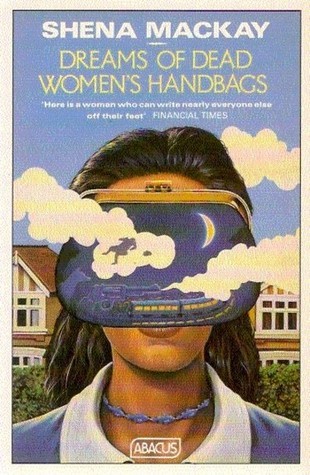
Dreams of Dead Women’s Handbags by Shena Mackay (1987)
“It was his father’s vituperation about ‘those bloody pansies at Old Hollow’ that had brought Joe to the cottage on this empty summer holiday afternoon.”
It’s 1956 in Kent and Joe is only eight years old, so it’s not too surprising that, ignorant of the slang, he shows up at Arthur and Guido’s expecting to find flowers dripping red. Their place becomes his haven from a home full of crying, excreting younger siblings and a conventional father who intends to send him to a private girls’ school in the autumn. That’s right, “Joe” is Josephine, who likes to wear boys’ clothes and insists on a male name. Mackay struck me as ahead of her time (rather like Rose Tremain with Sacred Country) in honouring Joe’s chosen pronouns and letting him imagine an adult future in which he’d keep company with Arthur and Guido’s bohemian, artistic set – the former is a poet, the latter a painter – and they’d take him round ‘all the pubs in Soho.’ But in a sheltered small town where everyone has a slur ready for the men, it is not to be. Things don’t end well, but thankfully not as badly as I was hoping, and Joe has plucked up the courage to resist his father. There’s all the emotional depth and character development of a novella in this 26-page story.
 I’ve had a mixed experience with Mackay, but the one novel of hers I got on well with, The Orchard on Fire, also dwells on the shattered innocence of childhood. By contrast, most of the stories in this collection are grimy ones about lonely older people – especially elderly women – reminding me of Barbara Comyns or Barbara Pym at her darkest. “Where the Carpet Ends,” about the long-term residents of a shabby hotel, recalls The Lonely Passion of Judith Hearne. In “Violets and Strawberries in the Snow,” a man in a mental institution awaits a holiday visit from his daughters. “What do we do now?” he asks a fellow inmate. “We could hang ourselves in the tinsel” is the reply. It’s very black comedy indeed. The same is true of a Halloween-set story that I’ll revisit next month.
The cover is so bad it’s good, amirite? In the title story, Susan Vigo is on her way by train to give a speech at a writers’ workshop and running through possible plots for her mystery novel in progress. “Slaves to the Mushroom” is another great one that takes place on a mushroom farm. Mackay’s settings are often surprising, her vocabulary precise, and her portraits of young people as cutting as those of the aged are pitiful. This would serve as a great introduction to her style. (Secondhand – Slightly Foxed Books, Berwick) 
“The Grown-up”
from
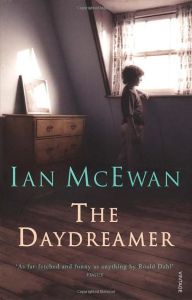
The Daydreamer by Ian McEwan (1994)
“The following morning Peter Fortune woke from troubled dreams to find himself transformed into a giant person, an adult.”
A much better Kafka homage, this, than that forgettable novella The Cockroach that McEwan published in 2019. Every story of this linked collection features Peter, a 10-year-old with a very active imagination. Three of the stories are straightforward body-swap narratives (with his sister’s mangled doll, his cat, or his baby cousin), whereas in this one he’s not trading with anyone else but still experiencing what it’s like to be someone else. In this case, a young man falling in love for the first time. Just the previous day, at the family’s holiday cottage in Cornwall, he’d been bemoaning how boring adults are: all they want to do is sit on the beach and chat or read, when there’s so much world out there to explore and turn into a personal playground. He never wants to be one of them. Now he realizes there are different ways to enjoy life; “he stopped and turned to look at the grown-ups one more time. … He felt differently about them now. There were things they knew and liked which for him were only just appearing, like shapes in a mist. There were adventures ahead of him after all.”
 Of course, I also loved “The Cat,” which Eleanor mentioned when she read my review of Matt Haig’s To Be a Cat. At the time, I’d not heard of this and couldn’t believe McEwan had written something suitable for kids! These stories were ones he read aloud to his children as he composed them. There is a hint of gruesomeness in “The Dolls,” but most are just playful. “Vanishing Cream” is a cautionary tale about wanting your family to go away. In “The Bully,” Peter turns a bully into a tentative friend. “The Baby” sees him changing his mind about an annoying relative, while “The Burglar” has him imagining himself a hero who stops the spate of neighbourhood break-ins. Events are explained away as literal dreams, daydreams or a bit of magic. This was an offbeat gem. Try it for a very different taste of McEwan! (Secondhand – Community Furniture Project, Newbury)
Get Ready for Novellas in November!
Novellas: “all killer, no filler”
~Joe Hill
Hard to believe, but it’s nearly that time again. Autumn is drawing in. For the SIXTH year in a row, Cathy of 746 Books and I are co-hosting Novellas in November as a month-long blogging and social media challenge celebrating the art of the short book. A novella technically contains 20,000 to 40,000 words, but to keep things simple we will define it as any work of under 200 pages.
This year we have two buddy reads, a 2025 fiction release and an older work of nonfiction:
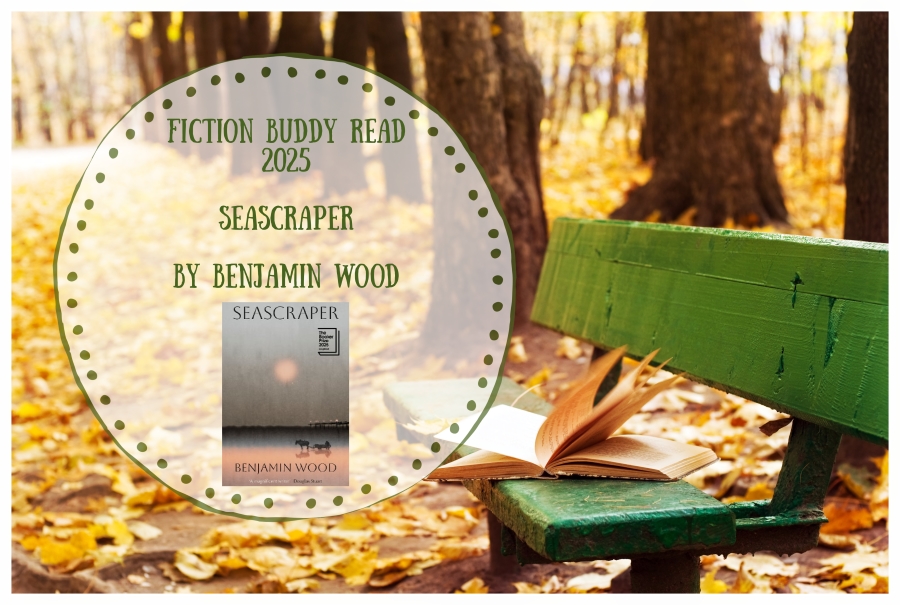
Seascraper by Benjamin Wood is set in the early 1960s and features a young man who lives with his mother in northwest England and carries on the family tradition of fishing for shrimp. He longs for a bigger and more creative life, which he hopes he might achieve through his folk music hobby – or his chance encounter with an American filmmaker. On one pivotal day, his fortunes might just change. Check out this interview with Wood to whet your appetite. Last year our buddy read, Orbital, won the Booker Prize, auguring good things for novellas in the public sphere. Seascraper is on the longlist! In this Q&A on the Booker Prize website, Wood talks about the unusual situation in which he wrote it. (160 pages)

Sister Outsider by Audre Lorde is a 1984 collection of short pieces by the late Black lesbian feminist. I’ve only read Lorde’s The Cancer Journals, so I’m looking forward to this. From the Penguin website: “The revolutionary writings of Audre Lorde gave voice to those ‘outside the circle of this society’s definition of acceptable women’. Uncompromising, angry and yet full of hope, this collection of her essential prose – essays, speeches, letters, interviews – explores race, sexuality, poetry, friendship, the erotic and the need for female solidarity, and includes her landmark piece ‘The Master’s Tools Will Never Dismantle the Master’s House’.” A great opportunity to tie into Nonfiction November. (190 pages)
Please join us in reading one or both books any time between now and the end of November!
You might like to start off the month with a My Year in Novellas retrospective looking at any novellas you have read since last year’s NovNov, and then finish with a New to My TBR list based on what short books others have tempted you with.
It’s always a busy month in the blogging world with Nonfiction November, German Literature Month, Margaret Atwood Reading Month and SciFi Month. Why not search your shelves and/or local library for novellas that could count towards multiple challenges?
From early October a link-up post will be pinned to my site so you can add your planning posts or reviews. Keep in touch via Bluesky (@bookishbeck.bsky.social / @cathybrown746.bsky.social) and Instagram (@bookishbeck / @cathy_746books) and feel free to use the terrific feature images Cathy has made plus our new hashtag, #NovNov25.
 Bookish Beck = Rebecca Foster. American transplant to England. Freelance proofreader and book reviewer.
 Bookish Beck