Book Serendipity, March to May
I call it “Book Serendipity” when two or more books that I read at the same time or in quick succession have something in common – the more bizarre, the better. This is a regular feature of mine every couple of months. Because I usually have 20–30 books on the go at once, I suppose I’m more prone to such incidents. People frequently ask how I remember all of these coincidences. The answer is: I jot them down on scraps of paper or input them immediately into a file on my PC desktop; otherwise, they would flit away! Feel free to join in with your own.
The following are in roughly chronological order.
- A sister named Fiona in The Forgotten Waltz by Anne Enright and Leaving Home by Mark Haddon.
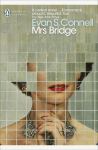
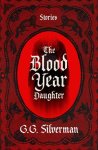
- A parent burns a dirty magazine in Mrs. Bridge by Evan S. Connell and The Blood Year Daughter by G.G. Silverman.
- Sabbath chains, Gaelic sermons, and psalm singing on the very pious Isle of Lewis in John of John by Douglas Stuart (set in the 1990s), then Findings by Kathleen Jamie (essay from the early 2000s). I doubt any of the above can still be found there, though we did note “Respect the Sabbath” signs on playground equipment on our 2022 trip.
- A single mother who won’t answer the phone because she’s afraid of who/what it might be in Blonde by Joyce Carol Oates and The First Day of Spring by Nancy Tucker.
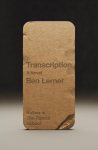
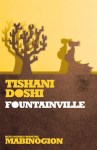
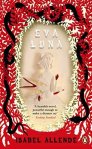
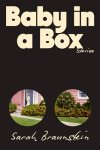
- An orphaned narrator named (Eva) Luna in Eva Luna by Isabel Allende and Fountainville by Tishani Doshi. Then I came across a dog named Luna in Transcription by Ben Lerner! And the main character in one story of Baby in a Box by Sarah Braunstein starts going by her nickname, Luna.
- There’s a Muriel Rukeyser poem in the anthology Night Feeds and Morning Songs (ed. Ana Sampson) and Rukeyser is a character in Sophie Ward’s Our Better Natures, which I was also reading at the time.
- Eating boiled ham in Ordinary Saints by Niamh Ni Mhaoileoin and I Capture the Castle by Dodie Smith (and boiled turkey in The First Day of Spring by Nancy Tucker).
 Checking a hotel room for bedbugs in Transcription by Ben Lerner and Half His Age by Jennette McCurdy.
- A young person writing in shorthand in I Capture the Castle by Dodie Smith and First Class Murder by Robin Stevens.
- A character named Emmie in Transcription by Ben Lerner and (no surprise here) Emmie Arbel: The Colour of Memory by Barbara Yelin.
- Noting that roses are not suited to a particular climate in The Memory of Borrowed Books by Meg Anderson and Late Migrations by Margaret Renkl.

- A Welsh character named Owain in Fountainville by Tishani Doshi and Bog Child by Siobhan Dowd.
- The Secret Garden is discussed/mentioned in Reading My Mother Back by Timothy C. Baker and Mare by Emily Haworth-Booth, and mentioned in The Memory of Borrowed Books by Meg Anderson.
- The protagonist is emotionless at their mother’s deathbed in Like Mother by Jenny Diski and Leaving Home by Mark Haddon.
- (Apologies: this one is grim.) A young woman is sexually assaulted with a bottle in The Benefactors by Wendy Erskine and The Truth about Ruby Cooper by Liz Nugent (both Irish novelists).
- A husband is involved in a deliberate (suicidal) crash in Show Me Where It Hurts by Claire Gleeson and one story of I Am the Ghost Here by Kim Samek.
- Ali Baba’s cave is used as a metaphor in The Usual Desire to Kill by Camilla Barnes and Rita Hayworth and Shawshank Redemption by Stephen King.
- A brother- and sister-in-law have an affair in the two Portuguese novels I read on my Portugal holiday, The Migrant Painter of Birds by Lídia Jorge and The Piano Cemetery by José Luís Peixoto.
- A woman describes her discovery of orgasm in The Half Life by Rachel Beanland and The High Mountains of Portugal by Yann Martel.
- ‘There are two kinds of people…’ thinking in The Mighty Red by Louise Erdrich and one story of It Will Come Back to You by Sigrid Nunez.
- Money is hidden behind a boiler in The Mighty Red by Louise Erdrich and The Murderer’s Ape by Jakob Wegelius.
 The surname Callaway in The Half Life by Rachel Beanland and Calloway in The Watersmith by Yance Wyatt.
- Louise Erdrich, whose The Mighty Red I was reading at the time, is mentioned in The Madman’s Guide to Stamp Collecting by Robert Irwin.
- A minor character named Genevieve appears in Our Numbered Bones by Katya Balen and The Watersmith by Yance Wyatt.
- The Mighty Red by Louise Erdrich is the second novel I’ve read within eight months (after The Wedding People by Alison Espach) in which a reluctant bride is saddled with a groom named Gary.
- A mountain lion sighting in The Mighty Red by Louise Erdrich and Learning from Silence by Pico Iyer.
- A character has a love of Agatha Christie novels in The High Mountains of Portugal by Yann Martel and Buckeye by Patrick Ryan.
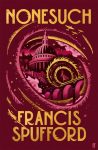
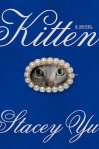
- A character with the nickname Kitten in Nonesuch by Francis Spufford (particularly funny because it’s for a thug) and Kitten by Stacey Yu.
- Reading two queer novels with an academic writing course setting at the same time: Almost Life by Kiran Millwood Hargrave and Kingfisher by Rozie Kelly.
- A remark about the rare beauty of black hair with blue eyes in Kingfisher by Rozie Kelly and My Year in Paris with Gertrude Stein by Deborah Levy.
- An STD is evidence of a husband’s infidelity in The Daffodil Days by Helen Bain and A Beautiful Loan by Mary Costello.
- Bottles being used to hold picnic meals / foraged blackberries (noted because these days it would be plastic pots for everything) in Zami by Audre Lorde (the 1940s) and The Daffodil Days by Helen Bain (the 1960s).
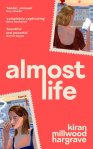 Kismet is a character name in The Mighty Red by Louise Erdrich, so I was primed to notice the word being used in Almost Life by Kiran Millwood Hargrave (it’s a synonym for fate).
- A writer who faces the wall to work in The Daffodil Days by Helen Bain (Ted Hughes, that is) and The Autobiography of Alice B. Toklas by Gertrude Stein (referring to Alice B. Toklas!).
- A painting of an Arctic tern features in The Migrant Painter of Birds by Lídia Jorge (on the cover) and Kingfisher by Rozie Kelly.
- Hot milk is drunk in The Memory of Borrowed Books by Meg Anderson, Kingfisher by Rozie Kelly (with Ovaltine), Nonesuch by Francis Spufford, and Kitten by Stacey Yu.
- William James is mentioned in My Year in Paris with Gertrude Stein by Deborah Levy and Wise by Frank Tallis.
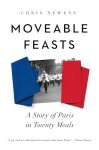 Algerian Muslim men appear in A Beautiful Loan by Mary Costello and Moveable Feasts by Chris Newens.
- A pet cat was found on the shore in The Memory of Borrowed Books by Meg Anderson and Kitten by Stacey Yu.
- Bringing cherries to an invalid in Almost Life by Kiran Millwood Hargrave and Kingfisher by Rozie Kelly.
- Sex with a woman who has a mastectomy scar in Kingfisher by Rozie Kelly and Zami by Audre Lorde.
- A sighting of a kingfisher as auspicious in Kingfisher by Rozie Kelly and Transcription by Ben Lerner.
- The idea that former lovers leave a mark on people in Almost Life by Kiran Millwood Hargrave and Zami by Audre Lorde.
- Pet cat(s) do themselves a mischief by getting into paint supplies in Zami by Audre Lorde and Kitten by Stacey Yu.
- A Sandymount, Dublin setting in A Beautiful Loan by Mary Costello and Hood by Emma Donoghue.
- An Irish family where the mother and one daughter move to the USA and the father and other daughter stay behind in Hood by Emma Donoghue and The Truth about Ruby Cooper by Liz Nugent (both Irish novelists).
- The concept of a “funeral cake” in The Mighty Red by Louise Erdrich and Kingfisher by Rozie Kelly.
- A character regrets wearing eye makeup on an emotional occasion in The Memory of Borrowed Books by Meg Anderson and Kingfisher by Rozie Kelly.
 My second Irish novel of the year that takes place over one week: Hood by Emma Donoghue (after One by One in the Dark by Deirdre Madden).
- A cat of confusing gender: Grace is male in Hood by Emma Donoghue and Bob is always referred to as “it” in My Year in Paris with Gertrude Stein by Deborah Levy.
- The idea that it’s rare for a woman to a) be a good storyteller (in The Torrents of Spring by Ivan Turgenev) or b) tell a punchline with a straight face (in The Correspondent by Virginia Evans – at least the man gets called out on his sexist opinion in this case). I also noticed the use of the word “caprice” in both books (and also in Turgenev’s First Love) because it’s unusual and I like it.
- Another grim, grim one: reading two books at the same time in which a woman is / women are drugged and raped while unconscious (A Hymn to Life by Gisèle Pelicot and Women Talking by Miriam Toews).
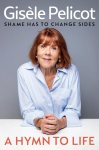
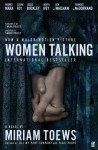
- I read two short stories in quick succession about a peasant porter who carries a broom: “A Real Durwan” by Jhumpa Lahiri (from Interpreter of Maladies) followed by “Mumu” by Ivan Turgenev.
- An older woman insists that she still is/has a little girl inside in The Correspondent by Virginia Evans and A Hymn to Life by Gisèle Pelicot.
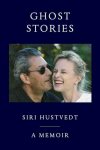 The number 7 has magical significance for the author in Ghost Stories by Siri Hustvedt and A Hymn to Life by Gisèle Pelicot.
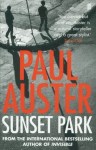
- A couple meets when they see each other reading the same book in an outdoor location: A Lover’s Discourse by Roland Barthes in Almost Life by Kiran Millwood Hargrave; and The Great Gatsby in Sunset Park by Paul Auster.
- Alison Bechdel’s Dykes to Watch Out For is mentioned in Hood by Emma Donoghue; I was reading a Bechdel book, The Secret of Superhuman Strength, at the same time.
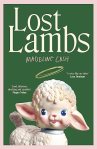
- Gnats are irksome in Sunset Park by Paul Auster and Lost Lambs by Madeline Cash.
What’s the weirdest reading coincidence you’ve had lately?
20 Books of Summer Begins!
Today marks the start of 20 Books of Summer and for me it begins with a novel that will no doubt take me the entire three months of the challenge to finish (with many other books on the go at the same time, of course).
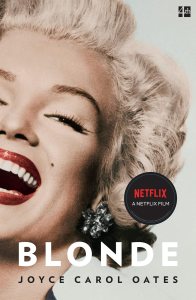
I technically started reading Blonde by Joyce Carol Oates back in February, but I’ve only reached page 70, where I’ve been stuck for weeks. It’s not that I’m not enjoying it, but the type is so small and thus the writing so dense on the 700+ pages that I never seem to make any progress. Even setting myself micro-goals of 10 pages per day, for instance, failed as I’ve found that I always want to pick up other ‘easier’ books instead. In these sorts of situations, I would be inclined to skim, but that would be missing the whole point of an Oates novel, which seems to be the style just as much as the plot.
I’ve failed with her twice before, alas: in 2020 I read about 80 pages of We Were the Mulvaneys before giving up. My pithy response: “Too much of quirky folks.” (The other attempt, that same year, was Night-Gaunts, of which I only read the first story.) And “too much” seems about right for describing JCO in general. Too dark, too wordy. “Prolix” is an adjective I’m tempted to apply, but it doesn’t seem fair when I haven’t managed an entire book yet. Moreover, I’m committed to a casual Oates buddy reading project with Marcie (of Buried in Print) this summer and autumn. We’re choosing different books but trying with our selections to get a good sense of her range. Towards Halloween time we’ll read some spooky stories, for instance. I’d also like to source some of her novellas and nonfiction.
In any case, today is the perfect day to introduce this read as it would have been Marilyn Monroe’s 100th birthday. Oates calls her novel a “radically distilled ‘life’ in the form of fiction, and, for all its length, synecdoche is the principle of appropriation.” After a prologue about Death coming for Norma Jeane, the early pages have been about her childhood with a vain, neglectful mother who ends up in a mental hospital. “The primary fact of Gladys was the primary mystery of Gladys: She could not be a true mother to Norma Jeane. Not at the present time.” Already we see the forces that will shape Norma Jeane’s future: the deep wound of an absent father and an unfit mother, a fascination with glamour and Hollywood, and the genetic curse of substance use disorder.
Here’s a song about endometriosis that uses Norma Jeane as its starting point: “One in Ten” by Jenn Butterworth. Every time I so much as look at the cover of Blonde, I get it in my head…
Literary Wives Club: Interpreter of Maladies by Jhumpa Lahiri (1999)
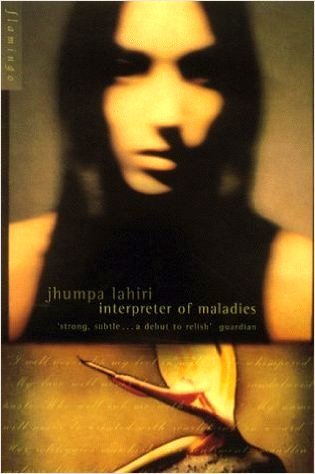
This was an unusual selection for us in that it’s a short fiction collection, not all of whose stories are about marriage. Lahiri won a Pulitzer Prize for this debut work and I’m so pleased to have finally had an excuse to pick it up. Her characters tend to be Indian or Bengali (first- or second-generation) immigrants in New England, though there are also two pen portraits of unfortunate peasant women back in India. These two are less fixed in time and feel rather fable-like, especially with the plural observers’ voice in “The Treatment of Bibi Haldar.”
Of the nine stories, six are in the third person and three in first. Apart from a couple set in 1969 or 1971, the rest are contemporary. Lahiri alternates between relationship studies and accounts of encounters with strangers across generations and/or cultures. There’s a girl’s impressions of the dignified fellow expat visitor at a time of political instability in “When Mr. Pirzada Came to Dine,” and the American boy who gets a glimpse into an unfamiliar world on afternoons at his Indian child-minder’s house in “Mrs. Sen’s.” Culture shock goes the other way for the narrator of “The Third and Final Continent,” who has moved from Calcutta to London to Cambridge and rents a room from a formidable 103-year-old landlady.
 Often, food is a reminder of home; there are lots of delicious descriptions of curries. Extramarital infatuation is contrasted with true knowledge of another person – a child is wise beyond his years in defining “sexy” as “loving someone you don’t know.”
If you seek out just one story from this excellent collection, make it “A Temporary Matter,” about a couple reeling from a stillbirth. On five successive evenings when the power company cuts their electricity to repair the line, they cook a special meal, light candles and tell secrets, including one concerning the child they lost. This story, which opens the collection, blew me away. The other highlight among a very strong pool is “This Blessed House,” in which a couple keep finding tacky Christian religious relics the previous owners left behind. Even though they’re Hindus, Twinkle decides to keep it all up for superstitious reasons, though her new husband disapproves.
All but one of the stories are standouts, and I could see how they’ve influenced story writers in the decades since, including Anuja Varghese. What linked them all together for me was the theme of denying or affirming common humanity.
More fool me for waiting all these years to try Lahiri! I have two more of her books on the shelf that I’ll try to get to soon. (Secondhand – Community Furniture Project, Newbury) 
The main question we ask about the books we read for Literary Wives is:
What does this book say about wives or about the experience of being a wife?
Marriage can be a welcome support, or a handicap. We see timid wives adjusting to a new country, and newlyweds – via arranged marriage or choice – trying to understand each other’s ways. The loss of a baby threatens to separate one couple, but instead they cling to each other. (Statistics show that 20% of marriages break up over the death of a child; previously it was thought to be 80%.) The villagers think marriage will cure Bibi Haldar, but no man will have her. Mrs. Sen is dependent on her husband for everything because she’s too scared to learn to drive.
In some traditional cultures, it’s risky for wives to assert their independence. America seems to offer women greater freedom. Mrs. Das, from the title story about an Indian American family touring India, transgresses traditional expectations by admitting to not loving her husband and children and having had an affair. Twinkle, too, flouts conventionality by refusing to submit to her husband’s wishes. But, of course, this doesn’t guarantee happiness.
See the reviews by Becky, Kate, Kay, and Marianne, too! (Naomi has stepped down from the club.)
Three Novels with (Tenuous) May Connections
Last year I read a May Sarton novel for the anniversary of her death; this year I thought I’d pick one up for her birth month. When I spotted mentions of May in the first line of two more novels from my shelves, I decided to make it a trio, however tenuous.
Hood by Emma Donoghue (1995)
First line: “Mayday in 1980, heat sealing my fingers together.”
Pen opens her story with a flashback of wandering Dublin with her girlfriend, Cara, when they were teenagers. “Why is it the most ordinary images that fall out, when I shuffle the memories? Two girls in a secondhand bookshop, hands sticky with sampled perfumes”. But in the novel’s present day, 13 years later, news has just come that Cara died in a crash on her way home by taxi after a Greek island holiday. They were only out to their lesbian friends; even Cara’s father, whose home they lived in together, was in the dark about their relationship, so Pen is in a curious position as the secret ‘widow’. “I felt such an amateur,” she confides. “About to embark on the biggest loss I could imagine, with no practice at mourning a mother or even a pop star”.
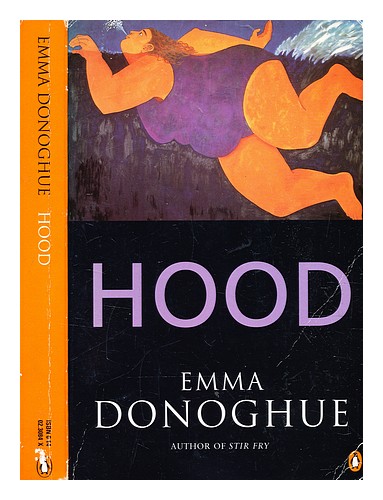 Pen requests compassionate leave for the death of her ‘housemate’ from the Catholic school where she teaches. She and Mr Wall have plenty of sadmin to do while also hosting his other daughter, Kate, who’s come back from America for the funeral. Pen keeps a lid on her emotions, seeing to household routines and attending formal and informal memorial services, but all the while she’s visited by memories from her life with Cara. (Not all happy; she wasn’t thrilled with Cara’s bisexuality and nonmonogamy.) Many are sensual: Pen is a woman with a strong appetite for food and sex, and matter-of-factly calls herself fat. The title is a riff on sisterhood but also connects to a reference to – ahem – the clitoral hood. Pen’s reliving of her lovemaking with Cara is often a little too anatomical in that way to be hot.
Last year I read Donoghue’s debut novel, Stir-fry; this was her second. Cara is more than a little reminiscent of Jael from the earlier book. I worried we would get an excruciating scene in which Pen attempts to act on her childhood crush on Kate, but luckily that’s not the case. The book is structured in seven long chapters, one per day for a week. It seemed far-fetched to me that Pen would already be clearing the house of Cara’s belongings within days of her death. While I appreciated the different angle on grief, Pen’s positive body image, and the way that liturgical and theological language permeates her thinking even though she no longer feels associated with the Catholic Church (“Grant me spiritual enlightenment through pain, sure, Lord, grand, you’re on, but not tonight”), this didn’t charm me like Stir-fry did. It felt a little too niche, like you’d need to be familiar with the 1990s lesbian scene to really feel welcome. (Secondhand – Awesomebooks.com)
Women and Children First by Alina Grabowski (2024)
 First line: “On the last Saturday in May, I drown in my sleep.”
This debut novel about a high school girl’s accidental death at a party is structured in two halves: five chapters headed “Pre” and another five under “Post.” Each one is narrated by a different girl or woman from a Boston-area community. They are dealing with chronic illness, loss, relationship difficulties, or career confusion. The prose is often lyrical, but the portraits don’t seem to add up to much and the character names are confusingly similar (Mona – Marina – Maureen; Layla – Lila – Lucy). I wondered if I would have preferred Grabowski’s writing in a short story collection. (Passed on by Susan, who reviewed it here – thank you!)
The Bridge of Years by May Sarton (1946)
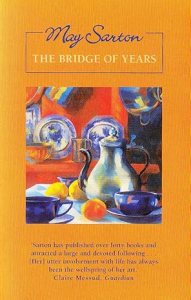 This is miniature saga of a Belgian family in the interwar years. Mélanie Duchesne is a furniture dealer and her husband, Paul, a philosopher who’s trying but failing to write a book. Their country home seems like an idyll, but even in this small community there are those whose lives have been irreparably damaged by wartime trauma. There are passages that feel just like a still life:
The room was full of sunlight warming the orange walls, making pools of ruddy light on the copper pots and the shining blue-and-white plates that stood on a shelf at the back, but not dissipating the melancholy face, in the portrait on the wall, of a thin, thoughtful little boy wrapped up in a blue scarf, who was Paul twenty years ago.
I made it through most of Part I, “Spring,” but put this back on the shelf to try another time when I have the patience for lovely prose and less attention to plot. (Secondhand – Awesomebooks.com)
May Releases by Siri Hustvedt, Will Maclean & More
This month’s overarching theme is creepy and/or haunted houses! My main reviews are of a collage-style bereavement memoir and a slice of English horror. I also excerpt my reviews of four more May releases read in advance for Shelf Awareness, including one that’s in the running for my Book of the Year.
Ghost Stories by Siri Hustvedt
Paul Auster died of non-small cell lung cancer on April 30, 2024. His widow, Siri Hustvedt, wears his old clothes and still occasionally smells his cigar smoke in their Brooklyn home. “I’m living in a haunted house,” she writes, one “inhabited by a ghost Paul and I made together, a ‘we’ that doesn’t exist anymore.” This isn’t a straightforward bereavement memoir recounting the relationship followed by the loved one’s decline and death. Instead, it moves back and forth between past and present and incorporates various documents. There are glimpses of her state of mind as she keeps up with routines to get through the days but still experiences life as unreal and outside of time.
One section reprints 12 e-mail updates she sent to friends and family during Paul’s illness. She weaves through fragments of his shocking family history (familiar from The Invention of Solitude), certain events that have been memorialized in his books (such as the car accident he wrote about in Winter Journal), and brief tales of his work and its reception. There’s also Paul’s incomplete series of letters to his newborn grandson, Miles, in which he tells the boy the stories he thinks he should know about his ancestors. A notable one was about 9/11, which happened to be the day their daughter Sophie started at a new high school; she passed under the World Trade Center on the subway half an hour before the first attack.
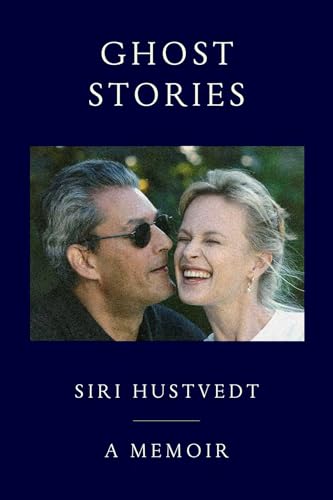 For those of us who have read both Auster and Hustvedt, it’s particularly interesting to read about how their work intersects. “We both liked the idea of our fictional worlds kissing, as it were,” she notes. She describes their connection as “intellectual-erotic” and predicts that, given another 100 years together, they would have merged into one person. Their influence on each other’s work was mutual, she insists, rather than one-sided from Paul to her as misogynistic detractors have assumed. She’s always been more the intellectual anyway, with a literature PhD and amateur interests in neurology and philosophy; and he ‘borrowed’ her character Iris Vegan (from The Blindfold) for one of his later novels, Leviathan.
The book grows increasingly political towards its close. Paul didn’t live to see “45” re-elected as 47. Hustvedt decries the rise of anti-intellectualism and, at Paul’s memorial service nearly 10 months after his death, quoted her father’s prescient words: “when fascism comes to America, they’ll call it Americanism.” It doesn’t seem like alarmism to ask what the current regime in the US and elsewhere portends for writers committed to humanism, nuance, and more or less overt voicing of outrage (as in one of Paul’s late books, a short text accompanying his son-in-law’s photographic series on gun violence in America).
This whetted my appetite to read more by Auster and fulfils her stated goal “to bring something of the man back on the page.” I can thoroughly recommend it to fans of either or both authors, as well as those interested in grief stories and the current literary scene. (Read via Edelweiss)
Solace House by Will Maclean
I hadn’t heard of Maclean’s first novel, The Apparition Phase, which was on the McKitterick Prize shortlist (before my involvement with the Prize), but I was drawn to the descriptions of his second. The cover puff from Nicholas Binge – “The Secret History meets The Haunting of Hill House” – can’t be topped, and the promotional materials’ references to Piranesi and Possession are equally accurate. In the summer of 1993, Alex Lane is 19, broke and wondering what to do with himself. He seems to be the only student left at The Ridge. Except for that pale young man he’s seen screaming at a window opposite his room…
The Student Welfare Office offers him a job on a team clearing out two Victorian properties the university has acquired or is hoping to acquire. One is Marshlands, a former mental hospital, while Solace House was the private residence of the Flaynes, the last of whom recently died at age 101. Alex finds “a lifeboat of easy camaraderie” with his seven co-workers: Clive, a loud, confident stoner; Malcolm, who’s beautiful and gay; Helen, who’s super-religious; Ruth, a Goth; Leo, a mystical researcher; Adam, a weird (traumatized rich kid; and Ella, who’s clever and alluring. But none of them is prepared for what they find at Solace House. Edwin Flayne was a hoarder and the rooms are so full that they can’t move. One is completely covered in mirrors; another has creepy effigies around a table; the hall is plastered with strange paintings; and a series of ledgers with the ravings of a madman. Alex and Ella save from the burn pile one that contains an epic poem of utopian visions and musings on the disappearance of Flayne’s mother.
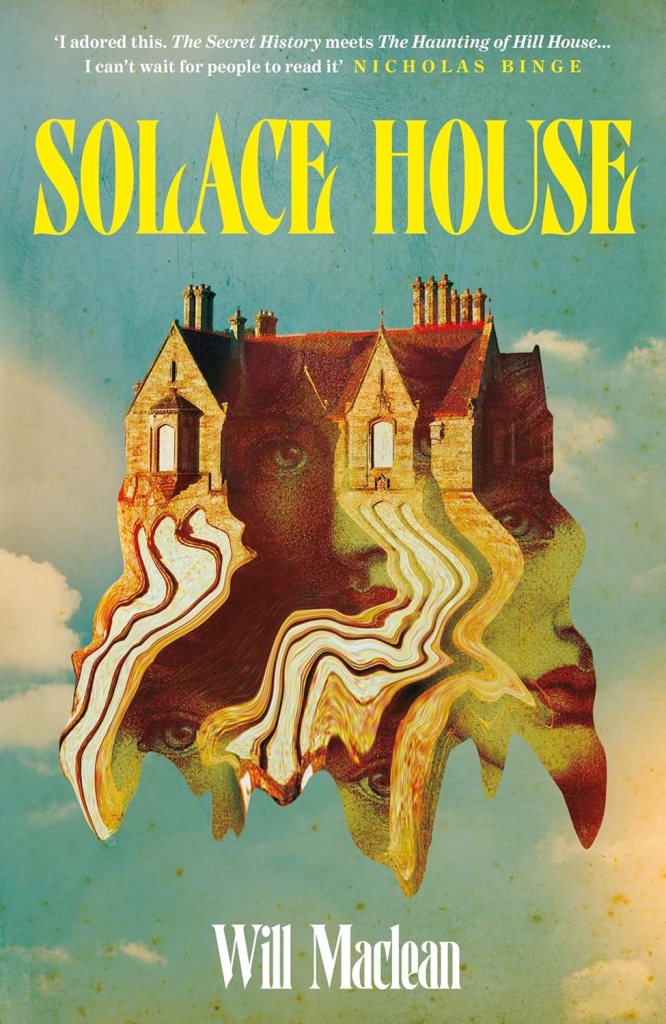
Flayne’s interest in the esoteric is only matched by Leo’s; add on some magic mushrooms and it’s a heady combination of the surreal as the team explores a cave on the property that the Flaynes considered a Thin Place. While high, Leo issues what seems to be a prophecy of the order in which they’ll all die. All along, we’re kept wondering how Alex’s parents both died on “The Last Day” at the hands of “The Annihilator.” He regurgitates fictional orphan plots to try to get Ella off his case, but she (and we) know he’s holding something back.
Although I wearied of the pastiche poetry that heads each chapter and at some point stopped reading it, it does have ultimate significance. (And bully to Maclean for adding “all written by me, rather than AI, before anyone asks” to his Acknowledgements.) Midway through, I was thinking to myself this should have been in the third person to legitimize the horror, as it can otherwise shade into silliness. Part IV jumps ahead in time and subverts what’s gone before, making Alex question not just the last four years of his life but the entire course of it. And now I knew why it had to be in the first person, so reliant is it on individual experience. Time, identity and memory all come into question.
At first I was disappointed, thinking that with this section Maclean had undermined the eerie power of what went before, but there’s another switchback still to come. The book is a little overlong at just under 500 pages, and sags a bit in the final 100, but it kept surprising me and it comes to a satisfying conclusion. I also got the sense of an author having fun with the 1990s nostalgia and student behaviour. I would certainly seek out his debut.
With thanks to Atlantic Books for the free copy for review.
Reviewed for Shelf Awareness:
 Memory House by Elaine Kraf: In this posthumous fifth novel, a novelist enters a commune for failed artists. Magic realism and metafiction coalesce in another of this unsung genius’ typically weird explorations of memory, creativity, and sexuality. It all appears to add up to a metaphorical journey, with a symbolic death and rebirth for those re-entering Society.
 Mother Tongue by Sara Nović: Nović’s fourth book is a defiant memoir of parenthood achieved in spite of the troubled histories of deaf education, religious indoctrination, and international adoption. This is a fierce defense of deafness as a culture rather than a disability to be eradicated, and a beautiful exploration of the legacies of language and love.
 Wellwater by Karen Solie: The Canadian poet Karen Solie’s intricate sixth collection (which won the T. S. Eliot Prize), gilds the natural and human worlds with religious imagery and an environmentalist conscience. The work toggles between the material and the abstract; quotidian experiences fuel meditations on concepts such as intuition, kindness, and fate.
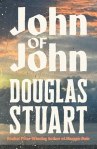 John of John by Douglas Stuart: In Douglas Stuart’s superb third novel set on the Isle of Harris (Outer Hebrides), a young man seeks to reconcile his sexuality and artistic goals with his family’s expectations and devout upbringing. Intriguing in its particularities but timeless in wisdom, it offers hope that relinquishing shame creates freedom to be true to oneself. (I also got to interview Douglas Stuart! This is one of my top three books of 2026 so far, along with Brawler and Whistler – forthcoming in June.)
Love Your Library: May 2026
I hope everyone is having a good Memorial Day / Bank Holiday weekend. It’s far too hot here in southern England!
Thanks so much to Eleanor, Marcie, and Skai for posting about their recent library reading!
Here’s Audre Lorde on the importance libraries had in her life (from Zami): “I learned how to read from Mrs. Augusta Baker, the children’s librarian at the old 135th Street branch library. … If that was the only good deed that lady ever did in her life, may she rest in peace. Because that deed saved my life, if not sooner, then later, when sometimes the only thing I had to hold on to was knowing I could read, and that that could get me through.” In a neat echo of her early life, the Epilogue then has Lorde graduating from library school.
My library use over the last month:
(links are to any book reviews not already featured on the blog)
My library system has bought the whole Jhalak Prize for Poetry shortlist, so I’ll be working my way through that. (The Howe was the first.)
I’m also proceeding through the Women’s Prize shortlist; I’m only awaiting one more title that’s on order. I predict The Correspondent will win, and that would suit me just fine as I am loving it.
READ
- A Beautiful Loan by Mary Costello

- The Mighty Red by Louise Erdrich

- The Curious Incident of the Dog in the Night-Time by Mark Haddon (a reread)

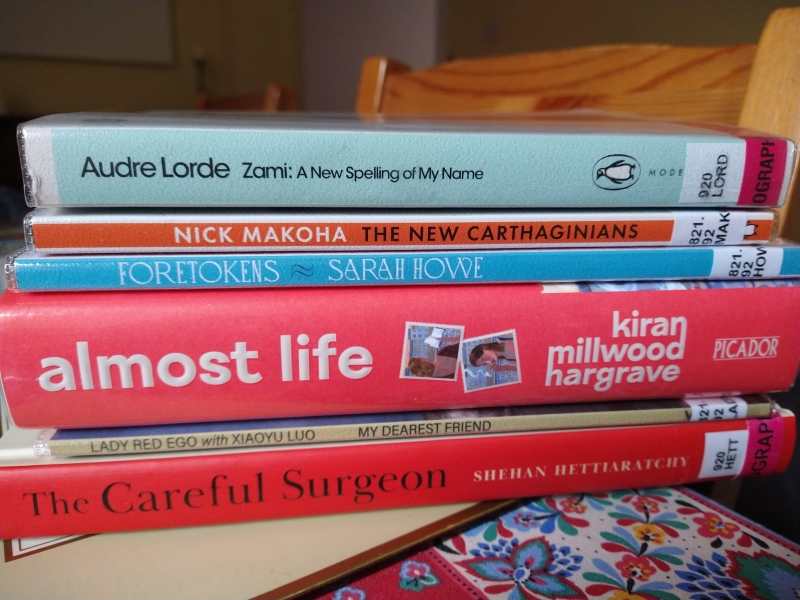
- Almost Life by Kiran Millwood Hargrave
- Foretokens by Sarah Howe
- My Year in Paris with Gertrude Stein: A Fiction by Deborah Levy
- Zami by Audre Lorde
- Nonesuch by Francis Spufford
- The Murderer’s Ape by Jakob Wegelius (a reread)

SKIMMED
- Wise: Finding Purpose, Meaning and Wisdom Beyond the Midpoint of Life by Frank Tallis
 CURRENTLY READING
- Pathfinding: On Walking, Motherhood and Freedom by Kerri Andrews
- The Heart of Christianity by Marcus Borg (a reread)
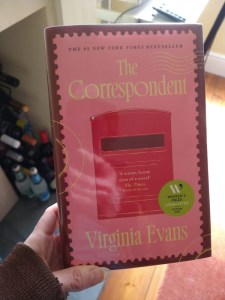
- The Correspondent by Virginia Evans
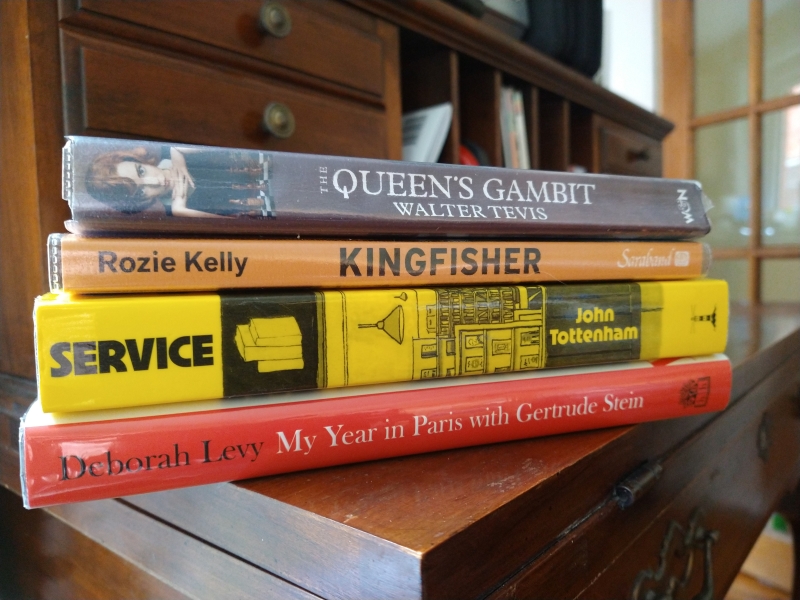
- Kingfisher by Rozie Kelly
- Carrie by Stephen King
- The Spirituality Gap by Abi Millar
- A Hymn to Life: Shame Has to Change Sides by Gisèle Pelicot
- Greenwild by Pari Thomson
- Women Talking by Miriam Toews
CHECKED OUT, TO BE READ
- My Dearest Friend by Lady Red Ego
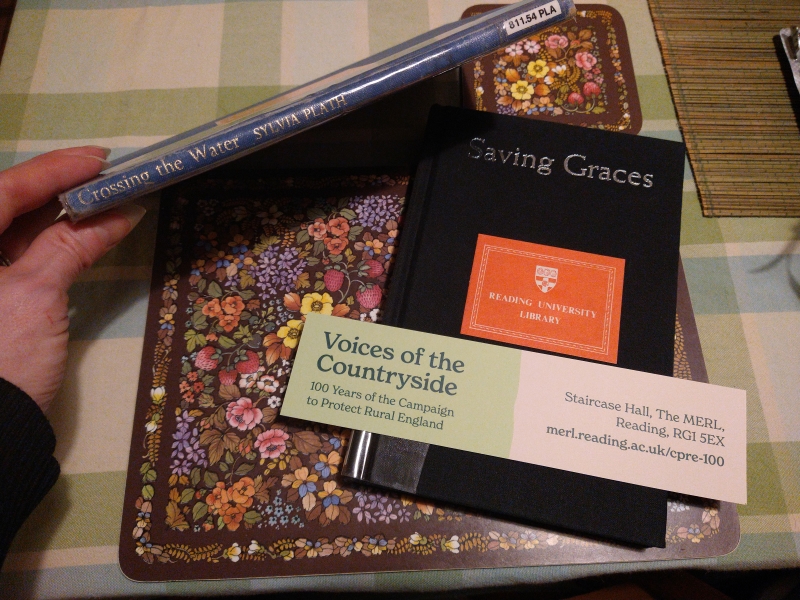
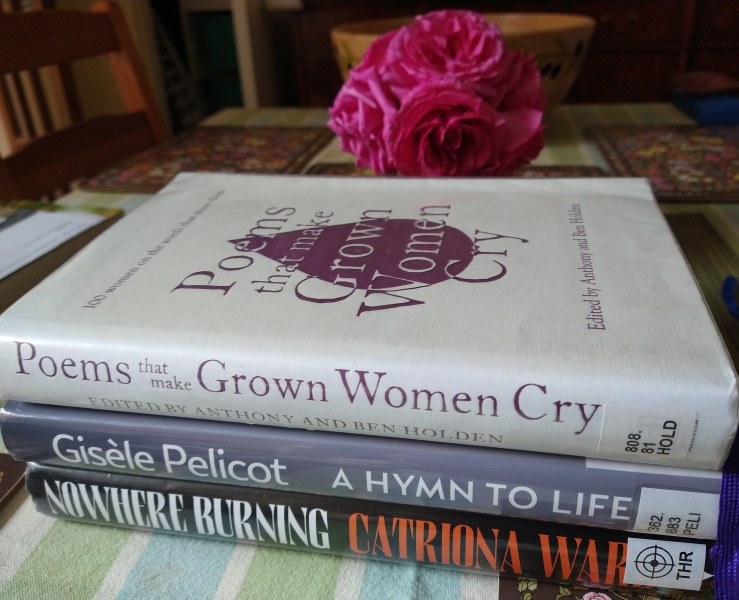
- Poems that Make Grown Women Cry: 100 Women on the Words that Move Them, ed. Anthony and Ben Holden
- The New Carthaginians by Nick Makoha
- Crossing the Water by Sylvia Plath
- Saving Graces: Images of Women in European Cemeteries by David Robinson
- The Queen’s Gambit by Walter Tevis
ON HOLD, TO BE COLLECTED
- Lost Lambs by Madeline Cash
- I Sing to the Greenhearts by Maggie Harris
- Holy Boys by Andrés N. Ordorica
IN THE RESERVATION QUEUE
- Yesteryear by Caro Claire Burke
- Dominion by Addie E. Citchens
- Come What May: Life-Changing Lessons for Coping with Crisis by Lucy Easthope
- Agnes Aubert’s Mystical Cat Shelter by Heather Fawcett
- Hunger and Thirst by Claire Fuller
- Honour & Other People’s Children by Helen Garner
- The Shock of the Light by Lori Inglis Hall
- Why I Am Not a Bus Driver by Ashley Hickson-Lovence
- Alice with a Why by Anna James
- Dogs, Boys and Other Things I’ve Cried About by Isabel Klee
- The Book of Birds by Robert Macfarlane and Jackie Morris
- Mother Mary Comes to Me by Arundhati Roy
- The Original by Nell Stevens
- The Things We Never Say by Elizabeth Strout
RETURNED UNFINISHED
- Service by John Tottenham – I read the first 25 pages and found the grumpy bookseller narrator’s perspective amusing (but potentially quite tiresome after another 300). I loved this skewering of the trend for publishing short stories in individual volumes: “At sixty-three pages this recently published book was no more than a short story, but it was presented in the form of a novel; it was the sort of book that people who wanted to be thought of as ‘well-read’ felt they were supposed to like, and it was presented with a classic red-on-black design with bold lettering.”
- Nowhere Burning by Catriona Ward – This wasn’t gripping me in the first few pages, but I might try it again one day.
RETURNED UNREAD
- The Swell by Kat Gordon – Will borrow another time.
- The Careful Surgeon: Finding Light, Courage and Compassion in the Face of Life and Death by Shehan Hettiaratchy – Seemed twee and not notably well written.
- Skylark by Paula McLain – I’ve enjoyed her other novels and this seems like it should be perfect for Tracy Chevalier fans, but it’s so long and with such small type that I have attempted it twice and made no headway.
- Wandering Stars by Tommy Orange – Will borrow another time.
- Carrion Crow by Heather Parry – Will borrow another time.
What have you been reading or reviewing from the library recently?

Share a link to your own post in the comments. Feel free to use the above image. The hashtag is #LoveYourLibrary.
Spring Reading, Part II: Helen Bain, Stephen King & Ivan Turgenev
When I posted for the first day of spring, I noted that it was already like early summer in the UK. Today it feels like summer is here to stay. After an April with just 18% of normal rainfall, our pond is looking half-empty. It was a surprisingly chilly mid-May, but really hot weather (low 30s C / high 80s F) is moving in just in time for the bank holiday weekend. Myriad insects find a haven in our lush, unmowed garden full of trees, wildflowers and so-called weeds. Benny is closely supervised on his three or four daily walks in this garden jungle. I love to see swifts wheeling through the sky, but I’d happily sacrifice the sun to get some more rain.
My three selections for this batch of seasonal reading are an excellent forthcoming novel about Sylvia Plath, a historical novella that’s become well known through the movie version, and obscure Russian classics about infatuations that end in heartbreak.
The Daffodil Days by Helen Bain
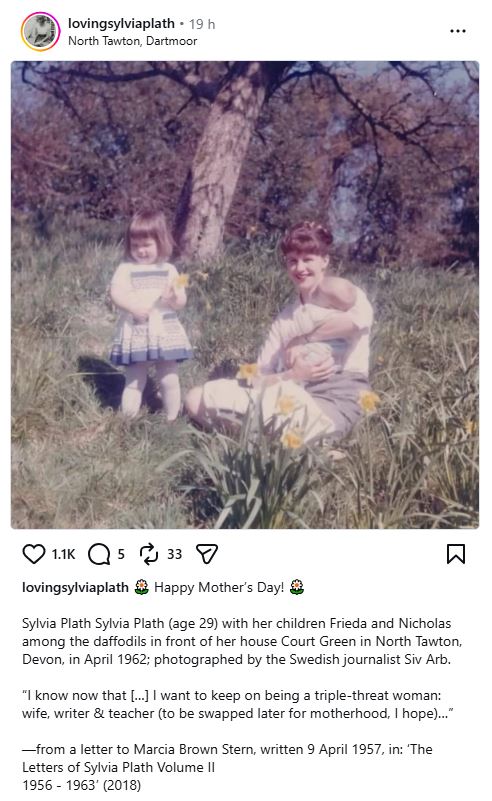
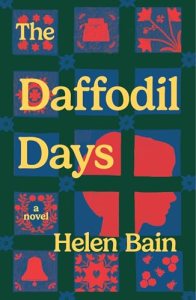 (A quick preview as my full review will be published on Shelf Awareness next month.) A bit of background: Ted Hughes and Sylvia Plath moved from London to Court Green, a thatched house with two and a half acres of land in North Tawton, Devon (southwest England) in August 1961. They had separated and each moved into lodgings in London – her with their two children – by December 1962, with Plath vowing to return to her beloved house and garden in the spring. Instead, she died by suicide in February 1963. This debut novel covers much of the last 18 months of Plath’s life, but in an inventive way: 16 linked short stories – each from the perspective of a different writer friend, family member, or local acquaintance – illuminate Plath’s personality and state of mind through the interactions they have with her. It’s everyone from her midwife to a washing machine salesman. We learn not just about Plath but also the norms of the time, e.g. through young women she meets at a dress shop and in a BBC recording studio. There are also glimpses into her literary milieu through a visit from Al Alvarez and reminiscences from the Kanes and Merwins. The title refers to her garden’s daffodils, so bountiful that she sells them, which strikes her neighbours as a typically American act of crass gumption. The really genius thing about this structure is that the vignettes go backward in time, so we aren’t approaching her inevitable end but anticipating her prime. Bain’s prose reminds me of Tessa Hadley and Andrew Miller. (Edelweiss)
Rita Hayworth and Shawshank Redemption by Stephen King (1982)
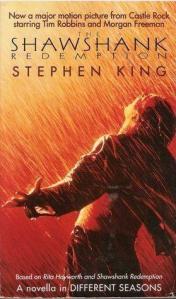 This novella was published in Different Seasons under the heading “Hope Springs Eternal.” You probably know the story better through the 1994 film The Shawshank Redemption.
“They found him guilty, and brother, if Maine had the death penalty, he would have done the airdance before that spring’s crocuses poked their heads out of the dirt.”
Andy Dufresne was wrongfully imprisoned for the murder of his wife and her lover in 1947. While he bides his time until the workings of justice or his own spectacular efforts can get him free, he makes himself useful as the prison librarian and an unofficial financial advisor (he was a banker back in the real world). He fights back against attempted sexual assaults, too. The narrator, Red, can get anyone anything on the black market, and Andy has made two very specific requests over the years: a rock hammer to continue his geology hobby, and a poster of Rita Hayworth to hang in his cell – replaced in turn, as years stretch into nearly three decades, by Marilyn Monroe, Jayne Mansfield, Raquel Welch, and Linda Ronstadt. All along, the hope of there being a life away from this place keeps Andy, and Red, going. Even though I knew what happened thanks to the movie, this was a quick, amusing, and heartening read. I’ll probably go on to read the other three in the omnibus. (Little Free Library)
The Torrents of Spring (& First Love & “Mumu”) by Ivan Turgenev (1871; 1860; 1854)
[Translated from Russian by Constance Garnett]
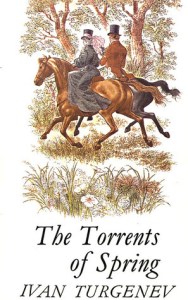 I’ve found Turgenev to be a particularly readable Russian master whose novels are short and accessible enough as to not be daunting (unlike Dostoevsky, Tolstoy and the like, who I’ve never attempted). I had a bit of confusion over this on, not realising my download included the novella First Love and the short story “Mumu” as well, so The Torrents of Spring ended sooner than I expected. It’s said to be highly autobiographical, but I haven’t looked into the links with Turgenev’s life. Twenty-two-year-old landowner Dimitri Sanin is in Frankfurt as part of a world tour. By chance, he rescues young Emil from a swoon and meets his family of Italian confectioners. Captivated by Emil’s sister Gemma’s simple beauty, he fights a duel to defend her honour and gets her to give up her tedious German fiancé for him. His plan is to stay and remotely sell his estate (complete with serfs) to a fellow Russian abroad – the wife of Polozov, a man he happens to know from childhood. But, as in Dangerous Liaisons, Maria Nikolaevna is a seductive schemer who steals his gaze away from Gemma just because she can. This was a gently Hardyesque tragicomedy about what’s fated versus the decisions and weaknesses that change everything. Turgenev explores what happens when money, love and lust don’t align, and leaves us with the aura of inevitable regret.
 The other two stories share that theme of capricious women. In First Love, sixteen-year-old Vladimir Petrovich is one of many suitors vying for the affections of his next-door neighbour, the young princess Zinaïda. He’s so smitten that when she says jump, he basically asks how high (and it ends up being 15 feet down from a wall). There’s an unexpected twist in this one that makes you question the young man’s family dynamic. The message can be summed up by the advice he’s given by another suitor: “The great thing is to lead a normal life, and not be the slave of your passions.” I was interested to note in both novellas that French is spoken as a marker of the upper classes.
 “Mumu” started off promising, but I should know by now that when an animal is a central character in a classic work, it’s not going to go well. Mumu is a spaniel rescued by Gerasim, a giant deaf-mute man who labours on an old woman’s estate. His mistress observes that he’s sweet on Tatiana the laundress and quashes that budding relationship, at which point Mumu enters his life as a sort of replacement. Mumu is utterly devoted to him and suspicious of anyone else – including the mistress, who soon makes it her mission to silence the barking dog. It’s all disappointingly conventional and I wished it could have been otherwise, but I guess Turgenev, like so many other 19th-century authors – Dickens, Flaubert – felt duty-bound to keep women and peasants in their place.
  (Project Gutenberg)
The 2026 McKitterick Prize Shortlist
For the fifth year in a row, I’ve been involved in judging the McKitterick Prize, which is administered by the Society of Authors, the UK’s trade union for writers, and awarded to a first novel, published or unpublished, by a writer over 40. This was my second time judging the published submissions (rather than the unpublished manuscripts). Today the shortlists for all of the Society of Authors Awards have been announced, so I can share our finalists below.
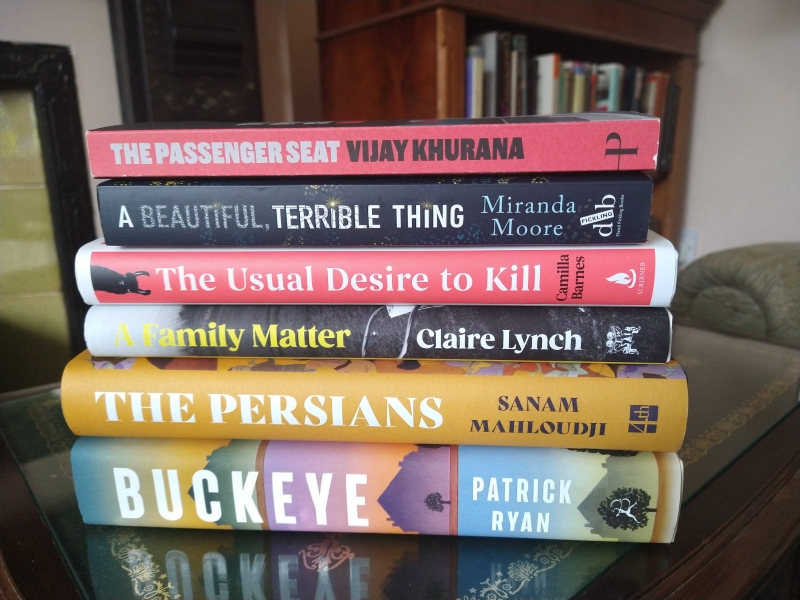
- Camilla Barnes for The Usual Desire to Kill (Simon & Schuster, Scribner UK)
- Vijay Khurana for The Passenger Seat (Peninsula Press)
- Claire Lynch for A Family Matter (Vintage, Chatto & Windus)
- Sanam Mahloudji for The Persians (4th Estate, HarperCollins)
- Miranda Moore for A Beautiful, Terrible Thing (David Fickling Books)
- Patrick Ryan for Buckeye (Bloomsbury Publishing)
My three fellow judges and I were all asked for 50-word blurbs about the shortlist as a whole. I’m honoured that my overall blurb was chosen to accompany the McKitterick rundown in the press release:
“There’s a fine line between life and death, and the question of whether love can bridge the two is at the crux of these exceptional novels, which feature vibrant styles, powerful themes, and essential voices. No matter how dark things get, readers are in safe hands with such accomplished authors.”
The winner and runner-up will be announced in advance of the SoA Awards ceremony in London on 18 June. I haven’t decided whether to go in person again or watch the livestream. Last year’s afternoon tea for the judges and shortlistees was of a very high standard indeed, and it’s always tempting to pay homage to Southwark Cathedral’s resident cat, Hodge…
Bad Christians and Good Cocktails
On Tuesday evening, we attended a talk at a local church by Dave Tomlinson, author of The Post-Evangelical and How to Be a Bad Christian. It’s hard to believe the latter was published 14 years ago already, while the former is over 30 years old and coincided with a growing social shift away from conservative Christianity-as-usual in the UK and USA. Other authors who have been particularly influential on my thinking such as Brian McLaren and Peter Rollins were allied with this movement, which was sometimes called “the emerging church.”
What is a ‘bad’ Christian? One who’s not fussed about dogma. Tomlinson is an Anglican priest and believes the Church still has value for people at times of joy or sorrow – a bereavement, a wedding, a baptism – moments of epiphany that might encourage them to stop skating on the surface of life and go deeper in a search for spirituality and meaning. However, he stressed how easy it is to find people who are following the way of Jesus outside of churches: anyone working toward peace, justice, or environmental restoration, for instance. He’d rather people focus on ethical lifestyles rather than beliefs. This resonated with me as I don’t believe a line of the creed literally and most of the time don’t think the supernatural exists, yet keep attending church and reading theology. But I know I’ll get more spiritual uplift from the Queer Folk Festival at the end of the month than I often do at a Sunday service, and my secular community volunteering sometimes seems to be of more practical use.
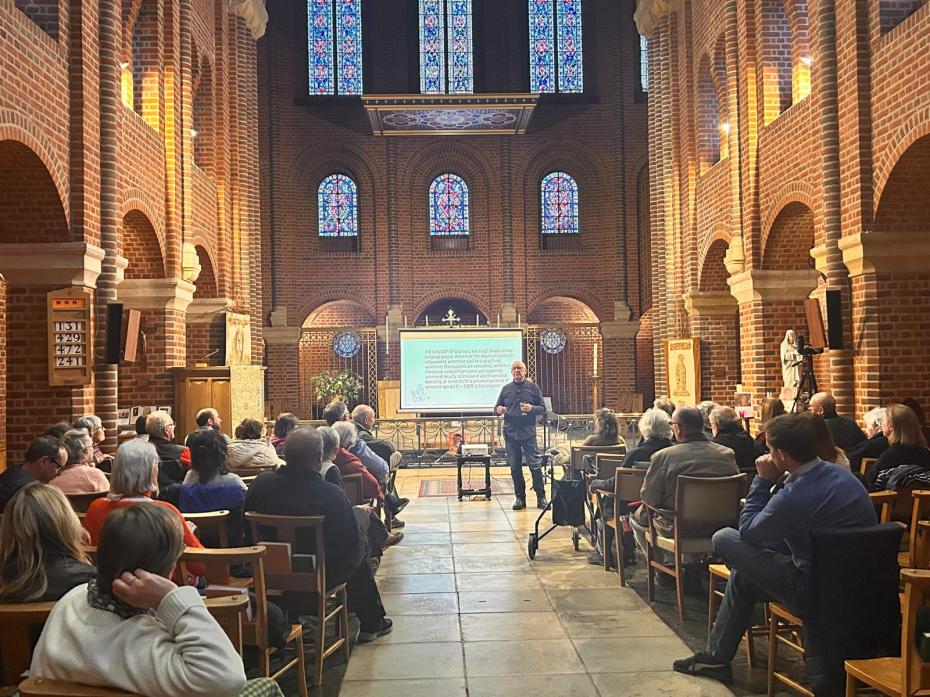
Photo by Rev. Gary Collins
Yesterday (13 May) was World Cocktail Day – the second year I’ve known of its existence and planned to ‘celebrate’ it. Often, I can’t make appealing cocktails because I don’t have the right ingredients, and leaving them out or substituting is frustrating. So, in preparation, I picked up a modest click-and-collect order from Sainsbury’s on Tuesday of dry vermouth, fino sherry, and Angostura orange bitters to take my cocktail-making to the next level.


 It may surprise you given that I’m such a gin lover, but I’d never actually had a martini. I’m not sure how authentic my version, the “England” dry martini from the hilarious 1976 handbook above, was, but it was tasty! (I’ve always thought a Noilly Prat would be a good thing to call a Tory.) Then I tried a “London Calling” (recipe from the book Equal Parts Cocktails by Fred Siggins – I have a habit of downloading any cocktail cookbooks I find on Edelweiss and browsing them on screen to find one or two recipes to save as screenshots) combining navy-strength gin and fino sherry. It was a strong, complex and satisfying drink.


After C got home from band practice, I made him his first whisky old fashioned. The orange bitters went in all three of those so were a good purchase. I wasn’t feeling great yesterday, so had a few sips of each of my two cocktails and then used a funnel to store them in miniature bottles in the fridge for another night. I capped off the evening with a thimbleful of what I’m calling a Chocolate Cherry Truffle: chocolate rum and Portuguese sour cherry liqueur in a 4:1 ratio.
20 Books of Summer 2026 Plan
It’s my ninth year participating in the 20 Books of Summer challenge, hosted this year by Annabel. #20BOS26 starts on 1 June and runs through 31 August.
Some years I have chosen a theme (colours, foodie, flora or fauna) or other criterion (all hardbacks by women), but the danger in limiting my options, let alone pre-selecting particular books, is that I tend to lose interest as soon as I list them. Most times I only read 7–10 of the 20 books I earmark, so what’s the point! My only firm rule this year is that all 20 books must be from my own shelves. Beyond that? I’d love to make progress towards various low-key goals:
- My long-neglected Four in a Row and Journey through the Day projects
- Review catch-up books or part-read books, many dating back to 2022 or earlier
- My ongoing quest to read books published in my birth year of 1983
- Chipping away at the list of authors I own two or more (Michael Crummey, Sigrid Nunez, Jeet Thayil) or even three or more (Jenny Diski, Wendy Perriam, Jane Urquhart) unread books by
I also like to achieve a good balance between new acquisitions and long-term shelf sitters; doorstoppers and slim volumes (novellas or poetry collections). Ideally at least 5 of my choices would be by BIPOC. Overlapping with other summer challenges such as June’s Reading the Meow, Paris in July and August’s Women in Translation, would be handy.
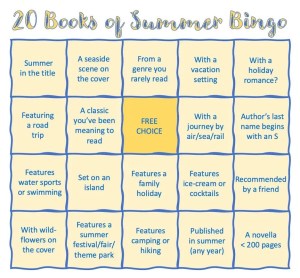
And then there’s this year’s Bingo card to consider. I’m pondering the 4-book diagonal consisting of:
- Summer in the title
- A classic you’ve been meaning to read
- Features a family holiday
- Published in summer (any year)
Or column 4, which is:
- With a vacation setting
- With a journey by air/sea/rail
- Features ice cream or cocktails
- Published in summer (any year)
I tend to skew towards fiction in the summers, so I’m guessing I’ll manage 15 works of fiction (one short story collection would be good), a few memoirs or other nonfiction, and a couple of poetry collections.
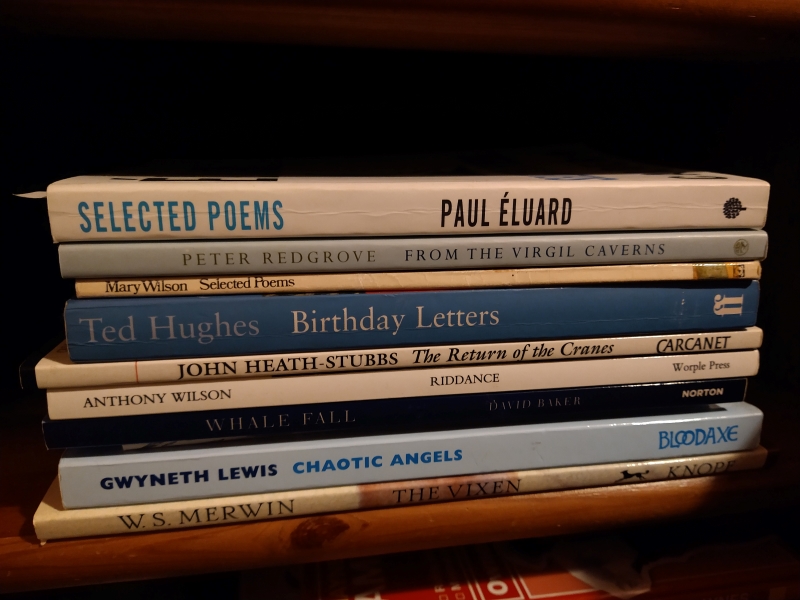
Unread poetry books from my bedside table
Here are a few specific books I currently have my eye on…
Ongoing project:
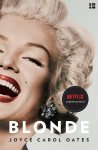 Blonde by Joyce Carol Oates – Marcie (Buried in Print) and I are doing a mini Oates buddy reading project and I made the mistake of starting with Blonde, which is over 700 pages, all of them crammed full of tiny type. So it may well take me the entire summer.
Review copies:
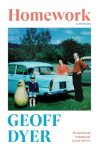 Homework by Geoff Dyer – The paperback has just arrived for me and I’m eager to get stuck in, having sampled it on my Kindle earlier in the year. Dyer is an annoyingly versatile author whose writing always feels effortless. This is his memoir of growing up in typical English suburbia in the 1960s and 70s.
 George by Frieda Hughes – Having recently read a novel about Sylvia Plath (the excellent The Daffodil Days by Helen Bain), I fancy picking up this memoir by her daughter about raising a fledgling magpie as a pet.
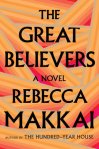 The Great Believers by Rebecca Makkai – This is a proof copy from (gulp) 2018! I only got about 60 pages into it at that time, but I love Makkai and would like to try again. It’s the story of a group of arty friends in Chicago at the start of the AIDS crisis.
Recent acquisitions:
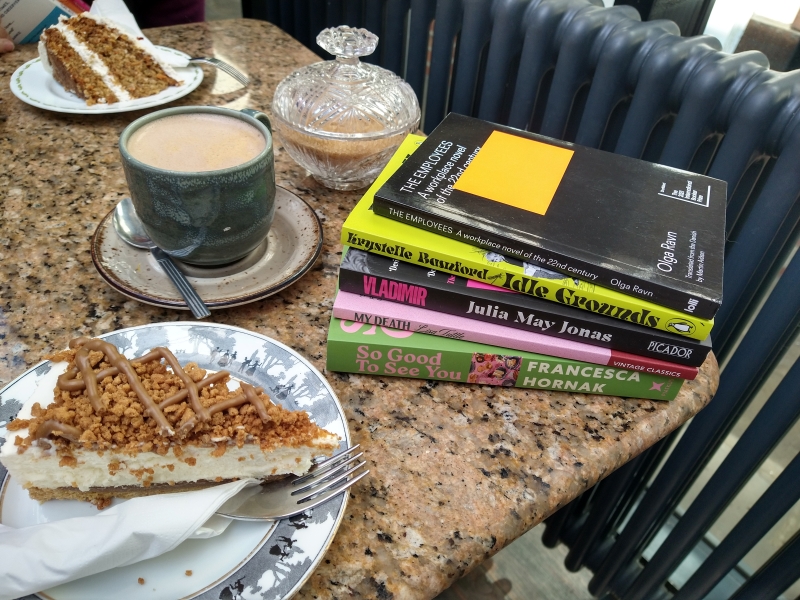
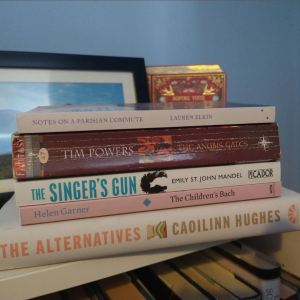
(Elkin for Paris in July; Powers for 1983 challenge)
The new Emily St. John Mandel novel coming out in September, Exit Party, is a sequel of sorts to The Singer’s Gun, I’ve heard, so I will definitely read it ahead.
Tying into other challenges:
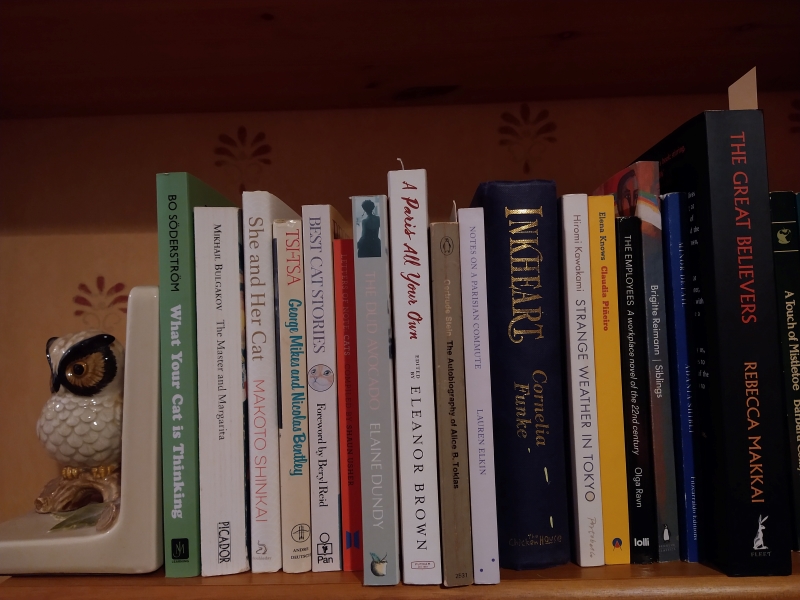
Reading the Meow; Paris in July; Women in Translation options
The Master and Margarita by Mikhail Bulgakov would be for Reading the Meow but would also cross off “A classic you’ve been meaning to read.”
Left over from last year:
 I fancy a reread of Prodigal Summer by Barbara Kingsolver – “From her outpost in an isolated mountain cabin, Deanna Wolfe, a reclusive wildlife biologist, watches a den of coyotes that have recently migrated into the region. She is caught off-guard by a young hunter who invades her most private spaces and confounds her self-assured, solitary life.”
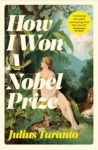 How I Won a Nobel Prize by Julius Taranto – I believe it was Susan’s review that put this on my radar, though the title and the fact that it’s an academic satire would have been enough to get it onto my TBR.
Just because…
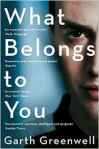 What Belongs to You by Garth Greenwell – Small Rain was my book of 2024, and I keep meaning to read something else by him. It’s his debut’s 10th anniversary, so why not now?
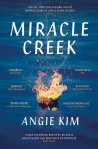 Miracle Creek by Angie Kim – I got this from my wish list for Christmas. I loved her second novel, Happiness Falls, and this one looks right up my street, too, with its theme of experimental treatment for autistic children and gentle thriller plot.
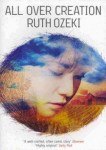 All Over Creation by Ruth Ozeki – Her only novel I’ve not yet read. An environmentalist novel set in the northwestern USA sounds like a good follow-up to our latest book club read, the so-so The Mighty Red by Louise Erdrich.
I’m not committing to a particular set of 20, but you can see from this and my recent library reorganization photos that I have plenty on the shelves to choose from!
See anything here that I should prioritize?
 Bookish Beck = Rebecca Foster. American transplant to England. Freelance proofreader and book reviewer.
