The IRON Book of Tree Poetry (Blog Tour)
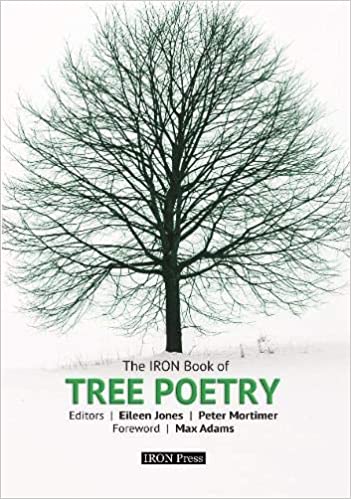 Though I’d only heard of two of the contributors, my love for nature and environmentalist themes made this anthology irresistible. The authors of the 50 poems write about individual and generic trees; forests real and imagined; environmental crisis and personal reckonings. In Sarah Mnatzaganian’s “Father Tree,” a sprawling horse-chestnut symbolizes her dying father and his motherland. Dominic Weston’s “Ancestry.com” literalizes the language of the family tree. In Celia McCulloch’s “Rhododendrons at Stapleford Wood,” an invasive species is a politically charged token of prejudice: “Is it just our xenophobia, this hatred for the Greek-named / tree, the immigrant, the Windrush plantation?”
I enjoyed the playful use of myth in Pauline Plummer’s “The Baobab”: “When God made the baobab He gave / it to the hyena, who laughed and laughed / throwing it into the scrub / where it landed upside down, dancing.” In “Abele,” Di Slaney envisions her post-mortem body feeding a woodland’s worth of creatures and being reincorporated into the flesh of trees.
Again and again, trees serve as a reminder of time passing, of seasons changing, of the vanity of human concerns compared to their centuries-old solidity – as in the final stanza of Mary Anne Perkins’s “To an Unpopular Poplar”:
This summer’s end, if I could translate
just one full hour of the whisperings
between your shimmered leaves,
how much the wiser I might be.
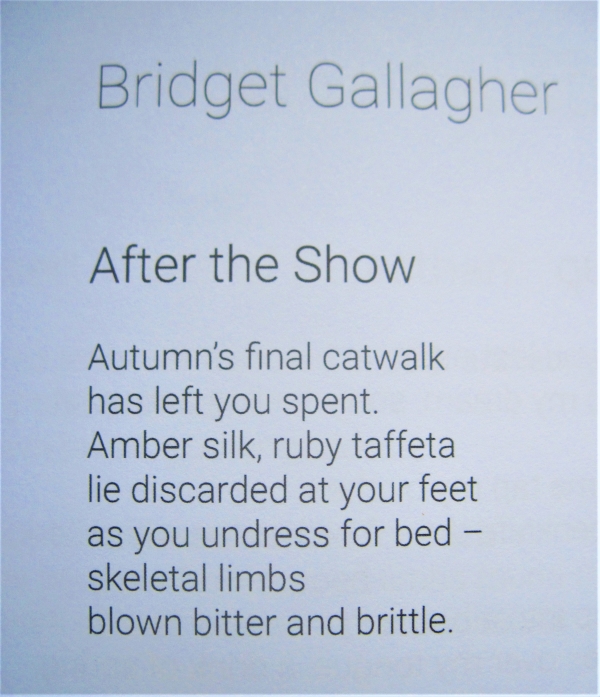
Thematic organization, rather than alphabetical, would have made more sense for this volume, but I appreciated the introduction to many new-to-me poets. Two favorite seasonal poems are pictured below.

My thanks to IRON Press for the free copy for review.
I was delighted to be invited to take part in the blog tour for The IRON Book of Tree Poetry. See below for where more reviews have appeared or will be appearing.
Library Checkout, September 2020
On the 21st my library reopened to the public for limited browsing and computer use, so I no longer have blissfully solitary volunteering sessions and I have to wear a mask while I’m shelving. It’s only for a few hours a week, though, so it’s no great hardship – and it’s good that other people are getting to share the library love again.
This month my reading has focused on short stories and Women’s Prize winners, but I also picked up other recent releases, plus children’s books about cats and appealing memoirs.

I would be delighted to have other bloggers – and not just book bloggers, either – join in this meme. Feel free to use the image above and leave a link to your blog in the comments if you’ve taken part in Library Checkout (which runs on the last Monday of every month), or tag me on Twitter and/or Instagram (@bookishbeck / #TheLibraryCheckout).
READ
- Close to Where the Heart Gives Out: A Year in the Life of an Orkney Doctor by Malcolm Alexander

- A Traveller at the Gates of Wisdom by John Boyne

- Exciting Times by Naoise Dolan

- When I Lived in Modern Times by Linda Grant
- Tilly and the Lost Fairy Tales (Pages & Co. #2) by Anna James

- Learning to Talk by Hilary Mantel

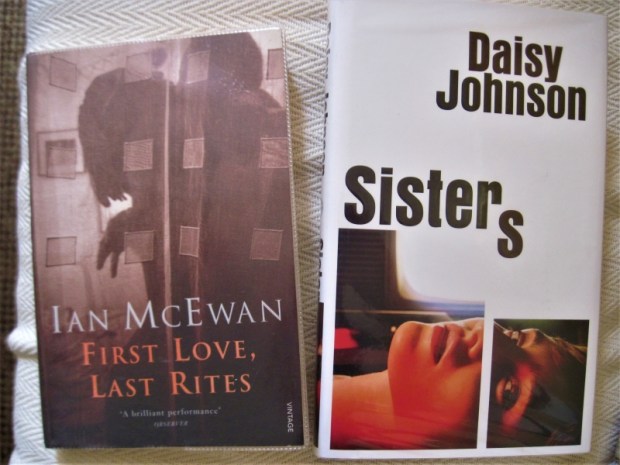
- First Love, Last Rites by Ian McEwan
- Six Dinner Sid by Inga Moore
- The Tabitha Stories by A.N. Wilson
SKIMMED
- A Spell of Winter by Helen Dunmore
- Dear NHS: 100 Stories to Say Thank You, edited by Adam Kay

- Norwegian Wood by Lars Mytting
CURRENTLY READING
- Owls Do Cry by Janet Frame
- Sisters by Daisy Johnson
- Maid: Hard Work, Low Pay, and a Mother’s Will to Survive by Stephanie Land
- Such a Fun Age by Kiley Reid
- First Time Ever: A Memoir by Peggy Seeger
- How to Be Both by Ali Smith
CURRENTLY SKIMMING
- 33 Meditations on Death: Notes from the Wrong End of Medicine by David Jarrett
CHECKED OUT, TO BE READ
- Dependency by Tove Ditlevsen
- What Have I Done? An Honest Memoir about Surviving Postnatal Mental Illness by Laura Dockrill
- House of Glass: The Story and Secrets of a Twentieth-Century Jewish Family by Hadley Freeman
- The Glorious Heresies by Lisa McInerney
- Adults by Emma Jane Unsworth

ON HOLD, TO BE PICKED UP
- English Pastoral: An Inheritance by James Rebanks
IN THE RESERVATION QUEUE
- Piranesi by Susanna Clarke
- Just Like You by Nick Hornby
- Tilly and the Map of Stories (Pages & Co. #3) by Anna James
- Vesper Flights: New and Selected Essays by Helen Macdonald
- The Glass Hotel by Emily St. John Mandel
- Mantel Pieces: Royal Bodies and Other Writing from the London Review of Books by Hilary Mantel
- Dear Reader: The Comfort and Joy of Books by Cathy Rentzenbrink
- Jack by Marilynne Robinson
- Real Life by Brandon Taylor
- Love and Other Thought Experiments by Sophie Ward
- The Courage to Care: A Call for Compassion by Christie Watson
- The Wild Silence by Raynor Winn
RETURNED UNFINISHED
- Persuasion by Jane Austen – This was for book club, but I completely failed to engage. I’m going to watch the 1995 film instead (and maybe skip the Zoom discussion this month).
- Golden Boy by Abigail Tarttelin – I was interested to compare this to Middlesex as it’s about an intersex teen named Max who has been raised as a boy. But I only made it 18 pages: Max’s voice is done well; his mum’s and little brother’s, not so much. Plus there was a pretty brutal scene that put me off reading further.
RETURNED UNREAD
- The Girl with the Louding Voice by Abi Daré – Requested after me. I’ll get it out another time.
- The Hungover Games by Sophie Heawood – I expected an addiction memoir, but this seems to be a breezy tell-all by a minor celebrity journalist I’d never heard of.
- The Interestings by Meg Wolitzer – I’ll save this novel about six friends who meet at summer camp for next summer.
What appeals from my stacks?
Short Stories in September, Part II: Adichie, Shanahan & More
Septembers are for making a bit of an effort to read short story collections, which otherwise tend to sit on my shelves unread. I reviewed three collections earlier in the month, and have gotten through another five since then.
Let’s start with the good stuff.
The Thing Around Your Neck by Chimamanda Ngozi Adichie (2009)
 My third by Adichie this year, and an ideal follow-up to Half of a Yellow Sun and Americanah because it reworks or anticipates themes and settings from both novels. For instance, the former was in my mind while reading “Ghosts,” in which a retired mathematics professor meets an old colleague he assumed had died during the Biafran War. “Cell One” and “A Private Experience” picture a Nigeria rife with violence and rioting. The missing are presumed dead and the imprisoned are in danger of being ‘disappeared’. I was reminded of Americanah while reading “Imitation” and “On Monday of Last Week,” in which Nigerian women in Philadelphia tire of submission to their husbands and make their own life changes.
Characters hope to win the visa lottery to the USA, adjust to an arranged marriage, fret over a plane crash back home, or dare to speak out about mistreatment of women. African-American women’s freedom is attractive by comparison. The final story, “The Headstrong Historian,” has the most expansive sense of time: it opens in what feels like an ancient tribal setting – before the next generation attended Anglican mission school. A third-generation character rescues her family’s story, reclaiming her African heritage while taking advantage of Western education. I was especially charmed by two stories in the second person, including the title story, which refers not to a necklace but to a burden of depression. There’s not a dud among the dozen here. Adichie has won me as a loyal fan. [From free bookshop]
Carrying Fire and Water by Deirdre Shanahan (2020)
 “Why do people travel? … I suppose to lose part of themselves. Parts which trap us. Or maybe because it is possible, and it helps us believe there is a future.”
These sixteen stories, split fairly evenly between first- and third-person perspectives, focus on women’s lives after. After a breakup, a death, an affair, a miscarriage or sexual abuse, they have to assimilate the trauma and reevaluate life. Most of the characters are based in England or Ireland, but other places are frequent points of reference: a beach holiday in Turkey in “Grievous Bodily Harm,” memories of life in Tokyo in “Araiyakushimae,” and wanderings around the USA in “Lost Children.” This gives the collection a wide scope, while the overall air of melancholy lends tonal consistency.
There are no speech marks, so dialogue flows naturally into exposition. The similarity of the protagonists and the delicate writing threatened to make the stories blend into one in my mind, but one per sitting made a perfect dose. A few standouts: in “Foraged Things,” Lia meets a man searching for mushrooms in the wood; in “Breakfast with Rilke,” hitchhikers look for love and adventure in continental Europe; and in “The Stars Are Light Enough,” a substitute teaching King Lear is alarmed when a problem student goes missing.
My thanks to Splice for the free copy for review.
But these next three, alas, were pretty lackluster reads for me. All:
Your Duck Is My Duck by Deborah Eisenberg (2018)
 Who could resist such a title and cover?! Unfortunately, I didn’t warm to Eisenberg’s writing and got little out of these stories, especially “Merge,” the longest and only one of the six that hadn’t previously appeared in print. The title implies collective responsibility and is applied to a story of artists on a retreat in Europe. “The Third Tower” has a mental hospital setting. In “Recalculating,” a character only learns about an estranged uncle after his death. The two I liked most were “Taj Mahal,” about competing views of a filmmaker from the golden days of Hollywood, and “Cross Off and Move On,” about a family’s Holocaust history. But all are very murky in my head. (See Susan’s more positive review.) [Free from a neighbor]
Learning to Talk by Hilary Mantel (2003)
 Last year I loved reading Mantel’s collection The Assassination of Margaret Thatcher. In comparison, these six first-person stories felt like autobiographical castoffs. (They were individually published in various periodicals between 1987 and 2002 and then collected as a follow-up to her memoir, Giving Up the Ghost, an excerpt from which closes this book.) We get a child’s perspective on village life in the North of England with a lodger, a stepfather and a mean dog. My two favorites were the title story, about taking elocution lessons, and “Third Floor Rising,” about an 18-year-old’s first job in a department store. [Public library]
First Love, Last Rites by Ian McEwan (1975)
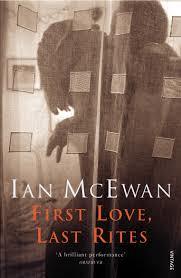 There’s a nastiness to these early McEwan stories that reminded me of Never Mind by Edward St. Aubyn. The teenage narrator of “Homemade” tells you right in the first paragraph that his will be a tale of incest. A little girl’s body is found in the canal in “Butterflies.” The voice in “Conversation with a Cupboard Man” is that of someone who has retreated into solitude after being treated cruelly at the workplace (“I hate going outside. I prefer it in my cupboard”). “Last Day of Summer” seems like a lovely story about a lodger being accepted as a member of the family … until the horrific last page. Only “Cocker at the Theatre” was pure comedy, of the raunchy variety (emphasis on “cock”). You get the sense of a talented writer whose mind you really wouldn’t want to spend time in; had this been my first exposure to McEwan, I would probably never have opened up another of his books. [Public library]
I’m still much more likely to gravitate towards novels rather than short stories because I find story collections so hit and miss; rarely do I find one that I enjoy all the way through.
Can you think of any short story authors I might like?
Catching Up on Review Books: Antlers, Arnett, E. Williams, Yamboliev
Four July–August releases: Scottish nature writing, the quirky story of a family taxidermy business in Florida, a dual-timeline novel set at an unusual dictionary’s headquarters, and a critical and personal response to Jeffrey Eugenides’ Middlesex.
Antlers of Water: Writing on the Nature and Environment of Scotland, edited by Kathleen Jamie
 This nature writing anthology of essays, poems and visual art drew me because of contributor names like GP Gavin Francis (reviewed: Shapeshifters), Amy Liptrot (the Wainwright Prize-winning memoir The Outrun), singer/songwriter Karine Polwart, and Shetland chronicler Malachy Tallack (reviewed: The Un-Discovered Islands and The Valley at the Centre of the World), not to mention editor Kathleen Jamie. Archaeology and folk music evoke the past, while climate change scenarios inject a sense of a menacing future. Seabirds circle and coastal and island scenery recurs. Entries from Alec Finlay’s “A Place-Aware Dictionary” disguise political points under tongue-in-cheek language, as in a definition of foraging: “Later sometimes referred to as the Brexit Diet.” The (sub)urban could be more evident, and I didn’t need two bouts of red deer sex, but there’s still a nice mix of tones and approaches here.
Six best pieces (out of 24): Chris Powici on wind turbines and red kites at the Braes of Doune; Jacqueline Bain on how reduced mobility allows her to observe wasps closely; Jim Crumley on sea eagle reintroductions and the ancient sky burials that took place at the Tomb of the Eagles; Jen Hadfield on foraging for whelks at the ocean’s edge, in a run-on hybrid narrative; Sally Huband on how persecution of ravens and of women (still not allowed to take part in Up Helly Aa festivities) continues on Shetland; and Liptrot on how wild swimming prepared her for childbirth and helped her to recover a sense of herself separate from her baby. And if I had to pick just one, the Huband – so brave and righteously angry.
Favorite lines:
“Compromises need to be made. An overlap between the wild and the human has to be negotiated and managed. … So let’s play merry hell with the distinction between what counts as wild and what counts as human, between what’s condemned as a visual obscenity and what’s seen as a marvel of the age. Let’s mess up the boundaries and get a new measure of ourselves as a species.” (Powici)
inspiration to get out walking again: “Don’t wait / thinking you’ve seen it all already … don’t wait thinking you need better boots / or a waterproof that’ll keep out the rain. / It won’t. Don’t wait.” (“Water of Ae” by Em Strang)
My rating:
My thanks to Canongate for the free copy for review.
Mostly Dead Things by Kristen Arnett
“We couldn’t ever leave roadkill behind. Something inside us always made us stop to pick up dead things.”
 After her father’s suicide, Jessa-Lynn Morton takes over the family taxidermy business in central Florida. Despite her excessive drinking and grief over both her father and her best friend and long-time on-and-off girlfriend (also, inconveniently, her brother’s wife) Brynn, who recently took off, she’s just about holding it together. That is, until 1) her mother takes to composing interspecies orgies and S&M scenes in the shop window and 2) her niece and nephew, Lolee and Bastien, start bringing in specimens for taxidermy that they haven’t exactly obtained legally. Gallery owner Lucinda Rex takes an interest in her mother’s ‘art’ and is soon a new romantic interest for Jessa. But the entire family is going to have to face its issues before her professional and love life can be restored.
This debut novel’s title, cover and premise were utterly irresistible to me, and though I loved the humid Florida setting, it was all a bit too much. At 200 pages this could have been a razor-sharp new favorite, but instead there was a lot of sag in its 350+ pages. Alternating chapters based around mounting particular animals give glimpses into the family’s past but mostly have Jessa mooning over Brynn. Her emotional journey starts to feel belabored; it’s as if an editor tried to rein in Arnett’s campy glee at the dysfunctional family’s breakdown and made her add in some amateur psychoanalysis, and for me this diluted the quirky joy.
Skinning and sex scenes are equally explicit here. This never bothered me, but it should go without saying that it is not a book for the squeamish. It’s when sex and taxidermy mix that things get a little icky, as in her mother’s X-rated tableaux and a line like “Often I found myself comparing the limber body of a deer with the long line of [Lucinda’s] legs or the strong cord of her neck.” Believe it or not, this is not the first queer taxidermy novel I’ve read. The other one, English Animals by Laura Kaye, was better. I’d wanted another Swamplandia! but got something closer to Black Light instead.
My rating:
My thanks to Corsair for the free copy for review.
The Liar’s Dictionary by Eley Williams
 Mallory is five years into an internship at Swansby House, the London headquarters of Swansby’s dictionary. The dictionary is known for being unfinished – too many of its lexicographers left for WWI and never returned – and for having made-up words. In 1899, Peter Winceworth, the butt of jokes among his colleagues, started composing mountweazels (fake entries) and inserting them into the dictionary. In the contemporary story line, Mallory’s job is to remove the mountweazels as the dictionary is prepared for digitization. But her attention is distracted by anonymous bomb threats and by lingering shame about her sexuality – Mallory thinks she’s “out enough,” but her girlfriend Pip begs to differ.
Chapters are headed with vocabulary words running from A to Z, and alternate between Mallory’s first-person narration and a third-person account of Winceworth’s misadventures at the turn of the twentieth century. In any book with this kind of structure I seem to prefer the contemporary strand and itch to get back to it, though there is a quite astounding scene in which Winceworth intervenes to help a choking pelican. Events at Swansby House resonate and mirror each other across the dozen decades, with both main characters emerging with a new sense of purpose after an epiphany that life is about more than work. Though silly in places, this has a winning love of words and characters you’ll care about.
A favorite made-up word: “Mammonsomniate: to dream that money might make anything possible.”
Readalikes: Enter the Aardvark by Jessica Anthony and Boxer, Beetle by Ned Beauman
My rating:
My thanks to William Heinemann for the proof copy for review.
Looking Was Not Enough: Jeffrey Eugenides’ Middlesex by Irena Yamboliev
 When I worked in a university library and read Middlesex during quiet evenings on the circulation desk in 2009, a colleague asked me, “Is that about the London borough?” My reply: “Er, no, it’s about a hermaphrodite.” That’s an off-putting, clinical sort of word, but it does appear in the first paragraph of this family saga with a difference, after the mythological intensity and medical necessity implied by the killer opening line: “I was born twice: first, as a baby girl, on a remarkably smogless Detroit day in January of 1960; and then again, as a teenage boy, in an emergency room near Petoskey, Michigan, in August of 1974.”
Cal, born Calliope but now living as a man and working in the Foreign Service, recounts three generations of family history, from Greece to Detroit to Berlin. “Because … their parents were dead and their village destroyed, because no one in Smyrna knew who they were,” brother and sister Lefty and Desdemona became lovers and got married on the boat over to America. They were his grandparents. Add to that his parents’ first-cousin marriage and you see how inbreeding played genetic havoc and made way for Callie/Cal.
 I intended to reread Middlesex, which I consider one of my all-time favorite books, but only made it through 60 pages on this occasion. Still, Yamboliev, a Bulgarian-American who teaches at Stanford, reminded me of everything I love about it: the medical theme, the exploration of selfhood, the playful recreation of the past. Drawing parallels with her own family’s move to America, she ponders the disconnection from the home country and the creation of a new life story. “To tell ourselves where we come from—to narrate—is to find a pattern retroactively.” She also looks at literary precursors like Ovid’s Metamorphoses, Herculine Barbin’s memoir, and Balzac’s and Barthes’s writings on a castrato. “Does transformation make the self discontinuous?” is one of her central questions, and she likens Cal’s situation to that of trans men who have to train themselves to speak, dress and act in a convincingly masculine way.
This is part of Fiction Advocate’s “Afterwords” series; all its monographs do a wonderful job of blending literary criticism, enthusiastic appreciation, and autobiographical reflection as life dovetails with (re)reading. I’ve previously reviewed the Fiction Advocate books on Blood Meridian, Fun Home, and The Year of Magical Thinking in this post, and the ones on Karl Ove Knausgaard’s My Struggle and Cheryl Strayed’s Wild in this one.
My rating:
My thanks to Fiction Advocate for the free e-copy for review.
What recent releases can you recommend?
Women’s Prize Winners Reading Project: Grant, Martin, Shields et al.
In this 25th anniversary year of the Women’s Prize, readers are being encouraged to catch up on all the previous winners. I’d read 14 of them (including Hamnet) as of mid-April and have managed five more since then – plus a reread, a DNF and a skim. I recently reviewed Fugitive Pieces by Anne Michaels, and Half of a Yellow Sun by Chimamanda Ngozi Adichie and A Crime in the Neighborhood by Suzanne Berne as part of this summer reading post. This leaves just four more for me to read before voting for my all-time favorite in November.
When I Lived in Modern Times by Linda Grant (2000)
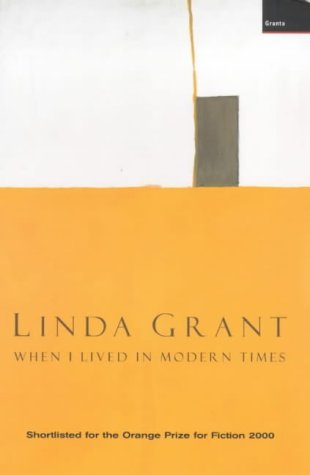 Some settings have been done to death, but here’s one I don’t think I’d ever encountered before: Israel in the final year before statehood. Grant dramatizes the contrast between Palestine, a doomed British colony, and the Jewish hope of a homeland. In 1946 twenty-year-old Evelyn Sert leaves her home in London, masquerading as a Gentile tourist (though she has Latvian Jewish ancestry) so as to jump ahead of thousands of displaced persons awaiting entry visas. With her mother recently dead of a stroke, she takes advice and money from her mother’s married boyfriend, “Uncle Joe,” a Polish Jew and Zionist, and heads to Palestine.
After six weeks on a kibbutz, Evelyn sets out to make her own life in Tel Aviv as a hairdresser and falls in with Johnny, a Jew who fought for the British. It’s safer to be part of the colonial structure here, so she once again passes as Gentile, dyeing her hair blonde and going by Priscilla Jones. In a land where all kinds of people have been thrown together by the accident of their ethnicity and the suffering it often entailed, one man’s terrorist is another’s freedom fighter. For Evelyn, who’s never known anywhere apart from suburban London and arrived in Palestine a virgin, the entire year is a journey of discovery. Will a place of ancient religious significance embrace modern architecture, technology and government? Grant really captures this period of transition for an individual and for a nascent nation of exiles. I loved the supporting characters and the nostalgic look back from half a century on.
Favorite passages:
In a country with its face turned towards the future, our stories sat on our shoulders like a second head, facing the way we had come from. We were the tribe of Janus, if there is such a thing.
With hindsight it always seems easy to do the right thing, but we were trying to decide something in those days that people don’t often get a chance to have a say in and it was this: would we be a free nation after two thousand years of wandering or would we always be a subject race? Would we be ghetto Jews or new Jews?
Property by Valerie Martin (2003)
 A compact study of slavery that unfolds through the relationship between a New Orleans plantation owner’s wife and her husband’s mistress. Manon Gaudet has never been happy in her marriage, but when their slave girl, Sarah, bears her husband a second child, she decides she has had enough of silently condoning his behavior. A slave uprising and cholera and yellow fever outbreaks provide some welcome drama, but the bulk of this short novel is an examination of the psyche of a woman tormented by hatred and jealousy. Ownership of another human being is, if not technically impossible, certainly not emotionally tenable. Manon’s situation is also intolerable because she has no rights as a woman in the early nineteenth century: any property she inherits will pass directly to her husband. Though thoroughly readable, for me this didn’t really add anything to the corpus of slavery fiction.
A reread (as well as a buddy read with Buried in Print):
Larry’s Party by Carol Shields (1997)
“The whole thing about mazes is that they make perfect sense only when you look down on them from above.”
 Larry Weller is an Everyman: sometimes hapless and sometimes purposeful; often bewildered with where life has led him, but happy enough nonetheless. From the start, Shields dwells on the role that “mistakes” have played in making Larry who he is, like a floral arts catalogue coming in the mail from the college instead of one on furnace repair and meeting Dorrie at a Halloween party he attended with a different girl. Before he knows it he and a pregnant Dorrie are getting married and he’s been at his flower shop job for 12 years. A honeymoon tour through England takes in the Hampton Court Palace maze and sparks an obsession that will change the course of Larry’s life, as he creates his first maze at their Winnipeg home and gradually becomes one of a handful of expert maze-makers.
The sweep of Larry’s life, from youth to middle age, is presented roughly chronologically through chapters that are more like linked short stories: they focus on themes (family, friends, career, sex, clothing, health) and loop back to events to add more detail and new insight. I found the repetition of basic information about Larry somewhat off-putting in that it’s as if we start over with this character with each chapter – the same might be said of Olive Kitteridge, but that book’s composition was drawn out and it involves a multiplicity of perspectives, which explains the slight detachment from Olive. Here the third-person narration sticks close to Larry but gives glimpses into other points of view, tiny hints of other stories – a man with AIDS, a woman trying to atone for lifelong selfishness, and so on.
From my first reading I remembered a climactic event involving the Winnipeg maze; a ribald chapter entitled “Larry’s Penis,” about his second marriage to a younger woman and more; and the closing dinner party, a masterful sequence composed almost entirely of overlapping dialogue (like the final wedding reception scene in her earlier novel, The Box Garden) as Larry hosts his two ex-wives, his current girlfriend, his sister and his partner, and a colleague and boss. What is it like to be a man today? someone asks, and through the responses Shields suggests a state of uneasiness, of walking on eggshells and trying not to be a chauvinist in a world whose boundaries are being redrawn by feminism. That process has continued in the decades since, though with predictable backlash from those who consider women a threat.
It seems slightly ironic that Shields won the Women’s Prize for this episodic fictional biography of a man, but I found so much to relate to in Larry’s story – the “how did I get here?” self-questioning, the search for life’s meaning, “the clutter of good luck and bad” – that I’d say Larry is really all of us.
One of Shields’s best, and quite possibly my winner of winners.
My original rating (2008?):
My rating now: 
Currently rereading: Gilead by Marilynne Robinson
A skim:
A Spell of Winter by Helen Dunmore (1995)
 An annoying thing happened with this one: the back cover blurb gave away a central theme. It’s one I’m keen to avoid yet feel I have encountered disproportionately often in fiction, especially recently (I won’t name any titles as that would give it away instantly). Dunmore writes nicely – from my quick skim of this one it seemed very atmospheric – but I am not particularly drawn to her plots. I’ve read Exposure for book club and own two more of her novels, Talking to the Dead and Zennor in Darkness, so by the time I’ve read those I will have given her a solid try. So far I’ve preferred her poetry – I’ve read three of her collections.
A favorite passage:
“It is winter in the house. This morning the ice on my basin of water is so thick I can not break it. The windows stare back at me, blind with frost. … I can see nothing through the frost flowers on the glass. I wonder if it is snowing yet, but I think it is too cold. … I look at the house, still and breathless in the frost. I have got what I wanted. A spell of winter hangs over it, and everyone has gone.”
And a DNF:
The Song of Achilles by Madeline Miller (2011)
 Patroclus is a disappointment of a prince. He has no chance of winning Helen of Troy’s hand in marriage, and exile awaits him when he is responsible for an accidental death. As a foster child in the household of another king, he becomes obsessed with Achilles. The two young men take part in music lessons and military training, and Patroclus follows Achilles away from the palace to be taught by a centaur. That’s as far as I got before I couldn’t bear any more. The homoerotic hints are laughably unsubtle: (of a lyre) “‘You can hold it, if you like.’ The wood would be smooth and known as my own skin” & (fighting) “he rolled me beneath him, pinning me, his knees in my belly. I panted, angry but strangely satisfied.”
I got a free download from Emerald Street, the Stylist magazine e-newsletter. The ancient world, and Greek mythology in particular, do not draw me in the least, and I have had bad experiences with updates of Greek myths before (e.g. Bright Air Black by David Vann). I never thought this would be a book for me, but still wanted to attempt it so I could complete the set of Women’s Prize winners. I read 77 pages out of 278 in the e-book, but when I have to force myself to pick up a book, I know it’s a lost cause. As with the Dunmore, I think it’s safe to say this one never would have gotten my vote anyway.
The final four to complete my project:
(On the stack to read soon)
The Idea of Perfection by Kate Grenville – free from mall bookshop
The Glorious Heresies by Lisa McInerney – public library copy
How to Be Both by Ali Smith – public library copy; a planned buddy read with B.I.P.
(To get from the university library)
A Girl Is a Half-formed Thing by Eimear McBride
Read any Women’s Prize winners lately?
Book Serendipity in 2020: Part III
I call it Book Serendipity when two or more books that I read at the same time or in quick succession have something pretty bizarre in common. Because I have so many books on the go at once (usually around 20), I suppose I’m more prone to such incidents than some. I also list these occasional reading coincidences on a Twitter thread.
The following are in chronological order. (January to March’s incidents appeared in this post, and April to July’s here.)
- Reading two books whose covers feature Audubon bird paintings.
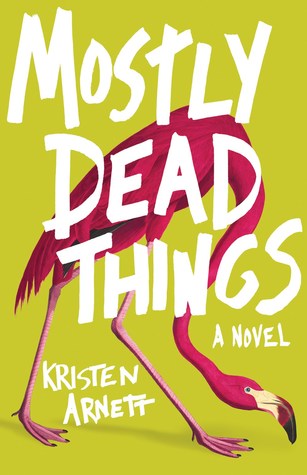
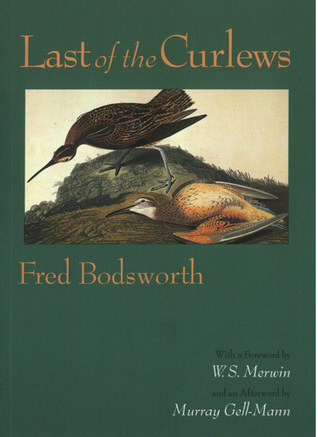
- A 19th-century female character inherits a house but knows it will pass instantly to her spouse in Property by Valerie Martin and Islands of Mercy by Rose Tremain.
- A bag/sack of potatoes as a metaphor in Other People’s Pets by R.L. Maizes and Redhead by the Side of the Road by Anne Tyler.
- Nipple rings get a mention in Addition by Toni Jordan and Other People’s Pets by R.L. Maizes.
- Taxidermy is an element (most major in the first one) in Mostly Dead Things by Kristen Arnett, Wild Child by Patrick Barkham and Into the Tangled Bank by Lev Parikian.
- A discussion of bartenders’ habit of giving out free drinks to get big tips (a canny way of ‘stealing’ from the employer) in Kitchen Confidential by Anthony Bourdain and Other People’s Pets by R.L. Maizes.
- Characters named Seamus in Addition by Toni Jordan and Mother’s Milk by Edward St. Aubyn.
- Wild boar mentioned in Mostly Dead Things by Kristen Arnett, Other People’s Pets by R.L. Maizes and My Berlin Kitchen by Luisa Weiss.
- A fastidious bachelor who’s always cleaning his living space in Other People’s Pets by R.L. Maizes and Redhead by the Side of the Road by Anne Tyler.
- A character is a blogger in Americanah by Chimamanda Ngozi Adichie, Other People’s Pets by R.L. Maizes and My Berlin Kitchen by Luisa Weiss.
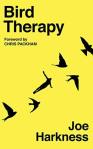
- Norfolk settings in Wild Child by Patrick Barkham and Bird Therapy by Joe Harkness (and both were on the Wainwright Prize longlist).
- A close aunt‒niece relationship in Mostly Dead Things by Kristen Arnett and Addition by Toni Jordan.
- A guy does dumb accents when talking about food, and specifically a French accent for “hamburger,” in Addition by Toni Jordan and Redhead by the Side of the Road by Anne Tyler.
- Recipes for a potato salad that is dressed with oil and vinegar rather than mayonnaise in Tender at the Bone by Ruth Reichl and My Berlin Kitchen by Luisa Weiss.
- Mentions of the Watergate hearings in A Crime in the Neighborhood by Suzanne Berne and Tender at the Bone by Ruth Reichl.
- Twins in Half of a Yellow Sun by Chimamanda Ngozi Adichie, A Crime in the Neighborhood by Suzanne Berne and The Yonahlossee Riding Camp for Girls by Anton DiSclafani.
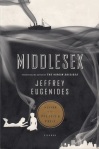
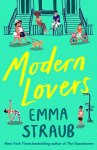
- Characters nicknamed “Lefty” in Middlesex by Jeffrey Eugenides and Modern Lovers by Emma Straub.
- Characters named Abir/Abeer in A Traveller at the Gates of Wisdom by John Boyne and Apeirogon by Colum McCann.
- Kayaking in Scotland in The Frayed Atlantic Edge by David Gange and Summerwater by Sarah Moss.
- The military coup in Nigeria features in Half of a Yellow Sun by Chimamanda Ngozi Adichie and The Shadow of the Sun by Ryszard Kapuściński.
- The song “White Christmas” is quoted in Mudbound by Hillary Jordan and Tales of the City by Armistead Maupin.
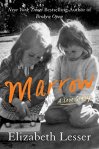
- The fact that fingerprints are formed by the fetus touching the uterine wall appears in Marrow by Elizabeth Lesser and You Will Never Be Forgotten by Mary South.
- Orkney as a setting in Close to Where the Heart Gives Out by Malcolm Alexander and The Frayed Atlantic Edge by David Gange. I’m hankering to go back!
- Teresa of Ávila is mentioned in Marrow by Elizabeth Lesser and You Will Never Be Forgotten by Mary South.
- A dog named Bingo in Half of a Yellow Sun by Chimamanda Ngozi Adichie and Modern Lovers by Emma Straub. (B-I-N-G-O!)
- Four sisters are given a joint name in A Crime in the Neighborhood by Suzanne Berne (Fran-Claire-Lois-Ada) and Marrow by Elizabeth Lesser (KaLiMaJo).
- The same Lilla Watson quote (“If you have come to help me, you are wasting your time. But if you have come because your liberation is bound up with mine, then let us work together”) appears in both The Gospel of Trees by Apricot Irving and Marrow by Elizabeth Lesser.
- An Irish author and Hong Kong setting for Exciting Times by Naoise Dolan and The Distance Between Us by Maggie O’Farrell.

- The Dorothy Parker quote “Men seldom make passes at girls who wear glasses” appears in both What Are You Going Through by Sigrid Nunez and First Time Ever by Peggy Seeger.
What’s the weirdest reading coincidence you’ve had lately?
Booker Prize 2020: Longlist Progress & Shortlist Predictions
The 2020 Booker Prize shortlist will be announced tomorrow, September 15th. Following on from my initial thoughts … I’ve only managed to read one more book from the longlist, reviewed in brief below along with some thoughts on a few other nominees I’ve sampled.
Burnt Sugar by Avni Doshi
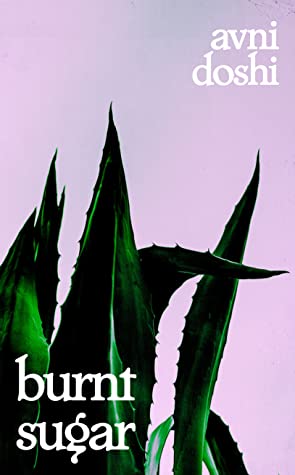 This short, intense novel is about two women locked into resentful competition. Tara and Antara also happen to be mother and daughter. When the long-divorced Tara shows signs of dementia, artist Antara and her American-born husband Dilip take her into their home in Pune, India. Her mother’s criticism and strange behavior stir up flashbacks to the 1980s and 1990s, when Antara felt abandoned by Tara during the four years they lived in an ashram and then her time at boarding school. Emotional turmoil led to medical manifestations like excretory issues and an eating disorder, and both women fell in love in turn with a homeless photographer named Reza Pine.
When Antara learns she is pregnant, the whole cycle of guilt and maternal ambivalence looks set to start again. Memory is precarious and full of potential hurt here, and Antara’s impassive narration is perfectly suited to the story of a toxic relationship. Neither the UK title nor the one for the original Indian publication (Girl in White Cotton) seems quite right to me; I might have chosen something related to the cover and endpaper image of the aloe plant: something that is as spiky as a cactus yet holds out hope of balm. This was a good fictional follow-up to a memoir I read earlier in the year about dementia’s effect on an Indian-American mother–daughter pair, What We Carry by Maya Shanbhag Lang.
Favorite passages:
It seems to me now that this forgetting is convenient, that she doesn’t want to remember the things she has said and done. It feels unfair that she can put away the past from her mind while I’m brimming with it all the time. I fill papers, drawers, entire rooms with records, notes, thoughts, while she grows foggier with each passing day.
I will never be free of her. She’s in my marrow and I’ll never be immune.
My rating:
My thanks to Hamish Hamilton for the free copy for review.
DNFed:
Apeirogon by Colum McCann
 Reminiscent of the work of David Grossman, this is the story of two fathers, one Israeli and one Palestinian, who lost their daughters to the ongoing conflict between their nations: Rami Elhanan’s 13-year-old daughter Smadar was killed by a Palestinian suicide bomber, while Bassam Aramin’s 10-year-old daughter Abir was shot by Israeli border police. The two men become unlikely friends through their work with a peacemaking organization, with Bassam also expanding his sense of compassion through his studies of the Holocaust.
It doesn’t take long to piece the men’s basic stories together. But the novel just keeps going. It’s in numbered vignettes ranging in length from one line to a few pages, and McCann brings in many tangentially related topics such as politics, anatomy, and religious history. Bird migration is frequently used as a metaphor. Word association means some lines feel arbitrary and throwaway. Looking ahead, I could see the numbering goes up to 500, at which point there is a long central section narrated in turn by the two main characters, and then goes back down to 1, mimicking the structure of the One Thousand and One Nights, mentioned in #101.
The narrative sags under the challenge McCann has set for himself. At 200 pages, this might have been a masterpiece. Though still powerful, it sprawls into repetition and pretension. (I read the first 150 pages.)
My rating:
Set aside temporarily:
 The New Wilderness by Diane Cook: The blurb promised an interesting mother–daughter relationship, but so far this is dystopia by numbers. A wilderness living experiment started with 20 volunteers, but illnesses and accidents have reduced their number. Bea was an interior decorator and her partner, Glen, a professor of anthropology – their packing list and habits echo primitive human culture. I loved the rituals around a porcelain teacup, but in general the plot and characters weren’t promising. I read Part I (47 pages) and would only resume if this makes the shortlist, which seems unlikely. (See this extraordinarily detailed 1-star Goodreads review from someone who DNFed the novel near where I am now.)
 Shuggie Bain by Douglas Stuart: Dialect + depressing subject matter = a hard slog. Poverty and alcoholism make life in 1980s Glasgow a grim prospect for Agnes Bain and her three children. So far, the novel is sticking with the parents and the older children, with the title character barely getting a mention. I did love the scene where Catherine goes to Leek’s den in the pallet factory. This is a lot like the account Damian Barr gives of his childhood in Maggie & Me. I left off on page 82 but will go back to this if it makes the shortlist.
So that makes a total of 2 read, 4 DNFed, 2 set aside (and might yet DNF), 2 I still hope to read (one of which I’m awaiting from the library; the other is on my birthday wish list), and 3 I don’t intend to read. Not a great showing at all this year!
Still, I can never resist an opportunity to make predictions about a prize shortlist, so here’s what I expect to still be in the running after tomorrow. Weighty, diverse; a mixture of historical and contemporary.
- The Mirror & The Light by Hilary Mantel (will win)
- Apeirogon by Colum McCann
- The Shadow King by Maaza Mengiste
- Shuggie Bain by Douglas Stuart
- Real Life by Brandon Taylor
- How Much of These Hills Is Gold by C. Pam Zhang
What have you read from the longlist? What do you expect to be shortlisted?
Short Stories in September, Part I
Each September I make a bit more of an effort to read short stories, which otherwise tend to sit on my shelves and Kindle unread. I’ve read three collections recently, all of them released this August or September, and I have a few more on the go to report on later in the month.
Likes by Sarah Shun-Lien Bynum
 This was a hit and miss collection for me: I only loved one of the stories, and enjoyed another three; touches of magic realism à la Aimee Bender produce the two weakest stories, and there are a few that simply tail off without having made a point. My favorite was “Many a Little Makes,” about a trio of childhood best friends whose silly sleepover days come to an end as they develop separate interests and one girl sleeps with another one’s brother. In “Tell Me My Name,” set in a post-economic collapse California, an actress who was a gay icon back in New York City pitches a TV show to the narrator’s wife, who makes kids’ shows.
“Julia and Sunny,” about two couples – one that makes it and one that doesn’t – who all met in medical school, reminded me of a Wallace Stegner plot. “The Bears” has a wispy resemblance to Goldilocks and the Three Bears and stars a woman convalescing from a miscarriage at a retreat center while writing a chapter on William James. In James’s famous metaphor involving a bear, bodily action precedes emotion – we are afraid because we flee; not vice versa. The touch of magic in this story is light enough to not be off-putting, whereas “The Erlking” and “The Young Wife’s Tale” take their fairy tale similarities too far.
The title story, about a father trying to understand his 12-year-old through her Instagram posts either side of the Trump election, is promising but doesn’t go anywhere, and “The Burglar” and “Bedtime Story” struck me as equally insubstantial, making nothing of their setups. Seven of these nine stories had been previously published in other publications in some form.
My rating:
Published in the USA by Farrar, Straus and Giroux. I read an advanced e-copy via Edelweiss.
Black Light by Kimberly King Parsons
 Parsons’s debut collection, longlisted for the U.S. National Book Award in 2019, contains a dozen gritty stories set in or remembering her native Texas. Eleven of the 12 are in the first person, with the mostly female narrators unnamed or underdeveloped and thus difficult to differentiate from each other. The homogeneity of voice and recurring themes – drug use, dysfunctional families, overweight bodies, lesbian or lopsided relationships – lead to monotony.
“Glow Hunter” and “We Don’t Come Natural to It” are representative: in the former, Sarah and her girlfriend Bo have sex and go for a drive while tripping on magic mushrooms; in the latter, the narrator has a crush on her co-worker Suki, who has lost 200 pounds, and they remain obsessed with their and others’ fat bodies (the references are inescapable: “a pudgy,” “the fatty,” “some cow,” “thinspiration”). The opening story, “Guts,” is uncomfortable for the way that it both fetishizes fat and medicalizes sex: when unreliable, alcoholic receptionist Sheila turns up at her boyfriend Tim’s hospital saying there’s something wrong with her internally, he performs an examination that’s part striptease and part children playing doctor.
“The Light Will Pour In” is refreshingly different for its Lolita-type situation. “Into the Fold,” set at a girls’ boarding school, reminded me of Scarlett Thomas’s Oligarchy. In “Fiddlebacks,” my favorite, siblings on a night hunt for creepy-crawlies come across their newly religious mother and the handyman trysting in a car. “Starlite,” the only one in the third person, has colleagues, one a supervisor and both married, meet up in a seedy motel for drugs and junk food. The shortest stories at just a few pages each, “In Our Circle” and “The Animal Part” animate art therapy in a mental hospital and urban legends told while camping (though I’d forgotten it, I’d encountered the former in The Best Small Fictions 2017).
These stories engaged me at neither the sentence level nor the plot level, but many readers (and critics) have felt otherwise. Here are two lines I liked, from “Glow Hunter”: “Bo says everything that scares you is something to poke at with a stick, to pick up and turn in your hands” & “I’m very aware that we are organisms on the surface of a rock, orbiting a burning star.”
My rating:
My thanks to Atlantic Books for the free copy for review.
You Will Never Be Forgotten by Mary South
“In the modern world, you might be easily forgotten, but you could also carve out your own niche.”

In the 10 stories of this debut collection, characters turn to technology to stake a claim on originality, compensate for their losses, and leave a legacy. In “Keith Prime,” a widowed nurse works at a warehouse that produces unconscious specimens for organ harvesting. When her favorite Keith wakes up, she agrees to raise him at home, but human development and emotional connection are inconveniences in a commodity. The narrator of “FAQs about Your Craniotomy” is a female brain surgeon who starts out by giving literal answers to potential patient questions and then segues into bitterly funny reflections on life after her husband’s suicide.
In “Architecture for Monsters,” a young woman interviews Helen Dannenforth, a formidable female architect whose designs are inspired by anatomy, specifically by her disabled daughter’s condition. The narrator’s mother, a molecular biologist, was assaulted and murdered by a lab technician. Dannenforth is a hero/replacement mother figure to her, even after she learns about the complicated situation with the architect’s sister, who was the surrogate for her niece but then got cut out of the child’s life.
I particularly liked “The Age of Love,” a funny one in which the nurses at a nursing home listen in to their elderly patients’ calls to phone sex lines. Their conversations aren’t about smut so much as they’re about loneliness and nostalgia. Another favorite of mine was “Camp Jabberwocky for Recovering Internet Trolls,” about a Martha’s Vineyard camp for teens who need a better relationship with social media. When camper Rex Hasselbach, who had posted foul content in his father’s name to get revenge on being beaten up at home, goes missing, three counselors with guilt or identity issues of their own go looking for him. The title story also engages with social media as a woman obsessively tracks her rapist and works as a “digital media curator” deleting distressing video content.
All of the characters have had a bereavement or other traumatic incident and are looking for the best way to move on, but some make bizarre and unhealthy decisions – such as to restage events from a dead daughter’s life, to breastfeed grown men, or to communicate by text with a deceased wife. These quirky, humorous stories never strayed so far into science fiction as to alienate me. I loved the medical themes and the subtle, incisive observations about a technology-obsessed culture. I’ll be looking out for what Mary South does next.
(Note: The cover image is a creepily pixelated version of the author’s photo.)
My rating: 
My thanks to Picador for the proof copy for review.
Are you a short story fan? Read any good ones recently?
Wainwright & Women’s Prize Predictions
A quick second post from me today since tonight is the announcement of the winners of the Wainwright Prize and tomorrow, September 9th, will be the announcement of the winner of the Women’s Prize for Fiction.
Wainwright Prize
I’d read 10 of the nominees before the shortlists were announced (see my mini-reviews and predictions). Since then I’ve managed to read one-third each of the two other books on the UK nature writing shortlist (I correctly predicted four of the seven on it), The Frayed Atlantic Edge by David Gange and On the Red Hill by Mike Parker. This is the first year that I’ve read nearly an entire Wainwright shortlist before the announcement. Even though I’m only partway through it … for its interdisciplinary approach – folklore, geology, history, nature writing and more, all wrapped up in a rollicking, well-written travelogue as he kayaks down the western coasts of the British Isles – I feel Gange should win, but the judges pretty much never pick what I think is the best book.


I’ve only read one of the books from the new global conservation shortlist, so I can’t make any kind of informed prediction. However, as it was my top nonfiction book of last year, I’d be delighted to see Irreplaceable by Julian Hoffman win.
Women’s Prize
It feels like an age since this shortlist was announced. I think the reason for delaying the winner announcement from early June to September was for there to be a chance of the ceremony going ahead as normal (though of course it will be online after all); it also gave people a chance to read the Mantel. If I’m being cynical, it was to drum up more interest and publicity in this 25th anniversary year, but I think that may have backfired – I was quite excited early on (see my thoughts on the longlist; my wish list correctly predicted four of the six on the shortlist), but long ago wearied of hearing about the Prize. It seems forever ago that I read some of the nominees.
I don’t think Cruz or Haynes has a chance of winning, but I could see a case for any of the other four taking the Prize. I’d love for it to go to Jenny Offill’s sharp, timely Weather; I’d be perfectly happy for it to go to Bernardine Evaristo’s stylish, multivocal Girl, Woman, Other; I’d not be surprised at all if it went to Hilary Mantel’s accomplished epic, The Mirror & The Light, though I think her work more suited to the Booker Prize; and I personally did not rate Hamnet (which has something of a pandemic theme) but would still be glad to see some recognition for Maggie O’Farrell. Evaristo or O’Farrell thus seems like the safest bet to me.


Hay-on-Wye Trip & Sixpence House Reread
We found Hay-on-Wye fairly bustling on an early September weekend. Not all of the bookshops are operational or have reliable opening hours, so we missed our chance to go in a few of them this time. Still, nine was plenty to be getting on with. The castle currently has scaffolding up for necessary renovations, and many eateries were offering little or no indoor table service. Masks are not actually compulsory in Wales, but we wore ours inside shops anyway, and half or more of the other customers and booksellers were doing the same.


Day 1: Drive there; Clock Tower Books, Oxfam, a great haul from the honesty shelves by the Castle (everything’s £1); ice cream cones from Shepherds; dinner at The Globe.

Day 2: A walk up Hay Bluff; roast lunch at the Three Tuns pub; Broad Street Book Centre, Hay Cinema Bookshop.
Day 3: Cinema outdoor area, Booth’s, British Red Cross shop, back to Oxfam, back to Clock Tower Books, Green Ink Booksellers; ice cream cones from Shepherds (again); drive home.
“To look for a specific book in Hay is a hopeless task; you can only find the books that are looking for you, the ones you didn’t even know to ask for in the first place. … What you mean to find matters less than what you do find.”
~Sixpence House: Lost in a Town of Books, Paul Collins (see below)


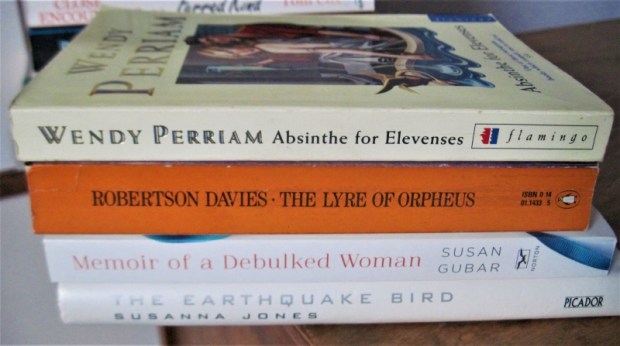
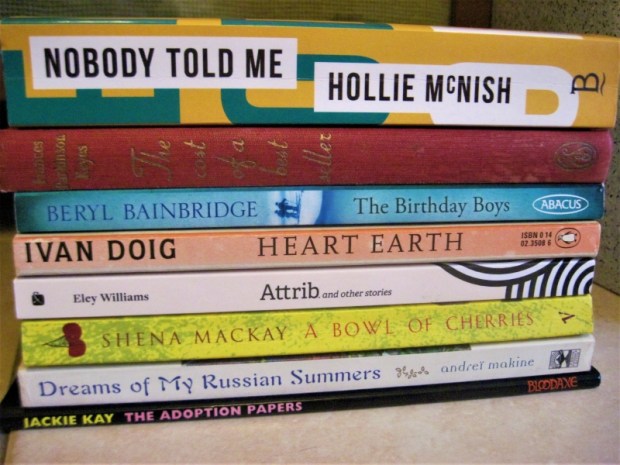
I bought 26 books in total (though one is an omnibus, so you could call it 28), at an average spend of £1.81 per volume. (My husband bought 10 nature books. We also found a gift for my father-in-law’s birthday next week – whew!) I’m particularly pleased with the Robertson Davies novels and the memoirs, some of which have been on my wish list for a long time. My interests in animals plus foodie and medical themes come through clearly. Some authors here I’ve never tried but have been meaning to; others are familiar names I was interested to read more by. I only noticed later on that Ghosts, the John Fuller poetry book, is a signed copy.
What I read
From last year’s book haul: The first 30 or so pages in Ingenious Pain by Andrew Miller and Jesus Land by Julia Scheeres. I’ll probably only skim the Spowers travel book (another one I only just noticed is signed). I have to read a different Dunmore first, towards my Women’s Prize reading project, as it’s requested after me at the library, but I’ll try to get to Talking to the Dead before too much longer.
I got through another 90 pages in Mike Parker’s On the Red Hill, about life in the house he and his partner inherited in the Welsh countryside from another gay couple. I also read about half of Tilly and the Lost Fairy Tales, Anna James’s second middle-grade novel about a girl who disappears into books and interacts with the characters, and the remainder of A.N. Wilson’s The Tabitha Stories, a cute chapter book with illustrations about a kitten learning how to be a cat.
Mostly, I focused on rereading the whole of Paul Collins’s memoir Sixpence House. I’ve listed this as one of the landmark books in my life because, as I was getting ready for my year abroad in England in the late summer of 2003, it was one of the books that whetted my appetite for traveling, and particularly for visiting Hay-on-Wye. (We first went in 2004; this was our seventh trip.)

In 2000 Collins moved from San Francisco to Hay with his wife and toddler son, hoping to make a life there. His parents were British and he’d enjoyed trips to the Book Town before, so it wasn’t a completely random choice. The place suited his interest in the oddities and obscure figures of literature and history. In fact, he’d just finished writing Banvard’s Folly, a fun book containing 13 profiles of thinkers and inventors whose great ideas flopped. (I should reread it, too.)
As he edits his manuscript and hunts for the perfect cover and title, he is also unexpectedly drawn into working for Richard Booth, the eccentric bookseller who was responsible for creating the world’s first book town and crowned himself King of Hay. Booth hired him to sort out the American Studies section – but if you ever went in the pre-2007 Booth’s you’ll know how impossible it would have been to make order out of its chaos. He comes across lots of interesting books time has forgotten, though (I first learned about W.N.P. Barbellion’s The Journal of a Disappointed Man from this book; why have I still not read it?!), and muses on counterfeiting, cover designs, bookbinding, and the sadness of the remainders bin.
Renting an apartment above Pembertons, which no longer exists but was at that time the town’s only new bookshop, Collins and his wife look at various properties and fall in love with a former pub. But when the survey comes back, they realize fixing all the damp and rot would nearly double its £125,000 price tag. (That sure looks good these days! The B&B next to the Airbnb flat where we stayed was for sale for over £700,000. Cusop Dingle is full of large, posh houses – Collins’s landlady referred to it as the “Beverly Hills of Hay.”) Buying one of the new-build houses on the edge of town just isn’t their dream.
In the end, after six months or so in Hay, they admit defeat and move back to the States. So in a sense this is – just like Banvard’s Folly, the book being shepherded into publication within it – a book about an experiment that turned out to be a noble failure. It’s warm, funny in a Bryson-esque way, and nostalgic for a place that still exists but a time that never will again. I loved spotting familiar landmarks, even if the shops have changed hands or are no longer there. This was probably my fourth read, but it all still felt fresh. An enduring favorite of mine. 
I’d be intrigued to know what Collins would make of Hay 20 years later. In 2000 it had 40 bookshops; now it’s only 12, with online sellers, book-related businesses, and shops further afield pushing the listings in the annual leaflet to 26. Whereas then Collins felt they were the only young family in town, it’s very much a hipster place now and we saw many groups of teens and twentysomethings. A tapas bar, boutique stores, turmeric chai lattes … it’s not just a musty antiquarian book lover’s paradise anymore, and that might sadden some like Collins. Yet gentrification and the Festival may be the only things that have kept the town alive. Richard Booth died last year, but the book town vision should live on.


I miss Hay already. I hate to think of all the time that might pass before I can get there again, and what will (or won’t) have changed by then. A few years can seem to go by in an instant these days. My vow is to go again before I turn 40.
 Bookish Beck = Rebecca Foster. American transplant to England. Freelance proofreader and book reviewer.
