Rearranging and Culling My Library
I’m a thrill-seeker, me; when life gets boring, it’s time to engage in the extreme sport of rearranging my home library. My goal this month has been to shake things up and trick myself into being lured by my own books. After all, I was attracted enough to acquire them all. But at some point it’s as if I stop seeing the individual books and they collectively become a sort of wallpaper.
And as I’ve mentioned to some of you, I’ve been disappointed that attempts to highlight segments of my collection – e.g. shelves devoted to BIPOC authors and Women’s Prize nominees – failed: these books seemed more likely to sit unread for years. It must be something to do with creating a feeling of obligation. Even my piles of foodie reads and medical memoirs, two of my favourite subgenres, have gotten ignored.
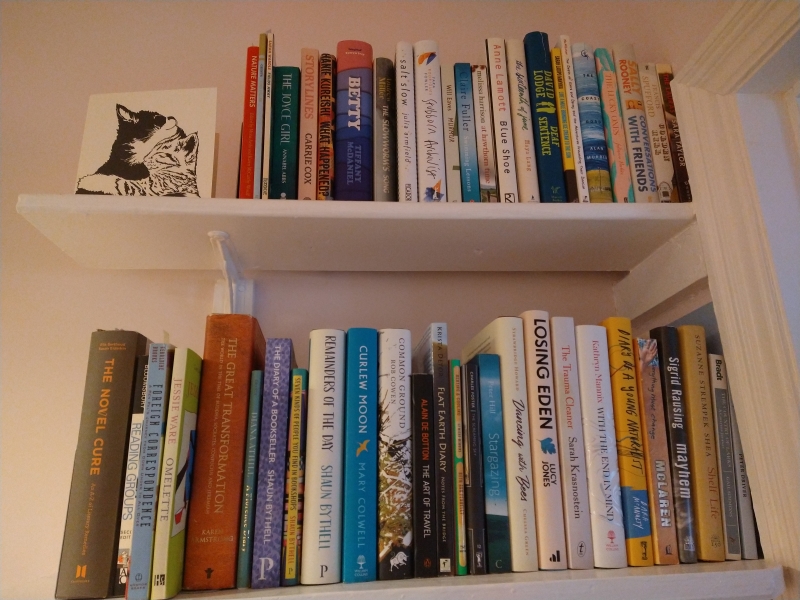
Signed copies shelves: fiction; nonfiction
Setting up special-interest sections backfired, so what next? First, I switched up locations in the upstairs; second, I adjusted the classifications. The one hard and fast rule in my collection is that I separate read from unread books. I don’t currently have room to display read paperbacks, which are in boxes upstairs awaiting built-in shelving in our lounge. I only have one bookcase for read hardbacks, and it’s at capacity; I’ll soon have to reconsider how I display them (and double-stack in the meantime).
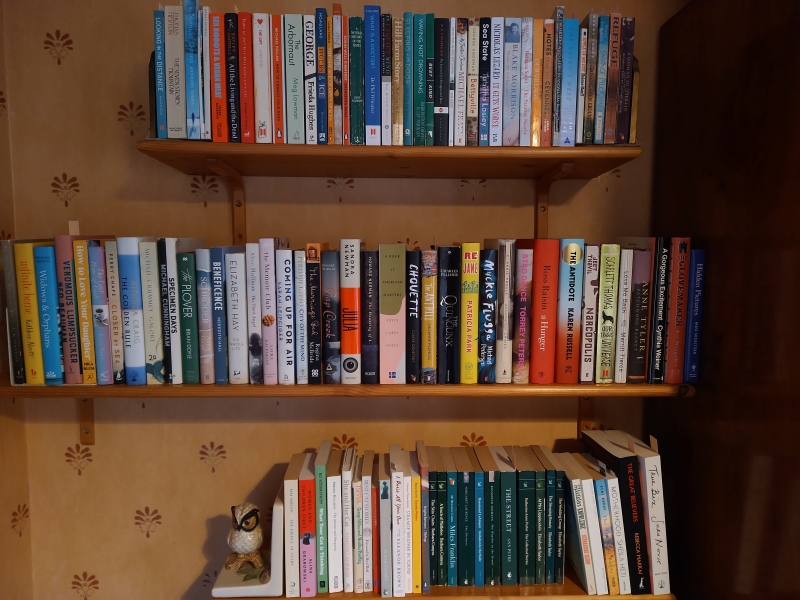
Nonfiction priority; hardback fiction; upcoming challenges and miscellaneous
For my fiction TBR, I interfiled everything into one sequence. Previously, I had kept story collections and novellas separate, but the latter are easy to spot. I’m a librarian at heart and could never eradicate alphabetical order. But, as Jan Morris observed in A Writer’s House in Wales, “I am … stymied in my methodical ordering of this library by the matter of size. Books can be maddeningly un-uniform, meaning that some … which should be side by side with their fellows, are too tall to get on the proper shelves.” Thus a separate shelf for hardbacks and oversize paperbacks.
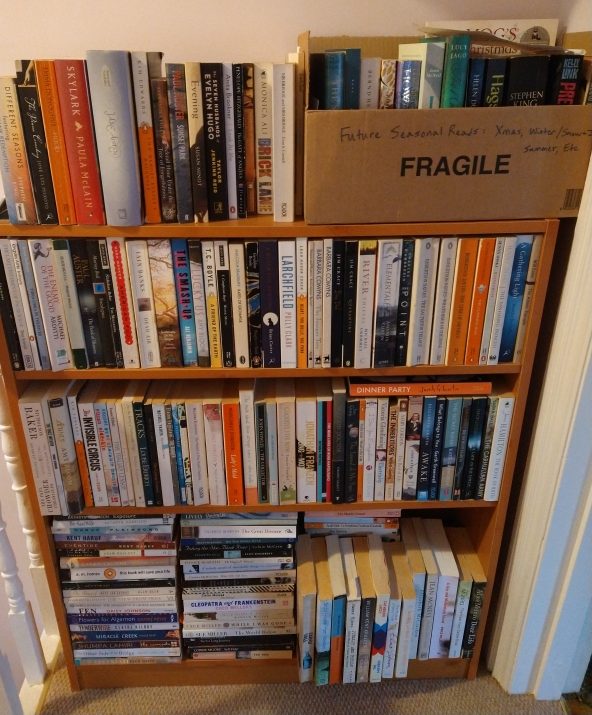
Upcoming and seasonal reads; first half of Fiction A-Z
Then, on a whim, I decided to mix it up by creating a rainbow bookcase on the landing. (To make it more of a challenge, I told myself I could use no Penguins for orange. And I put all the green Viragos together on a different shelf for visual impact.) This made me appreciate just how many books have blue spines, and dull white or black ones! I’m rather pleased with the result, but I will have to be loose about the contents: books will come and go as I read and pass them on, and add others in. In fact, I slotted three in yesterday – two green and a pink – after a trip to our local indie bookstore for my friend’s belated 70th birthday treat.
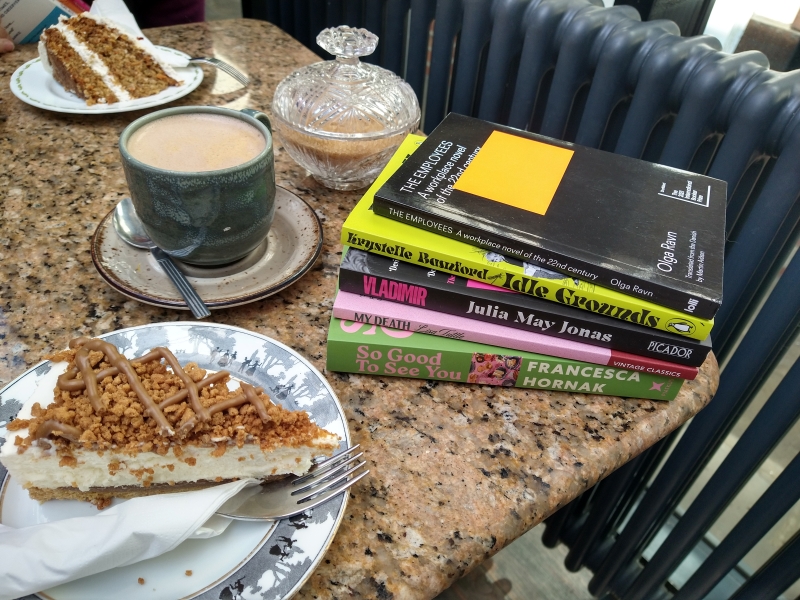
Other areas I’ve created:
- Priority shelves for time-sensitive books (to be reviewed at publication or for challenges)
- Nonfiction priority – two shelves, one in approximated Dewey order; another that includes review copies and some part-read
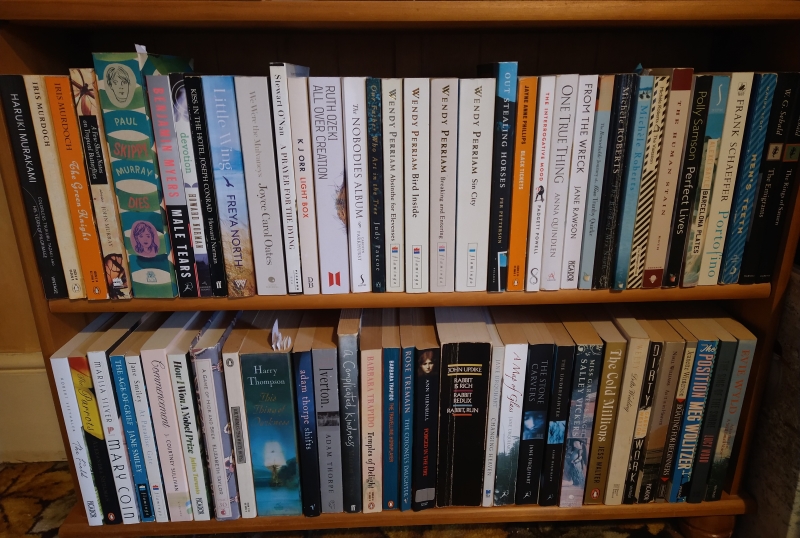
Fiction A-Z, part II
Plus some I’ve maintained:
- Priority to reread
- Seasonal books, in a box
- Signed copies – fiction and nonfiction separate; the handful of unread ones are offset
All through this process, I kept an eye out for books I was no longer keen to read. I ended up jettisoning another 81 (after the 90–100 I culled last year during our hallway redecoration), 17 of which I’ll sell; the rest will be donated to charity or the Little Free Library or given to book club friends as part of the book swap game we do for our holiday social each year.
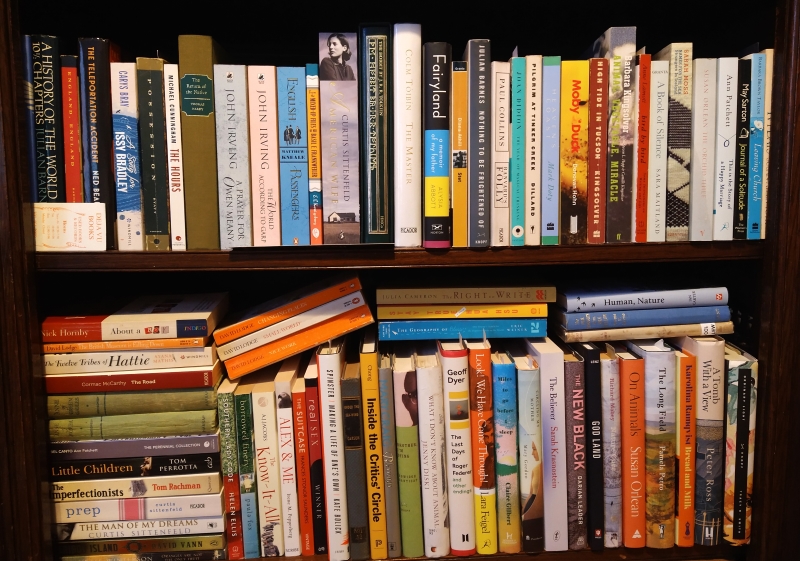
To reread (top shelf and bottom left stack); nonfiction priority
My criteria for getting rid of books were, as I’ve expounded in several posts before.
- Is it a duplicate copy? I used to keep two copies of certain books, thinking I’d do buddy reads with my husband. I have to face facts, though: buddy reads don’t work for us. He tends to read one book at a time and races ahead, while I falter or give up entirely (ahem, Cloud Atlas). I’ve only kept multiple copies where I think it’s a book we might consider setting for book club.
- Is the condition too poor? I’m not usually overly picky about this, but I did ditch four books whose spines were so faded that the title was no longer legible.
- Am I really going to read it? This is a difficult one. I like the idea of certain books but forget that I have random pet peeves, and only so much space – and time. If unsure, I checked the Goodreads page. Ratings and reviews from my friends, but also from randoms whose taste I’ve come to know, can be very helpful in telling me if something is likely to be for me. Some examples of books I decided against keeping, and the reasons:
- Peculiar Ground by Lucy Hughes-Hallett: A doorstopper of a saga that starts in the 17th century, one of my last choices of historical period to read about.
- The Mammoth Cheese by Sheri Holman: Shortlisted for the Orange Prize, but it’s over 400 pages and has great potential to be hokey.
- Eothen by Alexander Kinglake: I had two copies and rid myself of both, even though Jan Morris called it one of the best travel books of all time, because I can’t bear straight travelogues, especially antiquated ones.
- The Mars Room by Rachel Kushner: I DNFed her previous novel and decided against reading her latest; why would the one in between suit me any better?
- The Men Who Stare at Goats and Them by Jon Ronson: I enjoyed two of his books pre-pandemic, but when I look at these now, they just seem dated.
- Pharmakon by Dirk Wittenborn: Bought at The Works in Whitby in 2016 and kept all these years because I was amused by the sales stickers layering up from £2 to £1 to 50p to 25p to 10p. Yes, I bought it for 10 pence. But after a decade, I accepted that I was never going to read this 400+-page novel about an invented drug that induces happiness but then leads to a murder.
As I was going through my groaning set-aside shelf, especially, I had to be honest with myself. Sometimes I misjudge and request a review copy, then for years feel guilty about not reading something that turned out not to be for me. Or I might have liked something enough to get 50–100 pages, or more, into it but then ran out of steam. My choices for these (80+) books were: resume it right away; shelve it with the TBR, either with my progress marked with a slip of paper, or with the intention of starting over at the beginning; or call it unfinished and get rid of it.
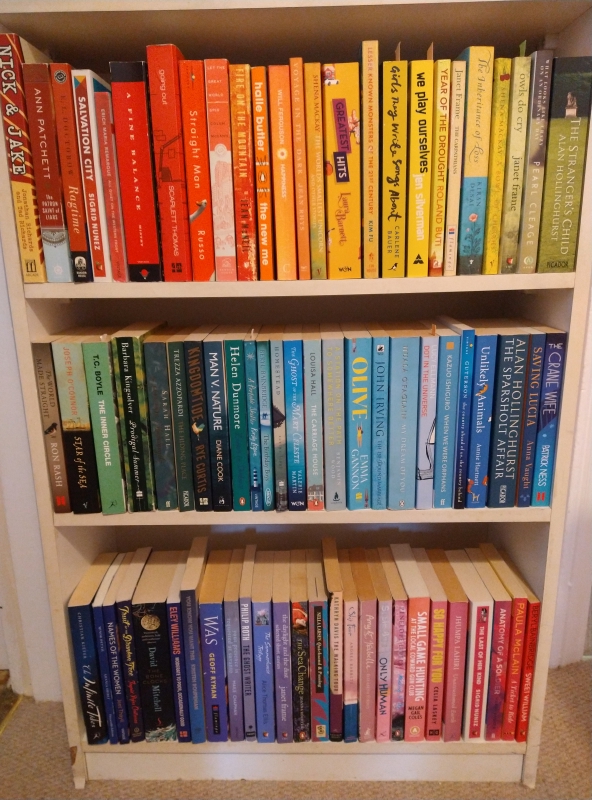
The rainbow bookcase! Have you ever made one of these?
This will be an ongoing task and an evolving system, especially if I ship the remainder of my books over from the USA in June. They’ve been in boxes in my sister’s basement – before that, my dad’s storage unit; before that, my parents’ garage – for far too long. It’s time for a final prune and a reunion with the rest of their family across the pond.
Whether all this honing and rearranging of my collection has been successful, time will tell: my end-of-year stats will reveal whether I’ve managed to read more from my own shelves. I reckon I’ll enjoy the mental athletics of remembering where I’ve moved a book and finding something to fit a seasonal challenge or personal goal. Now that the books have new neighbours, I might be tempted by my long-neglected Four in a Row project again. And for 20 Books of Summer, the only parameter will be that they must be from my own shelves.
How have you kept your TBR under control recently? Do you also have to ‘trick’ yourself into reading your own books?
Final Reading Statistics for 2025 & Goals for 2026
Happy New Year! We went to a neighbours’ party again this year and played silly games and chased their kittens until 1:30 a.m. It was a fun, low-key way to see in 2026.
I read 313 books last year. (2024’s total of 352 will never be topped!) Initially, I set a goal of 350, but by midyear I downgraded it to 300 and it was easy to reach. I can’t pinpoint a particular reason for the decline. In general, I felt like I was chasing my tail all year, despite having less work on than ever (but increased volunteering commitments). Often, I struggled with fatigue or being on the verge of illness. What a fun guessing game: is it long Covid or perimenopause?
Goodreads was glitchy for me all year, randomly counting books two or three times and falsely inflating my total by a whole extra 33 books at one point. It also has a lot of annoying, automatically generated book records that duplicate ISBNs or add the publisher to the title field. So I’m thinking about moving over to StoryGraph this year – I just imported my Goodreads library – though I always quail at learning new online systems. It would also be the next logical step in divesting from Am*zon.
The year that was…
2025’s notable happenings:
- Twice assessing the ‘proper’ (published) books as a McKitterick Prize judge
- Adopting crazy Benny (though that was after losing our precious Alfie)
- Acquiring a secondhand electric car for the household
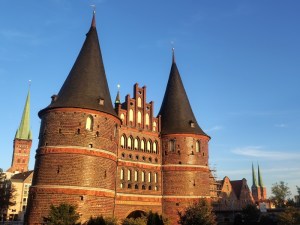
- Holidays in Hay-on-Wye; the Outer Hebrides; Suffolk; Berlin and Lübeck, Germany
- A summer visit from my sister and brother-in-law
- Having the windows and door replaced in the back of our house; and the hall and stairwell/landing redecorated
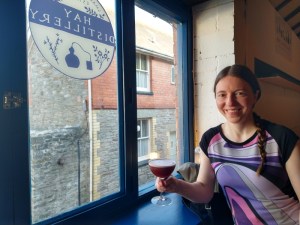
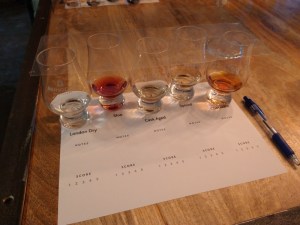
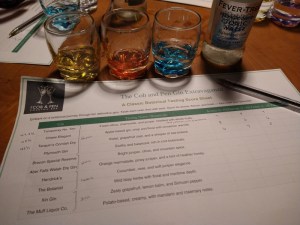
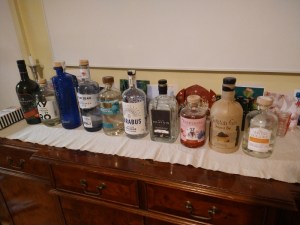
- I got ever more into gin and cocktails, with tastings in Abingdon and Wantage (and in December I led two informal tastings for friends). I also acquired the taste for rum!



The reading statistics, as compared to 2024:
Fiction: 54.7% (↑3.3%)
Nonfiction: 31.6% (↓0.2%)
Poetry: 13.7% (↓3.1%)
Female author: 67.7% (↓0.2%)
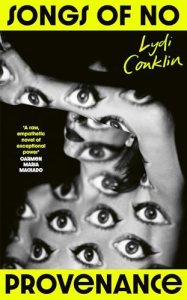
Lydi Conklin was one of 10 nonbinary authors I read from this year. Had I read their novel earlier, this would have made it into my Cover Love post!
Nonbinary author: 3.2% (↑2.1%)
BIPOC author: 18.5% (↑0.1%)
How to get it to 25% or more??
LGBTQ: 20.4% (↓1.1%)
(Author’s identity or a major theme in the work.) It’s the first time this has decreased since 2021, but I’m still pleased with the figure overall.
Work in translation: 9.6% (↑3.6%)
Going the right way with this trend! 10% seems like a good minimum to aim for. I find I have to make a conscious effort by accepting translated review copies or picking them off my shelves to tie in with particular reading challenges.
German (6) – mainly because of our trip in September
French (5)
Swedish (4)
Korean (3)
 Italian (2)
Japanese (2)
Spanish (2)
Chinese (1)
Dutch (1)
Norwegian (1)
Polish (1)
Portuguese (1)
Russian (1)
2025 (or pre-release 2026) books: 55.6% (↑3.2%)
Backlist: 44.4%
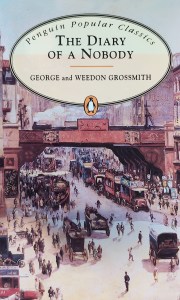
But a lot of that ‘backlist’ stuff was still from the 2020s; I only read eight pre-1950 books, the oldest being Diary of a Nobody from 1892.
E-books: 35.5% (↑3.4%)
Print books: 64.5%
I almost exclusively read e-books for BookBrowse, Foreword and Shelf Awareness reviews. The number of overall Shelf Awareness reviews will be decreasing because of changes to their publishing model, so this figure may well change by next year.
Rereads: 11, vs. last year’s 18
I managed nearly one a month. Like last year, three of my rereads ended up being among my most memorable reading experiences of the year, so I should really reread more often.
And, courtesy of Goodreads:
- 69,616 pages read
- Average book length: 221 pages (just one off of last year’s 220; in previous years it has always been 217–225, driven downward by poetry collections and novellas)
- Average rating for 2025: 6 (identical to the last three years)
Where my books came from for the whole year, compared to 2024:
- Free print or e-copy from publisher: 33.9% (↓10.9%)
- Public library: 18.8% (↑0.4%)
- Free (gifts, giveaways, Little Free Library/free bookshop, from friends or neighbours): 15.3% (↑2.9%)
- Downloaded from NetGalley, Edelweiss or BookSirens: 15% (↑7.2%)
- Secondhand purchase: 12.8% (↑1.3%)
- New purchase (often at a bargain price; includes Kindle purchases): 2.6% (↓0.5%)
- University library: 1.3% (↓0.7%)
- Other (church theological library): 0.3% (↑0.3%)


I’m pleased that 30.3% of my reading was from my own shelves, versus last year’s 24%. It looks like I mainly achieved this through a reduction in review copies. In 2026, I’d like to read even more backlist material from my own shelves (including rereads). This will be a particular focus in January, and then I’ll plan how to incorporate it for the rest of the year.
I have an absurd number of review books to catch up on (42), some stretching back to 2022 – the year of my mother’s death, which put me off my stride in many ways – as well as part-read books (116) to get real about and either finish or call DNFs and clear from my shelves. Dealing with these can be part of the reading-from-my-shelves initiative.
What trends did you see in your year’s reading? What is your plan for 2026?
All Souls’ Day Reading: Armitage, Campbell, Mah & Perry
Along with my Halloween-tide R.I.P. reading (here and here), I’ve been reading books about ancestors and the dead – appropriate for All Saints’ Day (yesterday) and All Souls’ Day (today). Both are in the Church calendar but less a part of popular culture.
My mind naturally turns toward the dead as October advances: on the 30th, it was three years since my mother’s death (plus the 25th marked a year since we started losing sweet Alfie). To allay dread at the impending anniversary, I booked myself a treat to look forward to that day. For some reason, Wantage Literary Festival included a Gin Tasting Extravaganza alongside its bookish events. I didn’t fancy any book talks but was keen to try 10 British Isles gins, 9 of which were new to me and 5 of which were ticks in my 101 Gins to Try before You Die book.


Beforehand, I did some secondhand book shopping. Regent is an excellent and enormous maze of a bookshop that I’d been to once before. It has an exhaustive selection and great prices (£2.50 paperbacks / £3–5 hardbacks) that haven’t changed in three years. I considered this return trip a chance for another birthday book haul and was delighted with my finds (the Gleeson was from a charity shop in the town).


My All Souls’ stack includes a poetry collection and three #NonfictionNovember reads.
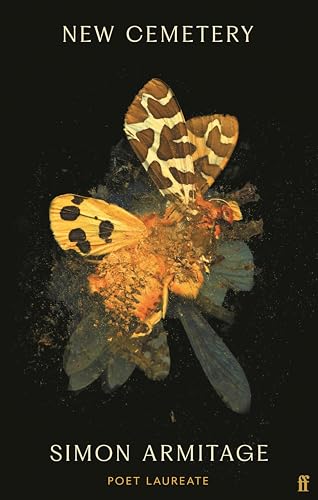
New Cemetery by Simon Armitage (2025)
Not far from the English Poet Laureate’s home in Huddersfield, some cow fields were recently converted into a municipal graveyard. I can’t do better than Armitage’s own description of the style in this collection: “short-lined tercets linked with/by intermittent rhymes and half-rhymes … like threading daisy chains.” Each one is titled in brackets after a species of moth, in a rather arbitrary way, as he acknowledges. The point was to – in a time of climate breakdown – include nature in the inevitable march of death and decay. I most liked the poems about the cemetery, whereas the majority of the book is about everyday moments from a writer’s life.
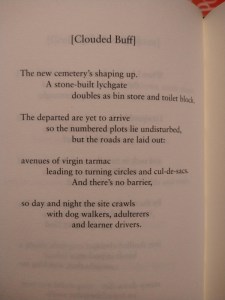
There are some amusing and poignant lines among the rest:
 I died and went
to Bristol Parkway
for my sins,
interchange
between soul and flesh
the whispered half-rhymes
of earth and death
on the spade’s tongue.
I also appreciated this haiku-like stanza: “Almond blossom / slash rotten confetti / clogging the church drains.” But there was little that struck me otherwise. I’ve tried to love Armitage’s poetry, but this third experience again leaves me unmoved. I’ve preferred his travel memoirs. Still, the book ends on the perfect note:
the dead are patiently
killing time
between visiting hours,
deaf, blind, mute
and numb,
unable to love
but capable still
of being loved.
(Public library) 
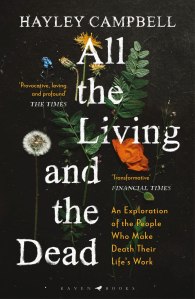 I’ve read the first two chapters of a long-neglected review copy of All the Living and the Dead by Hayley Campbell (2022), in which she shadows various individuals who work in the death industry, starting with a funeral director and the head of anatomy services for the Mayo Clinic in Minnesota. In Victorian times, corpses were stolen for medical students to practice on. These days, more people want to donate their bodies to science than can usually be accommodated. The Mayo Clinic receives upwards of 200 cadavers a year and these are the basis for many practical lessons as trainees prepare to perform surgery on the living. Campbell’s prose is journalistic, detailed and matter-of-fact, but I’m struggling with the very small type in my paperback. Upcoming chapters will consider a death mask sculptor, a trauma cleaner, a gravedigger, and more. If you’ve enjoyed Caitlin Doughty’s books, try this.
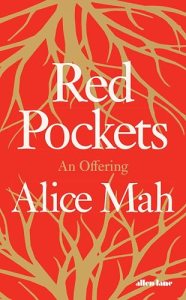 I’m halfway through Red Pockets: An Offering by Alice Mah (2025) from the library. I borrowed it because it was on the Wainwright Prize for Conservation Writing shortlist. During the Qingming Festival, the Chinese return to their hometowns to honour their ancestors. By sweeping their tombs and making offerings, they prevent the dead from coming back as hungry ghosts. When Mah, who grew up in Canada and now lives in Scotland, returns to South China with a cousin in 2017, she finds little trace of her ancestors but plenty of pollution and ecological degradation. Their grandfather wrote a memoir about his early life and immigration to Canada. In the present day, the cousins struggle to understand cultural norms such as gifting red envelopes of money to all locals. This is easy reading but slightly dull; it feels like Mah included every detail from her trips simply because she had the material, whereas memoirs need to be more selective. But I’m reminded of the works of Jessica J. Lee, which is no bad thing.
Death of an Ordinary Man by Sarah Perry (2025)
Perry recognises what a sacred privilege it was to witness her father-in-law’s death, which occurred just nine days after his diagnosis with oesophageal cancer. She concludes, like Simone de Beauvoir does of her mother in A Very Easy Death, that David’s end was as good as one might hope for. Viz., he was in his late seventies, remained at home, was looked after by his son and daughter-in-law, more or less maintained his mental capacity until the end, and showed minimal signs of pain or distress. Still, every death is fraught, to some degree, with bureaucracy, medical error and pangs of regret. There is a searing encounter here with an unfeeling GP; on the other hand, there is such kindness from nurses, relatives and a pastor.
The beauty of Perry’s memoir is its patient, clear-eyed unfolding of every stage of dying, a natural and inexorable process that in other centuries would have been familiar to anyone – having observed it with siblings, children, parents, neighbours, distant relatives and so on. She felt she was joining a specifically womanly lineage of ministering, a destiny so quotidian that she didn’t feel uncomfortable with any of the intimate care involved. I thought of my sister and her mother- and sister-in-law sitting vigil at my brother-in-law’s deathbed in 2015.
 Perry traces the physical changes in David as he moved with alarming alacrity from normal, if slowed, daily life to complete dependency to death’s door. At the same time, she is aware that this is only her own perspective on events, so she records her responses and emotional state and, to a lesser extent, her husband’s. Her quiver of allusions is perfectly chosen and she lands on just the right tone: direct but tender. Because of her and David’s shared upbringing, the points of reference are often religious, but not obtrusive. My only wish is to have gotten more of a sense of David alive. There’s a brief section on his life at the start, mirrored by a short “Afterlife” chapter at the end telling what succeeded his death. But the focus is very much on the short period of his illness and the days of his dying. During this time, he appears confused and powerless. He barely says anything beyond “I’m in a bit of a muddle,” to refer to anything from incontinence to an inability to eat. At first I thought this was infantilizing him. But I came to see it as a way of reflecting how death strips everything away.
As I read, I often had tears in my eyes, thinking of the deaths I have experienced at second hand and the many more that will come my way until my own. In this gift of a book, Perry captures the emotional poles of bearing witness, and the dignity and uniqueness of every life:
There was relief, and there was loss – it was the saddest thing we’d ever seen, and the best thing we had ever done – all these things existing together undiminished, and never cancelling each other out.
now I understand there are no ordinary lives – that every death is the end of a single event in time’s history: an event so improbable it represents a miracle, and irreplaceable in every particular.
(Public library) 
Death and grief are common topics in my stacks at all times of year. I see more books on dying and the dead in my immediate future, starting with two rereads for #NovNov – The Death of Ivan Ilych and Death in Venice, along with The Field by Robert Seethaler (narrated by the inhabitants of a cemetery), the latter two for #GermanLitMonth; and A Single Man by Christopher Isherwood.
Hay-on-Wye Trip & Book Haul (Plus a Little Life Complication)
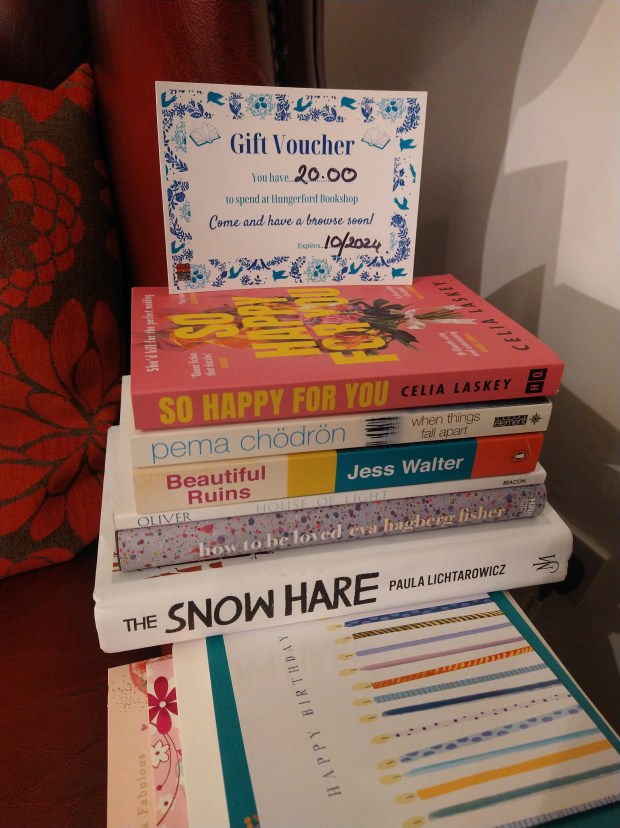
Last week was our ninth time visiting Hay-on-Wye. Our previous trip was in October 2023 for my 40th birthday. Prompted by my overhaul post last month, I managed to finish a couple more of the 16 books I’d bought that time, taking me to 4 read and 1 skimmed; I’ve also read the first quarter of So Happy for You by Celia Laskey. Considering it was less than 18 months between visits, I’m going to call that an adequate showing. However, I will endeavour to be better about reading this latest book haul (below) in a timely fashion!
 Because we were staying four nights, there was no need to rush through all the bookshops in a day or two, though that would be possible; instead, we parcelled them out and mixed up our shopping with walks, short outings in the car, and relaxing in the comfy cottage just over the English border in Cusop. I had work deadlines to meet within the first few days, but on another evening we took advantage of the place having Netflix to watch My Neighbor Totoro.
 I’ve gotten secondhand book shopping in Hay down to a science over the years. Check on opening days and hours carefully or you can miss out. Thursday to Saturday is the best window to go: the Thursday market is excellent for local produce and crafts, and it’s nice to see the town bustling. (Though I’ve never seen it at Festival time, and wouldn’t want to!)


Start with the bargain options: the Little Free Library shelves by the river, where I scored Electricity by Victoria Glendinning; the sale area outside Hay Cinema Bookshop, the dedicated honesty shop beside Richard Booth’s Bookshop (new this trip), and the Book Passage beside Addyman Books – all £1/book; and the honesty shelves on the castle grounds, where it’s £2/book. Most of my purchases came from these areas. Just call me thrifty!

Next, the mid-priced options: Cinema, Broad Street Book Centre, Hay-on-Wye Booksellers, Clock Tower Books, and the new British Red Cross bookshop, which is not cheap for a charity shop but has a good selection of relatively recent stuff. (Oxfam, however, has moved away from books and primarily sells clothes, new products and bric-a-brac.) Cap it off with Addymans + Addyman Annexe, Cinema, Booth’s, the Poetry Bookshop and Green Ink Booksellers.
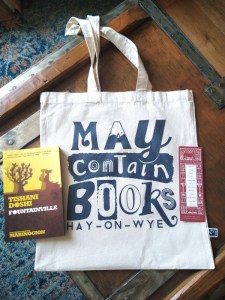 I had the best luck in Cinema this time, where I found two remainder books, three bargain books (one not pictured because it will be a gift) and the Howard Norman short stories – a particular thrill as his work is not often seen in the UK. Cinema and Booth’s are the greatest pleasure to browse. At Booth’s I bought my priciest book of the trip – Fountainville by Tishani Doshi, a retelling of stories from the Mabinogion – and indulged in a bookish tote bag (as if I needed another!). It was especially pleasing to find the Doshi and the Lewis in Hay as they are Welsh authors so will cover me for Reading Wales Month next year.
I wasn’t in the market for new books this time, not having any vouchers at my disposal, but those who are will also enjoy perusing Gay on Wye, North Books, and the large selection of new stock mixed in thematically at Booth’s. All told, that’s 15 places to shop for books.
Alas, The Bean Box, where you could get the best coffee in town, has now closed. We returned to Hay Distillery for delicious gin drinks and had Shepherd’s ice cream (a must) twice. New to us on this trip were nearby Talgarth and its excellent Mill café, the Burger Me (oh dear) restaurant at The Globe, a drink at Kilverts Inn, and an evening walk down the river to a nice shingle spit.


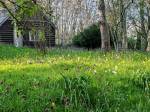
The weather was improbably warm and sunny – as in, I packed an umbrella and raincoat but never used them. I did need my woolly hat, scarf and gloves, but only on the first morning when we climbed up a hill. The rest of the time, it was blue skies and blossom, lambs in the fields, and 20 degrees C, for which, in early April, we could only be grateful – but also, as the lady on the till at Cinema rightly observed, it’s mildly disturbing.
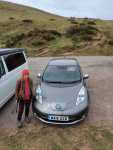
This was our first major trip with our secondhand electric car, which needs rather frequent charging. En route we broke the journey at Gloucester and toured its cathedral; on the way back, we plumped for usefulness over aesthetics by stopping at carparks in Ross-on-Wye and Cirencester. We now choose routes that avoid motorways, which makes for more leisurely and scenic touring.
-

- Pwll y grach waterfall
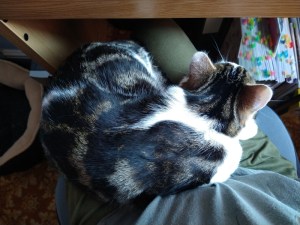
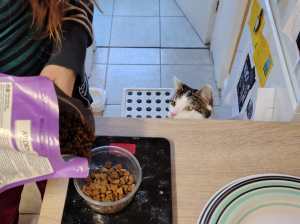
Two days after we bought the car from a local acquaintance, this creature entered our lives. I certainly didn’t intend to adopt another cat a shade under six weeks after Alfie’s death. (I haven’t even finished reading Grieving the Death of a Pet on my Kindle; I still haven’t brought myself to read your kind comments on my post about losing Alfie.) But we were deeply lonely in a way we hadn’t been expecting. I would object to the use of the word “replace” – there is no replacing Alfie; we still miss him for his predictability and dignity as well as all his own funny ways. I’ve come to realize that grief is ongoing, and all of a piece: mourning Alfie took me back to the same place of grief I inhabit for my mother, and missing them and others lost in recent years is tied into my helpless sadness over natural disasters, humanitarian crises, the state of affairs in my home country, the trajectory of the planet, and on and on.
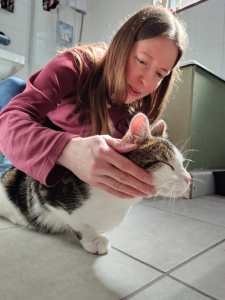

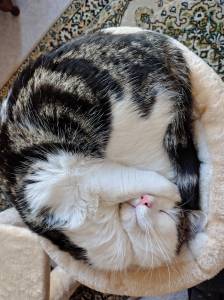
Any road, the adoption moved very quickly: from expressing interest on a Thursday to getting a call back on a Saturday to meeting and taking him home on a Sunday afternoon. Benny (“Tubbs” as was) is only a year old and full of energy. He came home with a tapeworm but got over it within a week after a targeted worming treatment. It’s been a big adjustment for us to have a cat who doesn’t sleep most of the day and can jump up onto any counter or piece of furniture. Benny considers every waking moment a chance for playtime and mischief. But he is also so sweet and affectionate. And we haven’t laughed this much in a long, long time.


We had booked the Hay trip long before we knew about Benny and were concerned it would be too soon to leave him. But we needn’t have worried; he was settled in here from Day One. Our regular cat sitter visited twice a day and he was absolutely fine. She sent us WhatsApp updates on him and cute photos, in most of which he is a blur chasing his toy snake!

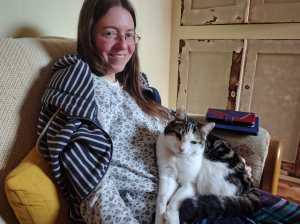
So that’s what’s been going on with me. And of course, I’ve been frantically reading there in the background (36 books on the go at the moment): pre-release e-books for paid reviews, review copies I’ve been sent for the blog, new releases from the library, and the rest of the McKitterick Prize longlist – my shortlist choices are due on the 23rd, eek! I still hope to read a couple of novels from the Carol Shields Prize longlist before the winner is announced, too.
Hope everyone is having a happy spring!
Three on a Theme: Christmas Novellas I (Re-)Read This Year
I wasn’t sure I’d manage any holiday-appropriate reading this year, but thanks to their novella length I actually finished three, two in advance and one in a single sitting on the day itself. Two of these happen to be in translation: little slices of continental Christmas.
Twelve Nights by Urs Faes (2018; 2020)
[Translated from the German by Jamie Lee Searle]
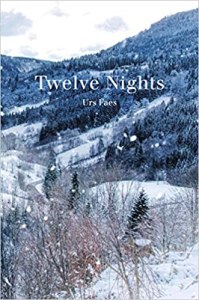 In this Swiss novella, the Twelve Nights between Christmas and Epiphany are a time of mischief when good folk have to protect themselves from the tricks of evil spirits. Manfred has trekked back to his home valley hoping to make things right with his brother, Sebastian. They have been estranged for several decades – since Sebastian unexpectedly inherited the family farm and stole Manfred’s sweetheart, Minna. These perceived betrayals were met with a vengeful act of cruelty (but why oh why did it have to be against an animal?). At a snow-surrounded inn, Manfred convalesces and tries to summon the courage to show up at Sebastian’s door. At only 84 small-format pages, this is more of a short story. The setting and spare writing are appealing, as is the prospect of grace extended. But this was over before it began; it didn’t feel worth what I paid. Perhaps I would have been happier to encounter it in an anthology or a longer collection of Faes’s short fiction. (Secondhand – Hungerford Bookshop)
Through a Glass, Darkly by Jostein Gaarder (1993; 1998)
[Translated from the Norwegian by Elizabeth Rokkan]
On Christmas Day, Cecilia is mostly confined to bed, yet the preteen experiences the holiday through the sounds and smells of what’s happening downstairs. (What a cosy first page!)
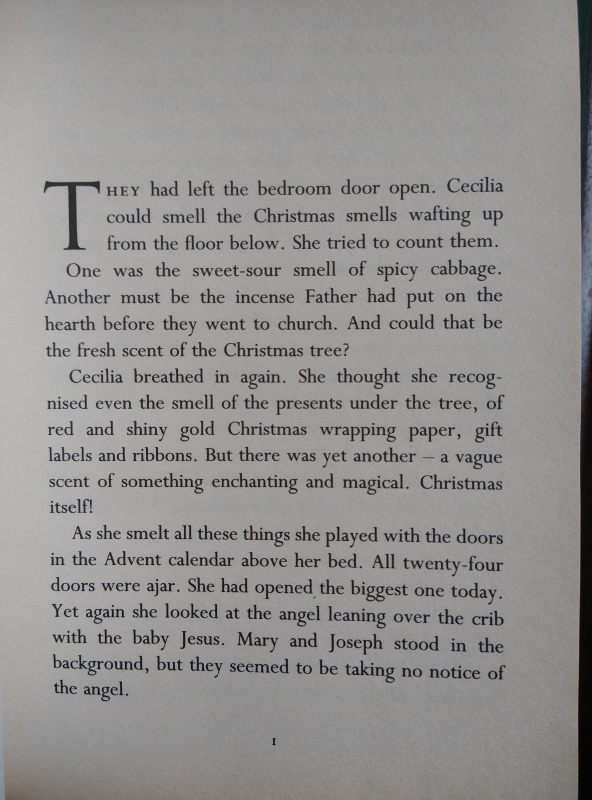
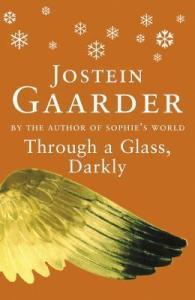 Her father later carries her down to open her presents: skis, a toboggan, skates – her family has given her all she asked for even though everyone knows she won’t be doing sport again; there is no further treatment for her terminal cancer. That night, the angel Ariel appears to Cecilia and gets her thinking about the mysteries of life. He’s fascinated by memory and the temporary loss of consciousness that is sleep. How do these human processes work? “I wish I’d thought more about how it is to live,” Cecilia sighs, to which Ariel replies, “It’s never too late.” Weeks pass and Ariel engages Cecilia in dialogues and takes her on middle-of-the-night outdoor adventures, always getting her back before her parents get up to check on her. The book emphasizes the wonder of being alive: “You are an animal with the soul of an angel, Cecilia. In that way you’ve been given the best of both worlds.” This is very much a YA book and a little saccharine for me, but at least it was only 161 pages rather than the nearly 400 of Sophie’s World. (Secondhand – Community Furniture Project, Newbury)
Small Things Like These by Claire Keegan (2021)
I idly reread this while The Muppet Christmas Carol played in the background on a lazy, overfed Christmas evening.
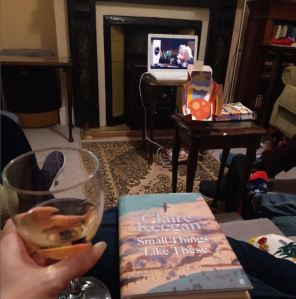
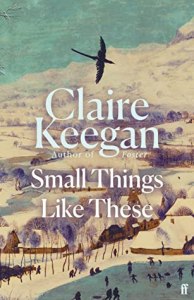 It was an odd experience: having seen the big-screen adaptation just last month, the blow-by-blow was overly familiar to me and I saw Cillian Murphy and Emily Watson, if not the minor actors, in my mind’s eye. I realized fully just how faithful the screenplay is to the book. The film enhances not just the atmosphere but also the plot through the visuals. It takes what was so subtle in the book – blink-and-you’ll-miss-it – and makes it more obvious. Normally I might think it a shame to undermine the nuance, but in this case I was glad of it. Bill Furlong’s midlife angst and emotional journey, in particular, are emphasized in the film. It was probably a mistake to read this a third time within so short a span of time; it often takes me more like 5–10 years to appreciate a book anew. So I was back to my ‘nice little story’ reaction this time, but would still recommend this to you – book or film – if you haven’t yet experienced it. (Free at a West Berkshire Council recycling event)
Previous ratings:  (2021 review);
  (2022 review)
My rating this time:
We hosted family for Christmas for the first time, which truly made me feel like a proper grown-up. It was stressful and chaotic but lovely and over all too soon. Here’s my lil’ book haul (but there was also a £50 book token, so I will buy many more!).
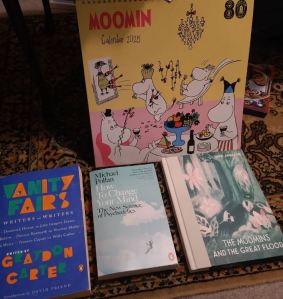
I hope everyone has been enjoying the holidays. I have various year-end posts in progress but of course the final Best-of list and statistics will have to wait until the turning of the year.
Coming up:
Sunday 29th: Best Backlist Reads of the Year
Monday 30th: Love Your Library & 2024 Reading Superlatives
Tuesday 31st: Best Books of 2024
Wednesday 1st: Final statistics on 2024’s reading
On Trying to Keep Still (Post-Northumberland Holiday)
What’s the point of going on vacation? Expanding your cultural horizons, seeing new things and places, treating yourself to fun experiences you don’t have in the everyday, and relaxing could all be good answers. Relaxation isn’t our strong suit when we go away; we often return from a holiday wishing that we had a few recovery days before resuming work. Some combination of developing a bad cold in the last few days of the trip, coming back to non-stop rain, worrying about our cat’s ongoing health issues, and my husband already having a manically busy start to the term has left me feeling like staying put for the foreseeable.
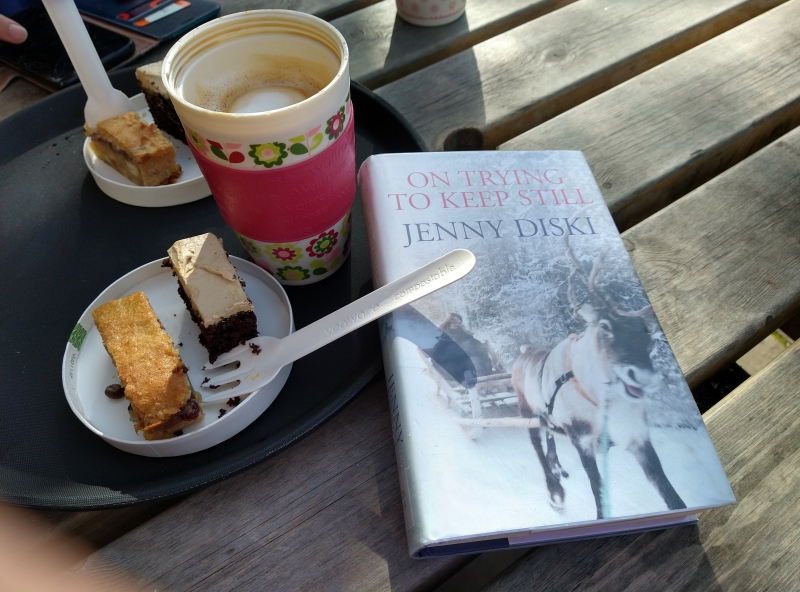
Apt reading for a coffee stop on Lindisfarne.
Jenny Diski understood that. Her collection of travel pieces, On Trying to Keep Still, was the one book I read in its entirety on our trip (along with parts of novels, poetry collections and many, many short story volumes). Essays and short stories were perfect reading for a public transport trip: ideal for taking out on a train or bus and reading one or a few. I’d earmarked the Diski for 20 Books of Summer but found a better setting for it after all. A couple of pieces touch on her traumatic childhood and time spent in a mental hospital as a teenager, which I vaguely remembered from her other autobiographical work. The essay “On Anatomy,” which doesn’t really fit with the others but may have been my favourite, matter-of-factly recounts her rape at 14, and her midlife diagnosis of Freiberg’s disease. Her doctor’s dismissive response to her debilitating foot pain was her first experience of age-related discrimination.
Diski expresses how troubled she is to have become known as a travel writer – through the two books of hers I’d previously read, Skating to Antarctica and Stranger on a Train – because, for the most part, she much prefers to stay at home and do nothing. Ironically, she ends up writing a travel feature on Lapland for the Observer, even though what she actually proposed was spending a few days in the polar dark. But the paper talked her into undertaking all sorts of uncomfortable adventures like a reindeer-drawn sleigh ride and sleeping in a tent – and this for someone who specifically hated being cold.
This is the stuff of Part Three. In Part One, she speaks at a book festival in New Zealand and resists the compulsion to skydive; in the long Part Two, she courts solitude by renting a cottage on a Somerset farm for two months. She holes up with a mini-library of silence- and seclusion-themed reads and shows her face only often enough so the owner won’t fret about her. (It took me a little while to work out that the farmer was Janet White, author of The Sheep Stell – quite a neat connection. Diski also lived with Doris Lessing as a teenager.) Here, too, Diski is delighted to eschew outings and exercise and just stay in comfort. The fact that she brought pristine Prada hiking boots tells you she’s no outdoorswoman. By the book’s end, she’s concluded it’s best to save the money and effort and just research or imagine your way to places instead. Tongue-in-cheek advice, perhaps, but the tone of cheerful indolence appealed to me. (Secondhand – Awesomebooks.com) 
Sprinting to make buses, hours-long bone-shaking rides, heavy luggage: we were out of practice at using public transport, sure, but the rigours of this trip were a bit much for me. It can’t just be age, though at nearly 41 I do long for my own bed on any stay away from home. It’s partly a matter of accepting that chronic illness means I will have limitations. Much as we wanted to do the right thing by not driving, travelling by car is so much more practical and comfortable. Trips to the Continent may still be doable by train as European services seem reliable. But within the UK? Unless it’s a short city break, I’m not sure.
All that said, we did have a nice time. Our cottage in Berwick-upon-Tweed was spacious and we had unexpectedly glorious weather for daytrips to Bamburgh Castle, the Farne islands and Lindisfarne, Alnwick and Alnmouth, and especially the fishing town of Dunbar in Scotland. If you ever find yourself in Berwick, do walk the medieval walls (plus try a charcuterie platter at Atelier wine bar, sample the sweet or savoury offerings at Northern Soul Kitchen, and find time for a drink or two at The Curfew micro-pub). Speaking of drinks, we also enjoyed our time with friends in York, not least an afternoon at the annual beer festival.


Bookishness included a return trip to Barter Books, where my store credit got me a free book and badge; Berwick’s Berrydin Books and Slightly Foxed, as well as several charity shops; the “Books by the Sea” Little Free Library network; and the John Muir birthplace museum and trail in Dunbar. Muir was a forefather of modern environmentalism involved in the inception of the U.S. national parks system. I’ll have to seek out his memoir of childhood.


My modest book haul (compared to our previous trip to Northumberland, anyway) of 12 books is testament to great restraint; had we been traveling by car, I probably would have acquired more books at each stop. I majored on short story collections and novella-length works. And I’ve started reading several already!


Other reading experiences, on a rail replacement bus and on the nearly empty Bamburgh and Dunbar beaches:


If you had to choose, would it be far-flung adventuring or the comforts of home?
Christmas Reading and Book Haul
I recently read two novels set in the week of Christmas. Both were good reminders to appreciate the family that you have because whatever your dysfunctional situation, it could probably be much worse.
 Christmas Holiday by W. Somerset Maugham (1939): Twenty-three-year-old Charley Mason heads to Paris on Christmas Eve to see his old friend Simon and live it up in the big city. First thing, Simon takes him to a brothel, where Charley dances with topless Russian prostitute “Princess Olga.” Before things go any further, he ducks out to attend a Mass he happened to get tickets for, and she begs to accompany him. When Lydia (for that is her real name) starts weeping during the service, he takes her back to his hotel and listens with rapt horror as she tells him the sordid story of how her husband, a petty criminal named Robert Berger, murdered a man for fun and ended up in prison overseas. From here on, Charley’s primary feeling for Lydia is pity and any desire he had is neutralized. Simon, too, is fascinated with the Berger case for what it reveals about essential human egoism. The chaste relationship with Lydia and the intensity of the interactions with Simon made me wonder if there was covert homoeroticism here. It was interesting, shortly after my Paris trip, to read something about how sleazy it is rather than how magical. (Secondhand purchase)
 Flight by Lynn Steger Strong (2022): I couldn’t resist the setup: three grown-up siblings and their families meet at the one brother’s house in upstate New York to celebrate their first Christmas since their mother died. The novel takes place over just four days, the 22nd through Christmas Day, but Strong pumps in a lot of backstory about the sibling dynamic and the three marriages. The late Helen has already ascended into legend, and her coastal home in Florida is a bargaining chip. Tess, Martin’s lawyer wife, approaches the problem practically: sell it and split the profits three ways. Henry, an environmentalist artist, wants to sell the land to the state to be part of a nature preserve. Kate, the sentimental one, wants to live in the house herself but isn’t sure she and Josh can afford to buy her brothers out. At first I thought this was going to be a slightly irksome story of privileged white people and their ‘problems’, but there is a biracial character and an ex-heroin addict and her daughter also become key characters. As the family build igloos, bake pies and plan the perfect photo shoot, offences are simmering under the surface (“Mostly they resent each other from a comfortable enough distance that they might call it love”). These all fade, though, when a child goes missing. I was reminded subtly of Ann Patchett’s work, but more, with the environmental and parenting themes, of Ramona Ausubel and Megan Mayhew Bergman. I’d read more by Strong. (Public library)
And now for the promised Christmas book haul.
Here’s what I bought with store credit at 2nd & Charles while in the States for my sister’s graduation with her bachelor’s in nursing.
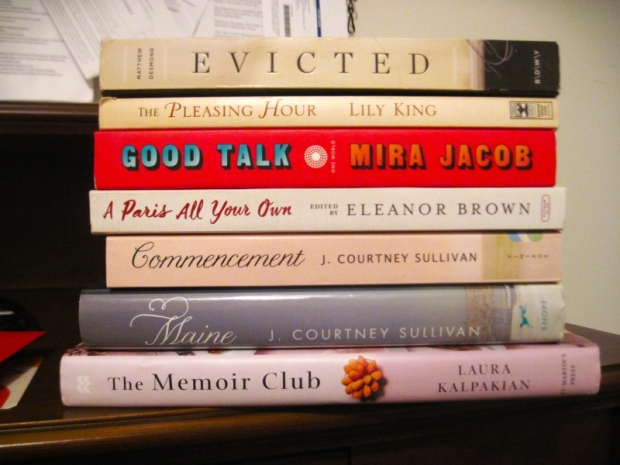
We got to do some fun family Christmassy things while I was there for 10 days, then I flew back to the UK into Christmas Eve and got to do actual Christmas with my in-laws. It’s been a whirlwind of a month!


I had this book post waiting for me when I got back.
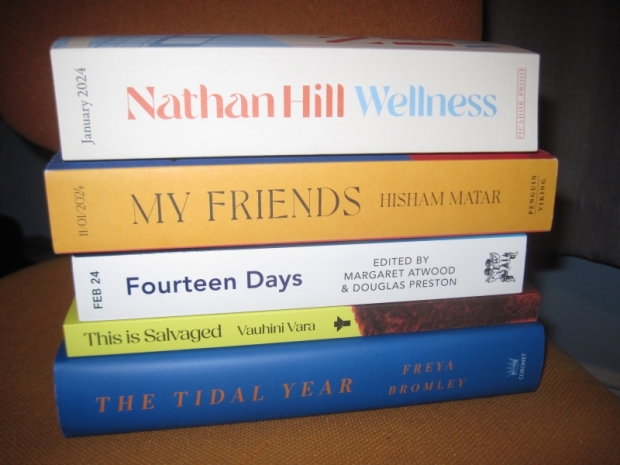
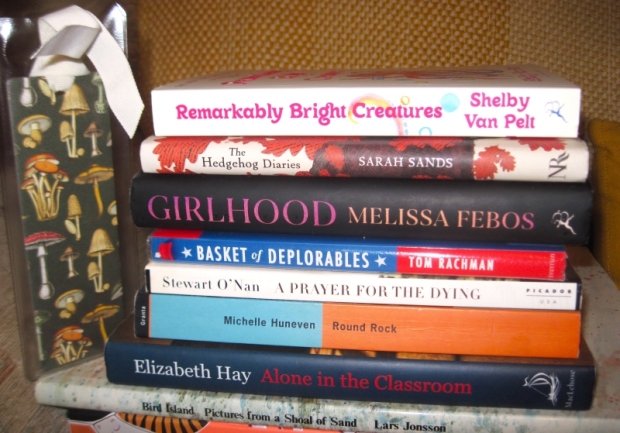
And received these for Christmas!
Hay-on-Wye Trip & Book Haul
Our previous trip to Hay was in September 2020, when Covid restrictions meant some shops were closed and most eateries only offered takeaway or outdoor dining. At the end of my write-up, I vowed to go back before I turned 40. I stayed true to my word and we arrived in town the day before my 40th birthday. (Not only that, but I’ve completed the Triple Crown of British Book Towns in a year, what with visits to Wigtown in June and Sedbergh in August. My hauls were comparable in all three and my spending in Hay (£37.95 for 15 books) was somewhere between Sedbergh’s low (£24.50 for 13) and Wigtown’s high (£44 for 16).)
Every time we visit, we find some businesses have closed but others have opened. There’s still a core of 12 bookshops, but as in Sedbergh, there are other establishments with a few shelves of books, so there are 15–20 places in town where you can browse books. That’s plenty for anyone to be getting on with in a long weekend.
I had an action plan for our three days that moved from cheapest (honesty shelves below the castle, £1 area outside Cinema; Oxfam and British Red Cross charity shops; Hay-on-Wye Booksellers; Clock Tower Books) through mid-price (Addyman Books, Cinema) to the more expensive options (Green Ink, Booths). The town’s newest shop, as pictured in my birthday post, is Gay on Wye, which, with North Books, replaced Pembertons as sellers of new stock. (Booth’s, the Castle and the Old Electric Shop also sell curated selections of new books.)
New to us on this trip:
- The Bean Box, a terrific and reasonably priced mini coffee bar run out of a horse box by the river. They have a nice garden and a secondhand book selection, and you can sit on their patio or at tables and chairs closer to the river view.
 Felin Fach Griffin, a country pub about a 20-minute drive from Hay, where we booked a table for my birthday lunch. Excellent food and a cosy atmosphere, with hill views from the windows.
- Hay Castle, which has had scaffolding up and been half-derelict ever since our first visit in 2004. At various points it has had books for sale. In 2022, it opened to the public as a visitor attraction. A projected animation gives a jaunty historical overview from the Middle Ages to the present day. We especially liked the room of Richard Booth and Book Town memorabilia and the viewing platform at the top. Booth himself was the last to live in the castle. On our earliest trips we would occasionally see him around town – a loud, shuffling (after his stroke) eccentric.

- Hay Distillery, where I had a delicious gin cocktail on my birthday evening.
“It is obviously impossible to catalogue over one million books and these listings therefore represent only a very small selection of the books that we have in stock in Hay. We would point out that one of the chief services of the secondhand bookshop is to provide the customer the opportunity to find the book he did not know existed.”
~Richard Booth, “Books for Sale” periodical (1981?)
“The new book is for the ego; the second-hand book is for the intellect.”
~Richard Booth, quoted on the castle exhibit wall
When we arrived at our Airbnb, we found it had not been cleaned; no linen, etc. A cleaner belatedly came to sort it out, but the owner gave us a full refund, so a minor inconvenience got us back more than enough to pay for the rest of the weekend.
After the final day’s shopping, this was my final book haul. We had particularly good luck in the Addyman’s alleyway, where all books are £1 – we got a bunch for presents (not pictured).


I also opened a first set of birthday books. (My husband and I are having a joint birthday party later this month; I daresay there may be more book parcels to open after.)
Hay is gentrified and hipster now in ways that would probably have Booth turning in his grave. While we slightly miss its dusty, ramshackle past, it’s the new businesses and the Festival that have helped it survive.
If you’ve never been to Hay, I’d certainly recommend it. I possibly slightly prefer Wigtown for its community atmosphere, but it’s more than twice as far away and has fewer book shopping opportunities, which for many of us is the main draw, as well as measly food options. Depending on where you live or are traveling in from, Hay is also likely to be the easiest of the three UK book towns to get to, including by public transport.
Cumbria Sights and Reading & A Return to Sedbergh
We returned on Friday from a one-week reunion with university friends – some we see very often and some less so; we hadn’t all been together since February 2020. After a protracted winter selection process pitting locations and cottages against each other, the nine of us had managed to agree on a converted inn in Appleby-in-Westmorland, Cumbria, and it ended up being the perfect base for us: roomy, with lots of communal space plus en suite rooms for each family unit, and well located.
This was my first time in the Lake District in 17 years, and I particularly enjoyed the outings to Haweswater, Acorn Bank, Keswick and Derwentwater, and Carlisle (that one by train), as well as some low-key walking closer to the cottage.


As apposite reading, I took along:
- Some of Us Just Fall by Polly Atkin: A memoir of chronic illness by a writer based in Grasmere.
- Haweswater by Sarah Hall: Purchased in Sedbergh last year. Hall’s debut novel is set in the run-up to the lake being dammed to provide water for the city of Manchester in 1936, flooding the village of Mardale. I’m finding it rather dry and the local accent over-the-top, but I’ll push through and call it one of my 20 Books of Summer.
- The Farmer’s Wife by Helen Rebanks: A recipe-studded memoir of daily life as the spouse of famous Lake District sheep farmer James Rebanks.
- Wild Fell by Lee Schofield: As featured in my Six Degrees post, a plant-loving and conservation-oriented memoir by the manager of the RSPB Haweswater site.

I also packed, but didn’t get time to read from, books by Margaret Forster and Dorothy Wordsworth. A good showing by women from the northwest!
Though we hadn’t planned on going back so soon, having been for the first time in September, when I learned that Sedbergh was only 40 minutes from where we were staying, I suggested it for a daytrip along with a scenic walk to a waterfall and cake and soft drinks at the Cross Keys Temperance Inn, and even the less book-obsessed of us seemed to enjoy.

My final haul – including, from Carlisle, one book each from a charity shop and Bookcase (above), which I learned about from Simon but actually found kind of overwhelmingly huge and mazelike – cost £9.50 after subtracting the sellback of a partial box of books at Westwood. A good selection of poetry and novellas, plus a favourite I couldn’t resist buying two copies of and might reread as a buddy read with my husband (the Orlean).

Any vacation reading or book hauls for you this August?
Scottish Travels & Book Haul: Wigtown, Arran, Islay and Glasgow
When I was a kid, one-week vacations were rare and precious – Orlando or Raleigh for my dad’s church conferences, summer camp in Amish-country Pennsylvania, spring break with my sister in California – and I mourned them when they were over. As an adult, I find that after a week I’m ready to be home … and yet just days after we got back from Scotland, I’m already wondering why I thought everyday life was so great. Oh well. I like to write up my holidays because otherwise it’s all too easy to forget them. This one had fixed start and end points – several days of beetle recording in Galloway for my husband; meeting up with my sister and nephew in Glasgow one evening the next week – and we filled in the intervening time with excursions to two new-to-us Scottish islands; we’re slowly collecting them all.
First Stop, Wigtown
Hard to believe it had been over five years since our first trip to Wigtown. The sleepy little town had barely changed; a couple of bookshops had closed, but there were a few new ones I didn’t remember from last time. The weather was improbably good, sunny and warm enough that I bought a pair of cutoffs at the Community Shop. Each morning my husband set off for bog or beach or wood for his fieldwork and I divided the time until he got back between bits of paid reviewing, reading and book shopping. Our (rather spartan) Airbnb apartment was literally a minute’s walk into town and so was a perfect base.


I paced myself and parcelled out the eight bookshops and several other stores that happen to sell books across the three and a bit days that I had. It felt almost like living there – except I would have to ration my Reading Lasses visits, as a thrice-weekly coffee-and-cake habit would soon get expensive as well as unhealthy. (I spent more on books than on drinks and cakes over the week, though only ~25% more: £44 vs. £32.)


I also had the novelty of seeing my husband interact with his students when we were invited to a barbecue at one’s family home on the Mull of Galloway – and realizing that we’re almost certainly closer in age to the mum than to the student. Getting there required two rural bus journeys to the middle of nowhere, an experience all in itself.
‘Pro’ tips: New Chapter Books was best for bargains, with sections for 50p and £1 paperbacks and free National Geographics. Well-Read Books was good for harder-to-find fiction: among my haul were two Jane Urquhart novels, and the owner was knowledgeable and pleasant. Byre Books carries niche subjects and has scant opening hours, but I procured two poetry collections and a volume of Dorothy Wordsworth’s journals. The Old Bank Bookshop and The Bookshop are the two biggest shops; wander for an hour or more if you can. The Open Book tends to get castoffs from other shops and withdrawn library stock, but I still made two purchases and ended up being the first customer for the week’s hosts: Debbie and Jenny, children’s book authors and long-distance friends from opposite coasts of the USA. Overall, I was pleased with my novella, short story and childhood memoir acquisitions. A better haul than last time.

‘Celebrity’ sightings: On our walk down to the bird hide on the first evening, we passed Jessica Fox, an American expat who’s been influential in setting up the literary festival and The Open Book. She gave us a cheery “hello.” I also spotted Ben of The Bookshop Band twice, once in Reading Lasses and another time on his way to the afternoon school run. Both times he had the baby in tow and I decided not to bother him, not even to introduce myself as one of their Patreon supporters.
On our last morning in town, we lucked out and found Shaun Bythell behind the counter at The Bookshop. He’d just taken delivery of a book-print kilt his staff surprised him by ordering with his credit card, and Nicky (not as eccentric as she’s portrayed in Diary of a Bookseller; she’s downright genteel, in fact) had him model it. He posted a video to Facebook that includes The Open Book hosts on the 23rd, if you wish to see it, and his new cover photo shows him and his staff members wearing the jackets that match the kilt. I bought a few works of paperback fiction and then got him to sign my own copies of two of his books.


As last time, he was chatty and polite, taking an interest in our travels and exhorting us to come back sooner than five years next time. I congratulated him on his success and asked if we could expect more books. He said that depends on his publisher, who worry the market is saturated at the moment, though he has another SIX YEARS of diaries in draft form and the Remainders of the Day epilogue would be quite different if he wrote it now. Tantalizing!
Note to self: Next time, plan to be in town through a Friday evening – we left at noon, so I was sad to miss out on a Beth Porter (the other half of The Bookshop Band) children’s songs concert at Foggie Toddle Books at 3:00, followed by a low-key cocktail party at The Open Book at 5:30 – but not until a Monday, as pretty much everything shuts that day. How I hope someone buys Reading Lasses (the owner is retiring) and maintains the café’s high standard!
 Appropriate reading: I read the first third of Dorothy L. Sayers’s The Five Red Herrings because it’s set in the area (first line: “If one lives in Galloway, one either fishes or paints”), and found it entertaining, though not enough to care whodunnit. In general, I’m terrible for trying mystery series and DNFing or giving up after the first book. Lord Peter Wimsey seemed like he’d be an amusing detective in the Sherlock Holmes vein, but the rendering of Scottish accents was OTT and the case relied too much on details of train schedules and bicycles.
Arran
Our short jaunt to Arran started off poorly with a cancelled ferry sailing, leaving us stranded in Ardrossan (which Bythell had almost prophetically dubbed a “sh*thole” that morning!) for several hours until the next one, and we struggled with a leaky rear tyre and showery weather for much of the time, but we were still enamoured with this island that calls itself “Scotland in miniature.” That was particularly delightful for me because I come from the state nicknamed “America in miniature,” Maryland. This Airbnb was plush by comparison, we obtained excellent food from the Blackwater Bakehouse and a posh French takeaway, and we enjoyed walks at the Machrie stone circles and Brodick Castle as well as at the various bays (one with a fossilized dinosaur footprint) that we stopped off at on our driving tour.


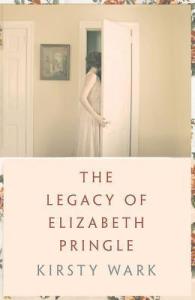 Appropriate reading: The Legacy of Elizabeth Pringle by Kirsty Wark, the only Arran-set novel on my library’s catalogue, is an enjoyable dual-timeline story linked by the Lamlash home of the title character. When she died in her nineties in 2006, she bequeathed her home to a kind woman who used to walk past on summer holidays with her daughter in a pram. Martha Morrison was that baby, and with her mother, Anna, suffering from dementia, it’s up to her to take possession and root out Elizabeth’s secrets. Every other chapter is a first-person fragment from Elizabeth’s memoir, cataloguing her losses of parents and lovers and leading ever closer to the present, when she befriended Saul, an American Buddhist monk based at Holy Island across the water, and Niall, a horticulturist at Brodick Castle. It’s a little too neat how the people in her life pair off (sub-Maggie O’Farrell; more Joanna Trollope, perhaps), but it was fun to be able to visualize the settings and to learn about Arran’s farming traditions and wartime history.
Islay
Islay is a tourist mecca largely because of its nine distilleries – what a pity we don’t care for whiskey! – but we sought it out for its wildlife and scenery, which were reminiscent of what we saw in the Outer Hebrides last year. Our B&B was a bit fusty (there was a rotary phone in the hall!), but we had an unbeatable view from our window and enjoyed visiting two RSPB reserves. The highlight for me was the walk to the Mull of Oa peninsula and the cow-guarded American Monument, which pays tribute to the troops who died in two 1918 naval disasters – a torpedoed boat and a shipwreck – and the heroism of locals who rescued survivors.


We spent a very rainy Tuesday mooching from one distillery shop to another. There are two gin-makers whose products we were eager to taste, but we also relished our mission to buy presents for two landmark birthdays, one of an American friend who’s a whiskey aficionado. Even having to get the tyre replaced didn’t ruin the day. There’s drink aplenty on Islay, but quality food was harder to acquire, so if we went back we’d plump for self-catering.


Incidental additional hauls: I found this 50th anniversary Virago tote bag under a bench at Bowmore harbour after our meal at Peatzeria. I waited a while to see if anyone would come back for it, but it was so sodden and sandy that it must have been there overnight. I cleaned it up and brought home additional purchases in it: two secondhand finds at a thrift store in Tarbert, the first town back on the mainland, and a Knausgaard book I got free with my card points from a Waterstones in Glasgow.


Glasgow
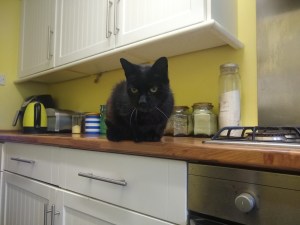 My 15-year-old nephew is currently on a school trip to Scotland and my sister went along as an unofficial chaperone. I couldn’t let them come to the UK without meeting up, so for months we’d pencilled in an evening in Glasgow. When we booked our Airbnb room in a suburb, it was because it was on a super-convenient train line … which happened to be closed for engineering works while we were there. Plan B: rail replacement buses, which were fine. We greatly enjoyed the company of Santos the Airbnb cat, who mugged us for scraps of our breakfasts.
With our one day in Glasgow, we decided to prioritize the Burrell Collection, due to the enthusiastic recommendations from Susan, our Arran hosts, and Bill Bryson in Notes on a Small Island (“Among the city’s many treasures, none shines brighter, in my view”). It’s a museum with a difference, housed in a custom-built edifice that showcases the wooded surroundings as much as the stunning objects. We were especially partial to the stained glass.


Our whistle-stop city tour also included a walk past the cathedral, a ramble through the Necropolis (where, pleasingly, I saw a grave for one Elizabeth Pringle), and the Tenement Museum, a very different sort of National Trust house that showed how one woman, a spinster and hoarder, lived in the first half of the 20th century. Then on to an exceptional seafood-heavy meal at Kelp, also recommended by Susan, and an all-too-brief couple of hours with my family at their hotel and a lively pub.


We keep returning to Scotland. Where next in a few years? Possibly the southern islands of the Outer Hebrides, which we didn’t have time for last year, or the more obscure of the Inner Hebrides, before planning return visits to some favourites. All the short ferry rides were smooth this time around, so I can cope with the thought of more.
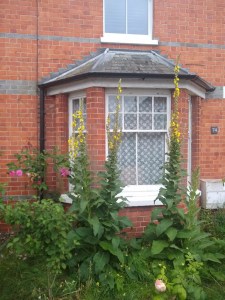
We got home to find our mullein plants attempting to take over the world.
 Bookish Beck = Rebecca Foster. American transplant to England. Freelance proofreader and book reviewer.
 Bookish Beck