#WITMonth, II: Bélem, Blažević, Enríquez, Lebda, Pacheco and Yu (#17 of 20 Books)
Catching up with my Women in Translation month coverage, which concluded (after Part I, here) with five more short novels ranging from historical realism to animal-oriented allegory, plus a travel book.
The Rarest Fruit, or The Life of Edmond Albius by Gaëlle Bélem (2023; 2025)
[Translated from French by Hildegarde Serle]
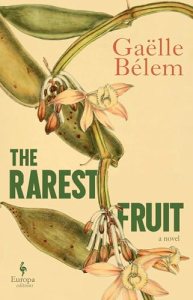 A fictionalized biography, from infancy to deathbed, of the Black botanist who introduced the world to vanilla – then a rare and expensive flavour – by discovering that the plant can be hand-pollinated in the same way as pumpkins. In 1829, the island colony of Bourbon (now the French overseas department Réunion) has just been devastated by a cyclone when widowed landowner Ferréol Bellier-Beaumont is brought the seven-week-old orphaned son of one of his sister’s enslaved women. Ferréol, who once hunted rare orchids, raises the boy as his ward. From the start, Edmond is most at home in the garden and swears he will follow in his guardian’s footsteps as a botanist. Bélem also traces Ferréol’s history and the origins of vanilla in Mexico. The inclusion of Creole phrases and the various uses of plants, including for traditional healing, chimed with Jason Allen-Paisant’s Jamaica-set The Possibility of Tenderness, and I was reminded somewhat of the historical picaresque style of Slave Old Man (Patrick Chamoiseau) and The Secret Diaries of Charles Ignatius Sancho (Paterson Joseph). The writing is solid but the subject matter so niche that this was a skim for me.
With thanks to Europa Editions, who sent an advanced e-copy for review.
In Late Summer by Magdalena Blažević (2022; 2025)
[Translated from Croatian by Anđelka Raguž]
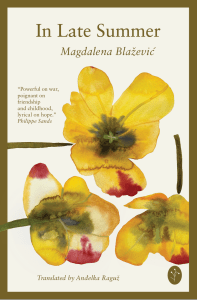 “My name is Ivana. I lived for fourteen summers, and this is the story of my last.” Blažević’s debut novella presents the before and after of one extended family, and of the Bosnian countryside, in August 1993. In the first half, few-page vignettes convey the seasonality of rural life as Ivana and her friend Dunja run wild. Mother and Grandmother slaughter chickens, wash curtains, and treat the children for lice. Foodstuffs and odours capture memory in that famous Proustian way. I marked out the piece “Camomile Flowers” for its details of the senses: “Sunlight and the scent of soap mingle. … The pantry smells like it did before, of caramel, lemon rind and vanilla sugar. Like the period leading up to Christmas. … My hair dries quickly in the sun. It rustles like the lace, dry snow from the fields.” The peaceful beauty of it all is shattered by the soldiers’ arrival. Ivana issues warnings (“Get ready! We’re running out of time. The silence and summer lethargy will not last long”) and continues narrating after her death. As in Sara Nović’s Girl at War, the child perspective contrasts innocence and enthusiasm with the horror of war. I found the first part lovely but the whole somewhat aimless because of the bitty structure.
With thanks to Linden Editions for the free copy for review.
Somebody Is Walking on Your Grave: My Cemetery Journeys by Mariana Enríquez (2013; 2025)
[Translated from Spanish by Megan McDowell]
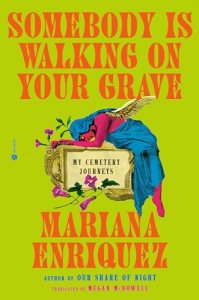 This made it onto my Most Anticipated list for the second half of the year due to my love of graveyards. Because of where Enríquez is from, a lot of the cemeteries she features are in Argentina (six) or other Spanish-speaking countries (another six including Chile, Cuba, Mexico, Peru and Spain). There are 10 more locations besides, and her journeys go back as far as 1997 in Genoa, when she was 25 and had sex with Enzo up against a gravestone. I took the most interest in those I have been to (Edinburgh) or could imagine myself travelling to someday (New Orleans and Savannah; Highgate in London and Montparnasse in Paris), but thought that every chapter got bogged down in research. Enríquez writes horror, so she is keen to visit at night and relay any ghost stories she’s heard. But the pages after pages of history were dull and outweighed the memoir and travel elements for me, so after a few chapters I ended up just skimming. I’ll keep this on my Kindle in case I go to one of her other destinations in the future and can read individual essays on location. (Edelweiss download)
Voracious by Małgorzata Lebda (2016; 2025)
[Translated from Polish by Antonia Lloyd-Jones]
Like the Blažević, this is an impressionistic, pastoral work that contrasts vitality and decay in short chapters of one to three pages. The narrator is a young woman staying in her grandmother’s house and caring for her while she is dying of cancer; “now is not the time for life. Death – that’s what fills my head. I’m at its service. Grandma is my child. I am my grandmother’s mother. And that’s all right, I think.” The house has just four inhabitants – the narrator, Grandma Róża, Grandpa, and Ann – and seems permeable: to the cold, to nature. Animals play a large role, whether pets, farmed or wild. There’s Danube the hound, the cows delivered to the nearby slaughterhouse, and a local vixen with whom the narrator identifies.
 Lebda is primarily known as a poet, and her delight in language is evident. One piece titled “Opioid,” little more than a paragraph long, revels in the power of language: “Grandma brings a beautiful word home … the word not only resonates, but does something else too – it lets light into the veins.” The wind is described as “the conscience of the forest. It’s the circulatory system. It’s the litany. It’s scented. It sings.”
In all three Linden Editions books I’ve read, the translator’s afterword has been particularly illuminating. I thought I was missing something, but Lloyd-Jones reassured me it’s unclear who Ann is: sister? friend? lover? (I was sure I spotted some homoerotic moments.) Lloyd-Jones believes she’s the mirror image of the narrator, leaning toward life while the narrator – who has endured sexual molestation and thyroid problems – tends towards death. The animal imagery reinforces that dichotomy.
The narrator and Ann remark that it feels like Grandma has been ill for a million years, but they also never want this time to end. The novel creates that luminous, eternal present. It was the best of this bunch.
With thanks to Linden Editions for the free copy for review.
Full review forthcoming for Foreword Reviews:
Pandora by Ana Paula Pacheco (2023; 2025)
[Translated from Portuguese by Julia Sanches]
 The Brazilian author’s bold novella is a startling allegory about pandemic-era hazards to women’s physical and mental health. Since the death of her partner Alice to Covid-19, Ana has been ‘married’ to a pangolin and a seven-foot-tall bat. At a psychiatrist’s behest, she revisits her childhood and interrogates the meanings of her relationships. The form varies to include numbered sections, the syllabus for Ana’s course “Is Literature a personal investment?”, journal entries, and extended fantasies. Depictions of animals enable commentary on economic inequalities and gendered struggles. Playful, visceral, intriguing.
#17 of my 20 Books of Summer:
Invisible Kitties by Yu Yoyo (2021; 2024)
[Translated from Chinese by Jeremy Tiang]
 Yu is the author of four poetry collections; her debut novel blends autofiction and magic realism with its story of a couple adjusting to the ways of a mysterious cat. They have a two-bedroom flat on a high-up floor of a complex, and Cat somehow fills the entire space yet disappears whenever the woman goes looking for him. Yu’s strategy in most of these 60 mini-chapters is to take behaviours that will be familiar to any cat owner and either turn them literal through faux-scientific descriptions, or extend them into the fantasy realm. So a cat can turn into a liquid or gaseous state, a purring cat is boiling an internal kettle, and a cat planted in a flowerbed will produce more cats. Some of the stories are whimsical and sweet, like those imagining Cat playing extreme sports, opening a massage parlour, and being the god of the household. Others are downright gross and silly: Cat’s removed testicles become “Cat-Ball Planets” and the narrator throws up a hairball that becomes Kitten. Mixed feelings, then. (Passed on by Annabel – thank you!)
I’m really pleased with myself for covering a total of 8 books for this challenge, each one translated from a different language!
Which of these would you read?
Book Serendipity, October to December 2023
I call it “Book Serendipity” when two or more books that I read at the same time or in quick succession have something in common – the more bizarre, the better. This is a regular feature of mine every couple of months. Because I usually have 20–30 books on the go at once, I suppose I’m more prone to such incidents. The following are in roughly chronological order.
- A woman turns into a spider in Edith Holler by Edward Carey and The Human Origins of Beatrice Porter and Other Essential Ghosts by Soraya Palmer.

- Expulsion from Eden scenes (one literal, after the Masaccio painting; another more figurative by association) in Conversation Among Stones by Willie Lin and North Woods by Daniel Mason.
- Reading my second 2023 release featuring a theatre fire (after The House Is on Fire by Rachel Beanland, which I actually read last year): Edith Holler by Edward Carey.
- The protagonist cuts their foot in The Rituals by Rebecca Roberts and The Last House on Needless Street by Catriona Ward.


- On the same evening, I started two novels where the protagonist’s parents both died in a car crash: The Witches by Roald Dahl and Family Meal by Bryan Washington. This is something I encounter ALL THE TIME in fiction (versus extremely rarely in life) and it’s one of my major pet peeves. I can excuse it more in the children’s book as the orphan trope allows for adventures, but for the most part it just seems lazy to me. The author has decided they don’t want to delve into a relationship with parents at all, so they cut it out in the quickest and easiest possible way.
- A presumed honour killing in Behind You Is the Sea by Susan Muaddi Darraj and The Hundred and Ninety-Nine Steps by Michel Faber.


- A Houston, Texas setting in The Only Way Through Is Out by Suzette Mullen and Family Meal by Bryan Washington.
- Daniel Clowes, whose graphic novel Monica I was also in the middle of at the time, was mentioned in Robin Ince’s Bibliomaniac.
- The author/speaker warns the squeamish reader to look away for a paragraph in Robin Ince’s Bibliomaniac (recounting details of a gross-out horror plot) and one chapter of Daniel Mason’s North Woods.


- A mentally ill man who lives at the end of a lane in Daniel Mason’s North Woods and The Last House on Needless Street by Catriona Ward.
- Reading Last House before the Mountain by Monika Helfer and The Last House on Needless Street by Catriona Ward at the same time.
- The Daedalus myth (via Aeschylus or Brueghel, or just in general) is mentioned in Last House before the Mountain by Monika Helfer, The Ghost Orchid by Michael Longley, and Absolutely and Forever by Rose Tremain.
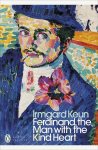
- A character goes to live with their aunt and uncle in Western Lane by Chetna Maroo and The House of Doors by Tan Twan Eng (both Booker-longlisted), but also The Woman in Black by Susan Hill, Train Dreams by Denis Johnson, and The Story Girl by L.M. Montgomery. I came across all five instances within a few days! Later I also encountered a brief mention of this in Ferdinand by Irmgard Keun. How can this situation be so uncommon in life but so common in fiction?!


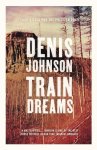

- The outdated terms “Chinaman” and “coolie” appear frequently in Train Dreams by Denis Johnson and The House of Doors by Tan Twan Eng.
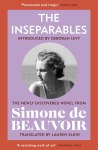
- A 15-year-old declares true love in The Inseparables by Simone de Beauvoir and Absolutely and Forever by Rose Tremain.
- A French character named Pascal in The Inseparables by Simone de Beauvoir and The Garrick Year by Margaret Drabble.

- A minor character called Mrs Biggs in Harriet Said… by Beryl Bainbridge and The House of Doors by Tan Twan Eng.
- The Chinese zither (guzheng) is mentioned in Dear Chrysanthemums by Fiona Sze-Lorrain, which I read earlier in the year, and The House of Doors by Tan Twan Eng.
- Oscar Wilde’s trial is mentioned in The House of Doors by Tan Twan Eng, as it was in The New Life by Tom Crewe, which I read earlier in the year – in both it was a cautionary case for older homosexual characters (based on real people: W. Somerset Maugham vs. John Addington Symonds) who were married to women but had a live-in male secretary generally known to be their lover. At the same time as I was reading The House of Doors, I was rereading Wilde’s De Profundis, which was written from prison.


- In Fifty Days of Solitude Doris Grumbach mentions reading Bear by Marian Engel. I read both during Novellas in November.
- Living funerals are mentioned in Ferdinand by Irmgard Keun and The Ritual Effect by Michael Norton.
- A character insists that lilac not be included in a bouquet in In the Sweep of the Bay by Cath Barton and Bright Young Women by Jessica Knoll.


- A woman has a lover named Frances in Bright Young Women by Jessica Knoll and The Cancer Journals by Audre Lorde.
- The final word of the Fanny Howe poem in Raised by Wolves (the forthcoming 50th anniversary poetry anthology from Graywolf Press) is “theophanies.” At the same time, I was reading the upcoming poetry collection Theophanies by Sarah Ghazal Ali.


- The Cancer Journals by Audre Lorde, which I’d read the month before, was a major influence on the cancer memoir All In by Caitlin Breedlove.
- Two foodie memoirs I read during our city break, A Waiter in Paris by Edward Chisholm and The Sweet Life in Paris by David Lebovitz, both likened a group of young men to a Dolce & Gabbana ad. (Chisholm initially lived at Porte des Lilas, the next Metro stop up from where we stayed in Mairie des Lilas.)
- A French slang term for penis, “verge,” is mentioned in both The Sweet Life in Paris by David Lebovitz and Learning to Drive by Katha Pollitt.


What’s the weirdest reading coincidence you’ve had lately?
August Releases: Bright Fear, Uprooting, The Farmer’s Wife, Windswept
This month I have three memoirs by women, all based on a connection to land – whether gardening, farming or crofting – and a sophomore poetry collection that engages with themes of pandemic anxiety as well as crossing cultural and gender boundaries.
My August highlight:
Bright Fear by Mary Jean Chan
Chan’s Flèche was my favourite poetry collection of 2019. Their follow-up returns to many of the same foundational subjects: race, family, language and sexuality. But this time, the pandemic is a lens through which all is filtered. This is particularly evident in Part I, “Grief Lessons.” “London, 2020” and “Hong Kong, 2003,” on facing pages, contrast Covid-19 with SARS, the major threat when they were a teenager. People have always made assumptions about them based on their appearance or speech. At a time when Asian heritage merited extra suspicion, English was both a means of frank expression and a source of ambivalence:
“At times, English feels like the best kind of evening light. On other days, English becomes something harder, like a white shield.” (from “In the Beginning Was the Word”)
“my Chinese / face struck like the glow of a torch on a white question: / why is your English so good, the compliment uncertain / of itself.” (from “Sestina”)
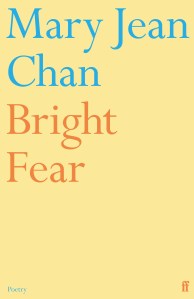 At the centre of the book, “Ars Poetica,” a multi-part collage incorporating lines from other poets, forms a kind of autobiography in verse. Chan also questions the lines between genres, wondering whether to label their work poetry, nonfiction or fiction (“The novel feels like a springer spaniel running off-/leash the poem a warm basket it returns to always”).
The poems’ structure varies, with paragraphs and stanzas of different lengths and placement on the page (including, in one instance, a goblet shape). The enjambment, as you can see in lines I’ve quoted above and below, is noteworthy. Part III, “Field Notes on a Family,” reflects on the pressures of being an only child whose mother would prefer to pretend lives alone rather than with a female partner. The book ends with hope that Chan might be able to be open about their identity. The title references the paradoxical nature of the sublime, beautifully captured via the alliteration that closes “Circles”: “a commotion of coots convincing / me to withstand the quotidian tug-/of-war between terror and love.”
Although Flèche still has the edge for me, this is another excellent work I would recommend even to those wary of poetry. 
Some more favourite lines, from “Ars Poetica”:
“What my mother taught me was how
to revere the light language emitted.”
“Home, my therapist suggests, is where
you don’t have to explain yourself.”
With thanks to Faber for the free copy for review.
Three land-based memoirs:
(All:  )
)
Uprooting: From the Caribbean to the Countryside – Finding Home in an English Country Garden by Marchelle Farrell
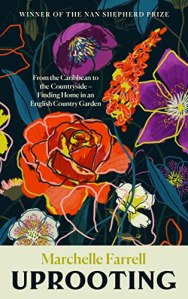 This Nan Shepherd Prize-winning memoir shares Chan’s attention to pandemic-era restrictions and how they prompt ruminations about identity and belonging. Farrell is from Trinidad but came to the UK as a student and has stayed, working as a psychiatrist and then becoming a wife and mother. Just before Covid hit, she moved to the outskirts of Bath and started rejuvenating her home’s large and neglected garden. Under thematic headings that also correspond to the four seasons, chapters are named after different plants she discovered or deliberately cultivated. The peace she finds in her garden helps her to preserve her mental health even though, with the deaths of George Floyd and so many other Black people, she is always painfully aware of her fragile status as a woman of colour, and sometimes feels trapped in the confining routines of homeschooling. I enjoyed the exploration of postcolonial family history and the descriptions of landscapes large and small but often found Farrell’s metaphors and psychological connections obvious or strained.
With thanks to Canongate for the free copy for review.
The Farmer’s Wife: My Life in Days by Helen Rebanks
 I fancied a sideways look at James Rebanks (The Shepherd’s Life and Wainwright Prize winner English Pastoral) and his regenerative farming project in the Lake District. (My husband spotted their dale from a mountaintop on holiday earlier in the month.) Helen Rebanks is a third-generation farmer’s wife and food and family are the most important things to her. One gets the sense that she has felt looked down on for only ever wanting to be a wife and mother. Her memoir, its recollections structured to metaphorically fall into a typical day, is primarily a defence of the life she has chosen, and secondarily a recipe-stuffed manifesto for eating simple, quality home cooking. (She paints processed food as the enemy.)
Growing up, Rebanks started cooking for her family early on, and got a job in a café as a teenager; her mother ran their farm home as a B&B but was forgetful to the point of being neglectful. She met James at 17 and accompanied him to Oxford, where they must have been the only student couple cooking and eating proper food. This period, when she was working an office job, baking cakes for a café, and mourning the devastating foot-and-mouth disease epidemic from a distance, is most memorable. Stories from travels, her wedding, and the births of her four children are pleasant enough, yet there’s nothing to make these experiences, or the telling of them, stand out. I wouldn’t make any of the dishes; most you could find a recipe for anywhere. Eleanor Crow’s black-and-white illustrations are lovely, though.
With thanks to Faber for the free copy for review.
Windswept: Life, Nature and Deep Time in the Scottish Highlands by Annie Worsley
 I’d come across Worsley in the Wildlife Trusts’ Seasons anthologies. For a decade she has lived on Red River Croft, in a little-known pocket of northwest Scotland. In word pictures as much as in the colour photographs that illustrate this volume, she depicts it as a wild land shaped mostly by natural forces – also, sometimes, manmade. From one September to the next, she documents wildlife spectacles and the influence of weather patterns. Chronic illness sometimes limited her daily walks to the fence at the cliff-top. (But what a view from there!) There is more here about local history and ecology than any but the keenest Scotland-phile may be interested to read. Worsley also touches on her upbringing in polluted Lancashire, and her former academic career and fieldwork in Papua New Guinea. Her descriptions are full of colours and alliteration, though perhaps a little wordy: “Pale-gold autumnal days are spliced by fickle and feisty bouts of turbulent weather. … Sunrises and sunsets may pour with cinnabar and henna; dawn and dusk can ripple with crimson and purple.” The kind of writing I could appreciate for the length of an essay but not a whole book.
With thanks to William Collins for the free copy for review.
Would you read one or more of these?
#NovNov22 Nonfiction Week Begins! with Strangers on a Pier by Tash Aw
Short nonfiction week of Novellas in November is (not so) secretly my favourite theme of this annual challenge. About 40% of my reading is nonfiction, and I love finding books that illuminate a topic or a slice of life in well under 200 pages. I’ll see if I can review one per day this week.
Back in 2013 I read Tash Aw’s Booker-longlisted Five Star Billionaire and thought it was a fantastic novel about strangers thrown together in contemporary Shanghai. I don’t know why it hadn’t occurred to me to find something else by him in the meantime, but when I spotted this slim volume up in the library’s biography section, I knew it had to come home with me.
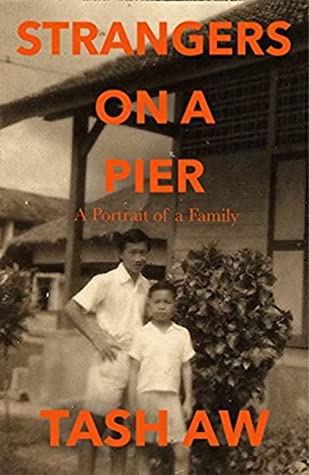 Originally published in the USA as The Face in 2016, this is a brief family memoir reflecting on migration and belonging. Aw was born in Taiwan and grew up in Malaysia in an ethnically Chinese family; wherever he goes, he can pass as any number of Asian ethnicities. Both of his grandfathers were Chinese immigrants to Malaysia, but from different regions and speaking separate dialects. (This is something those of us in the West unfamiliar with China can struggle to understand: it has no monolithic identity or language. The food and culture might vary as much by region as they do in, say, different countries of Europe.)
Aw imagines his ancestors’ arrival and the disorientation they must have known as they made their way to an address on a piece of paper. His family members never spoke about their experiences, but the sense of being an outsider, a minority is something that has recurred through their history. Aw himself felt it keenly as a university student in Britain.
After the first long essay, “The Face,” comes a second, “Swee Ee, or Eternity,” addressed in the second person to his late grandmother, about whom, despite having worked in her shop as a boy, he knew next to nothing before he spent time with her as she was dying of cancer.
When is short nonfiction too short? Well, I feel that what I just read was actually two extended magazine articles rather than a complete book – that I read a couple of stories rather than the whole story. Perhaps that is inevitable for such a short autobiographical work, though I can think of two previous memoirs from last year alone that managed to be comprehensive, self-contained and concise: The Story of My Life by Helen Keller and The Cost of Living by Deborah Levy. (Public library) 
[91 pages]
20 Books of Summer, 1–3: Hargrave, Powles & Stewart
Plants mirror minds,
Healing, harming powers
Growing green thoughts.
(First stanza of “Plants Mirror Minds” from The Facebook of the Dead by Valerie Laws)
Here are my first three selections for my flora-themed summer reading. I hope to get through more of my own books, as opposed to library books and review copies, as the months go on. Today I have one of each from fiction, nonfiction and poetry, with the settings ranging from 16th-century Alsace to late-20th-century Spain.
The Dance Tree by Kiran Millwood Hargrave (2022)
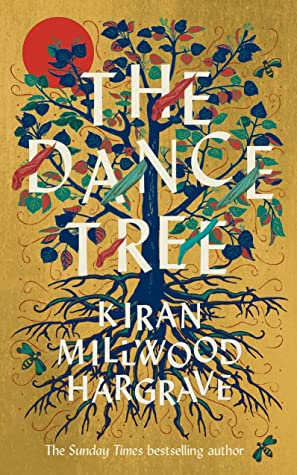 Kiran Millwood Hargrave is one of my favourite new voices in historical fiction (she had written fiction for children and young adults before 2020’s The Mercies). Both novels hit the absolute sweet spot between the literary and women’s fiction camps, choosing a lesser-known time period and incident and filling in the background with sumptuous detail and language. Both also consider situations in which women, queer people and other cultural minorities were oppressed, and imagine characters pushing against those boundaries in affirming but authentic-feeling ways.
The setting is Strasbourg in the sweltering summer of 1518, when a dancing plague (choreomania) hit and hundreds of women engaged in frenzied public dancing, often until their feet bled or even, allegedly, until 15 per day dropped dead. Lisbet observes this all at close hand through her sister-in-law and best friend, who get caught up in the dancing. In the final trimester of pregnancy at last after the loss of many pregnancies and babies, Lisbet tends to the family beekeeping enterprise while her husband is away, but gets distracted when two musicians (brought in to accompany the dancers; an early strategy before the council cracked down), one a Turk, lodge with her and her mother-in-law. The dance tree, where she commemorates her lost children, is her refuge away from the chaos enveloping the city. She’s a naive point-of-view character who quickly has her eyes opened about different ways of living. “It takes courage, to love beyond what others deem the right boundaries.”
This is likely to attract readers of Hamnet; I was also reminded of The Sleeping Beauties, in that the author’s note discusses the possibility that the dancing plagues were an example of a mass hysteria that arose in response to religious restrictions. (Public library)
Magnolia by Nina Mingya Powles (2020)
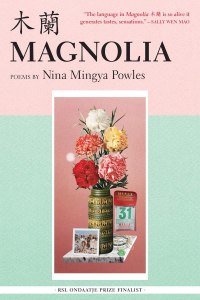 (Powles also kicked off my 2020 food-themed summer reading.) This came out from Nine Arches Press and a small New Zealand press two years ago but is being published in the USA by Tin House in August. I’ve reviewed it for Shelf Awareness in advance of that release. Those who are new to Powles’s work should enjoy her trademark blend of themes in this poetry collection. She’s mixed race and writes about crossing cultural and language boundaries – especially trying to express herself in Chinese and Hakka. Often, food is her way of embodying split loyalties and love for her heritage. I noted the alliteration in “Layers of silken tofu float in the shape of a lotus slowly opening under swirls of soy sauce.” Magnolia is the literal translation of “Mulan,” and that Disney movie and a few other films play a major role here, as do writers Eileen Chang and Robin Hyde. My issue with the book is that it doesn’t feel sufficiently different from her essay collections that I’ve read – the other is Small Bodies of Water – especially given that many of the poems are in prose paragraphs. [Update: I dug out my copy of Small Bodies of Water from a box and found that, indeed, one piece had felt awfully familiar for a reason: that book contains a revised version of “Falling City” (about Eileen Chang’s Shanghai apartment), which first appeared here.] (Read via Edelweiss)
A Parrot in the Pepper Tree by Chris Stewart (2002)
 It’s at least 10 years ago, probably nearer 15, that I read Driving over Lemons, the first in Stewart’s eventual trilogy about buying a remote farm in Andalusia. His books are in the Peter Mayle vein, low-key and humorous: an Englishman finds the good life abroad and tells amusing anecdotes about the locals and his own mishaps.
This sequel stood out for me a little more than the previous book, if only because I mostly read it in Spain. It’s in discrete essays, some of which look back on his earlier life. He was a founding member of Genesis and very briefly the band’s drummer; and to make some cash for the farm he used to rent himself out as a sheep shearer, including during winters in Sweden.
To start with, they were really very isolated, such that getting a telephone line put in revolutionized their lives. By this time, his first book had become something of a literary sensation, so he reflects on its composition and early reception, remembering when the Mail sent a clueless reporter out to find him. Spanish bureaucracy becomes a key element, especially when it looks like their land might be flooded by the building of a dam. Despite that vague sense of dread, this was good fun. (Public library) 
Nonfiction Review Books Roundup: Hay, Hope et al., Lee, Long, McLaren, Zuckerman
I’m continuing with the Nonfiction November focus by catching up on six nonfiction review books I’ve been sent over the last half a year. We’ve got a record of elderly parents’ decline, letters and poems written about the climate crisis, a family memoir set between Taiwan and Canada, a widow’s mushroom-hunting quest, a work of ecotheology that reflects on travels in the Galápagos Islands, and a defense of an entirely secular basis for morality. You can’t say I don’t read a variety, even within nonfiction! See if one or more of these tempts you.
All Things Consoled: A Daughter’s Memoir by Elizabeth Hay
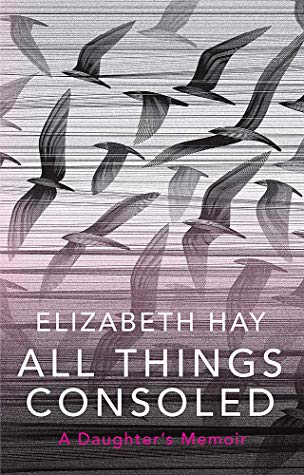 Gordon and Jean Hay stumbled into their early nineties in an Ottawa retirement home starting in 2009. Elizabeth Hay is one of four children, but caregiving fell to her for one reason and another, and it was a fraught task because of her parents’ prickly personalities: Jean was critical and thrifty to the point of absurdity, spooning thick mold off apple sauce before serving it and needling Elizabeth for dumping perfectly good chicken juice a year before; Gordon had a terrible temper and a history of corporal punishment of his children and of his students when he was a school principal. Jean’s knee surgery and subsequent infection finally put paid to their independence; her mind was never the same and she could no longer paint.
There are many harsh moments in this memoir, but almost as many wry ones, with Hay picking just the right anecdotes to illustrate her parents’ behavior and the shifting family dynamic. She never looks away, no matter how hard it all gets. Her father’s rage against the dying of the light contrasts with her mother’s fade into confusion – lightened by the surprisingly poetic turns of phrase she came out with despite her dementia and aphasia. The title phrase, for instance, was her attempt at “all things considered.” I would wholeheartedly recommend this to readers of Hay’s novels, but anyone can appreciate the picture of complicated love and grief. (See also Susan’s review.)
With thanks to MacLehose Press for the free copy for review.
Letters to the Earth: Writing to a Planet in Crisis, edited by Anna Hope et al.
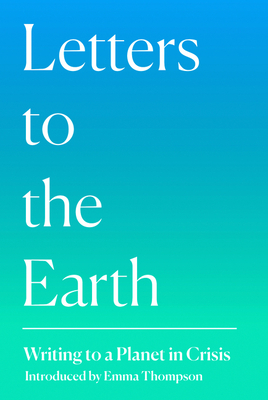 Culture Declares Emergency launched in April to bring the arts into the conversation about the climate emergency. Letters to the Earth compiles 100 short pieces by known and unknown names alike. Alongside published authors, songwriters, professors and politicians are lots of ordinary folk, including children as young as seven. The brief was broad: to write a letter in response to environmental crisis, whether to or from the Earth, to future generations (there are wrenching pieces written to children: “What can I say, now that it’s too late? … that I’m sorry, that I tried,” writes Stuart Capstick), to the government or to other species.
There are certainly relatable emotions here, especially the feeling of helplessness. “We take the train, go vegan, refuse plastic, buy less and less. But that is tiny. We are tiny,” novelist Jo Baker writes. I loved retired bishop Richard Holloway’s wry letter calling the author of Genesis to account for unhelpful language of dominion, Rob Cowen’s poem to a starling, and Anna Hope’s essay about parenting in a time of uncertainty. Unfortunately, much of the rest is twee or haranguing, e.g. “Forest fires are scorching INNOCENT wildlife. Plastic is strangling INNOCENT turtles and dolphins,” a 12-year-old writes. This was put together in a matter of months, and it shows. There is not enough tonal variety, a lot of overwriting has crept through, and errors, especially in the kids’ work, remain uncorrected. Perhaps six to 10 pieces stood out to me overall. I’d recommend the Extinction Rebellion handbook instead.
With thanks to Alison Menzies / William Collins for the free copy for review.
Two Trees Make a Forest: On Memory, Migration and Taiwan by Jessica J. Lee
 I loved Turning, Lee’s 2017 memoir about swimming in one of Berlin’s lakes per week for a year, so I jumped at the chance to read her follow-up, which delves into her maternal line’s history in Taiwan. She travels to Taipei for three months to brush up on her Chinese, write and hike. Interspersed with the lush descriptions of her walks are reflections on Taiwan’s history and on the hidden aspects of her grandfather Gong’s past that only came to light after Lee’s grandmother, Po, died and she and her mother discovered an autobiographical letter he’d written before he drifted into dementia. Nature, language, history and memory flow together in a delicate blend of genres – “I moved from the human timescale of my family’s story through green and unfurling dendrological time,” she writes.
This has got to be one of the most striking title and cover combinations of the year. Along with Chinese characters, the book includes some looping text and Nico Taylor’s maps and illustrations of Taiwanese flora and fauna. While you will likely get more out of this if you have a particular interest in Asian history, languages and culture, it’s impressive how Lee brings the different strands of her story together to form a hybrid nature memoir that I hope will be recognized by next year’s Wainwright Prize and Young Writer of the Year Award shortlists. She’d also be a perfect New Networks for Nature speaker.
With thanks to Virago for the free copy for review.
The Way through the Woods: Of Mushrooms and Mourning by Long Lit Woon
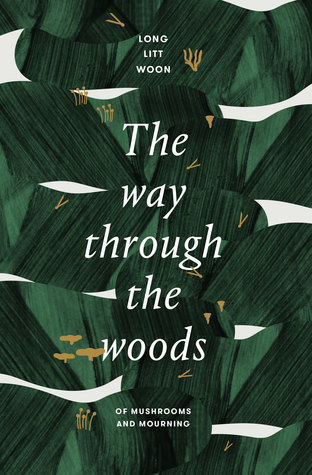 [Trans. from the Norwegian by Barbara J. Haveland]
I couldn’t resist the sound of a bereavement memoir crossed with a mushroom hunting guide. When Long met her husband, Eiolf Olsen, she was an 18-year-old Malaysian exchange student in Stavanger, Norway. Meeting Eiolf changed the whole course of her life, keeping her in Europe for good; decades later, her life changed forever once again when Eiolf dropped dead at work one morning. “If anyone had told me that mushrooms would be my lifeline, the thing that would help me back onto my feet and quite literally back onto life’s track, I would have rolled my eyes. What had mushrooms to do with mourning?” she writes.
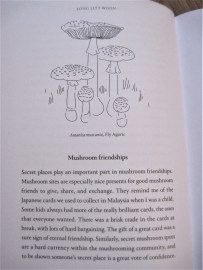 The answer to that rhetorical question is nothing much, at least not inherently, so this ends up becoming a book of two parts, with the bereavement strand (printed in green and in a different font – green is for grief? I suppose) engaging me much more than the mushroom-hunting one, which takes her to Central Park and the annual Telluride, Colorado mushroom festival as well as to Norway’s woods again and again – “In Norway, outdoor life is tantamount to a religion.” But the quest for wonder and for meaning is a universal one. In addition, if you’re a mushroom fan you’ll find gathering advice, tasting notes, and even recipes. I fancy trying the “mushroom bacon” made out of oven-dried shiitakes.
With thanks to Scribe for the free copy for review.
God Unbound: Theology in the Wild by Brian McLaren
 McLaren was commissioned to launch a series that was part travel guide, part spiritual memoir and part theological reflection. Specifically, he was asked to write about the Galápagos Islands because he’d been before and they were important to him. He joins a six-day eco-cruise that tours around the island chain off Ecuador, with little to do except observe the birds, tortoises and iguanas, and swim with fish and sea turtles. For him this is a peaceful, even sacred place that reminds him of the beauty that still exists in the world despite so much human desecration. Although he avoids using his phone except to quickly check in with his wife, modernity encroaches unhelpfully through a potential disaster with his laptop.
I was surprised to see that McLaren leaves the Galápagos at the midpoint – whatever could fill the rest of the book, I wondered? He starts by reassessing Darwin, so often painted as a villain by Evangelical Christianity but actually a model of close, loving attention to nature. He also recalls how some of his most intense spiritual experiences have arisen from time in nature. McLaren’s books have been pivotal to my spiritual journey as we’ve both gradually become more liberal and environmentalist. His definition of God might horrify traditionalists, but holds appeal for me: “a centering singularity whose gravity holds me in insistent orbit, pulling me deeper into mystery, pondering who I am and what my life means.” This is an unusual but gently entrancing book full of photos and quotes from other thinkers including John Muir, Pope Francis and Richard Rohr. It’s an ideal introduction to ecotheology.
With thanks to Canterbury Press for the free copy for review.
What It Means to Be Moral: Why Religion Is Not Necessary for Living an Ethical Life by Phil Zuckerman
 From one end of the spectrum (progressive Christianity) to the other (atheism). Here’s a different perspective from a sociology professor at California’s Pitzer College. Zuckerman’s central argument is that humanism and free choice can fuel ethical behavior; since there’s no proof of God’s existence and theists have such a wide range of beliefs, it’s absurd to slap a “because God says so” label on our subjective judgments. Morals maintain the small communities our primate ancestors evolved into, with specific views (such as on homosexuality) a result of our socialization. Alas, the in-group/out-group thinking from our evolutionary heritage is what can lead to genocide. Instead of thinking in terms of ‘evil’, though, Zuckerman prefers Dr. Simon Baron-Cohen’s term, “empathy erosion.”
To tackle violent crime, Zuckerman contends, we need a more equal society, with the Scandinavian countries a model of how to achieve that through higher taxes, social services and the rehabilitation of prisoners. He uses a lot of relatable examples from history and from his own experience, as well as theoretical situations, to think through practical morality. I found his indictment of American Christianity accurate – how does it make sense for people who say they follow the way of Jesus to fight against equality, tolerance and scientific advances and instead advocate guns, the death penalty and Trump? Well, indeed.
It might seem odd for me to recommend this alongside the McLaren, but there is much to be gained from both viewpoints. Zuckerman’s work overlaps a fair bit with another I’ve read on the topic, Richard Holloway’s Godless Morality – even a bishop agrees we needn’t take our societal ethics straight from the Bible! I can’t go along fully with Zuckerman because I think progressive religion has been and can continue to be a force for good, but I would agree that atheists can be just as moral as people of faith – and often more so.
With thanks to Counterpoint Press for sending a proof copy for review.
Would you be interested in reading one or more of these?
Classic and Doorstopper of the Month: East of Eden by John Steinbeck (1952)
Look no further for the Great American Novel. Spanning from the Civil War to World War I and crossing the country from New England to California, East of Eden is just as wide-ranging in its subject matter, with an overarching theme of good and evil as it plays out in families and in individual souls. This weighty material – openly addressed in theological and philosophical terms in the course of the novel – is couched in something of a family saga that follows several generations of the Trasks and the Hamiltons. (Some spoilers follow.)
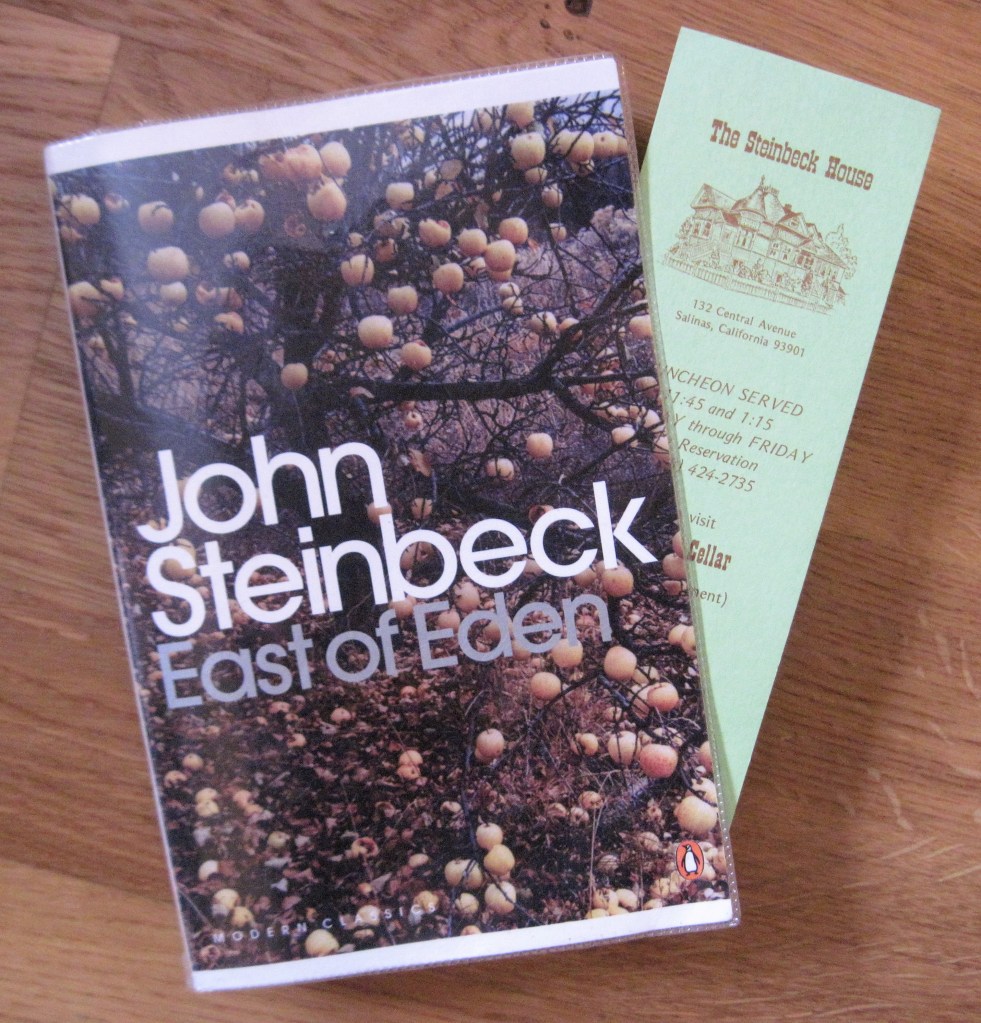
Cyrus Trask, Civil War amputee and fraudulent hero, has two sons. He sends his beloved boy, Adam, into the army during the Indian Wars. Adam’s half-brother Charles stays home to tend the family’s Connecticut farm. There’s a bitter sibling rivalry between them; more than once it looks like Charles might beat Adam to death. When Cyrus, now high up in military administration in Washington, dies and leaves his sons $100,000, Charles is suspicious. He’s sure their father stole the money, but Adam won’t accept that. Adam takes his inheritance and buys a ranch outside Salinas, California, taking with him his new wife Cathy, who turned up battered on the brothers’ doorstep and won’t reveal anything about her shadowy background.
Cathy is that rare thing: a female villain, and one with virtually no redeeming features. No sooner has she given birth to Adam’s twin sons than she runs off, shooting him in the shoulder to get away. Unbeknownst to Adam, who still idealizes a wife he knows nothing about, she gets work in a Salinas brothel and before long takes over as the madam. As her sons Aron and Cal grow up, they hear rumors that make them doubt their mother is buried back East, as their father claims. Aron is drawn to the Church and falls for a girl named Abra, whom he puts on a pedestal just as he does his ‘dead’ mother. Cal, a wanderer and schemer, is determined not to follow his mother into vice even though that seems like his fate.

The John Steinbeck House (his childhood home) in Salinas, CA. By Ken Lund [CC BY-SA 2.0] via Wikimedia Commons.
This was a buddy read with my mother. We were surprised by how much philosophy and theology Steinbeck includes. The parallels with the Cain and Abel story (brought to mind by both sets of C & A Trask brothers) are not buried in the text for an observant reader to find, but discussed explicitly. My favorite character and the novel’s most straightforward hero is Lee, Adam’s loyal Chinese cook, who practically raises Cal and Aron. When we first meet him he’s speaking pidgin, as is expected of him, but around friends he drops the act and can be his nurturing and deeply intellectual self. With some fellow Chinese scholars he’s picked apart Genesis 4 and zeroed in on one Hebrew word, timshel or “thou mayest.” To Lee this speaks of choice and possibility; life is not all pre-ordained. For the two central families it is a message of hope: one does not have to replicate family mistakes.

Steinbeck with his third wife, Elaine Scott, in 1950. The character of Cathy may be based on his second wife, Gwyn Conger, who cheated on him on multiple occasions and asked for a divorce. [Public domain] via Wikimedia Commons.
At 600 small-type pages, this is a big book with many minor threads and secondary characters I haven’t even touched on. Steinbeck grapples with primal stories about human nature and examines how we try to earn love and break free from others’ expectations. His depiction of America’s contradictions still feels true, and he writes simply stunning sentences. “It is one of the best books I’ve ever read,” my mother told me. It’s a classic you really shouldn’t pass up.
Page count: 602
My rating: 
A few favorite passages:
“It is the dull eventless times that have no duration whatever. A time splashed with interest, wounded with tragedy, crevassed with joy—that’s the time that seems long in the memory.”
“Adam Trask grew up in grayness, and the curtains of his life were like dusty cobwebs, and his days a slow file of half-sorrows and sick dissatisfactions, and then, through Cathy, the glory came to him.”
“We have only one story. All novels, all poetry, are built on the never-ending contest in ourselves of good and evil. And it occurs to me that evil must constantly respawn, while good, while virtue, is immortal. Vice has always a new fresh young face, while virtue is venerable as nothing else in the world is.”
During the month I spent reading this I could hardly get these two songs out of my head. Both seem to be at least loosely inspired by East of Eden. I’ve pulled out some key lines and linked to audio or video footage.
When the clouds roll in, we start playing for our sins
With a gun in my hand and my son at my shoulder
Believe I will run before that boy gets older […]
Ask the angels, “Am I heaven-bound?”
“By the Skin of My Teeth” by Duke Special
My luck ran out just east of Eden
Oh, I proved you right
I’m a danger […]
I’m tired, don’t let me be a failure
 Bookish Beck = Rebecca Foster. American transplant to England. Freelance proofreader and book reviewer.
 Bookish Beck