The Fruit Cure by Jacqueline Alnes (Blog Tour)
Jacqueline Alnes was a college runner until she experienced a strange set of neurological symptoms: fainting, blurred vision, speech problems and seizures. Initially diagnosed with vestibular neuronitis, she later got on a waiting list for a hospital epilepsy unit. Her symptoms ebbed and flowed over the next few years. Sometimes she was well enough to get back to running – she completed a marathon in Washington, D.C. – but occasionally she was debilitated. Study abroad in Peru exacerbated her problems because of altitude sickness. She also spent time in a wheelchair. Chronic illness left her open to depression and self-harm, including disordered eating. This turned more extreme when she was drawn into the bizarre world of fruitarianism, which offered her structure and black-and-white logic.

Alongside her own story, Alnes tells that of a few eccentrics who were key in popularizing the all-fruit diet. In the 1950s, Essie Honiball (author of I Live on Fruit), an anorexic teacher pregnant by a married man, was preyed on by quack doctor Cornelius Dreyer, who had previously had patients die under his care. Dreyer was based in South Africa, but there were parallel movements in other countries, too. Veganism and the raw food diet came under the same general umbrella, but were not as exclusive. The other main characters in the narrative are “Freelee” (Leanne Ratcliffe) and “Durianrider” (Harley Johnstone), founders of the 30 Bananas a Day website, which swayed Alnes when she was desperate for a cure. They spread their evangelistic message via blogs, vlogs and conferences. Like any cult-like body, theirs hinged on control and fell victim to infighting and changes of direction over the years.
Alnes clearly hopes her own experience will be instructive, exposing the dangers of extreme treatments for vulnerable people:
Scammy cures have been here since the beginning of time and will continue to exist for as long as people do, but the more we can work to make our systems of healing more equitable for people, no matter [their] race, gender, class, sexual orientation, or body size, the less people will get caught up in harmful practices that end up hurting them in the end.
She effectively employs metaphors from the Book of Genesis, likening early-years Durianrider and Freelee to Adam and Eve (them of the forbidden fruit) and pondering her own illness-origin story:
There are endless ways to write an origin story. Over the years, I’ve succumbed to the temptation of rewriting this beginning, as if returning to that first night [she fell ill] will give me answers or allow me to change what happened. Instead, holes in the narrative emerge.
As will be familiar to readers of stories of chronic illness and disability, no clear answers emerge here. Alnes’ condition is up and down and there’s been no definitive cure. Like Essie, she was lured into adhering slavishly to a fruitarian diet for a time, but she now has a healthier, more flexible attitude towards food. I found I wasn’t particularly interested in reading about the central cranks, preferring to skip over the biographical material to follow the thread of Alnes’ own journey instead. The whole book seems a little too niche; a more generalist work about various radical health cures and their proponents may have engaged me more. Still, it was a reasonably interesting case study.
With thanks to Melville House Press for the proof copy for review.
Buy The Fruit Cure from Bookshop UK [affiliate link]
Related reading:
Heal Me by Julia Buckley
I was pleased to be part of the blog tour for The Fruit Cure. See below for details of where other reviews have appeared or will be appearing soon.

December Releases: Rebecca, Not Becky & You Bury the Birds in My Pelvis
The last month of the year is generally thin on the ground for new books, but here are two December U.S. releases I reviewed early for Shelf Awareness. One is a fun and timely novel about race relations and the other an autobiographical poetry collection about asexuality and chronic illness. Below are excerpts with a link to the full text for one. Both: 
Rebecca, Not Becky by Christine Platt and Catherine Wigginton Greene
 Two women navigate the nuances of racism in their affluent Northern Virginia community. Rebecca Myland shed the nickname “Becky” when it became cultural shorthand for clueless white ladies. She desperately wants to do the right thing, including making the perfect home for her husband and daughters and being a model white ally, leading the school’s diversity committee and antiracist book club.
De’Andrea Whitman reluctantly gave up her law career and Atlanta support system to move to Rolling Hills. It’s the best place for the family, given her husband Malik’s new job and the proximity to his mother’s top-notch dementia care facility. However, she is painfully aware that their daughter, Nina, may be the only Black student at the private school. De’Andrea’s therapist, Dr. Jones, challenges her to try to make one white friend.
The two protagonists have more in common than they realize. When the diversity committee’s controversial pet project of getting a statue of a Confederate general removed from the local park makes national news, the resulting ruckus threatens their fragile friendship. It’s a hugely enjoyable novel reminiscent of Terry McMillan and Curtis Sittenfeld that nonetheless takes a hard look at prejudice and performative allyship.
(And I love the title because my mother and one aunt always tried to call me Becky, but I hate that nickname!)
You Bury the Birds in My Pelvis by Kelly Weber
 The poet feels marked by “failure to want” and by recurring medical complaints—severe Crohn’s disease and menorrhagia, initially dismissed by a doctor as menstrual cramps. In “Blood Firsts,” she compares her first period with the later coming-of-age moment of realizing she was asexual. She describes herself as a teenage wallflower, aware of a same-sex pull but unsure what, if anything, to do about it. The series of lyrical attempted definitions in “Queerplatonic” show her in love with a female friend. Anatomy and nature supply the book’s interlocking metaphors. Animals appear frequently, but often as roadkill or taxidermied trophies. The structure varies, with prose paragraphs, columns, and text moving up the page. The rich stylistic palette (rhetorical questions, footnotes, second person, a call-and-response format) and sonic arsenal (alliteration, wordplay, anaphora) make for a courageous, unforgettable collection. (Forthcoming)
20 Books of Summer, 18–20: Ayanna Lloyd Banwo, Sarah Hall, Meghan O’Rourke
Whew, it’s the final day of the challenge and I’ve managed to finish and write up a last batch of two novels and one nonfiction work: a magic realist tableau of love and death in Trinidad, a fateful romance set against the backdrop of the construction of an English dam in 1936, and a personal and cultural record of chronic illness and its treatment in contemporary America.
When We Were Birds by Ayanna Lloyd Banwo (2022)
 I was sent a copy as part of the McKitterick Prize shortlist. The setting of a cemetery, Fidelis in Port Angeles, Trinidad, had vaguely attracted me even before its nomination. Emmanuel Darwin has turned his back on his Rastafarian upbringing to cut off his dreadlocks and work as a gravedigger (any contact with the dead is anathema in the religion). Meanwhile, Yejide, who lives in the hills, is losing her mother, Petronella, and gaining a legacy she’s not sure she wants: the women of her family are caretakers of the souls of the dead, keeping them alive in exchange for protection. Like the corbeaux, dark counterparts of tropical parrots, they tread the border of life and death. As All Saints’ and All Souls’ Days draw closer, Darwin and Yejide together have to decide whether they will be swallowed by the graveyard or escape it. While this was atmospheric and had alluring elements, the speculative angle was not notably well realized and the particular form of patois – eschewing all possessives and most verb conjugations – drove me nuts. I skimmed this one. (Free from the Society of Authors)
Haweswater by Sarah Hall (2002)
I bought this in Cumbria one year and started reading it in Cumbria the next. Once I got home, however, there was little impetus to keep going. Were it not for the temporary local interest, I likely would not have finished this debut novel, which lurches between dry and melodramatic. As it is, I had to skim to the end. Had it been my first taste of Sarah Hall’s work, it might have put me off trying her again.
 The frame is historical: Haweswater was indeed dammed to provide water for the city of Manchester in 1936, flooding the village of Mardale. Hall focuses on the people of Mardale, specifically the Lightburn family, who have persisted with farming despite its particular challenges in this hilly landscape. When Jack Liggett comes out from the City on behalf of the waterworks, he meets with hostility, including from the Lightburns’ daughter, Janet, who negotiates for their tenancy to continue until the dam is actually built. Then, well, you know, Romeo and Juliet and pride and prejudice and all that, and they start an affair. Hall has always written forthrightly about sex, starting here.
There’s a climactic final 60 pages in which three major characters die, two in symbolic acts of suicide, but it was a little too much tragedy, too late, for me after the dull midsection. I was intrigued, however, that a plot point turns on golden eagles being in the valley, as Wild Fell, another of my Haweswater-set reads, opens with the presence of the ghost of England’s last golden eagle, who vanished in 2015. This related snippet shows how over-the-top Hall’s use of dialect is: “Golden eagles wud be mor’less gone, gone or illegal these days, like, notta funni bizniz t’be gittin’ mixed up in, eh? What kinda daft bugger d’yer take mi for?” It’s like Thomas Hardy rustics – hard to take seriously. (Anne-Marie Sanderson’s haunting song “Haweswater” is based on the novel.) (Secondhand – Clutterbooks, Sedbergh, 2022) 
The Invisible Kingdom: Reimagining Chronic Illness by Meghan O’Rourke (2022)
Well before I was a devoted follower of the Barbellion Prize for books on disability and chronic illness, I was interested in these topics. For much of her forties and fifties, my mother struggled with fibromyalgia, one of a suite of illnesses misunderstood or even dismissed by the medical profession (as O’Rourke puts it, with a tongue-in-cheek nod to Jane Austen: “it is a truth universally acknowledged among the chronically ill that a young woman in possession of vague symptoms like fatigue and pain will be in search of a doctor who believes she is actually sick”). I hope this National Book Award nominee goes some way toward convincing skeptics that these are real conditions to be addressed by listening to patients and treating them holistically.
 In 2012 the author became seriously ill and spent much of her thirties in a fog of pain, spending the equivalent of several days per month at doctors’ appointments and agreeing to ever more bizarre treatments in her desperation. Some of her issues were autoimmune and/or genetic: Hashimoto’s (thyroid), Ehlers-Danlos, POTS, endometriosis. She also dealt with infertility at the same time as she was trying to get well enough to contemplate having children. For her, the turning point was when she was diagnosed with Lyme disease and put on antibiotics. (Later she would travel to London to get fecal microbiota transplants to restore her microbiome.) Chronic Lyme is similar to long COVID, the true extent of which we’re only just beginning to understand; reading a list of the symptoms, I was tempted to remotely/retrospectively diagnose a few people I know with one or the other. It can be ever so slightly miserable reading about navigating all of these conditions, though nowhere near as miserable as it must have been for O’Rourke to live through them, of course.
I knew the author for her exquisite memoir of losing her mother to cancer, The Long Goodbye. Here the writing is more functional and journalistic, but I was still impressed by the attention she pays and the connections she draws; she’s also a poet, so she’s open to emotions and keen to capture them in words. In the face of the unexplained, she contends, chronically ill people are searching for meaning and narrative (restitution, chaos or quest, as Arthur Frank named the three options). She probes her own psyche: “had I become trapped in my identity as a sick person, someone afraid of living? If my mission in life had been reduced to being well at all costs, then the illness had won.” There’s a good balance of research, personal experience and general reflection in this one. (Passed along by Laura – thank you!) 
Related reads: Ill Feelings by Alice Hattrick, It’s All in Your Head by Suzanne O’Sullivan, Waiting for Superman by Tracie White
And that’s a wrap! My summer reading was a little scattered and not as thematic as initially planned, but I stuck to my pledge to read only print books that I owned, and then cleared half of them from my shelves through reselling or donating to the Little Free Library. I’ll definitely call that a win.
My favourite from the 20 was a novel, Search by Michelle Huneven, then Making the Beds for the Dead by Gillian Clarke (poetry), followed by two chef’s memoirs, A Cook’s Tour by Anthony Bourdain and Dirt by Bill Buford, and Dorthe Nors’ nature/travel essays. The one DNF and couple of skims are unfortunate, but these things happen.
Next year I fancy a completely open challenge – just, again, getting through books from my shelves. (Maybe all hardbacks?)
August Releases: Bright Fear, Uprooting, The Farmer’s Wife, Windswept
This month I have three memoirs by women, all based on a connection to land – whether gardening, farming or crofting – and a sophomore poetry collection that engages with themes of pandemic anxiety as well as crossing cultural and gender boundaries.
My August highlight:
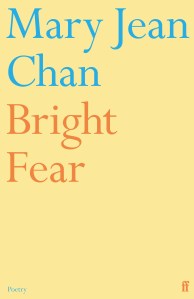
Bright Fear by Mary Jean Chan
Chan’s Flèche was my favourite poetry collection of 2019. Their follow-up returns to many of the same foundational subjects: race, family, language and sexuality. But this time, the pandemic is a lens through which all is filtered. This is particularly evident in Part I, “Grief Lessons.” “London, 2020” and “Hong Kong, 2003,” on facing pages, contrast Covid-19 with SARS, the major threat when they were a teenager. People have always made assumptions about them based on their appearance or speech. At a time when Asian heritage merited extra suspicion, English was both a means of frank expression and a source of ambivalence:
“At times, English feels like the best kind of evening light. On other days, English becomes something harder, like a white shield.” (from “In the Beginning Was the Word”)
“my Chinese / face struck like the glow of a torch on a white question: / why is your English so good, the compliment uncertain / of itself.” (from “Sestina”)
 At the centre of the book, “Ars Poetica,” a multi-part collage incorporating lines from other poets, forms a kind of autobiography in verse. Chan also questions the lines between genres, wondering whether to label their work poetry, nonfiction or fiction (“The novel feels like a springer spaniel running off-/leash the poem a warm basket it returns to always”).
The poems’ structure varies, with paragraphs and stanzas of different lengths and placement on the page (including, in one instance, a goblet shape). The enjambment, as you can see in lines I’ve quoted above and below, is noteworthy. Part III, “Field Notes on a Family,” reflects on the pressures of being an only child whose mother would prefer to pretend lives alone rather than with a female partner. The book ends with hope that Chan might be able to be open about their identity. The title references the paradoxical nature of the sublime, beautifully captured via the alliteration that closes “Circles”: “a commotion of coots convincing / me to withstand the quotidian tug-/of-war between terror and love.”
Although Flèche still has the edge for me, this is another excellent work I would recommend even to those wary of poetry.
Some more favourite lines, from “Ars Poetica”:
“What my mother taught me was how
to revere the light language emitted.”
“Home, my therapist suggests, is where
you don’t have to explain yourself.”
With thanks to Faber for the free copy for review.
Three land-based memoirs:
(All: )
Uprooting: From the Caribbean to the Countryside – Finding Home in an English Country Garden by Marchelle Farrell
 This Nan Shepherd Prize-winning memoir shares Chan’s attention to pandemic-era restrictions and how they prompt ruminations about identity and belonging. Farrell is from Trinidad but came to the UK as a student and has stayed, working as a psychiatrist and then becoming a wife and mother. Just before Covid hit, she moved to the outskirts of Bath and started rejuvenating her home’s large and neglected garden. Under thematic headings that also correspond to the four seasons, chapters are named after different plants she discovered or deliberately cultivated. The peace she finds in her garden helps her to preserve her mental health even though, with the deaths of George Floyd and so many other Black people, she is always painfully aware of her fragile status as a woman of colour, and sometimes feels trapped in the confining routines of homeschooling. I enjoyed the exploration of postcolonial family history and the descriptions of landscapes large and small but often found Farrell’s metaphors and psychological connections obvious or strained.
With thanks to Canongate for the free copy for review.
The Farmer’s Wife: My Life in Days by Helen Rebanks
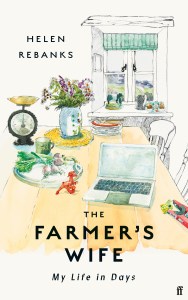 I fancied a sideways look at James Rebanks (The Shepherd’s Life and Wainwright Prize winner English Pastoral) and his regenerative farming project in the Lake District. (My husband spotted their dale from a mountaintop on holiday earlier in the month.) Helen Rebanks is a third-generation farmer’s wife and food and family are the most important things to her. One gets the sense that she has felt looked down on for only ever wanting to be a wife and mother. Her memoir, its recollections structured to metaphorically fall into a typical day, is primarily a defence of the life she has chosen, and secondarily a recipe-stuffed manifesto for eating simple, quality home cooking. (She paints processed food as the enemy.)
Growing up, Rebanks started cooking for her family early on, and got a job in a café as a teenager; her mother ran their farm home as a B&B but was forgetful to the point of being neglectful. She met James at 17 and accompanied him to Oxford, where they must have been the only student couple cooking and eating proper food. This period, when she was working an office job, baking cakes for a café, and mourning the devastating foot-and-mouth disease epidemic from a distance, is most memorable. Stories from travels, her wedding, and the births of her four children are pleasant enough, yet there’s nothing to make these experiences, or the telling of them, stand out. I wouldn’t make any of the dishes; most you could find a recipe for anywhere. Eleanor Crow’s black-and-white illustrations are lovely, though.
With thanks to Faber for the free copy for review.
Windswept: Life, Nature and Deep Time in the Scottish Highlands by Annie Worsley
 I’d come across Worsley in the Wildlife Trusts’ Seasons anthologies. For a decade she has lived on Red River Croft, in a little-known pocket of northwest Scotland. In word pictures as much as in the colour photographs that illustrate this volume, she depicts it as a wild land shaped mostly by natural forces – also, sometimes, manmade. From one September to the next, she documents wildlife spectacles and the influence of weather patterns. Chronic illness sometimes limited her daily walks to the fence at the cliff-top. (But what a view from there!) There is more here about local history and ecology than any but the keenest Scotland-phile may be interested to read. Worsley also touches on her upbringing in polluted Lancashire, and her former academic career and fieldwork in Papua New Guinea. Her descriptions are full of colours and alliteration, though perhaps a little wordy: “Pale-gold autumnal days are spliced by fickle and feisty bouts of turbulent weather. … Sunrises and sunsets may pour with cinnabar and henna; dawn and dusk can ripple with crimson and purple.” The kind of writing I could appreciate for the length of an essay but not a whole book.
With thanks to William Collins for the free copy for review.
Would you read one or more of these?
Nature Book Catch-Up: Sally Huband, Richard Smyth & Anna Vaught
I’m catching up with a few nature- and travel-based 2023 releases that were sent to me for review. I’ve grouped them together because these British authors share some of the same interests and concerns. They celebrate beloved places that become ours through the time we spend in them and the attention we grant; they mourn the loss of biodiversity from rockpools and gardens and seabird cliffs. What kind of diminished world they’re raising their children into is a major worry for all three, and for Huband and Vaught the unease is exacerbated by chronic illness. Wild creatures, and the fellow authors who have hymned them, ease the hurt.
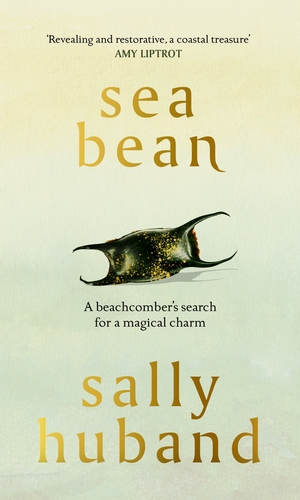
Sea Bean: A beachcomber’s search for a magical charm by Sally Huband
After more than a decade in her adopted home of Shetland, Sally Huband is still a newcomer. A tricky path to motherhood and ensuing chronic illness (the autoimmune disease palindromic rheumatism) limited her mobility and career. Beachcombing is at once her way of belonging to a specific place and feeling part of the wider world – what washes up on a Shetland beach might come from as far away as Atlantic Canada or the Caribbean. Sea glass, lobster pot tags, messages in bottles, driftwood … and a whole lot of plastic, of course. Early on, Huband sets her sights on a sea bean – also known as a drift-seed, from the tropics – which in centuries past was a talisman for ensuring safe childbirth. Possession of one was enough to condemn a 17th-century local woman to death for witchcraft, she learned.
 Stories of motherhood, the quest to find effective treatment in a patriarchal medical system, volunteer citizen science projects (monitoring numbers of dead seabirds, returning beached cetaceans to the water, dissecting fulmar stomachs to assess their plastic content), and studying Shetland’s history and customs mingle in a fascinating way. Huband travels around the archipelago and further afield, finding a vibrant beachcombing culture on the Dutch island of Texel. As in Moby-Duck by Donovan Hohn, one of my all-time favourite nonfiction books, there is delight at the randomness of what the ocean delivers.
I requested this book because Huband’s was my favourite essay in the Antlers of Water anthology. In it, she deplored the fact that women were still not allowed to participate in the Up Helly Aa fire festival in Lerwick. Good news: that is no longer the case, thanks to campaigning by Huband and others. In a late chapter, she also reports that blackface was recently banned from the festivals, and a Black Lives Matter demonstration drew 2000 people. Change does come, but slowly to a traditional island community. And sometimes it is not the right sort of change, as with an enormous wind farm, resisted vigorously by residents, that will primarily enrich a multinational company instead of serving the local people.
In many ways, this is a book about coming to terms with loss, and Huband presents the facts with sombre determination. Passages about the threats to birds and marine life had me near tears. But she writes with such poetic tenderness that the evocative specifics of island life point towards what’s true for all of us making the best of our constraints. I was lucky enough to visit several islands of Shetland in 2006; whether you have or not, this is a radiant memoir I would recommend to readers of Kathleen Jamie, Jean Sprackland and Malachy Tallack.
Some favourite lines:
No island can ever live up to the heightened expectations that we always seem to place on them; life catches up with us, sooner or later.
With each loss, emotional pain accretes for those who have paid attention.
If hope is a hierarchy of wishes then I am happy enough, each time that I beachcomb, to find fragments of the bark of paper birch
I’ve come to think of the ocean as an archive of sorts.
With thanks to Hutchinson Heinemann for the proof copy for review.
The Jay, the Beech and the Limpetshell: Finding Wild Things with My Kids by Richard Smyth
all around us
the stuff of spells. Our parents
let us go to scamper deeper,
leap from stumps lush with moss.
Everything aloof about me
fell into the soil once charged
with younger siblings
and freedoms of a wood.
…
I give you a damp valley floor,
this feather for your pocket.
~an extract from “Arger Fen,” from Latch by Rebecca Goss
I know Richard Smyth for his writing on birds (I’ve reviewed both A Sweet, Wild Note and An Indifference of Birds) and his somewhat controversial commentary on modern nature writing. This represents a change in direction for him toward more personal reflection, and with its focus on the phenomena of childhood and parenthood it recalls Wild Child by Patrick Barkham and The Nature Seed by Lucy Jones and Kenneth Greenway. But, as I knew to expect from previous works, he has such talent for reeling in the tangential and extrapolating from the concrete to the abstract that this lively read ends up being about everything: what it is to be human on this fading planet.
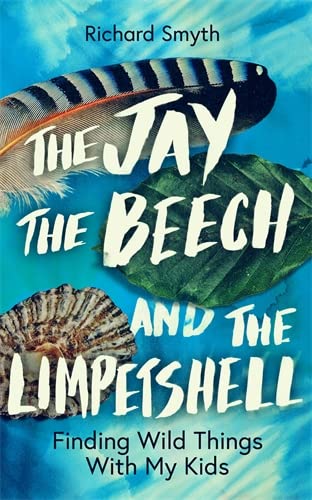 And this despite the fact that four of five chapter headings suggest pandemic-specific encounters with nature. Lockdown walks with his two children, and the totems they found in different habitats – also including a chaffinch nest and an owl pellet – are indeed jumping-off points, punctuating a wide-ranging account of life with nature. Smyth surveys the gateway experiences, whether books or television shows or a school tree-planting programme or collecting, that get young people interested; and talks about the people who beckon us into greater communion – sometimes authors and celebrities; other times friends and family. He also engages with questions of how to live in awareness of climate crisis. He acknowledges that he should be vegetarian, but isn’t; who does not harbour such everyday hypocrisies?
It’s still, unfortunately, rare for men to write about parenthood (and especially pregnancy loss – I only think of Native by Patrick Laurie and William Henry Searle’s books), so it’s great to see that represented, and it’s a charming idea that we create “downfamily” because the “upfamily” doesn’t last forever. Although there’s nostalgia for his childhood here, and anxiety about his kids’ chances of seeing wildlife in abundance, Smyth doesn’t get mired in the past or in existential dread. He has a humanist belief that people are essentially good and can do positive things like build offshore wind farms, and in the meantime he will take Genevieve and Daniel into the woods to play so they will develop a sense of wonder at all that lives on. Even for someone like me who doesn’t have children, this was a captivating, thought-provoking read: We’re all invested in the future of life on this planet.
With thanks to Icon Press for the free copy for review.
These Envoys of Beauty: A Memoir by Anna Vaught
Anna Vaught is a versatile author: I have a copy of her mental health-themed novel Saving Lucia, longlisted for the inaugural Barbellion Prize, on the shelf; she’s written a spooky set of stories, Famished (see Susan’s review); and I gave some early reader feedback on the opening pages of her forthcoming work of quirky historical fiction, The Zebra and Lord Jones. She’s also publishing a book on writing, and editing a collection of pieces submitted for the first Curae Prize for writers who are also carers. I was drawn to her first nonfiction release by reviews by fellow bloggers – it’s always good when a blog tour achieves its aim!
These dozen short essays are about how nature doesn’t necessarily heal, but is a most valued companion in a life marked by chronic illness and depression. The evocative title and epigraphs are from Ralph Waldo Emerson’s essay “Nature” (1836). The pieces loop through Vaught’s past and present, focussing on favourite places in Wiltshire, where she lives, and at the Pembrokeshire coast. It’s the second memoir about complex PTSD that I’ve read this year (see also What My Bones Know). Both at the time and now, when flashbacks of her parents’ verbal and physical abuse haunt her, lying down in a grassy field, exploring a sea cave or sucking on a gorse flower could be a salve. “Nature offered stability and satisfying detail; pattern, form and things that made sense.”
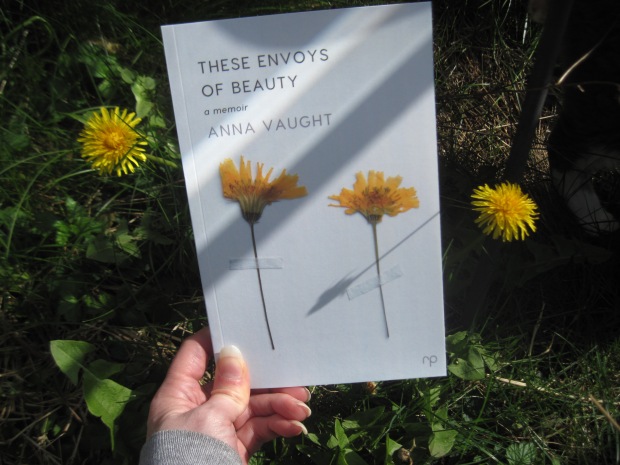
Vaught has a particular love for trees, flowers and moss – even just reciting their Latin names gives her a thrill, and she adds additional information about some species in footnotes. Although her childhood was painful, she retains gratitude for its wide-eyed wonder, and in the exuberance of her prose you can sense a willed childlike perspective (“But back to the list of clouds and writing about clouds!”). I found the frequent self-referential nature of the essays and direct reader address a little precious, but appreciated the thoughts about how nature holds us: “I have always felt a generosity around me, and that I was less lonely outside; at the very least, I could find something to comfort me”. She’s a bookish kindred spirit as well. I’ll be sure to try her work in other genres.
With thanks to Reflex Press for the free copy for review.
Recent Poetry Releases by Allison Blevins, Kit Fan, Lisa Kelly and Laura Scott
I’m catching up on four 2023 poetry collections from independent publishers, three of them from Carcanet Press, which so graciously keeps me stocked up with work by contemporary poets. Despite the wide range of subject matter, style and technique, nature imagery and erotic musings are links. From each I’ve chosen one short poem as a representative.
Cataloguing Pain by Allison Blevins
 Last year I reviewed Allison Blevins’ Handbook for the Newly Disabled. This shares its autobiographical consideration of chronic illness and queer parenting. Specifically, she looks back to her MS diagnosis and three IVF pregnancies, and her spouse’s transition. Both partners were undergoing bodily transformations and coming into new identities, the one as disabled and the other as a man. In later poems she calls herself “The shell”, while “Elegy for My Wife,” which closes Part I, makes way for references to “my husband” in Part II.
“I won’t wail for your dead name. I don’t mean that violence. I wish for a word other than elegy to explain how some of this feels like goodbye.”
In unrhymed couplets or stanzas and bittersweet paragraphs, Blevins marshals metaphors from domestic life – colours, food, furniture, gardening – to chart the changes that pain and disability force onto their family’s everyday routines. “Fall Risk” and “Fly Season” are particular highlights. This is a potent and frankly sexual text for readers drawn to themes of health and queer family-making (see also my Three on a Theme post on that topic).

Published by YesYes Books on 19 April. With thanks to the author for the advanced e-copy for review.
The Ink Cloud Reader by Kit Fan
 Kit Fan was raised in Hong Kong and moved to the UK as an adult. This is his third collection of poetry. “Suddenly” tells a version of his life story in paragraphs or single lines that all incorporate the title word (with an ironic nod, through the epigraph, to Elmore Leonard’s writing ‘rule’ that “suddenly” should never be used). The “IF” statements of “Delphi” then ponder possible future events; a trip to hospital sees him contemplating his mortality (“Glück,” written as a miniature three-act play) and appreciating tokens of beauty (“Geraniums in May”). “Yew,” unusually, is a modified sonnet where every line rhymes.
As the collection’s title suggests, it is equally interested in the natural and the human. There are poems describing the cycles of the moon (the lines of “Moon Salutation” curve into a half-moon parabola) and the wind. Ink pulls together calligraphy, the Chinese zodiac and literature. “The Art of Reading,” which commemorates important moments, real and imaginary, of the poet’s reading life, was a favourite of mine, as was “Derek Jarman’s Garden.” Fan also writes of memory and travels – including to the underworld. His relationship with his husband is a subtle background subject. (“Even though we’ve lived together for nearly twenty years and are always reading sometimes I can’t read you at all which I guess is a good thing”). It’s an opulent and allusive work that has made me eager to try more by Fan. Luckily, I have his debut novel (passed on to me by Laura T.) on the shelf.
Readalike: Moving House by Theophilus Kwek

Published on 27 April. With thanks to Carcanet Press for the advanced e-copy for review.
The House of the Interpreter by Lisa Kelly
 Lisa Kelly’s concern with deafness is sure to bring to mind Raymond Antrobus and Ilya Kaminsky, but I prefer her work. Kelly is half-Danish and has single-sided deafness, and in Part I of this second collection, entitled “Chamber,” her poems engage with questions of split identity:
Is this what it is like for us all? Always having to relearn home
with a strange tongue and alien hands, prepared to open our mouths
as if to beg, to touch tongue-tip with fingertip to reveal ourselves?
The title poem relishes the absurdities of telephone communication, closing with:
In the House of the Interpreter,
Oralism and Manualism, like Passion and Patience,
are rewarded differently and at different times.
Hello, this is your Interpreter. What is your wishlist?
This section ends with “#WhereIsTheInterpreter,” about the Deaf community’s outrage that the Prime Minister’s Covid briefings were not simultaneously translated into BSL.
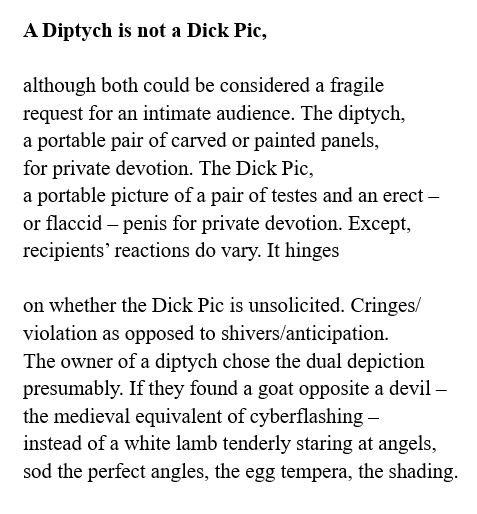
Bizarrely but delightfully, Kelly then moves onto “Oval Window,” a sequence of alliteration-rich poems about fungi. “Mycology Abecedarian” is a joyful list of species’ common names, while “Mycelium” notes how mushrooms show that different ways of evolution and reproduction are possible. “Darning Mushroom” even combines images of fungi and holey socks. Part III, “Canal,” is a miscellany of autobiographical poems and homages to Faith Ringgold, full of references to colour, language, nature and travel.
Readalike: In the Quaker Hotel by Helen Tookey
Published on 27 April. With thanks to Carcanet Press for the advanced e-copy for review.
The Fourth Sister by Laura Scott
 Back in 2019 I reviewed Laura Scott’s debut collection, So Many Rooms. Her second book reflects some of the same preoccupations: art, birds, colour and Russian literature. Chekhov is a recurring point of reference across the two; here, for instance, we have a found poem composed of excerpts from his letters. Scott also writes about the deaths of her parents, voicing resentment towards her father and remarking on life’s irony. As the title suggests, her family constellation includes sisters. Her godparents loom surprisingly large; her godmother was, apparently, a spy. My favourite of the poems, “Still Life,” imagines the whole of life being prized as a glass in an exhibit, appealingly pristine and praiseworthy in comparison to what we usually perceive: “the raggy sprawl of a life … the wrong turns and longing of it.” Elsewhere, metaphors are drawn from the theatre: performing lines, taking items from a wardrobe. I loved the way the pull of nostalgia is set up in opposition to the now.

Published on 23 February. With thanks to Carcanet Press for the advanced e-copy for review.
Read any good poetry recently?
All My Wild Mothers by Victoria Bennett & I Have Some Questions for You by Rebecca Makkai
I’m catching up with reviews of two February releases that I spent the whole of last month submerged in. These are early entries on my Best of 2023 list: A lovely memoir about grief and gardening, caring for an ill child and a dying parent; and a riveting true crime-inspired novel, set on a boarding school campus, that rages at injustice and violence against women.
All My Wild Mothers: Motherhood, loss and an apothecary garden by Victoria Bennett
Early in February, I attended the online book launch via Sam Read Bookseller in Grasmere. With conversation, readings and song, it was the ideal introduction to the themes of this debut memoir by a poet. The book is composed of dozens of brief autobiographical, present-tense essays, each titled after a wildflower with traditional healing properties. The chapters are headed by a black-and-white woodcut of each plant (by Bennett’s husband, Adam Clarke) and a précis of its medicinal uses, as well as where it is found. Again and again, these descriptions site the flora on edgelands or “disturbed ground” – the perfect metaphorical tie-in to Bennett’s tumultuous life and the comfort that creating an apothecary garden brought.
Bennett is the youngest of six children. When she was expecting her son – much longed for after multiple pregnancy losses – news came that her eldest sister had died in a canoeing accident. At age two, her son was diagnosed with type 1 diabetes; managing his condition has imposed a heavy emotional burden. And years later, she was the primary caregiver for her elderly mother as she was dying of mesothelioma. The memoir’s format – which arose in part because it was written over the course of 10 years, during stolen moments – realistically presents bereavement and caring as ongoing, cyclical challenges rather than one-time events.

There are no simple solutions offered here, nothing so pat as that ‘gardening heals all hurts’, but Bennett writes into the broken places and finds joy in what comes to life spontaneously in nature or in her ramshackle yard on a social housing estate in Cumbria. She recalls a horse chestnut tree that looked over her outside the window of her childhood home; she and her son take impish delight in guerrilla gardening and sometimes disastrous cooking projects with foraged fruit. Some of my favourite individual vignettes were “Elder,” about the magic and medicine of making elderberry syrup from the few village trees that escape the chainsaw; “Dandelion,” about her trio of older sisters, who were Greenham Common protestors and always tried to protect her as well as nature; “Herb Robert,” about her sister-in-law’s funeral; and especially “Honeysuckle,” about a local agricultural show where the officious organizers make them feel like interlopers yet her son wins first place for their feral, fecund garden.
Many side topics twine into the narrative as well: a difficult relationship with a controlling mother; a family history that takes in boarding schools, cults, road trips, risk taking and mental health issues; the economic disparity that leads to one set of rules for the rich and another for those on benefits. But the core of the book is a tender mother–son relationship. “I can give him this: a seed, with all its defiant hope against the dark; and the memory that once, we grew a garden out of rock, and waste, and all things broken, and it thrived.” Sitting somewhere between creative nonfiction and nature essays, it’s a beautiful read for any fan of women’s life writing, especially if you share the interests in grief or gardening. I hope we’ll see it recognized on the Barbellion and Wainwright Prize shortlists alike.
Readalikes I have reviewed: A Still Life by Josie George, The Book of Difficult Fruit by Kate Lebo, The Cure for Sleep by Tanya Shadrick
With thanks to Victoria Bennett and Two Roads for the free copy for review.
I Have Some Questions for You by Rebecca Makkai
I’m a big fan of Makkai’s first two novels, The Borrower and The Hundred-Year House, and have her other two books lined up to read, so I was excited to hear about this new work and put it on my Most Anticipated list for the year. My interest was redoubled by Laura’s review, which likens it to a cross between Prep and My Dark Vanessa – irresistible.
Bodie Kane grew up in a deprived and dysfunctional family in Indiana, and has beneficent Mormon neighbours to thank for the tuition money that allowed her to attend Granby, an exclusive New Hampshire boarding school, in the early to mid-1990s. She was an angry and awkward high school student, yet her memories of Granby and the friendships she made there are still an emotional mainstay more than two decades later. In 2018, she is a successful film professor with a podcast about Hollywood starlets. Although she is separated from Jerome, her artist husband, he lives next door and they co-parent their two children.
After an invitation comes from Granby to teach a two-week course on podcasting, Bodie trades Los Angeles for a bitter New England winter. It’s the perfect excuse to indulge her obsession with the 1995 murder of her former Granby roommate, Thalia Keith, who was found dead in the swimming pool one March morning after a play performance. Bodie has never been comfortable with the flawed case against the Black athletics coach, Omar Evans, who has been imprisoned ever since. When one of her students chooses to make Thalia’s murder the subject of a podcast, it’s all the justification Bodie needs to dive deep into her pet hypothesis: Thalia was sleeping with the music director, Denny Bloch, and he was involved in her death in some way. Her blinkered view threatens to exclude a key explanation. Still, the informal sleuthing she and her students do is enough to warrant a follow-up hearing in 2022, but they – and Omar – are up against a broken system.

Makkai has taken her cues from the true crime genre and constructed a convincing mesh of evidence and theories. There’s a large cast of secondary characters, from Dorian, the bully who once humiliated Bodie with sexual slurs, to Fran, the faculty kid/gay best friend who now lives and works on campus herself and continues to be Bodie’s trusty backup. The combinations of background + teenage behaviour + 40-something lives all feel authentic in their randomness (when I saw that Makkai sourced 24 names from indie bookstore supporters, I realized afresh just how real, as opposed to ‘made-up’, these characters feel).
At times I wondered if there was too much detail on the case and the former classmates; I might even have streamlined the novel by doing away with the 2022 section altogether, though it ends up being crucial to the plot. But Makkai has so carefully crafted these pen portraits, and so intimately involved us in Bodie’s psyche, that it’s easy to become invested in the story. What’s more, the novel introduces a seam of rage about violence towards women – so predictably excused and allowed to recur by a justice system weighted against victims –
What’s as perfect as a girl stopped dead, midformation? Girl as blank slate. Girl as reflection of your desires, unmarred by her own. Girl as sacrifice to the idea of girl.
let’s say it was the one where the rugby team covered up the girl’s death and the school covered for the rugby team. Actually it was the one where the therapist spent years grooming her. It was the one where the senator, then a promising teenager, shoved his d*ck in the girl’s face. … It was the one where her body was never found. It was the one where her body was found in the snow. It was the one where he left her body for dead under the tarp.
– yet also finds nuance in the situation when Bodie’s ex-husband is subjected to exaggerated #MeToo accusations. It’s timely, daring, intelligent, enthralling storytelling. Susan (review here) and I are both hoping to see this make the Women’s Prize longlist next week.
Readalikes I have reviewed: Ghost Wall by Sarah Moss, My Dark Vanessa by Kate Elizabeth Russell, The Bass Rock by Evie Wyld
With thanks to Fleet for the proof copy for review.
What are the best 2023 books you’ve read so far?
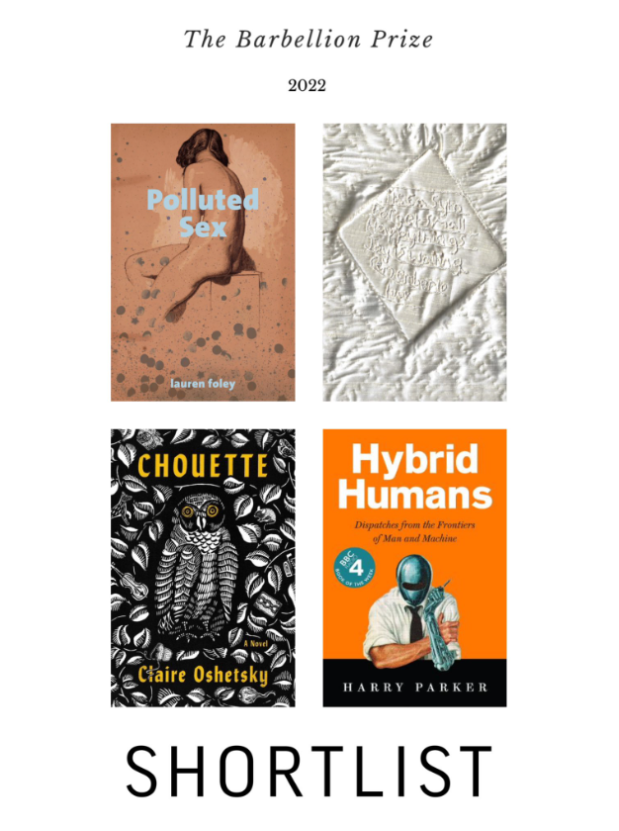
Barbellion Prize Shortlist: Book of Hours by Letty McHugh
The Barbellion Prize shortlist, announced yesterday, consists of the short story collection Polluted Sex and the novel Chouette, both of which I’m still keen to read; and two nonfiction works, Hybrid Humans, which I reviewed last year, and Letty McHugh’s hybrid memoir, Book of Hours: An Almanac for the Seasons of the Soul.
I’m saving up tiny joys the way a bear fattens up for the coming winter
A patchwork quilt of ordinary leftover happiness
to keep me warm through the darkest part of the night.
In medieval times, a book of hours was a devotional book that set out the day’s prayers. Usually an illuminated manuscript, it was a precious object for laypeople, and a way of marking time. For Letty McHugh, a Yorkshire-based visual artist who lives with chronic pain and illness, this book of hours is many things: a journal, a scrapbook, an enquiry into the monastic impulse, and an interrogation of the potential meanings of physical suffering.
 In April 2020, McHugh experienced a relapse of MS so bad she had to move back in with her parents and was sleeping 20 hours a day. Her sphere had contracted to a single room. If only, she wished, there was “something to concentrate on that wasn’t my unravelling body or the unravelling world.” A Catholic upbringing and childhood holidays in Northumberland made her think about the early Christian hermits and saints like Aidan, Cuthbert and Julian of Norwich who salvaged something from solitude, who out of the privations of monasticism made monuments of faith and, sometimes, written documents, too.
This was the inspiration behind her own book of hours, which intersperses poems and photographs of found objects (wildflowers, animal skulls, sea glass and shells) with biographical sketches of saints, short autobiographical essays about her childhood and career, and musings on faith and pain. Metaphors of magic and outer space contrast with the claustrophobia of “the illness place,” somewhere she knows she’ll return to again and again. Although she knows she will never be perfectly holy or perfectly productive, she is encouraged to know that even those with confined lives (such as Emily Dickinson) can have a rich inner existence. While she resists the desire for a cure, or for a simple meaning to suffering, she bears witness to the fact that creativity can emerge in spite of everything.
I enjoyed spending time with this meticulously crafted and meditative work that engages with the present moment but also the eternal. It’s perfect onward reading for fans of the inaugural Barbellion Prize winner, Golem Girl by Riva Lehrer, and A Still Life by Josie George, a shortlistee from last year.
Book of Hours was self-published with assistance from Disability Arts Online. You can buy a signed copy of the handmade book from her Etsy shop, or read the text for free here.
With thanks to Letty McHugh for sending a free e-copy for review.
This year’s Barbellion Prize judges are Dr Emmeline Burdett, Lynn Buckle (last year’s winner) and scholar Ray Davis. The winner will be announced in February.
The Barbellion Prize 2022 Longlist
This is the third year that the Barbellion Prize will be awarded “to an author whose work has best represented the experience of chronic illness and/or disability.” In the inaugural year I read the entire shortlist, and last year I had already read a few from the longlist and was able to review another two shortlisted titles before the prize announcement.
The 2022 longlist was announced on Friday and contains two books I’d predicted – Hybrid Humans, which I reviewed earlier in the year; and Polluted Sex – and one more that I’d heard of (Chouette), while the rest were new to me. Letty McHugh kindly sent me a PDF copy of her self-published memoir in poems, Book of Hours, and I may be able to get some of the others from the publishers to support the prize through reviews early in the new year.
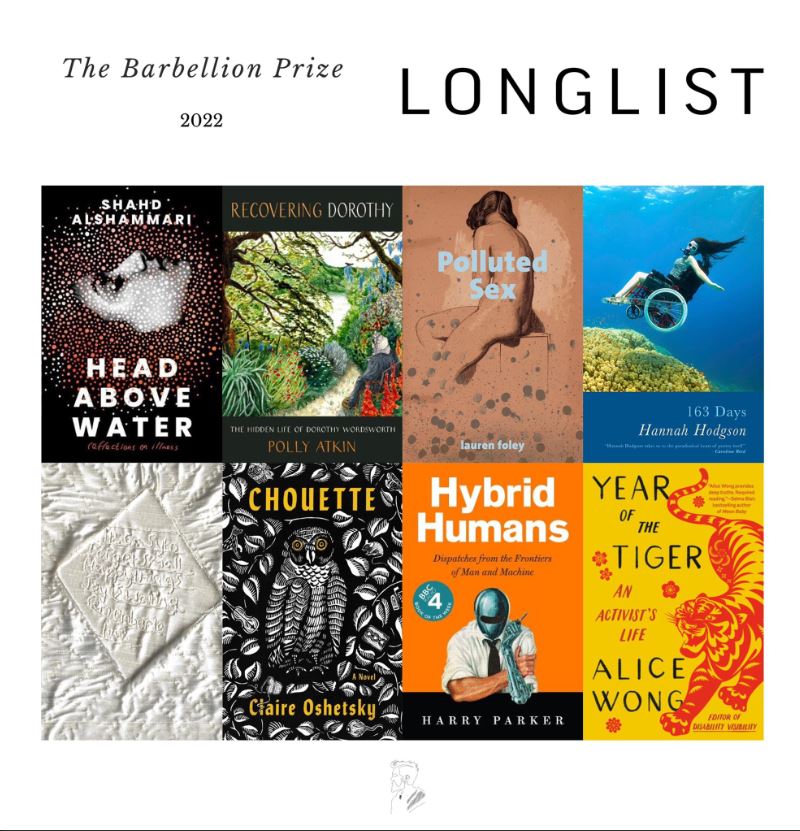
This list comes from the Prize website. Click on any title for more information. Here we have three (hybrid) memoirs, two autobiographical poetry collections, a novel, a book of short stories, and a biography. Will it be the year for a poetry collection or biography to win?
Head Above Water by Shahd Alshammari (Neem Tree Press)
From the synopsis: “takes us into a space of intimate conversations on illness and society’s stigmatization of disabled bodies. We are invited in to ask the big questions about life, loss, and the place of the other. … Through conversations about women’s identities, bodies, and our journeys through life, we arrive at a politics of love, survival, and hope.”
Recovering Dorothy: The Hidden Life of Dorothy Wordsworth by Polly Atkin (Saraband)
From the synopsis: “Less well known [than her writing and famous brother] … is that Dorothy became seriously ill … and was mostly housebound for the last 20 years of her life. Her personal letters and unpublished journals from this time … [show] a compassionate and creative woman who made her sickroom into a garden … and … grew to call herself a poet.”
Polluted Sex by Lauren Foley (Influx Press)
From the synopsis: “A pregnant woman takes the ferry to the UK. … Two ungendered characters contest the same female body. … Lauren Foley’s debut collection of dramatic short stories … is fearless in its depiction of women’s bodies and sexuality, offering an unflinching window into Irish girl and womanhood.”
163 Days by Hannah Hodgson (Seren Books)
From the synopsis: “Hodgson is an award-winning poet and a palliative care patient. In her compelling debut collection … she uses a panoply of medical, legal, and personal vocabularies to explore what illness, death and dying does to a person as both patient and witness. 163 days is the length of Hannah’s longest period of hospitalisation to date.”
From the synopsis: “Over the course of the pandemic, a complication with my chronic illness left me alone in a darkened room for three weeks. I drew comfort from an imagined Book of Hours. … Book of Hours is a collection of lyric essay and poetry exploring what it means to have faith, why we chase suffering and how to take solace in small joys.”
Chouette by Claire Oshetsky (Ecco/HarperCollins)
From the synopsis: “When Chouette is born small and broken-winged, Tiny … [is left] on her own to care for a child who seems more predatory bird than baby. … When she discovers that her husband is on an obsessive and increasingly dangerous quest to find a “cure” for their daughter, Tiny must decide whether Chouette should be raised to fit in or to be herself”.
My blog review excerpt: “Parker was a captain in the British Army in Afghanistan when an IED took his legs. Now he wears prostheses that make him roughly 12% machine. Pain management, PTSD, phantom limbs, foreign body rejection, and deep brain stimulation are other topics in this wide-ranging study that is at the juncture of the personal and political.”
Year of The Tiger: An Activist’s Life by Alice Wong (Vintage Books/PRH)
From the synopsis: “[With] original essays, previously published work, conversations, graphics, photos, commissioned art by disabled and Asian American artists, and more, Alice uses her unique talent to share an impressionistic scrapbook of her life as an Asian American disabled activist, community organizer, media maker, and dreamer.”
This year’s judges are Dr Emmeline Burdett, Lynn Buckle (last year’s winner) and scholar Ray Davis. The shortlist is due out in January and the winner will be announced in February.
Do any of these nominees appeal to you?
Review Catch-Up: Jhalak and Women’s Prize Nominees, Etc.
Another in an ongoing series as I catch up on the current and previous year releases I’ve been sent for review. Today I have four books by women: a poetry collection about living between countries and languages, a magic realist novel about vengeful spirits in Vietnam, a memoir in verse about the disabled body and queer parenting, and a novel set in gentrifying Puerto Rican neighbourhoods of New York City.
From the Jhalak Prize longlist:
Honorifics by Cynthia Miller (2021)
Miller is a Malaysian American poet currently living in Edinburgh. Honorifics was also shortlisted for the Forward Prize for Best First Collection. Its themes resonate with poetry I’ve read by other Asian women like Romalyn Ante and Jenny Xie and with the works of mixed-race authors such as Jessica J. Lee and Nina Mingya Powles: living between two or more countries and feeling like an exile versus finding a sense of home.
Nightly, you rosary American synonyms for success learned the hard way: suburb – 10-year visa – promotion – carpool – mortgage – parent-teacher conference – nuclear family – assimilation … Homecoming is the last, hardest thing you’ll ask yourself to do.
(from “Homecoming”)
 “Loving v. Virginia” celebrates interracial love: “Look at us, improper. Look at us, indecent. Look at us, incandescent and loving.” Food is a vehicle for memory, as are home videos. Like Ante, Miller has a poem based on her mother’s voicemail messages. “Glitch honorifics” gives the characters for different family relationships, comparing Chinese and Hokkien. The imagery is full of colour and light, plants and paintings. A terrific central section called “Bloom” contains 10 jellyfish poems (“We bloom like nuclear hydrangea … I’m an unwound chandelier, / a 150-foot-long coil of cilia, // made up of a million gelatinous foxgloves.”).
Miller incorporates a lot of unusual structures, some of them traditional forms (“Sonnet with lighthouses,” “Moon goddess ghazal,” “Persimmon abecedarian”) and others freer forms like a numbered list, columns, dictionary definitions or prose paragraphs. Six of the poems cite an inspiration; I could particularly see the influence in “The Home Office after Caroline Bird” – an absurdist take on government immigration policy.
There’s much variety here, and so many beautiful lines and evocative images. “Malaysiana,” a tour through everything she loves about the country of her birth, was my single favourite poem, and a couple more passages I loved were “the heart measuring breaths like levelling sugar / for a batter, the heart saying / why don’t you come in from the cold.” (from “The impossible physiology of the free diver”) and the last two stanzas of “Lupins”: “Some days / their purple spines // are the only things / holding me up.” Flora and fauna references plus a consideration of the expat life meant this was custom made for me, but I’d recommend it to anyone looking to try out different styles of contemporary poetry.
With thanks to Nine Arches Press for the free copy for review.
From the Women’s Prize longlist:
Build Your House around My Body by Violet Kupersmith (2021)
 Back in 2014, I reviewed Kupersmith’s debut collection, The Frangipani Hotel, for BookBrowse. I was held rapt by its ghostly stories of Vietnam, so I was delighted to hear that she had written a debut novel, and it was one of my few correct predictions for the Women’s Prize nominees. The main action takes place between when Winnie – half white and half Vietnamese – arrives in Saigon to teach English in 2010, and when she disappears from the house she shared with her boyfriend of three months, Long, in March 2011. But the timeline darts about to tell a much more expansive story, starting with the Japanese invasion of Vietnam in the 1940s. Each date is given as the number of months or years before or after Winnie’s disappearance.
Winnie starts off living with a great-aunt and cousins, and meets a family friend, Dr. Sang, who’s been experimenting on a hallucinogenic drug made from cobra venom. Long and his brother, Tan, a policeman, were childhood friends with a fearless young woman named Binh – now a vengeful ghost haunting them both. Meanwhile, the Saigon Spirit Eradication Company, led by the Fortune Teller, is called upon to eradicate a ghost – which from time to time seems to inhabit a small dog – from a snake-infested highland estate. These strands are bound to meet, and smoke and snakes wind their way through them all.
I enjoyed Kupersmith’s energetic writing, which reminded me by turns of Nicola Barker, Ned Beauman, Elaine Castillo and Naoise Dolan, and the glimpses of Cambodia and Vietnam we get through meals and motorbike rides. What happens with Belly the dog towards the end is fantastic. But the chronology feels needlessly complex, with the flashbacks to colonial history and even to Binh’s story not adding enough to the narrative. While I’d still like to see Kupersmith make the shortlist, I can recommend her short stories that bit more highly.
With thanks to Oneworld for the free copy for review.
Handbook for the Newly Disabled: A Lyric Memoir by Allison Blevins (2022)
 Allison Blevins, a poet, has published five chapbooks or collections and has another forthcoming. Based in Missouri and the director of an indie press, she tells her story of chronic illness and queer parenting in 10 “chapters” composed of multi-part poems. She moves through brain fog and commemorates pain and desire, which cannot always coexist (as in “How to F**k a Disabled Body”).
I’ll never
ride a bike again, hike, carry my children. I’m learning to number what I’ve lost.
Because of the pills, I no longer fall into sleep, I stop. I used to hate queer at 19
when I was a dyke. I can’t be disabled. I need a better word. I need a body that floats—
translucent and liquid—to my daughter’s bed, to cover her like cotton-red quilted stars.
(from “Brain Fog”)
Sometimes the title is enough: “My Neurologist (Who Doesn’t Have MS) Explains Pain Is Not a Symptom of MS.” Other times, what is left out, or erased (as in “Five by Five”) is what matters the most. For instance, the Photo Illustrations promised in the titles of two chapters are replaced by Accessibility Notes. That strategy reminded me of one Raymond Antrobus has used. Alliteration, synesthesia and the language of the body express the complexities of a friend’s cancer, having a trans partner, and coming to terms with sexuality (“I think now that being queer was easy, easy as forgetting / being born”). A really interesting work and an author I’d like to read more from.
Published by BlazeVOX [books] on 22 March. With thanks to the author for the e-copy for review.
Olga Dies Dreaming by Xóchitl González (2022)
 This was on my radar thanks to a starred Kirkus review. It would have been a good choice for the Women’s Prize longlist, with its bold heroine, Latinx and gay characters, and blend of literary and women’s fiction. The Puerto Rican immigrant community and gentrifying neighbourhoods of New York City are appealing locales, and Olga is a clever, gutsy protagonist. As the novel opens in 2017, she’s working out how best to fleece the rich families whose progeny’s weddings she plans. Today it’s embezzling napkins for her cousin Mabel’s wedding. Next: stockpiling cut-price champagne. Olga’s brother Prieto, a slick congressman inevitably nicknamed the “Latino Obama,” is a closeted gay man. Their late father was a drug addict; their mother left to be part of a revolutionary movement back in PR and sends her children occasional chiding letters when they appear to be selling out.
The aftermath of Hurricane Maria coincides with upheaval in Olga’s and Prieto’s personal and professional lives. The ins and outs of Puerto Rican politics went over my head somewhat, and the various schemes and conspiracy theories get slightly silly. The thread that most engaged me was Olga’s relationship with Matteo, a hoarder. I hoped that, following the satire of earlier parts (“Olga realized she’d allowed herself to become distracted from the true American dream—accumulating money—by its phantom cousin, accumulating fame. She would never make that mistake again”), there might be a message about the emptiness of the pursuit of wealth. So I ended up a little disappointed by a late revelation about Matteo.
However, I did appreciate the picture of how Olga is up against it as both a woman and a person of colour (“no person of color serious about being taken seriously was ever late to meet white people”). This debut was perhaps a little unsure of what it wanted to be, but the novelty of the main elements was enough to make it worth reading.
With thanks to Fleet for the free copy for review.
Would you be interested in reading one or more of these?
 Bookish Beck = Rebecca Foster. American transplant to England. Freelance proofreader and book reviewer.
 Bookish Beck