Review Catch-Up: Memoirs by Maggie Nelson and Jonathan Tepper
Two memoirs that I’ve been meaning to post about for a while now: a novella-length response to chronic pain, and a story of growing up at a refuge for addicts and AIDS victims in Spain.
Pathemata: Or, The Story of My Mouth by Maggie Nelson (2025)
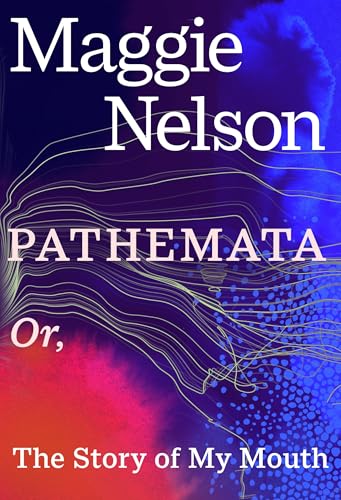 This is a very short (68-page), dreamy meditation on pain. Nelson has ongoing chronic jaw pain despite multiple expensive trips to specialist clinics and many different treatment strategies tried. As she writes, it’s the pandemic era and she’s also home-schooling her son. Meanwhile, her marriage to H seems to be crumbling. The text is composed of non-indented sentences in roughly thematic groupings. But dreams are recounted as often as real-life events, making this a particularly slippery work of autofiction, with an emphasis on the fiction.
The dentist in the valley and I go back and forth over injecting my jaw with Botox.
I hold out, realising that the only thing that frightens me more than pain and its viciousness is numbness, paralysis.
Sometimes I wonder what I would have thought about all these years, if I hadn’t spent so much time thinking about the pain.
Nelson dwells on the irony of someone who talks for a living having so much trouble with oral speech. She also reflects on the early loss of her father and the recent death of a close friend, C. Could it be that jaw pain is how her body is manifesting long-held grief and stress? she wonders.
The Argonauts is an absolute classic of life writing and I’ve long admired Nelson’s cultural criticism. She’s an important thinker on queerness and embodiment, in the vein of Garth Greenwell and Olivia Laing. Aside from the indulgence of including all the dreams (and one instance of jargon: “It sounds like an invagination – a chamber to hold the pastiche of lacerations”), there’s nothing wrong with this per se. It’s just that the essay is over before it’s begun. Why not part of a longer essay collection, or expanded into a full-length memoir?
With thanks to Fern Press, Vintage (Penguin) for the proof copy for review.
{SPOILERS IN THIS ONE}
Shooting Up: A Memoir of Love, Loss, and Addiction by Jonathan Tepper (2026)
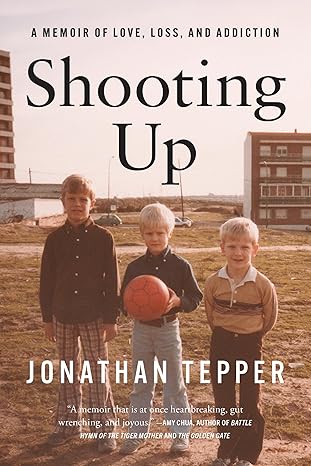 In the early 1980s, the author and his three brothers moved to Spain with their missionary parents, Elliott and Mary, who founded Betel, a rehabilitation centre for junkies (yonkis). “Our neighbourhood [San Blas in Madrid] was the biggest drug supermarket not only in Spain but in all of Europe, and it was happening right on our doorstep.” Betel is still operating today and has supported 100,000 addicts, but it all started with eight young men in the Teppers’ living room. Elliott was filled with righteous enthusiasm for the task and always had scripture passages and C.S. Lewis quotes on the tip of his tongue. When his four sons went delivering leaflets to heroin addicts on the street, they stood out for their blond hair and blue eyes. Soon, though, the yonkis they helped became more than ‘customers’, or objects of pity, but friends as close as family.
From a child’s perspective, the memoir effectively recreates scenes and dialogue from these outreach years. I especially appreciated the descriptions of what it’s like to grow up inside a religious bubble: “the invisible walls of my family and beliefs had been my world. In the [goldfish] bowl you think the water is all there is”. I’m a minister’s kid myself, so I nodded along to lines like “Being a preacher’s kid meant being the first to church and last to leave as my parents hugged and spoke to everybody.” There was real grief as, one by one, young men they knew fell victim to AIDS: Luis, Ángel, Raúl, Salva, Jambri. But there were other losses, too: Tepper’s younger brother, Timothy, died in a car accident while they were back in the USA on a sabbatical in 1991, and his mother later died by suicide after being disabled by a brain tumour.
There’s a section of black-and-white photographs at the end of the book, and the chapters are headed with Spanish phrases to evoke the setting. Later chapters follow Tepper through his college years and the triumph of getting a Rhodes scholarship. (In fact, he and his two remaining brothers all graduated from Oxford University on the same day.) The focus on academic success as a more legitimate high than that offered by drugs reminded me of Educated by Tara Westover, while the solemn duty of being an eyewitness to the AIDS crisis is reminiscent of All the Young Men by Ruth Coker Burks. This is a touching tribute to all those dead.
With thanks to the author and Constable (Little, Brown) for the advanced proof copy for review.
Three on a Theme for Mother’s Day: Baker, Diski and Sampson
It’s Mothering Sunday in the UK today, so, like last year, I’m featuring three very different books about mothers and motherhood: a memoir, a novel and a poetry anthology. There are complex emotions at play in the first two due to grief, abuse and disability. The poems are cheerier (thankfully) and reflect on the experience of motherhood but also of being mothered. On that last point, I’ve added my response to a relevant short story I happened to read today.
Reading My Mother Back: A memoir in childhood animal stories by Timothy C. Baker (2022)
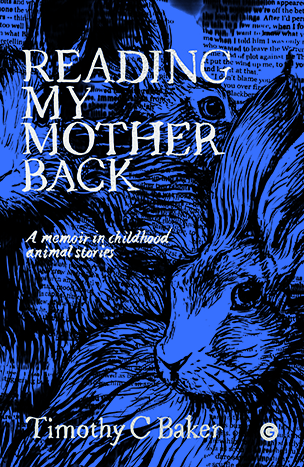 Baker is a lecturer in Scottish literature at the University of Aberdeen. His first non-academic publication is a curiously beguiling novella-length reappraisal of favourite children’s books. “To misquote Heraclitus, you cannot read the same book twice.” While he’s sheepish about including so many 19th- and early-20th-century white male authors, he can’t do otherwise as these are the texts that first taught him about death, loneliness and friendship: Charlotte’s Web, The Wind in the Willows, The Magician’s Nephew and Watership Down. (Also The Secret Garden.) Baker grew up in Maryland and Vermont, lonesome and closeted, with parents who briefly joined a cult. In his memory, his mother (who had been abused) always suffered with chronic illness and pain. In each chapter, he weaves together a discussion of a plot with stories from his early life and critical opinion on the value of rereading. It helped that I was familiar with six of the nine books Baker features (and others by Gallico, though not The Man Who Was Magic); I’d not even heard of Merle the High Flying Squirrel or The Book of the Dun Cow.
I spotted this in the Wigtown Festival Shop* on our 2023 visit to Scotland’s Book Town and could hardly believe it existed because it seemed so perfectly suited to me: I loved animal books, especially Watership Down, as a child; I’ll read any bereavement memoir going; I grew up 30 miles from Baltimore, where Baker spent his early life; he and I both had strict religious upbringings; and his mother experienced kidney failure (after eating a foxglove??), a link to my family’s history of kidney disease. There are plentiful differences, too, of course, but Baker emphasises connection. “If reading these books has taught me anything,” he concludes, “it is that all of my stories are individual, and all of them are universal. What we share is the unshareability of our grief … [but also] the joy of knowing that we have loved.” And for such a seemingly niche book (from Goldsmiths Press), I have actually found myself mentioning it to two blogger friends in recent days, so that’s proof he was right. 
[*As to how the book finally came into my possession: I added it to my wishlist and an acquaintance (a former mayor of Newbury, in fact) bought it for me for my 40th birthday. However, he forgot to bring the gift to our joint party and it took another 2+ years to extract it from him – through explicit reminders when we invited him to join us on a quiz team.]
Like Mother by Jenny Diski (1988)
I’ve enjoyed the late Jenny Diski’s travel memoirs (Skating to Antarctica and Stranger on a Train) and essays (On Trying to Keep Still). This novella was my first taste of her fiction and, while it’s dark as hell, I admired the psychological acuity and playfulness with narration. Occasional chapters introduce a dialogue between Nony and an imaginary interlocutor whose role is to listen to the story of her mother, Frances, a former dancer. That family history is the substance of the rest of the book, which is in an omniscient third person. The artificiality of the setup is blatant, though; Nony can neither think nor speak, having been born without a brain (hydranencephaly). Nony’s full name is thus Frances’s cruel joke.
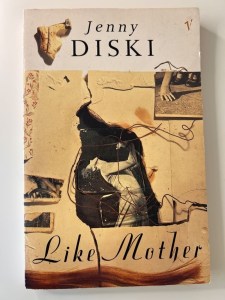
By necessity, the story stretches back to Frances’s parents, Ivy and Gerald, whose postwar optimism soon ceded to the reality of addiction, adultery and the attrition of love. A semiferal Frances escaped her unhappy home for the streets of London and engaged in sex play with Stuart on a bombsite. This went on for years. For Stuart, it blossomed into genuine love, but the numb Frances could never return his feelings and only used him. There are some really painful scenes here, such as Stuart stealing ether from the chemistry supply cupboard so she can huff herself into temporary oblivion, and a drunk Ivy molesting adolescent Frances. “Like mother, like daughter” is a bitter confirmation of inherited trauma. Nony might well be a symbolic manifestation of Frances’s desire to cultivate nothingness. To the extent that she is a literal baby – I’m really not sure – Frances does seem to love her and care for her physical needs, even as she’s grateful that the relationship will be short-lived.
Diski draws attention to the falsity of her narrative technique at the very end. It’s a disturbing yet intriguing novel that I think must be trying to make a wider point about postwar disillusionment. (Enough to make one question one’s growing antipathy towards Boomers?) I was reminded faintly of Nutshell by Ian McEwan, which is from the perspective of a fetus, and I Am Clarence by Elaine Kraf, a troubling story of a mentally ill mother and her disabled son. I have another novella plus a short story collection by Diski on the shelf, and I daresay after those I’ll have to seek out everything else she wrote. (University library) 
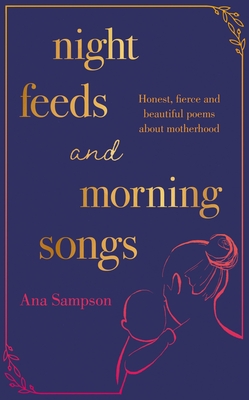
Night Feeds and Morning Songs, ed. Ana Sampson (2021)
“I crossed the border into the Republic of Motherhood
and found it a queendom, a wild queendom.”
~Liz Berry
It would have been easy to make such an anthology samey and sentimental, so kudos to Sampson for curating a solid mix of contemporary and period work. The poems are grouped into loose categories covering pregnancy, the sleepless nights of early motherhood, the power of womanly solidarity, the legacy (or absence) of one’s own mother, and the milestones of life as a child grows up and moves away. (Jackie Kay marvels that her baby boy is now a 6-foot-2 world traveller.) However, there are almost as many emotional approaches and poetic forms as there are contributors. Exhilaration meets exhaustion; guilt and grief threaten to overwhelm the good times. Sometimes the infant is addressed directly. The tone might be sombre, outraged or satirical. A few excerpts:
from “Labour Ward Prayer” by Vicky Thomas
Give us this day our daily miracle.
Exchange our offering of sweat and tears
and, most of all, of blood,
for new life, crumpled as a new leaf bud.
 from “The Visitor” by Idra Novey
…more dragon
than spaniel, more flammable
than fluid …
All wet mattress to my analysis,
he’s stayed the loudest and longest
of any houseguest
from “What My Kids Will Write about Me in Their Future Tell-All Book” by January Gill O’Neil
They will say that no was my favourite word,
More than stop, or eat, or love.
That some morning, I’d rather stay in bed,
laptop on lap, instead of making breakfast
…
They will say they have seen me naked.
Front side, back side – none of which
were my good side.
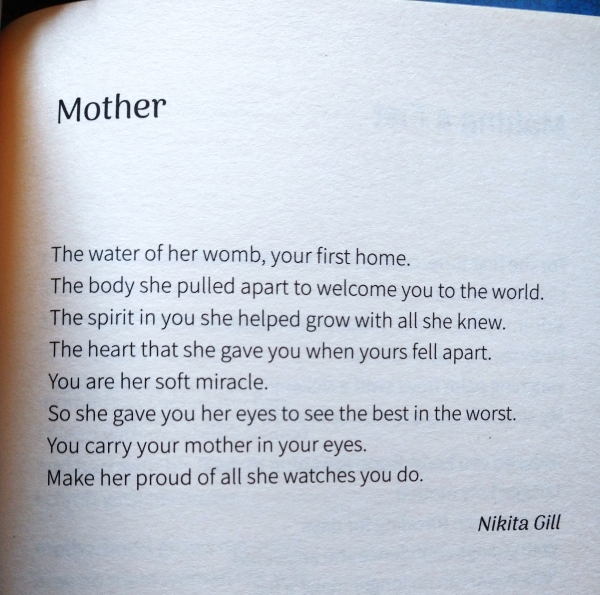
I enjoyed re-encountering work by some personal favourite poets such as Caroline Bird, though most entries were new to me. Sampson’s section introductions aren’t particularly illuminating and often reference poems that aren’t actually in the part in question. Some of the 19th-century and earlier material is quaintly twee, but I did love discovering Christina Rossetti’s “To My First Love, My Mother.” This is the poem that made me cry, though:
(Little Free Library)
And a bonus short story:
 “Egg Mother” by Kim Samek (from I Am the Ghost Here): I’m two stories into Samek’s gently surreal collection. This second story combines the themes of parenting and grief prevalent above. Her openings are knockout: “At thirty-six I turn into a scrambled egg. It happens a few months after I give birth.” In therapy, the narrator discovers that she’s been repressing her grief over her mother, who died of cancer when the narrator was 13. The therapist suggests that she and her husband hold a joint ‘funeral’ for her mother and her younger self in a graveyard. But even after the ritual, she doesn’t return to herself. It’s a sobering but realistic message: some things one just doesn’t get over.
“Every story that I read becomes the story of my mother.”
~Timothy C. Baker
Last night, we saw Brooklyn expat singer-songwriter Annie Dressner (and Sean Duggan of Steady Habits) in concert at a church hall. I was mostly underwhelmed by her quirky confessional songs and little-girl voice, but a couple of songs stood out for me. One, “I Just Realized,” includes the line “And I hope that I can be just like my mother.”
Today was a more emotional day than I was expecting. I got a sweet posy from church, but having a whole service focussed on mothers and mothering was hard for me. I had to mostly switch off to get through it.
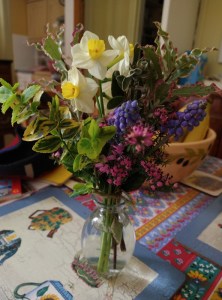
Just in my current stack, there are so many books about mothers or mothering…
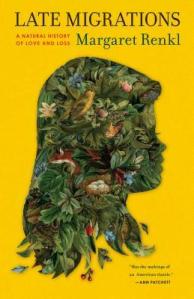 the loss of a mother (Eva Luna by Isabel Allende; The Memory of Borrowed Books by Meg Anderson; The Curious Incident of the Dog in the Night-Time by Mark Haddon; Late Migrations by Margaret Renkl; I Capture the Castle by Dodie Smith) – so common an element in novels that I have to think it’s shorthand for a character who has to pluckily rely on their own psychological resources
- mothers’ protective instinct (The Benefactors by Wendy Erskine)
- emotional distance from an unstable mother (Carrie by Stephen King; First Rain in Paradise by Gwyneth Lewis; Blonde by Joyce Carol Oates; The First Day of Spring by Nancy Tucker, which also includes the struggle to be a good mother in turn)
- mixed feelings about the inability to have a child (Mare by Emily Haworth-Booth)
- a mother’s grief at the loss of a child (Ordinary Saints by Niamh Ni Mhaoileoin)
I know it’s a subject I’ll be reading and thinking about for the rest of my life.
Best Books of 2024: My Top 20
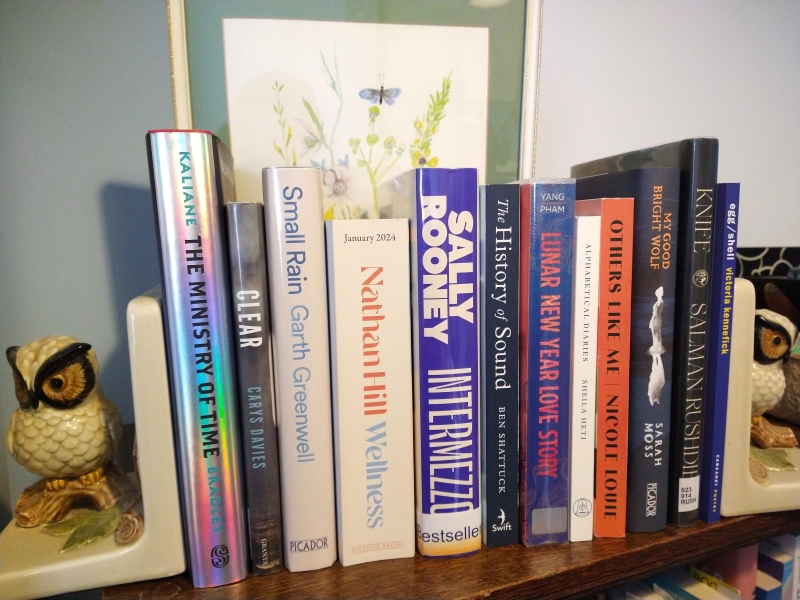
I’m keeping it simple again this year with one post covering all genres: these are the 20 current-year releases that stood out the most for me. (No rankings.) Those that aren’t repeated from my Best Books from the First Half of 2024 post didn’t quite make the cut but should be considered as runners-up well worth your time. Unsurprisingly, health is a common theme across many of my selections, especially as it touches women’s lives. Pictured below are the books I read in print; the others were all electronic copies. Links are to my full reviews where available.
Fiction
 The Worst Journey in the World, Volume 1: Making Our Easting Down: The Graphic Novel by Sarah Airriess: The thrilling opening to a cinematically vivid adaptation of Apsley Cherry-Garrard’s 1922 memoir. He was an assistant zoologist on Robert Falcon Scott’s perilous 1910-13 Terra Nova expedition to the South Pole. The book resembles a full-color storyboard for a Disney-style maritime adventure film. There is jolly camaraderie as the men sing sea shanties to boost morale. The next volume can’t arrive soon enough.
 The Ministry of Time by Kaliane Bradley: This nuanced debut alternately goes along with and flouts the tropes of spy fiction and time travel sci-fi, making clever observations about how we frame stories of empire and progress. The narrator is a “bridge” helping to resettle a Victorian polar explorer in near-future London. You just have to suspend disbelief and go with it. Bradley’s descriptive prose is memorable but never quirky for the sake of it. I haven’t had so much fun with a book since Romantic Comedy. A witty, sexy, off-kilter gem.
 Behind You Is the Sea by Susan Muaddi Darraj: Darraj’s novel-in-stories is a shimmering composite portrait of a Palestinian American community in Baltimore. Across nine stellar linked stories, she explores the complex relationships between characters divided by—or connected despite—class, language, and traditional values. Each of the stories (four in the first person, five in the third person) spotlights a particular character. The book depicts the variety of immigrant and second-generation experience, especially women’s.
 Clear by Carys Davies: Depicts the Highland Clearances in microcosm though Ivar, last resident of a remote Scottish island between Shetland and Norway. John is a minister sent by the landowner to remove Ivar. Mary, John’s wife, journeys from the mainland to rescue him. Davies writes striking scenes that bring the island scenery to life. Her deceptively simple prose captures the slow building of emotion and moments that change everything. For a trio that seemed on course for tragedy, there is the grace of a happier ending.
 Small Rain by Garth Greenwell: A poet and academic (who both is and is not Greenwell) endures a Covid-era medical crisis that takes him to the brink of mortality and the boundary of survivable pain. Over two weeks, we become intimately acquainted with his every test, intervention, setback and fear. Experience is clarified precisely into fluent language that also flies far above a hospital bed, into a vibrant past, a poetic sensibility, a hoped-for normality. I’ve never read so remarkable an account of what it is to be a mind in a fragile body.
 Wellness by Nathan Hill: A state-of-the-nation story filtered through one Chicago family experiencing midlife and marital crises: underperforming academic Jack; his wife Elizabeth, a placebo researcher at Wellness; and their YouTube-obsessed son Toby. They’ve recently invested their life savings in a new condo. The addictive and spot-on novel asks questions about authenticity, purpose, and nurture. Is love itself a placebo? Hill is clearly fascinated with psychological experimentation but also questions it to humorous effect.
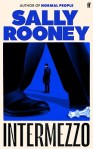 Intermezzo by Sally Rooney: Twenty- and thirtysomethings having lots of sex, yes, but now a solemn tone: Characters’ suffering and failures have deepened their thinking, sense of self, and ability to feel for others. Peter and Ivan lost their father to cancer; Sylvia is in chronic pain after an accident; Naomi is evicted and aimless; Margaret is ashamed of having an estranged alcoholic husband. Chess is a clever metaphor for their interactions; the depiction of grief rings true. A stylistic leap forward, too. Her best, most mature work by a mile.
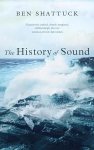 The History of Sound by Ben Shattuck: A dozen stories form a “hook-and-chain” formation of five couplets, bookended by a first and last story related to each other. Links are satisfyingly overt: A pair takes place in the same New England house in different centuries; a companion piece fills in the history of the characters from the previous. All are historically convincing, and the very human themes of lust, parenthood, sorrow and frustrated ambition resonate across centuries and state lines. Really beautiful (and better than North Woods).
 Lunar New Year Love Story by Gene Luen Yang (illus. LeUyen Pham): A super-cute teen graphic novel with gorgeous illustrations prioritizing pink and red to suit the theme. We follow Vietnamese American Valentina through high school as she plays host to an internal debate between cynicism and romanticism. Ever since her mother left, she’s longed to believe in romance but feared that love is a doomed prospect for her family. The Asian community of Oakland, California and a new hobby of lion dancing provide engrossing cultural detail.
Nonfiction
 Grief Is for People by Sloane Crosley: A bereavement memoir like no other. Heart-wrenching yet witty, it bears a unique structure and offers fascinating glimpses into the New York City publishing world. Crosley’s Manhattan apartment was burgled exactly a month before the suicide of her best friend and former boss, Russell. Throughout, the whereabouts of her family jewelry is as much of a mystery as the reason for Russell’s death, and investigating the stolen goods in parallel serves as a displacement activity for her.
 Alphabetical Diaries by Sheila Heti: Heti put 10 years of diary contents into a spreadsheet, alphabetizing each sentence, and then ruthlessly culled the results. The recurring topics are familiar from the rest of her oeuvre: obsessive cogitating about relationships, art and identity, but also the practicalities of trying to make a living as a woman in a creative profession. Heti transcends the quotidian by exploding chronology. Amazingly, the collage approach produces a genuine, crystalline vision of the self. A sui generis work of life writing.
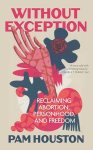 Without Exception: Reclaiming Abortion, Personhood, and Freedom by Pam Houston: If you’re going to read a polemic, make sure it’s as elegantly written and expertly argued as this one. Houston responds to the overturning of Roe v. Wade with 60 micro-essays – one for each full year of her life – about what it means to be in a female body in a country that seeks to control and systematically devalue women. The cycling of topics makes for an exquisite structure. Houston is among my recommendations for top-notch authors you might not know.
 The Body Alone: A Lyrical Articulation of Chronic Pain by Nina Lohman: Chronic Daily Headaches: Having a clinical term for extreme pain did nothing to solve it; no treatment Lohman has tried over a decade has helped much either. Medical professionals and friends alike downplay her experience because she is able to pass as well and raise two children. The fragmentary pieces read like poems. Bodily realities defy language, yet she employs words exquisitely. The tone flows from enraged to resigned to cynical and back.
 Others Like Me: The Lives of Women without Children by Nicole Louie: This impassioned auto/biographical collage combines the strengths of oral history, group biography and a fragmented memoir. “Motherhood as the epicentre of women’s lives was all I’d ever witnessed” via her mother and grandmother, Louie writes, so finding examples of women living differently was key. As readers, we watch her life, her thinking and the book all take shape. It’s warm and empathetic, with layers of stories that reflect diversity of experience.
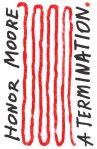 A Termination by Honor Moore: A fascinatingly discursive memoir that circles a 1969 abortion and contrasts societal mores across her lifetime. Moore was a 23-year-old drama student; the termination was “my first autonomous decision,” she insists, a way of saying, “I want this life, not that life.” Family and social factors put her life into perspective. The concise text is composed of crystalline fragments, incorporating occasional second- and third-person narration. The kaleidoscopic yet fluid approach is stunning.
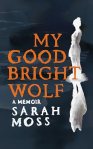 My Good Bright Wolf by Sarah Moss: Moss effectively contrasts the would-be happily ever after of generally getting better after eight years of disordered eating with her anorexia returning with a vengeance at age 46. The mood shifts so that what threatens to be slightly cloying in the childhood section turns academically curious and then, somehow, despite distancing pronouns (mostly second- but also some third-person narration), intimate. Shape-shifting, devastating, staunchly pragmatic; a unique model for converting life into art.
 Knife: Meditations after an Attempted Murder by Salman Rushdie: I’ve not had much success with Rushdie’s fiction, but this is excellent, with intriguing side tendrils and many quotable lines. It traces lead-up and aftermath; unexpected echoes, symbolism and ironies. Although Rushdie goes into some medical detail about his recovery, you get the sense of him more as an unchanging mind and a resolute will. The most noteworthy section imagines dialogues he might have with the imprisoned assailant, probing his beliefs and motivations.
Poetry
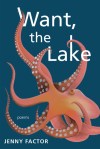 Want, the Lake by Jenny Factor: Factor’s long, intricate poetry collection showcases the tension between past and present and envisions womanhood as a tug of war between desire and constraint. “Elegy for a Younger Self” poems string together vivid reminiscences. In “Sapphics on Nursing” and elsewhere, romantic friendships edge toward homoeroticism; heterosexual marriage and motherhood represent either delightful intimacy or a snare. Allusion and experience, slant rhymes and wordplay craft a lavish tapestry.
 Inconsolable Objects by Nancy Miller Gomez: This debut collection recalls a Midwest girlhood of fairground rides and lake swimming, tornadoes and cicadas. But her Kansas isn’t all rose-tinted nostalgia; there’s an edge of sadness and danger. “Missing History” notes how women’s stories, such as her grandmother’s, are lost to time. In “Tilt-A-Whirl,” her older sister’s harmless flirtation with a ride operator becomes sinister. She also takes inspiration from headlines. The alliteration and slant rhymes are to die for.
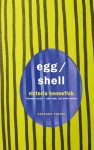 Egg/Shell by Victoria Kennefick: Motherhood and the body are overarching themes. The speaker has multiple miscarriages and names her lost children after plants. Becoming a mother is a metamorphosis all its own, while another long section is about her husband’s transition. Bird metaphors are inescapable. The structure varies throughout: columns, stanzas; a list, a recipe. Amid the sadness, there is dark humour and one-line rejoinders. If you’re wondering how life can be captured in achingly beautiful poetry, look no further.
If I had to choose just one of each? This trio trying out complementary strategies for transmuting life into literature: Small Rain, Alphabetical Diaries and Egg/Shell.


Have you read any of these? Or might you now, based on my recommendation?
20 Books of Summer, 14–16: Polly Atkin, Nan Shepherd and Susan Allen Toth
I’m still plugging away at the challenge. It’ll be down to the wire, but I should finish and review all 20 books by the 31st! Today I have a chronic illness memoir, a collection of poetry and prose pieces, and a reread of a cosy travel guide.
Some of Us Just Fall: On Nature and Not Getting Better by Polly Atkin (2023)
I was heartened to see this longlisted for the Wainwright Prize. It was a perfect opportunity to recognize the disabled/chronically ill experience of nature and the book achieves just what the award has recognised in recent years: the braiding together of life writing and place-based observation. (Wainwright has also done a great job on diversity this year: there are three books by BIPOC and five by women on the nature writing shortlist alone.)
 Polly Atkin knew something was different about her body from a young age. She broke bones all the time, her first at 18 months when her older brother ran into her on his bicycle. But it wasn’t until her thirties that she knew what was wrong – Ehlers-Danlos syndrome and haemochromatosis – and developed strategies to mitigate the daily pain and the drains on her energy and mobility. “Correct diagnosis makes lives bearable,” she writes. “It gives you access to the right treatment. It gives you agency.”
The book assembles long-ish fragments, snippets from different points of her past alternating with what she sees on rambles near her home in Grasmere. She writes in some depth about Lake District literature: Thomas De Quincey as well as the Wordsworths – Atkin’s previous book is a biography of Dorothy Wordsworth that spotlights her experience with illness. In describing the desperately polluted state of Windermere, Atkin draws parallels with her condition (“Now I recognise my body as a precarious ecosystem”). Although she spurns the notion of the “Nature Cure,” swimming is a valuable therapy for her.
Theme justifies form here: “This is the chronic life, lived as repetition and variance, as sedimentation of broken moments, not as a linear progression.” For me, there was a bit too much particularity; if you don’t connect to the points of reference, there’s no way in and the danger arises of it all feeling indulgent. Besides, by the time I opened this I’d already read two Ehlers-Danlos memoirs (All My Wild Mothers by Victoria Bennett and Floppy by Alyssa Graybeal) and another reference soon came my way in The Invisible Kingdom by Meghan O’Rourke. So overfamiliarity was a problem. And by the time I forced myself to pick this off of my set-aside shelf and finish it, I’d read Nina Lohman’s stellar The Body Alone. For those newer to reading about chronic illness, though, especially if you also have an interest in the Lakes, it could be an eye-opener.
With thanks to Sceptre (Hodder) for the free copy for review.
Selected Prose & Poetry by Nan Shepherd (2023)
 I’d read and enjoyed Shepherd’s The Living Mountain, which has surged in popularity as an early modern nature writing classic thanks to Robert Macfarlane et al. I’m not sure I’d go as far as the executor of the Nan Shepherd Estate, though, who describes her in the Preface as “Taylor Swift in hiking boots.” The pieces reprinted here are from her one published book of poems, In the Cairngorms, and the mixed-genre collection Wild Geese. There is also a 28-page “novella,” Descent from the Cross. After World War I, Elizabeth, a workers’ rights organiser for a paper mill, marries a shell-shocked veteran who wants to write a book but isn’t sure he has either the genius or the dedication. It’s interesting that Shepherd would write about a situation where the wife has the economic upper hand, but the tragedy of the sickly failed author put me in mind of George Gissing or D.H. Lawrence, so didn’t feel fresh. Going by length alone, I would have called this a short story, but I understand why it would be designated a novella, for the scope.
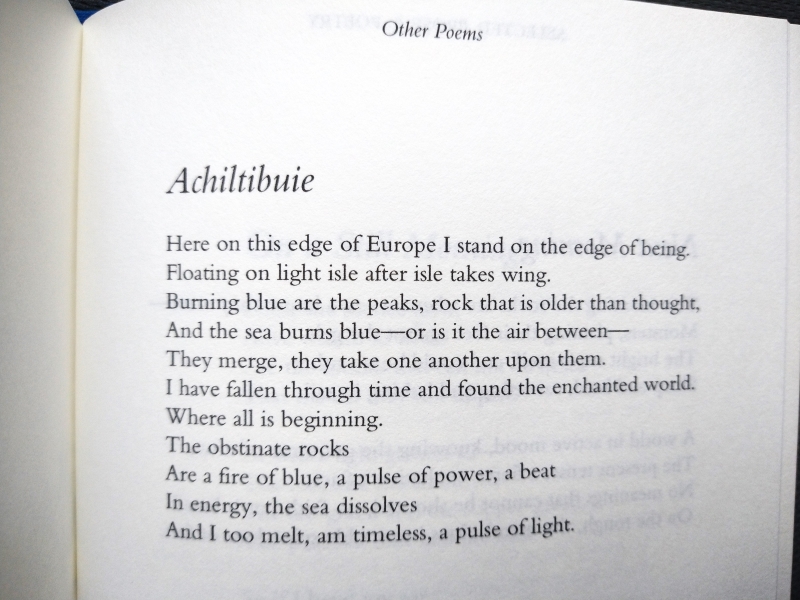
None of the miniature essays – field observations and character studies – stood out to me. About half of the book is given over to poetry. As with the nature writing, there is a feeling of mountain desolation. There are a lot of religious references and hints of the mystical, as in “The Bush,” which opens “In that pure ecstasy of light / The bush is burning bright. / Its substance is consumed away / And only form doth stay”. It’s a mixed bag: some feels very old-fashioned and sentimental, with every other line or, worse, every line rhyming, and some archaic wording and rather impenetrable Scots dialect. It could have been written 100 years before, by Robert Burns if not William Blake. But every so often there is a flash of brilliance. “Blackbird in Snow” is quite a nice one, and reminiscent of Thomas Hardy’s “The Darkling Thrush.” I even found the cryptic lines from “Real Presence” that inspired a song on David Gray’s Skellig. My favourite poem by far was:
Overall, this didn’t engage me; it’s only for Shepherd fanatics and completists. (Won from Galileo Publishers in a Twitter giveaway)
England As You Like It: An Independent Traveler’s Companion by Susan Allen Toth (1995)
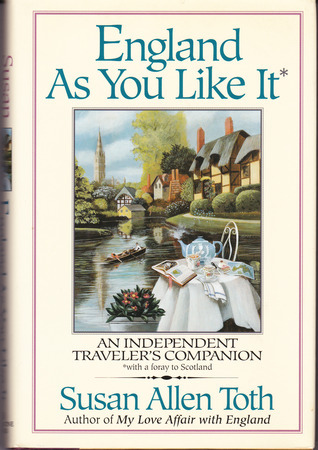 A reread. As I was getting ready to go overseas for the first time in the summer of 2003, Toth’s trilogy of memoirs whetted my appetite for travel in Britain. (They’re on my Landmark Books in My Life, Part II list.) This is the middle book and probably the least interesting in that it mostly recounts stays in particular favourite locations, such as Dorset, the Highlands, and various sites in Cornwall. However, I’ve never forgotten her “thumbprint theory,” which means staying a week or more in an area no larger than her thumb covers on a large-scale map, driving an hour or less for day trips. Not for her those cram-it-all-in trips where you race through multiple countries in a week (I have American friends who did Paris, London and Rome within six days, or five countries in eight days; blame it on stingy vacation policies, I guess). Instead, she wants to really bed into one place and have the time to make serendipitous discoveries such as an obscure museum or a rare opening of a private garden.
I most liked the early general chapters about how to make air travel bearable, her obsession with maps, her preference for self-catering, and her tendency to take home edible souvenirs. Of course, all the “Floating Facts” are hopelessly out-of-date. This being the early to mid-1990s, she had to order paper catalogues to browse cottage options (I still did this for honeymoon prep in 2006–7) and make international phone calls to book accommodation. She recommends renting somewhere from the National Trust or Landmark Trust. Ordnance Survey maps could be special ordered from the British Travel Bookshop in New York City. Entry fees averaged a few pounds. It’s all so quaint! An Anglo-American time capsule of sorts. I’ve always sensed a kindred spirit in Toth, and those whose taste runs toward the old-fashioned will probably also find her a charming tour guide. I’ve also reviewed the third book, England for All Seasons. (Free from The Book Thing of Baltimore)
July Releases, I: Books by Nina Lohman and Ricky Ray for Disability Pride Month
The Wellcome Book Prize (for health- and medicine-related books) and the Barbellion Prize (for representations of disability and/or chronic illness) are much missed, but I continue to be drawn to their highlighted themes in my reading. This is the first year that I’ve been aware of July as Disability Pride Month, though it’s been a thing since 1990 in the USA and 2015 in the UK. My first set of July releases – I have reviews of three novels coming up tomorrow – consists of a nonlinear memoir interrogating life with chronic pain and a chronically ill poet’s collection in which an old dog is an example of grace through suffering.
The Body Alone: A Lyrical Articulation of Chronic Pain by Nina Lohman
For well over a decade, Nina Lohman has endured Chronic Daily Headaches – when a doctor presented her with this phrase, she remarks, it was not so much a diagnosis as a description. Having a clinical term for her extreme pain did nothing to solve it; no treatment she has tried has helped much either, from pharmaceuticals to acupuncture. (Doctors think they’re breaking new ground if they suggest ice packs or elevating her neck.) Like Meghan O’Rourke’s The Invisible Kingdom, this documents a quest with no natural end. Lohman’s health fluctuates, and medical professionals and family and friends minimize her pain because she is able to pass as well, to carry out the daily tasks of raising two children.
The subtitle is apt for a work that is fragmentary and not driven by chronology. Had Cataloguing Pain not already been taken (by Allison Blevins), it might have been a perfect title. Some of Lohman’s short pieces read like poems, including erasure poems based on her medical notes. Repeated headings demonstrate a desire to organise her illness so as to make sense of it: “A Primer,” “Classifications” and “Perhaps” musings. She dwells on the names of things – shades of colours, groups of animals – while she longs for a vocabulary tailored to her own circumstances. Imagined monologues by doctors, friends and her husband (“He”) show pain has not turned her insular; she has empathy even when people act in hurtful ways.

One aspect of the book that I found particularly interesting is that Lohman, though not raised with Christian beliefs, studied theology at university level. Doctrines of the Fall bringing anguish and the Cross offering atonement are logical to her yet feel irrelevant to her situation. She bristles when a religious friend suggests that pain might be “her cross to bear.” Lohman admits she has given up hope on ever being free of pain, so finds resonance with poet Christian Wiman, who has been living with cancer for decades and whose work is equally infused with pain and faith.
It’s a journalistic as well as personal narrative, in the tradition of Anne Boyer, Sinéad Gleeson and Susan Sontag, shifting between modes and registers as Lohman gives a history of opiates, records of her pregnancies, and précis of philosophical understandings of suffering. “Theorizing can only take me so far,” she acknowledges, toward comprehending bodily experiences that defy language. And yet she employs words exquisitely, marshalling metaphors though they’re inadequate. The tone flows from enraged to resigned to cynical and back as she depicts the helplessness of women in a medical system that ignores their pain. Especially if you have enjoyed work by any of the authors I mention above, I highly recommend this debut: it’s sure to be one of my books of the year.
Published by the University of Iowa Press. With thanks to Nectar Literary for the free advanced e-copy for review.
The Soul We Share: Life with Earth and an Old Brown Dog by Ricky Ray
New England poet Ricky Ray describes himself as an “eco-mystic” and is the author of several previous works. Maura Dooley chose this as the Aryamati Collection Prize winner in 2023. As in Birds Knit My Ribs Together by Phil Barnett, nature is a source of comfort in a life complicated by chronic illness. In “Pain: 8 on a Scale out of 10,” Ray explains how “Some days, I never make it out of my head, / that coal-eyed melon … The impinged nerves crack their whips / within my animal pelt”. An accidental overdose and depression are matter-of-fact components of the poet’s history. While uxorious, he regrets that he may never become a father. And yet this couplet expresses deep pleasure in life:
(Dis)ability
Some days, my body is so beautiful
I can’t believe I get to live here.

His elderly rescue dog Addie is his beloved companion, and the delight she takes in physical existence despite advancing cancer is a model to him: “she still has a lot / to teach me about aging, about ignoring it, about how to throw my body— / even when it fails me, even when it hurts like hell—headlong into joy.” Multiple poems remember particular walks with her, such as in a Connecticut forest. He even gets a tutorial from her in how to dig a hole. Later on, he remarks as if to her, “Forgive me, I’m human, / we’re slow to learn, quick to forget— / it could be said we live too long / to appreciate each drop of time in the heart’s well.”
If his primary engagement with the nonhuman world is via a pet, Ray also widens the scope to include environmental plight: “you look up and extinction’s / already guzzling half the bestiary, / You think, / God, what have I done? / And the God in you answers: / harm, now what will you do?” This sense of responsibility meeting resolution echoes throughout the book. Ache is a spur to seek remedies; “I learned that hurt inducts all painfolk as conspirators // in the craft of healing.” The prose poems were a bit long and ranty for me (e.g., “Identity Earth: A Brief Biography of Our Planetary Self” goes on for more than six pages) and overall I found the book a little sentimental and New Age-adjacent. However, the poems about Addie are undeniably touching, and perfect for fans of Mary Oliver’s Dog Songs.
With thanks to Fly on the Wall Press for the free copy for review.
Have you read anything to tie into Disability Pride Month?
Miscellaneous #ReadIndies Reviews: Mostly Poetry + Brown, Sands
Catching up on a few final #ReadIndies contributions in early March! Short responses to some indie reading I did from my shelves over the course of last month.

Bloodaxe Books:
Parables & Faxes by Gwyneth Lewis (1995)
 I was surprised to discover this was actually my fourth book by Lewis, a bilingual Welsh author: two memoirs, one of depression and one about marriage; and now two poetry collections. The table of contents suggest there are only 16 poems in the book, but most of the titles are actually headings for sections of anywhere between 6 and 16 separate poems. She ranges widely at home and abroad, as in “Welsh Espionage” and the “Illinois Idylls.” “I shall taste the tang / of travel on the atlas of my tongue,” Lewis writes, an example of her alliteration and sibilance. She’s also big on slant and internal rhymes – less so on end rhymes, though there are some. Medieval history and theology loom large, with the Annunciation featuring more than once. I couldn’t tell you now what that many of the poems are about, but Lewis’s telling is always memorable.
Sample lines:
For the one
who said yes,
how many
said no?
…
But those who said no
for ever knew
they were damned
to the daily
as they’d disallowed
reality’s madness,
its astonishment.
(from “The ‘No’ Madonnas,” part of “Parables & Faxes”)
(Secondhand purchase – Westwood Books, Sedbergh) 
&
Fields Away by Sarah Wardle (2003)
 Wardle’s was a new name for me. I saw two of her collections at once and bought this one as it was signed and the themes sounded more interesting to me. It was her first book, written after inpatient treatment for schizophrenia. Many of the poems turn on the contrast between city (London Underground) and countryside (fields and hedgerows). Religion, philosophy, and Greek mythology are common points of reference. End rhymes can be overdone here, and I found a few of the poems unsubtle (“Hubris” re: colonizers and “How to Be Bad” about daily acts of selfishness vs. charity). However, there are enough lovely ones to compensate: “Flight,” “Word Tasting” (mimicking a wine tasting), “After Blake” (reworking “Jerusalem” with “And will chainsaws in modern times / roar among England’s forests green?”), “Translations” and “Word Hill.”
Favourite lines:
(oh, but the last word is cringe!)
Catkin days and hedgerow hours
fleet like shafts of chapel sun.
Childhood in a cobwebbed bower
guards a treasure chest of fun.
(from “Age of Awareness”)
(Secondhand purchase – Carlisle charity shop) 
Carcanet Press:
Tripping Over Clouds by Lucy Burnett (2019)
 The title is a setup for the often surrealist approach, but where another Carcanet poet, Caroline Bird, is warm and funny with her absurdism, Burnett is just … weird. Like, I’d get two stanzas into a poem and have no idea what was going on or what she was trying to say because of the incomplete phrases and non-standard punctuation. Still, this is a long enough collection that there are a good number of standouts about nature and relationships, and alliteration and paradoxes are used to good effect. I liked the wordplay in “The flight of the guillemet” and the off-beat love poem “Beer for two in Brockler Park, Berlin.” The noteworthy Part III is composed of 34 ekphrastic poems, each responding to a different work of (usually modern) art.
Favourite lines:
This is a place of uncalled-for space
and by the grace of the big sky,
and the serrated under-silhouette of Skye,
an invitation to the sea unfolds
to come and dine with mountain.
(from “Big Sands”)
(New (bargain) purchase – Waterstones website) 
&
The Met Office Advises Caution by Rebecca Watts (2016)
 The problem with buying a book mostly for the title is that often the contents don’t live up to it. (Some of my favourite ever titles – An Arsonist’s Guide to Writers’ Homes in New England, The Voluptuous Delights of Peanut Butter and Jam – were of books I couldn’t get through). There are a lot of nature poems here, which typically would be enough to get me on board, but few of them stood out to me. Trees, bats, a dead hare on the road; maps, Oxford scenes, Christmas approaching. All nice enough; maybe it’s just that the poems don’t seem to form a cohesive whole. Easy to say why I love or hate a poet’s style; harder to explain indifference.
Sample lines:
Branches lash out; old trees lie down and don’t get up.
A wheelie bin crosses the road without looking,
lands flat on its face on the other side, spilling its knowledge.
(from the title poem)
(New (bargain) purchase – Amazon with Christmas voucher)
Faber:
Places I’ve Taken My Body by Molly McCully Brown (2020)
 The title signals right away how these linked autobiographical essays split the ‘I’ from the body – Brown resents the fact that disability limits her experience. Oxygen deprivation at their premature birth led to her twin sister’s death and left her with cerebral palsy severe enough that she generally uses a wheelchair. In Bologna for a travel fellowship, she writes, “There are so many places that I want to be, but I can’t take my body anywhere. But I must take my body everywhere.” A medieval city is particularly unfriendly to those with mobility challenges, but chronic pain and others’ misconceptions (e.g. she overheard a guy on her college campus lamenting that she’d die a virgin) follow her everywhere.
A poet, Brown earned minor fame for her first collection, which was about historical policies of enforced sterilization for the disabled and mentally ill in her home state of Virginia. She is also a Catholic convert. I appreciated her exploration of poetry and faith as ways of knowing: “both … a matter of attending to the world: of slowing my pace, and focusing my gaze, and quieting my impatient, indignant, protesting heart long enough for the hard shell of the ordinary to break open and reveal the stranger, subtler singing underneath.” This is part of a terrific run of three pieces, the others about sex as a disabled person and the odious conservatism of the founders of Liberty University. Also notable: “Fragments, Never Sent,” letters to her twin; and “Frankenstein Abroad,” about rereading this novel of ostracism at its 200th anniversary. (Secondhand purchase – Amazon)
New River Books:
The Hedgehog Diaries: A Story of Faith, Hope and Bristle by Sarah Sands (2023)
 Reasons for reading: 1) I’d enjoyed Sands’s The Interior Silence and 2) Who can resist a book about hedgehogs? She covers a brief slice of 2021–22 when her aged father was dying in a care home. Having found an ill hedgehog in her garden and taken it to a local sanctuary, she developed an interest in the plight of hedgehogs. In surveys they’re the UK’s favourite mammal, but it’s been years since I saw one alive. Sands brings an amateur’s enthusiasm to her research into hedgehogs’ place in literature, philosophy and science. She visits rescue centres, meets activists in Oxfordshire and Shropshire who have made hedgehog welfare a local passion, and travels to Uist to see where hedgehogs were culled in 2004 to protect ground-nesting birds’ eggs. The idea is to link personal brushes with death with wider threats of extinction. Unfortunately, Sands’s lack of expertise is evident. This was well-meaning, but inconsequential and verging on twee. (Christmas gift from my wishlist)
Nature Book Catch-Up: Sally Huband, Richard Smyth & Anna Vaught
I’m catching up with a few nature- and travel-based 2023 releases that were sent to me for review. I’ve grouped them together because these British authors share some of the same interests and concerns. They celebrate beloved places that become ours through the time we spend in them and the attention we grant; they mourn the loss of biodiversity from rockpools and gardens and seabird cliffs. What kind of diminished world they’re raising their children into is a major worry for all three, and for Huband and Vaught the unease is exacerbated by chronic illness. Wild creatures, and the fellow authors who have hymned them, ease the hurt.
Sea Bean: A beachcomber’s search for a magical charm by Sally Huband
After more than a decade in her adopted home of Shetland, Sally Huband is still a newcomer. A tricky path to motherhood and ensuing chronic illness (the autoimmune disease palindromic rheumatism) limited her mobility and career. Beachcombing is at once her way of belonging to a specific place and feeling part of the wider world – what washes up on a Shetland beach might come from as far away as Atlantic Canada or the Caribbean. Sea glass, lobster pot tags, messages in bottles, driftwood … and a whole lot of plastic, of course. Early on, Huband sets her sights on a sea bean – also known as a drift-seed, from the tropics – which in centuries past was a talisman for ensuring safe childbirth. Possession of one was enough to condemn a 17th-century local woman to death for witchcraft, she learned.
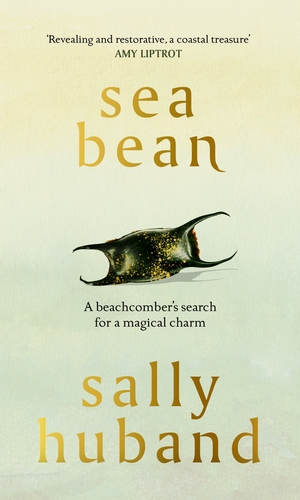 Stories of motherhood, the quest to find effective treatment in a patriarchal medical system, volunteer citizen science projects (monitoring numbers of dead seabirds, returning beached cetaceans to the water, dissecting fulmar stomachs to assess their plastic content), and studying Shetland’s history and customs mingle in a fascinating way. Huband travels around the archipelago and further afield, finding a vibrant beachcombing culture on the Dutch island of Texel. As in Moby-Duck by Donovan Hohn, one of my all-time favourite nonfiction books, there is delight at the randomness of what the ocean delivers.
I requested this book because Huband’s was my favourite essay in the Antlers of Water anthology. In it, she deplored the fact that women were still not allowed to participate in the Up Helly Aa fire festival in Lerwick. Good news: that is no longer the case, thanks to campaigning by Huband and others. In a late chapter, she also reports that blackface was recently banned from the festivals, and a Black Lives Matter demonstration drew 2000 people. Change does come, but slowly to a traditional island community. And sometimes it is not the right sort of change, as with an enormous wind farm, resisted vigorously by residents, that will primarily enrich a multinational company instead of serving the local people.
In many ways, this is a book about coming to terms with loss, and Huband presents the facts with sombre determination. Passages about the threats to birds and marine life had me near tears. But she writes with such poetic tenderness that the evocative specifics of island life point towards what’s true for all of us making the best of our constraints. I was lucky enough to visit several islands of Shetland in 2006; whether you have or not, this is a radiant memoir I would recommend to readers of Kathleen Jamie, Jean Sprackland and Malachy Tallack.
Some favourite lines:
No island can ever live up to the heightened expectations that we always seem to place on them; life catches up with us, sooner or later.
With each loss, emotional pain accretes for those who have paid attention.
If hope is a hierarchy of wishes then I am happy enough, each time that I beachcomb, to find fragments of the bark of paper birch
I’ve come to think of the ocean as an archive of sorts.
With thanks to Hutchinson Heinemann for the proof copy for review.
The Jay, the Beech and the Limpetshell: Finding Wild Things with My Kids by Richard Smyth
all around us
the stuff of spells. Our parents
let us go to scamper deeper,
leap from stumps lush with moss.
Everything aloof about me
fell into the soil once charged
with younger siblings
and freedoms of a wood.
…
I give you a damp valley floor,
this feather for your pocket.
~an extract from “Arger Fen,” from Latch by Rebecca Goss
I know Richard Smyth for his writing on birds (I’ve reviewed both A Sweet, Wild Note and An Indifference of Birds) and his somewhat controversial commentary on modern nature writing. This represents a change in direction for him toward more personal reflection, and with its focus on the phenomena of childhood and parenthood it recalls Wild Child by Patrick Barkham and The Nature Seed by Lucy Jones and Kenneth Greenway. But, as I knew to expect from previous works, he has such talent for reeling in the tangential and extrapolating from the concrete to the abstract that this lively read ends up being about everything: what it is to be human on this fading planet.
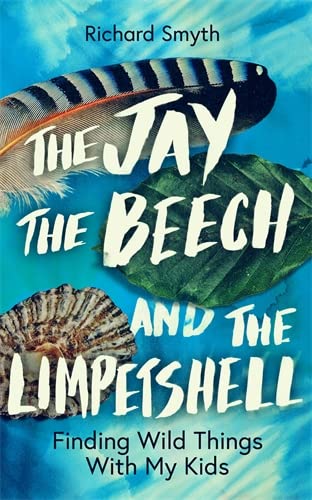 And this despite the fact that four of five chapter headings suggest pandemic-specific encounters with nature. Lockdown walks with his two children, and the totems they found in different habitats – also including a chaffinch nest and an owl pellet – are indeed jumping-off points, punctuating a wide-ranging account of life with nature. Smyth surveys the gateway experiences, whether books or television shows or a school tree-planting programme or collecting, that get young people interested; and talks about the people who beckon us into greater communion – sometimes authors and celebrities; other times friends and family. He also engages with questions of how to live in awareness of climate crisis. He acknowledges that he should be vegetarian, but isn’t; who does not harbour such everyday hypocrisies?
It’s still, unfortunately, rare for men to write about parenthood (and especially pregnancy loss – I only think of Native by Patrick Laurie and William Henry Searle’s books), so it’s great to see that represented, and it’s a charming idea that we create “downfamily” because the “upfamily” doesn’t last forever. Although there’s nostalgia for his childhood here, and anxiety about his kids’ chances of seeing wildlife in abundance, Smyth doesn’t get mired in the past or in existential dread. He has a humanist belief that people are essentially good and can do positive things like build offshore wind farms, and in the meantime he will take Genevieve and Daniel into the woods to play so they will develop a sense of wonder at all that lives on. Even for someone like me who doesn’t have children, this was a captivating, thought-provoking read: We’re all invested in the future of life on this planet.
With thanks to Icon Press for the free copy for review.
These Envoys of Beauty: A Memoir by Anna Vaught
Anna Vaught is a versatile author: I have a copy of her mental health-themed novel Saving Lucia, longlisted for the inaugural Barbellion Prize, on the shelf; she’s written a spooky set of stories, Famished (see Susan’s review); and I gave some early reader feedback on the opening pages of her forthcoming work of quirky historical fiction, The Zebra and Lord Jones. She’s also publishing a book on writing, and editing a collection of pieces submitted for the first Curae Prize for writers who are also carers. I was drawn to her first nonfiction release by reviews by fellow bloggers – it’s always good when a blog tour achieves its aim!
These dozen short essays are about how nature doesn’t necessarily heal, but is a most valued companion in a life marked by chronic illness and depression. The evocative title and epigraphs are from Ralph Waldo Emerson’s essay “Nature” (1836). The pieces loop through Vaught’s past and present, focussing on favourite places in Wiltshire, where she lives, and at the Pembrokeshire coast. It’s the second memoir about complex PTSD that I’ve read this year (see also What My Bones Know). Both at the time and now, when flashbacks of her parents’ verbal and physical abuse haunt her, lying down in a grassy field, exploring a sea cave or sucking on a gorse flower could be a salve. “Nature offered stability and satisfying detail; pattern, form and things that made sense.”
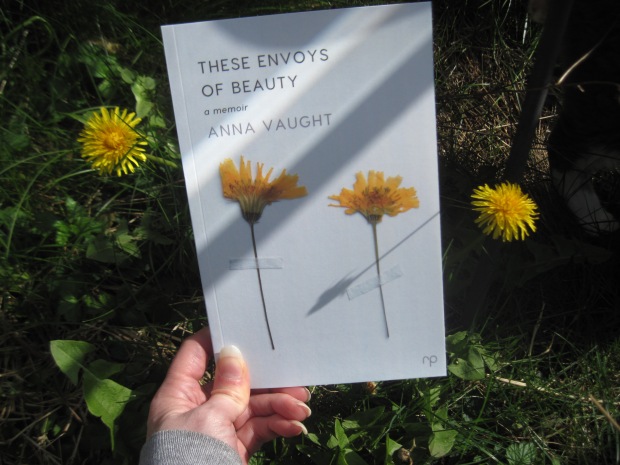
Vaught has a particular love for trees, flowers and moss – even just reciting their Latin names gives her a thrill, and she adds additional information about some species in footnotes. Although her childhood was painful, she retains gratitude for its wide-eyed wonder, and in the exuberance of her prose you can sense a willed childlike perspective (“But back to the list of clouds and writing about clouds!”). I found the frequent self-referential nature of the essays and direct reader address a little precious, but appreciated the thoughts about how nature holds us: “I have always felt a generosity around me, and that I was less lonely outside; at the very least, I could find something to comfort me”. She’s a bookish kindred spirit as well. I’ll be sure to try her work in other genres.
With thanks to Reflex Press for the free copy for review.
Barbellion Prize Shortlist: Book of Hours by Letty McHugh
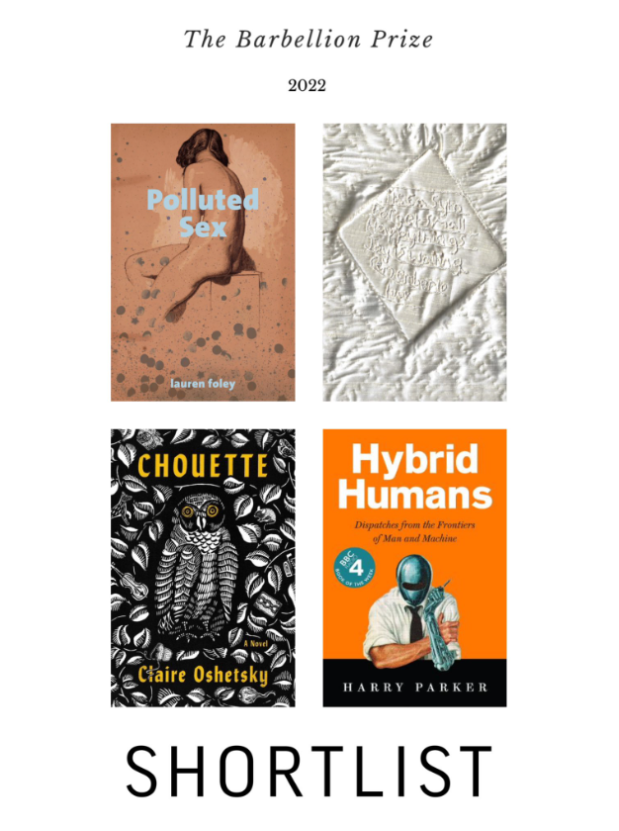
The Barbellion Prize shortlist, announced yesterday, consists of the short story collection Polluted Sex and the novel Chouette, both of which I’m still keen to read; and two nonfiction works, Hybrid Humans, which I reviewed last year, and Letty McHugh’s hybrid memoir, Book of Hours: An Almanac for the Seasons of the Soul.
I’m saving up tiny joys the way a bear fattens up for the coming winter
A patchwork quilt of ordinary leftover happiness
to keep me warm through the darkest part of the night.
In medieval times, a book of hours was a devotional book that set out the day’s prayers. Usually an illuminated manuscript, it was a precious object for laypeople, and a way of marking time. For Letty McHugh, a Yorkshire-based visual artist who lives with chronic pain and illness, this book of hours is many things: a journal, a scrapbook, an enquiry into the monastic impulse, and an interrogation of the potential meanings of physical suffering.
 In April 2020, McHugh experienced a relapse of MS so bad she had to move back in with her parents and was sleeping 20 hours a day. Her sphere had contracted to a single room. If only, she wished, there was “something to concentrate on that wasn’t my unravelling body or the unravelling world.” A Catholic upbringing and childhood holidays in Northumberland made her think about the early Christian hermits and saints like Aidan, Cuthbert and Julian of Norwich who salvaged something from solitude, who out of the privations of monasticism made monuments of faith and, sometimes, written documents, too.
This was the inspiration behind her own book of hours, which intersperses poems and photographs of found objects (wildflowers, animal skulls, sea glass and shells) with biographical sketches of saints, short autobiographical essays about her childhood and career, and musings on faith and pain. Metaphors of magic and outer space contrast with the claustrophobia of “the illness place,” somewhere she knows she’ll return to again and again. Although she knows she will never be perfectly holy or perfectly productive, she is encouraged to know that even those with confined lives (such as Emily Dickinson) can have a rich inner existence. While she resists the desire for a cure, or for a simple meaning to suffering, she bears witness to the fact that creativity can emerge in spite of everything.
I enjoyed spending time with this meticulously crafted and meditative work that engages with the present moment but also the eternal. It’s perfect onward reading for fans of the inaugural Barbellion Prize winner, Golem Girl by Riva Lehrer, and A Still Life by Josie George, a shortlistee from last year.
Book of Hours was self-published with assistance from Disability Arts Online. You can buy a signed copy of the handmade book from her Etsy shop, or read the text for free here.
With thanks to Letty McHugh for sending a free e-copy for review.
This year’s Barbellion Prize judges are Dr Emmeline Burdett, Lynn Buckle (last year’s winner) and scholar Ray Davis. The winner will be announced in February.
Barbellion Prize Shortlist: Golem Girl by Riva Lehrer
Three memoirs remain on the shortlist; three windows onto living with disability or caring for a relative with an incapacitating mental illness.
First up is a visual artist’s account of growing up with spina bifida, entering Disabled culture, and forming a collaborative style all her own.
Golem Girl: A Memoir by Riva Lehrer (2020)
“My first monster story was Frankenstein,” Lehrer writes. Like Dr. Frankenstein’s creation or the Golem of medieval Jewish legend, she felt like a physical monstrosity in search of an animating purpose. Born with spina bifida, she spent much of her first two years in Cincinnati Children’s Hospital and would endure dozens of surgeries in years to come to repair her spine and urinary tract and attempt to make her legs the same length. In 1958, when she was born, 90% of children with her condition died before age two. Lehrer’s mother, Carole, who grew up in a family pharmacy business and had worked as a medical researcher, was her daughter’s dogged health advocate. Carole fought for Riva even though she was caught up in her own chronic pain after a botched back surgery that left her addicted to painkillers.
Lehrer went to a special school for the disabled in Ohio. It was racially integrated (rare at that time) and offered children physical therapy and normal experiences like Girl Scouts and day camp. But it was clear the teachers didn’t expect these children to achieve anything or have a family life; home ec classes just taught how to wash up from a wheelchair and make meals for one. One horrible day, a substitute teacher locked a classroom door and hectored the children, saying their parents must have drunk and fornicated and they were the wages of sin.
Between the routine or emergency surgeries and family heartaches, Lehrer grew up to attend art school at the University of Cincinnati and Art Institute of Chicago. Professors (most of them male) found her work grotesque and self-indulgent, and she struggled with how to depict her body. There were boyfriends and girlfriends, even a wife (though in the late 1980s, before same-sex marriage was legally recognized). In 1996 she joined the Chicago Disabled Artists Collective and it was a revelation. She learned that Disabled (like Deaf) is a cultural identity as much as a physical reality, adopted vocabulary like crip (a reclaimed term, like queer) and ableism, and began painting fellow artists with dwarfism, prostheses, or wheelchairs.

Becoming a member of the Medical Humanities faculty as well as a visiting artist at two Chicago universities, the School of the Art Institute and Northwestern, gave Lehrer access to Gross Anatomy Labs, where she found in the historical collections – just as she had at the Mütter Museum of medical curiosities in Philadelphia – a fetus in a jar with her very condition. Knowing that she might be the first Disabled person her budding doctors met, she was determined to give them an “inclusive vision” of “the reality of human divergence.” She would have the medical students draw one of the jarred specimens, not as an oddity but as an individual, and give a 15-minute presentation about someone who lives with that disability.
Golem Girl is a touching family memoir delivered in short, essay-like chapters, most of them named after books or films. It is also a primer in Disability theory and – what truly lifts it above the pack – a miniature art gallery, with reproductions of paintings from various of Lehrer’s series as well as self-portraits, family portraits, and photographs. “I fiercely wanted to see a gallery filled with portraits of luminous crips,” she writes; “I suspected I was going to have to make them myself.” And that is just what she has done. The “Circle Stories” featured the Chicago Disabled Artists Collective and “Mirror Shards” included animal daimons, while “The Risk Pictures” of some of her personal heroes were daringly collaborative: she would give the subject an hour alone in her studio with their portrait in progress and allow them to amend it as they wished. Much of her work has bright colors and involves anatomical realism and symbols personal to herself and/or the subject – with Frida Kahlo an acknowledged influence.
I’ve now (just about) read the whole Barbellion Prize shortlist. For how it illuminates a life of being different – through queerness in addition to disability, engages with the academic fields of anatomy and Disability studies, and showcases the achievements of Disabled artists, this would be my clear winner of the inaugural award, with Sanatorium my backup choice. It is also a finalist for the National Book Critics Circle Award for Autobiography.
Readalikes I have also reviewed:
- Constellations by Sinéad Gleeson
- I Am, I Am, I Am by Maggie O’Farrell
Favorite lines:
“The hospital demands surrender. You accept the piercing, the cutting, the swallowing of noxious chemicals. You roll over and stand up even when it’s as impossible as flying around the ceiling. Whoever has authority can remove your clothes and display your stitched-up monster body to crowds of young white-coated men. You’re an assemblage of parts that lack gender and those elusive things called feelings.”
“‘Normal’ beauty is unmarked, smooth, shiny, upright; but my gaze began to slip past normal beauty as if it was coated in baby oil. I wanted crip beauty—variant, iconoclastic, unpredictable. Bodies that were lived in with intentionality and self-knowledge. Crip bodies were fresh.”
With thanks to Virago for the free copy for review.
See my introductory post for more about the Barbellion Prize, which is in its first year and will be awarded on Friday “to an author whose work has best represented the experience of chronic illness and/or disability.”
I will review the final two on the shortlist, The Fragments of My Father by Sam Mills and Kika & Me by Amit Patel, tomorrow.
Introducing the Barbellion Prize & A Review of Sanatorium by Abi Palmer
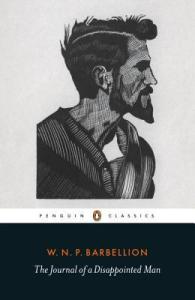
New this year, the Barbellion Prize will be awarded annually “to an author whose work has best represented the experience of chronic illness and/or disability.” It’s named after W.N.P. Barbellion (the pen name of Bruce Frederick Cummings), the English author of The Journal of a Disappointed Man, which he started writing at 13. A self-taught naturalist, he specialized in lice when he worked for the British Museum’s department of natural history in London. He was rejected for war service in 1915 after a doctor found him to have multiple sclerosis. At that time, the diagnosis was like a death sentence; indeed, Cummings died at age 30 in 1919, though by then he had managed to produce two volumes of memoirs as well as a daughter.
Here’s some more information on the prize criteria from the website: “Eligibility for the prize is predicated on the author’s presentation of life with a long-term chronic illness or disability, whether that be in the form of blindness, MS, cystic fibrosis, dwarfism, or another comparable condition that may substantially define one’s life. Authors – such as those in a carer’s capacity – who themselves are not ill may be considered for the prize if their work is truly exceptional as an articulation of life with illness, but authors who themselves deal personally with illness or disability will take priority in any selection for the prize.”


Especially in the absence of the Wellcome Book Prize, which has been on hiatus since the announcement of the 2019 winner, I’m delighted that there is a new prize with a health slant, particularly one that will lead to greater visibility for disabled writers and their stories. From a longlist of eight, in January the Barbellion Prize judges chose a shortlist of four titles: three memoirs and a work of autofiction. The publishers kindly agreed to send me the shortlist for review. Two have arrived so far (there have been postal delays in the UK, as in many places).

I have already read one of the nominees and will do my best to review the rest before the £1000 prize is awarded on the 12th. The others are:
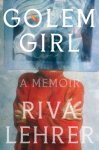
- Golem Girl by Riva Lehrer – An illustrated memoir by a visual artist born with spina bifida.
- The Fragments of My Father by Sam Mills – A memoir of being a carer for her father, who has paranoid schizophrenia; also includes musings on Leonard Woolf and F. Scott Fitzgerald, who cared for mentally ill wives. I’m currently reading this one.
 Kika & Me by Amit Patel – Patel was a trauma doctor and lost his sight within 36 hours due to a rare condition. He was paired with his guide dog, Kika, in 2015.
Sanatorium by Abi Palmer (2020)
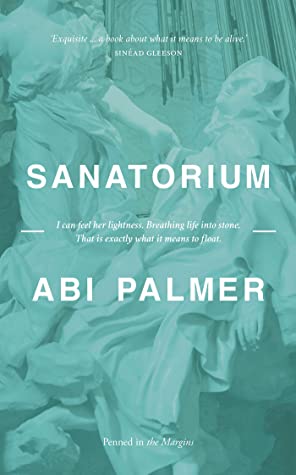 Water is a source of comfort and delight for Abi, the narrator of Sanatorium (whose experiences may or may not be those of the author; always tricky to tell with autofiction). Floating is like dreaming for her – an intermediate state between the solid world where she’s in pain and the prospect of vanishing into the air. In 2017 she spends a few weeks at a sanatorium in Budapest for water therapy; when she returns to London she buys a big inflatable plastic bathtub to keep up the exercises as she tries to wean herself off of opiates.
Abi feels fragile due to a whole host of body issues, some in her past but most continuing into the present: an autoimmune connective tissue disorder, psoriatic arthritis, Crohn’s disease, and sexual assaults. Her knee is most immediately problematic, leading her to use a mobility scooter. As her health waxes and wanes, other people – unable to appreciate any internal or incremental changes – judge her by whether or not she is able to walk well.
 The book is in snippets, often of just a paragraph or even one sentence, and cycles through its several strands: Abi’s time in Budapest and how she captures it in an audio diary; ongoing therapy at her London flat, custom-designed for disabled tenants (except “I was the only cripple who could afford it”); the haunted house she grew up in in Surrey; and notes on plus prayers to St. Teresa of Ávila, accompanied by diagrams of a female figure in yoga poses.
Locations are given in small letters in the top corner of the page, apart from for the more dreamlike segments that can’t be pinned down to any one place. For instance, I was reminded of a George Saunders story by the surreal interlude in which Abi imagines Van Gogh’s Starry Night reproduced in the hair on a detached pair of legs mounted on a wall as a work of art.
The different formats and short chunks of prose generally keep the voice from becoming monotonous, though I did wonder if occasional use of the third person (and some more second person) could have been effective, too. Far from a straightforward memoir, the book incorporates passages that are closer to fantasy and poetry, and the visual elements and fertile imagery attest to Palmer’s background as a mixed-media artist.
Sanatorium is a fascinating work – matter-of-fact, playful and sensual – that vividly conveys the reality of life with a chronic illness. It was already on my wish list, but I’m so glad that this shortlisting gave me a chance to read it. Though I haven’t read the other nominees yet, the passages below are proof that this would be a deserving Barbellion Prize winner.
You go through life as a chronically ill person with so many different people who have so many different opinions about how your treatment should be. They’re not always useful or right. You have to build your own narrative and your own sense of what feels appropriate. You have to learn to trust your body to tell you what’s working. But that’s hard too, when your body keeps changing the rules.
I am one of the more privileged ones and still I’m screaming. God, it would be so nice just to dissolve into nothing and wash up onto a lonely beach.
I wonder if what I’ve learned about chronic illness, more than anything, is that it’s a constant cycle. You fall apart, then you try your best to rebuild again. I wonder what would happen if I stopped trying.
Readalikes I have also reviewed:
- Heal Me by Julia Buckley
- Bodies of Water by V. H. Leslie
- My Year of Rest and Relaxation by Ottessa Moshfegh
With thanks to Penned in the Margins for the free copy for review.
 Bookish Beck = Rebecca Foster. American transplant to England. Freelance proofreader and book reviewer.
 Bookish Beck