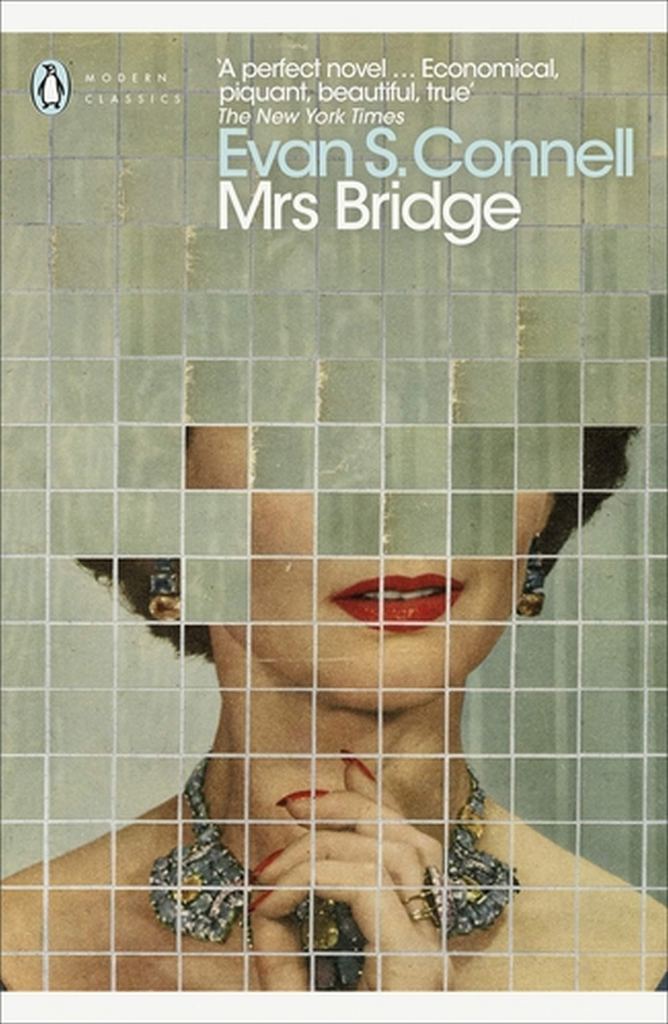
Literary Wives Club: Mrs. Bridge by Evan S. Connell (1959)
This is the best thing we’ve read in my time with the Literary Wives online book club (out of 16 books so far). In the early pages it reminded me of Richard Yates’s work, but by the end I was thinking of it as on par with Stoner by John Williams, a masterpiece I reread last year. Is Mrs. Bridge a female Stoner? In that she is an Everywoman, representative of a certain comfortable, conventional interwar life but also of common longings to be purposeful, experience novelty, and connect with others – I’d say yes. From the first line onwards, we see her as at odds with the facts of her life, which at least appear to her to be unalterable: “Her first name was India – she was never able to get used to it.” She’s never lived up to her exotic name, she feels; her parents must have expected something of her that she couldn’t be.
Connell (1924–2013) sets this portrait of a marriage in his native Kansas City, Missouri. The story is not contemporaneous to its publication but begins in the 1930s; this doesn’t become clear until two-thirds of the way through when, on a European tour that workaholic lawyer Walter Bridge arranged as a belated birthday gift to his wife, news comes that the Nazis have invaded Poland and they have to hurry home. Bear in mind that this is the man who refused to move when a tornado threatened their country club and every single other person had moved to the basement. He insisted on staying at the table and finishing his steak. (So … he expects the weather to bow to his will, if not world leaders?) It’s an astonishing scene, and occasions an astute summation of their relationship dynamic:
It did not occur to Mrs Bridge to leave her husband and run to the basement. She had been brought up to believe without question that when a woman married she was married for the rest of her life and was meant to remain with her husband wherever he was, and under all circumstances, unless he directed her otherwise. She wished he would not be so obstinate; she wished he would behave like everyone else, but she was not particularly frightened. For nearly a quarter of a century she had done as he told her, and what he had said would happen had indeed come to pass, and what he had said would not occur had not occurred. Why, then, should she not believe him now?
(That attitude of blind faith seems more appropriate in a father–daughter or God–mortal relationship than husband–wife, does it not?)
The structure of the book must have been groundbreaking for its time: it’s in 117 short, titled vignettes – a fragmentary style later popularized by writers such as Elizabeth Hardwick, Sarah Manguso and Jenny Offill – that build a picture of the protagonist and her milieu. Even though many of them seem to concern minor incidents from the Bridges’ social life (parties, gossip, the bores they’re forced to have lunch with every time they’re in town), they also reveal a lot about India’s outlook. She wears stockings even on the hottest summer days because “it was the way things were, it was the way things had always been, and so she complied.” Like many of her time and place, she is a casual racist, evidenced by comments on her children’s Black and “gypsy” friends. It pains her that she doesn’t understand her three children. To her it seems they do strange, shocking things (okay, Douglas building a tower of junk is pretty weird) when really they’re just experimenting with fashion and sexuality as any teenager would.
India is in awe of the women of her acquaintance who step out of line, like Grace Barron and Mabel Ong. Grace, in particular, is well informed and confident arguing with men. India seriously considers breaking away from Walter and voting liberal at the next election, but loses her nerve at the last minute; her viewpoint is fundamentally conservative. The novel justifies this by showing how those who flout social rules are shamed or punished in some way.
Mostly, India feels pointless. With a housekeeper around, there’s nothing for her to do. She has nothing but leisure time she doesn’t know how to fill. And yet the years fly past, propelling her into middle age. Occasionally, she’ll summon the motivation to sign up for painting classes or start learning Spanish via records, but she never follows through. So it’s just unnecessary shopping trips in a massive Lincoln she never figures out how to park properly.
She spent a great deal of time staring into space, oppressed by the sense that she was waiting. But waiting for what? She did not know. Surely someone would call, someone must be needing her. Yet each day proceeded like the one before. … Time did not move. The home, the city, the nation, and life itself were eternal; still she had a foreboding that one day, without warning and without pity, all the dear, important things would be destroyed.
It may be fashionable to scorn the existential despair of the privileged, but this is a potent picture of a universal condition. It’s all too easy to get stuck in the status quo and feel helpless to change life for the better. I came across a Slightly Foxed article (Spring 2016) by William Palmer, “The Sadness of Mrs Bridge.” Palmer suggests that Connell was an oddity to his publishers because he wrote in so many genres, and never the same kind of book twice. He dubs this Connell’s finest work. I marked out a couple of passages from his appreciation:
The genius of Connell is to show that this is how most people live: first in their own minds, then in their families, then in their limited social circles; most historical novels fail to realize that most people simply do not notice whatever great moments of history are being enacted around them unless they actually impinge upon their lives.
What is truly compelling about Mrs Bridge is her very ordinariness, notwithstanding all her petty snobbery, conformism and timidity. The list is easy to make and appears to be a fairly damning indictment, but Connell is not writing a satirical portrait. His intention is to show us the utter uniqueness of this one human life, irreplaceability of body and soul that is India Bridge. Connell portrays her so tenderly that we come to sympathize with her and, more, to care for her.
{SOME SPOILERS IN THE REMAINDER}
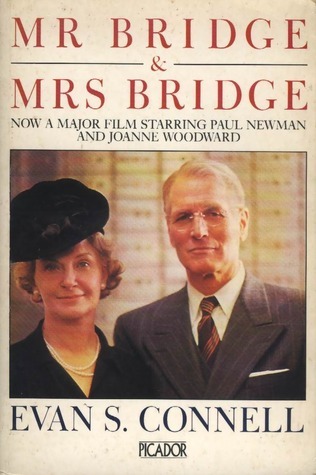
The way Mrs. Bridge ends indicates that Mr. Bridge, which was published 10 years later, will be not a sequel but a companion piece. I’m somewhat wary of reading it, but it will be intriguing to see how events overlap and to what extent Connell is able to make Walter a more sympathetic character. (Palmer remarks, “It is terrifying how little the two portraits have in common – they might be describing two entirely different worlds.”) Connell’s work remains influential: Claire Fuller has featured the pair of novels in one of her year-end reading roundups, and the husband’s surname in Manguso’s Liars is Bridges.
I’ve written much more than I intended to about Mrs. Bridge, but wanted to do justice to what will no doubt be one of my stand-out reads of the year.
(My omnibus edition came from the free bookshop we used to have in the local mall.) 
The main question we ask about the books we read for Literary Wives is:
What does this book say about wives or about the experience of being a wife?
Based on Mrs. Bridge’s experience, one would be excused for thinking that being a wife involves the complete suppression of one’s own personality, ambitions and desires – including sexual, as dealt with very succinctly in the first chapter: Walter usually initiates; the one time she tries to do so, he gives her a patronizing hug and falls asleep. “This was the night Mrs Bridge concluded that while marriage might be an equitable affair, love itself was not.” A wry statement from Connell as marriage is certainly not equitable in this novel.
Granted, this was the 1910s–1930s. By the 1940s, when her daughters are young women, they’re determined to live differently, the one by becoming a New York City career girl, single and promiscuous. The other also vows to do things differently – “Listen, Mother, no man is ever going to push me around the way Daddy pushes you around” – yet ends up pregnant and battered. When India tries to encourage her to placate her husband through sex, she replies, “Oh no, don’t tell me that! I don’t want any part of that myth.”
So we see attitudes starting to change, but it would be another couple of decades before there were more options for both of these generations of women.
A common observation in many of the novels we’ve considered is that, even in a marriage, it is possible for the partners to be a complete mystery to each other. I’ll be interested to see whether Walter’s side of the story illuminates anything or portrays him as clueless. And a main moral I draw from most of our reads is that defining oneself by any relationship – mostly marriage, but also parenthood – sets one up for disappointment, or worse.
See the reviews by Becky, Kate, Kay and Naomi, too!
We recently welcomed a new member, Marianne, and will soon be choosing our books for the next two-plus years. Here’s the club page on Kay’s blog with the current members’ profiles plus all the books covered since 2013.
Our next selection will be Interpreter of Maladies by Jhumpa Lahiri in June. I’ve not read Lahiri before but have always meant to, so I’m particularly looking forward to this one.
Most Anticipated Books of 2026
Later than intended, but here we are. I’ve narrowed it down to the 25 books I’m most looking forward to in January–September, though no doubt I’ll have heard of many more unmissable titles before that time is up. My list is dominated by fiction, which I tend to find out about earlier. Also on my radar are novels by Sharon Bala, Freya Bromley, Mary Costello, Louise Kennedy, Ben Lerner, Paula McLain, Liz Nugent and Tom Perrotta; short stories by Jess Gibson (Margaret Atwood’s daughter); and nonfiction from Margaret Drabble, Cal Flyn, Siri Hustvedt and Anne Lamott.
In release date order, with UK publication info given first if available. The blurbs are adapted from Goodreads. I’ve taken the liberty of using whichever cover I prefer.
Fiction
 Departure(s) by Julian Barnes [20 Jan., Vintage (Penguin) / Knopf]: (Currently reading) I get more out of rereading Barnes’s classics than reading his latest stuff, but I’ll still attempt anything he publishes. He’s 80 and calls this his last book. So far, it’s heavily about memory. “Julian played matchmaker to Stephen and Jean, friends he met at university in the 1960s; as the third wheel, he was deeply invested in the success of their love”. Sounds way too similar to 1991’s Talking It Over, and the early pages have been tedious. (Review copy from publisher)
 Half His Age by Jennette McCurdy [20 Jan., Fourth Estate / Ballantine]: McCurdy’s memoir, I’m Glad My Mom Died, was stranger than fiction. I was so impressed by her recreation of her childhood perspective on her dysfunctional Mormon/hoarding/child-actor/cancer survivor family that I have no doubt she’ll do justice to this reverse-Lolita scenario about a 17-year-old who’s in love with her schlubby creative writing teacher. (Library copy on order)
 Our Better Natures by Sophie Ward [5 Feb., Corsair]: I loved Ward’s Booker-longlisted Love and Other Thought Experiments (though the follow-up, The Schoolhouse, was a letdown). “Amid the chaos and political upheaval of 1970s America, three very different women must accept the world as it is, or act to change it. Phyllis Patterson is a housewife in White Plains, Illinois. … Andrea Dworkin is an activist in Amsterdam. … Muriel Rukeyser is a poet in New York.” (Library copy on order)
 Brawler: Stories by Lauren Groff [Riverhead, Feb. 24]: (Currently reading) Controversial opinion: Short stories are where Groff really shines. Three-quarters in, this collection is just as impressive as Delicate Edible Birds or Florida. “Ranging from the 1950s to the present day and moving across age, class, and region (New England to Florida to California) these nine stories reflect and expand upon a shared the ceaseless battle between humans’ dark and light angels.” (For Shelf Awareness review) (Edelweiss download)
 Kin by Tayari Jones [24 Feb., Oneworld / Knopf]: I’m a big fan of Leaving Atlanta and An American Marriage. This sounds like Brit Bennett meets Toni Morrison. “Vernice and Annie, two motherless daughters raised in Honeysuckle, Louisiana, have been best friends and neighbors since earliest childhood, but are fated to live starkly different lives. … A novel about mothers and daughters, about friendship and sisterhood, and the complexities of being a woman in the American South”. (Edelweiss download)
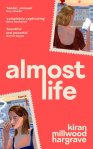 Almost Life by Kiran Millwood Hargrave [12 March, Picador / March 24, S&S/Summit Books]: There have often been queer undertones in Hargrave’s work, but this David Nicholls-esque plot sounds like her most overt. “Erica and Laure meet on the steps of the Sacré-Cœur in Paris, 1978. … The moment the two women meet the spark is undeniable. But their encounter turns into far more than a summer of love. It is the beginning of a relationship that will define their lives and every decision they have yet to make.” (Edelweiss download)
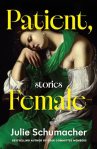 Patient, Female: Stories by Julie Schumacher [May 5, Milkweed Editions]: I found out about this via a webinar with Milkweed and a couple of other U.S. indie publishers. I loved Schumacher’s Dear Committee Members. “[T]his irreverent collection … balances sorrow against laughter. … Each protagonist—ranging from girlhood to senescence—receives her own indelible voice as she navigates social blunders, generational misunderstandings, and the absurdity of the human experience.” The publicist likened the tone to Meg Wolitzer.
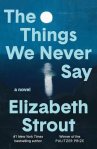 The Things We Never Say by Elizabeth Strout [7 May, Viking (Penguin) / May 5, Random House]: Hurrah for moving on from Lucy Barton at last! “Artie Dam is living a double life. He spends his days teaching history to eleventh graders … and, on weekends, takes his sailboat out on the beautiful Massachusetts Bay. … [O]ne day, Artie learns that life has been keeping a secret from him, one that threatens to upend his entire world. … [This] takes one man’s fears and loneliness and makes them universal.”
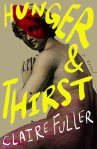 Hunger and Thirst by Claire Fuller [7 May, Penguin / June 2, Tin House]: I’ve read everything of Fuller’s and hope this will reverse the worsening trend of her novels, though true crime is overdone. “1987: After a childhood trauma and years in and out of the care system, sixteen-year-old Ursula … is invited to join a squat at The Underwood. … Thirty-six years later, Ursula is a renowned, reclusive sculptor living under a pseudonym in London when her identity is exposed by true-crime documentary-maker.” (Edelweiss download)
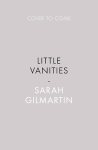 Little Vanities by Sarah Gilmartin [21 May, ONE (Pushkin)]: Gilmartin’s Service was great. “Dylan, Stevie and Ben have been inseparable since their days at Trinity, when everything seemed possible. … Two decades on, … Dylan, once a rugby star, is stranded on the sofa, cared for by his wife Rachel. Across town, Stevie and Ben’s relationship has settled into weary routine. Then, after countless auditions, Ben lands a role in Pinter’s Betrayal. As rehearsals unfold, the play’s shifting allegiances seep into reality, reviving old jealousies and awakening sudden longings.”
 Said the Dead by Doireann Ní Ghríofa [21 May, Faber / Sept. 22, Farrar, Straus and Giroux]: A Ghost in the Throat was brilliant and this sounds right up my street. “In the city of Cork, a derelict Victorian mental hospital is being converted into modern apartments. One passerby has always flinched as she passes the place. Had her birth occurred in another decade, she too might have lived within those walls. Now, … she finds herself drawn into an irresistible river of forgotten voices”.
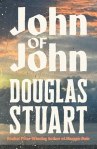 John of John by Douglas Stuart [21 May, Picador / May 5, Grove Press]: I DNFed Shuggie Bain and haven’t tried Stuart since, but the Outer Hebrides setting piqued my attention. “[W]ith little to show for his art school education, John-Calum Macleod takes the ferry back home to the island of Harris [and] begrudgingly resumes his old life, stuck between the two poles of his childhood: his father John, a sheep farmer, tweed weaver, and pillar of their local Presbyterian church, and his maternal grandmother Ella, a profanity-loving Glaswegian”. (For early Shelf Awareness review) (Edelweiss download)
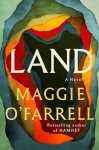 Land by Maggie O’Farrell [2 June, Tinder Press / Knopf]: I haven’t fully loved O’Farrell’s shift into historical fiction, but I’m still willing to give this a go. “On a windswept peninsula stretching out into the Atlantic, Tomás and his reluctant son, Liam [age 10], are working for the great Ordnance Survey project to map the whole of Ireland. The year is 1865, and in a country not long since ravaged and emptied by the Great Hunger, the task is not an easy one.” (Edelweiss download)
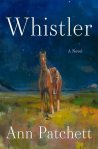 Whistler by Ann Patchett [2 June, Bloomsbury / Harper]: Patchett is hella reliable. “When Daphne Fuller and her husband Jonathan visit the Metropolitan Museum of Art, they notice an older, white-haired gentleman following them. The man turns out to be Eddie Triplett, her former stepfather, who had been married to her mother for a little more than year when Daphne was nine. … Meeting again, time falls away; … [in a story of] adults looking back over the choices they made, and the choices that were made for them.” (Edelweiss download)
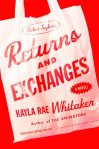 Returns and Exchanges by Kayla Rae Whitaker [2 June, Scribe / May 19, Random House]: Whitaker’s The Animators is one of my favourite novels that hardly anyone else has ever heard of. “A sweeping novel of one [discount department store-owning] Kentucky family’s rise and fall throughout the 1980s—a tragicomic tour de force about love and marriage, parents and [their four] children, and the perils of mixing family with business”. (Edelweiss download)
 The Great Wherever by Shannon Sanders [9 July, Viking (Penguin) / July 7, Henry Holt]: Sanders’s linked story collection Company left me keen to follow her career. Aubrey Lamb, 32, is “grieving the recent loss of her father and the end of a relationship.” She leaves Washington, DC for her Black family’s ancestral Tennessee farm. “But the land proves to be a burdensome inheritance … [and] the ghosts of her ancestors interject with their own exasperated, gossipy commentary on the flaws and foibles of relatives living and dead”. (Edelweiss download)
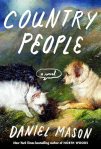 Country People by Daniel Mason [14 July, John Murray / July 7, Random House]: It doesn’t seem long enough since North Woods for there to be another Mason novel, but never mind. “Miles Krzelewski is … twelve years late with his PhD on Russian folktales … [W]hen his wife Kate accepts a visiting professorship at a prestigious college in the far away forests of Vermont, he decides that this will be his year to finally move forward with his life. … [A] luminous exploration of marriage and parenthood, the nature of belief and the power of stories, and the ways in which we find connection in an increasingly fragmented world.”
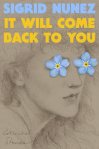 It Will Come Back to You: Collected Stories by Sigrid Nunez [14 July, Virago / Riverhead]: Nunez is one of my favourite authors but I never knew she’d written short stories. The blurb reveals very little about them! “Carefully selected from three decades of work … Moving from the momentous to the mundane, Nunez maintains her irrepressible humor, bite, and insight, her expert balance between intimacy and universality, gravity and levity, all while entertainingly probing the philosophical questions we have come to expect, such as: How can we withstand the passage of time? Is memory the greatest fiction?” (Edelweiss download)
 Exit Party by Emily St. John Mandel [17 Sept., Picador / Sept. 15, Knopf]: The synopsis sounds a bit meh, but in my eyes Mandel can do no wrong. “2031. America is at war with itself, but for the first time in weeks there is some good news: the Republic of California has been declared, the curfew in Los Angeles is lifted, and everyone in the city is going to a party. Ari, newly released from prison, arrives with her friend Gloria … Years later, living a different life in Paris, Ari remains haunted by that night.”
The Housekeeper by Rose Tremain [17 Sept., Vintage (Penguin); no cover image yet]: “Set in 1930s England and fictionalises the inspiration behind Daphne du Maurier’s famous novel, Rebecca.” Strangely, this started life as a short story (in The American Lover), then become a screenplay authored by Tremain (the film is in production and stars Uma Thurman and Anthony Hopkins), and is now being expanded into a novel. Tremain is 82 and a survivor of major cancer; I do wonder if this is the last book we can expect from her.
Nonfiction
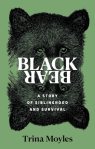 Black Bear: A Story of Siblinghood and Survival by Trina Moyles [Jan. 6, Pegasus Books]: Out now! “When Trina Moyles was five years old, her father … brought home an orphaned black bear cub for a night before sending it to the Calgary Zoo. … After years of working for human rights organizations, Trina returned to northern Alberta for a job as a fire tower lookout, while [her brother] Brendan worked in the oil sands … Over four summers, Trina begins to move beyond fear and observe the extraordinary essence of the maligned black bear”. (For BookBrowse review) (Review e-copy)
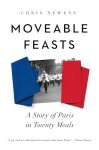 Moveable Feasts: A Story of Paris in Twenty Meals by Chris Newens [Feb. 3, Pegasus Books; came out in the UK in July 2025 but somehow I missed it!]: I’m a sucker for foodie books and Paris books. A “long-time resident of the historic slaughterhouse quartier Villette takes us on a delightful gastronomic journey around Paris … From Congolese catfish in the 18th to Middle Eastern falafels in the 4th, to the charcuterie served at the libertine nightclubs of Pigalle in the 9th, Newens lifts the lid on the city’s ever-changing, defining, and irresistible food culture.” (Edelweiss download)
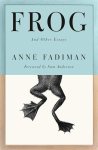 Frog: And Other Essays by Anne Fadiman [Feb. 10, Farrar, Straus and Giroux]: Fadiman publishes rarely, and it can be difficult to get hold of her books, but they are always worth it. “Ranging in subject matter from her deceased frog, to archaic printer technology, to the fraught relationship between Samuel Taylor Coleridge and his son Hartley, these essays unlock a whole world—one overflowing with mundanity and oddity—through sly observation and brilliant wit.”
 The Beginning Comes after the End: Notes on a World of Change by Rebecca Solnit [March 3, Haymarket Books]: A sequel to Hope in the Dark. Hope is a critically endangered species these days, but Solnit has her eyes open. “While the white nationalist and authoritarian backlash drives individualism and isolation, this new world embraces antiracism, feminism, a more expansive understanding of gender, environmental thinking, scientific breakthroughs, and Indigenous and non-Western ideas, pointing toward a more interconnected, relational world.” (Edelweiss download)
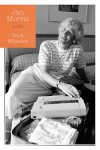 Jan Morris: A Life by Sara Wheeler [7 April, Faber / April 14, Harper]: I didn’t get on with the mammoth biography Paul Clements published in 2022 – it was dry and conventional; entirely unfitting for Morris – but hope for better things from a fellow female travel writer. “Wheeler uncovers the complexity of this twentieth-century icon … Drawing on unprecedented access to Morris’s papers as well as interviews with family, friends and colleagues, Wheeler assembles a captivating … story of longing, traveling and never reaching home.” (Edelweiss download)
Others’ lists whence a few of my ideas came!
What catches your eye here? What other 2026 titles do I need to know about?
Six Degrees of Separation: Romantic Comedy to Wild Fell
This is a fun meme I take part in every few months.
For August we begin with Romantic Comedy by Curtis Sittenfeld, one of my top 2023 releases so far. (See Kate’s opening post.)
 #1 Sittenfeld’s protagonist, Sally Milz, writes TV comedy, as does Kristin Newman (That ’70s Show, How I Met Your Mother, etc.), author of What I Was Doing While You Were Breeding, a lighthearted record of her travels and romantic conquests. (She even has a passage that reminds me of Sally’s Danny Horst Rule: “I looked like a thirty-year-old writer. Not like a twenty-year-old model or actress or epically legged songstress, which is a category into which an alarmingly high percentage of Angelenas fall. And, because the city is so lousy with these leggy aliens, regular- to below-average-looking guys with reasonable employment levels can actually get one, another maddening aspect of being a woman in this city.”)
 #2 I didn’t realize when I picked it up in a charity shop that my copy smelled strongly of cigarette smoke. I aired it in kitty litter, then by scented candles, and it still reeks. I reckon I can tolerate the smell long enough to finish it and put it in the Little Free Library, which gets good ventilation. A novel I acquired from the free bookshop we used to have in the mall in town was the only book I can remember having to get rid of before reading because it just smelled too bad (also of cigarettes in that case): My Sister’s Keeper by Jodi Picoult.
 #3 So I didn’t read that, but I have read another Picoult novel, Sing You Home. The author is known for picking a central issue to address in each work, and in that one it was sexuality. Zoe, a music therapist, is married to Max but leaves him for Vanessa – and then decides to sue him for the use of the embryos they created together via IVF. It was the first book I’d read with that dynamic (a previously straight woman enters into a lesbian partnership), but by no means the last. Later came Untamed by Glennon Doyle, Hidden Nature by Alys Fowler, The Fixed Stars by Molly Wizenberg … and one you maybe weren’t expecting: the fantastic memoir First Time Ever by Peggy Seeger. The authors vary in how they account for it. They were gay all along but didn’t realize it? Their orientation changed? Or they just happened to fall in love with someone of the same gender? Seeger doesn’t explain at all, simply records how head-over-heels she was for Ewan MacColl … and then for Irene Pyper Scott.
 #4 Peggy Seeger is one of my heroes these days. I first got into her music through the lockdown livestreams put together by Folk on Foot and have since seen her live and acquired several of her albums, including a Smithsonian Folkways collection of her best-loved folk standards. One of these is, of course, “I’m Gonna Be an Engineer,” which was one of the inspirations for Claire Fuller’s Unsettled Ground.
 #5 Unsettled Ground, an unusual story of rural poverty and illiteracy, is set in a fictional village modelled on Inkpen, where Nicola Chester lives. Her memoir On Gallows Down, which held particular local interest for me, was shortlisted for the Wainwright Prize last year.
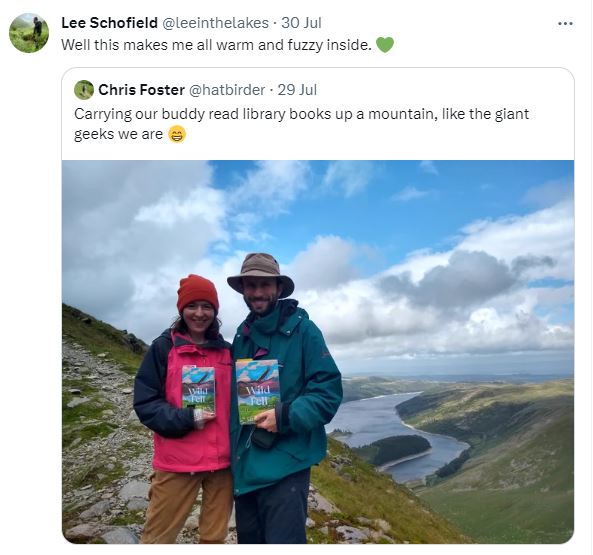
 #6 Also shortlisted that year was Wild Fell by Lee Schofield, about his work at RSPB Haweswater. Like Chester, he’s been mired in the struggle to balance sustainable farming with conservation at a beloved place. And like a fellow Lakeland farmer (and previous Wainwright Prize winner for English Pastoral), James Rebanks, he’s trying to be respectful of tradition while also restoring valuable habitats. My husband and I each took a library copy of Wild Fell along to Cumbria last week (about which more anon) and packed it in a backpack for an on-location photo during our wild walk at the very atmospheric Haweswater.
Where will your chain take you? Join us for #6Degrees of Separation! (Hosted on the first Saturday of each month by Kate W. of Books Are My Favourite and Best.) Next month’s starting book is Wifedom by Anna Funder.
Have you read any of my selections? Tempted by any you didn’t know before?
Book Serendipity, Mid-April through Early June
I call it “Book Serendipity” when two or more books that I read at the same time or in quick succession have something in common – the more bizarre, the better. This is a regular feature of mine every few months. Because I usually have 20–30 books on the go at once, I suppose I’m more prone to such incidents. The following are in roughly chronological order.
- Fishing with dynamite takes place in Glowing Still by Sara Wheeler and In Memoriam by Alice Winn.
- Egg collecting (illegal!) is observed and/or discussed in Sea Bean by Sally Huband and The Jay, the Beech and the Limpetshell by Richard Smyth.

- Deborah Levy’s Things I Don’t Want to Know is quoted in What I’d Rather Not Think About by Jente Posthuma and Glowing Still by Sara Wheeler. I then bought a secondhand copy of the Levy on my recent trip to the States.
- “Piss-en-lit” and other folk names for dandelions are mentioned in The House of the Interpreter by Lisa Kelly and The Furrows by Namwali Serpell.
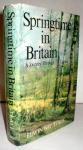
- Buttercups and nettles are mentioned in The House of the Interpreter by Lisa Kelly and Springtime in Britain by Edwin Way Teale (and other members of the Ranunculus family, which includes buttercups, in These Envoys of Beauty by Anna Vaught).


- The speaker’s heart is metaphorically described as green in a poem in Lo by Melissa Crowe and The House of the Interpreter by Lisa Kelly.
- Discussion of how an algorithm can know everything about you in Tomb Sweeping by Alexandra Chang and I’m a Fan by Sheena Patel.
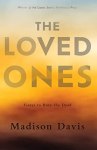
- A brother drowns in The Loved Ones: Essays to Bury the Dead by Madison Davis, What I’d Rather Not Think About by Jente Posthuma, and The Furrows by Namwali Serpell.


A few cases of a book recalling a specific detail from an earlier read:
- This metaphor in The Chosen by Elizabeth Lowry links it to The Marriage Portrait by Maggie O’Farrell, another work of historical fiction I’d read not long before: “He has further misgivings about the scalloped gilt bedside table, which wouldn’t look of place in the palazzo of an Italian poisoner.”
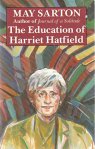
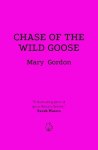
- This reference in The Education of Harriet Hatfield by May Sarton links it back to Chase of the Wild Goose by Mary Louisa Gordon (could it be the specific book she had in mind? I suspect it was out of print in 1989, so it’s more likely it was Elizabeth Mavor’s 1971 biography The Ladies of Llangollen): “Do you have a book about those ladies, the eighteenth-century ones, who lived together in some remote place, but everyone knew them?”
- This metaphor in Things My Mother Never Told Me by Blake Morrison links it to The Chosen by Elizabeth Lowry: “Moochingly revisiting old places, I felt like Thomas Hardy in mourning for his wife.”
- A Black family is hounded out of a majority-white area by harassment in The Education of Harriet Hatfield by May Sarton and Ordinary Notes by Christina Sharpe.
 Wartime escapees from prison camps are helped to freedom, including with the help of a German typist, in My Father’s House by Joseph O’Connor and In Memoriam by Alice Winn.
- A scene of eating a deceased relative’s ashes in 19 Claws and a Black Bird by Agustina Bazterrica and The Loved Ones by Madison Davis.
- A girl lives with her flibbertigibbet mother and stern grandmother in “Wife Days,” one story from How Strange a Season by Megan Mayhew Bergman, and Jane of Lantern Hill by L.M. Montgomery.
- Macramé is mentioned in How Strange a Season by Megan Mayhew Bergman, The Memory of Animals by Claire Fuller, Floppy by Alyssa Graybeal, and Sidle Creek by Jolene McIlwain.
- A fascination with fractals in Floppy by Alyssa Graybeal and one story in Sidle Creek by Jolene McIlwain. They are also mentioned in one essay in These Envoys of Beauty by Anna Vaught.
- I found disappointed mentions of the fact that characters wear blackface in Laura Ingalls Wilder’s Little Town on the Prairie in Monsters by Claire Dederer and, the very next day, Ordinary Notes by Christina Sharpe.

- Moon jellyfish are mentioned in the Blood and Cord anthology edited by Abi Curtis, Floppy by Alyssa Graybeal, and Sea Bean by Sally Huband.
- A Black author is grateful to their mother for preparing them for life in a white world in the memoirs-in-essays I Can’t Date Jesus by Michael Arceneaux and Ordinary Notes by Christina Sharpe.
- The children’s book The Owl Who Was Afraid of the Dark by Jill Tomlinson is mentioned in The Jay, the Beech and the Limpetshell by Richard Smyth and These Envoys of Beauty by Anna Vaught.
- The protagonist’s father brings home a tiger as a pet/object of display in The Marriage Portrait by Maggie O’Farrell and The Memory of Animals by Claire Fuller.

- Bloor Street, Toronto is mentioned in Jane of Lantern Hill by L.M. Montgomery and Ordinary Notes by Christina Sharpe.
- Ralph Waldo Emerson’s thinking about the stars is quoted in Jane of Lantern Hill by L.M. Montgomery and These Envoys of Beauty by Anna Vaught.
- Wondering whether a marine animal would be better off in captivity, where it could live much longer, in The Memory of Animals by Claire Fuller (an octopus) and Sea Bean by Sally Huband (porpoises).
 Martha Gellhorn is mentioned in The Collected Regrets of Clover by Mikki Brammer and Monsters by Claire Dederer.
- Characters named June in “Indigo Run,” the novella-length story in How Strange a Season by Megan Mayhew Bergman, and The Cats We Meet Along the Way by Nadia Mikail.
- “Explicate!” is a catchphrase uttered by a particular character in Girls They Write Songs About by Carlene Bauer and The Lake Shore Limited by Sue Miller.
- It’s mentioned that people used to get dressed up for going on airplanes in Fly Girl by Ann Hood and The Lights by Ben Lerner.

- Green-Wood Cemetery in Brooklyn is a setting in The Lights by Ben Lerner and Grave by Allison C. Meier.
- Last year I read Tomorrow, and Tomorrow, and Tomorrow by Gabrielle Zevin, in which Oregon Trail re-enactors (in a video game) die of dysentery; this is also a live-action plot point in “Pioneers,” one story in Lydia Conklin’s Rainbow Rainbow.
- A bunch (4 or 5) of Italian American sisters in Circling My Mother by Mary Gordon and Hello Beautiful by Ann Napolitano.
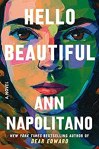
What’s the weirdest reading coincidence you’ve had lately?
Recent Writing for BookBrowse, Foreword, Shelf Awareness, Shiny New Books, and the TLS
I’ve compiled excerpts from some reviews I’ve contributed to other websites and publications this year. I link to the full text where available. (When writing a paid review, I seek to be balanced but positive. Ratings reflect my personal response.)
BookBrowse
 The Last Animal by Ramona Ausubel: In Ausubel’s offbeat third novel, a widowed scientist and her two daughters embark on a rogue plan to make history by resurrecting the woolly mammoth. There is a quirky combination of cosmic and domestic concerns here. A winsome sister duo is at the heart of the unusual and timely story, with priority given to the points of view of teenagers Eve and Vera, whose banter is a highlight. Ausubel has wisely chosen not to dwell on the scientific details of de-extinction, yet that means that this becomes more like speculative fiction or a fairy tale. Ironically, the fabulist-leaning novel is best when most realist, documenting struggles with bereavement, sexism and parenting teens.
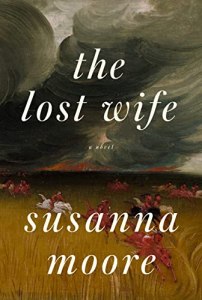 The Lost Wife by Susanna Moore: Moore’s hard-hitting novella is based in part on the memoir Six Weeks in the Sioux Tepees: A Narrative of Indian Captivity. In Moore’s version, Sarah, 25, leaves her baby behind when she flees an abusive husband, and once in Minnesota Territory marries John Brinton, who becomes a doctor on a Sioux reservation. By 1862, Sarah is friendly with the Native women. Although the Civil War is unfolding, the greater threat here is of revolt by the starving Indigenous residents. There is much of anthropological and historical interest, but Sarah’s flat storytelling, which may represent a pastiche of period style, means threatening or climactic scenes lose some of their potential gravity.
Foreword
 My Mother Says by Stine Pilgaard (trans. from the Danish by Hunter Simpson): After breaking up with her zookeeper girlfriend over their age gap and their conflicting takes on motherhood, the heroine moves back in with her father, a pastor who’s obsessed with Pink Floyd, and her stepmother. Her mother visits often, nagging her to finish her thesis. The line between her conversations and internal thoughts is thin. From her mansplaining doctor, she learns that the brain’s hippocampus is named for its seahorse shape. This inspires “Monologues of a Seahorse,” interludes of stream-of-consciousness association. Experimental and whimsical, this delivers deadpan narration of everyday woes.
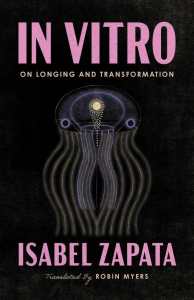 In Vitro: On Longing and Transformation by Isabel Zapata (trans. from the Spanish by Robin Myers): A Mexican poet probes the enduring mysteries of pregnancy and birth in a memoir in fragments that travels from fertility treatment through to the early weeks of pandemic-time motherhood. The clinical language of a gynecological history—late menstruation, polycystic ovary syndrome, eighteen years on the pill, and infertility—and the embryo transfer process contrasts with Zapata’s mystical thinking. The microessays integrate family stories, history, and artistic explorations. This resolute account of a personal metamorphosis alchemizes tender experiences into enchanting vignettes.
Shelf Awareness
Fiction
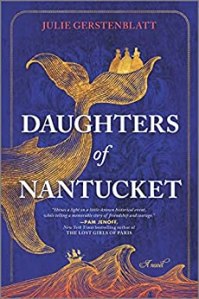 Daughters of Nantucket by Julie Gerstenblatt: This engrossing debut novel explores the options for women in the mid-19th century while bringing a historical tragedy to life. Metaphorical conflagrations blaze in the background in the days leading up to the great Nantucket fire of 1846: each of three female protagonists (a whaling captain’s wife, a museum curator, and a pregnant Black entrepreneur) holds a burning secret and longs for a more expansive, authentic life. The action spans two tense weeks, one week before the fire through eight days after. The women’s lives collide in two climactic scenes. Gerstenblatt’s eye for detail results in sultry historical fiction for Sue Monk Kidd’s readers.
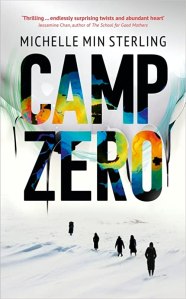 Camp Zero by Michelle Min Sterling: Sterling’s brilliantly unsettling debut novel is set in mid-21st-century, post-oil North America. Prioritizing perspectives from two all-female communities, it contrasts the heights of opulence and technology with the basic instinct for survival. How the strands connect is a mystery sustained through much of the book. Characters go by multiple names and harbor ulterior motives; scenes echo each other as disparate subplots meet in unexpected ways. The background is all too plausible. Sterling also takes to its logical extreme the state of being constantly online. Compelling dystopian cli-fi with three-dimensional characters—perfect for fans of Station Eleven and To Paradise.
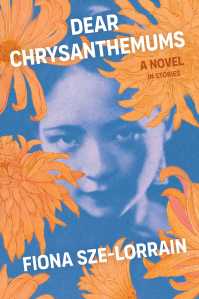 Dear Chrysanthemums by Fiona Sze-Lorrain: In this elegant collection of 11 linked short stories by a poet and translator, China’s mid-20th-century political upheaval casts a long shadow. Music and food, not to mention love, bring meaning to those displaced in the aftermath of dissent. The stories—set in China, Singapore, Paris, and New York—span seven decades but always take place in a year ending in a six, a sacred number in Chinese divination. A highlight is “News from Saigon,” in which a prostitute meets Marguerite Duras in a Paris café. The connections are subtle, with the final story pulling together many strands. Ideal for readers of Madeleine Thien’s Do Not Say We Have Nothing.
Nonfiction
 Stranded by Maddalena Bearzi: Bearzi developed a deep love for marine fauna during childhood summers in Sardinia and cofounded the Ocean Conservation Society in the 1990s. Temporarily confined to land by Covid-19 lockdowns, she adopts a different tactic for exploring animal behavior: “an urban safari in my backyard and neighborhood.” These nature essays exemplify evenhandedness, curiosity, and close observation. From wasps to night-blooming flowers, her interest is wide-ranging. Gardening is a relaxing pastime and a connection to her mother while they are separated. As a behavioral ecologist, she views even her dog as a subject of study. A passionate primer to appreciating everyday nature.
Poetry
 Lo by Melissa Crowe: This incandescent autobiographical collection travels from girlhood to marriage and motherhood in post-pandemic USA. Crowe delves into sexual abuse and growing up in rural poverty. Yet the collection is so carefully balanced in tone that it never feels bleak. The emotional range is enhanced by alliteration and botanical imagery.
 Dislocations by Karen Enns: The fourth collection by Canadian poet Enns skillfully evokes a rural upbringing and revels in the beauty of nature and music. One of its aphorisms could encapsulate the entire collection: “The ratio of love to grief / we understood as music.” Updating the pastoral tradition, the bittersweet verse also takes solace in the past.
Shiny New Books
A Fortunate Woman by Polly Morland & A Fortunate Man by John Berger: The similarities go much further than the title and subject matter: these two biographical works, both illustrated with black-and-white photographs, are set in the same English valley and the female subject of Morland’s is the next-but-one successor of the doctor who stars in Berger’s.
 Berger (1926–2017), an art critic and Booker Prize-winning novelist, spent six weeks shadowing the doctor, to whom he gives the pseudonym John Sassall, with Swiss documentary photographer Jean Mohr, his frequent collaborator. Sassall’s dedication was legendary: he attended every birth in this community, and nearly every death. Sassall’s middle-class origins set him apart from his patients. There’s something condescending about how Berger depicts the locals as simple peasants. Mohr’s photos include soft-focus close-ups on faces exhibiting a sequence of emotions, a technique that feels outdated in the age of video. Along with recording the day-to-day details of medical complaints and interventions, Berger waxes philosophical on topics such as infirmity and vocation. A Fortunate Man is a curious book, part intellectual enquiry and part hagiography.
 With its layers of local history and its braided biographical strands, A Fortunate Woman takes up many of the same heavy questions but feels more subtle and timely. It also soon delivers a jolting surprise: the doctor Berger called John Sassall was likely bipolar and, soon after the death of his beloved wife Betty, committed suicide in 1982. His story still haunts this community, where many of the older patients remember going to him for treatment. Like Berger, Morland keenly follows a range of cases. As the book progresses, we see this beautiful valley cycle through the seasons, with certain of Richard Baker’s landscape shots deliberately recreating Mohr’s scene setting. The timing of Morland’s book means that it morphs from a portrait of the quotidian for a doctor and a community to, two-thirds through, an incidental record of the challenges of medical practice during COVID-19.
 The Memory of Animals by Claire Fuller: Neffy has nothing to lose when she enrolls in a controversial vaccine trial in a familiar mid-pandemic landscape. The novel is presented as her journal. The bulk takes place in two weeks she spends on a locked unit with four fellow test subjects. In the meantime, she is introduced to an experimental technology for reliving memories. The characterisation of the four other cast members is somewhat thin, and the elements feel randomly assembled. The world-building and tech are unlikely to stand up to science fiction fans’ scrutiny, but this has just the right dose of the speculative for literary fiction readers. It also happens to fit into a recent vogue for octopus novels.
Times Literary Supplement
A late-twenties journalist sets out to survey the situation on the ground for ten British species being squeezed out by anthropogenic climate change: The mission is very similar, and both authors embody passionate dedication to conservation, but the difference in tone of these travel narratives makes them likely to appeal to separate audiences…
In Search of One Last Song by Patrick Galbraith & Forget Me Not by Sophie Pavelle:
 Galbraith’s is an elegiac tour through imperilled countryside and urban edgelands. Each chapter resembles an in-depth magazine article: a carefully crafted profile of a beloved bird species, with a focus on the specific threats it faces. Galbraith recognises the nuances of land use. However, shooting plays an outsized role. (Curious for his bio not to disclose that he is editor of the Shooting Times.) The title’s reference is to literal birdsong, but the book also celebrates birds’ cultural importance through their place in Britain’s folk music and poetry. He is clearly enamoured of countryside ways, but too often slips into laddishness, with no opportunity missed to mention him or another man having a “piss” outside. Readers could also be forgiven for concluding that “Ilka” (no surname, affiliation or job title), who briefs him on her research into kittiwake populations in Orkney, is the only female working in nature conservation in the entire country; with few exceptions, women only have bit parts: the farm wife making the tea, the receptionist on the phone line, and so on.
 Pavelle’s book is a tonic in more ways than one. Employed by Beaver Trust, she is enthusiastic and self-deprecating. Her nature quest has a broader scope, including insects like the marsh fritillary and marine species such as seagrass and the Atlantic salmon. Travelling between lockdowns in 2020–1, Pavelle took low-carbon transport wherever possible and bolsters her trip accounts with context, much of it gleaned from Zoom calls and e-mail correspondence with experts from museums and universities. Refreshingly, around half of these interviewees are women, and the animal subjects are never the obvious choices. Instead, she seeks out “underdog” species. The explanations are at a suitable level for laymen, true to her job as a science communicator. The snappy, casual prose (“the future of the bilberry bumblebee and its Aperol arse can be bright, but only if we get off our own”) could even endear her to teenage readers. As image goes, Pavelle’s cheerful naïveté holds more charm than Galbraith’s hardboiled masculinity.
 Taking Flight by Lev Parikian: Parikian’s accessible account of the animal kingdom’s development of flight exhibits a layman’s enthusiasm for an everyday wonder. He explicates the range of flying strategies and the structural adaptations that made them possible. The archaeopteryx section, chronicling the transition between dinosaurs and birds, is a highlight. Though the most science-heavy of the author’s six works, this, perhaps ironically, has fewer footnotes. His usual wit is on display: he describes the feral pigeon as “the Volkswagen Golf of birds” and penguins as “piebald blubber tubes”. This makes it a pleasure to tag along on a journey through evolutionary time, one sure to engage even history- and science-phobes.
Do any of these catch your eye?
Most Anticipated Releases of 2023
In real life, it can feel like I have little to look forward to. A catch-up holiday gathering and a shortened visit from my sister were over all too soon, and we have yet to book any trips for the summer months. Thankfully, there are always pre-release books to get excited about.


This list of my 20 most anticipated titles covers a bit more than the first half of the year, with the latest publication dates falling in August. I’ve already read 14 releases from 2023 (written up here), and I’m also looking forward to new work from Margaret Atwood, Rowan Hisayo Buchanan, Angie Cruz, Patrick deWitt, Naoise Dolan, Tessa Hadley, Louisa Hall, Leah Hazard, Christian Kiefer, Max Porter, Tom Rachman, Gretchen Rubin, Will Schwalbe, Jenn Shapland, Abraham Verghese, Bryan Washington, Anne Youngson and more, as well as to trying out various debut authors.
The following are in (UK) release date order, within sections by genre. U.S. details given too/instead if USA-only. Quotes are excerpts from the publisher blurbs, e.g., from Goodreads.
Fiction
 The End of Drum-Time by Hanna Pylväinen [Jan. 24, Henry Holt and Co.] I loved Pylväinen’s 2012 debut, We Sinners. This sounds like a winning combination of The Bell in the Lake and The Mercies. “A richly atmospheric saga that charts the repercussions of a scandalous nineteenth century love affair between a young Sámi reindeer herder in the Arctic Circle and the daughter of the renegade Lutheran minister whose teachings are upending the Sámi way of life.” (Edelweiss download)
Heartstopper, Volume 5 by Alice Oseman [Feb. 2, Hodder Children’s] A repeat from my 2022 Most Anticipated post. Will this finally be the year?? I devoured the first four volumes of this teen comic in 2021. Nick will be getting ready to go off to university, so I guess we’ll see how he leaves things with Charlie and whether their relationship will survive a separation. (No cover art yet.)
 I Have Some Questions for You by Rebecca Makkai [Feb. 21, Viking / Feb. 23, Fleet] Makkai has written a couple of stellar novels; this sounds quite different from her usual lit fic but promises Secret History vibes. “A fortysomething podcaster and mother of two, Bodie Kane is content to forget her past [, including] the murder of one of her high school classmates, Thalia Keith. … [But] when she’s invited back to Granby, the elite New England boarding school where she spent four largely miserable years, to teach a course, Bodie finds herself inexorably drawn to the case and its increasingly apparent flaws.” (Proof copy)
 Birnam Wood by Eleanor Catton [March 7, Granta / Farrar, Straus and Giroux] I was lukewarm on The Luminaries (my most popular Goodreads review ever) but fancy trying Catton again – though this sounds like Atwood’s Year of the Flood, redux. “Five years ago, Mira Bunting founded a guerrilla gardening group … Natural disaster has created an opportunity, a sizable farm seemingly abandoned. … Robert Lemoine, the enigmatic American billionaire, has snatched it up to build his end-times bunker. … A gripping psychological thriller … Shakespearean in its wit, drama, and immersion in character.” (NetGalley download)
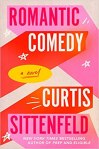 Romantic Comedy by Curtis Sittenfeld [April 4, Random House / April 6, Doubleday] Sittenfeld is one of my favourite contemporary novelists. “Sally Milz is a sketch writer for The Night Owls, the late-night live comedy show that airs each Saturday. … Enter Noah Brewster, a pop music sensation with a reputation for dating models, who signed on as both host and musical guest for this week’s show. … Sittenfeld explores the neurosis-inducing and heart-fluttering wonder of love, while slyly dissecting the social rituals of romance and gender relations in the modern age.”
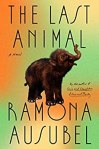 The Last Animal by Ramona Ausubel [April 18, Riverhead] “Jane is … on the cutting-edge team of a bold project looking to ‘de-extinct’ the woolly mammoth. … As Jane and her daughters ping-pong from the slopes of Siberia to a university in California, from the shores of Iceland to an exotic animal farm in Italy, The Last Animal takes readers on an expansive, bighearted journey that explores the possibility and peril of the human imagination on a changing planet, what it’s like to be a woman and a mother in a field dominated by men, and how a wondrous discovery can best be enjoyed with family. Even teenagers.”
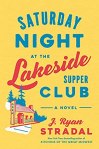 Saturday Night at the Lakeside Supper Club by J. Ryan Stradal [April 18, Pamela Dorman Books] Kitchens of the Great Midwest is one of my all-time favourite debuts. A repeat from my 2021 Most Anticipated post, hopefully here at last! “A story of a couple from two very different restaurant families in rustic Minnesota, and the legacy of love and tragedy, of hardship and hope, that unites and divides them … full of his signature honest, lovable yet fallible Midwestern characters as they grapple with love, loss, and marriage.” (Edelweiss download)
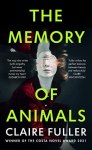 The Memory of Animals by Claire Fuller [April 20, Fig Tree (Penguin) / June 6, Tin House] Fuller is another of my favourite contemporary novelists and never disappoints. “Neffy is a young woman running away from grief and guilt … When she answers the call to volunteer in a controlled vaccine trial, it offers her a way to pay off her many debts … [and] she is introduced to a pioneering and controversial technology which allows her to revisit memories from her life before.” And apparently there’s also an octopus? (NetGalley download)
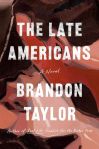 The Late Americans by Brandon Taylor [May 23, Riverhead / June 22, Jonathan Cape (Penguin)] “In the shared and private spaces of Iowa City, a loose circle of lovers and friends encounter, confront, and provoke one another in a volatile year of self-discovery. … These three [main characters] are buffeted by a cast of poets, artists, landlords, meat-packing workers, and mathematicians who populate the cafes, classrooms, and food-service kitchens … [T]he group heads to a cabin to bid goodbye to their former lives—a moment of reckoning that leaves each of them irrevocably altered.” (Proof copy)
Speak to Me by Paula Cocozza [June 8, Tinder Press] I loved her debut novel, How to Be Human, and this sounds timely. (I have never owned a smartphone.) “When Kurt’s phone rings during sex—and he reaches to pick it up—Susan knows that their marriage has passed the point of no return. … This sense of loss becomes increasingly focused on a cache of handwritten letters, from her first love, Antony, mementoes of a time when devotion seemed to spill out easily onto paper. Increasingly desperate and out of synch with the contemporary world, Susan embarks on a journey of discovery that will reconnect her to her younger self, while simultaneously revealing her future.” (No cover art yet.)
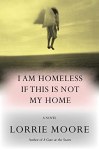 I Am Homeless If This Is Not My Home by Lorrie Moore [June 20, Faber / Knopf] What a title! I’m keen to read more from Moore after her Birds of America got a 5-star rating from me late last year. “Finn is in the grip of middle-age and on an enforced break from work: it might be that he’s too emotional to teach history now. He is living in an America hurtling headlong into hysteria, after all. High up in a New York City hospice, he sits with his beloved brother Max, who is slipping from one world into the next. But when a phone call summons Finn back to a troubled old flame, a strange journey begins, opening a trapdoor in reality.”
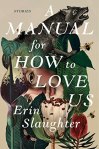 A Manual for How to Love Us by Erin Slaughter [July 5, Harper Collins] “A debut, interlinked collection of stories exploring the primal nature of women’s grief. … Slaughter shatters the stereotype of the soft-spoken, sorrowful woman in distress, queering the domestic and honoring the feral in all of us. … Seamlessly shifting between the speculative and the blindingly real. … Set across oft-overlooked towns in the American South.” Linked short stories are irresistible for me, and I like the idea of a focus on grief.
 Learned by Heart by Emma Donoghue [Aug. 24, Pan Macmillan / Aug. 29, Little, Brown] Donoghue’s contemporary settings have been a little more successful for me, but she’s still a reliable author whose career I am happy to follow. “Drawing on years of investigation and Anne Lister’s five-million-word secret journal, … the long-buried love story of Eliza Raine, an orphan heiress banished from India to England at age six, and Anne Lister, a brilliant, troublesome tomboy, who meet at the Manor School for young ladies in York in 1805 … Emotionally intense, psychologically compelling, and deeply researched”.
Nonfiction
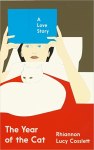 The Year of the Cat: A Love Story by Rhiannon Lucy Cosslett [Jan. 19, Tinder Press] “When Rhiannon fell in love with, and eventually married her flatmate, she imagined they might one day move on. … The desire for a baby is never far from the surface, but … after a childhood spent caring for her autistic brother, does she really want to devote herself to motherhood? Moving through the seasons over the course of lockdown, [this] nimbly charts the way a kitten called Mackerel walked into Rhiannon’s home and heart, and taught her to face down her fears and appreciate quite how much love she had to offer.”
 Fieldwork: A Forager’s Memoir by Iliana Regan [Jan. 24, Blackstone] “As Regan explores the ancient landscape of Michigan’s boreal forest, her stories of the land, its creatures, and its dazzling profusion of plant and vegetable life are interspersed with her and Anna’s efforts to make a home and a business of an inn that’s suddenly, as of their first full season there in 2020, empty of guests due to the COVID-19 pandemic. … Along the way she struggles … with her personal and familial legacies of addiction, violence, fear, and obsession—all while she tries to conceive a child that she and her immune-compromised wife hope to raise in their new home.” (Edelweiss download)
 Enchantment: Reawakening Wonder in an Exhausted Age by Katherine May [Feb. 28, Riverhead / March 9, Faber] I was a fan of her previous book, Wintering. “After years of pandemic life—parenting while working, battling anxiety about things beyond her control, feeling overwhelmed by the news-cycle and increasingly isolated—Katherine May feels bone-tired, on edge and depleted. Could there be another way to live? One that would allow her to feel less fraught and more connected, more rested and at ease, even as seismic changes unfold on the planet? Craving a different path, May begins to explore the restorative properties of the natural world”. (Proof copy)
 Monsters: A Fan’s Dilemma by Claire Dederer [April 25, Knopf / May 25, Sceptre] “What do we do with the art of monstrous men? Can we love the work of Roman Polanski and Michael Jackson, Hemingway and Picasso? Should we love it? Does genius deserve special dispensation? Is history an excuse? What makes women artists monstrous? And what should we do with beauty, and with our unruly feelings about it? Dederer explores these questions and our relationships with the artists whose behaviour disrupts our ability to apprehend the work on its own terms. She interrogates her own responses and her own behaviour, and she pushes the fan, and the reader, to do the same.”
 Undercurrent: A Cornish Memoir of Poverty, Nature and Resilience by Natasha Carthew [May 25, Hodder Studio] Carthew hangs around the fringes of UK nature writing, mostly considering the plight of the working class. “Carthew grew up in rural poverty in Cornwall, battling limited opportunities, precarious resources, escalating property prices, isolation and a community marked by the ravages of inequality. Her world existed alongside the postcard picture Cornwall … part-memoir, part-investigation, part love-letter to Cornwall. … This is a journey through place, and a story of hope, beauty, and fierce resilience.”
Grief Is for People by Sloane Crosley [June 25, MCD Books] According to Crosley, this is “a five-part book about many kinds of loss.” The press release adds to that: “Telling the interwoven story of a burglary, the suicide of Crosley’s closest friend, and the onset of Covid in New York City, [this] is the first full-length work of nonfiction by a writer best known for her acclaimed, bestselling books of essays.” (No cover art yet.)
Poetry
Bright Fear by Mary Jean Chan [Aug. 23, Faber] Their debut collection, Flèche, was my top poetry release in 2019. “These piercing poems fearlessly explore intertwined themes of queer identity, multilingualism and postcolonial legacy: interrogating acts of Covid racism, instances of queerphobia and the hegemony of the English language. Questions of acceptance and assimilation are further explored through a family’s evolving dynamics over time, or through the specious jargon of ‘Equality, Diversity and Inclusion’.” (No cover art yet.)
Other lists for more ideas:
What catches your eye here? What other 2023 titles do I need to know about?
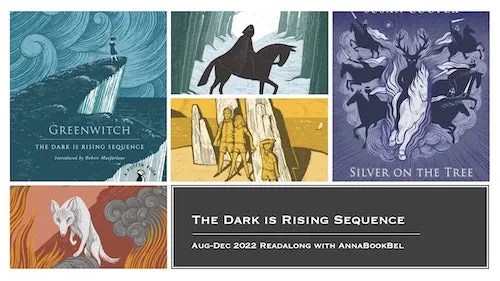
The Dark Is Rising Readalong #TDiRS22 & #Headliners2023 Online Event
Annabel’s readalong was the excuse I needed to try something by children’s fantasy author Susan Cooper – she’s one of those much-beloved English writers who happened to pass me by during my upbringing in the States. I’ve been aware of The Dark Is Rising (1973) for just a few years, learning about it from the Twitter readalong run by Robert Macfarlane. (My husband took part in that, having also missed out on Cooper in his childhood.)
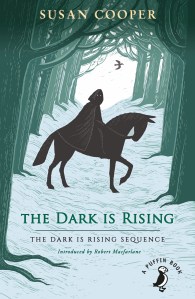 Christmas is approaching, and with it a blizzard, but first comes Will Stanton’s birthday on Midwinter Day. A gathering of rooks and a farmer’s ominous pronouncement (“The Walker is abroad. And this night will be bad, and tomorrow will be beyond imagining”) and gift of an iron talisman are signals that his eleventh birthday will be different than those that came before. While his large family gets on with their preparations for a traditional English Christmas, they have no idea Will is being ferried by a white horse to a magic hall, where he is let in on the secret of his membership in an ancient alliance meant to combat the forces of darkness. Merriman will be his guide as he gathers Signs and follows the Old Ones’ Ways.
I loved the evocation of a cosy holiday season, and its contrast with the cosmic conflict going on under the surface.
He was not the same Will Stanton that he had been a very few days before. Now and forever, he knew, he inhabited a different timescale from that of everyone he had ever known or loved…But he managed to turn his thoughts away from all these things, even from the two invading, threatening figures of the Dark. For this was Christmas, which had always been a time of magic, to him and to all the world. This was a brightness, a shining festival, and while its enchantment was on the world the charmed circle of his family and home would be protected against any invasion from outside.
The bustling family atmosphere is reminiscent of Madeleine L’Engle’s children’s books (e.g., Meet the Austins), as is the nebulous world-building (A Wrinkle in Time) – I found little in the way of concrete detail to latch onto, and like with Alan Garner’s The Owl Service, I felt out of my depth with the allusions to local legend. Good vs. evil battles are a mainstay of fantasy and children’s fiction, like in J.R.R. Tolkien’s books, or The Chronicles of Narnia I read over and over between the ages of about five and nine. Had I read this, too, as a child, I’m sure I would have loved it, but I guess I’m too literal-minded an adult these days; it’s hard for me to get swept up in the magic. See also Annabel’s review. (Public library)
Headliners 2023 Online Event
For a small fee (the proceeds went to The Arts Emergency Fund), I joined in this Zoom event hosted by Headline Books and Tandem Collective yesterday evening to learn about 10 of the publisher’s major 2023 releases.

Six of the authors were interviewed live by Sarah Shaffi; the other four had contributed pre-recorded video introductions. Here’s a super-brief rundown, in the order in which they appeared, with my notes on potential readalikes:
Dazzling by Chikodili Emelumadu (16 February)
Two girls at a restrictive Nigerian boarding school tap into their power as “Leopard People” to bring back their missing fathers and achieve more than anyone expects of them.
Sounds like: Akwaeke Emezi’s works
A Pebble in the Throat by Aasmah Mir (2 March)
A memoir contrasting her upbringing in Glasgow with her mother’s in Pakistan, this promises to be thought-provoking on the topics of racism and gender stereotypes.
Sounds like: Brown Baby or Brit(ish)
River Sing Me Home by Eleanor Shearer (19 January)
In 1834 Barbados, a former slave leaves her sugarcane plantation to find her five children. Shearer is a mixed-race descendant of Windrush immigrants and wanted to focus not so much on slavery as on its aftermath and the effects of forced dispersion.
Sounds like: Sugar Money
Becoming Ted by Matt Cain (19 January)
In a Northern seaside town, Ted is dumped by his husband and decides to pursue his dream of becoming a drag queen.
Sounds like: Rachel Joyce’s works
Mother’s Day by Abigail Burdess (2 March)
As a baby, Anna was left by the side of the road*; now she’s found her birth mother, just as she learns she’s pregnant herself. Described as a darkly comic thriller à la Single White Female.
(*Burdess had forgotten that this really happened to her best childhood friend; her mum had to remind her of it!)
Sounds like: A Crooked Tree or When the Stars Go Dark
Me, Myself and Mini Me by Charlotte Crosby (2 March)
A reality TV star’s memoir of having a child after an ectopic pregnancy.
Sounds like: Something Katie Price would ‘write’. I had not heard of this celebrity author before and don’t mean to sound judgmental, but the impression made by her appearance (heavily altered by cosmetic surgery) was not favourable.
All the Little Bird Hearts by Viktoria Lloyd-Barlow (2 March)
In the Lake District in the 1980s, Sunday is an autistic mother raising a daughter, Dolly. The arrival of glamorous next-door neighbours upends their lives.
Sounds like: Claire Fuller’s works
The Year of the Cat by Rhiannon Lucy Cosslett (19 January)
A work of creative nonfiction about adopting a cat named Mackerel (who briefly appeared on the video) during lockdown, and deciding whether or not to have a child.
Sounds like: Motherhood, with a cat
The Book of Eve by Meg Clothier (30 March)
Set in Northern Italy in 1500, this is about a convent librarian who discovers a rich tradition of goddess worship that could upend the patriarchy.
Sounds like: Kiran Millwood Hargrave’s and Maggie O’Farrell’s historical novels
The Housekeepers by Alex Hay (6 July)
A historical heist novel set in 1905, this is about Mrs King, a Mayfair housekeeper who takes revenge for her dismissal by assembling a gang of disgruntled women to strip her former employer’s house right under her nose during a party.
Sounds like: Richard Osman’s works
If there was a theme to the evening, it was women’s power!
I’m most keen to read The Year of the Cat, but I’d happily try 3–4 of the novels if my library acquired them.
Which of these 2023 releases appeal to you most?
Women’s Prize Longlist Reviews (Erdrich, Mendelson, Ozeki) & Predictions
Tomorrow the Women’s Prize shortlist will be revealed. I’ve become much more invested in this prize over the past few years and will be following the 2022 race especially closely – look out for a related announcement soon. In recent years the nominees have tended to cluster thematically, which can feel redundant. This longlist has a notably high ghost quotient. Two novels I review below feature unquiet spirits, an appearance by the author, and the magical powers of books. The third is a straightforward contemporary dysfunctional family story.
The Sentence by Louise Erdrich
My second from Erdrich (I gave Love Medicine, her first novel, 5 stars in 2020). I will be revisiting this in June because it is our first pick for my tenure in the Literary Wives online book club. For that post I’ll focus on the relationship between Tookie and Pollux, which I won’t mention in this more general response. I was worried that a take on very recent events – this is set in Minneapolis between 2019 and 2020 and covers the first six months of the pandemic plus local protests following George Floyd’s murder – would seem either rushed or dated. I’m still unsure how I feel about encountering Covid-19 in fiction (vs. I’ve read 20 or more nonfiction records now), but I think this novel functions as a sturdy time capsule.
 Tookie, the narrator, has a tough exterior but a tender heart. When she spent 10 years in prison for a misunderstanding-cum-body snatching, books helped her survive, starting with the dictionary. Once she got out, she translated her love of words into work as a bookseller at Birchbark Books, Louise Erdrich’s Minnesota independent bookshop (Louise herself is an occasional character). Bibliophiles are sure to enjoy the mentions of the books she presses into customers’ hands; there’s also a fun appendix of recommendations on particular topics.
However, the central mystery about Flora, a dead customer who haunts the store until Tookie figures out why she died and how to exorcise her, struck me as silly. I only appreciated this storyline to the extent that it explores authenticity (Flora may have fabricated her Native heritage) and the inescapability of history. I preferred real life: Tookie getting locked down with her stepdaughter and baby grandson and filling book orders from a closed shop.
Erdrich weaves in Indigenous customs naturally and the banter between the characters, including young shop employees, makes this hip and lighthearted, even as it deals with serious subjects. I smiled at the bookish lingo, like Tookie’s division of her reading into a Lazy Stack and a Hard Stack (“books I would avoid reading until some wellspring of mental energy was uncapped” – my occasional and set-aside titles could comprise the latter) and the “cowbirds,” self-published titles secreted on the shelves that aren’t found until inventory day. There’s also an excellent passage on novellas that I’ll be bringing out in November.
Like a vintage armchair, this is a little overstuffed, but so comfortable you’ll want to stay a while. (See also Laura’s review.) (Public library)
The Exhibitionist by Charlotte Mendelson
~SPOILERS IN THIS ONE~
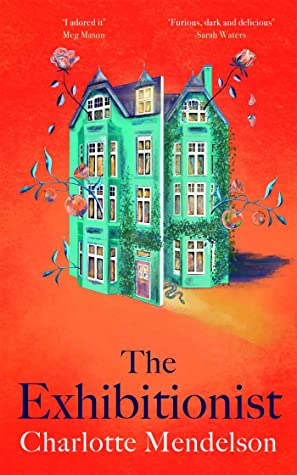 Artists, dysfunctional families, and limited settings (here, one crumbling London house and its environs; and about two days across one weekend) are irresistible elements for me, and I don’t mind a work being peopled with mostly unlikable characters. That’s just as well, because the narrative orbits Ray Hanrahan, a monstrous narcissist who insists that his family put his painting career above all else. His wife, Lucia, is a sculptor who has always sacrificed her own art to ensure Ray’s success. But now Lucia, having survived breast cancer, has the chance to focus on herself. She’s tolerated his extramarital dalliances all along; why not see where her crush on MP Priya Menon leads? What with fresh love and the offer of her own exhibition in Venice, maybe she truly can start over in her fifties.
Ray and Lucia’s three grown children, Leah, Patrick and Jess, are all home for Ray’s new exhibition. They’re mere sketches: Leah is Ray’s staunchest supporter and is infatuated with the no-show caterer; Patrick’s mental health is shaky, interfering with his job prospects; Jess, a teacher in Edinburgh, is pregnant but not sure she’s committed to her boyfriend long term. I wanted more depth from all the characters, but especially the offspring. I also expected a climactic late scene on Hampstead Heath to come to more.
Still, the build-up to the exhibit (followed by a laughably pitiful reveal) and Lucia’s inner life form an adequately strong foundation for Mendelson’s sardonic prose. The dialogue, full of interruptions, is true to life. This is her fifth novel and called to mind Jami Attenberg’s and Claire Fuller’s work. (Liz found shades of Iris Murdoch. Susan loved it, too.) I wouldn’t say I’m compelled to seek out more by Mendelson, but this was a solid read. (Public library)
The Book of Form and Emptiness by Ruth Ozeki
A Tale for the Time Being is one of my favourite novels of the century (and one of my most popular Goodreads reviews ever), My Year of Meats was a terrific backlist read a couple of summers ago, and I’m eager to catch up on All Over Creation. So I’d built up this fourth Ozeki novel in my head, thinking a library setting and magic realist elements presaged something deliciously Murakami-esque.
 What I actually found, having limped through it off and on for seven months, was something of a disappointment. A frank depiction of the mental health struggles of the Oh family? Great. A paean to how books and libraries can save us by showing us a way out of our own heads? A-OK. The problem is with the twee way that The Book narrates Benny’s story and engages him in a conversation about fate versus choice.
When Kenji Oh, a jazz musician, is run over by a chicken truck, Annabelle finds herself a single mother to Benny, a troubled teen who starts to hear everyday objects speaking to him. His voices and Annabelle’s hoarding habit jeopardize the viability of their household: Benny spends time on a psychiatric hospital ward for minors and Annabelle is threatened with eviction. For Benny, the library and the acquaintances he makes there – a fellow pedi-psych patient named Alice who calls herself The Aleph, an Eastern European philosopher who goes by The Bottleman (= Slavoj Žižek?), even the Ozeki figure tapping away on her laptop – may be his salvation; for Annabelle, it could be the book Tidy Magic (modelled on Marie Kondo’s work), written by a Buddhist nun. But until then, their stories get very dark indeed.
Concern for the principal pair and their relationship kept me reading even though this is too long and I wearied of Ozeki’s habit of literalizing metaphors (books speaking to people; being crushed by one’s belongings; crows playing a protective role). I’m still sympathetic to Ozeki’s aims, even if she doesn’t quite pull it all off here. If I pit the rather similar The Sentence and The Book of Form and Emptiness against each other, Erdrich comes out ahead. 
With thanks to Canongate for the proof copy for review.
I’ve gotten to six books from the longlist so far and have a few more on order at the library. The others I’ve read, with ratings and links to my reviews, are:
Build Your House around My Body by Violet Kupersmith
Sorrow and Bliss by Meg Mason
I’m also partway through The Final Revival of Opal & Nev by Dawnie Walton, which is enjoyable enough but, alas, suffers in comparison to Daisy Jones and the Six, whose format (a composite oral history of a fictional 1960s/70s musical act) it repeats. The addition of the race issue doesn’t feel sufficient to call it original.
I’ve also DNFed a few from the longlist, two of them multiple times, so I have my fingers crossed that they don’t advance!
- The Paper Palace by Miranda Cowley Heller
- The Island of Missing Trees by Elif Shafak
- Great Circle by Maggie Shipstead
My attitude to the rest of the longlist is…
- The Bread the Devil Knead by Lisa Allen-Agostini – No plans to read.
- Salt Lick by Lulu Allison – I might read this from the library. I’m leery of dystopias, but I’m there for a chorus of cows.
- Careless by Kirsty Capes – No plans to read.
- Remote Sympathy by Catherine Chidgey – I would happily read it if it’s shortlisted, but at over 500 pages I fear it’ll be too dense.
- Flamingo by Rachel Elliott – Maybe. Sounds like pretty standard Sarah Winman-type stuff, but it could go down well with a book club.
- This One Sky Day by Leone Ross – No plans to read.
- Creatures of Passage by Morowa Yejidé – I was actually pretty keen to read this one, so I have it on reserve at the library. Egyptian mythology makes a change from the overdone Greeks, and the Washington, D.C. setting is a big draw. Laura’s review has tempered my expectations, but I might still give it a go.
My ideal shortlist (a wish list based on my reading and what I still want to read):
The Sentence by Louise Erdrich
Build Your House around My Body by Violet Kupersmith
Sorrow and Bliss by Meg Mason
The Exhibitionist by Charlotte Mendelson
The Final Revival of Opal & Nev by Dawnie Walton
Creatures of Passage by Morowa Yejidé
vs.
My predicted shortlist:
Remote Sympathy by Catherine Chidgey
The Sentence by Louise Erdrich
Sorrow and Bliss by Meg Mason
The Exhibitionist by Charlotte Mendelson
This One Sky Day by Leone Ross
The Island of Missing Trees by Elif Shafak
An overall winner? Gosh, it’s too early to tell. But maybe The Sentence, Sorrow and Bliss or The Island of Missing Trees.
See also Laura’s shortlist predictions.
What have you read from the longlist so far?
Which of these books are calling to you?
Local Resistance: On Gallows Down by Nicola Chester
It’s mostly by accident that we came to live in Newbury: five years ago, when a previous landlord served us notice, we viewed a couple of rental houses in the area to compare with what was available in Reading and discovered that our money got us more that little bit further out from London. We’ve come to love this part of West Berkshire and the community we’ve found. It may not be flashy or particularly famous, but it has natural wonders worth celebrating and a rich history of rebellion that Nicola Chester plumbs in On Gallows Down. A hymn-like memoir of place as much as of one person’s life, her book posits that the quiet moments of connection with nature and the rights of ordinary people are worth fighting for.
So many layers of history mingle here: from the English Civil War onward, Newbury has been a locus of resistance for centuries. Nicola* has personal memories of the long-running women’s peace camps at Greenham Common, once a U.S. military base and cruise missile storage site – to go with the Atomic Weapons Establishment down the road at Aldermaston. As a teenager and young woman, she took part in symbolic protests against the Twyford Down and Newbury Bypass road-building projects, which went ahead and destroyed much sensitive habitat and many thousands of trees. Today, through local and national newspaper and magazine columns on wildlife, and through her winsome nagging of the managers of the Estate she lives on, she bears witness to damaging countryside management and points to a better way.

While there is a loose chronological through line, the book is principally arranged by theme, with experiences linked back to historical or literary precedents. An account of John Clare and the history of enclosure undergirds her feeling of the precarity of rural working-class life: as an Estate tenant, she knows she doesn’t own anything, has no real say in how things are done, and couldn’t afford to move elsewhere. Nicola is a school librarian and has always turned to books and writing to understand the world. I particularly loved Chapter 6, about how she grounds herself via the literature of this area: Kenneth Grahame’s The Wind in the Willows, Adam Thorpe’s Ulverton, and especially Richard Adams’s Watership Down.
Whatever life throws at her – her husband being called up to fight in Iraq, struggling to make ends meet with small children, a miscarriage, her father’s unexpected death – nature is her solace. She describes places and creatures with a rare intimacy borne out of deep knowledge. To research a book on otters for the RSPB, she seeks out every bridge over every stream. She goes out “lamping” with the local gamekeeper after dark and garners priceless nighttime sightings. Passing on her passion to her children, she gets them excited about badger watching, fossil collecting, and curating shelves of natural history treasures like skulls and feathers. She also serves as a voluntary wildlife advocate on her Estate. For every victory, like the re-establishment of the red kite population in Berkshire and regained public access to Greenham Common, there are multiple setbacks, but she continues to be a hopeful activist, her lyrical writing a means of defiance.
We are writing for our very lives and for those wild lives we share this one, lonely planet with. Writing was also a way to channel the wildness; to investigate and interpret it, to give it a voice and defend it. But it was also a connection between home and action; a plank bridge between a domestic and wild sense. A way both to home and resist.
You know that moment when you’re reading a book and spot a place you’ve been or a landmark you know well, and give a little cheer? Well, every site in this book was familiar to me from our daily lives and countryside wanderings – what a treat! As I was reading, I kept thinking how lucky we are to have such an accomplished nature writer to commemorate the uniqueness of this area. Even though I was born thousands of miles away and have moved more than a dozen times since I settled in England in 2007, I feel the same sense of belonging that Nicola attests to. She explicitly addresses this question of where we ‘come from’ versus where we fit in, and concludes that nature is always the key. There is no exclusion here. “Anyone could make a place their home by engaging with its nature.”
*I normally refer to the author by surname in a book review, but I’m friendly with Nicola from Twitter and have met her several times (and she’s one of the loveliest people you’ll ever meet), so somehow can’t bring myself to be that detached!
On Gallows Down was released by Chelsea Green Publishing on October 7th. My thanks to the author and publisher for arranging a proof copy for review.
My husband and I attended the book launch event for On Gallows Down in Hungerford on Saturday evening. Nicola was introduced by Hungerford Bookshop owner Emma Milne-White and interviewed by Claire Fuller, whose Women’s Prize-shortlisted novel Unsettled Ground is set in a fictional version of the village where Nicola lives.

Nicola Chester and Claire Fuller. Photo by Chris Foster.
Nicola dated the book’s genesis to the moment when, 25 years ago, she queued up to talk to a TV news reporter about Newbury Bypass and froze. She went home and cried, and realized she’d have to write her feelings down instead. Words generally come to her at the time of a sighting, as she thinks about how she would tell someone how amazing it was.
Her memories are tied up with seasons and language, especially poetry, she said, and she has recently tried her hand at poetry herself. Asked about her favourite season, she chose two, the in-between seasons – spring for its abundance and autumn for its nostalgia and distinctive smells like tar spot fungus on sycamore leaves and ivy flowers.


A bonus related read:
Anarchipelago by Jay Griffiths (2007)
This limited edition 57-page pamphlet from Glastonbury-based Wooden Books caught my eye from the library’s backroom rolling stacks. Griffiths wrote her impish story of Newbury Bypass resistance in response to her time among the protesters’ encampments and treehouses. Young Roddy finds a purpose for his rebellious attitude wider than his “McTypical McSuburb” by joining other oddballs in solidarity against aggressive policemen and detectives.
There are echoes of Ali Smith in the wordplay and rendering of accents.
“When I think of the road, I think of more and more monoculture of more and more suburbia. What I do, I do in defiance of the Louis Queasy Chintzy, the sickly stale air of suburban car culture. I want the fresh air of nature, the lifefull wind of the French revolution.”
In a nice spot of Book Serendipity, both this and On Gallows Down recount the moment when nature ‘fought back’ as a tree fell on a police cherry-picker. Plus Roddy is kin to the tree-sitting protesters in The Overstory by Richard Powers as well as another big novel I’m reading now, Damnation Spring by Ash Davidson.
Women’s Prize Longlist Reviews (Leilani, Lockwood, and Lyon) & Predictions
Tomorrow, Wednesday the 28th, the Women’s Prize shortlist will be revealed. I have read just over half of the longlist so far and have a few more of the nominees on order from the library – though I may cancel one or two of my holds if they don’t advance to the shortlist. Also, my neighbourhood book club has applied to be one of six reading groups shadowing the shortlist this year via a Reading Agency initiative. If I do say so myself, I think we put in a rather strong application. We’ll hear later this week if we’ve been chosen – fingers crossed!
The three longlisted novels I’ve read most recently were all by L authors:
Luster by Raven Leilani
 Edie’s voice is immediately engaging: cutting, funny, pithy. It reminded me of Ava’s in a fellow Women’s Prize nominee, Exciting Times, and both novels even employ a near-identical metaphor: “I wondered if Victoria was a real person or three Mitford sisters in a long coat” (Dolan) versus “all the kids stacked underneath my trench coat rejoice” (Leilani). They are also both concerned with how young women negotiate a confusing romantic landscape and look for meaning beyond a dead-end career. The African-American Edie’s entry-level work for a New York City publisher barely covers her rent at a squalid shared apartment. She’s shagged every male in the office and is now on to one she met online: Eric, a white, middle-aged archivist with an open marriage and a Black adopted daughter.
As Edie insinuates herself into Eric’s suburban New Jersey life in peculiar and sometimes unwitting ways, we learn more about her traumatic past: Both of her parents are dead, one by suicide, and she had an abortion at age 16. Along with sex, her main escape is her painting, which is described in tender detail. There are a number of amusing scenes set at off-the-wall locations, like a theme park, a clown school, and Comic Con. Leilani has a knack for capturing an entire realm of experience in just a few pages, as when she satirizes current publishing trends or encapsulates what it’s like to be a bicycle delivery person.
But, as a Goodreads acquaintance put it, all this sharp writing is rather wasted on the plot. I found the direction of the book in its second half utterly unrealistic, and never believed that Edie would have found Eric attractive in any way. (His interest in her is beyond creepy, really.) What I found most intriguing, along with the painting hobby, were Edie’s interactions with other Black characters, such as a publishing company colleague and Eric’s adopted daughter – there’s an uncomfortable sense that they should have a natural camaraderie and/or that Edie should be some kind of role model. I might have liked more of that dynamic, instead of the unbearable awkwardness of temporary instalment in a white neighbourhood. Other readalikes: Queenie, Here Is the Beehive, and On Beauty.
No One Is Talking About This by Patricia Lockwood
 Priestdaddy is one of my absolute favourite books, so Lockwood’s debut novel was one of the 2021 releases I was most looking forward to reading. It took me a while to warm to, but ultimately did not disappoint. It probably helped that I was familiar with the author’s iconoclastic sense of humour. This is a work of third-person autofiction – much more so than I’d realized before I read the Acknowledgments – and to start with it feels like a flippant skewering of modern life, which for some is all about online personality and performance. A woman who became a social media star by tweeting quips like “Can a dog be twins?” reflects on life on “the portal” and under “the dictator.”
Midway through the book, she receives a wake-up call in the form of texts from her mother summoning her back to the Midwest for a family emergency. “It was a marvel how cleanly and completely this lifted her out of the stream of regular life.” Shit just got real, as they say. But “Would it change her?” she asks herself. Apparently, this very thing happened to Lockwood’s own family, which accounts for how heartfelt the second half is – still funny, but with an ache behind it, the same that I sensed and loved in Priestdaddy.
It is the about-face that makes this novel, forcing readers to question the value of a digital existence based on glib pretence. As the protagonist tells her students at one point, “Your attention is holy,” and with life so fragile there is no time to waste. What Lockwood is trying to do here is even bigger than that, though, I think. She mocks the whole idea of plot yet takes up the mantle of the “social novel,” as if creating a new format for the Internet-age novel in short, digestible sections. I’m not sure this is as earth-shattering as all that, but it is entertaining and deceptively deep. It also feels like a very current book, playing the role that Weather did in last year’s Women’s Prize race. (See my Goodreads review for more quotes, spoiler-y discussion, and why this book held personal poignancy for me.)
Consent by Annabel Lyon
 I’m always drawn to stories of sisters and this was an intriguing one, though the jacket text sets it up to be more of a thriller than it actually is. After their mother’s death, Sara, a medical ethicist, looks after Mattie, her intellectually disabled sister. When Mattie is lured into eloping, Sara’s protective instinct goes into overdrive. Meanwhile, Saskia, a graduate student in French literature, feels obliged to put her twin sister Jenny’s needs first after a car accident leaves Jenny in a coma. There are two decades separating the sets of sisters, but aspects of their experiences reverberate, with fashion, perfume, and alcoholism appearing as connecting elements even before a more concrete link emerges.
For much of the novel, Lyon bounces between the two storylines. I occasionally confused Sara and Saskia, but I think that’s part of the point (why else would an author select two S-a names?) – their stories overlap as they find themselves in the position of making decisions on behalf of an incapacitated sister. The title invites deliberation about how control is parcelled out in these parallel situations, but I’m not sure consent was the right word to encapsulate the whole plot; it seems to give too much importance to some fleeting sexual relationships.
At times I found Lyon’s prose repetitive or detached, but I enjoyed the overall dynamic and the medical threads. There are some stylish lines that land perfectly, like “There she goes … in her lovely coat, that cashmere-and-guilt blend so few can afford. That lovely perfume she trails, lilies and guilt.” The Vancouver setting and French–English bilingualism, not things I often encounter in fiction, were also welcome, and the last few chapters are killer. 
The other nominees I’ve read, with ratings and links to reviews, are:
The Vanishing Half by Brit Bennett
Piranesi by Susanna Clarke
Exciting Times by Naoise Dolan
Transcendent Kingdom by Yaa Gyasi
Burnt Sugar by Avni Doshi
Unsettled Ground by Claire Fuller
The rest of the longlist is:
- Small Pleasures by Clare Chambers – I might read this from the library.
- The Golden Rule by Amanda Craig – I’d thought I’d give this one a miss, but I recently found a copy in a Little Free Library. My plan is to read it later in the year as part of a Patricia Highsmith kick, but I’ll move it up the stack if it makes the shortlist.
- Because of You by Dawn French – Not a chance. Right? Please!
- How the One-Armed Sister Sweeps Her House by Cherie Jones – A DNF; I would only try it again from the library if it was shortlisted.
- Nothing but Blue Sky by Kathleen MacMahon – I might read this from the library.
- Detransition, Baby by Torrey Peters – I will definitely read this from the library.
- Summer by Ali Smith – I struggle with her work and haven’t enjoyed this series; I would only read this if it was shortlisted and my book club was assigned it!
My ideal shortlist (a wish list based on my reading and what I still want to read):
- The Vanishing Half by Brit Bennett
- Piranesi by Susanna Clarke
- Exciting Times by Naoise Dolan
- Transcendent Kingdom by Yaa Gyasi
- No One Is Talking About This by Patricia Lockwood
- Detransition, Baby by Torrey Peters
vs.
My predicted shortlist and reasoning:
 The Vanishing Half by Brit Bennett – A dead cert. I’ve said so since I reviewed it in June 2020.
- Burnt Sugar by Avni Doshi – Others don’t seem to fancy Doshi’s chances, and it’s true that she was already shortlisted for the Booker, but I feel like this could be more unifying a choice for the judges than, e.g. Clarke or Lockwood.
- Transcendent Kingdom by Yaa Gyasi – Another definite.
- Luster by Raven Leilani – Not as strong as the Dolan, in my opinion, but it seems to have a lot of love from these judges (especially Vick Hope, who emphasized how perfectly it captured what it’s like to be young today), and from critics generally.
- Detransition, Baby by Torrey Peters – Ordinarily I would have said the Prize is too staid to shortlist a trans author, but after all the online abuse that has been directed at Peters, I think the judges will want to make a stand in support of her legitimacy.
- Summer by Ali Smith – The most establishment author on the list, and not one I generally care for, but this would be a way of recognizing the four-part Seasons opus and her work in general. Of the middle-aged white cohort, she seems most likely.
I will happily accept some mixture of my wished-for and predicted titles, and would be surprised if any of the five books I have not mentioned is shortlisted. (Though quite a few others are predicting that Claire Fuller will advance; I’d have no problem with that.) I don’t think my book club would get a say in which of the six titles we’d be sent to read for the shadowing project, which is risky as I may have already read it and not want to reread, or it may be a surprise nominee that I don’t want to read, but I’ll cross that bridge if we come to it.
Callum, Eric, Laura and Rachel have been posting lots of reviews and thoughts related to the Women’s Prize. Have a look at their blogs!
Rachel also produced a priceless spreadsheet of all the Prize nominees by year, so you can tick off the ones you’ve read. I’m up to 150 now!
 Bookish Beck = Rebecca Foster. American transplant to England. Freelance proofreader and book reviewer.
 Bookish Beck