Book Serendipity, Mid-November–Early January
This is a short set but I’ll post it now to keep things ticking over. I’ve lost nearly a week to the upper respiratory virus from hell, and haven’t felt up to sitting at my computer for any extended periods of time. I had to request extensions on a few of my work deadlines; I’ll hope to be back to normal blogging next week, too.
I call it “Book Serendipity” when two or more books that I read at the same time or in quick succession have something in common – the more bizarre, the better. This is a regular feature of mine every couple of months. Because I usually have 20–30 books on the go at once, I suppose I’m more prone to such incidents. People frequently ask how I remember all of these coincidences. The answer is: I jot them down on scraps of paper or input them immediately into a file on my PC desktop; otherwise, they would flit away! Feel free to join in with your own.
The following are in roughly chronological order.
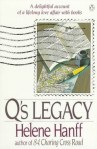
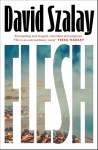
- Ayot St Lawrence as a setting in Q’s Legacy by Helene Hanff and Flesh by David Szalay.
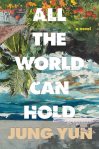
- A man who has panic attacks in Pan by Michael Clune and All the World Can Hold by Jung Yun.
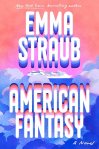
- Two of my Shelf Awareness PRO (early) reviews in a row were of 2026 novels set on a celebrity/reunion cruise: All the World Can Hold by Jung Yun, followed by American Fantasy by Emma Straub. In both, the narrative alternates between three main characters, the cruise is to celebrate a milestone birthday for a passenger’s relative, and there’s a celebrity who’s in AA.
- A teacher–student relationship develops into a friendship in The Irish Goodbye by Beth Ann Fennelly (with Molly McCully Brown, whose Places I’ve Taken My Body I’ve reviewed) and Lessons from My Teachers by Sarah Ruhl (with Max Ritvo, about whom she wrote a whole book).
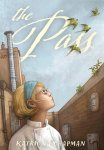 Someone becomes addicted to benzodiazepines in The Pass by Katriona Chapman and All the World Can Hold by Jung Yun (both 2026 releases).
- A New York City event scheduled to occur on September 15 or 16, 2001 is postponed because of 9/11 in Joyride by Susan Orlean (her wedding) and All the World Can Hold by Jung Yun (a cruise departure – it’s moved to Boston).
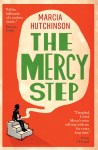
- A 1960s attempted suicide by putting one’s head in a gas oven in The Mercy Step by Marcia Hutchinson and The Soul of Kindness by Elizabeth Taylor.
- A plan to eat cheese to induce dreams in The Reservation by Rebecca Kauffman and Slags by Emma Jane Unsworth.
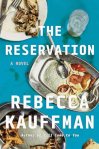
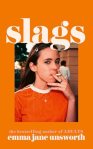
- An author is (at least initially) aghast at the liberties taken with an adaptation of her book in Spent by Alison Bechdel and Joyride by Susan Orlean (the film Adaptation, one of my favourites, bears little relation to her nonfiction work The Orchid Thief, which I also love).
- A North American author meets her British publishers, André Deutsch and Diana Athill, in Book of Lives by Margaret Atwood and Q’s Legacy by Helene Hanff. (Atwood also mentions Sir Arthur Quiller-Couch, the title reference in the Hanff.)
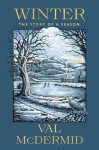
- An older white woman feels compelled to add, as an aside after a memory of slightly dodgy behaviour observed, that cultural appropriation was not a thing in those days in Book of Lives by Margaret Atwood and Winter by Val McDermid.
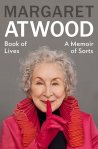
- I read two books in 2025 with a title taken from a Christian Wiman poem: A Truce that Is Not Peace by Miriam Toews, then Some Bright Nowhere by Ann Packer.
- A special trip undertaken for a younger sister’s milestone birthday: a road trip through Scotland in a campervan in Slags by Emma Jane Unsworth for a 40th; and a boy band reunion cruise to the Bahamas for a 45th in American Fantasy by Emma Straub.
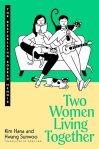
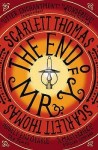
- A reference to Sartre’s “hell is other people” line (paraphrased) in Two Women Living Together by Kim Hana and Hwang Sunwoo and The End of Mr Y by Scarlett Thomas.
- The clock-drawing test as a shorthand for assessing a loved one’s dementia in Book of Lives by Margaret Atwood (her partner Graeme) and Joyride by Susan Orlean (her mother).
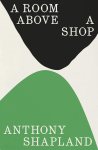 A sexual encounter between two men is presaged by them relieving themselves side by side at urinals in A Room Above a Shop by Anthony Shapland and The End of Mr Y by Scarlett Thomas.
- An older man who knows he’s having a stroke just wants to sit quietly in a chair and not be taken to hospital in Book of Lives by Margaret Atwood (her partner Graeme) and The Boy from the Sea by Garrett Carr.
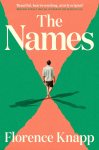
- A man who’s gone through Alcoholics Anonymous gets dangerously close to falling off the wagon: picks up a bottle of gin in a shop in The Names by Florence Knapp / buys a drink at a bar in All the World Can Hold by Jung Yun.
- I was reading two nonfiction books with built-in red ribbon bookmarks at the same time: Book of Lives by Margaret Atwood and Robin by Stephen Moss.
- Homoeopathy is an element in The Names by Florence Knapp and The End of Mr Y by Scarlett Thomas.
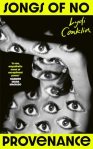
- A character named Sparrow in Spent by Alison Bechdel and Songs of No Provenance by Lydi Conklin.

- A mention of special celebrations for a Korean mother’s 70 birthday in Two Women Living Together by Kim Hana and Hwang Sunwoo and All the World Can Hold by Jung Yun.
- Some kinky practices in Songs of No Provenance by Lydi Conklin and Mr Norris Changes Trains by Christopher Isherwood.
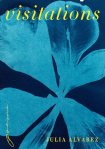
- A girl from an immigrant family reads Greek mythology for escape in Visitations by Julia Alvarez and The Mercy Step by Marcia Hutchinson.
- “View halloo” (originally a fox-hunting term) is used as a greeting in Talking It Over by Julian Barnes and Arsenic for Tea by Robin Stevens.
What’s the weirdest reading coincidence you’ve had lately?
#1962Club: A Dozen Books I’d Read Before
I totally failed to read a new-to-me 1962 publication this year. I’m disappointed in myself as I usually manage to contribute one or two reviews to each of Karen and Simon’s year clubs, and it’s always a good excuse to read some classics.

My mistake this time was to only get one option: Pale Fire by Vladimir Nabokov, which I had my husband borrow for me from the university library. I opened it up and couldn’t make head or tail of it. I’m sure it’s very clever and meta, and I’ve enjoyed Nabokov before (Pnin, in particular), but I clearly needed to be in the right frame of mind for a challenge, and this month I was not.
Looking through the Goodreads list of the top 100 books from 1962, and spying on others’ contributions to the week, though, I can see that it was a great year for literature (aren’t they all?). Here are 12 books from 1962 that I happen to have read before, most of which I’ve reviewed here in the past few years. I’ve linked to those and/or given review excerpts where I have them, and the rest I describe to the best of my muzzy memory.
 The Wolves of Willoughby Chase by Joan Aiken – The snowy scene on the cover and described in the first two paragraphs drew me in and the story, a Victorian-set fantasy with notes of Oliver Twist and Jane Eyre, soon did, too. Dickensian villains are balanced out by some equally Dickensian urchins and helpful adults, all with hearts of gold. There’s something perversely cozy about the plight of an orphan in children’s books: the characters call to the lonely child in all of us; we rejoice to see how ingenuity and luck come together to defeat wickedness. There are charming passages here in which familiar smells and favourite foods offer comfort. This would make a perfect stepping stone from Roald Dahl to one of the Victorian classics.
 Instead of a Letter by Diana Athill – This was Athill’s first book, published when she was 45. An unfortunate consequence of my not having read the memoirs in the order in which they are written is that much of the content of this one seemed familiar to me. It hovers over her childhood (the subject of Yesterday Morning) and centres in on her broken engagement and abortion, two incidents revisited in Somewhere Towards the End. Although Athill’s careful prose and talent for candid self-reflection are evident here, I am not surprised that the book made no great waves in the publishing world at the time. It was just the story of a few things that happened in the life of a privileged Englishwoman. Only in her later life has Athill become known as a memoirist par excellence.
 The Drowned World by J.G. Ballard – (Read in October 2011.) Quite possibly the first ‘classic’ science fiction work I’d ever read. I found Ballard’s debut dated, with passages of laughably purple prose, poor character development (Beatrice is an utter Bond Girl cliché), and slow plot advancement. It sounded like a promising environmental dystopia – perhaps a forerunner of Oryx and Crake – but beyond the plausible vision of a heated-up and waterlogged planet, the book didn’t have much to offer. The most memorable passage was when Strangman drains the water and Kerans discovers Leicester Square beneath; he walks the streets and finds them uninhabited except by sea creatures clogging the cinema entrances. That was quite a potent, striking image. But the scene that follows, involving stereotyped ‘Negro’ guards, seemed like a poor man’s Lord of the Flies rip-off.
 Silent Spring by Rachel Carson – Carson’s first chapter imagines an American town where things die because nature stops working as it should. Her main target was insecticides that were known to kill birds and had presumed negative effects on human health through the food chain and environmental exposure. Although the details may feel dated, the literary style and the general cautions against submitting nature to a “chemical barrage” remain potent.
 We Have Always Lived in the Castle by Shirley Jackson – I loved the offbeat voice and unreliable narration, and the way that the Blackwood house is both a refuge and a prison for the sisters. “Where could we go?” Merricat asks Constance when she expresses concern that she should have given the girl a more normal life. “What place would be better for us than this? Who wants us, outside? The world is full of terrible people.” As the novel goes on, you ponder who is protecting whom, and from what. There are a lot of great scenes, all so discrete that I could see this working very well as a play with just a few backdrops to represent the house and garden. It has the kind of small cast and claustrophobic setting that would translate very well to the stage.
 Tales from Moominvalley by Tove Jansson – Moomintroll discovers a dragon small enough to be kept in a jar; laughter brings a fearful child back from literal invisibility. But what struck me more was the lessons learned by neurotic creatures. In “The Fillyjonk who believed in Disasters,” the title character fixates on her belongings, but when a gale and a tornado come and sweep it all away, she experiences relief and joy. My other favourite was “The Hemulen who loved Silence.” After years as a fairground ticket-taker, he can’t wait to retire and get away from the crowds and the noise, but once he’s obtained his precious solitude he realizes he needs others after all. In “The Fir Tree,” the Moomins, awoken midway through hibernation, get caught up in seasonal stress and experience Christmas for the first time.
The Snowy Day by Ezra Jack Keats – A perennial favourite from my childhood, with a paper-collage style that has influenced many illustrators. Just looking at the cover makes me nostalgic for the sort of wintry American mornings when I’d open an eye to a curiously bright aura from around the window, glance at the clock and realize my mom had turned off my alarm because it was a snow day and I’d have nothing ahead of me apart from sledding, playing boardgames and drinking hot cocoa with my best friend. There was no better feeling.

 A Wrinkle in Time by Madeleine L’Engle – (Reread in 2021.) I probably picked this up at age seven or so, as a follow-on from the Chronicles of Narnia. Interplanetary stories have never held a lot of interest for me. As a child, I was always more drawn to talking-animal stuff. Again I found the travels and settings hazy. It’s admirable of L’Engle to introduce kids to basic quantum physics, and famous quotations via Mrs. Who, but this all comes across as consciously intellectual rather than organic and compelling. Even the home and school talk feels dated. I most appreciated the thought of a normal – or even not very bright – child like Meg saving the day through bravery and love. This wasn’t for me, but I hope that for some kids, still, it will be pure magic.
 The Golden Notebook by Doris Lessing – I read this feminist classic in my early twenties, in the days when I was working at a London university library. Lessing wrote autofiction avant la lettre, and the gist of this novel is that ‘Anna’, a writer, divides her life into four notebooks of different colours: one about her African upbringing, another about her foray into communism, a third containing an autobiographical novel in progress, and the fourth a straightforward journal. The fabled golden notebook is the unified self she tries to create as her romantic life and mental health become more complicated. Julianne Pachico read this recently and found it very powerful. I think I was too young for this and so didn’t appreciate it at the time. Were I to reread it, I imagine I would get a lot more out of it.
 The Pumpkin Eater by Penelope Mortimer – More autofiction. Like a nursery rhyme gone horribly wrong, this is the story of a woman who can’t keep it together. She’s the woman in the shoe, the wife whose pumpkin-eating husband keeps her safe in a pumpkin shell, the ladybird flying home to find her home and children in danger. Aged 31 and already on her fourth husband, the narrator, known only as Mrs. Armitage, has an indeterminate number of children. Her current husband, Jake, is a busy filmmaker whose philandering soon becomes clear, starting with the nanny. A breakdown at Harrods is the sign that Mrs. A. isn’t coping. Most chapters begin in medias res and are composed largely of dialogue, including with Jake or her therapist. The book has a dark, bitter humour and brilliantly recreates a troubled mind.
 One Day in the Life of Ivan Denisovich by Aleksandr Solzhenitsyn – This was required reading in high school, a novella and circadian narrative depicting life for a prisoner in a Soviet gulag. And that’s about all I can tell you about it. I remember it being just as eye-opening and depressing as you might expect, but pretty readable for a translated classic.
 A Cat in the Window by Derek Tangye – Tangye wasn’t a cat fan to start with, but Monty won him over. He lived with newlyweds Derek and Jeannie first in the London suburb of Mortlake, then on their flower farm in Cornwall. When they moved to Minack, there was a sense of giving Monty his freedom and taking joy in watching him live his best life. They were evacuated to St Albans and briefly lived with Jeannie’s parents and Scottie dog, who became Monty’s nemesis. Monty survived into his 16th year, happily tolerating a few resident birds. Tangye writes warmly and humorously about Monty’s ways and his own development into a man who is at a cat’s mercy. This was really the perfect chronicle of life with a cat, from adoption through farewell. Simon thought so, too.
Here’s hoping I make a better effort at the next year club!
The Lonely Passion of Judith Hearne by Brian Moore (1955)
The readalong that Cathy of 746 Books is hosting for Brian Moore’s centenary was just the excuse I needed to try his work for the first time. My library had a copy of The Lonely Passion of Judith Hearne, his most famous work and the first to be published under his own name (after some pseudonymous potboilers), so that’s where I started.
Judith Hearne is a pious, set-in-her-ways spinster in Belfast. As the story opens, the piano teacher is moving into a new boarding house and putting up the two portraits that watch over her: a photo of her late aunt, whom Judith cared for in her sunset years; and the Sacred Heart. This establishment is run by a nosy landlady, Mrs. Henry Rice, and her adult son Bernard, who is writing his poetic magnum opus and carrying on with the maid. Recently joining the household is James Madden, the landlady’s brother, who is back from 30 years in New York City. Disappointed in his career and in his adult daughter, he’s here to start over.
Moore’s third-person narration slips easily between the viewpoints of multiple characters, creating a dramatic irony between their sense of themselves and what others think of them. Initially, we spend the most time in Judith’s head – an uncomfortable place to be because of how simultaneously insecure and hypercritical she is. She’s terrified of rejection, which she has come to expect, but at the same time she has nasty, snobbish thoughts about her fellow lodgers, especially overweight Bernard. The dynamic is reversed on her Sunday afternoons with the O’Neills, who, peering through the curtains as she arrives, groan at their onerous duty of entertaining a dull visitor who always says the same things and gets tipsy on sherry.
 An unfortunate misunderstanding soon arises between Judith and James: in no time she’s imagining romantic scenarios, whereas he, wrongly suspecting she has money stashed away, hopes she can be lured into investing in his planned American-style diner in Dublin. “A pity she looks like that,” he thinks. Later we get a more detailed description of Judith from a bank cashier: “On the wrong side of forty with a face as plain as a plank, and all dressed up, if you please, in a red raincoat, a red hat with a couple of terrible-looking old wax flowers in it.”
Oh how the heart aches for this figure of pathos. James’s situation, what with the ultimate failure of his American dream, echoes hers in several ways. Something happens that lessens our sympathy for James, but Judith remains a symbol of isolation and collapse. The title also reflects the spiritual aspect of this breakdown: Judith feels that she’s walking a lonely road, like Jesus did on the way to the crucifixion, and the Catholic Church to which she’s devoted, far from being a support in time of despair, is only the source of more judgment.
Alcoholism, mental illness, and religious doubt swirl together to make for a truly grim picture of life on the margins. The novel also depicts casual racism and a scene of sexual assault. No bed of roses here. But Moore’s writing, unflinching yet compassionate, renders each voice and perspective distinct in an unforgettable character study full of intense scenes. I especially loved how the final scene returns full circle. I’d particularly recommend this to readers of Tove Ditlevsen, Muriel Spark and Elizabeth Taylor, and fans of Barbara Pym’s Quartet in Autumn. I’ll definitely try more from Moore – I found a copy of The Colour of Blood in a Little Free Library in Somerset, so will add that to my stack for 20 Books of Summer.
My rating: 
The “P.S.” section of the Harper Perennial paperback I borrowed from the library contains a lot of interesting information on Moore’s life and the composition of Judith Hearne. After time as a civilian worker in the British army, Moore moved to Canada and became a journalist. Later he would move to Malibu and write the screenplay for Alfred Hitchcock’s Torn Curtain.
The protagonist was based on a woman Moore’s parents invited over for Sunday diners in Belfast. Like Judith, she loved wearing red and went on about the aunt who raised her. Moore said, “When I wrote Judith Hearne I was very lonely, writing in a rented caravan, I had almost no friends, I’d given up my beliefs, was earning almost no money as a reporter and I didn’t see much of a future. So I could identify with a dipsomaniac, isolated spinster.” The novel was rejected by 12 publishing houses before the firm André Deutsch, namely reader Laurie Lee and co-director Diana Athill, recognized its genius and accepted it for publication.
A Week in Italy and What I Read
We’re relieved to be back in the balmy UK after a sweltering week in northern Italy. Though our sixth-floor Airbnb apartment in Milan suited our needs perfectly, it was a challenge to keep it minimally comfortable. Eventually we worked out that it was essential to get up by 6:30 a.m. to close the balcony doors and shutter. The bedroom happened to be shaded, so I could set up my laptop in there and work until noon, when it was time to close out the heat of the day on that side. In the afternoons I read and napped on the divan, and then sometime between 6 and 10 p.m., depending on how sunny it had been during the day, we could fling the windows and doors wide open again. Fans helped, but we still passed some horribly muggy nights.


My husband was at his conference for four of the days, so we only braved the city centre itself on Monday morning, touring the Duomo and climbing the steps to the roof. This was well worth doing for views over the city. Afterwards we walked through the associated museum (mostly underground, and blissfully cool with air conditioning) and Galleria Vittorio Emanuele II, a luxurious nineteenth-century shopping arcade filled with designer fashions.


Two day trips by train got us out of the city and into slightly cooler temperatures: on Wednesday we explored Varenna and Bellagio on Lake Como, and on Saturday we took a bus and cable car from Lecco into the mountains at Piani d’Erna. We took full advantage of one-euro espressos and glasses of wine, and ate lots of pizza, pasta and gelato.

After much deliberation, this is the book stack I actually packed for our trip. I got through the first half of the Orwell, an excellent account of working as a dishwasher in Paris hotels and having to scrape together enough money to ward off starvation. I’ll be writing it up as my Classic of the Month in a couple of weeks. I also read Sunburn by Laura Lippman, which I’ll hold in reserve for a summer-themed post, and (on Kindle) So Many Rooms by Laura Scott, a debut poetry collection coming out in October that I’ll review here at a later date.
Two of my other Kindle reads ended up being perfect for the setting:
From Scratch: A Memoir of Love, Sicily, and Finding Home by Tembi Locke: This was the perfect book for me to read during the week in Italy. Not only is it set largely in Sicily, but it ticks a lot of boxes in terms of my reading interests: food, travel, bereavement, and the challenges of being an American overseas. During a semester abroad in Florence, Locke (an actress I was previously unfamiliar with) met and fell in love with Saro Gullo, an Italian chef. His parents could hardly accept him marrying someone from outside of Sicily, let alone a black woman from Texas, and refused to attend their wedding. But as the years passed they softened towards Locke, who gradually became accepted in Saro’s hometown of Aliminusa.
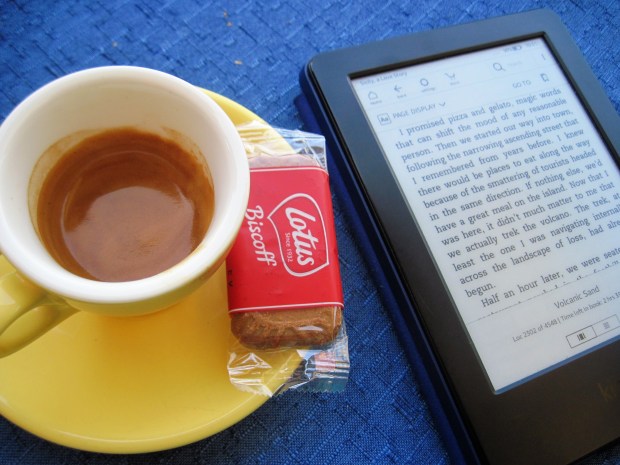
In fact, after Saro’s death from bone cancer in 2012, she became like a second daughter to Saro’s mother. The book focuses on the three summers in a row when she and her adopted daughter Zoela traveled to the family home in Sicily to stay with Nonna. I particularly appreciated the exploration of what it’s like to live between countries and cultures. This is one of three Reese Witherspoon book club books I’ve read so far (along with Where the Crawdads Sing and Daisy Jones and the Six), and all have been great – Reese’s recommendations are proving as reliable as Oprah’s.
 A mudslide blocked the route we should have taken back from Milan to Paris, so we rebooked onto trains via Switzerland. This plus the sub-Alpine setting for our next-to-last day made the perfect context for racing through Where the Hornbeam Grows: A Journey in Search of a Garden by Beth Lynch in just two days. Lynch moved from England to Switzerland when her husband took a job in Zurich. Suddenly she had to navigate daily life, including frosty locals and convoluted bureaucracy, in a second language. The sense of displacement was exacerbated by her lack of access to a garden. Gardening had always been a whole-family passion, and after her parents’ death their Sussex garden was lost to her. Two years later she and her husband moved to a cottage in western Switzerland and cultivated a garden idyll, but it wasn’t enough to neutralize their loneliness.
Much of what Lynch has to say about trying to find genuine connections as an expatriate rang true for me. Paradise Lost provides an unexpected frame of reference as Lynch asks what it means for a person or a plant to be transplanted somewhere new, and what it takes to thrive. Her elegant writing reminded me of Diana Athill’s and Penelope Lively’s, and the exploration of the self through gardens is reminiscent of Allan Jenkins’s Plot 29.
Other successful reads:
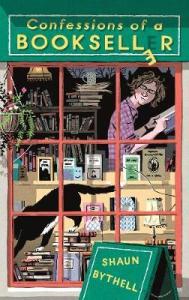 Confessions of a Bookseller by Shaun Bythell: This picks up right where The Diary of a Bookseller left off and carries through the whole of 2015. Again it’s built on the daily routines of buying and selling books, including customers’ and colleagues’ quirks, and of being out and about in a small town. I wished I was in Wigtown instead of Milan! Because of where I was reading the book, I got particular enjoyment out of the characterization of Emanuela (soon known as “Granny” for her poor eyesight and myriad aches and gripes), who comes over from Italy to volunteer in the bookshop for the summer. Bythell’s break-up with “Anna” is a recurring theme in this volume, I suspect because his editor/publisher insisted on an injection of emotional drama.
 City of Girls by Elizabeth Gilbert: There’s a fun, saucy feel to this novel set mostly in 1940s New York City. Twenty-year-old Vivian Morris comes to sew costumes for her Aunt Peg’s rundown theatre and falls in with a disreputable lot of actors and showgirls. When she does something bad enough to get her in the tabloids and jeopardize her future, she retreats in disgrace to her parents’ – but soon the war starts and she’s called back to help with Peg’s lunchtime propaganda shows at the Brooklyn Navy Yard. The quirky coming-of-age narrative reminded me a lot of classic John Irving, while the specifics of the setting made me think of Wise Children, All the Beautiful Girls and Manhattan Beach. The novel takes us to 2010, when Vivian is 90 and still brazenly independent. I was somewhat underwhelmed – while it’s a fairly touching story of how to absorb losses and make an unconventional family, I wondered if it had all meant much. I’ll be expanding this into a Shiny New Books review.
 Judgment Day by Sandra M. Gilbert: English majors will know Gilbert best for her landmark work of criticism, The Madwoman in the Attic (co-written with Susan Gubar). I had no idea that she writes poetry. This latest collection has a lot of interesting reflections on religion, food and art, as well as elegies to those she’s lost. Raised Catholic, Gilbert married a Jew, and the traditions of Judaism still hold meaning for her after husband’s death even though she’s effectively an atheist. “Pompeii and After,” a series of poems describing food scenes in paintings, from da Vinci to Hopper, is particularly memorable.
Not-so-successful reads:
 Vintage 1954 by Antoine Laurain: Dreadful! I would say: avoid this sappy time-travel novel at all costs. I thought the setup promised a gentle dose of fantasy, and liked the fact that the characters could meet their ancestors and Paris celebrities during their temporary stay in 1954. But the characters are one-dimensional stereotypes, and the plot is far-fetched and silly. I know many others have found this delightful, so consider me in the minority…
As well as a few DNFs…
What Dementia Teaches Us about Love by Nicci Gerard: I’ve read a lot of books about dementia, both clinical and anecdotal, and this doesn’t add anything new. (11%)
The Great Railway Bazaar by Paul Theroux: I read the first 32 pages, up to when Theroux arrives in northern Italy. He mostly describes his fellow passengers, as well as the details of meals and sleeping arrangements on trains. The writing struck me as old-fashioned, and I couldn’t imagine getting through another nearly 350 pages of it.
Out of the Woods by Luke Turner: Attempts to fuse nature and sexuality in a way that’s reminiscent of Hidden Nature by Alys Fowler. The writing didn’t draw me in at all. (5%)
Recent Poetry Reads
I love interspersing poetry with my other reading, and this year it seems like I’m getting to more of it than ever. Although I try to have a poetry collection on the go at all times, I still consider myself a novice and enjoy discovering new-to-me poets. However, I know many readers who totally avoid poetry because they assume they won’t understand it or it would feel too much like hard work.
Sinking into poems is certainly a very different experience from opening up a novel or a nonfiction narrative. Often I read parts of a poem two or three times – to make sure I’ve taken it in properly, or just to savor the language. I try to hear the lines aloud in my head so I can appreciate the sonic techniques at work, whether rhyming or alliteration. Reading or listening to poetry engages a different part of the brain, and it may be best to experience it in something of a dreamlike state.
I hope you’ll find a book or two that appeals from the selection below.
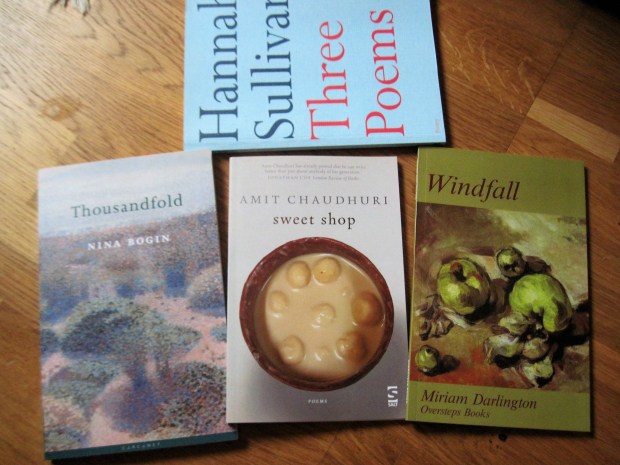
Thousandfold by Nina Bogin (2019)
 This is a lovely collection whose poems devote equal time to interactions with nature and encounters with friends and family. Birds – along with their eggs and feathers – are a frequent presence. Often a particular object will serve as a totem as the poet remembers the most important people in her life: her father’s sheepskin coat, her grandmother’s pink bathrobe, and the slippers her late husband shuffled around in – a sign of how diminished he’d become due to dementia. Elsewhere Bogin greets a new granddaughter and gives thanks for the comforting presence of her cat. Gentle rhymes and half-rhymes lend a playful or incantatory nature. I’d recommend this to fans of Linda Pastan.
My rating:
Thousandfold will be published by Carcanet Press on January 31st. My thanks to the publisher for the free copy for review.
Sweet Shop by Amit Chaudhuri (2019)
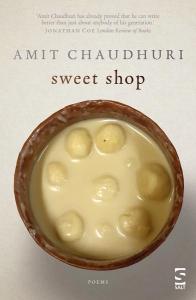 I was previously unfamiliar with Chaudhuri’s work, and unfortunately this insubstantial book about his beloved Indian places and foods hasn’t lured me into trying any more. The one poem I liked best was “Creek Row,” about a Calcutta lane used as a shortcut: “you are a thin, short-lived, / decaying corridor” and an “oesophageal aperture”. I also liked, as stand-alone lines go, “Refugees are periodic / like daffodils.” Nothing else stood out for me in terms of language, sound or theme. Poetry is so subjective; all I can say is that some poets will click with you and others don’t. In any case, the atmosphere is similar to what I found in Korma, Kheer and Kismet: Five Seasons in Old Delhi by Pamela Timms.
My rating: 
My thanks to Salt Publishing for the free copy for review.
Windfall by Miriam Darlington (2008)
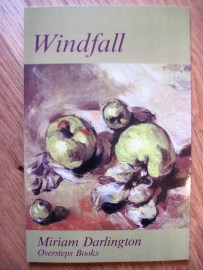 Before I picked this up from the bookstall at the New Networks for Nature conference in November, I had no idea that Darlington had written poetry before she turned to nature writing (Otter Country and Owl Sense). These poems are rooted in the everyday: flipping pancakes, sitting down to coffee, tending a garden, smiling at a dog. Multiple poems link food and erotic pleasure; others make nature the source of exaltation. I loved her descriptions of a heron (“a standing stone / perched in silt / a wrap of grey plumage”) and a blackbird (“the first bird / a glockenspiel in C / an improvisation on morning / a blue string of notes”), Lots of allusions and delicious alliteration. Pick this up if you’re missing Mary Oliver.
My rating: 
A Responsibility to Awe by Rebecca Elson (2018)
 Elson, an astronomer who worked on the Hubble Space Telescope, died of breast cancer; this is a reprint of her posthumous 2001 publication. Along with a set of completed poems, the volume includes an autobiographical essay and extracts from her notebooks. Her impending mortality has a subtle presence in the book. I focused on the finished poems, which take their metaphors from physics (“Dark Matter”), mathematics (“Inventing Zero”) and evolution (indeed, “Evolution” was my favorite). In the essay that closes the book, Elson remembers long summers of fieldwork and road trips across Canada with her geologist father (I was reminded of Margaret Atwood’s Cat’s Eye), and traces her academic career as she bounced between the United States and Great Britain.
My rating: 
My thanks to Carcanet Press for the free copy for review.
These next two were on the Costa Prize for Poetry shortlist, along with Hannah Sullivan’s Three Poems, which was one of my top poetry collections of 2018 and recently won the T. S. Eliot Prize. I first encountered the work of all three poets at last year’s Faber Spring Party.
Us by Zaffar Kunial (2018)
 Many of these poems are about split loyalties and a composite identity – Kunial’s father was Kashmiri and his mother English – and what the languages we use say about us. He also writes about unexpectedly developing a love for literature, and devotes one poem to Jane Austen and another to Shakespeare. My favorites were “Self Portrait as Bottom,” about doing a DNA test (“O I am translated. / The speech of numbers. / Here’s me in them / and them in me. … What could be more prosaic? / I am split. 50% Europe. / 50% Asia.”), and the title poem, a plea for understanding and common ground.
My rating:
Soho by Richard Scott (2018)
 When I saw him live, Scott read two of the amazingly intimate poems from this upcoming collection. One, “cover-boys,” is about top-shelf gay porn and what became of the models; the other, “museum,” is, on the face of it, about mutilated sculptures of male bodies in the Athens archaeological museum, but also, more generally, about “the vulnerability of / queer bodies.” If you appreciate the erotic verse of Mark Doty and Andrew McMillan, you need to pick this one up immediately. Scott channels Verlaine in a central section of gritty love poems and Whitman in the final, multi-part “Oh My Soho!”
My rating:
Don’t Call Us Dead by Danez Smith (2017)
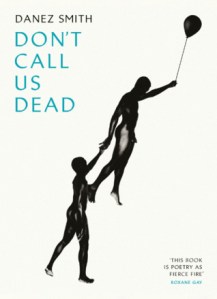 Like Claudia Rankine’s Citizen, this is a book whose aims I can admire even though I didn’t particularly enjoy reading it. It’s about being black and queer in an America where both those identifiers are dangerous, where guns and HIV are omnipresent threats. “reader, what does it / feel like to be safe? white?” Smith asks. “when i was born, i was born a bull’s-eye.” The narrator and many of the other characters are bruised and bloody, with blood used literally but also metaphorically for kinship and sexual encounters. By turns tender and biting, exultant and uncomfortable, these poems are undeniably striking, and a necessary wake-up call for readers who may never have considered the author’s perspective.
My rating:
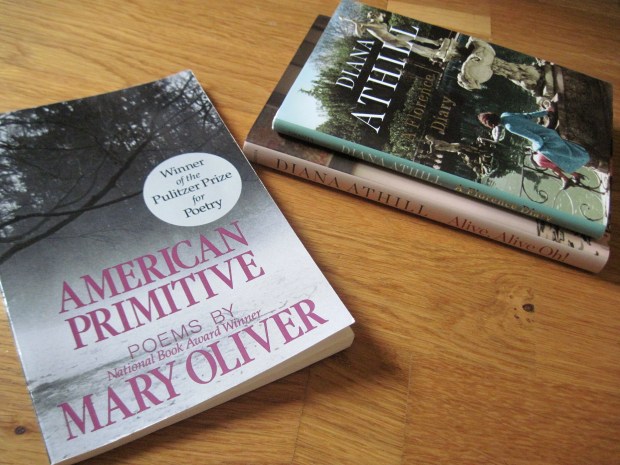
Up next: This Pulitzer-winning collection from the late Mary Oliver, whose work I’ve had mixed success with before (Dream Work is by far her best that I’ve read so far). We lost two great authors within a week! RIP Diana Athill, too, who was 101.
Any recent poetry reads you can recommend to me?
Heart and Mind: New Nonfiction by Sandeep Jauhar and Jan Morris
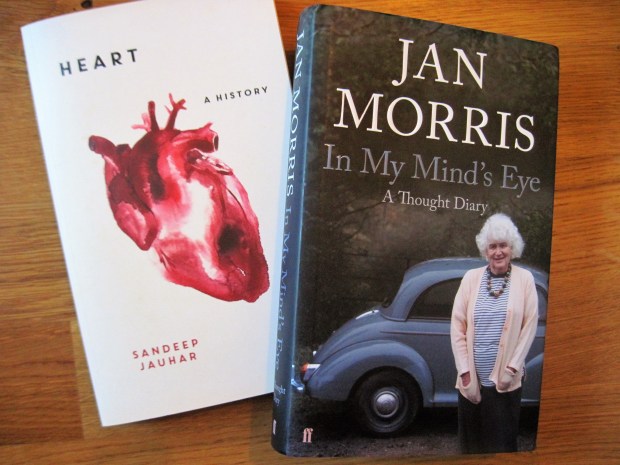
Heart: A History, by Sandeep Jauhar
There could hardly be an author better qualified to deliver this thorough history of the heart and the treatment of its problems. Sandeep Jauhar is the director of the Heart Failure Program at Long Island Medical Center. His family history – both grandfathers died of sudden cardiac events in India, one after being bitten by a snake – prompted an obsession with the heart, and he and his brother both became cardiologists. As the book opens, Jauhar was shocked to learn he had up to a 50% blockage of his own coronary vessels. Things had really gotten personal.
Cardiovascular disease has been the #1 killer in the West since 1910 and, thanks to steady smoking rates and a continuing rise in obesity and sedentary lifestyles, will still affect 60% of Americans. However, the key is that fewer people will now die of heart disease thanks to the developments of the last six decades in particular. These include the heart–lung machine, cardiac catheterization, heart transplantation, and artificial hearts.
 Along the timeline, Jauhar peppers in bits of his own professional and academic experience, like experimenting on frogs during high school in California and meeting his first cadaver at medical school. My favorite chapter was the twelfth, “Vulnerable Heart,” which is about how trauma can cause heart arrhythmias; it opens with an account of the author’s days cataloguing body parts in a makeshift morgue as a 9/11 first responder. I also particularly liked his account of being called out of bed to perform an echocardiogram, which required catching a taxi at 3 a.m. and avoiding New York City’s rats.
Maybe I’ve read too much surgical history this year (The Butchering Art by Lindsey Fitzharris and Face to Face by Jim McCaul), though, because I found myself growing fairly impatient with the medical details in the long Part II, which centers on the heart as a machine, and was drawn more to the autobiographical material in the first and final sections. Perhaps I would prefer Jauhar’s first book, Intern: A Doctor’s Initiation.
In terms of readalikes, I’d mention Siddhartha Mukherjee’s The Gene, in which the personal story also takes something of a backseat to the science, and Gavin Francis’s Shapeshifters, which exhibits a similar interest in the metaphors applied to the body. While I didn’t enjoy this quite as much as two other heart-themed memoirs I’ve read, The Sanctuary of Illness by Thomas Larson and Echoes of Heartsounds by Martha Weinman Lear, I still think it’s a strong contender for next year’s Wellcome Book Prize (the judging panel is announced tomorrow!).
Some favorite lines:
“it is increasingly clear that the biological heart is extraordinarily sensitive to our emotional system—to the metaphorical heart, if you will.”
“Who but the owner can say what lies inside a human heart?”“As a heart-failure specialist, I’d experienced enough death to fill up a lifetime. At one time, it was difficult to witness the grief of loved ones. But my heart had been hardened, and this was no longer that time.”
My rating:
Heart is published in the UK today, September 27th, by Oneworld. My thanks to the publisher for the proof copy for review.
In My Mind’s Eye: A Thought Diary, by Jan Morris
I’ve been an admirer of Jan Morris’s autobiographical and travel writing for 15 years or more. In this diary covering 2017 into early 2018, parts of which were originally published in the Financial Times and the Welsh-language literary newspaper O’r Pedwar Gwynt, we get a glimpse into her life in her early nineties. It was a momentous time in the world at large but a fairly quiet and reflective span for her personally. Though each day’s headlines seem to herald chaos and despair, she’s a blithe spirit – good-natured about the ravages of old age and taking delight in the routines of daily one-mile walks down the lane and errands in local Welsh towns with her beloved partner Elizabeth, who’s in the early stages of dementia.
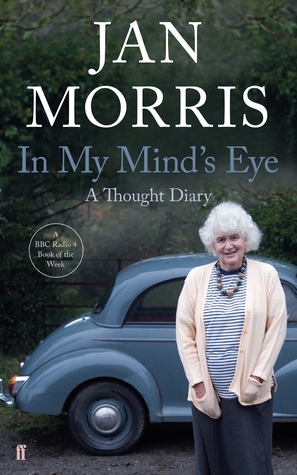 There are thrilling little moments, though, when a placid domestic life (a different kind of marmalade with breakfast each day of the week!) collides with exotic past experiences, and suddenly we’re plunged into memories of travels in Swaziland and India. Back when she was still James, Morris served in World War II, was the Times journalist reporting from the first ascent of Everest, and wrote a monolithic three-volume history of the British Empire. She took her first airplane flight 70 years ago, and is nostalgic for the small-town America she first encountered in the 1950s. Hold all that up against her current languid existence among the books and treasures of Trefan Morys and it seems she’s lived enough for many lifetimes.
There’s a good variety of topics here, ranging from current events to Morris’s love of cats; I particularly liked the fragments of doggerel. However, as is often the case with diaries, read too many entries in one go and you may start to find the sequence of (non-)events tedious. Each piece is only a page or two, so I tried never to read many more than 10 pages at a time. Even so, I noticed that the plight of zoo animals, clearly a hobby-horse, gets mentioned several times. It seemed to me a strange issue to get worked up about, especially as enthusiastic meat-eating and killing mice with traps suggest that she’s not applying a compassionate outlook consistently.
In the end, though, kindness is Morris’s cardinal virtue, and despite minor illness, telephone scams and a country that looks to be headed to the dogs, she’s encouraged by the small acts of kindness she meets with from friends and strangers alike. Like Diana Athill (whose Alive, Alive Oh! this resembles), I think of Morris as a national treasure, and I was pleased to spend some time seeing things from her perspective.
Some favorite lines:
“If I set out in the morning for my statutory thousand daily paces up the lane, … I enjoy the fun of me, the harmless conceit, the guileless complexity and the merriment. When I go walking in the evening, on the other hand, … I shall recognize what I don’t like about myself – selfishness, self-satisfaction, foolish self-deceit and irritability. Morning pride, then, and evening shame.” (from Day 99)
“Good or bad, virile or senile, there’s no life like the writer’s life.” (from Day 153)
My rating: 
In My Mind’s Eye was published by Faber & Faber on September 6th. My thanks to the publisher for the free copy for review.
How People Found My Blog Recently
I’m always interested to find out how people who aren’t regular followers catch wind of my blog. The web searches documented in my WordPress statistics are often bizarre, but do point to what have been some of my most enduringly popular posts: reviews of The First Bad Man, The Girl Who Slept with God, and The Essex Serpent; and write-ups of events with Diana Athill and Michel Faber. I also get a fair number of searches for Ann Kidd Taylor, whose two books I’ve featured at different points.
Here are some of the more interesting results from the last six months or so. My favorite search of all may well be “underwhelmed by ferrante”! (Spelling and punctuation are unedited throughout.)
October 19: the undiscovered islands malachy tallack, the first bad man, ann kidd taylor wedding
October 21: prose/poetry about autumn
November 2: ann kidd taylor, irmina barbara yelin, the first bad man summary, diana athill on molly keane
November 6: michel faber poems, essex serpent as byatt, book summary of the girl who slept with gid byval brelinski
November 17: book cycle, james lasdun, novel the girl who slept with god
November 25: john bradshaw the lion in the living room, bibliotherapy open courses the school of life, barbara yelin irmina, 2016 best prose poem extracts
December 5: seal morning, paul evans field notes from the edge, at the existentialist café: freedom, being, and apricot cocktails with jean-paul sartre, simone de beauvoir, albert camus, marti, read how many books at once
December 23: midwinter novel melrose, underwhelmed by ferrante
January 6: charlotte bronte handwriting, hundred year old man and john irving
January 12: memorable prose on looking forward, felicity Trotman
January 24: patient memoirs, poirot graphic novel, first bad man review, he came beck why? love poems
January 26: reading discussion essex serpent, elena ferrante my brilliant friend dislike
February 3: what are chimamanda’s novels transkated to films, ann kidd taylor, shannon leone fowler, i read war and peace and liked it
February 15: “how to make a french family” “review”, book that literally changed my life, the essex serpent summary
March 13: my darling detective howard norman, the essex serpent book club questions, the first bad man summary
March 22: the doll’s alphabet, joslin linder genetic disorders
March 31: detor, louisa young michel faber
May 7: the essex serpent plot, rebecca foster writer, book about cats, gauguin the other world dori fabrizio
How People Found My Blog Recently
Back in May I surveyed a few months’ worth of the (often very odd) web searches that led people to my blog. In the past four and a half months the search terms have been more normal in that they generally relate to books or authors I’ve covered. However, I do hope I haven’t disappointed some searchers: after all, I don’t reveal the exact location of the croft in Seal Morning, instruct readers in how to pronounce ‘Athill’, or give any details about Ann Kidd Taylor’s wedding!
In any case, it’s always interesting to see what people were looking up – Oliver Balch’s Under the Tump, Michel Faber’s Undying, Sarah Perry’s The Essex Serpent and various graphic novels were popular topics – and I reckon I count among the “bookish cat people” of the first search. (Spelling and punctuation are unedited throughout this list!)
May 26: bookish cat people, oliver balch under the tump
May 31: a book review of any book about 140-160 words, in my next life i want to be a cat. to sleep 20 hours a day and wait to be fed. to sit around licking my ass., under the tump by oliver balch reviews
June 25: irmina yelin, george watsky bipolar
July 2: michel faber undying goodreads, the first bad man book miranda july plot
July 16: she’s my only father’s daughter, essex serpent, sue gee, hay on wye
July 21: the ghost of nelly burdons beck
August 5: correct pronunciation of athill in diana athill s name
August 11: the essex serpent usa release
August 24: ann kidd taylor wedding
August 25: paintings with a woman reading a book
August 29: michel faber undying review, to the bright edge of the world interview
September 8: agatha christie graphic novel, house of hawthorne
September 13: irmina by barbara yellen
September 19: paulette bates
September 21: bbc miniseris vs book war and peace
September 26: vincent van gogh graphic novel
September 28: reviews on my son my sonby howard spring
September 30: seal morning location of croft
October 3: john pritchard_something more
Alive, Alive Oh!: Diana Athill in Person
Last night I was lucky enough to see 98-year-old literary legend Diana Athill in conversation with Erica Wagner at Foyles bookstore in London. Athill, born in 1917, has been an inspiration to me ever since I discovered her work five or so years ago. She didn’t publish anything until she was in her forties, and didn’t reach true acclaim until her eighties, when she released an incredible series of memoirs. Hers is an encouraging story of late-life success and what can be achieved with diligence and good fortune.
What strikes you immediately about Athill is her elegance. Although her hair is thinning and she speaks with a slight slur out of the left side of her mouth, she retains her eagle eye and hawkish profile. That cut-glass BBC pronunciation is not just “the Queen’s English” but a voice just like the Queen’s – she even occasionally used “One” to speak about her own experience. Her look, too, was perfectly put together: a beautiful, multicolored Nehru jacket over a blue silk blouse, accessorized with chunky blue and silver jewelry. Though she was brought in by wheelchair and needed a lot of help getting on the podium – she apologized for her belabored entry – she hardly seems on the brink of death.

Diana Athill and Erica Wagner.
Erica Wagner, too, is one of my heroes: an American expat who served as literary editor of the London Times from 1996 to 2013 and is now a contributing writer with New Statesman and a Harper’s Bazaar consulting literary editor. She drew Athill out on many of the topics from her latest memoir, Alive, Alive Oh! And Other Things that Matter, including the unexpected pregnancy and miscarriage she experienced in her forties, memories of visiting Tobago, and the downsizing that preceded her move into a retirement home.
 Athill recalled the absolute joy she felt upon waking up from her miscarriage, a medical emergency that could well have ended in her death. It was a feeling that started in her stomach and rose up through her body – “I’m alive!” she remembered exulting. Losing her chance at motherhood was not a haunting sadness for her, she remarked; to her surprise, she got over it easily. Part of it was that she had never felt maternal yearning; she vividly pictures being 19, looking at someone’s baby lying on a bed and wondering to herself how she should feel about this creature. Ultimately, she decided, “I’d much rather pick up a puppy!”
That sort of forthrightness was evident in a number of pithy responses Athill gave to audience members’ questions. Asked “is it better to have loved and lost than never to have loved?” she replied with a simple, emphatic “YES!” Does she have anything planned for her 100th birthday? “I choose not to think about it,” she quipped. Has age mellowed her? “A bit,” she hedged, before adding that she is now more tolerant and minds less what others think of her.
One of her key pieces of advice is to avoid romanticism and possessiveness. That certainly played out in her unconventional personal life: she never married but was with her partner, a black man, for some four decades, and after he divorced his wife they formed an unusual household arrangement with his new lover and her family.
If Athill was never possessive in love affairs, however, she did struggle with it in terms of belongings. It was agonizing, she noted, to give up most of her things – especially her books – when moving into a tiny room in a Highgate retirement home. Now, though, she doesn’t mind at all. “When you get very old you really don’t need much,” she insisted. Early on she adopted Montaigne’s practice of thinking about death once a day to get used to the idea. None of the 40 residents at her home minds the thought of being dead; what they don’t like is the idea of dying. Each one hopes to bypass the horrid death and have the easy one instead.
Writing started as a therapeutic exercise for Athill. She wrote Instead of a Letter, about a painful love affair from her youth, because she had a deep sense of failure as a woman. After writing about it, though, she felt completely better, like a new person. Several of her other nonfiction books had a similar motivation: they were a way of getting rid of sad experiences, her own or others’ that she was close to.
 When encouraged to write about her long career as a literary editor, she initially thought she couldn’t do it; she only wrote to “cure nasty things” by getting to the bottom of them as honestly as possible. However, she managed to convince herself she could also write for fun, and Stet, about her work with André Deutsch, was the delightful result. Asked for some of her favorite authors, she named Molly Keane (as a person as well as a writer), Jean Rhys, and Philip Roth (not as a person, she hastened to add!). Rhys and V.S. Naipaul, two of her illustrious clients, never needed a word editing, she recalled; however, they did occasionally need a nanny.
Having seen publishing from the other side now, as an author, Athill believes that being read with absolute attention by an editor – as opposed to getting halfway through a review and finding one’s work hasn’t been understood at all – is heaven. So although she was initially surprised that she would be given an editor, she joked, in the end she was grateful. Publishing is now much more of a business, she acknowledges, but she still feels that many people are in it for the right reason: simply because they love books.
 In the wider world, so much has changed for the worse over the past near-century she’s been alive, but medicine and education are two things that have gotten better. “Long live the National Health!” she cried. (Hear, hear!) On the other hand, it was particularly interesting to hear Athill sigh that she hasn’t been a very good feminist; although she supports the idea, she feels she should have been more engaged. For example, she knew very well that she earned less than a man in her position would have at André Deutsch, but never made anything of it.
In the end, Athill thinks of luck as what’s given to you rather than something you make. “On the whole, I have been so lucky in my life,” she marveled towards the close of last night’s wonderful event. “I can’t really complain about anything.”
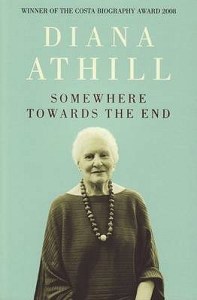
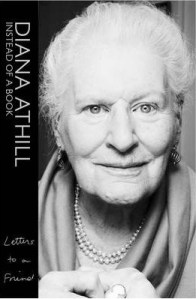 I’ve now read all Athill’s work, even her rather obscure novel and short story collection. Her latest book doesn’t live up to her few best memoirs, but it’s an essential read for a devoted fan. For readers new to her work, I’d recommend starting with Somewhere Towards the End, followed by Stet. From there you might try her book of correspondence with American poet Edward Field, Instead of a Book, or her memoir of childhood, Yesterday Morning.
Psssssst! I have the dirt on a forthcoming Athill publication – and here I thought Alive, Alive Oh! would be her last book for sure. It will be the diary of a trip she took to Florence in 1948. Italy seemed to have bounced back from six years of wartime much more quickly than England, so after that sense of imprisonment it was a chance to enjoy life once again. I’ll be keen to read this rare ‘found document’.
Reviews Roundup, November–December
One of my goals with this blog is to have one convenient place where I can gather together all my writing that has appeared in disparate online locations. To that end, once a month I provide links to all book reviews I’ve published elsewhere, with a rating (below each description) and a taster so you can decide whether to read more. A few exceptions: I won’t point out my Kirkus Indie, BlueInk or Publishers Weekly reviews since I don’t get a byline.
The Bookbag
 In Search of Mary: The Mother of All Journeys by Bee Rowlatt: A BBC journalist and mother of four sets out, baby in tow, to trace the steps of Mary Wollstonecraft in Norway and France. A follow-up trip to California is a little off-topic, but allows Rowlatt to survey the development of feminism over the last few centuries. This isn’t as successful a bibliomemoir as many I’ve read in recent years, such as Rebecca Mead’s My Life in Middlemarch or Samantha Ellis’s How to Be a Heroine, but for readers interested in engaging in the ongoing debate about how women can balance work life with motherhood, and especially for any women who have attempted traveling with children, it’s a fun, sassy travelogue.

Foreword Reviews
 Italy Invades: How Italians Conquered the World by Christopher Kelly and Stuart Laycock: Proceeding alphabetically from Afghanistan to Zimbabwe, the authors give a comprehensive picture of Italians’ global reach through one- to five-page snapshots. There are many familiar names here, such as Caesar, Garibaldi and Marco Polo. Along with exploration, some major reasons for historical crossover were trade, war, colonialism and immigration. At times it feels as if the authors are grasping at straws; better to skip one-paragraph write-ups altogether and focus instead on the countries that have extensive links with Italy. Nonetheless, this is a lively, conversational book full of surprising facts.

Why You Won’t Go to Hell by Benjamin Vande Weerdhof Andrews: In a well-structured argument, Andrews prizes empirical thinking, rejects the supernatural, and affirms the possibility of godless morality. His central thesis is that religion doesn’t evolve to keep pace with society and so holds humanity back. The book’s tone is too often defensive, often in response to included website comments, and there are some failures of accuracy and fairness. Ultimately, though, this could be an inspirational book for atheists or believers, prompting both groups to question their assumptions and be willing to say “I don’t know.” Readers of Sam Harris and Christopher Hitchens will be particularly drawn to the book, but others should take a chance on it too.

 Cultured Food for Health by Donna Schwenk: When Schwenk started eating cultured foods in 2002, she had diabetes, high blood pressure, and a premature newborn. Keen to see if good bacteria could help with her medical problems, she started introducing the “healing powerhouse” of kefir (a fermented milk product resembling thin yogurt), kombucha (bubbly tea), and cultured vegetables into her diet, and soon reaped the rewards. About a quarter of the book is background information about probiotic foods. Bullet-pointed lists of health benefits, along with an alphabetical inventory of the diseases that cultured foods can treat, should prove helpful. The rest of the book is devoted to recipes, most vegetarian.
Three Simple Questions: Being in the World, But Not of It by Charlie Horton: Horton, trained as a social worker, was diagnosed with cerebellar degeneration in 1988. It has gradually affected his speech and movement. Despite having lived with disability for nearly three decades, he declares, “the world I live in is rich, and my spirit is young.” Here he documents how he deals with depression and physical limitations through guided meditations that bring him closer to God. Although he comes from a Christian perspective, he writes about spirituality in such inclusive terms that his work should speak to people of any faith.
Middle Passage: The Artistic Life of Lawrence Baker by Louis B. Burroughs, Jr.: This ghostwritten autobiography of an African-American artist is not only an evocative, eventful life story that moves from the Jim Crow South to the North, but also a forceful artist’s manifesto. Burroughs writes in Baker’s voice, a decision that works surprisingly well. The title is a powerful reference to the slave trade. Indeed, Burroughs consciously crafts Baker’s autobiography as an “up from slavery” narrative reminiscent of Richard Wright and Maya Angelou – with ‘slavery’ in this case being poverty and racism.
Nudge
 40 Sonnets by Don Patterson: All but one of the poems in this new book have the sonnet’s traditional 14 lines; “The Version” is a short prose story about writing an untranslatable poem. However, even in the more conventional verses, there is a wide variety of both subject matter and rhyme scheme. Topics range from love and death to a phishing phone call and a footpath blocked off by Dundee City Council. A few favorites were “A Powercut,” set in a stuck elevator; “Seven Questions about the Journey,” an eerie call-and-response; and “Mercies,” a sweet elegy to an old dog put to sleep. There weren’t quite enough stand-outs here for my liking, but I appreciated the book as a showcase for just how divergent in form sonnets can be.
 Without You There Is No Us by Suki Kim: This is a quietly gripping book even though not much of moment happens over Kim’s five months teaching young men at a missionary-run college in Pyongyang. She was in a unique position in that students saw her as ethnically one of their own but she brought an outsider’s perspective to bear on what she observed. Just before she flew back to the States in 2011, Kim Jong-Il died, an event she uses as a framing device. It could have represented a turning point for the country, but instead history has repeated itself with Kim Jong-un. Kim thus ends on a note of frustration: she wants better for these young men she became so fond of. A rare glimpse into a country that carefully safeguards its secrets and masks its truth.
 Alive, Alive Oh!: And Other Things that Matter by Diana Athill: Diana Athill turns 98 on December 21st. Apart from “Dead Right,” however, this collection is not primarily concerned with imminent death. Instead Athill is still grateful to be alive: marveling at a lifetime of good luck and health and taking joy in gardening, clothing, books, memories and friendships. Six of the 10 essays originally appeared elsewhere. The collection highlight is the title piece, about a miscarriage she suffered in her forties. Another stand-out is “The Decision,” about moving into a retirement home in her nineties. This doesn’t live up to her best memoirs, but is an essential read for a devoted fan, and a consolation given she will likely not publish anything else (though you never know). [For first-time Athill readers, I’d recommend starting with Somewhere Towards the End, followed by Stet, about her work as a literary editor.]
I also post reviews of most of my casual reading and skimming on Goodreads:
The Weightless World by Anthony Trevelyan: This debut novel blends postcolonial bureaucracy with steampunk zaniness. The setup is familiar enough: businessmen head overseas to take financial advantage of a former colony, puzzle over unfamiliar customs, and by the end are chastened but gain a clearer sense of values. Narrator Steven Strauss is the personal assistant to Raymond Ess, an entrepreneur with a history of mental illness. Their aviation company has gone bust; Strauss is to accompany Ess to India and keep him occupied by looking for an anti-gravity machine. Not anchored by either current events or convincing fantasy, the plot suffers in comparison to works by Geoff Dyer or Nick Harkaway. Despite entirely serviceable writing and a gravity-defying theme, it never really takes off.

 My Confection: Odyssey of a Sugar Addict by Lisa Kotin: 1978. Twenty-one-year-old mime goes to macrobiotic rehab to recover from sugar addiction. Fails. Shows signs of being a sex addict as well. Pared down to headlines, that’s how this fairly rambling memoir about Kotin’s relationships with food, family, lovers, and career opens. I kept waiting for a turn, some moment of revelation, when Kotin’s binge eating would be solved. Still, her recreation of her obsessive younger self can be pretty funny and charming, and her family sounds a bit like the Sedaris clan. I found this a bit dated, but others may find the time period and Jewish family background more evocative.
 Good on Paper by Rachel Cantor: I’m going to chalk this one up to blurb inflation. The writing is lively and the plot well crafted, with quirky postmodern touches, but the novel as a whole did not live up to my absurdly high expectations: it’s really nothing like A.S. Byatt’s Possession. It’s 1999 and Shira Greene is a failed translator from the Italian, now working as a temp in New York City and raising her daughter Andi with the help of her gay, Pakistani co-parent, Ahmad. One day she gets a call from Romei, a Nobel Prize-winning Italian poet who wants her to translate his new work, a version of Dante’s Vita Nuova that focuses on his relationship with his ill wife – and eventually starts to comment on Shira’s own life in surprising ways.
Water Sessions by James Lasdun: Wonderful poems from a severely underrated writer. The British Lasdun has relocated to small-town upstate New York, where he’s learned the spiritual worth of manual labor. There are such interesting rhyme schemes and half-rhymes throughout. One of the most striking poems, “Thing One and Thing Two,” compares human and animal sexuality in a rather disturbing way. The title sequence is a dialogue between a patient and a therapist, discussing what went wrong in a relationship and how arguments are never ‘about’ the thing that started it.
 The Secret Chord by Geraldine Brooks: A retelling of the life of King David from the perspective of the prophet Nathan. The naming takes some getting used to, but the stories – from gory massacres to moments of triumph – are recognizable from the Old Testament. What makes Brooks’s take unique is the different points of view it shows and the ways it subtly introduces doubt about David’s carefully cultivated image. It’s sensual historical fiction, full of rich descriptive language. Strangely unmemorable for me, perhaps because the storyline is just too familiar. Brooks doesn’t offer a radical reinterpretation but sows small seeds of doubt about the hero we think we know. (Full review in Jan/Feb 2016 issue of Third Way magazine.)
 When I Die: Lessons from the Death Zone by Philip Gould: Gould may be familiar to British readers as a key strategist of the New Labour movement and one of Tony Blair’s advisors. In 2008 he was diagnosed with esophageal cancer and chose to pay for private treatment at New York’s Sloan-Kettering hospital instead of going for a radical operation through the NHS – a fateful decision. Gould’s own account is fairly short, about 140 pages, but it’s supplemented by short reminiscences from his wife and two daughters. Daughter Georgia’s, especially, is a very good blow-by-blow of his final week. All royalties from the book went to the National Oesophago-Gastric Cancer Fund.
 Twain’s End by Lynn Cullen: “Twain’s End” was a possible name for the Clemens house in Connecticut, but it’s also a tip of the hat to Howards End and an indication of the main character’s impending death. In January 1909, when the novel opens, Samuel Clemens, 74, is busy dictating his autobiography and waiting for Halley’s Comet, the heavenly body that accompanied his birth, to see him back out. His secretary, Isabel Lyon, is 45 and it’s no secret that the two of them are involved. I love how the novel shifts between the perspectives of several strong female characters yet still gives a distinct portrait of Clemens/Twain. Interestingly, I found that it helped to have visited the Twain house in Connecticut – I could truly picture all the scenes, especially those set in the billiard room and conservatory.
 Meadowland: The Private Life of an English Field by John Lewis-Stempel: Lewis-Stempel is a proper, third-generation Herefordshire farmer, but also a naturalist with a poet’s eye. His day job might involve shooting rabbits, cutting hay and delivering lambs, but he still finds the time to notice and appreciate wildlife. He knows his field’s flowers, insects and birds as well as he knows his cows; he gets quiet and close enough to the ground to watch a shrew devouring beetles. June and July are the stand-out chapters, with some truly magical moments. When his mower breaks on a stone, he has to cut the hay by hand, returning him to a centuries-gone model of hard labor. All delivered in the loveliest prose.

Did You Ever Have a Family by Bill Clegg: A strong debut novel about personal and community responses to tragedy. Clegg’s multivocal approach works quite well, though there are perhaps a few too many voices diluting the mixture. I like how the revelations of what really happened that night before the wedding to cause the fatal house fire come gradually, making you constantly rethink who was responsible and what it all means. The small-town Connecticut setting is a good one, but I’d question the decision to set so much of the book in Washington, where the bereaved June drives on a whim. For a tragic story, it’s admirably lacking in melodrama.
 A Homemade Life: Stories and Recipes from My Kitchen Table by Molly Wizenberg: Foodoir extraordinaire! I liked this even better than Delancey, which is a terrific book about opening a pizza restaurant in Seattle with her husband. Here we get the prequel: the death of her father Burg from cancer, time spent living in Paris, building a new life in Seattle, starting her now-famous food blog (Orangette), and meeting her husband Brandon through it. Each brief autobiographical essay is perfectly formed and followed by a relevant recipe, capturing precisely how food is tied up with her memories. Wizenberg’s very fond of salad, but also of cake, and every recipe is full-on in terms of flavors and ingredients.
Ellen Foster by Kaye Gibbons: This was a random library book sale purchase, chosen almost entirely for the title. I set aside my usual dislike of child narrators and found an enjoyable voice-driven novella about a feisty ten-year-old who loses both her parents (good riddance to her father, at least) and finds her own unconventional family after cycling through the homes of some truly horrid relatives. Just as an example, her maternal grandmother sends her out to work picking cotton. The book is set in the South, presumably in the 1970s or 80s, so it’s alarming to see how strong racial prejudice still was.
 The Ecco Book of Christmas Stories, edited by Alberto Manguel: I read this over several years, a handful each holiday season. There are some very unusual choices, including some that really have hardly anything to do with Christmas (e.g. one by Bessie Head). Still, it’s a nice book to have to hand, even if just to skip through. Manguel strikes a good balance between well-known short story writers, authors you might never think to associate with Christmas, and fairly obscure works in translation. Four favorites: “A Christmas Memory,” Truman Capote (overall favorite); “Christmas Is a Sad Season for the Poor,” John Cheever; “The Zoo at Christmas,” Jane Gardam; and “O’Brien’s First Christmas,” Jeanette Winterson.
 Bookish Beck = Rebecca Foster. American transplant to England. Freelance proofreader and book reviewer.
 Bookish Beck