20 Books of Summer, 18–20: Ayanna Lloyd Banwo, Sarah Hall, Meghan O’Rourke
Whew, it’s the final day of the challenge and I’ve managed to finish and write up a last batch of two novels and one nonfiction work: a magic realist tableau of love and death in Trinidad, a fateful romance set against the backdrop of the construction of an English dam in 1936, and a personal and cultural record of chronic illness and its treatment in contemporary America.
When We Were Birds by Ayanna Lloyd Banwo (2022)
 I was sent a copy as part of the McKitterick Prize shortlist. The setting of a cemetery, Fidelis in Port Angeles, Trinidad, had vaguely attracted me even before its nomination. Emmanuel Darwin has turned his back on his Rastafarian upbringing to cut off his dreadlocks and work as a gravedigger (any contact with the dead is anathema in the religion). Meanwhile, Yejide, who lives in the hills, is losing her mother, Petronella, and gaining a legacy she’s not sure she wants: the women of her family are caretakers of the souls of the dead, keeping them alive in exchange for protection. Like the corbeaux, dark counterparts of tropical parrots, they tread the border of life and death. As All Saints’ and All Souls’ Days draw closer, Darwin and Yejide together have to decide whether they will be swallowed by the graveyard or escape it. While this was atmospheric and had alluring elements, the speculative angle was not notably well realized and the particular form of patois – eschewing all possessives and most verb conjugations – drove me nuts. I skimmed this one. (Free from the Society of Authors)
Haweswater by Sarah Hall (2002)
I bought this in Cumbria one year and started reading it in Cumbria the next. Once I got home, however, there was little impetus to keep going. Were it not for the temporary local interest, I likely would not have finished this debut novel, which lurches between dry and melodramatic. As it is, I had to skim to the end. Had it been my first taste of Sarah Hall’s work, it might have put me off trying her again.
 The frame is historical: Haweswater was indeed dammed to provide water for the city of Manchester in 1936, flooding the village of Mardale. Hall focuses on the people of Mardale, specifically the Lightburn family, who have persisted with farming despite its particular challenges in this hilly landscape. When Jack Liggett comes out from the City on behalf of the waterworks, he meets with hostility, including from the Lightburns’ daughter, Janet, who negotiates for their tenancy to continue until the dam is actually built. Then, well, you know, Romeo and Juliet and pride and prejudice and all that, and they start an affair. Hall has always written forthrightly about sex, starting here.
There’s a climactic final 60 pages in which three major characters die, two in symbolic acts of suicide, but it was a little too much tragedy, too late, for me after the dull midsection. I was intrigued, however, that a plot point turns on golden eagles being in the valley, as Wild Fell, another of my Haweswater-set reads, opens with the presence of the ghost of England’s last golden eagle, who vanished in 2015. This related snippet shows how over-the-top Hall’s use of dialect is: “Golden eagles wud be mor’less gone, gone or illegal these days, like, notta funni bizniz t’be gittin’ mixed up in, eh? What kinda daft bugger d’yer take mi for?” It’s like Thomas Hardy rustics – hard to take seriously. (Anne-Marie Sanderson’s haunting song “Haweswater” is based on the novel.) (Secondhand – Clutterbooks, Sedbergh, 2022) 
The Invisible Kingdom: Reimagining Chronic Illness by Meghan O’Rourke (2022)
Well before I was a devoted follower of the Barbellion Prize for books on disability and chronic illness, I was interested in these topics. For much of her forties and fifties, my mother struggled with fibromyalgia, one of a suite of illnesses misunderstood or even dismissed by the medical profession (as O’Rourke puts it, with a tongue-in-cheek nod to Jane Austen: “it is a truth universally acknowledged among the chronically ill that a young woman in possession of vague symptoms like fatigue and pain will be in search of a doctor who believes she is actually sick”). I hope this National Book Award nominee goes some way toward convincing skeptics that these are real conditions to be addressed by listening to patients and treating them holistically.
 In 2012 the author became seriously ill and spent much of her thirties in a fog of pain, spending the equivalent of several days per month at doctors’ appointments and agreeing to ever more bizarre treatments in her desperation. Some of her issues were autoimmune and/or genetic: Hashimoto’s (thyroid), Ehlers-Danlos, POTS, endometriosis. She also dealt with infertility at the same time as she was trying to get well enough to contemplate having children. For her, the turning point was when she was diagnosed with Lyme disease and put on antibiotics. (Later she would travel to London to get fecal microbiota transplants to restore her microbiome.) Chronic Lyme is similar to long COVID, the true extent of which we’re only just beginning to understand; reading a list of the symptoms, I was tempted to remotely/retrospectively diagnose a few people I know with one or the other. It can be ever so slightly miserable reading about navigating all of these conditions, though nowhere near as miserable as it must have been for O’Rourke to live through them, of course.
I knew the author for her exquisite memoir of losing her mother to cancer, The Long Goodbye. Here the writing is more functional and journalistic, but I was still impressed by the attention she pays and the connections she draws; she’s also a poet, so she’s open to emotions and keen to capture them in words. In the face of the unexplained, she contends, chronically ill people are searching for meaning and narrative (restitution, chaos or quest, as Arthur Frank named the three options). She probes her own psyche: “had I become trapped in my identity as a sick person, someone afraid of living? If my mission in life had been reduced to being well at all costs, then the illness had won.” There’s a good balance of research, personal experience and general reflection in this one. (Passed along by Laura – thank you!) 
Related reads: Ill Feelings by Alice Hattrick, It’s All in Your Head by Suzanne O’Sullivan, Waiting for Superman by Tracie White
And that’s a wrap! My summer reading was a little scattered and not as thematic as initially planned, but I stuck to my pledge to read only print books that I owned, and then cleared half of them from my shelves through reselling or donating to the Little Free Library. I’ll definitely call that a win.
My favourite from the 20 was a novel, Search by Michelle Huneven, then Making the Beds for the Dead by Gillian Clarke (poetry), followed by two chef’s memoirs, A Cook’s Tour by Anthony Bourdain and Dirt by Bill Buford, and Dorthe Nors’ nature/travel essays. The one DNF and couple of skims are unfortunate, but these things happen.
Next year I fancy a completely open challenge – just, again, getting through books from my shelves. (Maybe all hardbacks?)
#WITMonth, Part II: Wioletta Greg, Dorthe Nors, Almudena Sánchez and More
My next four reads for Women in Translation month (after Part I here) were, again, a varied selection: a mixed volume of family history in verse and fragmentary diary entries, a set of nature/travel essays set mostly in Denmark, a memoir of mental illness, and a preview of a forthcoming novel about Mary Shelley’s inspirations for Frankenstein. One final selection will be coming up as part of my Love Your Library roundup on Monday.
(20 Books of Summer, #13)
Finite Formulae & Theories of Chance by Wioletta Greg (2014)
[Translated from the Polish by Marek Kazmierski]
 I loved Greg’s Swallowing Mercury so much that I jumped at the chance to read something else of hers in English translation – plus this was less than half price AND a signed copy. I had no sense of the contents and might have reconsidered had I known a few things: the first two-thirds is family wartime history in verse, the rest is a fragmentary diary from eight years in which Greg lived on the Isle of Wight, and the book is a bilingual edition, with Polish and English on facing pages (for the poems) or one after the other (for the diary entries). I’m not sure what this format adds for English-language readers; I can’t know whether Kazmierski has rendered anything successfully. I’ve always thought it must be next to impossible to translate poetry, and it’s certainly hard to assess these as poems. They are fairly interesting snapshots from her family’s history, e.g., her grandfather’s escape from a stalag, and have quite precise vocabulary for the natural world. There’s also been an attempt to create or reproduce alliteration. I liked the poem the title phrase comes from, “A Fairytale about Death,” and “Readers.” The short diary entries, though, felt entirely superfluous. (New purchase – Waterstones bargain, 2023)
(20 Books of Summer, #14)
A Line in the World: A Year on the North Sea Coast by Dorthe Nors (2021; 2022)
[Translated from the Danish by Caroline Waight]
 Nors’s first nonfiction work is a surprise entry on this year’s Wainwright Prize nature writing shortlist. I’d be delighted to see this work in translation win, first because it would send a signal that it is not a provincial award, and secondly because her writing is stunning. Like Patrick Leigh Fermor, Aldo Leopold or Peter Matthiessen, she doesn’t just report what she sees but thinks deeply about what it means and how it connects to memory or identity. I have a soft spot for such philosophizing in nature and travel writing.
You carry the place you come from inside you, but you can never go back to it.
I longed … to live my brief and arbitrary life while I still have it.
This eternal, fertile and dread-laden stream inside us. This fundamental question: do you want to remember or forget?
Nors lives in rural Jutland – where she grew up, before her family home was razed – along the west coast of Denmark, the same coast that reaches down to Germany and the Netherlands. In comparison to Copenhagen and Amsterdam, two other places she’s lived, it’s little visited and largely unknown to foreigners. This can be both good and bad. Tourists feel they’re discovering somewhere new, but the residents are insular – Nors is persona non grata for at least a year and a half simply for joking about locals’ exaggerated fear of wolves.
Local legends and traditions, bird migration, reliance on the sea, wanderlust, maritime history, a visit to church frescoes with Signe Parkins (the book’s illustrator), the year’s longest and shortest days … I started reading this months ago and set it aside for a time, so now find it difficult to remember what some of the essays are actually about. They’re more about the atmosphere, really: the remote seaside, sometimes so bleak as to seem like the ends of the earth. (It’s why I like reading about Scottish islands.) A bit more familiarity with the places Nors writes about would have pushed my rating higher, but her prose is excellent throughout. I also marked the metaphors “A local woman is standing there with a hairstyle like a wolverine” and “The sky looks like dirty mop-water.”
With thanks to Pushkin Press for the proof copy for review.
Pharmakon by Almudena Sánchez (2021; 2023)
[Translated from the Spanish by Katie Whittemore]
 This is a memoir in micro-essays about the author’s experience of mental illness, as she tries to write herself away from suicidal thoughts. She grew up on Mallorca, always feeling like an outsider on an island where she wasn’t a native. Did her depression stem from her childhood, she wonders? She is also a survivor of ovarian cancer, diagnosed when she was 16. As her mind bounces from subject to subject, “trying to analyze a sick brain,” she documents her doctor visits, her medications, her dreams, her retweets, and much more. She takes inspiration from famous fellow depressives such as William Styron and Virginia Woolf. Her household is obsessed with books, she says, and it’s mostly through literature that she understands her life. The writing can be poetic, but few pieces stand out on the whole. My favourite opens: “Living in between anxiety and apathy has driven me to flowerpot decorating.”
With thanks to Fum d’Estampa Press for the free copy for review.
And a bonus preview:
Mary and the Birth of Frankenstein by Anne Eekhout (2021; 2023)
[Translated from the Dutch by Laura Watkinson]
 Anne Eekhout’s fourth novel and English-language debut is an evocative recreation of two momentous periods in Mary Shelley’s life that led – directly or indirectly – to the composition of her 1818 masterpiece. Drawing parallels between the creative process and motherhood and presenting a credibly queer slant on history, the book is full of eerie encounters and mysterious phenomena that replicate the Gothic science fiction tone of Frankenstein itself. The story lines are set in the famous “Year without a Summer” of 1816 (the storytelling challenge with Lord Byron) and during a period in 1812 that she spent living in Scotland with the Baxter family; Mary falls in love with the 17-year-old daughter, Isabella.
Coming out on 3 October from HarperVia. My full review for Shelf Awareness is pending.
The Best Books from the First Half of 2023
Yes, it’s that time of year already! It remains to be seen how many of these will make it onto my overall best-of year list, but for now, these are my 20 highlights. Plus, I sneakily preview another great novel that won’t release until September. (For now I’m highlighting 2023 releases, whereas at the end of the year I divide my best-of lists into current year and backlist. I’ve read 86 current-year releases so far and am working on another 20, so I’m essentially designating a top 20% here.) I give review excerpts and link to the full text from this site or elsewhere. Pictured below are the books I read in print; all the others were e-copies.

Fiction
 Shoot the Horses First by Leah Angstman: In 16 sumptuous historical stories, outsiders and pioneers face disability and prejudice with poise. The flash entries crystallize moments of realization, often about health. Longer pieces shine as their out-of-the-ordinary romances have space to develop. In the novella Casting Grand Titans, a botany professor in 1850s Iowa learns her salary is 6% of a male colleague’s. She strives for intellectual freedom, reporting a new-to-science species of moss, while working towards liberation for runaway slaves.
 The House Is on Fire by Rachel Beanland: Moving at a propulsive pace, Beanland’s powerful second novel rotates through the perspectives of these main characters – two men and two women; two white people and two enslaved Black people – caught up in the Richmond Theater Fire of 1811 (one of the deadliest events in early U.S. history) and its aftermath. Painstakingly researched and full of historical detail and full-blooded characters, it dramatizes the range of responses to tragedy and how people rebuild their lives.
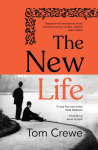 The New Life by Tom Crewe: Two 1890s English sex researchers (based on John Addington Symonds and Havelock Ellis) write a book called Sexual Inversion drawing on ancient Greek history and containing case studies of homosexual behaviour. Oscar Wilde’s trial puts everyone on edge; not long afterwards, their own book becomes the subject of an obscenity trial, and each man has to decide what he’s willing to give up in devotion to his principles. This is deeply, frankly erotic stuff, and, on the sentence level, just exquisite writing.
 Daughters of Nantucket by Julie Gerstenblatt: (Yes, another historical fire novel, and I reviewed both for Shelf Awareness!) This engrossing debut explores the options for women in the mid-19th century. Metaphorical conflagrations blaze in the background in the days leading up to the great Nantucket fire of 1846: each of three female protagonists (a whaling captain’s wife, a museum curator, and a pregnant Black entrepreneur) holds a burning secret and longs for a more expansive, authentic life. Tense and sultry; for Sue Monk Kidd fans.
 I Have Some Questions for You by Rebecca Makkai: When an invitation comes from her boarding school alma mater, Granby, to teach a two-week course on podcasting, Bodie indulges her obsession with the 1995 murder of her former roommate. Makkai has taken her cues from the true crime genre and constructed a convincing mesh of evidence and theories. She so carefully crafts her pen portraits, and so intimately involves us in Bodie’s psyche, that it’s impossible not to get invested. This is timely, daring, intelligent, enthralling storytelling.
 Sidle Creek by Jolene McIlwain: In this debut collection of 22 short stories, loosely linked by their location in the Appalachian hills in western Pennsylvania and a couple of recurring minor characters, McIlwain softens the harsh realities of addiction, poverty and violence with the tender bruises of infertility and lost love. Grief is a resonant theme in many of the stories, with pregnancy or infant loss a recurring element. At times harrowing, always clear-eyed, these stories are true to life and compassionate about human foibles and animal pain.
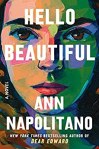 Hello Beautiful by Ann Napolitano: Oprah’s 100th book club pick. It’s a family story spanning three decades and focusing on the Padavanos, a working-class Italian American Chicago clan with four daughters. Julia meets melancholy basketball player William Waters while at Northwestern in the late 1970s. There is such warmth and intensity to the telling, and brave reckoning with bereavement, mental illness, prejudice and trauma. I love sister stories in general, and the subtle echoes of Leaves of Grass and Little Women add heft.
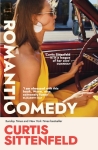 Romantic Comedy by Curtis Sittenfeld: Through her work as a writer for a sketch comedy show modelled on Saturday Night Live, Sally Milz meets Noah Brewster, a pop star with surfer-boy good looks. Plain Jane getting the hot guy – that never happens, right? In fact, Sally has a theory about this very dilemma… As always, Sittenfeld’s inhabiting of a first-person narrator is flawless, and Sally’s backstory and Covid-lockdown existence endeared her to me. Could this be called predictable? Well, what does one want from a romcom?
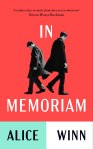 In Memoriam by Alice Winn: Heartstopper on the Western Front; swoon! Will Sidney Ellwood and Henry Gaunt both acknowledge that this is love and not just sex, as it is for so many teenage boys at their English boarding school? And will one or both survive the trenches of the First World War? Winn depicts the full horror of war, but in between there is banter, friendship and poetry. Some moments are downright jolly. This debut is obsessively researched, but Winn has a light touch with it. Engaging, thrilling, and, yes, romantic.
A bonus:
 The Vaster Wilds by Lauren Groff (Riverhead/Hutchinson Heinemann, 12 September): Groff’s fifth novel combines visceral detail and magisterial sweep as it chronicles a runaway Jamestown servant’s struggle to endure the winter of 1610. Flashbacks to traumatic events seep into her mind as she copes with the harsh reality of life in the wilderness. The style is archaic and postmodern all at once. Evocative and affecting – and as brutal as anything Cormac McCarthy wrote. A potent, timely fable as much as a historical novel. (Review forthcoming for Shelf Awareness.)
Nonfiction
 All My Wild Mothers by Victoria Bennett: A lovely memoir about grief and gardening, caring for an ill child and a dying parent. The book is composed of dozens of brief autobiographical, present-tense essays, each titled after a wildflower with traditional healing properties. The format realistically presents bereavement and caring as ongoing, cyclical challenges rather than one-time events. Sitting somewhere between creative nonfiction and nature essays, it’s a beautiful read for any fan of women’s life writing.
 Monsters by Claire Dederer: The question posed by this hybrid work of memoir and cultural criticism is “Are we still allowed to enjoy the art made by horrible people?” It begins, in the wake of #MeToo, by reassessing the work of film directors Roman Polanski and Woody Allen. The book is as compassionate as it is incisive. While there is plenty of outrage, there is also much nuance. Dederer’s prose is forthright and droll; lucid even when tackling thorny issues. Erudite, empathetic and engaging from start to finish.
 Womb by Leah Hazard: A wide-ranging and accessible study of the uterus, this casts a feminist eye over history and future alike. Blending medical knowledge and cultural commentary, it cannot fail to have both personal and political significance for readers of any gender. The thematic structure of the chapters also functions as a roughly chronological tour of how life with a uterus might proceed: menstruation, conception, pregnancy, labour, caesarean section, ongoing health issues, menopause. Inclusive and respectful of diversity.
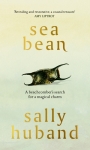 Sea Bean by Sally Huband: Stories of motherhood, the quest to find effective treatment in a patriarchal medical system, volunteer citizen science projects, and studying Shetland’s history and customs mingle in a fascinating way. Huband travels around the archipelago and further afield, finding vibrant beachcombing cultures. In many ways, this is about coming to terms with loss, and the author presents the facts about climate crisis with sombre determination. She writes with such poetic tenderness in this radiant debut memoir.
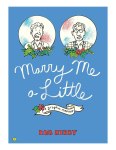 Marry Me a Little by Robert Kirby: Hopping around in time, this graphic memoir tells the story of how the author and his partner John decided to get married in 2013. The blue and red color scheme is effective at evoking a polarized America and the ebb and flow of emotions, with blue for calm, happy scenes and concentrated red for confusion or anger. This is political, for sure, but it’s also personal, and it balances those two aims well by tracing the history of gay marriage in the USA and memorializing his own relationship.
 All of Us Together in the End by Matthew Vollmer: In 2019, Vollmer’s mother died of complications of Alzheimer’s and Parkinson’s. Months later, his father reported blinking lights in the woods near the family cemetery. Although Vollmer had left the Seventh-Day Adventist Church in college, his religious upbringing influenced his investigation, which overlapped with COVID-19. Grief, mysticism, and acceptance of the unexplained are resonant themes. An unforgettable record of “a collision with the ineffable.”
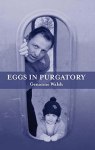 Eggs in Purgatory by Genanne Walsh: This autobiographical essay tells the story of the last few months of her father’s life. Aged 89, he lived downstairs from Walsh and her wife in San Francisco. He was quite the character: idealist, stubborn, outspoken; a former Catholic priest. Although he had no terminal conditions, he was sick of old age and its indignities and ready to exit. The task of a memoir is to fully mine the personal details of a situation but make of it something universal, and that’s just what she does here. Stunning.
Poetry
 More Sky by Joe Carrick-Varty: In this debut collection, the fact of his alcoholic father’s suicide is inescapable. The poet alternates between an intimate “you” address and third-person scenarios, auditioning coping mechanisms. His frame of reference is wide: football, rappers, Buddhist cosmology. The word “suicide” itself is repeated to the point where it becomes just a sibilant collection of syllables. The tone is often bitter, as is to be expected, but there is joy in the deft use of language.
 Lo by Melissa Crowe: This incandescent autobiographical collection delves into the reality of sexual abuse and growing up in rural poverty. Guns are insidious, used for hunting or mass shootings. Trauma lingers. “Maybe home is what gets on you and can’t / be shaken loose.” The collection is so carefully balanced in tone that it never feels bleak. In elegies and epithalamiums (poems celebrating marriage), Crowe honors family ties that bring solace. The collection has emotional range: sensuality, fear, and wonder at natural beauty.
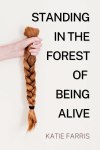 Standing in the Forest of Being Alive by Katie Farris: This debut collection addresses the symptoms and side effects of breast cancer treatment at age 36, but often in oblique or cheeky ways – it can be no mistake that “assistance” appears two lines before a mention of haemorrhoids, for instance, even though it closes an epithalamium distinguished by its gentle sibilance (Farris’s husband is Ukrainian American poet Ilya Kaminsky.) She crafts sensual love poems, and exhibits Japanese influences. (Review forthcoming at The Rumpus.)
 The House of the Interpreter by Lisa Kelly: Kelly is half-Danish and has single-sided deafness, and her second collection engages with questions of split identity. One section ends with the Deaf community’s outrage that the Prime Minister’s Covid briefings were not translated into BSL. Bizarre but delightful is the sequence of alliteration-rich poems about fungi, followed by a miscellany of autobiographical poems full of references to colour, nature and travel.
What are some of the best books you’ve read so far this year?
What 2023 releases should I catch up on right away?
Introducing the 2023 McKitterick Prize Shortlist
For the second year in a row, I was a first-round judge for the McKitterick Prize (for a first novel by a writer over 40), helping to assess the unpublished manuscripts. Perhaps lockdowns gave people time to achieve a long-held goal of writing a novel, because submissions were up by 50%. None of the manuscripts made it through to the shortlist this year or last, but one day it could happen!

The Society of Authors kindly sent me a parcel with five of the shortlisted novels, and I picked up the remaining one from the library this week. Below are synopses from Goodreads and author bios from the SoA:
 The Return of Faraz Ali by Aamina Ahmad (Sceptre): “Sent back to his birthplace—Lahore’s notorious red-light district—to hush up the murder of a girl, a man finds himself in an unexpected reckoning with his past. … Profoundly intimate and propulsive, The Return of Faraz Ali is a spellbindingly assured first novel that poses a timeless question: Whom do we choose to protect, and at what price?”
Aamina Ahmad was born and raised in London, where she worked for BBC Drama and other independent television companies as a script editor. Her play The Dishonoured was produced by Kali Theatre Company in 2016. She has an MFA from the Iowa Writers’ Workshop and is a recipient of a Stegner Fellowship from Stanford University, a Pushcart Prize and a Rona Jaffe Writers Award. Her short fiction has appeared in journals including One Story, the Southern Review and Ecotone. She teaches creative writing at the University of Minnesota.
When We Were Birds by Ayanna Lloyd Banwo (Hamish Hamilton): “Yejide and Darwin will meet inside the gates of Fidelis, Port Angeles’s largest and oldest cemetery, where the dead lie uneasy in their graves and a reckoning with fate beckons them both. A masterwork of lush imagination and immersive lyricism, When We Were Birds is a spellbinding novel about inheritance, loss, and love’s seismic power to heal.”
Ayanna Lloyd Banwo is a writer from Trinidad and Tobago. She is a graduate of the University of the West Indies and holds an MA in Creative Writing from the University of East Anglia, where she is now a Creative and Critical Writing PhD candidate. Her work has been published in Moko Magazine, Small Axe and PREE, among others, and shortlisted for the Small Axe Literary Competition and the Wasafiri New Writing Prize. When We Were Birds, Ayanna’s first novel, was shortlisted for the Jhalak Prize and won the OCM Bocas Prize for Fiction. She is now working on her second novel. Ayanna lives with her husband in London.
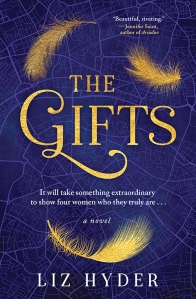 The Gifts by Liz Hyder (Manilla Press): “October 1840. A young woman staggers alone through a forest in the English countryside as a huge pair of impossible wings rip themselves from her shoulders. In London, rumours of a “fallen angel” cause a frenzy across the city, and a surgeon desperate for fame and fortune finds himself in the grips of a dangerous obsession. … [A] spellbinding tale told through five different perspectives …, it explores science, nature and religion, enlightenment, the role of women in society and the dark danger of ambition.”
Liz Hyder has been making up stories for as long she can remember. She has a BA in drama from the University of Bristol and, in early 2018, won the Bridge Award/Moniack Mhor Emerging Writer Award. Bearmouth, her debut young adult novel, won a Waterstones Children’s Book Prize, the Branford Boase Award and was chosen as the Children’s Book of the Year by The Times. Originally from London, she now lives in South Shropshire. The Gifts is her debut adult novel.
 Trespasses by Louise Kennedy (Bloomsbury Publishing): “Set in Northern Ireland during the Troubles, a shattering novel about a young woman caught between allegiance to community and a dangerous passion. … As tender as it is unflinching, Trespasses is a heart-pounding, heart-rending drama of thwarted love and irreconcilable loyalties, in a place what you come from seems to count more than what you do, or whom you cherish.”
Louise Kennedy grew up a few miles from Belfast. She is the author of the Women’s Prize-shortlisted novel Trespasses, and the acclaimed short story collection The End of the World is a Cul de Sac, and is the only woman to have been shortlisted twice for the Sunday Times Audible Short Story Award (2019 and 2020). Before starting her writing career, she spent nearly thirty years working as a chef. She lives in Sligo.
 The Whalebone Theatre by Joanna Quinn (Fig Tree): “One blustery night in 1928, a whale washes up on the shores of the English Channel. By law, it belongs to the King, but twelve-year-old orphan Cristabel Seagrave has other plans. She and the rest of the household … build a theatre from the beast’s skeletal rib cage. … As Cristabel grows into a headstrong young woman, World War II rears its head.”
Joanna Quinn was born in London and grew up in the southwest of England, where her bestselling debut novel, The Whalebone Theatre, is set. Joanna has worked in journalism and the charity sector. She is also a short story writer, published by The White Review and Comma Press, among others. She lives in a village near the sea in Dorset.
 Other Names for Love by Taymour Soomro (Harvill Secker): “A seductive coming-of-age story about queer desire, Other Names for Love is a charged, hypnotic debut novel about a boy’s life-changing summer in rural Pakistan: a story of fathers, sons, and the consequences of desire. … Decades later, Fahad is living abroad when he receives a call from his mother summoning him home. … [A] tale of masculinity, inheritance, and desire set against the backdrop of a country’s violent history, told with uncommon urgency and beauty.”
Taymour Soomro is the author of Other Names for Love and co-editor of Letters to a Writer of Colour. His writing has been published in the New Yorker, the New York Times and elsewhere. He is the recipient of fellowships from the Wisconsin Institute for Creative Writing, Bread Loaf Writers’ Conference and the Sozopol Fiction Seminars. He has degrees from Cambridge University and Stanford Law School and a PhD in creative writing from the University of East Anglia. He currently teaches on the MFA program at Bennington College.
Fellow judge Selma Dabbagh summarises the shortlist thus: “Family estates in rural Pakistan (Other Names for Love) and England (The Whalebone Theatre) fall into decline reflecting the hubris and short-sightedness of their owners[;] in The Return of Faraz Ali, it is the decaying grandeur of the courtesans of Lahore that is lovingly depicted. Whereas in both The Gifts and When We Were Birds, the otherworldly brings new possibilities to the tawdry and impoverished as mystical wings fly over the slums of Victorian London and the graveyards of Trinidad.”
I was already interested in reading a couple of these novels, and was pleased to discover a few new-to-me titles. As it’s also shortlisted for the Women’s Prize (which will be awarded on Wednesday), it seems to make sense to start with Trespasses, and I’m also particularly keen on The Gifts, which sounds like a great holiday read and right up my street, so I’m packing it for our trip to Scotland later this month. One or more of the others might end up on my 20 Books of Summer list. I’ll be sure to follow up with reviews of any I manage to read this summer.
The winner and runner-up will be announced at the SoA Awards ceremony in London on 29 June. I’ll be away at the time but will hope to watch part of the livestream. For more on all of the SoA Awards, see the press release on their website.
See any nominees you’ve read? Who would you like to see win?
Recent Writing for BookBrowse, Foreword, Shelf Awareness, Shiny New Books, and the TLS
I’ve compiled excerpts from some reviews I’ve contributed to other websites and publications this year. I link to the full text where available. (When writing a paid review, I seek to be balanced but positive. Ratings reflect my personal response.)
BookBrowse
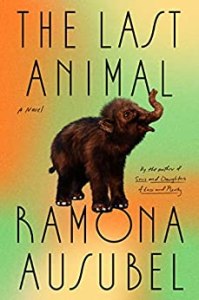 The Last Animal by Ramona Ausubel: In Ausubel’s offbeat third novel, a widowed scientist and her two daughters embark on a rogue plan to make history by resurrecting the woolly mammoth. There is a quirky combination of cosmic and domestic concerns here. A winsome sister duo is at the heart of the unusual and timely story, with priority given to the points of view of teenagers Eve and Vera, whose banter is a highlight. Ausubel has wisely chosen not to dwell on the scientific details of de-extinction, yet that means that this becomes more like speculative fiction or a fairy tale. Ironically, the fabulist-leaning novel is best when most realist, documenting struggles with bereavement, sexism and parenting teens.
 The Lost Wife by Susanna Moore: Moore’s hard-hitting novella is based in part on the memoir Six Weeks in the Sioux Tepees: A Narrative of Indian Captivity. In Moore’s version, Sarah, 25, leaves her baby behind when she flees an abusive husband, and once in Minnesota Territory marries John Brinton, who becomes a doctor on a Sioux reservation. By 1862, Sarah is friendly with the Native women. Although the Civil War is unfolding, the greater threat here is of revolt by the starving Indigenous residents. There is much of anthropological and historical interest, but Sarah’s flat storytelling, which may represent a pastiche of period style, means threatening or climactic scenes lose some of their potential gravity.
Foreword
 My Mother Says by Stine Pilgaard (trans. from the Danish by Hunter Simpson): After breaking up with her zookeeper girlfriend over their age gap and their conflicting takes on motherhood, the heroine moves back in with her father, a pastor who’s obsessed with Pink Floyd, and her stepmother. Her mother visits often, nagging her to finish her thesis. The line between her conversations and internal thoughts is thin. From her mansplaining doctor, she learns that the brain’s hippocampus is named for its seahorse shape. This inspires “Monologues of a Seahorse,” interludes of stream-of-consciousness association. Experimental and whimsical, this delivers deadpan narration of everyday woes.
 In Vitro: On Longing and Transformation by Isabel Zapata (trans. from the Spanish by Robin Myers): A Mexican poet probes the enduring mysteries of pregnancy and birth in a memoir in fragments that travels from fertility treatment through to the early weeks of pandemic-time motherhood. The clinical language of a gynecological history—late menstruation, polycystic ovary syndrome, eighteen years on the pill, and infertility—and the embryo transfer process contrasts with Zapata’s mystical thinking. The microessays integrate family stories, history, and artistic explorations. This resolute account of a personal metamorphosis alchemizes tender experiences into enchanting vignettes.
Shelf Awareness
Fiction
 Daughters of Nantucket by Julie Gerstenblatt: This engrossing debut novel explores the options for women in the mid-19th century while bringing a historical tragedy to life. Metaphorical conflagrations blaze in the background in the days leading up to the great Nantucket fire of 1846: each of three female protagonists (a whaling captain’s wife, a museum curator, and a pregnant Black entrepreneur) holds a burning secret and longs for a more expansive, authentic life. The action spans two tense weeks, one week before the fire through eight days after. The women’s lives collide in two climactic scenes. Gerstenblatt’s eye for detail results in sultry historical fiction for Sue Monk Kidd’s readers.
 Camp Zero by Michelle Min Sterling: Sterling’s brilliantly unsettling debut novel is set in mid-21st-century, post-oil North America. Prioritizing perspectives from two all-female communities, it contrasts the heights of opulence and technology with the basic instinct for survival. How the strands connect is a mystery sustained through much of the book. Characters go by multiple names and harbor ulterior motives; scenes echo each other as disparate subplots meet in unexpected ways. The background is all too plausible. Sterling also takes to its logical extreme the state of being constantly online. Compelling dystopian cli-fi with three-dimensional characters—perfect for fans of Station Eleven and To Paradise.
 Dear Chrysanthemums by Fiona Sze-Lorrain: In this elegant collection of 11 linked short stories by a poet and translator, China’s mid-20th-century political upheaval casts a long shadow. Music and food, not to mention love, bring meaning to those displaced in the aftermath of dissent. The stories—set in China, Singapore, Paris, and New York—span seven decades but always take place in a year ending in a six, a sacred number in Chinese divination. A highlight is “News from Saigon,” in which a prostitute meets Marguerite Duras in a Paris café. The connections are subtle, with the final story pulling together many strands. Ideal for readers of Madeleine Thien’s Do Not Say We Have Nothing.
Nonfiction
 Stranded by Maddalena Bearzi: Bearzi developed a deep love for marine fauna during childhood summers in Sardinia and cofounded the Ocean Conservation Society in the 1990s. Temporarily confined to land by Covid-19 lockdowns, she adopts a different tactic for exploring animal behavior: “an urban safari in my backyard and neighborhood.” These nature essays exemplify evenhandedness, curiosity, and close observation. From wasps to night-blooming flowers, her interest is wide-ranging. Gardening is a relaxing pastime and a connection to her mother while they are separated. As a behavioral ecologist, she views even her dog as a subject of study. A passionate primer to appreciating everyday nature.
Poetry
Lo by Melissa Crowe: This incandescent autobiographical collection travels from girlhood to marriage and motherhood in post-pandemic USA. Crowe delves into sexual abuse and growing up in rural poverty. Yet the collection is so carefully balanced in tone that it never feels bleak. The emotional range is enhanced by alliteration and botanical imagery. 
 Dislocations by Karen Enns: The fourth collection by Canadian poet Enns skillfully evokes a rural upbringing and revels in the beauty of nature and music. One of its aphorisms could encapsulate the entire collection: “The ratio of love to grief / we understood as music.” Updating the pastoral tradition, the bittersweet verse also takes solace in the past.
Shiny New Books
A Fortunate Woman by Polly Morland & A Fortunate Man by John Berger: The similarities go much further than the title and subject matter: these two biographical works, both illustrated with black-and-white photographs, are set in the same English valley and the female subject of Morland’s is the next-but-one successor of the doctor who stars in Berger’s.
 Berger (1926–2017), an art critic and Booker Prize-winning novelist, spent six weeks shadowing the doctor, to whom he gives the pseudonym John Sassall, with Swiss documentary photographer Jean Mohr, his frequent collaborator. Sassall’s dedication was legendary: he attended every birth in this community, and nearly every death. Sassall’s middle-class origins set him apart from his patients. There’s something condescending about how Berger depicts the locals as simple peasants. Mohr’s photos include soft-focus close-ups on faces exhibiting a sequence of emotions, a technique that feels outdated in the age of video. Along with recording the day-to-day details of medical complaints and interventions, Berger waxes philosophical on topics such as infirmity and vocation. A Fortunate Man is a curious book, part intellectual enquiry and part hagiography.
 With its layers of local history and its braided biographical strands, A Fortunate Woman takes up many of the same heavy questions but feels more subtle and timely. It also soon delivers a jolting surprise: the doctor Berger called John Sassall was likely bipolar and, soon after the death of his beloved wife Betty, committed suicide in 1982. His story still haunts this community, where many of the older patients remember going to him for treatment. Like Berger, Morland keenly follows a range of cases. As the book progresses, we see this beautiful valley cycle through the seasons, with certain of Richard Baker’s landscape shots deliberately recreating Mohr’s scene setting. The timing of Morland’s book means that it morphs from a portrait of the quotidian for a doctor and a community to, two-thirds through, an incidental record of the challenges of medical practice during COVID-19.
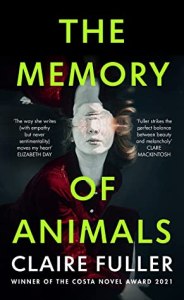 The Memory of Animals by Claire Fuller: Neffy has nothing to lose when she enrolls in a controversial vaccine trial in a familiar mid-pandemic landscape. The novel is presented as her journal. The bulk takes place in two weeks she spends on a locked unit with four fellow test subjects. In the meantime, she is introduced to an experimental technology for reliving memories. The characterisation of the four other cast members is somewhat thin, and the elements feel randomly assembled. The world-building and tech are unlikely to stand up to science fiction fans’ scrutiny, but this has just the right dose of the speculative for literary fiction readers. It also happens to fit into a recent vogue for octopus novels.
Times Literary Supplement
A late-twenties journalist sets out to survey the situation on the ground for ten British species being squeezed out by anthropogenic climate change: The mission is very similar, and both authors embody passionate dedication to conservation, but the difference in tone of these travel narratives makes them likely to appeal to separate audiences…
In Search of One Last Song by Patrick Galbraith & Forget Me Not by Sophie Pavelle:
 Galbraith’s is an elegiac tour through imperilled countryside and urban edgelands. Each chapter resembles an in-depth magazine article: a carefully crafted profile of a beloved bird species, with a focus on the specific threats it faces. Galbraith recognises the nuances of land use. However, shooting plays an outsized role. (Curious for his bio not to disclose that he is editor of the Shooting Times.) The title’s reference is to literal birdsong, but the book also celebrates birds’ cultural importance through their place in Britain’s folk music and poetry. He is clearly enamoured of countryside ways, but too often slips into laddishness, with no opportunity missed to mention him or another man having a “piss” outside. Readers could also be forgiven for concluding that “Ilka” (no surname, affiliation or job title), who briefs him on her research into kittiwake populations in Orkney, is the only female working in nature conservation in the entire country; with few exceptions, women only have bit parts: the farm wife making the tea, the receptionist on the phone line, and so on.
 Pavelle’s book is a tonic in more ways than one. Employed by Beaver Trust, she is enthusiastic and self-deprecating. Her nature quest has a broader scope, including insects like the marsh fritillary and marine species such as seagrass and the Atlantic salmon. Travelling between lockdowns in 2020–1, Pavelle took low-carbon transport wherever possible and bolsters her trip accounts with context, much of it gleaned from Zoom calls and e-mail correspondence with experts from museums and universities. Refreshingly, around half of these interviewees are women, and the animal subjects are never the obvious choices. Instead, she seeks out “underdog” species. The explanations are at a suitable level for laymen, true to her job as a science communicator. The snappy, casual prose (“the future of the bilberry bumblebee and its Aperol arse can be bright, but only if we get off our own”) could even endear her to teenage readers. As image goes, Pavelle’s cheerful naïveté holds more charm than Galbraith’s hardboiled masculinity.
 Taking Flight by Lev Parikian: Parikian’s accessible account of the animal kingdom’s development of flight exhibits a layman’s enthusiasm for an everyday wonder. He explicates the range of flying strategies and the structural adaptations that made them possible. The archaeopteryx section, chronicling the transition between dinosaurs and birds, is a highlight. Though the most science-heavy of the author’s six works, this, perhaps ironically, has fewer footnotes. His usual wit is on display: he describes the feral pigeon as “the Volkswagen Golf of birds” and penguins as “piebald blubber tubes”. This makes it a pleasure to tag along on a journey through evolutionary time, one sure to engage even history- and science-phobes.
Do any of these catch your eye?
In Memoriam by Alice Winn: Review & Author Event
I read In Memoriam by Alice Winn last month, then had the chance to see the author in conversation at Hungerford Town Hall, an event hosted by Hungerford Bookshop, on Friday evening. Here’s what I thought of the novel, which is on my Best of 2023 list.
Review
Heartstopper on the Western Front; swoon! It’s literary fiction set in the trenches of WWI, yes, but also a will-they-won’t they romance that opens at an English boarding school. Oh they will (have sex, that is), before the one-third point, but the lingering questions are: will Sidney Ellwood and Henry Gaunt both acknowledge this is love and not just sex, as it is for many teenage boys at their school (either consensually, as buddies; or forced by bullies); and will one or both survive the war? “It was ridiculous, incongruous for Ellwood to be bandying about words like ‘love’ when they were preparing to venture out into No Man’s Land.”
Winn is barely past 30 (and looks like a Victorian waif in her daguerreotype-like author photo), yet keeps a tight control of her tone and plot in this debut novel. She depicts the full horror of war, with detailed accounts of battles at Loos, Ypres and the Somme, and the mental health effects on soldiers, but in between there is light-heartedness: banter, friendship, poetry. Some moments are downright jolly. I couldn’t help but laugh at the fact that Adam Bede is the only novel available and most of them have read it four times. Gaunt is always the more pessimistic of the two, while Ellwood’s initially flippant sunniness darkens through what he sees and suffers.

I only learned from the Acknowledgements and Historical Note that Preshute is based on Marlborough College, a posh school local to me that Winn attended, and that certain particulars are drawn from Siegfried Sassoon, as well as other war literature. It’s clear the book has been thoroughly, even obsessively, researched. But Winn has a light touch with it, and characters who bring social issues into the narrative aren’t just 2D representatives of them but well rounded and essential: Gaunt (xenophobia), Ellwood (antisemitism), Hayes (classism), Devi (racism); not to mention disability and mental health for several.
I also loved how Ellwood is devoted to Tennyson and often quotes from his work, including the book-length elegy In Memoriam itself. This plus the “In Memoriam” columns of the school newspaper give the title extra resonance. I thought I was done with war fiction, but really what I was done with was worthy, redundant Faulks-ian war fiction. This was engaging, thrilling (a prison escape!), and, yes, romantic. (Public library) 
Readalike: The New Life by Tom Crewe, another of my early favourites of 2023, is set in a similar time period and also considers homosexual relationships. It, too, has epistolary elements and feels completely true to the historical record.
Some favourite lines:
“If Ellwood were a girl, he might have held his hand, kissed his temple. He might have bought a ring and tied their lives together. But Ellwood was Ellwood, and Gaunt had to be satisfied with the weight of his head on his shoulder.”
“Gaunt wished the War had been what Ellwood wanted it to be. He wished they could have ridden across a battlefield on horseback, brandishing a sword alongside their gallant king. He put on his gas mask. His men followed.”
Buy In Memoriam from Bookshop.org [affiliate link]
Event
Winn is in the UK on a short book tour; although she is English, she now lives in Brooklyn and recently had a baby. She was in conversation with AJ West, the author of The Spirit Engineer, also set on the cusp of WWI. Unrecognizable from her author photo – now blonde with glasses – she is petite rather than willowy. As I was leaving, two ladies remarked to each other how articulate she was. Indeed, she was well spoken and witty and, I expect, has always been precocious and a high achiever. I think she’s 32. Before this she wrote three novels that remain unpublished. She amazed us all by admitting she wrote the bulk of In Memoriam in just two weeks, pausing only to research trench warfare, then edited it for a year and a half.
West asked her about the genesis of the novel and she explained her obsession with the wartime newspapers of Sassoon’s school and then the letters sent home by soldiers, tracking the shift in tenor from early starry-eyed gallantry to feeling surrounded by death. She noted that it was a struggle for her to find a balance between the horrors of the Front and the fact that these young men come across in their written traces as so funny. She got that balance just right.
Was she being consciously anti-zeitgeist in focusing on privileged white men rather than writing women and minorities back into the narrative, as is so popular with publishers today, West asked? She demurred, but added that she wanted to achieve something midway between being of that time and a 2023 point-of-view in terms of the sexuality. Reading between the lines and from secondary sources, she posited that it was perhaps easier to get away with homosexuality than one might think, in that it wasn’t expected and so long as it was secret, temporary (before marrying a woman), or an experiment, it was tolerated. However, she took poetic licence in giving Gaunt and Ellwood supportive friends.

Speaking of … West (a gay man) jokingly asked Winn if she is actually a gay man, because she got their experiences and feelings spot on. She said that she has some generous friends who helped her with the authenticity of the sex scenes. In the novel she has Ellwood interpret Tennyson’s In Memoriam as crypto-homosexual, but scholars do not believe that it is; Gaunt’s twin sister Maud also, unconsciously in that case, has a Tennysonian name. This was in response to an audience question; this plus another one asking if Winn had read The New Life reassured me that my reaction was well founded! (Yes, she has, and will in fact be in conversation with Crewe in London on the 23rd. She’s also appearing at Hay Festival.)
If you’ve read the book and/or are curious, Winn revealed the inspirations for her three main characters, the real people who are “in their DNA,” as she put it: Gaunt = Robert Graves (half-German, interest in the Greek classics); Ellwood = Sassoon; Maud = Vera Brittain. She read a 5-minute passage incorporating a school scene between Gaunt and Sandys and a letter from the Front. She spoke a little too quickly and softly, such that I was glad I was within the first few rows. However, I’m sure this is a new-author thing and, should you be so lucky as to see her speak in future, you will be as impressed as I was.
The Chosen by Elizabeth Lowry (2022)
“What’s lost when your idea of the other dies? He knows the answer: only the entire world.”
Elizabeth Lowry’s utterly immersive third novel, The Chosen, currently on the shortlist for the Walter Scott Prize for Historical Fiction*, examines Thomas Hardy’s relationship with his first wife, Emma Gifford. The main storyline is set in November–December 1912 and opens on the morning of Emma’s death at Max Gate, their Dorchester home of 27 years. The couple had long been estranged and effectively lived separate lives on different floors of the house, but instantly Hardy is struck with pangs of grief – and remorse for how he had treated Emma. (He would pour these emotions out into some of his most famous poems.)
That guilt is only compounded by what he finds in her desk: her short memoir, Some Recollections, with an account of their first meeting in Cornwall; and her journals going back two decades, wherein she is brutally honest about her husband’s failings and pretensions. “I expect nothing from him now & that is just as well – neither gratitude nor attention, love, nor justice. He belongs to the public & all my years of devotion count for nothing.” She describes him as little better than a jailor, and blames him for their lifelong childlessness.
It’s an exercise in self-flagellation, yet as weeks crawl by after her funeral, Hardy continues to obsessively read Emma’s “catalogue of her grievances.” In the fog of grief, he relives scenes his late wife documented – especially the composition and controversial publication of Tess of the d’Urbervilles. Emma hoped to be his amanuensis and so share in the thrill of creation, but he nipped a potential reunion in the bud. Lowry intercuts these flashbacks with the central narrative in a way that makes Hardy feel like a bumbling old man; he has trouble returning to reality afterwards, and his sisters and the servants are concerned for him.

Hardy was that stereotypical figure: the hapless man who needs women around to do everything for him. Luckily, he’s surrounded by an abundance of strong female characters: his sister Kate, who takes temporary control of the household; his secretary, Florence Dugdale, who had been his platonic companion and before long became his second wife; even Emma’s money-grubbing niece, Lilian, who descends to mine her aunt’s wardrobe.
I particularly enjoyed Hardy’s literary discussions with Edmund Gosse, who urged him to temper the bleakness of his plots, and the stranger-than-fiction incident of a Chinese man visiting Hardy at home and telling him his own story of neglecting his wife and repenting his treatment of her after her death.
For anyone who’s read and loved Hardy’s major works, or visited his homes, this feels absolutely true to his life story, and so evocative of the places involved. I could picture every locale, from Stinsford churchyard to Emma’s attic bedroom. It was perfect reading for my short break in Dorset earlier in the month and brought back memories of the Hardy tourism I did at the end of my study abroad year in 2004. Although Hardy’s written words permeate the book, I was impressed to learn that Lowry invented all of Emma’s journal entries, based on feelings she had expressed in letters.
But there is something universal, of course, about a tale of waning romance, unexpected loss, and regret for all that is left undone. This is such a beautifully understated novel, perfectly convincing for the period but also timeless. It’s one to shelve alongside Winter by Christopher Nicholson, another favourite of mine about Hardy’s later life.
With thanks to riverrun (Quercus) for the free copy for review. The Chosen came out in paperback on 13 April.
*The winner will be announced on 15 June.
Women’s Prize Longlist Reviews (Croft, Grudova, O’Farrell) & Shortlist Predictions
The Women’s Prize shortlist will be announced on Wednesday the 26th. I’ve managed to read a few more novels from the longlist and started another (Fire Rush by Jacqueline Crooks), which would take me up to 6 read out of 16. I have a couple of others on order from the library (Kennedy and Patel), but will only bother to read them if they are shortlisted.
Homesick by Jennifer Croft
I was intrigued by the publication history of this one: Croft first wrote it in Spanish, then produced an English-language version which, in the USA, was marketed as a memoir illustrated with her own photographs. Here in the UK, though, Charco Press published it as part of their new range of untranslated fiction – with no photos, alas. So, it’s clear that this is thinly veiled autobiography; literally all that may have been changed is the character names.
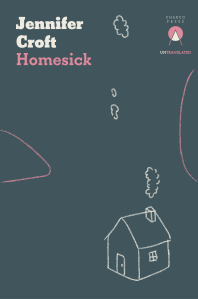 The protagonist is ‘Amy’, who lives in a tornado-ridden Oklahoma and whose sister, ‘Zoe’ – a handy A to Z of growing up there – has a mysterious series of illnesses that land her in hospital. The third person limited perspective reveals Amy to be a protective big sister who shoulders responsibility: “There is nothing in the world worse than Zoe having her blood drawn. Amy tries to show her the pictures [she’s taken of Zoe’s dog] at just the right moment, just right before the nurse puts the needle in”.
The girls are home-schooled and Amy, especially, develops a genius for languages, receiving private tutoring in Russian from Sasha, a Ukrainian former student of their father’s. Both sister are more than a little in love with Sasha. They alternate between competing for attention and indulging their joint passions – such as for the young Russian figure-skating couple who sweep the Winter Olympics. Amy starts college at 15, which earns her unwanted attention among her classmates, and struggles with her mental health before deciding to see the world. Despite periods of estrangement, her relationship with Zoe is what grounds her.
In a sense this is a simple chronological story, told in a matter-of-fact way. Yet each of its vignettes – some just a paragraph long – is perfectly chosen to reveal the family dynamic and the moment in American history. Detailed chapter headings continue the narrative and sometimes contain a shocking truth. What Croft does so brilliantly is to chart the accretion of ordinary and landmark events that form a life; Amy realizes this as she looks back at a packet of her photographs: “laid out step by step like this, more or less in order, the pictures also form a kind of path.”
Initially, I had my doubts as to whether this should have been eligible for the Women’s Prize. In the end it didn’t matter whether it was presented as memoir or autofiction, so true was it to the experience of 1990s girlhood, as well as to sisterhood and coming of age at any time in history. It reminded me strongly of Very Cold People by Sarah Manguso, but felt that little bit more universal in how it portrays family ties, ambition, and life’s winding path. (See also Annabel’s review for Shiny New Books.) 
With thanks to Charco Press for the free copy for review.
Children of Paradise by Camilla Grudova
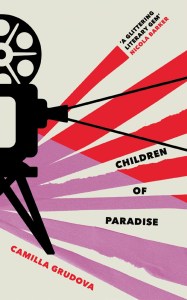 In 2017 I reviewed Grudova’s surreal story collection, The Doll’s Alphabet, describing its tales as “perverted fairytales or fragmentary nightmares.” Okay then, let’s continue in that perverted, nightmarish vein. Holly, new to the country/city, finds a room in a shared flat and a job as an usher at the Paradise Cinema, which shows a random assortment of art films and cult classics. The building is so low-rent it’s almost half derelict, and the staff take full advantage of the negligent management to get up to all sorts of sexual shenanigans, as well as drinking and drug-taking, while on duty. Holly and her co-workers are truly obsessed with the cinema, watching every showing at work but also hosting all-night movie marathons in their apartments. “The outside world, all of its news, faded away, and the movies became my main mirror of the world,” she confesses. “They were a necessary evil, customers, so that we, the true devotees, could have access to the screen, our giant godlike monument.”
The title is simultaneously ironic and an homage to Les Enfants du Paradis (1945), and the chapters are named after particular films. A change of ownership forces the Paradise to become more mainstream – hello, Marvel flicks and hipster snacks – but a series of horrific accidents and deliberate acts makes it seem like a cursed place. Aping movie genres, perhaps, Children of Paradise starts off as an offbeat stoner comedy and by the end approaches horror to an extent I didn’t expect. The content becomes increasingly sordid, visceral, with no opportunity missed to mention bodily fluids and excretions. I’m not notably opposed to gross-out humour, but the whole thing felt quite distasteful as well as miserable. (Public library e-book)
My general feeling about these first two books, and probably a few others from the longlist (Crooks, McKenzie, Paull, et al.), is that the judges are trying to showcase the breadth of women’s writing: ‘Hey, guys, women can write autofiction and horror and humour and patois and speculative fiction and everything in between!’ But I don’t think these more niche or genre fiction representatives will make it any further in the race, especially because each may have been championed by a different judge.
Where the judges will find common ground will be on the standard stuff that always gets shortlisted: fairly run-of-the-mill character- and issue-driven contemporary or historical fiction. That makes it sound like I’m being dismissive, but in fact I do generally like much of the fiction that gets shortlisted for the WP: it’s readable book club fodder. It’s just maybe not inventive in the way that certain longlist titles can be. On which note, er, see the below!
The Marriage Portrait by Maggie O’Farrell
What a relief it was to wholeheartedly enjoy this sumptuous work of historical fiction, after the disappointment that was Hamnet (though perhaps I’ll feel more kindly towards the latter when I reread it for Literary Wives in November).
 Lucrezia di Cosimo de’ Medici is a historical figure who died at age 16, having been married off from her father’s Tuscan palazzo as a teenager to Alfonso II d’Este, Duke of Ferrara. She was reported to have died of a “putrid fever” but the suspicion has persisted that her husband actually murdered her, a story perhaps best known via Robert Browning’s poem “My Last Duchess.”
The focus is on the final year of Lucrezia’s life, but in flashbacks we meet her as a rebellious girl with a talent for drawing and a fascination with animals. At first it appears that Alfonso esteems her for her spiritedness – he gives her a painting of a stone marten as a betrothal gift, after all, and has her depicted with paintbrush in hand – but as the gradual storyline meets up with the 1561 spotlight, it becomes clear that she is only valued for her ability to produce an heir. However spacious and opulent they are, it is impossible to forget that Lucrezia, as a noblewoman, is confined to the edifices owned by her father or her husband.
O’Farrell’s usual present-tense narration is engaging throughout, and the two long chapters either side of the midpoint, one concerning her wedding day and the other the preparation for her portrait, are particularly absorbing. I was convinced I knew how this story would end, yet the author pulls off a delicious surprise. This is ripe for the miniseries treatment, not least because it is so attentive to visuals: the architecture of the main buildings, the lavish clothing, the colours, and the eye for what makes a good painting. Scenes are even described in terms of a spatial arrangement appreciated from afar: how three figures form a triangle in the centre of a room; how two people on a balcony bisect the view from a window.
Despite the length, this was thoroughly engrossing and one I’d recommend to readers of Geraldine Brooks and Tracy Chevalier. (See also Laura’s review.) (Public library)
The other nominees I’ve read are:
Demon Copperhead by Barbara Kingsolver
Black Butterflies by Priscilla Morris
My ideal shortlist (a wish list based on my reading and what I still want to read):
Homesick by Jennifer Croft
Fire Rush by Jacqueline Crooks
Black Butterflies by Priscilla Morris
The Marriage Portrait by Maggie O’Farrell
I’m a Fan by Sheena Patel
Memphis by Tara M. Stringfellow
vs.
My predicted shortlist:
Trespasses by Louise Kennedy
Demon Copperhead by Barbara Kingsolver
Stone Blind by Natalie Haynes
The Marriage Portrait by Maggie O’Farrell
Memphis by Tara M. Stringfellow
Wandering Souls by Cecile Pin
An overall winner? Perhaps Trespasses by Louise Kennedy, or an unprecedented repeat win from Barbara Kingsolver or Maggie O’Farrell.
(See also Laura’s predictions post.)
What have you read from the longlist so far? Which of these books are calling to you?
March Paperback Releases: Fledgling, Theatre of Marvels, What My Bones Know
I’m catching up on three 2022 books I was sent for review and didn’t read at their initial publication. Today I have a memoir of living between Ghana and England and hand-raising two birds, a Victorian pastiche starring a mixed-race actress in London, and an account of being diagnosed with complex PTSD and working towards healing of childhood trauma.
Fledgling by Hannah Bourne-Taylor
Nature-lover Hannah Bourne-Taylor lived in Ghana for eight years for her husband’s job. As a dependent spouse, she was not permitted to work and, in their rural setting, she felt cut off from any expatriate community. From childhood she’d been an obsessive animal rescuer – fishing ants out of swimming pools, for instance – and when she found a swift that had been displaced from its nest, her protective instincts went into overdrive. Collecting hundreds of termites, she fed the bird to a demanding schedule for two weeks before releasing it. This went as disastrously as it could, but she soon got another chance when she found a grounded bronze-winged mannikin finch fledgling after a storm. Their bond was even closer: the bird climbed her body and nested in her hair (she wrote a Guardian article about the experience), and they developed a mutual language of chirps. The care routine sounds like it was not so different from having an infant. She even calls the finch her daemon.
 There is something very insular about this narrative, such that I had trouble gauging the passage of time. Raising the two birds, adopting street dogs, going on a pangolin patrol with a conservation charity – was this a matter of a couple of months, or were events separated by years? Ghana is an intriguing setting, yet because there is no attempt to integrate, she can only give a white outsider’s perspective on the culture, and indigenous people barely feature. I was sympathetic to the author’s feelings of loneliness and being trapped between countries, not belonging in either, but she overstates the lessons of compassion and freedom the finch taught. The writing, while informed and passionate about nature, needs a good polish (many misplaced modifiers, wrong prepositions, errors in epigraph quotes, homonym slips – “sight” instead of “site”; “balled” in place of “bawled”; “base” where it should be “bass,” twice – and so on). Still, it’s a promising debut from a valuable nature advocate, and I share her annual delight in welcoming England’s swifts, as in the scenes that open and close the book.
With thanks to Aurum for the free copy for review. Fledgling came out in paperback on 9 March.
Theatre of Marvels by Lianne Dillsworth
Lianne Dillsworth is a Black British author with MAs in creative writing and Victorian studies, interests she combines in this debut novel set in Victorian London. Zillah’s mother, a slave from Barbados, was forced to abandon her seven-year-old daughter. Zillah is mixed-race and grew up in St Giles slum. Too light-skinned to convince as a “savage” when she headlines Crillick’s Variety Theatre show as “Amazonia,” she has to coat herself with greasepaint and soot. As mistress to a viscount, she has access to a life of luxury, but instead chooses to try to free her fellow Black performers, including the “Leopard Lady,” who is exhibited for her skin condition and confined in conditions little better than slavery.
 Through secondary characters, we glimpse other options for people of colour: one, Lucien Winters, is a shopkeeper (reminding me of the title character of The Secret Diaries of Charles Ignatius Sancho, a historical figure) but intends to move to Sierra Leone via a colonisation project; another passes as white to have a higher position in the theatre world. It felt odd, though, how different heritages were conflated, such that Zillah, of Caribbean descent, learns a few words of “Zulu” to speak to the Leopard Lady, and Lucien explains Africanness to her as if it is one culture. Perhaps this was an attempt to demonstrate solidarity among oppressed peoples.
There are rivalries with fellow actresses, and well-meaning Quakers who work toward a better society. Much of the characterisation is tissue-thin, however, and a few turns of phrase felt not of the time period (describing someone as being in a “pissy mood”; “If he was in this much of a funk there’d be no getting through to him. I might as well go to bed before he killed my mood completely.”). All told, this never lived up to its first paragraph –
Go to the theatre much? No, nor me. At least not before I became an actress. I know what you’re thinking. Actress, eh? But you can keep your dirty-minded thoughts to yourself. I trod the boards and no more. Doesn’t mean I don’t have a story or two to tell, mind. Would you be kind enough to indulge me if I talked about the old days? Hard as it was back then, I can’t say that if I had my time again I’d change it.
– which promised a much more original voice than we ever get from Zillah. It’s only worth writing in the first person if the narration is remarkable in some way, so this could easily have been in third person limited instead. This was a nicely undemanding selection to start on the ferry ride back from Spain last year, but took much effort to finish because of the 400+ page count and despite the jejune prose (some have labelled this YA for that reason). Fans of Stacey Halls may enjoy it. It’s certainly what I’d call an easy read.
Hutchinson Heinemann sent a proof copy. Theatre of Marvels came out in paperback on 2 March.
What My Bones Know: A Memoir of Healing from Complex Trauma by Stephanie Foo
It’s okay to have some things you never get over.
Radio producer Stephanie Foo was diagnosed with complex PTSD at age 30. Although she briefly delves into the parental abuse that accounts for her trauma, this is – thankfully – mostly about the four years she spent trying to get better. The Malaysian Chinese Foo family moved to San Francisco when she was two years old. Her mother nagged and beat her, and both parents made credible threats to kill her and/or themselves, such as by driving off the road. It’s hard to read this material, but by proportion it doesn’t take up much of the book. Foo’s mother left when she was 13; she later gave her father an ultimatum one day (while wielding an axe!) that also saw him move out. This left her, then a high school student, living alone and in squalor. Unsurprisingly, she engaged in disordered eating and self-harm.
 A love of journalism kept Foo from committing suicide, got her into college and landed her podcast roles followed by her dream job with public radio programme This American Life in New York City. However, she struggled with a horrible, exacting boss and, when her therapist issued the diagnosis, she left to commit to the healing process, aided by her new partner, Joey. C-PTSD was named in the 1990s but is not recognised in the DSM; The Body Keeps the Score by Bessel van der Kolk is its alternative bible. Repeated childhood trauma, as opposed to a single event, rewires the brain to identify threats that might not seem rational, leading to self-destructive behaviour and difficulty maintaining healthy relationships.
All that Foo discovers in her research into C-PTSD feels damning, but she focuses on what she can control: sleep, diet, exercise, yoga, meditation, acupuncture, and seeing various therapists. She tries everything from hallucinogenic mushrooms and a gratitude journal to EMDR (like hypnosis but based on eye movement). Working with a therapist from the Center for Child Trauma and Resilience helped her to address the root cause rather than the symptoms. There came a point where I would have been okay with a condensed version of events instead of a blow-by-blow of every therapy attempted, but Foo writes with bravery and clarity, adroitly recreating scenes and dialogue and displaying impressive memory and self-knowledge. The detail and overall optimism should make this helpful to many.
With thanks to Allen & Unwin for the free copy for review. What My Bones Know came out in paperback on 3 March.
Eighth Blog Anniversary! & Thoughts on the Women’s Prize Longlist
Last year, in the manic busyness that preceded moving into our house, I completely forgot to mark my blog anniversary. This time (8 years!) I wanted to be sure to remember it. Why have I not noted before that it coincides with International Women’s Day?! I’m pleased with that.

By Հայկ Ափրիկյան, CC BY-SA 3.0, via Wikimedia Commons.
Yesterday evening the Women’s Prize longlist was announced.** Of my predictions, 4 were correct, which is pretty good going for me. I got none of my personal wishes, however. Of course, I would have preferred for us to have one of my lists. Still, overall, it’s a fairly interesting mix of new and established authors, with a full half of the list being debut work. Seven of the authors are BIPOC. I’ve read 2 of the nominees and would be amenable to reading up to 7 more. My library always buys the entire longlist, so I’ll eventually get the chance to read them, but not soon enough to add to the conversation.

Read:
Demon Copperhead by Barbara Kingsolver (CORRECT PREDICTION): Follows the contours of Charles Dickens’s David Copperfield, transplanting the plot to 1990s southwest Virginia to uncover the perils of opiate addiction. Ten-year-old Damon Fields lives in a trailer home with his addict mother, who works at Walmart, and his new stepfather, a mean trucker. Tragedy strikes and Damon moves between several foster homes before running away. His irrepressible, sassy voice is reminiscent of Holden Caulfield’s in this Appalachian cousin to Shuggie Bain.
Black Butterflies by Priscilla Morris: Drawing on her own family history, Morris has crafted an absorbing story set in Sarajevo in 1992, the first year of the Bosnian War. Zora, a middle-aged painter, has sent her husband, Franjo, and elderly mother off to England to stay with her daughter, Dubravka, confident that she’ll see out the fighting in the safety of their flat and welcome them home in no time. But things rapidly get much worse than she is prepared for. It was especially poignant to be reading this during the war in Ukraine.
Requested from the library:
Fire Rush by Jacqueline Crooks – Sounds good, if too much like this year’s Opal & Nev.
The Marriage Portrait by Maggie O’Farrell (CORRECT PREDICTION) – I was going to skip this because I wasn’t keen on Hamnet, but I do love O’Farrell in general, so I guess I’ll give it a try.
Interested in reading (but can’t find):
Homesick by Jennifer Croft – N.B. This was subtitled “A Memoir” at its U.S. release.
Children of Paradise by Camilla Grudova
Memphis by Tara M. Stringfellow
I’m a Fan by Sheena Patel (CORRECT PREDICTION)
Wandering Souls by Cecile Pin
Not interested in reading:
Glory by NoViolet Bulawayo – Like I said when it was nominated for the Booker, I have to wonder why we needed an extended Animal Farm remake…
Stone Blind by Natalie Haynes – I really should have predicted this one. It’s a hard pass on the Greek myth retellings for me.
Trespasses by Louise Kennedy (CORRECT PREDICTION) – I avoid anything set during The Troubles. (Sorry!)
Cursed Bread by Sophie Mackintosh – The Water Cure was awful.
The Dog of the North by Elizabeth McKenzie – The Portable Veblen was trying too hard.
Pod by Laline Paull – Her novels always sound so formulaic.
The Bandit Queens by Parini Shroff – Nah.
See also the reactions posts from Cathy, Clare, Eric and Laura.
**The announcement has traditionally been on International Women’s Day, but I’m guessing that this year they brought it forward to pre-empt news of the inaugural Carol Shields Prize for Fiction longlist. This prize is open to novels, short stories and graphic novels by women, published in calendar year 2022, with parameters otherwise quite similar to those of the WP except that it’s only for U.S. and Canadian residents. {EDITED} To be honest, I was not convinced that the literary world needed an additional prize for women’s fiction, especially as North Americans tend to do well in the WP race. However, at first glance, its longlist is a lot less obvious and more interesting, with 11/15 BIPOC and some short story collections as well as a graphic novel in the running. It remains to be seen if I’ll follow both prizes or switch allegiance. Some of the CSP books may prove difficult to access in the UK. So far I have read Brown Girls and can get The Furrows from the library. Of note: the Carol Shields Prize is worth a lot more ($150,000 U.S. vs. £30,000).
What have you read, or might you read, from the longlist?
 Bookish Beck = Rebecca Foster. American transplant to England. Freelance proofreader and book reviewer.
 Bookish Beck