Recent Writing for BookBrowse, Foreword, Shelf Awareness, Shiny New Books, and the TLS
I’ve compiled excerpts from some reviews I’ve contributed to other websites and publications this year. I link to the full text where available. (When writing a paid review, I seek to be balanced but positive. Ratings reflect my personal response.)
BookBrowse
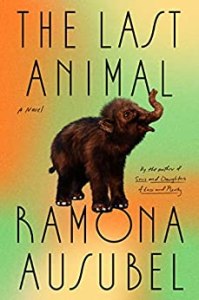 The Last Animal by Ramona Ausubel: In Ausubel’s offbeat third novel, a widowed scientist and her two daughters embark on a rogue plan to make history by resurrecting the woolly mammoth. There is a quirky combination of cosmic and domestic concerns here. A winsome sister duo is at the heart of the unusual and timely story, with priority given to the points of view of teenagers Eve and Vera, whose banter is a highlight. Ausubel has wisely chosen not to dwell on the scientific details of de-extinction, yet that means that this becomes more like speculative fiction or a fairy tale. Ironically, the fabulist-leaning novel is best when most realist, documenting struggles with bereavement, sexism and parenting teens.
 The Lost Wife by Susanna Moore: Moore’s hard-hitting novella is based in part on the memoir Six Weeks in the Sioux Tepees: A Narrative of Indian Captivity. In Moore’s version, Sarah, 25, leaves her baby behind when she flees an abusive husband, and once in Minnesota Territory marries John Brinton, who becomes a doctor on a Sioux reservation. By 1862, Sarah is friendly with the Native women. Although the Civil War is unfolding, the greater threat here is of revolt by the starving Indigenous residents. There is much of anthropological and historical interest, but Sarah’s flat storytelling, which may represent a pastiche of period style, means threatening or climactic scenes lose some of their potential gravity.
Foreword
 My Mother Says by Stine Pilgaard (trans. from the Danish by Hunter Simpson): After breaking up with her zookeeper girlfriend over their age gap and their conflicting takes on motherhood, the heroine moves back in with her father, a pastor who’s obsessed with Pink Floyd, and her stepmother. Her mother visits often, nagging her to finish her thesis. The line between her conversations and internal thoughts is thin. From her mansplaining doctor, she learns that the brain’s hippocampus is named for its seahorse shape. This inspires “Monologues of a Seahorse,” interludes of stream-of-consciousness association. Experimental and whimsical, this delivers deadpan narration of everyday woes.
 In Vitro: On Longing and Transformation by Isabel Zapata (trans. from the Spanish by Robin Myers): A Mexican poet probes the enduring mysteries of pregnancy and birth in a memoir in fragments that travels from fertility treatment through to the early weeks of pandemic-time motherhood. The clinical language of a gynecological history—late menstruation, polycystic ovary syndrome, eighteen years on the pill, and infertility—and the embryo transfer process contrasts with Zapata’s mystical thinking. The microessays integrate family stories, history, and artistic explorations. This resolute account of a personal metamorphosis alchemizes tender experiences into enchanting vignettes.
Shelf Awareness
Fiction
 Daughters of Nantucket by Julie Gerstenblatt: This engrossing debut novel explores the options for women in the mid-19th century while bringing a historical tragedy to life. Metaphorical conflagrations blaze in the background in the days leading up to the great Nantucket fire of 1846: each of three female protagonists (a whaling captain’s wife, a museum curator, and a pregnant Black entrepreneur) holds a burning secret and longs for a more expansive, authentic life. The action spans two tense weeks, one week before the fire through eight days after. The women’s lives collide in two climactic scenes. Gerstenblatt’s eye for detail results in sultry historical fiction for Sue Monk Kidd’s readers.
 Camp Zero by Michelle Min Sterling: Sterling’s brilliantly unsettling debut novel is set in mid-21st-century, post-oil North America. Prioritizing perspectives from two all-female communities, it contrasts the heights of opulence and technology with the basic instinct for survival. How the strands connect is a mystery sustained through much of the book. Characters go by multiple names and harbor ulterior motives; scenes echo each other as disparate subplots meet in unexpected ways. The background is all too plausible. Sterling also takes to its logical extreme the state of being constantly online. Compelling dystopian cli-fi with three-dimensional characters—perfect for fans of Station Eleven and To Paradise.
 Dear Chrysanthemums by Fiona Sze-Lorrain: In this elegant collection of 11 linked short stories by a poet and translator, China’s mid-20th-century political upheaval casts a long shadow. Music and food, not to mention love, bring meaning to those displaced in the aftermath of dissent. The stories—set in China, Singapore, Paris, and New York—span seven decades but always take place in a year ending in a six, a sacred number in Chinese divination. A highlight is “News from Saigon,” in which a prostitute meets Marguerite Duras in a Paris café. The connections are subtle, with the final story pulling together many strands. Ideal for readers of Madeleine Thien’s Do Not Say We Have Nothing.
Nonfiction
 Stranded by Maddalena Bearzi: Bearzi developed a deep love for marine fauna during childhood summers in Sardinia and cofounded the Ocean Conservation Society in the 1990s. Temporarily confined to land by Covid-19 lockdowns, she adopts a different tactic for exploring animal behavior: “an urban safari in my backyard and neighborhood.” These nature essays exemplify evenhandedness, curiosity, and close observation. From wasps to night-blooming flowers, her interest is wide-ranging. Gardening is a relaxing pastime and a connection to her mother while they are separated. As a behavioral ecologist, she views even her dog as a subject of study. A passionate primer to appreciating everyday nature.
Poetry
 Lo by Melissa Crowe: This incandescent autobiographical collection travels from girlhood to marriage and motherhood in post-pandemic USA. Crowe delves into sexual abuse and growing up in rural poverty. Yet the collection is so carefully balanced in tone that it never feels bleak. The emotional range is enhanced by alliteration and botanical imagery.
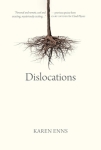 Dislocations by Karen Enns: The fourth collection by Canadian poet Enns skillfully evokes a rural upbringing and revels in the beauty of nature and music. One of its aphorisms could encapsulate the entire collection: “The ratio of love to grief / we understood as music.” Updating the pastoral tradition, the bittersweet verse also takes solace in the past.
Shiny New Books
A Fortunate Woman by Polly Morland & A Fortunate Man by John Berger: The similarities go much further than the title and subject matter: these two biographical works, both illustrated with black-and-white photographs, are set in the same English valley and the female subject of Morland’s is the next-but-one successor of the doctor who stars in Berger’s.
 Berger (1926–2017), an art critic and Booker Prize-winning novelist, spent six weeks shadowing the doctor, to whom he gives the pseudonym John Sassall, with Swiss documentary photographer Jean Mohr, his frequent collaborator. Sassall’s dedication was legendary: he attended every birth in this community, and nearly every death. Sassall’s middle-class origins set him apart from his patients. There’s something condescending about how Berger depicts the locals as simple peasants. Mohr’s photos include soft-focus close-ups on faces exhibiting a sequence of emotions, a technique that feels outdated in the age of video. Along with recording the day-to-day details of medical complaints and interventions, Berger waxes philosophical on topics such as infirmity and vocation. A Fortunate Man is a curious book, part intellectual enquiry and part hagiography.
 With its layers of local history and its braided biographical strands, A Fortunate Woman takes up many of the same heavy questions but feels more subtle and timely. It also soon delivers a jolting surprise: the doctor Berger called John Sassall was likely bipolar and, soon after the death of his beloved wife Betty, committed suicide in 1982. His story still haunts this community, where many of the older patients remember going to him for treatment. Like Berger, Morland keenly follows a range of cases. As the book progresses, we see this beautiful valley cycle through the seasons, with certain of Richard Baker’s landscape shots deliberately recreating Mohr’s scene setting. The timing of Morland’s book means that it morphs from a portrait of the quotidian for a doctor and a community to, two-thirds through, an incidental record of the challenges of medical practice during COVID-19.
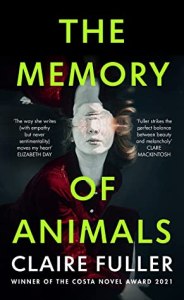 The Memory of Animals by Claire Fuller: Neffy has nothing to lose when she enrolls in a controversial vaccine trial in a familiar mid-pandemic landscape. The novel is presented as her journal. The bulk takes place in two weeks she spends on a locked unit with four fellow test subjects. In the meantime, she is introduced to an experimental technology for reliving memories. The characterisation of the four other cast members is somewhat thin, and the elements feel randomly assembled. The world-building and tech are unlikely to stand up to science fiction fans’ scrutiny, but this has just the right dose of the speculative for literary fiction readers. It also happens to fit into a recent vogue for octopus novels.
Times Literary Supplement
A late-twenties journalist sets out to survey the situation on the ground for ten British species being squeezed out by anthropogenic climate change: The mission is very similar, and both authors embody passionate dedication to conservation, but the difference in tone of these travel narratives makes them likely to appeal to separate audiences…
In Search of One Last Song by Patrick Galbraith & Forget Me Not by Sophie Pavelle:
 Galbraith’s is an elegiac tour through imperilled countryside and urban edgelands. Each chapter resembles an in-depth magazine article: a carefully crafted profile of a beloved bird species, with a focus on the specific threats it faces. Galbraith recognises the nuances of land use. However, shooting plays an outsized role. (Curious for his bio not to disclose that he is editor of the Shooting Times.) The title’s reference is to literal birdsong, but the book also celebrates birds’ cultural importance through their place in Britain’s folk music and poetry. He is clearly enamoured of countryside ways, but too often slips into laddishness, with no opportunity missed to mention him or another man having a “piss” outside. Readers could also be forgiven for concluding that “Ilka” (no surname, affiliation or job title), who briefs him on her research into kittiwake populations in Orkney, is the only female working in nature conservation in the entire country; with few exceptions, women only have bit parts: the farm wife making the tea, the receptionist on the phone line, and so on.
 Pavelle’s book is a tonic in more ways than one. Employed by Beaver Trust, she is enthusiastic and self-deprecating. Her nature quest has a broader scope, including insects like the marsh fritillary and marine species such as seagrass and the Atlantic salmon. Travelling between lockdowns in 2020–1, Pavelle took low-carbon transport wherever possible and bolsters her trip accounts with context, much of it gleaned from Zoom calls and e-mail correspondence with experts from museums and universities. Refreshingly, around half of these interviewees are women, and the animal subjects are never the obvious choices. Instead, she seeks out “underdog” species. The explanations are at a suitable level for laymen, true to her job as a science communicator. The snappy, casual prose (“the future of the bilberry bumblebee and its Aperol arse can be bright, but only if we get off our own”) could even endear her to teenage readers. As image goes, Pavelle’s cheerful naïveté holds more charm than Galbraith’s hardboiled masculinity.
 Taking Flight by Lev Parikian: Parikian’s accessible account of the animal kingdom’s development of flight exhibits a layman’s enthusiasm for an everyday wonder. He explicates the range of flying strategies and the structural adaptations that made them possible. The archaeopteryx section, chronicling the transition between dinosaurs and birds, is a highlight. Though the most science-heavy of the author’s six works, this, perhaps ironically, has fewer footnotes. His usual wit is on display: he describes the feral pigeon as “the Volkswagen Golf of birds” and penguins as “piebald blubber tubes”. This makes it a pleasure to tag along on a journey through evolutionary time, one sure to engage even history- and science-phobes.
Do any of these catch your eye?
In Memoriam by Alice Winn: Review & Author Event
I read In Memoriam by Alice Winn last month, then had the chance to see the author in conversation at Hungerford Town Hall, an event hosted by Hungerford Bookshop, on Friday evening. Here’s what I thought of the novel, which is on my Best of 2023 list.
Review
Heartstopper on the Western Front; swoon! It’s literary fiction set in the trenches of WWI, yes, but also a will-they-won’t they romance that opens at an English boarding school. Oh they will (have sex, that is), before the one-third point, but the lingering questions are: will Sidney Ellwood and Henry Gaunt both acknowledge this is love and not just sex, as it is for many teenage boys at their school (either consensually, as buddies; or forced by bullies); and will one or both survive the war? “It was ridiculous, incongruous for Ellwood to be bandying about words like ‘love’ when they were preparing to venture out into No Man’s Land.”
Winn is barely past 30 (and looks like a Victorian waif in her daguerreotype-like author photo), yet keeps a tight control of her tone and plot in this debut novel. She depicts the full horror of war, with detailed accounts of battles at Loos, Ypres and the Somme, and the mental health effects on soldiers, but in between there is light-heartedness: banter, friendship, poetry. Some moments are downright jolly. I couldn’t help but laugh at the fact that Adam Bede is the only novel available and most of them have read it four times. Gaunt is always the more pessimistic of the two, while Ellwood’s initially flippant sunniness darkens through what he sees and suffers.

I only learned from the Acknowledgements and Historical Note that Preshute is based on Marlborough College, a posh school local to me that Winn attended, and that certain particulars are drawn from Siegfried Sassoon, as well as other war literature. It’s clear the book has been thoroughly, even obsessively, researched. But Winn has a light touch with it, and characters who bring social issues into the narrative aren’t just 2D representatives of them but well rounded and essential: Gaunt (xenophobia), Ellwood (antisemitism), Hayes (classism), Devi (racism); not to mention disability and mental health for several.
I also loved how Ellwood is devoted to Tennyson and often quotes from his work, including the book-length elegy In Memoriam itself. This plus the “In Memoriam” columns of the school newspaper give the title extra resonance. I thought I was done with war fiction, but really what I was done with was worthy, redundant Faulks-ian war fiction. This was engaging, thrilling (a prison escape!), and, yes, romantic. (Public library) 
Readalike: The New Life by Tom Crewe, another of my early favourites of 2023, is set in a similar time period and also considers homosexual relationships. It, too, has epistolary elements and feels completely true to the historical record.
Some favourite lines:
“If Ellwood were a girl, he might have held his hand, kissed his temple. He might have bought a ring and tied their lives together. But Ellwood was Ellwood, and Gaunt had to be satisfied with the weight of his head on his shoulder.”
“Gaunt wished the War had been what Ellwood wanted it to be. He wished they could have ridden across a battlefield on horseback, brandishing a sword alongside their gallant king. He put on his gas mask. His men followed.”
Buy In Memoriam from Bookshop.org [affiliate link]
Event
Winn is in the UK on a short book tour; although she is English, she now lives in Brooklyn and recently had a baby. She was in conversation with AJ West, the author of The Spirit Engineer, also set on the cusp of WWI. Unrecognizable from her author photo – now blonde with glasses – she is petite rather than willowy. As I was leaving, two ladies remarked to each other how articulate she was. Indeed, she was well spoken and witty and, I expect, has always been precocious and a high achiever. I think she’s 32. Before this she wrote three novels that remain unpublished. She amazed us all by admitting she wrote the bulk of In Memoriam in just two weeks, pausing only to research trench warfare, then edited it for a year and a half.
West asked her about the genesis of the novel and she explained her obsession with the wartime newspapers of Sassoon’s school and then the letters sent home by soldiers, tracking the shift in tenor from early starry-eyed gallantry to feeling surrounded by death. She noted that it was a struggle for her to find a balance between the horrors of the Front and the fact that these young men come across in their written traces as so funny. She got that balance just right.
Was she being consciously anti-zeitgeist in focusing on privileged white men rather than writing women and minorities back into the narrative, as is so popular with publishers today, West asked? She demurred, but added that she wanted to achieve something midway between being of that time and a 2023 point-of-view in terms of the sexuality. Reading between the lines and from secondary sources, she posited that it was perhaps easier to get away with homosexuality than one might think, in that it wasn’t expected and so long as it was secret, temporary (before marrying a woman), or an experiment, it was tolerated. However, she took poetic licence in giving Gaunt and Ellwood supportive friends.

Speaking of … West (a gay man) jokingly asked Winn if she is actually a gay man, because she got their experiences and feelings spot on. She said that she has some generous friends who helped her with the authenticity of the sex scenes. In the novel she has Ellwood interpret Tennyson’s In Memoriam as crypto-homosexual, but scholars do not believe that it is; Gaunt’s twin sister Maud also, unconsciously in that case, has a Tennysonian name. This was in response to an audience question; this plus another one asking if Winn had read The New Life reassured me that my reaction was well founded! (Yes, she has, and will in fact be in conversation with Crewe in London on the 23rd. She’s also appearing at Hay Festival.)
If you’ve read the book and/or are curious, Winn revealed the inspirations for her three main characters, the real people who are “in their DNA,” as she put it: Gaunt = Robert Graves (half-German, interest in the Greek classics); Ellwood = Sassoon; Maud = Vera Brittain. She read a 5-minute passage incorporating a school scene between Gaunt and Sandys and a letter from the Front. She spoke a little too quickly and softly, such that I was glad I was within the first few rows. However, I’m sure this is a new-author thing and, should you be so lucky as to see her speak in future, you will be as impressed as I was.
The Chosen by Elizabeth Lowry (2022)
“What’s lost when your idea of the other dies? He knows the answer: only the entire world.”
Elizabeth Lowry’s utterly immersive third novel, The Chosen, currently on the shortlist for the Walter Scott Prize for Historical Fiction*, examines Thomas Hardy’s relationship with his first wife, Emma Gifford. The main storyline is set in November–December 1912 and opens on the morning of Emma’s death at Max Gate, their Dorchester home of 27 years. The couple had long been estranged and effectively lived separate lives on different floors of the house, but instantly Hardy is struck with pangs of grief – and remorse for how he had treated Emma. (He would pour these emotions out into some of his most famous poems.)
That guilt is only compounded by what he finds in her desk: her short memoir, Some Recollections, with an account of their first meeting in Cornwall; and her journals going back two decades, wherein she is brutally honest about her husband’s failings and pretensions. “I expect nothing from him now & that is just as well – neither gratitude nor attention, love, nor justice. He belongs to the public & all my years of devotion count for nothing.” She describes him as little better than a jailor, and blames him for their lifelong childlessness.
It’s an exercise in self-flagellation, yet as weeks crawl by after her funeral, Hardy continues to obsessively read Emma’s “catalogue of her grievances.” In the fog of grief, he relives scenes his late wife documented – especially the composition and controversial publication of Tess of the d’Urbervilles. Emma hoped to be his amanuensis and so share in the thrill of creation, but he nipped a potential reunion in the bud. Lowry intercuts these flashbacks with the central narrative in a way that makes Hardy feel like a bumbling old man; he has trouble returning to reality afterwards, and his sisters and the servants are concerned for him.

Hardy was that stereotypical figure: the hapless man who needs women around to do everything for him. Luckily, he’s surrounded by an abundance of strong female characters: his sister Kate, who takes temporary control of the household; his secretary, Florence Dugdale, who had been his platonic companion and before long became his second wife; even Emma’s money-grubbing niece, Lilian, who descends to mine her aunt’s wardrobe.
I particularly enjoyed Hardy’s literary discussions with Edmund Gosse, who urged him to temper the bleakness of his plots, and the stranger-than-fiction incident of a Chinese man visiting Hardy at home and telling him his own story of neglecting his wife and repenting his treatment of her after her death.
For anyone who’s read and loved Hardy’s major works, or visited his homes, this feels absolutely true to his life story, and so evocative of the places involved. I could picture every locale, from Stinsford churchyard to Emma’s attic bedroom. It was perfect reading for my short break in Dorset earlier in the month and brought back memories of the Hardy tourism I did at the end of my study abroad year in 2004. Although Hardy’s written words permeate the book, I was impressed to learn that Lowry invented all of Emma’s journal entries, based on feelings she had expressed in letters.
But there is something universal, of course, about a tale of waning romance, unexpected loss, and regret for all that is left undone. This is such a beautifully understated novel, perfectly convincing for the period but also timeless. It’s one to shelve alongside Winter by Christopher Nicholson, another favourite of mine about Hardy’s later life.
With thanks to riverrun (Quercus) for the free copy for review. The Chosen came out in paperback on 13 April.
*The winner will be announced on 15 June.
Women’s Prize Longlist Reviews (Croft, Grudova, O’Farrell) & Shortlist Predictions
The Women’s Prize shortlist will be announced on Wednesday the 26th. I’ve managed to read a few more novels from the longlist and started another (Fire Rush by Jacqueline Crooks), which would take me up to 6 read out of 16. I have a couple of others on order from the library (Kennedy and Patel), but will only bother to read them if they are shortlisted.
Homesick by Jennifer Croft
I was intrigued by the publication history of this one: Croft first wrote it in Spanish, then produced an English-language version which, in the USA, was marketed as a memoir illustrated with her own photographs. Here in the UK, though, Charco Press published it as part of their new range of untranslated fiction – with no photos, alas. So, it’s clear that this is thinly veiled autobiography; literally all that may have been changed is the character names.
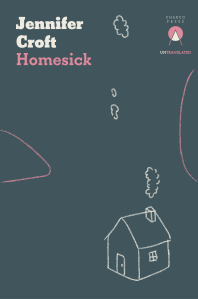 The protagonist is ‘Amy’, who lives in a tornado-ridden Oklahoma and whose sister, ‘Zoe’ – a handy A to Z of growing up there – has a mysterious series of illnesses that land her in hospital. The third person limited perspective reveals Amy to be a protective big sister who shoulders responsibility: “There is nothing in the world worse than Zoe having her blood drawn. Amy tries to show her the pictures [she’s taken of Zoe’s dog] at just the right moment, just right before the nurse puts the needle in”.
The girls are home-schooled and Amy, especially, develops a genius for languages, receiving private tutoring in Russian from Sasha, a Ukrainian former student of their father’s. Both sister are more than a little in love with Sasha. They alternate between competing for attention and indulging their joint passions – such as for the young Russian figure-skating couple who sweep the Winter Olympics. Amy starts college at 15, which earns her unwanted attention among her classmates, and struggles with her mental health before deciding to see the world. Despite periods of estrangement, her relationship with Zoe is what grounds her.
In a sense this is a simple chronological story, told in a matter-of-fact way. Yet each of its vignettes – some just a paragraph long – is perfectly chosen to reveal the family dynamic and the moment in American history. Detailed chapter headings continue the narrative and sometimes contain a shocking truth. What Croft does so brilliantly is to chart the accretion of ordinary and landmark events that form a life; Amy realizes this as she looks back at a packet of her photographs: “laid out step by step like this, more or less in order, the pictures also form a kind of path.”
Initially, I had my doubts as to whether this should have been eligible for the Women’s Prize. In the end it didn’t matter whether it was presented as memoir or autofiction, so true was it to the experience of 1990s girlhood, as well as to sisterhood and coming of age at any time in history. It reminded me strongly of Very Cold People by Sarah Manguso, but felt that little bit more universal in how it portrays family ties, ambition, and life’s winding path. (See also Annabel’s review for Shiny New Books.) 
With thanks to Charco Press for the free copy for review.
Children of Paradise by Camilla Grudova
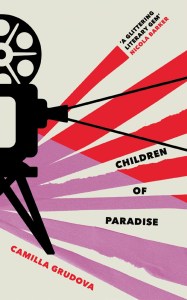 In 2017 I reviewed Grudova’s surreal story collection, The Doll’s Alphabet, describing its tales as “perverted fairytales or fragmentary nightmares.” Okay then, let’s continue in that perverted, nightmarish vein. Holly, new to the country/city, finds a room in a shared flat and a job as an usher at the Paradise Cinema, which shows a random assortment of art films and cult classics. The building is so low-rent it’s almost half derelict, and the staff take full advantage of the negligent management to get up to all sorts of sexual shenanigans, as well as drinking and drug-taking, while on duty. Holly and her co-workers are truly obsessed with the cinema, watching every showing at work but also hosting all-night movie marathons in their apartments. “The outside world, all of its news, faded away, and the movies became my main mirror of the world,” she confesses. “They were a necessary evil, customers, so that we, the true devotees, could have access to the screen, our giant godlike monument.”
The title is simultaneously ironic and an homage to Les Enfants du Paradis (1945), and the chapters are named after particular films. A change of ownership forces the Paradise to become more mainstream – hello, Marvel flicks and hipster snacks – but a series of horrific accidents and deliberate acts makes it seem like a cursed place. Aping movie genres, perhaps, Children of Paradise starts off as an offbeat stoner comedy and by the end approaches horror to an extent I didn’t expect. The content becomes increasingly sordid, visceral, with no opportunity missed to mention bodily fluids and excretions. I’m not notably opposed to gross-out humour, but the whole thing felt quite distasteful as well as miserable. (Public library e-book) 
My general feeling about these first two books, and probably a few others from the longlist (Crooks, McKenzie, Paull, et al.), is that the judges are trying to showcase the breadth of women’s writing: ‘Hey, guys, women can write autofiction and horror and humour and patois and speculative fiction and everything in between!’ But I don’t think these more niche or genre fiction representatives will make it any further in the race, especially because each may have been championed by a different judge.
Where the judges will find common ground will be on the standard stuff that always gets shortlisted: fairly run-of-the-mill character- and issue-driven contemporary or historical fiction. That makes it sound like I’m being dismissive, but in fact I do generally like much of the fiction that gets shortlisted for the WP: it’s readable book club fodder. It’s just maybe not inventive in the way that certain longlist titles can be. On which note, er, see the below!
The Marriage Portrait by Maggie O’Farrell
What a relief it was to wholeheartedly enjoy this sumptuous work of historical fiction, after the disappointment that was Hamnet (though perhaps I’ll feel more kindly towards the latter when I reread it for Literary Wives in November).
 Lucrezia di Cosimo de’ Medici is a historical figure who died at age 16, having been married off from her father’s Tuscan palazzo as a teenager to Alfonso II d’Este, Duke of Ferrara. She was reported to have died of a “putrid fever” but the suspicion has persisted that her husband actually murdered her, a story perhaps best known via Robert Browning’s poem “My Last Duchess.”
The focus is on the final year of Lucrezia’s life, but in flashbacks we meet her as a rebellious girl with a talent for drawing and a fascination with animals. At first it appears that Alfonso esteems her for her spiritedness – he gives her a painting of a stone marten as a betrothal gift, after all, and has her depicted with paintbrush in hand – but as the gradual storyline meets up with the 1561 spotlight, it becomes clear that she is only valued for her ability to produce an heir. However spacious and opulent they are, it is impossible to forget that Lucrezia, as a noblewoman, is confined to the edifices owned by her father or her husband.
O’Farrell’s usual present-tense narration is engaging throughout, and the two long chapters either side of the midpoint, one concerning her wedding day and the other the preparation for her portrait, are particularly absorbing. I was convinced I knew how this story would end, yet the author pulls off a delicious surprise. This is ripe for the miniseries treatment, not least because it is so attentive to visuals: the architecture of the main buildings, the lavish clothing, the colours, and the eye for what makes a good painting. Scenes are even described in terms of a spatial arrangement appreciated from afar: how three figures form a triangle in the centre of a room; how two people on a balcony bisect the view from a window.
Despite the length, this was thoroughly engrossing and one I’d recommend to readers of Geraldine Brooks and Tracy Chevalier. (See also Laura’s review.) (Public library)
The other nominees I’ve read are:
Demon Copperhead by Barbara Kingsolver
Black Butterflies by Priscilla Morris
My ideal shortlist (a wish list based on my reading and what I still want to read):
Homesick by Jennifer Croft
Fire Rush by Jacqueline Crooks
Black Butterflies by Priscilla Morris
The Marriage Portrait by Maggie O’Farrell
I’m a Fan by Sheena Patel
Memphis by Tara M. Stringfellow
vs.
My predicted shortlist:
Trespasses by Louise Kennedy
Demon Copperhead by Barbara Kingsolver
Stone Blind by Natalie Haynes
The Marriage Portrait by Maggie O’Farrell
Memphis by Tara M. Stringfellow
Wandering Souls by Cecile Pin
An overall winner? Perhaps Trespasses by Louise Kennedy, or an unprecedented repeat win from Barbara Kingsolver or Maggie O’Farrell.
(See also Laura’s predictions post.)
What have you read from the longlist so far? Which of these books are calling to you?
March Paperback Releases: Fledgling, Theatre of Marvels, What My Bones Know
I’m catching up on three 2022 books I was sent for review and didn’t read at their initial publication. Today I have a memoir of living between Ghana and England and hand-raising two birds, a Victorian pastiche starring a mixed-race actress in London, and an account of being diagnosed with complex PTSD and working towards healing of childhood trauma.
Fledgling by Hannah Bourne-Taylor
Nature-lover Hannah Bourne-Taylor lived in Ghana for eight years for her husband’s job. As a dependent spouse, she was not permitted to work and, in their rural setting, she felt cut off from any expatriate community. From childhood she’d been an obsessive animal rescuer – fishing ants out of swimming pools, for instance – and when she found a swift that had been displaced from its nest, her protective instincts went into overdrive. Collecting hundreds of termites, she fed the bird to a demanding schedule for two weeks before releasing it. This went as disastrously as it could, but she soon got another chance when she found a grounded bronze-winged mannikin finch fledgling after a storm. Their bond was even closer: the bird climbed her body and nested in her hair (she wrote a Guardian article about the experience), and they developed a mutual language of chirps. The care routine sounds like it was not so different from having an infant. She even calls the finch her daemon.
 There is something very insular about this narrative, such that I had trouble gauging the passage of time. Raising the two birds, adopting street dogs, going on a pangolin patrol with a conservation charity – was this a matter of a couple of months, or were events separated by years? Ghana is an intriguing setting, yet because there is no attempt to integrate, she can only give a white outsider’s perspective on the culture, and indigenous people barely feature. I was sympathetic to the author’s feelings of loneliness and being trapped between countries, not belonging in either, but she overstates the lessons of compassion and freedom the finch taught. The writing, while informed and passionate about nature, needs a good polish (many misplaced modifiers, wrong prepositions, errors in epigraph quotes, homonym slips – “sight” instead of “site”; “balled” in place of “bawled”; “base” where it should be “bass,” twice – and so on). Still, it’s a promising debut from a valuable nature advocate, and I share her annual delight in welcoming England’s swifts, as in the scenes that open and close the book.
With thanks to Aurum for the free copy for review. Fledgling came out in paperback on 9 March.
Theatre of Marvels by Lianne Dillsworth
Lianne Dillsworth is a Black British author with MAs in creative writing and Victorian studies, interests she combines in this debut novel set in Victorian London. Zillah’s mother, a slave from Barbados, was forced to abandon her seven-year-old daughter. Zillah is mixed-race and grew up in St Giles slum. Too light-skinned to convince as a “savage” when she headlines Crillick’s Variety Theatre show as “Amazonia,” she has to coat herself with greasepaint and soot. As mistress to a viscount, she has access to a life of luxury, but instead chooses to try to free her fellow Black performers, including the “Leopard Lady,” who is exhibited for her skin condition and confined in conditions little better than slavery.
 Through secondary characters, we glimpse other options for people of colour: one, Lucien Winters, is a shopkeeper (reminding me of the title character of The Secret Diaries of Charles Ignatius Sancho, a historical figure) but intends to move to Sierra Leone via a colonisation project; another passes as white to have a higher position in the theatre world. It felt odd, though, how different heritages were conflated, such that Zillah, of Caribbean descent, learns a few words of “Zulu” to speak to the Leopard Lady, and Lucien explains Africanness to her as if it is one culture. Perhaps this was an attempt to demonstrate solidarity among oppressed peoples.
There are rivalries with fellow actresses, and well-meaning Quakers who work toward a better society. Much of the characterisation is tissue-thin, however, and a few turns of phrase felt not of the time period (describing someone as being in a “pissy mood”; “If he was in this much of a funk there’d be no getting through to him. I might as well go to bed before he killed my mood completely.”). All told, this never lived up to its first paragraph –
Go to the theatre much? No, nor me. At least not before I became an actress. I know what you’re thinking. Actress, eh? But you can keep your dirty-minded thoughts to yourself. I trod the boards and no more. Doesn’t mean I don’t have a story or two to tell, mind. Would you be kind enough to indulge me if I talked about the old days? Hard as it was back then, I can’t say that if I had my time again I’d change it.
– which promised a much more original voice than we ever get from Zillah. It’s only worth writing in the first person if the narration is remarkable in some way, so this could easily have been in third person limited instead. This was a nicely undemanding selection to start on the ferry ride back from Spain last year, but took much effort to finish because of the 400+ page count and despite the jejune prose (some have labelled this YA for that reason). Fans of Stacey Halls may enjoy it. It’s certainly what I’d call an easy read.
Hutchinson Heinemann sent a proof copy. Theatre of Marvels came out in paperback on 2 March.
What My Bones Know: A Memoir of Healing from Complex Trauma by Stephanie Foo
It’s okay to have some things you never get over.
Radio producer Stephanie Foo was diagnosed with complex PTSD at age 30. Although she briefly delves into the parental abuse that accounts for her trauma, this is – thankfully – mostly about the four years she spent trying to get better. The Malaysian Chinese Foo family moved to San Francisco when she was two years old. Her mother nagged and beat her, and both parents made credible threats to kill her and/or themselves, such as by driving off the road. It’s hard to read this material, but by proportion it doesn’t take up much of the book. Foo’s mother left when she was 13; she later gave her father an ultimatum one day (while wielding an axe!) that also saw him move out. This left her, then a high school student, living alone and in squalor. Unsurprisingly, she engaged in disordered eating and self-harm.
 A love of journalism kept Foo from committing suicide, got her into college and landed her podcast roles followed by her dream job with public radio programme This American Life in New York City. However, she struggled with a horrible, exacting boss and, when her therapist issued the diagnosis, she left to commit to the healing process, aided by her new partner, Joey. C-PTSD was named in the 1990s but is not recognised in the DSM; The Body Keeps the Score by Bessel van der Kolk is its alternative bible. Repeated childhood trauma, as opposed to a single event, rewires the brain to identify threats that might not seem rational, leading to self-destructive behaviour and difficulty maintaining healthy relationships.
All that Foo discovers in her research into C-PTSD feels damning, but she focuses on what she can control: sleep, diet, exercise, yoga, meditation, acupuncture, and seeing various therapists. She tries everything from hallucinogenic mushrooms and a gratitude journal to EMDR (like hypnosis but based on eye movement). Working with a therapist from the Center for Child Trauma and Resilience helped her to address the root cause rather than the symptoms. There came a point where I would have been okay with a condensed version of events instead of a blow-by-blow of every therapy attempted, but Foo writes with bravery and clarity, adroitly recreating scenes and dialogue and displaying impressive memory and self-knowledge. The detail and overall optimism should make this helpful to many.
With thanks to Allen & Unwin for the free copy for review. What My Bones Know came out in paperback on 3 March.
Eighth Blog Anniversary! & Thoughts on the Women’s Prize Longlist
Last year, in the manic busyness that preceded moving into our house, I completely forgot to mark my blog anniversary. This time (8 years!) I wanted to be sure to remember it. Why have I not noted before that it coincides with International Women’s Day?! I’m pleased with that.

By Հայկ Ափրիկյան, CC BY-SA 3.0, via Wikimedia Commons.
Yesterday evening the Women’s Prize longlist was announced.** Of my predictions, 4 were correct, which is pretty good going for me. I got none of my personal wishes, however. Of course, I would have preferred for us to have one of my lists. Still, overall, it’s a fairly interesting mix of new and established authors, with a full half of the list being debut work. Seven of the authors are BIPOC. I’ve read 2 of the nominees and would be amenable to reading up to 7 more. My library always buys the entire longlist, so I’ll eventually get the chance to read them, but not soon enough to add to the conversation.

Read:
Demon Copperhead by Barbara Kingsolver (CORRECT PREDICTION): Follows the contours of Charles Dickens’s David Copperfield, transplanting the plot to 1990s southwest Virginia to uncover the perils of opiate addiction. Ten-year-old Damon Fields lives in a trailer home with his addict mother, who works at Walmart, and his new stepfather, a mean trucker. Tragedy strikes and Damon moves between several foster homes before running away. His irrepressible, sassy voice is reminiscent of Holden Caulfield’s in this Appalachian cousin to Shuggie Bain.
Black Butterflies by Priscilla Morris: Drawing on her own family history, Morris has crafted an absorbing story set in Sarajevo in 1992, the first year of the Bosnian War. Zora, a middle-aged painter, has sent her husband, Franjo, and elderly mother off to England to stay with her daughter, Dubravka, confident that she’ll see out the fighting in the safety of their flat and welcome them home in no time. But things rapidly get much worse than she is prepared for. It was especially poignant to be reading this during the war in Ukraine.
Requested from the library:
Fire Rush by Jacqueline Crooks – Sounds good, if too much like this year’s Opal & Nev.
The Marriage Portrait by Maggie O’Farrell (CORRECT PREDICTION) – I was going to skip this because I wasn’t keen on Hamnet, but I do love O’Farrell in general, so I guess I’ll give it a try.
Interested in reading (but can’t find):
Homesick by Jennifer Croft – N.B. This was subtitled “A Memoir” at its U.S. release.
Children of Paradise by Camilla Grudova
Memphis by Tara M. Stringfellow
I’m a Fan by Sheena Patel (CORRECT PREDICTION)
Wandering Souls by Cecile Pin
Not interested in reading:
Glory by NoViolet Bulawayo – Like I said when it was nominated for the Booker, I have to wonder why we needed an extended Animal Farm remake…
Stone Blind by Natalie Haynes – I really should have predicted this one. It’s a hard pass on the Greek myth retellings for me.
Trespasses by Louise Kennedy (CORRECT PREDICTION) – I avoid anything set during The Troubles. (Sorry!)
Cursed Bread by Sophie Mackintosh – The Water Cure was awful.
The Dog of the North by Elizabeth McKenzie – The Portable Veblen was trying too hard.
Pod by Laline Paull – Her novels always sound so formulaic.
The Bandit Queens by Parini Shroff – Nah.
See also the reactions posts from Cathy, Clare, Eric and Laura.
**The announcement has traditionally been on International Women’s Day, but I’m guessing that this year they brought it forward to pre-empt news of the inaugural Carol Shields Prize for Fiction longlist. This prize is open to novels, short stories and graphic novels by women, published in calendar year 2022, with parameters otherwise quite similar to those of the WP except that it’s only for U.S. and Canadian residents. {EDITED} To be honest, I was not convinced that the literary world needed an additional prize for women’s fiction, especially as North Americans tend to do well in the WP race. However, at first glance, its longlist is a lot less obvious and more interesting, with 11/15 BIPOC and some short story collections as well as a graphic novel in the running. It remains to be seen if I’ll follow both prizes or switch allegiance. Some of the CSP books may prove difficult to access in the UK. So far I have read Brown Girls and can get The Furrows from the library. Of note: the Carol Shields Prize is worth a lot more ($150,000 U.S. vs. £30,000).
What have you read, or might you read, from the longlist?
Winter Reads, Part II: Elisa Shua Dusapin, Howard Norman & Picture Books
As hoped for in my first instalment of winter reads, the weather is warmer now and signs of spring are appearing in the form of cherry blossom, crocuses, daffodils, primroses and snowdrops. So I’m bidding a (perhaps premature) farewell to winter with these two novels featuring very chilly settings. I also borrowed from the library a big ol’ pile of wintry children’s books full of bears, rabbits, snowmen, snowballs and days off school.
Winter in Sokcho by Elisa Shua Dusapin (2016; 2020)
[Daunt Books Originals; translated from the French by Aneesa Abbas Higgins]

Another title doing double duty for #FrenchFebruary and #ReadIndies month. This was Dusapin’s debut and won the Prix Robert Walser and the Prix Régine-Deforges.
Our beaches are still waiting for the end of a war that’s been going on for so long people have stopped believing it’s real. They build hotels, put up neon signs, but it’s all fake, we’re on a knife-edge, it could all give way any moment. We’re living in limbo. In a winter that never ends.
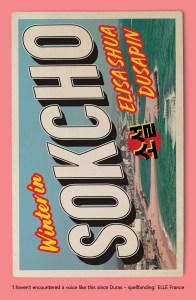 The protagonist is a young mixed-race woman working behind the reception desk at a hotel in Sokcho, a South Korean resort at the northern border. A tourist mecca in high season, during the frigid months this beach town feels down-at-heel, even sinister. The arrival of a new guest is a major event at the guesthouse. And not just any guest but Yan Kerrand, a French graphic novelist. Although she has a boyfriend and the middle-aged Kerrand is probably old enough to be her father – and thus an uncomfortable stand-in for her absent French father – the narrator is drawn to him. She accompanies him on sightseeing excursions but wants to go deeper in his life, rifling through his rubbish for scraps of work in progress.
The underemployed, self-sabotaging young woman is so familiar these days as to be a cliché (and I’d already met a very similar one, also Korean, in Ro from Sea Change by Gina Chung), but there is still something enticing about the atmosphere of this novella. I also enjoyed the narrator’s relationship with her mother, a fishmonger, which sets up for the entirely inconclusive and potentially very disturbing ending. Impossible to say more without spoilers, but I’d be interested to hear what others who have read it think will happen after the last page. (Birthday gift from my wish list)
The Northern Lights by Howard Norman (1987)
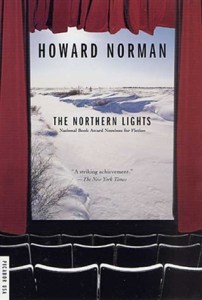 Norman is a really underrated writer and I’m a big fan of The Bird Artist and especially I Hate to Leave This Beautiful Place. This is a weird one; it’s his debut and you can see the autobiographical inspiration (per his Introduction) and the sorts of interests that would recur across his oeuvre, such as subarctic Canada and its Indigenous peoples, absent fathers and hotels (not the only reason this reminded me most of early John Irving).
The Canadian settings represent the two poles of isolation and the urban: Quill, Manitoba versus Toronto in 1959–60. The novel opens with the death of teenage Noah’s best friend, Pelly, who fell through a frozen lake while riding his unicycle. Noah’s family dynamic changes quickly, as his cousin Charlotte, orphaned by a factory disaster, comes to live with them and then his cartographer father leaves them to become a hermit in a remote cabin furnished with musical instruments. Noah stays with Pelly’s parents, Sam and Hettie (a Cree woman), to brave a harsh Quill winter –
January and February mornings you would get a crack of icy static in the nostrils when first stepping outside and have to shade your eyes against the harsh glint of snow, if the sun had worked its way through. Certain days neighbors were seen only on their way to their woodsheds. Chimney smoke was our windsocks. Enormous drifts had built up against the houses, sculpted in various shapes. Even brief walks were taken on snowshoes. Winter might be seven months long.
– while his mother, Mina, takes Charlotte to Toronto to run The Northern Lights, the movie theatre where she met her husband as a young woman. The previous alcoholic owner has run it into the ground; “the curtain smelled like a ten-thousand-year-old moose hide.”
At the time that Noah joins them, he’s never seen a movie before, but as “manager” of the theatre he soon sees The Magnificent Seven 15 times in quick succession. Norman does a peculiar thing here, which is to introduce a key character quite late on in the action. Noah hires Levon, a Cree man, to be the projectionist and he promptly moves his entire family into the building. Had Noah relocated to Toronto earlier, we might have seen more of these characters. Norman’s habit of mimicking broken speech from non-native speakers through overly frequent commas (indicating pauses, I suppose) irked me. There are lots of quirky elements here and I enjoyed the overall atmosphere, but felt the plot left something to be desired. I’d start elsewhere with Norman, but could still recommend this to readers of Robertson Davies and Elizabeth Hay. (Secondhand – 2nd & Charles)
And a DNF:
Snowflake, AZ by Marcus Sedgwick (2019): I wanted to try something else by the late Sedgwick (I’ve only read his nonfiction monograph, Snow) and this seemed ideal. I could have gotten onboard with the desert dystopia, but Ash’s narration was so unconvincing. Sedgwick was attempting a folksy American accent but all the “ain’t”s and “darned”s really don’t work from a teenage character. I only managed about 20 pages. (Public library)
Plus a whole bunch of children’s picture books:
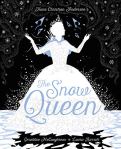 The Snow Queen by Hans Christian Andersen [adapted by Geraldine McCaughrean; illus. Laura Barrett] (2019): The whole is in the shadow painting style shown on the cover, with a black, white and ice blue palette. It’s visually stunning, but I didn’t like the language as much as in the original (or at least older) version I remember from a book I read every Christmas as a child.
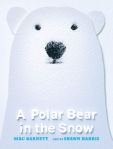 A Polar Bear in the Snow by Mac Barnett [art by Shawn Harris] (2020): From a grey-white background, a bear’s face emerges. The remaining pages are made of torn and cut paper that looks more three-dimensional than it really is. The bear passes other Arctic creatures and plays in the sea. Such simple yet intricate spreads.
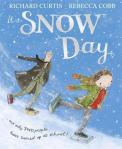 Snow Day by Richard Curtis [illus. Rebecca Cobb] (2014): When snow covers London one December, only two people fail to get the message that the school is closed: Danny Higgins and Mr Trapper, his nemesis. So lessons proceed. At first it feels like a prison sentence, but at break time Mr Trapper gives in to the holiday atmosphere. These two lonely souls play as if they were both children, making an army of snowmen and an igloo. And next year, they’ll secretly do it all again. Watch out for the recurring robin in a woolly hat.
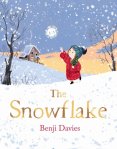 The Snowflake by Benji Davies (2020): I didn’t realize this was a Christmas story, but no matter. A snowflake starts her lonely journey down from a cloud; on Earth, Noelle hopes for snow to fall on her little Christmas tree. From motorway to town to little isolated house, Davies has an eye for colour and detail.
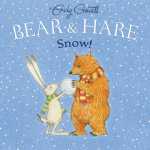 Bear and Hare: SNOW! by Emily Gravett (2014): Bear and Hare, wearing natty scarves, indulge in all the fun activities a blizzard brings: snow angels, building snow creatures, having a snowball fight and sledging. Bear seems a little wary, but Hare wins him over. The illustration style reminded me of Axel Scheffler’s work for Julia Donaldson.
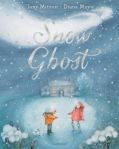 Snow Ghost by Tony Mitton [illus. Diana Mayo] (2020): Snow Ghost looks for somewhere she might rest, drifting over cities and through woods until she finds the rural home of a boy and girl who look ready to welcome her. Nice pastel art but twee couplets.
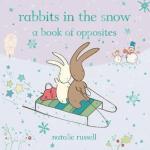 Rabbits in the Snow: A Book of Opposites by Natalie Russell (2012): A suite of different coloured rabbits explore large and small, full and empty, top and bottom, and so on. After building a snowman and sledging, they come inside for some carrot soup.
 The Snowbear by Sean Taylor [illus. Claire Alexander] (2017): Iggy and Martina build a snowman that looks more like a bear. Even though their mum has told them not to, they sledge into the woods and encounter danger, but the snow bear briefly comes alive and walks down the hill to save them. Delightful.
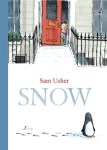
 Snow (2014) & Lost (2021) by Sam Usher: A cute pair from a set of series about a little ginger boy and his grandfather. The boy is frustrated with how slow and stick-in-the-mud his grandpa seems to be, yet he comes through with magic. In the former, it’s a snow day and the boy feels like he’s missing all the fun until zoo animals come out to frolic. There’s lots of white space to simulate the snow. In the latter, they build a sledge and help search for a lost dog. Once again, ‘wild’ animals come to the rescue. /
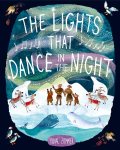 The Lights that Dance in the Night by Yuval Zommer (2021): I’ve seen Zommer speak as part of a conference panel on children’s nature writing. The Aurora Borealis unfolds across the sky above the creatures and people of the far north: “We sashayed for an Arctic fox. We swayed above an old musk ox.” I expected more anatomical accuracy (i.e., faces not flattened so that eyes appear to be next to each other on the same side of a face) but I loved how vivid and imaginative it all is.
Any snowy or icy reads (or weather) for you lately?
Chase of the Wild Goose by Mary Louisa Gordon: A Lurid Editions Reprint
 Chase of the Wild Goose, a playful, offbeat biographical novel about the Ladies of Llangollen, was first published by Leonard and Virginia Woolf’s Hogarth Press in 1936. I was delighted to be invited to take part in an informal blog tour celebrating the book’s return to print (today, 1 February) as the inaugural publication of Lurid Editions, which will focus on reprinting lesser-known and trailblazing 20th-century classics.
Mary Louisa Gordon was a medical doctor and early graduate of the London School of Medicine for Women. She also served as a prison inspector and had a special concern for the plight of female prisoners; another of her works was Penal Discipline (1922). Chase of the Wild Goose was published when she was 75. She underwrote the book to keep it in print until her death in 1941. A word-of-mouth success, it sold reasonably well in those first years.
I’d encountered the Ladies of Llangollen a couple of times before, in nonfiction: in The Art of the Wasted Day by Patricia Hampl, where they are among her exemplars of solitary, introspective living; and in Sign Here If You Exist and Other Essays by Jill Sisson Quinn, where, in the way that they blur the lines between romance and friendship, they presage her experience with an intimate female friend. This was a different way to explore their story.

Portrait of The Rt. Honble. Lady Eleanor Butler & Miss Ponsonby ‘The Ladies of Llangollen’. By James Henry Lynch, Public domain, via Wikimedia Commons. (Wearing their customary plain riding habits and top hats.)
“The two heroines of this story, the Lady Eleanor Butler and Miss Sarah Ponsonby, have a remarkable history. They achieved fame at a stroke. They made a noise in the world which has never since died out, and which we, their spiritual descendants, continue to echo.”
These are the opening lines of what, in its first half, is a fairly straightforward chronological account of the protagonists’ lives, from their first meeting to when they flee to Wales to set up house together at Plas Newydd. They grow up in Ireland and, although their prospects differ – EB has a wealthy upbringing at Kilkenny Castle, whereas teenage SP has recently lost her mother and is being passed around relatives and acquaintances – both are often told that marriage is the only viable option. The eccentric spinster stereotype is an unkind one, but one EB is willing to risk. In one terrific scene, she shames her archbishop great-uncle for being just like everyone else and threatening to sell her to the highest bidder in matrimony. Still, the notion persists that if only the right man comes courting, they’ll change their tune.
At their first meeting EB and SP engage in an intense discussion of the possibilities for women, and within two weeks they’re already pledging to be together forever: “I think that nothing cheap, or second-rate, or faute de mieux, will ever do for you or me … We think—you and I—that we want something strange and exceptional, but something different may be ordained for us,” Eleanor says to Sarah. “From now onwards I… won’t you keep me… in your heart?” Sarah asks in parting. Eleanor replies, “I think you have been in it since before we were born.”
The strength of that romantic conviction that they are fated for each other keeps them going despite difficulties – EB’s father disowns her and cuts her off, which has inevitable financial implications, though she had already bought Plas Newydd outright; and for both of them, leaving Ireland is a wrench because they feel certain that they can never go back.

Plas Newydd. Photo by Wolfgang Sauber, CC BY-SA 3.0 , via Wikimedia Commons.
By Part II, the erstwhile fugitives, settled into local life in North Wales, enter into a sedate middle age of visitors and correspondence. Much of the material for this section is drawn from the journal EB kept. Part III is where things get really interesting: in a metafictional twist, Gordon herself enters the narrative as she meets and converses with the long-dead Ladies at their house, reflecting on the social changes that have occurred since their time.
As the Afterword by Dr Nicola Wilson notes, Chase of the Wild Goose is creative nonfiction in the same vein as Orlando, building on real-life figures and relationships in a way that must have seemed ahead of its age, not least for how it looks back to venerate queer foremothers. Although there are long stretches of the book that are tedious with biographical detail and melodramatic speeches, there is enough in the way of convincing dialogue and scenes to make up for that. While I feel the novel probably has more to offer to academics and those with a particular interest in its subjects than to general readers, I was pleased to be able to experience a rediscovered classic. I marvelled every time I reminded myself that this largely takes place in the late eighteenth to early nineteenth century. Gordon ably reproduces the diction and mores of the Ladies’ time, but her modernist intrusion takes it beyond pastiche.
As for the title, I’m most accustomed to the wild goose as a metaphor for the Holy Spirit in Celtic Christian iconography, but of course it is also a pun on the proverbial wild-goose chase. Gordon nods to both connotations; the phrase appears several times in the text and is the protagonists’ private term for their search for a life together – for liberty and for love. You have to cheer for them, achieving what so few could in their time. Here’s to you, Ladies!
With thanks to D-M Withers and Lurid Editions for the free copy for review.
A first read for Karen and Lizzys #ReadIndies challenge. I will hope to add many more before the end of the month!
Liz has also reviewed the novel.
For more information, do also read this fascinating Guardian article.
Winter Reads, Part I: Patrick Gale & Tove Jansson (#NordicFINDS23)
This winter has been a disappointment: it’s bloody cold, but with no snow. It’s impossible to keep our house warm, even with extra loft insulation and new double-glazed windows (home ownership is boring and overrated), so I’m ready for signs of spring. Maybe by the time I review a second batch of seasonal reads in February, winter will truly be on its way out.
A Place Called Winter by Patrick Gale (2015)
 This was our January book club read. We’d had good luck with Gale before: his Notes from an Exhibition received our joint highest rating ever. As he’s often done in his fiction, he took inspiration from family history: here, the story of his great-grandfather Harry Cane, who emigrated to the Canadian prairies to farm in the most challenging of conditions. Because there is some uncertainty as to what precipitated his ancestor’s resettlement, Gale has chosen to imagine that Harry, though married and the father of a daughter, was in fact gay and left England to escape blackmailing and disgrace after his affair with a man was discovered.
There are very evocative descriptions of the pioneer life, lightened for Harry by his relationship with his closest neighbours, siblings Petra and Paul. The novel covers the First World War and the start of the Spanish flu epidemic, which provide much fodder for melodrama, but somehow I don’t mind it from Gale. Harry himself is so diffident as to seem blank, but that means he is free to become someone else in a new land. My other main criticism would be that the villain is implausibly evil. Some of our book club members also thought there were too many coincidences. Gale really makes you feel for these characters and their suffering, though. Sexuality and mental health, both so misunderstood at that time, are the two main themes and he explores them beautifully. In that both are historical fiction where homosexuality is simply a fact of life, not a titillating novelty, this reminded me a lot of Days Without End by Sebastian Barry. (Free from mall bookshop)
A Winter Book: Selected Stories by Tove Jansson (2006)
[Translated from the Swedish by Silvester Mazzarella, David McDuff and Kingsley Hart]
 A brief second review for Nordic FINDS. It’s the third time I’ve encountered some of these autofiction stories: this was a reread for me, and 13 of the pieces are also in Sculptor’s Daughter, which I skimmed from the library a few years ago. And yet I remembered nothing; not a single one was memorable. Most of the pieces are impressionistic first-person fragments of childhood, with family photographs interspersed. In later sections, the protagonist is an older woman, Jansson herself or a stand-in. I most enjoyed “Messages” and “Correspondence,” round-ups of bizarre comments and requests she received from readers. Of the proper stories, “The Iceberg” was the best. It’s a literal object the speaker alternately covets and fears, and no doubt a metaphor for much else. This one had the kind of profound lines Jansson slips into her children’s fiction: “Now I had to make up my mind. And that’s an awful thing to have to do” and “if one doesn’t dare to do something immediately, then one never does it.” A shame this wasn’t a patch on The Summer Book. (Free from a neighbour)

Original rating in 2012:
Rating now: 
Averaged rating: 
And a DNF:
Winter’s Tale by Mark Helprin (1983)
 Laila (Big Reading Life) and I attempted this as a buddy read, but we both gave up on it. I got as far as page 53 (in the 600+-page pocket paperback). The premise was alluring, with a magical white horse swooping in to rescue Peter Lake from a violent gang. I also appreciated the NYC immigration backstory, but not the adjective-heavy wordiness, the anachronistic exclamations (“Crap!” and “Outta my way, you crazy midget” – this is presumably set some time between the 1900s and 1920s) or the meandering plot. It was also disturbing to hear about Peter’s sex life when he was 12. From a Little Free Library (at Philadelphia airport) it came, and to a LFL (at the Bar Convent in York) it returned. Laila read a little further than me, enough to tell the library patron who recommended it to her that she’d given it a fair try.
Any snowy or icy reading (or weather) for you lately?
Three on a Theme: Frost Fairs Books
Here in southern England, we’ve just had a couple of weeks of hard frost. The local canal froze over for a time; the other day when I thought it had all thawed, a pair of mallard ducks surprised me by appearing to walk on water. In previous centuries, the entire Thames has been known to freeze through central London. (I’d like to revisit Virginia Woolf’s Orlando for a 17th-century scene of that.) This thematic trio of a children’s book, a historical novel, and a poetry collection came together rather by accident: I already had the poetry collection on my shelf, then saw frost fairs referenced in the blurb of the novel, and later spotted the third book while shelving in the children’s section of the library.
A Night at the Frost Fair by Emma Carroll (2021)
 Maya’s mum is visiting family in India; Maya and her dad and sister have just settled Gran into a clinical care home. Christmas is coming, and Gran handed out peculiarly mismatched presents: Maya’s older sister got a lovely brooch, while her own present was a weird brick-shaped brown object Gran says belonged to “Edmund”. Now the family is in a taxi home, crossing London Bridge, when Maya notices snow falling faster than seems possible and finds herself on a busy street of horse-drawn carriages, overlooking booths and hordes of people on the frozen river.
A sickly little boy named Eddie is her tour guide to the games, rides and snacks on offer here in 1788, but there’s a man around who wants to keep him from enjoying the fair. Maya hopes to help Eddie, and Gran, all while figuring out what the gift parcel means. A low page count meant this felt pretty thin, with everything wrapped up too soon. The problem, really, was that – believe it or not – this isn’t the first middle-grade time-slip historical fantasy novel about frost fairs that I’ve read; the other, Frost by Holly Webb, was better. Sam Usher’s Quentin Blake-like illustrations are a bonus, though. (Public library)
The Weather Woman by Sally Gardner (2022)
This has been catalogued as science fiction by my library system, but I’d be more likely to describe it as historical fiction with a touch of magic realism, similar to The Mermaid and Mrs Hancock or Things in Jars. I loved the way the action is bookended by the frost fairs of 1789 and 1814. There’s a whiff of the fairy tale in the setup: when we meet Neva, she’s a little girl whose parents operate one of the fair’s attractions, a chess-playing bear. She knows, like no one else seems to, that the ice is shifting and it’s not safe to stay by the Thames. When the predicted tragedy comes, she’s left an orphan and adopted by Victor Friezland, a clockmaker who shares her Russian heritage. He lives in a wonderfully peculiar house made out of ship parts and, between him, Neva, the housekeeper Elise, and other servants, friends and neighbours, they form a delightful makeshift family.
Neva predicts the weather faultlessly, even years ahead. It’s somewhere between synaesthetic and mystical, this ability to hear the ice speaking and see what the clouds hold. While others in their London circle engage in early meteorological prediction, her talent is different. Victor decides to harness it as an attraction, developing “The Weather Woman” as first an automaton and then a magic lantern show, both with Neva behind the scenes giving unerring forecasts. At the same time, Neva brings her childhood imaginary friend to life, dressing in men’s clothing and appearing as Victor’s business partner, Eugene Jonas, in public.

These various disguises are presented as the only way that a woman could be taken seriously in the early 19th century. Gardner is careful to note that Neva does not believe she is, or seek to become, a man; “She thinks she’s been born into the wrong time, not necessarily the wrong sex. As for her mind, that belongs to a different world altogether.” (Whereas there is a trans character and a couple of queer ones; it would also have been interesting for Gardner to take further the male lead’s attraction to Eugene Jonas.) From her early teens on, she’s declared that she doesn’t intend to marry or have children, but in what I suspect is a trope of romance fiction, she changes her tune when she meets the right man. This was slightly disappointing, yet just one of several satisfying matches made over the course of this rollicking story.
London charms here despite its Dickensian (avant la lettre) grime – mudlarks and body snatchers, gambling and trickery, gloomy pubs and shipwrecks, weaselly lawyers and high-society soirees. The plot moves quickly and holds a lot of surprises and diverting secondary characters. While the novel could have done with some trimming – something I’d probably say about the majority of 450-pagers – I remained hooked and found it fun and racy. You’ll want to stick around for a terrific late set-piece on the ice. Gardner had a career in theatre costume design before writing children’s books. I’ll also try her teen novel, I, Coriander. (Public library)
[Two potential anachronisms: “Hold your horses” (p. 202) and calling someone “a card” (p. 209) – both slang uses that more likely date from the 1830s or 1840s.]
The Frost Fairs by John McCullough (2010)
 I knew McCullough’s name from his superb 2019 collection Reckless Paper Birds, which was shortlisted for a Costa Prize. This was his debut collection, for which he won a Polari Prize. Appropriately, one poem, “Georgie, Belladonna, Sid,” is crammed full of “Polari words” – “the English homosexual and theatrical slang prevalent in the early to mid 20th century.” The book leans heavily on historical scenes and seaside scenery. “The Other Side of Winter” is the source of the title and the cover image:
Overnight the Thames begins to move again.
The ice beneath the frost fair cracks. Tents,
merry-go-rounds and bookstalls glide about
On islands given up for lost. They race,
switch places, touch—the printing press nuzzling
the swings—then part, slip quietly under.
I also liked the wordplay of “The Dictionary Man,” the alliteration and English summer setting of “Miss Fothergill Observes a Snail,” and the sibilance versus jarringly violent imagery of “Severance.” However, it was hard to detect links that would create overall cohesion in the book. (Purchased directly from Salt Publishing)
 Bookish Beck = Rebecca Foster. American transplant to England. Freelance proofreader and book reviewer.
